
Review

Device-Related Thrombosis After Left Atrial Appendage Occlusion: Updated Management and Contemporary Challenges

by
Vincenzo Paragliola
1,*,
Emanuele Chiarazzo
1,2,
Andrea Giovanni Parato
1,3,
Marcello Marchetta
1,
Stefano Sasso
1,
Giuseppe Massimo Sangiorgi
3,
Andrea Natale
2,3,4,5,6 and
Mario Iannaccone
7
1
Division of Cardiology, Università degli Studi di Tor Vergata, 00133 Rome, Italy
2
Texas Cardiac Arrhythmia Institute, St David’s Medical Center, Austin, TX 78705, USA
3
Department of Biomedicine and Prevention, Division of Cardiology, University of Tor Vergata, 00133 Rome, Italy
4
Department of Experimental Medicine, Tor Vergata University, 00133 Rome, Italy
5
Interventional Electrophysiology, Scripps Clinic, San Diego, CA 92037, USA
6
School of Medicine, Case Western Reserve University, Cleveland, OH 44195, USA
7
San Giovanni Bosco Hub Emergency Hospital, ASL Città di Torino, 10154 Turin, Italy
*
Author to whom correspondence should be addressed.
Cardiovasc. Med. 2026, 29(2), 16; https://doi.org/10.3390/cardiovascmed29020016
Submission received: 31 January 2026 / Revised: 10 March 2026 / Accepted: 25 March 2026 / Published: 16 April 2026

Abstract

Percutaneous left atrial appendage occlusion (LAAO) has become an established alternative to long-term oral anticoagulation for stroke prevention in patients with atrial fibrillation, with expanding indications beyond those with absolute contraindications to anticoagulation. Alongside its broader adoption, device-related thrombus (DRT) has emerged as a clinically relevant complication that directly compromises the protective intent of LAAO. This comprehensive narrative review synthesizes contemporary evidence on the incidence, mechanisms, predictors, clinical impact, and management of DRT. DRT is a multifactorial phenomenon that carries an annual incidence ranging from 1.75% to almost 5%, resulting from the interplay between post-implant flow dynamics, device engineering, endothelialization processes, procedural factors, and patient-specific prothrombotic features. Accumulating data from observational registries links DRT to increased risks of ischemic stroke, systemic embolism, major adverse cardiovascular events (MACE), and mortality. Although evidence is growing, optimal management regimens for both the prevention and treatment of DRT remain undefined. Moreover, a lack of standardization also affects diagnosis and imaging surveillance, mainly performed by transesophageal echocardiography or cardiac computed tomography. By integrating mechanistic insights, clinical predictors, device-specific considerations, and therapeutic evidence, this review highlights current knowledge gaps and proposes practical considerations to inform individualized risk stratification, surveillance, and management of DRT in contemporary LAAO practice.

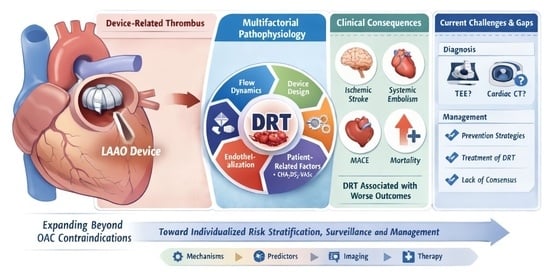
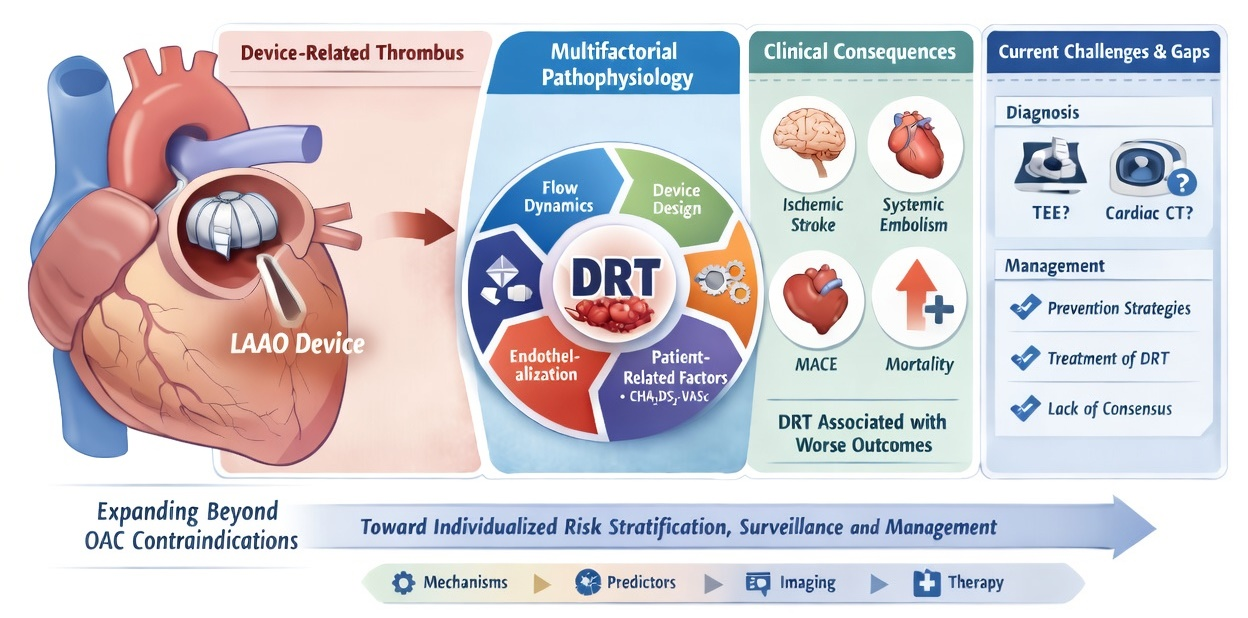
Graphical Abstract

1. Introduction

The left atrial appendage (LAA) is the predominant source of thrombus formation responsible for cardioembolic stroke in patients with atrial fibrillation (AF). Percutaneous left atrial appendage occlusion (LAAO) has emerged as an interventional alternative to long-term oral anticoagulation (OAC) for the prevention of thromboembolic events in this setting, particularly in patients with contraindications to sustained anticoagulant therapy or an unacceptably high bleeding risk. In contemporary practice, the use of LAAO has expanded beyond these highly selected cohorts, reaching approximately 40,000 (USA) and 10,000 (Europe) procedures annually and leading to the establishment of consolidated procedural standards [1,2]. Along with its wider adoption, procedure-specific complications have emerged as distinct clinical entities, adversely affecting outcomes even at long-term follow-up. This comprehensive review focuses on device-related thrombus (DRT), a complication that directly undermines the primary objective of LAAO and remains insufficiently characterized in several of its aspects [3,4].
DRT generally refers to thrombus formation on, adjacent to, or in association with an implanted LAAO device and is commonly detected by transesophageal echocardiography (TEE) or cardiac computed tomography (CCTA). Although definitions and reporting standards vary across studies, the clinical concern is consistent: DRT has been associated with an increased risk of ischemic stroke and systemic embolism in several major datasets, with the magnitude of this association influenced by imaging intensity and duration of follow-up [5,6]. Beyond thromboembolic events, emerging evidence suggests an association between DRT and cardiovascular mortality, reinforcing the concept that DRT may represent an expression of increased clinical complexity and fragility. Hence, different clinical contributors to a pro-thrombotic state, including AF burden, predict an increased risk of DRT [7,8]. For the development of this narrative review, a non-systematic search of the literature was performed across major biomedical databases, including PubMed, Scopus, and Google Scholar. The search strategy incorporated both Medical Subject Headings (MeSH) and relevant English-language keywords, combined through Boolean operators (AND, OR). Articles published up to February 2026 were considered, with priority given to high-quality evidence such as randomized controlled trials (RCTs), systematic reviews, meta-analyses, and evidence-based clinical guidelines. Studies were selected according to their clinical relevance, methodological robustness, and their contribution to the current understanding of the topic. Preference was assigned to publications appearing in high-impact, peer-reviewed journals, while studies characterized by limited methodological quality or poor relevance to the objectives of the review were excluded. Since the DRT framework is heterogeneous and its management relies on a low level of certainty, this comprehensive narrative review collects contemporary evidence so that crucial cornerstones of practical management can be drawn in light of updated evidence.

2. Procedural Aspects and Devices for LAAO

2.1. LAA Anatomy and Morphological Variants

The LAA is characterized by inter-individual anatomical variability in terms of ostium size and lobar complexity. It is generally located along the anterior–lateral segment of the left atrium, and presents a variable multi-lobar anatomy composed of pectinate muscle and thin posterior wall. Classic morphologic patterns (chicken-wing, windsock, cactus, cauliflower) are clinically relevant as the first one is less associated to thromboembolic events. From a procedural standpoint, they influence device selection, closing strategy, landing zone and working depth definition, compression, and the likelihood of residual gutters or leaks [9]. However, large registries evaluating DRT have not consistently demonstrated LAA morphology being independently associated with DRT, suggesting that morphology may exert its effect mainly through downstream procedural factors. In fact, rather than morphological classification, clinical and computational analyses highlighted that anatomical features may influence local flow patterns and radial compression of the device, promoting thrombus formation: not covered pulmonary vein ridge, implantation depth > 10 mm, circular and larger LAA ostium, worse device adaptability [5,10,11].

2.2. Contemporary LAAO Devices

Contemporary LAAO devices are numerous, however, most of the interventional experience is limited to three different types of prostheses. Plug-type occluders are deployed within the LAA to achieve ostial occlusion from the appendage side. The most widely used devices in this category belong to the Watchman family (Watchman 2.5 and Watchman FLX; Boston Scientific, Marlborough, MA, USA). The device consists of a self-expanding nitinol frame with fixation barbs and a permeable, polyester fabric covering. PROTECT AF and the subsequent PREVAIL trials demonstrated non-inferiority to warfarin for prevention of the composite endpoint of stroke, systemic embolism, and cardiovascular death [12,13].
The Watchman FLX (Boston Scientific Corporation, Marlborough, MA, USA) represents an iteration with modified architecture and reduced metal exposure, intended to improve conformability, sealing, and safety. Acquired observational data suggest a lower DRT rate relative to historical first-generation experience, although it is not eliminated [14]. The next-generation Watchman FLX Pro device incorporates an additional coating with polyvinylidene fluoride-co-hexafluoropropylene, a non-active and non-eluting material designed to potentially enhance hemocompatibility and reduce thrombogenicity [15].
Among lobe-and-disc devices, the most widespread is the Amplatzer/Amulet family (Abbott Cardiovascular, Plymouth, MN, USA), whose devices consist of a nitinol mesh framework that achieves closure using a lobe anchored in the LAA and a disc covering the ostium on the atrial side [16]. This design may facilitate immediate sealing but allows a larger atrial-exposure surface and the potential for residual gutters in the case of deep deployment or incomplete ridge coverage [17]. The Amulet IDE trial showed that the overall DRT incidence was similar between Amulet and Watchman 2.5, but its timing differed, with a predominance of early events in Amulet and later events in Watchman [18]. Observational data have further suggested that incomplete coverage near the left superior pulmonary vein ridge may be commonly present in Amulet-associated DRT, reinforcing the concept that device–anatomy interface zones can create persistent thrombogenic niches [8,19]. The LAmbre (Lifetech Scientific, Shenzhen, China) is a self-expanding nitinol occlusion device consisting of a distal flexible polyethylene terephthalate (PET) umbrella equipped with atraumatic hooks, which ensure secure anchoring [20]. The literature provides less mature large-scale, systematic DRT evidence compared with Watchman and Amulet; thus, device-specific DRT phenotyping remains comparatively limited.

3. Antithrombotic Regimen: Focus on DRT

Post-LAAO antithrombotic therapy is intended to bridge the period of device healing and endothelialization while minimizing bleeding risk. The optimal antithrombotic strategy after LAAO remains a matter of debate: regimens vary widely across trials and real-world practice, spanning short-term OAC, dual antiplatelet therapy (DAPT), or single antiplatelet therapy (SAPT). Further complicating clinical decision-making, candidates for LAAO frequently exhibit a high bleeding risk, necessitating careful appraisal of the risk–benefit balance of any antithrombotic therapy. The therapeutic regimen adopted by PROTECT-AF and PREVAIL [12,13] (Table 1), including data from adjunctive two nonrandomized prospective registries (TEE performed at 45 days and 12 months), yielded a 12-month DRT incidence of 3.7%, with 0.8% events detected between 0 and 45 days (annualized rate 4.64) and 1.7% between 45 days and 6 months post-implant (annualized rate 4.39) [21]. Later, the PINNACLE FLX multicenter study adopted the same therapeutic scheme, replacing VKA with DOAC for the first 45 days following Watchman FLX (Boston Scientific) implantation. This approach resulted in a 12-month DRT incidence of 1.75%, with only a single event identified at the 45-day TEE follow-up [22]. In the RCT studying the second generation device Amplatzer Amulet (Abbott Cardiovascular, Plymouth, MN, USA) Cardiac Plug, the antiplatelet-based strategy (Table 1) faced an 18-month DRT incidence of 3.3% [18,23]. It is important to note that patients enrolled in the pivotal trials had relatively low bleeding risk compared with patients undergoing LAAO in daily practice, frequently deemed unsuitable for even short-term OAC or prolonged DAPT; therefore, tailored post-LAAO antithrombotic regimens according to each patient’s thromboembolic and bleeding risk are more common [24]. Despite the less intensive antithrombotic strategy and higher-risk clinical profile, real-world data report low peri-procedural complications for all device families, while DRT incidence can be assumed as hypothesis generating since it is not organically collected [24,25,26,27,28] (Table 1).
Although LAAO has been associated with a transient activation of the coagulation system rather than platelet activation [29], the optimal duration and composition of post-procedural OAC strategies have not been fully explored. Focusing on DRT, results appear inconsistent across major datasets, highlighting profound selection bias and the influence of imaging surveillance protocols. Meta-analysis evidence allows for a comparison among different regimens, however, it deeply increases the mentioned critical points. The largest one (53,987 Watchman implants) showed that OAC monotherapy (DOAC or warfarin) was associated with lower rates of major adverse events and major bleeding, while rates of DRT and ischemic events were similar across all strategies and anticoagulant choice (DRT: DOAC + aspirin 0.38%; DOAC alone 0.39%; warfarin + aspirin 0.43%; warfarin alone 0.60%), with a comparable safety profile [30]. Consistently, a network meta-analysis of 122,451 patients undergoing LAAO reported that DOAC monotherapy achieved the most favorable balance of efficacy and safety, with the lowest rates of thromboembolic events and major bleeding [31]. Reduced-dose DOAC strategies have recently gained interest as an alternative post-LAAO antithrombotic approach from exploratory small sample RCTs. Della Rocca et al. first evaluated low-dose DOAC (apixaban 2.5 mg BID or rivaroxaban 10 mg daily) plus aspirin following Watchman 2.5 (Boston Scientific) implantation, following low-dose DOAC monotherapy after 45 days, demonstrating significant reductions in DRT (3.4% vs. 0.0%; log-rank p = 0.009) and non-procedural major bleeding (0.5% vs. 3.9%; log-rank p = 0.018) at a median follow-up of 13 months compared with standard therapy [32]. Accordingly, two randomized studies evaluated reduced-dose DOAC strategies as alternatives to DAPT after LAAO with Watchman 2.5 (Boston Scientific) or Amplatzer Amulet (Abbott Medical). The ADRIFT pilot trial showed that reduced-dose rivaroxaban (10 or 15 mg daily) suppressed thrombin generation more effectively than DAPT in a total of 105 patients and was associated with an absence of DRT in both DOAC arms [33]. Moreover, in the ADALA trial, a total of 90 patients were randomized to apixaban 2.5 mg BID for 3 months or DAPT, registering a reduction in the composite of major bleeding, thromboembolic events, and DRT at 3 months in the OAC group (4.5% vs. 21.7%; HR 0.19; p = 0.02) [34]. Comparative analysis between OAC-based therapies and antiplatelet-based therapies have been performed through meta-analysis: Søndergaard et al. portrayed a propensity-matched analysis of PROTECT-AF, PREVAIL, CAP, CAP2, ASAP, and EWOLUTION, assuming as primary endpoints DRT, embolic events, and bleeding after Watchman implantation. DRT emerged as significantly more frequent with antiplatelet therapy (3.1% vs. 1.4%; p = 0.018) [35]. Results have been widely supported by a second study comparing reduced-dose OAC to DAPT on the composite efficacy endpoint DRT, stroke, and systemic embolism (OR = 0.36; 95% CI [0.16, 0.85], p = 0.01; DRT OR = 0.36; 95% CI [0.16, 0.79], p = 0.011); however, statistically finer data are needed to draw definite conclusions [36]. The recently published ANDES randomized clinical trial compared DOACs (apixaban 5 mg twice daily or rivaroxaban 20 mg once daily) with DAPT (aspirin plus clopidogrel) for 60 days after Amplatzer Amulet (Abbott Medical) implantation in patients with non-valvular atrial fibrillation. The incidence of DRT at 60 days was numerically lower in the DOAC group (1.5%) than with DAPT (4.1%), although this difference did not reach statistical significance [37]. However, as shown in large registries, elevated bleeding risk makes DAPT the most frequent discharge therapy, usually transitioned to SAPT for long-term maintenance within 3 months, on behalf of the evidence of relatively low incidence of DRT and non-procedure-related major bleeding [24,38]. In patients unsuitable for short-term OAC or at risk for life-threatening bleeding (e.g., prior intracranial hemorrhage, recurrent gastrointestinal bleeding, severe bleeding disorders, or intracranial amyloid angiopathy, advanced/end-stage renal disease), frequently excluded from randomized trials, premature de-escalation from DAPT to SAPT, discharge on SAPT alone, or complete avoidance of antithrombotic therapy are strategies of interest but remain insufficiently investigated. Observational studies and registry data supports the feasibility of SAPT at discharge without apparent increases in DRT or ischemic complications [28,39,40,41,42,43]. In contrast, complete withdrawal of antithrombotic therapy post-implant has far more limited evidence and is generally reserved for patients with extreme bleeding risk or intolerance.

4. Incidence, Risk Factors, and Clinical Impact of DRT

DRT can be considered as the product of a multi-layered interaction among:
  • Local hemodynamic conditions after implant (zones of slow flow, low shear, and recirculation);
  • Device surface properties (metal exposure, central hubs/screws);
  • Process of endothelialization;
  • Patient-specific prothrombotic factors (inflammatory milieu, thrombotic predisposition, clinical course, treatments).
Across pooled trial analyses and registries, DRT incidence generally clusters around 3–5%, but estimates change with the intensity of imaging surveillance and follow-up duration [21,44,45]. In a large international case–control registry, DRT showed a broad temporal distribution with a substantial late component, including approximately one-fifth diagnosed beyond one year, highlighting that short follow-up windows may underestimate true incidence [5].

4.1. Post-Implant Thrombogenic Mechanisms

Computational and mechanistic analyses increasingly support that post-implant flow alterations correlate with DRT occurrence. Parameters such as time-averaged wall shear stress, oscillatory shear index and indices of thrombogenic microenvironments describe a device thrombogenic profile that can be as influential as post-procedural antithrombotic treatment [46]. Notably, these mechanisms are not uniform across devices: engineering and deployment deeply affect the flow field. Furthermore, plug-type and lobe-and-disc designs generate different atrial surface geometries, which may translate into distinct patterns of DRT, while implant depth (>10 mm), malapposition, and PDL can create localized low wash-out regions and recirculation zones that favor thrombus deposition. These assumptions are based on mechanistic modeling, demonstrating that patient-specific hemodynamic metrics, derived from computational fluid dynamics, correlate with DRT, offering a plausible bridge between deployment geometry and clinical events [7,47]. As emerged from the LAAO-DRT registry, pericardial effusion places as one of the strongest predictors of DRT cases [5].

4.2. Device Endothelialization

Successful LAAO requires transition from a metal interface to a more biocompatible surface via endothelialization and neointimal coverage. The clinically relevant phase extends across the first weeks after implant, though incomplete or heterogeneous coverage may persist over the foreseen initial period, particularly in regions with unfavorable flow or exposed structural elements, as observed from explanted hearts [48]. Differences in device structure appear to influence the endothelialization process: central hubs/screws in plug devices and edge/ridge interface zones in lobe-and-disc devices have been cited as thrombus-prone sites [49]. In fact, it has been hypothesized by prospective trial data that design changes that reduce metal exposure (e.g., Watchman FLX) may translate into reduced DRT incidence, although residual risk underscores the continued importance of implantation quality and patient characteristics [32]. Moreover, the existence of a substantial late DRT burden in multicenter registries suggests that healing may be affected chronically by hemodynamic conditions, which define an increased patient-level risk profile [50].

4.3. Clinical Predictors

Across studies, baseline systemic features involved in the balance between thrombotic and hemorrhagic risk appear to play a crucial role. Non-paroxysmal AF has emerged as a predictor, plausibly reflecting more advanced atrial myopathy, impaired atrial function, and prothrombotic atrial endothelial dysfunction. For the same hemodynamic reasons, left ventricular myopathy and disfunction are connected to impaired flow and thrombus formation. Chronic kidney disease (CKD) was independently associated with DRT in the LAAO-DRT registry, consistent with the contribution of systemic vascular dysfunction, inflammation, and altered hemostasis. Hypercoagulable disorders showed a large effect size in registry data, identifying a high-risk biological phenotype in which DRT may occur despite standard procedural practice. Linked to that, parallel or previous history of TIA/thromboembolic events seem to be associated to DRT: on the one hand, it confirms the plausible higher baseline thrombotic risk carried by the patients, on the other hand, it may be a consequence of DRT itself. Age and female sex were associated with DRT in randomized comparative device trials, suggesting that demographic factors may interact with atrial remodeling and healing kinetics [5,45,51,52]. Moreover, an emerging dimension is the assessment of early prothrombotic activation: in a small sample of patients with contraindications to OAC, discharged with SAPT- or DAPT-based strategies, early increases in coagulation activation biomarkers (prothrombin fragment 1 + 2 and thrombin–antithrombin complexes) were associated with a markedly higher incidence of DRT at the first scheduled TEE. Validation through appropriate prospective studies could pave the way for the use of coagulation activation markers as thrombotic risk-modifying tools [53].

5. Device-Related Thrombosis Management

5.1. Cardio-Imaging and Follow-Up Regimens

DRT represents an insidious drawback rising post-LAAO, giving birth to challenging clinical decision points potentially affecting the patient’s course. Despite its prevalence, optimal management is still insufficiently characterized in all of its aspects. As for other device-related complications, the detection of DRT happens during post-LAAO surveillance controls integrated by imaging exams. Traditionally, TEE represented the index methodic for post-procedural follow-up while CCTA gained progressive consensus later. Throughout the year, different post-procedural protocols have been adopted among clinical trials, and randomized studies focusing on this peculiar aspect have not been portrayed yet (Table 2).
Furthermore, a lack of standardization burdens the level of recommendation in practice guidelines: the current EHRA/EAPCI expert consensus statement and SCAI/HRS guideline panel recommend performing imaging surveillance with either TEE or CCTA 6 to 12 weeks after LAAO with low certainty evidence [20,55]. The choice of the method is still a matter of debate, together with timing and the extent to which it can be advisable to perform imaging surveillance. TEE is a consolidated exam that allows LAA evaluation by multiple plane views and 2D/3D reconstructions, diffusely utilized also in the pre-procedural planning of the intervention, allowing for adequate detection and the characterization of eventual thrombi [56,57]. Limits are represented by the invasiveness and possible requirement of sedation and esophageal intubation as well as operator-dependency of the evaluation. For these reasons, CCTA has emerged as a valuable alternative considering its non-invasiveness, resolution, and reproducibility. Moreover, optimization of acquisition protocols and the use of the CCTA linear attenuating coefficient (degree of attenuation, Hounsfield) allows for the detection of LAA patency, PDL, and DRT. The applicability of the method is limited by eventual imaging artifacts (LAAO device, contrast opacification, phase timing, heart rate and ungated examinations, breath, technological update), availability, and clinical concerns regarding the use of nephrotoxic contrast medium and radiation exposure [58,59,60]. Apart from this, when speaking about DRT, it is necessary to consider the different appearance of this entity in cardiac imaging across the two modalities, the interpretation of which in previous scientific studies in the literature has often been inconsistent. As such, the incidence and estimated timing of DRT change considerably, and comparative analysis becomes weaker due to risk of bias. Data derived from the large pivotal trial, based on TEE follow-up, state that yearly DRT incidence for Watchman devices ranges from 1.7% [22] to approximately 3.7% [21] while it can reach 3.9% until 18 months considering both Watchman and Amulet [7]. The utilization of TEE (gold standard) is founded on a multiparametric assessment of the atrial surface of the occlusion device hosting an echogenic formation that cannot be attributed to the imaging artifact; is not attributed to the healing process; is visible in multiple views; and adheres to device surface; demonstrate independent motion [20,54]. The increased spatial resolution granted by CCTA provides substantial sensitivity in detecting post-procedural device-related complications [61,62] but also in more subtle findings such as hypoattenuated thickening (HAT): this presents as homogeneous hypoattenuated formations on the atrial surface of the device that place themselves in a zone of uncertain clinical significance. Conventionally, they are divided into different grades based on morphology (pedunculated/laminar), thickness (cut-off 3 mm), surface (regular/irregular), and continuity with LA wall, either for Amulet [61] and Watchman (Table 3) [6]. HAT spotting in large CCTA-based studies appeared much more frequently than the DRT shown in large RCTs and pooled analysis [44], ranging from 24% to 95% within 3 month scans according to different case histories [63,64], hence questions about its clinical correlation have been raised. Evidence suggests that low grade HAT is poorly correlated to adverse clinical outcomes and may be an expression of device healing process during endothelization; instead, high-grade HAT needs a different approach, like DRT [65,66].
This trend has been reinforced by comparative analysis between CCTA and TEE imaging, where patients presenting enhancement defects suggestive of device-thrombosis at CT scans seem to correlate to the detection of DRT at TEE evaluation [61]. Actually, no definitive evidence supports the use of one imaging modality over the other, since both appear to be comparable in terms of definite DRT detection, even if preliminary data suggest a major sensitivity for CCTA [6,67]. Mechanisms underlying this complication are not yet fully understood, and its unpredictable nature makes management challenging [44]. Device exposure is considered one of the major triggers of DRT; however, clinical experience shows that its formation may extend beyond the early post-implantation phase, with several diagnoses being made after three months: data from the EUROC-DRT-Registry shows detection after a median of 93 days, with a substantial quote (17.6%) occurring later than six months post-implant, meaning that the systematic approach of performing LAA imaging within three months after the implant may miss a significant number of complications [68].

5.2. Clinical Outcomes and Management

DRT represents a feared complication, as it undermines the primary aim of the LAAO procedure, namely avoiding long-term oral anticoagulation for thromboembolic stroke prevention. Significant uncertainties persist regarding the characteristics and clinical outcomes of DRT, as well as the optimal treatment strategies: establishing uniform guidelines for its management is critical, given the scarcity of reproducible data in the literature and the wide spectrum of presentations, which further adds to the variability of the baseline clinical conditions of patients undergoing LAAO. Considering that DRT formation is attributed to several features that promote an inflammatory and procoagulant state in the left atrium, clinicians must be concerned not only with its initial occurrence but also with persistent and recurrent DRT: the first can be defined as the continuous detection of DRT even after dedicated treatment, while the latter can be defined as the development of a new DRT episode following a documented resolution. Although the correlation between increased ischemic events and the presence of DRTs could seem direct, controversial findings have aroused much debate. Data from the prospective real-world registry EWOLUTION, including patients undergoing Watchman implant, stated that no significant differences were observed in the annual incidence of stroke, TIA, or systemic embolism between patients with and without DRT (1.7% vs. 2.2% per year; p = 0.80) [45]. However, the non-randomized design introduces heterogeneity in clinical follow-up and generates ascertainment bias that may have influenced the results. Higher level evidence supports the opposite: in the meta-analysis portrayed by Alkhouli et al., among the 280 patients affected by DRT deriving from 32 studies, 37 patients (13.2%) were reported having an ischemic event, whereas only 3.8% (285/7399) of the patients without DRT experienced the same event (OR:5.27, 95% CI: 3.66 to 7.59; p < 0.001) and this difference remained significant in the sensitivity analysis including only RCTs and multicenter registries (13.5% vs. 4.4%; OR: 4.15; 95% CI: 2.77 to 6.22; p < 0.001) [44]. In a retrospective cohort of patients receiving Watchman and Amplatzer devices, thrombus on the device emerged among the independent predictors of ischemic strokes and TIA during follow-up [51]. Accumulating evidence suggests an association between DRT and cardiovascular mortality. A recent multicenter large registry confirmed an increased association between DRT and ischemic stroke (16.9% vs. 3.6%; HR: 3.49; 95% CI: 1.35–9.00; p = 0.01) and even MACE (29.5% vs. 14.4%, HR: 2.37; 95% CI: 1.58–3.56; p < 0.001) compared to non-DRT LAAO until 1.8 years [5]. From a speculative standpoint, this kind of relation as well as inconsistent findings among datasets may be the result of the competing risk of cardiovascular death and different surveillance protocols. Furthermore, the hypothesis that DRT may represent a marker of heightened clinical complexity, patient vulnerability, and higher-risk atrial myopathy is reinforced. Regarding post-treatment outcomes, one of the largest collections of DRT cases with at least one imaging of follow-up patients (n. 214) with an unfavorable evolution after treatment (persistent or recurrent) verified an increased risk of thromboembolic events (26.7%, 9.6 per 100 patient-years vs. 15.1%, 6.6 per 100 patient-years; HR: 2.13; 95% CI:1.15–3.94; p = 0.02) compared with the rest [69]. The same outcomes were registered in the EUROC-DRT-Registry where, in patients with unfavorable evolution of DRT, stroke/TIA and mortality were significantly increased after 1 year (stroke: 17.6% versus 6.5%, p = 0.09; mortality: 15.0% versus 1.4%, p = 0.01) and after 2 years (17.6% versus 12.3%, p = 0.29; mortality: 31.3% versus 13.1%, p = 0.05) [68]. Whether post-implant antithrombotic therapy influences DRT occurrence is not univocally established. Boersma et al., evaluating data from data of the EWOLUTION Trial, did not find any statistical differences in the rate of DRT by AT regimen use [70], while in a prospective registry of 12 months of follow-up, no differences emerged among regimen duration of DAPT therapy between DRT and non-DRT patients (12.4 weeks [IQR, 6.0–49.7] versus 13.0 weeks [IQR, 7.3–26.0]; p = 0.77) [52]. Generally, these patients are asymptomatic, and diagnosis is made during fixed follow-up visits, however, a minority has been spotted by incidental diagnosis concomitant to a neurological event [5,71].
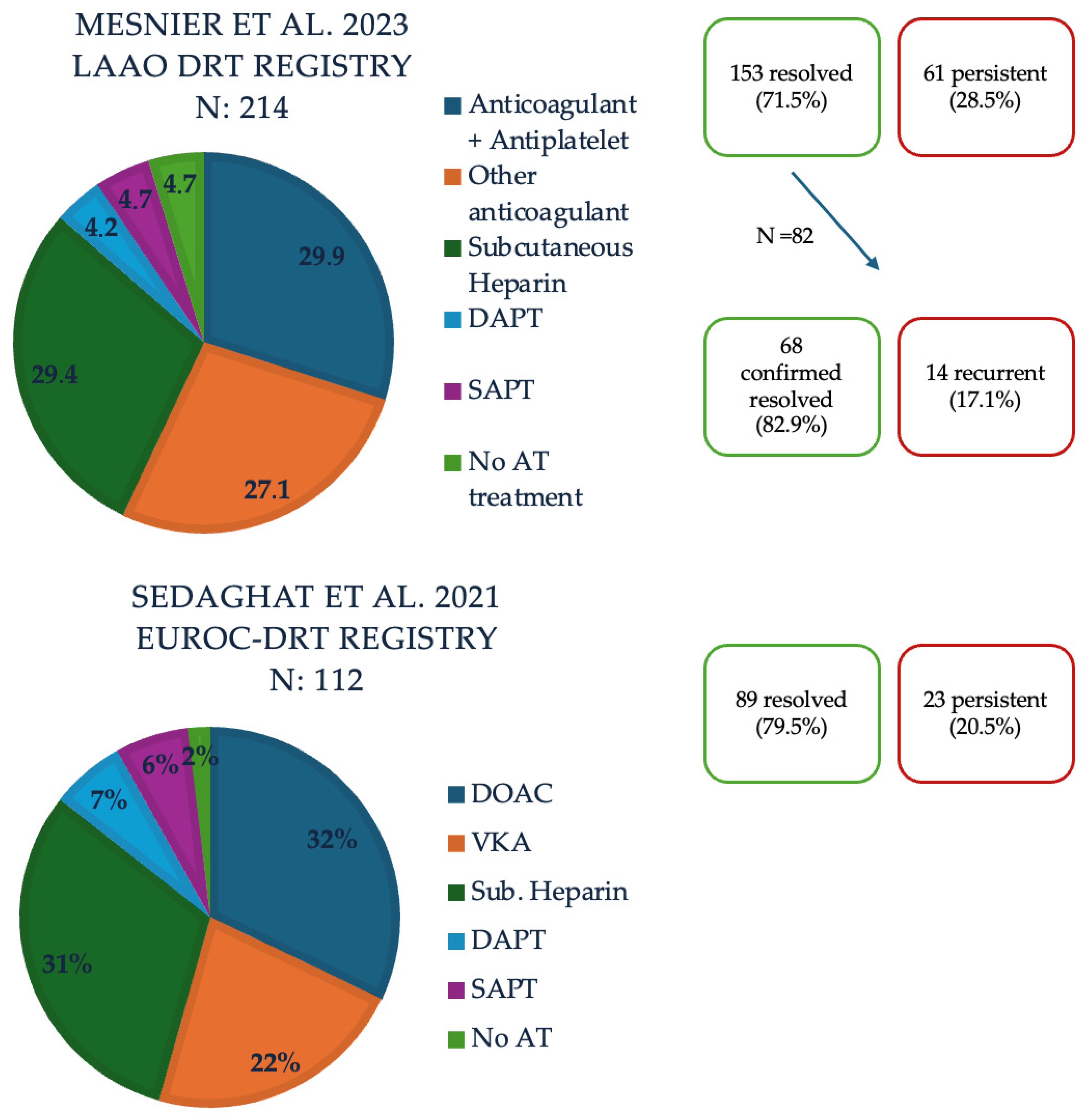
After DRT is identified, restarting or implementing anticoagulant therapy is generally regarded as the standard management approach; nevertheless, the ideal therapeutic regimen and the appropriate length of treatment remain unclear, real-world data show extreme heterogeneity, and the choice is sustained by very low certainty evidence (Figure 1) [55]. Evidence from patient-level registries suggests that DRT management is frequently associated with suboptimal efficacy. Mesnier et al. collected 214 cases of DRT treated by different regimens: anticoagulant and an antiplatelet agent in 29.9% of cases, anticoagulants in 56.5% (including 29.4% of heparin), and other treatments in 13.5% of cases (4.2% of dual antiplatelet therapy, 4.7% of single antiplatelet therapy, and 4.7% of no antithrombotic treatment), facing a complete resolution in 71.5% of the total. Subsequent imaging control was performed in 53.6% of the resolved patients after a few months, finding a rate of recurrence of 17.1% [69]. In the EUROC-DRT registry, DRT resolution was achieved in 79.5% of cases after a medium time interval of 105 days. A total of 32.1% of patients (36/112) were treated with DOAC, 22.3% (25/112) with VKA, 31.3% (35/112) with heparin, DAPT and antiplatelet monotherapy were prescribed in 6.3% (7/112) each, and no anticoagulation was given in 1.8% (2/112). No significant difference in efficacy was found among all regimens [68].
Nonetheless, more encouraging data were derived from two small meta-analyses with anticoagulant therapy escalation: in the proportion of patients with available follow-up after treatment initiation, Alkhouli et al. registered 140/144 (out of 351 DRT included) resolutions while Lempereur et al. observed 10/10 resolutions with low molecular weight heparin and 17/19 (89.5%) with OAC [44,71]. Challenging case reports of large and mobile DRT display strategic interventional treatment with surgical extraction and percutaneous aspiration [72,73]. Interestingly, few data report the high incidence of DRT recurrence among patients in whom oral anticoagulation was discontinued after initial thrombus resolution [74]. As mentioned before, this eventuality highlights a greater ischemic risk for these patients, necessitating tighter control and stronger therapy. Across registries, thrombus size (proposed cut-off of 7 mm) and hypercoagulability disorder have consistently emerged as the main independent predictor of unfavorable DRT evolution, while reduced baseline left ventricular ejection fraction and glomerular filtration rate were more prominent in persistent DRT [68,69].

6. Discussion

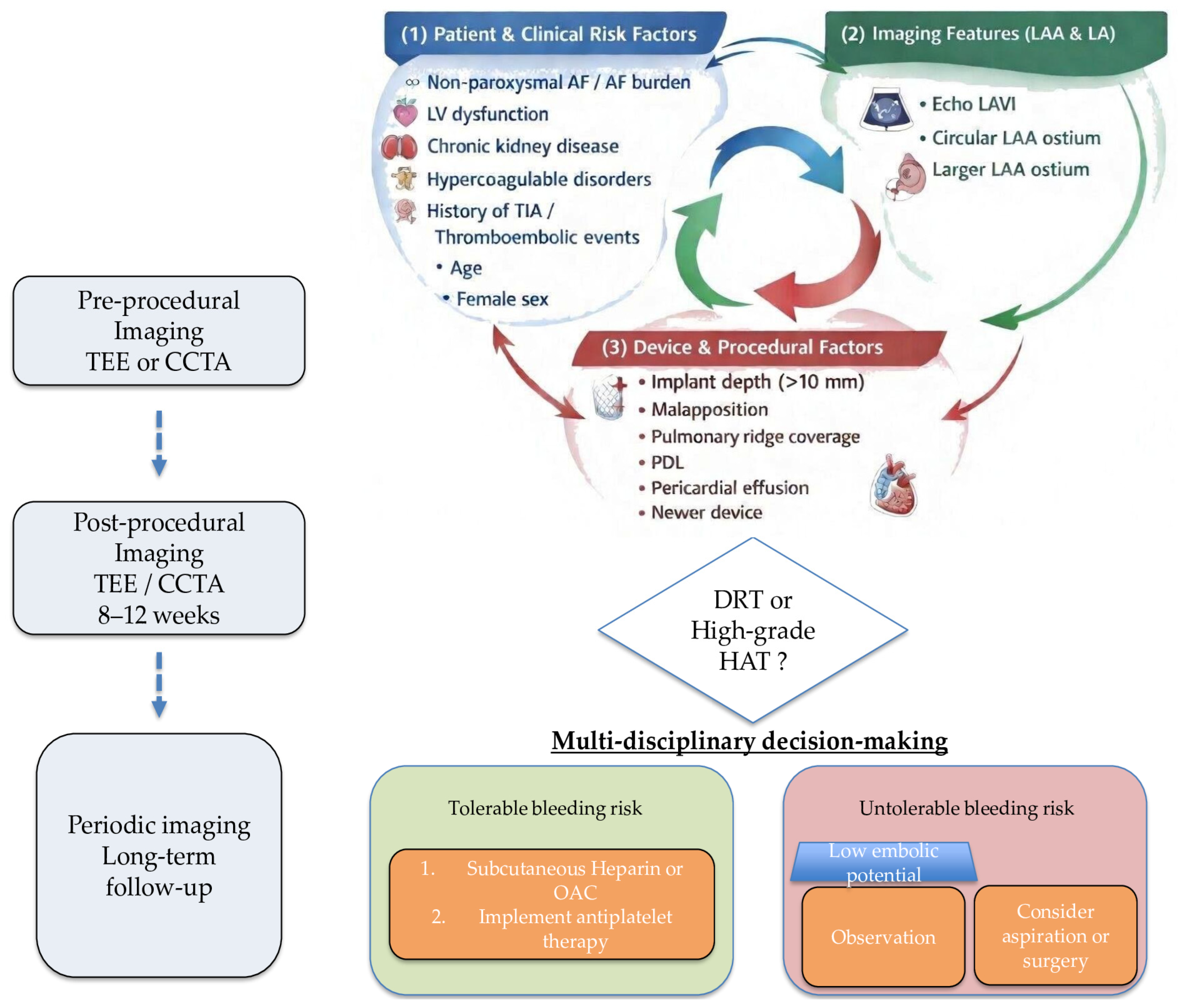
DRT remains a significant concern following LAAO: from a clinical standpoint, it removes the benefit brought by the procedure itself while detrimentally increasing the thromboembolic risk in patients usually intolerant to anticoagulation or at high bleeding risk. These clinical challenges, together with the heterogeneous data provided by the literature, make standardization difficult. Both the SCAI/HRS guideline panel and EHRA/EAPCI consensus statement suggest anticoagulation therapy (subcutaneous heparin or OAC) rather than no therapy until resolution, even if with low certainty of evidence [20,55]; however, physicians must confront this daily, with high or extremely high risk for bleeding situations that demand tailored approaches. Optimal DRT management, in light of the most recent evidence, needs to be multi-layered. As a first step, prevention of DRT incidence can be refined by multiple measures condensed in LAAO protocols. Clinical stratification, according to baseline risk factors for DRT or thrombosis, is functional to adopt treatment risk modifiers, when possible, before the procedure as well as to elaborate different risk profiles matched with proportional post-procedural follow-up and treatment. Along the same lines, procedural performance must be maximized. The optimal approach requires meticulous pre-procedural planning through the use of cardio imaging-derived measurements, preferably with the integration with CCTA scan [75], which allows for the proper selection of device type and dimension, and provides comparison images for the follow-up [10]. Furthermore, absence of mismatch, malapposition, and deep implantation prevents flow-dynamic impairments on the atrial surface and at LAA ostium [76]. After the procedure, close imaging evaluation helps to spot pro-DRT features and procedure-related complications. As such, physicians can consider more intense and prolonged post-discharge antithrombotic regimens, with dedicated and denser imaging surveillance. In fact, DRT insurgence may be subtle, with poor or delayed specific symptoms, plus, this may happen several months after device implantation. Considering the loose protocols and the proportion of patients lost to follow-up of some studies, DRT may be underdiagnosed. Systematic and prolonged follow-up may intercept the condition earlier, being central for optimized clinical outcomes rather than therapy alone [7]. On the other hand, procedural impairments (mostly PDL) can be directed to interventional correction when feasible (coils, plug). To sum up, baseline information after implant can be helpful to correct predisposing conditions and to furnish a comparison over prolonged follow-up. Aligning with guidelines and contemporary evidence, imaging surveillance protocols can be applied independently from clinical manifestations, with a safety control 6 to 12 weeks after LAAO. CCTA provides enhanced sensitivity compared to TEE, spotting even subclinical entities like low-grade HAT (grade 0–1), while high-grade HAT (grade 2–3) may be considered comparable to definite DRT in terms of the associated clinical implications. CCTA, as the preferred imaging modality, would come at the cost of a potential overdiagnosis of clinical entities, as it is still unable to distinguish between physiological mechanisms of device healing and the early stages of thrombus formation. However, pairing with preclinical risk-stratification low-grade HAT may retain the potential to progress toward a definite DRT in some cases, needing additional surveillance toward more aggressive prevention in higher-risk scenarios, even if the relationship between device healing, HAT, and thrombosis remains poorly understood. Contemporary guidelines and practice enhance the balancing of each individual thromboembolic risk and bleeding risk. Standard antithrombotic regimens have shown good efficacy and tolerability paired with increasing operator and center experience as well as ongoing technological advancement. Reading real-world registries, short-duration DAPT, or prolonged SAPT achieves outcomes that are non-inferior to standard regimens while offering improved tolerability; for which further evidence from larger randomized studies is warranted. Nonetheless, the suggested association between DRT and activation of the coagulation system favors anticoagulation over antiplatelet therapy in DRT prevention. Consequently, patients at high preclinical risk of thrombosis can benefit from post-discharge anticoagulation as far as it is not contraindicated. Recent trials support the use of reduced-dose DOAC strategies, which can be a profitable option by granting prolonged protection from DRT (up to 12 months follow-up), minimizing the bleeding risk. Adjunctive evidence of optimal balance between thromboembolic and bleeding risk from larger RCTs may clear these strategies as standard choice. At the same time, collection of data beyond 12 months may remove the protective effect of reduced-dose DOAC therapies from delayed DRT. High grade HAT (grade 2–3) and DRT are mostly associated with enhanced stroke risk, and the choice and duration of the therapeutic regimen is challenging. According to several reports, anticoagulant implementation as first choice (subcutaneous heparin or OAC) displays favorable resolution. Patients with high/prohibitive baseline bleeding risk need alternative options. As a main cornerstone, implementation of antithrombotic therapy from the baseline, even DAPT or SAPT, must be pursued as far as clinically possible. In such situations, estimating the embolic potential may be central in multidisciplinary decision-making, recognizing that large, mobile, and pedunculated masses place an elevated risk. Limited data have reported favorable outcomes despite therapeutic inertia or the impossibility of initiating anticoagulation or intensifying therapy; however, it is generally agreed that this option should be considered only in extreme cases in which the bleeding risk is prohibitive. Percutaneous aspiration or surgical extraction may be considered for high-risk embolic potential when oral therapy reveals ineffective or insufficient (persistent DRT), as well as in prohibitive bleeding risk, since it is performed in experienced centers [77]. Therapy exerts its efficacy until complete resolution of the thrombosis, and close imaging surveillance is needed to spot recurrent DRT (1–3 months). The diagnosis of recurrent DRT, as well as persistent DRT, should be regarded as a marker of extremely high risk, since it reflects both an increased baseline thromboembolic risk and an association with worse outcomes in terms of MACE and mortality, demanding a more intense approach. To summarize, based on indications supported by low levels of evidence, a practical management algorithm for DRT is presented, emphasizing that multidisciplinary and patient-individualized management and decision-making constitute its central core (Figure 2).

7. Future Directions

Technological advances are moving toward the development of higher-performance devices capable of reducing the incidence of DRT. A broader adoption of devices based on different design concepts may also expand interventional expertise in this field, such as the Zenith LAA occlusion system (AuriGen Medical, Galway, Ireland) [78]. Alternatives to plug-based devices include the WaveCrest® (Biosense Webster, Diamond Bar, CA, USA), while among lobe-and-disc devices include the Ultraseal® (Cardia, Inc., Eagan, MN, USA). Other percutaneous systems exploiting different mechanisms are either under development or require further evidence and wider clinical adoption, such as the Lariat system, which enables percutaneous snaring of the left atrial appendage as well as foam-based devices and low-frame devices (e.g., the Laminar device, Laminar, Inc., Santa Rosa, CA, USA) [79]. Regarding cardiac imaging, CCTA is gaining increasing adoption, and with the aim of improving DRT management, additional information could be obtained through the integration of hemodynamic flow analysis systems. With the development of cardiac magnetic resonance imaging (CMR), the ability to detect and characterize intracardiac thrombi appears superior to that of CCTA and can also be performed in patients with severe renal impairment. Furthermore, 3D-printing technology-based systems are being tested in order to improve preprocedural planning [80]. The challenges in the pharmacological management of DRT may benefit from validation studies of antithrombotic therapies using reduced-dose anticoagulants or novel pharmacological classes (e.g., Inhibitor XI factor), with the aim of improving the therapeutic profile without increasing the risk burden [81]. This work has limitations that are common to narrative reviews. The absence of a systematic method for selecting the literature can lead to bias and makes the results harder to reproduce. In addition, the authors’ evaluation of the quality of the included studies may have been influenced by subjective judgment, which could reduce the strength of the conclusions. For these reasons, even though an effort was made to remain objective, the findings should be read with caution and critically assessed by experienced professionals, particularly in clinical settings, while relying mainly on established guidelines as the main point of reference.

8. Conclusions

DRT represents a major critical issue after LAAO, affecting the outcomes of this widespread interventional procedure. In the absence of standardized protocols, multidisciplinary management and the establishment of dedicated follow-up pathways play a crucial role. Each patient referred for LAAO should undergo a multiparametric risk assessment to mitigate post-procedural thrombosis.

Author Contributions

Conceptualization, V.P.; Methodology, V.P., E.C., and A.G.P.; Validation V.P., E.C., A.G.P., M.M., and S.S.; Formal analysis, V.P., E.C., A.G.P., M.M., S.S., and M.I.; Investigation, V.P., E.C., A.G.P., M.M., and S.S.; Resources, V.P., E.C., A.G.P., and M.I.; Writing—original draft preparation, V.P., E.C., A.G.P., and M.I.; Writing—review and editing, M.M., S.S., G.M.S., and A.N.; Visualization, M.M., S.S., G.M.S., and A.N.; Supervision, G.M.S., A.N., and M.I.; Project administration, V.P. and M.I. All authors have read and agreed to the published version of the manuscript.

Funding

This research received no external funding.

Data Availability Statement

No new data were created or analyzed in this study. Data sharing is not applicable to this article.

Conflicts of Interest

Prof Andrea Natale is a consultant for Abbott, Biosense Webster, Biotronik, Boston Scientific, Field Medical, Medtronik, iRhythm, and Pulse Bioscience. The other authors declare no conflicts of interests.

Abbreviations

The following abbreviations are used in this manuscript:
AFAtrial fibrillation
ATAntithrombotic
CCTACardiac computed tomography
CKDChronic kidney disease
CMRCardiac magnetic resonance
DAPTDual antiplatelet therapy
DOACDirect oral anticoagulants
DRTDevice-related thrombosis
EAPCIEuropean Association of Percutaneous Cardiovascular Interventions
EHRAEuropean Heart Rhythm Association
FUFollow-up
HATHypoattenuated thickening
HRHazard ratio
HRSHeart Rhythm Society
INRInternational normalized ratio
LALeft atrium
LAALeft atrial appendage
LAAOLeft atrial appendage occlusion
MACEMajor adverse cardiac events
OACOral anticoagulation
OROdds ratio
PDLPeri-device leak
PETPolyethylene terephthalate
RCTRandomized controlled trial
SAPTSingle antiplatelet therapy
SCAISociety for Cardiovascular Angiography and Interventions
TEETransesophageal echocardiography
TIATransient ischemic attack
VKAVitamin K antagonists

References

  1. Pierucci, N.; Bruti, R.M.; Cipollone, P.; Mariani, M.V.; Laviola, D.; Palombi, M.; Trivigno, S.; Spadafora, L.; Bernardi, M.; Barca, L.; et al. Atrial Fibrillation: Economic Burden and Impact of Catheter Ablation. Minerva Cardiol. Angiol. 2025, 73, 1–17. [Google Scholar] [CrossRef] [PubMed]
  2. Garot, P.; Nielsen-Kudsk, J.E.; Freixa, X.; Berti, S.; Wunderlich, N.; Cruz-Gonzalez, I.; Räber, L.; Aminian, A.; De Backer, O. Contemporary European Practice in Left Atrial Appendage Closure: Results from a Survey Focusing on Planning, Techniques and Post-Implantation Management. BMJ Open 2025, 15, e090541. [Google Scholar] [CrossRef]
  3. Cronin, E.M.; Filby, S.; Field, M.E.; Huded, C.; Indik, J.H.; Sharma, A.; Armah, C.; Firestone, S.; Fix, A.M.; Senerth, E.; et al. SCAI/HRS Technical Review on Transcatheter Left Atrial Appendage Occlusion. J. Soc. Cardiovasc. Angiogr. Interv. 2025, 4, 103784. [Google Scholar] [CrossRef]
  4. Friedman, D.J.; Piccini, J.P. Device-Related Thrombus After Left Atrial Appendage Occlusion: The Villain of the Piece. JACC Clin. Electrophysiol. 2023, 9, 108–110. [Google Scholar] [CrossRef]
  5. Simard, T.; Jung, R.G.; Lehenbauer, K.; Piayda, K.; Pracoń, R.; Jackson, G.G.; Flores-Umanzor, E.; Faroux, L.; Korsholm, K.; Chun, J.K.R.; et al. Predictors of Device-Related Thrombus Following Percutaneous Left Atrial Appendage Occlusion. J. Am. Coll. Cardiol. 2021, 78, 297–313. [Google Scholar] [CrossRef]
  6. Alkhouli, M.; Alarouri, H.; Kramer, A.; Korsholm, K.; Collins, J.; De Backer, O.; Hatoum, H.; Nielsen-Kudsk, J.E. Device-Related Thrombus After Left Atrial Appendage Occlusion: Clinical Impact, Predictors, Classification, and Management. JACC Cardiovasc. Interv. 2023, 16, 2695–2707. [Google Scholar] [CrossRef]
  7. Schmidt, B.; Nielsen-Kudsk, J.E.; Ellis, C.R.; Thaler, D.; Sabir, S.A.; Gambhir, A.; Landmesser, U.; Shah, N.; Gray, W.; Swarup, V.; et al. Incidence, Predictors, and Clinical Outcomes of Device-Related Thrombus in the Amulet IDE Trial. JACC Clin. Electrophysiol. 2023, 9, 96–107. [Google Scholar] [CrossRef]
  8. Aminian, A.; Schmidt, B.; Mazzone, P.; Berti, S.; Fischer, S.; Montorfano, M.; Lam, S.C.C.; Lund, J.; Asch, F.M.; Gage, R.; et al. Incidence, Characterization, and Clinical Impact of Device-Related Thrombus Following Left Atrial Appendage Occlusion in the Prospective Global AMPLATZER Amulet Observational Study. JACC Cardiovasc. Interv. 2019, 12, 1003–1014. [Google Scholar] [CrossRef] [PubMed]
  9. Thakker, R.; Faluk, M.A.; Modi, S.; Ahmad, M. Echocardiography in Percutaneous Left Atrial Appendage Occlusion and Related Complications. Echocardiography 2023, 40, 1325–1335. [Google Scholar] [CrossRef] [PubMed]
  10. Milutinovic, S.; Perez, J.C.; Logvinsky, I.; Burton, M.E.; Trawick, A.; Chazal, R.A.; Wood, M.; Escarcega, R.O.; Gaztanaga, J.; Manoushagian, S.; et al. Preprocedural and Postprocedural CT Imaging Can Identify Patients at Risk for Complications After LAA Occlusion. JACC Adv. 2026, 5, 102523. [Google Scholar] [CrossRef]
  11. Albors, C.; Mill, J.; Olivares, A.L.; Iriart, X.; Cochet, H.; Camara, O. Impact of Occluder Device Configurations in In-Silico Left Atrial Hemodynamics for the Analysis of Device-Related Thrombus. PLoS Comput. Biol. 2024, 20, e1011546. [Google Scholar] [CrossRef]
  12. Reddy, V.Y.; Holmes, D.; Doshi, S.K.; Neuzil, P.; Kar, S. Safety of Percutaneous Left Atrial Appendage Closure: Results from the Watchman Left Atrial Appendage System for Embolic Protection in Patients with AF (PROTECT AF) Clinical Trial and the Continued Access Registry. Circulation 2011, 123, 417–424. [Google Scholar] [CrossRef] [PubMed]
  13. Holmes, D.R.; Kar, S.; Price, M.J.; Whisenant, B.; Sievert, H.; Doshi, S.K.; Huber, K.; Reddy, V.Y. Prospective Randomized Evaluation of the Watchman Left Atrial Appendage Closure Device in Patients with Atrial Fibrillation versus Long-Term Warfarin Therapy: The PREVAIL Trial. J. Am. Coll. Cardiol. 2014, 64, 177–179. [Google Scholar] [CrossRef]
  14. Galea, R.; La Fazia, V.M.; Della Rocca, D.G.; Gasys, A.; Bini, T.; Siontis, G.C.M.; Gianni, C.; Roten, L.; Mohanty, S.; Brugger, N.; et al. Watchman FLX versus Watchman 2.5 for Left Atrial Appendage Closure: A Propensity Score-Matched Analysis. EuroIntervention 2025, 21, e1479–e1487. [Google Scholar] [CrossRef] [PubMed]
  15. Saliba, W.I.; Kawai, K.; Sato, Y.; Kopesky, E.; Cheng, Q.; Ghosh, S.K.B.; Herbst, T.J.; Kawakami, R.; Konishi, T.; Virmani, R.; et al. Enhanced Thromboresistance and Endothelialization of a Novel Fluoropolymer-Coated Left Atrial Appendage Closure Device. JACC Clin. Electrophysiol. 2023, 9, 1555–1567. [Google Scholar] [CrossRef] [PubMed]
  16. Freixa, X.; Chan, J.L.K.; Tzikas, A.; Garceau, P.; Basmadjian, A.; Ibrahim, R. The AmplatzerTM Cardiac Plug 2 for Left Atrial Appendage Occlusion: Novel Features and First-in-Man Experience. EuroIntervention 2013, 8, 1094–1098. [Google Scholar] [CrossRef]
  17. Korsholm, K.; Kramer, A.; Andersen, A.; Saw, J.; Nørgaard, B.L.; Jensen, J.M.; Nielsen-Kudsk, J.E. Left Atrial Appendage Sealing Performance of the Amplatzer Amulet and Watchman FLX Device. J. Interv. Card. Electrophysiol. 2023, 66, 391–401. [Google Scholar] [CrossRef]
  18. Lakkireddy, D.; Ellis, C.R.; Thaler, D.; Swarup, V.; Gambhir, A.; Hermiller, J.; Nielsen-Kudsk, J.E.; Worthley, S.; Nair, D.; Schmidt, B.; et al. 5-Year Results from the AMPLATZER Amulet Left Atrial Appendage Occluder Randomized Controlled Trial. J. Am. Coll. Cardiol. 2025, 85, 1141–1153. [Google Scholar] [CrossRef]
  19. Sedaghat, A.; Schrickel, J.W.; Andrié, R.; Schueler, R.; Nickenig, G.; Hammerstingl, C. Thrombus Formation After Left Atrial Appendage Occlusion with the Amplatzer Amulet Device. JACC Clin. Electrophysiol. 2017, 3, 71–75. [Google Scholar] [CrossRef]
  20. Glikson, M.; Wolff, R.; Hindricks, G.; Mandrola, J.; Camm, A.J.; Lip, G.Y.H.; Fauchier, L.; Betts, T.R.; Lewalter, T.; Saw, J.; et al. EHRA/EAPCI Expert Consensus Statement on Catheter-Based Left Atrial Appendage Occlusion—An Update. EuroIntervention 2020, 15, 1133–1180. [Google Scholar] [CrossRef]
  21. Dukkipati, S.R.; Kar, S.; Holmes, D.R.; Doshi, S.K.; Swarup, V.; Gibson, D.N.; Maini, B.; Gordon, N.T.; Main, M.L.; Reddy, V.Y. Device-Related Thrombus After Left Atrial Appendage Closure: Incidence, Predictors, and Outcomes. Circulation 2018, 138, 874–885. [Google Scholar] [CrossRef]
  22. Kar, S.; Doshi, S.K.; Sadhu, A.; Horton, R.; Osorio, J.; Ellis, C.; Stone, J.; Shah, M.; Dukkipati, S.R.; Adler, S.; et al. Primary Outcome Evaluation of a Next-Generation Left Atrial Appendage Closure Device: Results from the PINNACLE FLX Trial. Circulation 2021, 143, 1754–1762. [Google Scholar] [CrossRef] [PubMed]
  23. Lakkireddy, D.; Thaler, D.; Ellis, C.R.; Swarup, V.; Sondergaard, L.; Carroll, J.; Gold, M.R.; Hermiller, J.; Diener, H.C.; Schmidt, B.; et al. Amplatzer Amulet Left Atrial Appendage Occluder Versus Watchman Device for Stroke Prophylaxis (Amulet IDE): A Randomized, Controlled Trial. Circulation 2021, 144, 1543. [Google Scholar] [CrossRef] [PubMed]
  24. Hildick-Smith, D.; Landmesser, U.; John Camm, A.; Diener, H.C.; Paul, V.; Schmidt, B.; Settergren, M.; Teiger, E.; Nielsen-Kudsk, J.E.; Tondo, C. Left Atrial Appendage Occlusion with the AmplatzerTM AmuletTM Device: Full Results of the Prospective Global Observational Study. Eur. Heart J. 2020, 41, 2894–2901. [Google Scholar] [CrossRef] [PubMed]
  25. Betts, T.R.; Grygier, M.; Kudsk, J.E.N.; Schmitz, T.; Sandri, M.; Casu, G.; Bergmann, M.; Hildick-Smith, D.; Christen, T.; Allocco, D.J.; et al. Real-World Clinical Outcomes with a next-Generation Left Atrial Appendage Closure Device: The FLXibility Post-Approval Study. Europace 2023, 25, 914–921. [Google Scholar] [CrossRef]
  26. Ali, M.; Rigopoulos, A.G.; Mammadov, M.; Torky, A.; Auer, A.; Matiakis, M.; Abate, E.; Bakogiannis, C.; Tzikas, S.; Bigalke, B.; et al. Systematic Review on Left Atrial Appendage Closure with the LAmbre Device in Patients with Non-Valvular Atrial Fibrillation. BMC Cardiovasc. Disord. 2020, 20, 78. [Google Scholar] [CrossRef]
  27. Kapadia, S.R.; Yeh, R.W.; Price, M.J.; Piccini, J.P.; Nair, D.G.; Bansal, A.; Hsu, J.C.; Freeman, J.V.; Christen, T.; Allocco, D.J.; et al. Outcomes with the WATCHMAN FLX in Everyday Clinical Practice from the NCDR Left Atrial Appendage Occlusion Registry. Circ. Cardiovasc. Interv. 2024, 17, e013750. [Google Scholar] [CrossRef]
  28. Boersma, L.V.A.; Schmidt, B.; Betts, T.R.; Sievert, H.; Tamburino, C.; Teiger, E.; Pokushalov, E.; Kische, S.; Schmitz, T.; Stein, K.M.; et al. Implant Success and Safety of Left Atrial Appendage Closure with the WATCHMAN Device: Peri-Procedural Outcomes from the EWOLUTION Registry. Eur. Heart J. 2016, 37, 2465–2474. [Google Scholar] [CrossRef]
  29. Rodés-Cabau, J.; O’Hara, G.; Paradis, J.M.; Bernier, M.; Rodriguez-Gabella, T.; Regueiro, A.; O’Connor, K.; Beaudoin, J.; Puri, R.; Côté, M.; et al. Changes in Coagulation and Platelet Activation Markers Following Transcatheter Left Atrial Appendage Closure. Am. J. Cardiol. 2017, 120, 87–91. [Google Scholar] [CrossRef]
  30. Reinhardt, S.W.; Gibson, D.N.; Hsu, J.C.; Kapadia, S.R.; Yeh, R.W.; Price, M.J.; Piccini, J.P.; Nair, D.G.; Christen, T.; Allocco, D.J.; et al. Anticoagulation Alone vs Anticoagulation Plus Aspirin or DAPT Following Left Atrial Appendage Occlusion. J. Am. Coll. Cardiol. 2024, 84, 889–900. [Google Scholar] [CrossRef]
  31. Carvalho, P.E.P.; Gewehr, D.M.; Miyawaki, I.A.; Nogueira, A.; Felix, N.; Garot, P.; Darmon, A.; Mazzone, P.; Preda, A.; Nascimento, B.R.; et al. Network Meta-Analysis of Initial Antithrombotic Regimens After Left Atrial Appendage Occlusion. J. Am. Coll. Cardiol. 2023, 82, 1765–1773. [Google Scholar] [CrossRef] [PubMed]
  32. Della Rocca, D.G.; Magnocavallo, M.; Di Biase, L.; Mohanty, S.; Trivedi, C.; Tarantino, N.; Gianni, C.; Lavalle, C.; Van Niekerk, C.J.; Romero, J.; et al. Half-Dose Direct Oral Anticoagulation Versus Standard Antithrombotic Therapy After Left Atrial Appendage Occlusion. JACC Cardiovasc. Interv. 2021, 14, 2353–2364. [Google Scholar] [CrossRef]
  33. Duthoit, G.; Silvain, J.; Marijon, E.; Ducrocq, G.; Lepillier, A.; Frere, C.; Dimby, S.F.; Popovic, B.; Lellouche, N.; Martin-Toutain, I.; et al. Reduced Rivaroxaban Dose Versus Dual Antiplatelet Therapy After Left Atrial Appendage Closure: ADRIFT a Randomized Pilot Study. Circ. Cardiovasc. Interv. 2020, 13, e008481. [Google Scholar] [CrossRef] [PubMed]
  34. Freixa, X.; Cruz-González, I.; Cepas-Guillén, P.; Millán, X.; Antúnez-Muiños, P.; Flores-Umanzor, E.; Asmarats, L.; Regueiro, A.; López-Tejero, S.; Li, C.H.P.; et al. Low-Dose Direct Oral Anticoagulation vs Dual Antiplatelet Therapy After Left Atrial Appendage Occlusion: The ADALA Randomized Clinical Trial. JAMA Cardiol. 2024, 9, 922–926. [Google Scholar] [CrossRef]
  35. Søndergaard, L.; Wong, Y.H.; Reddy, V.Y.; Boersma, L.V.A.; Bergmann, M.W.; Doshi, S.; Kar, S.; Sievert, H.; Wehrenberg, S.; Stein, K.; et al. Propensity-Matched Comparison of Oral Anticoagulation Versus Antiplatelet Therapy After Left Atrial Appendage Closure with WATCHMAN. JACC Cardiovasc. Interv. 2019, 12, 1055–1063. [Google Scholar] [CrossRef] [PubMed]
  36. Ibrahim, A.; Shalabi, L.; Zreigh, S.; Ramadan, S.; Mourad, S.; Eljadid, G.; Beshr, M.; Abdelaziz, A.; Elhadi, M.; Sabouret, P.; et al. Comparative Efficacy and Safety of Low-Dose Direct Oral Anticoagulants Versus Dual Antiplatelet Therapy Following Left Atrial Appendage Occlusion in Patients with Nonvalvular Atrial Fibrillation: A Systematic Review and Meta-Analysis. Catheter. Cardiovasc. Interv. 2025, 105, 1311–1319. [Google Scholar] [CrossRef]
  37. Rodés-Cabau, J.; Nombela-Franco, L.; Cruz-Gonzalez, I.; Hibbert, B.; Freixa, X.; Masson, J.-B.; Ibrahim, R.; Estevez-Loureiro, R.; Millan, X.; Kass, M.; et al. Short-Term Anticoagulation Versus Dual Antiplatelet Therapy for Preventing Device Thrombosis Following Left Atrial Appendage Closure: The ANDES Randomized Clinical Trial. Circulation 2025, 152, 1759–1768. [Google Scholar] [CrossRef]
  38. Weise, F.K.; Bordignon, S.; Perrotta, L.; Konstantinou, A.; Bologna, F.; Nagase, T.; Chen, S.; Chun, K.R.J.; Schmidt, B. Short-Term Dual Antiplatelet Therapy after Interventional Left Atrial Appendage Closure with Different Devices. EuroIntervention 2018, 13, e2138–e2146. [Google Scholar] [CrossRef]
  39. Llagostera-Martín, M.; Cainzos, M.; Salvatella, N.; Cubero-Gallego, H.; Mas-Stachurska, A.; Sánchez-Carpintero, A.; Tizón-Marcos, H.; Calvo-Fernández, A.; Molina, L.; Vaquerizo, B. Single Antiplatelet Therapy after Left Atrial Appendage Closure in Patients with AF: Safety and Effectiveness. Rev. Esp. Cardiol. Engl. Ed 2024, 77, 150–157. [Google Scholar] [CrossRef]
  40. Galea, R.; Krsnik, J.P.; Bini, T.; Chalkou, K.; Gasys, A.; Brugger, N.; Madhkour, R.; Seiffge, D.J.; Roten, L.; Siontis, G.C.M.; et al. Single vs Dual Antiplatelet Therapy after Left Atrial Appendage Closure: A Propensity Score Matching Analysis. Heart Rhythm 2025, 22, 971–978. [Google Scholar] [CrossRef]
  41. Gallo, F.; Ronco, F.; D’Amico, G.; Della Rocca, D.G.; Mazzone, P.; Bordignon, S.; Casu, G.; Giannini, F.; Berti, S.; Horton, R.P.; et al. Clinical Outcomes of Left Atrial Appendage Occlusion in Patients with Previous Intracranial or Gastrointestinal Bleeding: Insights from the LOGIC (Left Atrial Appendage Occlusion in Patients with Gastrointestinal or IntraCranial Bleeding) International Multicenter Registry. Catheter. Cardiovasc. Interv. 2023, 101, 1144–1153. [Google Scholar] [CrossRef]
  42. Flores-Umanzor, E.; Asghar, A.; Cepas-Guillén, P.L.; Farrell, A.; Keshvara, R.; Alvarez-Rodriguez, L.; Osten, M.; Freixa, X.; Horlick, E.; Abrahamyan, L. Transcatheter Left Atrial Appendage Occlusion in Patients with Chronic Kidney Disease: A Systematic Review and Meta-Analysis. Clin. Res. Cardiol. 2024, 113, 1485–1500. [Google Scholar] [CrossRef]
  43. Rodriguez-Riascos, J.F.; Vemulapalli, H.S.; Akin, I.; Areiza, L.A.; Della Rocca, D.G.; Eitel, I.; Fink, T.; Genovesi, S.; Kefer, J.; Zweiker, D.; et al. Left Atrial Appendage Occlusion in Patients with End-Stage Renal Disease: An Individual Patient-Level Meta-Analysis. Europace 2025, 27, euaf198. [Google Scholar] [CrossRef]
  44. Alkhouli, M.; Busu, T.; Shah, K.; Osman, M.; Alqahtani, F.; Raybuck, B. Incidence and Clinical Impact of Device-Related Thrombus Following Percutaneous Left Atrial Appendage Occlusion: A Meta-Analysis. JACC Clin. Electrophysiol. 2018, 4, 1629–1637. [Google Scholar] [CrossRef]
  45. Sedaghat, A.; Nickenig, G.; Schrickel, J.W.; Ince, H.; Schmidt, B.; Protopopov, A.V.; Betts, T.R.; Gori, T.; Sievert, H.; Mazzone, P.; et al. Incidence, Predictors and Outcomes of Device-Related Thrombus after Left Atrial Appendage Closure with the WATCHMAN Device-Insights from the EWOLUTION Real World Registry. Catheter. Cardiovasc. Interv. 2021, 97, E1019–E1024. [Google Scholar] [CrossRef] [PubMed]
  46. Vogl, B.J.; Vitale, E.; Ahn, S.; Sularz, A.; Chavez Ponce, A.; Lo Russo, G.V.; Collins, J.; Bavo, A.M.; El Shaer, A.; Kramer, A.; et al. Flow Dynamic Factors Correlated with Device-Related Thrombosis After Left Atrial Appendage Occlusion. JACC Adv. 2024, 3, 101339. [Google Scholar] [CrossRef]
  47. Bshennaty, A.; Vogl, B.J.; Saleh, G.; Bavo, A.M.; Sularz, A.; Ghazal-Aswad, K.; Kramer, A.D.; Jia, Y.; De Beule, M.; Nielsen-Kudsk, J.E.; et al. Comparison of Flow Dynamics After Left Atrial Appendage Occlusion with the Watchman FLX Versus Amulet Devices: Implications for Device-Related Thrombosis. Catheter. Cardiovasc. Interv. 2025, 106, 2084–2092. [Google Scholar] [CrossRef] [PubMed]
  48. Ellis, C.R.; Alkhouli, M.; Anderson, J.A.; Swarup, V. Comparative Endothelialization of Amulet LAA Occluder and Watchman 2.5 LAA Device: Observations from Explanted Hearts. JACC Clin. Electrophysiol. 2022, 8, 828–829. [Google Scholar] [CrossRef]
  49. Kramer, A.D.; Korsholm, K.; Jensen, J.M.; Nørgaard, B.L.; Peelukhana, S.; Herbst, T.; Horton, R.; Kar, S.; Saw, J.; Alkhouli, M.; et al. Cardiac Computed Tomography Following Watchman FLX Implantation: Device-Related Thrombus or Device Healing? Eur. Heart J. Cardiovasc. Imaging 2023, 24, 250–259. [Google Scholar] [CrossRef]
  50. Simard, T.J.; Hibbert, B.; Alkhouli, M.A.; Abraham, N.S.; Holmes, D.R. Device-Related Thrombus Following Left Atrial Appendage Occlusion. EuroIntervention 2022, 18, 224–232. [Google Scholar] [CrossRef]
  51. Fauchier, L.; Cinaud, A.; Brigadeau, F.; Lepillier, A.; Pierre, B.; Abbey, S.; Fatemi, M.; Franceschi, F.; Guedeney, P.; Jacon, P.; et al. Device-Related Thrombosis After Percutaneous Left Atrial Appendage Occlusion for Atrial Fibrillation. J. Am. Coll. Cardiol. 2018, 71, 1528–1536. [Google Scholar] [CrossRef] [PubMed]
  52. Pracon, R.; Bangalore, S.; Dzielinska, Z.; Konka, M.; Kepka, C.; Kruk, M.; Kaczmarska-Dyrda, E.; Petryka-Mazurkiewicz, J.; Bujak, S.; Solecki, M.; et al. Device Thrombosis After Percutaneous Left Atrial Appendage Occlusion Is Related to Patient and Procedural Characteristics but Not to Duration of Postimplantation Dual Antiplatelet Therapy. Circ. Cardiovasc. Interv. 2018, 11, e005997. [Google Scholar] [CrossRef] [PubMed]
  53. Cepas-Guillén, P.; Robichaud, M.; O`Hara, G.; Paradis, J.M.; Champagne, J.; Delarochelliere, H.; Salaun, E.; Sirois, P.O.; Coté, M.; Rodés-Cabau, J. Role of Early Prothrombotic Evaluation in Device-Related Thrombus Risk Stratification After Left Atrial Appendage Closure. Struct. Heart 2025, 9, 100720. [Google Scholar] [CrossRef]
  54. Main, M.L.; Fan, D.; Reddy, V.Y.; Holmes, D.R.; Gordon, N.T.; Coggins, T.R.; House, J.A.; Liao, L.; Rabineau, D.; Latus, G.G.; et al. Assessment of Device-Related Thrombus and Associated Clinical Outcomes with the WATCHMAN Left Atrial Appendage Closure Device for Embolic Protection in Patients with Atrial Fibrillation (from the PROTECT-AF Trial). Am. J. Cardiol. 2016, 117, 1127–1134. [Google Scholar] [CrossRef]
  55. Goldsweig, A.M.; Glikson, M.; Joza, J.; Kavinsky, C.J.; Khalique, O.; Lakkireddy, D.; Mackensen, G.B.; Naccarelli, G.V.; Nair, D.G.; Saw, J.; et al. 2025 SCAI/HRS Clinical Practice Guidelines on Transcatheter Left Atrial Appendage Occlusion. Heart Rhythm 2025, 22, e1048–e1063. [Google Scholar] [CrossRef] [PubMed]
  56. Abdelmoneim, S.S.; Mulvagh, S.L. Techniques To Improve Left Atrial Appendage Imaging. J. Atr. Fibrillation 2014, 7, 1059. [Google Scholar] [CrossRef]
  57. Beigel, R.; Wunderlich, N.C.; Ho, S.Y.; Arsanjani, R.; Siegel, R.J. The Left Atrial Appendage: Anatomy, Function, and Noninvasive Evaluation. JACC Cardiovasc. Imaging 2014, 7, 1251–1265. [Google Scholar] [CrossRef]
  58. Rajiah, P.; Alkhouli, M.; Thaden, J.; Foley, T.; Williamson, E.; Ranganath, P. Pre-and Postprocedural Ct of Transcatheter Left Atrial Appendage Closure Devices. Radiographics 2021, 41, 680–698. [Google Scholar] [CrossRef]
  59. Saw, J.; Fahmy, P.; DeJong, P.; Lempereur, M.; Spencer, R.; Tsang, M.; Gin, K.; Jue, J.; Mayo, J.; McLaughlin, P.; et al. Cardiac CT Angiography for Device Surveillance after Endovascular Left Atrial Appendage Closure. Eur. Heart J. Cardiovasc. Imaging 2015, 16, 1198–1206. [Google Scholar] [CrossRef]
  60. Romero, J.; Cao, J.J.; Garcia, M.J.; Taub, C.C. Cardiac Imaging for Assessment of Left Atrial Appendage Stasis and Thrombosis. Nat. Rev. Cardiol. 2014, 11, 470–480. [Google Scholar] [CrossRef]
  61. Korsholm, K.; Jensen, J.M.; Nørgaard, B.L.; Nielsen-Kudsk, J.E. Detection of Device-Related Thrombosis Following Left Atrial Appendage Occlusion: A Comparison Between Cardiac Computed Tomography and Transesophageal Echocardiography. Circ. Cardiovasc. Interv. 2019, 12, e008112. [Google Scholar] [CrossRef] [PubMed]
  62. Cochet, H.; Iriart, X.; Sridi, S.; Camaioni, C.; Corneloup, O.; Montaudon, M.; Laurent, F.; Selmi, W.; Renou, P.; Jalal, Z.; et al. Left Atrial Appendage Patency and Device-Related Thrombus after Percutaneous Left Atrial Appendage Occlusion: A Computed Tomography Study. Eur. Heart J. Cardiovasc. Imaging 2018, 19, 1351–1361. [Google Scholar] [CrossRef]
  63. Miller, T.; Hana, D.; Patibandla, S.; Guzman, D.B.; Avalon, J.C.; Zeb, I.; Kadiyala, M.; Mills, J.; Balla, S.; Kim, C.; et al. Cardiac Computed Tomography Angiography for Device-Related Thrombus Assessment After WATCHMAN FLXTM Occluder Device Implantation: A Single-Center Retrospective Observational Study. Cardiovasc. Revasc. Med. 2022, 41, 35–46. [Google Scholar] [CrossRef]
  64. Guilleminot, P.; Richard, C.; Roger, A.; Daller, M.; Laurent, G.; Vergely, C.; Guenancia, C.; Pommier, T. Incidence and Predictors of Hypoattenuated Thickening and Device-Related Thrombus at Three Months Postprocedural CT Assessment Following Left Atrial Appendage Occlusion with Amplatzer Devices-A Single-Center Cohort. Catheter. Cardiovasc. Interv. 2025, 107, 754–761. [Google Scholar] [CrossRef]
  65. Iriart, X.; Blanc, G.; Bouteiller, X.P.; Legghe, B.; Bouyer, B.; Sridi-Cheniti, S.; Bustin, A.; Vasile, C.; Thambo, J.B.; Elbaz, M.; et al. Clinical Implications of CT-Detected Hypoattenuation Thickening on Left Atrial Appendage Occlusion Devices. Radiology 2023, 308, e230462. [Google Scholar] [CrossRef] [PubMed]
  66. Korsholm, K.; Iriart, X.; Saw, J.; Wang, D.D.; Berti, S.; Galea, R.; Freixa, X.; Arzamendi, D.; De Backer, O.; Kramer, A.; et al. Position Statement on Cardiac Computed Tomography Following Left Atrial Appendage Occlusion. JACC Cardiovasc. Interv. 2024, 17, 1747–1764. [Google Scholar] [CrossRef]
  67. Tan, B.E.X.; Baqai, F.; Padilla, F.; Nimri, N.; Cheung, J.W.; Kottam, A.; Medina, H.M. Cardiac CT Versus Transesophageal Echocardiography Following Left Atrial Appendage Closure: A Systematic Review and Meta-Analysis. Circ. Cardiovasc. Imaging 2025, 18, e018151. [Google Scholar] [CrossRef]
  68. Sedaghat, A.; Vij, V.; Al-Kassou, B.; Gloekler, S.; Galea, R.; Fürholz, M.; Meier, B.; Valgimigli, M.; O’Hara, G.; Arzamendi, D.; et al. Device-Related Thrombus After Left Atrial Appendage Closure: Data on Thrombus Characteristics, Treatment Strategies, and Clinical Outcomes from the EUROC-DRT-Registry. Circ. Cardiovasc. Interv. 2021, 14, E010195. [Google Scholar] [CrossRef]
  69. Mesnier, J.; Simard, T.; Jung, R.G.; Lehenbauer, K.R.; Piayda, K.; Pracon, R.; Jackson, G.G.; Flores-Umanzor, E.; Faroux, L.; Korsholm, K.; et al. Persistent and Recurrent Device-Related Thrombus After Left Atrial Appendage Closure: Incidence, Predictors, and Outcomes. JACC Cardiovasc. Interv. 2023, 16, 2722–2732. [Google Scholar] [CrossRef] [PubMed]
  70. Boersma, L.V.; Ince, H.; Kische, S.; Pokushalov, E.; Schmitz, T.; Schmidt, B.; Gori, T.; Meincke, F.; Protopopov, A.V.; Betts, T.; et al. Evaluating Real-World Clinical Outcomes in Atrial Fibrillation Patients Receiving the WATCHMAN Left Atrial Appendage Closure Technology: Final 2-Year Outcome Data of the EWOLUTION Trial Focusing on History of Stroke and Hemorrhage. Circ. Arrhythm. Electrophysiol. 2019, 12, e006841. [Google Scholar] [CrossRef]
  71. Lempereur, M.; Aminian, A.; Freixa, X.; Gafoor, S.; Kefer, J.; Tzikas, A.; Legrand, V.; Saw, J. Device-Associated Thrombus Formation after Left Atrial Appendage Occlusion: A Systematic Review of Events Reported with the Watchman, the Amplatzer Cardiac Plug and the Amulet. Catheter. Cardiovasc. Interv. 2017, 90, E111–E121. [Google Scholar] [CrossRef]
  72. Gyoten, T.; Grimmig, O.; Just, S.; Fritzsche, D. Surgical Repair of an Uncontrolled Thrombus Caused by the Watchman Device. Interact. Cardiovasc. Thorac. Surg. 2019, 28, 164–166. [Google Scholar] [CrossRef]
  73. Vyas, R.; Kohler, C.; Pershad, A. Percutaneous Extraction of a Large Device-Related Thrombus on a WatchmanTM Device: A Case Report. Eur. Heart J. Case Rep. 2021, 6, ytab517. [Google Scholar] [CrossRef]
  74. Asmarats, L.; Cruz-González, I.; Nombela-Franco, L.; Arzamendi, D.; Peral, V.; Nietlispach, F.; Latib, A.; Maffeo, D.; González-Ferreiro, R.; Rodríguez-Gabella, T.; et al. Recurrence of Device-Related Thrombus After Percutaneous Left Atrial Appendage Closure. Circulation 2019, 140, 1441–1443. [Google Scholar] [CrossRef] [PubMed]
  75. Pereira, V.; Fernandes, J.; Pinheiro, R.P.S.; Andrade, N.; Katsuyama, E.; Ezenna, C.; Krishna, M.M.; Joseph, M.; Goldsweig, A.M.; Gomes, W.F. Outcomes of Adding Computed Tomography Angiography for Pre-Procedural Planning of Left Atrial Appendage Occlusion: A Systematic Review and Meta-Analysis. Curr. Cardiol. Rep. 2025, 28, 1. [Google Scholar] [CrossRef] [PubMed]
  76. La Fazia, V.M.; Galea, R.; Della Rocca, D.G.; Gianni, C.; Gasys, A.; Mohanty, S.; Madhkour, R.; Pierucci, N.; Torlapati, P.G.; Chalkou, K.; et al. Impact of Device Compression on Peridevice Leak After Left Atrial Appendage Closure: The Impression LAAC Study. JACC Clin. Electrophysiol. 2025, 11, 2742–2753. [Google Scholar] [CrossRef]
  77. Gianni, C.; Horton, R.P.; Nair, G.; La Fazia, V.M.; Mohanty, S.; Al-Ahmad, A.; Allison, J.D.; Bassiouny, M.A.; Bode, W.D.; Burkhardt, J.D.; et al. Percutaneous Aspiration Thrombectomy in Patients with Persistent Left Atrial Appendage Thrombus: A Case Series. JACC Clin. Electrophysiol. 2025, 11, 2448–2457. [Google Scholar] [CrossRef]
  78. Mahfoud, F.; Ukena, C.; Adamson, P.D.; O’Connor, M.; Brooks, M.; King, L.M.; Thompson, J.; Panikker, S. Left Atrial Appendage Occlusion Using a Novel System: Preclinical Evaluation and First-in-Human Experience. JACC Cardiovasc. Interv. 2025, 18, 3072–3083. [Google Scholar] [CrossRef]
  79. Landmesser, U.; Skurk, C.; Tzikas, A.; Falk, V.; Reddy, V.Y.; Windecker, S. Left Atrial Appendage Closure for Stroke Prevention in Atrial Fibrillation: Current Status and Perspectives. Eur. Heart J. 2024, 45, 2914–2932. [Google Scholar] [CrossRef]
  80. Arbati, E.G.; Bourantas, G.; Tachos, N.; Nikopoulos, S.; Fotiadis, D.I.; Sakellarios, A. Investigation of the Left Atrium Hemodynamics Using Finite Elements and a Novel Post-Processing Approach for Wall Shear Stress Calculation. In Proceedings of the Annual International Conference of the IEEE Engineering in Medicine and Biology Society; IEEE: New York, NY, USA, 2025; pp. 1–5. [Google Scholar] [CrossRef]
  81. Greco, A.; Laudani, C.; Spagnolo, M.; Agnello, F.; Faro, D.C.; Finocchiaro, S.; Legnazzi, M.; Mauro, M.S.; Mazzone, P.M.; Occhipinti, G.; et al. Pharmacology and Clinical Development of Factor XI Inhibitors. Circulation 2023, 147, 897–913. [Google Scholar] [CrossRef]
Figure 1. DRT therapeutic management across registries. AT: antithrombotic therapy; DAPT: dual antiplatelet therapy; DOAC: direct oral anticoagulant; SAPT: single antiplatelet therapy; VKA: vitamin K antagonists. Persistent DRT: continuous presence of DRT in all subsequent LAA imaging. Resolved DRT: complete clearance of DRT documented by at least one LAA imaging. Recurrent DRT: new-onset DRT appearing on at least one LAA imaging after DRT resolution. In Mesnier et al.: among patients in whom DRT initially resolved, repeat LAA imaging was performed in 82/153 cases (53.6%) after documented resolution. Sustained DRT resolution was confirmed in 68 patients (82.9%) [68,69].
Cardiovascmed 29 00016 g001
Figure 2. Proposed practical management steps. AF = atrial fibrillation; CCTA = cardiac computed tomography; HAT = hypoattenuated thickening; LA = left atrium; LAA = left atrial appendage; LAVI = Left Atrial Volume Index; OAC = oral anticoagulation; PDL = peri-device leak; TEE = transesophageal echocardiography.
Cardiovascmed 29 00016 g002
Table 1. Antithrombotic strategies: trial vs. real-world.
DevicePivotal Trial
(Antithrombotic Regimen)
Real-World Registries
(Antithrombotic Regimen at Discharge)
DRT from Registries
Watchman 2.5PROTECT AF; PREVAIL
Warfarin (target INR 2.0–3.0) + ASA (45 days) → DAPT (6 months) → ASA
EWOLUTION (n = 1025)
DAPT 59%
OAC (±ASA) 27%
SAPT 7%
No AT 7%
4.1% 2 years FU
Watchman FLXPINNACLE FLX
DOAC + ASA (45 days) → DAPT (6 months) → ASA
SURPASS (n = 97.185)
DOAC + ASA 47.5%
DOAC 24%
DAPT 9.2%
Other 19.3%
0.44% at 45 days
Amplatzer AmuletAMULET/AMPLATZER IDE
DAPT (3–6 months) → SAPT
AMPLATZER Amulet observational study (n = 1088)
DAPT 54.3%
SAPT 23%
OAC (±ASA) 18.9%
No AT 2%
1.5% at 67 ± 23 days FU
LAmbreDAPT (3 months) → ASAmeta-analysis of 10 studies (n = 403)
DAPT (3–6 months) → SAPT
0.7%
AT: antithrombotic; DAPT: dual antiplatelet therapy; DOAC: direct oral anticoagulant; FU: follow-up; OAC: oral anticoagulant; SAPT: single antiplatelet therapy [12,13,22,23,24,26,27,28].
Table 2. Definitions of DRT across major trials and registries and follow-up protocols.
StudyImaging ModalityTimingDefinition of DRT
PROTECT AFTEE45 d, 6 m, 12 mEcho density on the left atrial aspect of the device (1) not explained by imaging artifact; (2) inconsistent with normal healing or device incorporation; (3) visible in multiple transesophageal echocardiographic planes; (4) in contact with the Watchman device; and (5) exhibiting independent motion.
The definition of thrombus included: a filling defect that was either (1) “laminar”, if the basal length of the thrombus was greater than the height, or (2) “pedunculated”, if the height was greater than the basal length [54].
PREVAILTEE45 d, 6 m, 12 m
CAP/CAP 2TEE45 d, 6 m, 12 m
ASAPTEE3 m, 12 m
EWOLUTIONTEE 45 d, 3 m, 12 m
PINNACLE-FLXTEE45 d, 12 m
FLXibilityTEE45 d
PRAGUE-17TEE3–6 m
OPTIONTEE3 m, 12 m
SWISS-APEROTEE/CTTA45 dClot that forms on the atrial surface of the device during or after its implantation.
TTE: homogenous mass with an echogenicity comparable to the myocardium on the atrial surface of the device, inconsistent with normal healing/device incorporation process and not explained by imaging artifact. DRT can have a pedunculated shape with an independent motion or be sessile without any motion and is visible in multiple planes.
CT: homogenous HAT on the atrial surface of the device. There is no uniform definition for differentiating it from prominent endothelialization by CT.
AMULET IDETEE45 d, 6 m, 12 mDRT is defined as presence of discrete or layering material consisting of an echotexture that differs from the LAA device and the expected formation of endothelium on the atrial surface of the device.
CCTA = cardiac computed tomography; DRT = device-related thrombosis; HAT = hypoattenuated thickening; LAA = left atrial appendage; TEE = transesophageal echocardiography.
Table 3. HAT classification.
GradeMorphologyProfileLocation
Grade 0Laminar Only Watchman: localized in the depression in the frame around the central screw hub
Grade 1Sessile < 3 mm
Sessile ≥ 3 mm
  • No LA wall continuity
  • Smooth surface
Grade 2Sessile > 3 mm
  • LA wall continuity
    or
  • Irregular surface
Grade 3Pedunculated
HAT: hypoattenuated thickening; LA: left atrium.
Disclaimer/Publisher’s Note: The statements, opinions and data contained in all publications are solely those of the individual author(s) and contributor(s) and not of MDPI and/or the editor(s). MDPI and/or the editor(s) disclaim responsibility for any injury to people or property resulting from any ideas, methods, instructions or products referred to in the content.