


Abstract
Three types of Zostera marina L. collection were extracted using the supercritical CO2-extraction method. For the purposes of supercritical CO2-extraction, old seagrass ejection on the surf edge, fresh seagrass ejection on the surf edge and seagrass collected in water were used. Several experimental conditions were investigated in the pressure range 50–350 bar, with the used volume of co-solvent ethanol in the amount of 1% in the liquid phase at a temperature in the range of 31–70 °C. The most effective extraction conditions are: pressure 250 Bar and temperature 60 °C for Z. marina collected in sea water. Z. marina contain various phenolic compounds and sulfated polyphenols with valuable biological activity. Tandem mass-spectrometry (HPLC-ESI–ion trap) was applied to detect target analytes. 77 different biologically active components have been identified in Z. marina supercritical CO2-extracts. 38 polyphenols were identified for the first time in Z. marina.
1. Introduction
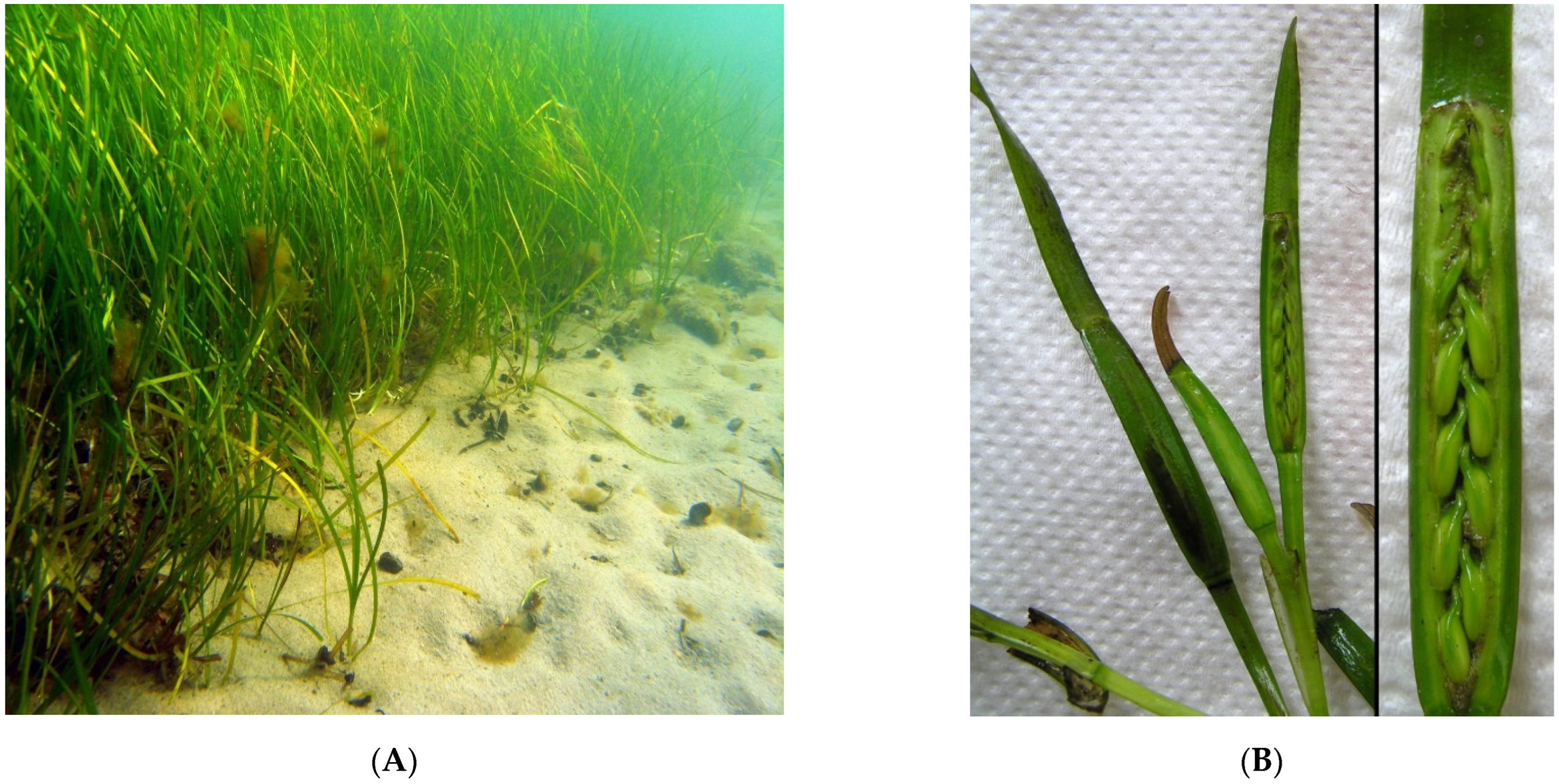
Zostera marina L. is a perennial marine herbaceous plant, genus Zostera, family Zosteraceae. Zostera lives mainly in the coastal waters of the northern hemisphere, it grows in the Azov, Black, Caspian, White and Far Eastern seas (Figure 1). For the most part, the plant lives in shallow water or at a depth of 1–4 m (sometimes 10 m), mainly on soft sandy or muddy bottoms in the calm waters of bays and bays. In the 30s of the last century, Zostera began to die, the reason for this was a special type of animal–the labyrinthula [1]. During the epidemic, Zostera disappeared from the coasts of North America, the Atlantic and Southern Europe and still does not grow in these places.
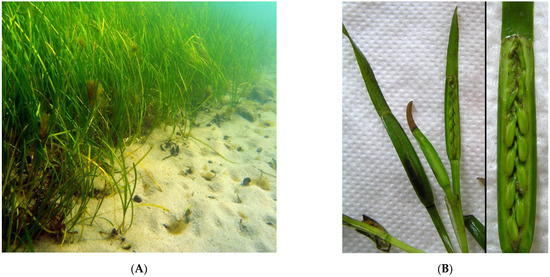
Figure 1.
(A)—Zostera marina L. (Peter the Great Gulf, Primorsky Krai, Russia); (B)—Reproductive shoot of Z. marina L.
Zostera has a branched root system, forms underwater meadows, sometimes with a very high herbage up to 100 cm high. Plants bloom and pollinate under water, pollen is carried by streams of water. In order to survive in harsh conditions that are not intended for the life of higher plants, that is, in salty sea water, the plant has acquired a number of biochemical features that determines its adaptation to a specific habitat. The plant produces a special pectin, which has no analogues in other plants. Firstly, it was isolated in 1940 by the Russian scientist V.I. Miroshnikov, who named it zosterin. Zosterin from a chemical point of view is a polysaccharide of pectin nature. It is a highly active polyanionic adsorbent, which, passing through the gastrointestinal tract, binds and removes heavy metal ions, bile acids, pathogenic microorganisms, etc. from the body [2].
Interested in the unique nature of zosterin, Yu. S. Ovodov engaged in serious research, the result of which showed that these pectins are among the most complex in structure of objects of natural origin, and this unique feature gives them a high adsorption capacity. Because of this, a pectin called zosterin has found extensive use in medicine [3].
The pectin from Zostera marina has unique features that distinguish it from the glycans of other land plants. Numerous studies have shown that zosterin has a more complex structure than land plant pectins. Although it, like other pectins, has a linear backbone of rhamnogalacturonan and a branched region, however, the latter is a much more complex configuration. Another “block” is attached to it–xylogalacturonan (chains consisting of rings of galacturonic acid and xylose). Xylogalacturonans were found earlier in pectins of some terrestrial plants (for example, in mountain pine pollen). However, in zosterin, this fragment has additional branches that increase the volume of macromolecules.
The use of zosterin as a dietary supplement has an antiulcer effect, normalizes the function of the gastrointestinal tract, enhances the feeling of satiety, thereby facilitating the tolerance of low-calorie diets. An important property of pectin is its ability to reduce blood cholesterol, which provides an anti-sclerotic effect. Features of the metabolism of pectins allow the use of zosterin in diabetes mellitus as an auxiliary antidiabetic agent. Of exceptional interest are experimental data on the antitumor properties of zosterin and its ability to prolong life, i.e., act as a potential geroprotector. The observed effects indicate the multifunctional nature of the impact of this pectin on the body [4,5]. The therapeutic effect of rosmarinic acid, luteolin and its sulfated derivatives-these are one of the most active components of Z. marina–are considered in detail in experimental studies in diseases associated with impaired carbohydrate and lipid metabolism [6].
In this research, supercritical CO2-extraction of three samples of Z. marina was used to obtain an effective amount of polyphenolic substances: old storm seagrass waste, fresh storm seagrass waste, and seagrass collected in water. We used a tandem mass spectrometry to carry out a phytochemical study involving a detailed metabolomic analysis of Z. marina. Eelgrass was collected during expedition work near Vityaz Bay, Primorsky Krai, Russia (N 42°36′10″ E 131°10′55″), during the period from 10 to 20 August 2021.
2. Results and Discussion
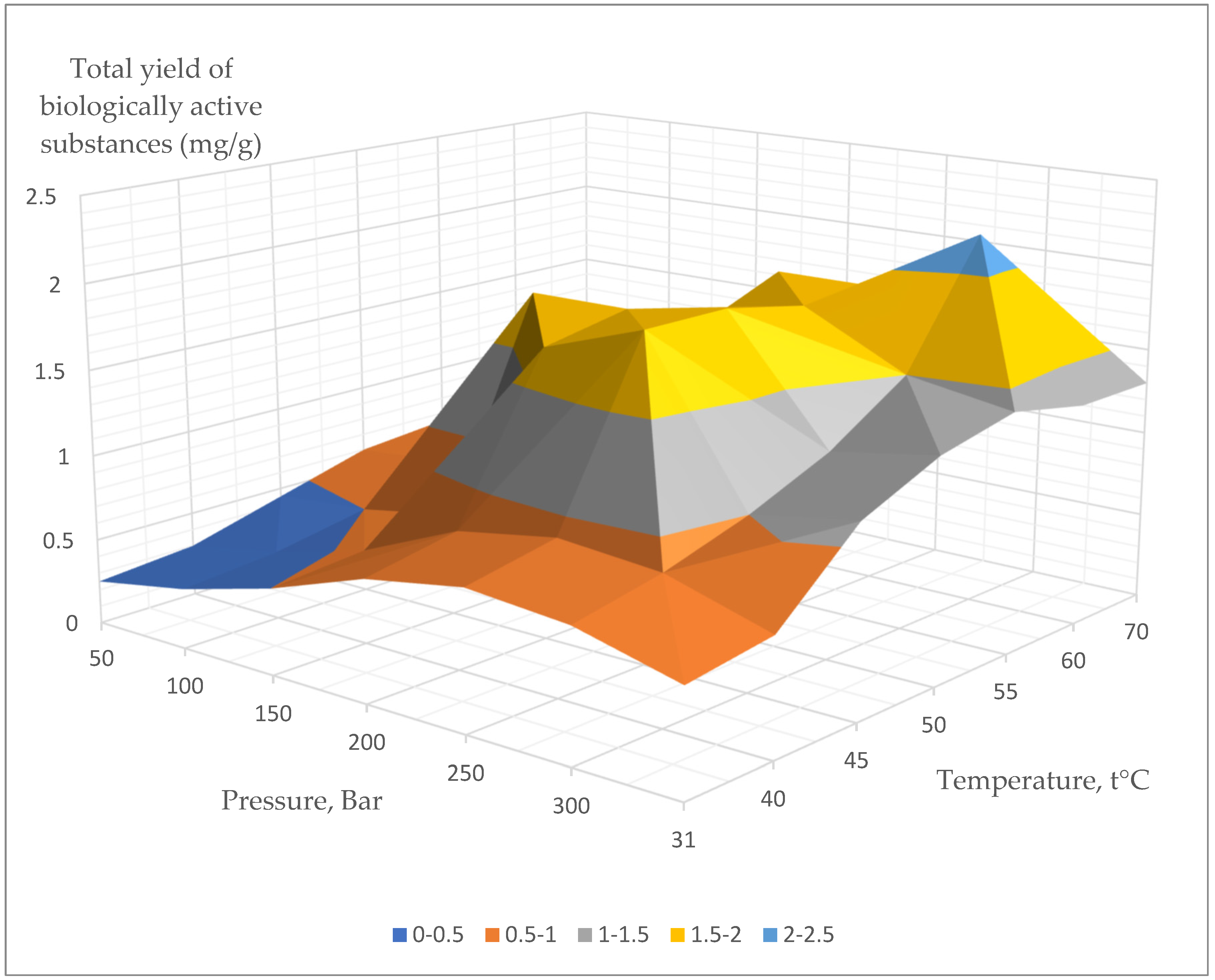
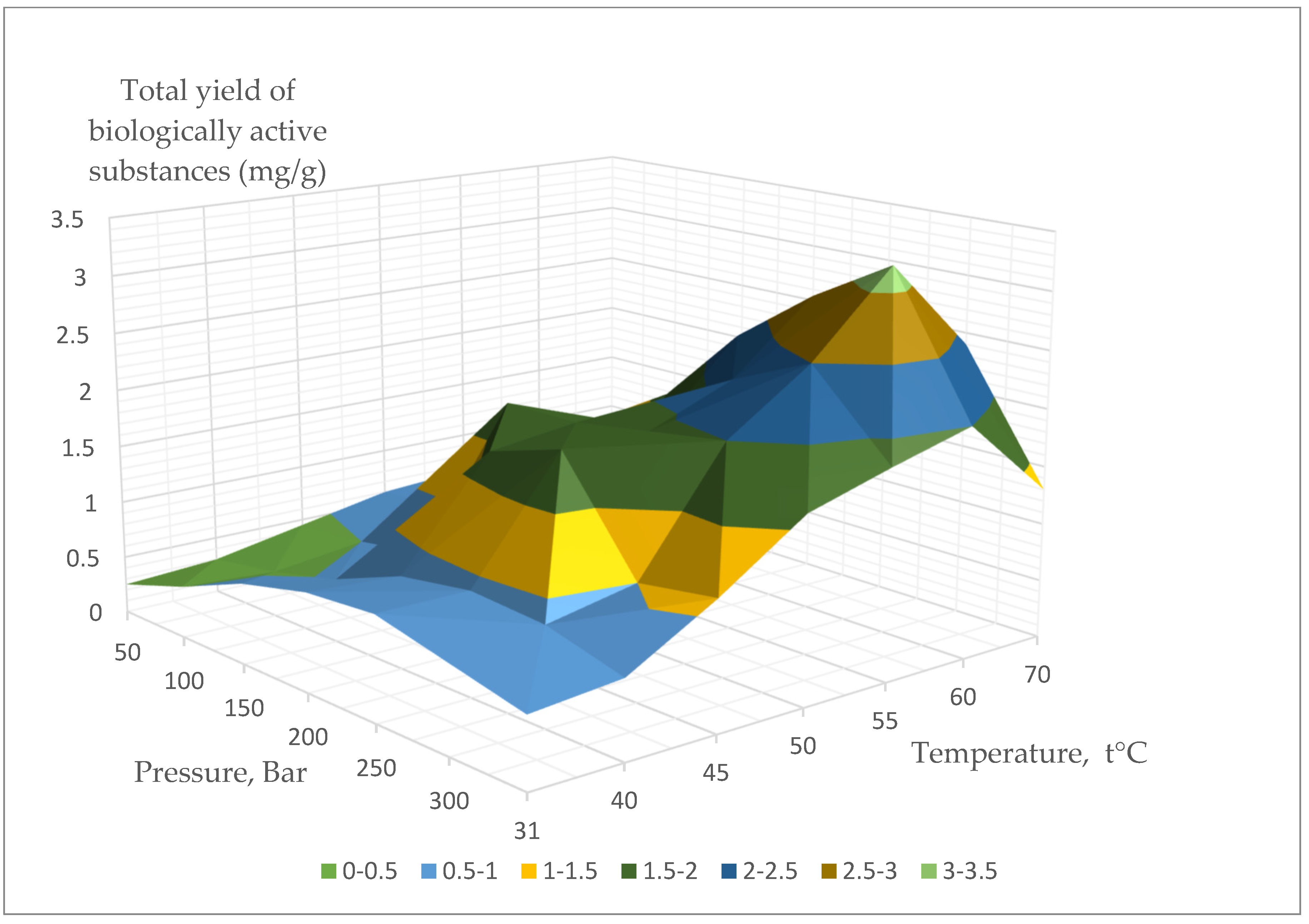
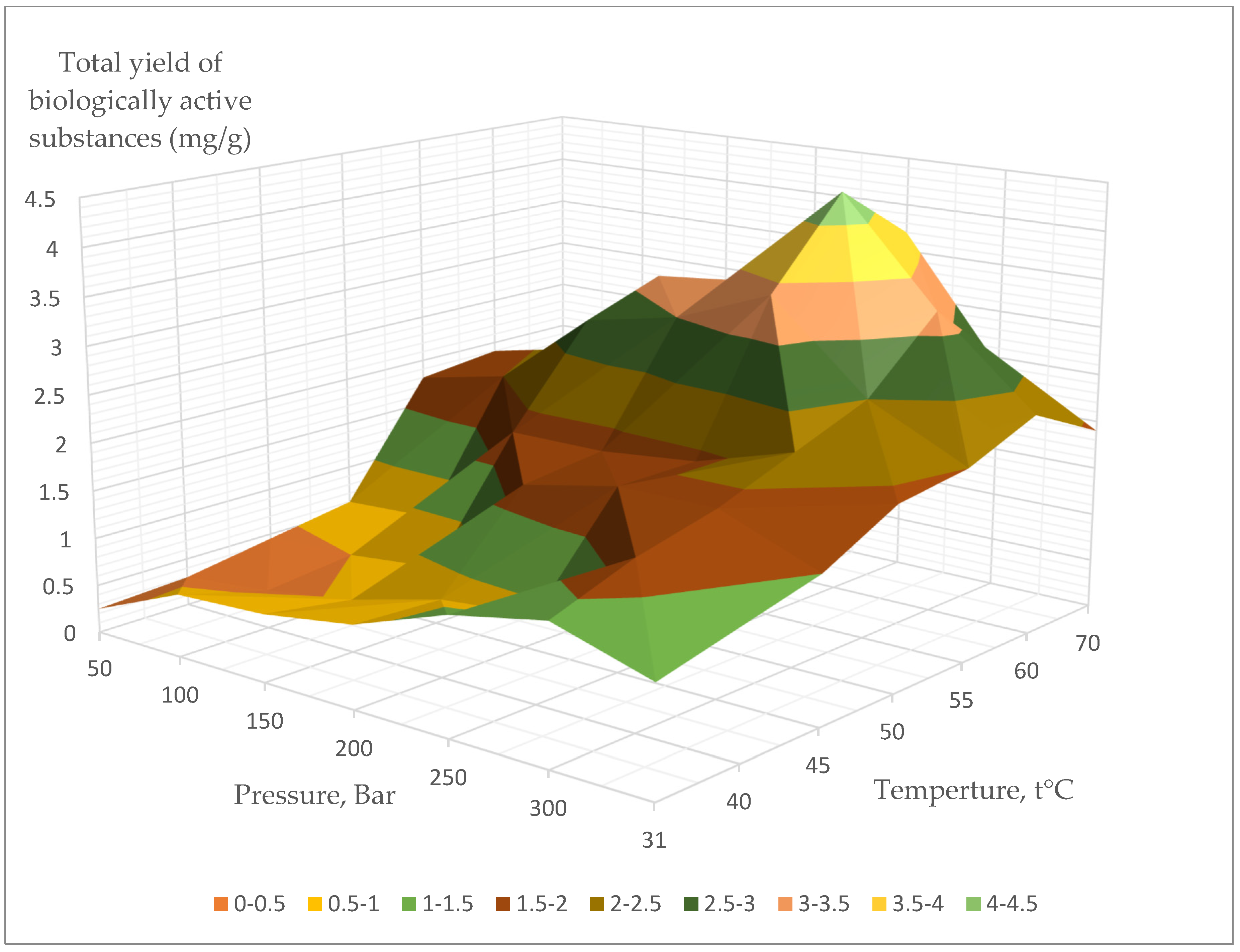
Three samples of Z. marina were subjected to a detailed research: 1. old Z. marina ejection on the surf edge, 2. fresh Z. marina ejection on the surf edge, 3. Z. marina collected in the water. All three Z. marina samples were subjected to supercritical CO2-extraction under different extraction conditions. The applied supercritical pressures ranged from 50 to 350 bar, and the extraction temperature ranged from 31 to 70 °C. The co-solvent EtOH was used in an amount of 1 % of the total amount of solvent. Used different extraction conditions for different seagrass samples showed the best result for bagging in water (Extraction conditions: pressure 250 bar and temperature 60 °C). The total yield of biologically active substances under these extraction conditions was 4.2 mg per 100 mg of supercritical CO2-extract. The quantitative ratio of the extract of biologically active substances obtained by the method of supercritical extraction was achieved by evaporating the CO2 -extract and calculating the ratio of the mass of the extracted plant matrix to the dry mass of the obtained extract. Below are 3D graphs of supercritical extraction of an old Z. marina release (Figure 2); fresh release of Z. marina (Figure 3); Z. marina bagging in water (Figure 4). The structural identification of each compound was carried out on the basis of their accurate mass and MS/MS fragmentation by HPLC–ESI–ion trap– MS/MS. A total of 77 compounds were characterized in three extracts of Z. marina based on their accurate MS and fragment ions by searching online databases and the references.
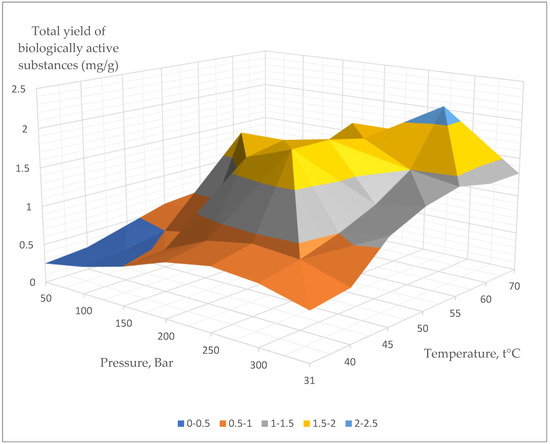
Figure 2.
3D–graph data of supercritical CO2-extraction. Total yield of biologically active substances from extracts of Z. marina (old seagrass ejection on the surf edge).
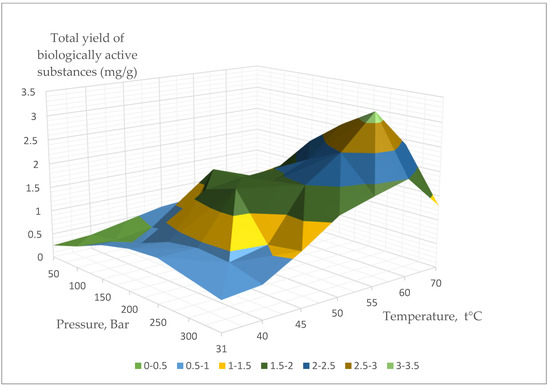
Figure 3.
3D–graph data of supercritical CO2-extraction. Total yield of biologically active substances from extracts of Z. marina (fresh seagrass ejection on the surf edge).
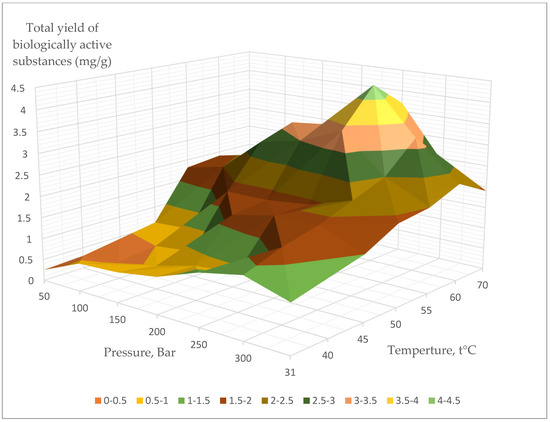
Figure 4.
3D–graph data of supercritical CO2-extraction. Total yield of biologically active substances from extracts of Z. marina (Seagrass collected in water).
There were identified 77 compounds (53 compounds from polyphenol group and 24 compounds from other chemical groups). All the identified polyphenols and other compounds along with molecular formulas, and MS/MS data for Z. marina are summarized in Table A1 (Appendix A). For the first time, 38 polyphenols were identified in this plant. There are polyphenols: flavonols Kaempferol, Kaempferide, Herbacetin, Dihydroquercetin, Myricetin, Kaempferol 7-sulfate, Isorhamnetin 3-sulfate, Kaempferol-7-O-α-L-rhamnoside, Aromadendrin 7-O-rhamnoside, Quercitrin, Astragalin, Kaempferol 3-(6’’-malonylglucoside), Herbacetin-3-O-glucoside-7-O-xylo/ara; flavones Dihydroxy-dimethoxy(iso)flavone, Cirsimaritin, Cirsiliol, Jaceosidin, 5,6,4’-Trihydroxy-7,8-dimetoxyflavone, Syringetin, etc.
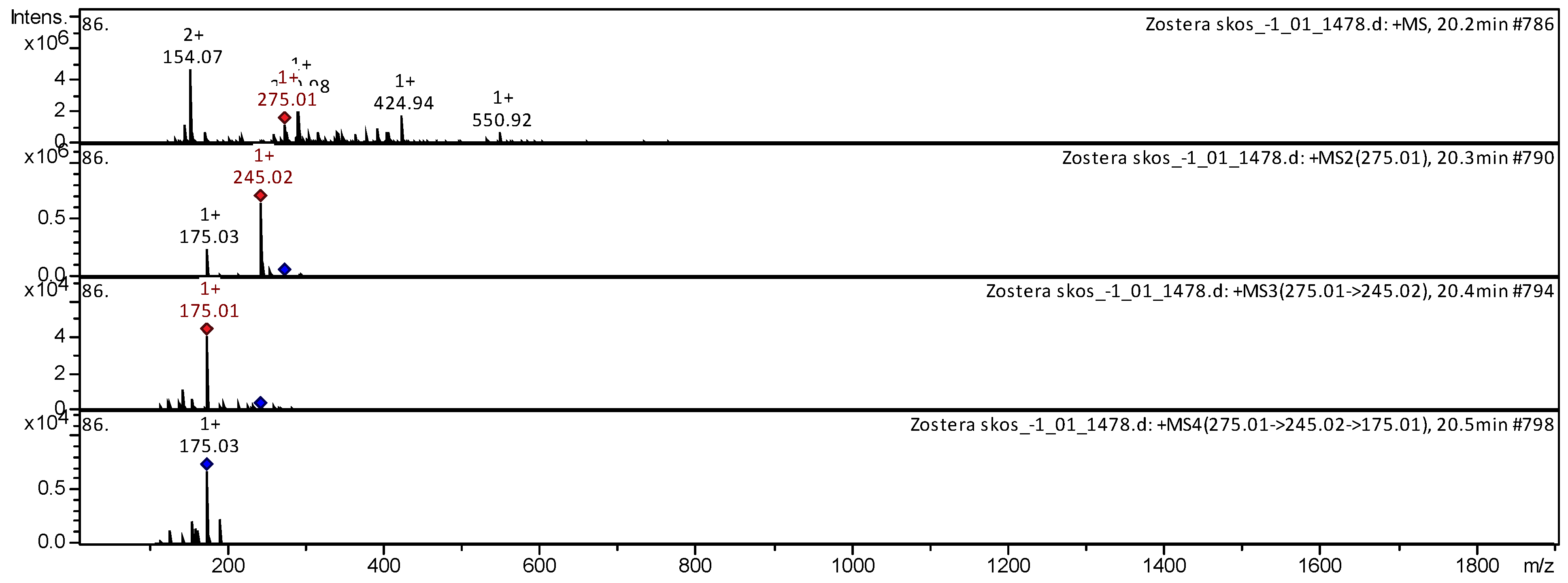
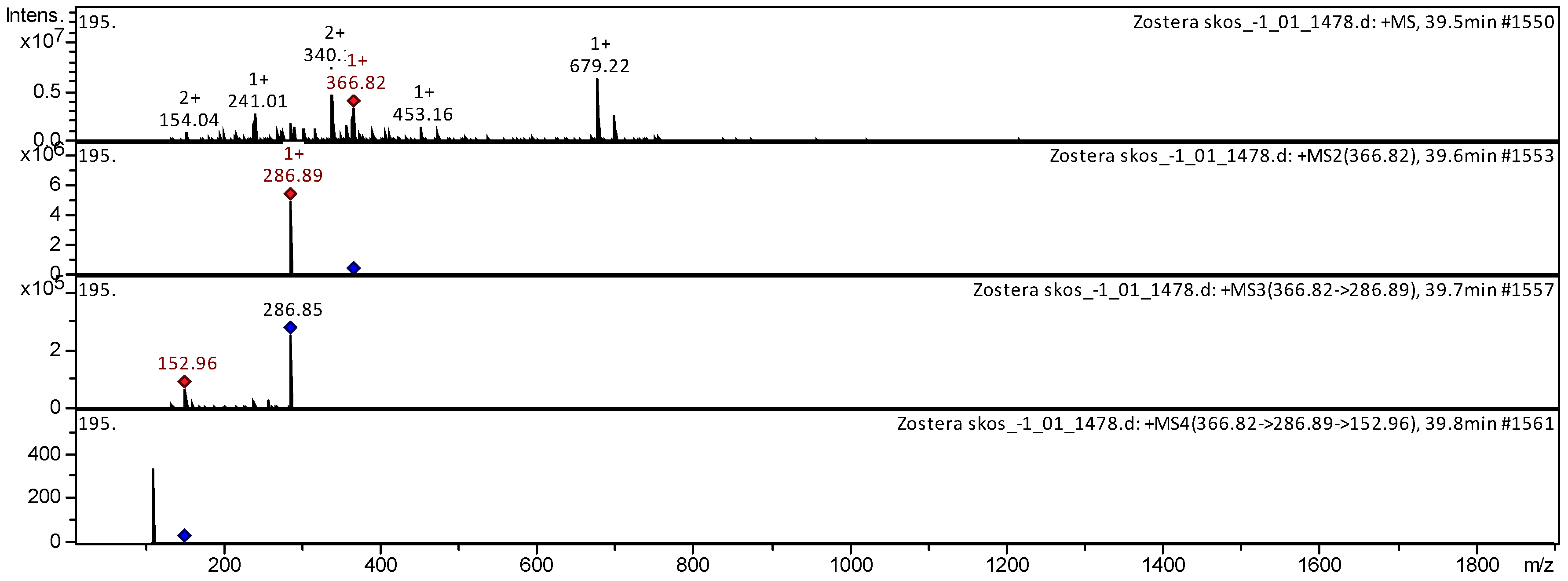
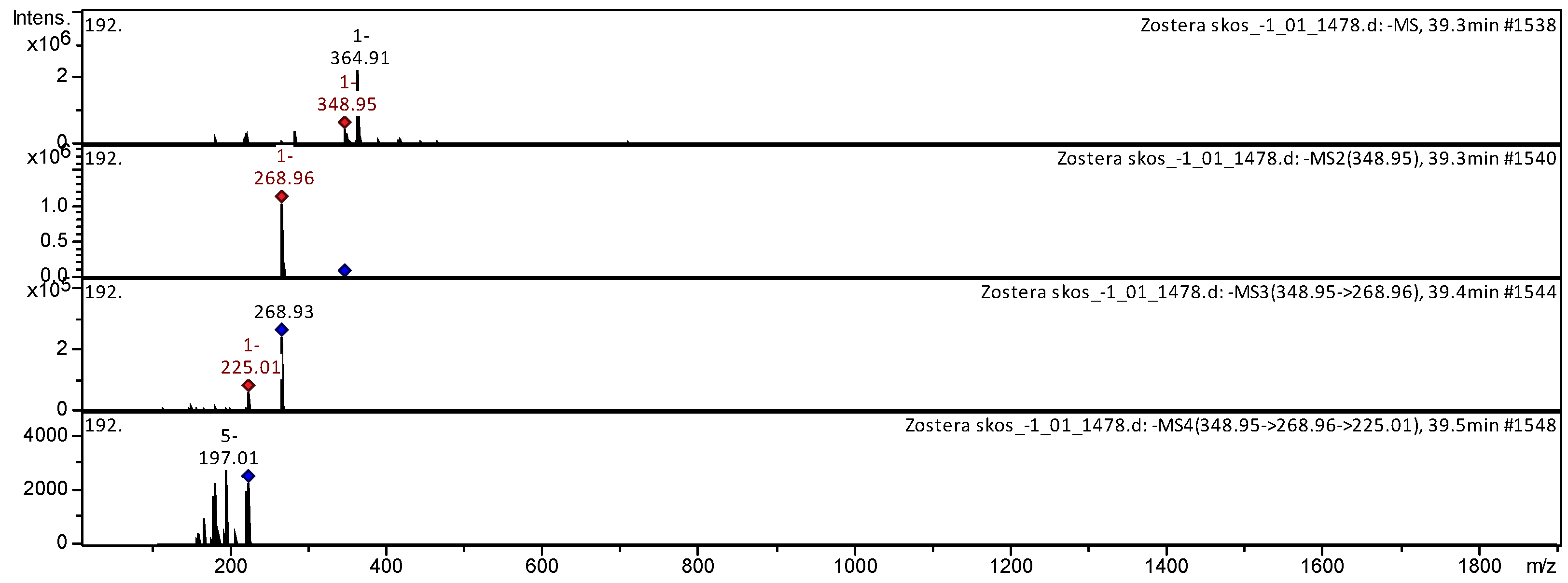
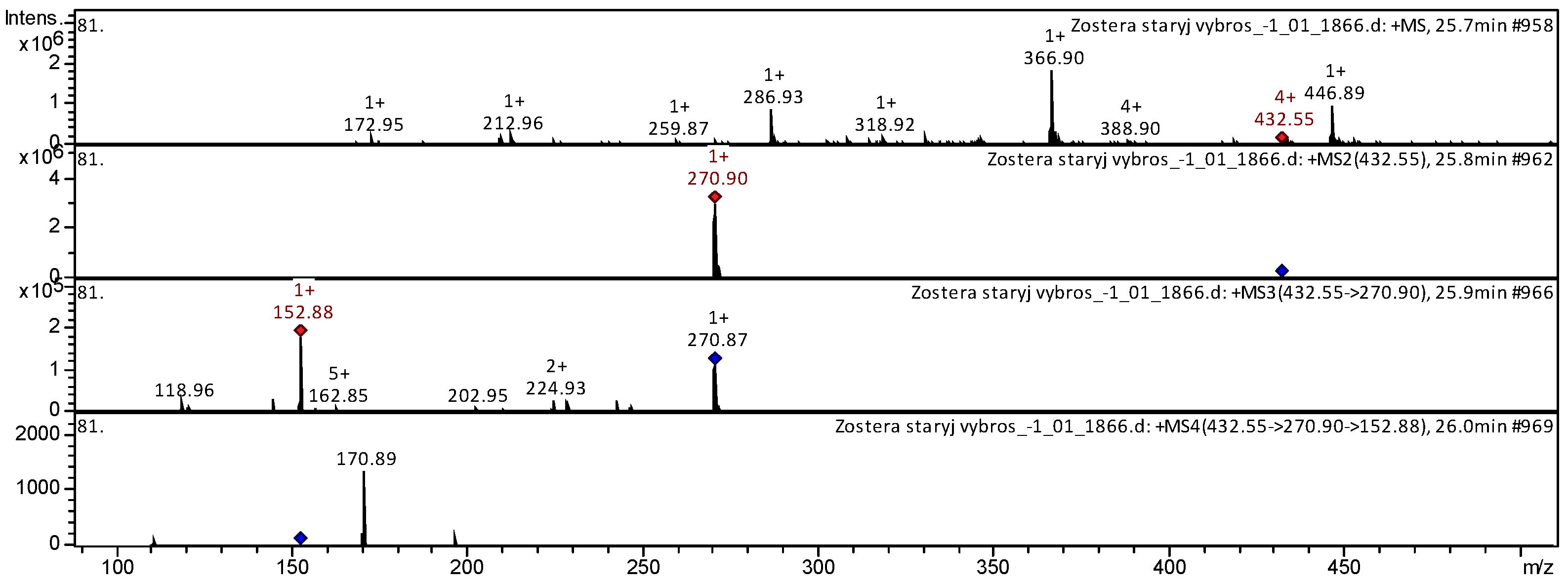
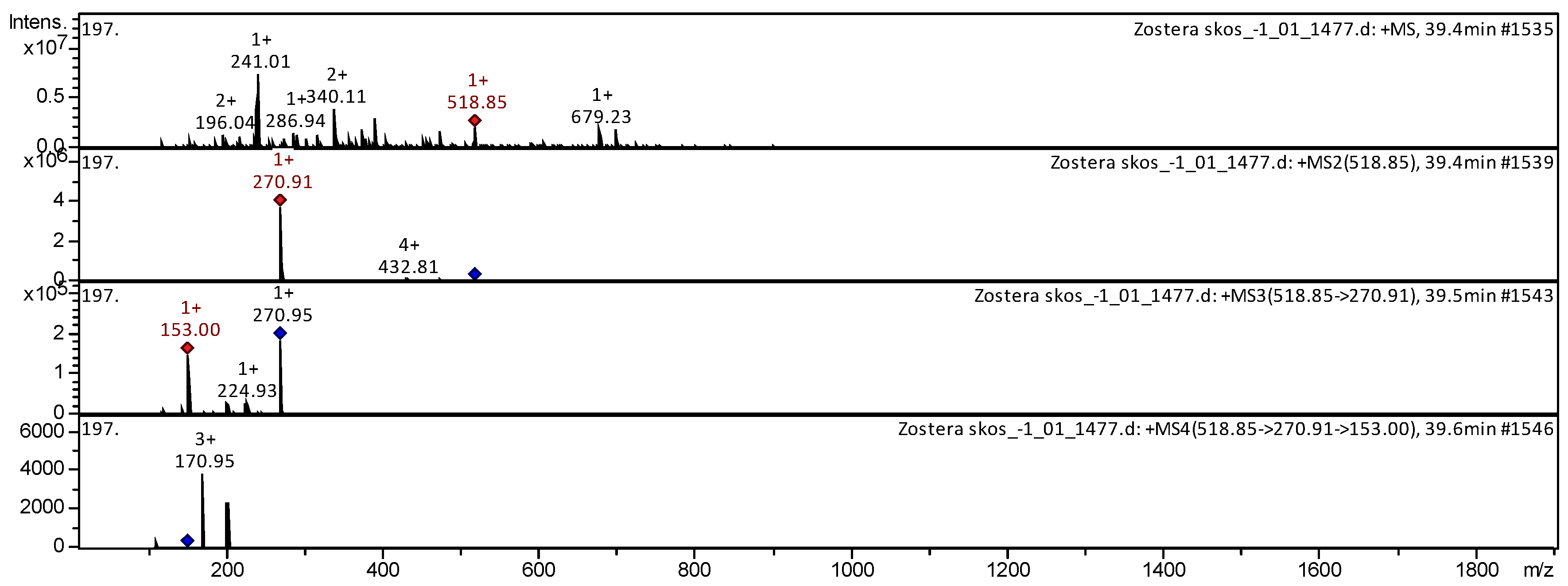
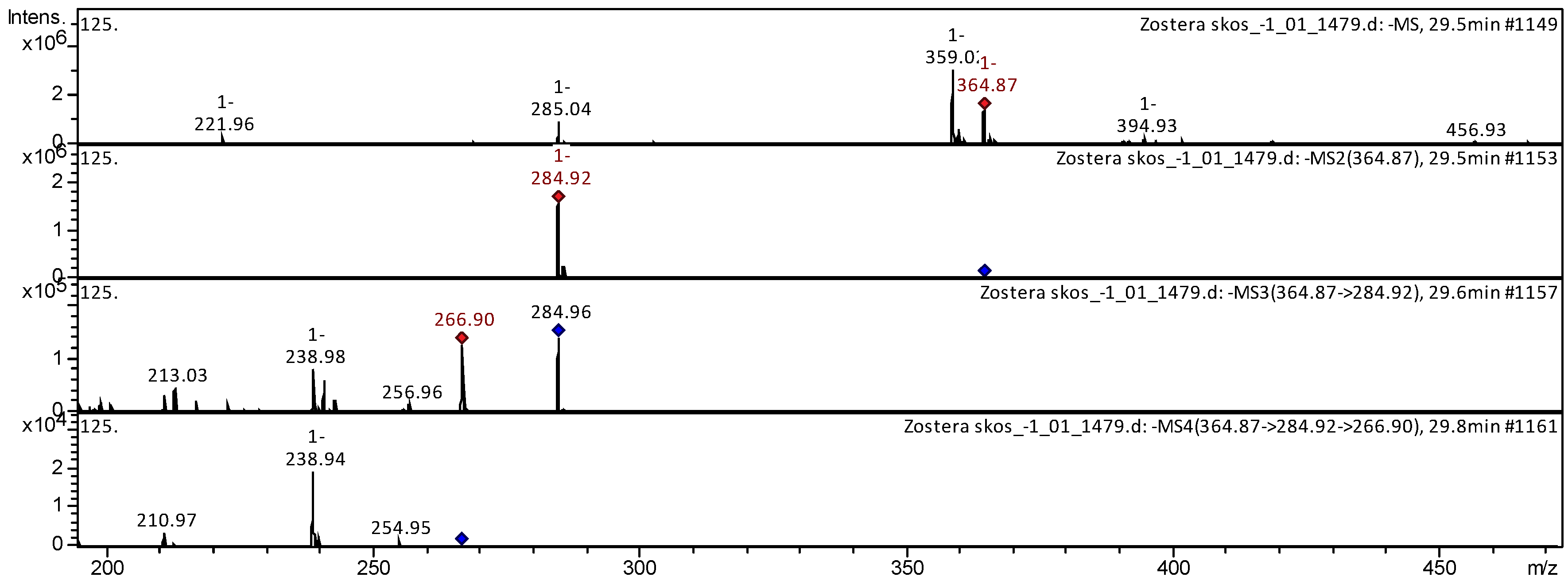
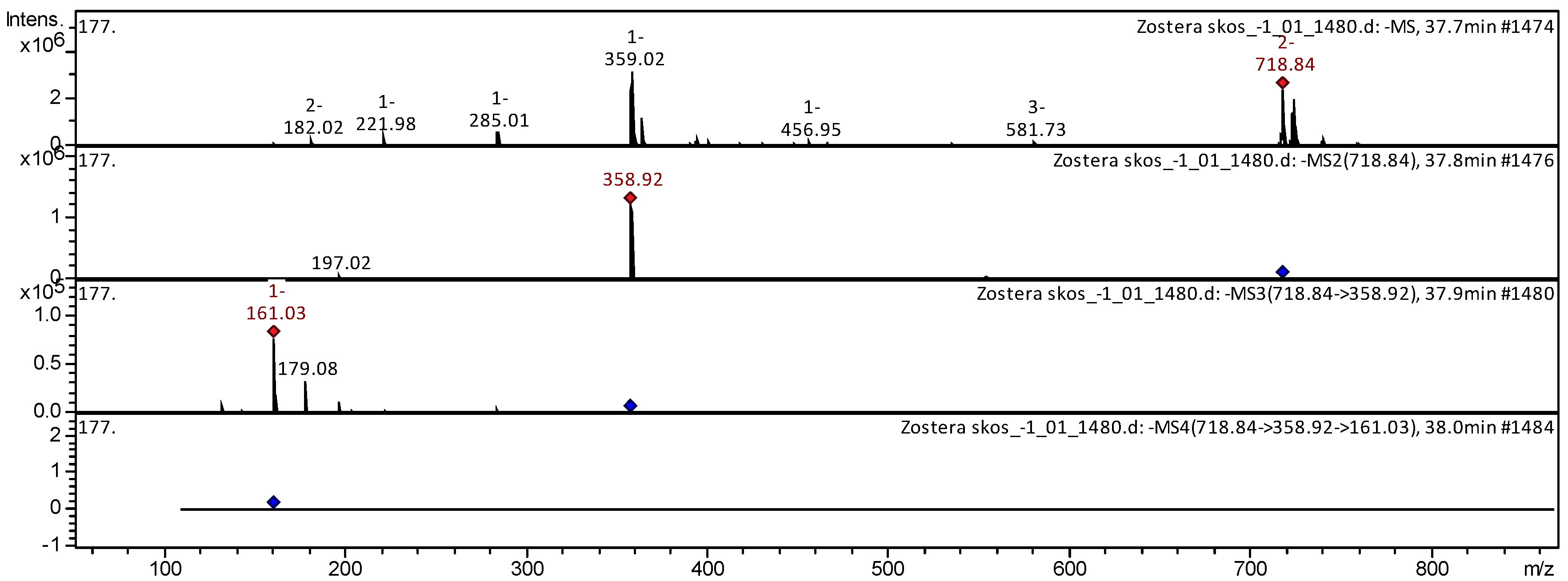
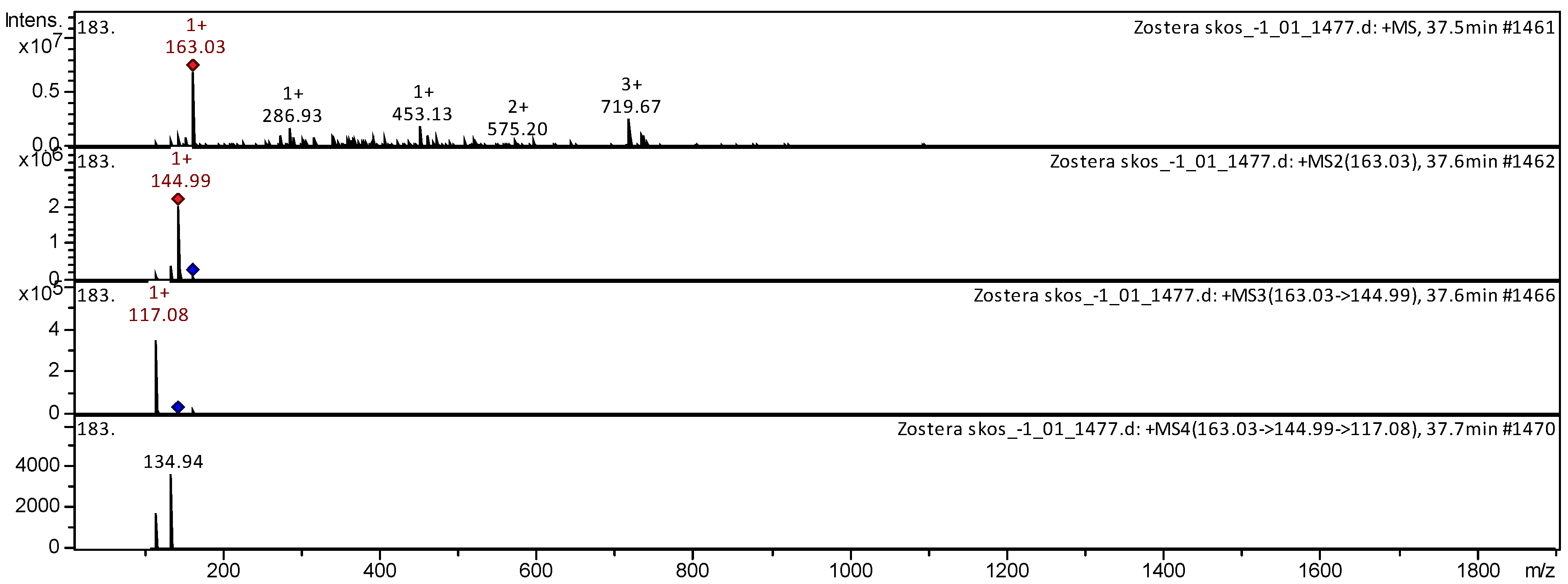
Figure 5, Figure 6, Figure 7, Figure 8, Figure 9, Figure 10, Figure 11 and Figure 12 shows examples of the decoding spectra (collision-induced dissociation (CID) spectrum) of the ion chromatogram obtained using tandem mass spectrometry. The CID spectrum in positive ion modes of flavan-3-ol (epi)Afzelechin from Z. marina is shown in Figure 5.
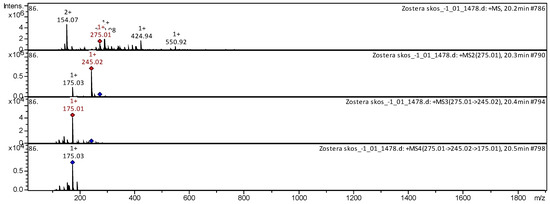
Figure 5.
CID spectrum of (epi)Afzelechin from Z. marina, m/z 275.01.
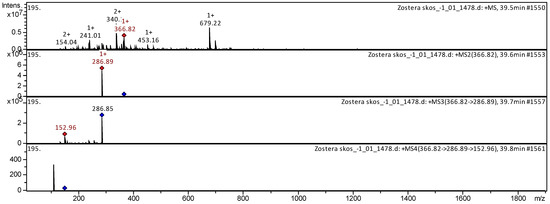
Figure 6.
CID spectrum of Luteolin 7–sulfate from Z. marina, m/z 366.82.
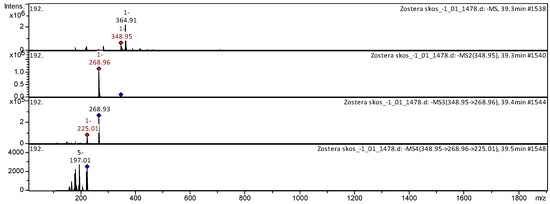
Figure 7.
CID spectrum of Apigenin 7–sulfate from Z. marina, m/z 348.95.
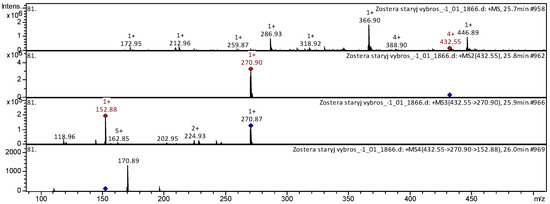
Figure 8.
CID spectrum of Pelargonidin 3-O-glucoside acid from Z. marina, m/z 432.55.
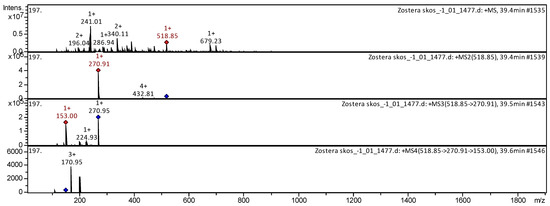
Figure 9.
CID spectrum of Pelargonidin-3-O-(6-O-malonyl-beta-D-glucoside) acid from Z. marina, m/z 518.85.
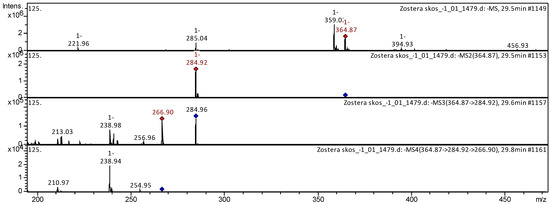
Figure 10.
CID spectrum of Kaempferol 7–sulfate from Z. marina, m/z 364.87.
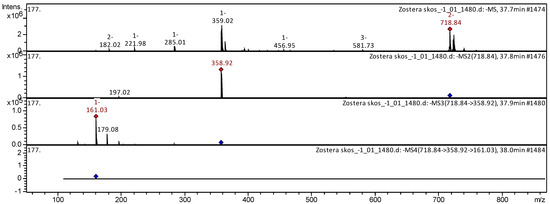
Figure 11.
CID spectrum of Sagerinic acid from Z. marina, m/z 718.84.
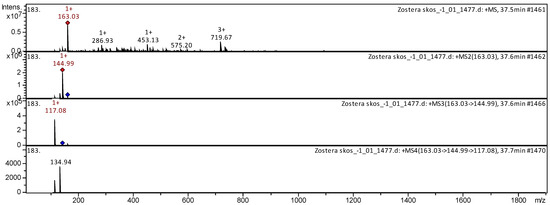
Figure 12.
CID spectrum of Umbelliferone from Z. marina, m/z 163.03.
[M+H]+ ion produced two fragment ions with m/z 245.02 and m/z 175.03 (Figure 5). The fragment ion with m/z 245.02 produced one characteristic daughter ion with m/z 175.01. It was identified in the references in extract from Cassia granidis [7]; Cassia abbreviata [8]; A. cordifolia; F. glaucescens; F. herrerae [9]. It should be noted separately that the presence of many sulfated polyphenols was found in the supercritical extracts of Z. marina. For example, these are the following chemical compounds: Luteolin 7-sulfate; Diosmetin 7-sulfate, Kaempferol 7-sulfate, Isorhamnetin 3-sulfate, Apigenin7-sulfate, Chrysoeriol 7-sulfate, Luteolin 7,3′-disulfate, (2S)-Naringenin 4′-O-sulfate. The CID spectrum in positive ion modes of flavone Luteolin 7-sulfate from Z. marina is shown in Figure 6.
[M+H]+ ion produced one fragment ion with m/z 286.89 (Figure 6). The fragment ion with m/z 286.89 produced two characteristic daughter ions with m/z 152.96, and m/z 286.85. It was identified in the bibliography in extracts from Z. marina [10,11]. The CID spectrum in negative ion modes of flavone Apigenin 7-sulfate from Z. marina is shown in Figure 7.
[M–H]− ion produced one fragment ion with m/z 268.96 (Figure 7). The fragment ion with m/z 268.96 produced two characteristic daughter ions with m/z 225.01 and m/z 268.93. The fragment ion with m/z 225.01 formed one daughter ion with m/z 197.01. It was identified in the bibliography in extracts from G. linguiforme [9]; Z. marina [11]; sulphates [12]. We also want to separately note the first identification of the presence of a large class of anthocyanins in Z. marina: Pelargonidin 3-O-glucoside; Cyanidin 3-O-glucoside; Pelargonidin 3-O-(6-O-malonyl-beta-D-glucoside); Cyanidin 3-(6”-malonylglucoside). All these anthocyanins were identified firstly in Z. marina. The CID spectrum in positive ion modes of anthocyanin Pelargonidin 3-O-glucoside from Z. marina is shown in Figure 8.
[M+H]+ ion produced one fragment ion with m/z 270.90. (Figure 8). The fragment ion with m/z 270.90 formed five daughter ions with m/z 152.88, m/z 224.93, m/z 202.95, m/z 162.85, and m/z 118.96. It was identified in the bibliography in extract from Rubus ulmifolius [13]; Strawberry [14]; Vigna unguiculata [15].
The CID spectrum in positive ion modes of anthocyanin Pelargonidin 3-O-(6-O-malonyl-beta-D-glucoside) from Z. marina is shown in Figure 9. [M+H]+ ion produced two fragment ions with m/z 270.91, and m/z 432.81 (Figure 9). The fragment ion with m/z 270.91 formed two daughter ions with m/z 153.00, m/z 224.93. It was identified in the bibliography in extract from Strawberry [14], Wheat [16].
The CID spectrum in negative ion modes of flavonol Kaempferol 7-sulfate from Z. marina is shown in Figure 10. [M–H]– ion produced one fragment ion with m/z 284.92 (Figure 10). The fragment ion with m/z 284.92 formed four daughter ions with m/z 266.90, m/z 256.96, m/z 238.98, and m/z 213.03. It was identified in the bibliography in extract from F. pulverulenta Frankeniaceae [12].
The CID spectrum in negative ion modes of phenolic acid Sagerinic acid from Z. marina is shown in Figure 11. [M–H]– ion produced two fragment ions with m/z 358.92 and m/z 197.02 (Figure 11). The fragment ion with m/z 358.92 formed two daughter ions with m/z 179.08, m/z 161.03. It was identified in the bibliography in extract from Mentha [17]; Lamiaceae spp. [18]; Lepechinia [19].
The CID spectrum in positive ion mode of hydroxycoumarin Umbelliferone from Z. marina is shown in Figure 12. [M+H]+ ion produced one fragment ion with m/z 144.99 (Figure 12). The fragment ion with m/z 144.99 produced one characteristic daughter ion with m/z 117.08 It was identified in the bibliography in extracts from F. glaucescens [9]; Sanguisorba officinalis [20]; Actinidia chinensis [21].
Separately, it should be noted that a detailed analysis of the presence of polyphenols and biologically active substances from other chemical groups showed the highest number of compounds in the seagrass collected in water and fresh release on the shore than in the old release on the shore. The ratio was 31 and 30 versus 26 for polyphenols, respectively (Table 1).

Table 1.
Identified polyphenols by tandem mass-spectrometry in three samples: eelgrass collected in water; fresh eelgrass ejection on the surf edge; old eelgrass ejection on the surf edge.
Thus, it can be stated that as a result of the most detailed study by tandem mass spectrometry, new data on the content of biologically active substances in Z. marina have been obtained.
3. Materials and Methods
3.1. Materials
Phytomass of Z. marina was collected during expedition work near Vityaz Bay, Primorsky Krai, Russia (N 42°36′10″ E 131°10′55″), during the period from 10 to 20 August 2021. All samples were morphologically authenticated according to the current standard of Pharmacopoeia of the Eurasian Economic Union [22].
3.2. Chemicals and Reagents
HPLC-grade acetonitrile was purchased from Fisher Scientific (Southborough, UK), MS-grade formic acid was from Sigma-Aldrich (Steinheim, Germany). Ultra-pure water was prepared from a SIEMENS ULTRA clear (SIEMENS water technologies, Munich, Germany), and all other chemicals were analytical grade.
3.3. SC-CO2 Extraction
SC-CO2 extraction was performed using the SFE-500 system (Thar SCF Waters, Milford, CT, USA) supercritical pressure extraction apparatus. System options include: Co-solvent pump (Thar Waters P-50 High Pressure Pump), for extracting polar samples. CO2 flow meter (Siemens, Germany), to measure the amount of CO2 being supplied to the system, multiple extraction vessels, to extract different sample sizes or to increase the throughput of the system. Flow rate was 10–25 mL/min for liquid CO2 and 1.00 mL/min for EtOH. Extraction samples of 20 g Z. marina were used. The extraction time was counted after reaching the working pressure and equilibrium flow, and it was 60–90 min for each sample.
3.4. Liquid Chromatography
HPLC was performed using Shimadzu LC-20 Prominence HPLC (Shimadzu, Japan) was used, equipped with an UV-sensor and a Shodex ODP-40 4E reverse phase column to perform the separation of multicomponent mixtures. The gradient elution program was as follows: 0.01–4 min, 100% C2H3N; 4–60 min, 100–25% C2H3N; 60–75 min, 25–0% C2H3N; control washing 75–120 min 0% C2H3N. The entire HPLC analysis was performed using a UV-VIS detector SPD-20A (Shimadzu, Japan) at wavelengths of 230 and 330 nm, at 17 °C provided with column oven CTO-20A (Shimadzu, Japan) with an injection volume of 20 μL.
3.5. Mass Spectrometry
MS analysis was performed on an ion trap amaZon SL (BRUKER DALTONIKS, Germany) equipped with an ESI source in negative ion mode. The optimized parameters were obtained as follows: ionization source temperature: 70 °C, gas flow: 4 L/min, nebulizer gas (atomizer): 7.3 psi, capillary voltage: 4500 V, end plate bend voltage: 1500 V, fragmentary: 280 V, collision energy: 60 eV. An ion trap was used in the scan range m/z 100–1.700 for MS and MS/MS. The mass spectra were recorded in negative and positive ion mode. The capture rate was one spectrum/s for MS and two spectrum/s for MS/MS. Data collection was controlled by Hystar Data Analysis 4.1 software (BRUKER DALTONIKS, Bremen, Germany). All experiments were repeated three times. A four-stage ion separation mode (MS/MS mode) was implemented. After a comparison of the m/z values, retention times, and the fragmentation patterns with the MS/MS spectral data retrieved from the cited articles and after a database search (MS2T, MassBank, HMDB), a comprehensive table was compiled of the molecular masses of the analytes isolated from CO2 extracts of Z. marina for ease of annotation (Appendix A (Table A1)).
4. Conclusions
Three types of Zostera marina L. collection were extracted using the supercritical CO2-extraction method. For the purposes of supercritical CO2-extraction, old seagrass ejection on the surf edge, fresh seagrass ejection on the surf edge and seagrass collected in water were used. Several experimental conditions were investigated in the pressure range 50–350 bar, with the used volume of co-solvent ethanol in the amount of 1 % in the liquid phase at a temperature in the range of 31–70 °C. The most effective extraction conditions are: pressure 250 Bar and temperature 60 °C for Z. marina collected in sea water. Z. marina contain various phenolic compounds and sulfated polyphenols with valuable biological activity. Tandem mass-spectrometry (HPLC-ESI–ion trap) was applied to detect target analytes. High-accuracy mass spectrometric data were recorded on an ion trap amaZon SL BRUKER DALTONIKS equipped with an ESI source in the mode of negative and positive ions. The four-stage ion separation mode was implemented. 77 different biologically active components have been identified in Z. marina supercritical CO2-extracts. 38 polyphenols were identified for the first time in Z. marina.
These data could support future research for the production of a variety of pharmaceutical products containing extracts of Z. marina. The richness of various biologically active compounds, including compounds of polyphenol group, amino acids, carotenoids, Omega- fatty acids, sterols, triterpenoids, iridoids, etc., provides great opportunities for the design of new nutritional and dietary supplements based on extracts from this genus Zostera.
Author Contributions
Conceptualization, L.A.T. and M.P.R.; methodology, L.A.T., A.M.Z. and M.P.R.; software, M.P.R.; validation, L.A.T., M.P.R. and K.G.; formal analysis, M.P.R. and A.M.Z.; investigation, L.A.T. and A.B.P.; resources, K.G. and L.A.T.; data curation, V.D.S.; writing—original draft preparation—M.P.R. and A.M.Z.; writing—review and editing A.M.Z. and K.G.; visualization, M.P.R. and A.M.Z.; supervision, K.G.; project administration, A.M.Z., K.G. and L.A.T. All authors have read and agreed to the published version of the manuscript.
Funding
This research was carried out with financial support of the Ministry of Education and Science of the Russian Federation within the framework of the implementation of a complex project for the creation of high-tech production provided by the Decree of the Russian Federation Government dated 9 April 2010 № 218. The project is entitled “Development of industrial technology and organization in the Far Eastern Federal District of the high-tech production of feed Vitamin A of increased stability and bioavailability”, agreement No. 075-11-2021-065, 25 June 2021.
Institutional Review Board Statement
Not applicable.
Informed Consent Statement
Not applicable.
Data Availability Statement
All data are available from the corresponding author upon request.
Acknowledgments
Research work according to “Development of industrial technology and organization in the Far Eastern Federal District of the high-tech production of feed Vitamin A of increased stability and bioavailability”, agreement No. 075-11-2021-065, 25 June 2021.
Conflicts of Interest
The authors declare no conflict of interest.
Appendix A
Table A1.
Compounds identified from the CO2-extracts of Zostera marina in positive and negative ionization modes by HPLC-ion trap-MS/MS.
Table A1.
Compounds identified from the CO2-extracts of Zostera marina in positive and negative ionization modes by HPLC-ion trap-MS/MS.
| № | Class of Compounds | Identified Compounds | Formula | Mass | Molecular ion [M-H]- | Molecular ion [M+H]+ | 2 fragmentation MS/MS | 3 Fragmentation MS/MS | 4 Fragmentation MS/MS | References |
|---|---|---|---|---|---|---|---|---|---|---|
| POLYPHENOLS | ||||||||||
| 1 | Flavonol | Kaempferol [3,5,7-Trihydroxy-2-(4-hydro- xyphenyl)-4H-chromen-4-one] * | C15H10O6 | 286.24 | 287 | 258; 241; 187; 137 | 229; 213; 153 | 203; 132 | Rhus coriaria [23]; Andean blueberry [24]; Potato leaves [25]; Impatients glandulifera Royle [26]; Rapeseed petals [27]; Rh. sichotense [28] | |
| 2 | Flavonol | Kaempferide [4’-O-Methylkaempferol] * | C16H12O6 | 300.2629 | 301 | 286 | 258 | 229; 201; 153 | Spondias purpurea [29]; Ocimum [30]; Alpinia officinarum [31]; Brazilian propolis [32] | |
| 3 | Flavonol | Herbacetin [3,5,7,8-Tetrahydroxy-2-(4-hydro- xyphenyl)-4H-chromen-4-one] * | C15H10O7 | 302.2357 | 303 | 275; 202; 185; 157 | 175; 157 | Ocimum [30]; Rhodiola rosea [33] | ||
| 4 | Flavonol | Dihydroquercetin [Taxifolin; Taxifoliol] * | C15H12O7 | 304.25 | 303 | 285 | 267; 241; 215; 135 | 171 | Andean blueberry [24]; millet grains [34]; Camellia kucha [35]; Rosa rugosa [36] | |
| 5 | Flavonol | Myricetin [3,5,7-Trihydroxy-2-(3,4,5-Trihydroxyphenyl)-4H-Chromen-4-One] * | C15H10O8 | 318.2351 | 319 | 289; 261; 239; 219; 191; 173 | 261; 243; 214; 191; 173; 159 | 233; 215; 191; 161; 143 | Sanguisorba officinalis [20]; Andean blueberry [24]; millet grains [34]; Rosa rugosa [36]; Vaccinium macrocarpon [37] | |
| 6 | Flavonol | Kaempferol 7-sulphate * | C15H10O9S | 366.2995 | 365 | 285 | 241; 199; 151 | 197; 171; 143 | F. pulverulenta Frankeniaceae [12] | |
| 7 | Flavonol | Isorhamnetin 3-sulphate * | C16H10O10S | 394.3096 | 393 | 313 | 298 | 269 | Senecio galicus Asteraceae; Polygonium hydropiper Polygoniaceae [12] | |
| 8 | Flavonol | Kaempferol-7-O-α-L-rhamnoside * | C21H20O10 | 432.3775 | 431 | 257 | 227; 157 | 215; 145 | Rhodiola crenulata [38]; Rhodiola sachalinensis [39] | |
| 9 | Flavonol | Aromadendrin 7-O-rhamnoside * | C21H22O10 | 434.3934 | 433 | 259; 229 | 227; 199; 157 | 215; 199 | Eucalyptus [40] | |
| 10 | Flavonol | Quercitrin [Quercetin 3-L- rhamnoside; Quercetrin] * | C21H20O11 | 448.3769 | 449 | 303; 203 | 203 | 185 | Rhus coriaria [23]; Camellia kucha [35]; Vaccinium macrocarpon [37,41]; Propolis [42] | |
| 11 | Flavonol | Astragalin [Kaempferol 3-O-glucoside; Kaempferol-3-Beta-Monoglucoside; Astragaline] * | C21H20O11 | 448.3769 | 449 | 287; 367 | 153; 240 | Actinidia chinensis [21]; Rapeseed petals [27]; Spondias purpurea [29]; Camellia kucha [35]; Lonicera japonicum [43] | ||
| 12 | Flavonol | Kaempferol 3-(6’’-malonylglucoside) * | C24H22O14 | 534.4231 | 535 | 449; 287 | 263; 219; 153 | A. cordifolia [9]; Impatients glandulifera Royle [26]; Mexican lupine species [44] | ||
| 13 | Flavonol | Herbacetin-3-O-glucoside-7-O-xylo/ara * | C26H28O16 | 596.4909 | 597 | 436 | 389; 327; 240; 221; 194 | 194; 150 | Rhodiola rosea [45] | |
| 14 | Flavone | Luteolin | C15H10O6 | 286.2363 | 287 | 152; 241; 187 | Zostera marina [11]; Propolis [42]; Lonicera japonicum [43]; Dracocephalum palmatum [46] | |||
| 15 | Flavone | Diosmetin | C16H12O6 | 300.2629 | 299 | 283; 256 | Andean blueberry [24]; Lonicera japonicum [43]; Cirsium japonicum [47]; Mentha [48] | |||
| 16 | Flavone | Chrysoeriol [Chryseriol] | C16H12O6 | 300.2629 | 301 | 286; 244; 203 | 258 | 229 | Rhus coriaria [23]; Mexican lupine species [44]; Dracocephalum palmatum [46]; Mentha [48] | |
| 17 | Flavone | Dihydroxy-dimethoxy(iso)flavone * | C17H14O6 | 314.2895 | 315 | 299; 271; 215; 169 | 297; 271; 253; 229; 186 | 269; 253; 145 | Propolis [42]; Rosmarinus officinalis [49]; Astragali radix [50] | |
| 18 | Flavone | Cirsimaritin * | C17H14O6 | 314.2895 | 315 | 299; 282; 254 | 254 | 226; 197; 181; 169; 153 | Ocimum [30]; Rosmarinus officinalis [49] | |
| 19 | Flavone | Cirsiliol * | C17H14O7 | 330.2889 | 331 | 298; 203 | 270 | 241 | Ocimum [30] | |
| 20 | Flavone | Jaceosidin [5,7,4’-trihydroxy-6’,5’-dimetoxyflavone] * | C17H14O7 | 330.2889 | 331 | 303; 285; 257; 231 | 203; 184; 157 | 185; 157; 127 | Mentha [48,51] | |
| 21 | Flavone | 5,6,4’-Trihydroxy-7,8-dimetoxyflavone * | C17H14O7 | 330.2889 | 331 | 303; 257; 221; 203 | 275; 221; 203 | 245; 175; 143 | F. glaucescens; F. herrerae [9]; Mentha [48] | |
| 22 | Flavone | Syringetin * | C17H14O8 | 346.2883 | 347 | 318; 291; 247; 219 | 291; 261; 219 | 273; 261; 243; 191 | C. edulis [9] | |
| 23 | Flavone | Apigenin 7-sulfate | C15H10O8S | 350.3001 | 349 | 269 | 225; 197; 159 | 197 | Zostera marina [11]; G. linguiforme [9]; sulphates [12] | |
| 24 | Flavone | Hydroxy-tetramethoxy(iso) flavone * | C19H18O7 | 358.342 | 359 | 315 | 256; 190 | Propolis [42] | ||
| 25 | Flavone | Luteolin 7-sulphate | C15H10O9S | 366.2995 | 367 | 287 | 153; 259; 241; 219; 199; 179 | 123 | Zostera marina [10,11] | |
| 26 | Flavone | Chrysoeriol-7-sulphate | C16H12O9S | 380.3261 | 381 | 301; | 286 | 258 | Zostera marina [10] | |
| 27 | Flavone | Diosmetin-7-sulphate | C16H12O9S | 380.3261 | 379 | 299 | 284 | Zostera marina [10,11] | ||
| 28 | Flavone | Luteolin 7-O-glucoside [Cynaroside; Luteoloside] | C21H20O11 | 448.3769 | 449 | 287 | 213; 137 | 185 | Zostera marina [10]; millet grains [34]; Propolis [42]; Mexican lupine species [44]; Mentha [51]; Thymus vulgaris [52] | |
| 29 | Flavone | Linarin [Acaciin; Buddleoside; Acacetin-7-O-Rutinoside; Linarigenin Glycoside] * | C28H32O14 | 592.5453 | 593 | 575; 377; 197 | 377 | 197 | Dracocephalum palmatum [46]; Mentha [48,51,53] | |
| 30 | Flavone | Apigenin 6-C-[6”-acetyl-2”-O-deoxyhexoside]-glucoside * | C29H32O15 | 620.5554 | 621 | 561 | 461 | 433 | Passiflora incarnata [54] | |
| 31 | Flavone | Acacetin-acetyl-glucoside-rhamnoglucoside | C34H36O22 | 796.6364 | 797 | 519 | 240; 185 | Mentha [52] | ||
| 32 | Flavone | Luteolin 7,3’-disulphate | C15H10O12S2 | 446.3627 | 447 | 287; 366 | 241 | Zostera marina [10] | ||
| 33 | Flavan-3-ol | Epiafzelechin [(epi)Afzelechin] * | C15H14O5 | 274.2687 | 275 | 244; 233; 216; 193; 175 | 237; 213; 192; 175; 15; 145 | Cassia granidis [7]; Cassia abbreviata [8]; A. cordifolia; F. glaucescens; F. herrerae [9] | ||
| 34 | Flavan-3-ol | Derivative of (epi)Afzelechin * | C15H16O5 | 276.2845 | 277 | 245; 229; 216; 207 | 233; 215 | 211 | ||
| 35 | Flavan-3-ol | Catechin [D-Catechol] * | C15H14O6 | 290.2681 | 291 | 261; 173 | 243; 191; 173; 143 | 143; 125 | millet grains [34]; Camellia kucha [35]; Vaccinium macrocarpon [41]; Eucalyptus [55]; Radix polygoni multiflori [56]; Rh. rosea [57] | |
| 36 | Flavan-3-ol | (epi)Catechin * | C15H14O6 | 290.2681 | 291 | 261; 231; 209; 191; 173 | 243; 215; 199; 179; 161 | 233; 206; 180; 161; 138 | Andean blueberry [24]; millet grains [34]; Vaccinium macrocarpon [41]; Eucalyptus [55]; Rh. rosea [57]; Rubus occidentalis [58] | |
| 37 | Flavan-3-ol | (epi)Afzelechin derivative * | C18H16O10 | 392.3136 | 393 | 274 | 245; 221; 205; 191; 175; 157 | 237; 192; 176; 157 | ||
| 38 | Flavan-3-ol | Catechin derivative * | C19H20O11 | 424.3555 | 425 | 291 | 261; 173 | 173 | ||
| 39 | Flavanone | (2S)-Naringenin 4′-O-sulfate * | C15H12O8S | 352.3160 | 351 | 271 | 269 | 225 | Tamarix africana [59] | |
| 40 | Anthocyanin | Pelargonidin-3-O-glucoside (callistephin) * | C21H21O10 | 433.3854 | 433 | 271 | 153; 247; 225; 187; 163 | 127 | Rubus ulmifolius [13]; Strawberry [14]; Vigna unguiculata [15] | |
| 41 | Anthocyanin | Cyanidin-3-O-glucoside [Cyanidin 3-O-beta-D-Glucoside; Kuromarin] * | C21H21O11+ | 449.3848 | 449 | 287 | 241; 153 | Rubus ulmifolius [13]; Rapeseed petals [27]; Berberis ilicifolia; Berberis empetrifolia; Ribes maellanicum; Ribes cucullatum; Myrteola nummalaria; Gaultheria mucronata; Gaultheria antarctica; Rubus geoides; Fuchsia magellanica [60]; Oryza sativa [61] | ||
| 42 | Anthocyanin | Pelargonidin-3-O-(6-O-malonyl-beta-D-glucoside) * | C24H23O13 | 519.4388 | 519 | 271; 433 | 153; 224 | Strawberry [14]; Wheat [16] | ||
| 43 | Anthocyanin | Cyanidin 3-(6”-malonylglucoside) * | C24H23O14 | 535.4310 | 535 | 287; 449 | 241; 153 | Wheat [16]; Strawberry [14,62] | ||
| 44 | Phenolic acids and derivatives | Zosteric acid [P-Sulfoxycinnamic acid; 4-Hydroxycinnamate Sulfate] | C9H8O6S | 244.2212 | 245 | 145; 202 | 141 | Zostera marina [11] | ||
| 45 | Phenolic acids and derivatives | Caffeic acid [(2E)-3-(3,4-Dihydroxyphenyl)acrylic acid] | C9H8O4 | 180.1574 | 181 | 135; 163; 145; 121 | 119 | Zostera marina [11]; Vaccinium macrocarpon [41]; Lonicera japonicum [43]; Dracocephalum palmatum [46]; Radix polygoni multiflori [56]; Rubus occidentalis [58] | ||
| 46 | Phenolic acids and derivatives | Caffeic acid derivative | C9H18O6 | 222.2356 | 221 | 181 | 142 | Embelia [63] | ||
| 47 | Phenolic acids and derivatives | 3-O-caffeoylshikimic acid [3-Csa] * | C16H16O8 | 336.2934 | 337 | 191; 173; 153 | 123 | Grataegi Fructus [64] | ||
| 48 | Phenolic acids and derivatives | Rosmarinic acid | C18H16O8 | 360.3148 | 359 | 161; 135 | 133 | Zostera marina [10,11]; Rosa rugosa [36]; Dracocephalum palmatum [46]; Rosmarinus officinalis [49]; Huolisu Oral Liquid [65] | ||
| 49 | Phenolic acids and derivatives | Caffeic acid derivative | C16H18O9Na | 377.2985 | 376 | 341; 215 | 179 | 119 | Embelia [63]; Bougainvillea [66] | |
| 50 | Phenolic acids and derivatives | Ellagic acid pentoside [Ellagic acid 4-O-xylopyranoside] * | C19H14O12 | 434.3073 | 433 | 257 | 227; 157 | 215 | Eucalyptus [40]; Strawberry [62]; Punica granatum [67] | |
| 51 | Phenolic acids and derivatives | Sagerinic acid * | C36H32O16 | 720.6297 | 719 | 359 | 161 | Mentha [17]; Lamiaceae spp. [18]; Lepechinia [19] | ||
| 52 | Hydroxycoumarin | Umbelliferone [Skimmetin; Hydragin] * | C9H6O3 | 162.1421 | 163 | 145 | 117 | F. glaucescens [9]; Sanguisorba officinalis [20]; Actinidia chinensis [21] | ||
| 53 | Dihydrochalcone | Phloretin [Dihydronaringenin; Phloretol] * | C15H14O5 | 274.2687 | 275 | 245; 175 | 214; 175 | G. linguiforme [9]; Eucalyptus [55]; Punica granatum [67] | ||
| OTHERS | / | |||||||||
| 54 | Cyclohexanecarboxylic acid | Perillic acid | C10H14O2 | 166.217 | 167 | 149 | 147 | 137 | Mentha [48] | |
| 55 | Amino acid | L-threanine | C7H14N2O3 | 174.1977 | 175 | 157; 147; 125 | 147; 129 | Camelia kucha [35] | ||
| 56 | Omega-5 fatty acid | Myristoleic acid [Cis-9-Tetradecanoic acid] * | C14H26O2 | 226.3550 | 227 | 209 | 192; 139 | 122 | F. glaucescens [9] | |
| 57 | Carotenoid | 3-OH-beta-apo-11-carotenal | C15H22O2 | 234.3340 | 235 | 214; 157 | 157 | 140 | Carotenoids [68] | |
| 58 | Peptide | 5-Oxo-L-propyl-L-isoleucine | C11H18N2O4 | 242.2716 | 243 | 141 | 131 | Potato leaves [25] | ||
| 59 | Carotenoid | beta-apo-13-carotenal | C18H26O | 258.4984 | Carotenoids [68] | |||||
| 60 | Aporphine alkaloid | Anonaine | C17H15NO2 | 265.3065 | 266 | 219 | 202 | Magnolia [69] | ||
| 61 | Anthraquinone | Emodin [6-Methyl-1,3,8-trihydroxyanthraquinone] | C15H10O5 | 270.2369 | 271 | 241 | 162 | Radix polygoni multiflori [56]; Huolisu Oral Liquid [65]; [70] | ||
| 62 | Omega-3 fatty acid | Linolenic acid (Alpha-Linolenic acid; Linolenate) | C18H30O2 | 278.4296 | 277 | 273; 233; 205 | 273 | Salviae [71]; rice [72]; Pinus sylvestris [73] | ||
| 63 | Omega-9 unsaturated fatty acid | Oleic acid (Cis-9-Octadecenoic acid; Cis-Oleic acid) | C18H34O2 | 282.4614 | 283 | 265; 223; 215; 188; 168 | 197 | Zostera marina [11]; Sanguisorba officinalis [20]; Huolisu Oral Liquid [65] | ||
| 64 | Carotenoid | Apo-14’-Zeaxanthinal | C22H30O2 | 326.4735 | 327 | 281; 329; 225; 173 | 222 | Carotenoids [74] | ||
| 65 | Amino disaccharide | Trehalosyl 2,4,6’- triamine | C12H26N3O8 | 340.3501 | 341 | 276; 210; 331 | [75] | |||
| 66 | Omega-hydroxy-long-chain-fatty acid | Hydroxy docosanoic acid | C22H44O3 | 356.5830 | 355 | 309 | 305; 281 | 287 | A. cordifolia [9] | |
| 67 | Sterol | Stigmasterol [Stigmasterin; Beta-Stigmasterol] | C29H48O | 412.6908 | 413 | 301; 171 | 189 | 171 | A. cordifolia; F. pottsii [9]; Oryza sativa [61]; Olive leaves [76]; Hedyotis diffusa [77] | |
| 68 | Sterol | Fucosterol [Fucostein; Trans-24-Ethylidenecholesterol] * | C29H48O | 412.6908 | 413 | 395; 301; 267; 189 | 189 | F. pottsii [9]; Oryza sativa [61] | ||
| 69 | Sterol | Beta-Sitostenone [Stigmast-4-En-3-One; Sitostenone] | C29H48O | 412.6908 | 413 | 301; 269; 189; 171 | 189; 171; 153 | F. herrerae [9]; Cryptomeria japonica bark [78]; Xanthium sibiricum [79]; Terminalia laxiflora [80] | ||
| 70 | Iridoid monoterpenoid | Dihydroisovaltrate | C22H32O8 | 424.4847 | 425 | 365; 281 | 309; 235 | 253 | Rhus coriaria [23] | |
| 71 | Sterol | Sigmast-4-en-6-beta-ol-3-one | C29H48O2 | 428.6902 | 429 | 297; 153 | 261 | Xanthium sibiricum [79] | ||
| 72 | Anabolic steroid; Androgen; Androgen ester | Vebonol | C30H44O3 | 452.6686 | 453 | 435; 336; 305; 209 | 336; 309; 226 | 292; 209; 139 | Rhus coriaria [23]; Hylocereus polyrhizus [81] | |
| 73 | Triterpenic acid | 1-Hydroxy-3-oxours-12-en-28-oic acid | C30H46O4 | 470.6838 | 471 | 453; 337; 209 | 209; 336; 435 | 182 | Pear [82] | |
| 74 | Carotenoid | (all-E)-lutein 3’-O-myristate | C40H54O | 550.8562 | 551 | 531; 501; 452; 431 | 333; 303; 271 | 314; 303 | Carotenoids [83]; Rosa rugosa [84] | |
| 75 | Carotenoid | Antheraxanthin [All-Trans-Antheraxanthin] | C40H56O3 | 584.8708 | 585 | 567; 493; 451; 395; 342; | 493;413; 383; 337 | 475; 422; 409; 377 | Carotenoids [83]; Sarsaparilla [85]; Arbutus unedo [86] | |
| 76 | Carotenoid | (all-E)-Violaxanthin | C40H56O4 | 600.8702 | 601 | 581; 540; 501; 415; 301 | 523; 442; 290 | Rosa rugosa [84]; Arbutus unedo [86]; Carica papaya [87]; Physalis peruviana [88] | ||
| 77 | Chlorophylle derivative | Chlorophyllide a | C35H34MgN4O5 | 614.9733 | 615 | 579; 545; 528; 478 | 508 | [89,90] |
* Compounds identified for the first time in Z. marina.
References
- Seshagiri, R. Ecology of the marine protists, the Labyrinthulomycetes (Thraustochytrids and Labyrinthulids). Eur. J. Protistol. 2002, 38, 127–145. [Google Scholar]
- Loenko, U.N.; Artyukov, A.A.; Kozlovskaya, E.P. Zosterin; Dal’nauka: Vladivostok, Russia, 1997; 212p. [Google Scholar]
- Ovodov, Y.; Ovodova, R.; Bondarenko, O.; Krasikova, I. The pectic substances of zosteraceae: Part IV. Pectinase digestion of zosterine. Carbohydr. Res. 1971, 18, 311–318. [Google Scholar] [CrossRef]
- Wang, H.; Tang, X.; Chen, J.; Shang, S.; Zhu, M.; Liang, S.; Zang, Y. Comparative studies on the response of Zostera marina leaves and roots to ammonium stress and effects on nitrogen metabolism. Aquat. Toxicol. 2021, 240, 105965. [Google Scholar] [CrossRef]
- Zhao, W.; Yang, X.-Q.; Zhang, Q.-S.; Tan, Y.; Liu, Z.; Ma, M.-Y.; Wang, M.-X.; Xu, B. Photoinactivation of the oxygen-evolving complex regulates the photosynthetic strategy of the seagrass Zostera marina. J. Photochem. Photobiol. B Biol. 2021, 222, 112259. [Google Scholar] [CrossRef] [PubMed]
- Popov, A.M.; Krivoshapko, O.N.; Klimovich, A.A.; Artyukov, A.A. Biological activity and mechanisms of therapeutic action of rosmarinic acid, luteolin and its sulphated derivatives. Biomeditsinskaya Khimiya 2016, 62, 22–30. [Google Scholar] [CrossRef] [PubMed][Green Version]
- Fuentes, J.A.M.; López-Salas, L.; Borrás-Linares, I.; Navarro-Alarcón, M.; Segura-Carretero, A.; Lozano-Sánchez, J. Development of an Innovative Pressurized Liquid Extraction Procedure by Response Surface Methodology to Recover Bioactive Compounds from Carao Tree Seeds. Foods 2021, 10, 398. [Google Scholar] [CrossRef]
- Sobeh, M.; Mahmoud, M.; Abdelfattah, M.A.; Cheng, H.; El-Shazly, A.M.; Wink, M. A proanthocyanidin-rich extract from Cassia abbreviata exhibits antioxidant and hepatoprotective activities in vivo. J. Ethnopharmacol. 2018, 213, 38–47. [Google Scholar] [CrossRef]
- Hamed, A.R.; El-Hawary, S.S.; Ibrahim, R.M.; Abdelmohsen, U.R.; El-Halawany, A.M. Identification of Chemopreventive Components from Halophytes Belonging to Aizoaceae and Cactaceae Through LC/MS—Bioassay Guided Approach. J. Chromatogr. Sci. 2020, 59, 618–626. [Google Scholar] [CrossRef]
- Enerstvedt, K.H.; Jordheim, M.; Andersen, M. Isolation and Identification of Flavonoids Found in Zostera marina Collected in Norwegian Coastal Waters. Am. J. Plant Sci. 2016, 7, 1163–1172. [Google Scholar] [CrossRef]
- Papazian, S.; Parrot, D.; Buryskova, B.; Weinberger, F.; Tasdemir, D. Surface chemical defence of the eelgrass Zostera marina against microbial foulers. Sci. Rep. 2019, 9, 3323. [Google Scholar] [CrossRef]
- Teles, Y.C.F.; Souza, M.S.R.; de Fatima Vanderlei de Souza, M. Sulphated Flavonoids: Biosynthesis, Structures, and Biological Activities. Molecules 2018, 23, 480. [Google Scholar] [CrossRef]
- Da Silva, L.P.; Pereira, E.; Pires, T.C.S.P.; Alves, M.J.; Pereira, O.R.; Barros, L.; Ferreira, I.C.F.R. Rubus ulmifolius Schott fruits: A detailed study of its nutritional, chemical and bioactive properties. Food Res. Int. 2019, 119, 34–43. [Google Scholar] [CrossRef] [PubMed]
- Kajdzanovska, M.; Gjamovski, V.; Stefova, M. HPLC-DADA-ESI-MSn identification of phenolic compounds in cultivated strawberries from Macedonia. Maced. J. Chem. Chem. Eng. 2010, 29, 181–194. [Google Scholar] [CrossRef]
- Ha, T.J.; Lee, M.H.; Park, C.H.; Pae, S.B.; Shim, K.B.; Ko, J.M.; Park, K.Y. Identification and Characterization of Anthocyanins in Yard-Long Beans (Vigna unguiculata ssp. sesquipedalis L.) by High-Performance Liquid Chromatography with Diode Array Detection and Electrospray Ionization/Mass Spectrometry (HPLC-DAD-ESI/MS) Analysis. J. Agric. Food Chem. 2010, 58, 2571–2576. [Google Scholar] [CrossRef] [PubMed]
- Garg, M.; Chawla, M.; Chunduri, V.; Kumar, R.; Sharma, S.; Sharma, N.K.; Kaur, N.; Kumar, A.; Mundey, J.K.; Saini, M.K.; et al. Transfer of grain colors to elite wheat cultivars and their characterization. J. Cereal Sci. 2016, 71, 138–144. [Google Scholar] [CrossRef]
- Cirlini, M.; Mena, P.; Tassotti, M.; Herrlinger, K.A.; Nieman, K.; Dall’Asta, C.; Del Rio, D. Phenolic and Volatile Composition of a Dry Spearmint (Mentha spicata L.) Extract. Molecules 2016, 21, 1007. [Google Scholar] [CrossRef]
- Del Mar Contreras, M.; Algieri, F.; Rodriguez-Nogales, A.; Galvez, J.; Segura-Carretero, A. Evaluation of the Antifungal Activity of the Licania Rigida Leaf Ethanolic Extract against Biofilms Formed by Candida Sp. Isolates in Acrylic Resin Discs. Antibiotics 2019, 8, 250. [Google Scholar]
- Serrano, C.A.; Villena, G.K.; Rodriguez, E.F. Phytochemical profile and rosmarinic acid purification from two Peruvian Lepechinia Willd. species (Salviinae, Mentheae, Lamiaceae). Sci. Rep. 2021, 11, 7260. [Google Scholar] [CrossRef]
- Kim, S.; Oh, S.; Noh, H.B.; Ji, S.; Lee, S.H.; Koo, J.M.; Choi, C.W.; Jhun, H.P. In Vitro Antioxidant and Anti-Propionibacterium acnes Activities of Cold Water, Hot Water, and Methanol Extracts, and Their Respective Ethyl Acetate Fractions, from Sanguisorba officinalis L. Roots. Molecules 2018, 23, 3001. [Google Scholar] [CrossRef]
- Chen, Y.; Cai, X.; Li, G.; He, X.; Yu, X.; Yu, X.; Wang, C. Chemical constituents of radix Actinidia chinensis planch by UPLC–QTOF–MS. Biomed. Chromatogr. 2021, 35, e5103. [Google Scholar] [CrossRef]
- Pharmacopoeia of the Eurasian Economic Union, Approved by Decision of the Board of Eurasian Economic Commission No. 100 dated August 11, 2020. Available online: http://www.eurasiancommission.org/ru/act/texnreg/deptexreg/LSMI/Documents/Фapмaкoneя%20Coюзa%2011%2008.pdf (accessed on 15 July 2022).
- Abu-Reidah, I.M.; Ali-Shtayeh, M.S.; Jamous, R.M.; Arraes-Roman, D.; Segura-Carretero, A. HPLC–DAD–ESI-MS/MS screening of bioactive components from Rhus coriaria L. (Sumac) fruits. Food Chem. 2015, 166, 179–191. [Google Scholar] [CrossRef] [PubMed]
- Aita, S.E.; Capriotti, A.L.; Cavaliere, C.; Cerrato, A.; Moneta, B.G.; Montone, C.M.; Piovesana, S.; Laganà, A. Andean Blueberry of the Genus Disterigma: A High-Resolution Mass Spectrometric Approach for the Comprehensive Characterization of Phenolic Compounds. Separations 2021, 8, 58. [Google Scholar] [CrossRef]
- Rodríguez-Pérez, C.; Gómez-Caravaca, A.M.; Guerra-Hernández, E.; Cerretani, L.; García-Villanova, B.; Verardo, V. Comprehensive metabolite profiling of Solanum tuberosum L. (potato) leaves by HPLC-ESI-QTOF-MS. Food Res. Int. 2018, 112, 390–399. [Google Scholar] [CrossRef] [PubMed]
- Viera, M.N.; Winterhalter, P.; Jerz, G. Flavonoids from the flowers of Impatients glandulifera Royle isolated by high performance countercurrent chromatography. Phytochem. Anal. 2016, 27, 116–125. [Google Scholar] [CrossRef]
- Yin, N.-W.; Wang, S.-X.; Jia, L.-D.; Zhu, M.-C.; Yang, J.; Zhou, B.-J.; Yin, J.-M.; Lu, K.; Wang, R.; Li, J.-N.; et al. Identification and Characterization of Major Constituents in Different-Colored Rapeseed Petals by UPLC−HESI-MS/MS. Agric. Food Chem. 2019, 67, 11053–11065. [Google Scholar] [CrossRef]
- Razgonova, M.P.; Zakharenko, A.M.; Grudev, V.; Ercisli, S.; Golokhvast, K.S. Comparative analysis of the multicomponent composition of Far East Sikhotinsky Rhododendron (Rh. sichotense) and East Siberian Rhododendron (Rh. adamsii) using supercritical CO2-extraction and HPLC-MS/MS spectrometry. Molecules 2020, 25, 3774. [Google Scholar] [CrossRef]
- Engels, C.; Gräter, D.; Esquivel, P.; Jiménez, V.M.; Gänzle, M.G.; Schieber, A. Characterization of phenolic compounds in jocote (Spondias purpurea L.) peels by ultra-high-performance liquid chromatography/electrospray ionization mass spectrometry. Food Res. Int. 2012, 46, 557–562. [Google Scholar] [CrossRef]
- Pandey, R.; Kumar, B. HPLC–QTOF–MS/MS-based rapid screening of phenolics and triterpenic acids in leaf extracts of Ocimum species and their interspecies variation. J. Liq. Chromatogr. Relat. Technol. 2016, 39, 225–238. [Google Scholar] [CrossRef]
- Zhang, W.-X.; Chao, I.-C.; Hu, D.-J.; Shakerian, F.; Ge, L.; Liang, X.; Wang, Y.; Zhao, J.; Li, S.-P. Comparison of Antioxidant Activity and Main Active Compounds among Different Parts of Alpinia officinarum Hance Using High-Performance Thin Layer Chromatography-Bioautography. J. AOAC Int. 2019, 102, 726–733. [Google Scholar] [CrossRef]
- Xu, X.; Yang, B.; Wang, D.; Zhu, Y.; Miao, X.; Yang, W. The Chemical Composition of Brazilian Green Propolis and Its Protective Effects on Mouse Aortic Endothelial Cells against Inflammatory Injury. Molecules 2020, 25, 4612. [Google Scholar] [CrossRef]
- Zapesochnaya, G.G.; Kurkin, V.A.; Shchavlinskii, A.N. Flavonoids of the above-ground part of Rhodiola rosea. II. Structure of novel glycosides of herbacetin and gossypetin. Chem. Nat. Connect. 1985, 4, 496–507. [Google Scholar]
- Chandrasekara, A.; Shahidi, F. Determination of antioxidant activity in free and hydrolyzed fractions of millet grains and characterization of their phenolic profiles by HPLC-DAD-ESI-MSn. J. Funct. Foods 2011, 3, 144–158. [Google Scholar] [CrossRef]
- Qin, D.; Wang, Q.; Li, H.; Jiang, X.; Fang, K.; Wang, Q.; Li, B.; Pan, C.; Wu, H. Identification of key metabolites based on non-targeted metabolomics and chemometrics analyses provides insights into bitterness in Kucha [Camellia kucha (Chang et Wang) Chang]. Food Res. Int. 2020, 138, 109789. [Google Scholar] [CrossRef]
- Olech, M.; Pietrzak, W.; Nowak, R. Characterization of Free and Bound Phenolic Acids and Flavonoid Aglycones in Rosa rugosa Thunb. Leaves and Achenes Using LC–ESI–MS/MS–MRM Methods. Molecules 2020, 25, 1804. [Google Scholar] [CrossRef] [PubMed]
- Rafsanjany, N.; Senker, J.; Brandt, S.; Dobrindt, U.; Hensel, A. In Vivo Consumption of Cranberry Exerts ex Vivo Antiadhesive Activity against FimH-Dominated Uropathogenic Escherichia coli: A Combined in Vivo, ex Vivo, and in Vitro Study of an Extract from Vaccinium macrocarpon. J. Agric. Food Chem. 2015, 63, 8804–8818. [Google Scholar] [CrossRef]
- Yang, Y.; Feng, Z.; Jiang, J.; Zhang, P. Chemical constituents of roots of Rhodiola crenulata. Chin. Pharm. J. 2013, 48, 410–413. [Google Scholar]
- Zhang, S.; Liu, C.; Bi, H.; Wang, C. Extraction of flavonoids from Rhodiola sachalinensis A. Bor by UPE and the antioxidant activity of its extract. Nat. Prod. Res. 2008, 22, 178–187. [Google Scholar] [CrossRef]
- Santos, S.A.O.; Freire, C.S.R.; Domingues, M.R.M.; Silvestre, A.J.D.; Neto, C.P. Characterization of Phenolic Components in Polar Extracts of Eucalyptus globulus Labill. Bark by High-Performance Liquid Chromatography-Mass Spectrometry. Agric. Food Chem. 2011, 59, 9386–9393. [Google Scholar] [CrossRef]
- Abeywickrama, G.; Debnath, S.C.; Ambigaipalan, P.; Shahidi, F. Phenolics of Selected Cranberry Genotypes (Vaccinium macrocarpon Ait.) and Their Antioxidant. Efficacy. J. Agric. Food Chem. 2016, 64, 9342–9351. [Google Scholar] [CrossRef]
- Belmehdi, O.; Bouyahya, A.; Jeko, J.; Cziaky, Z.; Zengin, G.; Sotkó, G.; Abrini, J. Synergistic interaction between propolis extract, essential oils, and antibiotics against Staphylococcus epidermidis and methicillin resistant Staphylococcus aureus. Int. J. Second. Metab. 2021, 8, 195–213. [Google Scholar] [CrossRef]
- Cai, Z.; Wang, C.; Zou, L.; Liu, X.; Chen, J.; Tan, M.; Mei, Y.; Wei, L. Comparison of Multiple Bioactive Constituents in the Flower and the Caulis of Lonicera japonica Based on UFLC-QTRAP-MS/MS Combined with Multivariate Statistical Analysis. Molecules 2019, 24, 1936. [Google Scholar] [CrossRef] [PubMed]
- Wojakowska, A.; Piasecka, A.; Garcia-Lopez, P.M.; Zamora-Natera, F.; Krajewski, P.; Marczak, L.; Kachlicki, P.; Stobiecki, M. Structural analysis and profiling of phenolic secondary metabolites of Mexican lupine species using LC–MS techniques. Phytochemistry 2013, 92, 71–86. [Google Scholar] [CrossRef] [PubMed]
- Petsalo, A.; Jalonen, J.; Tolonen, A. Identification of flavonoids of Rhodiola rosea by liquid chromatography-tandem mass spectrometry. J. Chromatogr. A 2006, 1112, 224–231. [Google Scholar] [CrossRef] [PubMed]
- Olennikov, D.N.; Chirikova, N.K.; Okhlopkova, Z.M.; Zulfugarov, I.S. Chemical Composition and Antioxidant Activity of Tánara Ótó (Dracocephalum palmatum Stephan), a Medicinal Plant Used by the North-Yakutian Nomads. Molecules 2013, 18, 14105. [Google Scholar] [CrossRef] [PubMed]
- Zhang, Z.; Jia, P.; Zhang, X.; Zhang, Q.; Yang, H.; Shi, H.; Zhang, L. LC-MS/MS determination and pharmacokinetic study of seven flavonoids in rat plasma after oral administration of Cirsium japonicum DC. extract. J. Ethnopharmacol. 2014, 158, 66–75. [Google Scholar] [CrossRef]
- Xu, L.L.; Xu, J.J.; Zhong, K.R.; Shang, Z.P.; Wang, F.; Wang, R.F.; Liu, B. Analysis of non-volatile chemical constituents of Menthae Haplocalycis herba by ultra-high performance liquid chromatography-high resolution mass spectrometry. Molecules 2017, 22, 1756. [Google Scholar] [CrossRef]
- Mena, P.; Cirlini, M.; Tassotti, M.; Herrlinger, K.A.; Dall’Asta, C.; Del Rio, D. Phytochemical Profiling of Flavonoids, Phenolic Acids, Terpenoids, and Volatile Fraction of a Rosemary (Rosmarinus officinalis L.) Extract. Molecules 2016, 21, 1576. [Google Scholar] [CrossRef]
- Zhang, J.; Xu, X.-J.; Xu, W.; Huang, J.; Zhu, D.; Qiu, X.-H. Rapid Characterization and Identification of Flavonoids in Radix Astragali by Ultra-High-Pressure Liquid Chromatography Coupled with Linear Ion Trap-Orbitrap Mass Spectrometry. J. Chromatogr. Sci. 2014, 53, 945–952. [Google Scholar] [CrossRef]
- Marzouk, M.M.; Hussein, S.R.; Elkhateeb, A.; El-shabrawy, M.; Abdel-Hameed, E.-S.S.; Kawashty, S.A. Comparative study of Mentha species growing wild in Egypt: LC-ESI-MS analysis and chemosystematic significance. J. Appl. Pharm. Sci. 2018, 8, 116–122. [Google Scholar]
- Justesen, U. Negative atmospheric pressure chemical ionisation low-energy collision activation mass spectrometry for the characterisation of flavonoids in extracts of fresh herbs. J. Chromatogr. A 2000, 902, 369–379. [Google Scholar] [CrossRef]
- Chen, X.; Zhang, S.; Xuan, Z.; Ge, D.; Chen, X.; Zhang, J.; Wang, Q.; Wu, Y.; Liu, B. The Phenolic Fraction of Mentha haplocalyx and Its Constituent Linarin Ameliorate Inflammatory Response through Inactivation of NF-kB and MAPKs in Lipopolysaccharide-Induced RAW264.7 Cells. Molecules 2017, 22, 811. [Google Scholar] [CrossRef] [PubMed]
- Ozarowski, M.; Piasecka, A.; Paszel-Jaworska, A.; de Chaves DS, A.; Romaniuk, A.; Rybczynska, M.; Thiem, B. Comparison of bioactive compounds content in leaf extracts of Passiflora incarnata, P. caerulea and P. alata and in vitro cytotoxic potential on leukemia cell lines. Braz. J. Pharmacol. 2018, 28, 179–191. [Google Scholar] [CrossRef]
- Santos, S.A.; Vilela, C.; Freire, C.; Neto, C.; Silvestre, A. Ultra-high performance liquid chromatography coupled to mass spectrometry applied to the identification of valuable phenolic compounds from Eucalyptus wood. J. Chromatogr. B 2013, 938, 65–74. [Google Scholar] [CrossRef] [PubMed]
- Zhu, Z.-W.; Li, J.; Gao, X.-M.; Amponsem, E.; Kang, L.-Y.; Hu, L.-M.; Zhang, B.-L.; Chang, Y.-X. Simultaneous determination of stilbenes, phenolic acids, flavonoids and anthraquinones in Radix polygoni multiflori by LC–MS/MS. J. Pharm. Biomed. Anal. 2012, 62, 162–166. [Google Scholar] [CrossRef]
- Zakharenko, A.M.; Razgonova, M.P.; Pikula, K.S.; Golokhvast, K.S. Simultaneous determination of 78 compounds of Rhodiola rosea extract using supercritical CO2-extraction and HPLC-ESI-MS/MS spectrometry. Biochem. Res. Int. 2021, 2021, 9957490. [Google Scholar] [CrossRef]
- Paudel, L.; Wyzgoski, F.J.; Scheerens, J.C.; Chanon, A.M.; Reese, R.N.; Smiljanic, D.; Wesdemiotis, C.; Blakeslee, J.J.; Riedl, K.M.; Rinaldi, P.L. Nonanthocyanin Secondary Metabolites of Black Raspberry (Rubus occidentalis L.) Fruits: Identification by HPLC-DAD, NMR, HPLC-ESI-MS, and ESI-MS/MS Analyses. J. Agric. Food Chem. 2013, 61, 12032–12043. [Google Scholar] [CrossRef]
- Karker, M.; De Tommasi, N.; Smaoui, A.; Abdelly, C.; Ksouri, R.; Braca, A. New Sulphated Flavonoids from Tamarix africana and Biological Activities of Its Polar Extract. Planta Med. 2016, 82, 1374–1380. [Google Scholar] [CrossRef]
- Ruiz, A.; Hermosín-Gutiérrez, I.; Vergara, C.; von Baer, D.; Zapata, M.; Hitschfeld, A.; Obando, L.; Mardones, C. Anthocyanin profiles in south Patagonian wild berries by HPLC-DAD-ESI-MS/MS. Food Res. Int. 2013, 51, 706–713. [Google Scholar] [CrossRef]
- Seekhaw, P.; Mahatheeranont, S.; Sookwong, P.; Luangkamin, S.; Na Lampang Neonplab, A.; Puangsombat, P. Phytochemical Constituents of Thai Dark Purple Glutinous Rice Bran Extract Cultivar Luem Pua (Oryza sativa L.). Chiang Mai J. Sci. 2018, 45, 1383–1395. [Google Scholar]
- Sun, J.; Liu, X.; Yang, T.; Slovin, J.; Chen, P. Profiling polyphenols of two diploid strawberry (Fragaria vesca) inbred lines using UHPLC-HRMSn. Food Chem. 2013, 146, 289–298. [Google Scholar] [CrossRef]
- Vijayan, K.P.R.; Raghu, A.V. Tentative characterization of phenolic compounds in three species of the genus Embelia by liquid chromatography coupled with mass spectrometry analysis. Spectrosc. Lett. 2019, 52, 653–670. [Google Scholar] [CrossRef]
- Huang, Y.; Yao, P.; Leung, K.W.; Wang, H.-Y.; Kong, X.P.; Wang, L.; Dong, T.T.X.; Chen, Y.; Tsim, K.W.K. The Yin-Yang Property of Chinese Medicinal Herbs Relates to Chemical Composition but Not Anti-Oxidative Activity: An Illustration Using Spleen-Meridian Herbs. Front. Pharmacol. 2018, 9, 1304. [Google Scholar] [CrossRef] [PubMed]
- Yin, Y.; Zhang, K.; Wei, L.; Chen, D.; Chen, Q.; Jiao, M.; Li, X.; Huang, J.; Gong, Z.; Kang, N.; et al. The Molecular Mechanism of Antioxidation of Huolisu Oral Liquid Based on Serum Analysis and Network Analysis. Front. Pharmacol. 2021, 12, 710976. [Google Scholar] [CrossRef]
- El-Sayed, M.A.; Abbas, F.A.; Refaat, S.; El-Shafae, A.M.; Fikry, E. UPLC-ESI-MS/MS Profile of The Ethyl Acetate Fraction of Aerial Parts of Bougainvillea ‘Scarlett O’Hara’ Cultivated in Egypt. Egypt. J. Chem. 2021, 64, 22. [Google Scholar] [CrossRef]
- Mena, P.; Calani, L.; Dall’Asta, C.; Galaverna, G.; Garcia-Viguera, C.; Bruni, R.; Crozier, A.; Del Rio, D. Rapid and Comprehensive Evaluation of (Poly)phenolic Compounds in Pomegranate (Punica granatum L.) Juice by UHPLC-MSn. Molecules 2012, 17, 14821–14840. [Google Scholar] [CrossRef]
- Mi, J.; Jia, K.-P.; Wang, J.Y.; Al-Babili, S. A rapid LC-MS method for qualitative and quantitative profiling of plant apocarotenoids. Anal. Chim. Acta 2018, 1035, 87–95. [Google Scholar] [CrossRef]
- Guo, K.; Tong, C.; Fu, Q.; Xu, J.; Shi, S.; Xiao, Y. Identification of minor lignans, alkaloids, and phenylpropanoid glycosides in Magnolia officinalis by HPLC-DAD-QTOF-MS/MS. J. Pharm. Biomed. Anal. 2019, 170, 153–160. [Google Scholar] [CrossRef]
- Luo, D.-Q.; Jia, P.; Zhao, S.-S.; Zhao, Y.; Liu, H.-J.; Wei, F.; Ma, S.-C. Identification and Differentiation of Polygonum multiflorum Radix and Polygoni multiflori Radix Preaparata through the Quantitative Analysis of Multicomponents by the Single-Marker Method. J. Anal. Methods Chem. 2019, 2019, 7430717. [Google Scholar] [CrossRef]
- Yang, S.; Wu, X.; Rui, W.; Guo, J.; Feng, Y.F. UPLC/Q-TOF-MS Analysis for Identification of Hydrophilic Phenolics and Lipophilic Diterpenoids from Radix Salviae Miltiorrhizae. Acta Chromatogr. 2015, 27, 711–728. [Google Scholar] [CrossRef]
- Chen, W.; Gong, L.; Guo, Z.; Wang, W.; Zhang, H.; Liu, X.; Yu, S.; Xiong, L.; Luo, J. A Novel Integrated Method for Large-Scale Detection, Identification, and Quantification of Widely Targeted Metabolites: Application in the Study of Rice Metabolomics. Mol. Plant 2013, 6, 1769–1780. [Google Scholar] [CrossRef]
- Ekeberg, D.; Flate, P.-O.; Eikenes, M.; Fongen, M.; Naess-Andresen, C.F. Qualitative and quantitative determination of extractives in heartwood of Scots pine (Pinus sylvestris L.) by gas chromatography. J. Chromatogr. A 2006, 1109, 267–272. [Google Scholar] [CrossRef] [PubMed]
- Zoccali, M.; Giuffrida, D.; Salafia, F.; Giofrè, S.V.; Mondello, L. Carotenoids and apocarotenoids determination in intact human blood samples by online supercritical fluid extraction-supercritical fluid chromatography-tandem mass spectrometry. Anal. Chim. Acta 2018, 1032, 40–47. [Google Scholar] [CrossRef]
- Lu, Y.C.; Mondal, S.; Wang, C.-C.; Lin, C.-H.; Mong, K.-K.T. Diverse Synthesis of Natural Trehalosamines and Synthetic 1,1′-Disaccharide Aminoglycosides. ChemBioChem 2018, 20, 287–294. [Google Scholar] [CrossRef] [PubMed]
- Montenegro, Z.S.; Álvarez-Rivera, G.; Mendiola, J.; Ibáñez, E.; Cifuentes, A. Extraction and Mass Spectrometric Characterization of Terpenes Recovered from Olive Leaves Using a New Adsorbent-Assisted Supercritical CO2 Process. Foods 2021, 10, 1301. [Google Scholar] [CrossRef]
- Chen, X.; Zhu, P.; Liu, B.; Wei, L.; Xu, Y. Simultaneous determination of fourteen compounds of Hedyotis diffusa Willd extract in rats by UHPLC–MS/MS method: Application to pharmacokinetics and tissue distribution study. J. Pharm. Biomed. Anal. 2018, 159, 490–512. [Google Scholar] [CrossRef]
- Li, W.-H.; Chang, S.-T.; Chang, S.-C.; Chang, H.-T. Isolation of antibacterial diterpenoids from Cryptomeria japonica bark. Nat. Prod. Res. 2008, 22, 1085–1093. [Google Scholar] [CrossRef] [PubMed]
- Kan, S.; Chen, G.; Han, C.; Chen, Z.; Song, X.; Ren, M.; Jiang, H. Chemical constituents from the roots of Xanthium sibiricum L. Nat. Prod. Res. 2011, 25, 1243–1249. [Google Scholar] [CrossRef] [PubMed]
- Salih, E.Y.; Julkunen-Tiitto, R.; Lampi, A.-M.; Kanninen, M.; Luukkanen, O.; Sipi, M.; Lehtonen, M.; Vuorela, H.; Fyhrquist, P. Terminalia laxiflora and Terminalia brownii contain a broad spectrum of antimycobacterial compounds including ellagitannins, ellagic acid derivatives, triterpenes, fatty acids and fatty alcohols. J. Ethnopharmacol. 2018, 227, 82–96. [Google Scholar] [CrossRef]
- Wu, Y.; Xu, J.; He, Y.; Shi, M.; Han, X.; Li, W.; Zhang, X.; Wen, X. Metabolic Profiling of Pitaya (Hylocereus polyrhizus) during Fruit Development and Maturation. Molecules 2019, 24, 1114. [Google Scholar] [CrossRef]
- Sun, L.; Tao, S.; Zhang, S. Characterization and Quantification of Polyphenols and Triterpenoids in Thinned Young Fruits of Ten Pear Varieties by UPLC-Q TRAP-MS/MS. Molecules 2019, 24, 159. [Google Scholar] [CrossRef] [PubMed]
- Mercadante, A.Z.; Rodrigues, D.B.; Petry, F.C.; Mariutti, L. Carotenoid esters in foods—A review and practical directions on analysis and occurrence. Food Res. Int. 2017, 99, 830–850. [Google Scholar] [CrossRef] [PubMed]
- Al-Yafeai, A.; Malarski, A.; Böhm, V. Characterization of carotenoids and vitamin E in R. rugosa and R. canina: Comparative analysis. Food Chem. 2018, 242, 435–442. [Google Scholar] [CrossRef] [PubMed]
- Delgado-Pelayo, R.; Hornero-Méndez, D. Identification and Quantitative Analysis of Carotenoids and Their Esters from Sarsaparilla (Smilax aspera L.) Berries. J. Agric. Food Chem. 2012, 60, 8225–8232. [Google Scholar] [CrossRef] [PubMed]
- Delgado-Pelayo, R.; Gallardo-Guerrero, L.; Hornero-Méndez, D. Carotenoid composition of strawberry tree (Arbutus unedo L.) fruits. Food Chem. 2016, 199, 165–175. [Google Scholar] [CrossRef]
- Lara-Abia, S.; Lobo-Rodrigo, G.; Welti-Chanes, J.; Pilar Cano, M. Carotenoid and Carotenoid Ester Profile and Their Deposition in Plastids in Fruits of New Papaya (Carica papaya L.) Varieties from the Canary Islands. Foods 2021, 10, 434. [Google Scholar] [CrossRef]
- Etzbach, L.; Pfeiffer, A.; Weber, F.; Schieber, A. Characterization of carotenoid profiles in goldenberry (Physalis peruviana L.) fruits at various ripening stages and in different plant tissues by HPLC-DADAPCI-MSn. Food Chem. 2018, 245, 508–517. [Google Scholar] [CrossRef]
- Van Breemen, R.B.; Canjura, F.L.; Schwartz, S.J. Identification of Chlorophyll Derivatives by Mass Spectrometry. J. Agric. Food Chem. 1991, 39, 1452–1456. [Google Scholar] [CrossRef]
- Milenkovic, S.M.; Zvezdanovic, J.B.; Andelkovic, T.D.; Markovic, D.Z. The identification of chlorophyll and its derivatives in the pigment mixtures: HPLC-chromatography, Visible and spectroscopy studies. Adv. Technol. 2012, 1, 16–24. [Google Scholar]
Publisher’s Note: MDPI stays neutral with regard to jurisdictional claims in published maps and institutional affiliations. |
© 2022 by the authors. Licensee MDPI, Basel, Switzerland. This article is an open access article distributed under the terms and conditions of the Creative Commons Attribution (CC BY) license (https://creativecommons.org/licenses/by/4.0/).