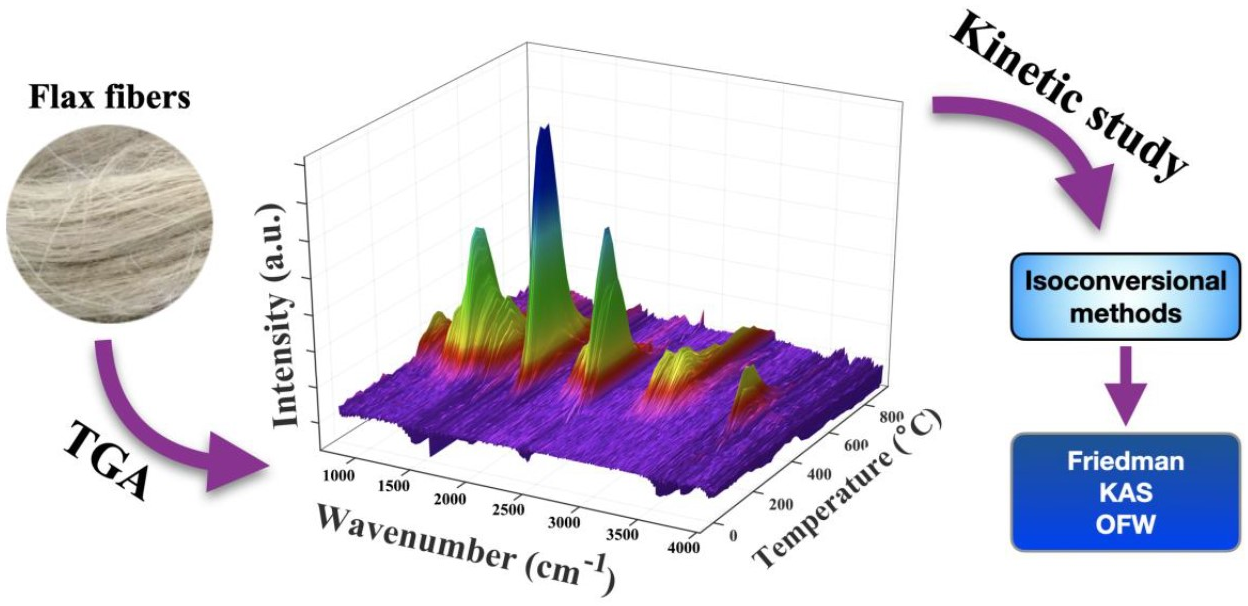
Pyrolysis and Combustion Behavior of Flax Straw as Biomass: Evaluation of Kinetic, Thermodynamic Parameters, and Qualitative Analysis of Degradation Products




Abstract
Share and Cite
Vafakish, B.; Babaei-Ghazvini, A.; Ebadian, M.; Acharya, B. Pyrolysis and Combustion Behavior of Flax Straw as Biomass: Evaluation of Kinetic, Thermodynamic Parameters, and Qualitative Analysis of Degradation Products. Energies 2023, 16, 6932. https://doi.org/10.3390/en16196932
Vafakish B, Babaei-Ghazvini A, Ebadian M, Acharya B. Pyrolysis and Combustion Behavior of Flax Straw as Biomass: Evaluation of Kinetic, Thermodynamic Parameters, and Qualitative Analysis of Degradation Products. Energies. 2023; 16(19):6932. https://doi.org/10.3390/en16196932
Chicago/Turabian StyleVafakish, Bahareh, Amin Babaei-Ghazvini, Mahmood Ebadian, and Bishnu Acharya. 2023. "Pyrolysis and Combustion Behavior of Flax Straw as Biomass: Evaluation of Kinetic, Thermodynamic Parameters, and Qualitative Analysis of Degradation Products" Energies 16, no. 19: 6932. https://doi.org/10.3390/en16196932
APA StyleVafakish, B., Babaei-Ghazvini, A., Ebadian, M., & Acharya, B. (2023). Pyrolysis and Combustion Behavior of Flax Straw as Biomass: Evaluation of Kinetic, Thermodynamic Parameters, and Qualitative Analysis of Degradation Products. Energies, 16(19), 6932. https://doi.org/10.3390/en16196932