Thermal and Dynamic Behavior of Anaerobic Digesters Under Neotropical Conditions: A Review


Abstract
1. Introduction
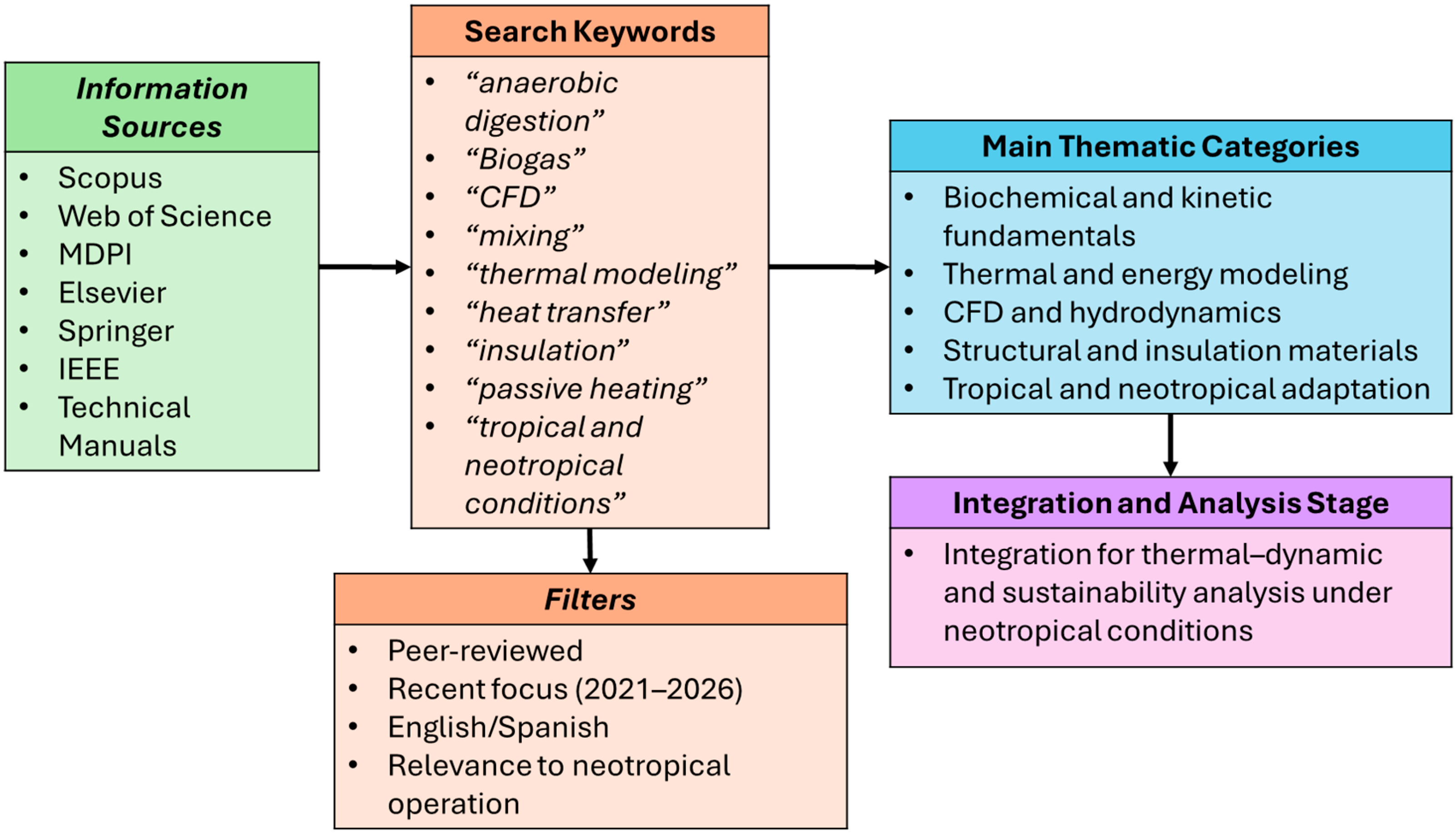
2. Methodology of the Literature Review
3. Anaerobic Digestion: A Bio-Thermal Perspective
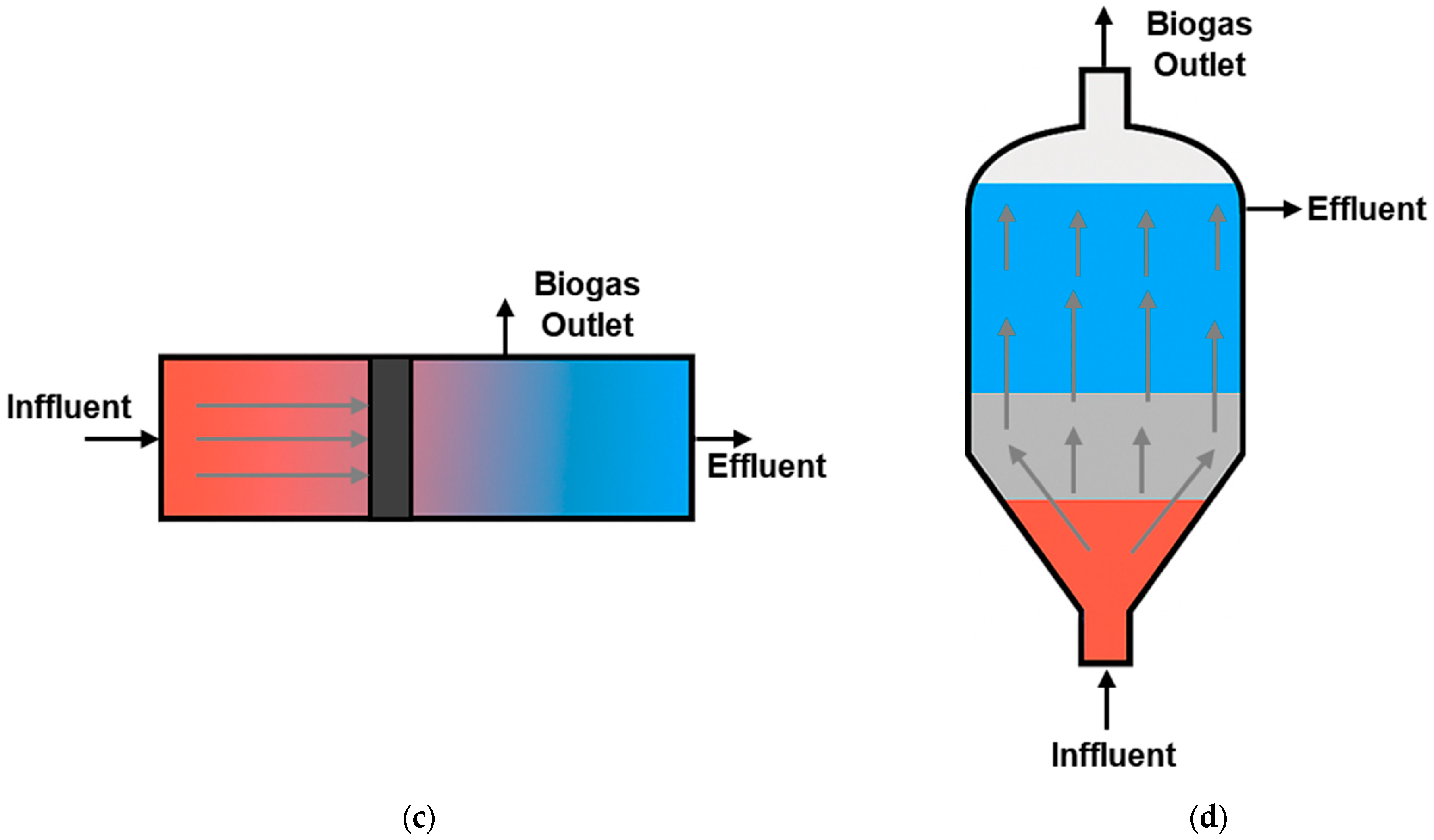
4. Reactor Configurations and Thermal Management in Neotropical Conditions
5. Operational Indicators
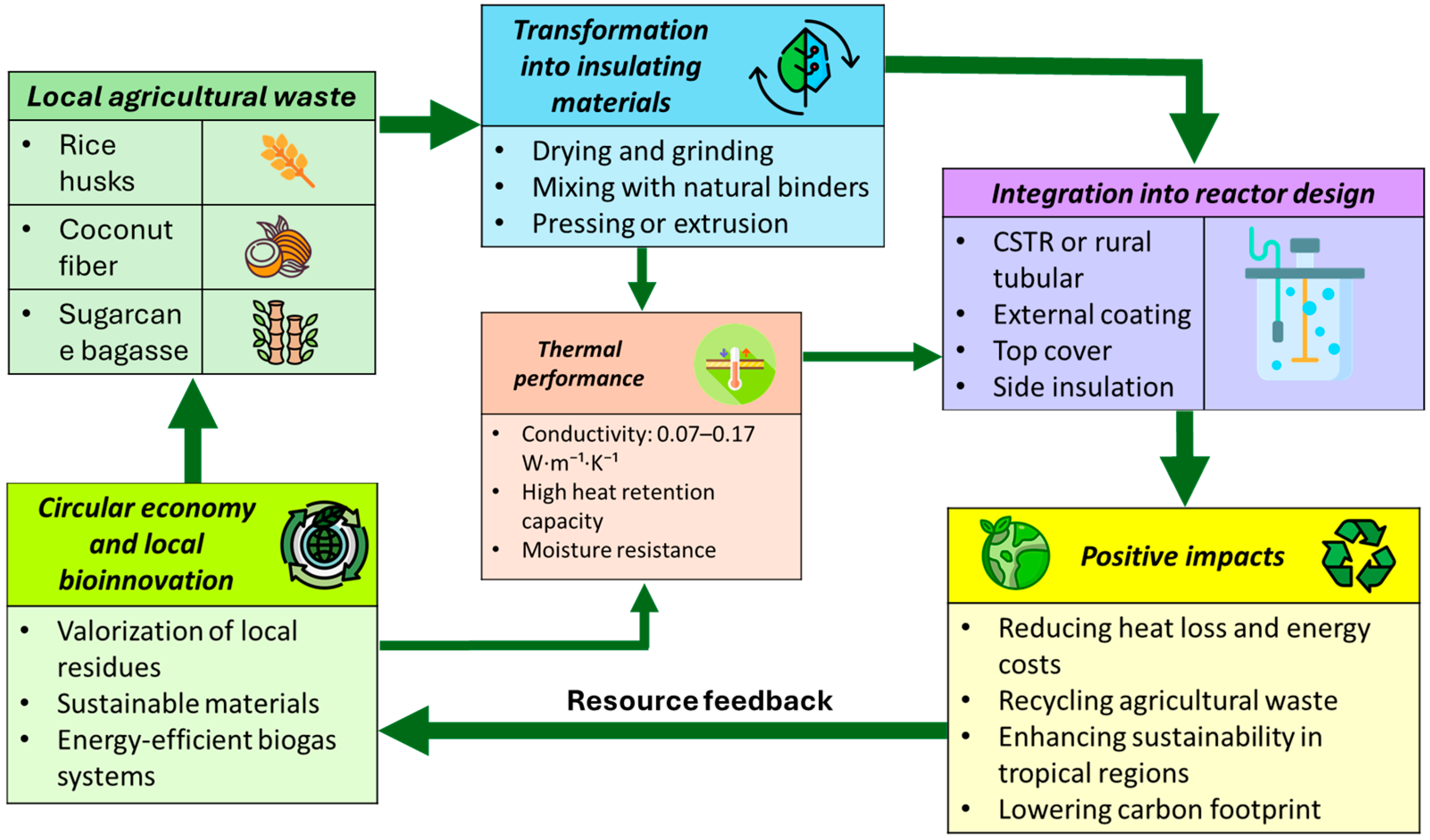
6. Materials and Insulation in Reactor Design
7. Thermal Transients and Mixing in Neotropical Operation
8. Discussion
8.1. Neotropics: Favorable but Thermally Dynamic Environment
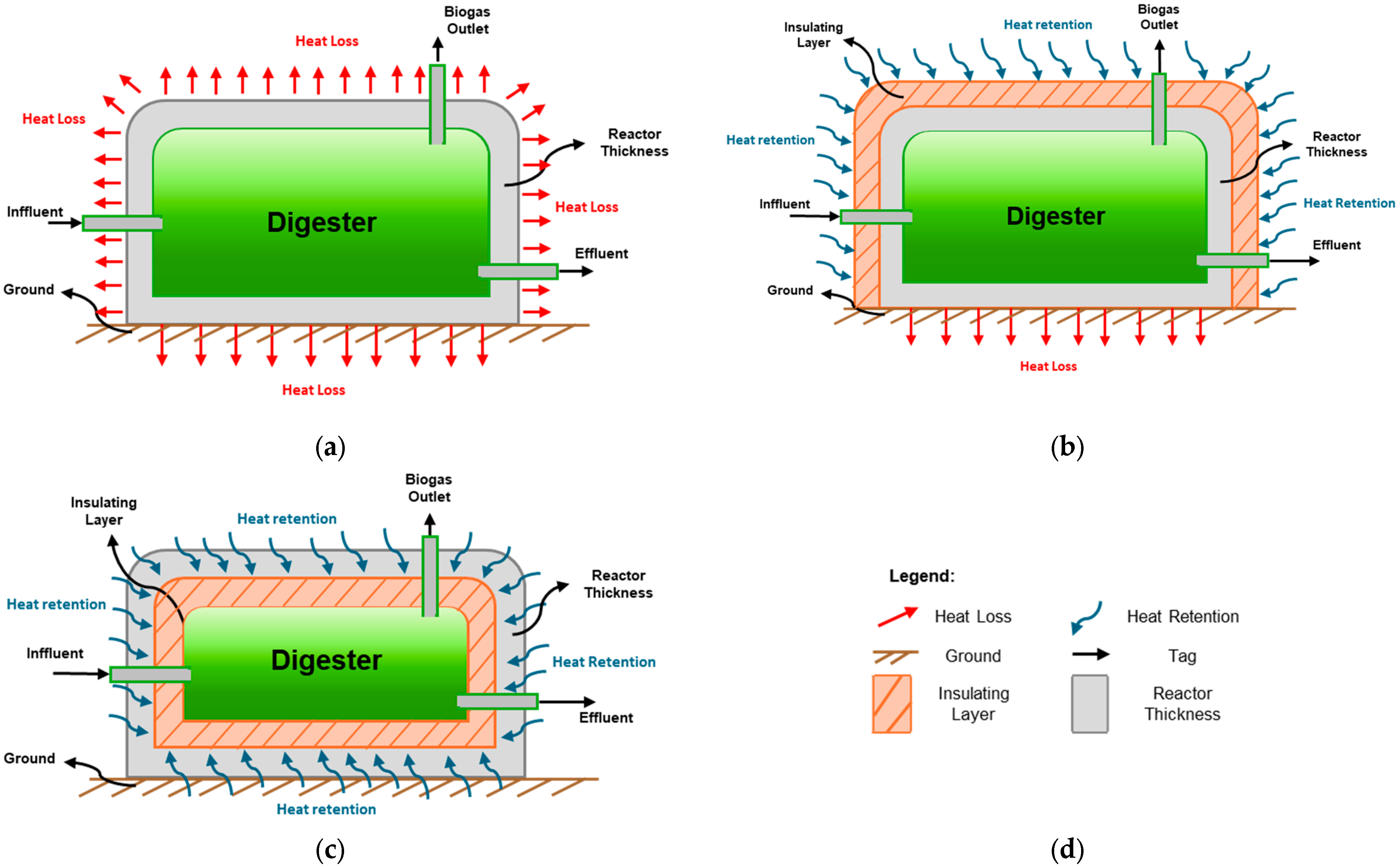
8.2. Thermal Losses and Thermal Architecture: Insulation, Materials, and Heat Recovery
8.3. Hydrodynamics as a Thermal Regulator: Homogeneity, Dead Zones, and Operating Cost
8.4. Microbial Response: Consortium Stability and Risks Associated with Heterogeneity
8.5. Optimization for Neotropical Conditions: From Standard Design to Best-Compromise Configurations
8.6. Limitations of the Reviewed Evidence and Recommendations
8.7. Thermo-Hydrodynamic Criteria for Anaerobic Digesters Under Neotropical Conditions
9. Prospects for Future Research
10. Conclusions
Author Contributions
Funding
Data Availability Statement
Acknowledgments
Conflicts of Interest
Abbreviations
| AD | Anaerobic Digestion |
| ADM1 | Anaerobic Digestion Model No. 1 |
| ASHRAE | American Society of Heating, Refrigerating and Air-Conditioning Engineers |
| CFD | Computational Fluid Dynamics |
| CH4 | Methane |
| CSTR | Continuous Stirred Tank Reactor |
| EGSB | Expanded Granular Sludge Bed |
| EPS | Expanded Polystyrene |
| HDPE | High-Density Polyethylene |
| HRT | Hydraulic Retention Time |
| OLR | Organic Loading Rate |
| PIR | Polyisocyanurate |
| PVC | Polyvinyl Chloride |
| PU | Polyurethane |
| RTD | Residence Time Distribution |
| UASB | Upflow Anaerobic Sludge Blanket |
| UV | Ultraviolet |
References
- Fagerström, A. The Role of Anaerobic Digestion and Biogas in the Circular Economy; Murphy, J.D., Ed.; IEA Bioenergy: Dublin, Ireland, 2018; ISBN 978-1-910154-45-8. [Google Scholar]
- Piadeh, F.; Offie, I.; Behzadian, K.; Rizzuto, J.P.; Bywater, A.; Córdoba-Pachón, J.-R.; Walker, M. A Critical Review for the Impact of Anaerobic Digestion on the Sustainable Development Goals. J. Environ. Manag. 2024, 349, 119458. [Google Scholar] [CrossRef] [PubMed]
- Issahaku, M.; Derkyi, N.S.A.; Kemausuor, F. A Systematic Review of the Design Considerations for the Operation and Maintenance of Small-Scale Biogas Digesters. Heliyon 2024, 10, e24019. [Google Scholar] [CrossRef] [PubMed]
- Fontenelle Ferreira, S. Análise Técnico e Ambiental da Digestão Anaeróbia de Resíduos Orgânicos: Technical and Environmental Analysis of Anaerobic Digestion of Organic Residues. Ph.D. Thesis, Universidade Estadual de Campinas, Campinas, Brazil, 2021. [Google Scholar]
- Ahmadi, A.; Avila, M.; Barna, L. Pathways for the Thermally Optimal Design and Practice of Anaerobic Digestion in Large-Scale Biogas Plants: Heat Transfer Modeling and Energy Analysis. Chem. Eng. Res. Des. 2023, 197, 884–907. [Google Scholar] [CrossRef]
- Gerardi, M.H. The Microbiology of Anaerobic Digesters; Wastewater Microbiology Series; Wiley-Interscience: Hoboken, NJ, USA, 2003; ISBN 978-0-471-20693-4. [Google Scholar]
- Angelidaki, I.; Ahring, B.K. Anaerobic Thermophilic Digestion of Manure at Different Ammonia Loads: Effect of Temperature. Water Res. 1994, 28, 727–731. [Google Scholar] [CrossRef]
- Humphrey, I.; Obot, N.I.; Humphrey, O.F.; Afuwape, N.F. Temperature and pH Optimization in Mesophilic Anaerobic Digestion for Enhanced Biogas Production. Biofuels 2025, 16, 592–603. [Google Scholar] [CrossRef]
- Berardi, U. The Impact of Aging and Environmental Conditions on the Effective Thermal Conductivity of Several Foam Materials. Energy 2019, 182, 777–794. [Google Scholar] [CrossRef]
- Jiménez-Come, M.J.; González Gallero, F.J.; Gómez, P.Á.; Matres, V. Prediction and Detection of Localised Corrosion Attack of Stainless Steel in Biogas Production: A Machine Learning Classification Approach. Materials 2025, 18, 1057. [Google Scholar] [CrossRef]
- Avila-Lopez, M.; Robles-Rodriguez, C.; Tiruta-Barna, L.; Ahmadi, A. Toward Thermal Autarky for Large-Scale Biogas Plants: Dynamic Energy Modeling for Energy Efficiency in Anaerobic Digesters with Enhanced Multimembrane Gasholders. Fuel 2023, 339, 126978. [Google Scholar] [CrossRef]
- Negro, V.; Noussan, M.; Chiaramonti, D. Alternative Options for Biogas-to-Energy: A Comparison of Electricity and Biomethane Generation Based on the Real Operation of a Production Site. Appl. Energy 2025, 377, 124687. [Google Scholar] [CrossRef]
- Lakatos, Á.; Kalmár, F. Investigation of Thickness and Density Dependence of Thermal Conductivity of Expanded Polystyrene Insulation Materials. Mater. Struct. 2013, 46, 1101–1105. [Google Scholar] [CrossRef]
- Tolessa, A. Current Status and Future Prospects of Small-Scale Household Biodigesters in Sub-Saharan Africa. J. Energy 2024, 2024, 5596028. [Google Scholar] [CrossRef]
- Antepara, I. Moisture Dependent Thermal Properties of Hydrophilic Mineral Wool: Application of the Effective Media Theory. Mater. Sci. 2015, 21, 449–454. [Google Scholar] [CrossRef]
- Singh, B.; Singh, N.; Čonka, Z.; Kolcun, M.; Siménfalvi, Z.; Péter, Z.; Szamosi, Z. Critical Analysis of Methods Adopted for Evaluation of Mixing Efficiency in an Anaerobic Digester. Sustainability 2021, 13, 6668. [Google Scholar] [CrossRef]
- Winkler, J.; Neuner, T.; Hupfauf, S.; Arthofer, A.; Ebner, C.; Rauch, W.; Bockreis, A. Impact of Impeller Design on Anaerobic Digestion: Assessment of Mixing Dynamics, Methane Yield, Microbial Communities and Digestate Dewaterability. Bioresour. Technol. 2024, 406, 131095. [Google Scholar] [CrossRef]
- Caillet, H.; Bastide, A.; Adelard, L. Advances in Computational Fluid Dynamics Modeling of Anaerobic Digestion Process for Renewable Energy Production: A Review. Clean. Waste Syst. 2023, 6, 100124. [Google Scholar] [CrossRef]
- Farid, M.U.; Olbert, I.A.; Bück, A.; Ghafoor, A.; Wu, G. CFD Modelling and Simulation of Anaerobic Digestion Reactors for Energy Generation from Organic Wastes: A Comprehensive Review. Heliyon 2025, 11, e41911. [Google Scholar] [CrossRef] [PubMed]
- American Society of Heating, Refrigerating and Air-Conditioning Engineers (ASHRAE). ASHRAE Handbook—Fundamentals; ASHRAE: Atlanta, GA, USA, 2019. [Google Scholar]
- Çengel, Y.A.; Ghajar, A.J. Heat and Mass Transfer: Fundamentals & Applications, 5th ed.; McGraw-Hill Education: New York, NY, USA, 2015; ISBN 978-0-07-339818-1. [Google Scholar]
- Guardado, J. Diseño y Construcción de Plantas de Biogás Sencillas; CUBASOLAR: Havana, Cuba, 2007; ISBN 959-7113-33-3. [Google Scholar]
- Jadeja, N.B.; Ganorkar, R. Mathematical Modelling for Understanding and Improving the Anaerobic Digestion Process Efficiency. In Anaerobic Biodigesters for Human Waste Treatment; Meghvansi, M.K., Goel, A.K., Eds.; Environmental and Microbial Biotechnology; Springer Nature: Singapore, 2022; pp. 39–56. ISBN 978-981-19-4920-3. [Google Scholar]
- Maldonado-Saeteros, S.; Baquerizo-Crespo, R.J.; Gómez-Salcedo, Y.; Pérez-Ones, O.; Pereda-Reyes, I. Influence of Temperature on Kinetics and Hydraulic Retention Time in Discontinuous and Continuous Anaerobic Systems. Environ. Eng. Res. 2022, 28, 210442. [Google Scholar] [CrossRef]
- Bandgar, P.S.; Panwar, N.L.; Jain, S.; Rathore, N. Thermal Modelling and Experimental Validation for Biogas Production in Anaerobic Digestion. Bioresour. Technol. Rep. 2022, 20, 101243. [Google Scholar] [CrossRef]
- Calise, F.; Cappiello, F.L.; Cimmino, L.; Dentice d’Accadia, M.; Vicidomini, M. Dynamic Analysis and Investigation of the Thermal Transient Effects in a CSTR Reactor Producing Biogas. Energy 2023, 263, 126010. [Google Scholar] [CrossRef]
- Arnau, R.; Climent, J.; Martínez-Cuenca, R.; Rodríguez, J.; Chiva, S. Evaluation of Hydraulic Mixing Performance in a Full-Scale Anaerobic Digester with an External Liquid Recirculation System Using CFD and Experimental Validation. Chem. Eng. Sci. 2022, 251, 117392. [Google Scholar] [CrossRef]
- Li, J.; Wei, X.; Zou, J. Modelling of CSTR Flow Field for Agaricus Bisporus Residue Fermentation Based on CFD Numerical Simulation. Environ. Sci. Pollut. Res. 2022, 30, 17437–17448. [Google Scholar] [CrossRef] [PubMed]
- Wu, B. CFD Simulation of Gas and Non-Newtonian Fluid Two-Phase Flow in Anaerobic Digesters. Water Res. 2010, 44, 3861–3874. [Google Scholar] [CrossRef] [PubMed]
- Zamani Abyaneh, E.; Zarghami, R.; Krühne, U.; Rosinha Grundtvig, I.P.; Ramin, P.; Mostoufi, N. Mixing Assessment of an Industrial Anaerobic Digestion Reactor Using CFD. Renew. Energy 2022, 192, 537–549. [Google Scholar] [CrossRef]
- Cigarruista Solís, L.; Chen Austin, M.; Deago, E.; López, G.; Marin-Calvo, N. Rice Husk-Based Insulators: Manufacturing Process and Thermal Potential Assessment. Materials 2024, 17, 2589. [Google Scholar] [CrossRef]
- Marín-Calvo, N.; González-Serrud, S.; James-Rivas, A. Thermal Insulation Material Produced from Recycled Materials for Building Applications: Cellulose and Rice Husk-Based Material. Front. Built Environ. 2023, 9, 1271317. [Google Scholar] [CrossRef]
- Quintero, A.M.; Nieto, A.X.; Orduña, F.; Sánchez, S.; Marín-Calvo, N. Acoustic and Thermal Study of Coconut Fiber Agglomerated with Cassava Starch. J. Appl. Res. Technol. 2025, 23, 33–44. [Google Scholar] [CrossRef]
- Cantos Ruíz, M.M.; Arévalo Moreta, N.D.; Monserrate Figueroa, K.M.; Vera Quevedo, K.J.; Caamaño Gordillo, L.D. Design and Construction of a Biodigester for the Production of Biogas from Cattle Manure. In Proceedings of the 22nd LACCEI International Multi-Conference for Engineering, Education and Technology (LACCEI 2024): Sustainable Engineering for a Diverse, Equitable, and Inclusive Future at the Service of Education, Research, and Industry for a Society 5.0; Latin American and Caribbean Consortium of Engineering Institutions: Miami, FL, USA, 2024. [Google Scholar]
- Deago, E.; Ramírez, M.; Espino, K.; Nieto, D.; Barragán, M.; García, M.; Guevara-Cedeño, J. Optimizing Anaerobic Digestion at Ambient Temperatures: Energy Efficiency and Cost Reduction Potential in Panama. Water 2023, 15, 2653. [Google Scholar] [CrossRef]
- Garfí, M.; Martí-Herrero, J.; Garwood, A.; Ferrer, I. Household Anaerobic Digesters for Biogas Production in Latin America: A Review. Renew. Sustain. Energy Rev. 2016, 60, 599–614. [Google Scholar] [CrossRef]
- Martí-Herrero, J.; Pino Donoso, M.; Gallo Mendoza, L.; Pedraza, G.X.; Víquez Arias, J. Oportunidades Para el Desarrollo de un Sector Sostenible de Biodigestores de Pequeña y Mediana Escala en LAC, 1st ed.; RedBioLac: Santiago, Chile, 2016; ISBN 978-956-362-921-7. [Google Scholar]
- Salado, J.R.; Rivas, A.J.; Deago, E. Biochar and Its Role to Improve Digestibility Conditions in Biogas Production. In Proceedings of the 2022 8th International Engineering, Sciences and Technology Conference (IESTEC); IEEE: Panama City, Panama, 2022; pp. 485–492. [Google Scholar]
- Sotaquira, M.F. Diseño de un Biodigestor Para el Aprovechamiento de la Materia Orgánica Generada en la Plaza de Mercado del Municipio de Sogamoso—Boyacá; [Proyecto aplicado], Repositorio Institucional UNAD; Universidad Nacional Abierta y a Distancia: Bogotá, Colombia, 2021. [Google Scholar]
- Calise, F.; Cappiello, F.L.; Cimmino, L.; Dentice d’Accadia, M.; Vicidomini, M. Dynamic Simulation and Thermoeconomic Analysis of a Power to Gas System. Renew. Sustain. Energy Rev. 2023, 187, 113759. [Google Scholar] [CrossRef]
- Garkoti, P.; Ni, J.-Q.; Thengane, S.K. Energy Management for Maintaining Anaerobic Digestion Temperature in Biogas Plants. Renew. Sustain. Energy Rev. 2024, 199, 114430. [Google Scholar] [CrossRef]
- Pal, A.; Ilango, G.S. Design and Experimental Validation of a Thermal Model for Anerobic Digester for Consistent Biogas Production. Energy 2025, 334, 137632. [Google Scholar] [CrossRef]
- Wang, Z.; He, H.; Yan, J.; Xu, Z.; Yang, G.; Wang, H.; Zhao, Y.; Cui, Z.; Yuan, X. Influence of Temperature Fluctuations on Anaerobic Digestion: Optimum Performance Is Achieved at 45 °C. Chem. Eng. J. 2024, 492, 152331. [Google Scholar] [CrossRef]
- Baldi, F.; Sdringola, P.; Beozzo, S.; Di Pietra, B. Experimental Evaluation and Data-Driven Modeling of a Household Anaerobic Digester for Waste-to-Biogas Conversion. Renew. Energy 2025, 251, 123333. [Google Scholar] [CrossRef]
- Stefanowicz, E.; Chmielewska, A.; Szulgowska-Zgrzywa, M. Performance Assessment and Heat Loss Analysis of Anaerobic Digesters in Wastewater Treatment Plants—Case Study. Energies 2025, 19, 106. [Google Scholar] [CrossRef]
- Tavera-Ruiz, C.; Martí-Herrero, J.; Mendieta, O.; Jaimes-Estévez, J.; Gauthier-Maradei, P.; Azimov, U.; Escalante, H.; Castro, L. Current Understanding and Perspectives on Anaerobic Digestion in Developing Countries: Colombia Case Study. Renew. Sustain. Energy Rev. 2023, 173, 113097. [Google Scholar] [CrossRef]
- Ibarra-Esparza, F.E.; González-López, M.E.; Ibarra-Esparza, J.; Lara-Topete, G.O.; Senés-Guerrero, C.; Cansdale, A.; Forrester, S.; Chong, J.P.J.; Gradilla-Hernández, M.S. Implementation of Anaerobic Digestion for Valorizing the Organic Fraction of Municipal Solid Waste in Developing Countries: Technical Insights from a Systematic Review. J. Environ. Manag. 2023, 347, 118993. [Google Scholar] [CrossRef] [PubMed]
- Martí-Herrero, J. Biodigestores Tubulares: Guía de Diseño y Manual de Instalación; RedBioLac: Santiago, Chile, 2019; ISBN 978-9942-36-276-6. [Google Scholar]
- Martí-Herrero, J.; Erazo, I.; Jiménez-Paute, R. Low-Cost Digesters and Wetlands for Decentralized Wastewater Treatment: Performance and GHG Emissions in the Ecuadorian Amazon. Sci. Total Environ. 2025, 1002, 180646. [Google Scholar] [CrossRef] [PubMed]
- Ventura-Prados, A.; Solís-García, J. Design, Monitoring, and Application of a Cost-Effective Bioreactor for Biogas Production. bioRxiv 2025. [Google Scholar] [CrossRef]
- Shaw, T.K.; Raghuvanshi, S.; Lohani, S.P. Climate—Adaptive Anaerobic Digestion of Food Waste in Household Digesters: Insights from Extreme Temperature Conditions. Renew. Energy 2025, 246, 122890. [Google Scholar] [CrossRef]
- Jiménez-Paute, R.; Hidalgo, M.; Guaya, D.; Martí-Herrero, J. Performance of a Low-Cost Full-Scale Wastewater Treatment System: Tubular Digesters Combined with Granular Filtration for Domestic Wastewater in the Ecuadorian Amazon. J. Water Process. Eng. 2025, 69, 106797. [Google Scholar] [CrossRef]
- Sutthiprapa, S.; Towprayoon, S.; Chiemchaisri, C.; Chaiprasert, P.; Wangyao, K. Optimizing an Anaerobic Hybrid Reactor Series for Effective High-Strength Fresh Leachate Treatment and Biogas Generation. Sustainability 2024, 16, 3076. [Google Scholar] [CrossRef]
- Angelidaki, I.; Chen, X.; Cui, J.; Kaparaju, P.; Ellegaard, L. Thermophilic Anaerobic Digestion of Source-Sorted Organic Fraction of Household Municipal Solid Waste: Start-up Procedure for Continuously Stirred Tank Reactor. Water Res. 2006, 40, 2621–2628. [Google Scholar] [CrossRef]
- Camiloti, P.R.; Mockaitis, G.; Domingues Rodrigues, J.A.; Rissato Zamariolli Damianovic, M.H.; Foresti, E.; Zaiat, M. Innovative Anaerobic Bioreactor with Fixed-Structured Bed (ABFSB) for Simultaneous Sulfate Reduction and Organic Matter Removal: Innovative Anaerobic Bioreactor. J. Chem. Technol. Biotechnol. 2014, 89, 1044–1050. [Google Scholar] [CrossRef]
- Siqueira, L.M.; Damiano, E.S.G.; Silva, E.L. Influence of Organic Loading Rate on the Anaerobic Treatment of Sugarcane Vinasse and Biogás Production in Fluidized Bed Reactor. J. Environ. Sci. Health Part A 2013, 48, 1707–1716. [Google Scholar] [CrossRef] [PubMed]
- Xu, G.; Ji, J.; Zheng, Z.; Song, H.; Yang, H.; Liu, J.; Yin, F.; Zhang, W.; Hao, S. Performance and Energy Utilization Efficiency of an Expanded Granular Sludge Bed Reactor in the Treatment of Cassava Alcohol Wastewater. Energies 2023, 16, 7496. [Google Scholar] [CrossRef]
- Zieliński, M.; Kisielewska, M.; Dębowski, M.; Rusanowska, P.; Nowicka, A.; Dudek, M. Biogas Production and Metagenomic Analysis in a New Hybrid Anaerobic Labyrinth-Flow Bioreactor Treating Dairy Wastewater. Appl. Sci. 2023, 13, 5197. [Google Scholar] [CrossRef]
- Arthur, P.M.A.; Konaté, Y.; Sawadogo, B.; Sagoe, G.; Dwumfour-Asare, B.; Ahmed, I.; Williams, M.N.V. Performance Evaluation of a Full-Scale Upflow Anaerobic Sludge Blanket Reactor Coupled with Trickling Filters for Municipal Wastewater Treatment in a Developing Country. Heliyon 2022, 8, e10129. [Google Scholar] [CrossRef] [PubMed]
- Omil, F.; Garrido, J.M.; Arrojo, B.; Méndez, R. Anaerobic Filter Reactor Performance for the Treatment of Complex Dairy Wastewater at Industrial Scale. Water Res. 2003, 37, 4099–4108. [Google Scholar] [CrossRef]
- Usack, J.G.; Spirito, C.M.; Angenent, L.T. Continuously-Stirred Anaerobic Digester to Convert Organic Wastes into Biogas: System Setup and Basic Operation. J. Vis. Exp. 2012, 65, 3978. [Google Scholar] [CrossRef]
- Kesharwani, N.; Bajpai, S. Pilot Scale Anaerobic Co-Digestion at Tropical Ambient Temperature of India: Digester Performance and Techno-Economic Assessment. Bioresour. Technol. Rep. 2021, 15, 100715. [Google Scholar] [CrossRef]
- Cisneros, J.F.; Pelaez-Samaniego, M.R.; Pinos, V.; Nopens, I.; Alvarado, A. Development of an Automated Tracer Testing System for UASB Laboratory-Scale Reactors. Water 2021, 13, 1821. [Google Scholar] [CrossRef]
- Alvarez, Y.C.; Borges, R.J.; Vidal, C.D.P.; Leon, F.M.C.; Buendia, J.S.P.; Nolasco, J.A.S. Design Improvements and Best Practices in Small-Scale Biodigesters for Sustainable Biogas Production: A Case Study in the Chillon Valley, Perú. Energies 2025, 18, 338. [Google Scholar] [CrossRef]
- Appels, L.; Baeyens, J.; Degrève, J.; Dewil, R. Principles and Potential of the Anaerobic Digestion of Waste-Activated Sludge. Prog. Energy Combust. Sci. 2008, 34, 755–781. [Google Scholar] [CrossRef]
- Müller, B.; Sun, L.; Westerholm, M.; Schnürer, A. Bacterial Community Composition and Fhs Profiles of Low- and High-Ammonia Biogas Digesters Reveal Novel Syntrophic Acetate-Oxidising Bacteria. Biotechnol. Biofuels 2016, 9, 48. [Google Scholar] [CrossRef] [PubMed]
- Hmaissia, A.; Bareha, Y.; Vaneeckhaute, C. Correlations and Impact of Anaerobic Digestion Operating Parameters on the Start-up Duration: Database Construction for Robust Start-up Guidelines. J. Environ. Manag. 2024, 359, 121068. [Google Scholar] [CrossRef] [PubMed]
- Taramasso, M.A.; Motaghi, M.; Casasso, A. A Techno-Economic Feasibility Analysis of Solutions to Cover the Thermal and Electrical Demands of Anaerobic Digesters. Renew. Energy 2024, 236, 121485. [Google Scholar] [CrossRef]
- Linnenberg, C.; Malebrán, C.; Jofré, I.; Schleenstein, G. Estudio de Factibilidad de un Biodigestor Anaeróbico en Una Planta Faenadora de Carne; Ministerio de Energía de Chile: Santiago, Chile, 2019. [Google Scholar]
- Jimenez, J.; Latrille, E.; Harmand, J.; Robles, A.; Ferrer, J.; Gaida, D.; Wolf, C.; Mairet, F.; Bernard, O.; Alcaraz-Gonzalez, V.; et al. Instrumentation and Control of Anaerobic Digestion Processes: A Review and Some Research Challenges. Rev. Environ. Sci. Biotechnol. 2015, 14, 615–648. [Google Scholar] [CrossRef]
- Rodríguez Ramón, L.G. Implementación y Construcción de un Biodigestor Hindú de Estructura Flexible con el Aprovechamiento de las Excretas de Ganado Vacuno, Aplicado a la Quinta Experimental Punzara. Ph.D. Thesis, Universidad Nacional de Loja, Loja, Ecuador, 2012. [Google Scholar]
- Šustr, M.; Dostál, P.; Začal, J. Corrosion Resistance of Galvanized Steel in the Environment of a Bioreactor. Acta Technol. Agric. 2016, 19, 29–32. [Google Scholar] [CrossRef][Green Version]
- Sudiartha, G.A.W.; Imai, T.; Hung, Y.-T. Effects of Stepwise Temperature Shifts in Anaerobic Digestion for Treating Municipal Wastewater Sludge: A Genomic Study. Int. J. Environ. Res. Public Health 2022, 19, 5728. [Google Scholar] [CrossRef]
- Ramos-Suárez, J.L.; Álvarez-Méndez, S.J.; Padrón Tejera, E.; Ritter, A.; Mata González, J. Temperature Control Effect on Cheese Whey Anaerobic Digestion with Low-Cost Tubular Digesters. Processes 2024, 12, 1452. [Google Scholar] [CrossRef]
- Conti, F.; Saidi, A.; Goldbrunner, M. Evaluation Criteria and Benefit Analysis of Mixing Process in Anaerobic Digesters of Biogas Plants. Environ. Clim. Technol. 2020, 24, 305–317. [Google Scholar] [CrossRef]
- Fang, X.; Li, X.; Li, X.; Fan, J.; Yan, Y.; Tu, J. Characterization and Quantitively Analysis on the High Solid Anaerobic Digestion in the Large Scale Stirred Tank Reactor. Renew. Energy 2025, 241, 122326. [Google Scholar] [CrossRef]
- Kashfi, M.E.; Kouhikamali, R.; Khayati, G.; Mahmoudimehr, J. CFD Simulation of the Laboratory-Scale Anaerobic Digester to Study the Impacts of Impeller Geometric and Operational Parameters on Its Performance. Sci. Iran. 2022, 30, 2070–2081. [Google Scholar] [CrossRef]
- Soheel, A.H.; Faraj, J.J.; Hussien, F.M. CFD Analysis for Anaerobic Digestion Inside a Batch Digester Augmented with Extended Surfaces. Front. Heat Mass Transf. 2023, 20, 3. [Google Scholar] [CrossRef]
- Calise, F.; Cappiello, F.L.; Cimmino, L.; Napolitano, M.; Vicidomini, M. Analysis of the Influence of Temperature on the Anaerobic Digestion Process in a Plug Flow Reactor. Thermo 2022, 2, 92–106. [Google Scholar] [CrossRef]
- Shrestha, S.; Lohani, S.P. CFD Analysis for Mixing Performance of Different Types of Household Biodigesters. Clean Energy 2022, 6, 325–334. [Google Scholar] [CrossRef]
- Kegl, T.; Kegl, B.; Kegl, M. Improvement of Biogas Production Utilizing a Complex Anaerobic Digestion Model and Gradient-Based Optimization. Energies 2024, 17, 1279. [Google Scholar] [CrossRef]
- Gomez, F.H.; Vasquez, N.J.; Torres, K.C.; Meza, C.M.; Vaccari, M. Sustainability Assessment of Rural Biogas Production and Use Through a Multi-Criteria Approach: A Case Study in Colombia. Sustainability 2025, 17, 6806. [Google Scholar] [CrossRef]
- Mühl, D.D.; De Oliveira, L. Features of Anaerobic Digestion Plants in the Brazilian Agricultural Sector. Clean. Circ. Bioecon. 2022, 1, 100001. [Google Scholar] [CrossRef]
- Dittmer, C.; Krümpel, J.; Lemmer, A. Modeling and Simulation of Biogas Production in Full Scale with Time Series Analysis. Microorganisms 2021, 9, 324. [Google Scholar] [CrossRef]
- Ziegler-Rodriguez, K.; Josa, I.; Castro, L.; Escalante, H.; Vera-Mercado, E.; Garfí, M. Social Life Cycle Assessment of Low-Tech Digesters for Biogas and Biofertiliser Production in Small-Scale Farms. Sustain. Prod. Consum. 2025, 54, 303–323. [Google Scholar] [CrossRef]
- Silva, J.B.D.; Oliveira-Porto, I.; Alencar, B.R.A.; Santos Júnior, E.P.; Amaral, D.R.D.; Do Valle, D.S.G.M.; De Abreu, Í.B.S.; Silva, S.P.D.; Silva, A.F.; De Moura, R.S.; et al. Small-Scale Biodigesters in a Tropical Semi-Arid Region: Impacts on Emissions and Water, Energy and Food Security. Energy Nexus 2025, 20, 100602. [Google Scholar] [CrossRef]
- Lázár, I.; Szegedi, S.; Tóth, T.; Csákberényi-Nagy, G. An Estimation Model Based on Solar Geometry Parameters for Solar Power Production. Energy Rep. 2020, 6, 1636–1640. [Google Scholar] [CrossRef]
- Reda, I.; Andreas, A. Solar Position Algorithm for Solar Radiation Applications (Revised); NREL/TP-560-34302, 15003974; National Renewable Energy Laboratory: Golden, CO, USA, 2008. [Google Scholar]
- Zhang, X.; Jiao, Z.; Zhao, C.; Qu, Y.; Liu, Q.; Zhang, H.; Tong, Y.; Wang, C.; Li, S.; Guo, J.; et al. Review of Land Surface Albedo: Variance Characteristics, Climate Effect and Management Strategy. Remote Sens. 2022, 14, 1382. [Google Scholar] [CrossRef]
- Franco, A.; Conti, P. Clearing a Path for Ground Heat Exchange Systems: A Review on Thermal Response Test (TRT) Methods and a Geotechnical Routine Test for Estimating Soil Thermal Properties. Energies 2020, 13, 2965. [Google Scholar] [CrossRef]
- Zhu, X.; Gao, Z.; Chen, T.; Wang, W.; Lu, C.; Zhang, Q. Study on the Thermophysical Properties and Influencing Factors of Regional Surface Shallow Rock and Soil in China. Front. Earth Sci. 2022, 10, 864548. [Google Scholar] [CrossRef]
- Pambou, C.H.K.; Raymond, J.; Miranda, M.M.; Giordano, N. Estimation of In Situ Heat Capacity and Thermal Diffusivity from Undisturbed Ground Temperature Profile Measured in Ground Heat Exchangers. Geosciences 2022, 12, 180. [Google Scholar] [CrossRef]
- Mu, L.; Wang, Y.; Xu, F.; Li, J.; Tao, J.; Sun, Y.; Song, Y.; Duan, Z.; Li, S.; Chen, G. Emerging Strategies for Enhancing Propionate Conversion in Anaerobic Digestion: A Review. Molecules 2023, 28, 3883. [Google Scholar] [CrossRef]
- Chen, D.; Yin, D.; Liu, W.; Lan, W.; Wang, Y. Anaerobic Co-Digestion Scheme of Biogas Engineering Based on Feedstock and Temperature. BioResources 2023, 18, 5777–5797. [Google Scholar] [CrossRef]
- Mohammadianroshanfekr, M.; Pazoki, M.; Pejman, M.B.; Ghasemzadeh, R.; Pazoki, A. Kinetic Modeling and Optimization of Biogas Production from Food Waste and Cow Manure Co-Digestion. Results Eng. 2024, 24, 103477. [Google Scholar] [CrossRef]
- FAO. The State of Food and Agriculture 2021; FAO: Rome, Italy, 2021; ISBN 978-92-5-134329-6. [Google Scholar]



| Reactor Configuration | Scale | Study Context | Reported Temperature | Reported Thermal Management | Neotropical Design Note | References |
|---|---|---|---|---|---|---|
| CSTR, operational guideline | Reference/guideline | Controlled reference | 32–37 °C (mesophilic); 50–60 °C (thermophilic) | Heated operation: typical operating ranges reported | Requires heating and monitoring; partial transferability to low-energy operation. | [61,62] |
| CSTR, thermophilic start-up | Laboratory | Controlled laboratory | 55 °C | Heated operation at fixed thermophilic setpoint | Requires intensive heating; limited fit for low-energy warm-climate deployment. | [35,54] |
| CSTR, dynamic thermal model | Modeling | Transient simulation | 38 °C | Dynamic setpoint simulation with transient thermal analysis | Useful for transient assessment; requires realistic environmental conditions and validation under operating conditions. | [11,26] |
| UASB, municipal wastewater treatment | Full scale | Warm-climate full scale | 22.4–30.7 °C | Ambient operation; no external heating reported | Favorable for warm-climate operation; sensitive to hydraulic short-circuiting and dead zones. | [59,63] |
| EGSB, staged configuration | Laboratory | Controlled laboratory | 36 ± 1 °C | Temperature controlled through water recirculation | Low mixing demand, but thermal control through recirculation increases operational complexity. | [57] |
| Anaerobic filter, industrial wastewater treatment | Full scale | Industrial full scale | 35–37 °C | Heated operation using heat exchanger | Better suited to systems with thermal control and influent conditioning; less transferable to low-complexity operation. | [60] |
| AFBR treating vinasse | Laboratory | Controlled laboratory | 30 °C | Temperature maintained by thermostatic bath and water jackets | Biomass retention is favorable, but performance depends on controlled heating and recirculation. | [56] |
| Structured fixed-bed reactor | Laboratory | Controlled laboratory | 30 ± 1 °C | Temperature controlled at fixed setpoint | Good biomass retention, but field relevance depends on avoiding channeling and maintaining thermal stability. | [55] |
| Hybrid labyrinth-flow bioreactor | Pilot scale | Controlled pilot | 37 ± 1 °C | Heated and insulated operation with water jacket and external heater | May improve flow distribution but depends on active thermal control and insulation. | [58] |
| Anaerobic hybrid reactor series | Laboratory | Ambient tropical laboratory | Ambient temperature | Ambient operation | Relevant for low-heating warm-climate operation; sensitive to loading and internal stability. | [53] |
| BMP batch tests, Panama | Batch | Warm-climate batch screening | 25, 28, and 35 °C | Controlled batch incubation at fixed test temperatures | Useful for screening ambient-temperature feasibility, but not representative of reactor-scale thermal behavior. | [53] |
| Material | Thermal Conductivity (W m−1 K−1) | Dominant Durability Constraint | Practical Deployment Note | References |
|---|---|---|---|---|
| Reinforced concrete | 1.4–3.6 | Cracking, carbonation, moisture ingress | Favors buried or semi-buried deployment where thermal mass is advantageous | [20,21,22] |
| Stainless steel | 14–17 | High heat transfer unless insulated; elevated cost | Common in industrial reactors; requires added insulation to limit heat loss | [10,21,69] |
| PVC geomembrane | 0.16–0.20 | UV ageing, plasticizer loss, puncture risk | Common in tubular systems; requires UV shielding and mechanical protection | [20,48,71] |
| HDPE membrane | 0.30–0.45 | Weathering, thermal expansion, localized damage | Used in lightweight envelopes; requires support and additional heat retention | [20,48] |
| Galvanized steel | 45–60 | Corrosion under humid and chemically aggressive exposure | Better suited to auxiliary components than to uninsulated primary envelopes | [21,71,72] |
| Insulation Material | Thermal Conductivity (W m−1 K−1) | Typical Use in Digesters | Main Moisture-Related Constraint | Practical Deployment Note | References |
|---|---|---|---|---|---|
| Polyurethane (PU) foam | 0.020–0.030 | Internal or external insulation in metallic and prefabricated reactors | Performance may decline under prolonged exposure if unprotected | High insulation performance; requires protection against moisture and ageing | [20,39] |
| Polyisocyanurate (PIR) board | 0.022–0.028 | External insulation panels in engineered systems | Thermal performance depends on ageing and exposure conditions | Suitable for high-performance external insulation when moisture exposure is controlled | [9] |
| Expanded polystyrene (EPS) | 0.036–0.040 | External insulation in buried or semi-buried digesters | Performance decreases under prolonged moisture exposure unless protected | Suitable for protected external insulation layers | [13] |
| Mineral wool (rock wool) | 0.035–0.045 | External insulation requiring vapor barrier protection | Moisture uptake can reduce effective thermal resistance | Suitable where vapor protection and dry installation can be maintained | [9,15] |
| Elastomeric foam | 0.033–0.040 | Insulation of pipes, valves, and auxiliary components | Limited structural robustness under prolonged field exposure | Better suited to auxiliary components than to primary envelope insulation | [9] |
| Modeling Focus | Quantitative or Mechanistic Evidence Reported | Why Steady-State Representation Is Insufficient | Implication for Transient Modeling Under Neotropical Operation | Reference |
|---|---|---|---|---|
| Boundary-forced heat balance | Ambient temperature, wind, solar radiation, precipitation, and soil temperature explicitly included | External conditions vary over time and alter envelope gains/losses | Heat balance should include dynamic boundary conditions rather than fixed ambient terms | [5] |
| Dynamic thermal transient model (CSTR) | Steady-state assumptions overestimated biogas production by almost 20% | Thermal inertia and time-dependent losses alter predicted response | Transient coupling is required when boundary conditions vary during operation | [26] |
| Integrated thermal–biological model (PFR) | Temperature fields directly affect kinetic rates and methane production | Temperature cannot be treated as a steady correction under non-isothermal conditions | Temperature should be represented explicitly in reaction modeling under non-isothermal conditions | [79] |
| Large-scale digester energy model | Missing geometric detail and longwave radiative exchange identified in simplified models | Simplified loss formulations omit relevant pathways | Detailed envelope and gasholder modeling is required under variable outdoor exposure | [11] |
| Stepwise temperature-shift digestion | CH4 production decreased from 4.55 to 1.52 and 0.94 L·g−1 COD after shifts from 42 to 45 and 48 °C | Even modest thermal shifts may strongly affect production in specific systems | Thermal sensitivity is quantifiable, but thresholds remain reactor- and consortium-specific | [73] |
| Successive temperature-stage CSTR operation | Improved recovery under successive temperature transitions reported at 45 °C; recovery time of 2 days after thermal shock | Recovery behavior depends on pathway resilience, not only on ΔT magnitude | Thermal resilience should be evaluated together with recovery dynamics | [43] |
| Pilot tubular digesters with and without temperature control | Higher methane yields under temperature control; heating worthwhile only with adequate insulation | Ambient operation and controlled operation diverge when losses are not attenuated | Insulation quality conditions whether thermal control improves net performance | [74] |
| Coupled heat–flow simulation | Natural convection and internal surfaces modify temperature and velocity fields | Internal circulation responds to thermal gradients | Configuration changes may modify both temperature distribution and flow structure | [78] |
| CFD mixing assessment | RTD, local velocity gradients, and uniformity index used to diagnose dead volumes | Mixing affects homogenization and inactive volumes | Dead zones and short-circuiting can amplify internal heterogeneity and reduce effective homogenization | [27] |
| Mixing configuration screening | Propeller position and shaft orientation affect mixing efficiency and power demand | Better mixing may require more energy | Mixing design should balance homogenization with limited auxiliary energy | [75,77] |
| Reactor flow modeling method | MRF versus sliding grid and turbulence closure affect practical simulation quality | Computational simplification may distort relevant flow features | Method selection should preserve the flow features relevant to heat and mass transfer analysis | [28] |
| Multiphysics CFD review/agitation sensitivity | Heat transfer, hydrodynamics, and species kinetics must be solved together; excessive agitation can reduce efficiency | Flow, heat, and kinetics are not independent | Coupled models are better suited when mixing intensity and solids content vary | [19,76] |
| Factor | Reported Result (Supported Evidence) | Design Criterion | References |
|---|---|---|---|
| Envelope heat losses | Thermal losses through walls and cover depend on construction and ambient conditions; well-insulated envelopes can reach thermal transmission values around 0.2–0.3 W m−2 K−1 under the modeled design conditions | Evaluate component-level transmission and ensure continuity of insulation; prioritize envelope solutions that increase attenuation of external transients | [5,21] |
| Thermal self-consumption | Reported biogas thermal self-consumption decreases from about 7.4% to about 5.3% with improved envelope configurations, and down to about 1.6% when digestate heat recovery is included; combined measures can approach thermal autarky | Prioritize passive attenuation before active heating; integrate heat recovery to reduce biogas used for heating and stabilize operation under variable boundaries | [5] |
| Climatic boundary | Ambient and soil temperatures, wind, precipitation, and solar irradiance drive time-varying gains and losses and should be represented as dynamic boundary conditions; neotropical operating scenarios commonly span ambient operation near 25 °C and mesophilic setpoints around 38 °C in applied assessments | Use time-varying meteorological conditions in thermal models; avoid steady average boundary conditions when evaluating stability and design | [5,35] |
| Thermal transients | Neglecting transient thermal behavior can overestimate total biogas production by about 20% in CSTR modeling under variable conditions | Couple biokinetics with transient heat-transfer formulations; use transient heat-balance models for start-up and variable operation | [26] |
| Dead zones and short-circuits | Household CFD studies define dead zones using low-velocity thresholds (slurry velocity < 0.02 m s−1) and report dead-zone fractions of 54–74.6% depending on configuration; industrial studies may use relative criteria (for example <5% of maximum velocity) and report dead zones up to 49.3 vol% in mixing sections under inefficient mixing and non-Newtonian conditions | Adjust geometry and inlet/outlet layout to reduce low-velocity regions; support CFD with tracer/RTD validation when feasible to diagnose short-circuiting and confirm residence times | [27,30,80] |
| Operating parameter configuration | Simultaneous optimization increased methane production by about 12.3% and reduced H2, H2S, and NH3 concentrations by 30%, 20%, and 81%, respectively | Apply systematic parameter-tuning methodologies that incorporate local energy availability and operational constraints | [81] |
| Parameter | Recommended Reporting Format | Representative Value or Site-Specific Requirement | Why It Matters Under Neotropical Conditions | References |
|---|---|---|---|---|
| Ambient air temperature | Hourly or sub-daily time series | Site-specific time series | Daily ambient can dominate short-term reactor thermal response more than seasonal extremes | [5,26] |
| Solar irradiance | Hourly or sub-daily time series | Site-specific time series | High solar exposure and marked diurnal radiation cycles alter external heat gains | [5,11] |
| Solar zenith angle/solar geometry | Calculated from latitude, longitude, date, and time | Site-specific calculated input | Required to distribute solar gains realistically across the day rather than as fixed daytime input | [87,88] |
| Wind speed | Hourly or sub-daily time series | Site-specific time series | External convection affects the magnitude and timing of envelope heat losses | [5] |
| Precipitation/surface wetting | Time series or event-based record | Site-specific record | Relevant in warm–humid climates where wetting modifies exposed-surface conditions | [5] |
| Surface albedo | Estimated from surface type or measured property | Site-specific estimate preferred | Modifies reflected shortwave radiation and absorbed solar load at exposed surfaces | [89] |
| Soil temperature | Time series at representative burial depth | Site-specific measurement preferred | Governs heat exchange through buried floors and walls in ground-coupled systems | [5,11] |
| Soil thermal conductivity | Measured or literature-based estimate by soil type | Representative range: 0.25–8 W m−1 K−1; site-specific value preferred | Controls conductive heat transfer between reactor and surrounding ground | [90,91] |
| Soil heat capacity | Measured or literature-based estimate by soil type | Representative range: 0.7–2.0 kJ kg−1 K−1; site-specific value preferred | Determines damping and phase lag of ground thermal response under diurnal conditions | [90,91,92] |
| Soil thermal diffusivity | Measured or derived from conductivity and heat capacity | Representative range: 10−7–4 × 10⁻⁶ m2 s−1 | Affects the rate at which ground thermal disturbances propagate around buried reactors | [90,92] |
| Slurry heat capacity/effective thermal mass | Estimated from slurry composition and water content | System-specific estimate | Defines internal thermal inertia and thermal lag | [26,42] |
| Influent temperature | Time series or repeated operational measurement | Site-specific time series preferred | Introduces advective heat exchange that can bias transient response during feeding events | [26,42] |
| Influent and digestate flow rate | Operational time series | Site-specific time series | Required to represent advective enthalpy terms and variable operation | [11,26] |
| Envelope thermal conductivity | Material-specific property | Material-specific value | Controls conductive resistance of walls, covers, and floors | [9,20,21] |
| Envelope thickness | Construction-specific input | Measured construction value | Together with conductivity, defines thermal resistance | [20,21] |
| Overall heat-transfer coefficient/thermal transmittance | Derived or measured system parameter | Design-specific value | Useful as a compact descriptor of envelope heat-loss performance | [5,20] |
| Reactor area-to-volume ratio | Derived geometric parameter | Geometry-specific value | Strongly conditions exposure to external conditions relative to stored thermal mass, especially in small systems | [5,36] |
| Insulation conditions and moisture protection | Material, thickness, installation detail, and protection scheme | Construction-specific description | Warm–humid exposure can increase effective conductivity and reduce damping capacity over time | [9,13,15] |
| Mixing regime/specific mixing power | Operational mode and power input | System-specific value or operating range | Internal homogenization conditions both heat and mass transfer under variable conditions | [27,76,77,90] |
Disclaimer/Publisher’s Note: The statements, opinions and data contained in all publications are solely those of the individual author(s) and contributor(s) and not of MDPI and/or the editor(s). MDPI and/or the editor(s) disclaim responsibility for any injury to people or property resulting from any ideas, methods, instructions or products referred to in the content. |
© 2026 by the authors. Licensee MDPI, Basel, Switzerland. This article is an open access article distributed under the terms and conditions of the Creative Commons Attribution (CC BY) license.
Share and Cite
Rios, R.; Marin-Calvo, N.; Deago, E. Thermal and Dynamic Behavior of Anaerobic Digesters Under Neotropical Conditions: A Review. Energies 2026, 19, 1838. https://doi.org/10.3390/en19081838
Rios R, Marin-Calvo N, Deago E. Thermal and Dynamic Behavior of Anaerobic Digesters Under Neotropical Conditions: A Review. Energies. 2026; 19(8):1838. https://doi.org/10.3390/en19081838
Chicago/Turabian StyleRios, Ricardo, Nacari Marin-Calvo, and Euclides Deago. 2026. "Thermal and Dynamic Behavior of Anaerobic Digesters Under Neotropical Conditions: A Review" Energies 19, no. 8: 1838. https://doi.org/10.3390/en19081838
APA StyleRios, R., Marin-Calvo, N., & Deago, E. (2026). Thermal and Dynamic Behavior of Anaerobic Digesters Under Neotropical Conditions: A Review. Energies, 19(8), 1838. https://doi.org/10.3390/en19081838