Article

Yield Spread and Economic Policy Uncertainty: Evidence from Japan

1
Finance Faculty, Providence University, Taichung 43301, Taiwan
2
Department of Banking and Finance, Tamkang University, New Taipei 25137, Taiwan
3
Department of Finance, Feng Chia University, Taichung 40724, Taiwan
*
Author to whom correspondence should be addressed.
Sustainability 2020, 12(10), 4302; https://doi.org/10.3390/su12104302
Submission received: 28 March 2020 / Revised: 28 April 2020 / Accepted: 4 May 2020 / Published: 25 May 2020

Abstract

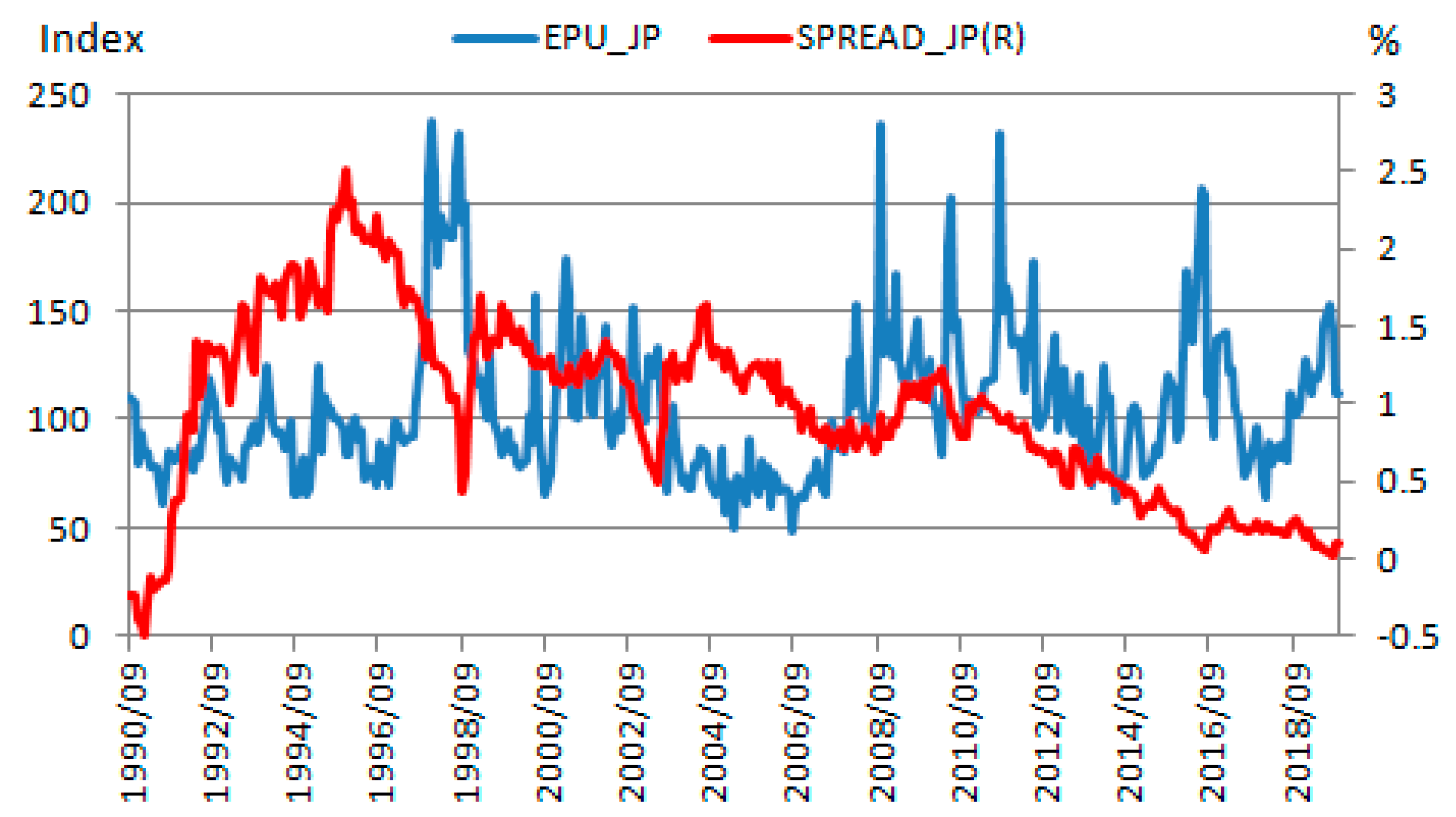
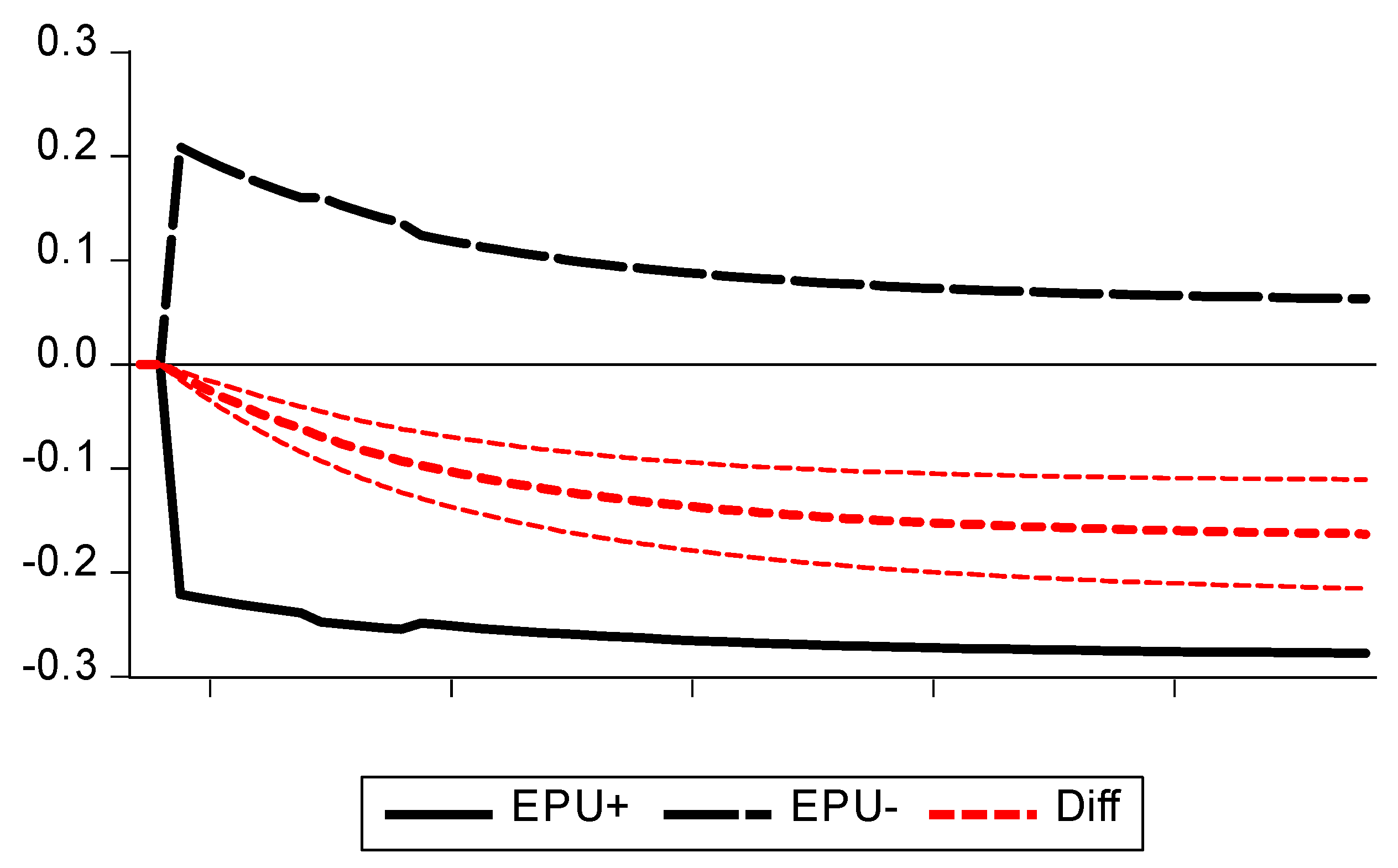
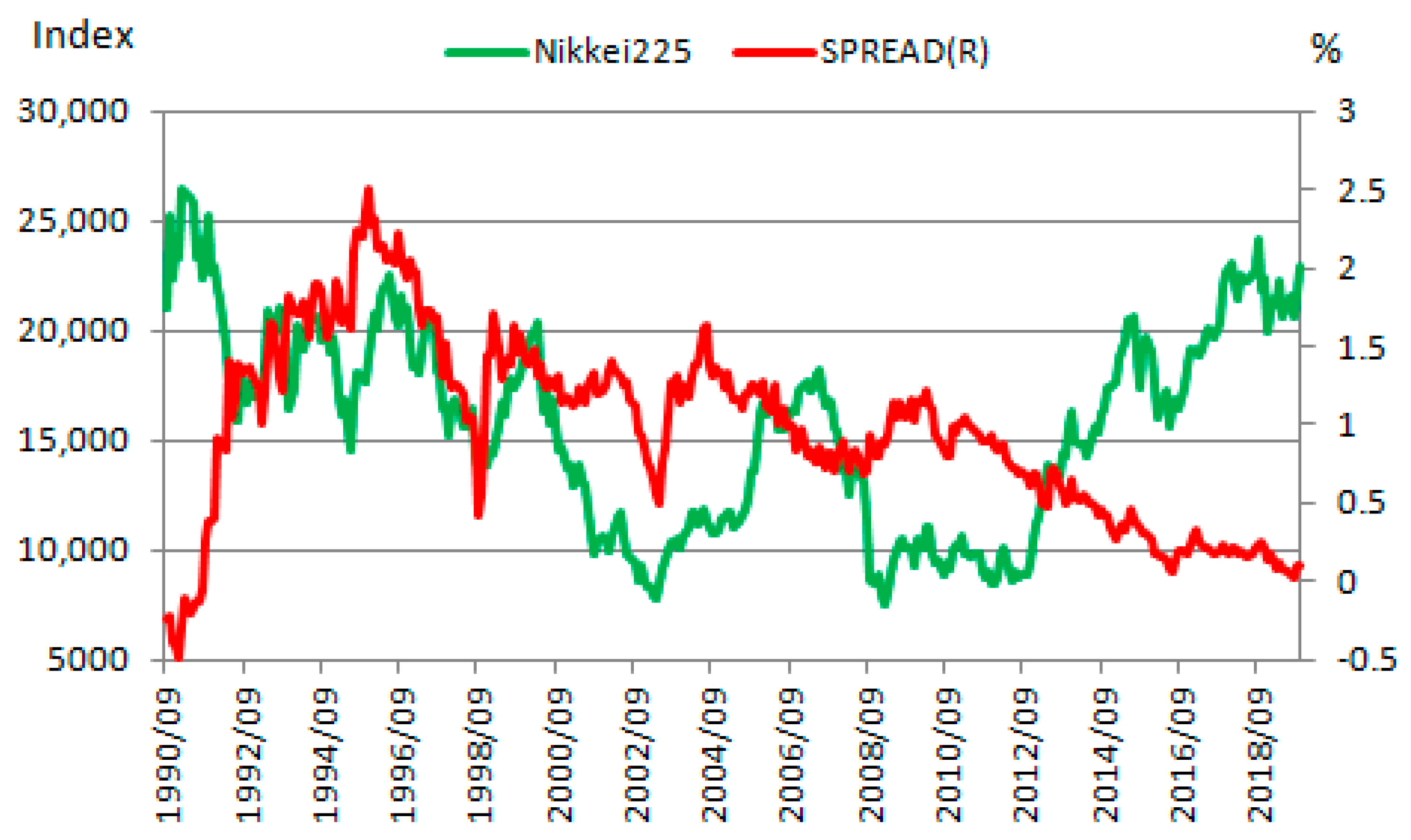
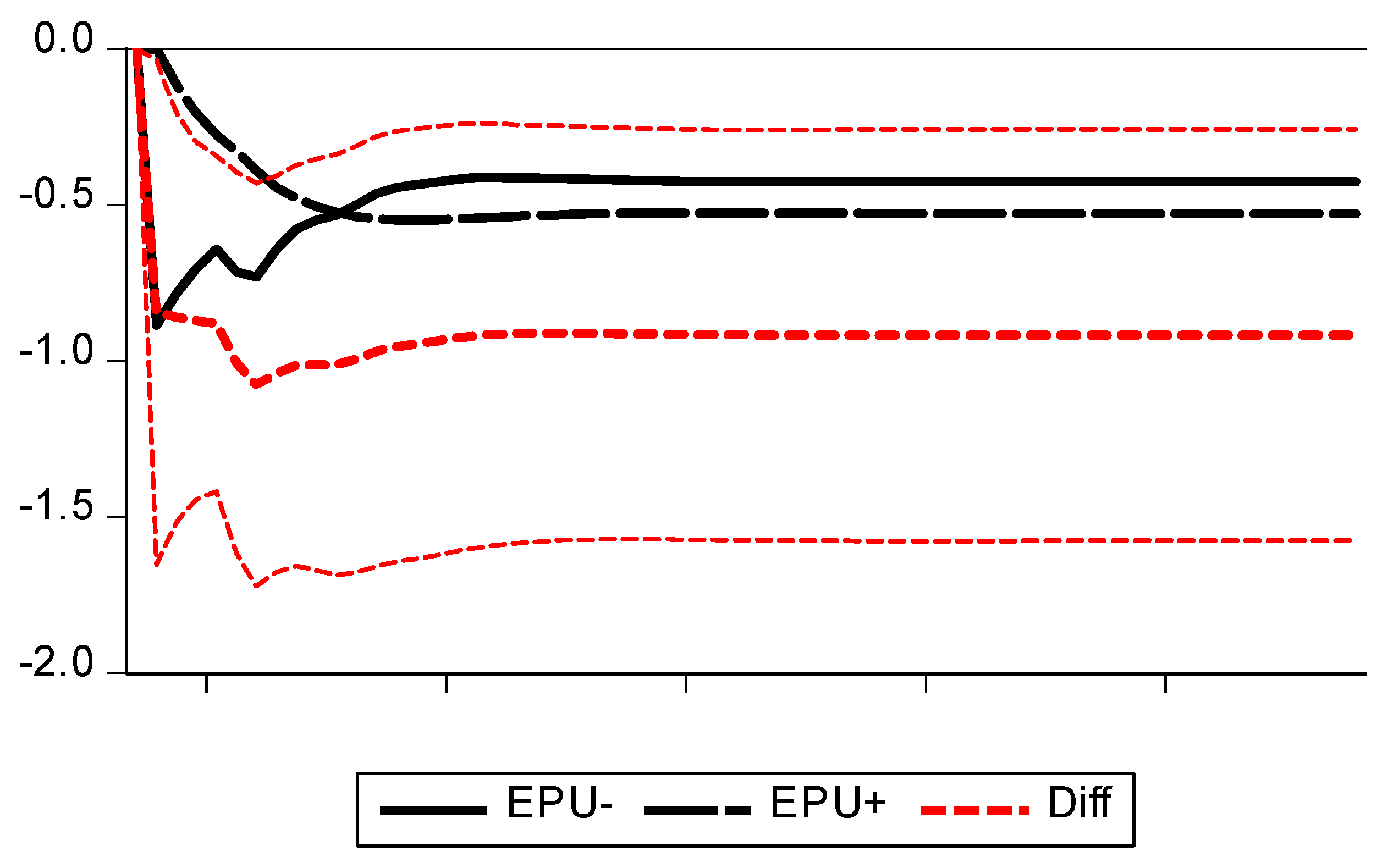
In this paper, we adopt the nonlinear autoregressive distributed lags (NARDL) model extended by Shin et al. (2014) to investigate the relationship between the treasury yield spread and economic policy uncertainty (EPU) in Japan. This model helps us to explore the short- and long-run asymmetric reactions of explained variables through positive and negative partial sum decompositions of changes in the explanatory variable(s). In our research, the testing of the NARDL specification reveals the existence of a significant long-run asymmetric equilibrium between the yield spread and EPU in Japan. On the other hand, we find a significant positive nexus between the treasury yield spread and EPU reduction in the long run. We speculate that because of low inflation, a poor economic outlook and the low interest rate environment since 1990, financial agents are markedly sensitive to negative shocks resulting from EPU. This means that when facing a good economy, bond agents are quick to sell, especially with higher-risk long-term interest rate bonds. Meanwhile, because the Bank of Japan announced the Stock Purchasing Plan in October 2002 and from the point view of portfolio management, while the influence of a positive economic outlook dominates the negative outlook, flight from quality has no role in asset portfolio adjustment. The empirical implications are that the long history of unconventional monetary policy supports the demand for both bonds and stock markets. When taking the stock market into consideration, the correlations between the yield spread, EPU and stock market capture the full wealth effects of the low interest rate environment in Japan.
Keywords: nonlinear autoregressive distributed lags (NARDL) model; economic policy uncertainty (EPU); yield spread; unconventional monetary policy in Japan nonlinear autoregressive distributed lags (NARDL) model; economic policy uncertainty (EPU); yield spread; unconventional monetary policy in Japan