Skip to Content
SustainabilitySustainability
  • Article
  • Open Access

8 September 2024

The Impact of African Swine Fever on the Efficiency of China’s Pig Farming Industry

,
,
and
1
College of Economics and Management, Yanbian University, Hunchun 133305, China
2
Department of Agricultural & Resource Economics, Kangwon National University, Chuncheon 24341, Republic of Korea
*
Author to whom correspondence should be addressed.

Abstract

African Swine Fever (ASF) is a severe viral disease that has significantly impacted the pig farming industry in China. It first broke out in China in 2018 and quickly spread to multiple provinces, significantly affecting the production efficiency of the pig farming industry. This study utilized pig production data from 17 provinces in China from 2010 to 2022 and applied the Malmquist production efficiency index and panel regression methods to assess the impact of the ASF epidemic on the efficiency of the pig farming industry. The results indicated that the outbreak of ASF significantly reduced overall production efficiency, which magnified the vulnerabilities of the production system. Although there was a general decline in technological change and pure technical efficiency, the increase in scale efficiency suggested effective resource optimization by farmers under resource-constrained conditions. In light of these findings, it is recommended to strengthen biosecurity education and epidemic prevention measures in the pig farming industry and to enhance technological innovation and the application of smart technologies to improve production efficiency and disease response capabilities. Additionally, timely adjustments in farming scale and resource optimization will be key to addressing future challenges. Through these strategies, the pig farming industry can maintain stable production efficiency during future epidemics and push towards a more efficient and refined production model.

1. Introduction

In China, the pig farming industry is not only one of the most crucial components of agriculture but also an integral part of the national economy. This sector plays a pivotal role in ensuring the domestic supply of meat, particularly in meeting the public’s demand for pork—China’s most popular meat choice. However, in recent years, the outbreak of African Swine Fever (ASF) has posed unprecedented challenges and crises for the industry. African Swine Fever is a highly lethal viral disease with a high mortality rate and a broad impact range, capable of causing significant economic losses in a short period [1].
The African Swine Fever virus was first identified in Africa in 1921, and it has since spread to multiple countries and regions. The virus is highly specific, infecting only porcine animals, including domestic pigs and wild boars. It is harmless to humans but has an almost 100% fatality rate once infection occurs [2].
Many pig farms had to conduct large-scale culling to contain the outbreak, leading to pork shortages and a sharp rise in pork prices. This epidemic caused not only direct economic losses to pig farmers and related industries but also posed a threat to the stability of the entire agricultural economy and food safety [3]. As the epidemic progressed, the production efficiency of the pig farming industry declined significantly, with many previously efficient pig farming systems having to reevaluate and adjust their production strategies. The ongoing impact of African Swine Fever forced the government and businesses to invest considerable resources in vaccine development and strengthening biosecurity measures. Additionally, according to The Central People’s Government of the People’s Republic of China, it accelerated China’s pig farming industry’s transition toward larger-scale, modernized operations.
However, the outbreak of African Swine Fever has not only led to the loss of a large number of pigs but has also forced farmers to adopt stringent biosecurity measures including strictly controlling personnel and vehicles entering and exiting, strengthening the isolation measures of the farm, and improving the health management of the farm. While these measures are necessary, they also increase production costs and affect overall production efficiency.
In the current research field, the impact of African Swine Fever (ASF) on the global swine industry has become a critical topic. Most of the existing studies focus on the biological characteristics, transmission routes, and prevention and control measures of the epidemic, but the analysis of the impact on the economy and production efficiency is not in-depth [3,4,5]. Although some studies have focused on the efficiency of the pig industry, they often do not focus on the specific context of African Swine Fever. This paper examines the specific impact of this epidemic on the efficiency of the pig industry in China.
To comprehensively evaluate the impact of African Swine Fever on the efficiency of China’s pig farming industry, this study employs the Malmquist Productivity Index to analyze changes in the efficiency of pig farming across various provinces in China from 2010 to 2022. The Malmquist Productivity Index is a method based on Data Envelopment Analysis (DEA) that quantitatively measures efficiency changes in production units across multiple time periods [6,7,8]. This index is particularly suitable for assessing economic impacts caused by external shocks such as disease outbreaks like African Swine Fever, as it can distinguish between technical change and technical efficiency change. Additionally, technical efficiency can be further broken down into pure technical efficiency and scale efficiency, allowing the analysis to explore the impact on each component.
In the implementation phase, this study first collected detailed data covering various provinces in China to build a comprehensive framework for production efficiency analysis. To more accurately reveal the impact of disease on production efficiency, the study also considered outbreak data, specifically records of whether African Swine Fever had occurred in each province. Panel regression methods were then used to analyze the relationship between African Swine Fever outbreaks and pig farming efficiency. The primary research objective is to assess the impact of African Swine Fever (ASF) on overall production efficiency by analyzing changes in Total Factor Productivity (TFP) in pig farming across different provinces during the study period. The study aims to establish whether ASF outbreaks affected overall production efficiency. The second objective is to evaluate changes in pure technical efficiency, which reflect management and operational efficiency. This includes assessing the effectiveness of disease prevention and biosecurity measures. Finally, the study examines variations in scale efficiency to determine whether pig farming enterprises achieved optimal production scale during the outbreak period or if there were efficiency losses due to suboptimal scaling. Through these analyses, the study aims to gain a comprehensive understanding of the impact of ASF on the pig farming industry, providing valuable insights for policymakers, industry stakeholders, and farm managers as they navigate disease control, economic recovery, and long-term industry planning.
Through this series of analytical methods, this study aims to offer an in-depth perspective on how African Swine Fever affects the economic performance of the entire industry by impacting the production inputs and efficiency of pig farming. This analysis not only provides data-driven support for policymakers when developing policies for disease control and economic recovery but also serves as a basis for strategic planning for pig farming enterprises and managers in China.

3. Research Model and Data Sources

3.1. Malmquist Model

DEA is primarily used for cross-sectional analysis. Since productivity could be correlated across different time periods, when using DEA for time-based change estimation, the Malmquist Productivity Index model is more suitable [23]. The Malmquist Productivity Index is a variant of DEA, measuring the movement of the efficient frontier and Decision-Making Units (DMUs) over a given time period. This model is mainly used to assess changes in productivity, with the advantage of converting quantitative information on input and output factors into an index, even when accurate price data is lacking or when it is challenging to assume producer types (such as cost minimization or profit maximization).
The Malmquist Productivity Index for productivity growth is based on the concept of the distance function, which provides information equivalent to that from a production function. Lovell (1993) [24] demonstrated that the reciprocal of the distance function is merely the reciprocal of Farrell’s (1957) [25] measure of production efficiency. Fare and Grosskopf (1996) [26] defined the output-oriented Malmquist Productivity Index as follows. For a time series t = 1, 2, ⋯, T, which provides the data to be analyzed, the production technology St is defined as shown in Equation (1), where the production technology consists of all possible vectors of input and output factors.
S t   = { ( x t , y t ) :   x t   is   input   y t   is   output
x t = ( x 1 , x 2 , , x m ) ,   y t = ( y 1 , y 2 , , y s )
x t represents the input factors at time t. This indicates the production resources or input variables used during the production process at a specific time. Similarly, y t represents the output factors at time t . The output distance function at time t can be defined as follows:
D 0 t ( x t , y t ) = i n f { θ : ( x t , y t θ ) S t } = [ s u p θ : x t , θ y t S t ] 1
According to the above definition, the output distance function refers to the reciprocal of the maximum value of the output factor y t given a specific set of input factors x t The condition ( x t , y t ) S t is fulfilled when D 0 t ( x t , y t ) 1 . When ( x t , y t ) indicates technical change, then D 0 t x t , y t = 1 . This signifies that when production is technically efficient, the value of θ is 1.
To define the Malmquist Productivity Index, let us consider the case of producing a single output with a single input. Thus, as at time t , we can define the output distance function at time t + 1 as follows:
D 0 t ( x t + 1 , y t + 1 ) = i n f { θ : ( x t + 1 , y t + 1 θ ) S t + 1 } = [ s u p { θ : ( x t + 1 , θ y t + 1 ) S t + 1 } ] 1
The above expression uses the production technology at time t to measure the extent to which the output factors can be produced within the feasible range defined by x t + 1 , y t + 1 . Using a similar concept, the distance function can also be defined by using the production technology at time t + 1 to measure the extent to which output factors can be produced within the feasible range defined by x t ,   y t . This distance function is denoted as D 0 t + 1 x t , y t .
The Malmquist Productivity Index (TFP) can be defined by assuming that the production technology at time t remains unchanged and considering different combinations of input and output elements at times t and t + 1 , as follows:
M t = D 0 t ( x t + 1 , y t + 1 ) D 0 t ( x t , y t )
Similarly, assuming that the production technology at time t remains constant, it can be defined through different combinations of input and output factors at times t and t + 1 , as shown in the following expression:
M t + 1 = D 0 t + 1 ( x t + 1 , y t + 1 ) D 0 t + 1 ( x t , y t )
The output-oriented Malmquist productivity change index (TFP) derived from the two formulas above can be defined as follows:
M 0 x t , y t , x t + 1 , y t + 1 = [ D 0 t x t + 1 , y t + 1 D 0 t x t , y t × D 0 t + 1 x t + 1 , y t + 1 D 0 t + 1 x t , y t ] 1 2 = D 0 t + 1 x t + 1 , t + 1 D 0 t x t , y t × [ D 0 t x t , y t D 0 t + 1 x t , y t × D 0 t x t + 1 , y t + 1 D 0 t + 1 x t + 1 , y t + 1 ] 1 2 = T E C I × T C
If M 0 x t , y t , x t + 1 , y t + 1 > 1 , it indicates an improvement in efficiency at time t + 1 compared to time t. If M 0 x t , y t , x t + 1 , y t + 1 < 1 , it signifies a decrease in efficiency, and if M 0 x t , y t , x t + 1 , y t + 1 = 1 , it means no change in efficiency has occurred.
In the second line of the above expression, the part outside the parentheses represents the ratio of the distance functions between two points in time, t and t + 1 . This is known as the technical efficiency change index. The part within the parentheses represents the movement of production change, indicating the measurement of technological change, which is referred to as the technical progress change index.
The technical efficiency change index can be further divided into the pure efficiency change index and the scale efficiency change index. It can be expressed as follows:
D 0 t + 1 ( x t + 1 , y t + 1 ) D 0 t ( x t , y t ) = [ D v t + 1 ( x t + 1 , y t + 1 ) D v t ( x t , y t ) ] × [ D 0 t + 1 ( x t + 1 , y t + 1 ) / D v t + 1 ( x t + 1 , y t + 1 ) D 0 t ( x t , y t ) / D v t ( x t , y t ) ]
Thus, the Malmquist Productivity Index (TFP) can be represented as follows:
M 0 x t , y t , x t + 1 , y t + 1 = D v t + 1 x t + 1 , y t + 1 D v t x t , y t × D v t x t , y t D 0 t x t , y t × D v t + 1 x t + 1 , y t + 1 D v t + 1 x t + 1 , y t + 1 × [ D 0 t ( x t , y t ) D 0 t + 1 ( x t , y t ) × D 0 t ( x t + 1 , y t + 1 ) D 0 t + 1 ( x t + 1 , y t + 1 ) ] 1 2
In the above expression, D v t ( x t , y t ) represents the output distance function under variable returns to scale at time t , while D v t + 1 ( x t + 1 , y t + 1 ) D v t ( x t , y t ) is a measure of the pure efficiency change from time t to t + 1 . D v t ( x t , y t ) D 0 t ( x t , y t ) represents the ratio of the output distance function under constant returns to scale to the output distance function under variable returns to scale at time t , indicating the scale efficiency change.
The Malmquist total factor productivity (TFP) change index can be decomposed into the technical efficiency change index (EC) and the technical change (TC) index. The scale efficiency change (SEC) index measures how close a DMU is to achieving scale economies across the two periods, defined as the ratio of the maximum output under constant returns to scale technology. The product of the pure efficiency change (PEC) index and the scale efficiency change (SEC) index yields the technical efficiency change index (TECI), which gauges the efficiency with which a DMU converts input factors into output factors during production. The technical efficiency change index (TECI) corresponds to the “catch-up” effect, reflecting impacts from learning and knowledge diffusion, market competitiveness, improvements in cost structures, and enhanced equipment utilization rates. On the other hand, technical change (TC) corresponds to the frontier shift effect or innovation, measuring the change in the efficient frontier between the two periods, influenced by new product and production process innovations, new business methods, external shocks, and other factors.
To study the efficiency of China’s pig farming industry, this research examines the time period from 2010 to 2022, focusing on 17 regions in China with significant pork production. These regions include Hebei, Liaoning, Jilin, Heilongjiang, Jiangsu, Anhui, Shandong, Henan, Hubei, Hunan, Guangdong, Guangxi, Hainan, Chongqing, Sichuan, Guizhou, and Yunnan. Based on previous studies [27,28,29] the output variable is set as the production volume of live pigs, while the input variables include piglet costs, feed costs, labor costs, medical and epidemic prevention costs, utility costs (water, electricity, and coal), repair and maintenance costs, and depreciation costs.

3.2. Impact of African Swine Fever on Pig Farming Efficiency

To investigate the specific impact of African Swine Fever on pig farming efficiency, this study constructs a panel regression model using fixed-effects to analyze the factors influencing efficiency. Although data collection spans from 2010 to 2022 to analyze trends and efficiency changes with the Malmquist Productivity Index, the panel regression analysis focuses on data from 2019 to 2022 [25,29]. The choice to use this specific timeframe is due to the immediate and delayed effects of the outbreak.
Although African Swine Fever was first reported in China in 2018, the full impact on pig farming efficiency may have a time delay. This delayed response can be attributed to several factors, including the initially sparse and unclear information on this disease, a lag in the industry’s recognition of the outbreak’s severity, and the time needed for government and corporate responses to take effect.
Another reason for the delayed response is data stability and reliability. As the epidemic progressed, data collection and reporting became more standardized and refined. Data from 2019 onwards reflect the actual operating environment and policy adjustments in response to African Swine Fever, providing a more accurate insight into its impact on pig farming efficiency.
Finally, focusing on the key impact period is essential. Analyzing data from 2019 to 2022 across different provinces allows for a more direct assessment of changes in pig farming efficiency after the outbreak of African Swine Fever. This timeframe is sufficient to observe the complete process, from policy adjustments and industry adaptation to efficiency changes.
The basic structure of the model is as follows:
E f f i c i e n c y i t = β 0 + β 1 A S F i t + μ i + ϵ i t
In this context, E f f i c i e n c y i t represents the production efficiency change index, technological change index, the technical efficiency change, the pure technical efficiency change index, and the scale efficiency change index for province i in year t . All of these efficiency change indices are derived from the Malmquist index.
A S F i t is a dummy variable indicating whether African Swine Fever occurred in province i in year t . A value of 1 signifies that an outbreak occurred, while 0 indicates no outbreak. β 0 and β 1 are the parameters to be estimated. μ i represents the province-specific effect that does not change over time, capturing all inherent characteristics of the province that remain constant over the period. ϵit is the error term, assumed to be white noise.
E f f i c i e n c y i t = β 0 + β 1 P I G i t + μ i + ϵ i t
P I G i t represents the number of African Swine Fever cases in the i-th province in year t .

3.3. Data Sources

The data for the study were sourced from three authoritative sources, ensuring the reliability and comprehensiveness of the research findings.
First, this study references data from the “China Livestock Yearbook”, compiled by the Ministry of Agriculture of China and published by the China Agricultural Publishing House. This yearbook contains detailed foundational data on pig production, including key production indicators like total pork output, providing a solid data foundation for analyzing the overall performance of the pig farming industry.
Second, the study also utilizes the “Compilation of Costs and Benefits of China’s Agricultural Products”, released by the National Development and Reform Commission and published by China Statistics Press. This resource provides detailed information on the costs associated with pig farming, including the costs of rearing pigs, such as piglet expenses, feed costs, labor costs, medical and epidemic prevention costs, repair and maintenance costs, utility costs (water, electricity, and coal), and depreciation costs. These data are especially important for analyzing the economic efficiency and cost structure of pork production.
Lastly, to obtain the latest updates on African Swine Fever outbreaks, the study also uses the “Weekly Veterinary News Overview”, regularly published by the Ministry of Agriculture and Rural Affairs of the People’s Republic of China. This report provides real-time data on ASF outbreaks in different provinces, helping researchers understand the direct impact of the epidemic on the pig farming industry.
The deflator index, which measures changes in price levels, involves multiple TFPs and complex data processing. By calculating the deflator index, it is possible to convert nominal economic data from various years into real economic data. This conversion process is crucial because it removes price-related factors, allowing for a more straightforward comparison of the real changes in production capacity across different years. Once the real economic data were obtained, these data were further utilized to calculate efficiency. Table 1 lists the variables.
Table 1. Descriptive statistics for the variables.

4. Analysis Results

4.1. Efficiency Analysis of China’s Pig Farming Industry

The purpose of this selection is to highlight the key periods of impact that African Swine Fever had on the efficiency of the pig farming industry, allowing for a comparative analysis of significant efficiency changes before and after the outbreak.
Table 2 shows the efficiency change index analysis results for pig farming across Chinese provinces from 2018 to 2019. The TFP (Total Efficiency Productivity) across different provinces reveals significant regional disparities in overall production efficiency.
Table 2. Efficiency change index of China’s pig farming industry, 2018–2019.
Liaoning Province (TFP = 2.171): Liaoning demonstrated exceptional performance, with a TFP of 2.171, indicating an increase in production efficiency of about 117% compared to the previous year. This significant improvement was primarily due to technological progress (TC = 1.315) and a considerable increase in technical efficiency (EC = 1.651). This outcome could be linked to the province’s proactive approach to technological renewal and improved management efficiency.
Henan Province (TFP = 1.099): Henan also showed a notable increase in comprehensive efficiency, particularly in scale efficiency (SEC = 1.843) and technical efficiency (EC = 1.989). This suggests that Henan may have optimized its pig farming scale layout and effectively utilized existing technology.
Yunnan Province (TFP = 0.459): In contrast, Yunnan experienced a significant drop in overall production efficiency, with a TFP of just 0.459, indicating a decline of about 54% compared to the previous year. This decrease was primarily driven by technological regression (TC = 0.459), which might reflect the province’s failure to keep up with technological changes and updates in response to external challenges like epidemics.
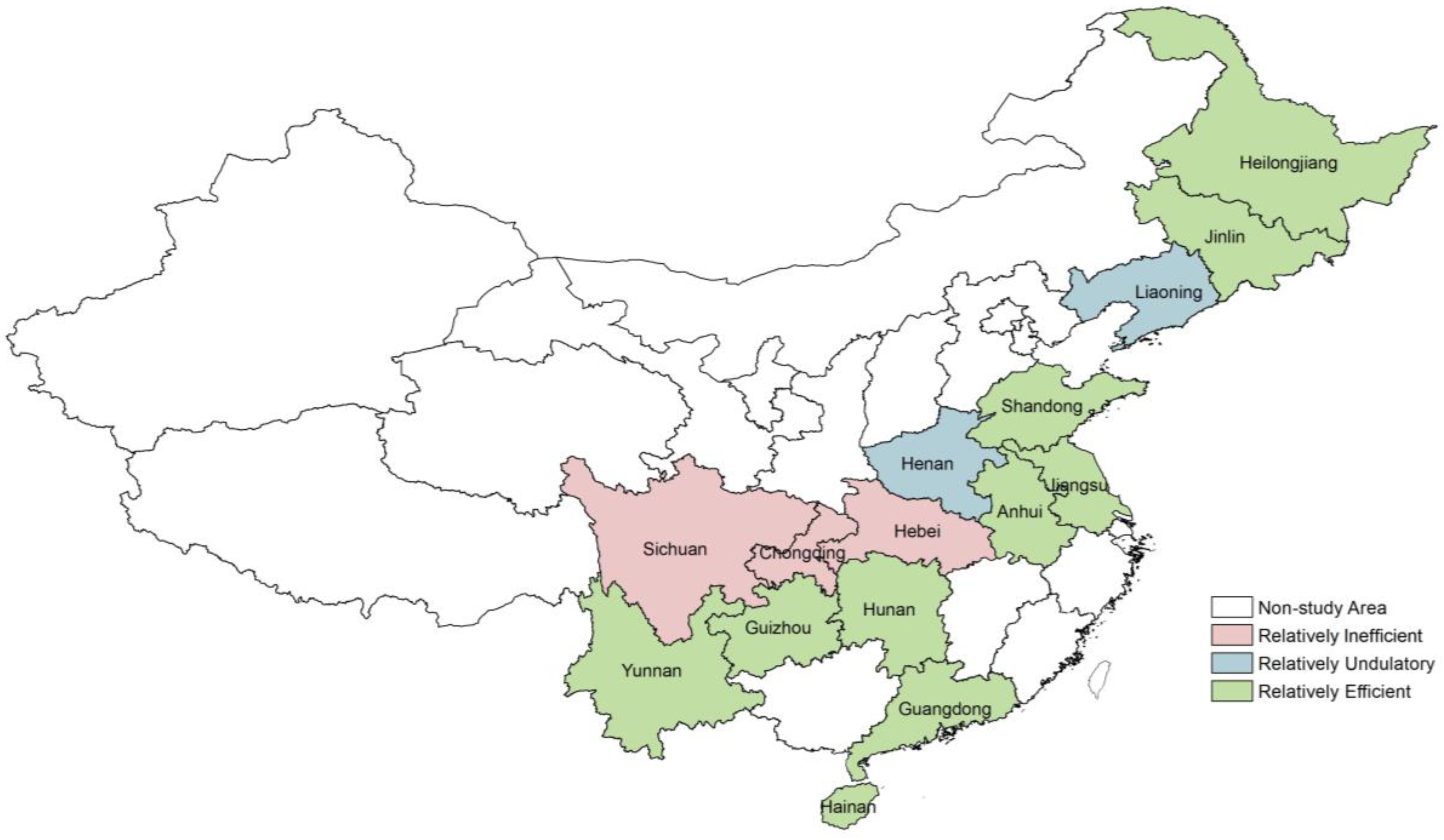
Figure 1 visually shows the index grading of changes in production efficiency in each province in the study area from 2018 to 2019. From this chart, we can clearly observe that the productivity of most provinces is not as good as it should be, and they are classified as “relatively inefficient” or “relatively efficient”. Out of the many provinces, only four showed an “efficient” rating. This shows that China’s pig industry has suffered a serious impact from African Swine Fever. As you can see from the chart, the pandemic has had a clear negative impact on the productivity of the entire industry. Most provinces have taken a hit to productivity, and only a few have been able to withstand the impact and maintain or increase their productivity.
Figure 1. Changes in the TFP of the pig industry in the study area from 2018 to 2019.
Table 3 shows the analysis results of the efficiency change index for pig farming in various Chinese provinces from 2019 to 2020. It can be observed that Jiangsu Province (TFP = 1.036) and Guangdong Province (TFP = 1.005) experienced a positive growth in overall production efficiency.
Table 3. Efficiency change index of China’s pig farming industry, 2019–2020.
Jiangsu Province (TFP = 1.036): Jiangsu’s slight growth was primarily driven by stable technological progress (TC = 1.007) and good technical efficiency (EC = 1.084).
Guangdong Province (TFP = 1.005): While Guangdong excelled in technical efficiency (EC = 1.082), its technological progress was slower (TC = 0.929), suggesting that maintaining or slightly increasing production efficiency depended on more effective utilization of existing technology.
Hunan Province (TFP = 0.468): Hunan experienced a significant decline in production efficiency, primarily due to a substantial decrease in technical efficiency (EC = 0.491). Although there was some technological regression (TC = 0.954), indicating a slight decrease in technology levels, the main issue was a sharp drop in the utilization efficiency of existing technology.
Henan Province (TFP = 0.707): Henan also experienced a decline in production efficiency. Despite relatively stable technological progress (TC = 1.003), the decrease in technical efficiency (EC = 0.705) affected overall production efficiency.
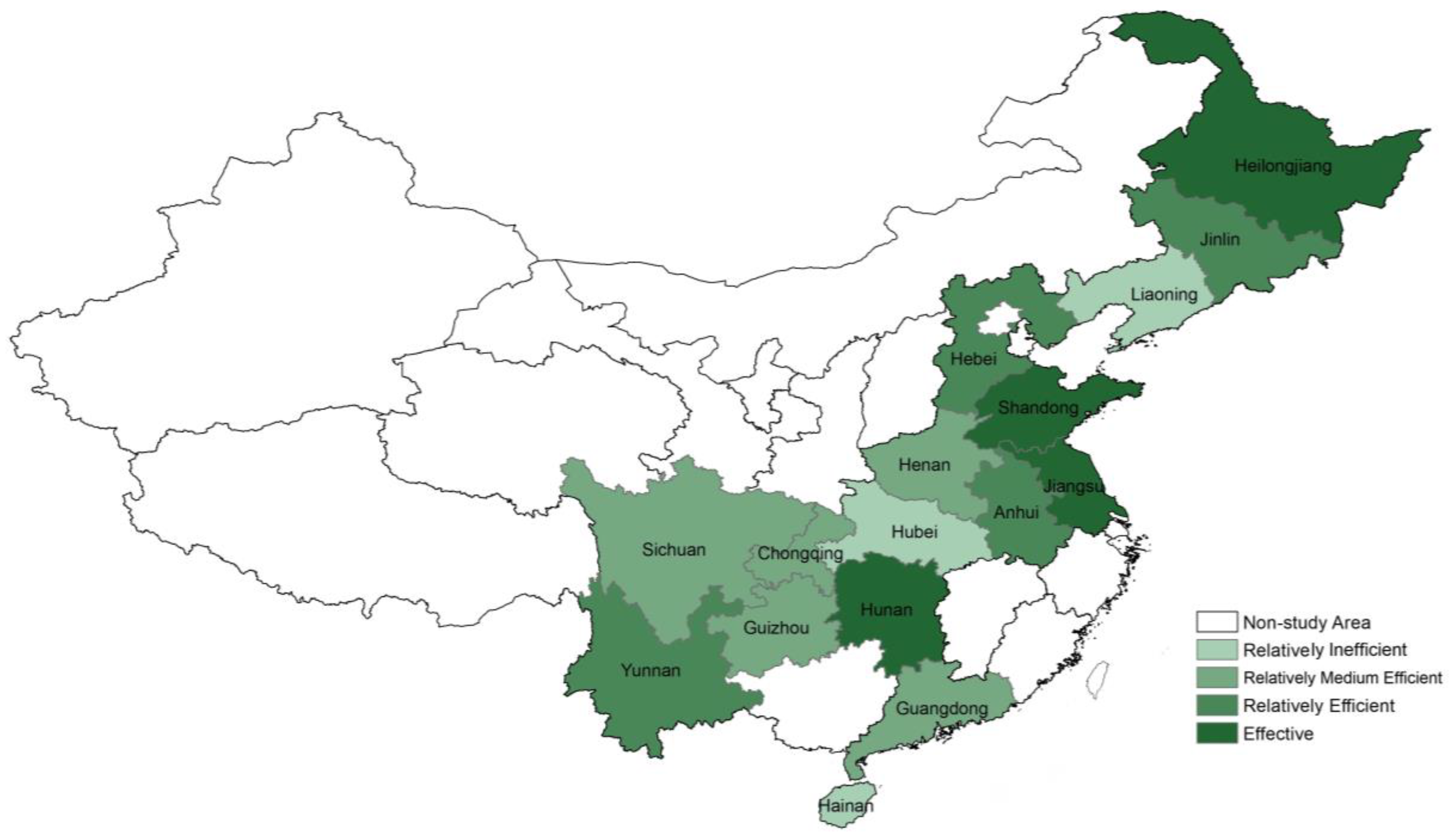
Figure 2 provides a further analysis of the index grading of changes in productivity in each province in the study area between 2019 and 2020. As the African Swine Fever epidemic continues to spread, the challenges faced by China’s pig industry have been further exacerbated during this period. It is clear from Figure 2 that the production efficiency of most provinces is still in a state of “relative inefficiency” or “relative efficiency”, which reflects that the impact of the epidemic on the industry has not been effectively alleviated. Although during this period there were still four provinces rated as “efficient”, the productivity index of these provinces decreased numerically compared to 2018–2019. This change could mean that even provinces that perform better in terms of productivity will not be able to fully withstand the negative effects of the pandemic.
Figure 2. Changes in the TFP of the pig industry in the study area from 2019 to 2020.
Table 4 shows the trend of changes in the total factor productivity (TFP) indices for various Chinese provinces over the years, as analyzed through the Malmquist model. The table reveals that during the 2018–2019 period, many provinces experienced a significant decline in pig farming efficiency. This phenomenon was widespread across multiple provinces, likely due to the severe losses caused by the outbreak of African Swine Fever, such as mass pig deaths and production interruptions. However, Liaoning Province’s TFP index increased during this period.
Table 4. Total factor productivity (TFP) change index for China’s pig farming industry.
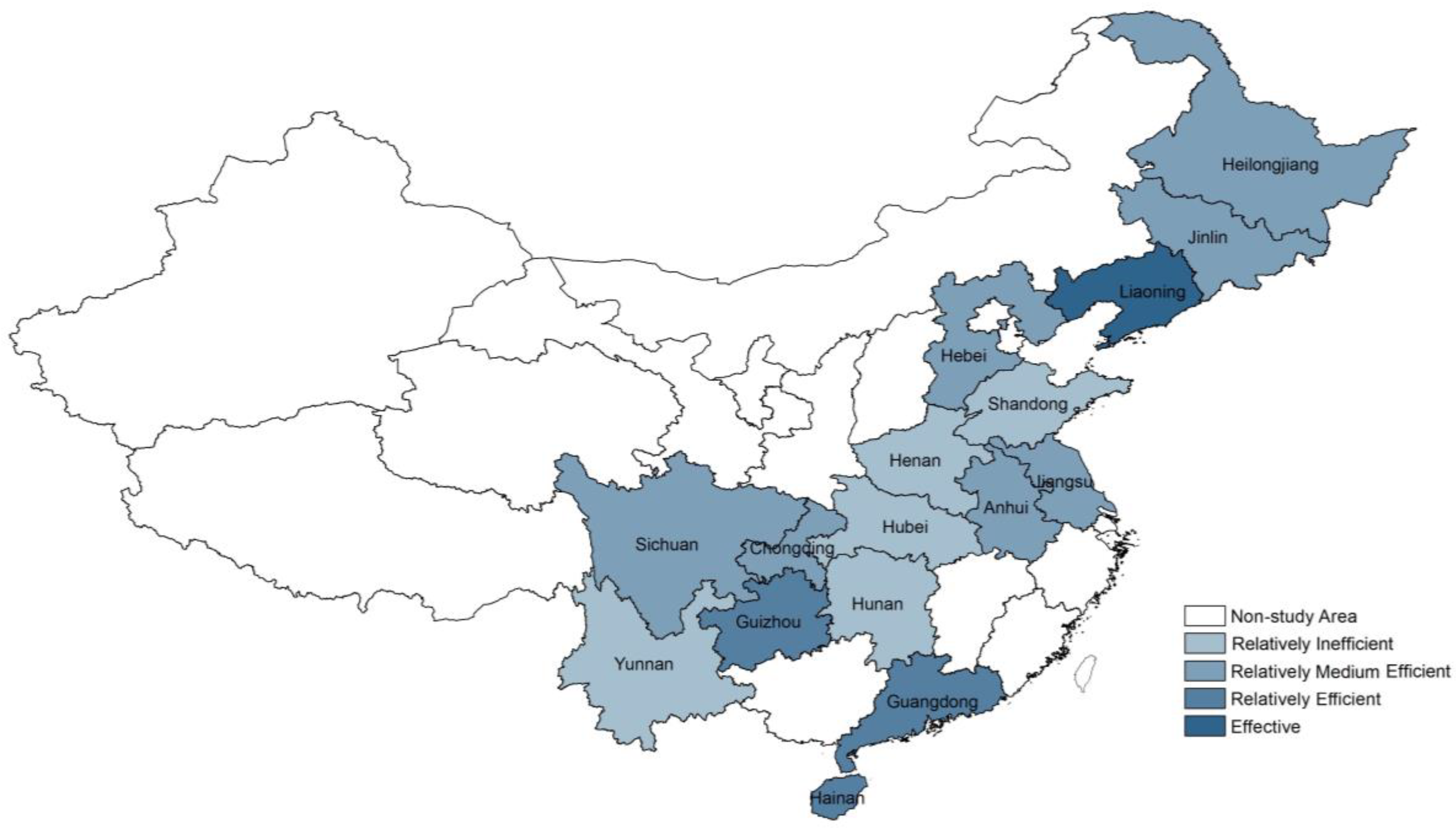
Figure 3 shows the distribution of the productivity change index of more than one in each province in the study area from 2010 to 2022 in a visual way. By distinguishing the colors, we can clearly identify the frequency and intensity of productivity gains in different provinces during this time period. Red represents four times when the productivity change index exceeds one, yellow means five times, and green means six or seven times. This color coding provides us with a quick reference to identify the frequency and intensity of productivity gains.
Figure 3. Changes in the TFP of the pig industry in the study area from 2010 to 2022.
Under the impact of the African Swine Fever epidemic, Figure 3 reveals significant differences in production efficiency in different regions. Productivity is generally low in the central region, which may be due to the direct impact of the pandemic on the region’s pig industry, as well as possible restrictions on production infrastructure, biosecurity measures and market access. In contrast, the Northeast and South regions are relatively productive, which may be due to their more mature pig industries, better biosecurity measures, and more effective outbreak response strategies.

4.2. Analysis of the Impact of African Swine Fever on the Efficiency of China’s Pig Farming Industry

To examine the impact of African Swine Fever on pig farming efficiency, a panel regression model was constructed based on the results of the Malmquist model analysis, using a fixed-effects model to assess the impact of African Swine Fever on production efficiency.
Table 5 reveals that total production efficiency displayed a negative impact. The outbreak of African Swine Fever significantly reduced overall production efficiency, indicating that the epidemic damaged the overall performance of the production system. This might reflect production interruptions, labor shortages, supply chain issues, or other operational challenges due to the epidemic. Technical change and pure technical efficiency change both declined significantly, suggesting a negative impact of the epidemic on technological application and management efficiency in the pig farming industry. The decline in technical change could be linked to reduced R&D investment or impediments to the adoption of new technologies, while the drop in pure technical efficiency likely reflects a decrease in everyday operational and managerial efficiency.
Table 5. The impact of African Swine Fever on the efficiency of China’s pig industry.
Notably, scale efficiency showed a significant improvement. During the outbreak of African Swine Fever, the high lethality of the virus led to a large number of pig deaths, directly reducing the number of pigs being farmed.
Technical efficiency change did not show significant variation. This could be because technical efficiency comprises pure technical efficiency and scale efficiency; we see that African Swine Fever had opposite effects on these two components. The contrasting trends in pure technical efficiency and scale efficiency may have canceled each other out, leading to a statistically insignificant overall change in technical efficiency. This result reveals the complexity of the multifaceted impact of the epidemic on pig production, highlighting the interplay between different efficiency factors.
After analyzing the impact of the occurrence of African Swine Fever on the efficiency of the pig farming industry, we further explored the specific impact of the number of cases each year on industry efficiency. These two aspects of the study are complementary: the former reveals the general impact of ASF outbreaks on the overall efficiency of the pig farming industry, while the latter quantifies the specific impact of the severity of the outbreak, as indicated by the number of cases, on various aspects of efficiency.
The specific results are shown in Table 6. As can be seen from Table 6, the number of African Swine Fever cases is significantly negatively correlated with technological change. This result indicates that the outbreak of African Swine Fever hinders technological progress in the pig farming industry. To control and prevent African Swine Fever, farms need to allocate more resources to biosecurity measures, such as enhanced disinfection and improved facilities, which increases farming costs and requires additional economic investment. This reallocation of resources leads to a reduction in investment in research and development and technological innovation, thereby slowing the pace of technological progress.
Table 6. The impact of the number of African Swine Fever cases on the efficiency of China’s pig industry.
From the results of the two regression analyses, it can be observed that the occurrence of African Swine Fever leads to a significant decline in total production efficiency, pure technical efficiency, and technological change, while scale efficiency has improved. By analyzing the specific number of cases, we can gain a deeper understanding of the mechanisms and extent of ASF’s impact on the pig farming industry.

5. Conclusions and Policy Recommendations

This study uses pig production data from 17 provinces in China from 2010 to 2022 to evaluate changes in the efficiency of the pig farming industry before and after the African Swine Fever outbreak, using the Malmquist analysis method. The results indicate that during the period from 2018 to 2020, several provinces, such as Liaoning and Henan, demonstrated significant increases in production efficiency, while provinces like Yunnan and Hunan experienced significant declines. These variations in efficiency reflect the different approaches to management, technological adaptation, and policy support among the regions.
By constructing a panel regression model, we conducted an in-depth analysis of the specific impacts of African Swine Fever on the various components of production efficiency. The results reveal that the occurrence of ASF is the main factor affecting the efficiency of the pig farming industry, rather than the severity of the outbreak.
Specifically, the outbreak of African Swine Fever significantly reduces total production efficiency, exposing the vulnerability of the production system to issues such as labor shortages and supply chain disruptions [30]. The significant decline in technological change and pure technical efficiency further highlights the negative impact of the epidemic on the application of technology and the efficiency of daily operational management. Previous literature has shown that ASF not only causes significant economic losses, but also poses a potential threat to food security, especially in regions that rely on pork as a primary source of protein [31]. In addition, the disease has had a profound impact on the pig industry in the affected countries, influencing not only the livelihoods of pig farmers, but also the pork supply chain and related industries [20]. In large-scale pig farms, outbreaks of African Swine Fever often lead to large-scale pig deaths, which not only has a direct impact on the economic performance of the farm, but also has a long-term impact on the stability and sustainability of the entire industry [32]. Our results support the findings from those previous studies. On top of this support, this study finds that the scale efficiency of the pig industry has improved after the outbreak of African Swine Fever. This seemingly contradictory result may be related to the current lag in the development of ASF vaccines.
The notable improvement in scale efficiency provides a different perspective, showcasing a form of adaptive growth amidst adversity. Although ASF causes significant direct economic losses due to the large-scale death of pigs, it may also prompt farmers to optimize resource allocation, thereby unexpectedly enhancing scale efficiency. Moreover, the lack of significant change in technical efficiency might result from the offsetting effects of the decline in pure technical efficiency and the improvement in scale efficiency, reflecting the complex dynamics of efficiency.
Furthermore, although the number of African Swine Fever (ASF) cases does not have a significant impact on other efficiency measures, this does not imply that the disease has no effect on the pig farming industry. ASF is a highly lethal and highly transmissible disease, with infection resulting in a mortality rate of up to 100%. Currently, there is no effective commercial vaccine available to prevent ASF, leading farms to often resort to mass culling to prevent the further spread of the disease. This immediate strategy of culling infected pigs upon detection mitigates the impact of ASF on the overall efficiency of the pig farming industry to some extent [33].
At the same time, the Chinese government has implemented a series of proactive measures to control ASF, including but not limited to strengthening epidemic monitoring, investigation, and reporting systems, as well as enhancing regulation in the slaughtering process. The implementation of these measures has increased the awareness and capabilities of farm operators, particularly in large-scale farms, regarding epidemic prevention. Consequently, ASF’s impact on pig production has become more manageable and controllable.
The severity of the epidemic (measured by the number of cases) only has a significant negative impact on technological change, with no clear impact on other efficiency indicators. This indicates that regardless of the severity of the epidemic, farms tend to adopt similar prevention and control measures when an outbreak occurs. Resource reallocation, government and industry support, an increased adaptability of farmers, and enhanced epidemic prevention awareness all contribute to mitigating the impact of severity on efficiency to some extent.
In conclusion, this paper primarily investigates the relationship between the occurrence of African Swine Fever (ASF) and the production efficiency of China’s pig farming industry. Given the province-level data in our study, the heterogeneous impact of ASF on individual farms could not be analyzed. For future research, conducting a questionnaire survey with pig farmers and analyzing the impact of ASF on individual pig farming households are needed to provide more detailed management prescription.
Based on the results outlined above, this study provides several recommendations:
The analysis results indicate that the outbreak of African Swine Fever has significantly negatively impacted the overall production efficiency of the pig farming industry, primarily manifested in production interruptions, labor shortages, and supply chain issues. These challenges highlight the vulnerability of pig farms when facing major epidemics, underscoring the urgency to strengthen biosecurity measures. Therefore, enhancing epidemic prevention and emergency response capabilities becomes a crucial task for the industry, including enhancing biosecurity education, establishing strict entry disinfection procedures, and implementing effective disease monitoring and control systems [34].
Furthermore, the significant decline in technological change and pure technical efficiency implies issues with reduced research and development investment and the hindered adoption of new technologies. This necessitates concerted efforts from both the government and industry leaders to encourage technological innovation and dissemination through fiscal incentives and policy support. In particular, the introduction of automation and intelligent technologies can greatly enhance production efficiency and disease response capabilities, enabling the pig farming industry to better manage daily operations and mitigate the impact of epidemics [35].
The improvement in scale efficiency reveals a phenomenon where remaining resources are concentrated and utilized more effectively when there is an unexpected decrease in the number of pigs. This suggests that farmers have made effective adjustments and optimizations under limited resources. Therefore, it is recommended that farms adjust their breeding scale according to market conditions and production circumstances, optimizing the allocation of feed and water resources to enhance unit breeding efficiency.
Further analysis indicates that the efficiency variation in the pig farming industry primarily depends on the occurrence of African Swine Fever (ASF), rather than the specific severity of the epidemic. By collecting and analyzing big data, we can predict the time and location of outbreaks, optimize resource allocation, and take preventive measures in advance. Although some areas have begun to be explored, there are still some difficulties in comprehensive promotion. Therefore, it is crucial to address the root causes of ASF outbreaks. For instance, raising awareness and skills among farmers through training and promotion can ensure that they can effectively respond to epidemics promptly. Alternatively, increasing research investment in the development of effective vaccines and expediting the commercialization of ASF vaccines can fundamentally prevent outbreaks. Additionally, enhancing monitoring and early warning systems for ASF can enable the early detection, isolation, and control of outbreaks. By implementing these measures to reduce the occurrence of ASF at its source, the overall efficiency of the pig farming industry can be effectively improved, ensuring the industry’s health and sustainable development.
The government’s role is to continue providing support, including financial subsidies, tax incentives, and technical assistance, to help pig farms overcome the challenges brought about by the epidemic and quickly resume production post-outbreak [27]. Industry associations should act as a bridge, not only organizing technical training and information sharing but also promoting collaboration among producers to collectively address market fluctuations and challenges.
Overall, implementing these strategies and measures will help the pig farming industry not only maintain stable production efficiency in the face of future crises but also gradually move toward a more refined and efficient production model, thereby enhancing the resilience and competitiveness of the entire industry. These experiences also provide valuable references for the global pig farming industry when dealing with similar infectious disease outbreaks.

Author Contributions

Conceptualization, S.P.; Writing—original draft, S.P.; Writing—review & editing, X.J., S.H. and J.-Y.L.; Supervision, S.H. and J.-Y.L. All authors have read and agreed to the published version of the manuscript.

Funding

This research was supported by the research project of Yanbian University, China (Project No.: 2022XBS06). This research was also partially supported by the research project of BK21, Korea (Project No: 202405520001).

Institutional Review Board Statement

Not applicable.

Data Availability Statement

China Animal Husbandry and Veterinary Yearbook, Compilation of national agricultural product cost and income data.

Conflicts of Interest

The authors declare that they have no known competing financial interests or personal relationships that could have influenced the work reported in this paper.

References

  1. Xu, G.; Sarkar, A.; Qian, L.; Shuxia, Z.; Rahman, A.; Yongfeng, T. The impact of the epidemic experience on the recovery of production of pig farmers after the outbreak-Evidence from the impact of African swine fever (ASF) in Chinese pig farming. Prev. Vet. Med. 2022, 199, 105568. [Google Scholar] [CrossRef]
  2. Gaudreault, N.N.; Madden, D.W.; Wilson, W.C.; Trujillo, J.D.; Richt, J.A. African swine fever virus: An emerging DNA arbovirus. Front. Vet. Sci. 2020, 7, 215. [Google Scholar] [CrossRef]
  3. Liu, Y.; Zhang, X.; Qi, W.; Yang, Y.; Liu, Z.; An, T.; Wu, X.; Chen, J. Prevention and control strategies of African swine fever and progress on pig farm repopulation in China. Viruses 2021, 13, 2552. [Google Scholar] [CrossRef] [PubMed]
  4. Woonwong, Y.; Tien, D.D.; Thanawongnuwech, R. The future of the pig industry after the introduction of African swine fever into Asia. Anim. Front. 2020, 10, 30–37. [Google Scholar] [CrossRef]
  5. Njau, E.P.; Machuka, E.M.; Cleaveland, S.; Shirima, G.M.; Kusiluka, L.J.; Okoth, E.A.; Pelle, R. African swine fever virus (ASFV): Biology, genomics and genotypes circulating in sub-Saharan Africa. Viruses 2021, 13, 2285. [Google Scholar] [CrossRef]
  6. Xiao, H.; Wang, J.; Oxley, L.; Ma, H. The evolution of hog production and potential sources for future growth in China. Food Policy 2012, 37, 366–377. [Google Scholar] [CrossRef]
  7. Hedija, V.; Kuncová, M. Relationship between efficiency and profitability: The case of Czech swine sector. Span. J. Agric. Res. 2021, 19, 102. [Google Scholar] [CrossRef]
  8. Zhong, S.; Li, J.; Guo, X. Analysis on the green total factor productivity of pig breeding in China: Evidence from a meta-frontier approach. PLoS ONE 2022, 17, e0270549. [Google Scholar] [CrossRef] [PubMed]
  9. You, S.; Liu, T.; Zhang, M.; Zhao, X.; Dong, Y.; Wu, B.; Wang, Y.; Li, J.; Wei, X.; Shi, B. African swine fever outbreaks in China led to gross domestic product and economic losses. Nat. Food 2021, 2, 802–808. [Google Scholar] [CrossRef]
  10. Yun, C.H. Unforeseen enemy: African swine fever. Asian-Australas. J. Anim. Sci. 2020, 33, 1. [Google Scholar] [CrossRef]
  11. Wang, T.; Sun, Y.; Qiu, H.-J. African swine fever: An unprecedented disaster and challenge to China. Infect. Dis. Poverty 2018, 7, 66–70. [Google Scholar] [CrossRef] [PubMed]
  12. Yuan, C.; Duan, Y.; Li, X.; Zhang, Y.; Cao, L.; Feng, T.; Ge, J.; Wang, Q.; Zheng, H.; Yuan, C.; et al. Transcriptional and ultrastructural changes of macrophages after african swine fever virus infection. Vet. Microbiol. 2024, 293, 110074. [Google Scholar] [CrossRef]
  13. Zhu, R.; Wang, Y.; Zhang, H.; Yang, J.; Fan, J.; Zhang, Y.; Wang, Y.; Li, Q.; Zhou, X.; Yue, H.; et al. Deletion of the B125R gene in the African swine fever virus SY18 strain leads to an A104R frameshift mutation slightly attenuating virulence in domestic pigs. Virus Res. 2024, 343, 199343. [Google Scholar] [CrossRef]
  14. Sánchez-Vizcaíno, J.M.; Mur, L.; Martínez-López, B. African swine fever: An epidemiological update. Transbound. Emerg. Dis. 2012, 59, 27–35. [Google Scholar] [CrossRef]
  15. Gallardo, M.C.; de la Torre Reoyo, A.; Fernández-Pinero, J.; Iglesias, I.; Muñoz, M.J.; Arias, M.L. African swine fever: A global view of the current challenge. Porc. Health Manag. 2015, 1, 21. [Google Scholar] [CrossRef] [PubMed]
  16. Dixon, L.K.; Stahl, K.; Jori, F.; Vial, L.; Pfeiffer, D.U. African swine fever epidemiology and control. Annu. Rev. Anim. Biosci. 2020, 8, 221–246. [Google Scholar] [CrossRef] [PubMed]
  17. Penrith, M.L. Current status of African swine fever. CABI Agric. Biosci. 2020, 1, 11. [Google Scholar] [CrossRef]
  18. Niemi, J.K. Impacts of African swine fever on pigmeat markets in Europe. Front. Vet. Sci. 2020, 7, 634. [Google Scholar] [CrossRef]
  19. Mason-D’croz, D.; Bogard, J.R.; Herrero, M.; Robinson, S.; Sulser, T.B.; Wiebe, K.; Willenbockel, D.; Godfray, H.C.J. Modelling the global economic consequences of a major African swine fever outbreak in China. Nat. Food 2020, 1, 221–228. [Google Scholar] [CrossRef]
  20. Bellini, S.; Rutili, D.; Guberti, V. Preventive measures aimed at minimizing the risk of African swine fever virus spread in pig farming systems. Acta Vet. Scand. 2016, 58, 82. [Google Scholar] [CrossRef]
  21. Tian, X.; von Cramon-Taubadel, S. Economic consequences of African swine fever. Nat. Food 2020, 1, 196–197. [Google Scholar] [CrossRef]
  22. Halasa, T.; Bøtner, A.; Mortensen, S.; Christensen, H.; Toft, N.; Boklund, A. Control of African swine fever epidemics in industrialized swine populations. Vet. Microbiol. 2016, 197, 142–150. [Google Scholar] [CrossRef] [PubMed]
  23. Grifell-Tatjé, E.; Lovell, C. A note on the Malmquist productivity index. Econ. Lett. 1995, 47, 169–175. [Google Scholar] [CrossRef]
  24. Lovell, C.A.K. Production frontiers and productive efficiency. In The Measurement of Productive Efficiency: Techniques and Applications; Oxford University Press: Oxford, UK, 1993; Volume 3, p. 67. [Google Scholar]
  25. Farrell, M.J. The measurement of productive efficiency. J. R. Stat. Soc. Ser. A Gen. 1957, 120, 253–281. [Google Scholar] [CrossRef]
  26. Färe, R.; Grosskopf, S. Productivity and intermediate products: A frontier approach. Econ. Lett. 1996, 50, 65–70. [Google Scholar] [CrossRef]
  27. Bjurek, H. The Malmquist total factor productivity index. Scand. J. Econ. 1996, 98, 303–313. [Google Scholar] [CrossRef]
  28. Zhou, Y.-H.; Zhang, X.-H.; Tian, X.; Geng, X.-H.; Zhang, P.; Yan, B.-J. Technical and environmental efficiency of hog production in China–A stochastic frontier production function analysis. J. Integr. Agric. 2015, 14, 1069–1080. [Google Scholar] [CrossRef]
  29. Kuhn, L.; Balezentis, T.; Hou, L.; Wang, D. Technical and environmental efficiency of livestock farms in China: A slacks-based DEA approach. China Econ. Rev. 2020, 62, 101213. [Google Scholar] [CrossRef]
  30. Yan, Z.; Wang, M.; Li, X.; Jiang, H. Impact of African swine fever epidemic on the cost intensity of pork production in China. Agriculture 2023, 13, 497. [Google Scholar] [CrossRef]
  31. Costard, S.; Wieland, B.; De Glanville, W.; Jori, F.; Rowlands, R.; Vosloo, W.; Roger, F.; Pfeiffer, D.U.; Dixon, L.K. African swine fever: How can global spread be prevented? Philos. Trans. R. Soc. B Biol. Sci. 2009, 364, 2683–2696. [Google Scholar] [CrossRef]
  32. Zhang, X.; Rong, X.; Li, J.; Fan, M.; Wang, Y.; Sun, X.; Huang, B.; Zhu, H. Modeling the outbreak and control of African swine fever virus in large-scale pig farms. J. Theor. Biol. 2021, 526, 110798. [Google Scholar] [CrossRef] [PubMed]
  33. Laanen, M.; Maes, D.; Hendriksen, C.; Gelaude, P.; De Vliegher, S.; Rosseel, Y.; Dewulf, J. Pig, cattle and poultry farmers with a known interest in research have comparable perspectives on disease prevention and on-farm biosecurity. Prev. Vet. Med. 2014, 115, 1–9. [Google Scholar] [CrossRef] [PubMed]
  34. Hu, Y.; Yu, Y. Scale difference from the impact of disease control on pig production efficiency. Animals 2022, 12, 2647. [Google Scholar] [CrossRef] [PubMed]
  35. Hu, J.-H.; Pei, X.; Sun, G.-Q.; Jin, Z. Risk analysis of the transmission route for the African swine fever virus in Mainland China. Front. Phys. 2021, 9, 785885. [Google Scholar] [CrossRef]
Disclaimer/Publisher’s Note: The statements, opinions and data contained in all publications are solely those of the individual author(s) and contributor(s) and not of MDPI and/or the editor(s). MDPI and/or the editor(s) disclaim responsibility for any injury to people or property resulting from any ideas, methods, instructions or products referred to in the content.

Article Metrics

Citations

Article Access Statistics

Multiple requests from the same IP address are counted as one view.