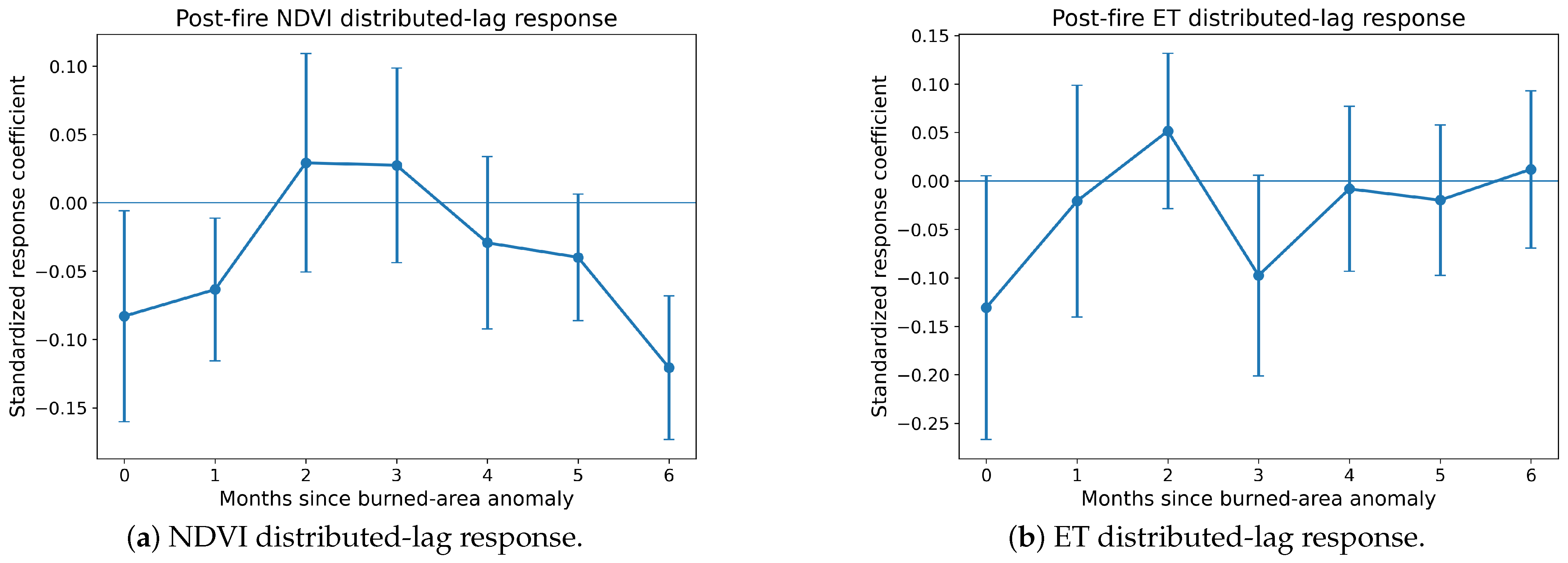
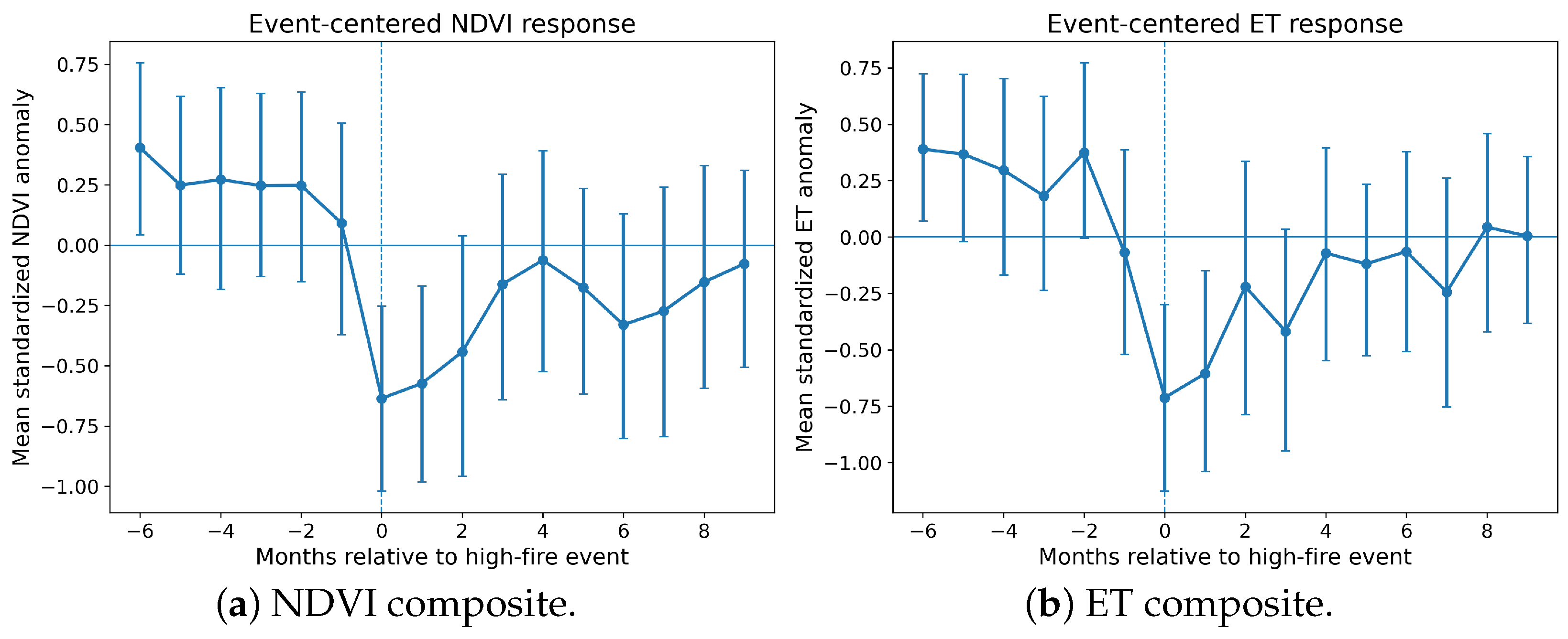
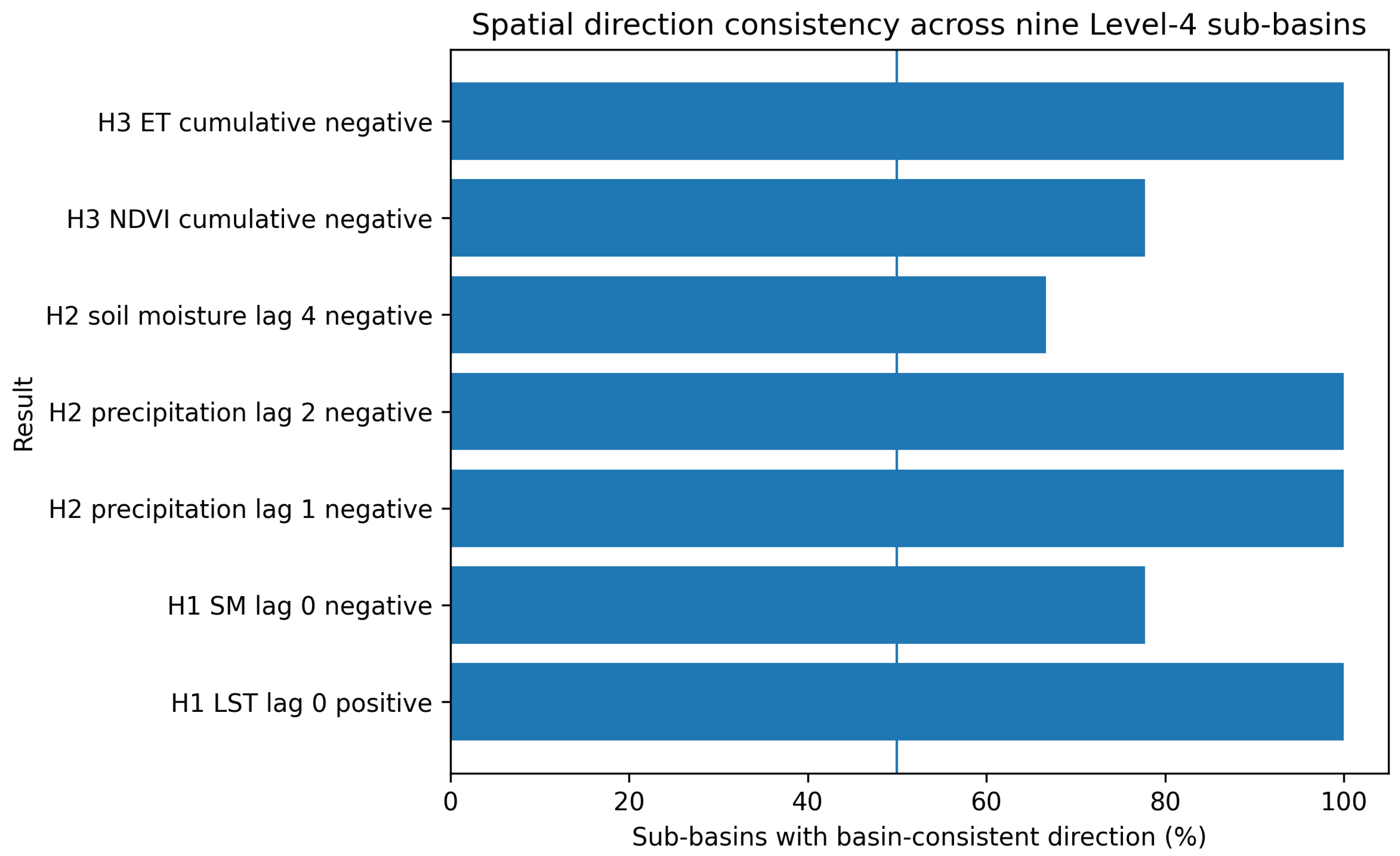
Surface Thermal State, Antecedent Hydroclimate, and Post-Fire Vegetation–Water Response in the Zambezi River Basin: A Multi-Source Environmental Time-Series Analysis


Abstract
Share and Cite
Lutz, H.; Uthlaut, G.; Kim, K.; Lakshmi, V. Surface Thermal State, Antecedent Hydroclimate, and Post-Fire Vegetation–Water Response in the Zambezi River Basin: A Multi-Source Environmental Time-Series Analysis. Remote Sens. 2026, 18, 3009. https://doi.org/10.3390/rs18173009
Lutz H, Uthlaut G, Kim K, Lakshmi V. Surface Thermal State, Antecedent Hydroclimate, and Post-Fire Vegetation–Water Response in the Zambezi River Basin: A Multi-Source Environmental Time-Series Analysis. Remote Sensing. 2026; 18(17):3009. https://doi.org/10.3390/rs18173009
Chicago/Turabian StyleLutz, Hunter, Garrett Uthlaut, Kyung Kim, and Venkataraman Lakshmi. 2026. "Surface Thermal State, Antecedent Hydroclimate, and Post-Fire Vegetation–Water Response in the Zambezi River Basin: A Multi-Source Environmental Time-Series Analysis" Remote Sensing 18, no. 17: 3009. https://doi.org/10.3390/rs18173009
APA StyleLutz, H., Uthlaut, G., Kim, K., & Lakshmi, V. (2026). Surface Thermal State, Antecedent Hydroclimate, and Post-Fire Vegetation–Water Response in the Zambezi River Basin: A Multi-Source Environmental Time-Series Analysis. Remote Sensing, 18(17), 3009. https://doi.org/10.3390/rs18173009