Article

DGSRef: Decoupled Geometric-Semantic Refinement Network for High-Resolution Remote Sensing Segmentation

1
College of Electrical Engineering, Zhejiang University, Hangzhou 310027, China
2
College of Computer Science and Artificial Intelligence, Wenzhou University, Wenzhou 325035, China
*
Author to whom correspondence should be addressed.
Remote Sens. 2026, 18(17), 3011; https://doi.org/10.3390/rs18173011
Submission received: 9 July 2026 / Revised: 26 August 2026 / Accepted: 2 September 2026 / Published: 4 September 2026
(This article belongs to the Section AI Remote Sensing)

Abstract

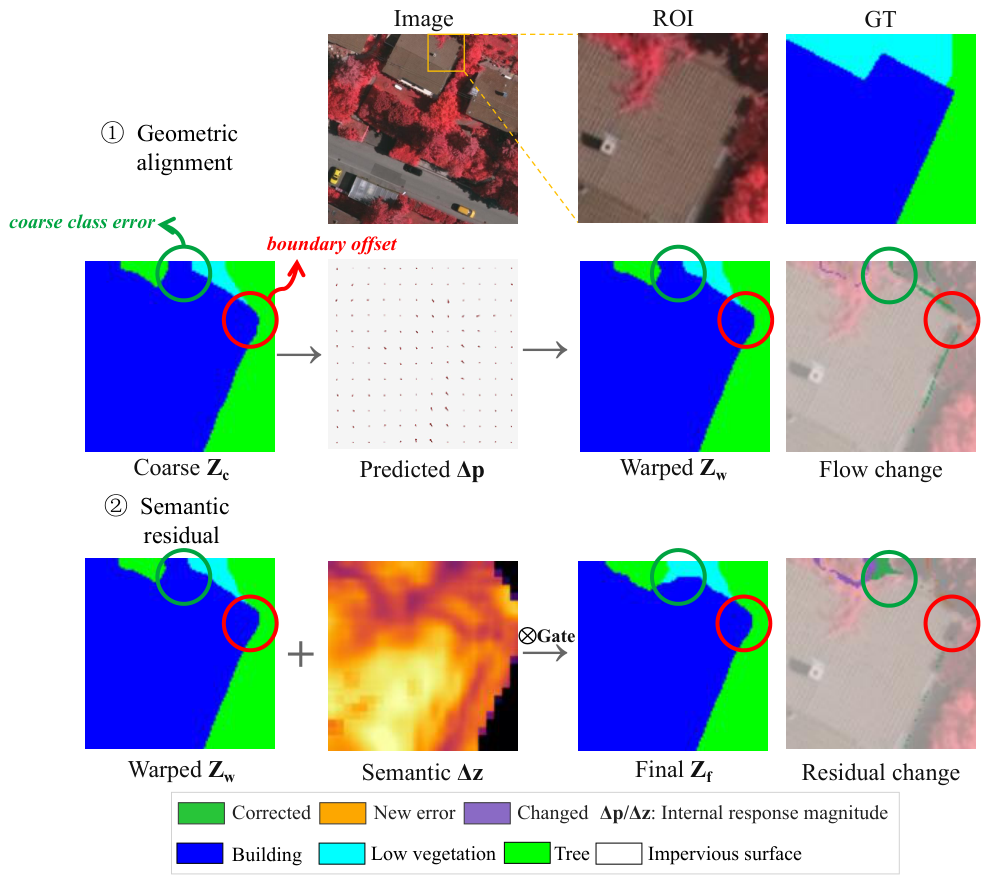
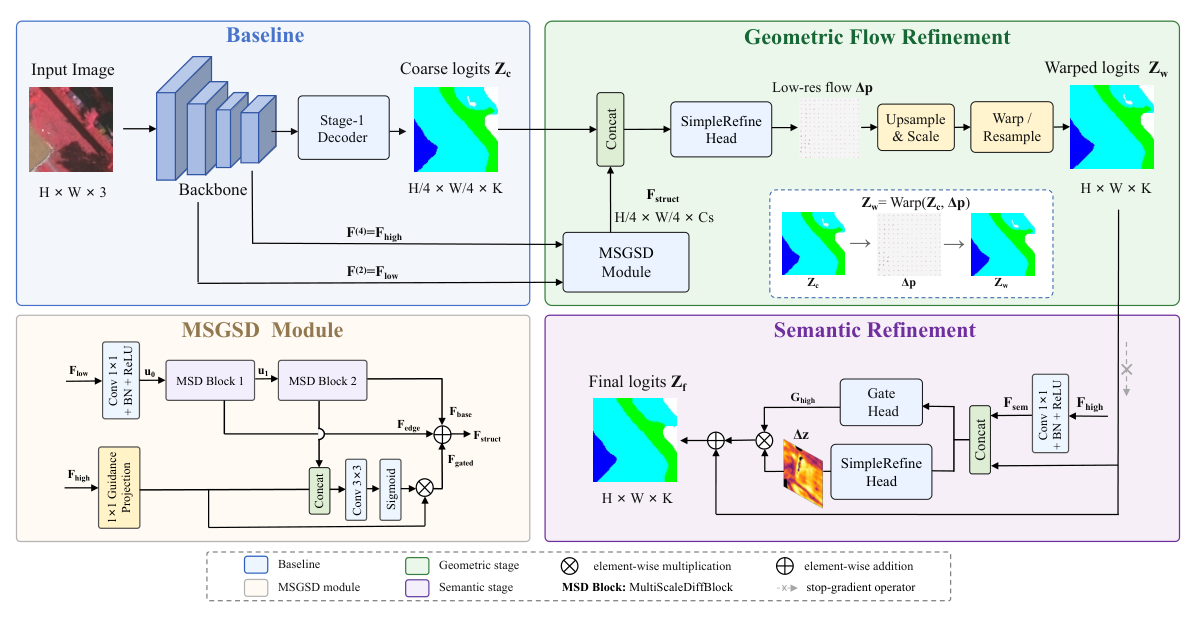
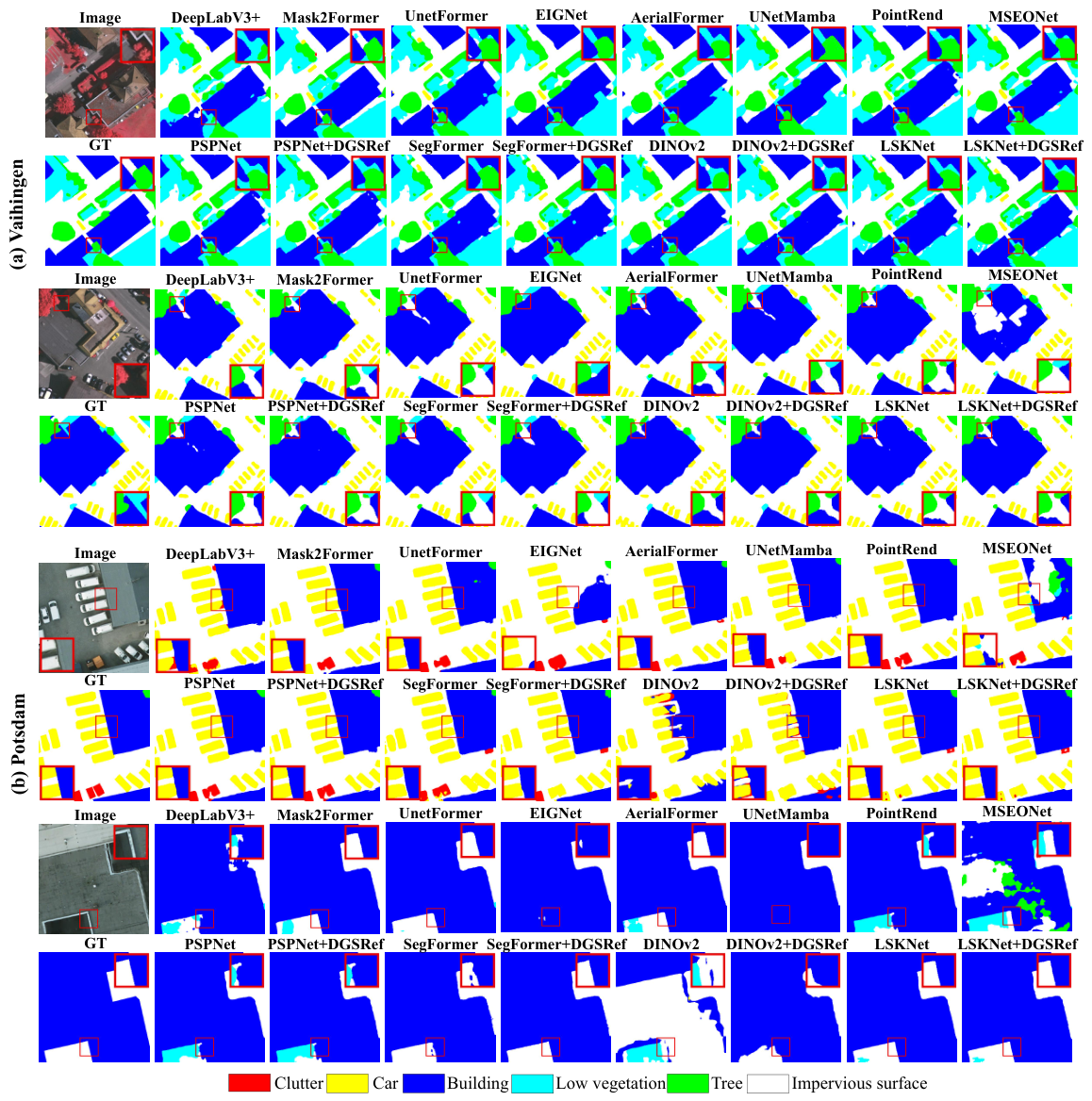
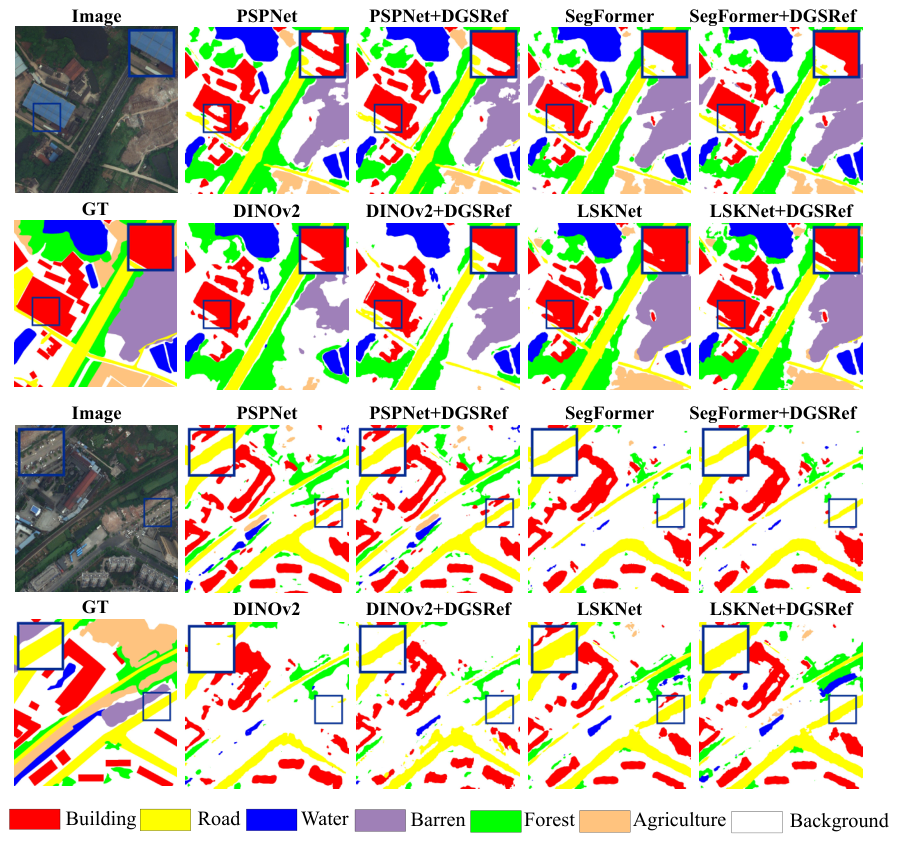
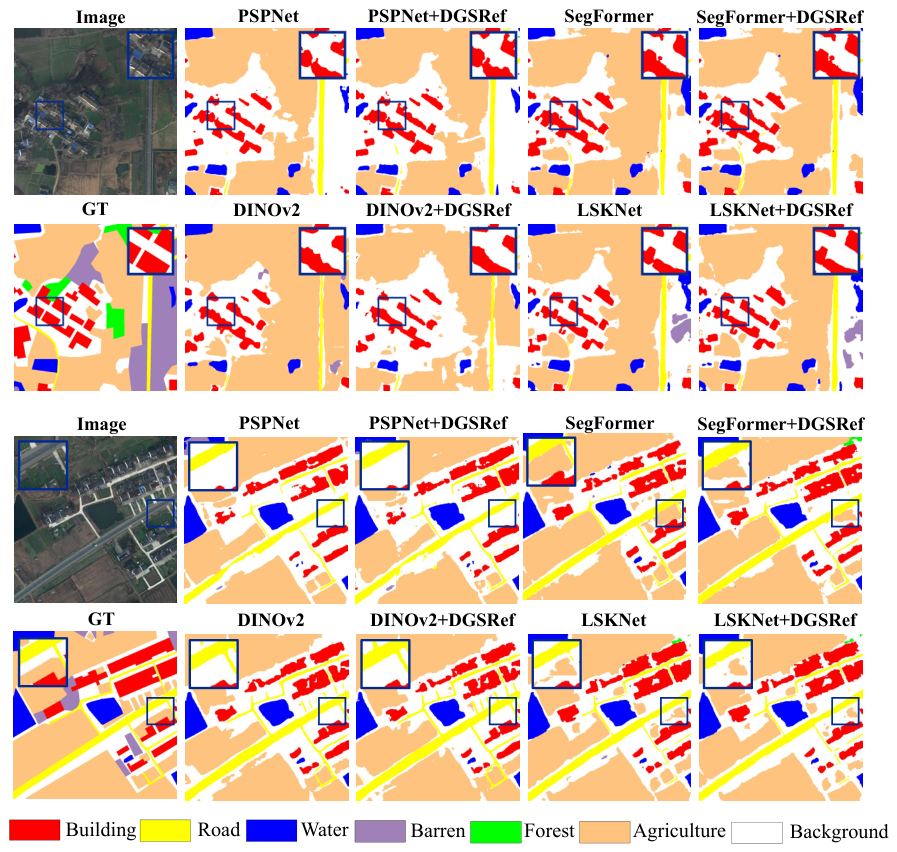
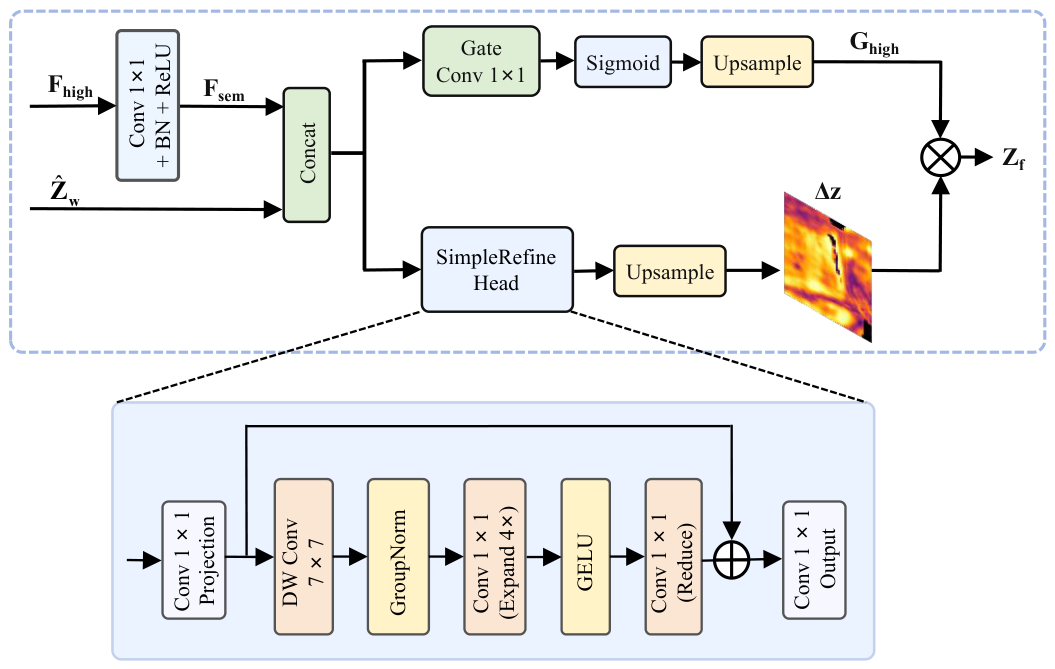
High-resolution remote sensing semantic segmentation is essential for land-cover mapping, urban monitoring, and object-level geospatial analysis, but accurate prediction remains difficult because remote sensing images often contain complex backgrounds, shadows, weak object contrast, and complex texture variations. Moreover, spatial details lost during feature downsampling cannot be fully recovered by subsequent decoding. As a result, coarse predictions usually contain two coupled residual problems: spatial boundary displacement and local semantic inconsistency. To address these problems, we propose DGSRef (Decoupled Geometric-Semantic Refinement Network), a lightweight attachable refiner for improving coarse predictions from existing segmentation models. DGSRef treats coarse logits as semantic priors and refines them through two decoupled stages. In the geometric alignment stage, a displacement field is predicted to warp coarse logits in the output space, modeling boundary correction as spatial transport rather than direct reclassification. A Multi-Scale Semantic-Guided Structural Difference (MSGSD) module further provides semantic-guided structural cues for displacement estimation. In the semantic residual stage, gated residual logits are predicted to correct remaining local semantic inconsistencies without globally overwriting the aligned prediction. Experiments on ISPRS Vaihingen, ISPRS Potsdam, and LoveDA show that DGSRef improves diverse segmentation architectures with limited additional computation and parameters, confirming its effectiveness as a lightweight decoupled refinement framework.
Keywords: remote sensing; semantic segmentation; boundary refinement; flow-based alignment; semantic refinement remote sensing; semantic segmentation; boundary refinement; flow-based alignment; semantic refinement