


The authors have requested that the following changes be made to their paper [1].
In Table 2, page 6, the frequency (and percentage) of gastrointestinal symptoms are shown for each group (regular gluten-free diet (R-GFD) and low fermentable, oligosaccharides, disaccharides, monosaccharides, and polyols (FODMAP)—gluten free diet (LF-GFD)). Instead of showing the percentages for each group, "No data" was included in parentheses instead of the percentages corresponding to the frequency of symptoms in each group. The table should read as follows.

Table 2.
Background and gastrointestinal symptoms at baseline 1.
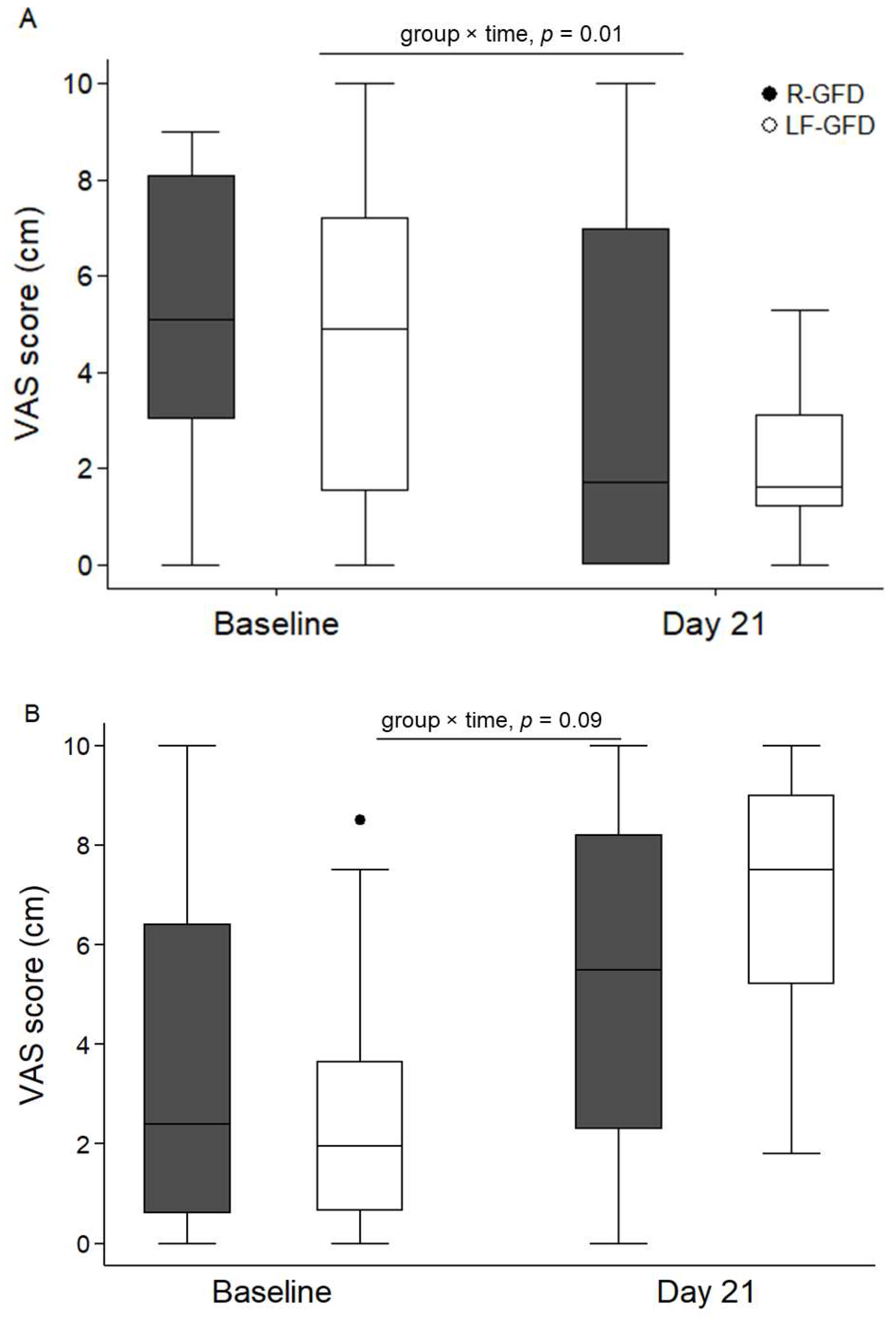
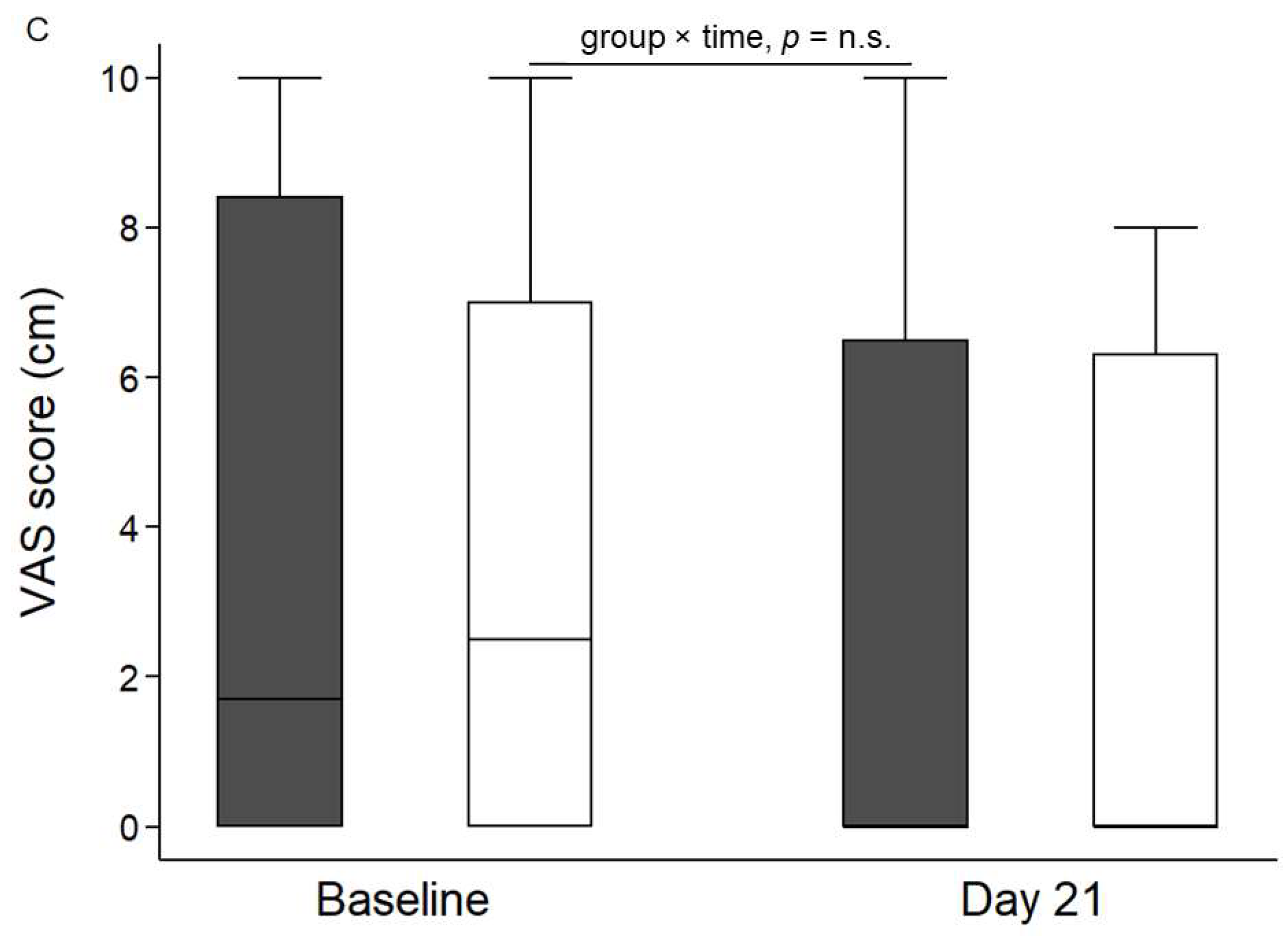
In Figure 2, page 8, visual analogue scale scores for abdominal pain, fecal consistency, and post-prandial fullness severity are shown. Instead of stating only both times of assessment (at “baseline” and “day 21”), a duplicate in the writing of the x-axis legend was found. The figure should read as follows.
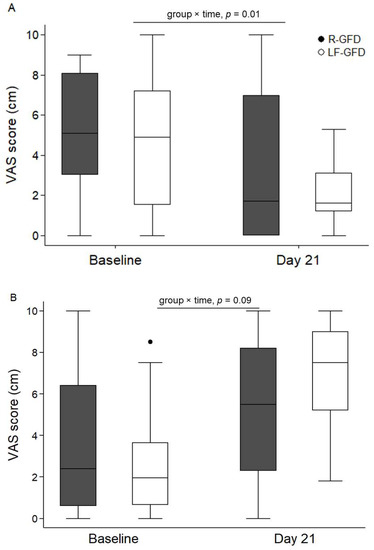
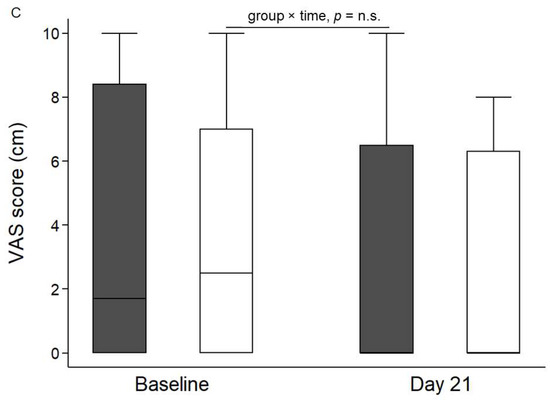
Figure 2.
Visual analogue scale (VAS) score for gastrointestinal symptoms. VAS for abdominal pain (A), fecal consistency (B), and post-prandial fullness severity (C). In each plot, data is shown as median (line), inter-quartile range (box limits), and min/max (whiskers); R-GFD: regular gluten-free diet; LF-GFD: low-FODMAP gluten-free diet; n.s.: non-significant.
The authors apologize to the readers for any inconvenience caused by these changes. It is important to state that both corrections do not affect our study’s results and involve no changes or modifications in the original data supporting our results. The original manuscript will remain online on the article webpage, with reference to this Correction.
Reference
- Roncoroni, L.; Bascuñán, K.A.; Doneda, L.; Scricciolo, A.; Lombardo, V.; Branchi, F.; Ferretti, F.; Dell’osso, B.; Montanari, V.; Bardella, M.T.; et al. A low FODMAP gluten-free diet improves functional gastrointestinal disorders and overall mental health of celiac disease patients: A randomized controlled trial. Nutrients 2018, 10, 8. [Google Scholar] [CrossRef] [PubMed]
© 2019 by the authors. Licensee MDPI, Basel, Switzerland. This article is an open access article distributed under the terms and conditions of the Creative Commons Attribution (CC BY) license (http://creativecommons.org/licenses/by/4.0/).