Antenatal Care Attendance and Multiple Micronutrient Supplementation Intake: Perspectives from Women and Antenatal Care Service Providers in Rwanda
 , ,
, ,  , ,
, ,
Abstract
1. Introduction
2. Materials and Methods
2.1. Study Population and Sampling
2.2. Data Collection Tools
2.3. Data Processing and Analysis
2.4. Qualitative Data Analysis
2.5. Ethics
3. Results
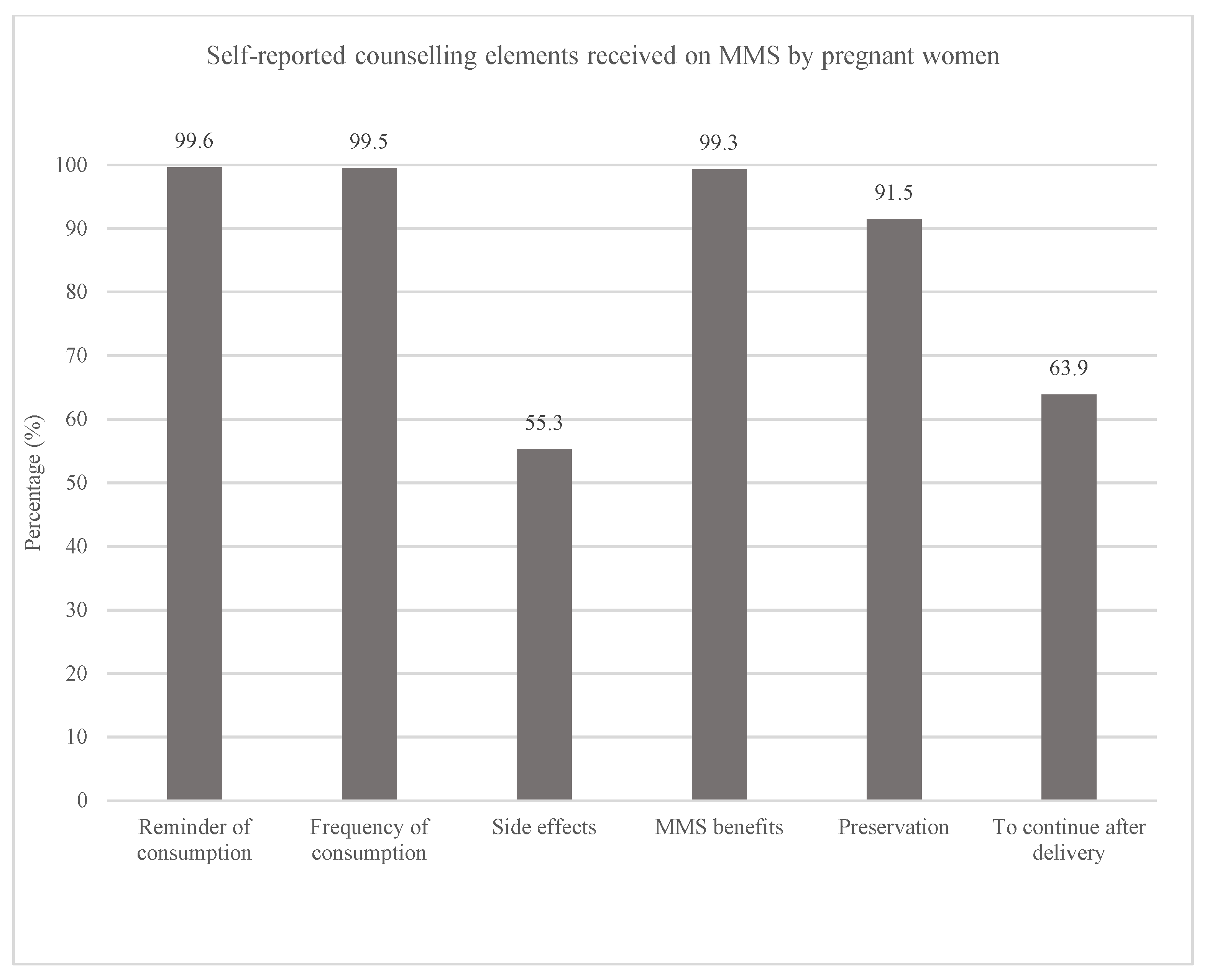
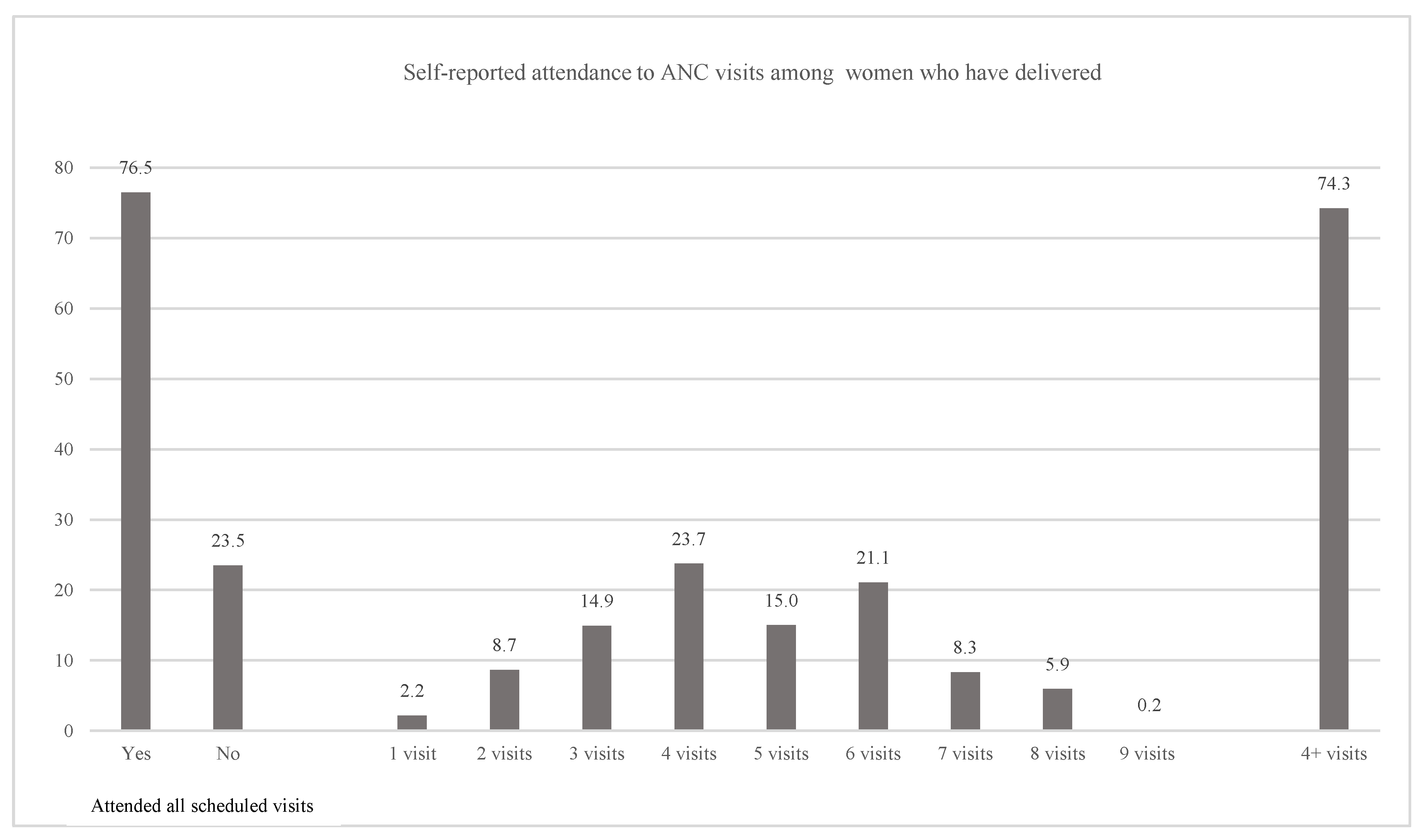
3.1. ANC Attendance and MMS Counseling
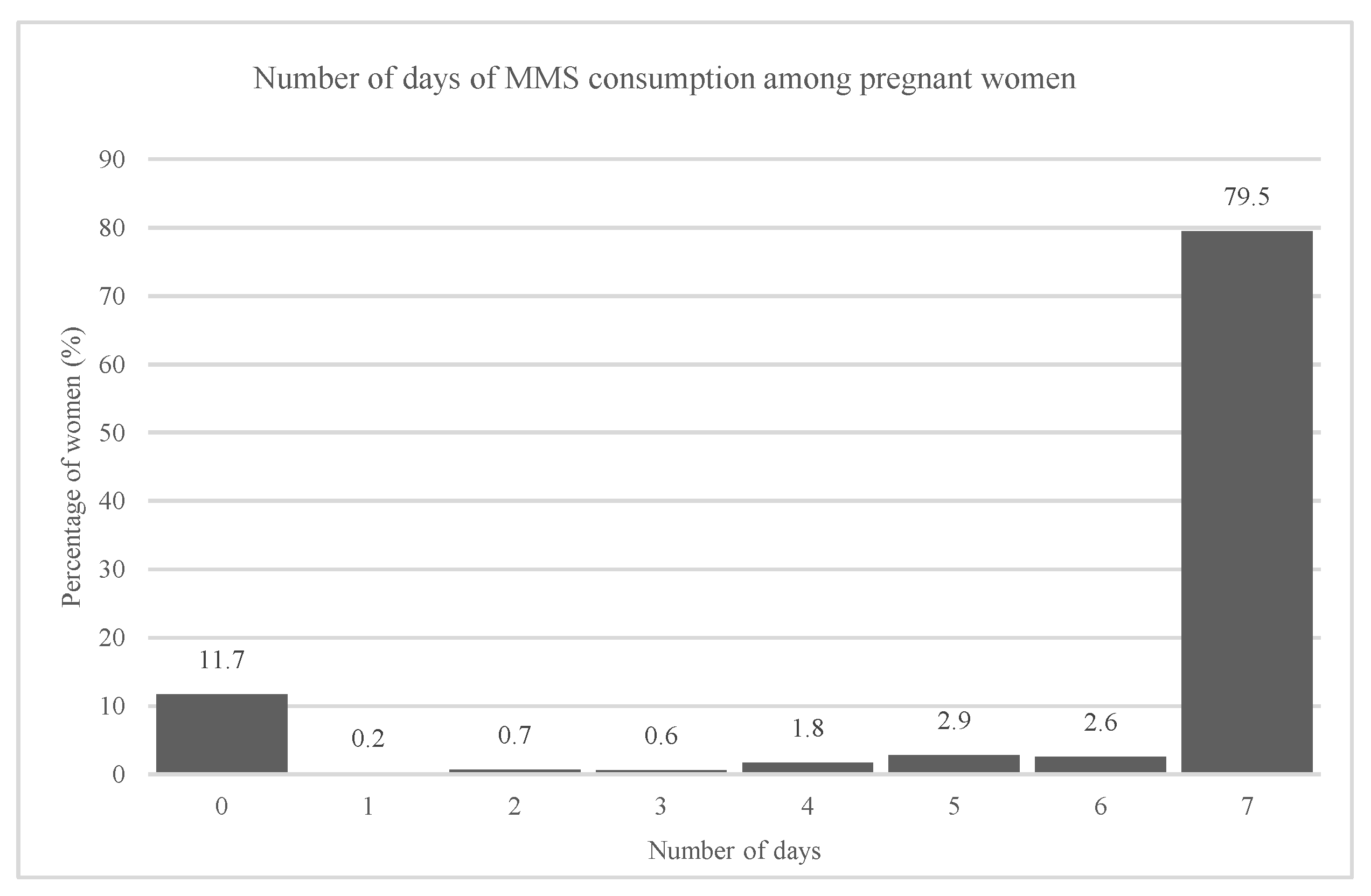
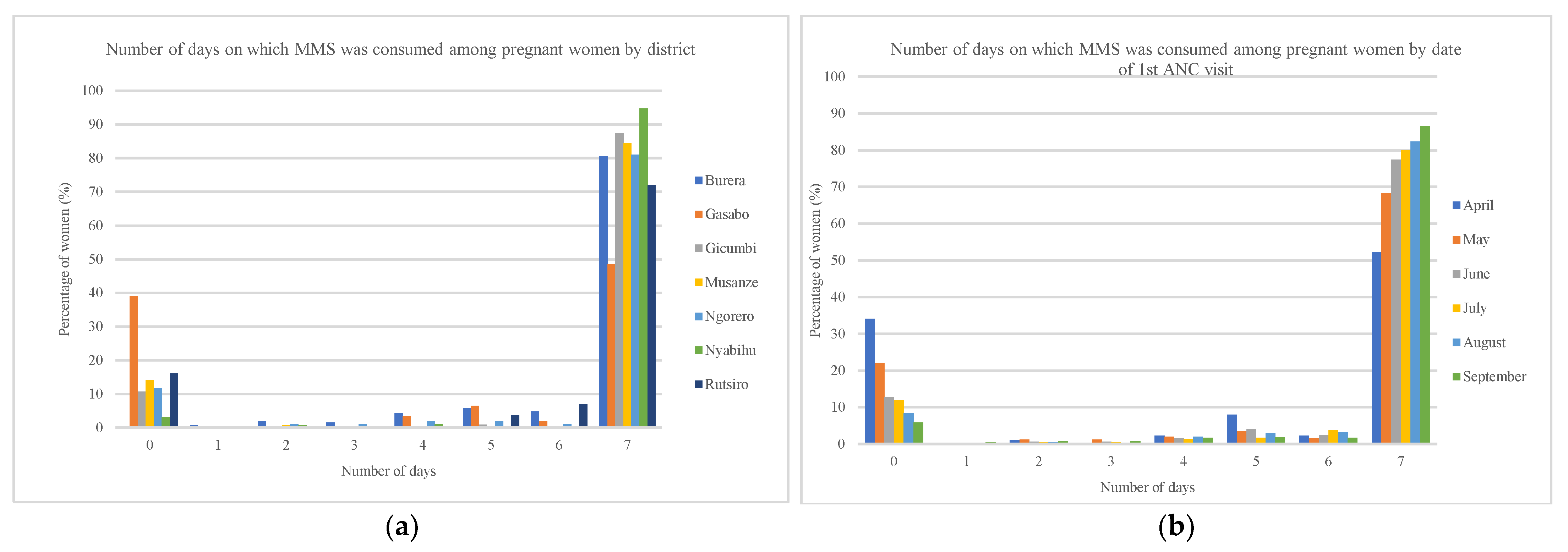
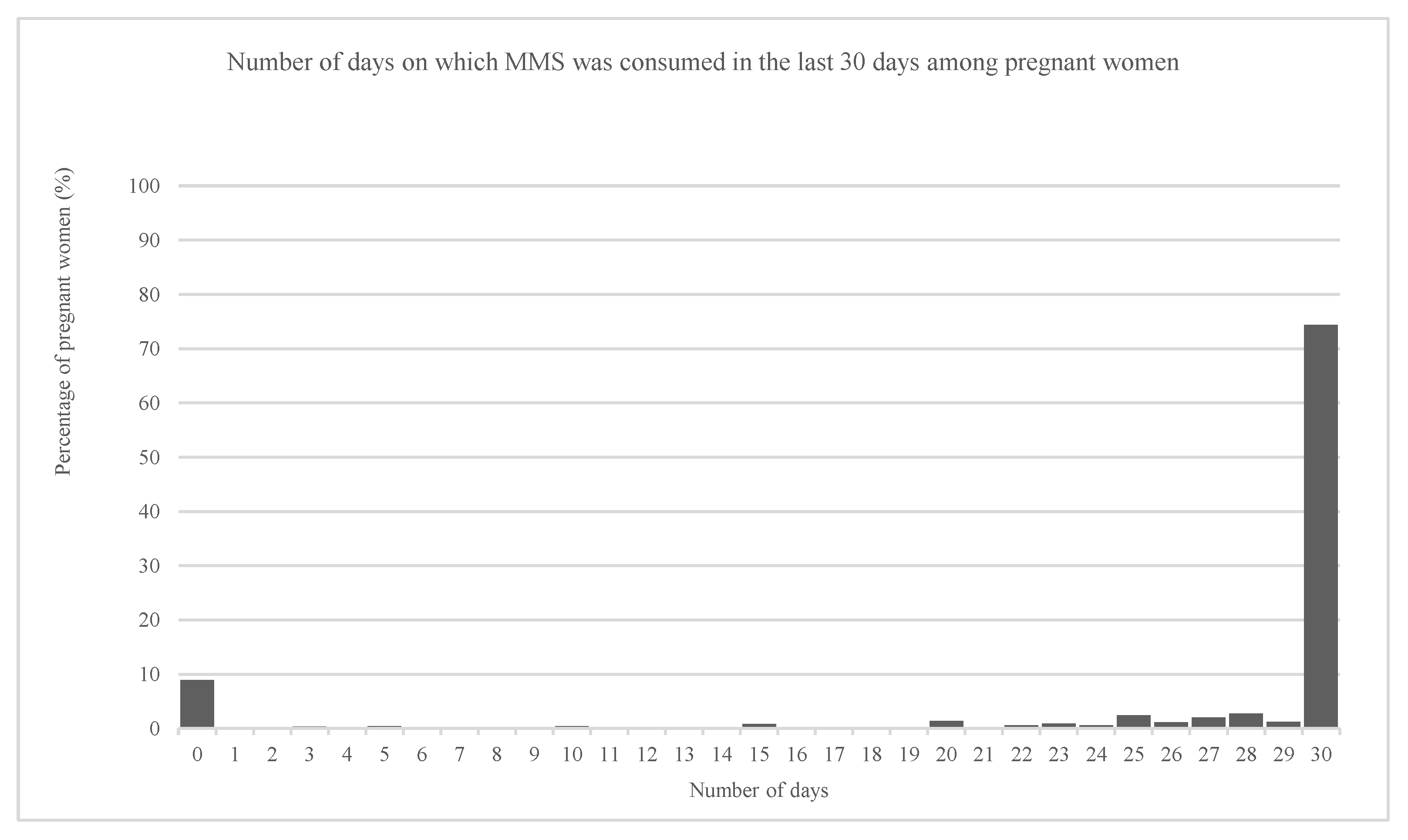
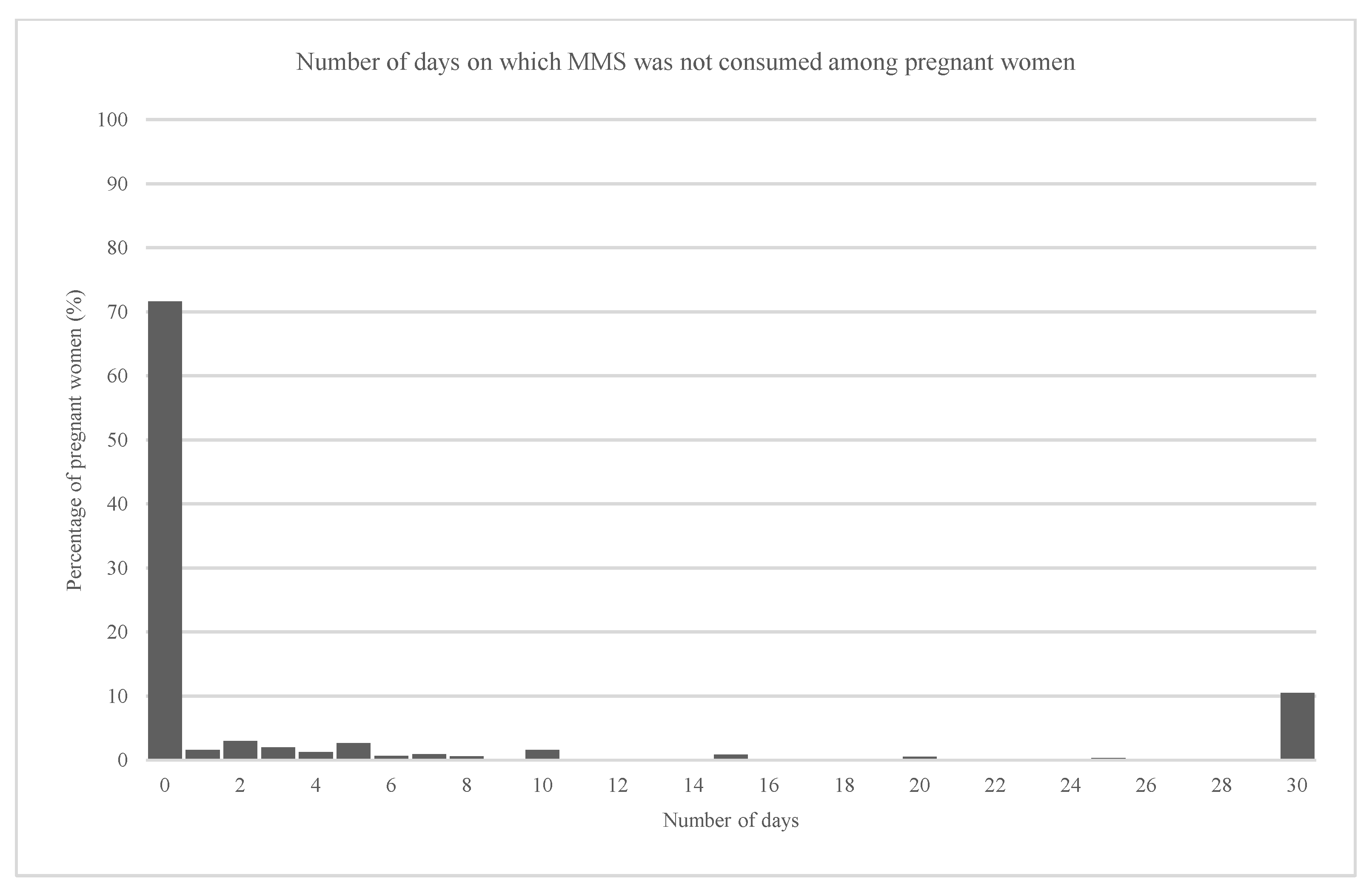
3.2. Coverage and Adherence to MMS
3.3. Enablers of ANC Attendance
3.3.1. Trust and Reassurance
“When I find out that I am pregnant, I rush to the health centre, and I really believe that the nurse will test me and give me the answer and start to monitor me and the baby.”.(Woman, Doer)
“Our community health worker is my neighbor, so she comes home more often and every time she comes, she asks me when I will go back, when is my appointment and she reminds me when my appointment is due.”.(Woman, Non-Doer)
3.3.2. Reminders and Follow-Ups
“We visit them and teach them in community meetings telling them that when a woman becomes pregnant, she should visit a health center for all recommended ANC visit and checkups, feeding on balanced diet following foods and crops available in our areas of living, teach them about saving schemes in order to get prepared for welcoming the newborn while having minimum facilities.”.(CHW)
3.3.3. Support from Family and Community
“There are conflicts in the house: when you have a problem with your husband, there are times when you cannot participate in the programs that are planned.”.(Woman, Doer)
“I also notice that some pregnant women do not attend services provided for expectant mothers because they fear or their husbands have jobs far away. They don’t go for check-ups, and it is a requirement that a pregnant woman must come for her first check-up with her husband. This makes the woman wait for her husband until he returns home, and then they go together to the health facility.”.(Woman, Non-Doer)
“Other than CHWs, even other pregnant women encourage their neighbors to attend ANC, after coming here to the health center and learn about the importances of attending ANC visits, they encourage others.”.(CHW)
3.4. Barriers to ANC Attendance
3.4.1. Financial Constraints
“One of the reason some parents delay seeking medical services is that obtaining health insurance (mutuelle) is challenging, especially for those trying to change their social category.”.(Doer)
3.4.2. Physical Barriers
“There are also women who face challenges due to coming from far, which prevents them from attending on time, or there may be issues like rain and others. Finding enough time is challenging due to the heavy workload because there are also few staff members.”.(ANC nurse)
“During heavy rainfall, pregnant women or Women who have given birth both face difficulties in finding transportation to the health center.”.(Woman, Doer)
3.4.3. Emotional Barriers
“Sometimes, adolescents that became pregnant don’t usually attend ANC or any other service because they are afraid to go out and they think people are going to judge them. Also, some women in this community have different beliefs.”.(Woman, Non-doer)
3.5. Factors Influencing MMS Consumption
3.5.1. Motivation for MMS Consumption
“What motivates us to use MMS tablets is that they level up my blood, the baby grows well in the womb, and the child’s body and organs develop properly.”.(Woman, Doer)
“The importance I have seen: if you follow it properly, you will give birth without surgery, the doctor used to tell us the importance of it and how to use it, a person who takes the pills correctly will give birth to a child without complications, it will make the child give birth without any problems, which will make the child grow well in the womb, without birth defects.”.(Woman, Doer)
“I don’t take them regularly because I forget, and sometimes I feel like I can go without them.”.(Non-doer)
“They told us things that might happen when we don’t take them, like is it mandatory to face all those problems that we were told? Like this is my fourth child and I didn’t take any tablets even those ones that we had before and yet my children don’t have any problem.”.(Woman, Non-doer)
“The benefit is that a mother who uses MMS improves her health and the health of her child. I have noticed a difference.”.(ANC nurse)
“Some of the women in this community who went of the church developed wrong beliefs that going to the hospital is bad for their health because they use artificial materials, and they don’t believe in modern medicine they think traditional medicine is better.”.(CHW)
3.5.2. Side Effects
“It once caused nausea, but I later realized it was because I took it without eating”.(Woman, Doer)
“The only side effect I had from those tablets was that I would take them and then vomit. However, once I stopped taking them, I didn’t experience any other issues. Whatever was happening to me stopped.”.(Woman, Non-doer)
“The barriers I perceive that might prevent pregnant women from valuing MMS include taking them everyday, some say that they cause nausea and to overcome these barriers I keep explaining them on benefit of taking MMS mainly for having the healthy baby.”.(ANC nurse)
3.5.3. Forgetfulness
“Put the MMS in front of my bed to remind me to eat them. When I go to bed, I always look at them. When I wake up, I always look at them.”.(Woman, Doer)
“I don’t have a specific place to keep them, so I often overlook them when taking my other medicine.”.(Woman, Non-Doer)
3.5.4. Family and Community Support
“Yes, we are greatly supported by our family members, as they even remind us, which motivates us to take it daily.”.(Woman, Doer)
“My husband supported me, he would always remind me and tell me that since the doctor prescribed it, it must be important, and I should be patient and take it. But eventually, it became overwhelming”.(Woman, Non-doer)
“Collaborating with community health workers to deliver it to our homes would make it easier for us.”.(Woman, Doer)
“The most effective approach we see is regular home visits to remind them, because sometimes, when we arrive, we find that they’ve stopped taking the supplements. They often ask us, “I’ve taken the supplements, what should I do now?” Without our visits, they wouldn’t inform us. I believe frequent visits yield positive results.”.(CHW)
“Doctors always remind us to take MMS tablets every time we visit the hospital.”.(Woman, Doer)
“And since they tell us that a person who drinks it gives birth to a healthy, full-weight, healthy baby, it’s a benefit to us.”.(Woman, Doer)
3.5.5. Product Characteristics
“Changes that we want include to scentless tablets and change color.”.(Woman, Doer)
“How you would be affected by Iron and Folic Acid is the same as how you would be affected by MMS. The first two were small, they were easy to swallow, the MMS tablets are big and they require the use of something else, such as gum, etc.”.(Woman, Doer)
3.5.6. Expectation and Management of Side Effects
“I completely stopped taking them; I couldn’t handle it, so I threw them away. They had explained that even after giving birth, one should continue taking them, but I didn’t know that. If they had explained it to me properly, maybe I would have tried to continue or waited until after giving birth to resume.”.(Woman, Non-doer)
“Yes, it will have positive impacts because patients always understand everything health care provider tell them. And also, health care providers understand well the importances of MMS and I think it will help in explaining them to the mothers.”.(ANC nurse)
3.5.7. Limited Time for Counselling
“It depends on the number of people who come. When there are many, I try to use the time by splitting it among them so that I can attend to everyone. I don’t skip or overlook anything; instead, I provide brief explanations or address them collectively in general to save time”.(ANC nurse)
3.5.8. Motivation of ANC Nurses
“I am committed. It makes me happy when a woman is healthier and the baby is born healthy, so I encourage them to take it.”.(ANC nurse)
“First of all, the child will be born without any issues related to malnutrition, and the mother will not have any blood-related problems. Therefore, in a broader context, it helps us have a population with good health”.(ANC nurse)
4. Discussion
5. Conclusions
Author Contributions
Funding
Institutional Review Board Statement
Informed Consent Statement
Data Availability Statement
Acknowledgments
Conflicts of Interest
Abbreviations
| ANC | Antenatal Care |
| CHW | Community Health Worker |
| DHS | Demographic Health Survey |
| FGD | Focus Group Discussion |
| IFA | Iron and Folic Acid |
| IQR | Interquartile Range |
| KII | Key Informant Interviews |
| MMS | Multiple Micronutrient Supplement |
| SBC | Social Behavior Change |
| UNIMMAP | United Nations International Multiple Micronutrient Antenatal Preparation |
| WHO | World Health Organization |
Appendix A

| Indicator | Definition |
|---|---|
| Coverage | Number of women who reported receiving MMS during their current or latest pregnancy |
| Adherence | Number of days on which MMS was reported to be consumed in the last 7 and 30 days. |


References
- Arsenault, J.E.; Olney, D.K. Review of the Micronutrient Situation in Rwanda. Food Nutr. Bull. 2021, 42, 133–154. [Google Scholar] [CrossRef] [PubMed]
- National Institute of Statistics of Rwanda—NISR, Ministry of Health—MOH, Rwanda Demographic and Health Survey 2019–20. 2021. Available online: https://www.dhsprogram.com/pubs/pdf/FR370/FR370.pdf (accessed on 22 July 2025).
- Peña-Rosas, J.P.; De-Regil, L.M.; Garcia-Casal, M.N.; Dowswell, T. Daily oral iron supplementation during pregnancy. Cochrane Database Syst. Rev. 2015, 2015, CD004736, Correction in Cochrane Database Syst. Rev. 2024, 8, CD004736. https://doi.org/10.1002/14651858. [Google Scholar] [CrossRef] [PubMed]
- Gomes, F.; Adu-Afarwuah, S.; Agustina, R.; Ali, H.; Arcot, A.; Arifeen, S.; Arnold, C.D.; E Black, R.; Christian, P.; Dewey, K.G.; et al. Effect of prenatal multiple micronutrient supplementation compared with iron and folic acid supplementation on size at birth and subsequent growth through 24 mo of age: A systematic review and meta-analysis. Am. J. Clin. Nutr. 2025, 122, 185–195. [Google Scholar] [CrossRef] [PubMed]
- Gomes, F.; Agustina, R.; Black, R.E.; Christian, P.; Dewey, K.G.; Kraemer, K.; Shankar, A.H.; Smith, E.R.; Thorne-Lyman, A.; Tumilowicz, A.; et al. Multiple micronutrient supplements versus iron-folic acid supplements and maternal anemia outcomes: An iron dose analysis. Ann. N. Y. Acad. Sci. 2022, 1512, 114–125. [Google Scholar] [CrossRef] [PubMed]
- Smith, E.R.; Gomes, F.; Adu-Afarwuah, S.; Aguayo, V.M.; El Arifeen, S.; A Bhutta, Z.; Caniglia, E.C.; Christian, P.; Devakumar, D.; Dewey, K.G.; et al. Contribution of Maternal Adherence to the Effect of Multiple Micronutrient Supplementation During Pregnancy: A Systematic Review and Individual Participant Data Meta-analysis. Adv. Nutr. 2025, 16, 100455. [Google Scholar] [CrossRef] [PubMed]
- World Health Organization. Who Antenatal Care Recommendations for a Positive Pregnancy Experience. Nutritional Interventions Update: Multiple Micronutrient Supplements During Pregnancy; World Health Organization: Geneva, Switzerland, 2020. [Google Scholar]
- Hunter, P.J.; Muthiani, Y.; Näsänen-Gilmore, P.K.; Koivu, A.M.; Pörtfors, P.; Bastola, K.; Vimpeli, R.; Luoma, J.; Ashorn, U.; Ashorn, P. A modular systematic review of antenatal interventions to address undernutrition during pregnancy in the prevention of low birth weight. Am. J. Clin. Nutr. 2023, 117, S134–S147. [Google Scholar] [CrossRef] [PubMed]
- Sight and Life. Focusing on Multiple Micronutrient Supplements in Pregnancy: Second Edition; Sight and Life: Kaiseraugst, Switzerland, 2023. [Google Scholar]
- KoBoToolbox. KoBoToolbox. Data Collection Tools for Challenging Environments. 2025. Available online: https://www.kobotoolbox.org/ (accessed on 22 July 2025).
- R Core Team. R: A Language and Environment for Statistical Computing; R Core Team: Vienna, Austria, 2023. [Google Scholar]
- Steele, A. Grounded Theory. The Decision Lab. 2024. Available online: https://thedecisionlab.com/reference-guide/psychology/grounded-theory (accessed on 25 July 2025).
- Lumivero. NVivo, Version 15; Lumivero: Denver, CO, USA, 2024. [Google Scholar]
- Mwangi, M.N.; Mukendi, E.T.; Pereira, C.; Gomes, F.; Kissell, M.C.; Pandav, R.; Waudo, M.N.; Birhanu, T.T.; Ayele, A.; McColl, A.; et al. Scaling Up Antenatal Multiple Micronutrient Supplementation (MMS) in Africa: A Unified Call for Action. Nutrition 2025, 141, 112911. [Google Scholar] [CrossRef] [PubMed]
- Mwangi, M.N. World Map of Multiple Micronutrient Supplementation (MMS) Activities. In Focusing on Multiple Micronutrient Supplements in Pregnancy: Second Edition; Sight Life Special Report; Sight and Life: Kaiseraugst, Switzerland, 2023; Available online: https://sightandlife.org/resource-hub/magazine/mms-second-edition (accessed on 22 July 2025).
- Labonté, J.M.; Hoang, M.; Panicker, A.; Kroeun, H.; Sokchea, M.; Sambo, S.; Sokhal, V.; Sauer, C.; Chea, M.; Karakochuk, C.D. Exploring factors affecting adherence to multiple micronutrient supplementation during pregnancy in Cambodia: A qualitative analysis. Matern. Child Nutr. 2025, 21, e13745. [Google Scholar] [CrossRef] [PubMed]
- Kraemer, K.; Beesabathuni, K.; Askari, S.; Khondker, R.; Khan, T.U.; Rahman, M.; Gibson, S.; Merritt, R.; Bajoria, M.; Lingala, S.; et al. Knowledge, Attitudes and Practices of Pregnant Women and Healthcare Providers in Bangladesh regarding Multivitamin Supplements during Pregnancy. Healthcare 2023, 11, 713. [Google Scholar] [CrossRef] [PubMed]
- Sight and Life. Formative Research for the Introduction of Multiple Micronutrient Supplements in Bangladesh; Healthy Mother Healthy Baby: Washington, DC, USA, 2021; pp. 1–92. Available online: https://hmhb.micronutrientforum.org/knowledge-hub/formative-research-for-the-introduction-of-multiple-micronutrient-supplements-in-bangladesh/ (accessed on 20 October 2025).
- Sauer, C.; Hoang, M.-A.; Kroeun, H.; Gupta, A.S.; Ngik, R.; Sokchea, M.; Labonté, J.M.; Chea, M.; Klemm, R.; Mishra, A.; et al. Assessing the adherence and acceptability to iron and folic acid compared with multiple micronutrient supplements during pregnancy: A cluster-randomized noninferiority trial in Cambodia. Am. J. Clin. Nutr. 2025, 122, 166–173. [Google Scholar] [CrossRef] [PubMed]
- Siekmans, K.; Roche, M.; Kung’u, J.K.; Desrochers, R.E.; De-Regil, L.M. Barriers and enablers for iron folic acid (IFA) supplementation in pregnant women. Matern. Child Nutr. 2017, 14, e12532. [Google Scholar] [CrossRef] [PubMed]
- Silubonde, T.M.; Draper, C.E.; Baumgartner, J.; Ware, L.J.; Smuts, C.M.; Norris, S.A. Barriers and facilitators of micronutrient supplementation among non-pregnant women of reproductive age in Johannesburg, South Africa. PLoS Global Public Health 2022, 2, e0001310. [Google Scholar] [CrossRef] [PubMed]
- Beesabathuni, K.; Poddar, A.; Lingala, S.; Tshering, P.P.; Khan, T.U.; Alam, S.; Rahman, M.; Khondker, R.; Bipul, M.; Hasan, T.; et al. A Summary of Consumer Research Findings in Bangladesh, to Support the Case for MMS. In Focusing on Multiple Micronutrient Supplements in Pregnancy: Second Edition; Sight Life Special Report; Sight and Life: Kaiseraugst, Switzerland, 2023; Available online: https://sightandlife.org/resource-hub/magazine/mms-second-edition (accessed on 22 July 2025).
- Dacius, M.; Marhone-Pierre, J.; Alfred, C.; King, S.E.; Emerson, J.; Harvey, Q.; Hurley, K.M.; Fox, M. An Assessment of Barriers and Enablers to Uptake and Adherence Women in Haiti of UNIMMAP MMS for Pregnant. In Focusing on Multiple Micronutrient Supplements in Pregnancy: Second Edition; Sight Life Special Report; Sight and Life: Kaiseraugst, Switzerland, 2023; Available online: https://sightandlife.org/resource-hub/magazine/mms-second-edition (accessed on 22 July 2025).
- Miller, P.; Afulani, P.A.; Musange, S.; Sayingoza, F.; Walker, D. Person-centered antenatal care and associated factors in Rwanda: A secondary analysis of program data. BMC Pregnancy Childbirth 2021, 21, 290. [Google Scholar] [CrossRef] [PubMed]
- Wang, W.; Temsah, G.; Mallick, L. The impact of health insurance on maternal health care utilization: Evidence from Ghana, Indonesia and Rwanda. Health Policy Plan. 2017, 32, 366–375. [Google Scholar] [CrossRef] [PubMed]
- Lu, C.; Chin, B.; Lewandowski, J.L.; Basinga, P.; Hirschhorn, L.R.; Hill, K.; Murray, M.; Binagwaho, A. Towards universal health coverage: An evaluation of Rwanda Mutuelles in its first eight years. PLoS ONE 2012, 7, e39282. [Google Scholar] [CrossRef] [PubMed]


| Surveyed Women (n = 3257) | |
|---|---|
| Age, mean years (sd) | 28.8 (6.8) |
| Number of children, mean (sd) | 1.9 (1.6) |
| Household size, mean (sd) | 3.9 (1.7) |
| Marital status, n (%) | |
| Married | 2842 (87.3) |
| Partnership | 41 (1.3) |
| Single | 305 (9.5) |
| Separated | 45 (1.4) |
| Divorced | 14 (0.4) |
| Widowed | 10 (0.3) |
| Occupation, n (%) | |
| Farming | 2053 (63.0) |
| Work for wage | 404 (12.5) |
| Work in own business | 250 (7.7) |
| Unpaid family business | 157 (4.8) |
| Unemployed | 376 (11.5) |
| Student | 17 (0.5) |
| Education level, n (%) | |
| No formal education | 636 (19.4) |
| Primary school | 1930 (59.3) |
| Lower secondary | 430 (13.2) |
| Upper secondary | 211 (6.5) |
| Vocation training | 28 (0.9) |
| Tertiary (Degree, diploma) | 22 (0.7) |
| Factors | |
|---|---|
| ANC Attendance |
|
| MMS Consumption |
|
| Healthcare Provider Level |
|
Disclaimer/Publisher’s Note: The statements, opinions and data contained in all publications are solely those of the individual author(s) and contributor(s) and not of MDPI and/or the editor(s). MDPI and/or the editor(s) disclaim responsibility for any injury to people or property resulting from any ideas, methods, instructions or products referred to in the content. |
© 2026 by the authors. Licensee MDPI, Basel, Switzerland. This article is an open access article distributed under the terms and conditions of the Creative Commons Attribution (CC BY) license.
Share and Cite
Pastori, G.; van Zutphen-Küffer, K.G.; Sarvan, S.; Manyuk, Y.; Gakuba, E.; Rana, Y.; Clift, J.; Weiss, K.; Weiss, B.; Wang, X.-Y.; et al. Antenatal Care Attendance and Multiple Micronutrient Supplementation Intake: Perspectives from Women and Antenatal Care Service Providers in Rwanda. Nutrients 2026, 18, 373. https://doi.org/10.3390/nu18030373
Pastori G, van Zutphen-Küffer KG, Sarvan S, Manyuk Y, Gakuba E, Rana Y, Clift J, Weiss K, Weiss B, Wang X-Y, et al. Antenatal Care Attendance and Multiple Micronutrient Supplementation Intake: Perspectives from Women and Antenatal Care Service Providers in Rwanda. Nutrients. 2026; 18(3):373. https://doi.org/10.3390/nu18030373
Chicago/Turabian StylePastori, Giulia, Kesso Gabrielle van Zutphen-Küffer, Shashank Sarvan, Yana Manyuk, Elvis Gakuba, Yashodhara Rana, Jack Clift, Kara Weiss, Bonnie Weiss, Xiao-Yu Wang, and et al. 2026. "Antenatal Care Attendance and Multiple Micronutrient Supplementation Intake: Perspectives from Women and Antenatal Care Service Providers in Rwanda" Nutrients 18, no. 3: 373. https://doi.org/10.3390/nu18030373
APA StylePastori, G., van Zutphen-Küffer, K. G., Sarvan, S., Manyuk, Y., Gakuba, E., Rana, Y., Clift, J., Weiss, K., Weiss, B., Wang, X.-Y., Uwimana, A., Muvunyi, C. M., Tuyisenge, E., Desie, S., Munos, M. K., & Askari, S. (2026). Antenatal Care Attendance and Multiple Micronutrient Supplementation Intake: Perspectives from Women and Antenatal Care Service Providers in Rwanda. Nutrients, 18(3), 373. https://doi.org/10.3390/nu18030373