The Simultaneous Prevention of Multiple Diseases: A “One Ring to Rule Them All” Framework for Redox-Driven Health and Longevity

 , , , and
Abstract
1. Introduction
1.1. Objective and Novelty
1.2. Literature Identification and Scope
2. Shared Redox Mechanisms Underlying Multiple Diseases
2.1. Oxidative Stress and Chronic Low-Grade Inflammation
2.2. Metabolic Dysregulation and Insulin Resistance
2.3. Cellular Senescence and the SASP
2.4. mTOR/AMPK Balance, Autophagy, and Mitochondrial Function
2.5. Microbiome-Driven Inflammation and TMAO
3. Lifestyle and Natural Dietary Antioxidants as the Primary “Lever”
3.1. Plant-Predominant Dietary Patterns and Multi-Disease Prevention
3.2. Natural Antioxidant Components of Whole Foods
3.3. “Genes Are Guns…”: Lifestyle as the Trigger (and the Preventive Safety)
4. Targeted Nutraceuticals and Supplements (with Cardiovascular Exemplar)
4.1. Cardiovascular Exemplar: Reperfusion-Induced Injury (RII) in the Heart
4.2. Targeted Nutraceuticals: Scope and Positioning
5. Natural Antioxidants in Orphan Diseases as a “Stress Test” of Redox-Based Strategies
5.1. Candidate Natural Antioxidants and Mechanisms
5.2. Preclinical Evidence (Cell and Animal Models)
5.3. Clinical Evidence in Humans
5.4. Translational Lessons from Orphan Diseases to Common Diseases
6. Gene Therapy as an Antioxidant Strategy: Engineered Redox Modulation
6.1. Targets: Antioxidant Enzymes and Redox Regulators
6.2. Relevance to Cardiovascular Syndromes and Chronic Disease
6.3. Safety and Translational Considerations
6.4. Synergy with Natural Antioxidants and Lifestyle Interventions
7. The “One Ring to Rule Them All” Framework—Integrative Perspective
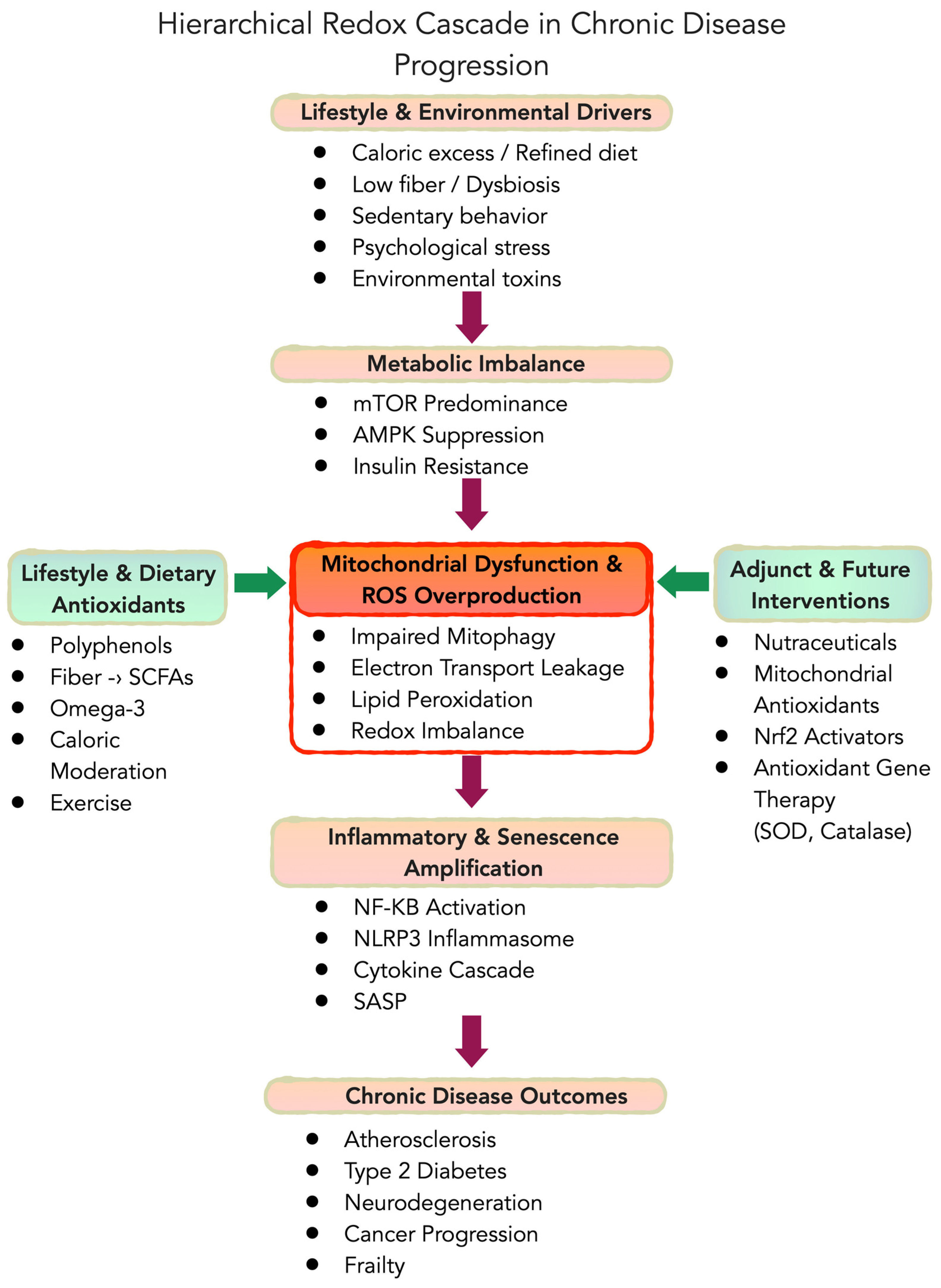
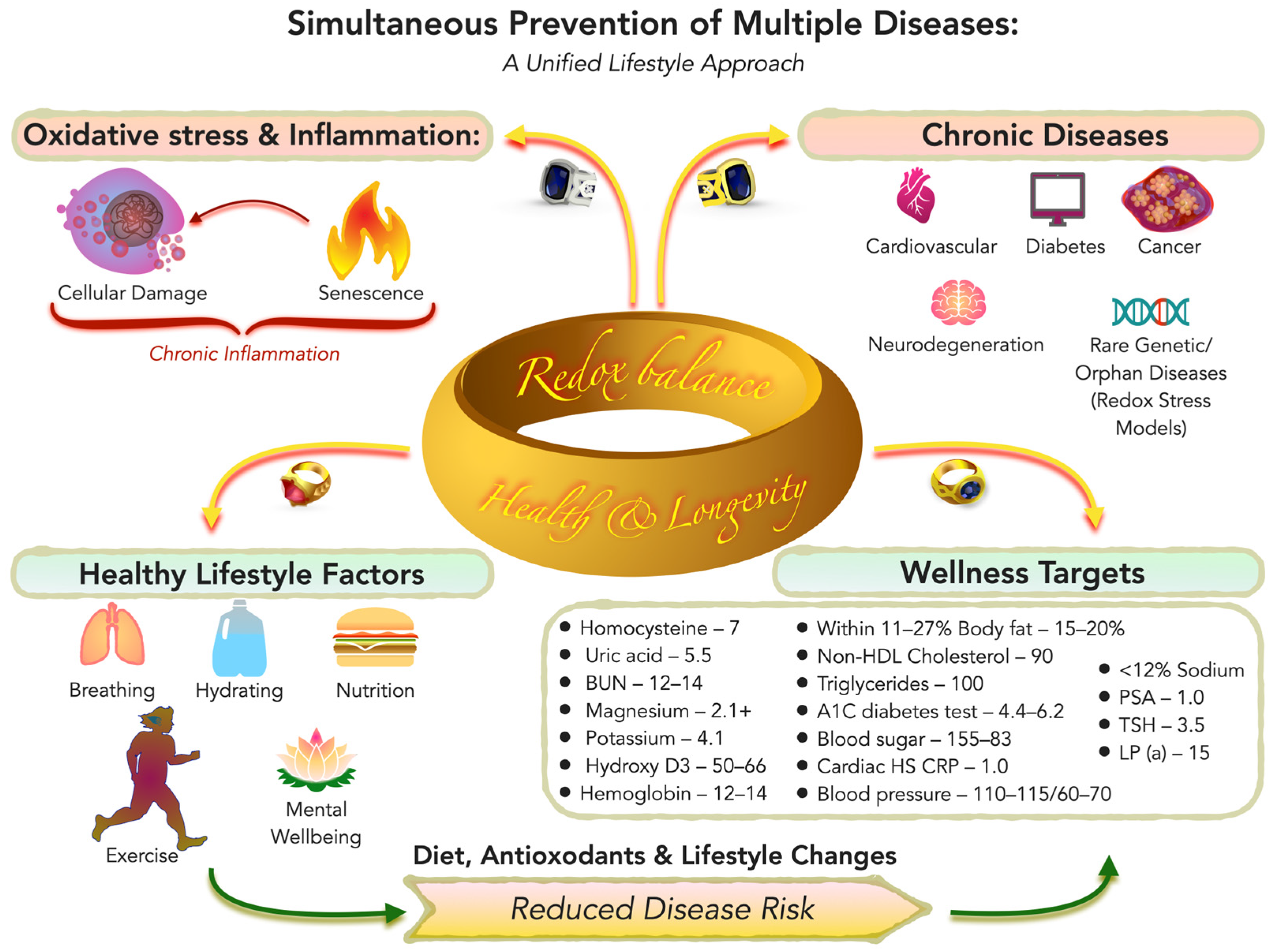
- Adjunct precision tools (selected cases). Targeted nutraceuticals and supplements may refine pathway modulation in high-risk or symptomatic individuals. This layer is personalized—for example, adding omega-3 for someone with high residual inflammation, or extra coQ10 for an older patient on a statin—to address specific imbalances [33,99].
- Clinical exemplar (cardiovascular). Myocardial ischemia/reperfusion injury (as in heart attack treatment) illustrates how ROS and inflammatory cascades drive acute and chronic outcomes, and why phytochemicals and antioxidant-oriented strategies remain relevant in acute care and secondary prevention [20,21,93]. The lessons from cardioprotection studies inform us how we might tackle other acute-on-chronic oxidative injuries.
- Stress test (orphan diseases). Rare disorders reveal the extreme end of redox pathology and can generate mechanistic insights transferable to aging-related chronic disease. Orphan diseases serve as high-intensity models to validate targets (like Nrf2 or SOD) that could be harnessed in more common diseases at a lower intensity [22,105,123].
- Future layer (engineered interventions). Gene-based enhancement of endogenous defenses offers a conceptual extension for severe, tissue-specific oxidative injury. This futuristic ring would encompass gene therapies, RNA-based treatments, or gene editing techniques designed to amplify antioxidant networks in vivo [28,126].
Quantifiable Redox-Associated Wellness Metrics
8. Conclusions and Future Directions
Author Contributions
Funding
Institutional Review Board Statement
Informed Consent Statement
Data Availability Statement
Conflicts of Interest
Abbreviations
| AAV | Adeno-associated virus |
| Akt | Protein kinase B |
| AMPK | AMP-activated protein kinase |
| CNS | Central nervous system |
| coQ10 | Coenzyme Q10 |
| DHA | Docosahexaenoic acid |
| EGCG | Epigallocatechin gallate |
| eNOS | Endothelial nitric oxide synthase |
| EPA | Eicosapentaenoic acid |
| GPX | Glutathione peroxidases |
| HO | Heme oxygenase |
| I/R | Ischemia/reperfusion |
| LDL | Low-density lipoprotein |
| LSD | Lysosomal storage disease |
| MI | Myocardial infarction |
| mTOR | Mechanistic target of rapamycin |
| NAC | N-acetylcysteine |
| NF-κB | Nuclear factor kappa-light-chain-enhancer of activated B cells |
| NPC | Niemann–Pick disease type C |
| NPD | Niemann–Pick disease |
| Nrf2 | Nuclear factor erythroid 2-related factor 2 |
| PGC-1α | Peroxisome proliferator-activated receptor gamma coactivator 1-alpha |
| PI3K | Phosphatidylinositol 3-kinase |
| RII | Reperfusion-induced injury |
| ROS | Reactive oxygen species |
| SASP | Senescence-associated secretory phenotype |
| SCFA | Short-chain fatty acid |
| SOD | Superoxide dismutase |
| TMAO | Trimethylamine N-oxide |
| TSD | Tay–Sachs disease |
References
- The Global Cardiovascular Risk Consortium; Magnussen, C.; Alegre-Diaz, J.; Al-Nasser, L.A.; Amouyel, P.; Aviles-Santa, L.; Bakker, S.J.L.; Ballantyne, C.M.; Bernabe-Ortiz, A.; Bobak, M.; et al. Global Effect of Cardiovascular Risk Factors on Lifetime Estimates. N. Engl. J. Med. 2025, 393, 125–138. [Google Scholar] [CrossRef] [Scilit] [PubMed]
- Virani, S.S.; Alonso, A.; Aparicio, H.J.; Benjamin, E.J.; Bittencourt, M.S.; Callaway, C.W.; Carson, A.P.; Chamberlain, A.M.; Cheng, S.; Delling, F.N.; et al. Heart Disease and Stroke Statistics-2021 Update: A Report From the American Heart Association. Circulation 2021, 143, e254–e743. [Google Scholar] [CrossRef] [Scilit] [PubMed]
- Giri, J.; Olin, J.W. The CREST-2 Registry: First Glimpse at a Carotid Stenting Comeback? J. Am. Coll. Cardiol. 2019, 74, 3080–3082. [Google Scholar] [CrossRef] [Scilit]
- Willett, W.; Rockstrom, J.; Loken, B.; Springmann, M.; Lang, T.; Vermeulen, S.; Garnett, T.; Tilman, D.; DeClerck, F.; Wood, A.; et al. Food in the Anthropocene: The EAT-Lancet Commission on healthy diets from sustainable food systems. Lancet 2019, 393, 447–492. [Google Scholar] [CrossRef] [Scilit]
- Hull, S.C.; Mszar, R.; Ostfeld, R.J.; Ferrucci, L.M.; Mucci, L.A.; Giovannucci, E.; Loeb, S. Diet and Prevention of Cardiovascular Disease and Cancer: JACC: CardioOncology State-of-the-Art Review. JACC CardioOnco. 2025, 7, 649–667. [Google Scholar] [CrossRef] [Scilit]
- Robert Silverstein, H. National Cholesterol Education Program Adult Treatment Panel-III guidelines and the abolition of symptomatic coronary artery disease. Am. J. Cardiol. 2003, 91, 654. [Google Scholar] [CrossRef] [Scilit]
- Robert Silverstein, H. Re: “Call to action on use and reimbursement for home blood pressure monitoring: Executive summary”. J. Clin. Hypertens. 2008, 10, 885; author reply 885–886. [Google Scholar] [CrossRef] [Scilit]
- Cholesterol Treatment Trialists, C.; Baigent, C.; Blackwell, L.; Emberson, J.; Holland, L.E.; Reith, C.; Bhala, N.; Peto, R.; Barnes, E.H.; Keech, A.; et al. Efficacy and safety of more intensive lowering of LDL cholesterol: A meta-analysis of data from 170,000 participants in 26 randomised trials. Lancet 2010, 376, 1670–1681. [Google Scholar] [CrossRef] [Scilit]
- Ference, B.A.; Ginsberg, H.N.; Graham, I.; Ray, K.K.; Packard, C.J.; Bruckert, E.; Hegele, R.A.; Krauss, R.M.; Raal, F.J.; Schunkert, H.; et al. Low-density lipoproteins cause atherosclerotic cardiovascular disease. 1. Evidence from genetic, epidemiologic, and clinical studies. A consensus statement from the European Atherosclerosis Society Consensus Panel. Eur. Heart J. 2017, 38, 2459–2472. [Google Scholar] [CrossRef] [Scilit]
- Ornish, D.; Brown, S.E.; Scherwitz, L.W.; Billings, J.H.; Armstrong, W.T.; Ports, T.A.; McLanahan, S.M.; Kirkeeide, R.L.; Brand, R.J.; Gould, K.L. Can lifestyle changes reverse coronary heart disease? The Lifestyle Heart Trial. Lancet 1990, 336, 129–133. [Google Scholar] [CrossRef] [Scilit] [PubMed]
- Pickering, T.G.; Miller, N.H.; Ogedegbe, G.; Krakoff, L.R.; Artinian, N.T.; Goff, D.; American Heart Association; American Society of Hypertension; Preventive Cardiovascular Nurses Association. Call to action on use and reimbursement for home blood pressure monitoring: Executive summary: A joint scientific statement from the American Heart Association, American Society Of Hypertension, and Preventive Cardiovascular Nurses Association. Hypertension 2008, 52, 10–29. [Google Scholar] [CrossRef] [Scilit]
- Ornish, D.; Scherwitz, L.W.; Billings, J.H.; Brown, S.E.; Gould, K.L.; Merritt, T.A.; Sparler, S.; Armstrong, W.T.; Ports, T.A.; Kirkeeide, R.L.; et al. Intensive lifestyle changes for reversal of coronary heart disease. JAMA 1998, 280, 2001–2007. [Google Scholar] [CrossRef] [Scilit]
- Temba, G.S.; Pecht, T.; Kullaya, V.I.; Vadaq, N.; Mosha, M.V.; Ulas, T.; Kanungo, S.; van Emst, L.; Bonaguro, L.; Schulte-Schrepping, J.; et al. Immune and metabolic effects of African heritage diets versus Western diets in men: A randomized controlled trial. Nat. Med. 2025, 31, 1698–1711. [Google Scholar] [CrossRef] [Scilit]
- Chronic Disease. Fast Facts: Health and Economic Costs of Chronic Conditions. Available online: https://www.cdc.gov/chronic-disease/data-research/facts-stats/index.html (accessed on 8 August 2025).
- Haines, D.D.; Juhasz, B.; Tosaki, A. Management of multicellular senescence and oxidative stress. J. Cell Mol. Med. 2013, 17, 936–957. [Google Scholar] [CrossRef] [Scilit] [PubMed]
- Franceschi, C.; Garagnani, P.; Vitale, G.; Capri, M.; Salvioli, S. Inflammaging and ‘Garb-aging’. Trends Endocrinol. Metab. 2017, 28, 199–212. [Google Scholar] [CrossRef] [Scilit] [PubMed]
- Saxton, R.A.; Sabatini, D.M. mTOR Signaling in Growth, Metabolism, and Disease. Cell 2017, 168, 960–976. [Google Scholar] [CrossRef] [Scilit]
- Hardie, D.G.; Ross, F.A.; Hawley, S.A. AMPK: A nutrient and energy sensor that maintains energy homeostasis. Nat. Rev. Mol. Cell Biol. 2012, 13, 251–262. [Google Scholar] [CrossRef] [Scilit] [PubMed]
- Tang, W.H.W.; Li, D.Y.; Hazen, S.L. Dietary metabolism, the gut microbiome, and heart failure. Nat. Rev. Cardiol. 2019, 16, 137–154. [Google Scholar] [CrossRef] [Scilit]
- Connelly, C.M.; Vogel, W.M.; Wiegner, A.W.; Osmers, E.L.; Bing, O.H.; Kloner, R.A.; Dunn-Lanchantin, D.M.; Franzblau, C.; Apstein, C.S. Effects of reperfusion after coronary artery occlusion on post-infarction scar tissue. Circ. Res. 1985, 57, 562–577. [Google Scholar] [CrossRef] [Scilit]
- Hung, L.M.; Su, M.J.; Chen, J.K. Resveratrol protects myocardial ischemia-reperfusion injury through both NO-dependent and NO-independent mechanisms. Free Radic. Biol. Med. 2004, 36, 774–781. [Google Scholar] [CrossRef] [Scilit]
- Lee, D.; Hong, J.H. Niemann-Pick Disease Type C (NPDC) by Mutation of NPC1 and NPC2: Aberrant Lysosomal Cholesterol Trafficking and Oxidative Stress. Antioxidants 2023, 12, 2021. [Google Scholar] [CrossRef] [Scilit] [PubMed]
- Shaimardanova, A.A.; Chulpanova, D.S.; Solovyeva, V.V.; Garanina, E.E.; Salafutdinov, I.I.; Laikov, A.V.; Kursenko, V.V.; Chakrabarti, L.; Zakharova, E.Y.; Bukina, T.M.; et al. Serum Cytokine Profile, Beta-Hexosaminidase A Enzymatic Activity and GM2 Ganglioside Levels in the Plasma of a Tay-Sachs Disease Patient after Cord Blood Cell Transplantation and Curcumin Administration: A Case Report. Life 2021, 11, 1007. [Google Scholar] [CrossRef] [Scilit] [PubMed]
- Solovyeva, V.V.; Shaimardanova, A.A.; Chulpanova, D.S.; Kitaeva, K.V.; Chakrabarti, L.; Rizvanov, A.A. New Approaches to Tay-Sachs Disease Therapy. Front. Physiol. 2018, 9, 1663. [Google Scholar] [CrossRef] [Scilit]
- Garrido-Maraver, J.; Cordero, M.D.; Monino, I.D.; Pereira-Arenas, S.; Lechuga-Vieco, A.V.; Cotan, D.; De la Mata, M.; Oropesa-Avila, M.; De Miguel, M.; Bautista Lorite, J.; et al. Screening of effective pharmacological treatments for MELAS syndrome using yeasts, fibroblasts and cybrid models of the disease. Br. J. Pharmacol. 2012, 167, 1311–1328. [Google Scholar] [CrossRef] [Scilit]
- Sivakumar, A.; Cherqui, S. Advantages and Limitations of Gene Therapy and Gene Editing for Friedreich’s Ataxia. Front. Genome Ed. 2022, 4, 903139. [Google Scholar] [CrossRef] [Scilit]
- Li, Q.; Bolli, R.; Qiu, Y.; Tang, X.L.; Guo, Y.; French, B.A. Gene therapy with extracellular superoxide dismutase protects conscious rabbits against myocardial infarction. Circulation 2001, 103, 1893–1898. [Google Scholar] [CrossRef] [Scilit]
- Levonen, A.L.; Vahakangas, E.; Koponen, J.K.; Yla-Herttuala, S. Antioxidant gene therapy for cardiovascular disease: Current status and future perspectives. Circulation 2008, 117, 2142–2150. [Google Scholar] [CrossRef] [Scilit]
- Sies, H. Oxidative stress: A concept in redox biology and medicine. Redox Biol. 2015, 4, 180–183. [Google Scholar] [CrossRef] [Scilit]
- Sen, C.K.; Packer, L. Antioxidant and redox regulation of gene transcription. FASEB J. 1996, 10, 709–720. [Google Scholar] [CrossRef] [Scilit]
- Forman, H.J.; Zhang, H. Targeting oxidative stress in disease: Promise and limitations of antioxidant therapy. Nat. Rev. Drug Discov. 2021, 20, 689–709. [Google Scholar] [CrossRef] [Scilit] [PubMed]
- Tosti, V.; Bertozzi, B.; Fontana, L. Health Benefits of the Mediterranean Diet: Metabolic and Molecular Mechanisms. J. Gerontol. A Biol. Sci. Med. Sci. 2018, 73, 318–326. [Google Scholar] [CrossRef] [Scilit]
- Joshi, S.; McMacken, M.; Kalantar-Zadeh, K. Plant-Based Diets for Kidney Disease: A Guide for Clinicians. Am. J. Kidney Dis. 2021, 77, 287–296. [Google Scholar] [CrossRef] [Scilit]
- Packer, M. The Adipokine Hypothesis of Heart Failure with a Preserved Ejection Fraction: A Novel Framework to Explain Pathogenesis and Guide Treatment. J. Am. Coll. Cardiol. 2025, 86, 1269–1373. [Google Scholar] [CrossRef] [Scilit] [PubMed]
- Coppe, J.P.; Desprez, P.Y.; Krtolica, A.; Campisi, J. The senescence-associated secretory phenotype: The dark side of tumor suppression. Annu. Rev. Pathol. 2010, 5, 99–118. [Google Scholar] [CrossRef] [Scilit]
- Gorodilova, A.V.; Kharisova, C.B.; Osinnikova, M.N.; Kitaeva, K.V.; Filin, I.Y.; Mayasin, Y.P.; Solovyeva, V.V.; Rizvanov, A.A. The Well-Forgotten Old: Platelet-Rich Plasma in Modern Anti-Aging Therapy. Cells 2024, 13, 1755. [Google Scholar] [CrossRef] [Scilit]
- Fernandez, E.; Wargo, J.A.; Helmink, B.A. The Microbiome and Cancer: A Translational Science Review. JAMA 2025, 333, 2188–2196. [Google Scholar] [CrossRef] [Scilit] [PubMed]
- Gibson, G.R.; Hutkins, R.; Sanders, M.E.; Prescott, S.L.; Reimer, R.A.; Salminen, S.J.; Scott, K.; Stanton, C.; Swanson, K.S.; Cani, P.D.; et al. Expert consensus document: The International Scientific Association for Probiotics and Prebiotics (ISAPP) consensus statement on the definition and scope of prebiotics. Nat. Rev. Gastroenterol. Hepatol. 2017, 14, 491–502. [Google Scholar] [CrossRef] [Scilit]
- Wolfe, B.E.; Button, J.E.; Santarelli, M.; Dutton, R.J. Cheese rind communities provide tractable systems for in situ and in vitro studies of microbial diversity. Cell 2014, 158, 422–433. [Google Scholar] [CrossRef] [Scilit]
- Ryu, D.; Mouchiroud, L.; Andreux, P.A.; Katsyuba, E.; Moullan, N.; Nicolet-Dit-Felix, A.A.; Williams, E.G.; Jha, P.; Lo Sasso, G.; Huzard, D.; et al. Urolithin A induces mitophagy and prolongs lifespan in C. elegans and increases muscle function in rodents. Nat. Med. 2016, 22, 879–888. [Google Scholar] [CrossRef] [Scilit]
- Yi, S.Y.; Steffen, L.M.; Guan, W.; Duprez, D.; Lakshminarayan, K.; Jacobs, D.R., Jr. Dietary carbohydrate quality, fibre-rich food intake, and left ventricular structure and function: The CARDIA study. Eur. Heart J. 2025, 46, 4329–4337. [Google Scholar] [CrossRef] [Scilit]
- O’Keefe, S.J.; Li, J.V.; Lahti, L.; Ou, J.; Carbonero, F.; Mohammed, K.; Posma, J.M.; Kinross, J.; Wahl, E.; Ruder, E.; et al. Fat, fibre and cancer risk in African Americans and rural Africans. Nat. Commun. 2015, 6, 6342. [Google Scholar] [CrossRef] [Scilit]
- Obeme-Nmom, J.I.; Abioye, R.O.; Reyes Flores, S.S.; Udenigwe, C.C. Regulation of redox enzymes by nutraceuticals: A review of the roles of antioxidant polyphenols and peptides. Food Funct. 2024, 15, 10956–10980. [Google Scholar] [CrossRef] [Scilit]
- Heiss, C.; Schroeter, H.; Balzer, J.; Kleinbongard, P.; Matern, S.; Sies, H.; Kelm, M. Endothelial function, nitric oxide, and cocoa flavanols. J. Cardiovasc. Pharmacol. 2006, 47, S128–S135; discussion S172–S126. [Google Scholar] [CrossRef] [Scilit]
- Jurja, S.; Negreanu-Pirjol, T.; Mehedinti, M.C.; Hincu, M.A.; Negreanu-Pirjol, B.S.; Roncea, F.N.; Laurentiu Tatu, A. Blueberries and Honeysuckle Berries: Anthocyanin-Rich Polyphenols for Vascular Endothelial Health and Cardiovascular Disease Prevention. Nutrients 2025, 17, 3888. [Google Scholar] [CrossRef] [Scilit]
- Jones, T.; Dunn, E.L.; Macdonald, J.H.; Kubis, H.P.; McMahon, N.; Sandoo, A. The Effects of Beetroot Juice on Blood Pressure, Microvascular Function and Large-Vessel Endothelial Function: A Randomized, Double-Blind, Placebo-Controlled Pilot Study in Healthy Older Adults. Nutrients 2019, 11, 1792. [Google Scholar] [CrossRef] [Scilit]
- Darvish, S.; Ludwig, K.; Ikoba, A.; Berryman-Maciel, M.; Coppock, M.; Murray, K.; Chonchol, M.; Seals, D.; Rossman, M. Nitrate-rich beetroot juice supplementation in midlife and older adults with renal dysfunction increases vascular endothelial function and changes the circulating milieu to improve endothelial cell nitric oxide production and oxidative stress. Physiology 2024, 39, 389. [Google Scholar] [CrossRef] [Scilit]
- Khera, A.V.; Emdin, C.A.; Drake, I.; Natarajan, P.; Bick, A.G.; Cook, N.R.; Chasman, D.I.; Baber, U.; Mehran, R.; Rader, D.J.; et al. Genetic Risk, Adherence to a Healthy Lifestyle, and Coronary Disease. N. Engl. J. Med. 2016, 375, 2349–2358. [Google Scholar] [CrossRef] [Scilit] [PubMed]
- Rozich, E.; Ozkurede, U.; Pakkiriswami, S.; Gemilere, R.; Azarin, S.M.; Liu, J.C. Mitochondrial oxidative stress, calcium and dynamics in cardiac ischaemia-reperfusion injury. J. Physiol. 2025, early view. [Google Scholar] [CrossRef] [Scilit]
- Oerlemans, M.I.; Koudstaal, S.; Chamuleau, S.A.; de Kleijn, D.P.; Doevendans, P.A.; Sluijter, J.P. Targeting cell death in the reperfused heart: Pharmacological approaches for cardioprotection. Int. J. Cardiol. 2013, 165, 410–422. [Google Scholar] [CrossRef] [Scilit]
- Zweier, J.L.; Flaherty, J.T.; Weisfeldt, M.L. Direct measurement of free radical generation following reperfusion of ischemic myocardium. Proc. Natl. Acad. Sci. USA 1987, 84, 1404–1407. [Google Scholar] [CrossRef] [Scilit] [PubMed]
- Walker, M.J.; Curtis, M.J.; Hearse, D.J.; Campbell, R.W.; Janse, M.J.; Yellon, D.M.; Cobbe, S.M.; Coker, S.J.; Harness, J.B.; Harron, D.W.; et al. The Lambeth Conventions: Guidelines for the study of arrhythmias in ischaemia infarction, and reperfusion. Cardiovasc. Res. 1988, 22, 447–455. [Google Scholar] [CrossRef] [Scilit]
- Hearse, D.J.; Tosaki, A. Free radicals and calcium: Simultaneous interacting triggers as determinants of vulnerability to reperfusion-induced arrhythmias in the rat heart. J. Mol. Cell Cardiol. 1988, 20, 213–223. [Google Scholar] [CrossRef] [Scilit]
- Li, G.; Chen, Y.; Saari, J.T.; Kang, Y.J. Catalase-overexpressing transgenic mouse heart is resistant to ischemia-reperfusion injury. Am. J. Physiol. 1997, 273, H1090–H1095. [Google Scholar] [CrossRef] [Scilit]
- Shen, S.; He, F.; Cheng, C.; Xu, B.; Sheng, J. Uric acid aggravates myocardial ischemia-reperfusion injury via ROS/NLRP3 pyroptosis pathway. Biomed. Pharmacother. 2021, 133, 110990. [Google Scholar] [CrossRef] [Scilit]
- Firoozabadi, M.D.; Nooralishahi, B.; Rezaei-Tazangi, F. Oxycodone: A Pain-Relieving Agent with Cardioprotective Properties Against Myocardial Ischemia-Reperfusion Injury. Cardiovasc. Ther. 2026, 2026, 6182342. [Google Scholar] [CrossRef] [Scilit] [PubMed]
- Schettini, A.; Lippman, R.H.; Walsh, E.K. Attenuation of decompressive hypoperfusion and cerebral edema by superoxide dismutase. J. Neurosurg. 1989, 71, 578–587. [Google Scholar] [CrossRef] [Scilit]
- Knuckey, N.W.; Palm, D.; Primiano, M.; Epstein, M.H.; Johanson, C.E. N-acetylcysteine enhances hippocampal neuronal survival after transient forebrain ischemia in rats. Stroke 1995, 26, 305–310; discussion 311. [Google Scholar] [CrossRef] [Scilit] [PubMed]
- Aoki, T.; Sumii, T.; Mori, T.; Wang, X.; Lo, E.H. Blood-brain barrier disruption and matrix metalloproteinase-9 expression during reperfusion injury: Mechanical versus embolic focal ischemia in spontaneously hypertensive rats. Stroke 2002, 33, 2711–2717. [Google Scholar] [CrossRef] [Scilit] [PubMed]
- Yang, J.; Li, L.; Chen, X.; Cai, P.; Chen, M.; Cheng, J.; Ma, L.; Zhao, X.; Yang, P. Research progress of isoflurane in alleviating cerebral ischemia/reperfusion injury. Eur. J. Pharmacol. 2026, 1013, 178497. [Google Scholar] [CrossRef] [Scilit]
- Hoshino, T.; Maley, W.R.; Bulkley, G.B.; Williams, G.M. Ablation of free radical-mediated reperfusion injury for the salvage of kidneys taken from non-heartbeating donors. A quantitative evaluation of the proportion of injury caused by reperfusion following periods of warm, cold, and combined warm and cold ischemia. Transplantation 1988, 45, 284–289. [Google Scholar] [CrossRef] [Scilit]
- Zhou, W.; Farrar, C.A.; Abe, K.; Pratt, J.R.; Marsh, J.E.; Wang, Y.; Stahl, G.L.; Sacks, S.H. Predominant role for C5b-9 in renal ischemia/reperfusion injury. J. Clin. Investig. 2000, 105, 1363–1371. [Google Scholar] [CrossRef] [Scilit] [PubMed]
- Monir, N.; Saber, M.M.; Awad, A.S.; Elsherbiny, M.E.; Zaki, H.F. Repression of inflammatory pathways with Boswellia for alleviation of liver injury after renal ischemia reperfusion. Life Sci. 2022, 306, 120799. [Google Scholar] [CrossRef] [Scilit] [PubMed]
- Wang, K.; Wang, H.; Zhang, Y.; Zhang, Z.; Wang, L.; Yang, J.; Man, J.; Yang, L. Reprogramming mitochondrial homeostasis in renal ischemia-reperfusion injury. Cell Signal 2026, 139, 112294. [Google Scholar] [CrossRef] [Scilit]
- Kuratani, T.; Matsuda, H.; Sawa, Y.; Kaneko, M.; Nakano, S.; Kawashima, Y. Experimental study in a rabbit model of ischemia-reperfusion lung injury during cardiopulmonary bypass. J. Thorac. Cardiovasc. Surg. 1992, 103, 564–568. [Google Scholar] [CrossRef] [Scilit]
- Sommer, S.P.; Sommer, S.; Sinha, B.; Wiedemann, J.; Otto, C.; Aleksic, I.; Schimmer, C.; Leyh, R.G. Ischemia-reperfusion injury-induced pulmonary mitochondrial damage. J. Heart Lung Transplant. 2011, 30, 811–818. [Google Scholar] [CrossRef] [Scilit]
- Dai, S.; Wan, X.; Xia, L.; Xu, L.; Xie, C.; Wang, G.; Tang, J. HIF1alpha Attenuated the Lung Ischemia-Reperfusion Injury by Activating the miR-485/Notch1 Signalling. J. Cell Mol. Med. 2026, 30, e70965. [Google Scholar] [CrossRef] [Scilit]
- Jaeschke, H.; Farhood, A.; Smith, C.W. Neutrophils contribute to ischemia/reperfusion injury in rat liver in vivo. FASEB J. 1990, 4, 3355–3359. [Google Scholar] [CrossRef] [Scilit]
- Hsu, C.M.; Wang, J.S.; Liu, C.H.; Chen, L.W. Kupffer cells protect liver from ischemia-reperfusion injury by an inducible nitric oxide synthase-dependent mechanism. Shock 2002, 17, 280–285. [Google Scholar] [CrossRef] [Scilit]
- Zhang, X.J.; Cheng, X.; Yan, Z.Z.; Fang, J.; Wang, X.; Wang, W.; Liu, Z.Y.; Shen, L.J.; Zhang, P.; Wang, P.X.; et al. An ALOX12-12-HETE-GPR31 signaling axis is a key mediator of hepatic ischemia-reperfusion injury. Nat. Med. 2018, 24, 73–83. [Google Scholar] [CrossRef] [Scilit]
- Yang, Z.; Hu, Y.; Yang, C.; Li, Y.; Zhong, X.; Wu, Z.; Zuo, Y.; Gan, S.; Chen, L.; Zeng, Z.; et al. SMYD2-mediated methylation of STAT1 protects against hepatic ischaemia/reperfusion injury by blocking JAK-STAT1 signalling pathways. Gut 2026, 75, 326–340. [Google Scholar] [CrossRef] [Scilit]
- Horton, J.W.; White, D.J. Cardiac contractile injury after intestinal ischemia-reperfusion. Am. J. Physiol. 1991, 261, H1164–H1170. [Google Scholar] [CrossRef] [Scilit] [PubMed]
- Hoehn, R.S.; Seitz, A.P.; Jernigan, P.L.; Gulbins, E.; Edwards, M.J. Ischemia/Reperfusion Injury Alters Sphingolipid Metabolism in the Gut. Cell Physiol. Biochem. 2016, 39, 1262–1270. [Google Scholar] [CrossRef] [Scilit] [PubMed]
- Pi, Y.; Wang, Y.; Guo, Q.; Zheng, W.; Zhou, H.; Deng, L.; Xu, N.; Song, H. Oleanolic acid alleviates intestinal injury after hepatic ischemia-reperfusion under steatosis via PPARG-dependent M2 macrophage polarization. Int. Immunopharmacol. 2026, 171, 116162. [Google Scholar] [CrossRef] [Scilit] [PubMed]
- Kopacz, M.; Karwatowska-Prokopczuk, E.; Beresewicz, A. Reperfusion arrhythmias and purine wash-out in isolated rat and rabbit heart. Effect of allopurinol, dimethylthiourea and calcium reduction. J. Mol. Cell Cardiol. 1993, 25, 859–874. [Google Scholar] [CrossRef] [Scilit]
- Mendoza, A.; Patel, P.; Robichaux, D.; Ramirez, D.; Karch, J. Inhibition of the mPTP and Lipid Peroxidation Is Additively Protective Against I/R Injury. Circ. Res. 2024, 134, 1292–1305. [Google Scholar] [CrossRef] [Scilit]
- Jennings, R.B.; Reimer, K.A.; Steenbergen, C. Myocardial ischemia revisited. The osmolar load, membrane damage, and reperfusion. J. Mol. Cell Cardiol. 1986, 18, 769–780. [Google Scholar] [CrossRef] [Scilit]
- Curtis, M.J.; Hearse, D.J. Reperfusion-induced arrhythmias are critically dependent upon occluded zone size: Relevance to the mechanism of arrhythmogenesis. J. Mol. Cell Cardiol. 1989, 21, 625–637. [Google Scholar] [CrossRef] [Scilit]
- Yamada, M.; Hearse, D.J.; Curtis, M.J. Reperfusion and readmission of oxygen. Pathophysiological relevance of oxygen-derived free radicals to arrhythmogenesis. Circ. Res. 1990, 67, 1211–1224. [Google Scholar] [CrossRef] [Scilit]
- Dong, Q.; Zhu, Y.; Zhang, X.; Li, L.; Yang, Y.; Liu, C.; Wen, J. Phytochemicals Targeting Mitophagy to Treat Heart Diseases: Retrospective Insights and Prospective Directions. Phytother. Res. 2025, 39, 1592–1614. [Google Scholar] [CrossRef] [Scilit]
- Wang, X.; Chen, T.; Chen, S.; Zhang, J.; Cai, L.; Liu, C.; Zhang, Y.; Wu, X.; Li, N.; Ma, Z.; et al. STING aggravates ferroptosis-dependent myocardial ischemia-reperfusion injury by targeting GPX4 for autophagic degradation. Signal Transduct. Target. Ther. 2025, 10, 136. [Google Scholar] [CrossRef] [Scilit]
- Gong, Y.; Yang, H.; Chen, T.; Zhang, J.; Kong, B.; Shuai, W.; Huang, H. USP38 exacerbates myocardial injury and malignant ventricular arrhythmias after ischemia/reperfusion by promoting ferroptosis through the P53/SLC7A11 pathway. Int. Immunopharmacol. 2025, 145, 113727. [Google Scholar] [CrossRef] [Scilit]
- Wen, J.; Li, L.; Yang, Y.; Ou, D.; Yang, J.; Xie, J.; Du, W.; Tong, Y. Phytochemicals targeting ferroptosis in cardiovascular diseases: Recent advances and therapeutic perspectives. Phytother. Res. 2024, 38, 4386–4405. [Google Scholar] [CrossRef] [Scilit]
- Huang, F.; Yang, R.; Xiao, Z.; Xie, Y.; Lin, X.; Zhu, P.; Zhou, P.; Lu, J.; Zheng, S. Targeting Ferroptosis to Treat Cardiovascular Diseases: A New Continent to Be Explored. Front. Cell Dev. Biol. 2021, 9, 737971. [Google Scholar] [CrossRef] [Scilit]
- Chen, Y.F.; Chen, W.Y.; Chung, C.H.; Kuo, C.L.; Lee, A.S. Cardiac protection of Bauhinia championii against reperfusion injury. Environ. Toxicol. 2020, 35, 774–782. [Google Scholar] [CrossRef] [Scilit]
- Szobi, A.; Farkasova-Ledvenyiova, V.; Lichy, M.; Murarikova, M.; Carnicka, S.; Ravingerova, T.; Adameova, A. Cardioprotection of ischaemic preconditioning is associated with inhibition of translocation of MLKL within the plasma membrane. J. Cell Mol. Med. 2018, 22, 4183–4196. [Google Scholar] [CrossRef] [Scilit] [PubMed]
- Li, T.; Wang, N.; Yi, D.; Xiao, Y.; Li, X.; Shao, B.; Wu, Z.; Bai, J.; Shi, X.; Wu, C.; et al. ROS-mediated ferroptosis and pyroptosis in cardiomyocytes: An update. Life Sci. 2025, 370, 123565. [Google Scholar] [CrossRef] [Scilit] [PubMed]
- Maslov, L.N.; Popov, S.V.; Naryzhnaya, N.V.; Mukhomedzyanov, A.V.; Kurbatov, B.K.; Derkachev, I.A.; Boshchenko, A.A.; Prasad, N.R.; Ma, H.; Zhang, Y.; et al. K(ATP) channels are regulators of programmed cell death and targets for the creation of novel drugs against ischemia/reperfusion cardiac injury. Fundam. Clin. Pharmacol. 2023, 37, 1020–1049. [Google Scholar] [CrossRef] [Scilit]
- Ji, N.; Qi, Z.; Wang, Y.; Yang, X.; Yan, Z.; Li, M.; Ge, Q.; Zhang, J. Pyroptosis: A New Regulating Mechanism in Cardiovascular Disease. J. Inflamm. Res. 2021, 14, 2647–2666. [Google Scholar] [CrossRef] [Scilit] [PubMed]
- Koshinuma, S.; Miyamae, M.; Kaneda, K.; Kotani, J.; Figueredo, V.M. Combination of necroptosis and apoptosis inhibition enhances cardioprotection against myocardial ischemia-reperfusion injury. J. Anesth. 2014, 28, 235–241. [Google Scholar] [CrossRef] [Scilit]
- Xia, N.; Forstermann, U.; Li, H. Resveratrol and endothelial nitric oxide. Molecules 2014, 19, 16102–16121. [Google Scholar] [CrossRef] [Scilit]
- Wang, N.P.; Wang, Z.F.; Tootle, S.; Philip, T.; Zhao, Z.Q. Curcumin promotes cardiac repair and ameliorates cardiac dysfunction following myocardial infarction. Br. J. Pharmacol. 2012, 167, 1550–1562. [Google Scholar] [CrossRef] [Scilit]
- Zeng, C.; Zhong, P.; Zhao, Y.; Kanchana, K.; Zhang, Y.; Khan, Z.A.; Chakrabarti, S.; Wu, L.; Wang, J.; Liang, G. Curcumin protects hearts from FFA-induced injury by activating Nrf2 and inactivating NF-kappaB both in vitro and in vivo. J. Mol. Cell Cardiol. 2015, 79, 1–12. [Google Scholar] [CrossRef] [Scilit]
- Liu, H.; Zhang, L.; Lu, S. Evaluation of antioxidant and immunity activities of quercetin in isoproterenol-treated rats. Molecules 2012, 17, 4281–4291. [Google Scholar] [CrossRef] [Scilit]
- Brookes, P.S.; Digerness, S.B.; Parks, D.A.; Darley-Usmar, V. Mitochondrial function in response to cardiac ischemia-reperfusion after oral treatment with quercetin. Free Radic. Biol. Med. 2002, 32, 1220–1228. [Google Scholar] [CrossRef] [Scilit] [PubMed]
- Akhlaghi, M.; Bandy, B. Dietary green tea extract increases phase 2 enzyme activities in protecting against myocardial ischemia-reperfusion. Nutr. Res. 2010, 30, 32–39. [Google Scholar] [CrossRef] [Scilit]
- Najjar, R.S.; Schwartz, A.M.; Wong, B.J.; Mehta, P.K.; Feresin, R.G. Berries and Their Polyphenols as a Potential Therapy for Coronary Microvascular Dysfunction: A Mini-Review. Int. J. Mol. Sci. 2021, 22, 3373. [Google Scholar] [CrossRef] [Scilit]
- Ablon, G. Nutraceuticals. Dermatol. Clin. 2021, 39, 417–427. [Google Scholar] [CrossRef] [Scilit]
- Mortensen, S.A.; Rosenfeldt, F.; Kumar, A.; Dolliner, P.; Filipiak, K.J.; Pella, D.; Alehagen, U.; Steurer, G.; Littarru, G.P.; Investigators, Q.S.S. The effect of coenzyme Q10 on morbidity and mortality in chronic heart failure: Results from Q-SYMBIO: A randomized double-blind trial. JACC Heart Fail. 2014, 2, 641–649. [Google Scholar] [CrossRef] [Scilit] [PubMed]
- Qi, B.; Zheng, Y.; Gao, W.; Qi, Z.; Gong, Y.; Liu, Y.; Wang, Y.; Cheng, X.; Ning, M.; Lang, Y.; et al. Alpha-lipoic acid impedes myocardial ischemia-reperfusion injury, myocardial apoptosis, and oxidative stress by regulating HMGB1 expression. Eur. J. Pharmacol. 2022, 933, 175295. [Google Scholar] [CrossRef] [Scilit] [PubMed]
- Deng, C.; Sun, Z.; Tong, G.; Yi, W.; Ma, L.; Zhao, B.; Cheng, L.; Zhang, J.; Cao, F.; Yi, D. α-Lipoic acid reduces infarct size and preserves cardiac function in rat myocardial ischemia/reperfusion injury through activation of PI3K/Akt/Nrf2 pathway. PLoS ONE 2013, 8, e58371. [Google Scholar] [CrossRef] [Scilit]
- Bhatt, D.L.; Steg, P.G.; Miller, M.; Brinton, E.A.; Jacobson, T.A.; Ketchum, S.B.; Doyle, R.T., Jr.; Juliano, R.A.; Jiao, L.; Granowitz, C.; et al. Cardiovascular Risk Reduction with Icosapent Ethyl for Hypertriglyceridemia. N. Engl. J. Med. 2019, 380, 11–22. [Google Scholar] [CrossRef] [Scilit]
- Rayman, M.P. Selenium and human health. Lancet 2012, 379, 1256–1268. [Google Scholar] [CrossRef] [Scilit]
- Mendelev, N.; Mehta, S.L.; Idris, H.; Kumari, S.; Li, P.A. Selenite stimulates mitochondrial biogenesis signaling and enhances mitochondrial functional performance in murine hippocampal neuronal cells. PLoS ONE 2012, 7, e47910. [Google Scholar] [CrossRef] [Scilit]
- Polyak, E.; Ostrovsky, J.; Peng, M.; Dingley, S.D.; Tsukikawa, M.; Kwon, Y.J.; McCormack, S.E.; Bennett, M.; Xiao, R.; Seiler, C.; et al. N-acetylcysteine and vitamin E rescue animal longevity and cellular oxidative stress in pre-clinical models of mitochondrial complex I disease. Mol. Genet. Metab. 2018, 123, 449–462. [Google Scholar] [CrossRef] [Scilit]
- Zhu, H.L.; Stewart, A.S.; Taylor, M.D.; Vijayasarathy, C.; Gardner, T.J.; Sweeney, H.L. Blocking free radical production via adenoviral gene transfer decreases cardiac ischemia-reperfusion injury. Mol. Ther. 2000, 2, 470–475. [Google Scholar] [CrossRef] [Scilit] [PubMed]
- Tan, H.H.; Liang, Y.C.; Shao, Y.C.; Chen, C.M.; Chou, W. Impact of selenium status and supplementation on outcomes in critically ill patients. Sci. Rep. 2025, 15, 35478. [Google Scholar] [CrossRef] [Scilit]
- Bano, I.; Hassan, M.F.; Kieliszek, M. A Comprehensive Review of Selenium as a Key Regulator in Thyroid Health. Biol. Trace Elem. Res. 2025, 203, 6466–6480. [Google Scholar] [CrossRef] [Scilit]
- Basirli, H.; Ates, N.; Seyrantepe, V. Imbalance in redox homeostasis is associated with neurodegeneration in the murine model of Tay-Sachs disease. Mol. Biol. Rep. 2025, 52, 282. [Google Scholar] [CrossRef] [Scilit]
- Bar, S.; Prasad, M.; Datta, R. Neuromuscular degeneration and locomotor deficit in a Drosophila model of mucopolysaccharidosis VII is attenuated by treatment with resveratrol. Dis. Model. Mech. 2018, 11, dmm036954. [Google Scholar] [CrossRef] [Scilit]
- Lee, Y.J.; Kim, S.J.; Heo, T.H. Protective effect of catechin in type I Gaucher disease cells by reducing endoplasmic reticulum stress. Biochem. Biophys. Res. Commun. 2011, 413, 254–258. [Google Scholar] [CrossRef] [Scilit]
- Williams, I.M.; Wallom, K.L.; Smith, D.A.; Al Eisa, N.; Smith, C.; Platt, F.M. Improved neuroprotection using miglustat, curcumin and ibuprofen as a triple combination therapy in Niemann-Pick disease type C1 mice. Neurobiol. Dis. 2014, 67, 9–17. [Google Scholar] [CrossRef] [Scilit]
- Klemmensen, M.M.; Borrowman, S.H.; Pearce, C.; Pyles, B.; Chandra, B. Mitochondrial dysfunction in neurodegenerative disorders. Neurotherapeutics 2024, 21, e00292. [Google Scholar] [CrossRef] [Scilit]
- Souza, D.S.; Barreto, T.O.; Menezes-Filho, J.E.R.; Heimfarth, L.; Rhana, P.; Rabelo, T.K.; Santana, M.N.S.; Durco, A.O.; Conceicao, M.R.L.; Quintans-Junior, L.J.; et al. Myocardial hypertrophy is prevented by farnesol through oxidative stress and ERK1/2 signaling pathways. Eur. J. Pharmacol. 2020, 887, 173583. [Google Scholar] [CrossRef] [Scilit]
- Sitarska, D.; Tylki-Szymanska, A.; Lugowska, A. Treatment trials in Niemann-Pick type C disease. Metab. Brain Dis. 2021, 36, 2215–2221. [Google Scholar] [CrossRef] [Scilit]
- Guy, J.; Qi, X.; Wang, H.; Hauswirth, W.W. Adenoviral gene therapy with catalase suppresses experimental optic neuritis. Arch. Ophthalmol. 1999, 117, 1533–1539. [Google Scholar] [CrossRef] [Scilit] [PubMed]
- Parkinson, M.H.; Schulz, J.B.; Giunti, P. Co-enzyme Q10 and idebenone use in Friedreich’s ataxia. J. Neurochem. 2013, 126, 125–141. [Google Scholar] [CrossRef] [Scilit]
- Kearney, M.; Orrell, R.W.; Fahey, M.; Brassington, R.; Pandolfo, M. Pharmacological treatments for Friedreich ataxia. Cochrane Database Syst. Rev. 2016, 2016, CD007791. [Google Scholar] [CrossRef] [Scilit]
- Mehta, S.L.; Kumari, S.; Mendelev, N.; Li, P.A. Selenium preserves mitochondrial function, stimulates mitochondrial biogenesis, and reduces infarct volume after focal cerebral ischemia. BMC Neurosci. 2012, 13, 79. [Google Scholar] [CrossRef] [Scilit]
- Jomova, K.; Alomar, S.Y.; Alwasel, S.H.; Nepovimova, E.; Kuca, K.; Valko, M. Several lines of antioxidant defense against oxidative stress: Antioxidant enzymes, nanomaterials with multiple enzyme-mimicking activities, and low-molecular-weight antioxidants. Arch. Toxicol. 2024, 98, 1323–1367. [Google Scholar] [CrossRef] [Scilit] [PubMed]
- Ramli, N.Z.; Yahaya, M.F.; Tooyama, I.; Damanhuri, H.A. A Mechanistic Evaluation of Antioxidant Nutraceuticals on Their Potential against Age-Associated Neurodegenerative Diseases. Antioxidants 2020, 9, 1019. [Google Scholar] [CrossRef] [Scilit] [PubMed]
- Liguori, I.; Russo, G.; Curcio, F.; Bulli, G.; Aran, L.; Della-Morte, D.; Gargiulo, G.; Testa, G.; Cacciatore, F.; Bonaduce, D.; et al. Oxidative stress, aging, and diseases. Clin. Interv. Aging 2018, 13, 757–772. [Google Scholar] [CrossRef] [Scilit] [PubMed]
- Jimenez-Jimenez, F.J.; Alonso-Navarro, H.; Garcia-Martin, E.; Carcamo-Fonfria, A.; Martin-Gomez, M.A.; Agundez, J.A.G. Oxidative Stress and Antioxidant Therapies in Friedreich’s Ataxia. Cells 2025, 14, 1406. [Google Scholar] [CrossRef] [Scilit]
- Fede, M.S.; Daziani, G.; Tavoletta, F.; Montana, A.; Compagnucci, P.; Goteri, G.; Neri, M.; Busardo, F.P. Myocardial Ischemia/Reperfusion Injury: Molecular Insights, Forensic Perspectives, and Therapeutic Horizons. Cells 2025, 14, 1509. [Google Scholar] [CrossRef] [Scilit]
- Xiong, Z.; Liao, Y.; Zhang, Z.; Wan, Z.; Liang, S.; Guo, J. Molecular Insights into Oxidative-Stress-Mediated Cardiomyopathy and Potential Therapeutic Strategies. Biomolecules 2025, 15, 670. [Google Scholar] [CrossRef] [Scilit]
- Chang, J.C.; Ryan, M.R.; Stark, M.C.; Liu, S.; Purushothaman, P.; Bolan, F.; Johnson, C.A.; Champe, M.; Meng, H.; Lawlor, M.W.; et al. AAV8 gene therapy reverses cardiac pathology and prevents early mortality in a mouse model of Friedreich’s ataxia. Mol. Ther. Methods Clin. Dev. 2024, 32, 101193. [Google Scholar] [CrossRef] [Scilit]
- Kang, D.H.; Kang, S.W. Targeting cellular antioxidant enzymes for treating atherosclerotic vascular disease. Biomol. Ther. 2013, 21, 89–96. [Google Scholar] [CrossRef] [Scilit]
- McCord, J.M. Therapeutic control of free radicals. Drug Discov. Today 2004, 9, 781–782. [Google Scholar] [CrossRef] [Scilit]
- Van-Assche, T.; Huygelen, V.; Crabtree, M.J.; Antoniades, C. Gene therapy targeting inflammation in atherosclerosis. Curr. Pharm. Des. 2011, 17, 4210–4223. [Google Scholar] [CrossRef] [Scilit]
- Yang, Y.; Zou, H. Research progress on Nrf2 intervention in the treatment of diabetic retinopathy. Front. Endocrinol. 2025, 16, 1587231. [Google Scholar] [CrossRef] [Scilit]
- Lee, Y.J.; Kwon, S.B.; An, J.M.; Kim, C.H.; Lee, S.H.; Choi, C.Y.; Nam, D.H.; Park, J.W.; Nam, H.S.; Lee, S.H.; et al. Increased protein oxidation and decreased expression of nuclear factor E2-related factor 2 protein in skin tissue of patients with diabetes. Clin. Exp. Dermatol. 2015, 40, 192–200. [Google Scholar] [CrossRef] [Scilit] [PubMed]
- Barakat, M.; Han, C.; Chen, L.; David, B.P.; Shi, J.; Xu, A.; Skowron, K.J.; Johnson, T.; Woods, R.A.; Ankireddy, A.; et al. Non-electrophilic NRF2 activators promote wound healing in human keratinocytes and diabetic mice and demonstrate selective downstream gene targeting. Sci. Rep. 2024, 14, 25258. [Google Scholar] [CrossRef] [Scilit]
- Svensson, E.C.; Marshall, D.J.; Woodard, K.; Lin, H.; Jiang, F.; Chu, L.; Leiden, J.M. Efficient and stable transduction of cardiomyocytes after intramyocardial injection or intracoronary perfusion with recombinant adeno-associated virus vectors. Circulation 1999, 99, 201–205. [Google Scholar] [CrossRef] [Scilit]
- Li, Q.; Bolli, R.; Qiu, Y.; Tang, X.L.; Murphree, S.S.; French, B.A. Gene therapy with extracellular superoxide dismutase attenuates myocardial stunning in conscious rabbits. Circulation 1998, 98, 1438–1448. [Google Scholar] [CrossRef] [Scilit]
- Li, J.; Hu, S.J.; Sun, J.; Zhu, Z.H.; Zheng, X.; Wang, G.Z.; Yao, Y.M.; Chen, N.Y.; Zhao, X.Y. Construction of phospholamban antisense RNA recombinant adeno-associated virus vector and its effects in rat cardiomyocytes. Acta Pharmacol. Sin. 2005, 26, 51–55. [Google Scholar] [CrossRef] [Scilit]
- Zhou, S.; Sun, W.; Zhang, Z.; Zheng, Y. The role of Nrf2-mediated pathway in cardiac remodeling and heart failure. Oxid. Med. Cell Longev. 2014, 2014, 260429. [Google Scholar] [CrossRef] [Scilit] [PubMed]
- Suntar, I.; Cetinkaya, S.; Panieri, E.; Saha, S.; Buttari, B.; Profumo, E.; Saso, L. Regulatory Role of Nrf2 Signaling Pathway in Wound Healing Process. Molecules 2021, 26, 2424. [Google Scholar] [CrossRef] [Scilit] [PubMed]
- Tavleeva, M.M.; Rasova, E.E.; Rybak, A.V.; Belykh, E.S.; Fefilova, E.A.; Pnachina, E.M.; Velegzhaninov, I.O. Dose-Dependent Effect of Mitochondrial Superoxide Dismutase Gene Overexpression on Radioresistance of HEK293T Cells. Int. J. Mol. Sci. 2023, 24, 17315. [Google Scholar] [CrossRef] [Scilit] [PubMed]
- Ridker, P.M.; Danielson, E.; Fonseca, F.A.; Genest, J.; Gotto, A.M., Jr.; Kastelein, J.J.; Koenig, W.; Libby, P.; Lorenzatti, A.J.; MacFadyen, J.G.; et al. Rosuvastatin to prevent vascular events in men and women with elevated C-reactive protein. N. Engl. J. Med. 2008, 359, 2195–2207. [Google Scholar] [CrossRef] [Scilit]
- Group, S.R.; Wright, J.T., Jr.; Williamson, J.D.; Whelton, P.K.; Snyder, J.K.; Sink, K.M.; Rocco, M.V.; Reboussin, D.M.; Rahman, M.; Oparil, S.; et al. A Randomized Trial of Intensive versus Standard Blood-Pressure Control. N. Engl. J. Med. 2015, 373, 2103–2116. [Google Scholar] [CrossRef] [Scilit]
- Raber, L.; Ueki, Y.; Otsuka, T.; Losdat, S.; Haner, J.D.; Lonborg, J.; Fahrni, G.; Iglesias, J.F.; van Geuns, R.J.; Ondracek, A.S.; et al. Effect of Alirocumab Added to High-Intensity Statin Therapy on Coronary Atherosclerosis in Patients with Acute Myocardial Infarction: The PACMAN-AMI Randomized Clinical Trial. JAMA 2022, 327, 1771–1781. [Google Scholar] [CrossRef] [Scilit]



| Section | Core Concept | Key Mechanisms | Representative Evidence Type | Translational Implication |
|---|---|---|---|---|
| 1. Introduction | Simultaneous prevention through lifestyle modulation | Redox–inflammation axis; gene–environment interaction | Lifestyle Heart Trial [10,12,16]; LDL meta-analyses; WHO data | Coordinated lifestyle modification reduces multiple disease risks |
| 2. Shared Redox Mechanisms | Common upstream drivers of chronic disease | Oxidative stress; NF-κB; SASP; mTOR/AMPK imbalance; mitochondrial dysfunction; dysbiosis | Mechanistic reviews [15,16,17,18,19] | Targeting the redox network may impact multiple diseases simultaneously |
| 3. Lifestyle & Diet | Plant-predominant dietary patterns as scalable intervention | Polyphenols; Nrf2 activation; improved NO bioavailability; microbiome modulation | Mediterranean diet data; CARDIA study; EAT-Lancet Commission [4,12] | Diet acts as a first-line, population-scale redox intervention |
| 4. Cardiovascular Exemplar | Ischemia/reperfusion as a redox stress model | ROS burst; mitochondrial permeability transition; ferroptosis; NF-κB; Ca2+ overload | Experimental I/R models; resveratrol, curcumin, quercetin studies [20,21] | Demonstrates real-world relevance of redox modulation |
| 5. Orphan Diseases | Rare diseases as high-intensity redox models | Lysosomal dysfunction; mitochondrial ROS; impaired autophagy | NPC [22], TSD [23,24], MELAS [25], Friedreich’s ataxia [26] models | Extreme models validate oxidative stress as a central driver |
| 6. Gene-Based Modulation | Engineered reinforcement of antioxidant defenses | SOD, catalase, Nrf2, PGC-1α gene delivery | AAV-based antioxidant gene studies [27,28] | Potential future adjunct for refractory disease |
| 7. Integrative Framework | “One-ring” redox hub model | Coordinated biomarker shifts reflect improved redox state | Conceptual synthesis + literature harmonization [4,5] | Multi-layer intervention model |
| 8. Conclusions | Lifestyle-first, adjunctive precision tools | Redox resilience as a prevention paradigm | Epidemiology + mechanistic integration | Roadmap for multi-disease prevention |
| Intervention | Primary Mechanism | Evidence Type | Representative Dose (Studied) | Typical Duration | Limitations |
|---|---|---|---|---|---|
| Resveratrol | Endothelial nitric oxide synthase (eNOS) activation; Nrf2 induction; mitochondrial protection | Animal I/R models; mechanistic studies | 10–50 mg/kg (rodent models); human data variable [21,91] | 1–4 weeks (preclinical) | Low oral bioavailability; inconsistent clinical efficacy |
| Curcumin | NF-κB inhibition; Nrf2 activation; anti-inflammatory remodeling | Animal MI models; limited human data | 100–200 mg/kg (animal); 500–2000 mg/day (human studies) [92,93] | 4–8 weeks (typical trial range) | Poor absorption; formulation-dependent effects |
| Quercetin | Lipid peroxidation inhibition; mitochondrial stabilization | Rodent I/R models | 10–50 mg/kg (animal models) [94,95] | 1–4 weeks | Limited robust human outcome trials |
| Green tea catechins | Phase 2 enzyme induction; antioxidant enzyme upregulation | Nutritional intervention studies; mechanistic models | 400–800 mg epigallocatechin gallate (EGCG)/day (clinical range) [96] | 2–12 weeks | Heterogeneity in extracts; dose variability |
| Coenzyme Q10 (coQ10) | Mitochondrial electron transport support; lipid-phase antioxidant | Q-SYMBIO randomized controlled trial (RCT) | 100 mg three times a day [99] | 2 years | Modest effect size; patient selection is important |
| Alpha-lipoic acid | Glutathione regeneration; phosphatidylinositol 3-kinase (PI3K)/protein kinase B (Akt)/Nrf2 pathway | Rodent I/R studies; small human trials | 50–100 mg/kg (animal); 300–600 mg/day (human) [100,101] | Variable (weeks–months) | Limited large-scale cardiovascular RCTs |
| Anthocyanin-rich berries | Endothelial protection; Nrf2 signaling; vascular antioxidant effects | Human and preclinical vascular studies | 160–500 mg anthocyanins/day (typical supplementation studies) [97] | 4–12 weeks | Limited long-term outcome data |
| Omega-3 fatty acids | Anti-inflammatory lipid mediators | Large RCTs; meta-analyses | 1–4 g/day eicosapentaenoic acid (EPA)/docosahexaenoic acid (DHA) [102] | 1–5 years (RCTs) | Mixed outcomes across populations |
| Selenium (deficiency correction) | Glutathione peroxidase cofactor; redox enzyme support | Deficiency correction studiess; mechanistic models | Dose individualized to plasma selenium status [103,104] | Variable | Narrow therapeutic window; benefit mainly in deficiency |
| N-acetylcysteine (NAC) | Glutathione precursor; ROS buffering | Mitochondrial disease models; limited human data | 600–1800 mg/day (clinical contexts) [105] | Variable | Limited chronic disease RCT data |
| Antioxidant gene therapy (SOD, catalase, Nrf2) | Direct ROS neutralization via transgene expression | Preclinical models | Vector-dependent (AAV delivery) [27,106] | Single or limited dosing | Delivery, safety, and durability challenges |
Disclaimer/Publisher’s Note: The statements, opinions and data contained in all publications are solely those of the individual author(s) and contributor(s) and not of MDPI and/or the editor(s). MDPI and/or the editor(s) disclaim responsibility for any injury to people or property resulting from any ideas, methods, instructions or products referred to in the content. |
© 2026 by the authors. Licensee MDPI, Basel, Switzerland. This article is an open access article distributed under the terms and conditions of the Creative Commons Attribution (CC BY) license.
Share and Cite
Silverstein, H.R.; Rizvanov, A.A.; Haines, D.D.; Mahmoud, F.F.; Rose, S.C.; Solovyeva, V.V.; Kitaeva, K.V.; Tosaki, A. The Simultaneous Prevention of Multiple Diseases: A “One Ring to Rule Them All” Framework for Redox-Driven Health and Longevity. Nutrients 2026, 18, 1007. https://doi.org/10.3390/nu18061007
Silverstein HR, Rizvanov AA, Haines DD, Mahmoud FF, Rose SC, Solovyeva VV, Kitaeva KV, Tosaki A. The Simultaneous Prevention of Multiple Diseases: A “One Ring to Rule Them All” Framework for Redox-Driven Health and Longevity. Nutrients. 2026; 18(6):1007. https://doi.org/10.3390/nu18061007
Chicago/Turabian StyleSilverstein, Harold Robert, Albert A. Rizvanov, Donald David Haines, Fadia F. Mahmoud, Stephen Christopher Rose, Valeriya V. Solovyeva, Kristina V. Kitaeva, and Arpad Tosaki. 2026. "The Simultaneous Prevention of Multiple Diseases: A “One Ring to Rule Them All” Framework for Redox-Driven Health and Longevity" Nutrients 18, no. 6: 1007. https://doi.org/10.3390/nu18061007
APA StyleSilverstein, H. R., Rizvanov, A. A., Haines, D. D., Mahmoud, F. F., Rose, S. C., Solovyeva, V. V., Kitaeva, K. V., & Tosaki, A. (2026). The Simultaneous Prevention of Multiple Diseases: A “One Ring to Rule Them All” Framework for Redox-Driven Health and Longevity. Nutrients, 18(6), 1007. https://doi.org/10.3390/nu18061007