NSD1 Mutations in Sotos Syndrome Induce Differential Expression of Long Noncoding RNAs, miR646 and Genes Controlling the G2/M Checkpoint
 , , , ,
  , and
, and
Abstract
1. Introduction
2. Materials and Methods
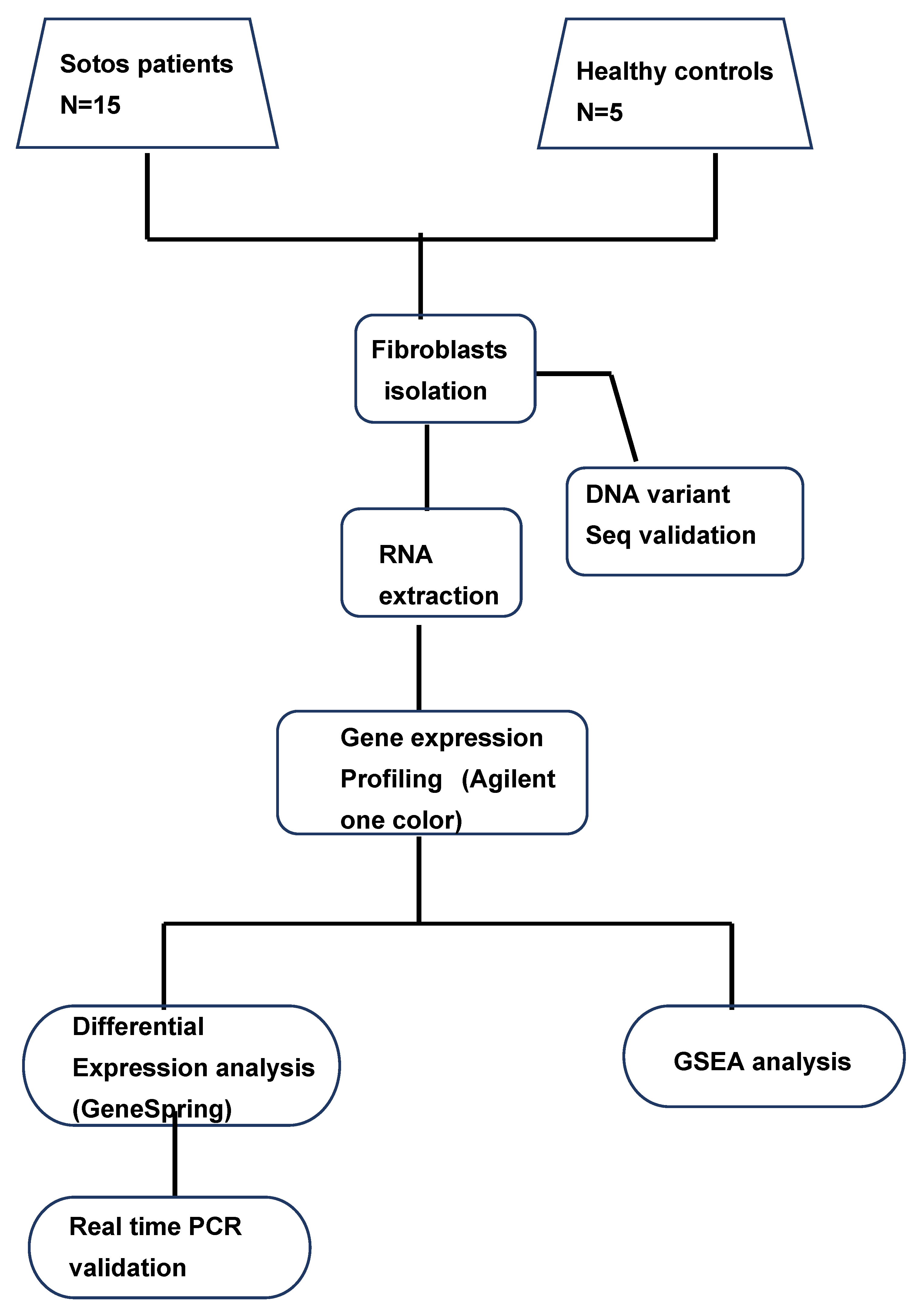
2.1. Patients
2.2. Cell Culture
2.3. Analysis of NSD1 Pathogenetic Variants
2.4. Gene Expression Profiling
2.5. Quantitative Real-Time RT-PCR Validation of Microarray Gene Expression Patterns
2.6. Bioinformatic Analysis
3. Results
3.1. Comparison of the Gene Expression Profile of Fibroblast Lines between SoS and Control Individuals
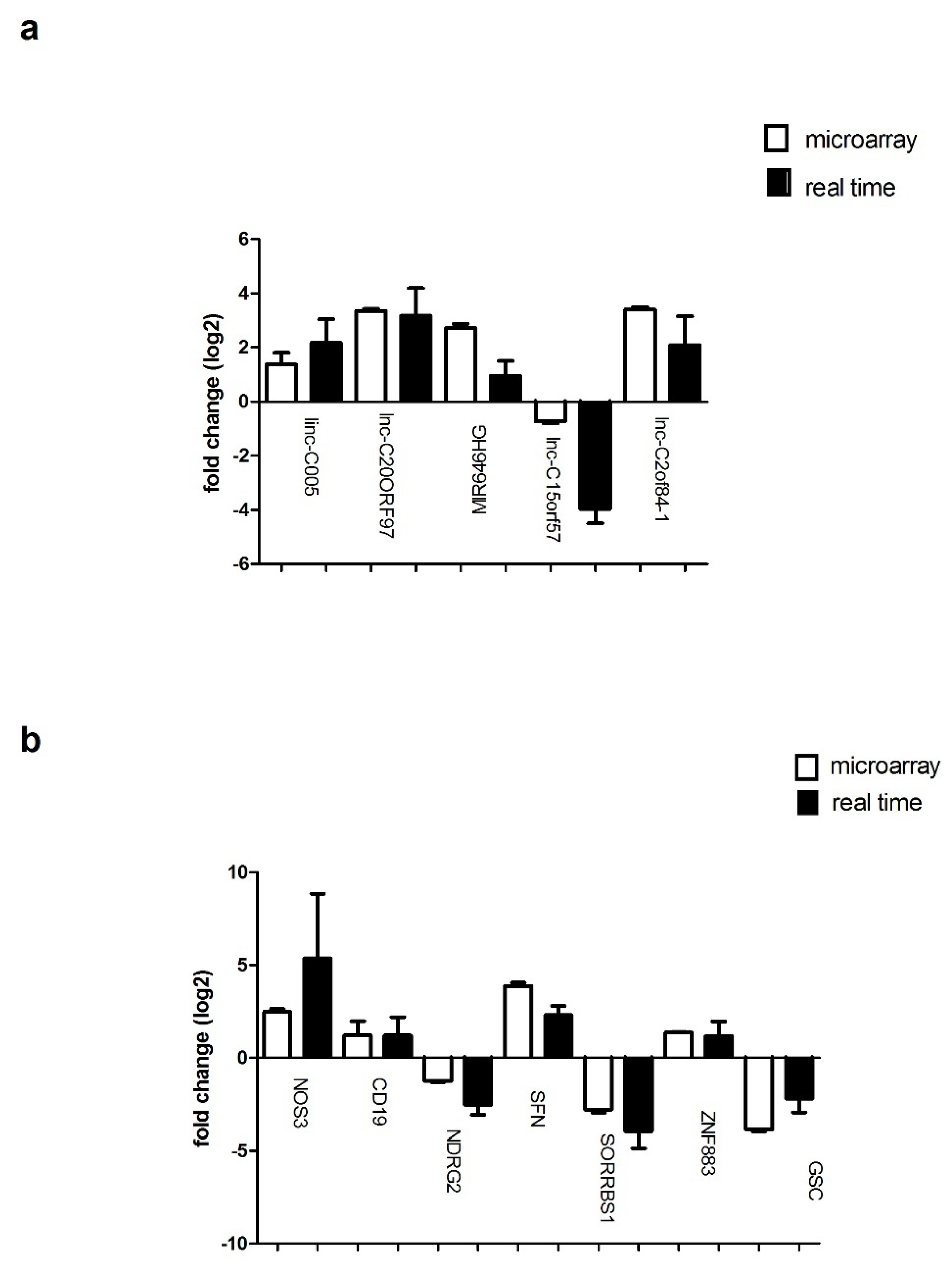
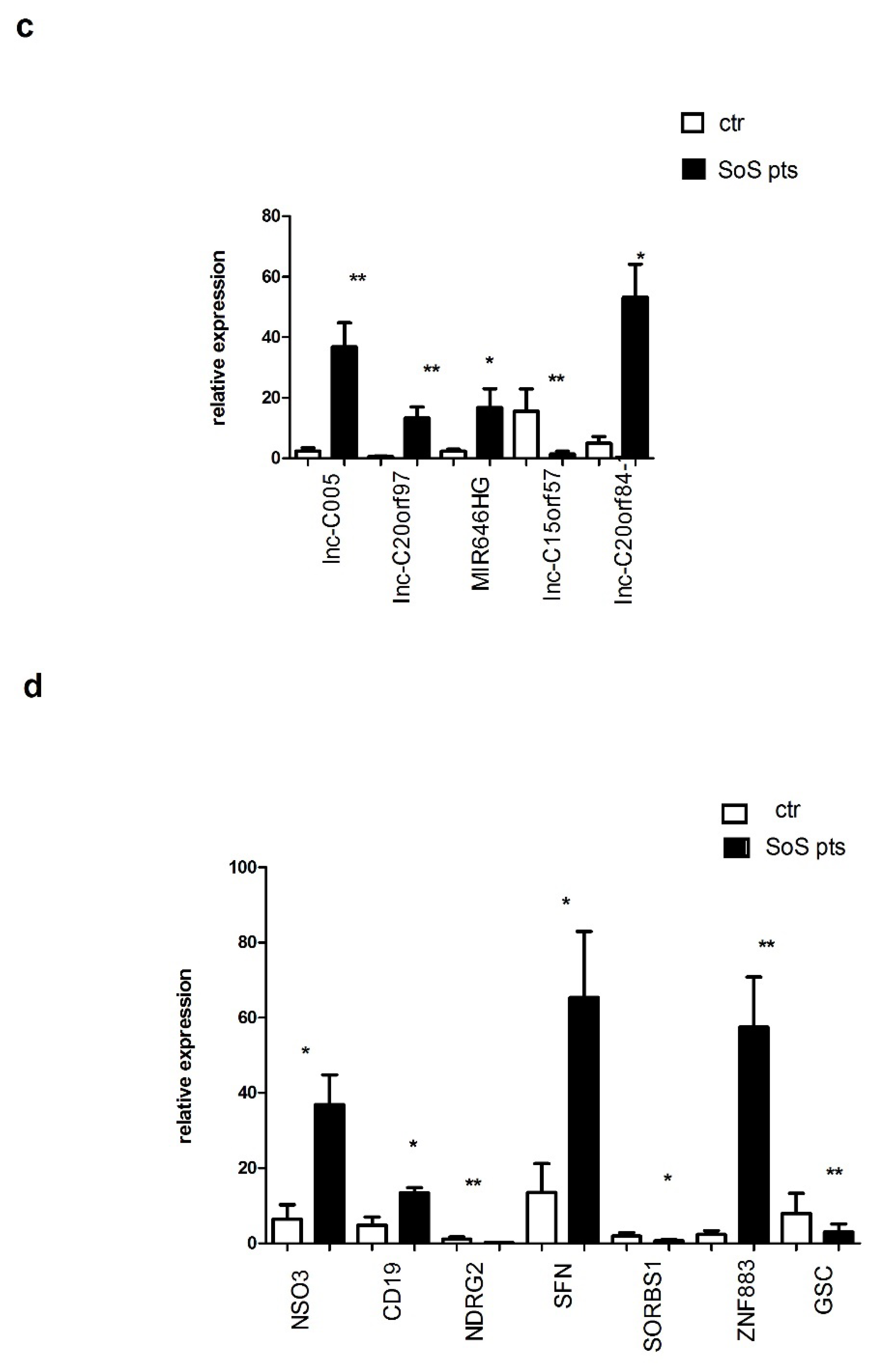
3.2. Validation of Microarray Results by Real-Time Quantitative PCR
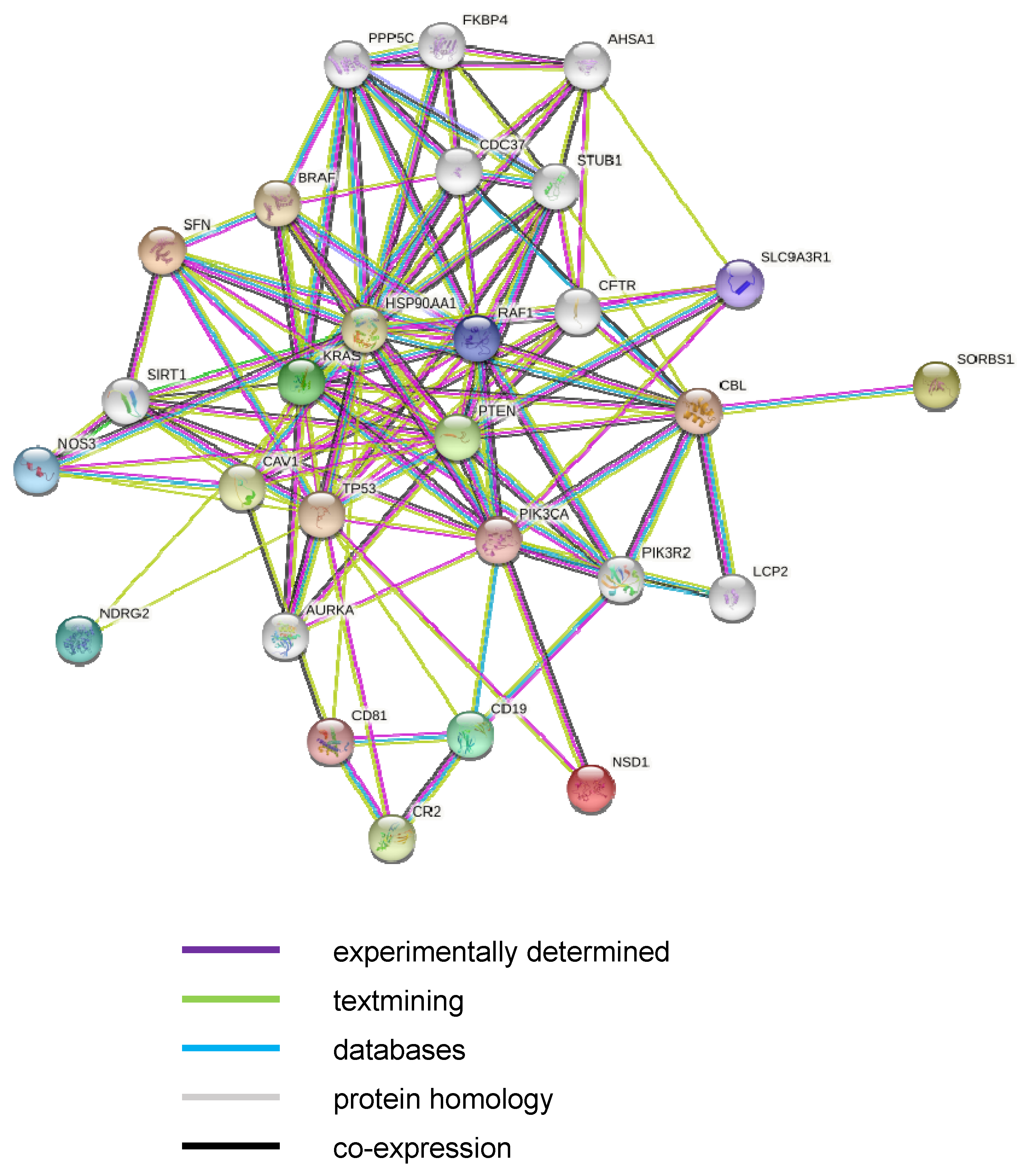
3.3. Gene Set Enrichment Analysis
4. Discussion
Supplementary Materials
Author Contributions
Funding
Institutional Review Board Statement
Informed Consent Statement
Data Availability Statement
Acknowledgments
Conflicts of Interest
References
- Huang, N.; Vom Baur, J.M.; Garnier, T.; Lerouge, J.; Vonesch, L.; Lutz, Y.; Chambon, P.; Losson, R. Two distinct nuclear receptor interaction domains in NSD1, a novel SET protein that exhibits characteristics of both corepressors and coactivators. EMBO J. 1998, 17, 3398–3412. [Google Scholar] [CrossRef] [PubMed]
- Wang, X.; Yeh, S.; Wu, G.; Hsu, C.L.; Wang, L.; Chiang, T.; Yang, Y.; Guo, Y.; Chang, C. Identification and characterization of a novel androgen receptor coregulator ARA267-alpha in prostate cancer cells. J. Biol. Chem. 2001, 276, 40417–40423. [Google Scholar] [CrossRef] [PubMed]
- Wagner, E.J.; Carpenter, P.B. Understanding the language of Lys36 methylation at histone H3. Nat. Rev. Mol. Cell Biol. 2012, 13, 115–126. [Google Scholar] [CrossRef]
- Kudithipudi, S.; Lungu, C.; Rathert, P.; Happel, N.; Jeltsch, A. Substrate specificity analysis and novel substrates of the protein lysine methyltransferase NSD1. Chem. Biol. 2014, 21, 226–237. [Google Scholar] [CrossRef] [PubMed]
- Berdasco, M.; Ropero, S.; Setien, F.; Fraga, M.; Lapunzina, P.; Losson, R.; Alaminos, M.; Cheung, N.-K.; Rahman, N.; Esteller, M. Epigenetic inactivation of the Sotos overgrowth syndrome gene histone methyltransferase NSD1 in human neuroblastoma and glioma. Proc. Natl. Acad. Sci. USA 2009, 106, 21830–21835. [Google Scholar] [CrossRef]
- Bui, N.; Huang, J.K.; Bojorquez-Gomez, A.; Licon, K.; Sanchez, K.S.; Tang, S.N.; Beckett, A.N.; Wang, T.; Zhang, W.; Shen, J.P.; et al. Disruption of NSD1 in Head and Neck Cancer Promotes Favorable Chemotherapeutic Responses Linked to Hypomethylation. Mol. Cancer Ther. 2018, 17, 1585–1594. [Google Scholar] [CrossRef]
- Amin, N.; Nietlispach, D.; Qamar, S.; Coyle, J.; Chiarparin, E.; Williams, G. NMR backbone resonance assignment and solution secondary structure determination of human NSD1 and NSD2. Biomol. NMR Assign. 2016, 10, 315–320. [Google Scholar] [CrossRef][Green Version]
- Tatton-Brown, K.; Douglas, J.; Coleman, K.; Baujat, G.; Cole, T.R.; Das, S.; Horn, D.; Hughes, H.E.; Temple, I.K.; Faravelli, F.; et al. Genotype-phenotype associations in Sotos syndrome: An analysis of 266 individuals with NSD1 aberrations. Am. J. Hum. Genet. 2005, 77, 193–204. [Google Scholar] [CrossRef]
- The Human Protein Atlas. Available online: https://www.proteinatlas.org/ENSG00000165671-NSD1/tissue (accessed on 13 July 2021).
- GeneCards: The Human Gene Database: NSD1. Available online: https://www.genecards.org/cgibin/carddisp.pl?gene=NSD1#protein_expression (accessed on 13 July 2021).
- Tatton-Brown, K.; Rahman, N. Sotos syndrome. Eur. J.Hum. Genet. 2007, 15, 264–271. [Google Scholar] [CrossRef]
- Tatton-Brown, K.; Cole, T.R.P.; Rahman, N. Sotos syndrome. In GeneReviews® [Internet]; Pagon, R.A., Adam, M.P., Ardinger, H.H., Wallace, S.E., Bean, L.J.H., Mefford, H.C., Gripp, K.W., Amemiya, A., Eds.; University of Washington: Seattle, WA, USA, 2014; pp. 1993–2017. [Google Scholar]
- Visser, R.; Landman, E.B.; Goeman, J.; Wit, J.M.; Karperien, M. Sotos syndrome is associated with deregulation of the MAPK/ERK-signaling pathway. PLoS ONE 2012, 7, e49229. [Google Scholar] [CrossRef]
- Lee, H.; Zhang, Z.; Krause, K.M. Long Noncoding RNAs and Repetitive Elements: Junk or Intimate Evolutionary Partners? Trends Genet. 2019, 35, 892–902. [Google Scholar] [CrossRef] [PubMed]
- Kashi, K.; Henderson, L.; Bonetti, A.; Carninci, P. Discovery and functional analysis of lncRNAs: Methodologies toinvestigate an uncharacterized transcriptome. Biochim. Biophys. Acta 2016, 1859, 3–15. [Google Scholar] [CrossRef] [PubMed]
- Hangauer, M.J.; Vaughn, I.W.; McManus, M.T. Pervasive transcription of the human genome produces thousands of previously unidentified long intergenic noncoding RNAs. PLoS. Genet. 2013, 6, e1003569. [Google Scholar] [CrossRef] [PubMed]
- Li, C.J.; Hong, T.; Tung, Y.T.; Yen, Y.P.; Hsu, H.C.; Lu, Y.L.; Chang, M.; Nie, Q.; Chen, J.A. MicroRNA filters Hox temporal transcription noise to confer boundary formation in the spinal cord. Nat. Commun. 2017, 8, 14685. [Google Scholar] [CrossRef]
- Hoye, M.L.; Koval, E.D.; Wegener, A.J.; Hyman, T.S.; Yang, C.; O’Brien, D.R.; Miller, R.L.; Cole, T.; Schoch, K.M.; Shen, T.; et al. MicroRNA Profiling Reveals Marker of Motor Neuron Disease in ALS Models. J. Neurosci. 2017, 37, 5574–5586. [Google Scholar] [CrossRef] [PubMed]
- Wang, C.; Wang, L.; Ding, Y.; Lu, X.; Zhang, G.; Yang, J.; Zheng, H.; Wang, H.; Jiang, Y.; Xu, L. LncRNA Structural Characteristics in Epigenetic Regulation. Int. J. Mol. Sci. 2017, 18, 2659. [Google Scholar] [CrossRef]
- Engreitz, J.M.; Haines, J.E.; Perez, E.M.; Munson, G.; Chen, J.; Kane, M.; McDonel, P.E.; Guttman, M.; Lander, E.S. Local regulation of gene expression by lncRNA promoters, transcription and splicing. Nature 2016, 539, 452–455. [Google Scholar] [CrossRef]
- Vangoor, V.R.; Gomes-Duarte, A.; Pasterkamp, R.J. Long non-coding RNAs in motor neuron development and disease. J. Neurochem. 2021, 156, 777–801. [Google Scholar] [CrossRef]
- Anderson, D.M.; Anderson, K.M.; Chang, C.L.; Makarewich, C.A.; Nelson, B.R.; McAnally, J.R.; Kasaragod, P.; Shelton, J.M.; Liou, J.; Bassel-Duby, R.; et al. A micropeptide encoded by a putative long noncoding RNA regulates muscle performance. Cell 2015, 160, 595–606. [Google Scholar] [CrossRef]
- Liu, L.; Fang, F. Long Noncoding RNA Mediated Regulation in Human Embryogenesis, Pluripotency, and Reproduction. Stem Cells Int. 2022, 2022, 8051717. [Google Scholar] [CrossRef]
- Cancer Genome Atlas Network. Comprehensive genomic characterization of head and neck squamous cell carcinomas. Nature 2015, 517, 576–582. [Google Scholar] [CrossRef] [PubMed]
- Bianco-Miotto, T.; Chiam, K.; Buchanan, G.; Jindal, S.; Day, T.K.; Thomas, M.; Pickering, M.A.; O’Loughlin, M.A.; Ryan, N.K.; Raymond, W.A.; et al. Global Levels of Specific Histone Modifications and an Epigenetic Gene Signature Predict Prostate Cancer Progression and Development. Cancer Epidemiol. Biomark. Prev. 2010, 19, 2611–2622. [Google Scholar] [CrossRef] [PubMed]
- Spurr, L.; Li, M.; Alomran, N.; Zhang, Q.; Restrepo, P.; Movassagh, M.; Trenkov, C.; Tunnessen, N.; Apanasovich, T.; Crandall, K.A.; et al. Systematic pan-cancer analysis of somatic allele frequency. Sci. Rep. 2018, 8, 7735. [Google Scholar] [CrossRef] [PubMed]
- Su, X.; Zhang, J.; Mouawad, R.; Compérat, E.; Rouprêt, M.; Allanic, F.; Malouf, G.G. NSD1 Inactivation and SETD2 Mutation Drive a Convergence toward Loss of Function of H3K36 Writers in Clear Cell Renal Cell Carcinomas. Cancer Res. 2017, 77, 4835–4845. [Google Scholar] [CrossRef] [PubMed]
- Mohammad, F.; Helin, K. Oncohistones: Drivers of pediatric cancers. Genes Dev. 2017, 31, 2313–2324. [Google Scholar] [CrossRef]
- Schuhmacher, M.; Kusevic, D.; Kudithipudi, S.; Jeltsch, A. Kinetic Analysis of the Inhibition of the NSD1, NSD2 and SETD2 Protein Lysine Methyltransferases by a K36M Oncohistone Peptide. ChemistrySelect 2017, 2, 9532–9536. [Google Scholar] [CrossRef]
- Farhangdoost, N.; Horth, C.; Hu, B.; Bareke, E.; Chen, X.; Li, Y.; Coradin, M.; Garcia, B.A.; Lu, C.; Majewski, J. Chromatin dysregulation associated with NSD1 mutation in head and neck squamous cell carcinoma. Cell Rep. 2021, 34, 108769. [Google Scholar] [CrossRef]
- Rajagopalan, K.N.; Chen, X.; Weinberg, D.N.; Chen, H.; Majewski, J.; Allis, C.D.; Lu, C. Depletion of H3K36me2 recapitulates epigenomic and phenotypic changes induced by the H3.3K36M oncohistone mutation. Proc. Natl. Acad. Sci. USA 2021, 118, e2021795118. [Google Scholar] [CrossRef]
- Jaju, R.J. A novel gene, NSD1, is fused to NUP98 in the t(5;11)(q35;p15.5) in de novo childhood acute myeloid leukemia. Blood 2001, 98, 1264–1267. [Google Scholar] [CrossRef]
- Ntziachristos, P.; Abdel-Wahab, O.; Aifantis, I. Emerging concepts of epigenetic dysregulation in hematological malignancies. Nat. Immunol. 2016, 17, 1016–1024. [Google Scholar] [CrossRef]
- Tauchmann, S.; Almosailleakh, M.; Schwaller, J. NSD1 in erythroid differentiation and leukemogenesis. Mol. Cell Oncol. 2020, 7, 1809919. [Google Scholar] [CrossRef] [PubMed]
- Livak, K.J.; Schmittgen, T.D. Analysis of relative gene expression data using real-time quantitative PCR and the 2(-Delta Delta C(T)). Method 2001, 25, 402–408. [Google Scholar] [CrossRef]
- Jensen, L.J.; Kuhn, M.; Stark, M.; Chaffron, S.; Creevey, C.; Muller, J.; Doerks, T.; Julien, P.; Roth, A.; Simonovic, M.; et al. STRING 8—A global view on proteins and their functional interactions in 630 organisms. Nucleic Acids Res. 2009, 37, D412–D416. [Google Scholar] [CrossRef] [PubMed]
- Subramanian, A.; Tamayo, P.; Mootha, V.K.; Mukherjee, S.; Ebert, B.L.; Gillette, M.A.; Paulovich, A.; Pomeroy, S.L.; Golub, T.R.; Lander, E.S.; et al. Gene set enrichment analysis: A knowledge-based approach for interpreting genome-wide expression profiles. Proc. Natl. Acad. Sci. USA 2005, 102, 15545–15550. [Google Scholar] [CrossRef] [PubMed]
- Liberzon, A.; Subramanian, A.; Pinchback, R.; Thorvaldsdóttir, H.; Tamayo, P.; Mesirov, J.P. Molecular signatures database (MSigDB) 3.0. Bioinformatics 2011, 27, 1739–1740. [Google Scholar] [CrossRef] [PubMed]
- Ettel, M.; Zhao, L.; Schechter, S.; Shi, J. Expression and prognostic value of NSD1 and SETD2 in pancreatic ductal adenocarcinoma and its precursor lesions. Pathology 2019, 51, 392–398. [Google Scholar] [CrossRef] [PubMed]
- Zhang, S.; Zhang, F.; Chen, Q.; Wan, C.; Xiong, J.; Xu, J. CRISPR/Cas9- mediated knockout of NSD1 suppresses the hepatocellular carcinoma development via the NSD1/H3/ Wnt10b signaling pathway. J. Exp. Clin. Cancer Res. 2019, 38, 467. [Google Scholar] [CrossRef]
- Lucio-Eterovic, A.K.; Singh, M.M.; Gardner, J.E.; Veerappan, C.S.; Rice, J.C.; Carpenter, P.B. Role for the nuclear receptor-binding SET domain protein 1 (NSD1) methyltransferase in coordinating lysine 36 methylation at histone 3 with RNA polymerase II function. Proc. Natl. Acad. Sci. USA. 2010, 107, 16952–16957. [Google Scholar] [CrossRef]
- Miko, I. Gregor Mendel and the principles of inheritance. Nat. Educ. 2008, 1, 134. [Google Scholar]
- Chial, H. Mendelian genetics: Patterns of inheritance and single-gene disorders. Nat. Educ. 2008, 1, 63. [Google Scholar] [CrossRef]
- Ronchetti, D.; Manzoni, M.; Agnelli, L.; Vinci, C.; Fabris, S.; Cutrona, G.; Matis, S.; Colombo, M.; Galletti, S.; Taiana, E.; et al. lncRNA profiling in early-stage chronic lymphocytic leukemia identifies transcriptional fingerprints with relevance in clinical outcome. Blood Cancer J. 2016, 6, e468. [Google Scholar] [CrossRef] [PubMed]
- Hu, Y.; Sun, H.; Hu, J.; Zhang, X. LncRNA DLX6-AS1 Promotes the Progression of Neuroblastoma by Activating STAT2 via Targeting miR-506-3p. Cancer Manag. Res. 2020, 12, 7451–7463. [Google Scholar] [CrossRef] [PubMed]
- Utnes, P.; Løkke, C.; Flægstad, T.; Einvik, C. Clinically Relevant Biomarker Discovery in High-Risk Recurrent Neuroblastoma. Cancer Inform. 2019, 18, 1176935119832910. [Google Scholar] [CrossRef] [PubMed]
- Ang, C.E.; Trevino, A.E.; Chang, H.Y. Diverse lncRNA mechanisms in brain development and disease. Curr. Opin. Genet. Dev. 2020, 65, 42–46. [Google Scholar] [CrossRef] [PubMed]
- Deng, Q.; Ma, L.; Chen, T.; Yang, Y.; Ma, Y.; Ma, L. NF-κB 1-induced LINC00665 regulates inflammation and apoptosis of neurons caused by spinal cord injury by targeting miR-34a-5p. Neurol Res. 2021, 43, 418–427. [Google Scholar] [CrossRef]
- Khalil, A.M.; Guttman, M.; Huarte, M.; Garber, M.; Raj, A.; Rivea Morales, D.; Thomas, K.; Presser, A.; Bernstein, B.E.; Van Oudenaarden, A.; et al. Many human large intergenic noncoding RNAs associate with chromatin modifying complexes and affect gene expression. Proc. Natl. Acad. Sci. USA 2009, 106, 11667–11672. [Google Scholar] [CrossRef] [PubMed]
- Mattick, J.S.; Gagen, M.J. The evolution of controlled multitasked gene networks: The role of introns and other noncoding RNAs in the development of complex organisms. Mol. Biol. Evol. 2001, 18, 1611–1630. [Google Scholar] [CrossRef]
- Popadin, K.; Gutierrez Arcelus, M.; Dermitzakis, E.T.; Antonarakis, S.E. Genetic and epigenetic regulation of human lincRNA gene expression. Am. J. Hum. Genet. 2013, 93, 1015–1026. [Google Scholar] [CrossRef]
- Luk, S.C.; Siu, S.W.; Lai, C.K.; Wu, Y.J.; Pang, S.F. Cell Cycle Arrest by a Natural Product via G2/M Checkpoint. Int. J. Med. Sci. 2005, 2, 64–69. [Google Scholar] [CrossRef]
- Sawada, K.; Konishi, Y.; Tominaga, M.; Watanabe, Y.; Hirano, J.; Inoue, S.; Kageyama, R.; Blum, M.; Tominaga, A. Goosecoid suppresses cell growth and enhances neuronal differentiation of PC12 cells. J. Cell Sci. 2000, 113, 2705–2713. [Google Scholar] [CrossRef]
- Foletta, V.C.; Prior, M.J.; Stupka, N.; Carey, K.; Segal, D.H.; Jones, S.; Swinton, C.; Martin, S.; Cameron-Smith, D.; Walder, K.R. NDRG2, a novel regulator of myoblast proliferation, is regulated by anabolic and catabolic factors. J. Physiol. 2009, 587 Pt 7, 1619–1634. [Google Scholar] [CrossRef]
- Cho, W.C.; Jang, J.E.; Kim, K.H.; Yoo, B.C.; Ku, J.L. SORBS1 serves a metastatic role via suppression of AHNAK in colorectal cancer cell lines. Int. J. Oncol. 2020, 56, 1140–1151. [Google Scholar] [CrossRef] [PubMed]
- Konishi, Y.; Tominaga, M.; Watanabe, Y.; Imamura, F.; Goldfarb, A.; Maki, R.; Blum, M.; De Robertis, E.M.; Tominaga, A. GOOSECOID inhibits erythrocyte differentiation by competing with Rb for PU.1 binding in murine cells. Oncogene 1999, 18, 6795–6805. [Google Scholar] [CrossRef] [PubMed][Green Version]
- Golestan, A.; Ghaderi, A.; Mojtahedi, Z. Effects of NDRG2 Overexpression on Metastatic Behaviors of HCT116 Colorectal Cancer Cell Line. Adv. Pharm. Bull. 2017, 7, 661–664. [Google Scholar] [CrossRef] [PubMed][Green Version]
- Xu, Y.; Xin, R.; Sun, H.; Long, D.; Li, Z.; Liao, H.; Xue, T.; Zhang, Z.; Kang, Y.; Mao, G. Long Non-coding RNAs LOC100126784 and POM121L9P Derived from Bone Marrow Mesenchymal Stem Cells Enhance Osteogenic Differentiation via the miR-503-5p/SORBS1 Axis. Front. Cell. Dev. Biol. 2021, 9, 723759. [Google Scholar] [CrossRef] [PubMed]
- Moradi Monfared, M.; Alizadeh Zarei, M.; Rafiei Dehbidi, G.; Behzad Behbahani, A.; Arabsolghar, R.; Takhshid, M.A. NDRG2 Regulates the Expression of Genes Involved in Epithelial Mesenchymal Transition of Prostate Cancer Cells. Iran. J. Med. Sci. 2019, 44, 118–126. [Google Scholar]
- Kang, K.W.; Lee, M.J.; Song, J.A.; Jeong, J.Y.; Kim, Y.K.; Lee, C.; Kim, T.H.; Kwak, K.B.; Kim, O.J.; An, H.J. Overexpression of goosecoid homeobox is associated with chemoresistance and poor prognosis in ovarian carcinoma. Oncol. Rep. 2014, 32, 189–198. [Google Scholar] [CrossRef]
- Ulmer, B.; Tingler, M.; Kurz, S.; Maerker, M.; Andre, P.; Mönch, D.; Campione, M.; Deißler, K.; Lewandoski, M.; Thumberger, T.; et al. A novel role of the organizer gene Goosecoid as an inhibitor of Wnt/PCP-mediated convergent extension in Xenopus and mouse. Sci. Rep. 2017, 7, 43010. [Google Scholar] [CrossRef]
- Rivera-Perez, J.A.; Wakamiya, M.; Behringer, R.R. Goosecoid acts cell autonomously in mesenchyme-derived tissues during craniofacial development. Development 1999, 126, 3811–3821. [Google Scholar] [CrossRef]
- Gong, L.; Yang, P.; Hu, L.; Zhang, C. MiR-181b suppresses the progression of epilepsy by regulation of lncRNA ZNF883. Am. J. Transl. Res. 2020, 12, 2769–2780. [Google Scholar]




| Nr | Probe Set ID | Gene Symbol | Gene Name | Seq. Name | Log2 Fold Change | p-Value | p-Value Adjusted |
|---|---|---|---|---|---|---|---|
| 1 | A_22_P00002837 | Lnc-C20orf197-3 | long intergenic nonprotein-coding RNA | lnc-C20orf197-3:13 | 3.2 | 4.95 × 10⁻⁷ | 0.007 |
| 2 | A_22_P00002837 | Lnc-C2orf84-1 | long intergenic nonprotein | lnc-C2orf84-1:1 | 3.2 | 4.95 × 10⁻⁷ | 0.007 |
| 3 | A_22_P00002715 | MIR646HG | MIR646 host gene | ENSG00000228340 | 2.8 | 8.64 × 10⁻⁶ | 0.042 |
| 4 | A_24_P16214 | LINC00665 | long intergenic nonprotein-coding RNA 665 | ENST00000427868 | 1.2 | 2.57 × 10⁻⁶ | 0.016 |
| 5 | A_32_P98975 | C15orf57 | chromosome 15 open reading frame 57 | NM_052849 | −0.7 | 1.40 × 10⁻⁵ | 0.047 |
| Nr | Probe Set ID | Gene Symbol | Gene Name | Seq. Name | Log2 Fold Change | p-Value | p-Value Adjusted |
|---|---|---|---|---|---|---|---|
| 1 | A_33_P3389286 | SFN | stratifin | NM_006142 | 3.99 | 1.62 × 10⁻⁶ | 0.015 |
| 2 | A_23_P113572 | CD19 | CD19 molecule | NM_001770 | 3.36 | 1.28 × 10⁻⁶ | 0.014 |
| 3 | A_33_P3305790 | NOS3 | nitric oxide synthase 3 (endothelial cell) | NM_000603 | 2.4 | 1.41 × 10⁻⁷ | 0.0027 |
| 4 | A_22_P00017915 | ZNF883 | zinc finger protein 883 | NM_001101338 | 1.33 | 4.95 × 10⁻⁶ | 0.026 |
| 5 | A_33_P3334515 | NDRG2 | NDRG family member 2 | NM_001282213 | −1.24 | 1.06 × 10⁻⁵ | 0.047 |
| 6 | A_24_P317907 | SORBS1 | sorbin and SH3 domain containing 1 | NM_001034954 | −3.1 | 1.14 × 10⁻⁵ | 0.047 |
| 7 | A_23_P76774 | GSC | goosecoid homeobox | NM_173849 | −3.98 | 1.38 × 10⁻⁵ | 0.047 |
| Pathway or Process Description a | Number of Genes b | FDR q-Value c | Type of Regulation d | Ontology e |
|---|---|---|---|---|
| Cancer Process | ||||
| Florio neocortex basal radial glia DN | 151 | 0.00 | DOWN | CGP |
| Kong E2F3 targets | 77 | 0.00 | DOWN | CGP |
| Kobayashi EGFR-signaling 24 h DN | 213 | 0.00 | DOWN | CGP |
| Whitfield cell cycle literature | 39 | 0.00 | DOWN | CGP |
| Whiteford pediatric cancer markers | 102 | 0.00 | DOWN | CGP |
| Nakayama soft-tissue tumors PCA2 UP | 76 | 0.00 | DOWN | CGP |
| Zhan multiple myeloma pr UP | 35 | 0.00 | DOWN | CGP |
| Pyeon HPV positive tumors UP | 79 | 0.00 | DOWN | CGP |
| Sotiriou breast cancer grade 1 vs. 3 UP | 127 | 3.65 × 10⁻⁴ | DOWN | CGP |
| Chiang liver cancer subclass proliferation UP | 146 | 8.15 × 10⁻⁴ | DOWN | CGP |
| Farmer breast cancer cluster 2 | 29 | 0.001 | DOWN | CGP |
| Villanueva liver cancer KRT19 UP | 147 | 0.002 | DOWN | CGP |
| Rodrigues thyroid carcinoma DN | 66 | 0.002 | DOWN | CGP |
| Finetti breast cancer kinome red | 15 | 0.002 | DOWN | CGP |
| Riggi Ewing sarcoma progenitor DN | 158 | 0.002 | DOWN | CGP |
| Azare neoplastic transformation by STAT3 DN | 16 | 0.002 | DOWN | CGP |
| West adrenocortical tumor markers UP | 103 | 0.005 | DOWN | CGP |
| Li Wilms tumor anaplastic UP | 15 | 0.010 | DOWN | CGP |
| Li prostate cancer epigenetic | 27 | 0.014 | DOWN | CGP |
| GAL leukemic stem cell DN | 188 | 0.014 | DOWN | CGP |
| Rickman head and neck cancer B | 37 | 0.018 | DOWN | CGP |
| Poola invasive breast cancer UP | 228 | 0.019 | DOWN | CGP |
| Sengupta nasopharyngeal carcinoma UP | 240 | 0.024 | DOWN | CGP |
| SMID breast cancer luminal A UP | 68 | 0.025 | DOWN | CGP |
| Vantveer breast cancer BRCA1 UP | 28 | 0.027 | DOWN | CGP |
| Winnepenninckx melanoma metastasis UP | 134 | 0.029 | DOWN | CGP |
| Ferreira Ewing’s sarcoma unstable vs. stable UP | 131 | 0.029 | DOWN | CGP |
| Lopes methylated in colon cancer UP | 22 | 0.047 | DOWN | CGP |
| Chiaradonna neoplastic transformation KRAS UP | 113 | 0.047 | DOWN | CGP |
| Cell Cycle and Proliferation Process | ||||
| Fischer G2 M cell cycle | 191 | 0.00 | DOWN | CGP |
| Croonquist NRAS signaling DN | 55 | 0.00 | DOWN | CGP |
| Molenaar targets of CCND1 and CDK4 DN | 48 | 0.00 | DOWN | CGP |
| Ishida E2F targets | 39 | 0.00 | DOWN | CGP |
| Reichert mitosis LIN9 targets | 21 | 0.00 | DOWN | CGP |
| Graham normal quiescent vs. normal dividing DN | 74 | 1.15 × 10⁻⁴ | DOWN | CGP |
| Odonnell TFRC targets DN | 110 | 2.18 × 10⁻⁴ | DOWN | CGP |
| Graham cml dividing vs. normal quiescent UP | 157 | 0.002 | DOWN | CGP |
| Eguchi cell cycle RB1 targets | 17 | 0.002 | DOWN | CGP |
| Yu MYC targets UP | 40 | 0.003 | DOWN | CGP |
| Zhou cell cycle genes in IR response 24HR | 103 | 0.003 | DOWN | CGP |
| Odonnell targets of MYC and TFRC DN | 36 | 0.006 | DOWN | CGP |
| Alcalay AML by NPM1 localization DN | 158 | 0.010 | DOWN | CGP |
| Zhou cell cycle genes in IR response 6HR | 70 | 0.011 | DOWN | CGP |
| Plasari TGFB1 targets 10HR DN | 205 | 0.014 | DOWN | CGP |
| Chicas RB1 targets growing | 196 | 0.02 | DOWN | CGP |
| ULE-splicing via NOVA2 | 35 | 0.02 | DOWN | CGP |
| Benporath proliferation | 124 | 0.033 | DOWN | CGP |
| Whitfield cell cycle G2 M | 162 | 0.034 | DOWN | CGP |
| Liang silenced by methylation 2 | 50 | 0.034 | DOWN | CGP |
| Nojima SFRP2 targets DN | 19 | 0.034 | DOWN | CGP |
| Kamminga EZH2 targets | 37 | 0.037 | DOWN | CGP |
| Graham CML quiescent_VS normal quiescent UP | 74 | 0.040 | DOWN | CGP |
| GOBP heat generation | 15 | 0.014 | UP | GO BP |
| GOBP regulation of meiotic cell cycle | 31 | 0.07 | UP | GO BP |
| GOBP negative regulation of nuclear division | 42 | 0.016 | UP | GO BP |
| GOBP regulation of feeding behavior | 20 | 0.021 | UP | GO BP |
| GOBP positive regulation of organic acid transport | 29 | 0.017 | UP | GO BP |
| GOBP regulation of nuclear division organization | 106 | 0.046 | UP | GO BP |
| GOBP kinetochore organization | 16 | 0.041 | UP | GO BP |
| HALLMARK G2M checkpoint | 172 | 0.001 | DOWN | H |
| HALLMARK KRAS-signaling UP | 174 | 0.0001 | DOWN | H |
| HALLMARK mitotic spindle | 163 | 0.008 | DOWN | H |
| HALLMARK inflammatory response | 159 | 0.006 | DOWN | H |
| HALLMARK E2F targets | 167 | 0.005 | DOWN | H |
| HALLMARK apoptosis | 130 | 0.017 | DOWN | H |
| HALLMARK KRAS-signaling DN | 166 | 0.032 | DOWN | H |
| HALLMARK allograft rejection | 160 | 0.036 | DOWN | H |
| HALLMARK TNFA-signaling via NFKB | 163 | 0.040 | DOWN | H |
| Cell Differentiation Process | ||||
| Boquest stem cell DN | 186 | 0.05 | DOWN | CGP |
| Sarrio epithelial mesenchymal transition UP | 149 | 0.006 | DOWN | CGP |
| Le neuronal differentiation DN | 16 | 0.034 | DOWN | CGP |
| P53-Mediated Cell Cycle Arrest and Cellular Senescence Process | ||||
| Wu apoptosis by CDKN1A via TP53 | 47 | 0.002 | DOWN | CGP |
| Tang senescence TP53 targets DN | 48 | 0.00 | DOWN | CGP |
Publisher’s Note: MDPI stays neutral with regard to jurisdictional claims in published maps and institutional affiliations. |
© 2022 by the authors. Licensee MDPI, Basel, Switzerland. This article is an open access article distributed under the terms and conditions of the Creative Commons Attribution (CC BY) license (https://creativecommons.org/licenses/by/4.0/).
Share and Cite
Conteduca, G.; Cangelosi, D.; Coco, S.; Malacarne, M.; Baldo, C.; Arado, A.; Pinto, R.; Testa, B.; Coviello, D.A. NSD1 Mutations in Sotos Syndrome Induce Differential Expression of Long Noncoding RNAs, miR646 and Genes Controlling the G2/M Checkpoint. Life 2022, 12, 988. https://doi.org/10.3390/life12070988
Conteduca G, Cangelosi D, Coco S, Malacarne M, Baldo C, Arado A, Pinto R, Testa B, Coviello DA. NSD1 Mutations in Sotos Syndrome Induce Differential Expression of Long Noncoding RNAs, miR646 and Genes Controlling the G2/M Checkpoint. Life. 2022; 12(7):988. https://doi.org/10.3390/life12070988
Chicago/Turabian StyleConteduca, Giuseppina, Davide Cangelosi, Simona Coco, Michela Malacarne, Chiara Baldo, Alessia Arado, Rute Pinto, Barbara Testa, and Domenico A. Coviello. 2022. "NSD1 Mutations in Sotos Syndrome Induce Differential Expression of Long Noncoding RNAs, miR646 and Genes Controlling the G2/M Checkpoint" Life 12, no. 7: 988. https://doi.org/10.3390/life12070988
APA StyleConteduca, G., Cangelosi, D., Coco, S., Malacarne, M., Baldo, C., Arado, A., Pinto, R., Testa, B., & Coviello, D. A. (2022). NSD1 Mutations in Sotos Syndrome Induce Differential Expression of Long Noncoding RNAs, miR646 and Genes Controlling the G2/M Checkpoint. Life, 12(7), 988. https://doi.org/10.3390/life12070988