


Abstract
Biofeedback training is a method commonly used in various fields of life, for example, in medicine, sports training or business. In recent studies, it has been shown that biofeedback, and neurofeedback, can affect the performance of professional athletes. Training based on the neurofeedback method includes exercising the brain waves. The aim of the article is to evaluate the influence of neurofeedback training on the physical fitness of professional athletes representing various sports disciplines, such as judo, volleyball and soccer. Based on 10 scientific papers from various sources, including PubMed, the latest research on neurofeedback and its impact on athletes has been reviewed. On the basis of the literature review from 2012 to 2022 on the neurofeedback method in sports training, it can be stated that this type of practice has a significant impact on physical fitness and sports performance. This review comprised 10 research studies with 491 participants in the neurofeedback groups, and 62 participants in the control group. Two reviewers independently extracted data and evaluated the quality of the studies utilising the PEDro scale. Properly planned and conducted neurofeedback training affects stimulation and improvement of many variables (reducing stress levels, increasing the ability to self-control physiological factors, enhancing behavioural efficiency and meliorating the speed of reaction to a stimulus).
1. Introduction
Sports training is a specific form of exercise. Its effectiveness depends on properly selected methods. Excessive training loads can result in overtraining, while insufficient training loads do not lead to significant sports achievements [1]. It should be pointed out that all professional athletes require not only basic physical training to improve motor skills, but also mental training, which develops athletes’ concentration and resistance to stress [2]. The methods used in sport psychology include rest management, psychological assessment and neurofeedback [3]. Over the past decade, research teams from around the world have focused on studies regarding the effectiveness of EEG (electroencephalogram) training and its benefits for athletes. Nowadays, achieving sports performance at the highest level requires not only motor preparation, but also taking mental training into consideration. Research in this area allows proving the benefits for the psychophysiological sphere of subjects such as stress control, which is a must in professional sports. Pressure related to results, training staff and sponsors are factors that interfere with the management of stress, directly affecting performance and athletic ability. In our review, we aim to gather scientific evidence on the effectiveness of biofeedback training and to determine its benefits for athletes.
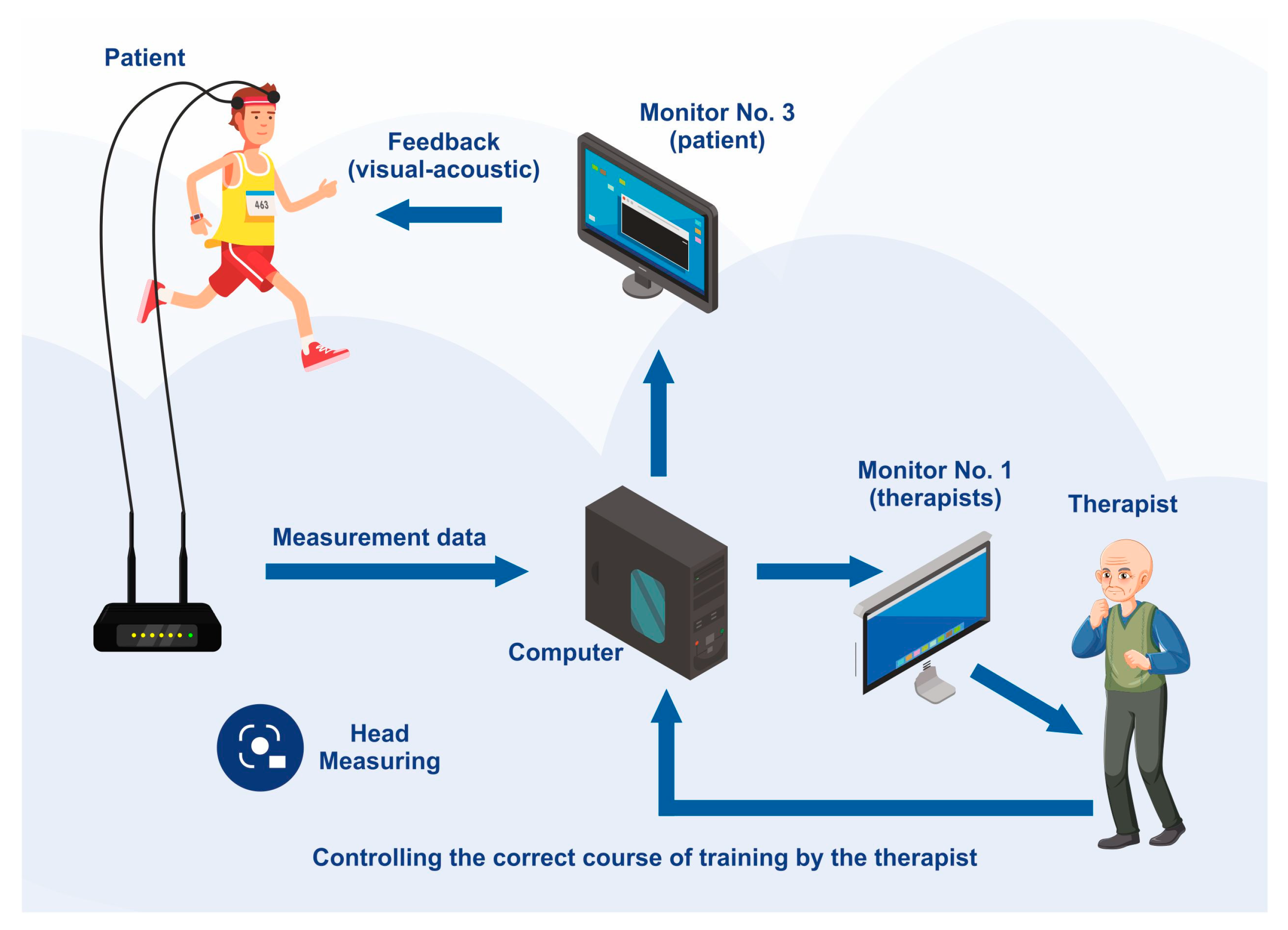
Biofeedback is a brainwave training process. These waves are categorised on the basis of their frequency. Neurofeedback (NFB) is a method that assists subjects in consciously controlling their brain waves. In fact, EEG is recorded during the neurofeedback treatment [4]. Neurofeedback therapy utilises brain waves as feedback information [5]. In neurofeedback therapy, data are collected using EEG, and the principles of biological control theory are used to obtain feedback regarding psychological and physiological processes [6]. The authors emphasise the fact that research on this topic is necessary because these divisions are conventional and not all is certain, while conducting more targeted therapies requires a more thorough exploration of wave knowledge. Depending on the frequency of the waves, we can distinguish alpha waves (8–12 Hz) that are related to the relaxation state when the eyes are closed, beta waves (above 13 Hz) that correspond to concentration, theta waves (4–8 Hz) that cause increases over temporal sites during encoding, maintenance and retrieval, and finally, delta waves (0.5–3.5 Hz) experienced by humans during sleep [7]. The function of biofeedback is given in Figure 1. The 1960s and 1970s were the periods in which the scientific method of EEG training was first demonstrated. The purpose of this was to increase alpha wave activity, which would translate into an increased degree of relaxation. By distinguishing different frequencies and their roles, we can assign specific states to the appropriate waves associated, in the case of gamma waves, with intense concentration of attention and assisting the brain in processing, while combining information from different areas of the brain. Multi-tasking during athletic competition requires athletes to maintain a maximum level of focus for as long as possible [8]. Neurofeedback enables better control over the physiological processes taking place in the human body, which are difficult to control [4]. It is a method widely used all over the world and its area of occurrence is broad. Biofeedback treatments are used in medicine, where they have become a substitute for many pharmaceuticals [8]. Moreover, biofeedback can stimulate the proper emotional development of children and adolescents [9]. The same method is also common in geriatric treatments [10]. These patients often suffer from various types of cognitive impairments resulting from damage to the central nervous system [4]. EEG-NFB training could be used according to the FITT principles (frequency, intensity, time and type) independent of age and fitness level [11]. Depending on the need, neurofeedback is a safe and effective method that brings the desired effect and is suitable for all age groups [12]. For this reason, the neurofeedback method becomes even more important and requires constant improvement. This innovative system proves its effectiveness not only in treating patients with diseases, but also in other areas of life, such as music, business, acting and sports [9].
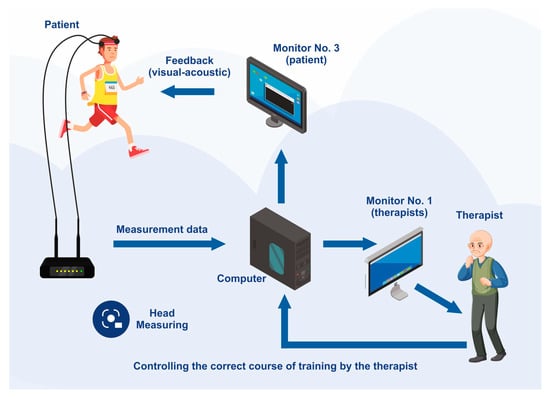
Figure 1.
Diagram of biofeedback functioning (own diagram).
It is important to focus on the role of neurofeedback in professional sports. In the 1980s, scientists developed a method of periodisation for sports training [13]. There are three basic periods in professional training, accordingly: preparation period—developing fitness and training, starting period—maintaining a high level of performance, and transition period—physical and psychic recovery. In each of these phases, the athlete’s training is based not only on the physical aspect, but also on the mental one. Neurofeedback is an approach, the proper application of which allows for cooperation of the physical and mental spheres [13]. The concept of electrical activity through electroencephalography (EEG) neurofeedback has a wide scope. The commonly used concept of “biofeedback” should be associated mainly with the measurement and evaluation of various body parameters, associated with special electronic devices [4]. Neurofeedback training has the function of stimulating the athlete’s body (heart rate and respiration) to self-regulate and create an autonomous impulse that can help in taking appropriate actions and making proper decisions at key moments in a competition [13]. Neurofeedback training properly adjusted to the athlete’s individual abilities has an impact on psychophysiological consistency [14]. Achieving this state causes athletes to feel positive emotions, and their heart rhythm, as well as their level of perceived stress, is constantly more easily controlled [15].
In research on the subject, evidence has been demonstrated regarding the effectiveness of neurofeedback training as a mental support method for professional athletes. An important aspect is the proper selection of training protocols and specialised staff, which allows influencing the desired parameters [12]. In general, in NF applications, brain signals are recorded with different neuroscientific methods [electroencephalography (EEG), magnetoencephalography (MEG), functional magnetic resonance imaging (fMRI), near-infrared spectroscopy (NIRS)], processed in real time by a computer and fed back to the NF user online via visual, auditory and/or tactile feedback. Motor imagery of movements is used as a mental strategy in neurofeedback applications to gain voluntary control over activity in motor areas of the brain. Motor imagery, defined as mental simulation of a kinaesthetic movement [16], can also modulate activities in the sensorimotor cortex without any physical movements of the body. It is often used as a mental strategy in NF applications [17]. The MI recording technique captures signals based on a user’s imagination of performing a specific task, for example, limb movement but without actually moving the limb. The imagination of moving a unilateral limb causes variation of activations in a specific cortex area [18], which are further translated into electrical signals propagated by volume conduction through multiple brain tissue. Motor imagery has been used to enhance athletic performance [19].
In 2010, a study was also conducted among Canadian athletes participating in the Vancouver Olympics, which showed that the use of NFB increased their stress control, which resulted in better results at the Olympics compared to the previous year [20]. In a review study, Mirifar et al. examined protocols and neurofeedback applications, as well as their effect on sports performance. The search process was finalised on 30 June 2016. In this study, it was shown that, so far, the majority of published studies support the statement that NFT effectively improves athletes’ performance in a specific sports task and/or in relevant underlying aspects of cognition and effect. In the end, they stated that the final conclusion regarding the validity of the findings in this review study is quite different from the positive conclusions drawn in previous studies. More research efforts need to be made in the field of sports to uncover constraints and specifications for NFT in sports. Thus, despite some indications that NFT use is effective for improving sports performance, substantial evidence for its effectiveness is missing [6].
The aim of the paper is to review the scientific literature on the impact of neurofeedback methods used in sports training on professional athletes’ performance. In our work, we attempt to answer the questions as to what neurofeedback training protocols are effective for achieving appropriately targeted goals in athletes and how and to what extent they shape their mental abilities.
2. Materials and Methods
This study conforms to the Preferred Reporting Items for Systematic Reviews and Meta-Analyses (PRISMA) statement [21] and the Cochrane Collaboration Handbook for Systematic Reviews of Interventions [22].
The review of articles was carried out by searching for information on biofeedback and neurofeedback regarding the performance of professional athletes, using PubMed and other available scientific databases. The keywords neurofeedback in sports training and efficiency of EEG biofeedback were used to search for scientific articles indicating the impact of biofeedback and neurofeedback on sports performance. The presence of a control and research group is a desirable phenomenon in the researched subjects. It is important to have the most extensive research group, the results of which can be compared before and after training. In the review of the literature, many sports disciplines mentioned the impact of the above technique.
The purpose of the analysis was to search electronic databases with scientific articles, including PubMed, Google Scholar, Scopus, Web of Science and current scientific databases. The following keywords were used in the search: EEG, neurofeedback, sports. Publications from 2012 onwards were taken into account. In Table 1, subsequent stages of the literature search are presented. The inclusion criteria for the literature search are also given.

Table 1.
Stages of literature search.
All research papers were included in this study. Conference proceedings, commentaries, reviews, editorials, research notes, letters, duplicated publications and expert experiences were excluded.
The following inclusion criteria were taken into account when selecting the appropriate items: The original publications included studies on athletes in which the training protocol is shown over time. The publications in which the athletes were professionally active during the protocol were considered for analysis. Age was not a criterion for exclusion, but automatically taking into account only active people, the range was approximately 18–35 years. Age was a criterion for inclusion, and considering only active people, it was within the range of approximately 18–45 years. The older range was rejected due to the existence of diseases affecting the results. Exclusion criteria included the presence of mental and physical disorders that significantly influenced the course of the study (Table 2).
Table 2.
Inclusion and exclusion criteria used for the analysis.
Assessment of Study Quality
The PEDro scale was utilised to examine the quality of the included studies [23]. This scale includes 11 criteria: eligibility, random allocation, allocation concealment, baseline comparability, patient blinding, therapist blinding, assessor blinding, less than 85% dropouts, intention to treat analysis, between-group comparisons, and point and variance measures [23]. Apart from the first criterion, each item scores 1 or 0 points. The maximum possible score is 10. A cut-off score of ≥6 was considered for high-quality studies [23].
3. Results
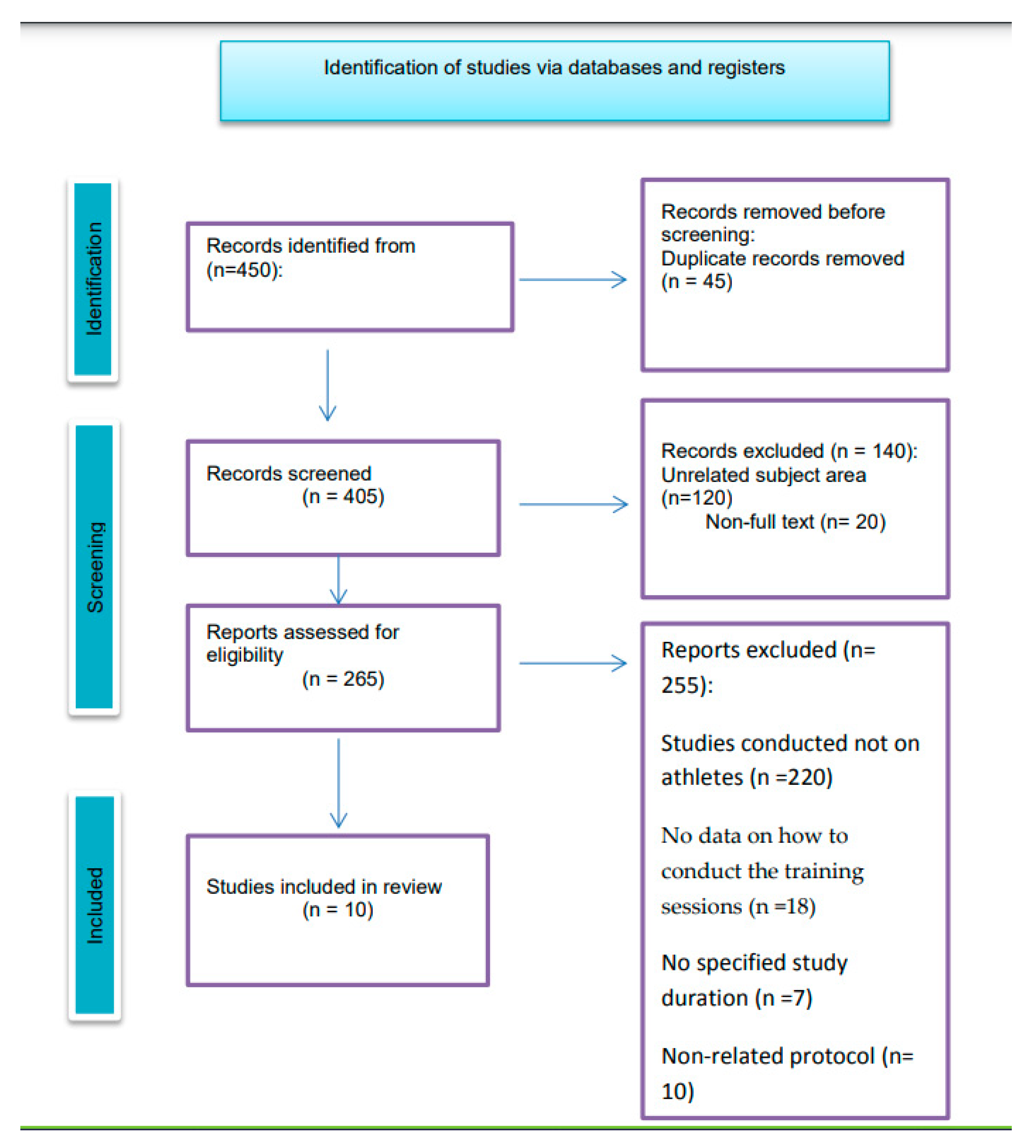
First, 450 studies were identified. After removing duplicates, 405 (n) remaining trials were screened for eligibility. Then, 140 studies were excluded because they were not about neurofeedback in sports, focused on unrelated subject areas (n = 120) or did not have an available full text (n = 20). Finally, according to our inclusion/exclusion criteria, 10 studies were considered acceptable for this literature review (Figure 2).
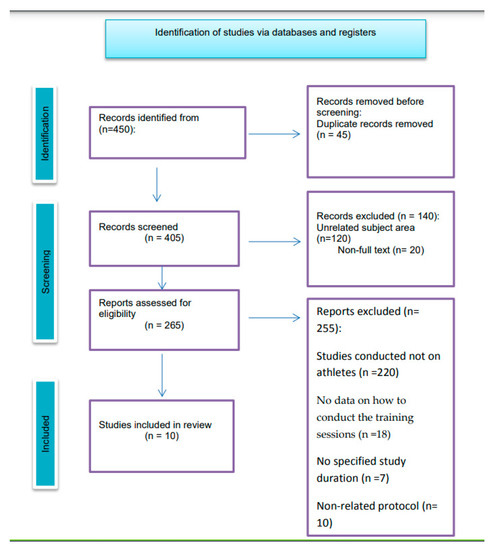
Figure 2.
PRISMA chart for included studies.
For the purpose of a detailed analysis of scientific publications, the description of the research group, training methods, duration of the research and observed results were indicated by the authors of the paper. The majority of publications covered a control and research group. In most of the studies, the effect of a specific neurofeedback method on the level of physical fitness was considered. In all of the analysed studies, it was shown that neurofeedback influences the physical and mental fitness of NFB participants. This was confirmed by controlled tests carried out before and after special training (Table 3).
Table 3.
Materials, methods and results of biofeedback training studies.
From the analysed literature on the subject, high research quality was found for five scientific reports, one of moderate, and four of low risk. Table 4).
Table 4.
PEDro scale for the included studies.
4. Discussion
Taking the above literature into account, it should be borne in mind that neurofeedback is a relatively new method, and its impact on various fields (such as sports) has not been well-studied by specialists. Nonetheless, neurofeedback is used in many fields as a form of treatment or training [7]. The benefits of using this method have been documented in studies worldwide [6,7,20,32,33].
4.1. Heart Rate, Stress, Blood Pressure and Neurofeedback
Raymond demonstrated positive changes in the heart rate regulation process among professional dancers after neurofeedback training [32]. Similar effects and increased stress resistance were also noted in studies conducted on golfers in 2012 [33]. Furthermore, it has been shown that this type of training, in addition to helping cope with stress, also affects concentration. In many cases, biofeedback and neurofeedback interventions have contributed to tremendous success [34]. In these studies, improved performance and reduced stress in athletes have been indicated. This was achieved through the combination of electroencephalogram (EEG) interventions and heart rate variability (HRV) feedback [34].
In tennis, there are various pressure situations that players experience. In a study by Habay et al., it was shown how mental fatigue (MF), a state that lowers physical and cognitive performance, affects table tennis players [35]. The results suggested a negative effect in the form of longer reaction times to inhibitory stimuli, while spectral analysis revealed increased desynchronisation of brain regions. This expands knowledge on the influence of MF on visuomotor performance. The authors suggested that both table tennis coaches and other professionals should be aware of and prevent the effects of MF. Future research should be directed towards this goal. Both novice and experienced table tennis players could play better if they reduced stress and pressure during the game. When stress and negative emotions take over, technical and tactical errors are more frequent. Therefore, three pressure-reducing strategies were proposed: implicit or errorless learning (learning skills without explicit knowledge), self-awareness training (being monitored and evaluated), and perceptual-motor task training with mild anxiety [35]. Meanwhile, in a study by Pineda-Hernández, the author aimed to monitor activation while imagining a neutral (NSI) and pressure situation (PSI) based on the analysis of brain waves, heart rate and subjective evaluation of athletes [36]. Monitoring of activation while imagining a pressure situation showed an increase in heart rate frequency, as well as approximate and sample entropy, while a decrease in gamma wave activity was observed compared to initial and final concentrations on breathing, which was better compared to imagining a neutral situation. However, gamma waves increased at the moment of maximal pressure [35,36].
4.2. Injuries and Rehabilitation
In a study conducted among professional Serie A football players (the highest league in Italy), Esteves et al. demonstrated that neurofeedback training plays an important role in preventing injuries [37]. The neurofeedback method not only allows athletes to achieve high performance, but also influences injury prevention and rehabilitation processes. Neurofeedback permits analysis of the load exerted on both limbs during squats and landings by athletes. This method enables the planning of training for these athletes in preventing knee injuries, especially anterior cruciate ligament (ACL) tears in the knee [38]. The use of neurofeedback as a way of rehabilitating athletes after injuries was demonstrated in the research by Alahakone and Senanayake. They showed that momentary feedback received through vibrational stimuli can reduce postural sway based on measurements of trunk inclination angle [39]. This phenomenon allows for central stabilisation. In the publications by Malik and Senanayake, the crucial role of this method in monitoring the health status of athletes in the rehabilitation process is highlighted. Rapid feedback allows physicians and physiotherapists to make quick decisions regarding the rehabilitation of athletes, thus, allowing for a faster return to full functionality [40]. This method can be used in the rehabilitation of individuals with treatment-resistant sports-related injuries [41]. Perry et al. also drew attention to increased effectiveness and improved self-regulation with the support of neurofeedback [42]. Malik and Senanayake demonstrated the effectiveness of this method in the rehabilitation of a specific injury, namely ACL tears. The use of neuromuscular signals permits the analysis of movement in athletes affected by injury, therefore enabling physicians to take immediate action [43].
4.3. Music as a Form of Training
There are many unconventional forms of neurofeedback considering physical aspects. Music belongs to one of these branches. In this way, it contributed to maintaining motivation in the rehabilitation process of the world champion in kayaking with chronic fatigue syndrome. Through repeated movements to musical rhythm, this outstanding kayaker was able to endure the tedious rehabilitation process and return to high psychomotor performance [44].
In the research by Maszczyk et al., it is clearly indicated that this type of training significantly affects the dynamic balance of judokas [45]. Neurofeedback training has also been suggested as a way to expand self-regulation management. This method is recommended for musicians. It can help motor coordination in disciplines that involve synchronous movements [10]. Music as feedback allows not only to maintain motivation during rehabilitation, but also provides an opportunity to achieve better physical performance. Research conducted on 20 Caucasian 400 m runners insinuates the effectiveness of this method. A suggestive correlation was shown between special synchronous music (listened to by athletes during running) and the ability to train with greater anaerobic endurance [46].
4.4. Performance
Not all scientists agree that an athlete will be able to unconsciously control the processes occurring in the body without electrical devices that accompany them during training. Nonetheless, neurofeedback training is being incorporated to enhance performance in sports, cognitive fields and the artistic industry. In research on the subject, it has been shown that the use of neurofeedback improves performance [47]. In a study conducted by Chen et al., the impact of auditory neurofeedback on the execution of a boxing punch was examined in professional and amateur boxers. The results confirmed the positive influence of externally directed neurofeedback on biomechanical variables related to technique and performance. Participants used additional neurofeedback information to enhance natural touch and sound signals associated with striking the punching bag. The effect of biological feedback can also be used to improve movement patterns to avoid injury, with rapid improvement in results for beginners and movement consistency in various sports [48].
Van den Berghe et al. presented a method for detecting changes in peak tibial acceleration during adaptation to low-impact self-running. These authors also used auditory neurofeedback in their study. Ten runners, with high tibial acceleration, were equipped with a wearable auditory neurofeedback system. All participants found a way to run with lower peak tibial acceleration. No change points were detected in the absence of neurofeedback. For each person in the neurofeedback conditions, at least 1 change point was detected, indicating that runners responded quickly to real-time auditory feedback. The system allows running with less impact load, reducing peak tibial acceleration for ground running compared to running without the device. The neurofeedback system and its strong sensory–motor coupling assisted rapid reduction of axial peak tibial acceleration during the initiation of gait retraction [49].
Furthermore, Jeunet et al. conducted a study aimed at identifying the neurophysiological (EEG) correlates of covert visuospatial attention (CVSA) that could be used in NF training procedures dedicated to improving the performance of football goalkeepers. A significant positive correlation was revealed between the improvement of CVSA ability in athletes and an increase in their resting alpha power. This result suggests the possibility of designing innovative ecological training procedures for goalkeepers, such as using a combination of NF and cognitive tasks performed in virtual reality [15].
In a study conducted by Mikic et al., the impact of holistic training on physiological and behavioural measures in semi-professional athletes was evaluated. During the neurofeedback session, participants were accompanied by self-relaxation and audio–visual stimulation following daily physical activity [29]. The training led to an increase in alpha and beta1 power in athletes at rest with their eyes closed. The same level of power in each frequency band was observed in participants with their eyes open, which was not observed in the control group for which beta1 power in the second measurement was lower.
4.5. Frontal Cortex Activity and Dual-Layer Neurofeedback
Furthermore, Visser et al. aimed to investigate the activity of the frontal cortex during table tennis (TT) gameplay [50]. In the study, the theta activity of frontal areas was compared between gameplay and physical activity on a stationary bicycle. According to the authors, TT gameplay increases the activity of pre-frontal and fronto-central brain regions. The increase in theta activity in the frontal area was also associated with error monitoring (e.g., maintaining postural balance) and task and environmental unpredictability. The study revealed specific patterns of frontal cortex activity for exercise. It was observed that anterior and anterio-central theta power increased during open-skill exercises because they require continuous perceptual control and stimulus processing from the external environment. According to the authors, further research on open-skill exercises should be focused on studying the long-term neurophysiological responses that these exercises can elicit [50].
Additionally, Studnicki et al. characterised artifact removal strategies in neurofeedback data for whole-body tasks such as table tennis [51]. Using a dual-layer neurofeedback approach, noise channels give an alternative representation of motion artifacts, providing a fuller picture of the artifact induced by the cable than other sensors. The authors compared individual scalp, neck muscle and noise-matched channels, and accelerometer data from the body and head to determine the efficacy of reference signals in capturing noise. The study participants performed various tasks in table tennis. The hypothesis was that motion artifacts at the level of individual channels recorded by noise electrodes would correlate with raw electrocortical data recorded by the scalp electrodes. Depending on the type of sensor, spectral shapes differed: noise electrodes recorded higher power at low frequencies, and their slope was steeper; scalp electrodes followed a common 1/f curve but recorded an increase in alpha and theta power (most noticeable in standing baseline state). “The correlation between individual scalp channels and noise-matched electrodes increased during impact conditions compared to standing baseline conditions. The correlation between scalp and noise-matched electrodes located at the front of the head during standing baseline conditions and at the top of the head during impact conditions was slightly higher. We observed a small difference in the correlation between scalp channels and noise-matched electrodes in the four impact conditions”. The dual-layer approach was found to effectively characterise motion artifacts affecting scalp channels during dynamic sports such as table tennis [51]. In externally directed neurofeedback, the person receives feedback on the indirect external effect of their movements rather than direct internal feedback on the functioning of the body.
4.6. Research, Factors and Subjective Results
Larson et al. included only one professional athlete in their study, despite conducting 15-month neurofeedback training. The results may be subjective due to the evaluation of only one individual. Indian athlete—Abhinav Bindra—won a gold medal at the Olympics in Beijing. Her training included “neurofeedback” methods, which helped her achieve a “psychokinetic state” that contributed to her great triumph. However, we cannot fully confirm the effectiveness as the studies were conducted on a single individual [52]. The presence of a control and experimental group is a desirable phenomenon in trials. It is important to have the most comprehensive research group, the results of which can be compared before and after training.
Pusenjak et al. [14], Mirosław et al. [29] and Adam et al. [30] included both a research and control group in their research. The majority of the included studies were of a small sample size, and the size of the neurofeedback effect was not as significant. Another limitation in the field of sports is diversity. The studies were focused on different groups of athletes from separate sports disciplines. Hosseini et al. used a protocol appropriate for volleyball players [25]. Adapting different training sessions was significant in achieving the desired effect in a given field.
Future research should be focused on greater unification of desired research characteristics and replication of studies in a given sports discipline. In many of the studies, the influence of external factors and changes beyond neurofeedback training were not taken into account. In them, the results of neurofeedback should not only be presented, but also all changes identified. Another weakness of the methodology is the use of different training protocols in each study. Specific protocols and justifications should be created for a given sports discipline in future research. In each sample, professional athletes were enrolled, which is a positive phenomenon and should be continued in the future. The justification is that the application of the appropriate protocol in novices is significantly different from advanced groups, and the results vary significantly. Another difference in the protocols used is the time intervals and duration of training. Hosseini et al. A total of 29 conducted a single training session compared to Mikicin et al. [28], who used 20 training sessions, which is a significant difference. In the future, the optimal frequency of neurofeedback training should be considered, which will most effectively influence the results. Time constraints should not be limited, and as a result, the frequency or intensity of training should not be accelerated. Optimal and safe conditions for neurofeedback training that do not overload athletes’ physical or mental health should be established.
4.7. Limitations of the Study
Two researchers performed the literature search, study selection, quality assessment and data extraction. There were a small number of studies included in this review, which suggests a certain bias in the interpretation of the results. Most studies lacked a control group, making it difficult to determine whether the effects were due to neurofeedback interventions or non-specific effects. Another limitation is that different neurofeedback protocols with different waves and frequencies were used in the studies.
5. Conclusions
In all of the analysed scientific studies, the effect of sports training was confirmed on the basis of the EEG biofeedback method. It has been shown that biofeedback used in professional athletes’ training improves their ability to control psychophysiological factors, including GSR and HR after exposure to stress, and thus, contributes to the improvement of well-being (Table 5).
Table 5.
EEG neurofeedback advantages in relation to sports training.
The analysis of selected literature allows emphasising the effects of using neurofeedback in sports training. It has been shown that the contraction of this method in the training of professional football, judoka, volleyball players and boxers, causes an increase in behavioural performance and in speed reaction, a decrease in blood cortisol levels and an improvement in motor coordination. These positive results, achieved thanks to the skilful use of the neurofeedback method, directly influenced the increase in the level of sports abilities of the athletes who used this methodology in their training.
Funding
This research received no external funding.
Data Availability Statement
The data presented in this study are available on request from the corresponding author.
Conflicts of Interest
The authors declare no conflict of interest.
References
- Grandou, C.; Wallace, L.; Impellizzeri, F.M.; Allen, N.G.; Coutts, A.J. The effects of Neurofeedback on Anxiety decrease and Athletic performance Enhancement. Sport. Med. 2020, 50, 815–828. [Google Scholar] [CrossRef] [PubMed]
- D’Isanto, T.; D’Elia, F.; Raiola, G.; Altavilla, G. Assessment of Sport Performance: Theoretical Aspects and Practical Indications. Sport Mont 2019, 17, 79–82. [Google Scholar] [CrossRef]
- Wilson, V.E.; Peper, E.; Moss, D. “The Mind Room” in Italian Soccer Training: The Use of Biofeedback and Neurofeedback for Optimum Performance. Biofeedback 2006, 34, 79–81. [Google Scholar]
- Marzbani, H.; Marateb, H.; Mansourian, M. Methodological Note: Neurofeedback: A Comprehensive Review on System Design, Methodology and Clinical Applications. Basic Clin. Neurosci. J. 2016, 7, 143–158. [Google Scholar] [CrossRef] [PubMed]
- Moore, N.C. A Review of EEG Biofeedback Treatment of Anxiety Disorders. Clin. Electroencephalogr. 2000, 31, 1–6. [Google Scholar] [CrossRef] [PubMed]
- Mirifar, A.; Beckmann, J.; Ehrlenspiel, F. Neurofeedback as supplementary training for optimizing athletes’ performance: A systematic review with implications for future research. Neurosci. Biobehav. Rev. 2017, 75, 419–432. [Google Scholar] [CrossRef]
- Hammond, D.C. What is Neurofeedback: An Update. J. Neurother. 2011, 15, 305–336. [Google Scholar] [CrossRef]
- Frank, D.L.; Khorshid, L.; Kiffer, J.F.; Moravec, C.S.; McKee, M.G. Biofeedback in medicine: Who, when, why and how? Ment. Health Fam. Med. 2010, 7, 85–91. [Google Scholar]
- Pop-Jordanova, N.; Demerdzieva, A. Biofeedback Training for Peak Performance in Sport—Case Study. Maced. J. Med. Sci. 2010, 3, 113–118. [Google Scholar] [CrossRef]
- Gruzelier, J.H. EEG-neurofeedback for optimising performance. I: A review of cognitive and affective outcome in healthy participants. Neurosci. Biobehav. Rev. 2014, 44, 124–141. [Google Scholar] [CrossRef]
- Dessy, E.; Mairesse, O.; van Puyvelde, M.; Cortoos, A.; Neyt, X.; Pattyn, N. Train Your Brain? Can We Really Selectively Train Specific EEG Frequencies With Neurofeedback Training. Front. Hum. Neurosci. 2020, 14, 22. [Google Scholar] [CrossRef] [PubMed]
- Wang, J.-R.; Hsieh, S. Neurofeedback training improves attention and working memory performance. Clin. Neurophysiol. 2013, 124, 2406–2420. [Google Scholar] [CrossRef] [PubMed]
- Petruzzello, S.J.; Landers, D.M.; Salazar, W. Biofeedback and sport/exercise performance: Applications and limitations. Behav. Ther. 1991, 22, 379–392. [Google Scholar] [CrossRef]
- Pusenjak, N.; Grad, A.; Tusak, M.; Leskovsek, M.; Schwarzlin, R. Can biofeedback training of psychophysiological responses enhance athletes’ sport performance? A practitioner’s perspective. Phys. Sportsmed. 2015, 43, 287–299. [Google Scholar] [CrossRef]
- Jeunet, C.; Tonin, L.; Albert, L.; Chavarriaga, R.; Bideau, B.; Argelaguet, F.; Millán, J.d.R.; Lécuyer, A.; Kulpa, R. Uncovering EEG Correlates of Covert Attention in Soccer Goalkeepers: Towards Innovative Sport Training Procedures. Sci. Rep. 2020, 10, 1705. [Google Scholar] [CrossRef]
- Jeannerod, M.; Frak, V. Mental imaging of motor activity in humans. Curr. Opin. Neurobiol. 1999, 9, 735–739. [Google Scholar] [CrossRef]
- Hardwick, R.M.; Caspers, S.; Eickhoff, S.B.; Swinnen, S.P. Neural Correlates of Motor Imagery, Action Observation, and Movement Execution: A Comparison Across Quantitative Meta-Analyses. BioRxiv 2017, 198432. [Google Scholar] [CrossRef]
- Sakhavi, S.; Guan, C.; Yan, S. Learning Temporal Information for Brain-Computer Interface Using Convolutional Neural Networks. IEEE Trans. Neural Netw. Learn. Syst. 2018, 29, 5619–5629. [Google Scholar] [CrossRef]
- Guillot, A.; Collet, C. Construction of the Motor Imagery Integrative Model in Sport: A review and theoretical investigation of motor imagery use. Int. Rev. Sport Exerc. Psychol. 2008, 1, 31–44. [Google Scholar] [CrossRef]
- Harvey, R.H.; Beauchamp, M.K.; Saab, M.; Beauchamp, P. Biofeedback Reaction-Time Training: Toward Olympic Gold. Biofeedback 2011, 39, 7–14. [Google Scholar] [CrossRef]
- Page, M.J.; McKenzie, J.E.; Bossuyt, P.M.; Boutron, I.; Hoffmann, T.C.; Mulrow, C.D.; Shamseer, L.; Tetzlaff, J.M.; Akl, E.A.; Brennan, S.E.; et al. The PRISMA 2020 statement: An updated guideline for reporting systematic reviews. Int. J. Surg. 2021, 88, 105906. [Google Scholar] [CrossRef] [PubMed]
- Cumpston, M.S.; McKenzie, J.E.; Welch, V.A.; Brennan, S.E. Strengthening systematic reviews in public health: Guidance in the Cochrane Handbook for Systematic Reviews of Interventions, 2nd edition. J. Public Health 2022, 44, e588–e592. [Google Scholar] [CrossRef] [PubMed]
- Maher, C.G.; Sherrington, C.; Herbert, R.D.; Moseley, A.M.; Elkins, M. Reliability of the PEDro scale for rating quality of randomized controlled trials. Phys. Ther. 2003, 83, 713–721. [Google Scholar] [CrossRef] [PubMed]
- Krawczyk, M.; Kowalczyk, M.; Żak, M.; Daros, K.; Gozdowski, P. Zmiany aktywności fal mózgowych pod wpływem treningu neurofeedback u zawodników judo. Ogrody Nauk Szt. 2019, 9, 388–399. [Google Scholar] [CrossRef]
- Hosseini, F.; Norouzi, E. Effect of neurofeedback training on self-talk and performance in elite and non-elite volleyball players. Med. Sport 2017, 70, 344–353. [Google Scholar] [CrossRef]
- Mikicin, M.; Szczypinska, M.; Skwarek, K. Neurofeedback needs support! Effects of neurofeedback-EEG training in terms of the level of attention and arousal control in sports shooters. Balt. J. Health Phys. Act. 2018, 10, 72–79. [Google Scholar] [CrossRef]
- Cherapkina, L. The neurofeedback successfulness of sportsmen. J. Hum. Sport Exerc. 2012, 7, S116–S127. [Google Scholar] [CrossRef]
- Mikicin, M.; Mróz, A.; Karczewska-Lindinger, M.; Malinowska, K.; Mastalerz, A.; Kowalczyk, M. Effect of the Neurofeedback-EEG Training During Physical Exercise on the Range of Mental Work Performance and Individual Physiological Parameters in Swimmers. Appl. Psychophysiol. Biofeedback 2020, 45, 49–55. [Google Scholar] [CrossRef]
- Mikicin, M.; Orzechowski, G.; Jurewicz, K.; Paluch, K.; Kowalczyk, M.; Wróbel, A. Brain-training for physical performance: A study of EEG-neurofeedback and alpha relaxation training in athletes. Acta Neurobiol. Exp. 2015, 75, 434–445. [Google Scholar]
- Maszczyk, A.; Dobrakowski, P.; Nitychoruk, M.; Żak, M.; Kowalczyk, M.; Toborek, M. The Effect of Neurofeedback Training on the Visual Processing Efficiency in Judo Athletes. J. Hum. Kinet. 2020, 71, 219–227. [Google Scholar] [CrossRef]
- Balconi, M.; Crivelli, D.; Angioletti, L. Efficacy of a Neurofeedback Training on Attention and Driving Performance: Physiological and Behavioral Measures. Front. Neurosci. 2019, 13, 996. [Google Scholar] [CrossRef] [PubMed]
- Raymond, J.; Sajid, I.; Parkinson, L.A.; Gruzelier, J.H. Biofeedback and Dance Performance: A Preliminary Investigation. Appl. Psychophysiol. Biofeedback 2005, 30, 65–73. [Google Scholar] [CrossRef] [PubMed]
- Lagos, L.; Vaschillo, E.; Vaschillo, B.; Lehrer, P.; Bates, M.; Pandina, R. Virtual Reality–Assisted Heart Rate Variability Biofeedback as a Strategy to Improve Golf Performance: A Case Study. Biofeedback 2011, 39, 15–20. [Google Scholar] [CrossRef]
- Rijken, N.H.; Soer, R.; de Maar, E.; Prins, H.; Teeuw, W.B.; Peuscher, J.; Oosterveld, F.G.J. Increasing Performance of Professional Soccer Players and Elite Track and Field Athletes with Peak Performance Training and Biofeedback: A Pilot Study. Appl. Psychophysiol. Biofeedback 2016, 41, 421–430. [Google Scholar] [CrossRef] [PubMed]
- Habay, J.; Proost, M.; De Wachter, J.; Díaz-García, J.; De Pauw, K.; Meeusen, R.; Van Cutsem, J.; Roelands, B. Mental Fatigue-Associated Decrease in Table Tennis Performance: Is There an Electrophysiological Signature? Int. J. Environ. Res. Public Health 2021, 18, 12906. [Google Scholar] [CrossRef]
- Pineda-Hernández, S. How to play under pressure: EEG monitoring of mental activation training in a professional tennis player. Physiol. Behav. 2022, 250, 113784. [Google Scholar] [CrossRef]
- Rusciano, A.; Corradini, G.; Stoianov, I. Neuroplus biofeedback improves attention, resilience, and injury prevention in elite soccer players. Psychophysiology 2017, 54, 916–926. [Google Scholar] [CrossRef]
- Ford, K.R.; DiCesare, C.A.; Myer, G.D.; Hewett, T.E. Real-Time Biofeedback to Target Risk of Anterior Cruciate Ligament Injury: A Technical Report for Injury Prevention and Rehabilitation. J. Sport Rehabil. 2015, 24. [Google Scholar] [CrossRef]
- Alahakone, A.U.; Senanayake, A. A real-time interactive biofeedback system for sports training and rehabilitation. Proc. Inst. Mech. Eng. Part P J. Sport. Eng. Technol. 2010, 224, 181–190. [Google Scholar] [CrossRef]
- Malik, O.; Senanayake, S. Impact of intelligent biofeedback during rehabilitation of professional athletes: A model for next generation smart healthcare system. Sci. Bruneiana 2016, 15, 113–127. [Google Scholar] [CrossRef]
- Conder, R.; Conder, A.A. Neuropsychological and psychological rehabilitation interventions in refractory sport-related post-concussive syndrome. Brain Inj. 2015, 29, 249–262. [Google Scholar] [CrossRef] [PubMed]
- Perry, F.D.; Shaw, L.; Zaichkowsky, L. Biofeedback and Neurofeedback in Sports. Biofeedback 2011, 39, 95–100. [Google Scholar] [CrossRef]
- Malik, O.A.; Senanayake, S.M.N.A.; Zaheer, D. An Intelligent Recovery Progress Evaluation System for ACL Reconstructed Subjects Using Integrated 3-D Kinematics and EMG Features. IEEE J. Biomed. Health Inform. 2015, 19, 453–463. [Google Scholar] [CrossRef]
- Jiménez Morgan, S.; Molina Mora, J.A. Effect of Heart Rate Variability Biofeedback on Sport Performance, a Systematic Review. Appl. Psychophysiol. Biofeedback 2017, 42, 235–245. [Google Scholar] [CrossRef] [PubMed]
- Maszczyk, A.; Gołaś, A.; Pietraszewski, P.; Kowalczyk, M.; Cięszczyk, P.; Kochanowicz, A.; Smółka, W.; Zając, A. Neurofeedback for the enhancement of dynamic balance of judokas. Biol. Sport 2018, 35, 99–102. [Google Scholar] [CrossRef] [PubMed]
- Simpson, S.D.; Karageorghis, C.I. The effects of synchronous music on 400-m sprint performance. J. Sports Sci. 2006, 24, 1095–1102. [Google Scholar] [CrossRef] [PubMed]
- Vernon, D.J. Can Neurofeedback Training Enhance Performance? An Evaluation of the Evidence with Implications for Future Research. Appl. Psychophysiol. Biofeedback 2005, 30, 347–364. [Google Scholar] [CrossRef]
- Chen, M.A.; Spanton, K.; van Schaik, P.; Spears, I.; Eaves, D. The Effects of Biofeedback on Performance and Technique of the Boxing Jab. Percept. Mot. Skills 2021, 128, 1607–1622. [Google Scholar] [CrossRef]
- Van den Berghe, P.; Gosseries, M.; Gerlo, J.; Lenoir, M.; Leman, M.; De Clercq, D. Change-Point Detection of Peak Tibial Acceleration in Overground Running Retraining. Sensors 2020, 20, 1720. [Google Scholar] [CrossRef]
- Iurilli, M.L.; Zhou, B.; Bennett, J.E.; Carrillo-Larco, R.M.; Sophiea, M.K.; Rodriguez-Martinez, A.; Bixby, H.; Solomon, B.D.; Taddei, C.; Danaei, G.; et al. Heterogeneous contributions of change in population distribution of body mass index to change in obesity and underweight. Elife 2021, 10, e60060. [Google Scholar] [CrossRef]
- Studnicki, A.; Downey, R.J.; Ferris, D.P. Characterizing and Removing Artifacts Using Dual-Layer EEG during Table Tennis. Sensors 2022, 22, 5867. [Google Scholar] [CrossRef] [PubMed]
- Beauchamp, M.K.; Harvey, R.H.; Beauchamp, P.H. An Integrated Biofeedback and Psychological Skills Training Program for Canada’s Olympic Short-Track Speedskating Team. J. Clin. Sport Psychol. 2012, 6, 67–84. [Google Scholar] [CrossRef]
Disclaimer/Publisher’s Note: The statements, opinions and data contained in all publications are solely those of the individual author(s) and contributor(s) and not of MDPI and/or the editor(s). MDPI and/or the editor(s) disclaim responsibility for any injury to people or property resulting from any ideas, methods, instructions or products referred to in the content. |
© 2023 by the authors. Licensee MDPI, Basel, Switzerland. This article is an open access article distributed under the terms and conditions of the Creative Commons Attribution (CC BY) license (https://creativecommons.org/licenses/by/4.0/).