Calpain-2 Regulates Kinesin and Dynein Dysfunction in Neurotoxin-Induced Motoneuron Injury
 , , , , , , , , and
Abstract
1. Introduction
2. Materials and Methods
2.1. In Vitro Studies
2.1.1. Cell Culture
2.1.2. MTS Cell Viability Assay
2.1.3. Reactive Oxygen Species (ROS) Assay
2.1.4. Immunocytochemistry
2.2. In Vivo Studies
2.2.1. MPTP Exposure in Mice
2.2.2. Tissue Collection and Processing
2.2.3. Immunohistochemistry
2.2.4. Image Acquisition and Analysis
2.2.5. Statistical Analysis
3. Results
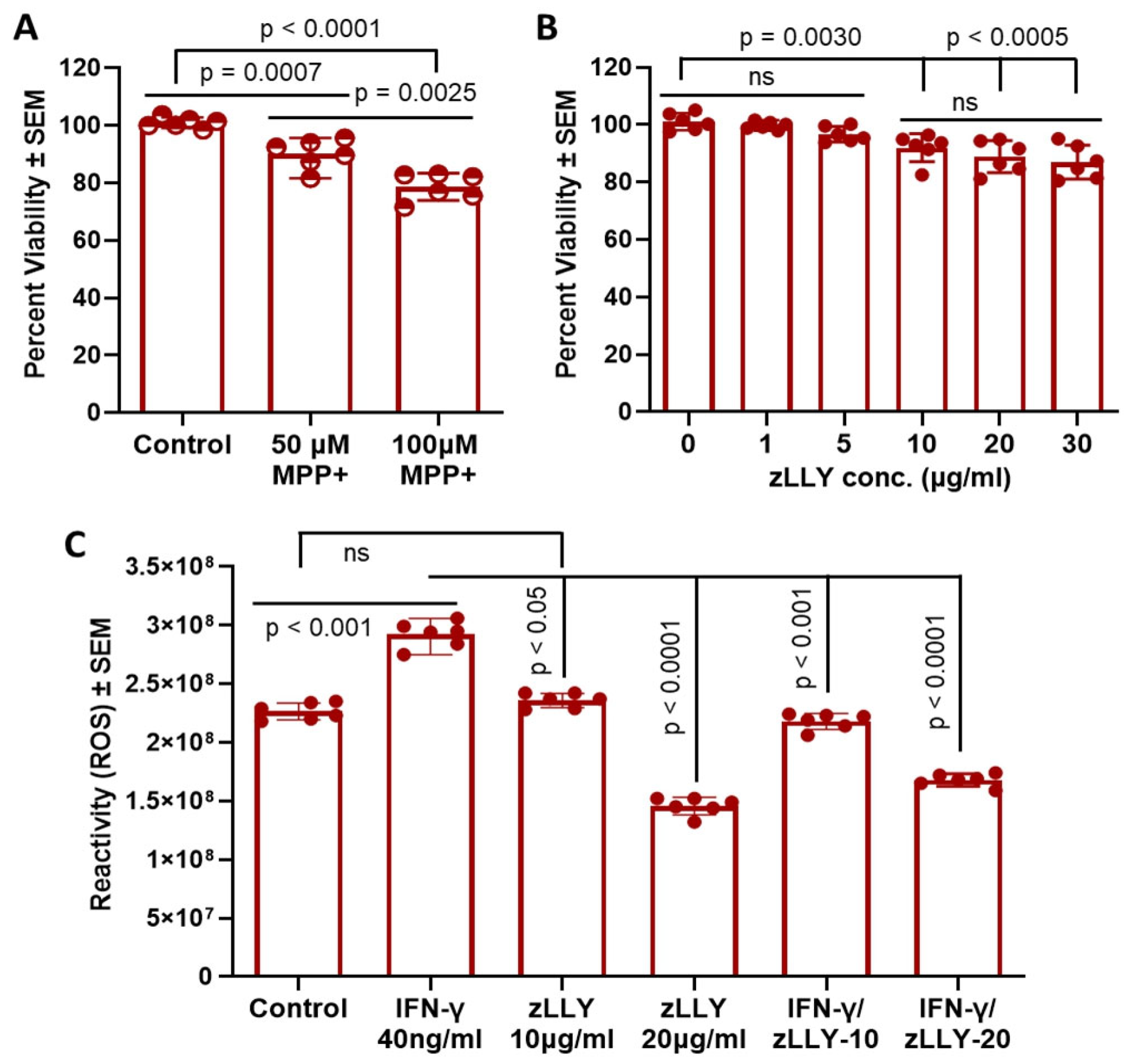
3.1. Determination of Optimal Treatment Conditions in VSC 4.1 Motoneuron Cells
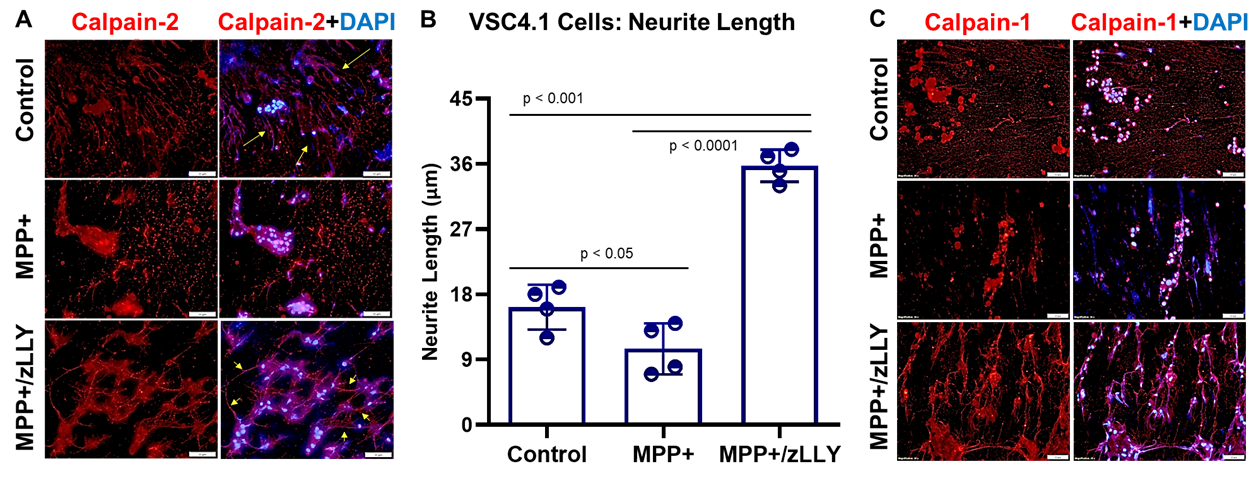
3.2. Calpain-2 Inhibition Enhances Neurite Outgrowth in MPP+-Treated Cells
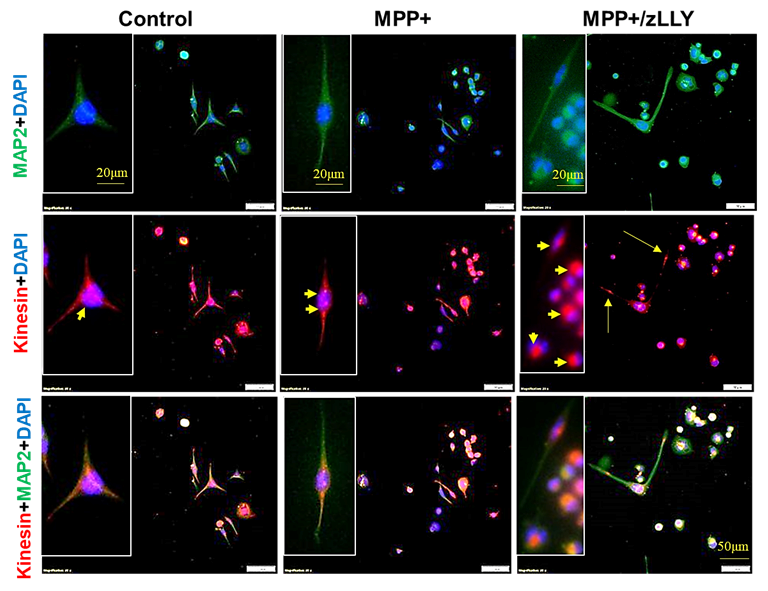
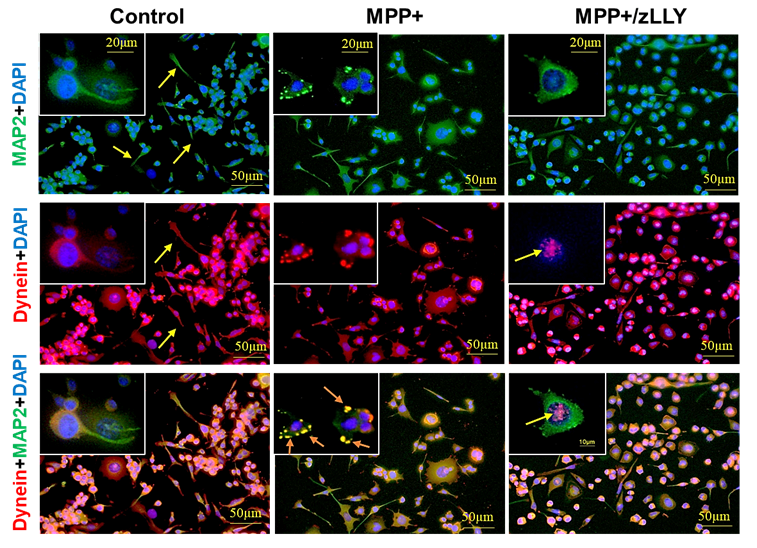
3.3. MPP+-Induced Redistribution of Kinesin and Dynein in Motoneuron Cells
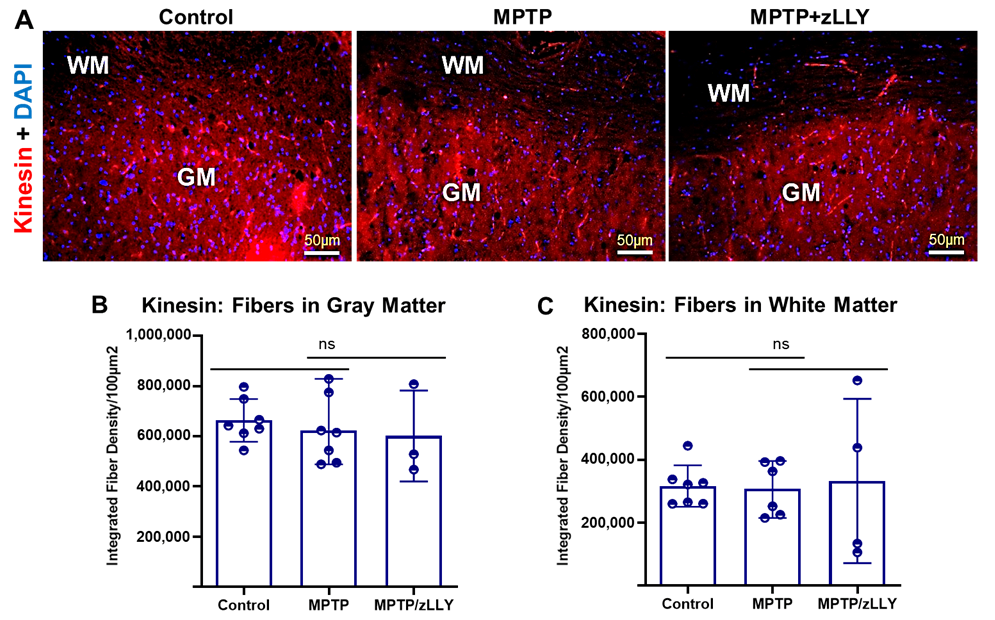
3.4. Kinesin Fiber Distribution in Spinal Cord Tissue
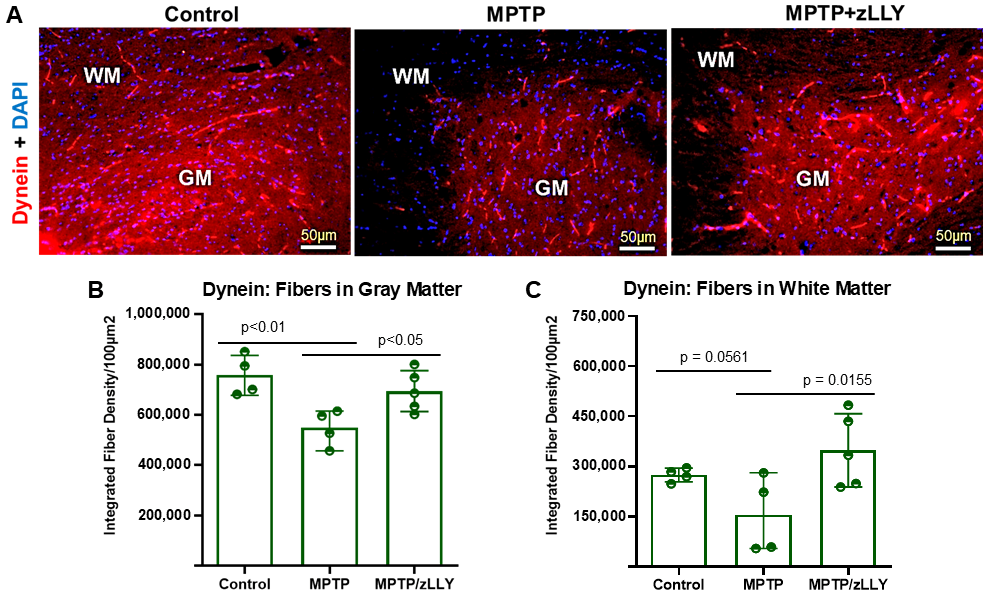
3.5. Dynein Fiber Density Is Reduced by MPTP and Preserved by zLLYCH2F Treatment
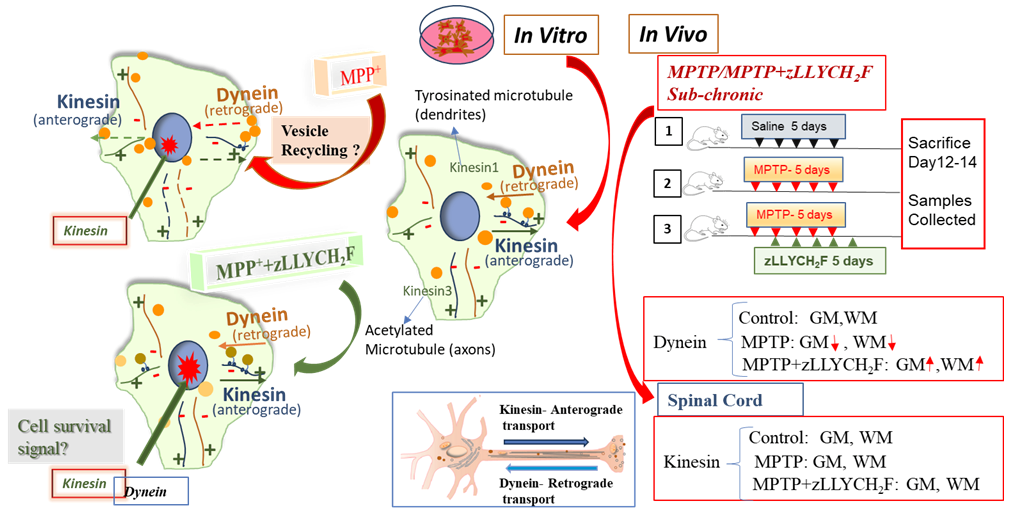
3.6. Schematic Overview of Motor Protein Dysfunction and Rescue
4. Discussion
5. Conclusions
Author Contributions
Funding
Institutional Review Board Statement
Informed Consent Statement
Data Availability Statement
Acknowledgments
Conflicts of Interest
References
- Tanner, C.M.; Ostrem, J.L. Parkinson’s Disease. N. Engl. J. Med. 2024, 391, 442–452. [Google Scholar] [CrossRef]
- Brown, E.G.; Goldman, S.M.; Coffey, C.S.; Siderowf, A.; Simuni, T.; Meng, C.; Brumm, M.C.; Caspell-Garcia, C.; Marek, K.; Tanner, C.M.; et al. Occupational Pesticide Exposure in Parkinson’s Disease Related to GBA and LRRK2 Variants. J. Park. Dis. 2024, 14, 737–746. [Google Scholar] [CrossRef]
- Giani, A.M.; Shafeek, S.; Tatti, E. Editorial: Advancing personalized diagnosis and treatment in Parkinson’s disease: Integrating biomarkers, neuroimaging, and artificial intelligence. Front. Neurosci. 2025, 19, 1734524. [Google Scholar] [CrossRef]
- Palavra, N.C.; Naismith, S.L.; Lewis, S.J. Mild cognitive impairment in Parkinson’s disease: A review of current concepts. Neurol. Res. Int. 2013, 2013, 576091. [Google Scholar] [CrossRef]
- Dauer, W.; Przedborski, S. Parkinson’s disease: Mechanisms and models. Neuron 2003, 39, 889–909. [Google Scholar] [CrossRef]
- Kouli, A.; Torsney, K.M.; Kuan, W.L. Parkinson’s Disease: Etiology, Neuropathology, and Pathogenesis. In Parkinson’s Disease: Pathogenesis and Clinical Aspects; Stoker, T.B., Greenland, J.C., Eds.; Exon Publications: Brisbane, Australia, 2018. [Google Scholar]
- Zhou, Z.D.; Yi, L.X.; Wang, D.Q.; Lim, T.M.; Tan, E.K. Role of dopamine in the pathophysiology of Parkinson’s disease. Transl. Neurodegener. 2023, 12, 44. [Google Scholar] [CrossRef]
- Rademacher, K.; Nakamura, K. Role of dopamine neuron activity in Parkinson’s disease pathophysiology. Exp. Neurol. 2024, 373, 114645. [Google Scholar] [CrossRef]
- Samantaray, S.; Knaryan, V.H.; Shields, D.C.; Cox, A.A.; Haque, A.; Banik, N.L. Inhibition of Calpain Activation Protects MPTP-Induced Nigral and Spinal Cord Neurodegeneration, Reduces Inflammation, and Improves Gait Dynamics in Mice. Mol. Neurobiol. 2015, 52, 1054–1066. [Google Scholar] [CrossRef]
- Haque, A.; Samantaray, S.; Knaryan, V.H.; Capone, M.; Hossain, A.; Matzelle, D.; Chandran, R.; Shields, D.C.; Farrand, A.Q.; Boger, H.A.; et al. Calpain mediated expansion of CD4+ cytotoxic T cells in rodent models of Parkinson’s disease. Exp. Neurol. 2020, 330, 113315. [Google Scholar] [CrossRef]
- Zaman, V.; Drasites, K.P.; Myatich, A.; Shams, R.; Shields, D.C.; Matzelle, D.; Haque, A.; Banik, N.L. Inhibition of Calpain Attenuates Degeneration of Substantia Nigra Neurons in the Rotenone Rat Model of Parkinson’s Disease. Int. J. Mol. Sci. 2022, 23, 13849. [Google Scholar] [CrossRef]
- Doherty, D.W.; Chen, L.; Smith, Y.; Wichmann, T.; Chu, H.Y.; Lytton, W.W. Enhanced beta power emerges from simulated parkinsonian primary motor cortex. npj Park. Dis. 2025, 11, 230. [Google Scholar] [CrossRef] [PubMed]
- Guedes-Dias, P.; Holzbaur, E.L.F. Axonal transport: Driving synaptic function. Science 2019, 366, eaaw9997. [Google Scholar] [CrossRef] [PubMed]
- Maday, S.; Twelvetrees, A.E.; Moughamian, A.J.; Holzbaur, E.L. Axonal transport: Cargo-specific mechanisms of motility and regulation. Neuron 2014, 84, 292–309. [Google Scholar] [CrossRef] [PubMed]
- De Vos, K.J.; Hafezparast, M. Neurobiology of axonal transport defects in motor neuron diseases: Opportunities for translational research? Neurobiol. Dis. 2017, 105, 283–299. [Google Scholar] [CrossRef]
- Smith, G.; Sweeney, S.T.; O’Kane, C.J.; Prokop, A. How neurons maintain their axons long-term: An integrated view of axon biology and pathology. Front. Neurosci. 2023, 17, 1236815. [Google Scholar] [CrossRef]
- Xu, B.; Lei, X.; Yang, Y.; Yu, J.; Chen, J.; Xu, Z.; Ye, K.; Zhang, J. Peripheral proteinopathy in neurodegenerative diseases. Transl. Neurodegener. 2025, 14, 2. [Google Scholar] [CrossRef]
- Berth, S.H.; Lloyd, T.E. Disruption of axonal transport in neurodegeneration. J. Clin. Investig. 2023, 133, e168554. [Google Scholar] [CrossRef]
- Chung, C.G.; Lee, H.; Lee, S.B. Mechanisms of protein toxicity in neurodegenerative diseases. Cell. Mol. Life Sci. 2018, 75, 3159–3180. [Google Scholar] [CrossRef]
- Guo, W.; Stoklund Dittlau, K.; Van Den Bosch, L. Axonal transport defects and neurodegeneration: Molecular mechanisms and therapeutic implications. Semin. Cell Dev. Biol. 2020, 99, 133–150. [Google Scholar] [CrossRef]
- Meredith, G.E.; Rademacher, D.J. MPTP mouse models of Parkinson’s disease: An update. J. Park. Dis. 2011, 1, 19–33. [Google Scholar] [CrossRef]
- Lai, M.C.; Liu, W.Y.; Liou, S.S.; Liu, I.M. Hispidin in the Medicinal Fungus Protects Dopaminergic Neurons from JNK Activation-Regulated Mitochondrial-Dependent Apoptosis in an MPP+-Induced In Vitro Model of Parkinson’s Disease. Nutrients 2023, 15, 549. [Google Scholar] [CrossRef]
- Park, J.; Jang, K.M.; Park, K.K. Effects of Apamin on MPP+-Induced Calcium Overload and Neurotoxicity by Targeting CaMKII/ERK/p65/STAT3 Signaling Pathways in Dopaminergic Neuronal Cells. Int. J. Mol. Sci. 2022, 23, 15255. [Google Scholar] [CrossRef]
- Chun, H.S.; Gibson, G.E.; DeGiorgio, L.A.; Zhang, H.; Kidd, V.J.; Son, J.H. Dopaminergic cell death induced by MPP+, oxidant and specific neurotoxicants shares the common molecular mechanism. J. Neurochem. 2001, 76, 1010–1021. [Google Scholar] [CrossRef]
- Kim-Han, J.S.; Antenor-Dorsey, J.A.; O’Malley, K.L. The parkinsonian mimetic, MPP+, specifically impairs mitochondrial transport in dopamine axons. J. Neurosci. 2011, 31, 7212–7221. [Google Scholar] [CrossRef] [PubMed]
- Rudenok, M.M.; Shadrina, M.I.; Filatova, E.V.; Rybolovlev, I.N.; Nesterov, M.S.; Abaimov, D.A.; Ageldinov, R.A.; Kolacheva, A.A.; Ugrumov, M.V.; Slominsky, P.A.; et al. Expression Analysis of Genes Involved in Transport Processes in Mice with MPTP-Induced Model of Parkinson’s Disease. Life 2022, 12, 751. [Google Scholar] [CrossRef]
- Hata, S.; Sorimachi, H.; Nakagawa, K.; Maeda, T.; Abe, K.; Suzuki, K. Domain II of m-calpain is a Ca2+-dependent cysteine protease. FEBS Lett. 2001, 501, 111–114. [Google Scholar] [CrossRef] [PubMed]
- Baudry, M.; Bi, X. Calpain-1 and Calpain-2 in the Brain: What Have We Learned from 45 Years of Research? Cells 2025, 14, 1301. [Google Scholar] [CrossRef] [PubMed]
- Metwally, E.; Al-Abbadi, H.A.; Hussain, T.; Murtaza, G.; Abdellatif, A.M.; Ahmed, M.F. Calpain signaling: From biology to therapeutic opportunities in neurodegenerative disorders. Front. Vet. Sci. 2023, 10, 1235163. [Google Scholar] [CrossRef]
- Ma, M. Role of calpains in the injury-induced dysfunction and degeneration of the mammalian axon. Neurobiol. Dis. 2013, 60, 61–79. [Google Scholar] [CrossRef]
- Wang, Y.; Liu, Y.; Nham, A.; Sherbaf, A.; Quach, D.; Yahya, E.; Ranburger, D.; Bi, X.; Baudry, M. Calpain-2 as a therapeutic target in repeated concussion-induced neuropathy and behavioral impairment. Sci. Adv. 2020, 6, eaba5547. [Google Scholar] [CrossRef]
- Goll, D.E.; Thompson, V.F.; Li, H.; Wei, W.; Cong, J. The calpain system. Physiol. Rev. 2003, 83, 731–801. [Google Scholar] [CrossRef] [PubMed]
- Saatman, K.E.; Creed, J.; Raghupathi, R. Calpain as a therapeutic target in traumatic brain injury. Neurotherapeutics 2010, 7, 31–42. [Google Scholar] [CrossRef] [PubMed]
- Lewis, P.A. Vesicular dysfunction and pathways to neurodegeneration. Essays Biochem. 2021, 65, 941–948. [Google Scholar] [CrossRef] [PubMed]
- Amin, S.; Taverna, E. Vesicular trafficking and cell-cell communication in neurodevelopment and neurodegeneration. Front. Cell Dev. Biol. 2025, 13, 1600034. [Google Scholar] [CrossRef]
- Das, A.; Smith, J.A.; Gibson, C.; Varma, A.K.; Ray, S.K.; Banik, N.L. Estrogen receptor agonists and estrogen attenuate TNF-α-induced apoptosis in VSC4.1 motoneurons. J. Endocrinol. 2011, 208, 171–182. [Google Scholar] [CrossRef]
- Sato, J.D.; Kan, M. Media for culture of mammalian cells. In Current Protocols in Cell Biology; Chapter 1, Unit 1.2; Wiley: Hoboken, NJ, USA, 2001. [Google Scholar]
- Zaman, V.; Gathings, A.; Drasites, K.P.; Shields, D.C.; Banik, N.L.; Haque, A. Neuroprotective Effects of Calpain Inhibition in Parkinson’s Disease: Insights from Cellular and Murine Models. Cells 2025, 14, 1310. [Google Scholar] [CrossRef]
- Hossain, A.; Radwan, F.F.; Doonan, B.P.; God, J.M.; Zhang, L.; Bell, P.D.; Haque, A. A possible cross-talk between autophagy and apoptosis in generating an immune response in melanoma. Apoptosis 2012, 17, 1066–1078. [Google Scholar] [CrossRef]
- Haque, A.; Drasites, K.P.; Cox, A.; Capone, M.; Myatich, A.I.; Shams, R.; Matzelle, D.; Garner, D.P.; Bredikhin, M.; Shields, D.C.; et al. Protective Effects of Estrogen via Nanoparticle Delivery to Attenuate Myelin Loss and Neuronal Death after Spinal Cord Injury. Neurochem. Res. 2021, 46, 2979–2990. [Google Scholar] [CrossRef]
- Haque, A.; Zaman, V.; Drasites, K.P.; Matzelle, D.; Sawant, S.; Vertegel, A.; Varma, A.; Banik, N.L. Induction of Neural Differentiation and Protection by a Novel Slow-Release Nanoparticle Estrogen Construct in a Rat Model of Spinal Cord Injury. Neurochem. Res. 2024, 50, 41. [Google Scholar] [CrossRef]
- Ravikumar, B.; Acevedo-Arozena, A.; Imarisio, S.; Berger, Z.; Vacher, C.; O’Kane, C.J.; Brown, S.D.M.; Rubinsztein, D.C. Dynein mutations impair autophagic clearance of aggregate-prone proteins. Nat. Genet. 2005, 37, 771–776. [Google Scholar] [CrossRef]
- Kimura, N.; Okabayashi, S.; Ono, F. Dynein dysfunction disrupts intracellular vesicle trafficking bidirectionally and perturbs synaptic vesicle docking via endocytic disturbances a potential mechanism underlying age-dependent impairment of cognitive function. Am. J. Pathol. 2012, 180, 550–561. [Google Scholar] [CrossRef]
- Antony, A.; Ng, N.; Lauto, A.; Coorssen, J.R.; Myers, S.J. Calcium-Mediated Calpain Activation and Microtubule Dissociation in Cell Model of Hereditary Sensory Neuropathy Type-1 Expressing V144D SPTLC1 Mutation. DNA Cell Biol. 2022, 41, 225–234. [Google Scholar] [PubMed]
- Fifre, A.; Sponne, I.; Koziel, V.; Kriem, B.; Yen Potin, F.T.; Bihain, B.E.; Olivier, J.-L.; Oster, T.; Pillot, T. Microtubule-associated protein MAP1A, MAP1B, and MAP2 proteolysis during soluble amyloid β-peptide-induced neuronal apoptosis. Synergistic involvement of calpain and caspase-3. J. Biol. Chem. 2006, 281, 229–240. [Google Scholar] [CrossRef] [PubMed]
- Zhang, J.N.; Michel, U.; Lenz, C.; Friedel, C.C.; Koster, S.; d’Hedouville, Z.; Tönges, L.; Urlaub, H.; Bähr, M.; Lingor, P.; et al. Calpain-mediated cleavage of collapsin response mediator protein-2 drives acute axonal degeneration. Sci. Rep. 2016, 6, 37050. [Google Scholar] [CrossRef] [PubMed]
- Risiglione, P.; Leggio, L.; Cubisino, S.A.M.; Reina, S.; Paterno, G.; Marchetti, B.; Magrì, A.; Iraci, N.; Messina, A. High-Resolution Respirometry Reveals MPP+ Mitochondrial Toxicity Mechanism in a Cellular Model of Parkinson’s Disease. Int. J. Mol. Sci. 2020, 21, 7809. [Google Scholar] [CrossRef]
- Mapa, M.S.T.; Le, V.Q.; Wimalasena, K. Characteristics of the mitochondrial and cellular uptake of MPP+, as probed by the fluorescent mimic, 4’I-MPP+. PLoS ONE 2018, 13, e0197946. [Google Scholar] [CrossRef]
- Kuznetsov, I.A.; Kuznetsov, A.V. Dynein Dysfunction Prevents Maintenance of High Concentrations of Slow Axonal Transport Cargos at the Axon Terminal: A Computational Study. J. Biomech. Eng. 2023, 145, 071001. [Google Scholar] [CrossRef]
- Simoes, F.A.; Christoforidou, E.; Cassel, R.; Dupuis, L.; Hafezparast, M. Severe dynein dysfunction in cholinergic neurons exacerbates ALS-like phenotypes in a new mouse model. Biochim. Biophys. Acta Mol. Basis Dis. 2025, 1871, 167540. [Google Scholar] [CrossRef]
- Correale, J.; Marrodan, M.; Ysrraelit, M.C. Mechanisms of Neurodegeneration and Axonal Dysfunction in Progressive Multiple Sclerosis. Biomedicines 2019, 7, 14. [Google Scholar] [CrossRef]
- Abraham, Z.; Hawley, E.; Hayosh, D.; Webster-Wood, V.A.; Akkus, O. Kinesin and Dynein Mechanics: Measurement Methods and Research Applications. J. Biomech. Eng. 2018, 140, 020805. [Google Scholar] [CrossRef]
- Kiryu-Seo, S.; Kiyama, H. Mitochondrial behavior during axon regeneration/degeneration in vivo. Neurosci. Res. 2019, 139, 42–47. [Google Scholar] [CrossRef]
- Crish, S.D.; Dapper, J.D.; MacNamee, S.E.; Balaram, P.; Sidorova, T.N.; Lambert, W.S.; Calkins, D. Failure of axonal transport induces a spatially coincident increase in astrocyte BDNF prior to synapse loss in a central target. Neuroscience 2013, 229, 55–70. [Google Scholar] [CrossRef]
- Babetto, E.; Beirowski, B. Of axons that struggle to make ends meet: Linking axonal bioenergetic failure to programmed axon degeneration. Biochim. Biophys. Acta Bioenerg. 2022, 1863, 148545. [Google Scholar] [CrossRef] [PubMed]
- Yuan, J. Neuroprotective strategies targeting apoptotic and necrotic cell death for stroke. Apoptosis 2009, 14, 469–477. [Google Scholar] [CrossRef] [PubMed]
- Moujalled, D.; Strasser, A.; Liddell, J.R. Molecular mechanisms of cell death in neurological diseases. Cell Death Differ. 2021, 28, 2029–2044. [Google Scholar] [CrossRef] [PubMed]
- Rao, M.V.; Campbell, J.; Palaniappan, A.; Kumar, A.; Nixon, R.A. Calpastatin inhibits motor neuron death and increases survival of hSOD1G93A mice. J. Neurochem. 2016, 137, 253–265. [Google Scholar]
- Samantaray, S.; Knaryan, V.H.; Shields, D.C.; Banik, N.L. Critical role of calpain in spinal cord degeneration in Parkinson’s disease. J. Neurochem. 2013, 127, 880–890. [Google Scholar]
- Fellows, A.D.; Bruntraeger, M.; Burgold, T.; Bassett, A.R.; Carter, A.P. Dynein and dynactin move long-range but are delivered separately to the axon tip. J. Cell Biol. 2024, 223, e202309084. [Google Scholar] [CrossRef]
- Surana, S.; Villarroel-Campos, D.; Lazo, O.M.; Moretto, E.; Tosolini, A.P.; Rhymes, E.R.; Richter, S.; Sleigh, J.N.; Schiavo, G. The evolution of the axonal transport toolkit. Traffic 2020, 21, 13–33. [Google Scholar] [CrossRef]
- Garrott, S.R.; Gillies, J.P.; Siva, A.; Little, S.R.; El Jbeily, R.; DeSantis, M.E. Ndel1 disfavors dynein-dynactin-adaptor complex formation in two distinct ways. J. Biol. Chem. 2023, 299, 104735. [Google Scholar] [CrossRef]
- Urnavicius, L.; Zhang, K.; Diamant, A.G.; Motz, C.; Schlager, M.A.; Yu, M.; Patel, N.A.; Robinson, C.V.; Carter, A.P. The structure of the dynactin complex and its interaction with dynein. Science 2015, 347, 1441–1446. [Google Scholar] [CrossRef] [PubMed]
- Voicu, V.; Toader, C.; Serban, M.; Covache-Busuioc, R.A.; Ciurea, A.V. Systemic Neurodegeneration and Brain Aging: Multi-Omics Disintegration, Proteostatic Collapse, and Network Failure Across the CNS. Biomedicines 2025, 13, 2025. [Google Scholar] [CrossRef] [PubMed]
- Santurro, A.; De Simone, M.; Choucha, A.; Morena, D.; Consalvo, F.; Romano, D.; Terrasi, P.; Corrivetti, F.; Scrofani, R.; Narciso, N.; et al. Integrative Diagnostic and Prognostic Paradigms in Diffuse Axonal Injury: Insights from Clinical, Histopathological, Biomolecular, Radiological, and AI-Based Perspectives. Int. J. Mol. Sci. 2025, 26, 7808. [Google Scholar] [CrossRef] [PubMed]
- Sharma, J.; Mulherkar, S.; Chen, U.I.; Xiong, Y.; Bajaj, L.; Cho, B.K.; Goo, Y.A.; Leung, H.-C.E.; Tolias, K.F.; Sardiello, M. Calpain activity is negatively regulated by a KCTD7-Cullin-3 complex via non-degradative ubiquitination. Cell Discov. 2023, 9, 32. [Google Scholar]
- Cykowski, M.D.; Powell, S.Z.; Peterson, L.E.; Appel, J.W.; Rivera, A.L.; Takei, H.; Chang, E.; Appel, S.H. Clinical Significance of TDP-43 Neuropathology in Amyotrophic Lateral Sclerosis. J. Neuropathol. Exp. Neurol. 2017, 76, 402–413. [Google Scholar] [CrossRef]
- Chen, L.; Zhang, S.; Liu, S.; Gao, S. Amyotrophic Lateral Sclerosis Mechanism: Insights from the Caenorhabditis elegans Models. Cells 2024, 13, 99. [Google Scholar] [CrossRef]
- Stringer, R.N.; Weiss, N. Pathophysiology of ion channels in amyotrophic lateral sclerosis. Mol. Brain 2023, 16, 82. [Google Scholar] [CrossRef]
- Maiaru, M.; Petrini, A.; Angelis, F.; Nazio, F.; Marinelli, S. Unveiling the peripheral nerve hallmarks of chemotherapy-induced neuropathy: Insights from paclitaxel treatment in a murine model. Neurobiol. Pain 2025, 18, 100200. [Google Scholar] [CrossRef]
- Starobova, H.; Vetter, I. Pathophysiology of Chemotherapy-Induced Peripheral Neuropathy. Front. Mol. Neurosci. 2017, 10, 174. [Google Scholar] [CrossRef]
- Incebacak Eltemur, R.D.; Nguyen, H.P.; Weber, J.J. Calpain-mediated proteolysis as driver and modulator of polyglutamine toxicity. Front. Mol. Neurosci. 2022, 15, 1020104. [Google Scholar] [CrossRef]
- Gonzalez, P.; Lozano, P.; Ros, G.; Solano, F. Hyperglycemia and Oxidative Stress: An Integral, Updated and Critical Overview of Their Metabolic Interconnections. Int. J. Mol. Sci. 2023, 24, 9352. [Google Scholar] [CrossRef]
- Marie, N.; Lindsay, A.J.; McCaffrey, M.W. Rab coupling protein is selectively degraded by calpain in a Ca2+-dependent manner. Biochem. J. 2005, 389, 223–231. [Google Scholar] [CrossRef]
- Chutna, O.; Goncalves, S.; Villar-Pique, A.; Guerreiro, P.; Marijanovic, Z.; Mendes, T.; Ramalho, J.; Emmanouilidou, E.; Ventura, S.; Klucken, J.; et al. The small GTPase Rab11 co-localizes with α-synuclein in intracellular inclusions and modulates its aggregation, secretion and toxicity. Hum. Mol. Genet. 2014, 23, 6732–6745. [Google Scholar] [CrossRef]


Disclaimer/Publisher’s Note: The statements, opinions and data contained in all publications are solely those of the individual author(s) and contributor(s) and not of MDPI and/or the editor(s). MDPI and/or the editor(s) disclaim responsibility for any injury to people or property resulting from any ideas, methods, instructions or products referred to in the content. |
© 2026 by the authors. Licensee MDPI, Basel, Switzerland. This article is an open access article distributed under the terms and conditions of the Creative Commons Attribution (CC BY) license.
Share and Cite
Zaman, V.; Green, C.; Sitgreaves, K.; Gathings, A.; Drasites, K.P.; Coleman, N.; Huell, J.; McDonald, T.; Banik, N.L.; Haque, A. Calpain-2 Regulates Kinesin and Dynein Dysfunction in Neurotoxin-Induced Motoneuron Injury. Brain Sci. 2026, 16, 92. https://doi.org/10.3390/brainsci16010092
Zaman V, Green C, Sitgreaves K, Gathings A, Drasites KP, Coleman N, Huell J, McDonald T, Banik NL, Haque A. Calpain-2 Regulates Kinesin and Dynein Dysfunction in Neurotoxin-Induced Motoneuron Injury. Brain Sciences. 2026; 16(1):92. https://doi.org/10.3390/brainsci16010092
Chicago/Turabian StyleZaman, Vandana, Camille Green, Kayce Sitgreaves, Amy Gathings, Kelsey P. Drasites, Noah Coleman, Jessica Huell, Townsend McDonald, Narendra L. Banik, and Azizul Haque. 2026. "Calpain-2 Regulates Kinesin and Dynein Dysfunction in Neurotoxin-Induced Motoneuron Injury" Brain Sciences 16, no. 1: 92. https://doi.org/10.3390/brainsci16010092
APA StyleZaman, V., Green, C., Sitgreaves, K., Gathings, A., Drasites, K. P., Coleman, N., Huell, J., McDonald, T., Banik, N. L., & Haque, A. (2026). Calpain-2 Regulates Kinesin and Dynein Dysfunction in Neurotoxin-Induced Motoneuron Injury. Brain Sciences, 16(1), 92. https://doi.org/10.3390/brainsci16010092