Effects of Dry Needling of the Obliquus Capitis Inferior in Patients with Cervicogenic Headache and Upper Cervical Dysfunction: An Exploratory Randomized Sham-Controlled Trial

Abstract
1. Introduction
2. Materials and Methods
2.1. Protocol and Registration
2.2. Study Design
2.3. Randomization and Blinding
2.4. Sample Size
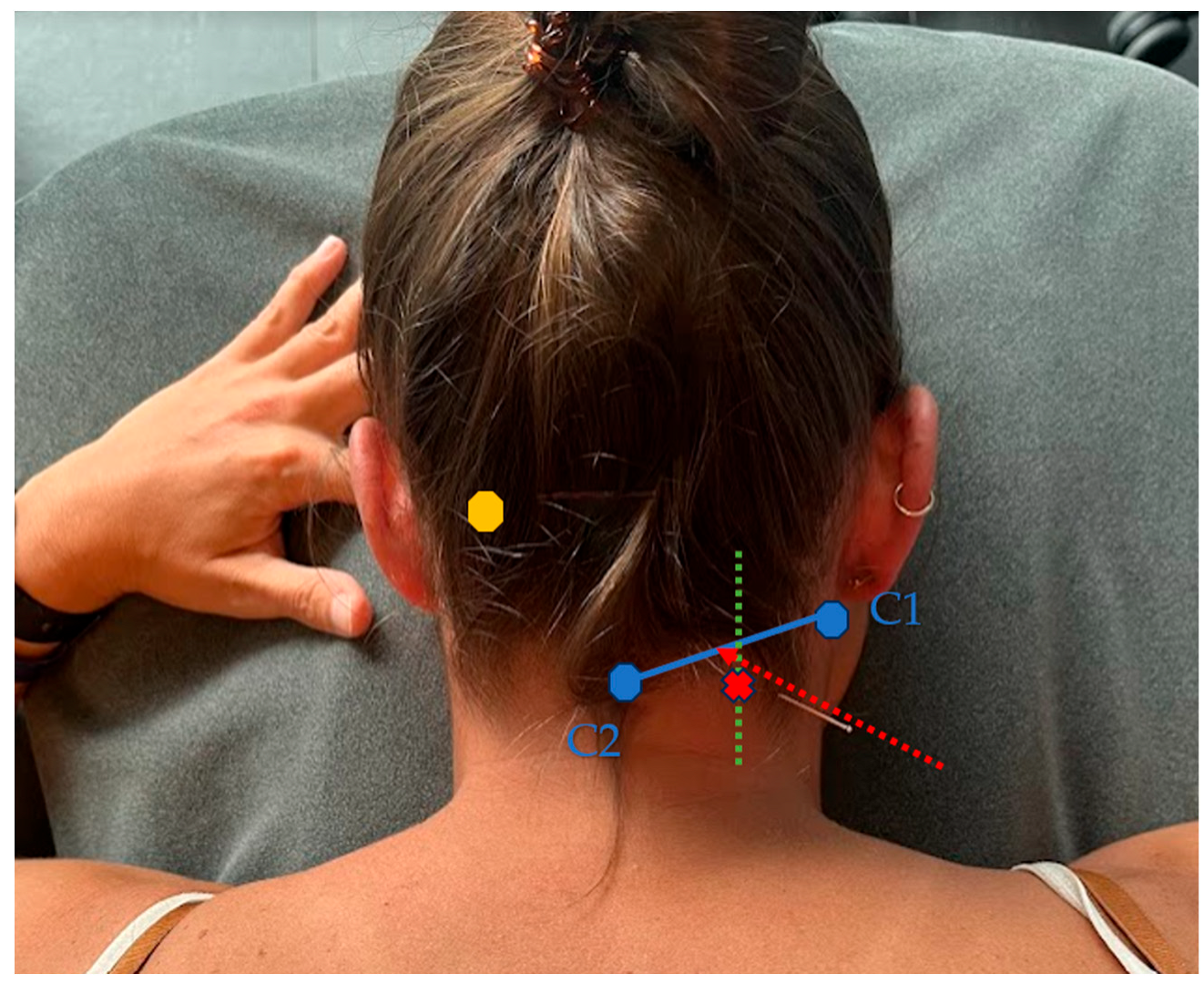
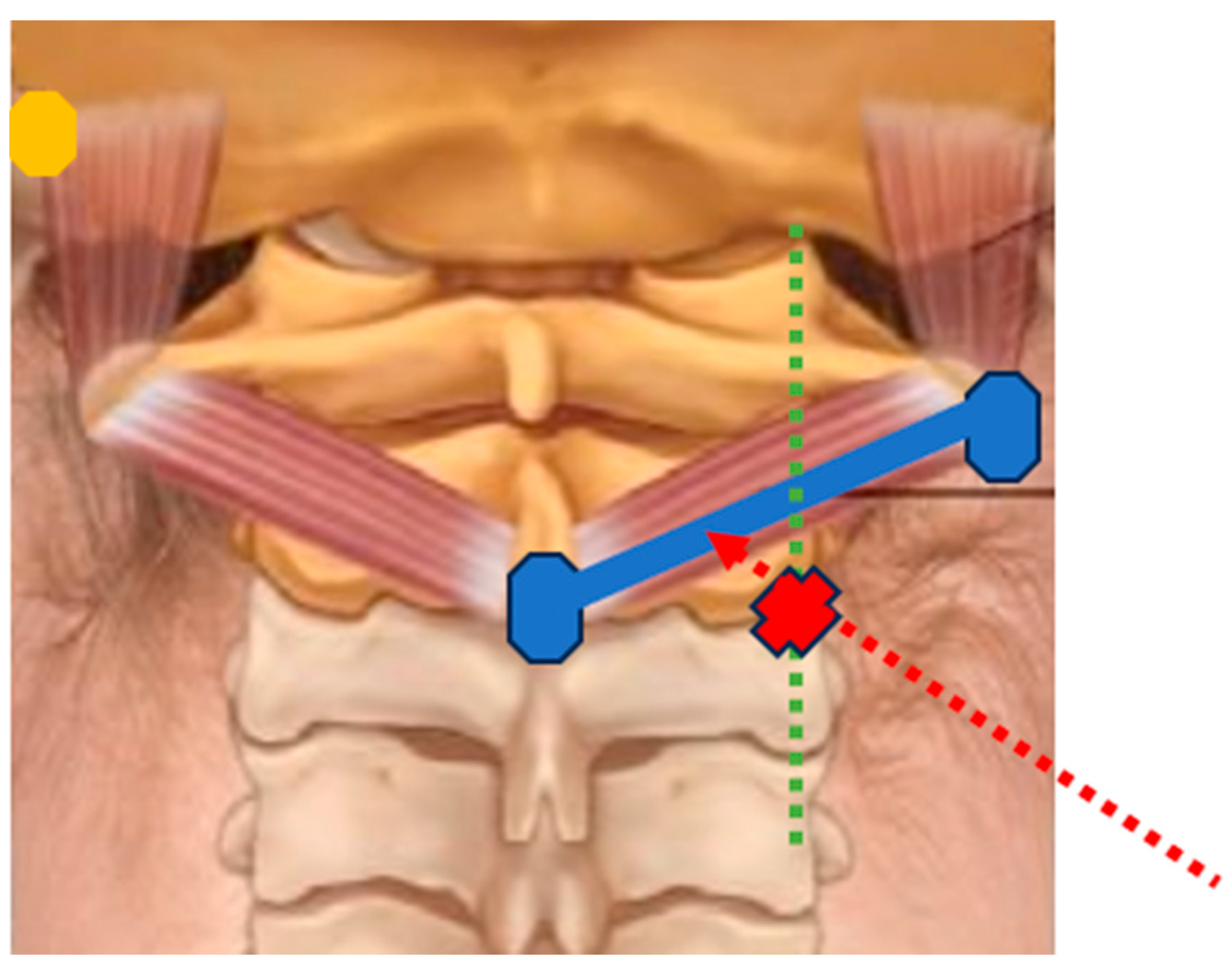
2.5. Interventions
2.6. Outcome Measures
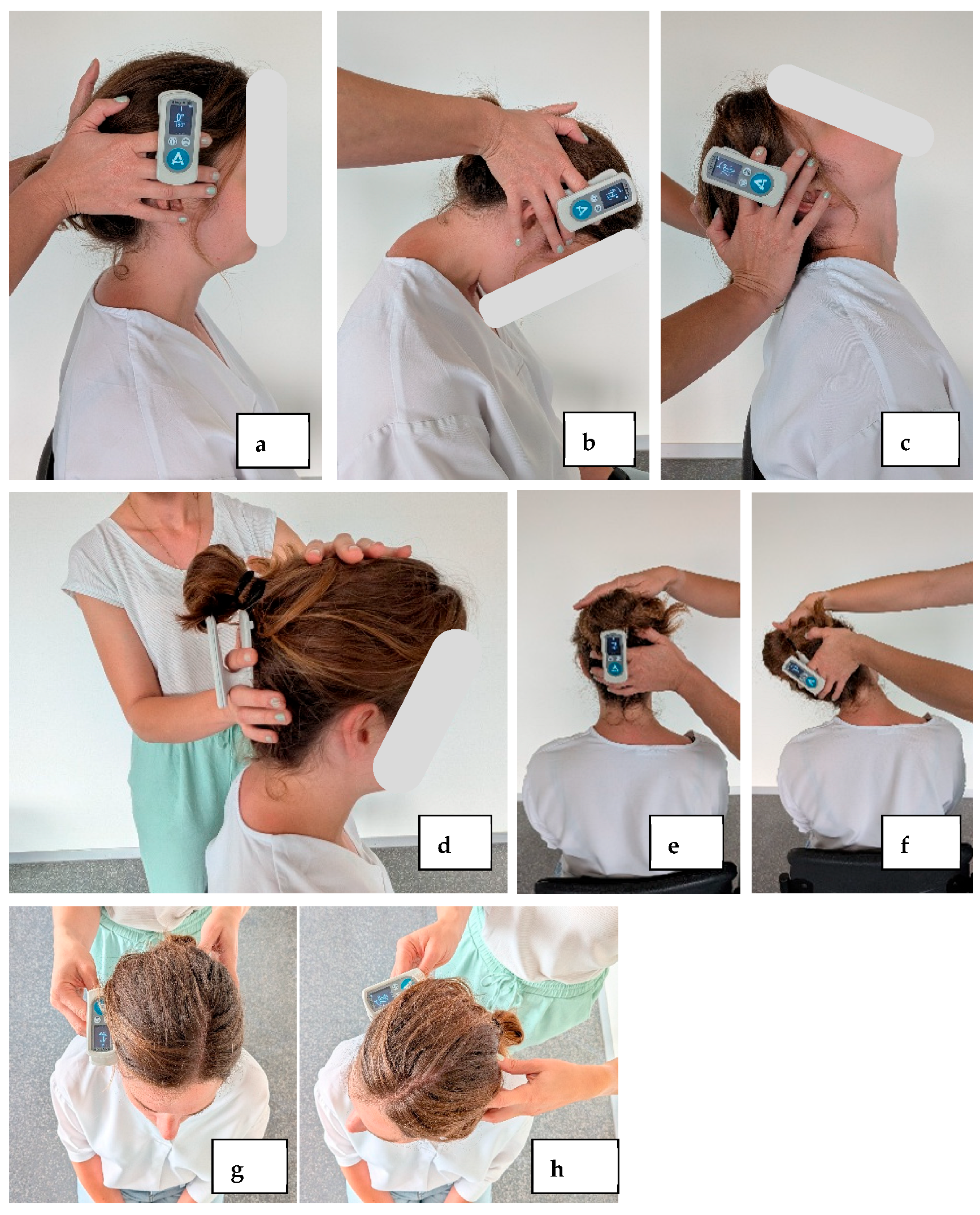
2.6.1. Primary Outcome Measure: C1–C2 Rotational Mobility
2.6.2. Secondary Outcome Measures
Functional Parameters
Headache-Related Parameters: Pain Intensity, Disability, Impact on Daily Life and Treatment Effect
Psychological Parameters
2.7. Statistical Analysis
3. Results
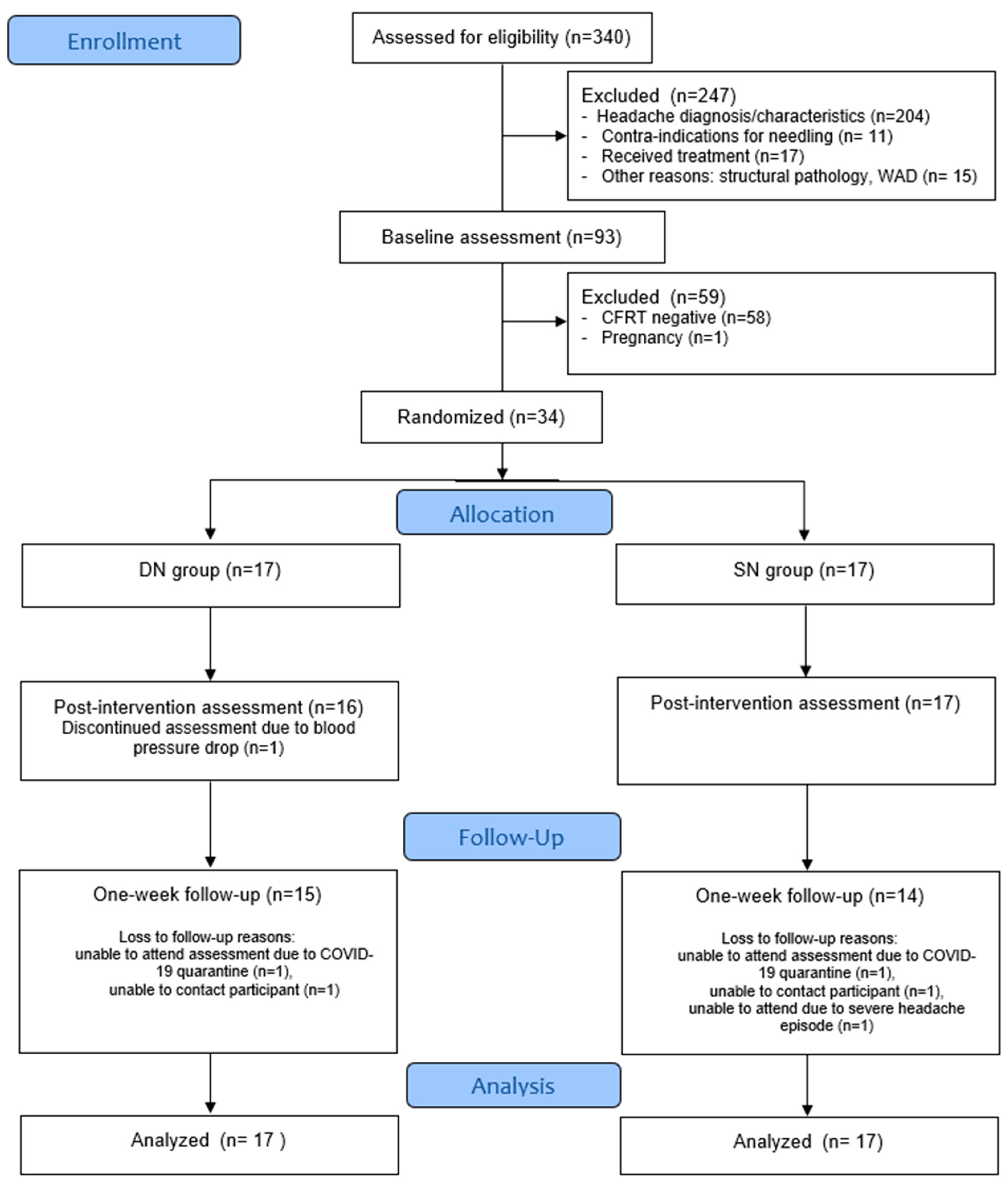
3.1. Participants
3.2. Primary Outcome Measure
3.3. Secondary Outcome Measures
3.3.1. Functional Outcome Measures
3.3.2. Headache-Related Outcome Measures
3.3.3. Psychological Outcome Measures
3.4. Adverse Events, Missing Data and Blinding
4. Discussion
4.1. Strengths and Limitations
4.2. Implications for Clinical Practice and Future Research
5. Conclusions
Supplementary Materials
Author Contributions
Funding
Institutional Review Board Statement
Informed Consent Statement
Data Availability Statement
Conflicts of Interest
Abbreviations
| CeH | Cervicogenic headache |
| OCI | Obliquus capitis inferior |
| DN | Dry needling |
| SN | Sham needling |
| MT | Manual therapy |
| CFRT | Cervical flexion–rotation test |
| MD | Mean difference |
| CI | Confidence interval |
| TTH | Tension-type headache |
| ICHD | International classification of headache disorders |
| NP | Neck pain |
| JPE | Joint position error |
| ROM | Range of motion |
| PPT | Pressure pain threshold |
| STRICTA | Standards for reporting interventions in clinical trials of acupuncture |
| CONSORT | Consolidated standards of reporting trials |
| MDC | Minimal detectable change |
| MET | Muscle energy technique |
| SNAG | Sustained natural apophyseal glide |
| ICC | Intraclass correlation coefficient |
| CROM | Cervical range of motion device |
| CCFT | Craniocervical flexion test |
| NPRS | Numeric pain rating scale |
| MCID | Minimally clinical important difference |
| NDI | Neck disability index |
| HDI | Headache disability inventory |
| HIT-6 | Headache impact test—6 |
| GPES | Global perceived effect scale |
| CSI | Central sensitization inventory |
| PCS | Pain catastrophizing scale |
| TSK | Tampa scale for kinesiophobia |
| PCI | Pain coping inventory |
| BMI | Body mass index |
| Pc | Personal computer |
| Hrs | Hours |
| LMM | Linear mixed models |
| GEE | Generalized estimating equations |
| W | Week |
| ES | Effect size |
| BI | Bang’s blinding index |
Appendix A


Appendix B

Appendix C

| Guess | DN | SN | Do Not Know | Total | |
|---|---|---|---|---|---|
| Intervention | |||||
| DN | 8 (53.3%) | 3 (20.0%) | 4 (26.7%) | 15 | |
| SN | 5 (29.4%) | 5 (29.4%) | 7 (41.2%) | 17 | |
| Total | 13 (40.6%) | 8 (25.0%) | 11 (34.4%) | 32 | |
References
- Steiner, T.J.; Stovner, L.J.; Katsarava, Z.; Lainez, J.M.; Lampl, C.; Lantéri-Minet, M.; Rastenyte, D.; Ruiz de la Torre, E.; Tassorelli, C.; Barré, J.; et al. The impact of headache in Europe: Principal results of the Eurolight project. J. Headache Pain 2014, 15, 31. [Google Scholar] [CrossRef]
- Vos, T.; Flaxman, A.D.; Naghavi, M.; Lozano, R.; Michaud, C.; Ezzati, M.; Shibuya, K.; Salomon, J.A.; Abdalla, S.; Aboyans, V.; et al. Years lived with disability (YLDs) for 1160 sequelae of 289 diseases and injuries 1990–2010: A systematic analysis for the Global Burden of Disease Study 2010. Lancet 2012, 380, 2163–2196. [Google Scholar] [CrossRef] [PubMed]
- Knackstedt, H.; Bansevicius, D.; Aaseth, K.; Grande, R.B.; Lundqvist, C.; Russell, M.B. Cervicogenic headache in the general population: The Akershus study of chronic headache. Cephalalgia 2010, 30, 1468–1476. [Google Scholar] [CrossRef]
- Sjaastad, O.; Bakketeig, L.S. Prevalence of cervicogenic headache: Vågå study of headache epidemiology. Acta Neurol. Scand. 2008, 117, 173–180. [Google Scholar] [CrossRef] [PubMed]
- Headache Classification Committee of the International Headache Society (IHS) The International Classification of Headache Disorders, 3rd edition. Cephalalgia 2018, 38, 1–211. [CrossRef]
- Anarte-Lazo, E.; Carvalho, G.F.; Schwarz, A.; Luedtke, K.; Falla, D. Differentiating migraine, cervicogenic headache and asymptomatic individuals based on physical examination findings: A systematic review and meta-analysis. BMC Musculoskelet. Disord. 2021, 22, 755. [Google Scholar] [CrossRef] [PubMed]
- Piovesan, E.J.; Utiumi, M.A.T.; Grossi, D.B. Cervicogenic headache—How to recognize and treat. Best. Pract. Res. Clin. Rheumatol. 2024, 38, 101931. [Google Scholar] [CrossRef]
- Verma, S.; Tripathi, M.; Chandra, P.S. Cervicogenic Headache: Current Perspectives. Neurol. India 2021, 69, S194–S198. [Google Scholar] [CrossRef]
- Luedtke, K.; Boissonnault, W.; Caspersen, N.; Castien, R.; Chaibi, A.; Falla, D.; Fernández-de-Las-Peñas, C.; Hall, T.; Hirsvang, J.R.; Horre, T.; et al. International consensus on the most useful physical examination tests used by physiotherapists for patients with headache: A Delphi study. Man. Ther. 2016, 23, 17–24. [Google Scholar] [CrossRef]
- Hall, T.M.; Briffa, K.; Hopper, D.; Robinson, K.W. The relationship between cervicogenic headache and impairment determined by the flexion-rotation test. J. Manip. Physiol. Ther. 2010, 33, 666–671. [Google Scholar] [CrossRef]
- Bogduk, N.; Mercer, S. Biomechanics of the cervical spine. I: Normal kinematics. Clin. Biomech. 2000, 15, 633–648. [Google Scholar] [CrossRef]
- Sillevis, R.; Cerdeira, D.; Yankovich, J.; Hansen, A.W. The Immediate Effect of Dry Needling Electric Muscle Stimulation on the Position of Atlas. J. Clin. Med. 2024, 13, 4097. [Google Scholar] [CrossRef]
- Murillo, C.; Treleaven, J.; Cagnie, B.; Peral, J.; Falla, D.; Lluch, E. Effects of dry needling of the obliquus capitis inferior on sensorimotor control and cervical mobility in people with neck pain: A double-blind, randomized sham-controlled trial. Braz. J. Phys. Ther. 2021, 25, 826–836. [Google Scholar] [CrossRef]
- Yamauchi, M.; Yamamoto, M.; Kitamura, K.; Morita, S.; Nagakura, R.; Matsunaga, S.; Abe, S. Morphological classification and comparison of suboccipital muscle fiber characteristics. Anat. Cell Biol. 2017, 50, 247–254. [Google Scholar] [CrossRef] [PubMed]
- Kulkarni, V.; Chandy, M.J.; Babu, K.S. Quantitative study of muscle spindles in suboccipital muscles of human foetuses. Neurol. India 2001, 49, 355–359. [Google Scholar] [PubMed]
- Pontell, M.E.; Scali, F.; Enix, D.E.; Battaglia, P.J.; Marshall, E. Histological examination of the human obliquus capitis inferior myodural bridge. Ann. Anat. 2013, 195, 522–526. [Google Scholar] [CrossRef]
- Sillevis, R.; Hogg, R. Anatomy and clinical relevance of sub occipital soft tissue connections with the dura mater in the upper cervical spine. PeerJ 2020, 8, e9716. [Google Scholar] [CrossRef]
- Enix, D.E.; Scali, F.; Pontell, M.E. The cervical myodural bridge, a review of literature and clinical implications. J. Can. Chiropr. Assoc. 2014, 58, 184–192. [Google Scholar]
- Bogduk, N. Cervicogenic headache: Anatomic basis and pathophysiologic mechanisms. Curr. Pain Headache Rep. 2001, 5, 382–386. [Google Scholar] [CrossRef] [PubMed]
- Pourahmadi, M.; Dommerholt, J.; Fernández-de-Las-Peñas, C.; Koes, B.W.; Mohseni-Bandpei, M.A.; Mansournia, M.A.; Delavari, S.; Keshtkar, A.; Bahramian, M. Dry Needling for the Treatment of Tension-Type, Cervicogenic, or Migraine Headaches: A Systematic Review and Meta-Analysis. Phys. Ther. 2021, 101, pzab068. [Google Scholar] [CrossRef]
- Kandeel, M.; Morsy, M.A.; Al Khodair, K.M.; Alhojaily, S. Dry needling techniques as a treatment for improving disability and pain in patients with different types of headache: A systematic review and meta-analysis. Complement. Ther. Med. 2024, 86, 103085. [Google Scholar] [CrossRef]
- Escaloni, J.; Butts, R.; Dunning, J. The use of dry needling as a diagnostic tool and clinical treatment for cervicogenic dizziness: A narrative review & case series. J. Bodyw. Mov. Ther. 2018, 22, 947–955. [Google Scholar] [CrossRef]
- Sedighi, A.; Nakhostin Ansari, N.; Naghdi, S. Comparison of acute effects of superficial and deep dry needling into trigger points of suboccipital and upper trapezius muscles in patients with cervicogenic headache. J. Bodyw. Mov. Ther. 2017, 21, 810–814. [Google Scholar] [CrossRef]
- Moher, D.; Hopewell, S.; Schulz, K.F.; Montori, V.; Gøtzsche, P.C.; Devereaux, P.J.; Elbourne, D.; Egger, M.; Altman, D.G. CONSORT 2010 explanation and elaboration: Updated guidelines for reporting parallel group randomised trials. Int. J. Surg. 2012, 10, 28–55. [Google Scholar] [CrossRef] [PubMed]
- MacPherson, H.; Altman, D.G.; Hammerschlag, R.; Youping, L.; Taixiang, W.; White, A.; Moher, D. Revised STandards for Reporting Interventions in Clinical Trials of Acupuncture (STRICTA): Extending the CONSORT statement. PLoS Med. 2010, 7, e1000261. [Google Scholar] [CrossRef] [PubMed]
- Ogince, M.; Hall, T.; Robinson, K.; Blackmore, A.M. The diagnostic validity of the cervical flexion-rotation test in C1/2-related cervicogenic headache. Man. Ther. 2007, 12, 256–262. [Google Scholar] [CrossRef] [PubMed]
- Hall, T.; Briffa, K.; Hopper, D.; Robinson, K. Long-term stability and minimal detectable change of the cervical flexion-rotation test. J. Orthop. Sports Phys. Ther. 2010, 40, 225–229. [Google Scholar] [CrossRef]
- Fernández-de-las-Peñas, C.F.; Ortega-Santiago, R.; Torres-Chica, B.; Dommerholt, J. Dry needling of the head and neck muscles. In Trigger Point Dry Needling—An Evidenced and Clinical-Based Approach, 2nd ed.; Churchill Livingstone: London, UK; Elsevier: Amsterdam, The Netherlands, 2018. [Google Scholar]
- Kearns, G.A.; Hooper, T.L.; Brismée, J.M.; Allen, B.; Lierly, M.; Gilbert, K.K.; Pendergrass, T.J.; Edwards, D. Influence of clinical experience on accuracy and safety of obliquus capitus inferior dry needling in unembalmed cadavers. Physiother. Theory Pract. 2022, 38, 2052–2061. [Google Scholar] [CrossRef]
- Hong, C.Z. Considerations and Recommendations Regarding Myofascial Trigger Point Injection. J. Musculoskelet. Pain 1994, 2, 29–59. [Google Scholar] [CrossRef]
- Braithwaite, F.A.; Walters, J.L.; Li, L.S.K.; Moseley, G.L.; Williams, M.T.; McEvoy, M.P. Blinding Strategies in Dry Needling Trials: Systematic Review and Meta-Analysis. Phys. Ther. 2019, 99, 1461–1480. [Google Scholar] [CrossRef]
- Braithwaite, F.A.; Walters, J.L.; Moseley, G.L.; Williams, M.T.; McEvoy, M.P. Towards more homogenous and rigorous methods in sham-controlled dry needling trials: Two Delphi surveys. Physiotherapy 2020, 106, 12–23. [Google Scholar] [CrossRef] [PubMed]
- Fryer, G.; Ruszkowski, W. The influence of contraction duration in muscle energy technique applied to the atlanto-axial joint. J. Osteopath. Med. 2004, 7, 79–84. [Google Scholar] [CrossRef]
- Hall, T.; Chan, H.T.; Christensen, L.; Odenthal, B.; Wells, C.; Robinson, K. Efficacy of a C1-C2 self-sustained natural apophyseal glide (SNAG) in the management of cervicogenic headache. J. Orthop. Sports Phys. Ther. 2007, 37, 100–107. [Google Scholar] [CrossRef]
- Mohamed, A.A.; Shendy, W.S.; Semary, M.; Mourad, H.S.; Battecha, K.H.; Soliman, E.S.; Sayed, S.H.E.; Mohamed, G.I. Combined use of cervical headache snag and cervical snag half rotation techniques in the treatment of cervicogenic headache. J. Phys. Ther. Sci. 2019, 31, 376–381. [Google Scholar] [CrossRef]
- Luedtke, K.; Schoettker-Königer, T.; Hall, T.; Reimer, C.; Grassold, M.; Hasselhoff-Styhler, P.; Neulinger, C.; Obrocki, M.; Przyhoda, P.; Schäfer, A. Concurrent validity and reliability of measuring range of motion during the cervical flexion rotation test with a novel digital goniometer. BMC Musculoskelet. Disord. 2020, 21, 535. [Google Scholar] [CrossRef]
- Revel, M.; Andre-Deshays, C.; Minguet, M. Cervicocephalic kinesthetic sensibility in patients with cervical pain. Arch. Phys. Med. Rehabil. 1991, 72, 288–291. [Google Scholar]
- Treleaven, J.; Jull, G.; Sterling, M. Dizziness and unsteadiness following whiplash injury: Characteristic features and relationship with cervical joint position error. J. Rehabil. Med. 2003, 35, 36–43. [Google Scholar] [CrossRef]
- Roren, A.; Mayoux-Benhamou, M.A.; Fayad, F.; Poiraudeau, S.; Lantz, D.; Revel, M. Comparison of visual and ultrasound based techniques to measure head repositioning in healthy and neck-pain subjects. Man. Ther. 2009, 14, 270–277. [Google Scholar] [CrossRef]
- Allison, G.T.; Fukushima, S. Estimating three-dimensional spinal repositioning error: The impact of range, posture, and number of trials. Spine 2003, 28, 2510–2516. [Google Scholar] [CrossRef]
- Swait, G.; Rushton, A.B.; Miall, R.C.; Newell, D. Evaluation of cervical proprioceptive function: Optimizing protocols and comparison between tests in normal subjects. Spine 2007, 32, E692–E701. [Google Scholar] [CrossRef] [PubMed]
- Werner, I.M.; Ernst, M.J.; Treleaven, J.; Crawford, R.J. Intra and interrater reliability and clinical feasibility of a simple measure of cervical movement sense in patients with neck pain. BMC Musculoskelet. Disord. 2018, 19, 358. [Google Scholar] [CrossRef]
- Pinsault, N.; Fleury, A.; Virone, G.; Bouvier, B.; Vaillant, J.; Vuillerme, N. Test-retest reliability of cervicocephalic relocation test to neutral head position. Physiother. Theory Pract. 2008, 24, 380–391. [Google Scholar] [CrossRef]
- Reddy, R.S.; Tedla, J.S.; Dixit, S.; Abohashrh, M. Cervical proprioception and its relationship with neck pain intensity in subjects with cervical spondylosis. BMC Musculoskelet. Disord. 2019, 20, 447. [Google Scholar] [CrossRef]
- Knapstad, M.K.; Nordahl, S.H.G.; Naterstad, I.F.; Ask, T.; Skouen, J.S.; Goplen, F.K. Measuring pressure pain threshold in the cervical region of dizzy patients-The reliability of a pressure algometer. Physiother. Res. Int. 2018, 23, e1736. [Google Scholar] [CrossRef]
- Oliveira, A.K.; Dibai-Filho, A.V.; Soleira, G.; Machado, A.C.F.; Guirro, R.R.J. Reliability of pressure pain threshold on myofascial trigger points in the trapezius muscle of women with chronic neck pain. Rev. Da Assoc. Medica Bras. (1992) 2021, 67, 708–712. [Google Scholar] [CrossRef]
- Jull, G.A.; O’Leary, S.P.; Falla, D.L. Clinical assessment of the deep cervical flexor muscles: The craniocervical flexion test. J. Manip. Physiol. Ther. 2008, 31, 525–533. [Google Scholar] [CrossRef]
- Araujo, F.X.; Ferreira, G.E.; Scholl Schell, M.; Castro, M.P.; Ribeiro, D.C.; Silva, M.F. Measurement Properties of the Craniocervical Flexion Test: A Systematic Review. Phys. Ther. 2020, 100, 1094–1117. [Google Scholar] [CrossRef]
- James, G.; Doe, T. The craniocervical flexion test: Intra-tester reliability in asymptomatic subjects. Physiother. Res. Int. 2010, 15, 144–149. [Google Scholar] [CrossRef]
- Jørgensen, R.; Ris, I.; Falla, D.; Juul-Kristensen, B. Reliability, construct and discriminative validity of clinical testing in subjects with and without chronic neck pain. BMC Musculoskelet. Disord. 2014, 15, 408. [Google Scholar] [CrossRef] [PubMed]
- Selistre, L.F.A.; Melo, C.S.; Noronha, M.A. Reliability and Validity of Clinical Tests for Measuring Strength or Endurance of Cervical Muscles: A Systematic Review and Meta-analysis. Arch. Phys. Med. Rehabil. 2021, 102, 1210–1227. [Google Scholar] [CrossRef] [PubMed]
- Cleland, J.A.; Childs, J.D.; Whitman, J.M. Psychometric properties of the Neck Disability Index and Numeric Pain Rating Scale in patients with mechanical neck pain. Arch. Phys. Med. Rehabil. 2008, 89, 69–74. [Google Scholar] [CrossRef] [PubMed]
- Young, I.A.; Dunning, J.; Butts, R.; Mourad, F.; Cleland, J.A. Reliability, construct validity, and responsiveness of the neck disability index and numeric pain rating scale in patients with mechanical neck pain without upper extremity symptoms. Physiother. Theory Pract. 2019, 35, 1328–1335. [Google Scholar] [CrossRef]
- Jacobson, G.P.; Ramadan, N.M.; Aggarwal, S.K.; Newman, C.W. The Henry Ford Hospital Headache Disability Inventory (HDI). Neurology 1994, 44, 837–842. [Google Scholar] [CrossRef] [PubMed]
- Aguiar, A.D.S.; Nogueira Carrer, H.C.; de Lira, M.R.; Martins Silva, G.Z.; Chaves, T.C. Patient-Reported Outcome Measurements in Temporomandibular Disorders and Headaches: Summary of Measurement Properties and Applicability. J. Clin. Med. 2021, 10, 3823. [Google Scholar] [CrossRef]
- Haywood, K.L.; Mars, T.S.; Potter, R.; Patel, S.; Matharu, M.; Underwood, M. Assessing the impact of headaches and the outcomes of treatment: A systematic review of patient-reported outcome measures (PROMs). Cephalalgia 2018, 38, 1374–1386. [Google Scholar] [CrossRef]
- Castien, R.F.; Blankenstein, A.H.; Windt, D.A.; Dekker, J. Minimal clinically important change on the Headache Impact Test-6 questionnaire in patients with chronic tension-type headache. Cephalalgia 2012, 32, 710–714. [Google Scholar] [CrossRef]
- Kamper, S.J.; Ostelo, R.W.; Knol, D.L.; Maher, C.G.; de Vet, H.C.; Hancock, M.J. Global Perceived Effect scales provided reliable assessments of health transition in people with musculoskeletal disorders, but ratings are strongly influenced by current status. J. Clin. Epidemiol. 2010, 63, 760–766.e761. [Google Scholar] [CrossRef]
- Neblett, R.; Cohen, H.; Choi, Y.; Hartzell, M.M.; Williams, M.; Mayer, T.G.; Gatchel, R.J. The Central Sensitization Inventory (CSI): Establishing clinically significant values for identifying central sensitivity syndromes in an outpatient chronic pain sample. J. Pain 2013, 14, 438–445. [Google Scholar] [CrossRef]
- Neblett, R.; Hartzell, M.M.; Mayer, T.G.; Cohen, H.; Gatchel, R.J. Establishing Clinically Relevant Severity Levels for the Central Sensitization Inventory. Pain Pract. 2017, 17, 166–175. [Google Scholar] [CrossRef]
- Scerbo, T.; Colasurdo, J.; Dunn, S.; Unger, J.; Nijs, J.; Cook, C. Measurement Properties of the Central Sensitization Inventory: A Systematic Review. Pain Pract. 2018, 18, 544–554. [Google Scholar] [CrossRef]
- Osman, A.; Barrios, F.X.; Kopper, B.A.; Hauptmann, W.; Jones, J.; O’Neill, E. Factor structure, reliability, and validity of the Pain Catastrophizing Scale. J. Behav. Med. 1997, 20, 589–605. [Google Scholar] [CrossRef]
- Cleland, J.A.; Fritz, J.M.; Childs, J.D. Psychometric properties of the Fear-Avoidance Beliefs Questionnaire and Tampa Scale of Kinesiophobia in patients with neck pain. Am. J. Phys. Med. Rehabil. 2008, 87, 109–117. [Google Scholar] [CrossRef]
- Romano, J.M.; Jensen, M.P.; Turner, J.A. The Chronic Pain Coping Inventory-42: Reliability and validity. Pain 2003, 104, 65–73. [Google Scholar] [CrossRef]
- Chakraborty, H.; Gu, H. RTI Press Methods Report Series. In A Mixed Model Approach for Intent-to-Treat Analysis in Longitudinal Clinical Trials with Missing Values; RTI Press: Research Triangle Park, NC, USA, 2009. [Google Scholar]
- Satty, A.; Mwambi, H.; Molenberghs, G. Statistical Methodologies for Dealing with Incomplete Longitudinal Outcomes Due to Dropout Missing at Random. In Monte-Carlo Simulation-Based Statistical Modeling; Chen, D.-G., Chen, J.D., Eds.; Springer: Singapore, 2017; pp. 179–209. [Google Scholar]
- Bang, H.; Ni, L.; Davis, C.E. Assessment of blinding in clinical trials. Control Clin. Trials 2004, 25, 143–156. [Google Scholar] [CrossRef]
- Murillo, C.; Cerezo-Téllez, E.; Torres-Lacomba, M.; Pham, T.Q.; Lluch, E.; Falla, D.; Vo, T.T. Unraveling the Mechanisms Behind the Short-Term Effects of Dry Needling: New Insights From a Mediation Analysis With Repeatedly Measured Mediators and Outcomes. Arch. Phys. Med. Rehabil. 2024, 105, 2269–2276. [Google Scholar] [CrossRef]
- Michiels, S. Somatosensory Tinnitus: Recent Developments in Diagnosis and Treatment. J. Assoc. Res. Otolaryngol. 2023, 24, 465–472. [Google Scholar] [CrossRef] [PubMed]
- Womack, A.; Butts, R.; Dunning, J. Dry needling as a novel intervention for cervicogenic somatosensory tinnitus: A case study. Physiother. Theory Pract. 2022, 38, 1319–1327. [Google Scholar] [CrossRef]
- Chen, Y.Y.; Chai, H.M.; Wang, C.L.; Shau, Y.W.; Wang, S.F. Asymmetric Thickness of Oblique Capitis Inferior and Cervical Kinesthesia in Patients with Unilateral Cervicogenic Headache. J. Manip. Physiol. Ther. 2018, 41, 680–690. [Google Scholar] [CrossRef] [PubMed]
- Paquin, J.P.; Dumas, J.P.; Gérard, T.; Tousignant-Laflamme, Y. A perspective on the use of the cervical flexion rotation test in the physical therapy management of cervicogenic headaches. Arch. Physiother. 2022, 12, 26. [Google Scholar] [CrossRef] [PubMed]
- Mousavi-Khatir, S.R.; Fernández-de-Las-Peñas, C.; Saadat, P.; Javanshir, K.; Zohrevand, A. The Effect of Adding Dry Needling to Physical Therapy in the Treatment of Cervicogenic Headache: A Randomized Controlled Trial. Pain Med. (Malden Mass.) 2022, 23, 579–589. [Google Scholar] [CrossRef]
- Patra, R.C.; Mohanty, P.; Gautam, A.P. Effectiveness of C1-C2 sustained natural apophyseal glide combined with dry needling on pressure point threshold and headache disability in cervicogenic headache. Asian J. Pharm. Clin. Res. 2018, 11, 171–174. [Google Scholar] [CrossRef]
- Kearns, G.A.; Brismée, J.M.; Riley, S.P.; Wang-Price, S.; Denninger, T.; Vugrin, M. Lack of standardization in dry needling dosage and adverse event documentation limits outcome and safety reports: A scoping review of randomized clinical trials. J. Man. Manip. Ther. 2023, 31, 72–83. [Google Scholar] [CrossRef]
- Braithwaite, F.A.; Walters, J.L.; Moseley, G.L.; Williams, M.T.; McEvoy, M.P. A novel blinding protocol to test participant and therapist blinding during dry needling: A randomised controlled experiment. Physiotherapy 2021, 113, 188–198. [Google Scholar] [CrossRef] [PubMed]
- Braithwaite, F.A.; Walters, J.L.; Moseley, G.L.; Williams, M.T.; McEvoy, M.P. A collaborative experiential problem-solving approach to develop shams for complex physical interventions: A case study of dry needling. Physiotherapy 2021, 113, 177–187. [Google Scholar] [CrossRef] [PubMed]
- Mingels, S.; Dankaerts, W.; van Etten, L.; Bruckers, L.; Granitzer, M. Exploring multidimensional characteristics in cervicogenic headache: Relations between pain processing, lifestyle, and psychosocial factors. Brain Behav. 2021, 11, e2339. [Google Scholar] [CrossRef] [PubMed]
| Inclusion Criteria | Exclusion Criteria |
|---|---|
|
| DN Group N = 17 | SN Group N = 17 | |
|---|---|---|
| Age (y) | 34.4 ± 11.4 | 38.6 ± 13.0 |
| Sex; female/male (% female) | 13/4 (76.5%) | 13/4 (76.5%) |
| Length (cm) | 171.5 ± 11.9 | 170.5 ± 9.4 |
| Weight (kg) | 71.6 ± 20.5 | 71.1 ± 14.0 |
| BMI (kg/m2) | 24.0 ± 4.0 | 24.6 ± 5.6 |
| Educational level; n (%) | ||
| Secondary school degree | 4 (23.5%) | 5 (29.4%) |
| College degree | 7 (41.2%) | 10 (58.8%) |
| University degree | 6 (35.3%) | 2 (11.8%) |
| Job; n (%) | ||
| Student | 3 (17.6%) | 3 (17.6%) |
| Employed | 11 (64.7%) | 12 (70.6%) |
| Self-employed | 2 (11.8%) | 1 (5.9%) |
| Invalidity | 1 (5.9%) | 0 (0.0%) |
| Retired | 0 (0.0%) | 1 (5.9%) |
| Headache | ||
| Intensity (past 7 days), NPRS (/10): | ||
| 4.1 ± 1.9 | 5.6 ± 2.1 |
| 6.1 ± 1.8 | 7.7 ± 1.5 |
| Frequency (days/month) | 11.2 ± 7.6 | 12.2 ± 5.9 |
| Self-reported severity; n (%) | ||
| 0 (0.00%) | 2 (11.8%) |
| 11 (64.7%) | 4 (23.5%) |
| 5 (29.4%) | 9 (52.9%) |
| 1 (5.90%) | 2 (11.8%) |
| Lifestyle | ||
| Pc-work (hrs/w) | 24.6 ± 13.7 | 25.9 ± 21.3 |
| Sport (hrs/w) | 2.3 ± 1.5 | 2.7 ± 2.8 |
| Sleep (hrs/night) | 7.3 ± 0.9 | 7.0 ± 0.9 |
| Sleep problems related to headache | ||
| 11 (64.7%) | 8 (47.1%) |
| 6 (35.3%) | 9 (52.9%) |
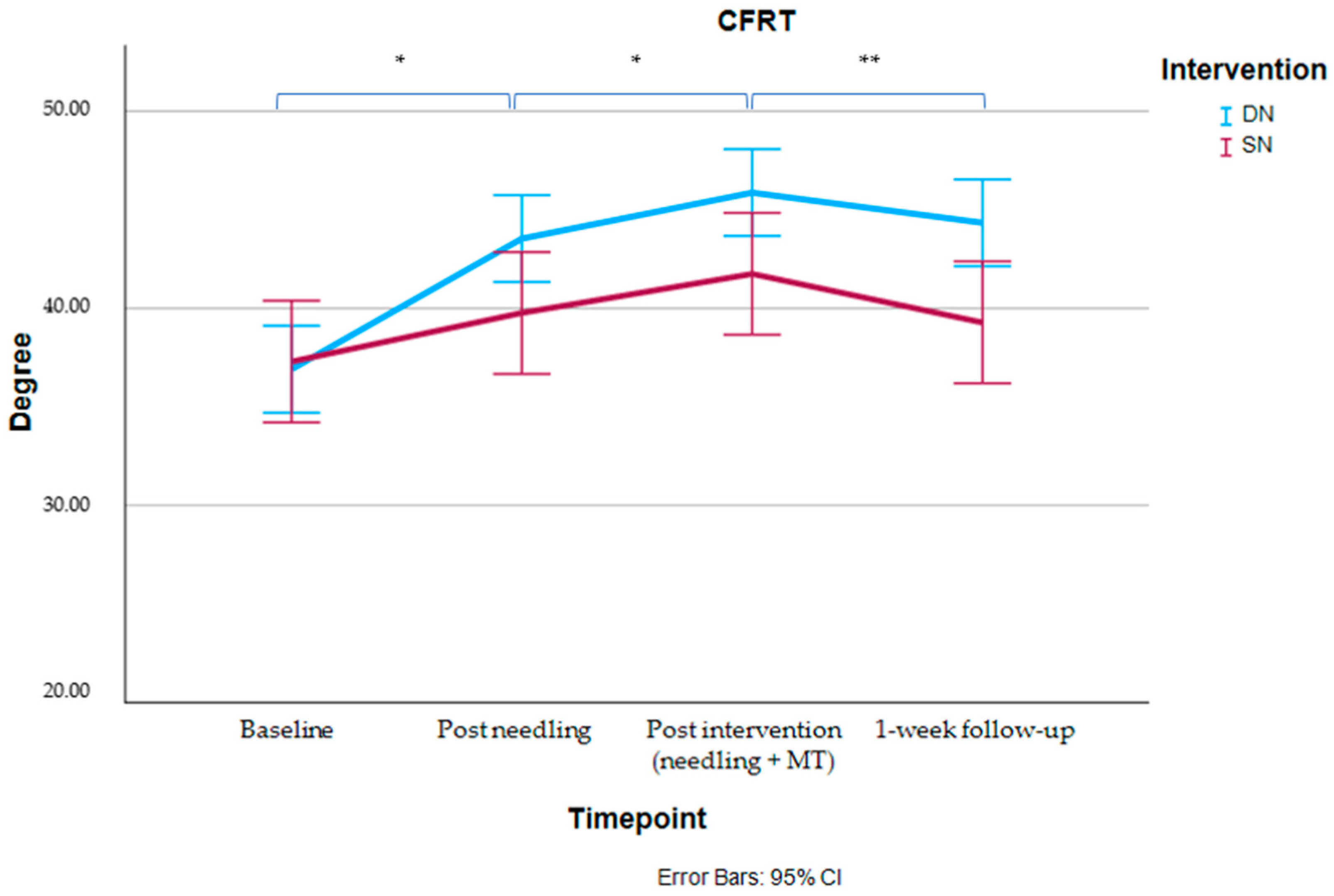
| C1–C2 Rotational Mobility; CFRT (°) | DN Group n = 17 | SN Group n = 17 | Between-Group Change Effect Size (ES) |
|---|---|---|---|
| Baseline | 36.91 (1.48) | 37.30 (1.48) | |
| Post needling | 43.53 (1.48) | 39.76 (1.48) | |
| Within-group change post needling to baseline | 6.62 (3.99; 9.25) * | 2.47 (−0.16; 5.10) | 4.15 (1.14; 6.89) * ES: d = 1.03 |
| Post manual therapy | 45.86 (1.49) | 41.74 (1.48) | |
| Within-group change post intervention to baseline | 8.95 (6.26; 11.64) ** | 4.44 (1.81; 7.07) ** | 4.51 (1.74; 7.28) * ES: d = 1.11 |
| 1W follow-up | 44.34 (1.51) | 39.28 (1.53) | |
| Within-group change 1W follow-up to baseline | 7.42 (4.68; 10.17) ** | 1.98 (−0.83; 4.79) | 5.44 (2.55; 8.34) ** ES: d = 0.84 |
| DN Group n = 17 | SN Group n = 17 | Between-Group Change Effect Size (ES) | |
|---|---|---|---|
| Functional Parameters | |||
| Global active ROM (°) | |||
| FLEXION | |||
| Baseline | 54.69(2.88) | 56.35 (2.88) | |
| Post intervention | 51.39 (2.92) | 55.47 (2.88) | |
| Within-group change post intervention to baseline | −3.29 (−8.45; 1.86) | −0.88 (−5.90; 4.14) | −2.41 (−8.26; 3.43) |
| 1W follow-up | 60.50 (2.96) | 56.08 (2.99) | |
| Within-group change 1W follow-up to baseline | 5.81 (0.54; 11.09) * | −0.27 (−5.66; 5.12) | 6.08 (−0.044; 2.20) |
| EXTENSION | |||
| Baseline | 60.26 (3.02) | 51.49 (3.02) | |
| Post intervention | 60.64 (3.08) | 50.31 (3.02) | |
| Within-group change post intervention to baseline | 0.38 (−6.36; 7.13) | −1.18 (−7.76; 5.41) | 1.56 (−6.09; 9.21) |
| 1W follow-up | 54.57 (3.14) | 53.12 (3.19) | |
| Within-group change 1W follow-up to baseline | −5.68 (−12.58; 1.22) | 1.63 (−5.42; 8.68) | −7.31 (−15.32; 0.70) |
| SIDE BENDING | |||
| Baseline | 41.54 (2.60) | 37.03 (2.60) | |
| Post intervention | 42.68 (2.66) | 36.64 (2.60) | |
| Within-group change post intervention to baseline | 1.14 (−5.04; 7.32) | −0.39 (−6.43; 5.65) | 1.53 (−5.48; 8.55) |
| 1W follow-up | 42.19 (2.77) | 37.22 (2.76) | |
| Within-group change 1W follow-up to baseline | 0.65 (−5.82; 7.13) | 0.19 (−6.27; 6.65) | 0.46 (−6.96; 7.89) |
| ROTATION | |||
| Baseline | 67.51 (2.86) | 60.26 (2.91) | |
| Post intervention | 69.43 (2.86) | 64.31 (2.86) | |
| Within-group change post intervention to baseline | 1.92 (−4.11; 7.94) | 4.06 (−1.82; 9.94) | −2.14 (−8.98; 4.69) |
| 1W follow-up | 67.99 (2.96) | 60.60 (3.01) | |
| Within-group change 1W follow-up to baseline | 0.48 (−5.69; 6.64) | 0.34 (−5.96; 6.64) | 0.14 (−7.02; 7.29) |
| Joint position error (°) | |||
| Baseline | 3.55 (0.28) | 3.96 (0.28) | |
| Post intervention | 3.30 (0.28) | 4.07 (0.28) | |
| Within-group change post intervention to baseline | −0.25 (−1.00; 0.51) | 0.12 (−0.64; 0.87) | −0.36 (−1.23; 0.51) |
| 1W follow-up | 3.13 (0.29) | 3.30 (0.30) | |
| Within-group change 1W follow-up to baseline | −0.42 (−1.21; 0.37) | −0.66 (−1.47; 0.15) | 0.24 (−0.67; 1.16) |
| Joint position error (% of participants with a restriction) | |||
| Baseline; n (%) | 7/17 (41.2%) | 7/17 (41.2%) | |
| Post intervention; n (%) | 4/17 (23.5%) | 10/17 (58.8%) | |
| 1W follow-up; n (%) | 3/15 (20%) | 5/14 (35.7%) | |
| Pain pressure threshold | |||
| UPPER TRAPEZIUS (N/cm2) | |||
| Baseline | 21.34 (3.86) | 24.47 (3.86) | |
| Post intervention | 22.18 (3.89) | 23.00 (3.86) | |
| Within-group change post intervention to baseline | 0.84 (−3.83; 5.52) | −1.47 (−6.01; 3.07) | 2.31 (−2.98; 7.60) |
| 1W follow-up | 22.06 (3.91) | 25.12 (3.93) | |
| Within-group change 1W follow-up to baseline | 0.72 (−4.06; 5.51) | 0.72 (4.06; 5.51) | 0.068 (−5.48; 5.62) |
| C2 (N/cm2) | |||
| Baseline | 18.39 (3.22) | 19.78 (3.22) | |
| Post intervention | 19.11 (3.24) | 18.01 (3.22) | |
| Within-group change post intervention to baseline | 0.72 (−3.22; 4.64) | −1.76 (−5.58; 2.06) | 2.48 (−1.97; 6.93) |
| 1W follow-up | 19.38 (3.26) | 19.41 (3.28) | |
| Within-group change 1W follow-up to baseline | 0.99 (−3.03; 5.02) | −0.37 (−4.48; 3.74) | 1.36 (−3.31; 6.03) |
Disclaimer/Publisher’s Note: The statements, opinions and data contained in all publications are solely those of the individual author(s) and contributor(s) and not of MDPI and/or the editor(s). MDPI and/or the editor(s) disclaim responsibility for any injury to people or property resulting from any ideas, methods, instructions or products referred to in the content. |
© 2025 by the authors. Licensee MDPI, Basel, Switzerland. This article is an open access article distributed under the terms and conditions of the Creative Commons Attribution (CC BY) license (https://creativecommons.org/licenses/by/4.0/).
Share and Cite
Chys, M.; De Meulemeester, K.; De Greef, I.; De Sloovere, M.; Cagnie, B. Effects of Dry Needling of the Obliquus Capitis Inferior in Patients with Cervicogenic Headache and Upper Cervical Dysfunction: An Exploratory Randomized Sham-Controlled Trial. J. Clin. Med. 2025, 14, 6619. https://doi.org/10.3390/jcm14186619
Chys M, De Meulemeester K, De Greef I, De Sloovere M, Cagnie B. Effects of Dry Needling of the Obliquus Capitis Inferior in Patients with Cervicogenic Headache and Upper Cervical Dysfunction: An Exploratory Randomized Sham-Controlled Trial. Journal of Clinical Medicine. 2025; 14(18):6619. https://doi.org/10.3390/jcm14186619
Chicago/Turabian StyleChys, Marjolein, Kayleigh De Meulemeester, Indra De Greef, Maxim De Sloovere, and Barbara Cagnie. 2025. "Effects of Dry Needling of the Obliquus Capitis Inferior in Patients with Cervicogenic Headache and Upper Cervical Dysfunction: An Exploratory Randomized Sham-Controlled Trial" Journal of Clinical Medicine 14, no. 18: 6619. https://doi.org/10.3390/jcm14186619
APA StyleChys, M., De Meulemeester, K., De Greef, I., De Sloovere, M., & Cagnie, B. (2025). Effects of Dry Needling of the Obliquus Capitis Inferior in Patients with Cervicogenic Headache and Upper Cervical Dysfunction: An Exploratory Randomized Sham-Controlled Trial. Journal of Clinical Medicine, 14(18), 6619. https://doi.org/10.3390/jcm14186619