


Abstract
Increasing power demands require multiple generating units interconnected with each other to maintain the power balance of the system. This results in a highly dense power system consisting of multiple generating units which coordinate with each other to maintain the balanced performance of the system. Among different energy sources, the thermal source, the hydro energy source, the photovoltaic system, and the wind energy source are the most popular ones. Researchers have developed several optimization problems in the literature known as dispatch problems to model the system consisting of these different types of energy sources. The constraints for each system depend upon the generation type and the nature of the objective functions involved. This paper provides a state-of-the-art review of different dispatch problems and the nature of the objective functions involved in them and highlights the major constraints associated with each optimization function.
1. Introduction
With the increase in energy demand and its impact on economic advancement, several generating sources are currently included in the conventional grid to maintain the power balance of the system [1,2,3]. In such a dense power system, the major challenge is to optimally control different energy sources while preserving the different energy constraints of the system [4,5,6]. This constitutes a highly non-linear and multi-dimensional optimization problem in the literature which aims to find the optimal operating point for the system while taking into account the various system constraints [7,8]. The nature of the objective function and the different types of generation constraints depend upon the nature of the dispatch problem. Figure 1 shows the breakdown of different optimization problems which can be formulated from the dispatch of different generation sources. To summarize Figure 1, the three major categories of dispatch problems primarily followed by researchers in the literature to describe the optimum conditions for hybrid power systems are as follows:
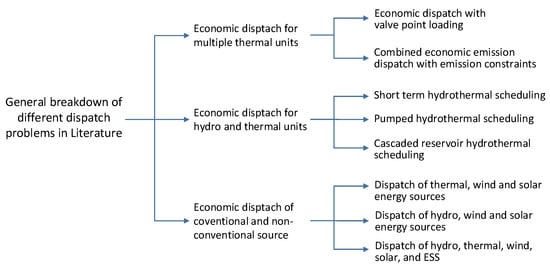
Figure 1.
Brief overview of the breakdown of different types of optimization problems based on the economic dispatch of multiple generation sources.
- The economic dispatch (ED) problem for multiple thermal units having different quadratic cost characteristics. The ED problem is further classified as: (a) the inclusion of the valve point effect loading for thermal units, also known as the ED problem with valve point loading, and (b) the inclusion of the emission values for the thermal units known as the combined economic emission dispatch problem (CEEDP).
- The optimization problem dealing with two major conventional sources, the hydroelectric source and the thermal energy source. Such a problem is termed the hydrothermal scheduling (HTS) problem. The problem is then modified to STHTS and LTHTS depending upon the duration of the scheduling problem.
- The dispatch problem concerned with the hybrid energy systems consisting of conventional and renewable energy sources. The sources used in addition to the hydro and thermal units are PV source, WES, and BESS.
The next part of the Introduction provides a brief outline of each type of dispatch problem given in Figure 1.
1.1. Overview of Economic Dispatch Problem for Multi-Thermal System
The most simple case involves the optimum dispatch of several thermal units having different cost characteristics. Such a problem, which purely deals with the dispatch of the thermal units, is described as the economic dispatch (ED) problem for the thermal units in the literature [9,10]. The possible constraints involved in such a problem are power balance, power limits, ramp limits constraints, and spinning reserve constraints [11,12]. The different types of problems are then derived based on the modifications in the conventional objective function of the ED problem. One such modification is the inclusion of the valve point effect in the quadratic cost equation of the thermal units to practically model the cost characteristics of each thermal unit [13,14]. The valve point effect results in an additional sinusoidal term in the quadratic cost equation of thermal units which makes the objective function highly non-linear and non-convex. The constraints defined for the ED problem having valve point loading are the same in most of the literature as defined for the simple quadratic-based dispatch problem. Another modification suggested while including the valve point effect is to consider the emission constraints of the thermal units. For such a problem, the two objective functions are defined which simultaneously reduce the thermal and emission cost for the system. This constitutes a multi-objective optimization problem and is termed the combined economic emission dispatch problem (CEEDP) in the literature [15,16]. The two constraints defined for the conventional CEEDP are the power balance constraint and the power limits constraint.
1.2. Overview of Hydrothermal Scheduling Problem
To reduce the emission constraints and the dependence on the thermal units, researchers have developed another optimization problem which deals with the combined optimum dispatch of two major conventional sources, the hydroelectric source and the thermal energy source. The main objective of such a problem is to reduce the thermal cost of the system while preserving the reservoir and generation constraints for the hydro and thermal units. Such a problem is termed the short term hydrothermal scheduling (STHTS) problem in the literature [17,18]. The conventional STHTS problem has been extended to include multiple reservoirs connected in a cascaded connection. Such a configuration constitutes an optimization problem termed the cascaded short term hydrothermal scheduling (CSTHTS) problem [19,20]. Another modification suggested in the hydrothermal scheduling problem is to increase the duration of the scheduling time over which different conventional sources are optimally coordinated with each other to meet the demand value. This constitutes an optimization problem termed the long term hydrothermal scheduling (LTHTS) problem [21,22].
1.3. Overview of ED Problem for Hybrid Energy Systems
In recent decades, with the increase in penetration of distributed generation sources to the conventional grid, a large set of optimization problems has been derived based on the economic dispatch of conventional and non-conventional energy sources. Such problems usually deal with the dispatch of hybrid energy systems which include photovoltaic (PV) energy sources, wind energy systems, and battery energy storage systems (BESS), in addition to thermal and hydroelectric sources [23,24,25]. The majority of these suggested problems deal with the intermittent and variable nature of the renewable energy sources coupled with the addition of certain constraints related to each distributed energy source. The novelties introduced by the researchers related to the combined dispatch of conventional and non-conventional sources were based on the different forecasting techniques and uncertainty analysis of the renewable energy sources [26,27,28,29].
1.4. Literature Survey of Review Papers
After highlighting the major types of optimization problems dealing with different energy sources, the next major part of the literature constitutes the set of optimization algorithms used to solve these functions. A large number of research papers have been published over the years on these different types of algorithms and their variants to find the optimum solution of each objective function. These algorithms are either based on a set of well-defined deterministic rules [30,31,32,33] or include some random movement criteria to reduce the computational effort for finding the global solution of large scale practical problems [17,18,34,35]. Among these different algorithms, a promising category of algorithms which depend upon the nature-inspired phenomenon is that of the meta-heuristic optimization algorithm. The major advantages of such algorithms are their reduced computational efficiency and complexity in reaching towards the optimum solution for large scale power optimization problems [36,37,38,39]. This constitutes a vast literature which covers different aspects related to either the novelties in the dispatch problem or the implementation of novel optimization algorithms for solving such problems. To summarize all these research directions, researchers have recently published some review papers on the individual aspects of each optimization problem. The authors in [40] have discussed the earlier forms of the economic dispatch problem. Their focus was primarily centered around the optimal power flow (OPF) and automatic generation control (AGC) for the ED problem. The authors in [41] have discussed the particle swarm optimization (PSO) on the conventional non-linear dispatch problem. The authors in [42,43] have discussed the economic dispatch with the WES and electric vehicles. The authors in [44,45] have discussed different types of optimization algorithms for CEEDP. Table 1 summarizes different review papers related to this particular problem. These papers mostly address thermal units while considering renewable energy sources and emission constraints. In most of the mentioned review papers, the main objective of the authors was to compare different sets of optimization algorithms for a particular optimization problem. A comprehensive review addressing different types of dispatch problems was not considered by researchers to much of an extent in the literature.

Table 1.
Brief summary and analysis of different review papers published on various types of economic dispatch problems.
2. Motivation and Major Contributions of Review
Although the literature has discussed some aspects of the dispatch problem in different places, a comprehensive overview of all the major types of dispatch problems along with the nature of the objective functions has not been presented comprehensively in a single place. Based on these shortcomings of the literature, the major contributions of this review paper are as follows:
- It presents major types of dispatch problems in the literature and discusses the different objective functions involved in each problem. It also discusses their various forms and presents the updated constraints and the objective functions.
- It discusses the nature of the objective functions involved in each dispatch problem. It highlights major decision variables and gives suggestions for updating the problem.
- It proposes improvements for the current forms of typical ED problems and suggests modifications to better formulate the objective function.
The remainder of the paper is organized as follows. Section 3 gives the overview of different dispatch problems for systems having multiple thermal units. Section 4 gives the overview of dispatch problems for hydro and thermal units. Section 5 gives the overview of the dispatch problems of the system including both conventional and distributed generation sources. Section 6 gives a brief overview of different methods used in the literature to solve dispatch problems. Section 7 gives remarks and future directions for different dispatch problems along with the conclusions.
3. Economic Dispatch Problem for Thermal Units
The simplest type of dispatch problem involves the optimum solution of generators consisting of multiple thermal units. The main objective function used in the ED problem aims to minimize the total thermal generation cost [49,50,51,52] and is given as follows:
where represents the total thermal cost of the system, represents the total number of thermal generators, and represents the cost function of a particular generator i. The cost characteristics are usually given by the quadratic function as follows:
where and are the cost coefficients of a particular generator i. The constraints involved in the classical ED problem for thermal units are given as follows:
The first constraint describes the power balance of the system which states that the total output generation must be equal to the load demand and the transmission losses . The second constraint defines that the output of the i generator must be within the maximum and minimum thermal limits. The third constraint defines the ramp up and ramp down limits for the i generator. This particular constraint defines a threshold by which the previous output of the i generator can be increased or decreased. The fourth constraint describes the spinning reserve factor for the thermal generators. The fifth constraint describes the prohibited operating zones (POZ) constraint for the generators. and describe the upper and lower limits for POZ. shows the total number of POZ. The POZ constraint introduces non-linearity and discontinuities in the original quadratic cost equation due to different practical constraints such as the failure of the machine or shaft tremor [53,54,55].
3.1. Economic Dispatch for Thermal Units including Valve Point Loading
The quadratic cost equation defined in the previous dispatch problem does not consider the valve point loading on the characteristics curve. To model the cost curve of the thermal generation while considering the effect of the opening and closing of steam valves, researchers have suggested an additional sinusoidal term in the conventional cost equation of the thermal generators [56,57,58,59,60,61]. The cost characteristics for thermal generation having valve point loading are given as follows:
where and represent the cost coefficients for the thermal generator while considering the valve point loading effect. For a system having multiple fuels, the cost characteristics for each generator while considering the valve point effect can be written as follows:
Figure 2 shows the effect of the valve point loading on the cost characteristics of the thermal generation. It is evident that the characteristics become highly non-linear and non-smooth in nature by including an additional term in the cost characteristics of the thermal generators.
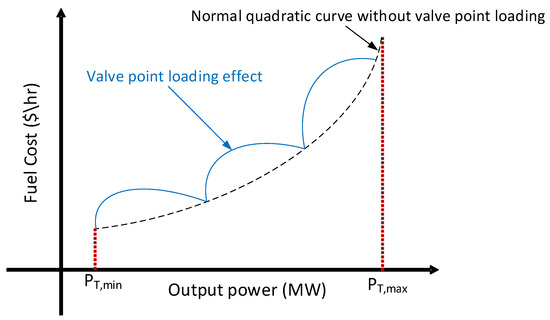
Figure 2.
Comparison of the cost characteristics of thermal generators with and without valve point loading effect. The characteristics become non-smooth and contain bumps when the valve point loading is considered for thermal generators.
The constraints defined for the ED problem while considering the valve point loading are same as defined for the quadratic cost characteristics. However, the only up gradation is in the objective function of the ED problem, which makes the optimization problem non-linear and non-convex in nature.
3.2. Economic Dispatch Problem for Thermal Units including Emission Constraints
The thermal generator has certain environmental constraints and can result in emission values which can have adverse effects on the atmosphere. To consider the emission values of the thermal generation, researchers have suggested a multi-objective optimization problem to simultaneously optimize both cost and emission values of thermal generation, which formulates a combined economic-emission dispatch problem [62,63,64,65,66]. The two main objectives involved in the CEEDP are the total thermal cost of the system and the emission values of the thermal generation. The thermal cost is given in accordance with the previously defined cost characteristics and is given as follows:
The second main objective of the CEEDP deals with the emission values computed as the function of the thermal power. The cost function for the emission of thermal units is given as follows:
where and represent the emission coefficients of the i thermal generator. The overall objective function deals with the minimization of both thermal cost and the emission values of the generators [67,68] and is mathematically given as follows:
There are two constraints involved in a typical CEEDP, the power balance constraint and the power limits constraint [69,70]. These constraints are in accordance with the previously defined constraints for the simple ED problem and are given as follows:
Power losses in the CEEDP play an important role in formulating a realistic approach towards modeling a power system. There are several methods proposed by researchers to model transmission line losses of the system. The simplest involves the weighted sum of the quadratic contribution of each thermal power given as follows:
where represents the loss coefficients. Equation (10) is generally used for small scale power systems having a lesser number of thermal generating units (three-generating-unit system). Another quadratic relation used to evaluate the transmission line losses for large scale power systems is given as follows:
To better model transmission line losses of large scale power systems, Kron’s loss formula including a quadratic, linear, and constant term [71,72] is given as follows:
where and are the loss coefficients for modeling the transmission line losses. The coefficients , and are important for modeling the line losses of the system. These constants primarily depend upon the configuration of the power system and number of generating units. Table 2 summarizes the loss coefficients for power systems having a different number of generating units.
Table 2.
Summary of loss coefficients for power systems having different number of thermal generating units [71,72].
To solve the multi-objective economic emission dispatch problem dealing with both objective functions, the authors have discussed two main methods to compute the optimal solution. The first method combines two objective functions and takes the weighted sum by assigning a scaling factor for the emission values. In this case, the overall objective function can be written as follows:
In the above equation, F and E represent the cost and emission objective functions, respectively. represents the priority weight for each objective function. The value of is in the range [0,1]. w represents the scaling factor. The value of is important for controlling the contribution of each objective function. For , the problem is reduced to the simple ED problem, having only thermal cost as the objective function. For , the problem only deals with the emission objective function. If we increase the value of in the above equation, the objective function will give more priority to the thermal cost, and hence the optimum solution found will give a lower thermal cost at the expense of more emission values. The selection of largely depends upon the nature of the problem and the desired values for each of the individual objective functions [73].
Another technique adopted by the authors in the literature to visualize the multi-objective CEEDP is to compute the Pareto front for the problem. The graph between the emission values and the total cost is computed over the range of the decision variables, and the best compromise solution is obtained. The Pareto optimal point in this case would describe a situation where any attempt to improve an individual objective function would degrade the performance of the second objective function. This is an efficient method suggested by researchers to visualize the CEEDP and understand the nature of two objective functions [74,75,76]. Table 3 shows the summary of the ED problems for multiple thermal units.
Table 3.
Summary of different types of ED problems involving only thermal units as generating source. The nature of the optimization problem and the decision variables are highlighted for each type.
4. Economic Dispatch Problem for Thermal and Hydro Units
Another abundantly used conventional energy source to fulfill the load demand over the scheduling period is the hydroelectric energy source. The power system consisting of both thermal and hydro units gives rise to another interesting optimization problem which aims to reduce the thermal cost of the system while maintaining certain levels of the reservoir [77,78,79]. The cost of the generation of hydro power is usually not included in the objective function due to the negligible running cost of hydro units as compared to thermal generators [80,81,82]. In this section, we will highlight some major forms of the dispatch problem including hydro and thermal units.
4.1. Scheduling Problem of Single Thermal and Hydro Unit
The simplest form of the hydrothermal scheduling problem involves the optimum dispatch of a single equivalent thermal unit and a hydro energy source [83,84]. Figure 3 shows the equivalent block diagram for a hydrothermal scheduling problem while considering the transmission line losses. The objective function in this case can be written as follows [85,86]:
where represents the total duration of each scheduling interval, and represents the total number of scheduling intervals. represents the cost function for the thermal unit which is equal to the previously defined characteristics for the ED of multiple thermal units. If the length of spans over few days, it can be categorized as the short term scheduling problem. The above objective function sums the total cost of the thermal generation over each scheduling interval. In simple dispatch problems for thermal units, the length of the scheduling interval is not usually considered, and we have static load demand which must be fulfilled by the optimal contribution of different thermal units in the system. However, in the case of hydrothermal scheduling, the length of the scheduling interval plays an important role. The entire scheduling period is divided into different intervals (usually of the same length), and the load demand varies for each interval [87,88]. The optimal contribution of thermal and hydro units changes for each interval depending upon the demand value and the remaining generation constraints. Another important aspect of the objective function defined above is the unit of the function. The function is expressed in $ instead of , since we are considering the duration of each scheduling interval while computing the thermal cost [89,90]. The constraints involved in the defined optimization problem are as follows:
where and represent the volume, initial volume, final volume, discharge rate, inflow, and spillage of the reservoir, respectively. Equation (15) represents the power balance constraint. Equations (16) and (17) represent the power limits constraint for hydro and thermal units. Equations (18)–(20) show the volume constraints for the hydro unit. These constraints indicate that the volume for a particular scheduling interval i must be with in the maximum and minimum limits. Moreover, the initial and final values of the reservoir must be equal to defined the values of and to ensure the proper storage of water in the reservoir. Equations (21) and (22) show the discharge rate constraints. Equation (23) shows the equation of continuity which indicates the relation between the volume values for two consecutive intervals i [91]. An important thing to note is that the i represents a particular scheduling interval and not the index of a thermal or hydro unit.
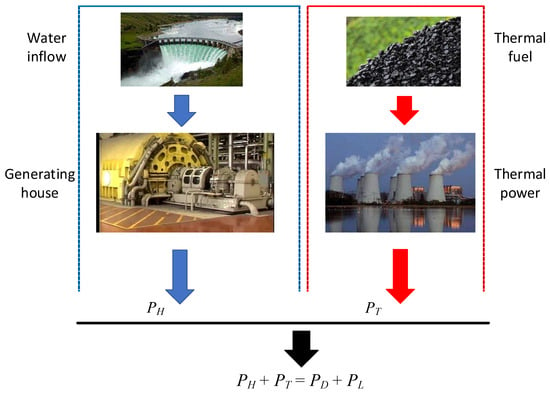
Figure 3.
Block diagram representation for hydrothermal scheduling problem including single hydro and thermal unit.
The next important step is to define the hydro and thermal equations. The normal flow of the hydrothermal scheduling problem is to compute the discharge rate based on the volume levels of the reservoir using the equation of continuity [92] as defined in Equation (23). The hydro power is then defined as the function of the discharge rate given as follows:
The transmission line losses for the conventional hydrothermal scheduling problem are modeled using only the hydro power, given as follows:
Based on the hydro power and transmission losses, the thermal power can be computed using the power balance equation defined in Equation (15). The objective function can then be computed using the value of thermal power for each scheduling interval.
4.2. Scheduling of Single Thermal and Multiple Hydro Units
Another common type of the dispatch problem deals with a power system consisting of single thermal and multiple hydro units [93,94]. In such a problem, the hydro units are connected in a cascade connection. The discharge of the upstream reservoir will be added to the downstream reservoir with a certain time delay in the case of the cascaded connection of the reservoirs [95,96]. Figure 4 shows the basic connection of the multiple hydro units having reservoirs connected in a cascaded connection. It is evident from the figure that the inflow of the downstream reservoir will be in accordance with the discharge rate and the spillage of the upstream reservoir. In this particular case, separate inflow for the downstream reservoirs is not considered.
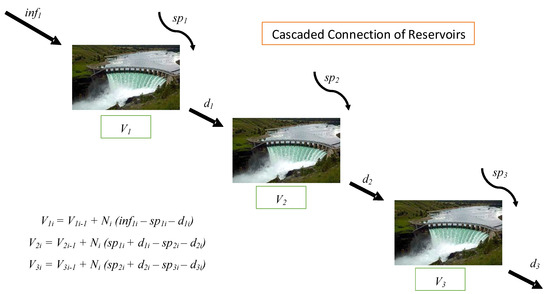
Figure 4.
Block diagram representation for cascaded hydrothermal scheduling problem having reservoirs connected in a cascade connection.
The objective function in the case of the cascaded hydrothermal scheduling problem can be given as follows [97,98]:
subject to the following constraints:
The objective function remains same for the cascaded problem and aims to minimize the total generation cost of the equivalent thermal plant. The cost equation for the thermal plant is again modeled using the conventional quadratic equation (and with the addition of a sinusoidal term for valve point loading) with various cost coefficients. The updated power balance equation takes into account the total hydro power contribution of all units in addition to the thermal power while meeting the load demand and the transmission line losses of the system. G represents the total number of hydro units [99,100]. represents the time delay from the upstream reservoir m to the downstream reservoir j. shows the total upstream reservoirs immediately located above the j plant. The equation of continuity defined in the last constraint summarizes the volume of the j plant in terms of its inflow, spillage, and discharge rate coupled with the parameters of the upstream reservoirs. The hydro power of a particular unit j is defined in terms of its discharge rate. The transmission losses of the network are modeled as the function of the hydro power for a particular scheduling interval i [101,102,103].
4.3. Scheduling of Thermal Unit with Pumped Hydro Storage
Another important optimization problem which deals with the optimum dispatch of the thermal and hydro unit is the pumped hydrothermal storage problem. In this type of problem, the scheduling intervals are categorized into two major types, the off-peak intervals in which the demand value of the system is low and the peak intervals in which the demand is high. In off-peak intervals, the water is pumped back to the reservoir, while in the peak intervals, the combined optimum dispatch of hydro and thermal units is computed to meet the demand value [104,105]. The objective function aims to minimize the total thermal cost generation, and it is given as follows:
The constraints for the pumped hydrothermal storage are defined as follows:
The difference lies in the magnitude of the discharge rate d for the pumped hydrothermal storage problem. For off-peak intervals, where the water is pumped back to the reservoir, the magnitude of the discharge rate is taken as negative. For non-pumping intervals (peak intervals) or intervals where both the combined dispatch of hydro and thermal units is determined, the magnitude of the discharge rate is taken as positive [106]. In the case of the pumped hydrothermal scheduling problem, the power balance equation can be written as follows:
In the above equation, for generating intervals g, the combined dispatch of the hydro power and thermal power is taken to meet the demand value and the transmission losses of the system. Figure 5 shows the equivalent circuit model of the pumped hydrothermal model highlighting the power balance constraint equations for different types of sub-intervals [107]. Table 4 summarizes the different dispatch problems for hydro and thermal units.
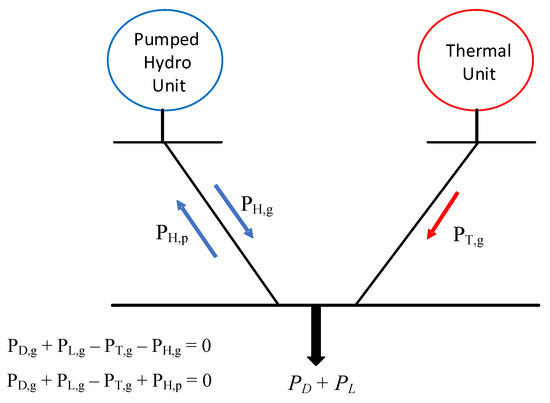
Figure 5.
Equivalent circuit model of the pumped hydrothermal scheduling problem while considering the transmission losses of the system.
Table 4.
Summary of different types of ED problems involving thermal unit and hydro unit as generating sources. The nature of the optimization problem and the decision variables are highlighted for each type.
5. Economic Dispatch Problem for Conventional and Non-Conventional Sources
The recent shift in the paradigm from conventional to green energy demands the reformulation of sophisticated optimization problems to optimally utilize both conventional and distributed energy sources. The major reasons for opting for renewable sources are their negligible emissions and environmental constraints. However, the production of such sources largely depends on external atmospheric conditions, and the power output can fluctuate in nature for different scheduling intervals [108,109]. To deal with this intermittent nature of renewable sources, researchers have developed various optimization models and forecasting algorithms to effectively coordinate different energy sources in a hybrid power system. This section describes the basic forms of different objective functions and constraints associated with such optimization problems and highlights various additions to augment the nature of the practical problem [110,111].
5.1. Economic Dispatch of Conventional and Photovoltaic Energy Source
Owing to negligible environmental constraints and fossil fuel dependence, the photovoltaic (PV) energy source has gained popularity in generating a clean form of energy. Researchers have developed several dispatch models to incorporate the PV energy source to the conventional grid to fulfill the demand value over certain scheduling intervals. The major challenge in the optimization problem including both PV and conventional sources is the dependence of the PV source on the external atmosphere parameters. The intermittent nature of the PV source introduces certain limitations in predicting its power output for different intervals. The output power of the PV plant is significantly influenced by two atmospheric parameters, irradiance and temperature levels. Therefore, the first step in solving the dispatch problem is to forecast the PV source parameters. Figure 6 shows the basic block diagram for the hydro-solar-thermal scheduling problem.
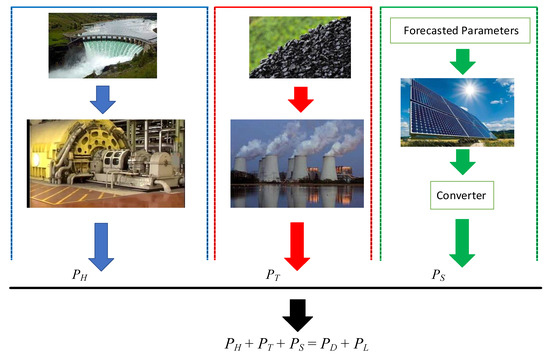
Figure 6.
Block diagram representation for hydrothermal solar scheduling problem including single hydro and thermal unit.
5.1.1. Forecasting of the PV Energy Source Parameters
The first step in the power output modeling of the PV source is to forecast or determine the irradiance and temperature levels for different scheduling intervals. The authors in the literature have suggested different methodologies to predict these parameters. The authors in [112,113] have discussed the Box–Jenkins methodology to forecast the irradiance and temperature values over different scheduling intervals based on certain training data. The basic intuition behind the Box–Jenkins method is to tune the parameters of the auto-regressive integrated moving average (ARIMA) model based on the training data to compute the forecast results [114,115]. The main parts—auto-regressive (AR indicated by the order p), moving average (MA indicated by the order q), and differentiation (indicated by the order d)—of the ARIMA model are listed as follows:
where shows the parameters of the AR model. represent the parameters of the MA model. shows the white noise term. To handle non-stationary time series, the ARIMA model having order d [116] can be given as follows:
where the lag operation L is given as ().
The second popular method of predicting the irradiance and temperature values for different scheduling intervals is to compute the probability distribution function for these parameters [117]. The commonly used distribution in the literature for the temperature and irradiance levels is the beta distribution due to its flexibility in adjusting the curve using different shape parameters. The probability density function for the beta distribution is given as follows:
where are the shape parameters, r represents the random variable for the parameters, and shows the gamma function. shows the beta distribution function [118]. The parameters and depend upon the mean and standard deviation [119] as follows:
These two techniques are most commonly used in the literature to compute the irradiance and temperature levels for the dispatch problems of hybrid energy systems. Other distributions such as Weibull distribution [120] can also be used. The next step in the dispatch problem for the system consisting of solar and conventional sources is to compute the PV power based on the forecasted parameters. Figure 7 shows the overall forecasting and power computation model for the PV energy source.
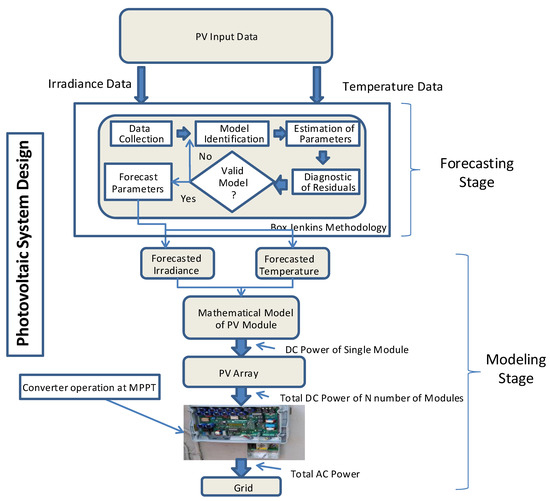
Figure 7.
Basic flow chart for determining the PV power output for the economic dispatch problem.
5.1.2. Dispatch Problem Modeling
The output power of the PV module is determined using the irradiance and temperature levels for different scheduling intervals. Different mathematical models are suggested in the literature to compute the output power of the PV plant based on external parameters. The most common method used to determine the characteristics of the PV module is the single diode model [121,122]. However, the single diode model introduces a challenge to optimally selecting the different parameters for the equivalent circuit [123]. The other methods involve modeling the characteristics of the PV module using the fractional integral polynomial method [124] or using the double diode model to augment the efficiency of the single-diode-based circuit [125,126]. The selection for the model depends upon the requirement of the dispatch problem and can be selected based on the system parameters.
The next step in modeling the dispatch problem is to define the objective function and discuss the different constraints associated with the PV power. The constraints for hydro and thermal generation remain the same as previously discussed in the respective sections. Therefore, we will only highlight the basic cost function for solar power and discuss the possible PV constraints. The basic objective function which models the cost equation for the PV plant represents a linear relation between a defined tariff rate and the output power [112,113], given as follows:
where represents the cost of the PV plant. represents the cost coefficient given in for the plant, represents the duration of particular scheduling interval i given in hours, and represents the output power of the plant given in kilowatts or the i scheduling interval. The total cost or the objective function for S number of PV plants is given as follows:
The overall cost function for the combined dispatch of hydro, thermal, and solar energy sources is given as follows:
where represents the cost function for the hydro and thermal units as described previously. The typical constraint related to the solar power is the power limit constraint, given [119] as follows:
The remaining constraints remain the same for the hydro and thermal units as discussed previously in the respective sections. This represents the simplest form of the solar-hydrothermal dispatch problem discussed in the literature. The basic objective function introduced can be modified by taking into consideration different practical constraints. For instance, the authors in [127,128] have updated the objective function for thermal generation by including the emission values while considering the PV energy source. This modification introduces an additional emission cost for the thermal plant which has already been described in the previous sections. The authors in [129] have suggested the economic dispatch of the system consisting of solar and electric vehicles. The authors in [130] consider the pumped hydro storage in addition to the solar and thermal energy sources. The basic modification in the objective function is in accordance with the previously defined generating and pumping intervals for the pumped hydro storage problem. The authors in [131] modify the problem by considering the wind energy source in addition to solar, thermal, and hydro energy sources. The details of incorporating the wind energy source into the dispatch problem are discussed in the next section. This concludes the dispatch for the PV energy source with conventional sources. A large number of objective functions have been discussed for this particular dispatch problem by introducing small changes in the original objective function. However, these changes are in accordance with the different dispatch objective functions already discussed in the paper.
5.2. Economic Dispatch of Conventional and Wind Energy Source
Another renewable energy source which has gained popularity for generating clean power is the wind energy system [132,133]. The output power of the wind system depends primarily on the wind speed for different scheduling intervals. This again introduces a challenge to handling the intermittent nature of the system [134,135]. For solving the dispatch problem including a wind energy source, a similar procedure is required as described previously for the PV system. Therefore, we will only discuss the changes required to model the wind energy system. Figure 8 shows the basic configuration diagram for the dispatch problem consisting of the conventional and wind energy system.
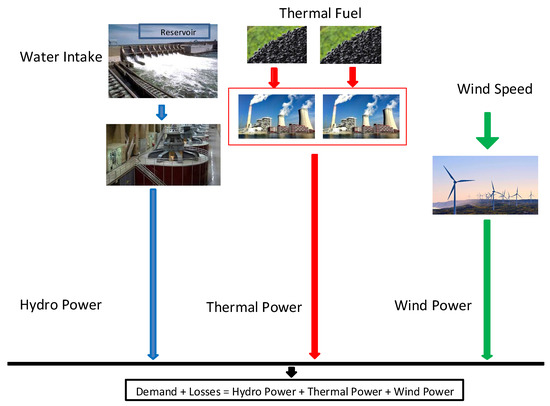
Figure 8.
System configuration for the dispatch problem consisting of wind and conventional sources.
The first step is to approximate the wind speed for different intervals. Among the different techniques discussed in the literature [136], the simplest and most conventional method is to use a probability density function for determining the wind speed statistics. The most commonly used probability density function for the wind speed is the Weibull p.d.f. [137], given as follows:
where a represents the shape parameter, and b represents the scale parameter. When the shape parameter a is taken as 2, another p.d.f. known as the Rayleigh p.d.f. [138] can be written as follows:
where ( represents the average wind speed). Based on the type of distribution used, the value of can be determined as follows:
The output power of the wind energy system is usually determined based on the average of the cubic wind speed. Therefore, the above relation can be modified to give the average wind speed as follows:
By substituting the value of the b, the above equation can be written as follows:
The average power of the wind can then be determined as follows:
where represents the density of the air given in kg/m, and A represents the swept area of the rotor given in m [139]. Additional terms such as efficiency of the system and coefficient of performance can also be included in the above equation to provide a more realistic approach. The objective function for the overall dispatch problem including conventional and wind energy power can then be formulated by taking relations similar to those discussed for the solar energy source (a linear relationship between a defined tariff and the power output of the wind system). The constraints defined for the dispatch problem are same as previously defined for the hydro and thermal units with the addition of the power limits constraint for the wind energy source [140,141].
Figure 9 shows the basic block diagram showing the major steps involved in solving the dispatch problem consisting of conventional and distributed generation sources.
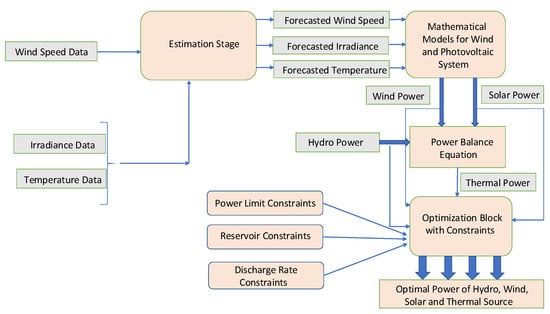
Figure 9.
Overall block diagram for computing the dispatch problem for hybrid energy systems consisting of conventional and renewable sources.
6. Methods and Simulation Tools to Solve the ED for Integrated Systems
After highlighting the major types of dispatch problems along with discussing the nature of the involved objective functions and constraints, the authors provide a brief introduction of different optimization techniques used in the literature to find the optimum solution. The two major sets of algorithms used in the literature are deterministic and heuristic optimization algorithms. Deterministic algorithms try to achieve a global solution by using a well-defined set of update equations. Such algorithms can be difficult to implement for highly non-linear, multi-modal, and non-convex objective functions. On the contrary, meta-heuristic optimization algorithms have a certain randomness in their update equation and provide good approximates to the global solution for non-linear and multi-modal problems. Some review papers have already been discussed in the Introduction which compare the performance of different optimization algorithms for various types of ED problems. Here, we will briefly highlight the major techniques used for each type of ED problem. Among meta-heuristic optimization algorithms, promising techniques used to solve the ED problem are the firefly algorithm (FA) [142,143], PSO [144], accelerated particle swarm optimization (APSO) [145], harmony search algorithm [146], and stochastic techniques [147]. A large set of different conventional techniques has also been studied for solving different types of dispatch problems, such as the Lagrangian relaxation method [148], mixed integer programming [149], dynamic programming [79], and interior point programming [150]. Figure 10 shows the breakdown of different optimization algorithms. Table 5 summarizes the behavior of a few promising meta-heuristic techniques for each type of ED problem, while Table 6 summarizes basic features of the most commonly used simulation tools to solve the ED problem.
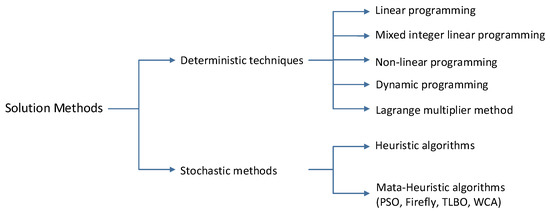
Figure 10.
Breakdown of different solution methods used to solve various forms of the ED problem.
Table 5.
Brief summary and analysis of different optimization algorithms for various types of economic dispatch problems.
Table 6.
Brief summary and analysis of different simulation tools to compute the ED problem.
7. Conclusions and Future Directions
The formulation of scheduling problems for different hybrid and multi-generation energy systems has become an important domain in the field of optimization theory. A number of optimization problems based on different objective functions depending upon the configuration of the system have been suggested by researchers to model an actual system. However, there are certain scenarios which have not been considered extensively while discussing the dispatch problems for different generating units. For instance, while discussing dispatch for the system consisting of thermal units, cost characteristics are modeled only using the quadratic cost equation in the majority of problems. However, the quadratic function can be made linear using piece-wise linear functions to formulate another type of objective function and compare its performance with conventional characteristics [156,157]. Similarly, for the hydrothermal scheduling problem, the conventional objective function takes into account only cost characteristics of thermal generation while maintaining the reservoir constraints. This approach is appreciable since the running cost of the hydro power is negligible as compared to the thermal generation. However, if we are scheduling over a long duration, then certain factors such as maintenance cost and operation and management costs should be incorporated in the conventional objective function to better formulate the optimization problem [158].
For scheduling problems involving a solar energy source, an important factor known as the partial shading effect is usually not considered while computing the output power of the PV module. The partial shading effect results in multiple local peaks for the power curves instead of a global peak; therefore, it is essential to consider this effect, as the majority of the literature suggests the operation of the PV plant at MPPT and neglects the tracking procedure for the global optimum power. By considering this fact, the output power models for the PV modules would be greatly influenced, and it would certainly introduce a research gap to formulate more realistic optimization functions [159,160]. Similarly, for renewable energy sources, the conventional cost equation can be updated to include the overestimation and underestimation penalties to better formulate the objective function.
Another important consideration while developing the optimization models for hybrid energy systems is to consider the resilience of the system. Power systems are vulnerable to different faults and natural hazards. Therefore, proper contingency analysis would be required to better schedule different energy sources while considering reliability and resilience constraints. This would introduce modified forms of the optimization problems for scheduling hybrid energy systems [161,162].
To conclude, power system optimization is extremely important for maintaining the power balance of the system. Different dispatch models are required to find the optimum power allocation of each energy source in a hybrid system. As the number of generating sources increases, the optimization problem becomes more complex, non-linear, and multi-dimensional in nature. The proper formulation of optimization functions would be required to idealize a complex physical system incorporating different energy sources. This research presents a state-of-the-art review of the major types of dispatch problems for different energy sources while presenting the nature of each objective function and the generating constraints involved.
Author Contributions
Conceptualization, S.L., M.F.Z. and M.B.; methodology, S.L. and M.F.Z.; software, S.L.; validation, S.L., M.F.Z. and M.B.; formal analysis, S.L., M.F.Z. and M.B.; writing—original draft preparation, S.L. and M.F.Z.; writing—review and editing, S.L., M.F.Z. and M.B. All authors have read and agreed to the published version of the manuscript.
Funding
This research received no external funding.
Data Availability Statement
Available upon request from the authors.
Conflicts of Interest
The authors declare no conflict of interest.
Abbreviations
The following abbreviations are used in this manuscript:
| ED | Economic Dispatch |
| STHTS | Short Term Hydrothermal Scheduling |
| EED | Economic Emission Dispatch |
| PV | Photovoltaic |
| WES | Wind Energy System |
| POZ | Prohibited Operating Zones |
References
- Younes, Z.; Alhamrouni, I.; Mekhilef, S.; Reyasudin, M. A memory-based gravitational search algorithm for solving economic dispatch problem in micro-grid. Ain Shams Eng. J. 2021, 12, 1985–1994. [Google Scholar] [CrossRef]
- Mandal, B.; Roy, P.K. Dynamic economic dispatch problem in hybrid wind based power systems using oppositional based chaotic grasshopper optimization algorithm. J. Renew. Sustain. Energy 2021, 13, 013306. [Google Scholar] [CrossRef]
- Bai, Y.; Wu, X.; Xia, A. An enhanced multi-objective differential evolution algorithm for dynamic environmental economic dispatch of power system with wind power. Energy Sci. Eng. 2021, 9, 316–329. [Google Scholar] [CrossRef]
- Bansal, N.; Gautam, R.; Tiwari, R.; Thapa, S.; Singh, A. Economic Load Dispatch Using Intelligent Particle Swarm Optimization. In Proceedings of the International Conference on Intelligent Computing, Information and Control Systems; Pandian, A.P., Palanisamy, R., Ntalianis, K., Eds.; Springer Publishing: Midtown Manhattan, NY, USA, 2021; Volume 1272, pp. 93–105. [Google Scholar]
- El-Sayed, W.T.; El-Saadany, E.F.; Zeineldin, H.H.; Al-Sumaiti, A.S. Fast initialization methods for the nonconvex economic dispatch problem. Energy 2020, 201, 117635. [Google Scholar] [CrossRef]
- Ali, M.; Zia, M.F.; Sundhu, M.W. Demand side management proposed algorithm for cost and peak load optimization. In Proceedings of the 2016 4th International Istanbul Smart Grid Congress and Fair (ICSG), Istanbul, Turkey, 20–21 April 2016; pp. 1–5. [Google Scholar]
- Moretti, L.; Martelli, E.; Manzolini, G. An efficient robust optimization model for the unit commitment and dispatch of multi-energy systems and microgrids. Appl. Energy 2020, 261, 113859. [Google Scholar] [CrossRef]
- Ogunmodede, O.; Anderson, K.; Cutler, D.; Newman, A. Optimizing design and dispatch of a renewable energy system. Appl. Energy 2021, 287, 116527. [Google Scholar] [CrossRef]
- Jian, L.; Qian, Z.; Liangang, Z.; Mengkai, Y. Distributed economic dispatch method for power system based on consensus. IET Renew. Power Gener. 2020, 14, 1424–1432. [Google Scholar] [CrossRef]
- Park, J.B.; Lee, K.S.; Shin, J.R.; Lee, K.Y. A particle swarm optimization for economic dispatch with nonsmooth cost functions. IEEE Trans. Power Syst. 2005, 20, 34–42. [Google Scholar] [CrossRef]
- Niknam, T.; Azizipanah-Abarghooee, R.; Roosta, A. Reserve constrained dynamic economic dispatch: A new fast self-adaptive modified firefly algorithm. IEEE Syst. J. 2012, 6, 635–646. [Google Scholar] [CrossRef]
- Secui, D.C. A hybrid particle Swarm optimization algorithm for the economic dispatch problem. Majlesi J. Electr. Eng. 2015, 9, 37–53. [Google Scholar]
- Li, X.; Li, A.; Lu, Z. A Granular Computing Method for Economic Dispatch Problems With Valve-Point Effects. IEEE Access 2019, 7, 78260–78273. [Google Scholar] [CrossRef]
- Li, X.; Zhang, H.; Lu, Z. A Differential Evolution Algorithm Based on Multi-Population for Economic Dispatch Problems With Valve-Point Effects. IEEE Access 2019, 7, 95585–95609. [Google Scholar] [CrossRef]
- De Freitas, C.A.O.; de Oliveira, R.C.L.; Da Silva, D.J.A.; Leite, J.C.; Junior, J.D.A.B. Solution to Economic–Emission Load Dispatch by Cultural Algorithm Combined With Local Search: Case Study. IEEE Access 2018, 6, 64023–64040. [Google Scholar] [CrossRef]
- Radosavljević, J. A solution to the combined economic and emission dispatch using hybrid PSOGSA algorithm. Appl. Artif. Intell. 2016, 30, 445–474. [Google Scholar] [CrossRef]
- Gil, E.; Bustos, J.; Rudnick, H. Short-term hydrothermal generation scheduling model using a genetic algorithm. IEEE Trans. Power Syst. 2003, 18, 1256–1264. [Google Scholar] [CrossRef]
- Basu, M. An interactive fuzzy satisfying method based on evolutionary programming technique for multiobjective short-term hydrothermal scheduling. Electr. Power Syst. Res. 2004, 69, 277–285. [Google Scholar] [CrossRef]
- Lakshminarasimman, L.; Subramanian, S. Short-term scheduling of hydrothermal power system with cascaded reservoirs by using modified differential evolution. IEE Proc.-Gener. Transm. Distrib. 2006, 153, 693–700. [Google Scholar] [CrossRef]
- Nanda, J.; Bijwe, P. Optimal hydrothermal scheduling with cascaded plants using progressive optimality algorithm. IEEE Trans. Power Appar. Syst. 1981, PAS-100, 2093–2099. [Google Scholar] [CrossRef]
- Ferrero, R.; Rivera, J.; Shahidehpour, S. A dynamic programming two-stage algorithm for long-term hydrothermal scheduling of multireservoir systems. IEEE Trans. Power Syst. 1998, 13, 1534–1540. [Google Scholar] [CrossRef]
- de Matos, V.L.; Finardi, E.C. A computational study of a stochastic optimization model for long term hydrothermal scheduling. Int. J. Electr. Power Energy Syst. 2012, 43, 1443–1452. [Google Scholar] [CrossRef]
- Hlalele, T.G.; Naidoo, R.M.; Zhang, J.; Bansal, R.C. Dynamic economic dispatch with maximal renewable penetration under renewable obligation. IEEE Access 2020, 8, 38794–38808. [Google Scholar] [CrossRef]
- Yi, W.; Zhang, Y.; Zhao, Z.; Huang, Y. Multiobjective robust scheduling for smart distribution grids: Considering renewable energy and demand response uncertainty. IEEE Access 2018, 6, 45715–45724. [Google Scholar] [CrossRef]
- Tian, K.; Sun, W.; Han, D.; Yang, C. Coordinated planning with predetermined renewable energy generation targets using extended two-stage robust optimization. IEEE Access 2019, 8, 2395–2407. [Google Scholar] [CrossRef]
- Fan, S.; Li, Z.; Li, Z.; He, G. Evaluating and increasing the renewable energy share of customers’ electricity consumption. IEEE Access 2019, 7, 129200–129214. [Google Scholar] [CrossRef]
- Rasheed, M.B.; Qureshi, M.A.; Javaid, N.; Alquthami, T. Dynamic pricing mechanism with the integration of renewable energy source in smart grid. IEEE Access 2020, 8, 16876–16892. [Google Scholar] [CrossRef]
- Al Hadi, A.; Silva, C.A.S.; Hossain, E.; Challoo, R. Algorithm for demand response to maximize the penetration of renewable energy. IEEE Access 2020, 8, 55279–55288. [Google Scholar] [CrossRef]
- Jia, Y.; Dong, Z.Y.; Sun, C.; Meng, K. Cooperation-based distributed economic MPC for economic load dispatch and load frequency control of interconnected power systems. IEEE Trans. Power Syst. 2019, 34, 3964–3966. [Google Scholar] [CrossRef]
- Al-Agtash, S. Hydrothermal scheduling by augmented Lagrangian: Consideration of transmission constraints and pumped-storage units. IEEE Trans. Power Syst. 2001, 16, 750–756. [Google Scholar] [CrossRef]
- Diniz, A.; Sagastizábal, C.; Maceira, M. Assessment of Lagrangian relaxation with variable splitting for hydrothermal scheduling. In Proceedings of the 2007 IEEE Power Engineering Society General Meeting, Tampa, FL, USA, 24–28 June 2007; pp. 1–8. [Google Scholar]
- Catalão, J.P.d.S.; Pousinho, H.M.I.; Mendes, V. Scheduling of head-dependent cascaded hydro systems: Mixed-integer quadratic programming approach. Energy Convers. Manag. 2010, 51, 524–530. [Google Scholar] [CrossRef]
- Ruzic, S.; Vuckovic, A.; RajakoviC, N. A flexible approach to short-term hydro-thermal coordination. ii. dual problem solution procedure. IEEE Trans. Power Syst. 1996, 11, 1572–1578. [Google Scholar] [CrossRef]
- Mandal, K.K.; Basu, M.; Chakraborty, N. Particle swarm optimization technique based short-term hydrothermal scheduling. Appl. Soft Comput. 2008, 8, 1392–1399. [Google Scholar] [CrossRef]
- Roy, P.K. Teaching learning based optimization for short-term hydrothermal scheduling problem considering valve point effect and prohibited discharge constraint. Int. J. Electr. Power Energy Syst. 2013, 53, 10–19. [Google Scholar] [CrossRef]
- De León-Aldaco, S.E.; Calleja, H.; Alquicira, J.A. Metaheuristic optimization methods applied to power converters: A review. IEEE Trans. Power Electron. 2015, 30, 6791–6803. [Google Scholar] [CrossRef]
- Reddy, S.S.; Bijwe, P. Efficiency improvements in meta-heuristic algorithms to solve the optimal power flow problem. Int. J. Electr. Power Energy Syst. 2016, 82, 288–302. [Google Scholar] [CrossRef]
- Reddy, S.S. Solution of multi-objective optimal power flow using efficient meta-heuristic algorithm. Electr. Eng. 2018, 100, 401–413. [Google Scholar] [CrossRef]
- Gavrilas, M. Heuristic and metaheuristic optimization techniques with application to power systems. In Proceedings of the 12th WSEAS International Conference on Mathematical Methods and Computational Techniques in Electrical Engineering, Politehnica University of Timisoara, Timisoara, Romania, 21–23 October 2010; pp. 95–103. [Google Scholar]
- Chowdhury, B.H.; Rahman, S. A review of recent advances in economic dispatch. IEEE Trans. Power Syst. 1990, 5, 1248–1259. [Google Scholar] [CrossRef]
- Mahor, A.; Prasad, V.; Rangnekar, S. Economic dispatch using particle swarm optimization: A review. Renew. Sustain. Energy Rev. 2009, 13, 2134–2141. [Google Scholar] [CrossRef]
- Boqiang, R.; Chuanwen, J. A review on the economic dispatch and risk management considering wind power in the power market. Renew. Sustain. Energy Rev. 2009, 13, 2169–2174. [Google Scholar] [CrossRef]
- Peng, M.; Liu, L.; Jiang, C. A review on the economic dispatch and risk management of the large-scale plug-in electric vehicles (PHEVs)-penetrated power systems. Renew. Sustain. Energy Rev. 2012, 16, 1508–1515. [Google Scholar] [CrossRef]
- Mahdi, F.P.; Vasant, P.; Kallimani, V.; Watada, J.; Fai, P.Y.S.; Abdullah-Al-Wadud, M. A holistic review on optimization strategies for combined economic emission dispatch problem. Renew. Sustain. Energy Rev. 2018, 81, 3006–3020. [Google Scholar] [CrossRef]
- Panigrahi, T.K.; Sahoo, A.K.; Behera, A. A review on application of various heuristic techniques to combined economic and emission dispatch in a modern power system scenario. Energy Procedia 2017, 138, 458–463. [Google Scholar] [CrossRef]
- Nazari-Heris, M.; Mohammadi-Ivatloo, B.; Gharehpetian, G. Short-term scheduling of hydro-based power plants considering application of heuristic algorithms: A comprehensive review. Renew. Sustain. Energy Rev. 2017, 74, 116–129. [Google Scholar] [CrossRef]
- Nazari-heris, M.; Jabari, F.; Mohammadi-ivatloo, B.; Asadi, S.; Habibnezhad, M. An updated review on multi-carrier energy systems with electricity, gas, and water energy sources. J. Clean. Prod. 2020, 275, 123136. [Google Scholar] [CrossRef]
- Nazari-Heris, M.; Mohammadi-Ivatloo, B.; Gharehpetian, G. A comprehensive review of heuristic optimization algorithms for optimal combined heat and power dispatch from economic and environmental perspectives. Renew. Sustain. Energy Rev. 2018, 81, 2128–2143. [Google Scholar] [CrossRef]
- Moustafa, F.S.; El-Rafei, A.; Badra, N.; Abdelaziz, A.Y. Application and performance comparison of variants of the firefly algorithm to the economic load dispatch problem. In Proceedings of the 2017 Third International Conference on Advances in Electrical, Electronics, Information, Communication and Bio-Informatics (AEEICB), Chennai, India, 27–28 February 2017; pp. 147–151. [Google Scholar]
- Li, B.; Wang, Y.; Li, J.; Cao, S. A fully distributed approach for economic dispatch problem of smart grid. Energies 2018, 11, 1993. [Google Scholar] [CrossRef]
- Sinha, N.; Chakrabarti, R.; Chattopadhyay, P. Evolutionary programming techniques for economic load dispatch. IEEE Trans. Evol. Comput. 2003, 7, 83–94. [Google Scholar] [CrossRef]
- Yang, S.; Tan, S.; Xu, J.X. Consensus based approach for economic dispatch problem in a smart grid. IEEE Trans. Power Syst. 2013, 28, 4416–4426. [Google Scholar] [CrossRef]
- Abbas, G.; Gu, J.; Farooq, U.; Asad, M.U.; El-Hawary, M. Solution of an economic dispatch problem through particle swarm optimization: A detailed survey-part I. IEEE Access 2017, 5, 15105–15141. [Google Scholar] [CrossRef]
- Abbas, G.; Gu, J.; Farooq, U.; Raza, A.; Asad, M.U.; El-Hawary, M.E. Solution of an economic dispatch problem through particle swarm optimization: A detailed survey–Part II. IEEE Access 2017, 5, 24426–24445. [Google Scholar] [CrossRef]
- Pradhan, M.; Roy, P.K.; Pal, T. Oppositional based grey wolf optimization algorithm for economic dispatch problem of power system. Ain Shams Eng. J. 2018, 9, 2015–2025. [Google Scholar] [CrossRef]
- Al-Bahrani, L.T.; Patra, J.C.; Stojcevski, A. Solving economic dispatch problem under valve-point loading effects and generation constrains using a multi-gradient PSO algorithm. In Proceedings of the 2018 International Joint Conference on Neural Networks (IJCNN), Rio de Janeiro, Brazil, 8–13 July 2018; pp. 1–8. [Google Scholar]
- Yang, Y.; Wei, B.; Liu, H.; Zhang, Y.; Zhao, J.; Manla, E. Chaos firefly algorithm with self-adaptation mutation mechanism for solving large-scale economic dispatch with valve-point effects and multiple fuel options. IEEE Access 2018, 6, 45907–45922. [Google Scholar] [CrossRef]
- Walters, D.C.; Sheble, G.B. Genetic algorithm solution of economic dispatch with valve point loading. IEEE Trans. Power Syst. 1993, 8, 1325–1332. [Google Scholar] [CrossRef]
- Niknam, T.; Mojarrad, H.D.; Meymand, H.Z. A novel hybrid particle swarm optimization for economic dispatch with valve-point loading effects. Energy Convers. Manag. 2011, 52, 1800–1809. [Google Scholar] [CrossRef]
- Banerjee, S.; Maity, D.; Chanda, C.K. Teaching learning based optimization for economic load dispatch problem considering valve point loading effect. Int. J. Electr. Power Energy Syst. 2015, 73, 456–464. [Google Scholar] [CrossRef]
- Reddy, A.S.; Vaisakh, K. Shuffled differential evolution for economic dispatch with valve point loading effects. Int. J. Electr. Power Energy Syst. 2013, 46, 342–352. [Google Scholar] [CrossRef]
- Benasla, L.; Belmadani, A.; Rahli, M. Spiral optimization algorithm for solving combined economic and emission dispatch. Int. J. Electr. Power Energy Syst. 2014, 62, 163–174. [Google Scholar] [CrossRef]
- Bhattacharya, A.; Chattopadhyay, P.K. Solving economic emission load dispatch problems using hybrid differential evolution. Appl. Soft Comput. 2011, 11, 2526–2537. [Google Scholar] [CrossRef]
- Güvenç, U.; Sönmez, Y.; Duman, S.; Yörükeren, N. Combined economic and emission dispatch solution using gravitational search algorithm. Sci. Iran. 2012, 19, 1754–1762. [Google Scholar] [CrossRef]
- Hu, Z.; Li, Z.; Dai, C.; Xu, X.; Xiong, Z.; Su, Q. Multiobjective grey prediction evolution algorithm for environmental/economic dispatch problem. IEEE Access 2020, 8, 84162–84176. [Google Scholar] [CrossRef]
- Apostolopoulos, T.; Vlachos, A. Application of the firefly algorithm for solving the economic emissions load dispatch problem. Int. J. Comb. 2010, 2011, 523806. [Google Scholar] [CrossRef]
- Roy, P.K.; Bhui, S. Multi-objective quasi-oppositional teaching learning based optimization for economic emission load dispatch problem. Int. J. Electr. Power Energy Syst. 2013, 53, 937–948. [Google Scholar] [CrossRef]
- Aswan, N.; Abdullah, M.; Bakar, A.A. A review of combined economic emission dispatch for optimal power dispatch with renewable energy. Indones. J. Electr. Eng. Comput. Sci. 2019, 16, 33–40. [Google Scholar] [CrossRef]
- Spea, S. Economic-emission dispatch problem using firefly algorithm. In Proceedings of the 2017 Nineteenth International Middle East Power Systems Conference (MEPCON), Cairo, Egypt, 19–21 December 2017; pp. 671–676. [Google Scholar]
- Sivasubramani, S.; Swarup, K. Environmental/economic dispatch using multi-objective harmony search algorithm. Electr. Power Syst. Res. 2011, 81, 1778–1785. [Google Scholar] [CrossRef]
- Balamurugan, R.; Subramanian, S. A simplified recursive approach to combined economic emission dispatch. Electr. Power Components Syst. 2007, 36, 17–27. [Google Scholar] [CrossRef]
- Dhillon, J.; Parti, S.; Kothari, D. Stochastic economic emission load dispatch. Electr. Power Syst. Res. 1993, 26, 179–186. [Google Scholar] [CrossRef]
- Abdelaziz, A.Y.; Ali, E.S.; Abd Elazim, S. Implementation of flower pollination algorithm for solving economic load dispatch and combined economic emission dispatch problems in power systems. Energy 2016, 101, 506–518. [Google Scholar] [CrossRef]
- Basu, M. Dynamic economic emission dispatch using nondominated sorting genetic algorithm-II. Int. J. Electr. Power Energy Syst. 2008, 30, 140–149. [Google Scholar] [CrossRef]
- Zou, D.; Li, S.; Li, Z.; Kong, X. A new global particle swarm optimization for the economic emission dispatch with or without transmission losses. Energy Convers. Manag. 2017, 139, 45–70. [Google Scholar] [CrossRef]
- Jadoun, V.K.; Gupta, N.; Niazi, K.; Swarnkar, A. Modulated particle swarm optimization for economic emission dispatch. Int. J. Electr. Power Energy Syst. 2015, 73, 80–88. [Google Scholar] [CrossRef]
- Sifuentes, W.S.; Vargas, A. Hydrothermal scheduling using benders decomposition: Accelerating techniques. IEEE Trans. Power Syst. 2007, 22, 1351–1359. [Google Scholar] [CrossRef]
- dos Santos, T.N.; Diniz, A.L. A new multiperiod stage definition for the multistage benders decomposition approach applied to hydrothermal scheduling. IEEE Trans. Power Syst. 2009, 24, 1383–1392. [Google Scholar] [CrossRef]
- Hoseynpour, O.; Mohammadi-Ivatloo, B.; Nazari-Heris, M.; Asadi, S. Application of dynamic non-linear programming technique to non-convex short-term hydrothermal scheduling problem. Energies 2017, 10, 1440. [Google Scholar] [CrossRef]
- Uturbey, W.; Costa, A.S. Dynamic optimal power flow approach to account for consumer response in short term hydrothermal coordination studies. IET Gener. Transm. Distrib. 2007, 1, 414–421. [Google Scholar] [CrossRef]
- Mezger, A.J.; de Almeida, K.C. Short term hydrothermal scheduling with bilateral transactions via bundle method. Int. J. Electr. Power Energy Syst. 2007, 29, 387–396. [Google Scholar] [CrossRef]
- Troncoso, A.; Riquelme, J.C.; Aguilar-Ruiz, J.S.; Santos, J.M.R. Evolutionary techniques applied to the optimal short-term scheduling of the electrical energy production. Eur. J. Oper. Res. 2008, 185, 1114–1127. [Google Scholar] [CrossRef]
- Ghosh, S.; Kaur, M.; Bhullar, S.; Karar, V. Hybrid abc-bat for solving short-term hydrothermal scheduling problems. Energies 2019, 12, 551. [Google Scholar] [CrossRef]
- Mohamed, M.; Youssef, A.R.; Kamel, S.; Ebeed, M. Lightning attachment procedure optimization algorithm for nonlinear non-convex short-term hydrothermal generation scheduling. Soft Comput. 2020, 24, 16225–16248. [Google Scholar] [CrossRef]
- Yin, H.; Wu, F.; Meng, X.; Lin, Y.; Fan, J.; Meng, A. Crisscross optimization based short-term hydrothermal generation scheduling with cascaded reservoirs. Energy 2020, 203, 117822. [Google Scholar] [CrossRef]
- Kong, J.; Skjelbred, H.I.; Fosso, O.B. An overview on formulations and optimization methods for the unit-based short-term hydro scheduling problem. Electr. Power Syst. Res. 2020, 178, 106027. [Google Scholar] [CrossRef]
- Alquthami, T.; Butt, S.E.; Tahir, M.F.; Mehmood, K. Short-term optimal scheduling of hydro-thermal power plants using artificial bee colony algorithm. Energy Rep. 2020, 6, 984–992. [Google Scholar]
- Das, S.; Bhattacharya, A.; Chakraborty, A.K. Solution of short-term hydrothermal scheduling using sine cosine algorithm. Soft Comput. 2018, 22, 6409–6427. [Google Scholar] [CrossRef]
- Wu, Y.; Wu, Y.; Liu, X. Couple-based particle swarm optimization for short-term hydrothermal scheduling. Appl. Soft Comput. 2019, 74, 440–450. [Google Scholar] [CrossRef]
- Nguyen, T.T.; Vo, D.N.; Dinh, B.H. An effectively adaptive selective cuckoo search algorithm for solving three complicated short-term hydrothermal scheduling problems. Energy 2018, 155, 930–956. [Google Scholar] [CrossRef]
- Nazari-Heris, M.; Mohammadi-Ivatloo, B.; Haghrah, A. Optimal short-term generation scheduling of hydrothermal systems by implementation of real-coded genetic algorithm based on improved Mühlenbein mutation. Energy 2017, 128, 77–85. [Google Scholar] [CrossRef]
- Kaur, M.; Dhillon, J.; Kothari, D. Crisscross differential evolution algorithm for constrained hydrothermal scheduling. Appl. Soft Comput. 2020, 93, 106393. [Google Scholar] [CrossRef]
- Mandal, K.K.; Chakraborty, N. Short-term combined economic emission scheduling of hydrothermal systems with cascaded reservoirs using particle swarm optimization technique. Appl. Soft Comput. 2011, 11, 1295–1302. [Google Scholar] [CrossRef]
- Xiong, H.; Chen, M.; Lin, Y.; Yuan, Y.; Yuan, X. An improved PSO approach to short-term economic dispatch of cascaded hydropower plants. Kybernetes 2010, 39, 1359–1365. [Google Scholar]
- Nguyen, T.T.; Vo, D.N.; Dao, T.T. Cuckoo search algorithm using different distributions for short-term hydrothermal scheduling with cascaded hydropower plants. In Proceedings of the TENCON 2014–2014 IEEE Region 10 Conference, Bangkok, Thailand, 22–25 October 2014; pp. 1–6. [Google Scholar]
- Nguyen, T.T.; Vo, D.N. Solving short-term cascaded hydrothermal scheduling problem using modified cuckoo search algorithm. Int. J. Grid Distrib. Comput. 2016, 9, 67–78. [Google Scholar] [CrossRef]
- Nguyen, T.T.; Van Duong, T.; Vo, D.N.; Nguyen, B.Q. Solving Bi-Objective Short-Term Cascaded Hydrothermal Scheduling Problem Using Modified Cuckoo Search Algorithm. In AETA 2015: Recent Advances in Electrical Engineering and Related Sciences; Springer: Berlin/Heidelberg, Germany, 2016; pp. 213–222. [Google Scholar]
- Liu, J.; Luo, X. Short-term optimal environmental economic hydrothermal scheduling based on handling complicated constraints of multi-chain cascaded hydropower station. Proc. CSEE 2012, 32, 27–35. [Google Scholar]
- Guan, X.; Ni, E.; Li, R.; Luh, P.B. An optimization-based algorithm for scheduling hydrothermal power systems with cascaded reservoirs and discrete hydro constraints. IEEE Trans. Power Syst. 1997, 12, 1775–1780. [Google Scholar] [CrossRef]
- Xi, E.; Guan, X.; Li, R. Scheduling hydrothermal power systems with cascaded and head-dependent reservoirs. IEEE Trans. Power Syst. 1999, 14, 1127–1132. [Google Scholar]
- Shaaban, M.; Zeynal, H.; Nor, K. MILP-based short-term thermal unit commitment and hydrothermal scheduling including cascaded reservoirs and fuel constraints. Int. J. Electr. Comput. Eng. 2019, 9, 2732–2742. [Google Scholar] [CrossRef]
- WU, J.; TANG, L.; HAN, J. Short-term Optimal Scheduling of Cascaded Hydropower Stations Based on Sequential Quadratic Programming. Proc. CSEE 2010, 30, 43–48. [Google Scholar]
- Mandal, K.K.; Tudu, B.; Chakraborty, N. A new improved particle swarm optimization technique for daily economic generation scheduling of cascaded hydrothermal systems. In Proceedings of the International Conference on Swarm, Evolutionary, and Memetic Computing, Chennai, India, 16–18 December 2010; pp. 680–688. [Google Scholar]
- Khandualo, S.; Barisal, A.; Hota, P. Scheduling of pumped storage hydrothermal system with evolutionary programming. J. Clean Energy Technol. 2013, 1, 308–312. [Google Scholar] [CrossRef]
- Bello, S.; Akorede, M.; Pouresmaeil, E.; Ibrahim, O. Unit commitment optimisation of hydro-thermal power systems in the day-ahead electricity market. Cogent Eng. 2016, 3, 1251009. [Google Scholar] [CrossRef]
- Wood, A.J.; Wollenberg, B.F.; Sheblé, G.B. Power Generation, Operation, and Control; John Wiley & Sons: Hoboken, NJ, USA, 2013. [Google Scholar]
- Chen, P.H. Pumped-storage scheduling using evolutionary particle swarm optimization. IEEE Trans. Energy Convers. 2008, 23, 294–301. [Google Scholar] [CrossRef]
- Rivarolo, M.; Greco, A.; Massardo, A. Thermo-economic optimization of the impact of renewable generators on poly-generation smart-grids including hot thermal storage. Energy Convers. Manag. 2013, 65, 75–83. [Google Scholar] [CrossRef]
- Korkas, C.D.; Baldi, S.; Michailidis, I.; Kosmatopoulos, E.B. Occupancy-based demand response and thermal comfort optimization in microgrids with renewable energy sources and energy storage. Appl. Energy 2016, 163, 93–104. [Google Scholar] [CrossRef]
- Chakraborty, S.; Senjyu, T.; Saber, A.Y.; Yona, A.; Funabashi, T. Optimal thermal unit commitment integrated with renewable energy sources using advanced particle swarm optimization. IEEJ Trans. Electr. Electron. Eng. 2009, 4, 609–617. [Google Scholar] [CrossRef]
- Banos, R.; Manzano-Agugliaro, F.; Montoya, F.; Gil, C.; Alcayde, A.; Gómez, J. Optimization methods applied to renewable and sustainable energy: A review. Renew. Sustain. Energy Rev. 2011, 15, 1753–1766. [Google Scholar] [CrossRef]
- Liaquat, S.; Fakhar, M.S.; Kashif, S.A.R.; Rasool, A.; Saleem, O.; Padmanaban, S. Performance analysis of APSO and firefly algorithm for short term optimal scheduling of multi-generation hybrid energy system. IEEE Access 2020, 8, 177549–177569. [Google Scholar] [CrossRef]
- Liaquat, S.; Fakhar, M.S.; Kashif, S.A.R.; Rasool, A.; Saleem, O.; Zia, M.F.; Padmanaban, S. Application of Dynamically Search Space Squeezed Modified Firefly Algorithm to a Novel Short Term Economic Dispatch of Multi-Generation Systems. IEEE Access 2020, 9, 1918–1939. [Google Scholar] [CrossRef]
- Khashei, M.; Bijari, M.; Hejazi, S.R. Combining seasonal ARIMA models with computational intelligence techniques for time series forecasting. Soft Comput. 2012, 16, 1091–1105. [Google Scholar] [CrossRef]
- Yunus, K.; Thiringer, T.; Chen, P. ARIMA-based frequency-decomposed modeling of wind speed time series. IEEE Trans. Power Syst. 2015, 31, 2546–2556. [Google Scholar] [CrossRef]
- Paretkar, P.S.; Mili, L.; Centeno, V.; Jin, K.; Miller, C. Short-term forecasting of power flows over major transmission interties: Using Box and Jenkins ARIMA methodology. In Proceedings of the IEEE PES General Meeting, Minneapolis, MN, USA, 25–29 July 2010; pp. 1–8. [Google Scholar]
- Fatemi, S.A.; Kuh, A.; Fripp, M. Parametric methods for probabilistic forecasting of solar irradiance. Renew. Energy 2018, 129, 666–676. [Google Scholar] [CrossRef]
- Teng, J.H.; Luan, S.W.; Lee, D.J.; Huang, Y.Q. Optimal charging/discharging scheduling of battery storage systems for distribution systems interconnected with sizeable PV generation systems. IEEE Trans. Power Syst. 2012, 28, 1425–1433. [Google Scholar] [CrossRef]
- Suresh, V.; Sreejith, S. Generation dispatch of combined solar thermal systems using dragonfly algorithm. Computing 2017, 99, 59–80. [Google Scholar] [CrossRef]
- Afzaal, M.U.; Sajjad, I.A.; Awan, A.B.; Paracha, K.N.; Khan, M.F.N.; Bhatti, A.R.; Zubair, M.; Amin, S.; Haroon, S.S.; Liaqat, R.; et al. Probabilistic generation model of solar irradiance for grid connected photovoltaic systems using weibull distribution. Sustainability 2020, 12, 2241. [Google Scholar] [CrossRef]
- Rasheed, M.; Shihab, S.; Rashid, T. The Single Diode Model for PV Characteristics Using Electrical Circuit. J. Al-Qadisiyah Comput. Sci. Math. 2021, 13, 131. [Google Scholar]
- Rasheed, M.S.; Shihab, S. Modelling and Parameter Extraction of PV Cell Using Single-Diode Model. Adv. Energy Convers. Mater. 2020, 1, 96–104. [Google Scholar] [CrossRef]
- Nguyen-Duc, T.; Nguyen-Duc, H.; Le-Viet, T.; Takano, H. Single-diode models of PV modules: A comparison of conventional approaches and proposal of a novel model. Energies 2020, 13, 1296. [Google Scholar] [CrossRef]
- Ortiz-Rivera, E.I. Approximation of a photovoltaic module model using fractional and integral polynomials. In Proceedings of the 2012 38th IEEE Photovoltaic Specialists Conference, Bandung, Indonesia, 23–24 September 2020; pp. 002927–002931. [Google Scholar]
- Cavalcanti, M.C.; Bradaschia, F.; Junior, A.J.N.; Azevedo, G.M.; Barbosa, E.J. Hybrid maximum power point tracking technique for PV modules based on a double-diode model. IEEE Trans. Ind. Electron. 2020, 68, 8169–8181. [Google Scholar] [CrossRef]
- Messaoud, R.B. Extraction of uncertain parameters of single and double diode model of a photovoltaic panel using Salp Swarm algorithm. Measurement 2020, 154, 107446. [Google Scholar] [CrossRef]
- Dubey, S.M.; Dubey, H.M.; Pandit, M. Combined Economic Emission Dispatch of Hybrid Thermal PV System Using Artificial Bee Colony Optimization. In Nature Inspired Optimization for Electrical Power System; Springer: Berlin/Heidelberg, Germany, 2020; pp. 55–67. [Google Scholar]
- Salkuti, S.R. Multi-objective based economic environmental dispatch with stochastic solar-wind-thermal power system. Int. J. Electr. Comput. Eng. (2088-8708) 2020, 10, 4543–4551. [Google Scholar] [CrossRef]
- Suresh, V.; Sreejith, S.; Sudabattula, S.K.; Cherukuri, S.H.C.; Prabaharan, N.; Siano, P.; Alhelou, H.H. Stochastic economic dispatch incorporating commercial electric vehicles and fluctuating energy sources. IEEE Access 2020, 8, 216332–216348. [Google Scholar] [CrossRef]
- Howlader, H.O.R.; Furukakoi, M.; Matayoshi, H.; Senjyu, T. Duck curve problem solving strategies with thermal unit commitment by introducing pumped storage hydroelectricity & renewable energy. In Proceedings of the 2017 IEEE 12th International Conference on Power Electronics and Drive Systems (PEDS), Honolulu, HI, USA, 12–15 December 2017; pp. 502–506. [Google Scholar]
- Peng, C.; Xie, P.; Pan, L.; Yu, R. Flexible robust optimization dispatch for hybrid wind/photovoltaic/hydro/thermal power system. IEEE Trans. Smart Grid 2015, 7, 751–762. [Google Scholar] [CrossRef]
- Liu, G.; Zhu, Y.L.; Jiang, W. Wind-thermal dynamic economic emission dispatch with a hybrid multi-objective algorithm based on wind speed statistical analysis. IET Gener. Transm. Distrib. 2018, 12, 3972–3984. [Google Scholar] [CrossRef]
- Jiang, S.; Zhang, C.; Wu, W.; Chen, S. Combined economic and emission dispatch problem of wind-thermal power system using gravitational particle swarm optimization algorithm. Math. Probl. Eng. 2019, 2019, 1–19. [Google Scholar] [CrossRef]
- Basu, M. Multi-area dynamic economic emission dispatch of hydro-wind-thermal power system. Renew. Energy Focus 2019, 28, 11–35. [Google Scholar] [CrossRef]
- Cuesta, M.; Castillo-Calzadilla, T.; Borges, C. A critical analysis on hybrid renewable energy modeling tools: An emerging opportunity to include social indicators to optimise systems in small communities. Renew. Sustain. Energy Rev. 2020, 122, 109691. [Google Scholar] [CrossRef]
- Murthy, K.; Rahi, O. A comprehensive review of wind resource assessment. Renew. Sustain. Energy Rev. 2017, 72, 1320–1342. [Google Scholar] [CrossRef]
- Bidaoui, H.; El Abbassi, I.; El Bouardi, A.; Darcherif, A. Wind speed data analysis using Weibull and Rayleigh distribution functions, case study: Five cities northern Morocco. Procedia Manuf. 2019, 32, 786–793. [Google Scholar] [CrossRef]
- Anjum, L. Wind resource estimation techniques-an overview. Int. J. Wind Renew. Energy 2014, 3, 26–38. [Google Scholar]
- Serban, A.; Paraschiv, L.S.; Paraschiv, S. Assessment of wind energy potential based on Weibull and Rayleigh distribution models. Energy Rep. 2020, 6, 250–267. [Google Scholar] [CrossRef]
- Huang, K.; Liu, P.; Ming, B.; Kim, J.S.; Gong, Y. Economic operation of a wind-solar-hydro complementary system considering risks of output shortage, power curtailment and spilled water. Appl. Energy 2021, 290, 116805. [Google Scholar] [CrossRef]
- Dhifaoui, C.; Marouani, I.; Abdallah, H.H. Optimization Hydro-thermal-wind-PV solar using MOPSO algorithm applied to economic/environmental dispatch. Int. J. Appl. Eng. Res. 2021, 16, 228–241. [Google Scholar]
- Liaquat, S.; Fakhar, M.S.; Kashif, S.A.R.; Saleem, O. Statistical Analysis of Accelerated PSO, Firefly and Enhanced Firefly for Economic Dispatch Problem. In Proceedings of the 2021 6th International Conference on Renewable Energy: Generation and Applications (ICREGA), Al Ain, United Arab Emirates, 2–4 February 2021; pp. 106–111. [Google Scholar]
- Liaquat, S.; Saleem, O.; Azeem, K. Comparison of Firefly and Hybrid Firefly-APSO Algorithm for Power Economic Dispatch Problem. In Proceedings of the 2020 International Conference on Technology and Policy in Energy and Electric Power (ICT-PEP), Bandung, Indonesia, 23–24 September 2020; pp. 94–99. [Google Scholar]
- Fakhar, M.S.; Liaquat, S.; Kashif, S.A.R.; Rasool, A.; Khizer, M.; Iqbal, M.A.; Baig, M.A.; Padmanaban, S. Conventional and metaheuristic optimization algorithms for solving short term hydrothermal scheduling problem: A review. IEEE Access 2021, 9, 25993–26025. [Google Scholar] [CrossRef]
- Fakhar, M.S.; Kashif, S.A.R.; Liaquat, S.; Rasool, A.; Padmanaban, S.; Iqbal, M.A.; Baig, M.A.; Khan, B. Implementation of APSO and Improved APSO on Non-Cascaded and Cascaded Short Term Hydrothermal Scheduling. IEEE Access 2021, 9, 77784–77797. [Google Scholar] [CrossRef]
- Nazari-Heris, M.; Babaei, A.F.; Mohammadi-Ivatloo, B.; Asadi, S. Improved harmony search algorithm for the solution of non-linear non-convex short-term hydrothermal scheduling. Energy 2018, 151, 226–237. [Google Scholar] [CrossRef]
- Nazari-Heris, M.; Mohammadi-Ivatloo, B.; Asadi, S. Robust stochastic optimal short-term generation scheduling of hydrothermal systems in deregulated environment. J. Energy Syst. 2018, 2, 168–179. [Google Scholar] [CrossRef][Green Version]
- Farhat, I.; El-Hawary, M. Optimization methods applied for solving the short-term hydrothermal coordination problem. Electr. Power Syst. Res. 2009, 79, 1308–1320. [Google Scholar] [CrossRef]
- Wu, H.; Guan, X.; Zhai, Q.; Gao, F. Short-term hydrothermal scheduling using mixed-integer linear programming. Proc. CSEE 2009, 29, 82–88. [Google Scholar]
- Ramos, J.L.M.; Lora, A.T.; Santos, J.R.; Exposito, A.G. Short-term hydro-thermal coordination based on interior point nonlinear programming and genetic algorithms. In Proceedings of the 2001 IEEE Porto Power Tech Proceedings (Cat. No. 01EX502), Porto, Portugal, 10–13 September 2001; Volume 3, p. 6. [Google Scholar]
- Power World Simulator Software Description. Available online: https://www.powerworld.com/ (accessed on 1 March 2021).
- MATLAB Software Description. Available online: https://www.mathworks.com/products/matlab.html (accessed on 1 April 2021).
- DIgSILENT Power System Solutions. Available online: https://www.digsilent.de/en/unit-commitment-and-dispatch-optimisation.html (accessed on 21 April 2021).
- ETAP Software Description. Available online: https://etap.com/es/product/economic-dispatch-software (accessed on 11 May 2021).
- Webinar on “Economic Dispatch and Unit Commitment Modelling Using PLEXOS. Available online: https://www.saarcenergy.org/webinar-on-economic-dispatch-and-unit-commitment-modelling-using-plexos-or-similar-software/ (accessed on 25 May 2021).
- Won, J.R.; Park, Y.M. Economic dispatch solutions with piecewise quadratic cost functions using improved genetic algorithm. Int. J. Electr. Power Energy Syst. 2003, 25, 355–361. [Google Scholar] [CrossRef]
- Shoults, R.; Mead, M. Optimal estimation of piece-wise linear incremental cost curves for EDC. IEEE Trans. Power Appar. Syst. 1984, PAS-103, 1432–1438. [Google Scholar] [CrossRef]
- Singal, S. Operation and maintenance problems in hydro turbine material in small hydro power plant. Mater. Today Proc. 2015, 2, 2323–2331. [Google Scholar]
- Mansoor, M.; Mirza, A.F.; Ling, Q. Harris hawk optimization-based MPPT control for PV Systems under Partial Shading Conditions. J. Clean. Prod. 2020, 274, 122857. [Google Scholar] [CrossRef]
- Mirza, A.F.; Mansoor, M.; Ling, Q.; Yin, B.; Javed, M.Y. A Salp-Swarm Optimization based MPPT technique for harvesting maximum energy from PV systems under partial shading conditions. Energy Convers. Manag. 2020, 209, 112625. [Google Scholar] [CrossRef]
- Bhusal, N.; Abdelmalak, M.; Kamruzzaman, M.; Benidris, M. Power system resilience: Current practices, challenges, and future directions. IEEE Access 2020, 8, 18064–18086. [Google Scholar] [CrossRef]
- Liu, X.; Hou, K.; Jia, H.; Zhao, J.; Mili, L.; Mu, Y.; Rim, J.; Lei, Y. A resilience assessment approach for power system from perspectives of system and component levels. Int. J. Electr. Power Energy Syst. 2020, 118, 105837. [Google Scholar] [CrossRef]
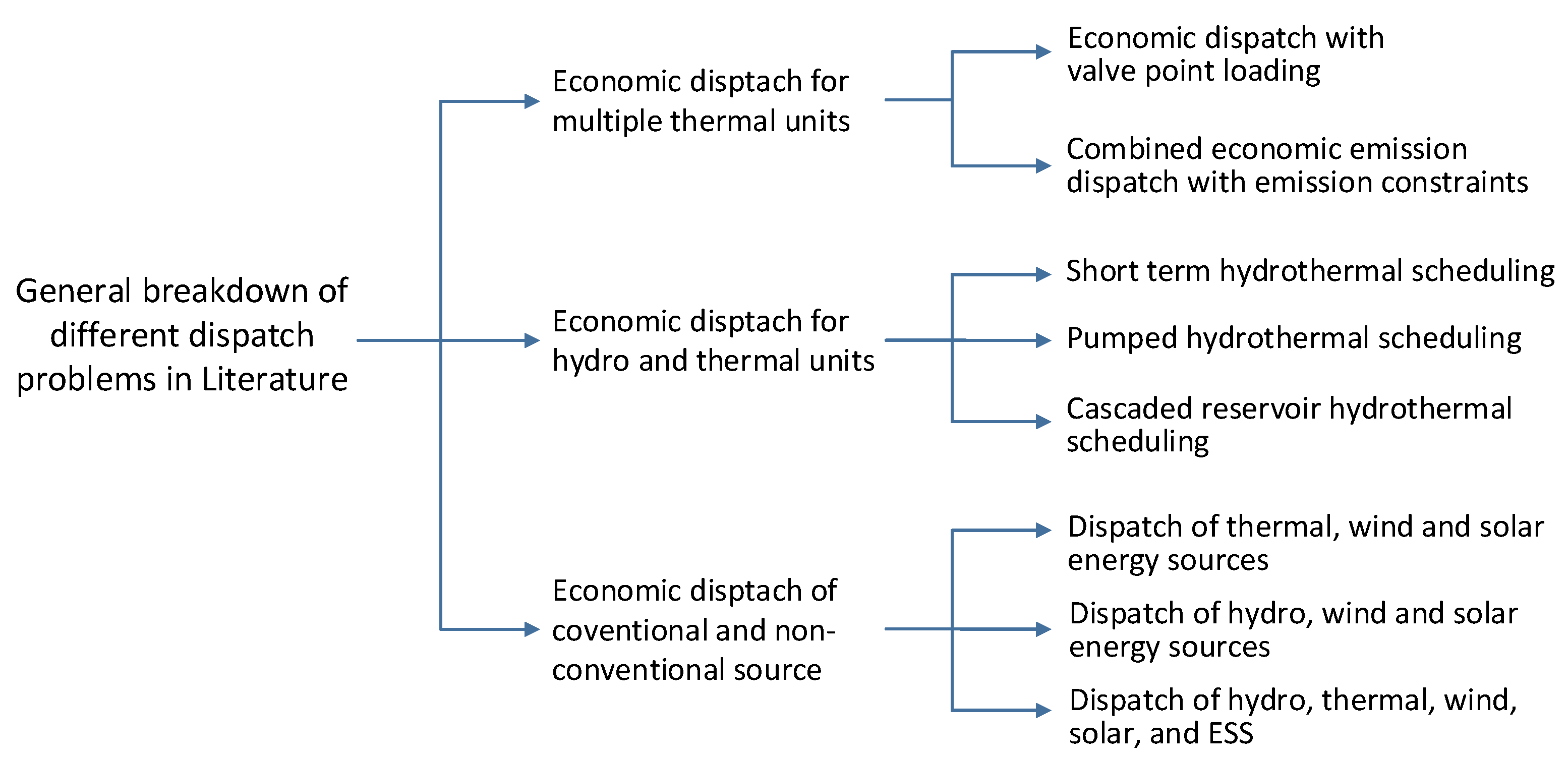
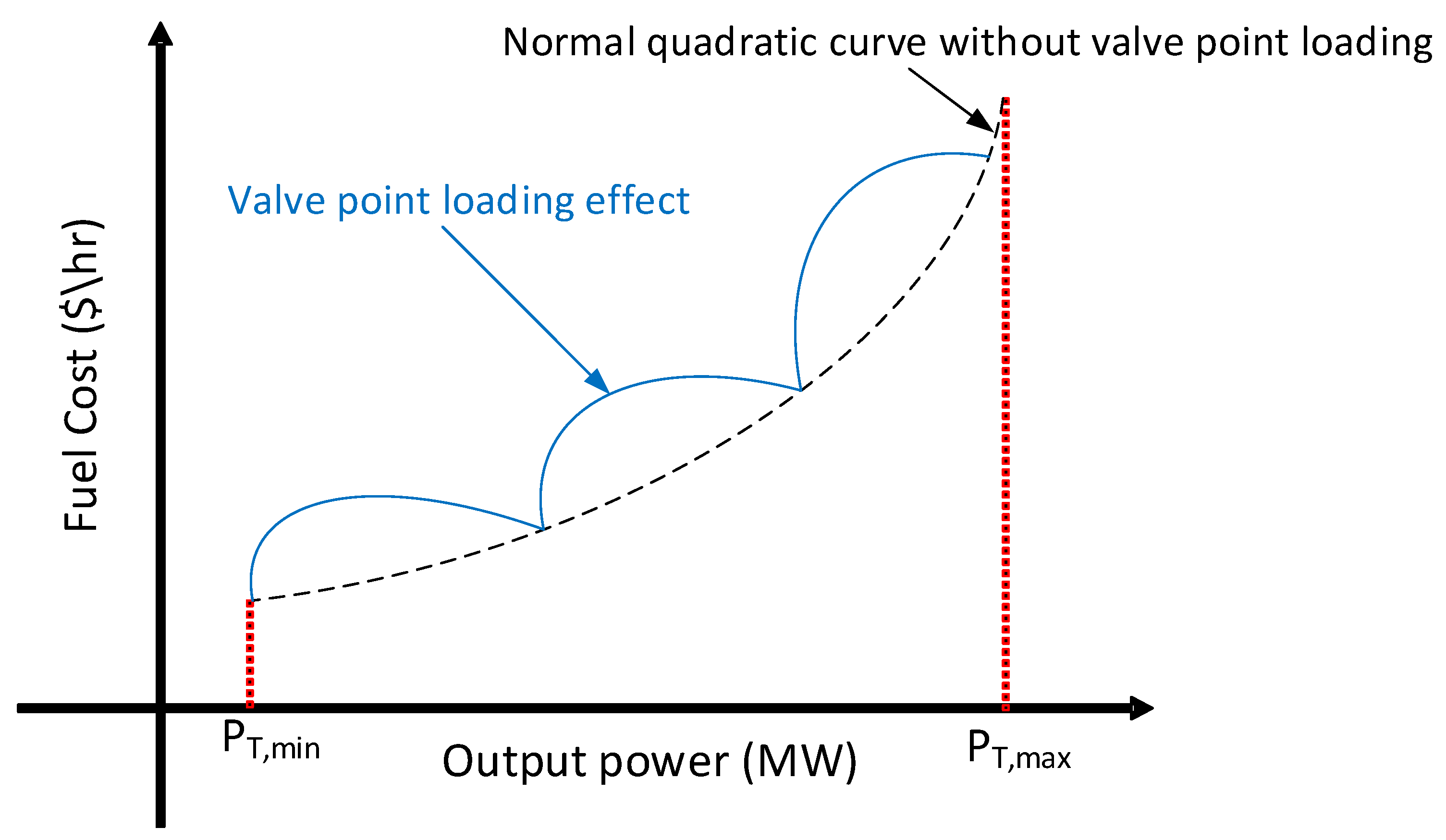
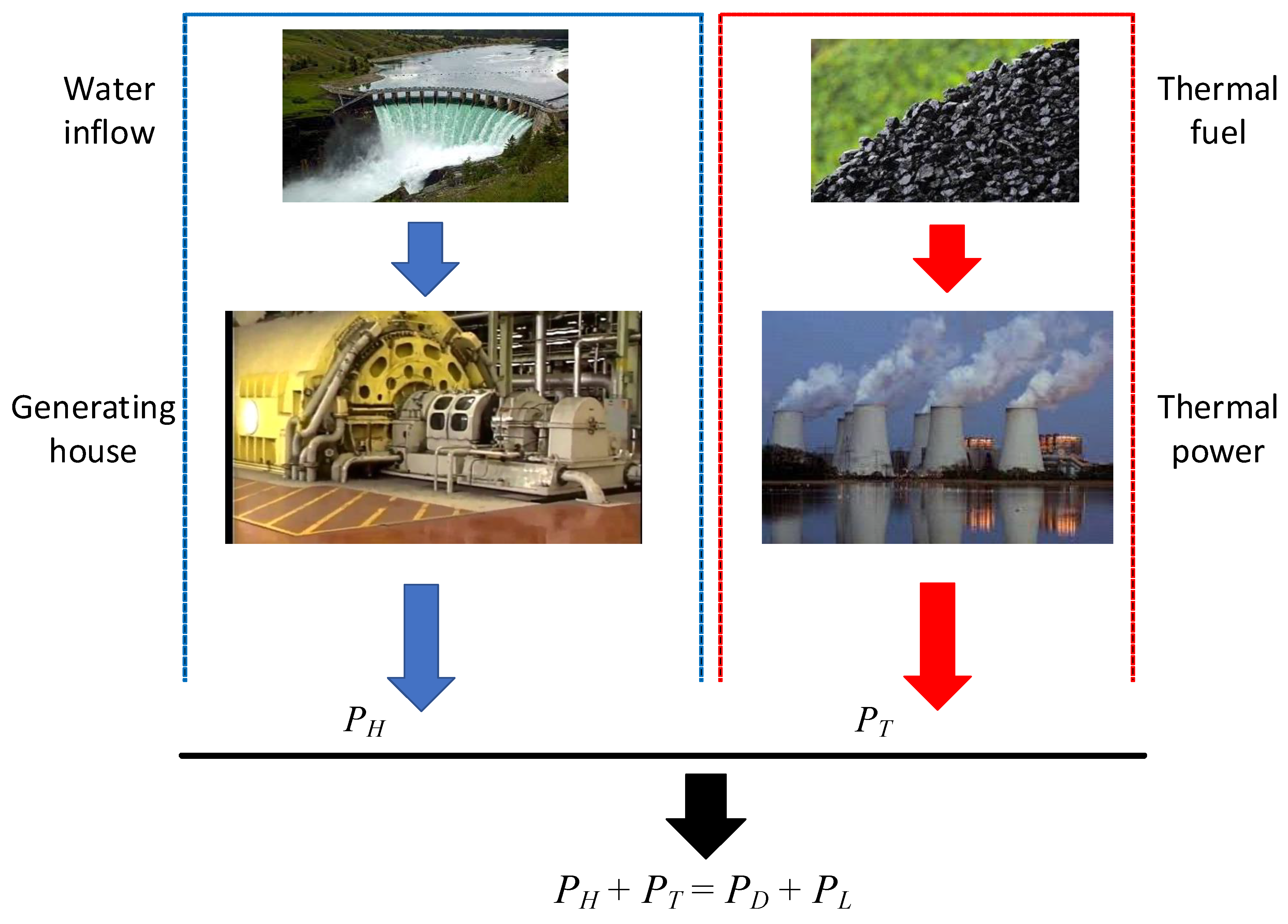
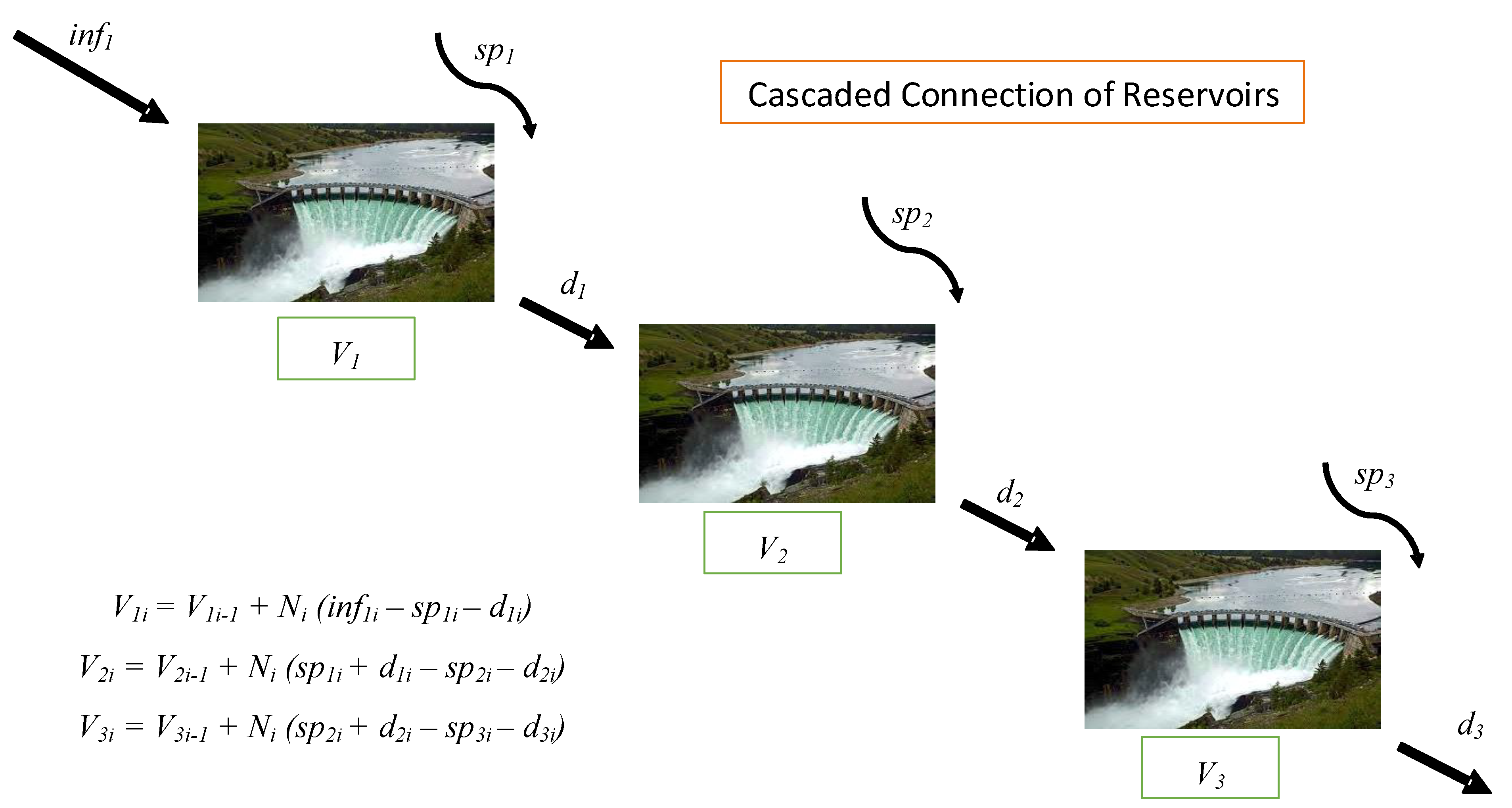
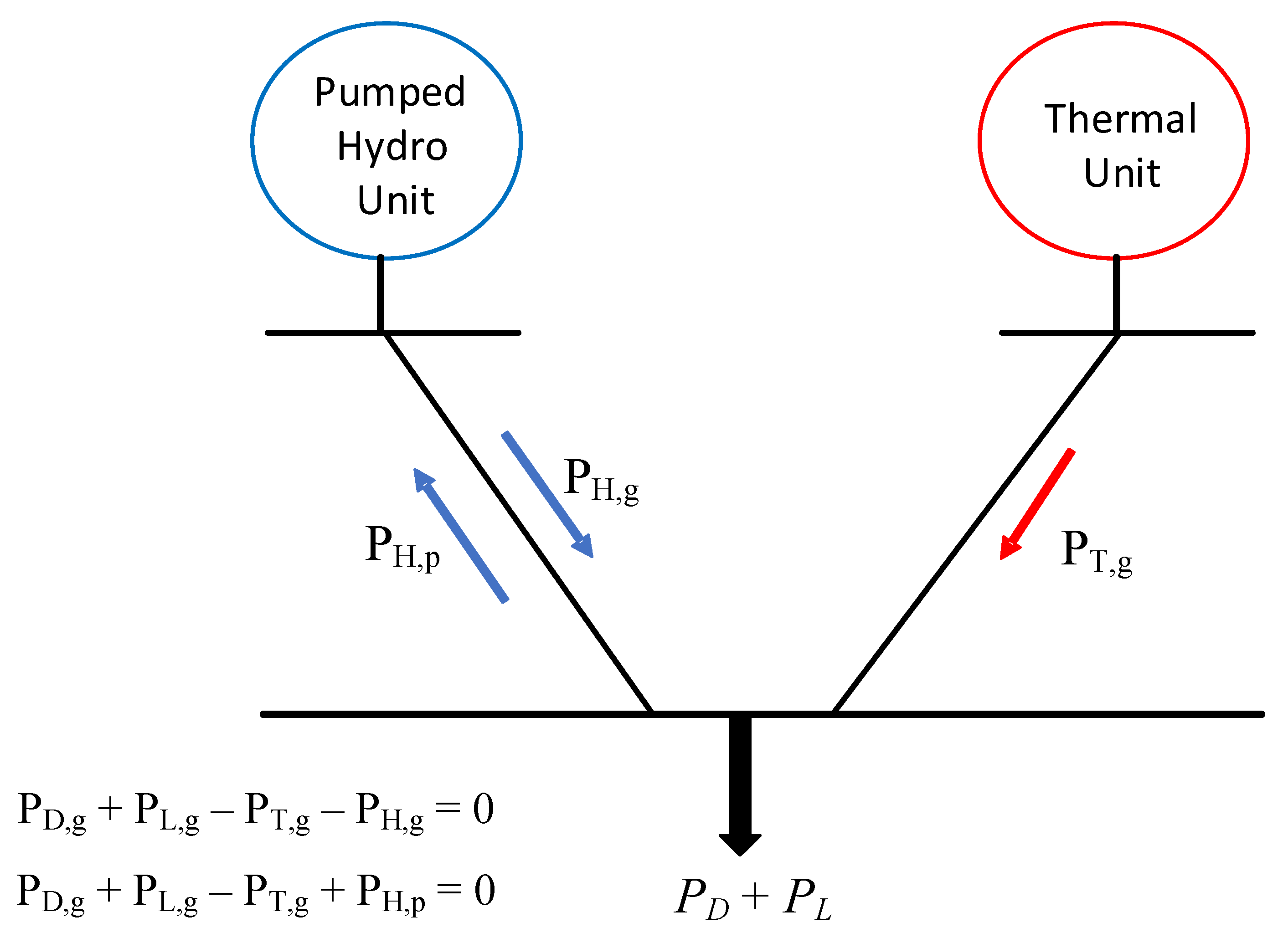
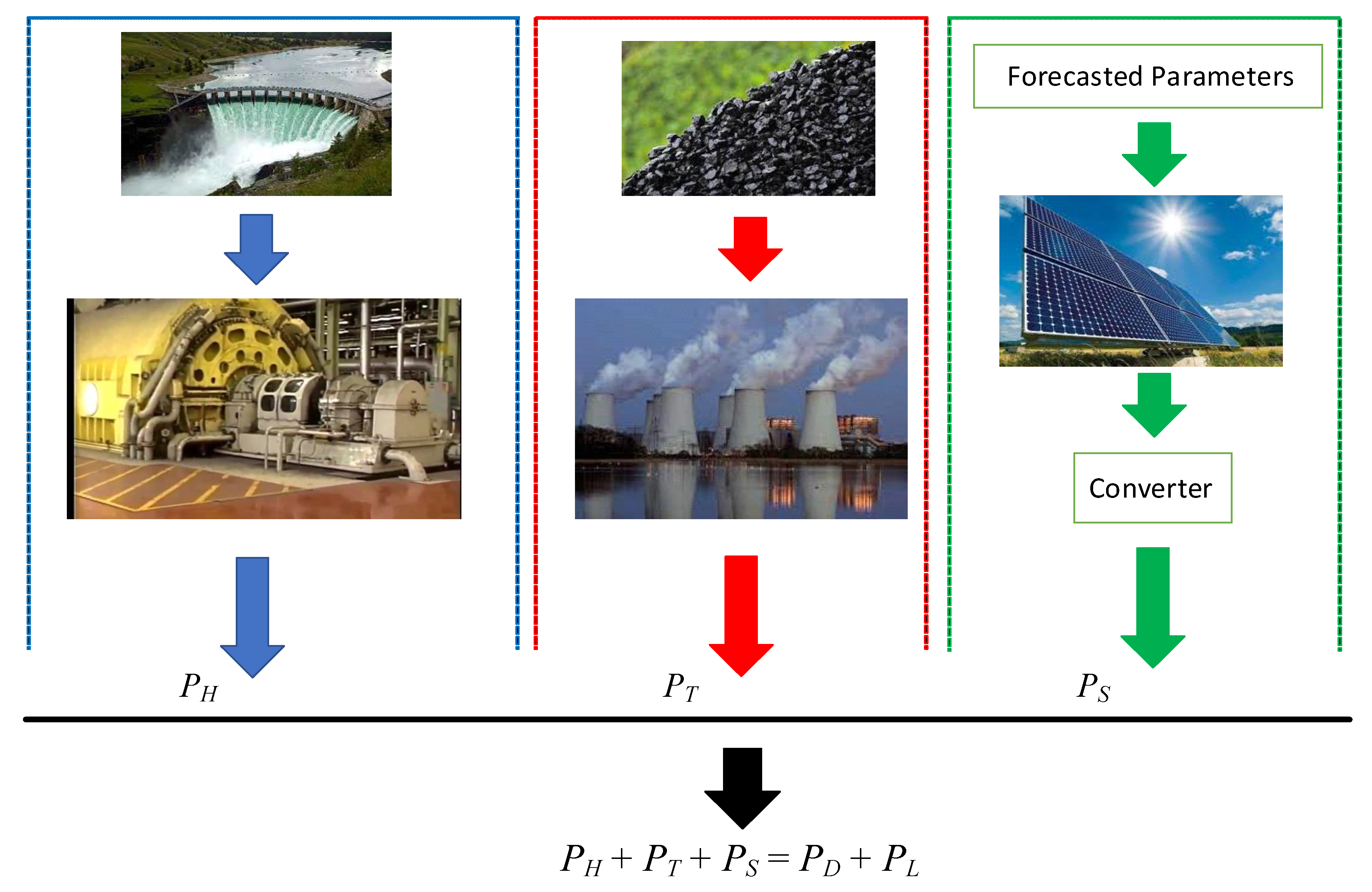
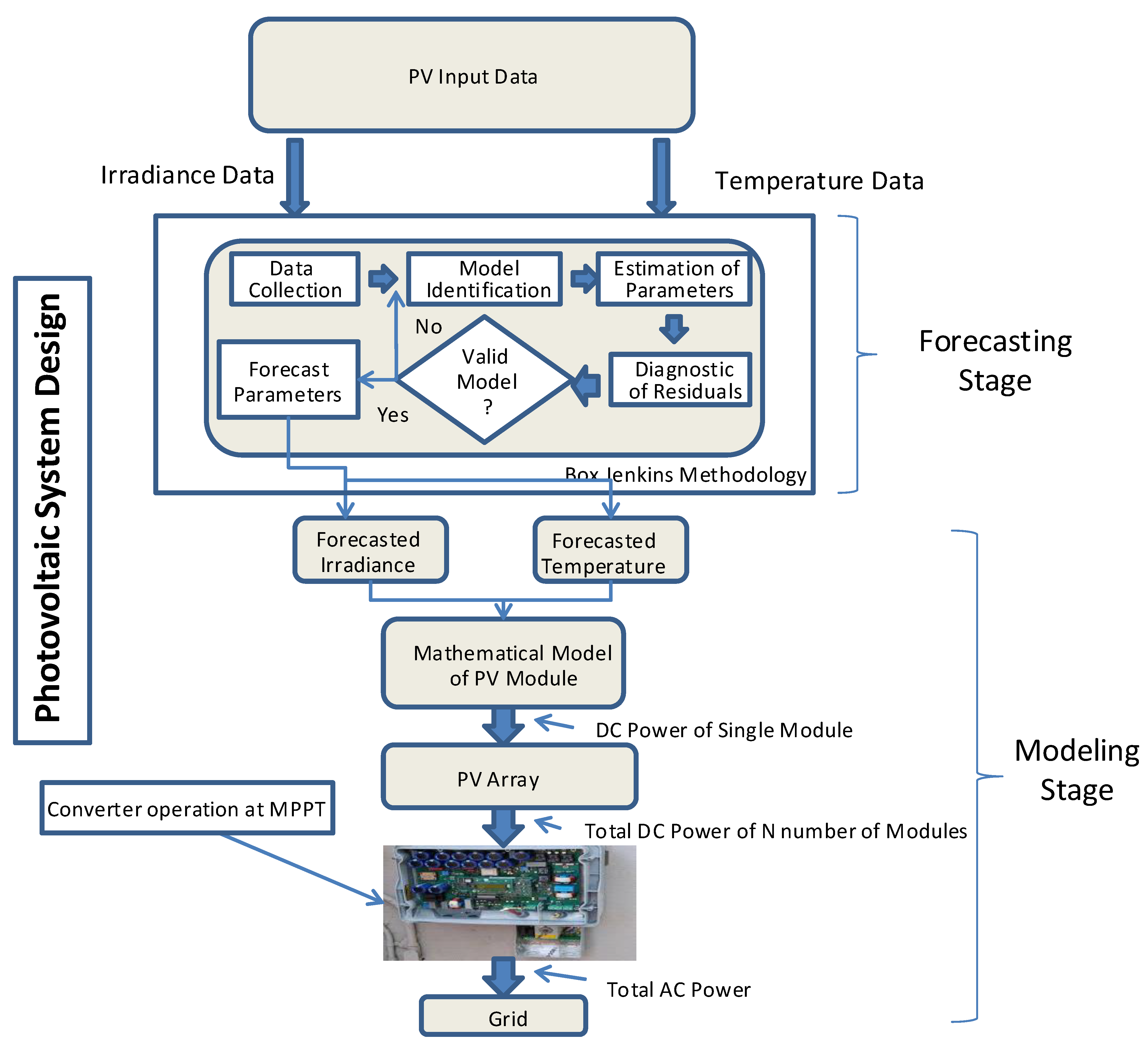
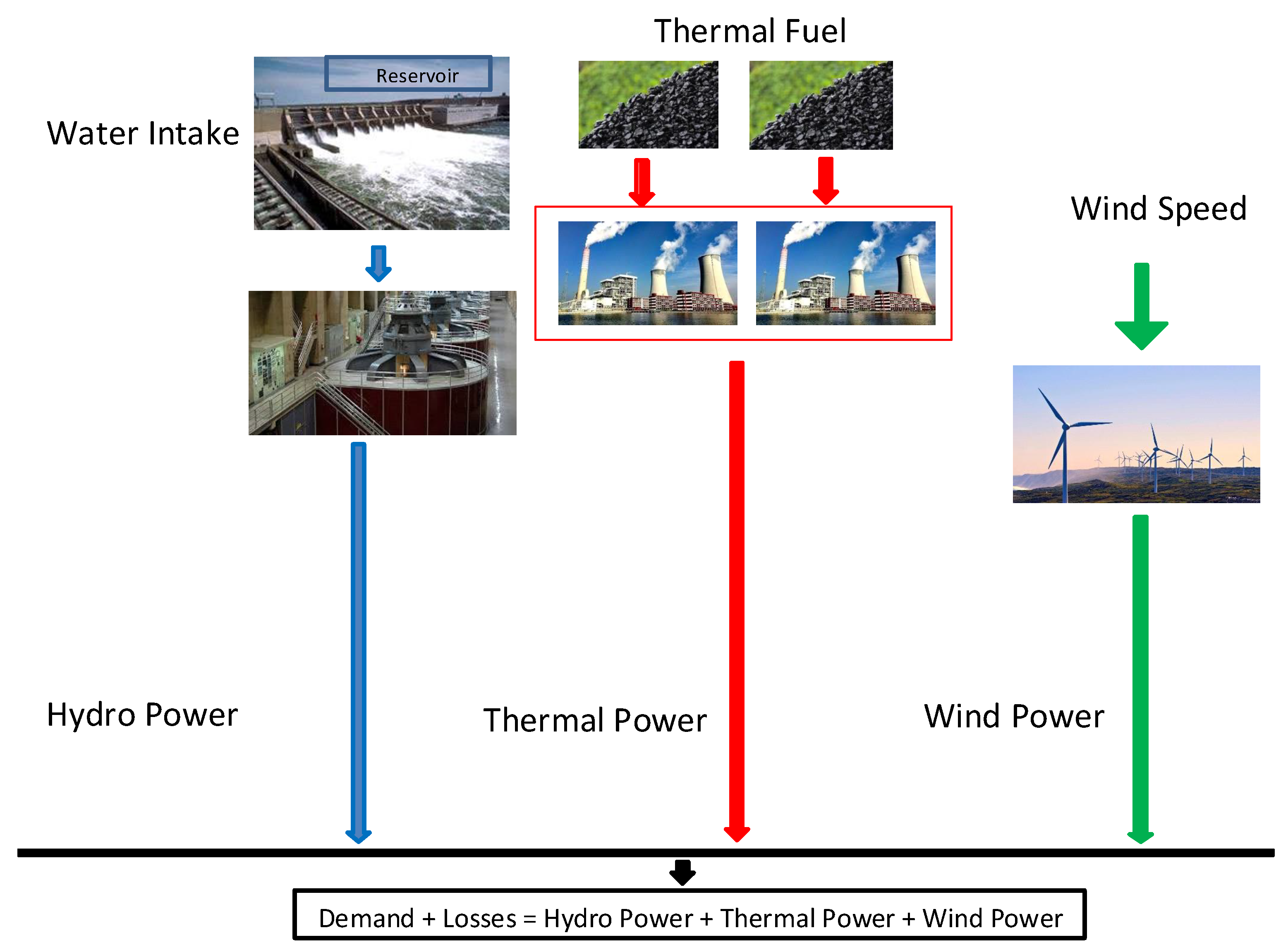
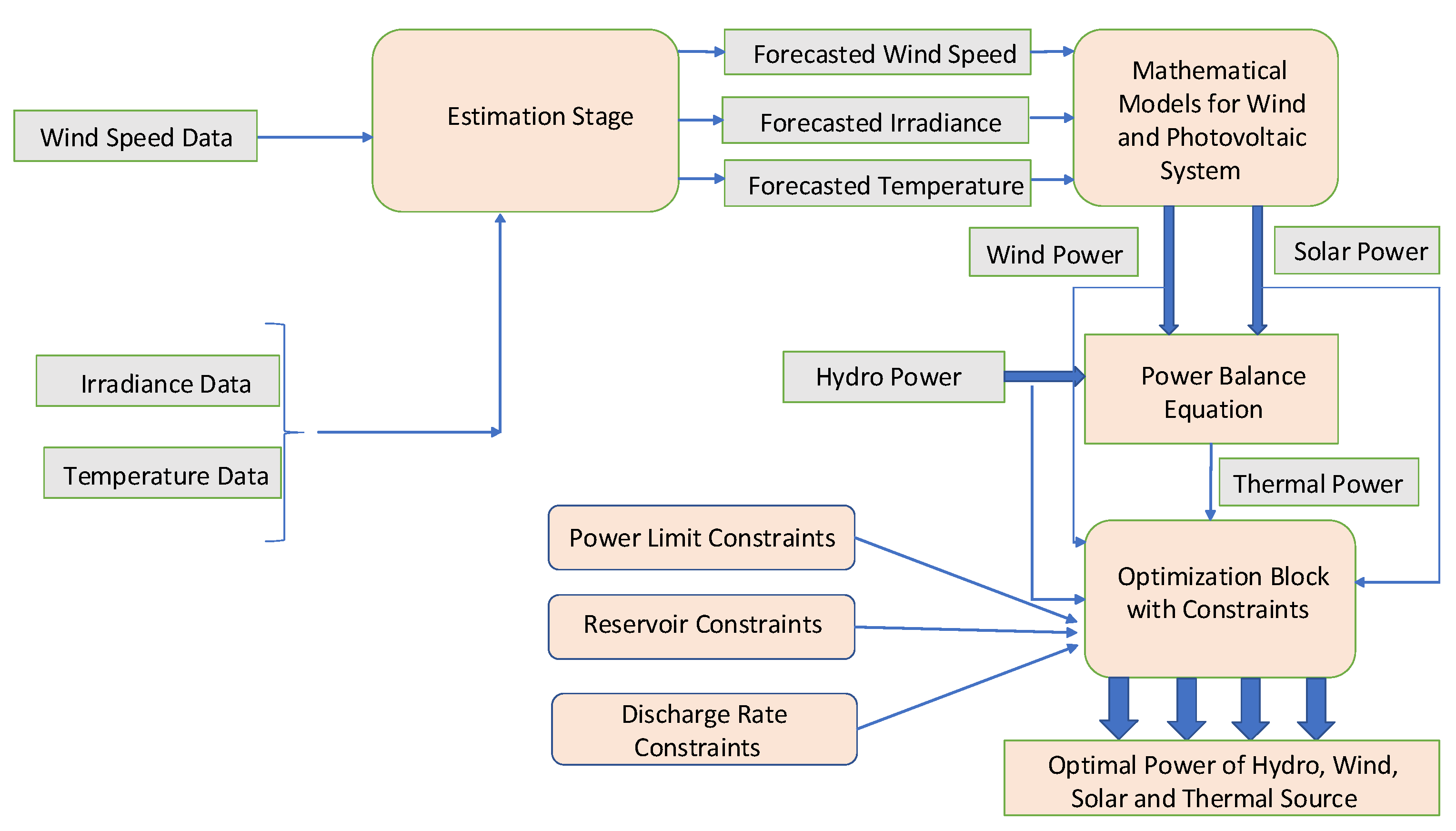
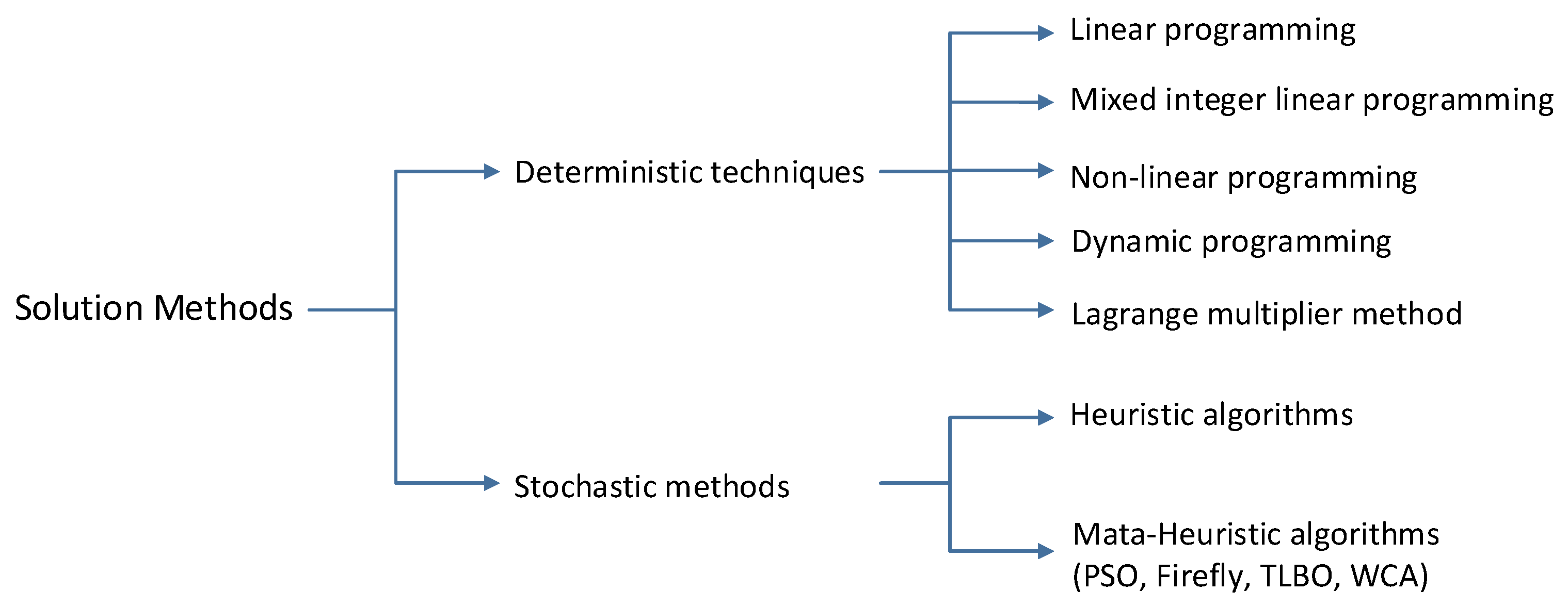
Publisher’s Note: MDPI stays neutral with regard to jurisdictional claims in published maps and institutional affiliations. |
© 2021 by the authors. Licensee MDPI, Basel, Switzerland. This article is an open access article distributed under the terms and conditions of the Creative Commons Attribution (CC BY) license (https://creativecommons.org/licenses/by/4.0/).