Article

A Real-Time Communication Framework for Distributed Wearable Human Activity Recognition

by
Jhonathan L. Rivas-Caicedo
1,*,
Laura Saldaña-Aristizábal
1,
Kevin Niño-Tejada
1 and
Juan F. Patarroyo-Montenegro
2,*
1
Department of Electrical and Computer Engineering, University of Puerto Rico, Mayaguez, PR 00680, USA
2
Department of Computer Science and Engineering, University of Puerto Rico, Mayaguez, PR 00680, USA
*
Authors to whom correspondence should be addressed.
Electronics 2026, 15(16), 3714; https://doi.org/10.3390/electronics15163714

Submission received: 17 July 2026 / Revised: 13 August 2026 / Accepted: 15 August 2026 / Published: 19 August 2026
(This article belongs to the Special Issue Ubiquitous Computing and Mobile Computing)

Abstract

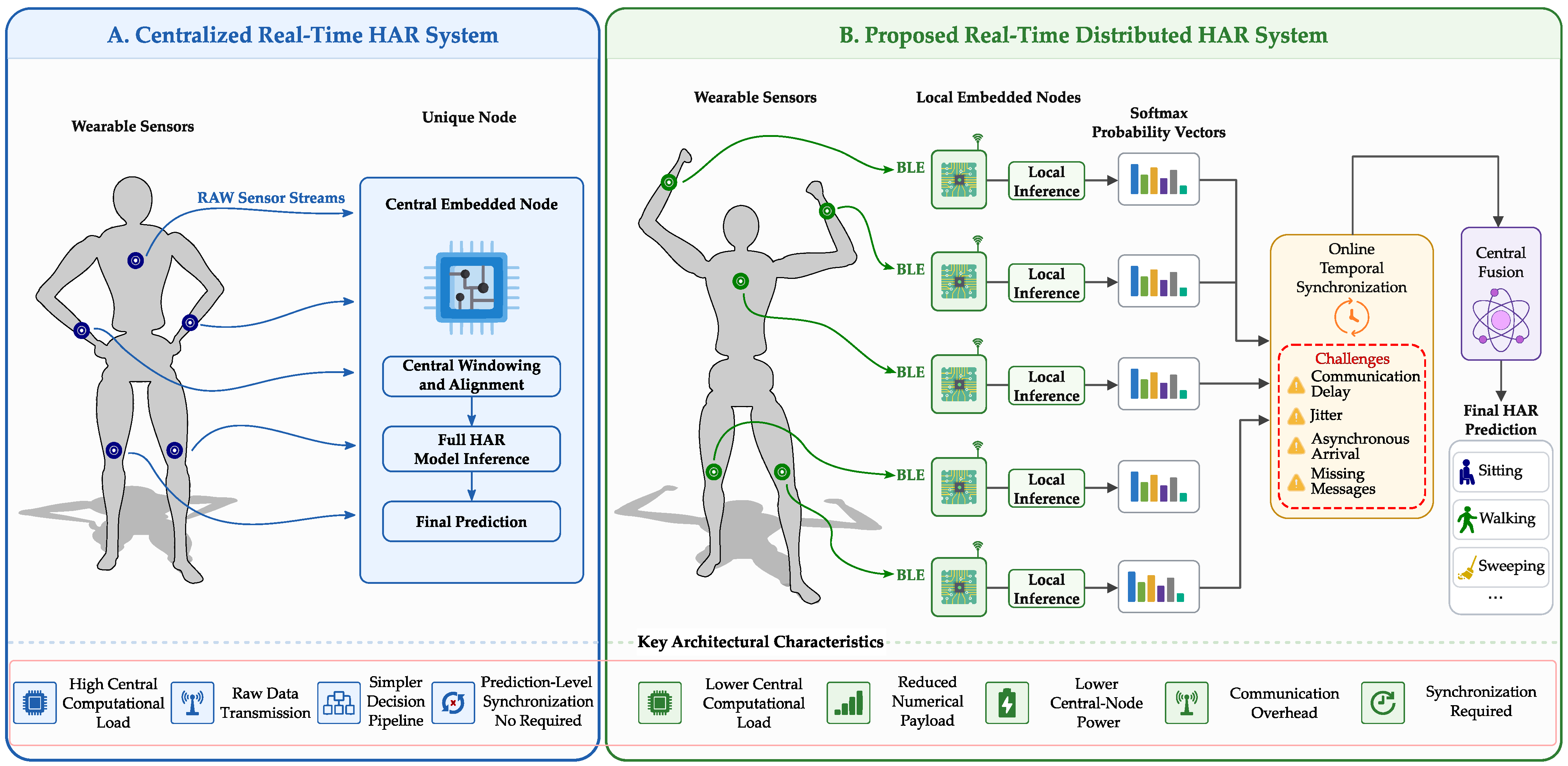
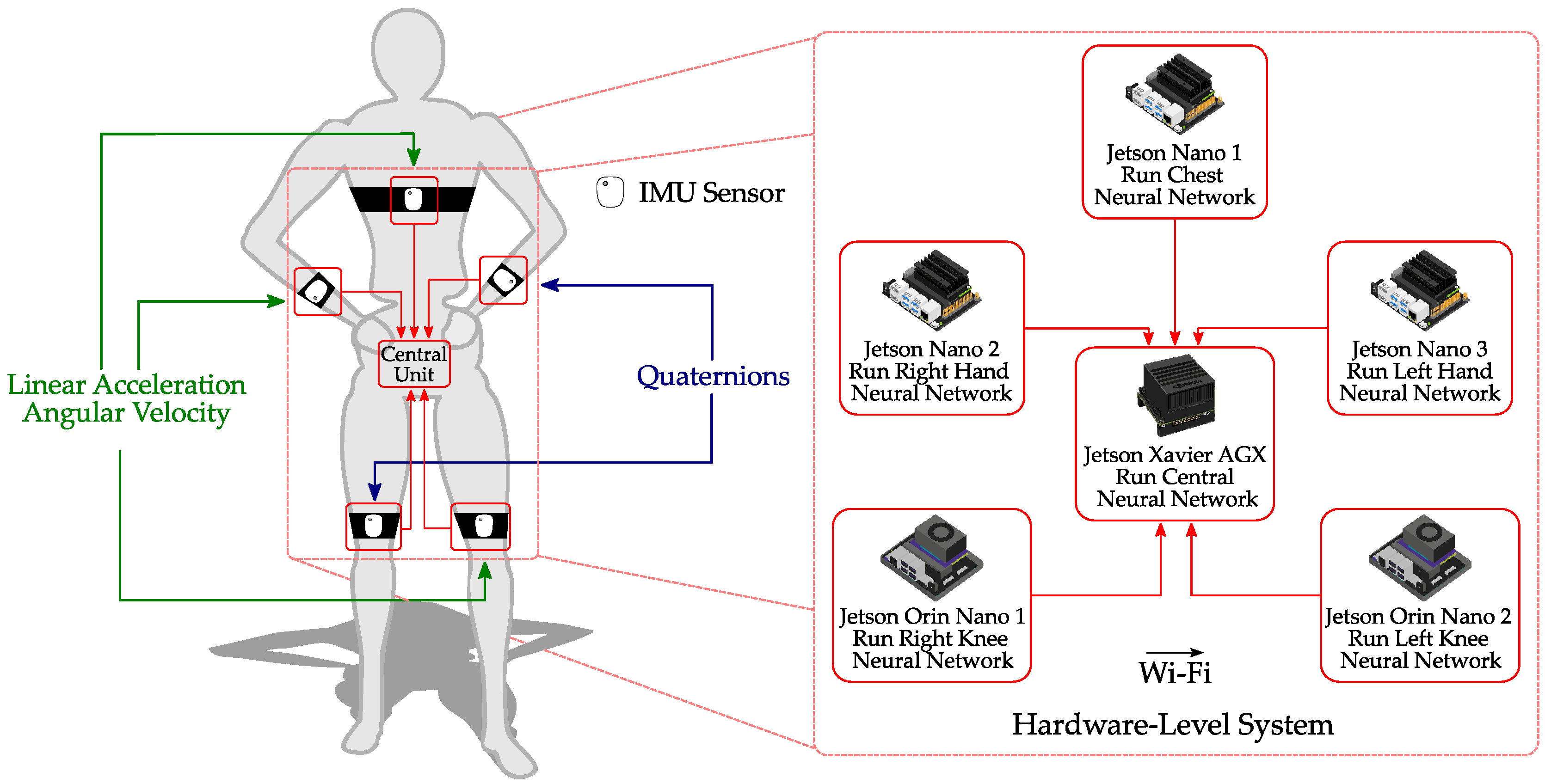
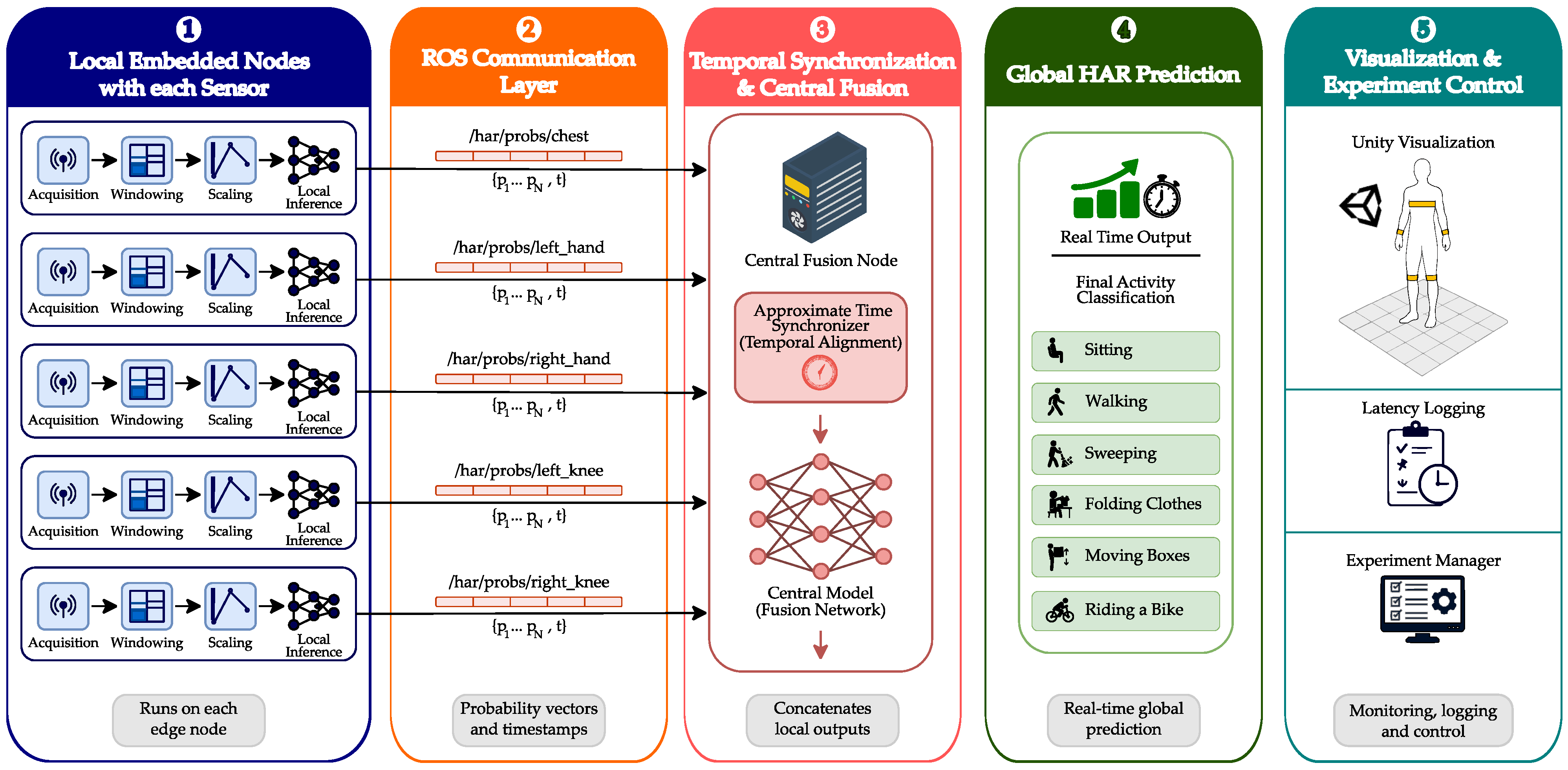
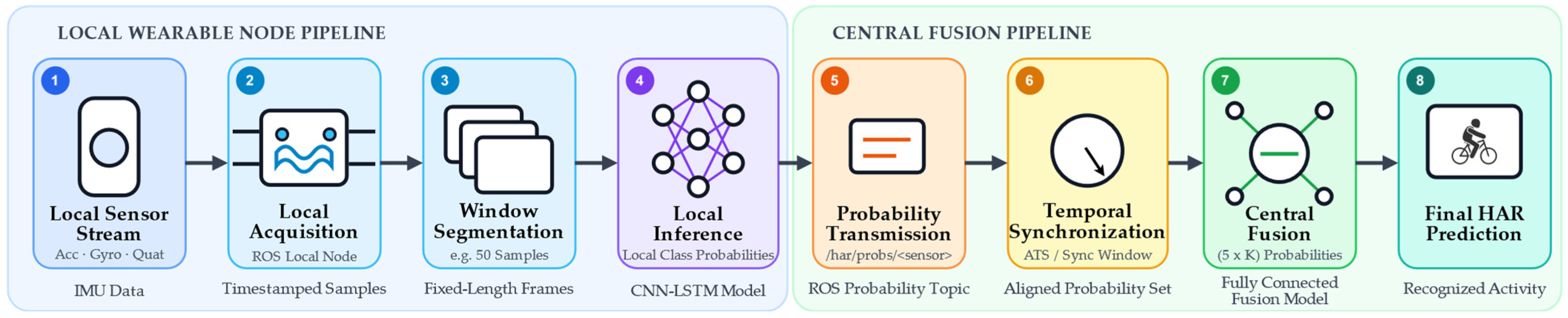
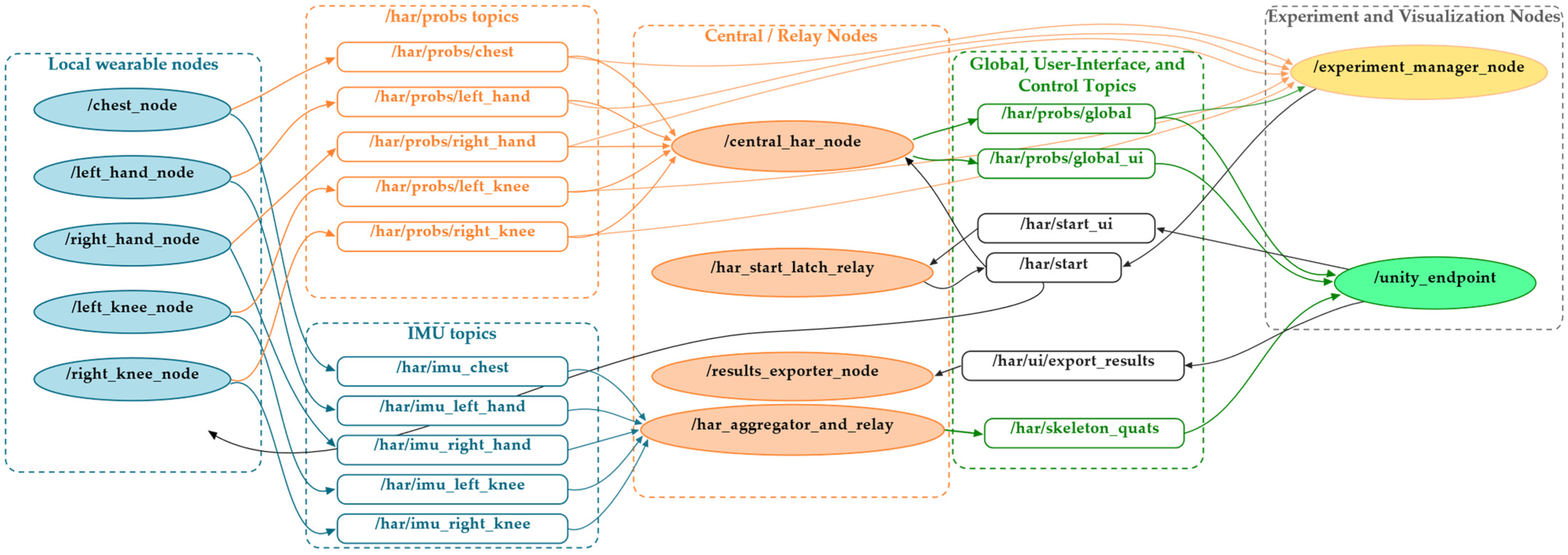
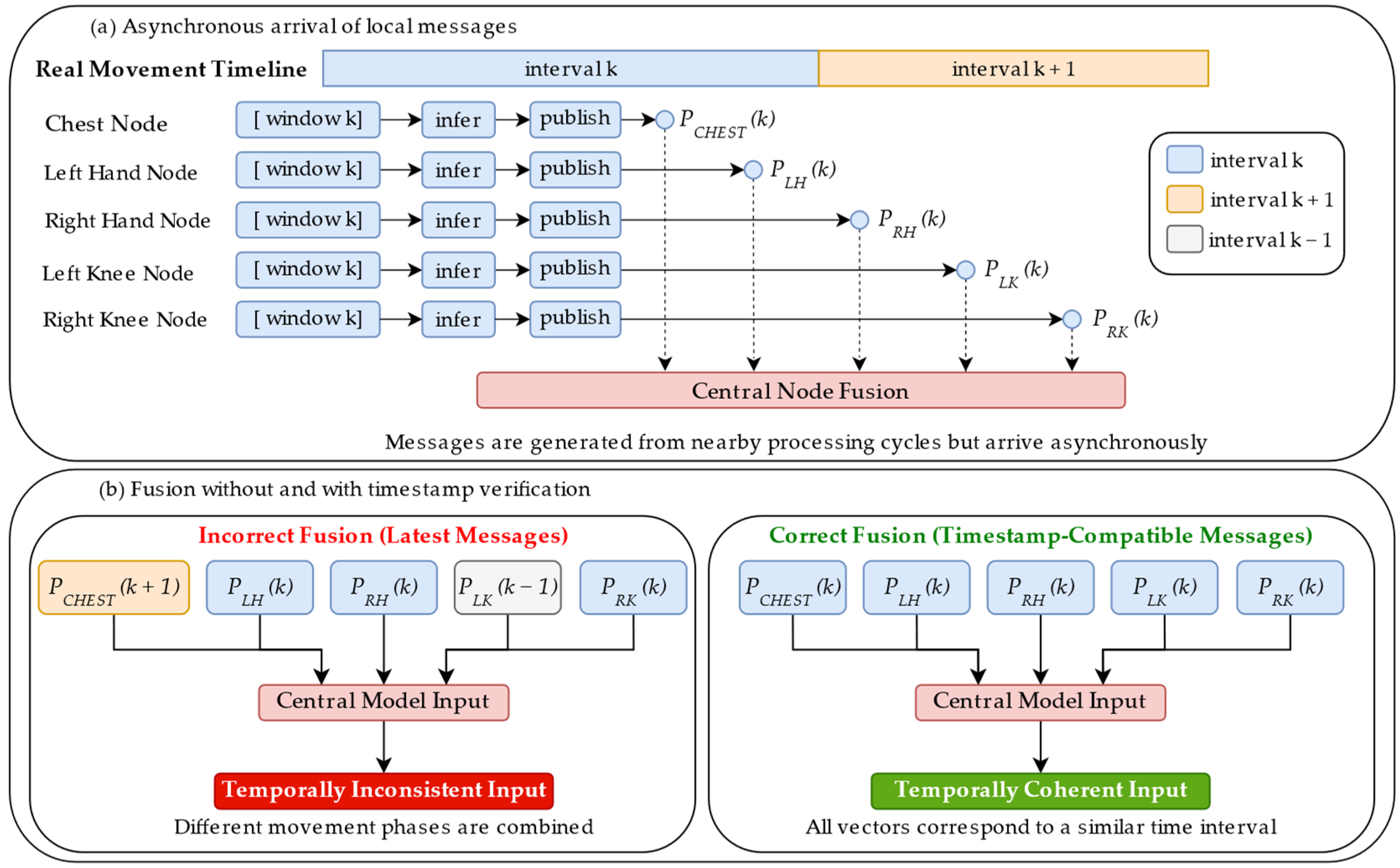
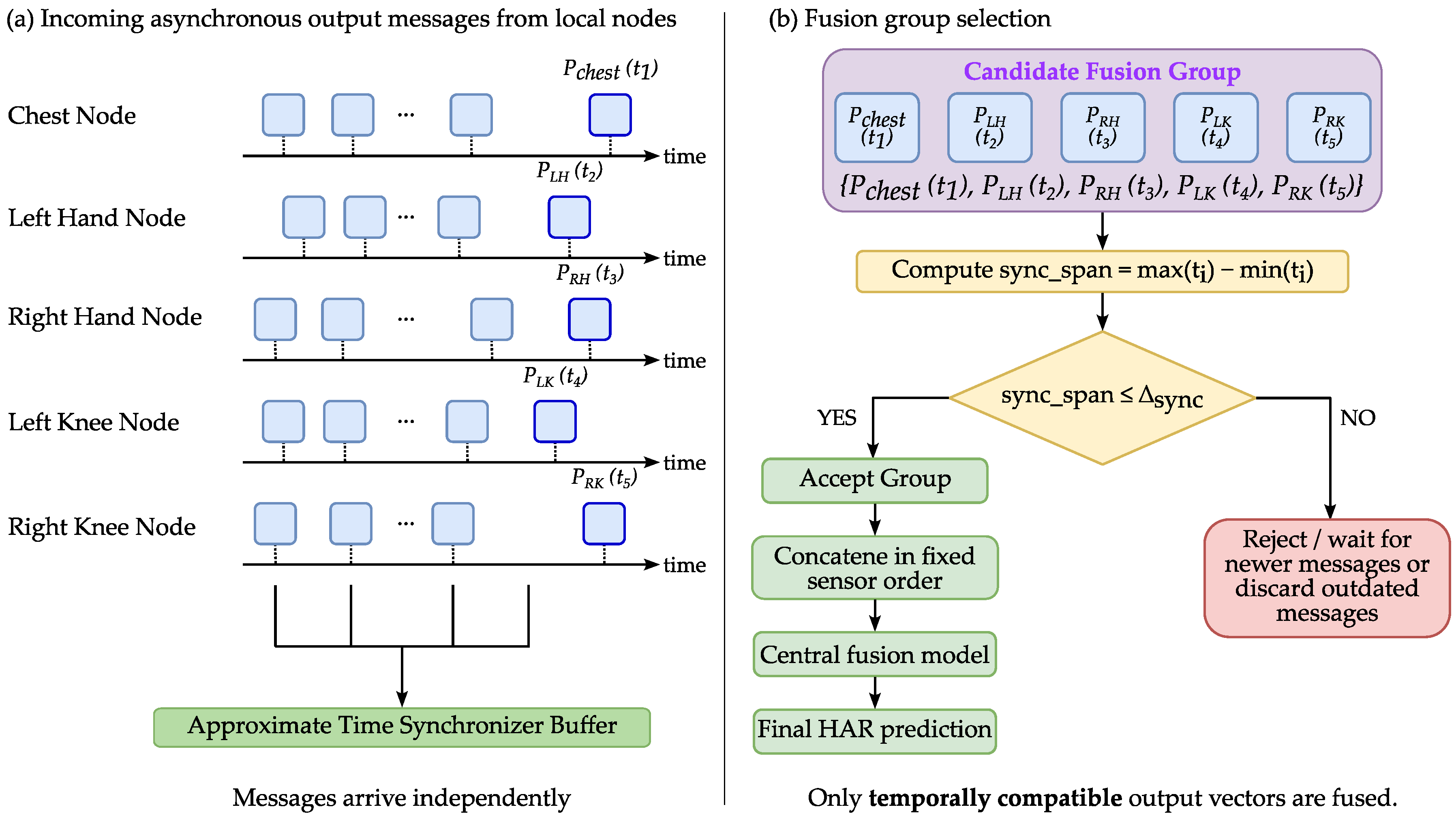
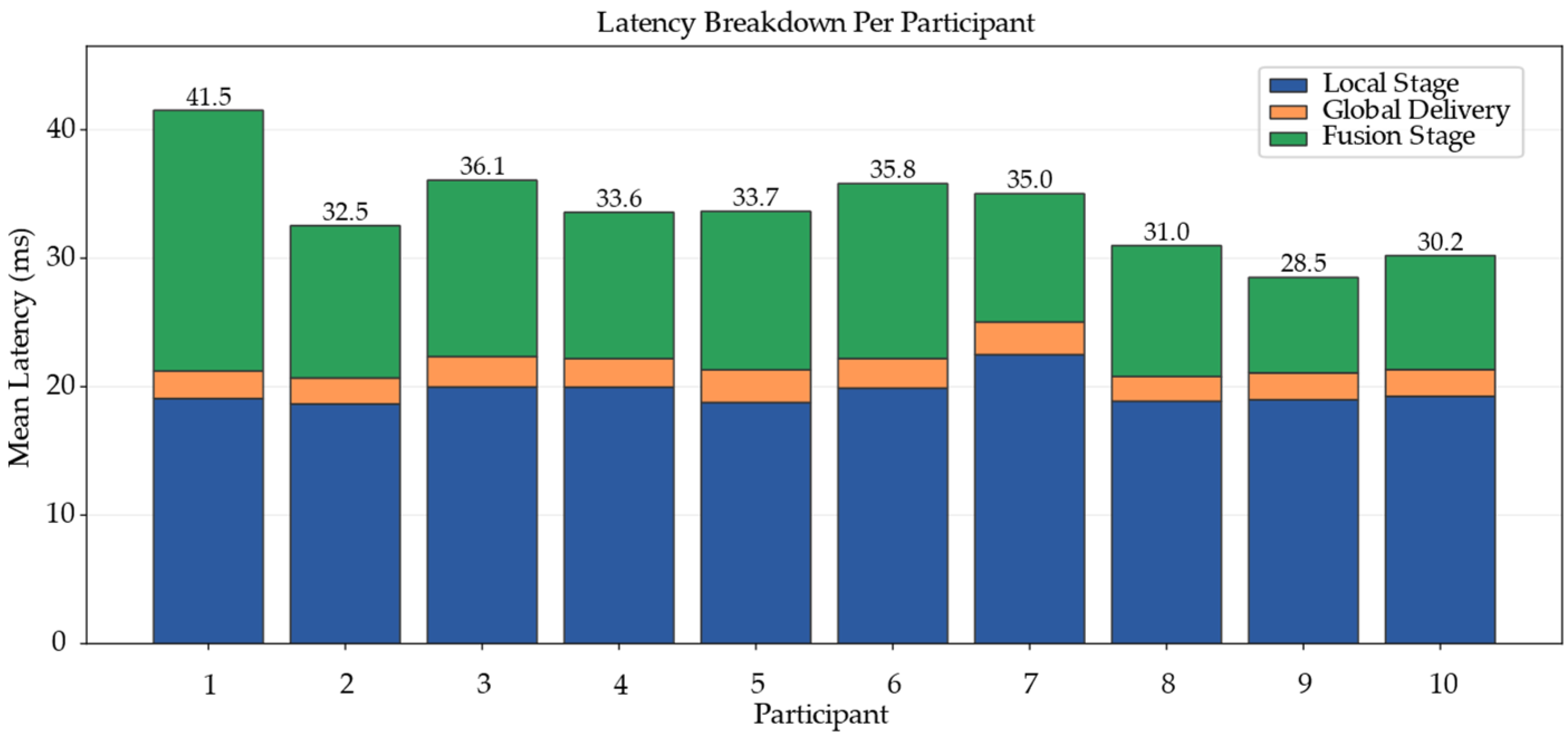
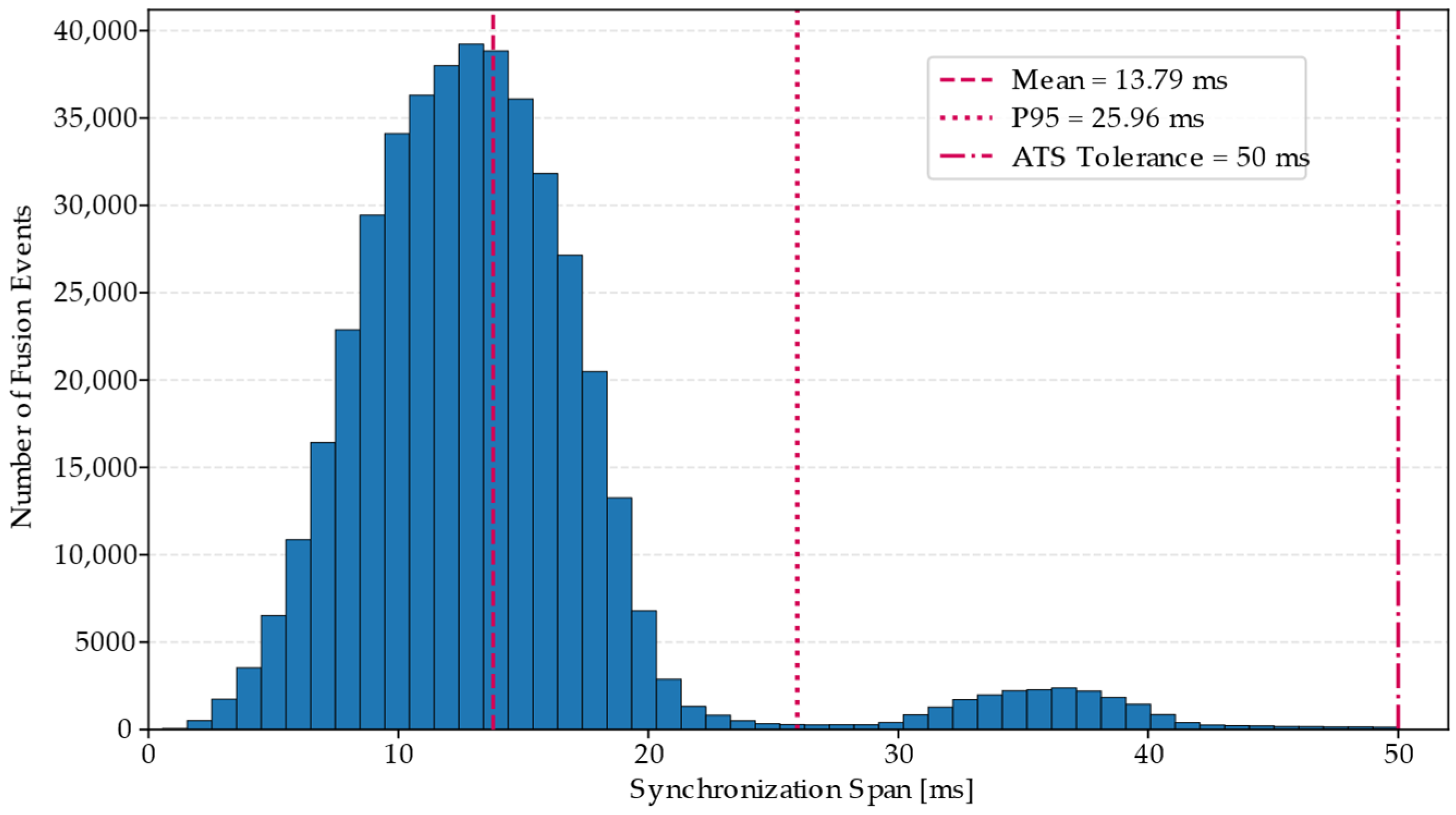
Real-time multi-sensor human activity recognition (HAR) requires accurate models and a system architecture capable of distributing computation, exchanging compact outputs, and maintaining temporal consistency across asynchronous streams. This paper presents a distributed HAR framework in which five wearable sensors are associated with local embedded nodes that perform acquisition, windowing, preprocessing, and convolutional neural network–long short-term memory (CNN–LSTM) inference. Each node transmits a timestamped six-class softmax vector, and a central node applies approximate synchronization and learned probability-level fusion. The framework was evaluated with ten participants whose data were not used for model development. It achieved 95.868% accuracy and a 95.642% macro-F1-score. During continuous operation, the system sustained 47.949 predictions/s, with a mean post-window end-to-end latency of 33.963 ms and a mean synchronization span of 13.788 ms. Relative to complete-window transmission, the numerical payload decreased by 97.69%, and central-node energy per prediction decreased by 52.2% compared with centralized real-time processing. Under 30% independent probability-message loss, accuracy remained at 94.31%.
Keywords: deep learning; distributed neural networks; human activity recognition (HAR); latency analysis; multi-sensor systems; probability-level fusion; real-time systems; robot operating system (ROS); synchronization strategy deep learning; distributed neural networks; human activity recognition (HAR); latency analysis; multi-sensor systems; probability-level fusion; real-time systems; robot operating system (ROS); synchronization strategy