Article

Hazardous Effect of Low-Dose Aspirin in Patients with Predialysis Advanced Chronic Kidney Disease Assessed by Machine Learning Method Feature Selection

1
Division of Nephrology, Department of Internal Medicine, Shin-Kong Wu Ho-Su Memorial Hospital, Taipei 11101, Taiwan
2
Department of Medicine, Fu-Jen Catholic University School of Medicine, New Taipei City 242062, Taiwan
3
Division of Nephrology, Department of Internal Medicine, Hsin-Jen Hospital, New Taipei City 24243, Taiwan
4
Graduate Institute of Business Administration, College of Management, Fu Jen Catholic University, New Taipei City 24243, Taiwan
5
AI Development Center, Fu Jen Catholic University, New Taipei City 24243, Taiwan
*
Authors to whom correspondence should be addressed.
Healthcare 2021, 9(11), 1484; https://doi.org/10.3390/healthcare9111484

Submission received: 11 September 2021 / Revised: 18 October 2021 / Accepted: 28 October 2021 / Published: 31 October 2021
(This article belongs to the Special Issue Health Informatics: The Foundations of Public Health)

Abstract

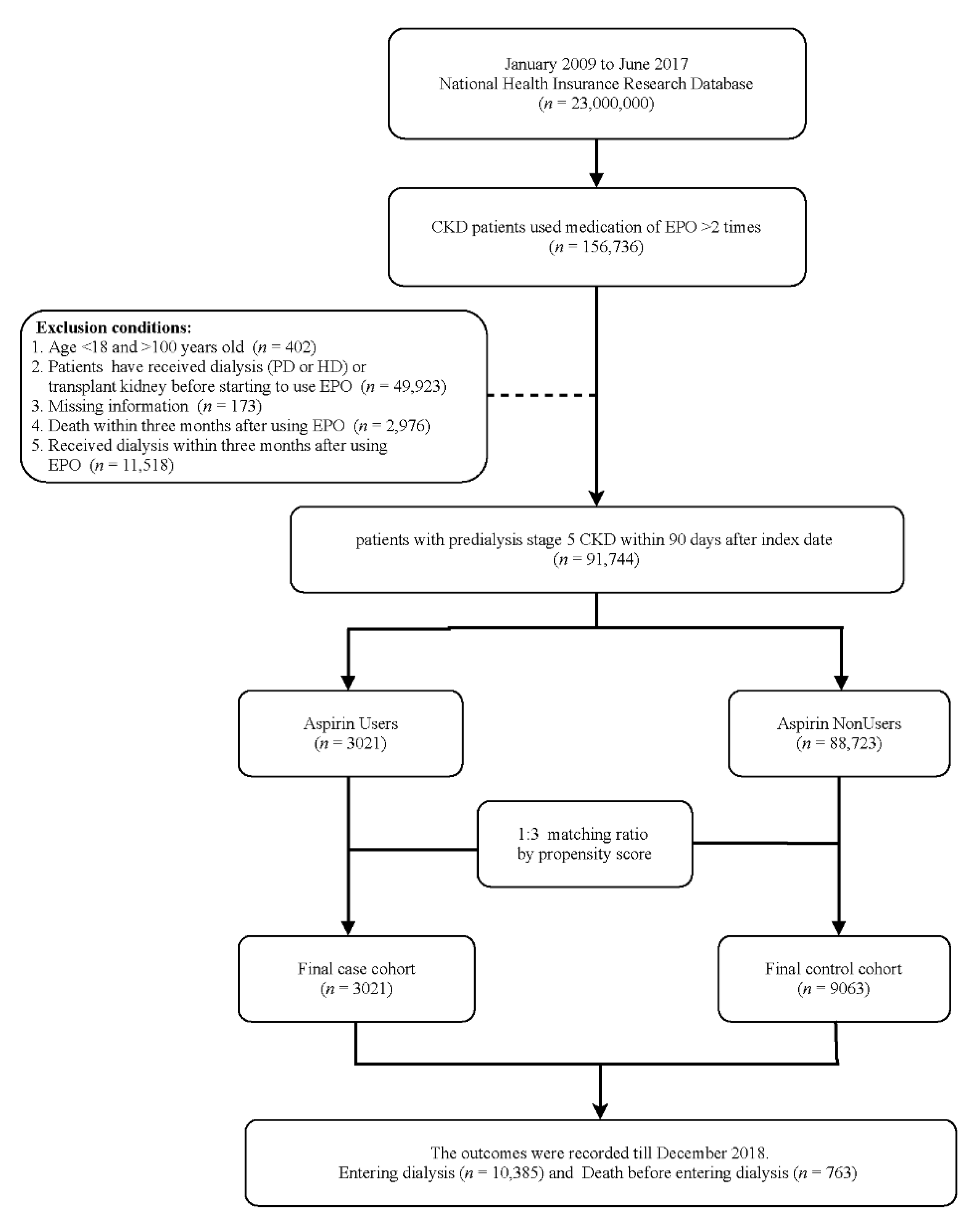
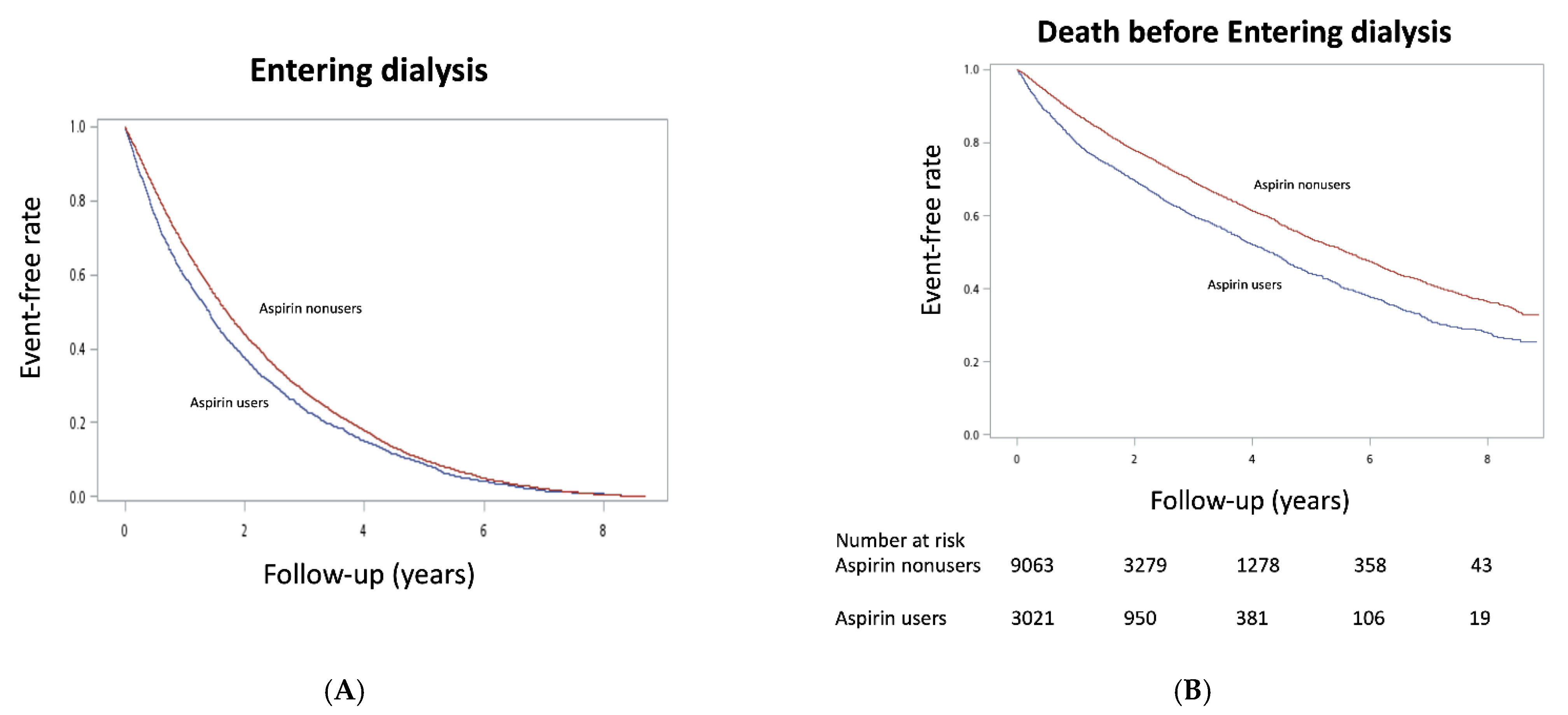
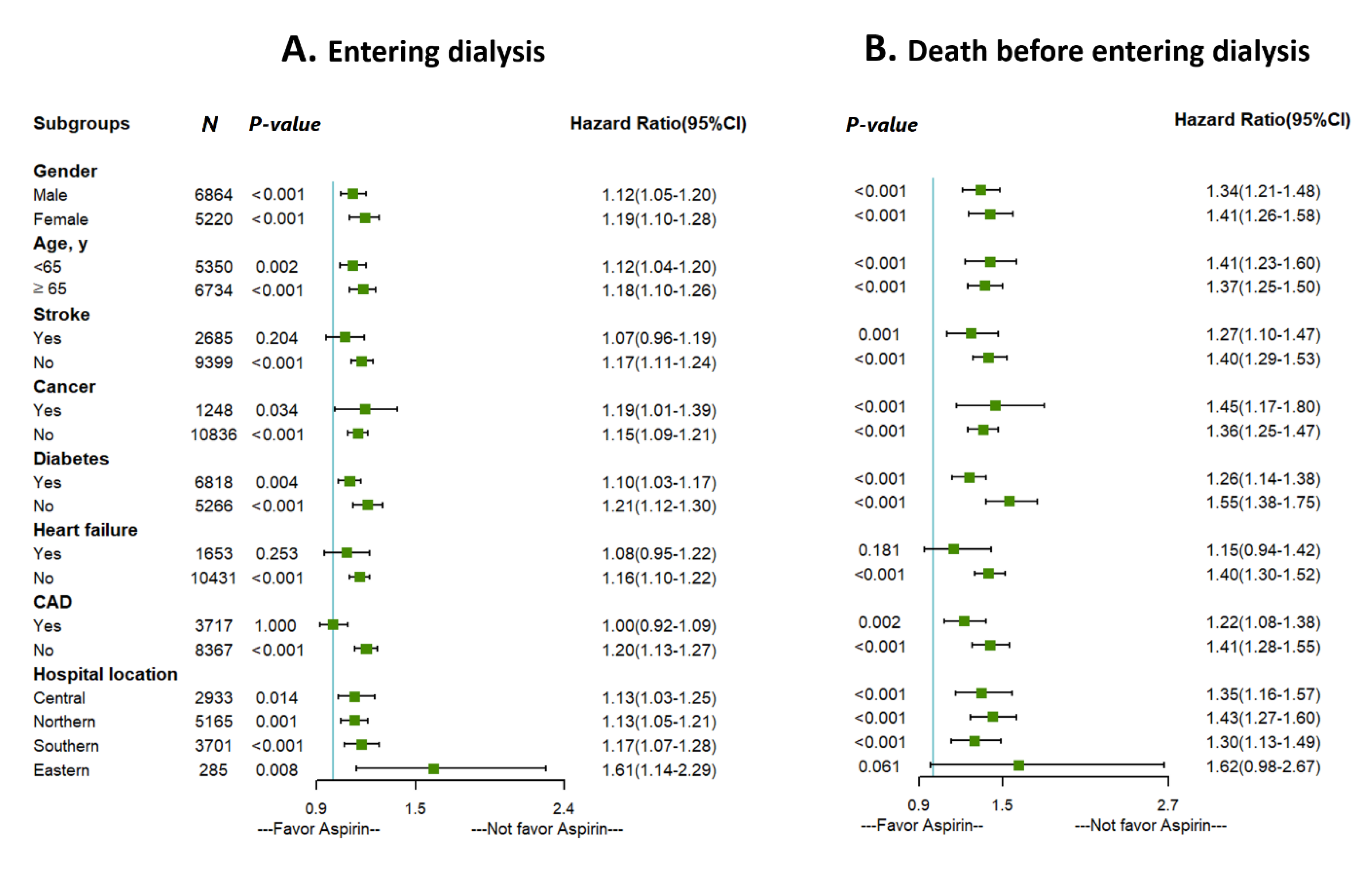
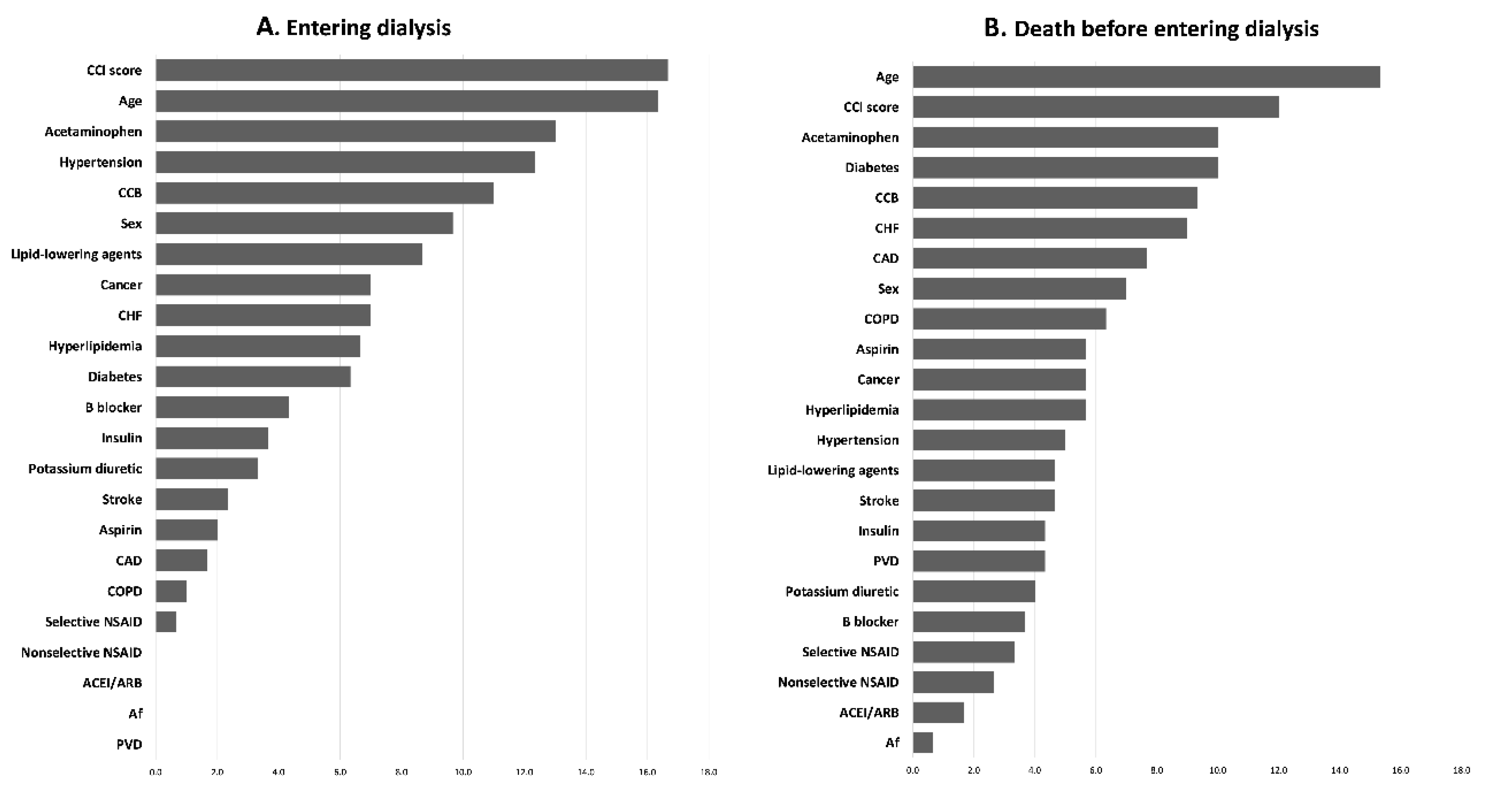
Background: Low-dose aspirin (100 mg) is widely used in preventing cardiovascular disease in chronic kidney disease (CKD) because its benefits outweighs the harm, however, its effect on clinical outcomes in patients with predialysis advanced CKD is still unclear. This study aimed to assess the effect of aspirin use on clinical outcomes in such group. Methods: Patients were selected from a nationwide diabetes database from January 2009 to June 2017, and divided into two groups, a case group with aspirin use (n = 3021) and a control group without aspirin use (n = 9063), by propensity score matching with a 1:3 ratio. The Cox regression model was used to estimate the hazard ratio (HR). Moreover, machine learning method feature selection was used to assess the importance of parameters in the clinical outcomes. Results: In a mean follow-up of 1.54 years, aspirin use was associated with higher risk for entering dialysis (HR, 1.15 [95%CI, 1.10–1.21]) and death before entering dialysis (1.46 [1.25–1.71]), which were also supported by feature selection. The renal effect of aspirin use was consistent across patient subgroups. Nonusers and aspirin users did not show a significant difference, except for gastrointestinal bleeding (1.05 [0.96–1.15]), intracranial hemorrhage events (1.23 [0.98–1.55]), or ischemic stroke (1.15 [0.98–1.55]). Conclusions: Patients with predialysis advanced CKD and anemia who received aspirin exhibited higher risk of entering dialysis and death before entering dialysis by 15% and 46%, respectively.
Keywords: chronic kidney disease; real-world evidence; machine learning; aspirin; nonsteroidal anti-inflammatory drugs; dialysis; feature selection; machine learning chronic kidney disease; real-world evidence; machine learning; aspirin; nonsteroidal anti-inflammatory drugs; dialysis; feature selection; machine learning