Article

UV-C LED Disinfection of Antibiotic-Resistant Escherichia coli in Water: Integration with Ceramic Membrane Filtration


by
Carolina Santos
1,2,†,
Lisandra Lopes
1,†,
João Sério
1,2,
Maria Teresa Barreto Crespo
1,2,
Ana Paula Marques
1,3 and
Vanessa Jorge Pereira
1,2,*
1
iBET, Instituto de Biologia Experimental e Tecnológica, Apartado 12, 2781-901 Oeiras, Portugal
2
Instituto de Tecnologia Química e Biológica António Xavier, Universidade Nova de Lisboa (ITQB NOVA), Av. da República, 2780-157 Oeiras, Portugal
3
INIAV IP, Instituto Nacional de Investigação Agrária e Veterinária, Pólo de Dois Portos, Quinta da Almoínha, 2565-191 Dois Portos, Portugal
*
Author to whom correspondence should be addressed.
These authors contributed equally to this work.
Processes 2026, 14(9), 1471; https://doi.org/10.3390/pr14091471
Submission received: 9 March 2026 / Revised: 17 April 2026 / Accepted: 27 April 2026 / Published: 30 April 2026
(This article belongs to the Section Separation Processes)

Abstract

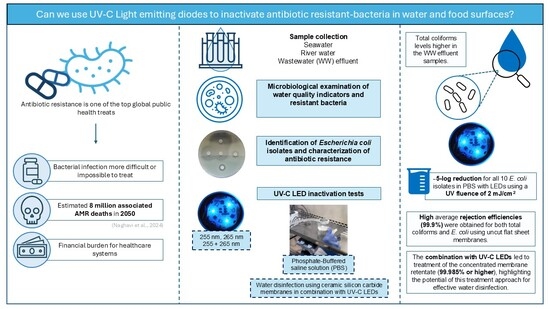
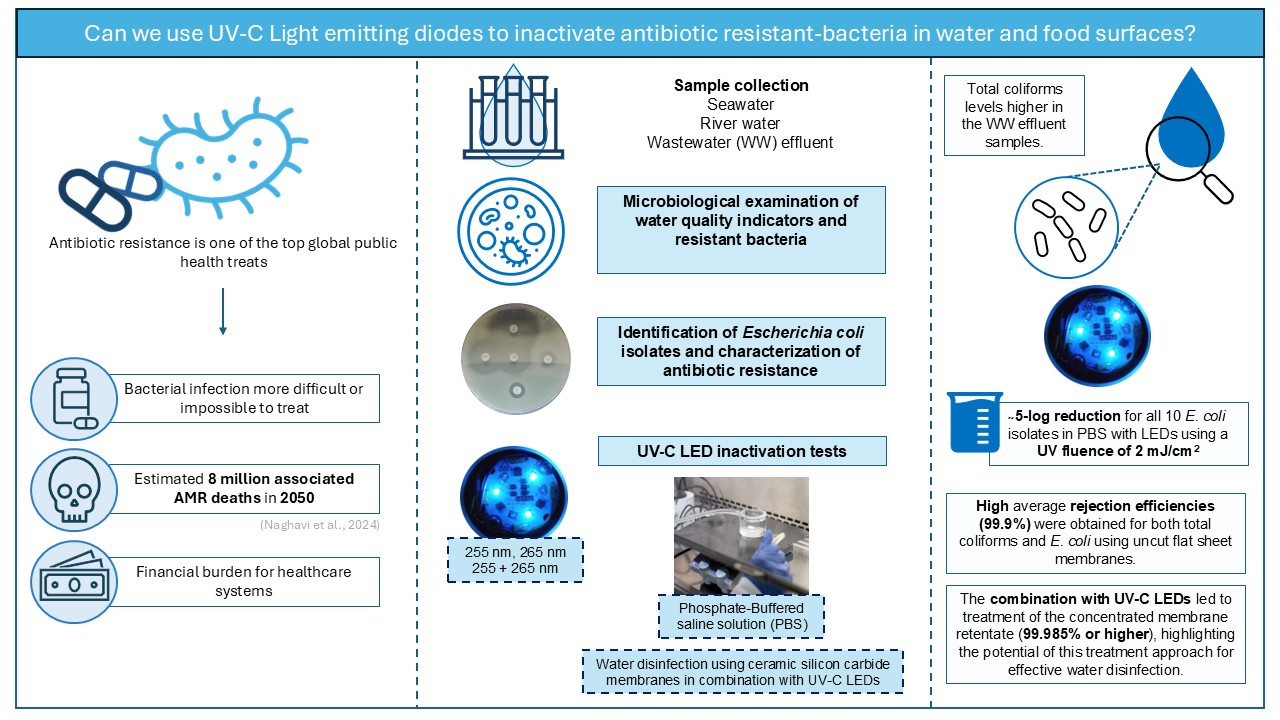
The growing problem of antibiotic resistance poses a serious threat to public health and ecosystems. New disinfection methods could help address this global issue. In this study, ultraviolet-C light-emitting diodes (UV-C LEDs) were used to inactivate Escherichia coli isolates resistant to antibiotics. These isolates were obtained from various real water sources, including seawater, surface water, and treated wastewater. Inactivation assays were performed using two wavelengths (255 nm and 265 nm), applying UV fluences ranging from 1 to 7 mJ/cm2 to a phosphate-buffered saline solution inoculated with a mixture of 10 E. coli strains. Using an UV fluence of 2 mJ/cm2, a log reduction of about 5 was achieved with both UV-C wavelengths tested. SEM imaging revealed no observable alterations in cell morphology after UV-C exposure. Pyrimidine dimer formation was quantified, yielding approximately 40 ng/mL of cyclobutane pyrimidine dimers after 2 mJ/cm2 of exposure to both wavelengths. Additionally, water treatment was tested using ceramic silicon carbide membranes. High average rejection efficiencies (99.9%) were obtained for both total coliforms and E. coli using uncut flat sheet membranes. The combination with UV-C LEDs led to treatment of the concentrated membrane retentate (99.985% or higher), highlighting the potential of this treatment approach for effective water disinfection.

Graphical Abstract

1. Introduction

Antimicrobial resistance is a global issue arising from the ability of microorganisms to resist or acquire resistance to agents that inhibit or limit their growth. Antibiotic resistance poses a significant threat with far-reaching economic and public health consequences [1], leading to difficulties in treating and managing hospital infections [2]. It has been estimated that, by 2050, antimicrobial resistance infections could be the cause of 8.22 million of deaths per year [3]. Beyond its impact on death and disability, antimicrobial resistances impose substantial economic burdens, as evaluated by the World Bank, that estimates that antimicrobial resistance could lead to an additional USD 1 trillion in healthcare costs by 2050 and annual gross domestic product (GDP) losses ranging from USD 1 trillion to USD 3.4 trillion by 2030. With the risk of antibiotic ineffectiveness and leaving the medical field with no option of therapy, the World Health Organization (WHO) considered antibiotic resistance one of the biggest threats to worldwide human health. Reducing or managing correctly the consumption of antibiotics in human and veterinary medicine are, to date, probably two of the best options for action against this problem. Dissemination of antimicrobial resistance infections should be analyzed under the one health concept, the unifying approach that aims to sustainably balance and optimize the health of people, animals and ecosystems. In fact, the one health approach is particularly important for antimicrobial resistance, because resistant organisms can spread quickly through healthcare facilities, animals, food, and the environment (soil and water) [1].
Wastewater treatment plants (WWTPs) receive discharges from various places in urban centers, from hospitals to domestic and industrial activities. In WWTPs, the wastewater is treated and then discharged in the aquatic environment. The problem of antibiotic resistances arises when components like antibiotics, chemicals, microorganisms, and resistance genes are not effectively removed [4,5,6,7,8,9,10]. If the disinfection processes applied are not effective, bacteria can proliferate and acquire resistance from other bacteria present in the WWTP [11,12,13]. There are currently no legislated parameters regarding the presence of antibiotic-resistant bacteria and antibiotic-resistant genes in wastewater. It is therefore not only important to assess what contributes to the acquisition of resistance, but also to understand the effectiveness of the treatments applied in wastewater treatment plants, which have been reported as hotspots of antibiotic-resistant bacteria and antibiotic-resistant genes [6,14,15,16], as well as to propose treatment processes that may be applied to deal with these contaminants. The water that is discharged from WWTPs, ends up in environmental reservoirs, being used in activities such as agriculture, that consequently may introduce antibiotic-resistant bacteria, antibiotic-resistant genes and antibiotics into the environment and food [4,8,17,18,19], which facilitates the dissemination of the antibiotics and antibiotic-resistant bacteria.
For the water industry to guarantee effective disinfection and cope with the challenges that arise from the increase in the world population, it is crucial to have effective disinfection treatment processes. Ultraviolet (UV) treatment is an extremely effective disinfection process of wastewater and drinking water. Its application has proven to be effective not only against bacteria but also against other waterborne pathogens, which include viruses and protozoans [20,21,22]. Low-pressure (LP) mercury lamps, that emit monochromatic light at 254 nm, are often used for disinfection. Light emitting diodes (LEDs) emerged as a good alternative to low pressure mercury UV lamps, as they don’t contain mercury. This system has several other advantages, such as being low cost, with a long lifespan, and requiring low maintenance. LEDs are also compact and may be acquired with different wavelengths, with various options being adequate to guarantee an effective inactivation of microorganisms [20,23,24].
Several studies have evaluated the inactivation capacity of low-pressure mercury lamps emitting at 254 nm [25] or have investigated UV LEDs in combination with other treatments such as chlorination [26] or periodate [27]. Some studies have also assessed the efficacy of UV LEDs as a standalone treatment. Ghosh et al. [28] examined the performance of UV-C LEDs emitting at 265 nm for inactivating an antibiotic-resistant E. coli strain, although a laboratory strain was used. In the present work, we aimed to evaluate environmental E. coli strains and assess the inactivation capacity of UV-C LEDs emitting at 255 and 265 nm, wavelengths selected due to their proximity to the DNA absorption peak. These wavelengths have already been shown to be more effective than 280 nm [29].
Membrane filtration may also be used for water treatment to retain microorganisms, with different effectiveness depending on the membranes used and their molecular weight cut-off [30,31,32]. Inorganic ceramic membranes have been proposed due to their superior stability that helps avoid structural damage and supports longer, more reliable operation [33,34]. Among them, silicon carbide membranes stand out due to their strong hydrophilic character, minimal fouling, which limits increases in transmembrane pressure, and their high efficiency in removing inorganic contaminants [35]. These advantages make silicon carbide an especially appealing option for water treatment applications [36,37]. The drawbacks of membrane filtration are fouling, and the production of a highly concentrated retentate that may be overcome by the combination of photolysis or photocatalysis with membrane filtration [38]. Using nanofiltration, Cristóvão et al. [38] were able to retain not only the bacteria but also resistance genes and antibiotics from a discharged effluent sample. Given their inactivation effectiveness, UV LEDs have been combined with membrane processes to ensure the production of a clean and safe permeate and ensure an effective inactivation of indicators of drinking water quality the highly concentrated retentate [39,40,41].
Given the potential of this combined treatment and the rise of antibiotic-resistant bacteria it is important to further test the effectiveness of this treatment in these organisms, specifically multi-resistant strains. Earlier studies suggested that antibiotic-resistant bacteria exhibited greater tolerance to UV disinfection than susceptible strains [42,43]. However, more recent investigations have reported the opposite trend [28].
This study aims to assess the effectiveness of UV-C LEDs at 255 and 265 nm in inactivating antibiotic-resistant E. coli isolates obtained from environmental water matrices, tested in phosphate-buffered saline solution. In addition, the study evaluates the potential of combining UV-C LED irradiation with silicon carbide membrane filtration to enhance microbial removal and retentate treatment.

2. Materials and Methods

2.1. Water Samples and Microbiological Examination

Surface water samples (seawater and river water) and wastewater effluents were collected and examined in this study. All samples were obtained as grab samples during a single sampling campaign conducted in 2021 in Portugal.
The Colilert-18 and Enterolert-E kits used with the Quanti-Tray/2000 (IDEXX, Wesbrook, ME, USA) were employed to quantify bacterial drinking water indicators—total coliforms, Escherichia coli and enterococci—in the three different water sources following the International Organization for Standardization (ISO) standard 9308-2:2012 [44] and the Standard Test Method ASTM D6503-24 [45]. In the case of the Colilert-18, the number of yellow wells was used to determine the most probable number (MPN) per 100 mL of total coliforms, and the number of yellow/fluorescent wells (fluorescence was observed using an UV lamp that emits at 360 nm) was counted to determine the MPN of E. coli per 100 mL (MPN/100 mL). In the Enterolert analysis, the fluorescent wells were counted (using an UV lamp that emits at 360 nm) to determine the MPN per 100 mL (MPN/100 mL) of enterococci. Duplicate samples of total coliforms, E. coli and enterococci were analyzed for each water sample.
A Millipore Microfil™ filtration system was also used to filter 100 mL of each water sample through a sterile membrane filter with a diameter of 47 mm and mean pore size of 0.45 μm (MF-MilliporeTM gridded). The membranes were incubated on tryptic soy agar (TSA; HiMedia, Maharashtra, India) with or without supplementation with different antibiotics (ampicillin, ciprofloxacin, levofloxacin, streptomycin, and kanamycin; Table S1 of the Supplementary Materials section). These antibiotics were selected because, according to a 2020 report by the European Centre for Disease Prevention and Control (ECDC), E. coli isolates reported by European countries exhibited resistance to aminopenicillins, fluoroquinolones, and aminoglycosides [46]. The antibiotic concentrations used (Table S1) were based on the minimal inhibitory concentration (MIC) breakpoints levels (in µg/mL) for Enterobacterales defined by the Clinical and Laboratory Standards Institute (CLSI) [47]. The plates were incubated at 30 °C and 43 °C overnight (18 h ± 2 h). The two different incubation temperatures allow to distinguish the potentially pathogenic bacteria, which are normally able to endure and grow at higher temperatures [48]. The total colony forming units (CFU) counts per 100 mL were determined in the plates with and without antibiotics. Colonies of E. coli that grew in the plates with antibiotics at 43 °C were then randomly selected, purified on TSA twice, and conserved at −80 °C with 60% glycerol. Several isolates were streaked in Rapid E. coli 2 plates (Bio-Rad, Hercules, CA, USA) from the stock at −80 °C, to identify which isolates were coliforms and E. coli. The plates were incubated at 37 °C for 20 h, for the determination of E. coli and other coliforms, as specified by the manufacturer’s instructions. Ten isolates were stored and chosen for the inactivation assays (Table S2): two from seawater, three from river water and five from wastewater effluent, all grown at 43 °C and all identified as E. coli using only the Rapid E. coli 2 plates, which distinguish E. coli from other coliforms through an enzymatic reaction. These isolates are not intended to represent the full environmental variability; rather, they were selected because they were identified as E. coli, a recognized fecal indicator organism, and because 9 of them exhibited antibiotic resistance. This approach allowed us to evaluate the inactivation of environmental and antibiotic-resistant strains under controlled laboratory conditions, rather than relying solely on laboratory reference strains, which are typically more adapted to selective growth conditions and may not accurately mimic the behavior of environmental bacteria.
Each E. coli isolate described in Table S2 was characterized in terms of their resistance to seven antibiotics (ampicillin, kanamycin, streptomycin, levofloxacin, ciprofloxacin, chloramphenicol, and tetracycline) through the protocol described by the European Committee on Antimicrobial Susceptibility Testing (EUCAST) disk diffusion method. The antibiotics used were the ones already tested in the characterization of the three water samples, with the addition of two antibiotics of clinical relevance (tetracycline and chloramphenicol). Table S3 details the quantity of antibiotic impregnated on the disks (Oxoid, Nepean, ON, Canada). Each isolate suspension was adjusted to an OD600 nm between 0.08–0.2 and inoculated on Mueller–Hinton agar (MHA) (BD Difco, Franklin Lakes, NJ, USA) plates, through swabbing. The antimicrobial disks were then applied, and the plates incubated at 35 °C ± 1 °C for 18 h ± 2 h. Antimicrobial activity evaluation was performed in triplicate per each isolate. The strain E. coli ATCC 25922 was used as a control. Controls were also performed to test the sterility of the MHA plates, the MH used for the suspensions and the swabs used, and no growth was observed. To consider an isolate susceptible or resistant to a certain antibiotic, breakpoint diameters defined by the EUCAST (Breakpoint tables for interpretation of MICs and zone diameters, Version 12.0, 2022) and Clinical and Laboratory Standards Institute (M100—Performance standards for antimicrobial susceptibility testing, 32nd edition, 2022) were considered (Table S4).

2.2. Inactivation Assays

2.2.1. Sample Preparation for the Inactivation Assays

The ten isolates listed in Table S2 were used in the bacterial inactivation assays. Each isolate was grown individually in tryptic soy broth (TSB) (Scharlab, Quezon City, Philippines) overnight at 37 °C. After incubation, the optical density at 600 nm (OD600) of each culture was adjusted to 0.4–0.5 using sterile phosphate-buffered saline (PBS) (1×, pH 7.4), and the OD values were verified against cell counts obtained by spread plating. Once each isolate had been washed and its OD600 adjusted separately, the ten standardized cultures were combined to form a mixed bacterial suspension for the inactivation experiments. Based on the OD600nm and regression lines obtained for the 10 isolates, the approximate concentration of each isolate in the bacterial suspension varied between 5.4 × 10⁷ CFU/mL and 5.4 × 10⁸ CFU/mL. The concentrations of the bacterial suspensions used were not intended to replicate environmental conditions; rather, a fortified suspension was prepared with ten different Escherichia coli environmental isolates, to evaluate the inactivation capacity of the UV-LED reactor under controlled laboratory conditions. Fifty mL of the bacterial suspension was used for each treatment tested. The bacterial suspension was placed in a double-layer glass Petri dish positioned on a magnetic stir plate, ensuring continuous agitation (IKA Magnetic Stirrer (KMO 2 Electronic) 100 rpm) and maintenance of a refrigerated temperature of 4 °C throughout the inactivation assays. Samples were taken at the beginning (before UV exposure) and after different UV fluences that corresponded to UV-C LEDs exposure times of 1 min, 2 min, 3 min, 4 min, and 5 min. The samples collected were analyzed using plate count method to obtain the number of CFU/mL. Sterile PBS (1X solution, pH 7.4) was used to perform serial dilutions and 100 µL of each sample was inoculated through the spread plate technique in TSA plates, in duplicate. Moreover, 20 mL of the suspension was also placed next to the main sample, without being exposed to the UV-C LEDs, as a dark control, to confirm if the inactivation measured was only due to the action of the UV-C LEDs. After the UV-C LEDs exposure the number of CFU/mL of the dark control was similar to the number of CFU/mL of the suspension before UV exposure (approximately 108 CFU/mL). Two different replicate experiments were conducted for each condition tested.

2.2.2. Light-Emitting Diodes Reactor

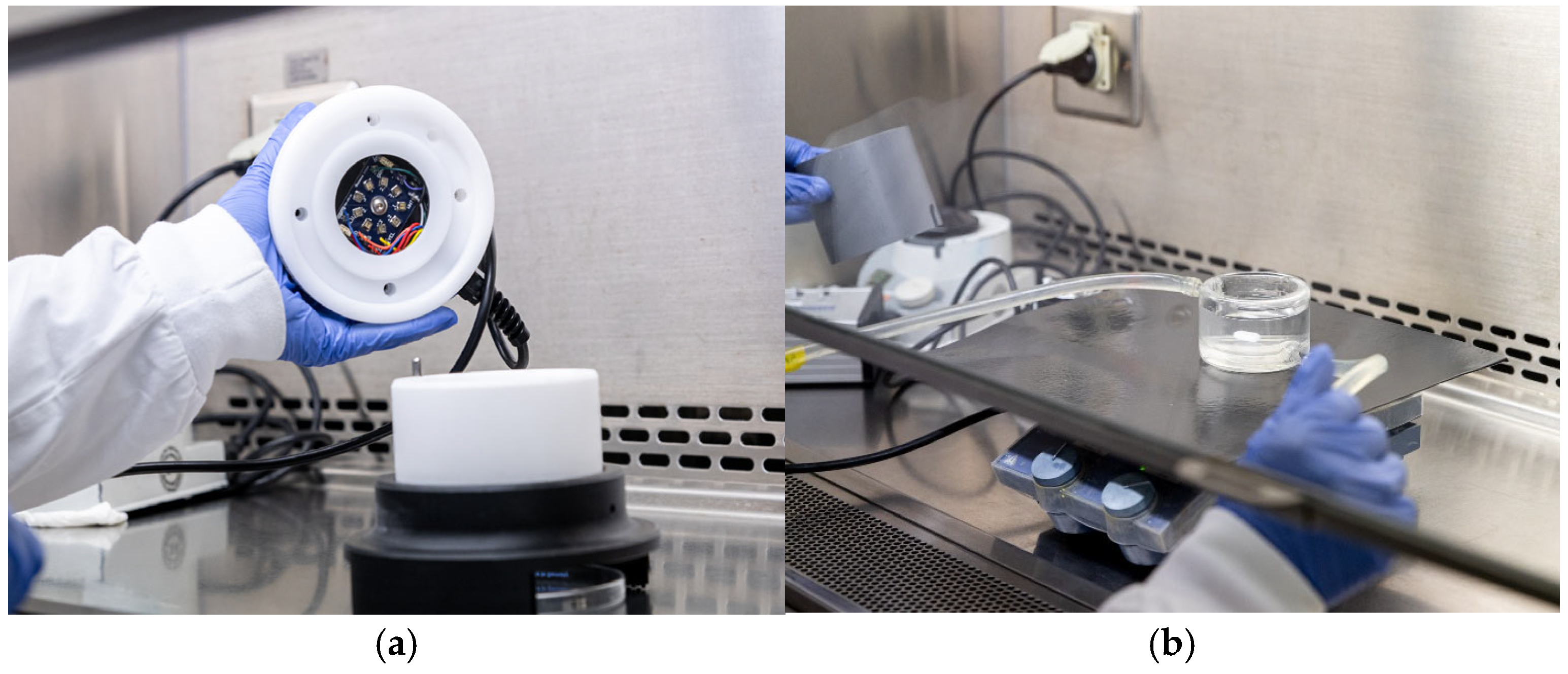
The efficiency of inactivation of a laboratory scale LED system, a pearl beam triple wavelength reactor (PearlLab Beam; AquiSense Technologies, Erlanger, KY, USA; shown in Figure 1 that operate at a voltage of 12 V and were fed with a power supply of up to 15 A at 230 V), was tested using the E. coli suspensions described above. A double walled glass petri dish that enables the circulation of cold water to maintain the sample refrigerated, with a diameter of 5.5 cm, was placed below the LED system, with a distance between the LEDs and the sample of 4 cm. The reactor contains 9 small light-emitting-diodes (LEDs) that emit at 255 nm, 265 nm, and 365 nm. For this study the selected wavelengths were 255 nm and 265 nm (3 LEDs for each wavelength) and the combination of both wavelengths together (3 LEDs that emit at 255 nm and 3 LEDs that emit at 265 nm). To compare the results obtained with the ones reported in other studies, the UV fluence (mJ/cm2) was calculated as the product of the fluence rate (irradiance) and the time of UV exposure. The average light intensity was measured at 4 cm (the same height used to perform the inactivation experiments) and the following values were obtained: 93.5 µW/cm2, 203.9 µW/cm2 and 293.1 µW/cm2, for 255 nm, 265 nm, and both wavelengths, respectively. The light intensity of the LEDs used in this study are present in Figure S1. The peak wavelength of the 255 nm LED was measured at 254 nm, while the peak wavelength of the 265 nm LED was measured at 268 nm. The full width at half maximum (FWHM) for the 255 nm device is 11.6 nm, and for the 265 nm device it is 12.1 nm. The incident irradiance measurements were determined using an ILT 950 UV Spectroradiometer (International Light Technologies Inc., Peabody, MA, USA). The reflection, divergence, petri and water correction factors were used to determine the average irradiance as reported by Bolton and Linden [49]. The water factor takes into account the sample absorbance at the wavelengths of interest.

2.2.3. Cell Morphology Damage Analysis

The spiked phosphate-buffered saline solution samples, prepared using the same mixed suspension of the ten E. coli isolates used in the inactivation assays, collected before and after 5 min exposure to the LEDs that emit light at 255 nm, 265 nm, and 255 nm combined with 265 nm, were prepared and analyzed through scanning electron microscopy (SEM). The samples were centrifuged to collect cells, which were then prepared for SEM analysis adapting the protocol of Panngom et al. [50], as described by Oliveira et al. [51]. Summarily, the cells were washed with PBS and fixed in Karnovsky’s fixative (Polysciences Inc., Rhein-Neckar-Kreis, Germany) overnight. The samples were then washed again with PBS, three times, and centrifuged. The pellet obtained was fixed in osmium tetroxide (1.0% v/v) for 2 h. After, the samples were dehydrated using different ethanol solutions with a gradient increase in concentration (from 30 to 100%). The samples were then freeze dried for 30 min and further prepared to be analyzed by SEM (FEGSEM JEOL JSM7001F), with a 15 kV acceleration voltage.

2.2.4. DNA Damage Analysis

The effect of inactivation through UV-C LEDs on DNA was assessed by the quantification of cyclobutane pyrimidine dimers (CPD) formation in the samples prepared with the same mixed suspension of the ten environmental E. coli isolates used in the inactivation assays, collected before and after exposure to a UV fluence of 2 mJ/cm2 using UV-C LEDs that emit light at 255 nm and 265 nm. For this, DNA was extracted from these 3 samples using the DNeasy® UltraClean® Microbial Kit (Qiagen, Germantown, MD, USA) following the manufacturer’s protocol. The DNA extracted was then quantified using a NanoDrop ND-1000 Spectrophotometer (Thermo fisher scientific, Waltham, MA, USA). The quantification of CPD was conducted by using the OxiSelectTM UV-Induced DNA Damage ELISA Kit for CPD quantitation (Cell Biolabs Inc., San Diego, CA, USA).

2.3. Membrane Filtration Combined with Ultraviolet Light-Emitting Diodes

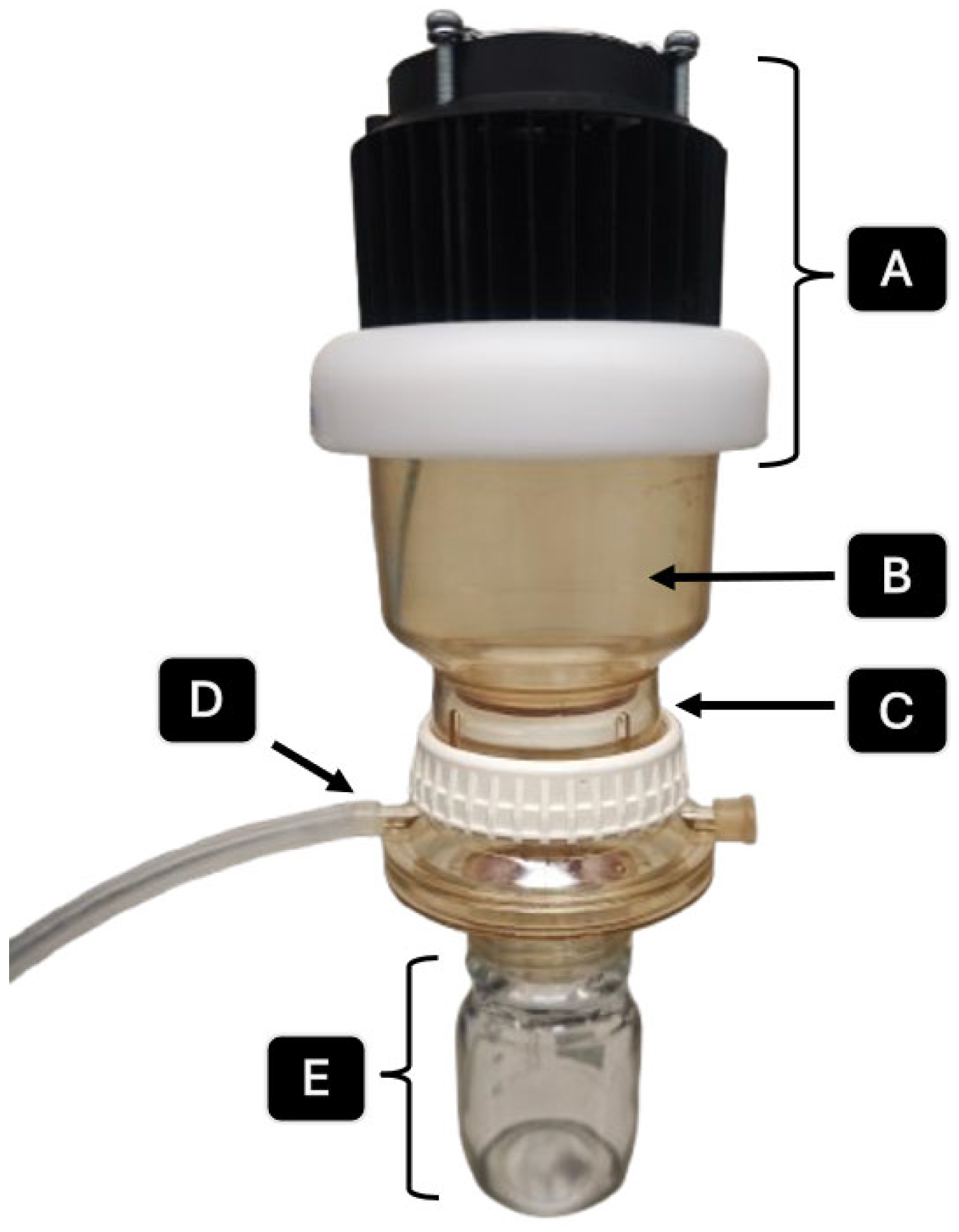
The membrane filtration assays were conducted using a dead-end filtration unit (Nalgene®, Rochester, NY, USA) that was connected to a vacuum pump (Cole-Parmer, Vernon Hills, IL, USA), as seen in Figure 2. Silicon carbide flat sheet membranes (FSM; 0.2 µm) were provided by Landson (Helsinge, Denmark) and cut in a circular shape with a filtration area of approximately 7 cm2. Figure S2 presents the top-view and cross-sectional scanning electron microscopy images of the silicon carbide membranes used in this study. The filtration systems were sterilized before use. For testing the efficiency of this combined treatment, a bacterial suspension of the E. coli isolate TL (Table S5, one of the multidrug-resistant strains isolated from river water) in PBS was used. The initial concentration of the bacterial suspension was 1.3 × 10⁸ CFU/mL. Thirty mL of sample were placed in the filtration unit. In all the assays conducted, feed (initial concentration), retentate (concentrated sample), and permeate (filtered sample) were analyzed, by performing serial dilutions with sterile PBS (1X solution, pH 7.4) of the samples collected and inoculating 100 µL of each in TSA through the spread-plate technique. Controls were performed to verify the sterility of the medium, PBS, and glass beads used, and no growth was observed.
The membranes were also used in combination with UV-C LEDs. The UV-C LED system was placed above the filtration unit as seen in Figure 2. The wavelengths applied were 255 nm and 265 nm, with the filtration time varying between 15 and 24 min, depending on the time required in each assay to process approximately 20 mL of the 30 mL total feed volume.
For all membrane experiments, the retentate was collected after filtration and analyzed by serial dilution and plate counting, identical to the procedure used for the feed and permeate. The percent rejection was assessed by comparing the CFU/mL values of the feed and permeate, while the retentate treatment was determined taking into account the CFU/mL values of the feed and retentate.

3. Results

3.1. Microbiological Examination of Different Water Samples

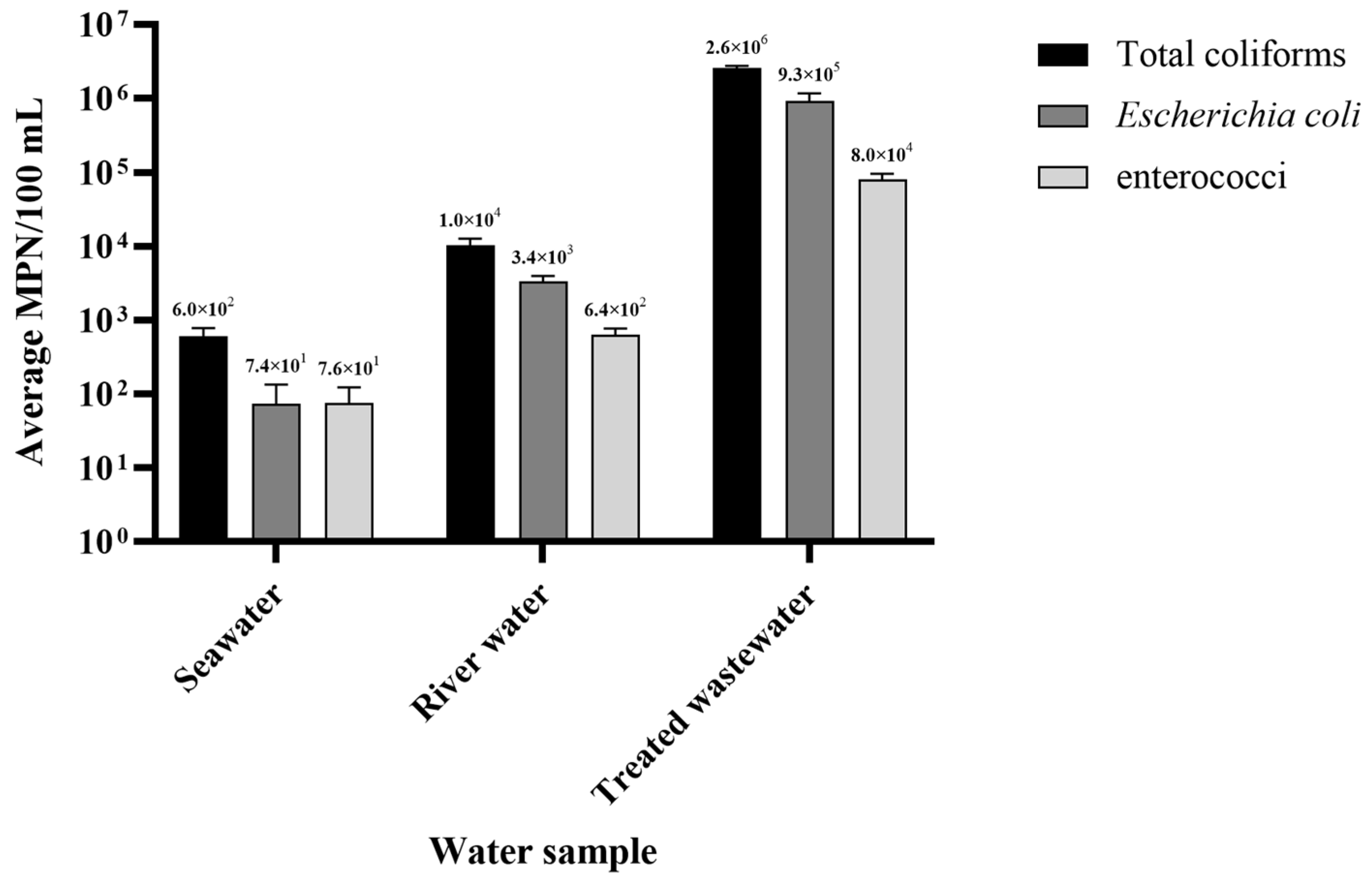
Figure 3 presents the most probable number (MPN) per 100 mL of total coliforms, E. coli, and enterococci detected in the three water matrices analyzed. As expected, higher levels of the target bacteria were detected in the wastewater effluent sample (treated wastewater) compared to the river water and seawater.
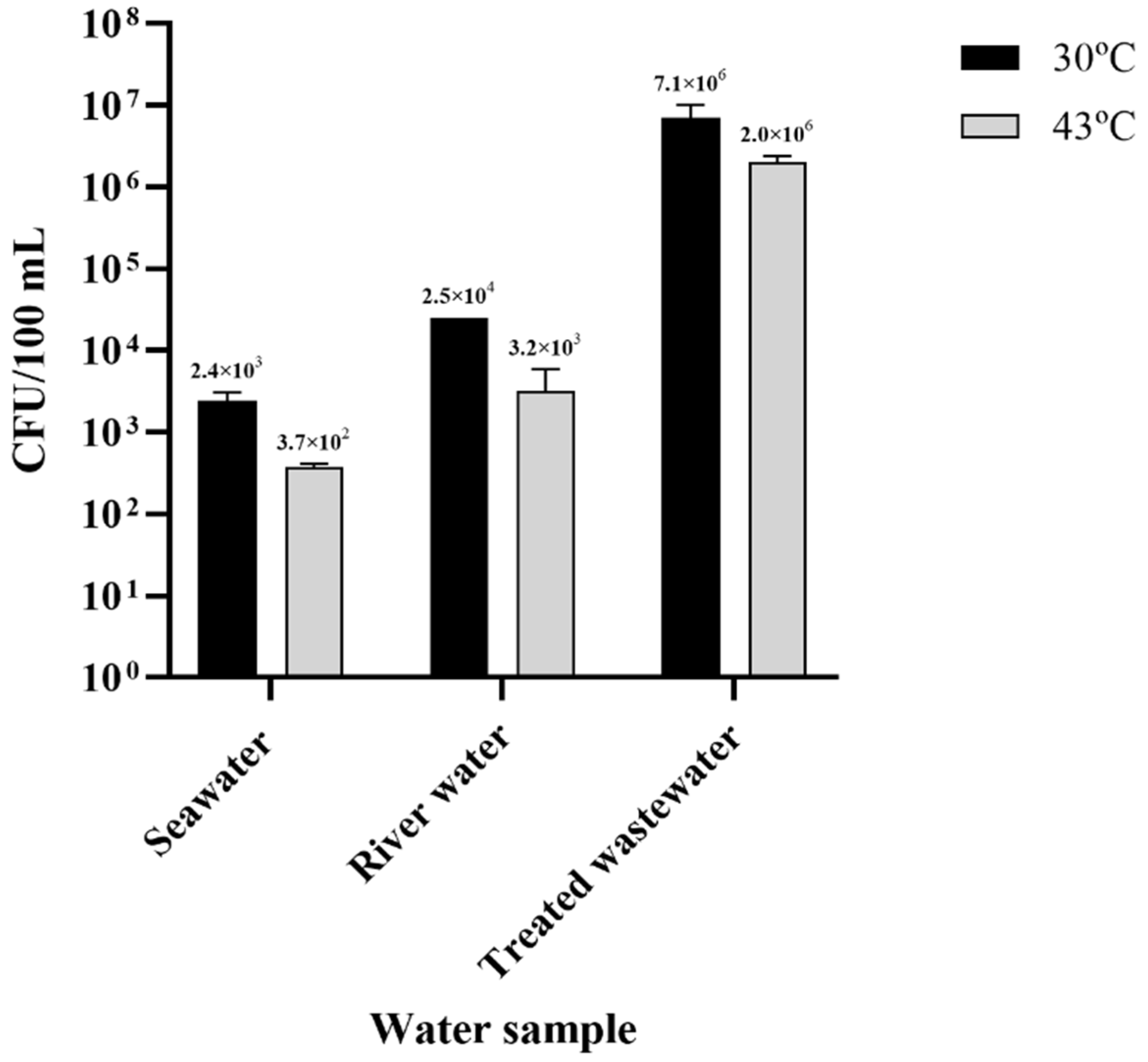
Figure 4 presents the total colony-forming units per 100 mL (CFU/100 mL) of the three water matrices analyzed using a general-purpose culture medium (TSA) incubated at 30 °C and 43 °C. These temperatures were selected to differentiate between mesophilic and thermotolerant microorganisms, with 30 °C supporting the growth of a broad range of environmental bacteria and 43 °C favoring the detection of heat-tolerant, fecal-associated bacteria or potentially pathogenic bacteria, which are normally able to endure and grow at higher temperatures.
As expected, the total counts for microorganisms grown at 43 °C were lower than those obtained at 30 °C. Among the water matrices, the wastewater effluent exhibited again the highest CFU counts, followed by river water and seawater. This result confirms that wastewater effluent contains a higher microbial load, likely due to increased organic matter and nutrient availability, while seawater, with its higher salinity and lower nutrient content, supports lower microbial growth.
These findings align with previous studies, which have also reported a higher microbial load in wastewater effluents [12,52,53,54,55].
A total of 26 antibiotic resistant bacteria from seawater, 37 from river water, and 31 from wastewater effluent were isolated. Of the 94 isolates, 19 were identified as E. coli, 2 from seawater, 8 from river water and 9 from wastewater effluent (Figure S3).
An isolate is considered multidrug-resistant when it is non-susceptible to one or more antibiotic agents that belong to three or more antibiotic classes [56]. In this assay 5 different classes of antimicrobial agents were tested (Table S3). Table S5 summarizes the antibiotic susceptibility results of 10 E. coli isolates collected from three different water sources (seawater, river water and wastewater effluent).
The isolate EIA revealed to be susceptible to all the antibiotics tested in this study, while the other nine E. coli isolates showed resistance to the different antibiotics tested, with 5 isolates (PL, TKB, TL, ELA, ECC) identified as multidrug-resistant (Table S5).
The hospital sector has been considered as a major contributor to the abundance and diversity of antibiotic-resistant genes, particularly those associated with β-lactams (e.g., ampicillin), fluoroquinolones (e.g., levofloxacin and ciprofloxacin), tetracyclines, and other clinically relevant classes strongly linked to hospital use. Aminoglycosides, such as kanamycin and streptomycin, although detected in hospital effluents, are also commonly associated with urban wastewater inputs, reflecting contributions from community antibiotic use [57]. Although these locations represent important hotspots for antibiotic-resistant genes, the One Health framework, which integrates human, animal, and environmental health, highlights that resistance can arise from multiple interconnected sources. This complexity makes it challenging to attribute environmental resistance patterns to a single origin [58].
Ma et al. [59] conducted a two-year study in the southern watershed of Lake Biwa, including in wastewater treatment plant effluent and inflow rivers and reported that among various antibiotic-resistant E. coli, those resistant to ampicillin were the most prevalent, followed by resistance to levofloxacin, cefotaxime, ceftazidime, tetracycline, and amikacin. The authors also conclude that antibiotic resistance may originate not only from WWTPs but also from livestock farms or other sources within the river catchment. Suzuki et al. [60] also observed that most of the E. coli isolates were ampicillin resistant, also detecting frequently isolates resistant to ciprofloxacin in the Kumano River. Koczura et al. [61] observed higher kanamycin resistance in E. coli isolates downstream of a WWTP compared to upstream river samples. Lyimo et al. [62] analyzed different open and closed water sources including rivers, lakes, and taps from two different locations in Northern Tanzania. They observed a high frequency of ampicillin, streptomycin, sulfamethoxazole, tetracycline, and trimethoprim resistant E. coli isolates in the water sources.
Chen Z. et al. [63] the distribution of antibiotic-resistant E. coli in two different drinking water sources and reported that most of the isolates were resistant to tetracycline, ampicillin, piperacillin, trimethoprim/sulfamethoxazole, and chloramphenicol. Pramanik et al. [64] investigated the prevalence of E. coli in vegetables, soil, and water from urban and peri-urban gardens in Bangladesh and found high contamination rates, with all tested isolates resistant to ampicillin and 15% showing multidrug resistance. Hernández et al. [9] isolated 115 E. coli strains from seawater that were tested for antibiotic susceptibility, revealing resistance to 8 of 18 antibiotics, with the highest resistance observed to ampicillin, followed by tetracycline, trimethoprim, sulfonamide, cefoxitin, streptomycin, nalidixic acid, and cefotaxime.
Our findings are therefore consistent with reports from several authors that sampled seawater, surface water, and wastewater effluents in different parts of the world and show the need to evaluate and implement effective disinfection strategies.

3.2. Inactivation Assays

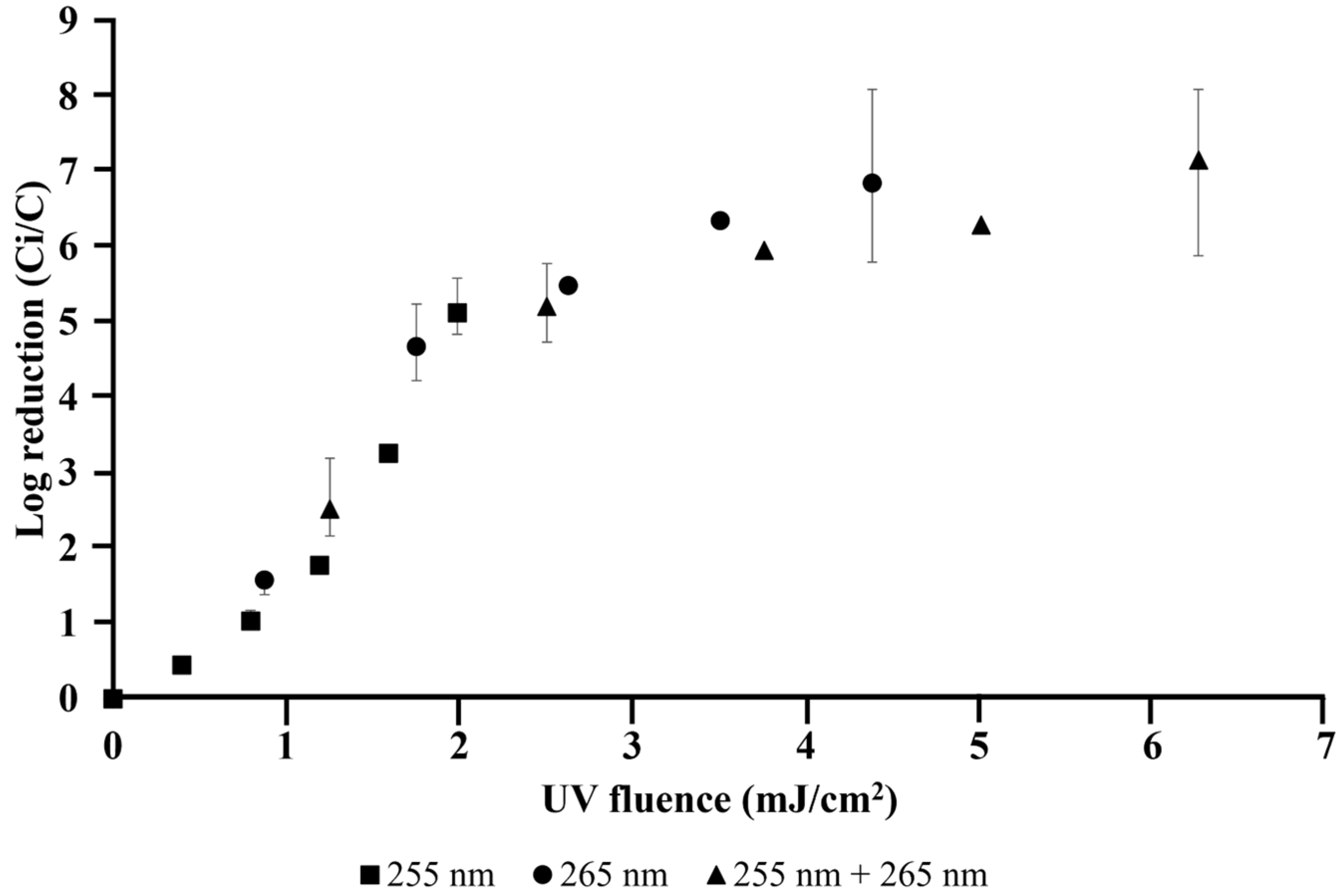
The inactivation assays conducted revealed the efficiency of UV-C LEDs for the disinfection of water samples (Figure 5). The greater the value of log reduction, the higher level of disinfection achieved. The high log reduction levels obtained show the efficiency of using the two UV-C LED wavelengths tested to inactivate antibiotic-resistant bacteria. With a low UV fluence of 2 mJ/cm2, similar log reduction levels (about 5 log) of the 10 E. coli isolates using three small LEDs that emit at 255 nm and 265 nm were obtained. Co-irradiation with 255 nm and 265 nm UV-C LEDs yielded log reduction values comparable to those obtained with 265 nm UV-C alone. The efficiency of LEDs for inactivation of several microorganisms was already reported in other studies [39,65,66,67,68,69,70].
Inactivating E. coli present in saline suspensions had already been studied and lower levels of inactivation were reported [66,69,71,72]. As an example, using the UV-C LED system PearlBeam emitting at 265 nm, a UV fluence of 8 mJ/cm2 was needed to obtain a 4 log inactivation of E. coli [69]. In this study, a much lower UV fluence of 2 mJ/cm2 led to a higher log inactivation (approximately 5-log). This shows that different strains might have different responses, also depending on the UV radiation source to which they are exposed. Some studies reported similar results for 265 nm [20,69]. These results also outperform those reported for low-pressure mercury lamps emitting at 254 nm [73].
By comparing the inactivation results of the antibiotic-resistant isolates with those of E. coli EIA, we observed that to achieve the same log reduction, we need a lower UV fluence for the mixture of the antibiotic-resistant E. coli isolates compared to E. coli EIA that is susceptible to all tested antibiotics. As an example, a 4-log reduction at 255 nm required a UV fluence of 1.7 mJ/cm2 for the resistant isolates, compared to 3.3 mJ/cm2 for the susceptible isolate [29]. For the 265 nm the trend was similar, with UV fluences of 2.2 mJ/cm2 and 2.5 mJ/cm2 for the susceptible and resistant isolates, respectively. These results suggest that the antibiotic-resistant E. coli isolates tested do not have enhanced resistance to UV-C radiation. These findings are inconsistent with previous reports that antibiotic-resistant bacteria could exhibit an increased tolerance to UV radiation [42,43], but consistent with the work published by Ghosh et al. [28]. The authors compared the inactivation of two E. coli isolates with UV LEDs, one susceptible and the other resistant to ampicillin, and they also observed that the susceptible strain had a higher resistance to UV radiation. They tested different wavelengths (265 nm, 275 nm, and 285 nm) and observed this higher resistance to UV from the susceptible strain to all tested LEDs. In future work, the genomes of both bacteria will be sequenced and analyzed to compare and understand the differences in their UV resistance. This comparison was based solely on the results obtained in our study using the available replicates. Future research should include a larger number of bacterial strains, both antibiotic-resistant and susceptible, to more accurately assess potential differences in UV tolerance.
While repair mechanisms were not evaluated in the present study, Sério et al. [29] assessed the logarithmic reduction in Escherichia coli and Enterococcus faecium environmental strains following exposure to UV LEDs that emit light at different wavelengths (ranging from 255 to 280 nm at a UV fluence of 14 mJ/cm2) immediately after exposure and after 2 h and 18 h of reactivation, and reported no substantial photoreactivation or dark repair in the tested isolates.

3.2.1. Morphology Damage Analysis

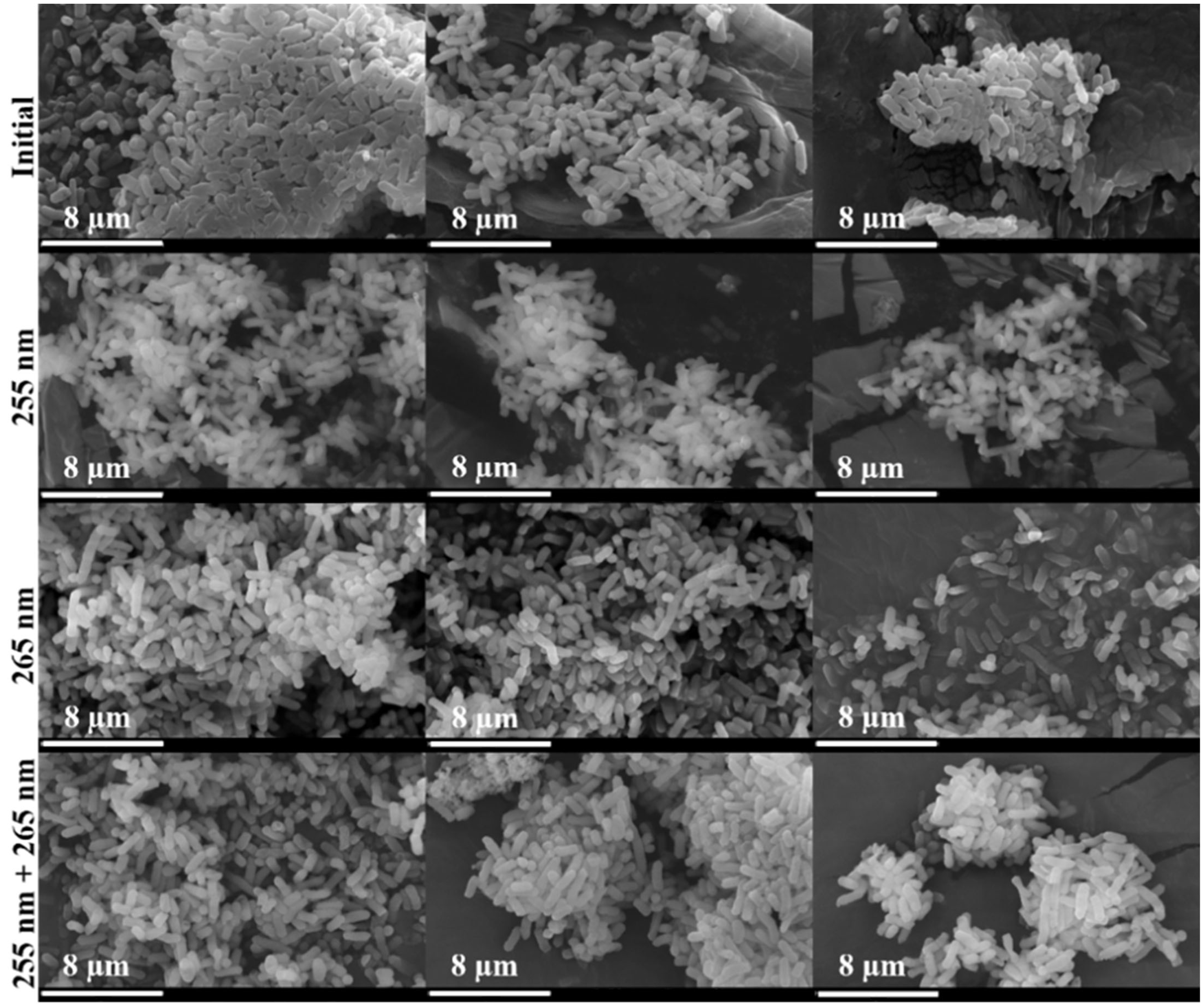
Despite the observed high levels of inactivation achieved at low UV fluences (Figure 5), the SEM images did not reveal any noticeable differences in cell morphology between the control samples and those collected after 5 min exposure to the different UV-C LEDs wavelengths tested (Figure 6). The morphology of the cells seemed to remain unchanged, but this does not mean that the bacterial DNA is intact; therefore, the pyrimidine dimmer formation was quantified. Since both tested wavelengths are close to the DNA absorption peak, DNA is expected to be the primary target of UV-induced damage. Previous studies have shown that 265 nm predominantly affects intracellular DNA, whereas other wavelengths, such as 222 nm, have been reported to cause more pronounced damage to the cell membrane [74].
Hinds et al. [75] documented distinct morphological alterations in Bacillus subtilis following exposure to UV-LED irradiation at 285 nm. This wavelength is higher than the 265 nm and 255 nm examined in the same study. Consequently, the application of a higher UV fluence may likewise induce detectable morphological changes in E. coli, which may appear absent under lower UV fluences.
The observations reported here should be interpreted as qualitative assessments of structural alterations rather than quantitative measures of cellular damage.
A recent study using fluorescence-based techniques provided additional insight into the effects of UV-C irradiation on bacterial cells. For example, FM4-64 staining has shown that the cell membranes of E. coli remain largely unaffected following exposure to UV-C LEDs at fluences up to 14 mJ/cm2, suggesting that membrane integrity is preserved under these conditions [29]. In contrast, DAPI staining revealed alterations in nucleic acid distribution, with fluorescence becoming uneven and more condensed after UV exposure, indicating damage to genetic material. The study also reported a fluence-dependent increase in membrane and DNA damage following UV-C exposure.
Together, these findings suggest that UV-induced inactivation may primarily involve intracellular damage mechanisms, even in the absence of pronounced morphological disruption of the cell envelope.

3.2.2. DNA Damage Analysis

The formation of cyclobutane pyrimidine dimers (CPD) block DNA replication and inhibit cellular division. This is an indicator of DNA damage caused by UV radiation [76]. This method was previously used to test the efficiency of UV-C LEDs and mercury lamps in inactivating fungi (e.g., [68,77]).
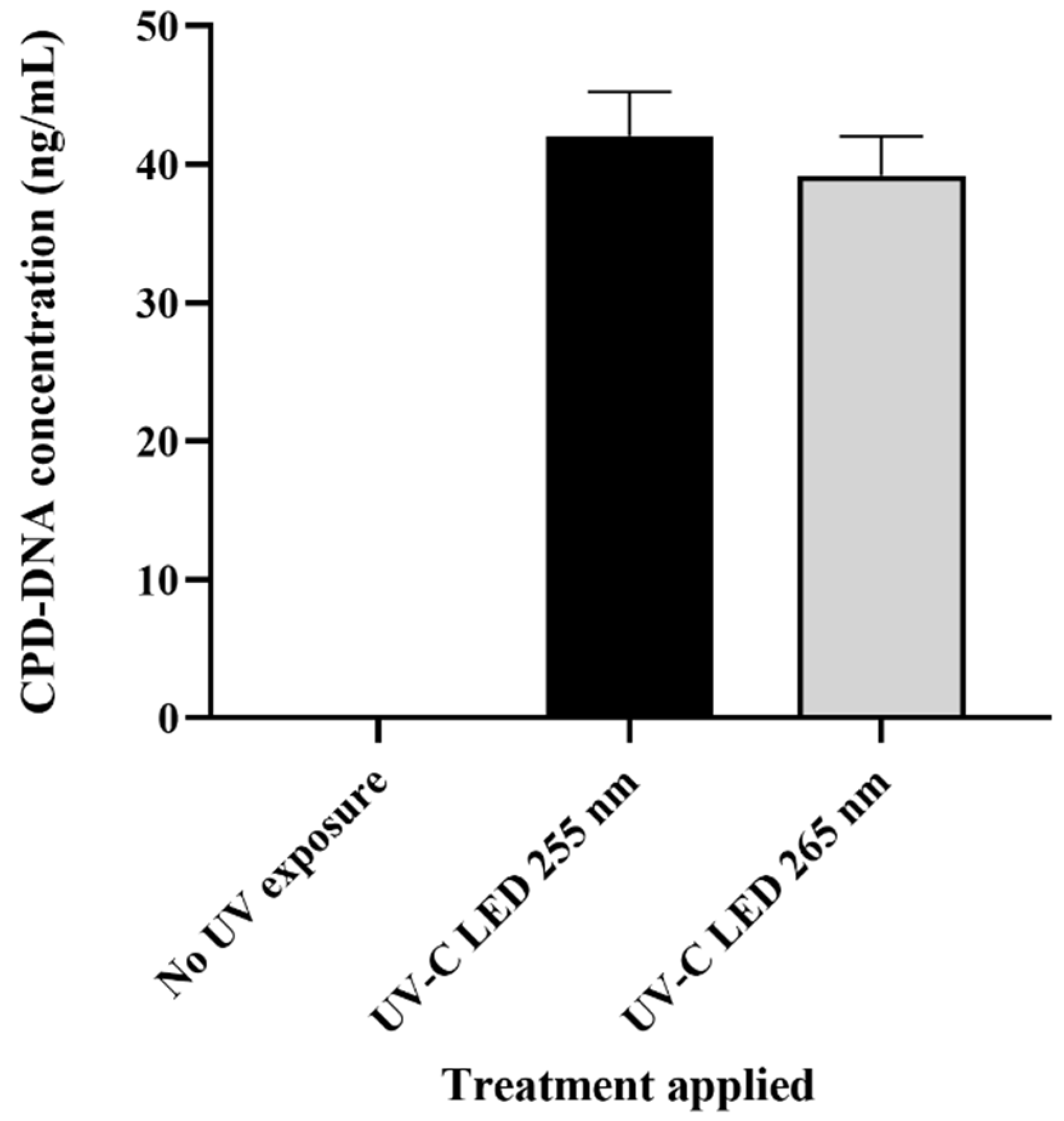
To assess the effect of UV LEDs on DNA, the same UV fluence was applied with both wavelengths to see which one would reveal a higher dimmer formation. Using CPD-DNA standard concentrations, the CPD concentrations measured in the samples before and after the exposure to a UV fluence of 2 mJ/cm2 using UV-C LEDs that emit light at 255 nm and 265 nm were similar (Figure 7). These results show that, for the target bacteria, both LEDs similarly affect the DNA through the formation of CPDs.
A previous study demonstrated that UV that emit at 265 nm induced DNA-pyrimidine dimers that inhibited transcription and translation in Pseudomonas aeruginosa and Bacillus subtilis [74]. As the UV fluence increased (5 mJ/cm2, 10 mJ/cm2, 20 mJ/cm2, 40 mJ/cm2, 80 mJ/cm2), bacterial DNA damage also increased along with the DNA-pyrimidine formation. The authors extracted DNA and then performed qPCR targeting different genes in bacteria to examine the DNA lesions [74]. Although the methodologies employed to quantify dimer formation in the present study and in the study by Jing et al. [74] differ, both investigations demonstrate the impact of UV radiation on bacteria, as evidenced by the induction of dimer formation.

3.3. Membrane Filtration Combined with Ultraviolet Light Emitting Diodes

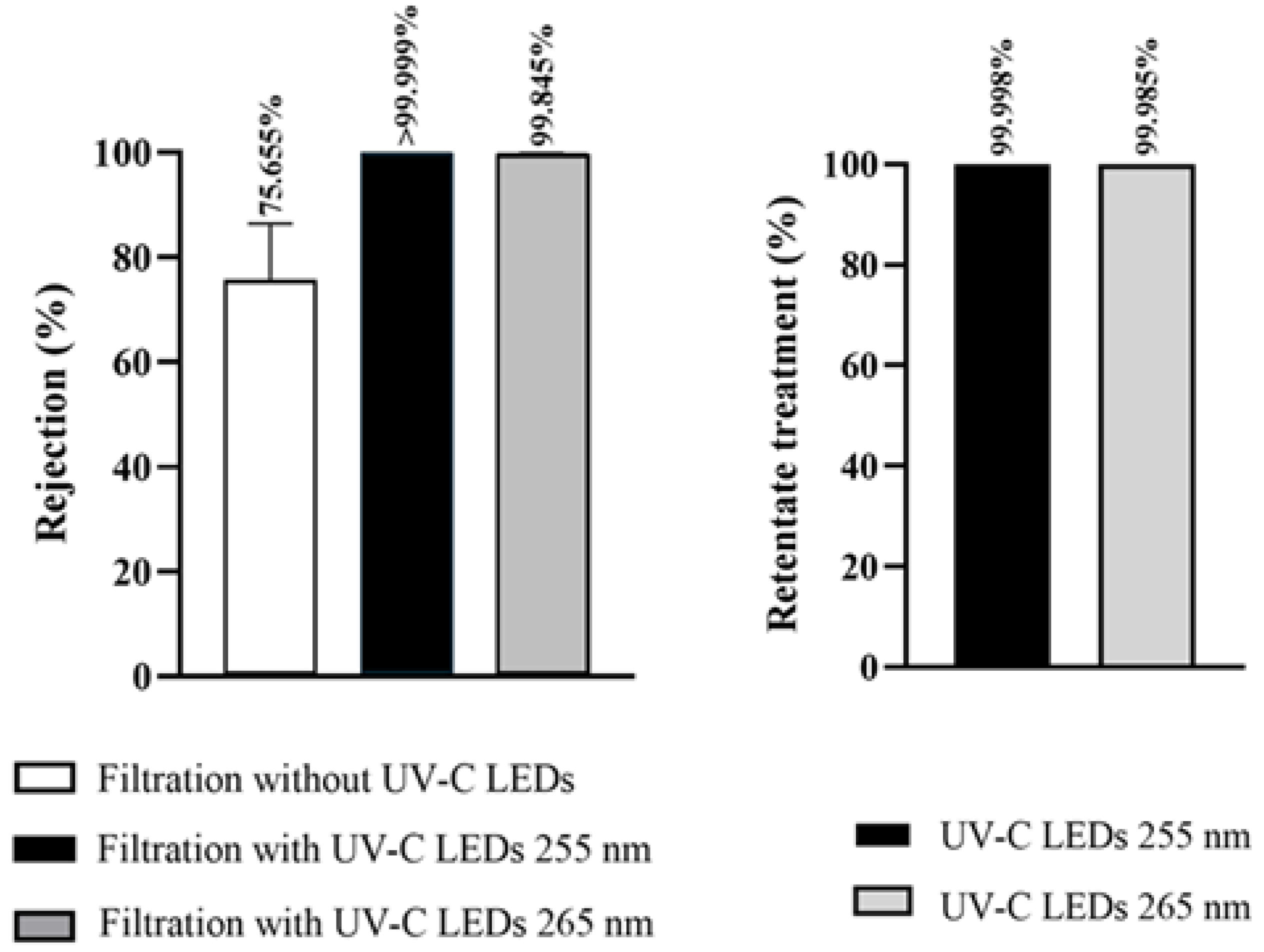
The efficiency of the filtration depends on membrane permeability, which influences both filtration rate and inactivation time (Table S6). In this study, the sample subjected to combined treatment with LEDs emitting at 255 nm required longer exposure time (24 min) than the one treated with LEDs that emit at 265 nm (15 min), due to differences in membrane porosity. Using membranes in combination with UV-C LEDs emitting at 255 nm and 265 nm, enabled the production of a clean permeate, as demonstrated by the rejection percentage of the multi-resistant E. coli isolate TL, and the high retentate treatment (Figure 8). These findings confirm that the membranes can effectively retain the bacteria, which is important for the development of systems capable of generating clean water resources.
When comparing membrane filtration alone with the combined treatment (membranes and UV-C LEDs), this second treatment clearly enhanced bacterial rejection values above 99.8%, whereas membrane filtration alone resulted in a 75.6% rejection of the multi-resistant E. coli isolate TL. Additionally, treating the retentate allows for targeted inactivation of the concentrated microorganisms, improving the overall efficiency of the treatment process. For batch-scale experiments with limited volumes, silicon carbide flat-sheet membranes were cut into circular shapes and tested under dead-end filtration; however, the uncut flat sheet membranes were also evaluated under more realistic conditions in a 10 L reactor treating real surface water, yielding rejection efficiencies of 99.9% for both total coliforms and E. coli. It should be noted that cutting the membranes may compromise their structural integrity, particularly along the edges, potentially creating preferential flow paths or defects that can reduce rejection performance compared to intact membranes. Future work should evaluate membrane fouling under prolonged operation and realistic water matrices to better assess long-term performance and operational stability of the uncut flat sheet membranes.
Overall, these results are consistent with the ones reported by Bernardo et al. [39] for water quality indicators (total coliforms, E. coli and enterococci), although the authors reported similar rejection percentages between filtration and the combination of filtration with UV-C LEDs 255 nm and 265 nm. Oliveira et al. [51] also tested the combination of ceramic membranes with low pressure UV lamps, to retain and inactivate fungi, and reported a high rejection and retentate treatment percentages.

4. Conclusions

In this work, 94 bacteria were isolated from three water matrices (seawater, river water, and wastewater effluent) and characterized in terms of resistance to different antibiotics. Among the ten E. coli isolates identified, one was susceptible to all tested antibiotics, while five were classified as multidrug-resistant.
The efficiency of UV-C LEDs for the inactivation of antibiotic-resistant E. coli isolates was evaluated using low UV fluences. In phosphate-buffered saline solutions fortified with a mixture of antibiotic-resistant E. coli isolates, an approximately 5-log reduction was achieved at a UV fluence of 2 mJ/cm2 for both 255 nm and 265 nm. Comparison of the UV inactivation results between antibiotic-resistant and susceptible E. coli isolates revealed no evidence that antibiotic resistance confers increased tolerance to UV radiation, contrary to prior assumptions. Additionally, the combination of UV-C LEDs with membrane filtration was investigated. This combined treatment offers significant advantages over membrane filtration alone, as it not only produces a clean permeate but also addresses the treatment of the highly concentrated retentate, a common drawback of membrane processes. The findings suggest that this integrated approach can enhance the overall efficiency of water treatment systems, providing a more sustainable and effective solution for managing waterborne pathogens. Furthermore, this study shows that the emerging UV-C LED technology can effectively inactivate E. coli, including antibiotic-resistant strains. Future research should investigate microbial inactivation in real water matrices and with a broader range of bacterial species to more closely represent operational conditions. Although this study demonstrates promising laboratory-scale performance, practical implementation will depend on factors such as energy consumption, operational cost, and scalability. These aspects should be addressed in future work to evaluate the feasibility of applying this technology in real treatment systems.

Supplementary Materials

The following supporting information can be downloaded at: https://www.mdpi.com/article/10.3390/pr14091471/s1, Table S1: Antibiotics spiked into the general culture media (TSA), their class and concentration. Table S2: Escherichia coli isolates used in the inactivation studies. Table S3: Antibiotic class and disk content used for the antibiotic susceptibility testing. Table S4: Zone diameter breakpoints used for the analysis of antibiotic susceptibility testing results. Table S5: Antibiotic susceptibility test results of the 10 Escherichia coli isolates. Table S6: Hydraulic permeability for membrane filtration studies. Figure S1: Light intensity of the LEDs used in this study emitting light at 255 and 280 nm. Figure S2: Top layer and cross section scanning electron microscopy images of the silicon carbide membranes used. Figure S3: Identification of isolates from seawater, river water and wastewater effluent samples.

Author Contributions

Conceptualization, A.P.M., M.T.B.C. and V.J.P.; methodology, C.S., L.L. and A.P.M.; formal analysis, C.S., L.L. and J.S.; resources, M.T.B.C. and V.J.P.; writing—original draft preparation, C.S. and L.L.; writing—review and editing, C.S., L.L., J.S., A.P.M., M.T.B.C. and V.J.P.; supervision, A.P.M., M.T.B.C. and V.J.P.; project administration, A.P.M., M.T.B.C. and V.J.P.; funding acquisition, A.P.M., M.T.B.C. and V.J.P. All authors have read and agreed to the published version of the manuscript.

Funding

This work was funded by Fundação para a Ciência e Tecnologia/Ministério da Ciência, Tecnologia e Ensino Superior (FCT/MCTES, Portugal) through the LEDeffect project (PTDC/EAM-AMB/1561/2021), the fellowships 2024.03566.BD (awarded to Carolina Santos) and 2022.12621.BD (awarded to João Sério), the R&D Units Green-it Bioresources for Sustainability (UID/04551/2025, DOI: 10.54499/UID/04551/2025; UID/PRR/04551/2025, DOI: 10.54499/UID/PRR/04551/2025), and iNOVA4Health (UIDB/04462/2020 and UIDP/04462/2020) as well as the LS4FUTURE Associated Laboratory (LA/P/0087/2020, DOI: 10.54499/LA/P/0087/2020). Vanessa Jorge Pereira thanks Fundação para a Ciência e Tecnologia for the Stimulus of Scientific Employment Grant CEECIND/02919/2018.

Data Availability Statement

The original contributions presented in this study are included in the article. Further inquiries can be directed to the corresponding author.

Acknowledgments

The authors thank LANDSON ADVANCED CERAMICS A/S for providing the silicon carbide membranes that were cut and tested in this work.

Conflicts of Interest

The authors declare no conflicts of interest.

References

  1. World Health Organization. Antimicrobial Resistance. Available online: https://www.who.int/news-room/fact-sheets/detail/antimicrobial-resistance (accessed on 20 May 2025).
  2. Ding, D.; Wang, B.; Zhang, X.; Zhang, J.; Zhang, H.; Liu, X.; Gao, Z.; Yu, Z. The Spread of Antibiotic Resistance to Humans and Potential Protection Strategies. Ecotoxicol. Environ. Saf. 2023, 254, 114734. [Google Scholar] [CrossRef]
  3. Naghavi, M.; Vollset, S.E.; Ikuta, K.S.; Swetschinski, L.R.; Gray, A.P.; Wool, E.E.; Aguilar, G.R.; Mestrovic, T.; Smith, G.; Han, C.; et al. Global Burden of Bacterial Antimicrobial Resistance 1990–2021: A Systematic Analysis with Forecasts to 2050. Lancet 2024, 404, 1199–1226. [Google Scholar] [CrossRef]
  4. Pruden, A.; Pei, R.; Storteboom, H.; Carlson, K.H. Antibiotic Resistance Genes as Emerging Contaminants:  Studies in Northern Colorado. Environ. Sci. Technol. 2006, 40, 7445–7450. [Google Scholar] [CrossRef] [PubMed]
  5. Okoh, A.I.; Sibanda, T.; Gusha, S.S. Inadequately Treated Wastewater as a Source of Human Enteric Viruses in the Environment. Int. J. Environ. Res. Public. Health 2010, 7, 2620–2637. [Google Scholar] [CrossRef] [PubMed]
  6. Rizzo, L.; Manaia, C.; Merlin, C.; Schwartz, T.; Dagot, C.; Ploy, M.C.; Michael, I.; Fatta-Kassinos, D. Urban Wastewater Treatment Plants as Hotspots for Antibiotic Resistant Bacteria and Genes Spread into the Environment: A Review. Sci. Total Environ. 2013, 447, 345–360. [Google Scholar] [CrossRef]
  7. Li, J.; Cheng, W.; Xu, L.; Strong, P.J.; Chen, H. Antibiotic-Resistant Genes and Antibiotic-Resistant Bacteria in the Effluent of Urban Residential Areas, Hospitals, and a Municipal Wastewater Treatment Plant System. Environ. Sci. Pollut. Res. 2015, 22, 4587–4596. [Google Scholar] [CrossRef]
  8. Rodriguez-Mozaz, S.; Chamorro, S.; Marti, E.; Huerta, B.; Gros, M.; Sànchez-Melsió, A.; Borrego, C.M.; Barceló, D.; Balcázar, J.L. Occurrence of Antibiotics and Antibiotic Resistance Genes in Hospital and Urban Wastewaters and Their Impact on the Receiving River. Water Res. 2015, 69, 234–242. [Google Scholar] [CrossRef] [PubMed]
  9. Hernández, F.; Calısto-Ulloa, N.; Gómez-Fuentes, C.; Gómez, M.; Ferrer, J.; González-Rocha, G.; Bello-Toledo, H.; Botero-Coy, A.M.; Boıx, C.; Ibáñez, M.; et al. Occurrence of Antibiotics and Bacterial Resistance in Wastewater and Sea Water from the Antarctic. J. Hazard. Mater. 2019, 363, 447–456. [Google Scholar] [CrossRef]
  10. Singh, R.; Singh, A.P.; Kumar, S.; Giri, B.S.; Kim, K.-H. Antibiotic Resistance in Major Rivers in the World: A Systematic Review on Occurrence, Emergence, and Management Strategies. J. Clean. Prod. 2019, 234, 1484–1505. [Google Scholar] [CrossRef]
  11. da Silva, M.F.; Tiago, I.; Veríssimo, A.; Boaventura, R.A.R.; Nunes, O.C.; Manaia, C.M. Antibiotic Resistance of Enterococci and Related Bacteria in an Urban Wastewater Treatment Plant. FEMS Microbiol. Ecol. 2006, 55, 322–329. [Google Scholar] [CrossRef]
  12. Osińska, A.; Korzeniewska, E.; Harnisz, M.; Niestępski, S.; Jachimowicz, P. The Occurrence of Antibiotic-Resistant Bacteria, Including Escherichia Coli, in Municipal Wastewater and River Water. E3S Web Conf. 2019, 100, 00061. [Google Scholar] [CrossRef]
  13. Amarasiri, M.; Sano, D.; Suzuki, S. Understanding Human Health Risks Caused by Antibiotic Resistant Bacteria (ARB) and Antibiotic Resistance Genes (ARG) in Water Environments: Current Knowledge and Questions to Be Answered. Crit. Rev. Environ. Sci. Technol. 2020, 50, 2016–2059. [Google Scholar] [CrossRef]
  14. Łuczkiewicz, A.; Jankowska, K.; Fudala-Książek, S.; Olańczuk-Neyman, K. Antimicrobial Resistance of Fecal Indicators in Municipal Wastewater Treatment Plant. Water Res. 2010, 44, 5089–5097. [Google Scholar] [CrossRef] [PubMed]
  15. Guo, J.; Li, J.; Chen, H.; Bond, P.L.; Yuan, Z. Metagenomic Analysis Reveals Wastewater Treatment Plants as Hotspots of Antibiotic Resistance Genes and Mobile Genetic Elements. Water Res. 2017, 123, 468–478. [Google Scholar] [CrossRef] [PubMed]
  16. Oliveira, M.; Nunes, M.; Barreto Crespo, M.T.; Silva, A.F. The Environmental Contribution to the Dissemination of Carbapenem and (Fluoro)Quinolone Resistance Genes by Discharged and Reused Wastewater Effluents: The Role of Cellular and Extracellular DNA. Water Res. 2020, 182, 116011. [Google Scholar] [CrossRef]
  17. Henriques, I.S.; Fonseca, F.; Alves, A.; Saavedra, M.J.; Correia, A. Occurrence and Diversity of Integrons and β-Lactamase Genes among Ampicillin-Resistant Isolates from Estuarine Waters. Res. Microbiol. 2006, 157, 938–947. [Google Scholar] [CrossRef] [PubMed]
  18. Ben, W.; Wang, J.; Cao, R.; Yang, M.; Zhang, Y.; Qiang, Z. Distribution of Antibiotic Resistance in the Effluents of Ten Municipal Wastewater Treatment Plants in China and the Effect of Treatment Processes. Chemosphere 2017, 172, 392–398. [Google Scholar] [CrossRef]
  19. Rocha, J.; Ferreira, C.; Mil-Homens, D.; Busquets, A.; Fialho, A.M.; Henriques, I.; Gomila, M.; Manaia, C.M. Third Generation Cephalosporin-Resistant Klebsiella Pneumoniae Thriving in Patients and in Wastewater: What Do They Have in Common? BMC Genom. 2022, 23, 72. [Google Scholar] [CrossRef]
  20. Sholtes, K.; Linden, K.G. Pulsed and Continuous Light UV LED: Microbial Inactivation, Electrical, and Time Efficiency. Water Res. 2019, 165, 114965. [Google Scholar] [CrossRef]
  21. Augsburger, N.; Rachmadi, A.T.; Zaouri, N.; Lee, Y.; Hong, P.-Y. Recent Update on UV Disinfection to Fulfill the Disinfection Credit Value for Enteric Viruses in Water. Environ. Sci. Technol. 2021, 55, 16283–16298. [Google Scholar] [CrossRef]
  22. Moreno-Mesonero, L.; Soler, P.; Alonso, J.L.; Macián, V.J.; Moreno, Y. Assessment of Pathogenic Protozoa in a Drinking Water Treatment Plant with UV Treatment. J. Environ. Manag. 2024, 366, 121897. [Google Scholar] [CrossRef]
  23. Chen, J.; Loeb, S.; Kim, J.-H. LED Revolution: Fundamentals and Prospects for UV Disinfection Applications. Environ. Sci. Water Res. Technol. 2017, 3, 188–202. [Google Scholar] [CrossRef]
  24. Freitas, B.L.S.; de Nasser Fava, N.M.; de Melo-Neto, M.G.; Dalkiranis, G.G.; Tonetti, A.L.; Byrne, J.A.; Fernandez-Ibañez, P.; Sabogal-Paz, L.P. Efficacy of UVC-LED Radiation in Bacterial, Viral, and Protozoan Inactivation: An Assessment of the Influence of Exposure Doses and Water Quality. Water Res. 2024, 266, 122322. [Google Scholar] [CrossRef] [PubMed]
  25. Azuma, T.; Usui, M.; Hasei, T.; Hayashi, T. On-Site Inactivation for Disinfection of Antibiotic-Resistant Bacteria in Hospital Effluent by UV and UV-LED. Antibiotics 2024, 13, 711. [Google Scholar] [CrossRef]
  26. Umar, M. From Conventional Disinfection to Antibiotic Resistance Control—Status of the Use of Chlorine and UV Irradiation during Wastewater Treatment. Int. J. Environ. Res. Public. Health 2022, 19, 1636. [Google Scholar] [CrossRef] [PubMed]
  27. Liu, L.; Li, L.; Wang, P.; Cui, J.; Chong, G.; Zhang, Y.; Hao, H.; Duan, N.; Li, X.; Li, C.; et al. Highly Efficient Disinfection of Antibiotic-Resistant Bacteria in Water Using a Novel UV-LED/Periodate Combined Process: Mechanisms and Performance Evaluation. J. Water Process Eng. 2025, 79, 108833. [Google Scholar] [CrossRef]
  28. Ghosh, S.; Wu, X.; Chen, Y.; Hu, J. Application of UV LEDs to Inactivate Antibiotic Resistant Bacteria: Kinetics, Efficiencies, and Reactivations. Sci. Total Environ. 2024, 934, 173075. [Google Scholar] [CrossRef]
  29. Sério, J.; Santos, C.; Martins, M.E.; Marques, A.P.; Feliciano, C.; Serrano, M.; Henriques, A.O.; Crespo, M.T.B.; Pereira, V.J. UV-C LED Wavelength Effects on Inactivation Kinetics, DNA Damage and Membrane Integrity in Drinking Water Indicator Bacteria. Sci. Rep. 2026. [Google Scholar] [CrossRef]
  30. Sobsey, M.D.; Schwab, K.J.; Handzel, T.R. A Simple Membrane Filter Method to Concentrate and Enumerate Male-Specific RNA Coliphages. J. AWWA 1990, 82, 52–59. [Google Scholar] [CrossRef]
  31. Dufour, A.; Snozzi, M.; Koster, W.; Bartram, J.; Ronchi, E.; Fewtrell, L.; World Health Organization. Assessing Microbial Safety of Drinking Water: Improving Approaches and Methods; World Health Organization: Geneva, Switzerland, 2003; ISBN 978-92-4-154630-0. [Google Scholar]
  32. Li, C.; Sun, W.; Lu, Z.; Ao, X.; Li, S. Ceramic Nanocomposite Membranes and Membrane Fouling: A Review. Water Res. 2020, 175, 115674. [Google Scholar] [CrossRef]
  33. Mozia, S. Photocatalytic Membrane Reactors (PMRs) in Water and Wastewater Treatment. A Review. Sep. Purif. Technol. 2010, 73, 71–91. [Google Scholar] [CrossRef]
  34. Argurio, P.; Fontananova, E.; Molinari, R.; Drioli, E. Photocatalytic Membranes in Photocatalytic Membrane Reactors. Processes 2018, 6, 162. [Google Scholar] [CrossRef]
  35. Kuiper, D.; Bom, C.A.; Van Hezel, J.L.; Verdouw, J. The Use of Reverse Osmosis for the Treatment of Rhine River Water. Part I. Desalination 1974, 14, 163–172. [Google Scholar] [CrossRef]
  36. Harman, B.I.; Koseoglu, H.; Yigit, N.O.; Beyhan, M.; Kitis, M. The Use of Iron Oxide-Coated Ceramic Membranes in Removing Natural Organic Matter and Phenol from Waters. Desalination 2010, 261, 27–33. [Google Scholar] [CrossRef]
  37. Hofs, B.; Ogier, J.; Vries, D.; Beerendonk, E.F.; Cornelissen, E.R. Comparison of Ceramic and Polymeric Membrane Permeability and Fouling Using Surface Water. Sep. Purif. Technol. 2011, 79, 365–374. [Google Scholar] [CrossRef]
  38. Cristóvão, M.B.; Tela, S.; Silva, A.F.; Oliveira, M.; Bento-Silva, A.; Bronze, M.R.; Crespo, M.T.B.; Crespo, J.G.; Nunes, M.; Pereira, V.J. Occurrence of Antibiotics, Antibiotic Resistance Genes and Viral Genomes in Wastewater Effluents and Their Treatment by a Pilot Scale Nanofiltration Unit. Membranes 2021, 11, 9. [Google Scholar] [CrossRef]
  39. Bernardo, J.; Sério, J.; Oliveira, B.; Marques, A.P.; Huertas, R.; Crespo, J.G.; Pereira, V.J. Towards a Novel Combined Treatment Approach Using Light-Emitting Diodes and Photocatalytic Ceramic Membranes. Water 2022, 14, 292. [Google Scholar] [CrossRef]
  40. Marques, A.P.; Huertas, R.; Bernardo, J.; Oliveira, B.; Crespo, J.G.; Pereira, V.J. Retention and Inactivation of Quality Indicator Bacteria Using a Photocatalytic Membrane Reactor. Catalysts 2022, 12, 680. [Google Scholar] [CrossRef]
  41. Sério, J.; Marques, A.P.; Huertas, R.; Crespo, J.G.; Pereira, V.J. Occurrence and Treatment of Antibiotic-Resistant Bacteria Present in Surface Water. Membranes 2023, 13, 425. [Google Scholar] [CrossRef] [PubMed]
  42. Meckes, M.C. Effect of UV Light Disinfection on Antibiotic-Resistant Coliforms in Wastewater Effluents. Appl. Environ. Microbiol. 1982, 43, 371–377. [Google Scholar] [CrossRef] [PubMed]
  43. Quek, P.H.; Hu, J. Indicators for Photoreactivation and Dark Repair Studies Following Ultraviolet Disinfection. J. Ind. Microbiol. Biotechnol. 2008, 35, 533–541. [Google Scholar] [CrossRef] [PubMed]
  44. ISO 9308-2:2012; Water Quality—Enumeration of Escherichia coli and Coliform Bacteria—Part 2: Most Probable Number Method. International Organization for Standardization: Geneva, Switzerland, 2012.
  45. ASTM D6503-24; Standard Test Method for Enterococci in Water Using Enterolert. ASTM International: West Conshohocken, PA, USA, 2024.
  46. Antimicrobial Resistance Surveillance in Europe 2022—2020 Data. Available online: https://www.ecdc.europa.eu/en/publications-data/antimicrobial-resistance-surveillance-europe-2022-2020-data (accessed on 24 March 2026).
  47. CLSI. CLSI Micro Free. Available online: http://em100.edaptivedocs.net/Login.aspx (accessed on 24 March 2026).
  48. Hrenovic, J.; Durn, G.; Kazazic, S.; Dekic, S.; Music, M.S. Untreated Wastewater as a Source of Carbapenem-Resistant Bacteria to the Riverine Ecosystem. Water SA 2019, 45. [Google Scholar] [CrossRef]
  49. Bolton, J.R.; Linden, K.G. Standardization of Methods for Fluence (UV Dose) Determination in Bench-Scale UV Experiments. J. Environ. Eng. 2003, 129, 209–215. [Google Scholar] [CrossRef]
  50. Panngom, K.; Lee, S.H.; Park, D.H.; Sim, G.B.; Kim, Y.H.; Uhm, H.S.; Park, G.; Choi, E.H. Non-Thermal Plasma Treatment Diminishes Fungal Viability and Up-Regulates Resistance Genes in a Plant Host. PLoS ONE 2014, 9, e99300. [Google Scholar] [CrossRef]
  51. Oliveira, B.R.; Sanches, S.; Huertas, R.M.; Barreto Crespo, M.T.; Pereira, V.J. Treatment of a Real Water Matrix Inoculated with Aspergillus Fumigatus Using a Photocatalytic Membrane Reactor. J. Membr. Sci. 2020, 598, 117788. [Google Scholar] [CrossRef]
  52. Topić Popović, N.; Strunjak-Perović, I.; Klobučar, R.S.; Barišić, J.; Babić, S.; Jadan, M.; Kepec, S.; Kazazić, S.P.; Matijatko, V.; Beer Ljubić, B.; et al. Impact of Treated Wastewater on Organismic Biosensors at Various Levels of Biological Organization. Sci. Total Environ. 2015, 538, 23–37. [Google Scholar] [CrossRef]
  53. Bray, R.T.; Jankowska, K.; Kulbat, E.; Łuczkiewicz, A.; Sokołowska, A. Ultrafiltration Process in Disinfection and Advanced Treatment of Tertiary Treated Wastewater. Membranes 2021, 11, 221. [Google Scholar] [CrossRef] [PubMed]
  54. Serwecińska, L.; Kiedrzyńska, E.; Kiedrzyński, M. A Catchment-Scale Assessment of the Sanitary Condition of Treated Wastewater and River Water Based on Fecal Indicators and Carbapenem-Resistant Acinetobacter Spp. Sci. Total Environ. 2021, 750, 142266. [Google Scholar] [CrossRef]
  55. Oliveira, M.; Leonardo, I.C.; Silva, A.F.; Crespo, J.G.; Nunes, M.; Crespo, M.T.B. Nanofiltration as an Efficient Tertiary Wastewater Treatment: Elimination of Total Bacteria and Antibiotic Resistance Genes from the Discharged Effluent of a Full-Scale Wastewater Treatment Plant. Antibiotics 2022, 11, 630. [Google Scholar] [CrossRef]
  56. Magiorakos, A.-P.; Srinivasan, A.; Carey, R.B.; Carmeli, Y.; Falagas, M.E.; Giske, C.G.; Harbarth, S.; Hindler, J.F.; Kahlmeter, G.; Olsson-Liljequist, B.; et al. Multidrug-Resistant, Extensively Drug-Resistant and Pandrug-Resistant Bacteria: An International Expert Proposal for Interim Standard Definitions for Acquired Resistance. Clin. Microbiol. Infect. 2012, 18, 268–281. [Google Scholar] [CrossRef]
  57. Díaz-García, C.; Sánchez-Osuna, M.; Serra-Compte, A.; Karakatsanidou, I.; Gómez-Sánchez, I.; Fidalgo, B.; Barbuzana-Armas, C.; Fittipaldi, M.; Rosselli, R.; Vinyoles, J.; et al. Mapping Antimicrobial Resistance Landscape at a City Scale Sewage Network. Sci. Total Environ. 2025, 974, 179127. [Google Scholar] [CrossRef] [PubMed]
  58. Al-Khalaifah, H.; Rahman, M.H.; Al-Surrayai, T.; Al-Dhumair, A.; Al-Hasan, M. A One-Health Perspective of Antimicrobial Resistance (AMR): Human, Animals and Environmental Health. Life 2025, 15, 1598. [Google Scholar] [CrossRef] [PubMed]
  59. Ma, C.-Y.; Sugie, Y.; Yu, Z.; Okuno, Y.; Tanaka, H.; Ihara, M. Occurrence of E. Coli and Antibiotic-Resistant E. Coli in the Southern Watershed of Lake Biwa, Including in Wastewater Treatment Plant Effluent and Inflow Rivers. Chemosphere 2022, 301, 134372. [Google Scholar] [CrossRef]
  60. Suzuki, Y.; Hashimoto, R.; Xie, H.; Nishimura, E.; Nishiyama, M.; Nukazawa, K.; Ishii, S. Growth and Antibiotic Resistance Acquisition of Escherichia Coli in a River That Receives Treated Sewage Effluent. Sci. Total Environ. 2019, 690, 696–704. [Google Scholar] [CrossRef]
  61. Koczura, R.; Mokracka, J.; Jabłońska, L.; Gozdecka, E.; Kubek, M.; Kaznowski, A. Antimicrobial Resistance of Integron-Harboring Escherichia Coli Isolates from Clinical Samples, Wastewater Treatment Plant and River Water. Sci. Total Environ. 2012, 414, 680–685. [Google Scholar] [CrossRef]
  62. Lyimo, B.; Buza, J.; Subbiah, M.; Smith, W.; Call, D.R. Comparison of Antibiotic Resistant Escherichia Coli Obtained from Drinking Water Sources in Northern Tanzania: A Cross-Sectional Study. BMC Microbiol. 2016, 16, 254. [Google Scholar] [CrossRef]
  63. Chen, Z.; Yu, D.; He, S.; Ye, H.; Zhang, L.; Wen, Y.; Zhang, W.; Shu, L.; Chen, S. Prevalence of Antibiotic-Resistant Escherichia Coli in Drinking Water Sources in Hangzhou City. Front. Microbiol. 2017, 8, 1133. [Google Scholar] [CrossRef]
  64. Pramanik, P.K.; Hoque, M.N.; Rana, M.L.; Islam, M.S.; Ullah, M.A.; Neloy, F.H.; Ramasamy, S.; Schreinemachers, P.; Oliva, R.; Rahman, M.T. Prevalence and Antibiotic Resistance of Escherichia Coli in Urban and Peri-Urban Garden Ecosystems in Bangladesh. PLoS ONE 2025, 20, e0315938. [Google Scholar] [CrossRef]
  65. Oguma, K.; Kita, R.; Sakai, H.; Murakami, M.; Takizawa, S. Application of UV Light Emitting Diodes to Batch and Flow-through Water Disinfection Systems. Desalination 2013, 328, 24–30. [Google Scholar] [CrossRef]
  66. Zou, X.-Y.; Lin, Y.-L.; Xu, B.; Cao, T.-C.; Tang, Y.-L.; Pan, Y.; Gao, Z.-C.; Gao, N.-Y. Enhanced Inactivation of E. Coli by Pulsed UV-LED Irradiation during Water Disinfection. Sci. Total Environ. 2019, 650, 210–215. [Google Scholar] [CrossRef]
  67. Oliveira, B.R.; Barreto Crespo, M.T.; Pereira, V.J. Small but Powerful: Light-Emitting Diodes for Inactivation of Aspergillus Species in Real Water Matrices. Water Res. 2020, 168, 115108. [Google Scholar] [CrossRef] [PubMed]
  68. Oliveira, B.R.; Marques, A.P.; Asif, M.; B. Crespo, M.T.; Pereira, V.J. Light-Emitting Diodes Effect on Aspergillus Species in Filtered Surface Water: DNA Damage, Proteome Response and Potential Reactivation. Environ. Pollut. 2021, 287, 117553. [Google Scholar] [CrossRef] [PubMed]
  69. Pousty, D.; Hofmann, R.; Gerchman, Y.; Mamane, H. Wavelength-Dependent Time–Dose Reciprocity and Stress Mechanism for UV-LED Disinfection of Escherichia Coli. J. Photochem. Photobiol. B 2021, 217, 112129. [Google Scholar] [CrossRef]
  70. Marques, A.P.; Santos, C.; Sério, J.; Crespo, M.T.B.; Pereira, V.J. Enhancing Food Safety: Employing Ultraviolet-C Light Emitting Diodes for Water, Leaf, and Surface Disinfection. Innov. Food Sci. Emerg. Technol. 2024, 98, 103848. [Google Scholar] [CrossRef]
  71. Chatterley, C.; Linden, K. Demonstration and Evaluation of Germicidal UV-LEDs for Point-of-Use Water Disinfection. J. Water Health 2010, 8, 479–486. [Google Scholar] [CrossRef]
  72. Nyangaresi, P.O.; Qin, Y.; Chen, G.; Zhang, B.; Lu, Y.; Shen, L. Effects of Single and Combined UV-LEDs on Inactivation and Subsequent Reactivation of E. Coli in Water Disinfection. Water Res. 2018, 147, 331–341. [Google Scholar] [CrossRef]
  73. MacIsaac, S.A.; Rauch, K.D.; Prest, T.; Simons, R.M.; Gagnon, G.A.; Stoddart, A.K. Improved Disinfection Performance for 280 Nm LEDs over 254 Nm Low-Pressure UV Lamps in Community Wastewater. Sci. Rep. 2023, 13, 7576. [Google Scholar] [CrossRef]
  74. Jing, Z.; Lu, Z.; Santoro, D.; Zhao, Z.; Huang, Y.; Ke, Y.; Wang, X.; Sun, W. Which UV Wavelength Is the Most Effective for Chlorine-Resistant Bacteria in Terms of the Impact of Activity, Cell Membrane and DNA? Chem. Eng. J. 2022, 447, 137584. [Google Scholar] [CrossRef]
  75. Hinds, L.M.; Charoux, C.M.G.; Akhter, M.; O’Donnell, C.P.; Tiwari, B.K. Effectiveness of a Novel UV Light Emitting Diode Based Technology for the Microbial Inactivation of Bacillus subtilis in Model Food Systems. Food Control 2020, 114, 106910. [Google Scholar] [CrossRef]
  76. Lippke, J.A.; Gordon, L.K.; Brash, D.E.; Haseltine, W.A. Distribution of UV Light-Induced Damage in a Defined Sequence of Human DNA: Detection of Alkaline-Sensitive Lesions at Pyrimidine Nucleoside-Cytidine Sequences. Proc. Natl. Acad. Sci. USA 1981, 78, 3388–3392. [Google Scholar] [CrossRef]
  77. Oliveira, B.R.; Marques, A.P.; Ressurreição, M.; Moreira, C.J.S.; S. Pereira, C.; B. Crespo, M.T.; Pereira, V.J. Inactivation of Aspergillus Species in Real Water Matrices Using Medium Pressure Mercury Lamps. J. Photochem. Photobiol. B 2021, 221, 112242. [Google Scholar] [CrossRef]
Figure 1. (a) LED system with 3 small LEDs that emit light at each wavelength; (b) doubled glass petri dish placed above a magnetic stir plate where the PBS inactivation assays are performed.
Processes 14 01471 g001
Figure 2. Schematic representation of the apparatus used for the combined treatment: ultraviolet-C light-emitting diodes system (A); vessel where the feed is placed and the concentrated retentate retained (B); membrane (C); connection to the vacuum pump (D); vessel that collects the permeate (E).
Processes 14 01471 g002
Figure 3. Most probable number per 100 mL (MPN/100 mL) of total coliforms, Escherichia coli, and enterococci in the three water matrices analyzed (seawater, river water, and treated wastewater). The error bars represent the results obtained in duplicate samples.
Processes 14 01471 g003
Figure 4. Total colony forming units per 100 mL (CFU/100 mL) for the three water matrices analyzed (seawater, river water, and treated wastewater). The error bars represent the results obtained in duplicates samples. Microbial enumeration was performed using Tryptic Soy Agar (TSA), a non-selective, general-purpose culture medium suitable for the growth of a broad range of microorganisms.
Processes 14 01471 g004
Figure 5. Log reduction (Ci—Initial bacterial concentration (CFU/mL); C—Bacterial concentration after the UV-C LED exposure (CFU/mL)) of the E. coli isolates in a phosphate buffered saline solution after the exposure to different UV fluences with ultraviolet light emitting diodes that emit light at 255 nm and 265 nm. The error bars represent the results obtained for the duplicates conducted.
Processes 14 01471 g005
Figure 6. Scanning electron microscopy images of the Escherichia coli isolates before (Initial) and after the exposure to UV-C LEDs that emit at 255 nm, 265 nm and combined treatment with both wavelengths. The images correspond to different zones observed in the microscope, establishing a comparison between the morphology of the cells before exposure (1st row labelled as initial) and after 5 min exposure to three different UV-C LEDs treatments.
Processes 14 01471 g006
Figure 7. Concentration of cyclobutane pyrimidine dimers (CPDs) (ng/mL) formed in DNA of the E. coli suspension before and after exposure to a UV fluence of 2 mJ/cm2 applied using UV-C LEDs that emit light at 255 nm and 265 nm. The error bars represent the results obtained in duplicate samples.
Processes 14 01471 g007
Figure 8. Bacterial rejection and retentate treatment percentages of the multi-resistant Escherichia coli isolate TL suspension after the filtration through a silicon carbide membrane with and without the application of UV-C LEDs 255 nm and 265 nm. The error bars represent the results obtained for the duplicate assays conducted.
Processes 14 01471 g008
Disclaimer/Publisher’s Note: The statements, opinions and data contained in all publications are solely those of the individual author(s) and contributor(s) and not of MDPI and/or the editor(s). MDPI and/or the editor(s) disclaim responsibility for any injury to people or property resulting from any ideas, methods, instructions or products referred to in the content.