
Article

The Use of Agricultural Waste in Developing Nutrient-Rich Pasta: The Use of Beet Stalk Powder

by
Nikoletta Solomakou
,
Dimitrios Fotiou
and
Athanasia M. Goula
*
Department of Food Science and Technology, School of Agriculture, Forestry and Natural Environment, Aristotle University, 541 24 Thessaloniki, Greece
*
Author to whom correspondence should be addressed.
Recycling 2025, 10(6), 217; https://doi.org/10.3390/recycling10060217
Submission received: 30 October 2025 / Revised: 26 November 2025 / Accepted: 1 December 2025 / Published: 3 December 2025

Abstract

The valorization of agricultural by-products such as beetroot stalks (BSs) offers a sustainable strategy for reducing food waste while enhancing nutritional value of staple foods. This study investigates the incorporation of BS powder, an agricultural waste rich in phenolics, betalains, and dietary fibers, into durum wheat semolina pasta. Pasta containing 5–20% BS were evaluated for bioactive compounds, cooking performance parameters, texture, color, and sensory acceptance. Enrichment increased total phenolics, antioxidant activity, and betalain concentration in a dose-dependent manner, with 20% BS pasta reaching 2.24 mg gallic acid equivalents/g phenolics and 1.53 mg/g betalains. Although drying and boiling reduced bioactive retention, enriched pasta maintained up to eightfold higher antioxidant activity than the control. Cooking performance showed increased water uptake and swelling index at higher substitution levels, while texture analysis revealed reduced hardness and cohesiveness above 15% BS substitution. Color analysis confirmed intense red hues from betalain pigments, enhancing consumer perception. Sensory evaluation indicated that control pasta was preferred for flavor and texture, but 10–15% BS samples were well accepted for their appealing color and mild vegetal notes. Overall, BS powder demonstrates strong potential for upcycling agricultural waste into functional, sustainable pasta with enhanced nutritional quality and alignment with circular economy practices.

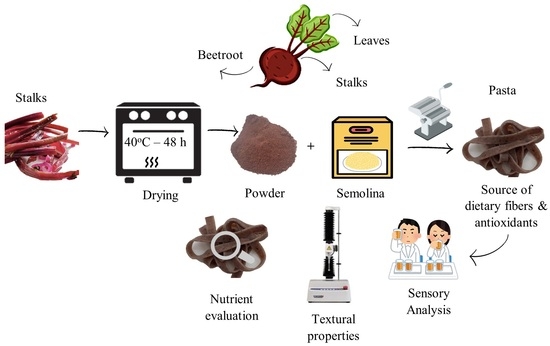
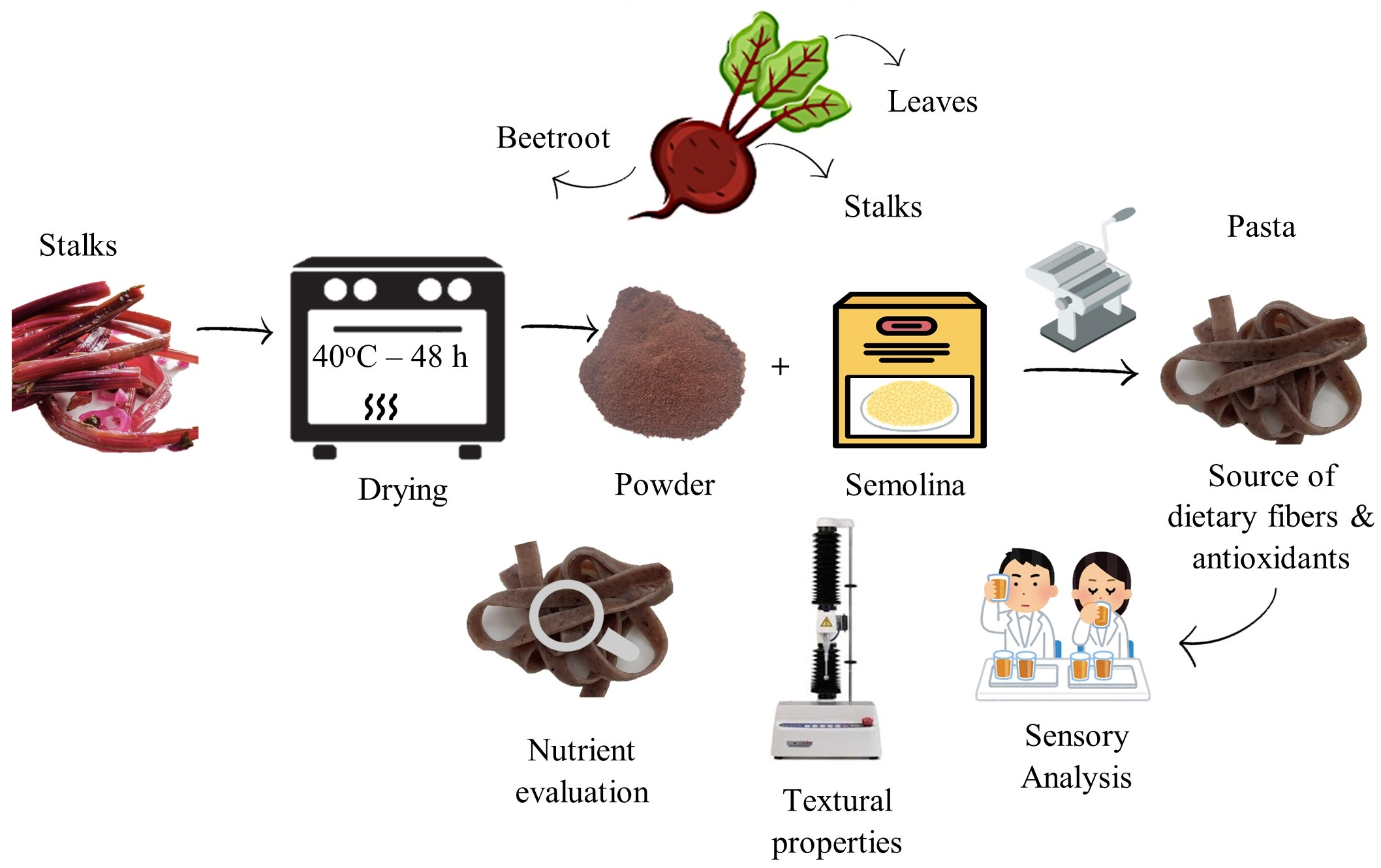
Graphical Abstract

1. Introduction

Pasta, recognized for its widespread popularity and adaptability, presents an ideal matrix for the incorporation of unconventional ingredients aimed at enhancing its nutritional value. Despite the limited exploration of pasta fortification in global scientific research, it possesses significant potential for enhancing nutrition using agricultural by-products, the promotion of local ingredients, and the creation of gluten-free options. Considering the increasing consumer interest in functional foods, the food industry is actively investigating innovative methods to augment the health benefits of staple products. Various enriched pasta formulations have been developed using a range of additives including whole grains, dietary fibers, legumes, poultry, veal, fish, soy, peas, lentil flour, vegetable protein isolates, dried and compressed yeast, brewer’s yeast highlighting pasta’s role as a medium for nutritional enhancement [1,2,3,4].
Vegetables are rich in health-promoting phytochemicals such as polyphenols, carotenoids, vitamins, and minerals, which provide antioxidant and functional benefits. Their addition to pasta formulations aims to improve both nutritional content and sensory qualities, particularly in terms of color. Given the global deficit in fruit and vegetable intake compared to dietary guidelines, vegetable-enriched pasta represents a viable approach to boost the intake of bioactive compounds in a convenient and shelf-stable form. However, due to technological constraints and concerns regarding consumer acceptance, vegetable fortification is generally limited to low concentrations. In this framework, Biernacka et al. [5] demonstrated that replacing different proportions of wheat flour into pasta with dried banana powder resulted in an enhancement of both antioxidant capacity and total phenolic content. Similarly, the incorporation of cauliflower powder with other ingredients can create pasta that caters to low-carbohydrate or gluten-free diets [6]. The addition of onion powder into pasta significantly enhanced the nutritional profile, as evidenced by increased antioxidant activity, dietary fiber, total minerals, total phenolic compounds, and flavonoid content [7], whereas the addition of garlic powders improved pasta’s antioxidant capacity and increased its phenolic, flavonoid, and potassium levels after cooking [8]. A notable challenge lies in the potential changes to the textural, cooking, and sensory characteristics of pasta, which could influence overall consumer acceptance [9]. Furthermore, water-soluble phytochemicals may leach into the cooking water, thereby altering the final nutritional profile [10].
The integration of vegetables waste into food products offers a sustainable method for improving both nutritional value and environmental sustainability. During food processing, agricultural residues such as peels, stems, and leaves are frequently discarded, resulting in considerable food waste. Nevertheless, these by-products are abundant in fiber, antioxidants, vitamins, and minerals, rendering them significant for the development of functional foods. The use of vegetable by-products not only minimizes waste in the food industry, but also facilitates the extraction of value-added compounds that benefit human health. Incorporating these by-products into pasta can improve its nutritional content while fostering a circular economy within the food sector. Important factors influencing this process include the type and form of the by-product, the degree of substitution, and the physicochemical properties of the incorporated compounds, all of which impact nutritional retention, technological attributes, and overall sensory acceptance. The existing literature discusses the enhancement of pasta through the incorporation of various vegetables by-products, including cold-pressed pumpkin and okra seed by-products [11], chia seed pomace [12], grapes and olives pomace [13], peanuts and carrots wastes [14], hemp seed cake [15], coconut by-products [16], and pepper and tomato wastes [17].
Beetroot (Beta vulgaris L.) processing by-products, including stalks, peels, and leaves, are recognized as valuable sources of nutrients and antioxidants, yet a significant portion is often discarded as waste. The Food and Agriculture Organization (FAO) estimates that the waste generated from beetroot processing—comprising peels, stalks, pomace, and leaves—can amount to approximately 1.3 billion tons annually, representing nearly 25% of the total output of the food industry [18]. In general, manufacturers have either disposed of these by-products or utilized them as fertilizers or animal feed. Nevertheless, recent research underscores their potential as a rich source of bioactive compounds, which could be harnessed for the development of functional foods or natural food additives. In this context, beet flour has emerged as a promising component for creating novel and fortified formulations, including muffins [19], bread [20], biscuits [21], and cookies [22,23,24]. Beetroot pomace powder serve as cost-effective, non-caloric bulking agent in food products, allowing for the partial substitution of flour, fat, or sugar. Its incorporation enhances food functionality by increasing water and oil retention and improving emulsion stability [25].
Beet stalks (BSs), frequently underestimated despite their significant nutritional and functional benefits, are abundant in dietary fibers, polyphenols, betalains, and essential vitamins, which provide important antioxidant and anti-inflammatory effects [18]. Furthermore, their natural pigments contribute to the color and aesthetic quality of food items. The inclusion of beet stalk powder in pasta formulations could facilitate the creation of a novel functional food product that enhances the intake of vital nutrients while fostering sustainability and minimizing the carbon footprint of the food industry.
To the best of our knowledge, the impact of incorporating beet stalk on the properties of pasta, particularly in relation to enhancing the concentration of functional components to foster a more varied and nutritious diet, has not been investigated. Consequently, it is essential to determine if pasta can serve as an effective medium for delivering the functional components found in beet stalk while maintaining favorable sensory qualities. Thus, the aim of this study was to examine the partial substitution of semolina with beet stalk in the production of pasta and to assess its chemical, technological, and sensory attributes.

2. Results

2.1. Composition of Beet Stalk Powder

The proximal composition of the beet stalk (BS) powder examined in this work was determined to be similar to the values specified in both the pertinent legislation and the current literature concerning flours obtained from various plant sources. Specifically, its moisture content (5.12 g/100 g) was well below the maximum permissible limit for wheat flour (15% w/w) [26]. In addition, the protein content (25.85 g/100 g) was much higher than that of wheat (9 g/100 g), corn (4–9 g/100 g), green banana (3.3 g/100 g), and sweet potato (2.89 g/100 g) flours [27,28,29]. Similarly, the sugar content (30.20 g/100 g) exceeded the values reported for sweet potato (11.42 g /100 g), cassava (5.77 g/100 g), coconut (13.1 g/100 g), and artichoke (7.41 g /100 g) flours, while being lower than that of tomato (39.91 g/100 g) and eggplant (38.06 g/100 g) flours [30,31]. Moreover, the crude fiber content (21.11 g/100 g) was substantially greater than the levels described for products such as sweet potato (3 g/100 g), avocado pear (9.32 g/100 g), and turkey berry (11.13 g/100 g) flours [28]. The ash content (13.40 g/100 g) was higher than that of green banana (2.4 g/100 g), sweet potato (2.19 g/100 g), and bean (2.06–3.65 g/100 g) flours [27,28,32]. Finally, the lipid content (4.32 g/100 g) was higher than that of cassava (0.79 g/100 g) and sweet potato (0.76 g/100 g) flours [28,33], while being lower than that of linseed flour (21.19 g/100 g) [34].
Building on these findings, the protein and ash contents exceeded the values reported by Yağcı and Göğüş [35] for flour made from a mixture of fruit waste, including orange peel, grape seed, and tomato pomace, which had protein and ash levels of 4.99 and 3.64%, respectively. These results underscore the nutritional significance of beetroot waste flour, particularly due to its protein and mineral content. Regarding fiber content, the substantial levels found in beetroot stalk flour can be linked to the composition of the waste material and are within the range reported by Padalino et al. [36], who investigated flours from 12 different vegetables (artichokes, asparagus, pumpkin, zucchini, tomatoes, yellow, red, and green paprika, carrots, broccoli, spinach, eggplant, and fennel), and found fiber contents ranging from 19% for yellow paprika to 52% for asparagus. Fibers possess the capability to improve lipid profiles, influence glycemic responses, and change intestinal function, thus providing various health advantages. In the context of technological applications, fibers can function as components owing to their properties that facilitate various uses, including serving as fat substitutes, stabilizers, thickeners, and emulsifiers in commonly consumed products such as beverages, soups, sauces, desserts, dairy products, cookies, pasta, and breads [37].
Beyond its macronutrient composition, BS powder exhibited noteworthy bioactive potential. The total phenolic content (TPC) reached 10.42 ± 0.08 mg/g dry matter, total betalains (TBCs) were 7.18 ± 0.05 mg/g dry matter, and antioxidant activity was particularly high (89.19 ± 0.68%). These components are largely responsible for the strong pigmentation and antioxidant functionality of the material and are of substantial relevance for developing fortified cereal-based foods. Phenolics and betalains are known for their radical-scavenging capacity and synergistic antioxidant effects, which enhance the functional profile of enriched pasta matrices. These bioactive compounds were determined using standardized analytical protocols described in Section 4.4.2, Section 4.4.3 and Section 4.4.4, ensuring methodological accuracy and reproducibility. By combining high-quality macronutrient composition with significant levels of bioactive compounds, BS powder emerges as a promising plant-based ingredient suitable for both nutritional enhancement and functional fortification in cereal-based applications.

2.2. Moisture Content and Cooking Quality

Moisture content is a critical quality parameter in pasta production, profoundly affecting both its physicochemical properties and shelf-life stability [38]. The fresh control pasta exhibited a moisture content of approximately 35.44%, whereas samples containing beet stalk powder demonstrated a progressive increase, with moisture content values of 36.41, 37.55, 38.43, and 39.5% corresponding to 5, 10, 15, and 20% substitution levels, respectively (Table 1). This modest increase in moisture content is likely to be attributable to the hydrophilic nature of beet stalk powder components, particularly dietary fibers and soluble polysaccharides, which enhance water binding in the dough matrix [39].
Subsequent drying under controlled conditions reduced moisture content uniformly to approximately 5% w.b. across all formulations, ensuring comparable baseline conditions for further analysis. Upon cooking, the moisture content notably increased in all samples, reflecting water absorption during processing. The moisture content of cooked pasta ranged from 63.08% for the control to 70.42% for 20% substitution, indicating nearly a twofold increase compared to fresh pasta samples. This trend aligns with previous findings reporting that fiber-rich plant additive enhances water uptake during cooking due to its intrinsic hygroscopicity and the introduction of additional water-binding sites within the pasta matrix [40]. The elevated moisture retention observed at higher substitution levels can be mechanistically explained by the compositional attributes of beet stalks powder. The powder contains significant amounts of natural sugars, soluble and insoluble dietary fibers, and other hygroscopic components that increase the hydrophilicity of the pasta matrix, facilitating enhanced water absorption and retention [41]. Moreover, beet root powder incorporation modifies the protein-starch network microstructure, influencing water diffusion pathways and binding affinities, as demonstrated by Panditrao and Yadav [42]. These structural modifications contribute to an increased capacity for water entrapment during cooking, resulting in greater hydration and swelling. While increased moisture content can improve quality attributes such as texture, mouthfeel, and sensory acceptability, it may also adversely affect product shelf life by promoting microbial proliferation and enzymatic spoilage. Therefore, an optimized substitution level must be identified that balances the nutritional benefits provided by beet stalk powder enrichment with the technological requirements for pasta stability and safety.
Cooking quality parameters, including cooking loss, swelling index (SI), and water uptake (WA), were assessed to evaluate the technological performance of pasta enriched with beet stalk powder. The corresponding data are presented in Table 1. The incorporation of beet stalk powder significantly influenced cooking loss. Values increased from 5.4% in the control sample to 6.6% for pasta enriched with 5% beet stalk powder. No statistically significant difference (p > 0.05) was observed for the 10% substitution level, suggesting minimal impact on cooking stability at this concentration. However, substantial increases in cooking loss were recorded at higher substitution levels, with values to approximately 8.0 and 10.45% for the 15 and 20% formulations, respectively. This progressive increase reflects a deterioration in the pasta matrix integrity with higher levels of substitution. The increase in cooking loss associated with higher beet stalk powder incorporation can be explained by the disruption of the gluten–starch matrix and increased water diffusion during cooking. As substitution levels rise, the increased content of dietary fibers and polyphenols may interfere with the development of a cohesive gluten structure, weakening the matrix and facilitating the leaching of soluble components into cooking water. Polyphenols may also form insoluble complexes with proteins, further impairing matrix formation.
Similar observations have been recorded in the recent literature. For example, Namir et al. [43] confirmed that incorporating potato peel fiber into wheat pasta (up to 15%) slightly increased cooking loss—yet still within an acceptable ~8% range—due to competition for water absorption and gluten dilution. Likewise, Teterycz and Sobota [17] using bell pepper and tomato processing wastes also reported significant increases in cooking loss when including 10–30% by-product, reinforcing the link between high-fiber inclusion and structural destabilization during cooking.
A similar trend was observed for the swelling index, which also increased progressively with higher levels of beet stalk powder incorporation. Compared to the control sample, which exhibited the lowest swelling ratio, the pasta formulation with 20% beet stalk powder showed an approximated 67% increase in SI, indicating enhanced water adsorption and expansion of the starch–fiber matrix. This effect is primarily attributed to the elevated water-holding capacity of the dietary fibers present in beet stalks, which retain moisture during cooking, facilitating greater water penetration into the pasta structure. Importantly, higher water retention has additional implications, as increased hydration of the food matrix may contribute to greater satiety; this effect is particularly relevant for consumers aiming weight management, for whom higher water intake has been associated with improved fullness and reduced energy consumption.
In terms of water uptake, the parameter remained relatively stable up to the 15% substitution level, showing no statistically significant variation. However, a notable increase of approximately 13% was observed at the highest investigated substitution level, suggesting that cumulative presence of insoluble fibers can enhance water retention capacity. These observations are consistent with international literature. Bianchi et al. [9] reported that pasta fortified with agro-industrial by-products exhibited increased SI and WA values due to fiber-induced matrix loosening. A study by Wang et al. [44] also noted increased swelling and water uptake in pasta enriched with red cabbage and spinach pomace, further supporting the influence of fiber-rich additives on pasta hydration dynamics. Lastly, research on fruit and vegetable processing by-products noted that pasta enriched with such residues often exhibits concomitant increases in SI and WA, dependent on the water-binding capacity of the added waste [45].

2.3. Color Properties

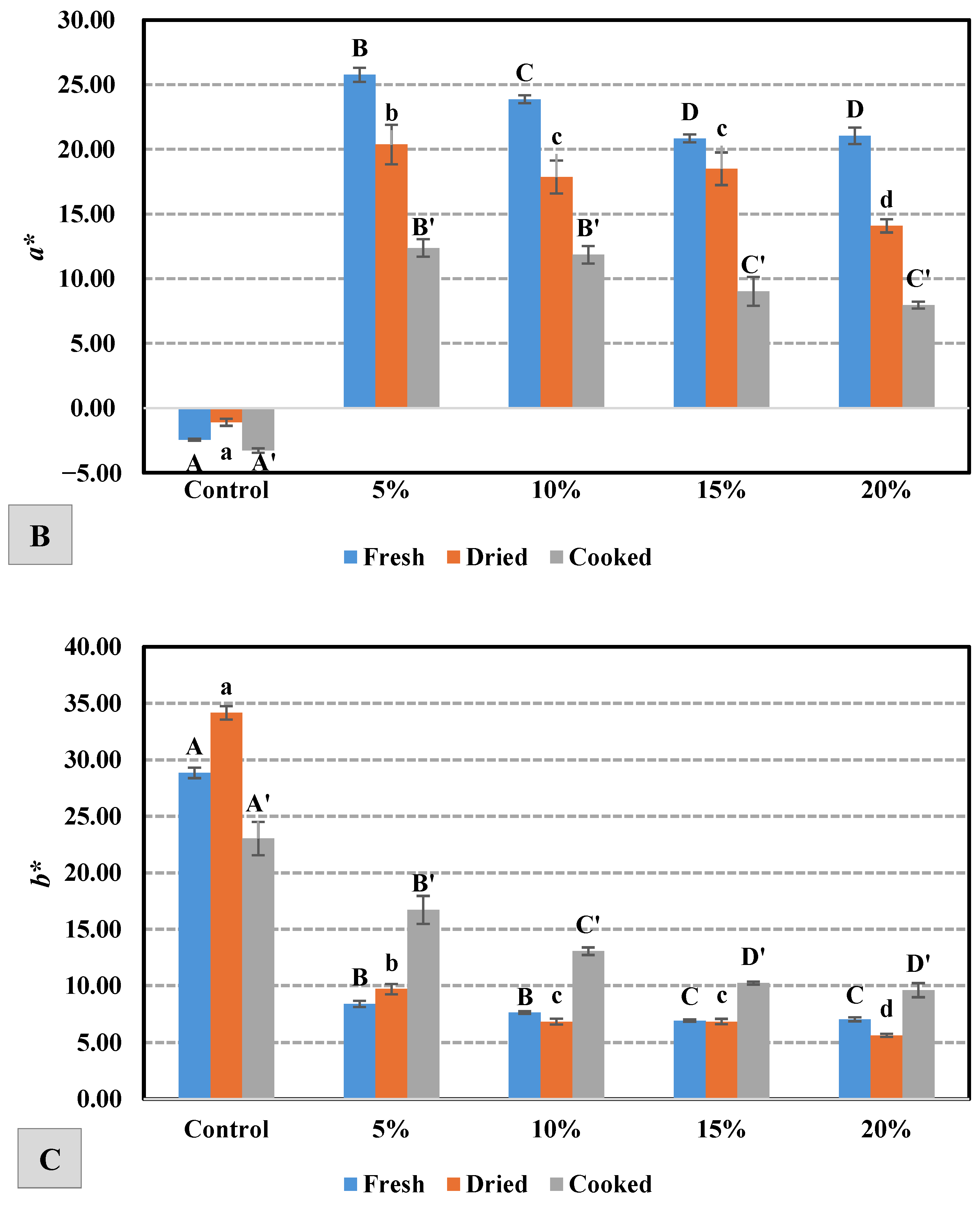
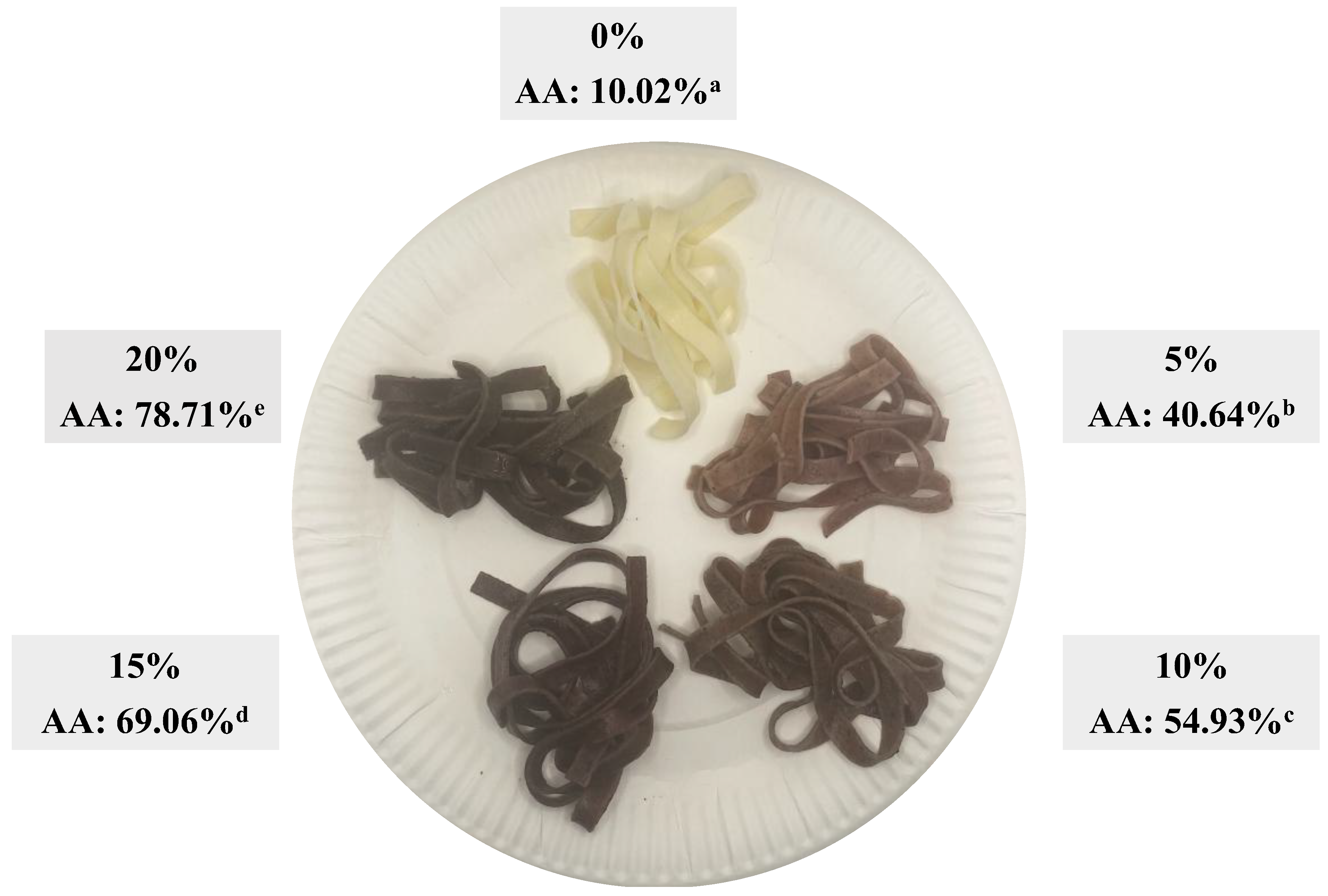
Color is a vital sensory attribute that strongly influences consumer perception and acceptability of pasta products. As presented in Figure 1, the incorporation of beet stalk powder significantly affected the color attributes of pasta. A clear decreasing trend in L* values was observed with increasing levels of beet stalk powder. Regarding uncooked pasta, the control sample exhibited the highest lightness (L* = 85.45), corresponding to a pale beige color. As substitution levels increased, pasta samples darkened progressively, with the 20% substitution showing the lowest L* value (29.59), indicating a shift toward a darker brown color. This reduction in brightness can be attributed to the natural pigments, primarily betalains, such as betacyanins and betaxanthins, present in beet stalks, which intensify with concentration and contribute to color darkening during processing and thermal treatment. This decrease in lightness is consistent with previous findings demonstrating that the incorporation of pigment-rich plant-based by-products, such as tomato pomace, spinach powder, and pepper residues, results in significant reductions in L* values due to the presence of natural chromophores like anthocyanins, betalains, and chlorophylls, which absorb light and darken the pasta matrix [17,40,46].
The a* parameter shifted from negative in the control (indicative of greenish undertones in beige pasta) to consistently positive in enriched samples (5–20%), reflecting increased redness due to the presence of betacyanin pigments. These observations corroborate findings of other researchers, who reported a significant increase in the a* value in instant noodles enriched with beetroot powder, attributed to the presence of red-violet betacyanin pigments [47,48]. The values remained relatively stable across the substitution levels, suggesting a saturation point in pigment intensity at moderate enrichment.
The b* values, representing the yellow-blue axis, showed a notable decline from the control to the enriched samples. The control pasta exhibited the highest b* value (28.84), indicative of its pronounced yellow hue. This yellow coloration is characteristic of traditional semolina pasta and is primarily due to the presence of carotenoid pigments such as lutein and zeaxanthin naturally occurring in durum wheat [49]. Upon the incorporation of beet stalk powder, the b* values decreased sharply and then remained relatively stable, ranging approximately between 6.94 and 8.38 across the 5–20% substitution levels. This reduction can be attributed to both the dilution of carotenoid pigments from semolina and the masking effect of darker plant pigments, particularly betacyanins and chlorophyll degradation products, present in beet stalks. The stable b* values across the substitution levels suggest that, beyond a certain threshold, the chromatic contribution of beet stalk pigments plateaus, and the dominant color tones shift away from yellow towards darker or reddish hues. Despite the decrease, the consistently positive b* values in enriched samples indicate that a yellow undertone remains detectable, albeit significantly diminished.
In addition to fresh pasta samples, similar trends in color parameter variations were observed in both dried and cooked samples, albeit with distinct shifts in magnitude across the different processing stages. Regarding the L* value (lightness), the dried control sample exhibited a lower brightness (L* = 79.37) compared to the fresh counterpart (L* = 85.45). This decline in brightness following drying can be attributed not only to moisture loss but also to non-enzymatic browning reactions, such as Maillard reactions, which tend to be more pronounced during the thermal processing of carbohydrate- and protein-rich matrices like pasta. These reactions lead to the formation of brown pigments that contribute to a darker appearance [50]. With increasing levels of beet stalk powder substitution, the L* value further decreased due to the presence of pigmented components, such as betalains and phenolic acids, which impact red-violet tones and mask yellowness of semolina. Interestingly, the reduction in L* value appeared to plateau beyond the 10% substitution level, suggesting a saturation threshold, beyond which additional pigment incorporation results in minimal further color darkening—possibly due to pigment degradation or limited binding capacity within the pasta matrix [17].
In cooked pasta, the control sample exhibited a L* value of 82.75, which was comparable to that of the fresh counterpart (L* = 85.45), indicating minimal change in brightness due to the cooking process. Across the enriched samples (5–20% substitution), L* values followed a similar decreasing trend as observed in fresh samples, with the highest substitution level (20%) yielding the lowest brightness (L* = 30.58). However, the differences in L* values between cooked and fresh samples at corresponding substitution levels were not statistically significant. This consistency in lightness can be explained by the thermal sensitivity and solubility of beet pigments, which may undergo partial degradation or leaching during boiling, thus limiting further darkening in the cooked product [51,52]. Moreover, the starch gelatinization and water uptake during cooking can lead to a more hydrated and glossier surface, potentially compensating for pigment-induced darkness and preserving overall lightness across samples [53].
For the a* parameter, which indicated the red-green chromatic axis, the dried control sample exhibited a slightly negative value (–1.10), suggesting a tendency toward green hues in the absence of red pigments. Upon substitution with beet stalk powder, a* values in dried samples progressively increased, reflecting enhanced redness. However, this increase was moderate compared to the fresh pasta samples, indicating partial degradation or limited retention of red-violet betalains during drying process. This phenomenon aligns with previous findings by Kumorkiewicz et al. [54], who noted thermal degradation of betacyanins and their transformation into less chromatic compounds during dehydration. Betalains are known to be thermally sensitive and prolonged exposure to elevated drying temperature can reduce their intensity and stability [55]. In the cooked pasta samples, the control exhibited the lowest a* value (–3.29), more negative than that of the dried or fresh samples. This result can be attributed to dilution and leaching effects during boiling, which reduce color density in the absence of pigment-rich ingredients. Upon beet stalk powder incorporation, a* values increased significantly, indicating the migration of residual betalain pigments into the pasta matrix.
However, the increase was less pronounced than in fresh samples, likely due to betalain solubilization and partial leaching into cooking water, as observed in other vegetable-enriched formulations [56]. Specifically, no significant differences were observed between the 5 and 10% substitution levels, both reaching an a* value of approximately 12, while a slight decrease was noted at higher substitution levels (a* ≈ 8–9), possibly due to pigment oversaturation, oxidative degradation, or altered water-binding properties limiting pigment retention [57]. These trends highlight the complex interactions between fiber-rich matrices, pigment content, and processing conditions in shaping final color attributed in functional pasta products.
The b* values (yellow-blue axis) demonstrated distinct patterns across processing treatments. In dried samples, the control showed an increase in b* compared to fresh pasta, likely due to moisture removal. However, this value decreased progressively with increased beet stalk powder content, aligning closely with fresh sample trends. In cooked samples, all formulations exhibited higher b* values than both fresh and dried forms except the control one, possibly reflecting thermal transformation or release of bound yellow pigments during boiling. Specifically, a consistent reduction in b* was observed with increasing substitution levels, reinforcing the masking or diluting effect of beet pigments in the inherent yellow color of semolina. These changes confirm that the presence and stability of chromophores such as carotenoids, betalains, and phenolic derivatives are strongly modulated by both formulation and processing technique, consistent with findings by Bianchi et al. [9] and Wang et al. [44], who also reported processing-dependent color variability in enriched pasta.
The total color variation index (ΔΕ) increased progressively with rising BS substitution levels for all processing stages (fresh, dried, and cooked), indicating a stronger deviation from the control sample as the proportion of BS powder increased (Table 2). In fresh pasta, ΔΕ values ranged from 54.48 (5%) to 64.40 (20%), showing significant differences at lower substitution levels (5% and 10%), whereas the 15% and 20% samples were statistically similar, indicating a plateau in color saturation at higher BS concentrations likely due to pigment saturation of the pasta matrix. In dried samples, although ΔΕ numerically increased, no statistically significant differences were detected among substitution levels, indicating that the drying process reduces perceptible color differences and stabilizes pigment distribution. Cooked samples exhibited the lowest ΔΕ values overall (39.18–55.07) as expected due to pigment leaching and thermal degradation, yet each substitution level remained statistically distinct, demonstrating that BS continues to impart a measurable and concentration-dependent color effect even after cooking. Overall, these results confirm that BS incorporation significantly influences pasta color in fresh and cooked states, while drying minimizes detectable differences among formulations.

2.4. Total Phenolic Content

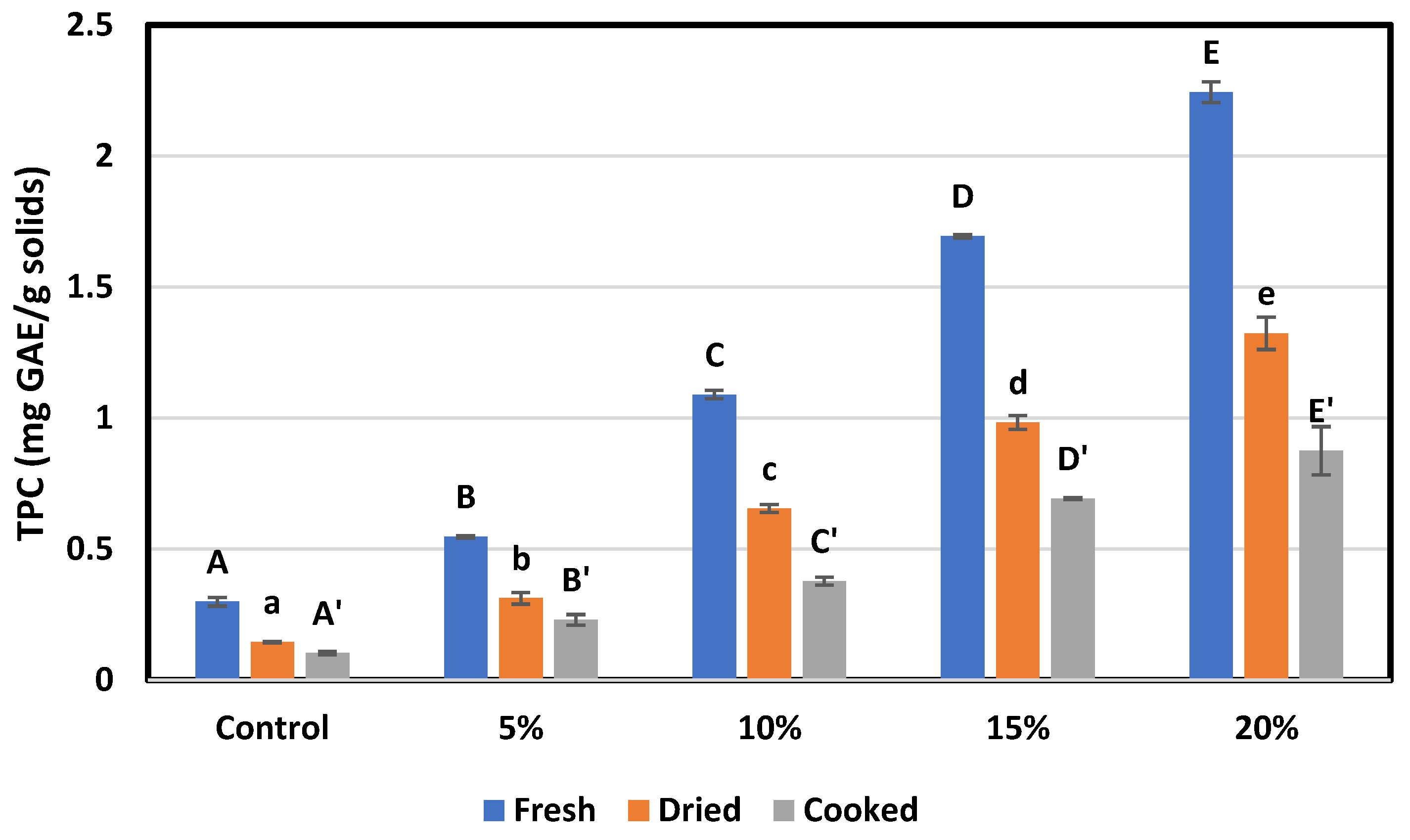
As illustrated in Figure 2, a consistent trend was observed across all sample types: total phenolic content increased with higher substitution levels of semolina by beetroot stalk powder. Fresh samples exhibited the highest phenolic content, as expected, due to the absence of thermal processing. Specifically, the control sample (100% semolina) contained minimal phenolics, while the 20% BS pasta sample reached 2.24 mg GAE/g. These findings are consistent with literature reports indicating that the incorporation of plant-based by-products or vegetable powders (e.g., tomato waste, linseed meal, grape marc, grape pomace, okara, olive, onion skin) enhances the phenolic profile of cereal-based products [9,58,59,60,61,62,63].
Drying of pasta samples resulted in substantial phenolic losses, mainly due to thermal sensitivity of phenolic compounds and heat-accelerated oxidation. TPC in dried control pasta dropped to 0.14 mg GAE/g, whereas the 20% substitution sample retained 1.32 mg GAE/g. Losses ranged from 52.15 ± 1.79% (control) to 41.32 ± 2.62% (20% substitution), indicating a proportional reduction across all substitution levels, with drying reducing phenolics by ~40%. These reductions reflect the susceptibility of phenolics to elevated temperatures and limited protection by the semolina–fiber matrix during drying.
Upon cooking, additional thermal degradation occurred, primarily driven by phenolic leaching into the boiling water, a mechanism widely documented in vegetable-enriched pasta systems. Cooked control sample contained 0.10 mg GAE/g, while the 20% substitution retained 0.86 mg GAE/g. Although enriched samples maintained significantly higher TPC than the control, cooking induced further loss, with the maximum reduction (~42.52 ± 2.84%) observed in the 10% substitution sample. Other samples exhibited reductions ranging from 26.03 ± 4.62% (control) to 29.36 ± 6.73% (20% substitution). Despite these effects, enriched samples consistently retained substantially higher TPC than the control, demonstrating that a portion of phenolics remains matrix-bound or structurally protected throughout processing.

2.5. Antioxidant Activity

A corresponding trend was observed in the antioxidant capacity of boiled pasta samples. As Figure 3 illustrates, increasing the substitution of semolina with beetroot stalk powder, paralleled by increased phenolic content, also enhanced the antioxidant capacity of the samples, demonstrating the antioxidant properties of phenolic compounds. Antioxidant activity increases with higher substitution levels and remains appreciable even after thermal processing (drying and cooking). Specifically, antioxidant capacity ranged from ~10 ± 2.27% for the control pasta (0% substitution) to ~78.70 ± 1.83% for the highest tested substitution level. This dose-dependent enhancement aligns with findings reported by Betrouche et al. [64], who demonstrated that vegetable by-products significantly increase antioxidant capacity in gluten-free pasta. Similar enhancements were reported in low-glycemic index pasta fortified with plant powders, achieving up to ~77% increase in DPPH scavenging activity for cooked samples [65]. Although, some authors note that antioxidant capacity may plateau or decline at very high substitution levels, likely due to variation in the profile of individual phenolic components [45]. Nonetheless, the substantial enhancements observed here are nutritionally significant, as antioxidant capacity plays a key role in mitigating oxidative stress and may aid the prevention of chronic diseases. Integrating beetroot stalk powder not only enhanced color and phenolic content but also improved the functional antioxidant properties of pasta, resulting in up to 8-fold improvement in antioxidant capacity, even after drying and cooking.

2.6. Betalain Content

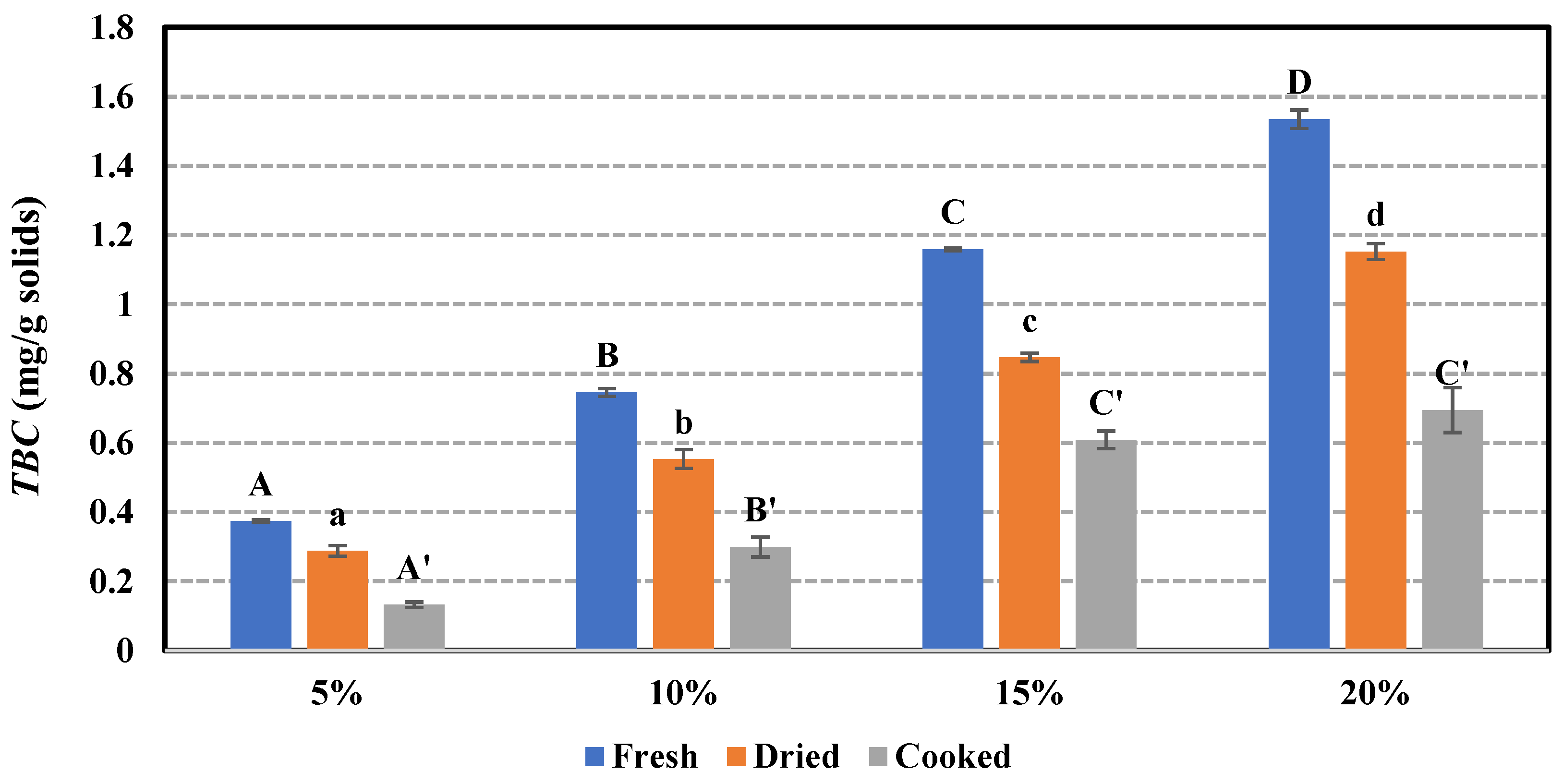
Betalain content in pasta samples enriched with beetroot stalk powder exhibited a similar dose-dependent pattern to that observed for TPC and AA. As shown in Figure 4, betalain content increased progressively with higher levels of semolina replacement, reaching a maximum of 1.53 mg/g d.b. in the 20% substitution sample, as expected based on the BS powder composition. Being thermosensitive compounds, their concentration decreased following thermal processing. Drying at 80 °C produced ~20% losses across all substitution levels, resulting in values ranging from 0.29 mg/g d.b. (5% substitution) to 1.15 mg/g d.b. (20% substitution), consistent with betalain degradation temperatures above 70–75 °C [66]. The moderate extent of loss suggests some matrix-related protective effects, possibly due to reduced oxygen exposure or interactions with proteins and fibers that slow pigment breakdown.
More substantial reductions were observed after boiling, which is consistent with the thermal sensitivity and water solubility of betalains. Losses reached up to ~50% in the lower substitution levels, due to increased water-driven leaching and thermal degradation during cooking. However, higher substitution levels (15–20%) appeared to better retain betalains, potentially reflecting matrix saturation effects, where increased pigment density and fiber–pigment interactions reduce diffusion into the cooking water. Consequently, the cooked pasta samples retained betalain concentrations ranging from 0.13 to 0.69 mg/g d.b., still significantly higher than the control. Despite the losses, the enriched samples maintained a visually intense coloration, which remained distinguishable even after cooking. This visual observation aligns with their preserved bioactivity, as described in the antioxidant capacity section. The retention of pigmentation, alongside measurable concentrations of betalains post-processing, suggests that beetroot stalk powder can serve as a functional ingredient contributing both color and antioxidant functionality.

2.7. Textural Properties

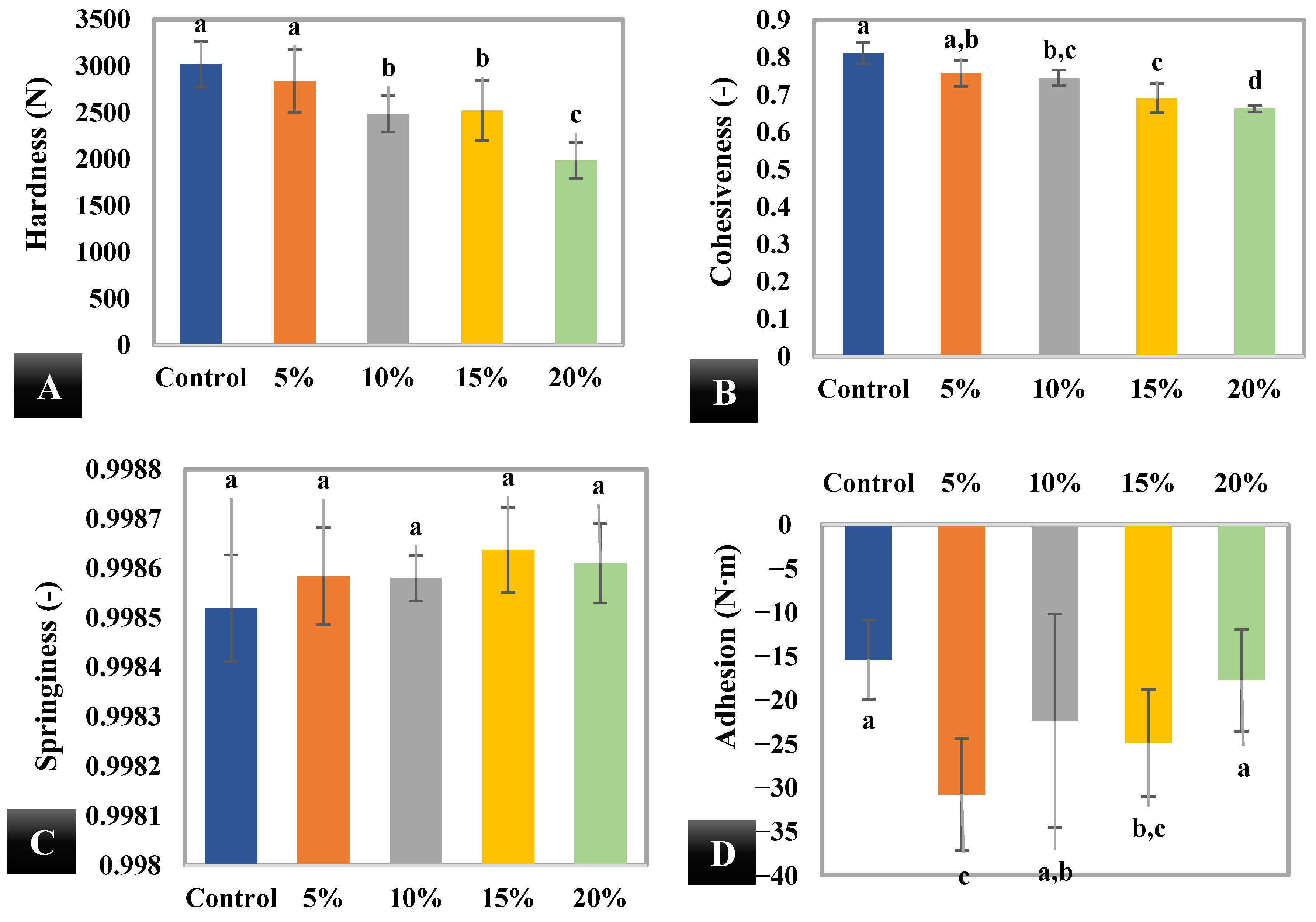
The incorporation of beet stalk powder into pasta formulations had a measurable impact on textural properties, particularly hardness, which is a critical quality attribute influencing consumer perception and mechanical integrity during processing and consumption. Contrary to initial expectation that fiber-rich additives might reinforce structural rigidity, the hardness of pasta samples actually decreased progressively with increasing levels of beet stalk powder substitution (Figure 5). At the 5% substitution level, a slight reduction in hardness was observed compared to the control, although this difference was not statistically significant (p > 0.05). However, more pronounced reductions were noted at 10 and 15% substitution levels, with values stabilizing between these concentrations. The lowest hardness value was recorded in pasta containing 20% beet stalk powder (1985 N), indicating a substantial weakening of the pasta matrix at higher substitution levels.
This softening effect is largely attributed to the high dietary fiber content and polyphenols in beet stalks, which may interfere with gluten development and disrupt the protein-starch network responsible for maintaining structural cohesion in durum wheat pasta [9]. Specifically, insoluble fibers act as inert fillers, diluting the gluten network and creating discontinuities in the protein–starch matrix, which weaken the structural integrity [67]. Phenolic components may interact with gluten proteins through hydrogen bonding or hydrophobic interactions, limiting their functionality and further disrupting the matrix [67]. Furthermore, the high fiber content enhances water adsorption and retention, leading to a plasticizing effect that can reduce the pasta’s resistance to deformation and alters hydration dynamics [68]. These results are in agreement with previous studies on pasta enriched with vegetable by-products such as carrot, spinach, and grape peels, which also reported similar reduction in hardness due to fiber-induced matrix loosening and water imbalance [44,45,69].
Cohesiveness, which describes the extent to which a material can withstand a second deformation relative to the first, was influenced by the incorporation of beet stalk powder. The control pasta sample exhibited the highest cohesiveness value (0.81), indicative of a well-structured and elastic internal matrix. The introduction of beet stalk powder led to a gradual reduction in this parameter (Figure 5). Specifically, the 5% substitution resulted in a slight, statistically non-significant decrease compared to the control. More notable decreases were observed at 10 and 15% substitution levels, with cohesiveness values declining to 0.75 and 0.69, respectively. The most substantial reduction was recorded at the 20% substitution level, with a value of 0.66. This downward trend in cohesiveness is likely associated with the partial replacement of gluten-forming proteins from semolina by non-gluten components such as dietary fibers, cellulose, and phenolic residues present in beet stalks. These compounds can interfere with the formation and continuity of the gluten matrix, reducing the structural integrity and viscoelastic behavior of the pasta [67,70]. Similar observations have been reported in studies where vegetable by-products, such as spinach stems, kale, or okara powder, were incorporated into pasta. For instance, Padalino et al. [36] demonstrated that fiber-rich ingredients tend to dilute the protein network and disrupt starch-protein interactions, leading to lower cohesiveness values. Likewise, Xu et al. [71] found that the addition of apple pomace in wheat-based noodles significantly decreased cohesiveness due to reduced gluten connectivity and increased matrix porosity. Gómez et al. [45] also found that vegetable by-product incorporation negatively affects dough cohesiveness and elasticity.
Springiness, which reflects a product’s ability to recover its original shape after deformation, remained unaffected by the incorporation of beet stalk powder. Across all substitution levels (0–20%), no statistically significant differences were observed, and the values remained remarkably consistent, ranging narrowly between 0.9985 and 0.9986 (Figure 5). This minimal variation and the absence of a clear increasing or decreasing trend suggest that the addition of beet stalk powder did not significantly alter the elastic recovery behavior of the pasta matrix. One possible explanation is that, while beet stalk powder contains non-gluten components such as cellulose and phenolic compounds that can disrupt the gluten network, the overall formulation retained sufficient protein integrity and moisture to preserve springiness. This finding is particularly relevant from a culinary and consumer satisfaction perspective, as stable springiness ensures that the pasta retains a familiar and desirable elastic texture, even when enriched with unconventional ingredients, such as beet stalk powder. Such consistency supports product acceptability and aligns with quality expectations. These results align with the findings of Kim et al. [72], who observed negligible effects on springiness in noodles enriched with dietary fibers from kimchi by-products at low to moderate levels. These observations suggest that springiness is a relatively resilient textural parameter in pasta and may only be significantly impacted when the protein structure is extensively disrupted or the substitution level is particularly high.
Adhesion, a parameter reflecting the force required to overcome the stickiness of a product’s surface, exhibited negative values across all substitution levels, ranging from −15.42 to −30.82 N∙m. In general, all beet stalk powder-enriched samples demonstrated greater adhesiveness (i.e., more negative values) compared to the control, indicating a general increase in stickiness likely due to the high dietary fiber content of the powder, which promotes water retention and surface tackiness. The highest adhesiveness was observed at 5% substitution, suggesting that even a low level of beet stalk incorporation can significantly enhance surface cohesion. However, further increases in substitution (10 and 15%) resulted in reduced adhesiveness values compared to the 5% sample, although they were still greater than the control. Notably, the 20% substitution samples exhibited an adhesiveness value statistically similar to the control indicating a reversal or plateauing of the trend, implying a non-linear relationship between fiber content and adhesion. This phenomenon may be attributed to the balance between fiber-induced water binding and matrix densification at higher inclusion levels. As fiber content increases, there may be competition for water between the fiber matrix and gluten network, ultimately limiting further increases in stickiness. Additionally, excessive fiber can lead to structural compaction, reducing surface deformability and, consequently, adhesiveness. From a technological and consumer perspective, increased adhesiveness may pose processing challenges such as clumping during extrusion or reduced machinability during drying and packaging. However, for culinary application involving sauces, moderated stickiness may enhance product performance and consumer acceptance. Based on these observations, the 10% substitution level appears to offer a favorable balance, achieving improved nutritional and textural outcomes without significantly increasing adhesiveness. Similar increases in adhesiveness upon incorporation of plant-based by-products have been reported in other studies. Kamble et al. [60] observed higher adhesiveness in pasta enriched with okara fiber, highlighting that soluble fibers tend to increase surface stickiness due to their hydrophilic nature. Likewise, Tolve et al. [73] noted an increase in adhesiveness in spaghetti enriched with grape pomace, linking the phenomenon to enhanced water-holding and swelling capacity of dietary fibers.

2.8. Sensory Analysis

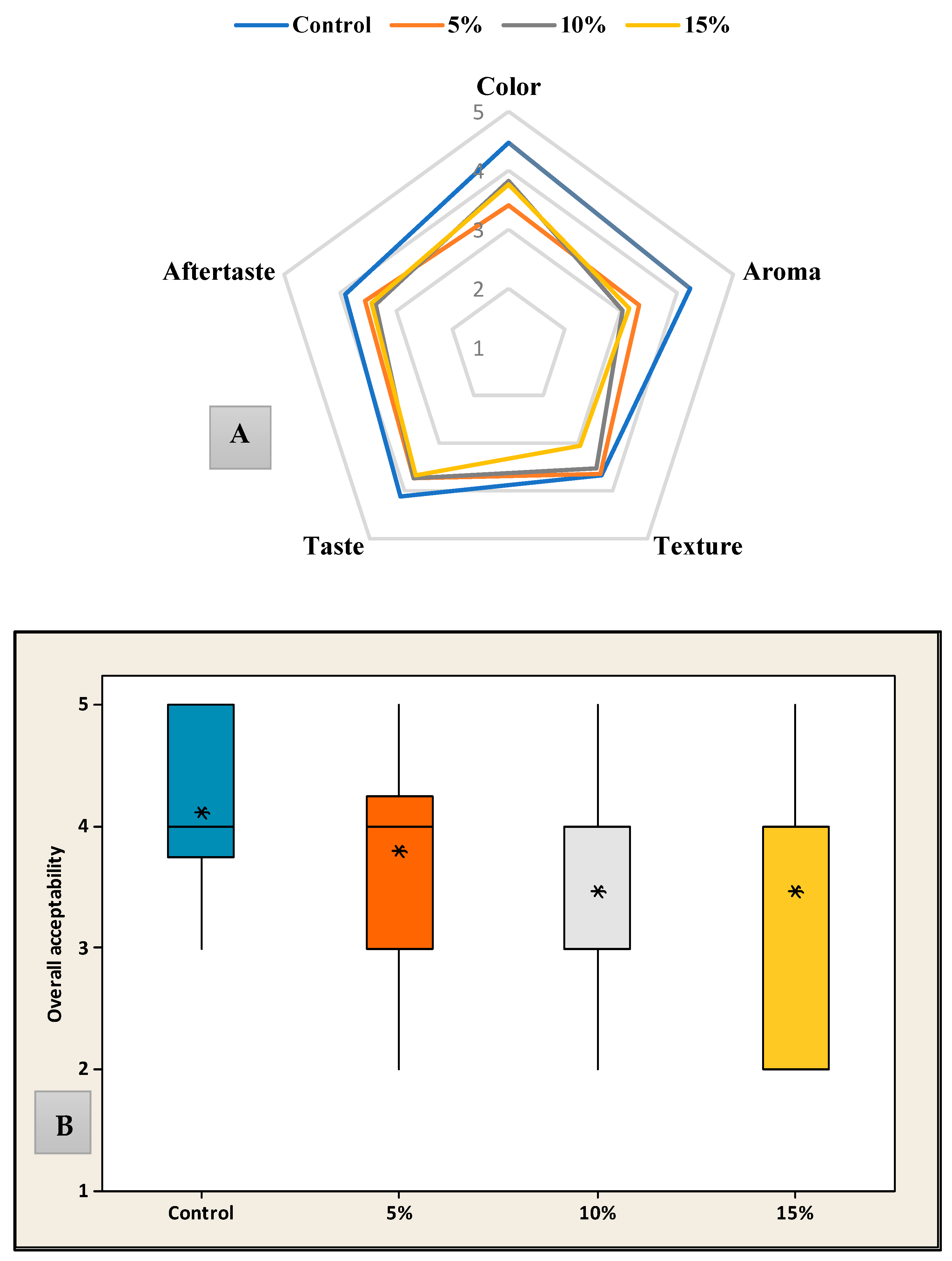
The sensory profile of pasta samples enriched with beetroot stalks is presented in Figure 6 and illustrates the impact of semolina substitution on organoleptic attributes, including color, aroma, texture, taste, and aftertaste. As observed, the control sample (0% substitution) was consistently rated highest across all sensory parameters by the majority of the panelists. With respect to color, samples with higher levels of substitution (10–15%) were rated more favorably after the control. These samples exhibited a more intense and distinctive color, which was positively commented on by several assessors, who noted similarities to whole wheat pasta or commercially available vegetable-fortified pasta. Regarding aroma, taste, and aftertaste, all substitution levels yielded comparable results, with no significant deviations reported. However, differences were more pronounced in terms of texture. Specifically, the 15% substitution sample was rated less favorably by a considerable portion of the panel due to negative textural attributes. Panelists described the texture as undesirable, noting poor consistency, stickiness, and an overall unpleasant mouthfeel. These sensory perceptions were consistent with the practical challenges encountered during sample preparation, which led to the exclusion of a 20% substitution sample from evaluation. Despite these limitations, several panelists appreciated the pronounced coloration of the higher substitution samples. Participants who regularly consume whole grain or vegetable-enriched products were more inclined to accept and positively evaluate these samples. Some identified a distinct vegetal flavor, occasionally associated specifically with beetroot, which they considered unique and appealing.
It is important to highlight that consumer acceptability remains a critical factor in the development of food products enriched with agro-industrial by-products. A key challenge in this area is the reduced sensory quality that often accompanies the inclusion of such ingredients, which can hinder consumer acceptance. Notably, many studies investigating pasta enriched with by-products omit acceptability assessments altogether [53]. In the present study, the control sample demonstrated the highest overall acceptability among the panel. A general trend of decreasing acceptability was observed with increasing substitution levels. Interestingly, the 15% substitution sample elicited a wide range of responses, with scores ranging from 2 to 4 on the 5-point hedonic scale. Some panelists perceived it as a novel and healthy option, reminiscent of market-available vegetable-fortified products, due to its distinct aroma, flavor, and color. However, this sample’s unique sensory characteristics also contributed to a polarized response, suggesting that its appeal may be limited to a specific segment of health-conscious consumers.

3. Discussion

The incorporation of beetroot stalk powder (BS) into semolina pasta demonstrates significant potential for developing functional, sustainable cereal-based products with enhanced nutritional and bioactive profiles. As an agricultural by-product typically discarded during beet processing, BS represent a valuable waste material that can be effectively upcycled into nutritious food ingredients, supporting the valorization of agro-industrial residues. The results indicate that BS addition improved the total phenolic content, betalain concentration, and antioxidant activity in a concentration-dependent manner, aligning with previous reports highlighting the nutritional benefits of beetroots-derived by-products [9,64]. High phenolic and betalain levels retained after drying and cooking indicate the thermal stability of BS antioxidants, comparable to tomato or grape pomace-fortified pasta. The eightfold increase in antioxidant activity relative to the control suggests synergistic effects of phenolic acids and betalains, confirming the role of agro-industrial by-products as functional fortifiers. Despite some processing losses, retention levels highlight the thermal resilience of BS components, likely due to interactions among fibers, proteins, and pigments within the pasta matrix. Water- and oil-holding capacity and pasting behavior will be addressed in future work to provide a more complete understanding of BS interactions within cereal-based matrices.
Color analysis revealed increased redness (a*) and decreased lightness (L*) with higher BS content, attributed to betalain pigments. This visual enhancement, similar to that reported for tomato and bell pepper powder [17], was positively perceived by consumers and demonstrates the potential of BS waste to enhance both organoleptic and nutritional attributes of pasta. Texture analysis showed reduced hardness and cohesiveness at higher BS levels, likely due to fiber interference with gluten structure, while springiness remained stable. Adhesiveness increased slightly, reflecting greater water retention from hydrophilic fibers, consistent with effects observed in okara and grape pomace fortification [63,70]. These structural modifications align with working hypothesis that fiber-rich additives alter dough rheology by increasing water-binding capacity and reducing matrix compactness. Sensory analysis indicated that 10–15% BS samples achieved optimal balance between color and texture, while 20% substitution caused excessive softness and lower preference. These findings corroborate the consensus that moderate enrichment levels (typically ≤ 15%) optimize nutritional benefits without compromising organoleptic characteristics of fortified foods.
In broader context, this work reinforces the valorization of agricultural and agro-industrial residues as sustainable ingredients capable of improving both nutritional quality and environmental outcomes. The utilization of BS—an abundant agricultural waste—provides a clear example of circular economy practices that reduce waste generation and promote resource efficiency within the food processing chain. Future investigations should focus on optimizing processing to preserve bioactives and pigment losses, during stages of drying and cooking. Additionally, microstructural and rheological analyses could further elucidate the interaction between fibers, protein, bioactives, and starches. Long-term storage studies would also provide valuable insights into market potential and shelf-life stability of BS-enriched pasta. Moreover, future studies will include proximate composition and glycemic index evaluation of the enriched pasta to provide a comprehensive assessment of its nutritional profile and functional benefits. Evaluation of the mechanical durability of dry pasta, including breaking strength tests, will also be integrated in future studies to provide further insight into packaging and storage stability.

4. Materials and Methods

4.1. Materials

Commercial durum wheat semolina was purchased from a local market at Thessaloniki, Greece, and its nutrient composition was as follows: moisture 15%, carbohydrates 75%, proteins 13.3%, fibers 3%, dry gluten 11%, fat 1.6%, and ash 0.75%. The particle mean diameter was approximately 0.32 mm, whereas 85% of the particles had a diameter smaller than 0.45 mm.
Beetroot stalks utilized in the present study were sourced from Detroit cultivar, harvested in 2024 in Pella, Greece. In order to prepare beetroot powder for pasta production, the beetroot stalks were placed in a lab-scale convective air dryer (Memmert, model U40 791 450, Schwabach, Western Germany) with an air velocity of 1.2 m/s at 40 °C until reaching a final moisture content of approximately 5% (wet basis, w.b.). Subsequently, the dried material was ground using a Storung milling device (Type A10 Janke & Kunkel, IKA Labortechnik, Staufen, Germany). Following grinding, the powder was subjected to sieving to assess its particle size distribution using a Retax vibrating sieving system (Labor Siebmaschine, Type LS10, No 4082, Haan, Germany). The particle mean diameter was about 0.08 mm, while 80% of the particles had a diameter smaller than 0.22 mm. The resulting powder was stored in a glass container and kept in a cool, shaded environment until analysis and further use.
The protein content was determined following the Kjeldahl method as outlined in IS: 7219:1973 [74], utilizing a general conversion factor of 6.25. It should be noted that certain plant-based materials may require lower specific conversion factors, which could lead to minor differences in calculated protein values. Crude fiber was measured in accordance with IS: 11062 [75], while carbohydrate content was calculated using the difference method. Ash, fat, moisture, and carbohydrate contents were evaluated based on the methods established by AOAC in 2000.

4.2. Pasta Making

Control pasta was prepared using 100% semolina. For the enriched pastas, preliminary studies established the levels of beet stalk incorporation, and accordingly, four pasta samples were made by substituting semolina with 5, 10, 15, and 20% beetroot stalk powder. Control pasta was produced by combining 50 g of semolina with 24 mL of water (25 °C), followed by a mixing process lasting 15 min prior to the extrusion into pasta form. For the enriched pastas, preliminary studies established the levels of beet stalk incorporation, which were set at 5, 10, 15, and 20%. Water was incorporated in an adequate quantity to achieve a mixture with a moisture content of 32–38%. Each dough was processed in the same manner as the control to ensure uniform thickness and width. The formed dough was drawn between rolls of a domestic pasta machine with a gap of 4 mm, cut into 250 mm length and 5 mm width, and arranged on aluminum foil. Subsequently, the pasta was dried in an oven dryer (Memmert, model U40 791 450, Western Germany) at a temperature of 80 °C for 2–3 h to achieve a moisture content of about 4.5% w.b. All pasta samples were stored at room temperature (20 °C) until cooking and further analysis. For each formulation, separate dough batches were prepared in triplicate, processed, and analyzed individually.

4.3. Cooking Quality

4.3.1. Cooking Quality

The optimal cooking time (CT) was established using the method reported by the American Association of Cereal Chemists [76]. Dried pasta (10 g) was cooked in 300 mL of boiling water containing 0.7% (w/v) sodium chloride. The optimal cooking time was experimentally identified by squeezing the pasta between two glasses until no white inner layer was visible. Each sample was tested three times to ensure accuracy.

4.3.2. Cooking Loss

Weight loss during the cooking process of dry pasta was determined following the methodology outlined by Piwińska et al. [77]. A total of 10 g of pasta samples were boiled in 300 mL of distilled water for the optimal cooking time. After cooking, the water was transferred into pre-weighed beakers. Subsequently, both the pasta samples and the collected cooking water were dried in a laboratory air dryer at 105 °C for 16 h before being weighed. The weight losses were calculated as a percentage of the initial weight, with measurements conducted in triplicate.

4.3.3. Swelling Index

The swelling index (SI) was determined using Equation (1), which takes into account the weight of the cooked pasta (Wcp) and its dry weight (Wdp) after reaching a stable mass at a temperature of 105 °C [78].
S I = W c p W d p W d p

4.3.4. Water Uptake

The water absorption (WA) of pasta was evaluated following the methodology outlined in the research of Piwińska et al. [79]. In this process, 10 g of dry pasta were weighed before (Wup) and after cooking (Wcp). The water uptake was determined using Equation (2):
W A = W c p W u p W u p

4.4. Characterization of Cooked Pasta

4.4.1. Color

Color measurements were conducted using the Chromameter CR-400 from Konica-Minolta (Osaka, Japan), with results reported according to the CIELAB color model. The analysis focused on cooked samples across all substitution levels, including a control sample, employing a colorimeter to measure the L* (lightness), a* (green (−) to red (+)), and b* (blue (−) to yellow (+)) coordinates. Before taking measurements, the device was calibrated with a white reference plate in accordance with the standard CIE (Commission Internationale de l’Éclairage) system for L*, a*, and b* values. Pasta samples were arranged to create a consistent surface, and color measurements were taken at three distinct locations.
In addition to individual color coordinates, the total color variation index (ΔΕ) was calculated to quantify the magnitude of overall color difference. Importantly, ΔΕ values were computed in direct comparison with the control sample, allowing the characterization of the effect of BS incorporation and processing on pasta color. ΔΕ was determined using standard CIELAB Equation (3):
Δ Ε = ( Δ L * ) 2 + ( Δ α * ) 2 + ( Δ b * ) 2
where ΔL*, Δa*, and Δb* represent the differences between each BS-enriched pasta sample and the control in lightness, red–green, and yellow–blue coordinates, respectively.

4.4.2. Total Phenolic Content

A 10 g sample of cooked pasta was placed in a beaker containing 100 mL of a 70% methanol-water solution (v/v) and stirred vigorously with a magnetic stirrer for 90 min. The resulting mixture was then filtered through Whatman filter paper with a pore size of 8 μm to obtain the extract for subsequent analysis. After extraction, the filtrate was concentrated using a rotary evaporator (Büchi Rotovapor R114, Büchi, Flawil, Switzerland) at a temperature of 35 °C. The concentrated extracts were evaluated for residual total phenolic content using the spectrophotometric method with the Folin–Ciocalteau phenol reagent [80]. The total phenolic content was reported as gallic acid equivalents (mg GAE/L) based on standard calibration curves and subsequently converted to mg GAE/g of solids for each sample.

4.4.3. Antioxidant Capacity

The antioxidant activity of the samples was determined using the DPPH (2,2-diphenyl-1-picrylhydrazyl) assay as described by Kaderides et al. [81]. The percentage of inhibition can be calculated using Equation (4).
A A % = A 0 A 1 A 0 × 100
where A0 is the absorbance of the control and A1 is the absorbance of the sample.

4.4.4. Betalain Content

The total betalain content (TBC) was determined separately as betacyanin content (BCC) and betaxanthin content (BXC) following the method described by de Jesus Junqueira et al. [82], using the extracts obtained as outlined in Section 4.4.2. The BCC and BXC levels in the extracts were quantified spectrophotometrically by measuring absorbance at 538 and 480 nm, respectively. The absorbance values were used to calculate the concentration of each pigment according to the following equation:
B e t a l a i n m g / L = ( A × M W × D F × 1000 ) / ( ε × l )
where A is the measured absorbance, MW is the molecular weight (g/mol), DF is the dilution factor, ε is the molar extinction coefficient in water (L·mol−1·cm−1), and l is the path length of the cuvette (1 cm). The factor 1000 converts grams to milligrams. In this study, the molecular weights and molar absorptivities corresponding to the specific betalain compounds were: MW = 308 g/mol and ε = 48,000 L·mol−1·cm−1 for betaxanthin and MW = 550 g/mol and ε = 60,000 L·mol−1·cm−1 for betacyanin. The sum of the concentrations of both pigments was reported as the total betalain content, expressed in mg per gram of dry weight.

4.4.5. Textural Properties

Pasta, cooked to optimal standards, was rinsed with 500 mL of distilled water, drained, and allowed to reach room temperature in covered plates prior to analysis. Texture is a critical quality characteristic of pasta and its assessment was performed using the Texture Profile Analysis (TPA) method. Measurements were taken from cooked pasta samples of each formulation utilizing a Texture Analyzer (XT2i, Stable Micro Systems, Surrey, UK). For each sample, six square-shaped pasta pieces (1 cm) were evaluated. The TPA procedure involved two cycles of compression and relaxation for each sample, employing a cylindrical probe with a diameter of 100 mm (P/100). The testing parameters included a compression speed of 0.8 mm/s and a trigger load of 0.05 N. The deformation was set to 50% of the sample’s thickness, with a 5 s interval between the two compression cycles. The compression was performed to achieve 50% deformation, with a 5 s pause between cycles [83]. The textural attributes measured comprised hardness, cohesiveness, springiness, and adhesiveness. All texture assessments were conducted in triplicate.

4.4.6. Sensory Analysis

The sensory attributes of cooked pasta were evaluated by an untrained sensory panel consisting of 34 members (12 males and 22 females, 21 to 48 years old) from the Department of Food Science and Technology, Aristotle University of Thessaloniki, Greece. Prior to the sensory analysis, panelists were provided with brief guidelines regarding the sensory descriptors and the evaluation procedure. A descriptive analysis was performed using the checklist method to identify sensory attributes, which included color, aroma, texture, taste, aftertaste, and overall acceptability. The panelists used a 5-point hedonic scale, where 1 = “very unpleasant” and 5 = “very pleasant”. The sensory evaluation was conducted in individual booths under controlled conditions (22 °C, odor-free environment, and consistent lighting using daylight-balanced fluorescent lamps). Samples were served on white, odorless plates, labeled with three-digit random codes, and presented in a balanced order to minimize order effects. A control pasta sample was included in the evaluation for comparative analysis against the enriched pasta samples. Panelists were instructed to rinse their palates with room-temperature distilled water between samples to prevent flavor carryover. The sensory evaluations were completed within ten minutes after pasta cooking to ensure consistency in sample temperature and texture.

4.4.7. Statistical Analysis

All analyses were conducted in triplicate. The data underwent univariate analysis of variance (ANOVA), and the means of the treatments were compared using the Tukey test at 5% probability.

5. Conclusions

The present study demonstrated that incorporating beetroot stalk powder (BS), an agricultural waste from beet processing, into durum wheat semolina pasta effectively enhances its nutritional and functional properties while promoting sustainable food production. Substitution of semolina with 5–20% BS powder significantly increased total phenolic content, betalain concentration, and antioxidant capacity, confirming BS as a rich natural source of bioactive components. At 20% substitution, phenolic and betalain contents reached 2.24 mg/g GAE/g d.b and 1.53 mg/g d.b., respectively, resulting in an eightfold increase in the radical scavenging capacity compared to the control. Although drying and boiling reduced bioactive retention, enriched samples maintained markedly higher phenolic and betalain levels, highlighting the relative thermal stability of these components. Sensory evaluation revealed that while the control sample was preferred overall for texture and flavor attributes, formulations containing 10–15% BS were positively rated for their vibrant red color and mild vegetal flavor. Higher substitution levels (20%) led to a noticeable decline in texture acceptance, likely due to fiber interference with gluten structure. These outcomes align with challenges commonly associated with incorporating plant-based by-products into cereal matrices, where high fiber and pigment levels can modify dough rheology and sensory perception.
The novelty of this study lies in the successful valorization of BS—an underexploited agro-industrial by-product—into a functional pasta matrix, illustrating the potential of upcycling agricultural waste into nutrient-enriched foods. Unlike prior studies primarily focusing on beetroot roots or other vegetable powders, this work highlights the compositional value of BS residues and their contribution to circular economy goals by reducing waste and improving resource efficiency. A further distinguishing feature of this research is the multi-stage evaluation of bioactive compound behavior across fresh, dried, and boiled pasta, providing a comprehensive and realistic assessment of nutrient preservation post-processing. Importantly, the sensory analysis was conducted on the final product, enhancing the translational value of the findings for both industry and public health. Future studies should also include shelf-life analysis and nutritional bioavailability assessments in vivo.

Author Contributions

Conceptualization, A.M.G.; methodology: D.F., N.S., and A.M.G.; software, D.F. and N.S.; validation, D.F. and N.S.; formal analysis and investigation: D.F. and N.S.; resources: A.M.G.; writing—original draft preparation: N.S.; writing—review and editing: A.M.G.; visualization and supervision: A.M.G.; project administration: A.M.G.; funding acquisition: A.M.G. All authors have read and agreed to the published version of the manuscript.

Funding

This research received no external funding.

Data Availability Statement

The datasets used and/or analyzed during the current study are available from the corresponding author on reasonable request.

Conflicts of Interest

The authors declare no conflicts of interest.

Abbreviations

The following abbreviations are used in this manuscript:
BSBeetroot stalk
FAOFood and Agriculture Organization
w.b.Wet basis
SISwelling index
WAWater adsorption
L*Lightness
a*green (−) to red (+) coordinates
b*blue (−) to yellow (+) coordinates
TPCTotal phenol content
GAEGallic acid equivalents
d.b.Dry basis
TBCTotal betalain content
CTCooking time
WcpWeight of the cooked pasta
WdpDry weight of the cooked pasta
WupWeight of the dry pasta before cooking
WcpWeight of the dry pasta after cooking
v/vvolume per volume
DPPH2,2-diphenyl-1-picrylhydrazyl
BCCBetacyanin content
BXCBetaxanthin content
AAbsorbance
MWMolecular weight (g/mol)
DFDilution factor
εMolar extinction coefficient in water (L·mol−1·cm−1)
lpath length of the cuvette (1 cm)
TPATexture profile analysis

References

  1. Conte, P.; Piga, A.; Del Caro, A.; Urgeghe, P.P.; Fadda, C. Italian dried pasta: Conventional and innovative ingredients and processing. In Cereal-Based Foodstuffs: The Backbone of Mediterranean Cuisine, 1st ed.; Boukid, F., Ed.; Springer: Cham, Switzerland, 2021; pp. 89–116. [Google Scholar] [CrossRef]
  2. Dello Russo, M.; Spagnuolo, C.; Moccia, S.; Angelino, D.; Pellegrini, N.; Martini, D.; Italian Society of Human Nutrition (SINU) Young Working Group. Nutritional quality of pasta sold on the Italian market: The food labelling of Italian products (FLIP) study. Nutrients 2021, 13, 171. [Google Scholar] [CrossRef]
  3. Sajdakowska, M.; Gębski, J.; Jeżewska-Zychowicz, M.; Jeznach, M.; Kosicka-Gębska, M. Consumer choices in the pasta market: The importance of fiber in consumer decisions. Nutrients 2021, 13, 2931. [Google Scholar] [CrossRef]
  4. Fantechi, T.; Contini, C.; Casini, L. Pasta goes green: Consumer preferences for spirulina-enriched pasta in Italy. Algal Res. 2023, 75, 103275. [Google Scholar] [CrossRef]
  5. Biernacka, B.; Dziki, D.; Różyło, R.; Gawlik-Dziki, U. Banana powder as an additive to common wheat pasta. Foods 2020, 9, 53. [Google Scholar] [CrossRef]
  6. Sinha, R.; Sharma, B. Development and Quality Assessment of Value Added Pasta Fortified with Cauliflower Leaf, Carrot and Mushroom Powder. Asian J. Dairy Food Res. 2023. [Google Scholar] [CrossRef]
  7. Michalak-Majewska, M.; Złotek, U.; Szymanowska, U.; Szwajgier, D.; Stanikowski, P.; Matysek, M.; Sobota, A. Antioxidant and potentially anti-inflammatory properties in pasta fortified with onion skin. Appl. Sci. 2020, 10, 8164. [Google Scholar] [CrossRef]
  8. Filipčev, B.; Kojić, J.; Miljanić, J.; Šimurina, O.; Stupar, A.; Škrobot, D.; Travičić, V.; Pojić, M. Wild garlic (Allium ursinum) preparations in the design of novel functional pasta. Foods 2023, 12, 4376. [Google Scholar] [CrossRef]
  9. Bianchi, F.; Tolve, R.; Rainero, G.; Bordiga, M.; Brennan, C.S.; Simonato, B. Technological, nutritional and sensory properties of pasta fortified with agro-industrial by-products: A review. Int. J. Food Sci. Technol. 2021, 56, 4356–4366. [Google Scholar] [CrossRef]
  10. Palermo, M.; Pellegrini, N.; Fogliano, V. The effect of cooking on the phytochemical content of vegetables. J. Sci. Food Agric. 2014, 94, 1057–1070. [Google Scholar] [CrossRef]
  11. Aydin, E.; Turgut, S.S.; Aydin, S.; Cevik, S.; Ozcelik, A.; Aksu, M.; Ozcelik, M.M.; Ozkan, G. A new approach for the development and optimization of gluten-free noodles using flours from byproducts of cold-pressed okra and pumpkin seeds. Foods 2023, 12, 2018. [Google Scholar] [CrossRef]
  12. Aranibar, C.; Pigni, N.B.; Martinez, M.; Aguirre, A.; Ribotta, P.; Wunderlin, D.; Borneo, R. Utilization of a partially-deoiled chia flour to improve the nutritional and antioxidant properties of wheat pasta. LWT-Food Sci. Technol. 2018, 89, 381–387. [Google Scholar] [CrossRef]
  13. Balli, D.; Cecchi, L.; Innocenti, M.; Bellumori, M.; Mulinacci, N. Food by-products valorisation: Grape pomace and olive pomace (pâté) as sources of phenolic compounds and fiber for enrichment of tagliatelle pasta. Food Chem. 2021, 355, 129642. [Google Scholar] [CrossRef] [PubMed]
  14. Badwaik, L.S.; Prasad, K.; Seth, D. Optimization of ingredient levels for the development of peanut based fiber rich pasta. J. Food Sci. Technol. 2014, 51, 2713–2719. [Google Scholar] [CrossRef] [PubMed]
  15. Teterycz, D.; Sobota, A.; Przygodzka, D.; Łysakowska, P. Hemp seed (Cannabis sativa L.) enriched pasta: Physicochemical properties and quality evaluation. PLoS ONE 2021, 16, e0248790. [Google Scholar] [CrossRef]
  16. Sykut-Domańska, E.; Zarzycki, P.; Sobota, A.; Teterycz, D.; Wirkijowska, A.; Blicharz-Kania, A.; Mazurkiewicz, J. The potential use of by-products from coconut industry for production of pasta. J. Food Process Preserv. 2020, 44, e14490. [Google Scholar] [CrossRef]
  17. Teterycz, D.; Sobota, A. Use of High-Protein and High-Dietary-Fibre Vegetable Processing Waste from Bell Pepper and Tomato for Pasta Fortification. Foods 2023, 12, 2567. [Google Scholar] [CrossRef]
  18. Stoica, F.; Râpeanu, G.; Rațu, R.N.; Stănciuc, N.; Croitoru, C.; Țopa, D.; Jităreanu, G. Red Beetroot and Its By-Products: A Comprehensive Review of Phytochemicals, Extraction Methods, Health Benefits, and Applications. Agriculture 2025, 15, 270. [Google Scholar] [CrossRef]
  19. Seo, E.O.; Ko, S.H. Quality characteristics of muffins containing beet powder. Cul Sci. Hos Res. 2014, 20, 27–37. [Google Scholar]
  20. Lee, E.J.; Ju, H.W. Quality characteristics of bread added with beet powder. J. East. Asian Soc. Diet. Life 2016, 26, 55–62. [Google Scholar] [CrossRef]
  21. Amnah, M. Nutritional, sensory and biological study of biscuits fortified with red beet roots. Life Sci. J. 2013, 10, 1579–1584. [Google Scholar]
  22. Chauhan, S.; Rajput, H. Production of gluten free and high fiber cookies using beet root waste powder and wheat flour husk. Pharma Innov. J. 2018, 7, 556. [Google Scholar]
  23. Clímaco, G.N.; Sousa, M.L.; Seccadio, L.L.; de Freitas, A.C. Physical-chemical and sensory evaluation of cookie made with potato (Solanum tuberosum L.) and beet (Beta vulgaris L.) Mixed flour. Res. Soc. Dev. 2020, 9, e943975204. [Google Scholar] [CrossRef]
  24. Sahni, P.; Shere, D.M. Physico-chemical and sensory characteristics of beet root pomace powder incorporated fibre rich cookies. Int. J. Food Ferment. Technol. 2016, 6, 309. [Google Scholar] [CrossRef]
  25. Elleuch, M.; Bedigian, D.; Roiseux, O.; Besbes, S.; Blecker, C.; Attia, H. Dietary fibre and fibre-rich by-products of food processing: Characterisation, technological functionality and commercial applications: A review. Food Chem. 2011, 124, 411–421. [Google Scholar] [CrossRef]
  26. FDA. Code of Federal Regulations Title 21, Part 137: Cereal Flours and Related Products. 2020. Available online: https://www.ecfr.gov/current/title-21/part-137 (accessed on 28 October 2025).
  27. Flores-Silva, P.C.; Berrios, J.D.J.; Pan, J.; Osorio-Díaz, P.; Bello-Pérez, L.A. Gluten-free spaghetti made with chickpea, unripe plantain and maize flours: Functional and chemical properties and starch digestibility. Int. J. Food Sci. Technol. 2014, 49, 1985–1991. [Google Scholar] [CrossRef]
  28. Teye, E.; Agbemafle, R.; Lamptey, F.P. Development and examination of sweet potato flour fortified with indigenous underutilized seasonal vegetables. Beverages 2018, 4, 5. [Google Scholar] [CrossRef]
  29. Zhao, T.; Li, X.; Zhu, R.; Ma, Z.; Liu, L.; Wang, X.; Hu, X. Effect of natural fermentation on the structure and physicochemical properties of wheat starch. Carbohydr. Polym. 2019, 218, 163–169. [Google Scholar] [CrossRef]
  30. Johnson, R.; Moorthy, S.N.; Padmaja, G. Production of high fructose syrup from cassava and sweet potato flours and their blends with cereal flours. Food Sci. Technol. Int. 2010, 16, 251–258. [Google Scholar] [CrossRef]
  31. Valerga, L.; Darré, M.; Zaro, M.J.; Vicente, A.R.; Lemoine, M.L.; Concellón, A. The plant age influences eggplant fruit growth, metabolic activity, texture and shelf-life. Sci. Hortic. 2020, 272, 109590. [Google Scholar] [CrossRef]
  32. Rios, M.J.B.L.; Damasceno-Silva, K.J.; Moreira-Araújo, R.S.D.R.; Figueiredo, E.A.T.D.; Rocha, M.D.M.; Hashimoto, J.M. Chemical, granulometric and technological characteristics of whole flours from commercial cultivars of cowpea. Rev. Caatinga 2018, 31, 217–224. [Google Scholar] [CrossRef]
  33. Otondi, E.A.; Nduko, J.M.; Omwamba, M. Physico-chemical properties of extruded cassava-chia seed instant flour. J. Agric. Food Res. 2020, 2, 100058. [Google Scholar] [CrossRef]
  34. Sakurai, Y.C.N.; Rodrigues, A.M.D.C.; Pires, M.B.; Silva, L.H.M.D. Quality of pasta made of cassava, peach palm and golden linseed flours. Food Sci. Technol. 2019, 40, 228–234. [Google Scholar] [CrossRef]
  35. Yağcı, S.; Göğüş, F. Response surface methodology for evaluation of physical and functional properties of extruded snack foods developed from food-by-products. J. Food Eng. 2008, 86, 122–132. [Google Scholar] [CrossRef]
  36. Padalino, L.; Mastromatteo, M.; DeVita, P.; Maria Ficco, D.B.; Del Nobile, M.A. Effects of hydrocolloids on chemical properties and cooking quality of gluten-free spaghetti. Int. J. Food Sci. Technol. 2013, 48, 972–983. [Google Scholar] [CrossRef]
  37. de Moraes Crizel, T.; Jablonski, A.; de Oliveira Rios, A.; Rech, R.; Flôres, S.H. Dietary fiber from orange byproducts as a potential fat replacer. LWT-Food Sci. Technol. 2013, 53, 9–14. [Google Scholar] [CrossRef]
  38. Kamble, D.B.; Singh, R.; Kaur, B.P.; Rani, S. Storage stability and shelf life prediction of multigrain pasta under different packaging material and storage conditions. J. Food Process Preserv. 2020, 44, e14585. [Google Scholar] [CrossRef]
  39. Tikhiy, A.V.; Barakova, N.V.; Samodelkin, E.A. The effect of adding carrot or beetroot powders on the quality indicators of round cracknel products. Agron. Res. 2022, 20, 437–447. [Google Scholar] [CrossRef]
  40. Dziki, D. Current trends in enrichment of wheat pasta: Quality, nutritional value and antioxidant properties. Processes 2021, 9, 1280. [Google Scholar] [CrossRef]
  41. Makhlouf, S.; Jones, S.; Ye, S.H.; Sancho-Madriz, M.; Burns-Whitmore, B.; Li, Y.O. Effect of selected dietary fibre sources and addition levels on physical and cooking quality attributes of fibre-enhanced pasta. Food Qual. Saf. 2019, 3, 117–127. [Google Scholar] [CrossRef]
  42. Panditrao, M.P.; Yadav, K.C. Development and quality evaluation of pasta incorporated with beetroot powder. Pharma Innov. J. 2022, 11, 1676–1681. [Google Scholar]
  43. Namir, M.; Iskander, A.; Alyamani, A.; Sayed-Ahmed, E.T.A.; Saad, A.M.; Elsahy, K.; El-Tarabily, K.A.; Conte-Junior, C.A. Upgrading common wheat pasta by fiber-rich fraction of potato peel byproduct at different particle sizes: Effects on physicochemical, thermal, and sensory properties. Molecules 2022, 27, 2868. [Google Scholar] [CrossRef] [PubMed]
  44. Wang, J.; Brennan, M.A.; Brennan, C.S.; Serventi, L. Effect of vegetable juice, puree, and pomace on chemical and technological quality of fresh pasta. Foods 2021, 10, 1931. [Google Scholar] [CrossRef] [PubMed]
  45. Gómez, M.; Braojos, M.; Fernández, R.; Parle, F. Utilization of By-Products from the Fruit and Vegetable Processing Industry in Pasta Production. Appl. Sci. 2025, 15, 2189. [Google Scholar] [CrossRef]
  46. Sanna, D.; Fadda, A. Waste from food and agro-food industries as pigment sources: Recovery techniques, stability and food applications. Nutraceuticals 2022, 2, 365–383. [Google Scholar] [CrossRef]
  47. Abiodun, O.A.; Ojo, A.; Abdulganiu, O.S.; Olosunde, O.O. Effect of beetroots substitution and storage on the chemical and sensory properties of wheat noodles. Agrosearch 2020, 20, 1–12. [Google Scholar] [CrossRef]
  48. Chhikara, N.; Kushwaha, K.; Jaglan, S.; Sharma, P.; Panghal, A. Nutritional, physicochemical, and functional quality of beetroot (Beta vulgaris L.) incorporated Asian noodles. Cereal Chem. 2019, 96, 154–161. [Google Scholar] [CrossRef]
  49. Loskutov, I.G.; Khlestkina, E.K. Wheat, barley, and oat breeding for health benefit components in grain. Plants 2021, 10, 86. [Google Scholar] [CrossRef]
  50. Vignola, M.B.; Bustos, M.C.; Vanzetti, L.; Andreatta, A.E.; Pérez, G.T. Characterization of Semolina and Pasta Obtained from Hard Hexaploid Wheat (Triticum aestivum L.) Developed Through Selection Assisted by Molecular Markers. Foods 2025, 14, 1990. [Google Scholar] [CrossRef]
  51. Joshi, A.; Sethi, S.; Tomar, B.S.; Kumar, R.; Varghese, E. Betalains Stability and antioxidant activity of Beetroots: As a function of Maturity Stage. Sugar Tech. 2024, 26, 77–86. [Google Scholar] [CrossRef]
  52. Prieto-Santiago, V.; Cavia, M.M.; Alonso-Torre, S.R.; Carrillo, C. Relationship between color and betalain content in different thermally treated beetroot products. J. Food Sci. Technol. 2020, 57, 3305–3313. [Google Scholar] [CrossRef]
  53. Yan, X.; McClements, D.J.; Luo, S.; Liu, C.; Ye, J. Recent advances in the impact of gelatinization degree on starch: Structure, properties and applications. Carbohydr. Polym. 2024, 340, 122273. [Google Scholar] [CrossRef] [PubMed]
  54. Kumorkiewicz, A.; Sutor, K.; Nemzer, B.; Pietrzkowski, Z.; Wybraniec, S. Thermal decarboxylation of betacyanins in red beet betalain-rich extract. Pol. J. Food Nutr. Sci. 2020, 70, 7–14. [Google Scholar] [CrossRef]
  55. Dos Santos, C.D.; Ismail, M.; Cassini, A.S.; Marczak, L.D.F.; Tessaro, I.C.; Farid, M. Effect of thermal and high pressure processing on stability of betalain extracted from red beet stalks. J. Food Sci. Technol. 2018, 55, 568–577. [Google Scholar] [CrossRef] [PubMed]
  56. Coy-Barrera, E. Analysis of betalains (betacyanins and betaxanthins). In Recent Advances in Natural Products Analysis, 1st ed.; Sanches Silva, A., Nabavi, S.F., Saeedi, M., Nabavi, S.M., Eds.; Elsevier: Amsterdam, The Netherlands, 2020; pp. 593–619. [Google Scholar] [CrossRef]
  57. Sadowska-Bartosz, I.; Bartosz, G. Biological properties and applications of betalains. Molecules 2021, 26, 2520. [Google Scholar] [CrossRef]
  58. Estivi, L.; Pasini, G.; Betrouche, A.; Traviĉić, V.; Becciu, E.; Brandolini, A.; Hidalgo, A. Antioxidant Bioaccessibility of Cooked Gluten-Free Pasta Enriched with Tomato Pomace or Linseed Meal. Foods 2024, 13, 3700. [Google Scholar] [CrossRef]
  59. Gaita, C.; Alexa, E.; Moigradean, D.; Conforti, F.; Poiana, M.A. Designing of high value-added pasta formulas by incorporation of grape pomace skins. Rom. Biotechnol. Lett. 2020, 25, 1607–1614. [Google Scholar] [CrossRef]
  60. Kamble, D.B.; Singh, R.; Rani, S.; Pratap, D. Physicochemical properties, in vitro digestibility and structural attributes of okara-enriched functional pasta. J. Food Process Preserv. 2019, 43, e14232. [Google Scholar] [CrossRef]
  61. Marinelli, V.; Padalino, L.; Nardiello, D.; Del Nobile, M.A.; Conte, A. New approach to enrich pasta with polyphenols from grape marc. J. Chem. 2015, 2015, 734578. [Google Scholar] [CrossRef]
  62. Pan, W.C.; Liu, Y.M.; Shiau, S.Y. Effect of Okara and Vital Gluten on Physico-Chemical Properties of Noodle. Czech J. Food Sci. 2018, 36, 301–306. [Google Scholar] [CrossRef]
  63. Tolve, R.; Simonato, B.; Rainero, G.; Bianchi, F.; Rizzi, C.; Cervini, M.; Giuberti, G. Wheat bread fortification by grape pomace powder: Nutritional, technological, antioxidant, and sensory properties. Foods 2021, 10, 75. [Google Scholar] [CrossRef]
  64. Betrouche, A.; Estivi, L.; Colombo, D.; Pasini, G.; Benatallah, L.; Brandolini, A.; Hidalgo, A. Antioxidant properties of gluten-free pasta enriched with vegetable by-products. Molecules 2022, 27, 8993. [Google Scholar] [CrossRef]
  65. Tashim, N.A.Z.; Lim, S.A.; Basri, A.M. Fortification of pasta with upcycled bread and plant-based powder blends. Discov. Food 2024, 4, 184. [Google Scholar] [CrossRef]
  66. Herbach, K.M.; Stintzing, F.C.; Carle, R. Betalain stability and degradation—Structural and chromatic aspects. J. Food Sci. 2006, 71, 41–50. [Google Scholar] [CrossRef]
  67. Melini, V.; Melini, F.; Acquistucci, R. Phenolic compounds and bioaccessibility thereof in functional pasta. Antioxidants 2020, 9, 343. [Google Scholar] [CrossRef]
  68. Feng, Y.; Feng, X.; Liu, S.; Zhang, H.; Wang, J. Interaction mechanism between cereal phenolic acids and gluten protein: Protein structural changes and binding mode. J. Sci. Food Agric. 2022, 102, 7387–7396. [Google Scholar] [CrossRef]
  69. Iuga, M.; Mironeasa, S. Use of grape peels by-product for wheat pasta manufacturing. Plants 2021, 10, 926. [Google Scholar] [CrossRef] [PubMed]
  70. Nawrocka, A.; Szymańska-Chargot, M.; Miś, A.; Wilczewska, A.Z.; Markiewicz, K.H. Aggregation of gluten proteins in model dough after fibre polysaccharide addition. Food Chem. 2017, 231, 51–60. [Google Scholar] [CrossRef]
  71. Xu, J.; Bock, J.E.; Stone, D. Quality and textural analysis of noodles enriched with apple pomace. J. Food Process Preserv. 2020, 44, e14579. [Google Scholar] [CrossRef]
  72. Kim, B.R.; Kim, S.; Bae, G.S.; Chang, M.B.; Moon, B. Quality characteristics of common wheat fresh noodle with insoluble dietary fiber from kimchi by-product. LWT-Food Sci. Technol. 2017, 85, 240–245. [Google Scholar] [CrossRef]
  73. Tolve, R.; Pasini, G.; Vignale, F.; Favati, F.; Simonato, B. Effect of grape pomace addition on the technological, sensory, and nutritional properties of durum wheat pasta. Foods 2020, 9, 354. [Google Scholar] [CrossRef]
  74. IS: 7219:1973; Method for Determination of Protein in Foods and Feeds. Bureau of Indian Standards (BIS): New Delhi, India, 1973.
  75. IS: 11062; Method for Estimation of Total Dietary Fibre in Foodstuffs. Bureau of Indian Standards (BIS): New Delhi, India, 2019.
  76. American Association of Cereal Chemists. Approved methods of the AACC. In Method 66-50: Pasta and Noodle Cooking Quality—Firmness, 10th ed.; American Association of Cereal Chemists: St. Paul, MN, USA, 2000. [Google Scholar]
  77. Piwińska, M.; Wyrwisz, J.; Kurek, M.; Wierzbicka, A. Hydration and physical properties of vacuum-dried durum wheat semolina pasta with high-fiber oat powder. LWT-Food Sci. Technol. 2015, 63, 647–653. [Google Scholar] [CrossRef]
  78. Šeregelj, V.; Škrobot, D.; Kojić, J.; Pezo, L.; Šovljanski, O.; Tumbas Šaponjac, V.; Vulić, J.; Hidalgo, A.; Brandolini, A.; Čanadanović-Brunet, J.; et al. Quality and sensory profile of durum wheat pasta enriched with carrot waste encapsulates. Foods 2022, 11, 1130. [Google Scholar] [CrossRef]
  79. Piwińska, M.; Wyrwisz, J.; Wierzbicka, A. Effect of micronization of high-fiber oat powder and vacuum-drying on pasta quality. CYTA J. Food 2016, 14, 433–439. [Google Scholar] [CrossRef]
  80. Solomakou, N.; Loukri, A.; Tsafrakidou, P.; Michaelidou, A.M.; Mourtzinos, I.; Goula, A.M. Recovery of phenolic compounds from spent coffee grounds through optimized extraction processes. Sustain. Chem. Pharm. 2022, 25, 100592. [Google Scholar] [CrossRef]
  81. Kaderides, K.; Papaoikonomou, L.; Serafim, M.; Goula, A.M. Microwave-assisted extraction of phenolics from pomegranate peels: Optimization, kinetics, and comparison with ultrasounds extraction. Chem. Eng. Process.-Process Intensif. 2019, 137, 1–11. [Google Scholar] [CrossRef]
  82. de Jesus Junqueira, J.R.; Corrêa, J.L.G.; de Mendonça, K.S.; de Mello Júnior, R.E.; de Souza, A.U. Pulsed vacuum osmotic dehydration of beetroot, carrot and eggplant slices: Effect of vacuum pressure on the quality parameters. Food Bioprocess. Technol. 2018, 11, 1863–1875. [Google Scholar] [CrossRef]
  83. Rahman, M.S.; Al-Attabi, Z.H.; Al-Habsi, N.; Al-Khusaibi, M. Measurement of instrumental texture profile analysis (TPA) of foods. In Techniques to Measure Food Safety and Quality, 1st ed.; Khan, M.S., Shafiur Rahman, M., Eds.; Springer: Cham, Switzerland, 2021; pp. 427–465. [Google Scholar] [CrossRef]
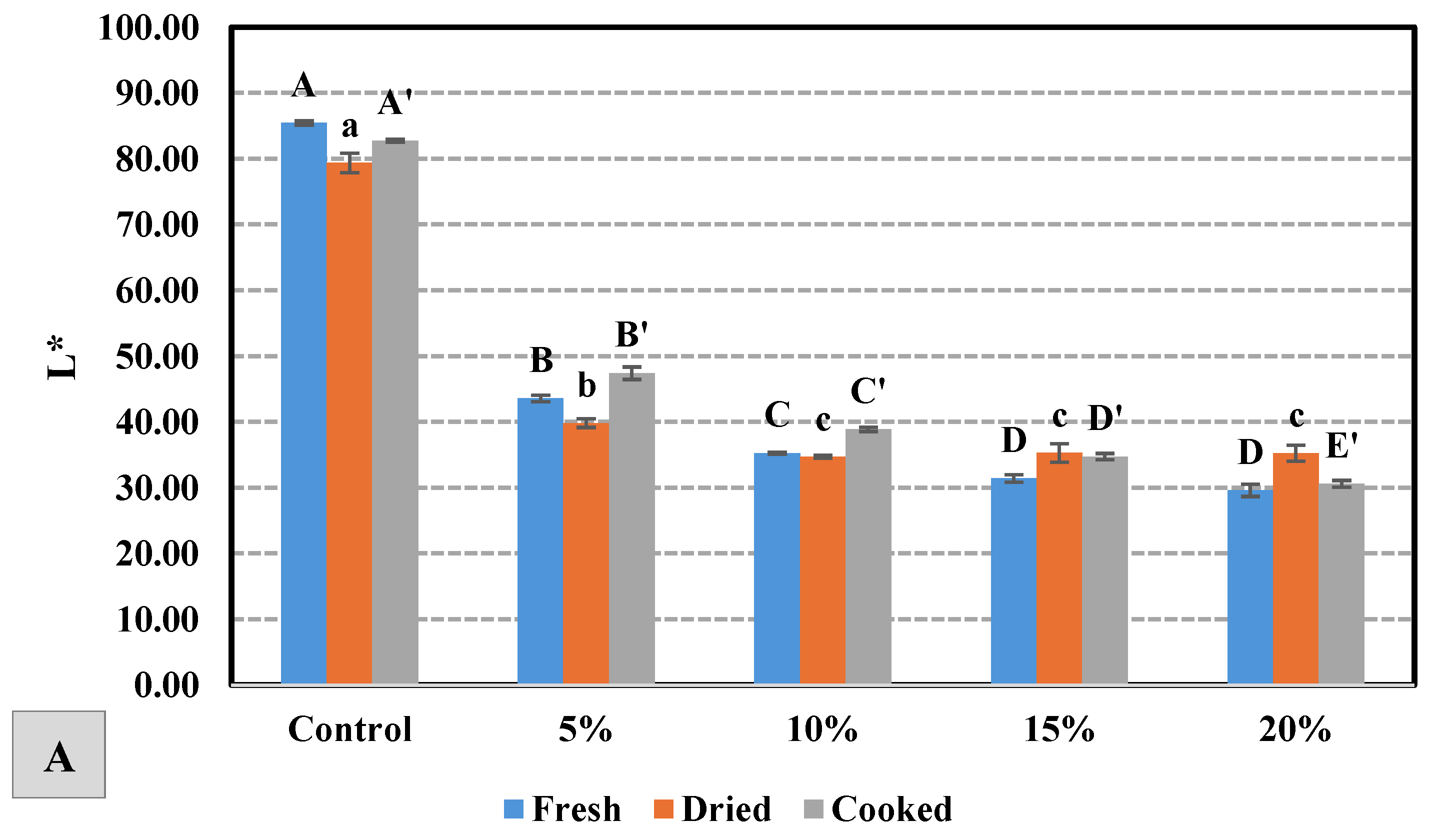
Figure 1. Color properties of beetroot enriched pasta samples (0–20% substitution), (A) L*: lightness, (B) a*: red/green value, (C) b*: blue/yellow value. Data are presented as mean (n = 3) ± standard deviation, means on the same bar with different letters are significantly different (Tukey test; p ≤ 0.05).
Recycling 10 00217 g001aRecycling 10 00217 g001b
Figure 2. Total phenolic content (TPC) of beetroot enriched pasta samples (0–20% substitution). Data are presented as mean (n = 3) ± standard deviation, means on the same bar with different letters are significantly different (Tukey test; p ≤ 0.05).
Recycling 10 00217 g002
Figure 3. Antioxidant activity (AA) of beetroot enriched pasta samples (0–20% substitution). Data are presented as mean (n = 3) ± standard deviation, means with different letters are significantly different (Tukey test; p ≤ 0.05).
Recycling 10 00217 g003
Figure 4. Total betalain content (TBC) of beetroot enriched pasta samples (5–20% substitution). Data are presented as mean (n = 3) ± standard deviation, means on the same bar with different letters are significantly different (Tukey test; p ≤ 0.05).
Recycling 10 00217 g004
Figure 5. Textural properties of beetroot enriched pasta samples (0–20% substitution), (A) hardness, (B) cohesiveness, (C) springiness, (D) adhesion. Data are presented as mean (n = 3) ± standard deviation, means with different letters are significantly different (Tukey test; p ≤ 0.05).
Recycling 10 00217 g005
Figure 6. (A) graphical display of sensory attributes based on quantitative descriptive analysis of the beetroot stalk fortified pasta (0–15% substitution) and (B) Overall acceptability scores. Asterisks (*) indicate mean values.
Recycling 10 00217 g006
Table 1. Cooking properties of beetroot stalk enriched pasta samples.
Substitution Level (%)Moisture Content (%)Cooking Loss (%)Swelling Index (%)Water Adsorption (%)
FreshCooked
Control-035.44 ± 1.72 a63.08 ± 2.28 a5.39 ± 0.97 a171.53 ± 16.64 a169.90 ± 4.97 a
536.41 ± 0.55 ab65.98 ± 1.84 a6.65 ± 0.26 ab194.60 ± 16.47 ab168.00 ± 6.61 a
1037.55 ± 1.08 bc66.17 ± 1.88 ab6.51 ± 0.88 ab196.24 ± 17.04 ab170.07 ± 12.55 a
1538.43 ± 0.13 cd68.74 ± 1.29 bc8.02 ± 0.67 b220.26 ± 13.43 bc170.00 ± 1.97 a
2039.50 ± 0.75 cd70.42 ± 1.22 c10.50 ± 0.48 c238.50 ± 14.00 c184.00 ± 5.40 b
Data are presented as mean (n = 3) ± standard deviation, means of the same parameter with different letters are significantly different (Tukey test; p ≤ 0.05).
Table 2. Total color variation index (ΔE) of enriched pasta samples with varying (BS) substitution levels.
Substitution Level (%)Total Color Variation Index (ΔΕ)
FreshDriedCooked
Control-0---
554.48 ± 0.86 a51.27 ± 0.56 a39.18 ± 0.87 a
1060.50 ± 0.11 b55.70 ± 1.62 a47.51 ± 0.32 b
1562.79 ± 0.53 c55.46 ± 2.41 a51.24 ± 0.76 c
2064.40 ± 0.84 c54.70 ± 1.78 a55.07 ± 0.67 d
Data are presented as mean (n = 3) ± standard deviation, means of the same sample (fresh, dried, cooked) with different letters are significantly different (Tukey test; p ≤ 0.05).
Disclaimer/Publisher’s Note: The statements, opinions and data contained in all publications are solely those of the individual author(s) and contributor(s) and not of MDPI and/or the editor(s). MDPI and/or the editor(s) disclaim responsibility for any injury to people or property resulting from any ideas, methods, instructions or products referred to in the content.