1. Introduction
Ethiopia’s economic growth depends heavily on a reliable road transportation network. However, the country’s high road traffic fatality rate of 28.2 per 100,000 population poses a serious threat to this essential infrastructure [
1]. According to the 2024 annual crash report of the Ethiopian Federal Police Commission, a total of 46,571 road crashes were recorded, of which 6914 (14.85%) involved heavy goods vehicles (HGVs), underscoring the disproportionate safety burden associated with freight transport. HGV-related crashes primarily resulted in property damage, accounting for 5106 cases (73.85%); however, injury and fatal outcomes were also substantial. Minor injuries were reported in 457 cases (6.61%), severe injuries in 636 cases (9.20%), and fatal crashes accounted for 715 cases (10.34%) [
2]. These figures highlight the urgent need for comprehensive measures to improve road safety, particularly for long-distance truck drivers operating on high-risk freight routes. One such route is the Addis Ababa-Djibouti corridor (see
Figure 1), Ethiopia’s most critical freight artery. This corridor carries approximately 95% of the country’s international trade and is recognized as a high-risk zone for road crashes, underscoring the need for effective, evidence-based safety interventions [
1]. Because this corridor serves as Ethiopia’s primary gateway to the sea and global markets via the Port of Djibouti, directly linking the landlocked interior to international supply chains, ensuring safety along this route has far-reaching national and regional economic implications [
3]. Recent research by Tulu et al. [
4,
5] emphasizes the significant role of driver behavior in heavy vehicle crashes in Addis Ababa. The 2020 study emphasizes the need for stricter driver training and certification, while the 2022 findings point to broader systemic shortcomings, including the absence of a lead road safety agency, the need for strengthened legislation, increased funding, and the development of a comprehensive crash database.
The current Ethiopian licensing system for HGV operators stipulates a minimum educational requirement of tenth grade and varying age limits depending on vehicle type. Although periodic refresher training is not mandatory, drivers are required to renew their licenses every four years, with more frequent renewals for those aged 55 and older. Medical examinations are required both for initial licensing and for license renewal [
6]. While initial training requirements are in place, the absence of mandatory ongoing training may contribute to a gradual decline in driver competency over time [
7].
In Ethiopia, empirical evidence on HGV drivers’ perceptions of existing safety training and their readiness to engage with digital learning tools remains limited, particularly along high-risk freight corridors of strategic economic importance. Improving HGV safety on these routes is therefore not only a road safety priority but also a national development and logistics security imperative. A theory-inspired reapproach with inclusion of frameworks such as the Technology Acceptance Model, the Theory of Planned Behavior, and Self-Determination Theory, provides a conceptual canvas for understanding drivers’ motivation, social influences, and technology acceptance (see
Section 2.3 for more details). Accordingly, this study examines the effectiveness of current training programs, explores drivers’ openness to technology-enhanced interventions, and identifies key crash-related factors. The findings aim to inform evidence-based policy and guide the design of scalable, context-sensitive safety training strategies for Ethiopia’s freight transport sector.
2. Literature Review
2.1. Road Safety of HGV Operators: Can Education and Training Help?
The effectiveness of professional driver education and training remains a subject of debate. Although structured training programs for heavy goods vehicle (HGV) operators have existed for decades [
8], their impact on safety outcomes is not always clear. Early studies in the United States sought to evaluate structured training methodologies such as the Smith-Cummins-Sherman (SCS) method, which emphasized the development of systematic risk perception and response strategies. Payne and Barmack [
9] found that drivers trained under this method by a particular instructor had significantly fewer crashes than those taught by other instructors. While some interpreted these findings as evidence that the SCS method enhanced occupational safety, later analyses by the OECD and Saffron [
10,
11] argued that the observed benefits were likely attributable to the instructor’s influence rather than the training method itself.
Defensive driving courses emerged as another prominent approach. Early studies in the United States suggested that reductions in crash rates were primarily due to rigorous employee selection rather than the training itself [
12], with similar conclusions reported in Australia [
13]. Henderson [
14] highlighted the scarcity of rigorous empirical evidence supporting the effectiveness of HGV driver training, despite sustained enthusiasm from policymakers, fleet managers, and safety professionals. Nevertheless, the importance of training continues to be emphasized in both policy and research, even in the absence of strong empirical validation [
8,
15,
16].
More recent studies suggest that training can enhance specific competencies, although innovative delivery approaches may be required to achieve lasting behavioral change. Higher levels of education among drivers have been associated with reduced unsafe behaviors, indicating that structured interventions can improve safety outcomes [
17]. Similarly, eco-driving e-learning modules have been shown to enhance fuel efficiency and safety behaviors, highlighting the potential of digital training to complement traditional methods [
18]. Overall, the mixed effectiveness of conventional HGV training highlights the importance of instructional quality, learner engagement, and motivation, underscoring the need for integrating technology and behavioral science in driver education.
2.2. The Potential of E-Learning
E-learning broadly refers to the delivery of education through digital technologies across various platforms and devices, including web-based modules, interactive videos, and mobile applications [
19,
20]. It enables learners to access content remotely, progress at their own pace, and interact with instructors and peers, thereby supporting individualized and interactive learning experiences [
21].
Innovative digital approaches address several shortcomings identified in the traditional training literature, including the need for structured instructional design, stronger learner engagement, and flexible delivery formats [
14,
22]. Studies by Knipling et al. [
16] p. 50 and Schulte et al. [
23] p. 47 demonstrate that digital platforms can enhance learning through the use of modular content, quizzes, or interactive tasks. Lang et al., [
24] pp. 44–50 further emphasize that e-learning enables tailored instruction, interactive learning experiences, and flexible pacing, features that are associated with improved engagement and knowledge retention.
Systematic reviews have consistently shown that e-learning can be as effective as, or in some contexts more effective than, traditional classroom instruction [
25]. Reported benefits include reduced training costs, standardized content delivery across locations, increased accessibility, and enhanced trainee engagement using multimedia tools [
8,
26]. Moreover, interactive e-learning, including simulation-based programs, has been shown to significantly improve both cognitive and behavioral outcomes by enhancing hazard perception and decision-making among professional drivers [
27,
28].
E-learning has demonstrated the potential to improve drivers’ knowledge, safety awareness, and performance, including regulatory compliance and communication skills [
29,
30]. However, existing research suggests that while knowledge gains are achievable, achieving sustained behavioral change requires the integration of motivational strategies, ongoing engagement support, and reinforcement mechanisms to ensure the long-term adoption of safe driving practices [
31,
32].
2.3. Behavioral Models for Understanding E-Learning Adoption
Training effectiveness depends not only on instructional content delivered but also on the psychological processes that govern drivers’ willingness to learn, engage, and apply new behaviors. Several behavioral models help explain why learners adopt digital training and how such training influences behavior. The Technology Acceptance Model (TAM) emphasizes perceived ease of use and perceived usefulness as key predictors of engagement with digital learning systems [
33,
34,
35,
36]. Studies from developing countries indicate that when learners perceive e-learning systems as easy to navigate and relevant to their tasks, their intention to use these systems increases substantially [
37,
38].
Recent empirical studies have reinforced the applicability of TAM, demonstrating that perceived ease of use (PEOU) positively influences perceived usefulness (PU), which in turn leads to more favorable attitudes toward e-learning and stronger behavioral intentions to use it [
34,
39]. Additional findings show that perceived enjoyment enhances both PEOU and PU, further promoting engagement with e-learning platforms [
40].
The Theory of Planned Behavior (TPB) proposes attitudes, subjective norms, and perceived behavioral control as key determinants of behavioral intentions related to training participation [
41]. Evidence from e-learning research indicates that learners’ beliefs about social expectations and their own ability to complete online tasks indeed strongly influence adoption decisions [
42,
43]. Further expanding on this, TPB highlights that individuals’ intentions are shaped by perceived social pressure and confidence in one’s ability to perform a behavior, including digital learning [
44]. E-learning studies further show that supportive norms and strong perceived behavioral control significantly enhance adoption, suggesting that heavy vehicle drivers’ willingness to engage in e-learning may depend on exposure to positive workplace norms and confidence in digital competence [
45].
Self-Determination Theory (SDT) complements these models by emphasizing intrinsic motivation, proposing that learners are more likely to engage with training when their needs for autonomy, competence, and relatedness are met [
46]. Integrating SDT with TAM-based models [
47] suggests that when e-learning environments support drivers’ autonomy and foster a sense of competence, intrinsic motivation and deeper learning are more likely to occur, thereby enhancing the likelihood that safety principles are applied in real-world driving. These insights reinforce arguments that lasting behavioral change requires motivational design elements beyond the mere transmission of knowledge alone [
31,
32].
Research also demonstrates that satisfying needs for autonomy, competence, and relatedness in digital environments enhances persistence and meaningful skill application [
48]. Integrative perspectives indicate that combining SDT and TAM can foster deeper engagement and long-term retention of safety practices among professional drivers [
49,
50]. In summary, behavioral models offer a robust theoretical foundation for designing e-learning interventions that not only convey knowledge but also foster engagement, intrinsic motivation, and practical application, thereby addressing the limitations of traditional HGV training.
2.4. E-Learning in Low-And Middle-Income Countries (LMICs)
E-learning implementation in low- and middle-income countries (LMICs) faces unique challenges that differ significantly from those in high-income settings. Contextual adaptation remains a critical challenge, as most existing e-learning studies originate from developed countries with well-established training infrastructures, whereas sub-Saharan Africa faces distinct barriers, including limited technological access and different road safety risk profiles. Gudugbe et al. [
51] noted that road traffic injuries disproportionately affect LMICs, yet interventions tailored to these contexts often lack rigorous evaluation. This gap is particularly evident in Ethiopia, where structured e-learning interventions for HGV drivers remain scarce despite increasing safety concerns.
Motivational design represents another under-explored area. Jones et al. [
52] found that behavior change strategies such as goal setting and feedback are often underutilized, despite their importance. Michelaraki et al. [
53] showed that combining risk profiling with personalized training can improve outcomes, suggesting that e-learning interventions grounded in TAM, TPB, and SDT and tailored to driver risk profiles may enhance training relevance and effectiveness.
Moreover, evidence from global road safety research indicates that drivers in LMICs face substantially higher crash risks than their counterparts in high-income countries, largely due to systemic factors such as limited enforcement, inadequate training systems, and weaker institutional coordination [
1,
54,
55]. These broader structural challenges reinforce the need for e-learning platforms that are not only digitally accessible but also contextually adapted to the realities of LMIC transportation environments.
Given that annual crash involvement rates among HGV drivers in LMICs, such as those observed along Ethiopia’s Addis Ababa–Djibouti corridor, exceed global averages [
1,
55], e-learning solutions must address both behavioral and environmental risk factors. Integrating established behavioral frameworks, including TAM, TPB, and SDT, into e-learning design may help bridge the persistent gap between training provision and real-world safety outcomes in these settings. E-learning in LMICs, therefore, requires careful adaptation to local infrastructure, risk contexts, and learner needs, with particular attention to motivational design elements and the integration of behavioral theory.
2.5. Onboard Monitoring and E-Learning
On-board safety monitoring (OSM) systems comprise in-vehicle technologies that continuously record drivers’ performance, capturing metrics such as acceleration, braking, steering behavior, headway distance, and speeding. Research in fleet safety management has demonstrated that integrating OSM technology with personalized driver feedback and coaching interventions can enhance the safety performance of HGV operators [
56,
57]. Hickman and Hanowski [
58] reported a 38.1% reduction in safety-critical incidents and a 59.1% decline in severe events when OSM technology was combined with targeted coaching interventions. Similarly, Mase et al. [
59] found that coaching reduced driver errors, while OSM lowered both errors and traffic violations.
Despite evidence that OSM combined with coaching holds promise, a notable limitation is the burden placed on managers and coaches, including increased administrative workload and the need for timely, individualized feedback. Camden et al. [
60] examined the potential of automatically assigned web-based instruction (WBI) to alleviate this burden. Advances in OSM systems now enable the use of performance data to automatically assign personalized training modules. Camden et al. [
60] found that targeted WBI reduced risky driving behaviors, but suggested that the key mechanism was not the instructional content itself, but rather the implicit goal setting and heightened accountability created by being assigned to a module. OSM systems provide valuable performance data for personalized digital training, reducing managerial burden and improving safety outcomes. Integrating OSM with behaviorally and motivationally designed e-learning may therefore maximize training effectiveness.
3. Research Gap and Study Objectives
Research conducted in Addis Ababa by Tulu et al. [
5] highlights the need for improved driver training as a critical strategy for reducing heavy vehicle crashes. Furthermore, concerns have been raised regarding the gradual deterioration of driver competence under the current Ethiopian licensing system, which requires initial training but lacks mandatory ongoing refresher requirements, thereby increasing the risk of skill degradation over time [
7]. The European Union (EU) model provides useful insights in this regard. Commercial HGV drivers in the EU must meet uniform requirements outlined in EU regulations [
61] including the completion of regular training to obtain a Certificate of Professional Competence (CPC). This system ensures that drivers remain up to date with legislation and reinforces safe driving practices. Notably, the EU framework demonstrates that e-learning can be successfully integrated into professional driver training, offering a flexible and accessible approach that could be adapted to the Ethiopian context. However, for e-learning programs to be effective, it is essential to understand driver perceptions of e-learning and the specific challenges associated with its adoption [
62,
63]. Such evidence is currently lacking in Ethiopia. Moreover, research on African driver behavior often focused on problem identification rather than solution-oriented interventions [
64].
This study addresses these gaps by examining the perspectives of Ethiopian HGV drivers on road safety and safety-oriented measures. The specific objectives are as follows:
Objective 1 (O1): To explore the extent to which HGV drivers operating on the Djibouti corridor are interested in, and have been previously exposed to, safety training initiatives.
Objective 2 (O2): To identify potential barriers to adopting e-learning and factors that may motivate or persuade HGV drivers operating on the Djibouti corridor to utilize e-learning for safety education.
Objective 3 (O3): To identify the most important safety management problems within the companies employing HGV drivers operating on the Djibouti corridor that these drivers confront.
Objective 4 (O4): To identify the most prominent risk factors and typical driving challenges encountered by HGV drivers operating on the Djibouti corridor.
Collecting HGV driver viewpoints will inform the development of effective strategies to enhance safety for long-distance truck drivers in Ethiopia. Policymakers can use the study findings to develop evidence-based road safety regulations that support the integration of e-learning and targeted interventions. Training organizations can utilize these insights to design e-learning courses that are engaging, relevant, and tailored to the operational needs of HGV drivers.
4. Conceptual Framework
The present study is primarily exploratory. However, its objectives are informed by concepts drawn from three well-established theoretical models widely used in digital learning and behavior-change research, namely the Technology Acceptance Model (TAM), the Theory of Planned Behavior (TPB), and Self-Determination Theory (SDT). These theories are not directly tested; rather, they provide an interpretive lens for understanding the barriers, motivators, and perceptions of safety training among Ethiopian HGV drivers. Together, TAM, TPB, and SDT offer a coherent conceptual foundation for explaining how drivers perceive, accept, and are motivated to engage with safety-oriented e-learning.
From a TAM perspective, two key constructs, perceived usefulness (PU) and perceived ease of use (PEOU), influence drivers’ intention to adopt e-learning. Drivers who believe that e-learning will improve their driving competence or help prevent crashes (PU) and who perceive the technology as simple and accessible (PEOU), are more likely to express positive attitudes toward its use. These constructs are directly related to O2, which explores barriers to and motivators for e-learning adoption, and informs how factors such as education level and age might shape perceived usefulness and ease of use. TAM also relates to O4, as identifying the most prominent risk factors and driving difficulties faced by HGV drivers helps clarify which safety challenges are most salient to drivers. Addressing these real-world risks within e-learning content is likely to enhance perceived usefulness, thereby strengthening drivers’ acceptance of technology-enhanced safety training.
The TPB framework expands this perspective by incorporating subjective norms (SN) and perceived behavioral control (PBC). This theoretical framing is relevant to O1 and O2, as it suggests that prior exposure to training, organizational expectations, peer influence, and drivers’ sense of control or capability may shape attitudes toward participation in safety education, whether delivered through traditional or digital formats. TPB therefore supports a conceptual understanding of how drivers’ social and behavioral contexts may influence their readiness to engage in e-learning.
Additionally, SDT emphasizes the importance of autonomy, competence, and relatedness in promoting motivation. This theoretical lens aligns with O2 and O3, offering insight into how the satisfaction or frustration of basic psychological needs may influence drivers’ engagement with safety initiatives and their perceptions of company safety practices. SDT helps position motivation as a central mechanism in understanding how drivers interact with both conventional safety management systems and emerging digital learning tools. Collectively, these three models provide complementary perspectives that structure the interpretation of Ethiopian HGV drivers’ experiences, safety perceptions, and readiness for digital learning.
5. Materials and Methods
5.1. Designs and Ethics
This study employed a cross-sectional survey design using a paper-and-pencil version of a structured, self-administered questionnaire. Formal ethical approval was obtained from the Social-Societal Ethics Committee (SMEC) at Hasselt University, under reference code 2022-2023/57/IMOB-Habekirstos. All participants provided written informed consent prior to participation, confirming their willingness to take part in the study. Participants were informed that their privacy and rights would be protected and that participation was voluntary, with the option to withdraw at any time. Recruitment was conducted through relevant industry stakeholders, ensuring the inclusion of drivers via established companies in accordance with ethical procedures.
5.2. Sampling and Recruitment
This study targeted long-haul HGV drivers operating along the Addis Ababa- Djibouti corridor in Ethiopia. For recruitment, the principal researcher contacted the Ministry of Transport and Logistics to obtain a list of registered transport companies. From this list, twenty-five companies were selected using a random sampling technique, ensuring a diverse range of operational perspectives based on fleet size and service locations. An invitation letter detailing the study and requesting participation was sent to each company. Twelve companies agreed to participate, each delegating their fleet safety manager as a representative. The fleet safety managers subsequently invited 15 and 25 drivers from their respective companies to participate in the study. In total, 202 male HGV drivers completed the survey. The sample included drivers across a range of age groups, levels of driving experience, and route classifications. Sample adequacy was determined using Cochran’s formula (see below) [
65,
66]:
where
n represents the required sample size,
Z is the value corresponding to a 95% confidence level (1.96),
p and
q represent the population proportions (both set at 0.5 for this study), and
E denotes the maximum allowable estimation error, fixed at 7%. Based on this calculation, the minimum required sample size was 196 drivers. The achieved sample of 202 respondents slightly exceeds this threshold, providing adequate statistical power for both descriptive and inferential analyses while allowing for potential missing responses.
5.3. Procedure for Data Collection
Fleet safety managers distributed the questionnaire, along with a cover letter explaining the study objectives, to ensure that participants provided written informed consent before completing the survey anonymously. Participants were encouraged to take their time and ask any questions if necessary. Completing the questionnaire took an average of 15 to 20 min. Participation was entirely voluntary and anonymous. Data collection took place between August 2022 and April 2023, spanning a nine-month period. The procedure also ensured that variables relevant to the conceptual framework, such as perceived barriers, motivators, and digital capability, were captured consistently and reliably across respondents.
5.4. Questionnaire Design
The questionnaire was developed based on prior research on commercial vehicle driver safety practices [
15,
16] and aligned with the study’s objectives. Guided by the three conceptual frameworks discussed earlier, the questionnaire included items reflecting TAM-related constructs (e.g., perceived usefulness, perceived ease of use through barriers and motivators), TPB-related concepts (e.g., perceived behavioral control via digital skills and access constraints; subjective norms through company support), and SDT-related motivational elements (e.g., autonomy reflected in flexibility preferences, competence through digital readiness, relatedness through attitudes toward organizational recognition). The questionnaire consisted of 26 questions in total. The Background Information section (Questions 1–10) collected demographic data, including age, gender, driving experience, typical routes driven, and current licensing status. The Perceptions of Safety Management section (Question 11) examined drivers’ views on the most important issues or problems that need addressing in safety management procedures. The Previous Safety Training Experiences section (Questions 12–19) examined drivers’ exposure to safety training programs, including training formats, the perceived effectiveness of the content, and the overall value. The Drivers’ Motivations and Preferences for Future Safety Training section (Questions 20–21) assessed drivers’ reasons for wanting to participate in future safety training and their preferred methods of delivery. The Reasons for Training Preferences section (Question 22) allowed respondents to elaborate on their answers to Question 21, providing deeper insight into their preferences. The Adoption Barriers for E-Learning section (Question 23) used an open-ended question to explore potential difficulties drivers might encounter when using e-learning platforms for safety education. Similarly, the E-learning Implementation Motivators section (Question 24) employed an open-ended question to identify factors that could encourage drivers to engage in e-learning initiatives. Finally, the Safety Risks and Challenges section (Questions 25–26) consisted of open-ended questions that enabled drivers to identify the most significant risks and challenges they face when driving.
Importantly, motivators and barriers were initially collected using open-ended questions to capture rich and nuanced responses. These responses were subsequently analyzed and coded into thematic categories for both quantitative and qualitative analysis. The coding framework was informed by previous literature and expert consultation, ensuring that the identified categories accurately reflected drivers’ perspectives. The questionnaire was developed in Amharic, the official language of Ethiopia, to maximize comprehension and response accuracy. A complete version of the questionnaire is provided in
Appendix A.
5.5. Data Analysis
Data were analyzed using IBM SPSS Statistics (version 28). Descriptive statistics were computed to summarize sample characteristics and item-level responses. Frequencies and percentages were reported for nominal variables, such as reported barriers and motivators, while medians and interquartile ranges (IQRs) were used for ordinal measures, including compliance-challenge ratings assessed on a 1–7 scale.
Inferential analyses were conducted to examine associations and group differences across demographic and behavioral variables. Chi-square tests of independence were used to assess associations between nominal variables (e.g., training delivery preferences) and demographic characteristics, including age, educational background, work experience, and crash involvement history. Where significant associations were identified, standardized residuals were examined to determine their sources, and Cramer’s V was reported as the effect size. Relationships between ordinal or continuous variables, such as years of work experience and compliance-challenge ratings, were examined using Spearman’s rank-order correlation coefficients (ρ), with corresponding p-values and sample sizes reported. Group differences in ordinal outcomes, including compliance-challenge ratings across age groups or crash history categories, were analyzed using the Kruskal–Wallis H test. When significant differences were detected, post hoc pairwise comparisons with Bonferroni-adjusted p-values were performed, and η2 effect sizes were reported.
Binary logistic regression was employed to model a binary crash outcome (crash involvement: yes/no), with predictors including training exposure, barriers, and motivators included as appropriate. Odds ratios (ORs), 95% confidence intervals, and p-values were reported for all predictors. Poisson regression was used to model the count of crashes in the past 12 months, with overdispersion evaluated using Deviance/df and Pearson χ2/df statistics. If overdispersion had been present, a Negative Binomial model would have been used. For ordinal crash severity outcomes (no crash, property damage, injury), ordinal logistic regression was conducted, with the proportional odds assumption tested using the test of parallel lines. Across all analyses, assumptions were checked and reported where relevant, and the alpha level was set at p < 0.05 for statistical significance.
6. Results
6.1. Demographics and Driving Experience
A total of 202 male HGV drivers who had driven on the AA-Djibouti Corridor participated in the study.
Table 1 presents a summary of participants’ demographic characteristics and driving experience. The largest proportion of participants (46.5%) were aged 41–50 years, followed by those aged 31–40 years (25.2%) and 51–60 years (24.3%); only 4% were aged 18–30 years. The modal age category was 41–50 years. In terms of educational attainment, 51.4% of participants had completed Grade 10, 35.1% had completed Grade 12, and 13.4% held a diploma. Regarding driving experience, most drivers reported 11–20 years of experience (45%), followed by 1–10 years (32.7%) and 21–30 years (22.3%).
6.2. Crash Involvement
The survey results on crash experience over the past 12 months showed that 24.8% of respondents (n = 50) reported at least one collision. Of these incidents, 86% resulted in property damage only, while 14% involved minor injuries. Examination of the relationship between crash involvement and driver characteristics, specifically work experience and educational background, suggested higher crash involvement among mid-career drivers, with no clear or consistent pattern across educational levels. Drivers with 11–20 years of experience accounted for the largest proportion of crashes (32.1%), followed by those with 21–30 years of experience (17.7%) and 1–10 years of experience (16.7%). Educational background showed a less consistent pattern, with 29.6% of crashes reported by drivers with a 12th-grade education, 25.9% by those holding a diploma, and 21.2% by those with a 10th-grade education.
Chi-square analyses were conducted to further examine associations between crash involvement and driver characteristics. The analyses were performed in three stages: (1) descriptive crash counts and chi-square tests of association, (2) a Poisson regression treating crash count as a numerical outcome, and (3) a binary logistic regression treating crash involvement as a dichotomous variable (crash vs. no-crash). Each model is reported separately below, including the predictors entered, tested variable combinations, and relevant goodness-of-fit statistics.
Results of the chi-square tests indicated that driving experience was significantly associated with crash involvement, χ2(2, N = 202) = 7.73, p = 0.021, Cramer’s V = 0.196, indicating that mid-career drivers (11–20 years of experience) were more likely to report crashes. In contrast, no significant associations were found for education level, χ2(2, N = 202) = 1.63, p = 0.443, Cramer’s V = 0.09, or prior safety training, χ2(1, N = 202) = 0.29, p = 0.591, Cramer’s V = 0.038 .
A Poisson regression analysis was then conducted to examine whether work experience predicted the number of crashes reported by heavy vehicle drivers in the past 12 months (Model 1). Crash count was specified as the dependent variable, with work experience entered as the sole predictor. No additional predictors were included to avoid overfitting, given the small number of crash events. Model diagnostics indicated acceptable fit, with deviance and Pearson chi-square statistics suggesting no evidence of overdispersion (Deviance/df = 1.18, Pearson χ
2/df = 0.89). Goodness-of-fit indices (AIC, BIC, CAIC) are presented in
Table 2.
Next, a binary logistic regression was conducted to examine predictors of crash involvement among heavy goods vehicle (HGV) drivers (Model 2). All available categorical predictors, namely age, work experience, educational background, and participation in prior safety training, were entered simultaneously. Interaction terms were not included due to the limited number of crash cases and to maintain model stability. The full model was statistically significant, χ2(5) = 11.97, p = 0.035, indicating that the predictors collectively distinguished between drivers who had and had not experienced crashes. However, the model’s performance was weak, explaining only 5.8–8.5% of the variance (Cox and Snell R2 = 0.058; Nagelkerke R2 = 0.085) and demonstrating very low sensitivity (4%), despite relatively high overall classification accuracy (73.8%). These results indicate that although the model was statistically significant overall, its ability to correctly identify crash-involved drivers was poor; therefore, its predictive value is limited.
As shown in
Table 3, age was the only statistically significant predictor, B = 0.982, SE = 0.324, Wald = 9.21,
p = 0.002. The odds of reporting a crash increased by a factor of 2.67 (95% CI [1.42, 5.04]) for each one-unit increase in age. Work experience (
p = 0.083) and having a 12th-grade education (
p = 0.058) showed marginal effects, suggesting fewer crashes with greater experience and higher education attainment, although these associations did not reach conventional levels of statistical significance. Participation in prior safety training was not significantly associated with crash involvement (
p = 0.162). Given the low proportion of explained variance and poor sensitivity, the observed age effect should be interpreted with caution. Moreover, several important potential confounders were not measured (e.g., annual mileage, exposure hours, night driving frequency, fatigue, and fleet safety culture), which limits the causal interpretation of the findings.
6.3. Driver Safety Training
Responses to the section on ongoing driver safety training indicated that all respondents considered safety training to be essential. Notably, 119 individuals reported having attended more than one safety training session during their careers, accounting for 64.9% of those who had received any form of safety training. However, 35.1% of participants reported that they had either never received any safety training or had not participated in such training for a long period. This disparity highlights the unequal access to safety training opportunities among the surveyed drivers. All participants who reported having received safety training indicated that the training was delivered in a classroom setting.
Further investigation revealed that 26 participants attended training programs offered by other organizations, primarily governmental institutions, while 105 participants received training at the request of their respective enterprises. These results underscore the predominant use of classroom-based instruction and highlight the important roles that both employers and governmental organizations play in supporting driver safety education. Regarding satisfaction with safety training, 67.2% of respondents reported that their most recent training session was at least somewhat interesting. An additional 25.2% stated that they enjoyed the training, and 6.9% found it engaging, while only 0.8% reported that the training was uninteresting.
Drivers’ perspectives on the training indicated that most participants did not find the course long or boring and generally considered the content satisfactory. The motivational approach received a slightly higher mean score (M = 2.07), suggesting some participants found the instructional methods less engaging. Mean scores ranged from 1.92 to 2.07 on a five-point Likert scale (1 = strongly disagree, 5 = strongly agree), with standard deviations of 0.97–1.05, indicating moderate variability in perceptions. Despite this, 81.2% of participants reported finding the training at least somewhat interesting, reflecting an overall positive evaluation.
As illustrated in
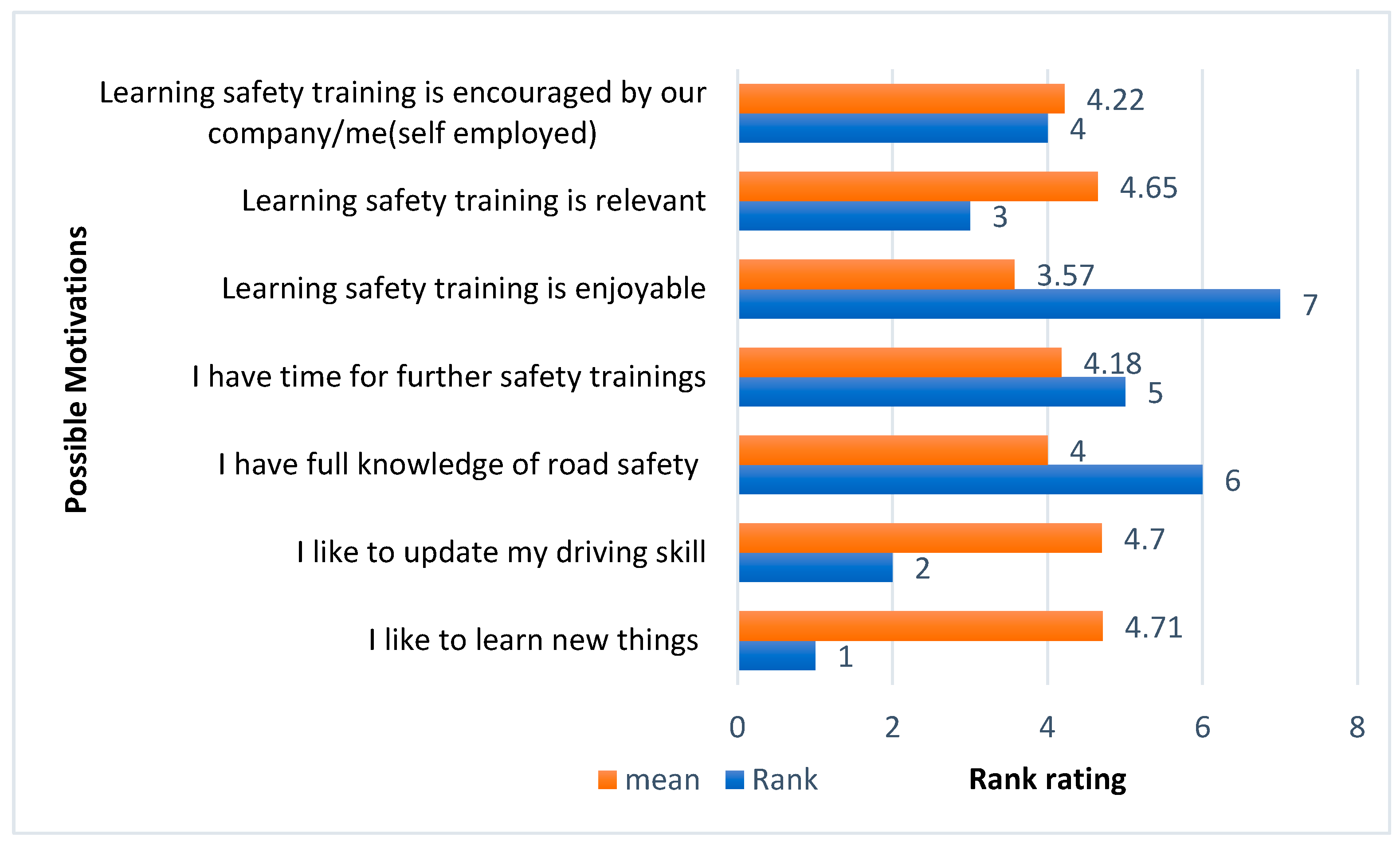
Figure 2, all participants expressed a strong willingness to attend additional safety training sessions in the future. This motivation was driven by three key factors, namely the need to improve their driving skills, the desire to learn new things, and the belief that safety training is essential for daily job performance. Additional motivating factors included encouragement from employers, the availability of adequate training time, and positive experiences with previous safety instruction. Participants’ responses, measured on a Likert scale ranging from 1 (Strongly Disagree) to 5 (Strongly Agree), yielded mean values that support these findings, reflecting a broadly positive attitude toward continued safety training and highlighting the potential for increased engagement in future educational initiatives.
6.4. Driver Perceptions of Safety Issues
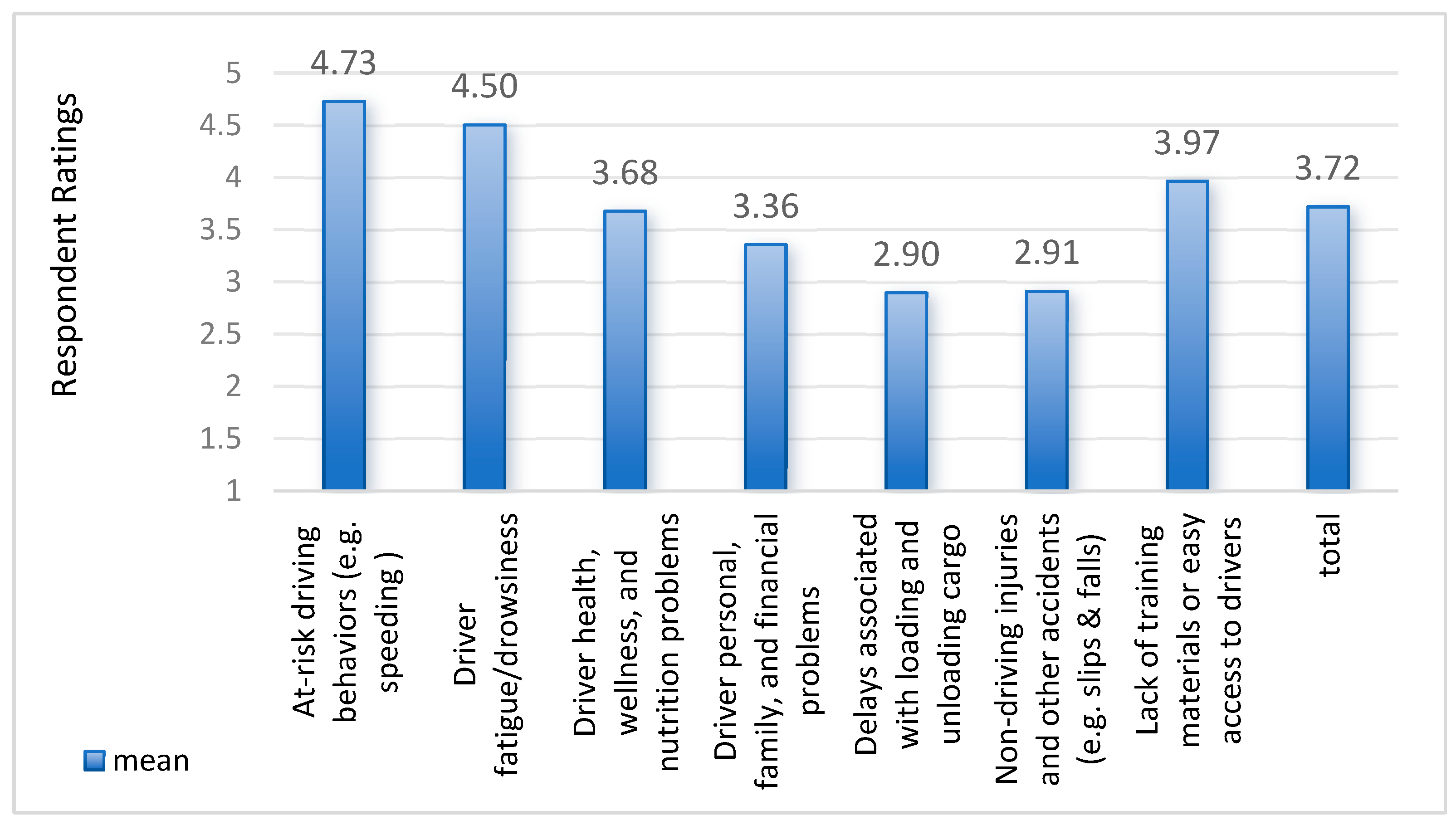
Figure 3 presents the safety concerns of HGV drivers. The two most prominent safety issues were speeding and driver fatigue, reflecting the difficulty of maintaining alertness during long-haul trips. In addition, a lack of training resources was identified as a significant concern. Interestingly, respondents also perceived their safety to be influenced by personal well-being factors, such as health and nutrition issues, as well as personal concerns related to family and financial matters. Incidents related to cargo handling and delays during loading and unloading were ranked as less problematic than other safety issues.
To examine whether perceptions of safety issues differed according to crash involvement in the past 12 months, Mann–Whitney U tests were conducted. No significant differences were observed for any of the seven safety issues, including at-risk driving behaviors (U = 3470.50,
p = 0.217), driver fatigue (U = 3536.50,
p = 0.380), and non-driving injuries (U = 3188.00,
p = 0.079). These findings suggest that recent crash history did not substantially influence drivers’ perception of safety concerns (see
Table 4).
Kruskal–Wallis H tests were performed to assess whether drivers’ perceptions of safety issues varied by educational background (10th grade, 12th grade, diploma). Significant differences were identified for several safety issues. Ratings of at-risk driving behaviors differed across education levels, H (2) = 14.53,
p < 0.001, with drivers holding a 12th-grade education rating these behaviors as more critical than those with a diploma. Driver fatigue ratings also varied significantly across groups, H(2) = 9.15,
p = 0.010, following a similar pattern. Delays associated with cargo loading and unloading differed significantly, H(2) = 6.43,
p = 0.040, with diploma holders assigning greater importance to this issue than the other educational groups. Non-driving injuries, such as slips and falls, also showed significant differences, H(2) = 13.19,
p = 0.001, with diploma holders ranking these problems as more critical than drivers with a 10th or 12th-grade education. No significant differences were observed for drivers’ health and wellness, personal, family, or financial concerns, or lack of training materials (see
Table 5). Overall, these findings suggest that educational background affects drivers’ awareness and prioritization of specific safety risks, highlighting the importance of considering educational level when designing targeted safety training interventions.
6.5. Compliance Challenges
Although the Compliance, Safety, and Accountability (CSA) program was developed by the U.S. Federal Motor Carrier Safety Administration (FMCSA) to monitor commercial motor carriers through standardized safety indicators [
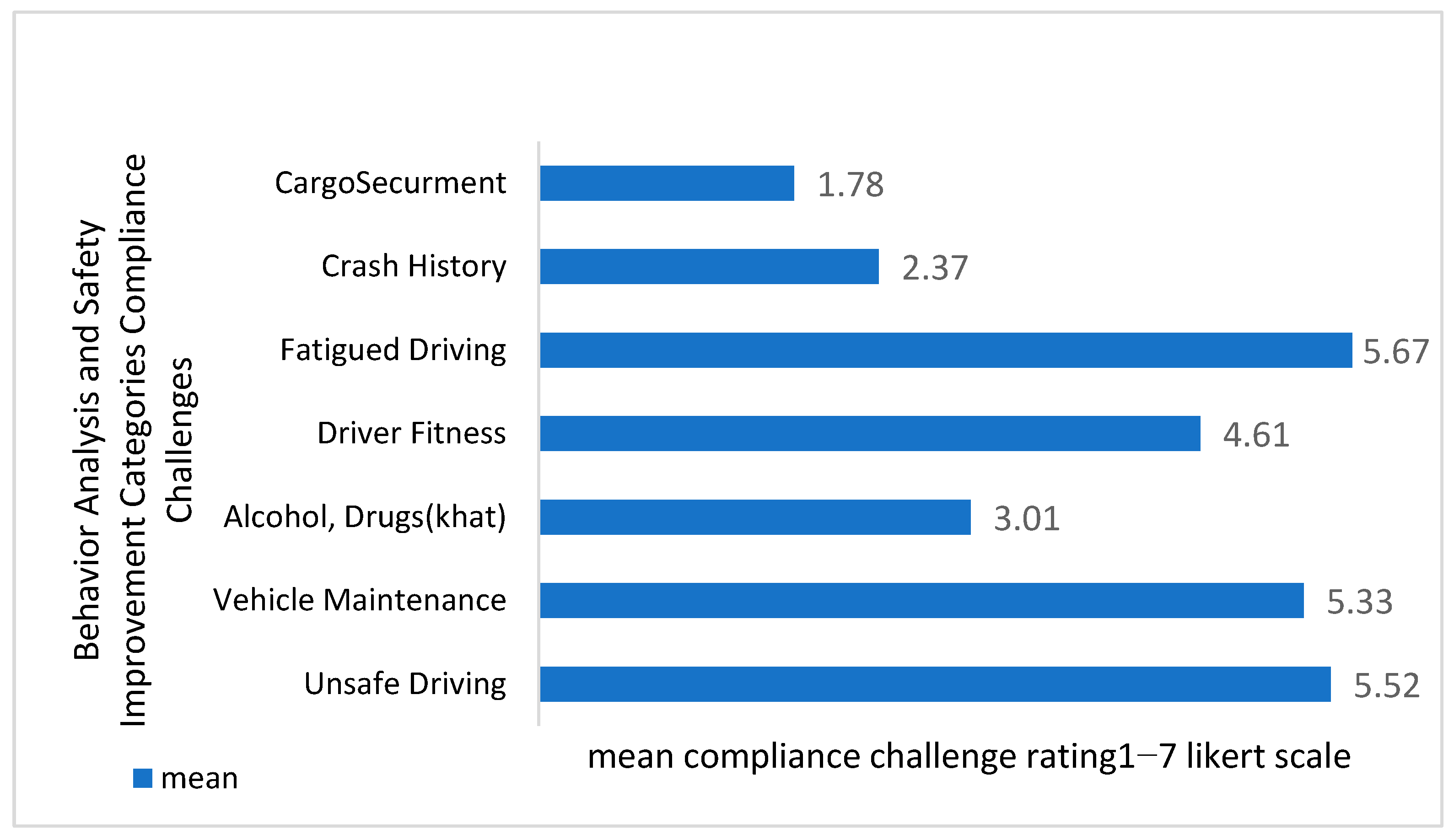
67], its seven Behavior Analysis and Safety Improvement Categories (BASICs) provide a structured framework for assessing key risk areas in freight transport systems more broadly. Applying the CSA framework in the Ethiopian context enables for a systematic evaluation of driver fatigue, unsafe driving behaviors, vehicle maintenance, driver fitness, substance use, and other safety-related factors, thereby identifying priority areas for intervention along rapidly expanding freight corridors such as the Addis Ababa–Djibouti route. The results indicated that driver fatigue was the most critical challenge, followed by unsafe driving behaviors and vehicle maintenance. Driver fitness and health ranked fourth, while substance use, particularly Khat consumption, was identified as a crucial concern and ranked fifth among compliance challenges. As shown in
Figure 4, drivers prioritized other safety challenges over cargo security. Mean Likert-scale ratings (1–7, with 7 indicating the greatest difficulty) reflected these relative challenges, with drivers evaluating seven compliance-related safety domains based on the FMCSA CSA framework.
Mann–Whitney U tests were conducted to compare the mean ranks of these safety challenges between drivers who reported a crash in the past 12 months and those who did not (see
Table 6). Unsafe driving behaviors were significantly higher among drivers who did not report a crash (U = 2866.5, Z = −2.684,
p = 0.007). No significant differences were observed between groups for vehicle maintenance, alcohol and drug use, driver fitness, fatigued driving, crash history, or cargo securement (all
p > 0.05).
Kruskal–Wallis tests were subsequently performed to examine differences in compliance challenge ratings across educational levels (10th grade, 12th grade, Diploma;
Table 7). Significant differences were found for unsafe driving (H = 9.50, df = 2,
p = 0.009), vehicle maintenance (H = 6.97, df = 2,
p = 0.031), driver fitness (H = 7.08, df = 2,
p = 0.029), and fatigued driving (H = 6.15, df = 2,
p = 0.046). In contrast, alcohol and drug use, crash history, and cargo securement did not differ significantly by educational background (
p > 0.05).
Spearman’s rho correlation analyses were conducted to examine associations between heavy vehicle driving experience and behavioral safety domains, including unsafe driving, vehicle maintenance, alcohol and drug use, driver fitness, fatigued driving, crash history, and cargo securement. Work experience was significantly and negatively correlated with unsafe driving behaviors (ρ = −0.378, p < 0.001), indicating that more experienced drivers reported fewer unsafe practices. Conversely, work experience was positively associated with driver fitness (ρ = 0.301, p < 0.001) and cargo securement practices (ρ = 0.146, p = 0.038), suggesting that more experienced drivers rated themselves higher in these safety-related behaviors. Weak and non-significant correlations were observed between work experience and vehicle maintenance (ρ = −0.123, p = 0.081), alcohol and drug use (ρ = −0.123, p = 0.081), fatigued driving (ρ = 0.110, p = 0.118), and crash history (ρ = 0.069, p = 0.331).
Further examination of interrelationships among the behavioral safety categories revealed several significant associations. Unsafe driving behaviors were strongly negatively correlated with driver fitness (ρ = −0.493,
p < 0.001) and moderately positively correlated with alcohol and drug use (ρ = 0.225,
p = 0.001). Fatigued driving was positively associated with alcohol and drug use (ρ = 0.356,
p < 0.001) and negatively associated with driver fitness (ρ = −0.339,
p < 0.001) and crash history (ρ = −0.382,
p < 0.001). Cargo securement was negatively correlated with crash history (ρ = −0.259,
p < 0.001), indicating that better cargo securing practices were associated with fewer reported crashes (see
Table 8).
6.6. Training Delivery Preferences
The results regarding preferred training delivery methods are shown in
Table 9. Classroom-based education was the most popular option (38.6%), primarily due to its perceived comfort, effectiveness in knowledge transfer, and facilitation of peer interaction. A hybrid learning approach was selected by 21.3% of drivers, reflecting its availability across multiple platforms, adaptability to different learning styles, and use of technology to overcome time constraints. E-learning appealed to 16.8% of participants, particularly those seeking learning opportunities that were independent of location or time. In addition, 14.9% of drivers favored a combination of online and mobile application-based training, citing its adaptability, user friendliness, and cross-platform compatibility.
Following the descriptive percentage analysis, chi-square tests were conducted to examine whether preferences for training delivery methods differed significantly by age, work experience, and educational background. The analysis revealed a statistically significant association between age and preferred training delivery method, χ
2(12, N = 202) = 50.45,
p < 0.001, with a moderate effect size (Cramer’s V = 0.289). Younger drivers (18–30 years) showed a marked preference for blended training approaches (e.g., classroom, internet-based, and mobile application-based learning), whereas older drivers (51–60 years) predominantly favored traditional classroom-based methods. Similarly, a significant relationship was observed between work experience and training delivery preferences, χ
2(8, N = 202) = 39.16,
p < 0.001, with a moderate effect size (Cramer’s V = 0.311). Less experienced drivers (1–10 years) tended to prefer mixed training delivery methods, while more experienced drivers (21–30 years) demonstrated a stronger preference for classroom-based learning. Educational background was also significantly associated with training delivery preferences, χ
2(8, N = 202) = 28.70,
p < 0.001, with a small-to-moderate effect size (Cramer’s V = 0.267). Participants with a 10th-grade education preferred blended learning methods, whereas diploma holders favored classroom-based instruction (see
Table 10). Overall, these findings indicate that demographic characteristics meaningfully influence drivers’ preferences for training delivery methods.
6.7. Motivating Factors for E-Learning-Safety Training
Among the reported motivators of e-learning, advocacy and awareness initiatives were cited most frequently (n = 118, 58.4%), followed by incentives for trainees upon completion (n = 27, 13.4%), and user-friendly training mechanisms (n = 24, 11.9%). Access to technology (n = 18, 8.9%) and monitoring or tracking systems (n = 15, 7.4%) were reported less commonly.
Chi-square analyses were conducted to examine the associations between reported motivators and demographic variables. No significant associations were found between motivators and age, χ
2(12, N = 202) = 15.25,
p = 0.228, or work experience, χ
2(8, N = 202) = 14.68,
p = 0.066, indicating that motivators were broadly consistent across different age groups and levels of experience. Regarding educational background, the overall Chi-square test was marginally non-significant, χ
2(8, N = 202) = 15.43,
p = 0.051. However, the Linear-by-Linear Association was significant, χ
2(1) = 10.81,
p = 0.001, suggesting a linear trend across education levels. Drivers with a 10th-grade education were more likely to report “introducing user-friendly training mechanisms” as a motivator, whereas other motivators were more evenly distributed across education levels. Detailed counts by education are presented in
Table 11.
6.8. Barriers to Effective Engagement with E-Learning Safety Training Programs
Several significant obstacles hindering HGV drivers’ successful engagement in e-learning-based safety education were identified in this study. According to 23.8% of respondents, a lack of interest or attention was the primary barrier to participation. Limited smartphone availability was reported by 23.3% of participants as another major obstacle. In addition, 17.8% respondents expressed concerns about unstable network connectivity. Furthermore, 12.9% indicated that insufficient technical competence posed a challenge. Notably, 7.4% of participants reported experiencing more than one of these difficulties, highlighting the complexity of barriers to e-learning adoption. Despite these challenges, it is encouraging that 14.9% of respondents reported no difficulties in using e-learning safety training packages.
Chi-square analyses were conducted to examine the associations between driver characteristics (age, work experience, and education level) and reported barriers to e-learning safety training. A significant association was found between age and reported barriers, χ
2(15, N = 202) = 45.85,
p < 0.001. Middle-aged drivers (41–50 years) reported a lack of interest or attention more frequently than other age groups, whereas younger drivers (18–30 years) reported network connectivity issues and “no problems” less frequently.
Table 12 presents the distribution of reported barriers by age group. No significant associations were observed between work experience and reported barriers, χ
2(10, N = 202) = 14.92,
p = 0.135, or between education level and reported barriers, χ
2(10, N = 202) = 13.81,
p = 0.182. These findings suggest that reported barriers were similarly distributed across different levels of work experience and education.
7. Discussion
This study examined crash involvement, training exposure, and e-learning readiness among 202 HGV drivers operating along the Addis Ababa–Djibouti corridor. The annual crash involvement rate of 24.8% is considerably higher than the 8–15% typically reported in global freight transport literature, highlighting a serious road safety challenge in Ethiopia and reflecting broader LMIC trends noted in WHO and World Bank reports [
1,
54,
55]. Crash involvement showed that mid-career drivers (11–20 years of experience) exhibited the highest crash rates, while novice and highly experienced drivers reported fewer crashes. This pattern aligns with earlier work suggesting that mid-career drivers may display overconfidence [
68], while novices use heightened caution and highly experienced drivers have stronger hazard-perception skills [
69,
70]. Although age emerged as a significant predictor of crash involvement in the logistic regression, the model’s weak predictive power indicates that the result should be interpreted with caution. Important determinants such as fatigue, driving hours, company safety practices, and risk-taking tendencies were not measured, suggesting that the current findings are exploratory and that future research should incorporate these variables to improve predictive accuracy.
Patterns linking crash history and training attitudes revealed an interesting dynamic. Mid-career drivers, those with the highest crash rates, also reported the lowest motivation for e-learning. This finding can be interpreted through behavioral theory. Consistent with TAM research, individuals with inflated confidence in their abilities or existing competencies tend to perceive additional training as less useful, reducing their intention to adopt new learning technologies [
33,
36]. The absence of a detectable effect of prior safety training supports previous literature showing that classroom-based instruction often has limited behavioral impact unless it is reinforced through practical and contextually relevant methods [
5]. In addition, the finding that more than one-third of drivers had never received safety training or had not attended such training for an extended period highlights structural gaps in training access and underscores the need for more systematic, continuous, and inclusive safety education.
Risk-perception patterns also emerged. Drivers without crash experience rated unsafe driving behaviors as more concerning than those who had previously been involved in crashes, suggesting heightened vigilance among crash-free drivers. This finding aligns with studies indicating that crash-involved drivers may normalize or discount risky behaviors over time [
71,
72]. Experience-related patterns also emerged in safety compliance, with more experienced drivers reporting fewer unsafe behaviors and stronger adherence to cargo- securing practices, consistent with previous research linking experience to heightened risk awareness [
18]. However, fatigue-related challenges were pervasive across all groups, reinforcing evidence that fatigue remains a central risk factor in long-distance freight operations.
Drivers’ preferences for training delivery varied substantially by age and experience. Younger and less experienced drivers expressed a stronger interest in mobile or blended learning approaches, echoing global findings that digital and micro-learning approaches are particularly effective for emerging professionals [
16,
26]. In contrast, older drivers’ preference for classroom-based methods likely reflects lower digital literacy. Educational background also influenced preferences to some extent, with less-educated drivers showing greater openness to blended approaches and diploma holders favoring traditional settings. These differences suggest that training interventions should account for heterogeneous learner characteristics, underscoring the need for flexible, learner-centered designs rather than assuming uniform readiness for digital delivery. Motivational patterns were largely consistent across groups, with advocacy and awareness campaigns identified as the strongest motivators. However, middle-aged drivers (41–50 years) reported reduced interest more frequently, indicating a need for targeted motivational strategies, while younger drivers encountered fewer technical barriers. Neither driving experience nor educational level significantly influenced reported barriers, indicating that age is the primary determinant of e-learning readiness.
The findings align well with behavioral frameworks that guide technology adoption and learning engagement. From a TAM perspective, age-related differences in digital familiarity and attitudes toward e-learning reflect variations in perceived usefulness and ease of use. TPB further helps explain the influence of organizational encouragement, peer norms, and confidence in digital skills on training intentions, with reported barriers such as low digital literacy reflecting reduced perceived behavioral control. SDT provides additional depth by highlighting the importance of autonomy-supportive, competence-enhancing, and socially reinforcing interventions, particularly for mid-career drivers, through flexible schedules, personalized feedback, and peer recognition to boost engagement.
Finally, although technological advancements such as telematics, ADAS, and alternative-energy vehicles are not yet widespread in Ethiopia, they signal an evolving operational landscape in which digitally enabled training systems will become increasingly essential. The patterns observed in this study underscore the need to prepare drivers for future technology-mediated environments and to develop foundational digital engagement skills that support long-term adaptability.
8. Practical Recommendations
This study proposes a set of five priority actions to strengthen HGV driver safety training in Ethiopia, while detailed rollout and budgeting information is provided in a separate Implementation
Appendix B. First, a blended micro-module pilot should be initiated over a defined trial period, combining a one-day depot-based introduction with offline mobile microlearning modules covering key safety topics. Effectiveness can be evaluated through pre-/and post-training knowledge scores, module-completion data, satisfaction ratings, and exposure-adjusted crash indicators, thereby providing a short-term evidence base for scaling. Second, depot-based Wi-Fi sync points and basic shared-device access should be established to allow drivers to download content without relying on personal data plans, ensuring that corridor-specific, multilingual, low-bandwidth materials remain accessible to all drivers. Third, organizational reinforcement should be strengthened through managerial endorsement and peer-champion programs to shape subjective norms and promote sustained uptake, with participation and engagement records serving as key evaluation metrics. Fourth, targeted motivational design for mid-career drivers should incorporate short, high-relevance modules featuring personalized feedback, goal-setting elements, and recognition-based incentives. These elements can be monitored through engagement trends and telematics-informed behavioral indicators, fostering autonomy, competence, and relatedness. Fifth, periodic refresher training should be institutionalized within national licensing frameworks, drawing on EU CPC best practices while adapting to Ethiopia’s infrastructure constraints. Over time, integration with OSM systems will enable adaptive, individualized learning pathways based on real-time driving behavior. Embedding these actions within Ethiopia’s National Road Safety Strategy and the UN Decade of Action (2021–2030) ensures alignment with global benchmarks, while anticipating transitions toward telematics-enabled and alternative-energy vehicles prepares the training ecosystem for emerging technological developments. Collectively, these recommendations provide a structured, scalable, and contextually tailored roadmap for enhancing HGV driver safety training, linking clear actions to measurable outcomes, including engagement, competency, and crash reduction.
9. Limitations and Future Research Directions
This study has several limitations that should be acknowledged when interpreting the findings. The sample was limited to heavy goods vehicle (HGV) drivers along the Addis Ababa–Djibouti Corridor, which may restrict the generalizability of findings to other regions or transport contexts. The use of a cross-sectional design and self-reported crash data limits causal inference and may be prone to reporting bias. Participants were predominantly male, reflecting Ethiopia’s national driver demographics, where only 11.1% of licensed drivers are female [
4]. This gender imbalance means that the perspectives and training needs of female drivers, who may face unique barriers, are underrepresented. Additionally, several important contextual and operational factors, including mileage, fatigue, company safety culture, vehicle condition, and enforcement of safety standards, were not measured and may have influenced the outcomes. Reliance on self-reported crash histories further introduces risks of recall bias, social desirability bias, and underreporting, particularly in employment-related settings, thereby limiting the accuracy of the crash estimates. Moreover, the logistic regression model demonstrated very weak predictive performance, capturing only a small fraction of actual crash cases. As a result, statistically significant predictors (such as age) must be interpreted with extreme caution, as the model’s low sensitivity limits its substantive explanatory value. Given these constraints, the crash-related findings should be considered tentative and exploratory rather than confirmatory, and interpretations should be viewed as hypothesis-generating. Future research should employ longitudinal or experimental designs to establish causal relationships between training exposure and safety outcomes. Integrating objective data sources such as telematics, exposure-adjusted crash rates, or OpenStreetMap-derived road-risk attributes would improve measurement accuracy and model robustness. Focused investigation of female drivers is also needed to better understand gender-specific barriers and to evaluate whether e-learning approaches can help reduce disparities within Ethiopia’s trucking sector. Finally, comparative evaluations of traditional, digital, and blended training formats embedded within real operational contexts would provide stronger evidence regarding the effectiveness and long-term sustainability of digital safety interventions.
10. Conclusions
This study examined the training exposure, e-learning readiness, and safety challenges faced by HGV drivers along the Addis Ababa–Djibouti corridor, generating evidence to inform more effective and scalable safety interventions in Ethiopia. Addressing O1, the findings show that although safety training is widely valued, exposure remains inconsistent and heavily reliant on classroom-based delivery, highlighting a gap in structured and engaging learning opportunities. In line with O2, clear age and experience-related barriers to e-learning adoption were identified, demonstrating that digital readiness is not uniform and that tailored, user-centered approaches are essential for successful implementation. O3 was addressed through drivers’ reports of persistent organizational shortcomings, including limited managerial reinforcement, inconsistent safety communication, and weak follow-up mechanisms, all of which currently undermine training effectiveness. Findings relevant to O4 indicate substantial risk exposure, including fatigue-related challenges and experience-dependent differences in hazard perception, underscoring the need for more adaptive and evidence-based safety practices. Taken together, these patterns point to a critical opportunity. Targeted, blended training systems that combine digital micro-learning with organizational support and low-bandwidth access solutions have strong potential to enhance safety performance, particularly when aligned with the motivational dynamics highlighted by TAM, TPB, and SDT. The results further indicate that mid-career drivers, who exhibited both higher crash involvement and lower digital motivation, should be prioritized for intervention. Moving forward, pilot programs that integrate e-learning with telematics data, exposure-adjusted safety indicators, and consistent managerial reinforcement will be essential for evaluating real-world impacts. By grounding training design in driver needs, behavioral theory, and Ethiopia’s evolving transport context, the sector can move toward scalable, technology-ready safety education capable of supporting national road safety goals.
Author Contributions
Conceptualization, S.B., K.B., V.R., G.W. and T.B.; methodology, S.B., K.B. and V.R.; software, S.B. and K.B.; validation, S.B., K.B. and V.R.; formal analysis, S.B. and K.B.; investigation, S.B. and K.B.; writing—original draft preparation, S.B. and K.B.; writing—review and editing, S.B., K.B., V.R., B.W. and J.M.; supervision, K.B., B.W., J.M., G.W. and T.B.; project administration, K.B.; resources, B.W., G.W. and T.B.; funding acquisition, K.B., V.R., B.W., G.W. and T.B. All authors have read and agreed to the published version of the manuscript.
Funding
This research was funded by NASCERE (Network for Advancement of Science, Education and Research in Ethiopia) research program of Jimma University, Ethiopia. Ref.No.NASCERE/075/2021.
Institutional Review Board Statement
The study was conducted in accordance with the Declaration of Helsinki and approved by Social-Societal Ethics Committee (SMEC) of Hasselt University. (Reference code: 2022-2023/57/IMOB-Habekirstos, 5 September 2023).
Informed Consent Statement
Informed consent was obtained from all subjects involved in the study.
Data Availability Statement
The raw data supporting the conclusions of this article will be made available by the authors on request.
Acknowledgments
This publication was made possible by the NASCERE (Network for Advancement of Science, Education and Research in Ethiopia) from Jimma University. The statements made herein are solely the responsibility of the authors. Furthermore, we would like to extend our acknowledgment to Ministry of Transport and Logistics, Ethiopia for their essential support in all stages of this study, from the data collection to the application of the study deliverables.
Conflicts of Interest
The authors declare no conflicts of interest.
Appendix A. Questionnaire for Ethiopian Heavy Goods Vehicle (HGV) Drivers
- (1)
What is your current job title? _________________________________________
- (2)
Gender (leave blank if you prefer not to respond to this question):________________
- (3)
What is your age? _________ Years
- (4)
How long have you been working:
- ⮚
In this organization? ____________ Years
- ⮚
As a heavy vehicle driver? ____________ Years
- (5)
What is your education status?______________
- ⮚
10th grade
- ⮚
Certificate
- ⮚
Diploma
- ⮚
1st Degree
- ⮚
2nd Degree
- ⮚
PHD
- (6)
For how long have you held drivers’ license? _________ Years
- (7)
What type of driving License do you have?
- (a)
Truck I (a truck with loading capacity of up to 3500 kg)
- (b)
Truck II (Any truck without a trailer, truck with crane of lifting capacity of not more than 18ton)
- (c)
Truck III (Any truck with or without a trailer, truck with or without crane)
- (d)
Fuel II (Fuel or liquid tanker without a trailer with a loading capacity of up to 18,000 Lt)
- (e)
Fuel III (Any Fuel or liquid tanker with or without a trailer)
- (8)
Which type of vehicles from the under listed categories have you driven?
- (a)
Truck I
- (b)
Truck II
- (c)
Truck III
- (d)
Fuel II
- (e)
Fuel III
- (9)
Which corridor are you currently driving?
- (10)
List if there are any other routes you have driven other than the current corridor?
- (11)
In the last 12 months have you experience a crash while driving a heavy vehicle at work?
Yes

No

- √
If “YES” state the type and number of crashes occurred

Mild physical injury,_______________ crashes

Severe physical injury,______________ crashes

Fatal crash,________________ crashes

Property damage,____________________ crashes
Part II. Safety Training(Safety training ranges from education about road conditions, speeding, braking, weight distribution, to discussion of driver distraction, fatigue, and physical, mental, and emotional health)
- (12)
Have you taken any safety training?

Yes

No
- (13)
When did you last follow this training?

Within the Past year,

Within the past 2 year

Within the past 5 year,

Within the past 10 year
- (14)
How many times have you received safety training?
- (15)
How was this safety training organized?

Company-based,

Part of driver’s license training

All parties concerned

Other, please specify____________________
- (16)
What was the method of delivery?

Mobile Internet based,

Class oriented

Others, please specify____________________
- (17)
How do you rate your interest in your Last safety training?

Not interesting at all

Somewhat interesting

Interesting

Very interesting
- (18)
A number of possible motivations that relates to the last training are listed in the following table. Please indicate your level of agreement about the listed motivations.
| Item | Item label | 1 | 2 | 3 | 4 | 5 |
| 18.1 | The course is long and boring | | | | | |
| 18.2 | The course content was not satisfactory in certain areas,(e.g. workplace ergonomics, safety regulations, defensive driving, injury prevention, hazardous materials, maintenance procedures, company safety policy...) were missed. | | | | | |
| 18.3 | The course was interesting but the way of approach was not motivating | | | | | |
- (19)
Would you be interested in further safety trainings or if you have never taken before are you willing to take one?

Yes

No
| Item | Item label | 1 | 2 | 3 | 4 | 5 |
| 20.1 | I like to learn new things | | | | | |
| 20.2 | I like to update my driving skill | | | | | |
| 20.3 | I have full knowledge of road safety | | | | | |
| 20.4 | I don’t have time for further safety trainings | | | | | |
| 20.5 | Learning safety training is enjoyable | | | | | |
| 20.6 | Learning safety training is relevant | | | | | |
| 20.7 | Learning safety training is encouraged by our company | | | | | |
- (21)
Which type of delivery would be suitable for you?
- (22)
Describe your reason behind the choice you made in the above question?
- (23)
What are the barriers that might prevent e-learning (offered via an app) to be successfully adopted by (heavy vehicle) transport companies _____________________________________
- (24)
What might motivate drivers to make use of an e-learning program (offered via an app)? ________________________________
Part IV. Items a–g presents various safety management problems you may face while working. Rate the importance of each problem. Extremely important items are those with the strongest relation to crash risk and require your greatest attention. The 6-point scale is: 1.Not Important, 2. Somewhat Important, 3. Important, 4. Very Important, 5. Extremely Important 6. Neutral (25)
| Safety problem | 1 | 2 | 3 | 4 | 5 |
| (a) At-risk driving behaviors (e.g., speeding, tailgating ) | | | | | |
| (b) Driver fatigue/drowsiness | | | | | |
| (c) Driver health, wellness, and nutrition problems | | | | | |
| (d) Driver personal, family, and financial problems | | | | | |
| (e) Delays associated with loading and unloading cargo | | | | | |
| (f) Non-driving injuries and other accidents (e.g., slips and falls, cargo-related) | | | | | |
| (g) Lack of training materials or easy access to drivers | | | | | |
- (26)
CSA stands for Compliance, Safety, and Accountability. It is the safety compliance and enforcement program of the Federal Motor Carrier Safety Administration (FMCSA) that holds motor carriers and drivers accountable for their role in safety. There are seven Behavior Analysis and Safety Improvement Categories (BASICs). Rate (1, 2, 3…7), i.e., from the most difficult [1] to the easiest categories/challenges [7] for your driving.
UNSAFE DRIVING—speeding, reckless driving, improper lane change, inattention.

FATIGUED DRIVING—Hours of Service.

DRIVER FITNESS—missing Driving License medical qualifications.

ALCOHOL, DRUGS—impairment by alcohol, drugs, or medications.

VEHICLE MAINTENANCE—failure to make repairs; adjust brakes, etc.

CARGO SECUREMENT—shifting, spilled, dropped cargo, size-weight violations, unsafe hazmat handling.

CRASH HISTORY—frequency, severity of crash in Department of Transportation.

Appendix B. Implementation Rollout and Budgeting Information
| Component | Details |
| Objective | Deploy a 6–9 month blended micro-learing pilot to enhance safety training for Ethiopian HGV drivers, addressing accessibility, engagement, and continutty gaps. |
| Objective | The motivational design of the pilot is ecplicitly grounded in Self-Determination Theory, with autonomy supported through flexible, self-paced micro-modules; competence enhanced via personalized feedback and skill-focused content; and relatedness fostered through peer-champion systems and recognition-based incentives. |
| Timeline | Phase 1—preparation (Month 1): finalize partners; baseline assessment. Phase 2—Content Development (Months 2–3): co-develop micro-modules; localization; compression for offline use. Phase 3—Setup (Month 4): install depot Wi-fi sync points; prepare shared devices; finalize data agreements. Phase 4—Implementation (Months 5–7): one-day intro sessions; begin module rollout; activate peer champions; monitor engagement. Phase 5—Evaluation (Months 8–9): post-test; telematics analysis; exposure-adjusted crash modeling; final reporting. |
| Lead Institutions & Roles | Ministry of Transport & Logistics: regular alignment; participation mandates; licensing integration. Driver-Training Centers: deliver intro sessions; manage certification; coordinate blended sequencing. Universities (UHasselt + Ethiopian partners): content design; behavioral framing; statistical modeling (Poisson/NB). Logistics Companies: enable driver access, provide depot space, support peer champions, and reinforce participation norms. Development Agencies(optional): co-funding for equipment, infrastructure, and evaluation. |
| Budget Structure (Indicative Categories) | Content production (scripts, video, translation); technology (routers, offline servers, platform hosting); shared depot devices; delivery (trainers, facilitation); monitoring & evaluation (surveys, telematics, software); 10–15% contingency. (Exact amounts to be determined during scoping.) |
| Evaluation Metrics | Engagement: completion rates, dropouts, time-on-module, device usage logs. Learning: pre/post knowledge tests, micro-quizzes. Behavioral: speeding, fatigue proxies, harsh braking, telematics indicators; exposure-adjusted crash and near-miss rates. Organizational: satisfaction scores, peer-champion activity, managerial compliance. Policy-readiness: cost-per-driver estimates, scalability assessment, licensing alignment. |
| Key Barriers | Mid-career disengagement; limited connectivity; limited device access; skepticism toward e-learning. |
| Mitigation Strategies | High-relevance micro-modules; certificates and recognition incentives; offline-first design; shared devices; depot wi-fi sync points; peer champions; a structured one-day classroom introduction. |
| Scalability Plan | Expansion to additional freight corridors; integration with telematics for personalized feedback; institutionalization of periodic refreshes in licensing; alignment with future vehicle technologies (ADAS, EVs, hydrogen trucks). |
References
- WHO. World Health Statistics 2023: Monitoring Health for the SDGs, Sustainable Development Goals. World Health Organization, 2023. Available online: https://www.who.int/data/gho/publications/world-health-statistics (accessed on 2 November 2023).
- EFP—News Details. Ethiopian Federal Police Commision. Available online: https://www.federalpolice.gov.et/en/federal/police/news (accessed on 24 September 2023).
- World Bank. Horn of Africa Initiative: Regional Economic Corridor Project—Project Appraisal Document; Report No. PAD4425; International Development Association: Washington, DC, USA, 2023. [Google Scholar]
- Tulu, G.; Bekele, Y.; Abegaz, T. Road Safety Performance Review Ethiopia; United Nations Economic Commission for Europe: Geneva, Switzerland, 2020. [Google Scholar]
- Tulu, G.S.; Lisinge, R.T.; Wedajo, B.T. Heavy vehicle crashes in Addis Ababa: Relationship between contributing factors and severity of outcomes. J. Sustain. Dev. Transp. Logist. 2022, 7, 25–40. [Google Scholar] [CrossRef]
- Federal Democratic Republic of Ethiopia, Drivers’ Qualification, Certification, and License Proclamation, Vol. Proclamation No. 1074/2018. Available online: https://www.rosifs.gov.et/sites/default/files/Driver%E2%80%99s%20Qualification%20Certification%20License%20Proclamation%20No.%201074_2018_.pdf (accessed on 16 March 2024).
- Hagos, E.; Brijs, T.; Brijs, K.; Wets, G.; Teklu, B. Safety Culture among Transport Companies in Ethiopia: Are They Ready for Emerging Fleet Technologies? Sustainability 2023, 15, 3232. [Google Scholar] [CrossRef]
- Brock, Transportation Research Board, and National Academies of Sciences, Engineering, and Medicine. CTBSSP Synthesis 13: Effectiveness of Commercial Motor Vehicle Driver Training Curricula and Delivery Methods. In Commercial Truck and Bus Safety Synthesis Program (CTBSSP) No. 13; Transportation Research Board: Washington, DC, USA, 2007; p. 23272. [Google Scholar] [CrossRef]
- Payne, D.E.; Barmack, J.E. An experimental field test of the Smith Cummins Sherman driver training system. Traffic Saf. Res. Rev. 1963, 7, 10–14. [Google Scholar]
- OECD. Driver Behaviour; Organisation for Economic Co-Operation and Development: Paris, France, 1970; Available online: http://www.oecd.org/ (accessed on 7 February 2020).
- Saffron, D.G. Driver and Rider Education, Training and Licensing. A Brief Review; Traffic Accident Research Unit: Sydney, Australia, 1981. [Google Scholar]
- Coppin, R.S. Driver Licence and Driver Improvement Programs: A National Review; Australian Department of Transport: Canberra, Australia, 1977. [Google Scholar]
- Sandow, B. An Evaluation of the Effect of the Road Safety Council Truck Defensive Driving Course on the Accident Rate of Drivers at Quarry Industries; Road Accident Research Unit, University of Adelaide: Adelaide, Australia, 1979. [Google Scholar]
- Henderson, M. Education, Publicity and Training in Road Safety: A Literature Review; Monash University Accident Research Centre: Melbourne, Australia, 1991. [Google Scholar]
- Knipling, R.R.; Hickman, J.S.; Bergoffen, G. Effective Commercial Truck and Bus Safety Management Techniques. In Synthesis; No. 1.; Transportation Research Board: Washington, DC, USA, 2003. [Google Scholar]
- Knipling, R.R.; Nelson, K.C.; Bergoffen, G.; Burks, S.V. Safety Management in Small Motor Carriers. In CTBSSP Synthesis; No. 22.; Transportation Research Board: Washington, DC, USA, 2011. [Google Scholar]
- Kashani, M.M.; Akbari, H.; Saberi, H.; Ghorbanipour, R.; Karamali, F. Driving Fine and its Relationship with Dangerous Driving Behaviour Among Heavy Vehicle Drivers. Indian J. Occup. Environ. Med. 2022, 26, 266–272. [Google Scholar] [CrossRef] [PubMed]
- Yao, Y.; Zhao, X.; Ma, J.; Liu, C.; Rong, J. Driving Simulator Study: Eco-Driving Training System Based on Individual Characteristics. Transp. Res. Rec. J. Transp. Res. Board 2019, 2673, 463–476. [Google Scholar] [CrossRef]
- O’Neill Was Humpty Dumpty Right? Towards a Functional Definition of E-Learning. Education and Information Technologies. Available online: https://link.springer.com/article/10.1007/s10639-023-11900-8 (accessed on 8 September 2025).
- Ooko, M. Open, Distance, and E-learning Education in Kenya. In The Education Systems of Africa; Springer: Cham, Switzerland, 2021; pp. 705–715. [Google Scholar] [CrossRef]
- Sareminia, S.; Dehcheshmeh, V. Developing an Intelligent and Sustainable Model to Improve E-Learning Satisfaction Based on the Learner’s Personality Type: Data Mining Approach in High Education Systems. Int. J. Inf. Learn. Technol. 2024, 41, 394–427. [Google Scholar] [CrossRef]
- Cavallo, A. A Review of Training for the Heavy Vehicle Driver—Implications for Road Safety; Road Traffic Authority: Melbourne, Australia, 1987. [Google Scholar]
- Schulte, K.; Baere, F.D.; Bartl, G.; Bressensdorf, G.V.; Bullen, T.; Figueireido, P. Road User Education Project (RUE): WG2-Report: ‘Face 15′—Framework for a Curriculum (or Blueprint) for Driver Education; Road User Education Project (RUE): Brussels, Belgium, 2014. [Google Scholar]
- Lang, B.; Parkes, A.M.; Cotter, S.; Robbins, R.; Diels, C.; Vanhulle, P.; Turi, G.; Bekiaris, E.; Panou, M.; Kapplusch, J.; et al. Benchmarking and Classification of CBT Tools for Driver Training—Coventry University. Available online: https://pureportal.coventry.ac.uk/en/publications/benchmarking-and-classification-of-cbt-tools-for-driver-training-2 (accessed on 16 August 2024).
- Means, B.; Toyama, Y.; Murphy, R.; Bakia, M.; Jones, K. Evaluation of Evidence-Based Practices in Online Learning: A Meta-Analysis and Review of Online Learning Studies. U.S.; Department of Education: Washington, DC, USA, 2009. Available online: https://www2.ed.gov/rschstat/eval/tech/evidence-based-practices/finalreport.pdf (accessed on 17 July 2024).
- Welsh, E.T.; Wanberg, C.R.; Brown, K.G.; Simmering, M.J. E-learning: Emerging uses, empirical results and future directions. Int. J. Train. Dev. 2003, 7, 245–258. [Google Scholar] [CrossRef]
- Galal, A.; Donmez, B.; Roorda, M.J. Improving Truck Driver and Vulnerable Road User Interactions Through Driver Training: An Interview Study With Canadian Subject Matter Experts. Transp. Res. Rec. 2023, 2677, 398–408. [Google Scholar] [CrossRef]
- Malkin, J.; Crizzle, A.M.; Zello, G.; Bigelow, P.; Shubair, M. Long-Haul Truck Driver Training Does Not Meet Driver Needs in Canada. Saf. Health Work. 2021, 12, 35–41. [Google Scholar] [CrossRef]
- Islam, M.; Ozkul, S. Identifying Fatality Risk Factors for the Commercial Vehicle Driver Population. Transp. Res. Rec. 2019, 2673, 297–310. [Google Scholar] [CrossRef]
- Shin, D.S.; Jeong, B.Y. Effects of working conditions and safety awareness on job satisfaction of truck drivers in Korea. Work 2023, 75, 129–134. [Google Scholar] [CrossRef] [PubMed]
- Freire, M.R.; Gauld, C.; McKerral, A.; Pammer, K. Identifying Interactive Factors That May Increase Crash Risk between Young Drivers and Trucks: A Narrative Review. Int. J. Environ. Res. Public Health 2021, 18, 6506. [Google Scholar] [CrossRef]
- Poliak, M.; Benus, J.; Mazanec, J.; Cerny, M. The Classification of Work and Offenses of Professional Drivers from Slovakia and the Czech Republic. Appl. Sci. 2024, 14, 3000. [Google Scholar] [CrossRef]
- Davis, F. Perceived Usefulness, Perceived Ease of Use, and User Acceptance of Information Technology | Management Information Systems Quarterly. MIS Quarterly. Available online: https://misq.umn.edu/misq/article-abstract/13/3/319/191/Perceived-Usefulness-Perceived-Ease-of-Use-and?redirectedFrom=fulltext (accessed on 20 November 2025).
- Salloum, S.A.; Alhamad, A.Q.M.; Al-Emran, M.; Monem, A.A.; Shaalan, K. Exploring Students’ Acceptance of E-Learning Through the Development of a Comprehensive Technology Acceptance Model. IEEE Access 2019, 7, 128445–128462. [Google Scholar] [CrossRef]
- Shao, Z. Examining the impact mechanism of social psychological motivations on individuals’ continuance intention of MOOCs: The moderating effect of gender. Internet Res. 2018, 28, 232–250. [Google Scholar] [CrossRef]
- Venkatesh, V.; Davis, F.D. A Theoretical Extension of the Technology Acceptance Model: Four Longitudinal Field Studies. Manag. Sci. 2000, 46, 186–204. [Google Scholar] [CrossRef]
- Saleh, S.S.; Nat, M.; Aqel, M. Sustainable Adoption of E-Learning from the TAM Perspective. Sustainability 2022, 14, 3690. [Google Scholar] [CrossRef]
- Zardari, B.A.; Hussain, Z.; Arain, A.A.; Rizvi, W.H.; Vighio, M.S. Development and Validation of User Experience-Based E-Learning Acceptance Model for Sustainable Higher Education. Sustainability 2021, 13, 6201. [Google Scholar] [CrossRef]
- AlDreabi, H.; Halalsheh, N.; Alrawashdeh, M.N.; Alnajdawi, A.M.; Alsawalqa, R.O.; Al-Shboul, M. Sustainable digital communication using perceived enjoyment with a technology acceptance model within higher education, in Jordan. Front. Educ. 2023, 8. [Google Scholar] [CrossRef]
- Al-Rahmi, W.M.; Yahaya, N.; Aldraiweesh, A.A.; Alamri, M.M.; Aljarboa, N.A.; Alturki, U. Integrating Technology Acceptance Model with Innovation Diffusion Theory: An Empirical Investigation on Students’ Intention to Use E-Learning Systems. IEEE Access 2019, 7, 26797–26809. [Google Scholar] [CrossRef]
- Ajzen, I. The theory of planned behavior. Organ. Behav. Hum. Decis. Process. 1991, 50, 179–211. [Google Scholar] [CrossRef]
- Alotaibi, H.G.; Aloud, M.E. Investigating Behavior Intention Toward S-Commerce Adoption by Small Businesses in Saudi Arabia. Int. J. E-Bus. Res. 2023, 19, 1–27. [Google Scholar] [CrossRef]
- Xhaferi, G.; Bahiti, R.; Farizi, A. Analysis of Students Factors Influencing the Integration of E-Learning in Higher Education. Case Study: University of Tetovo. Eur. J. Form. Sci. Eng. 2019, 2, 90. [Google Scholar] [CrossRef]
- Zuo, M.; Ma, Y.; Hu, Y.; Luo, H. K-12 Students’ Online Learning Experiences during COVID-19: Lessons from China. Front. Educ. China 2021, 16, 1–30. [Google Scholar] [CrossRef]
- Mathur, S.; Tewari, A.; Vishnoi, S.; Agarwal, V. An Integrated Model to Predict Students’ Online Learning Behavior in Emerging Economies: A Hybrid SEM-ANN Approach. J. Int. Educ. Bus. 2025, 18, 102–126. [Google Scholar] [CrossRef]
- Ryan, R.M.; Deci, E.L. Self-Determination Theory and the Facilitation of Intrinsic Motivation, Social Development, and Well-Being. Am. Psychol. 2000, 55, 68–78. [Google Scholar] [CrossRef]
- Nandi, A.; Mehendale, S. E-learning in formal education under forced conditions using SDT and TAM. Cardiometry 2022, 22, 268–276. [Google Scholar] [CrossRef]
- Riyath, M.I.M.; Rijah, U.L.M. Adoption of a learning management system among educators of advanced technological institutes in Sri Lanka. Asian Assoc. Open Univ. J. 2022, 17, 161–177. [Google Scholar] [CrossRef]
- Fathali, S.; Okada, T. Technology acceptance model in technology-enhanced OCLL contexts: A self-determination theory approach. Australas. J. Educ. Technol. 2018, 34, 138–154. [Google Scholar] [CrossRef]
- Granić, A. Technology Acceptance and Adoption in Education. In Handbook of Open, Distance and Digital Education; Springer: Singapore, 2023; pp. 183–197. [Google Scholar] [CrossRef]
- Gudugbe, S.; Yeboah, D.K.; Konadu, P.; Awoonor-Williams, R.; Clegg-Lamptey, J.N.A.; Rahman, G.A.; Kokor, D.A. Approaches to the Effective Prevention of Road Traffic Injuries in Sub-Saharan Africa: A Systematic Review. Jesuit. Soc. Serv. 2023, 11, 323–344. [Google Scholar] [CrossRef]
- Jones, S.; Carlson, C.; Sumner-Jones, F.; Musoni, O. Bridging the know–do gap in African road safety through social work. Int. Soc. Work 2023, 66, 585–589. [Google Scholar] [CrossRef]
- Michelaraki, E.; Katrakazas, C.; Yannis, G.; Filtness, A.; Talbot, R.; Hancox, G.; Pilkington-Cheney, F.; Brijs, K.; Ross, V.; Dirix, H.; et al. Post-trip safety interventions: State-of-the-art, challenges, and practical implications. J. Saf. Res. 2021, 77, 67–85. [Google Scholar] [CrossRef]
- WHO Second Decade of Action for Road Safety. Available online: https://www.who.int/teams/social-determinants-of-health/safety-and-mobility/decade-of-action-for-road-safety-2021-2030 (accessed on 23 November 2025).
- World Bank. 2024. Available online: https://documents1.worldbank.org/curated/en/099031224151017669/pdf/BOSIB1a04969dd03f1b2d31310f5643586b.pdf?utm_source=chatgpt.com (accessed on 23 November 2025).
- Hickman, J.S.; Knipling, R.R.; Hanowski, R.J.; Wiegand, D.M.; Inderbitzen, R.E.; Bergoffen, G. Impact of Behavior-Based Safety Techniques on Commercial Motor Vehicle Drivers; National Academies of Sciences: Washington, DC, USA, 2007. [Google Scholar] [CrossRef]
- Knipling, R.R.; Hyten, C. Onboard Safety Monitoring as Part of Behavioral Safety Management. In PMe-Zine—The Performance Management Magazine; The KPI Institute: Melbourne, Australia, 2010; Available online: http://www.pmezine.com/?q=commercial-vehicle-safety (accessed on 15 November 2023).
- Hickman, J.S.; Hanowski, R.J. Use of a video monitoring approach to reduce at-risk driving behaviors in commercial vehicle operations. Transp. Res. Part F Traffic Psychol. Behav. 2011, 14, 189–198. [Google Scholar] [CrossRef]
- Mase, J.M.; Majid, S.; Mesgarpour, M.; Torres, M.T.; Figueredo, G.P.; Chapman, P. Evaluating the impact of Heavy Goods Vehicle driver monitoring and coaching to reduce risky behaviour. Accid. Anal. Prev. 2020, 146, 105754. [Google Scholar] [CrossRef] [PubMed]
- Camden, M.C.; Soccolich, S.A.; Hickman, J.S.; Hanowski, R.J. Reducing risky driving: Assessing the impacts of an automatically-assigned, targeted web-based instruction program. J. Saf. Res. 2019, 70, 105–115. [Google Scholar] [CrossRef]
- EU. EU Directive. 2025. Available online: http://data.europa.eu/eli/dir/2025/2205/oj (accessed on 17 December 2025).
- Ansari, M.; Alshammari, F.; Alqahtani, H.; Alshammari, R. Healthcare Students’ Perceptions towards Using e-learning, and Self-reported Drivers and Barriers during COVID-19 Pandemic. J. Young Pharm. 2022, 14, 89–92. [Google Scholar] [CrossRef]
- Awwal, L.; Haruna, I.; Yusuf, I. Drivers and Barriers to eLearning Adoption by Academic Staff in Bayero University, Kano, Nigeria. Bayero J. Nurs. Health Care 2021, 3, 898–905. [Google Scholar] [CrossRef]
- Luke, R. Current and Future Trends in Driver Behaviour and Traffic Safety Scholarship: An African Research Agenda. Int. J. Environ. Res. Public Health 2023, 20, 4290. [Google Scholar] [CrossRef]
- Akande, R.O.; Akande, J.O.; Babatunde, O.A.; Ajayi, A.O.; Ajayi, A.A.; Ige, R.O.; Saliu, A.S.; Akande, A.; Olatunji, M.B. Psychoactive substance abuse among commercial bus drivers in Umuahia, Abia State, South-Eastern Nigeria: An uncontrolled ‘epidemic’ with attendant road traffic crashes. BMC Public Health 2023, 23, 250. [Google Scholar] [CrossRef]
- Cochran, W.G. Sampling Techniques, 3rd ed.; John Wiley & Sons: Hoboken, NJ, USA, 1977; Available online: http://archive.org/details/samplingtechniqu0000coch_t4x6 (accessed on 15 November 2025).
- FMCSA’s Compliance, Safety, Accountability (CSA) Program; US Department of Transportation: Washington, DC, USA. Available online: https://www.transportation.gov/testimony/fmcsas-compliance-safety-accountability-csa-program (accessed on 20 August 2024).
- McCartt, A.T.; Shabanova, V.I.; Leaf, W.A. Driving experience, crashes and traffic citations of teenage beginning drivers. Accid. Anal. Prev. 2003, 35, 311–320. [Google Scholar] [CrossRef]
- Mayhew, D.R.; Simpson, H.M.; Pak, A. Changes in collision rates among novice drivers during the first months of driving. Accid. Anal. Prev. 2003, 35, 683–691. [Google Scholar] [CrossRef]
- Tefft, B.C. Risks older drivers pose to themselves and to other road users. J. Saf. Res. 2008, 39, 577–582. [Google Scholar] [CrossRef]
- Özkan, T.; Lajunen, T. What causes the differences in driving between young men and women? The effects of gender roles and sex on young drivers’ driving behaviour and self-assessment of skills. Transp. Res. Part F Traffic Psychol. Behav. 2006, 9, 269–277. [Google Scholar] [CrossRef]
- Palamara, P.; Stevenson, M. A Longitudinal Investigation of Psychosocial Risk Factors for Speeding Offences Among Young Motor Car Drivers. Available online: https://www.semanticscholar.org/paper/A-LONGITUDINAL-INVESTIGATION-OF-PSYCHOSOCIAL-RISK-Palamara-Stevenson/dc5f140801b387e63a3d3671dfc1b4db6bbe12f1 (accessed on 13 September 2025).
| Disclaimer/Publisher’s Note: The statements, opinions and data contained in all publications are solely those of the individual author(s) and contributor(s) and not of MDPI and/or the editor(s). MDPI and/or the editor(s) disclaim responsibility for any injury to people or property resulting from any ideas, methods, instructions or products referred to in the content. |




 ,
,