

Cryptography 2026, 10(2), 23; https://doi.org/10.3390/cryptography10020023 - 3 Apr 2026
Abstract
In side-channel analysis, simple power analysis (SPA) is a widely used technique for recovering secret information by exploiting differences between operations in traces. However, in realistic measurement environments, SPA is often hindered by noise, temporal misalignment, and weak or transient leakage, which obscure
[...] Read more.
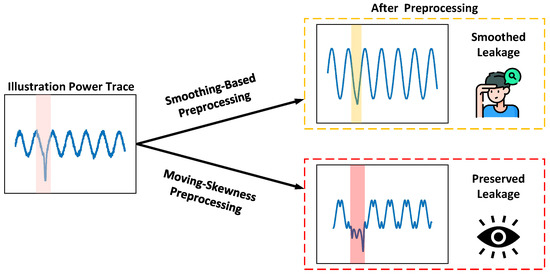
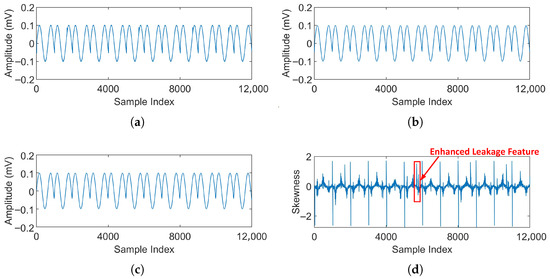
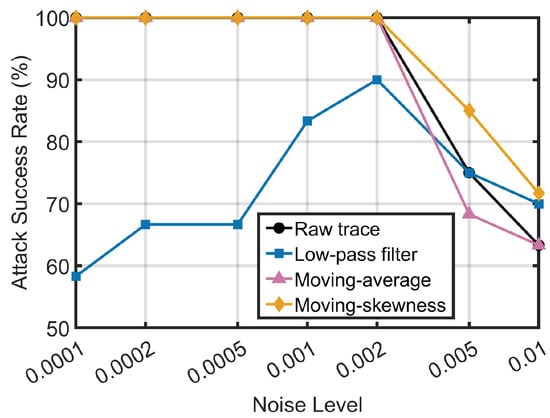
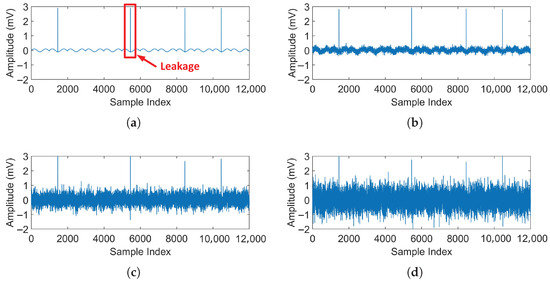
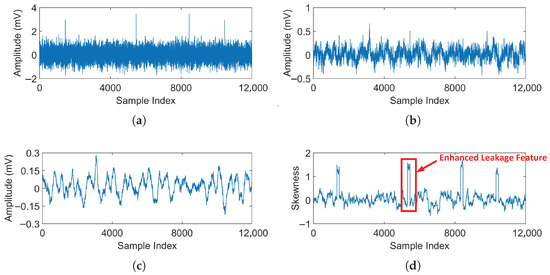
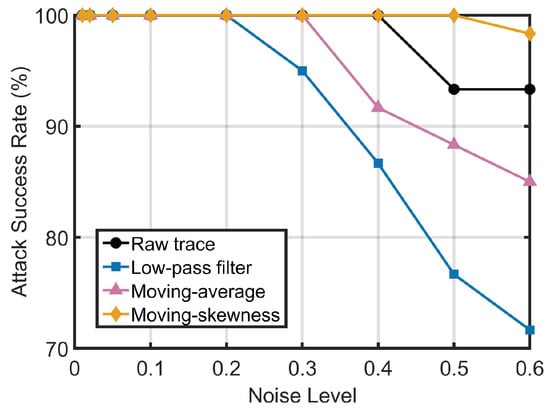
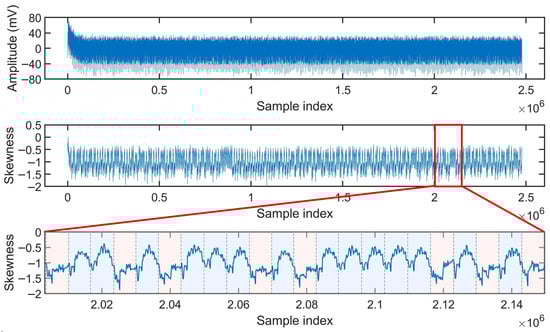
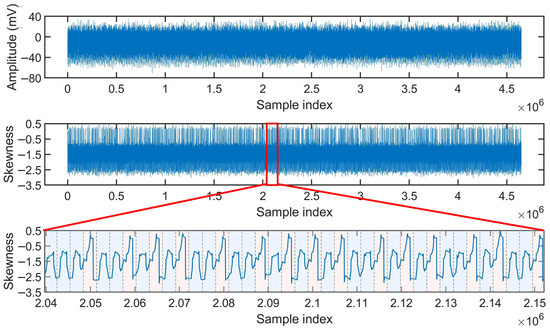
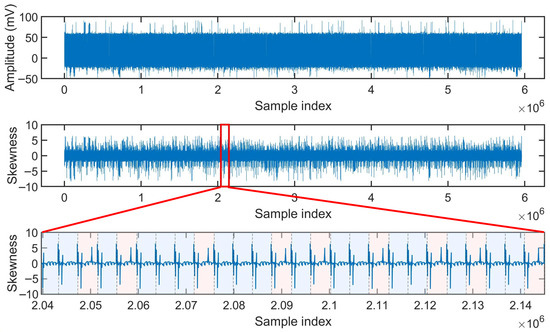
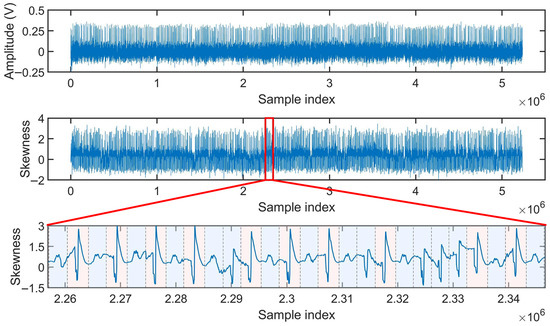
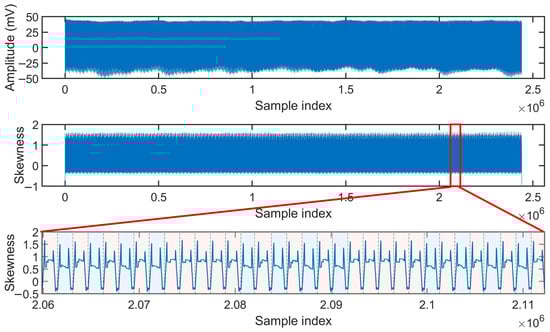
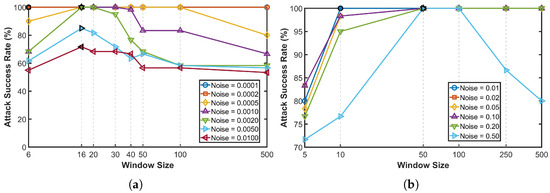
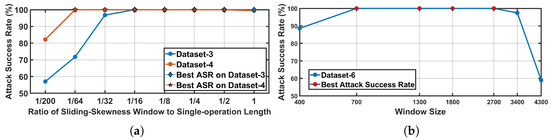
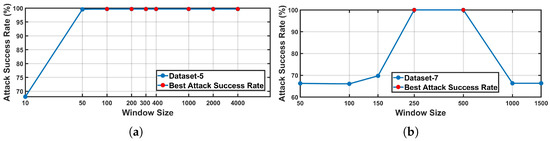
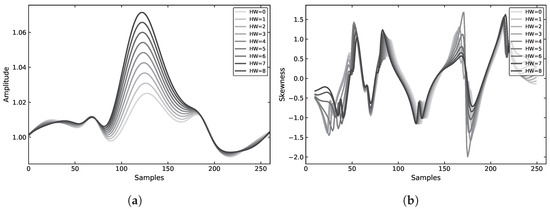
In side-channel analysis, simple power analysis (SPA) is a widely used technique for recovering secret information by exploiting differences between operations in traces. However, in realistic measurement environments, SPA is often hindered by noise, temporal misalignment, and weak or transient leakage, which obscure secret-dependent features in single or very few power traces. In this paper, we provide a systematic analysis of moving-skewness-based trace preprocessing for enhancing asymmetric leakage characteristics relevant to SPA. The method computes local skewness within a moving window along the trace, transforming the original signal into a skewness trace that emphasizes distributional asymmetry while suppressing noise. Unlike conventional smoothing-based preprocessing techniques, the proposed approach preserves and can even amplify subtle leakage patterns and spike-like transient events that are often attenuated by low-pass filtering or moving-average methods. To further improve applicability under different leakage conditions, we introduce feature-driven window-selection strategies that align preprocessing parameters with various leakage characteristics. Both simulated datasets and real measurement traces collected from multiple cryptographic platforms are used to evaluate the effectiveness of the approach. The experimental results indicate that moving-skewness preprocessing improves leakage visibility and achieves higher SPA success rates compared to commonly used preprocessing methods.
Full article
(This article belongs to the Section Hardware Security)
►
Show Figures
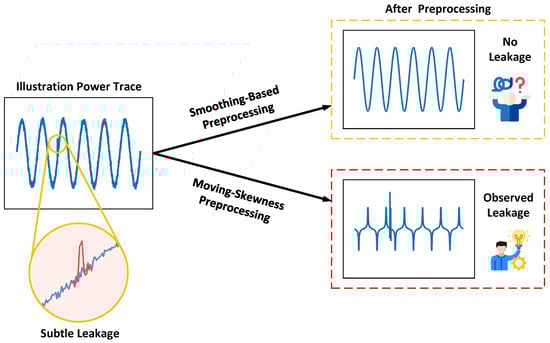
Figure 1