



A Uniform Framework for Climate Change Adaptation of Critical Infrastructure Using Nature-Based Solutions

 ,
,  ,
,  ,
,  , , , and
Abstract
1. Introduction
2. Materials and Methods
2.1. Pertinent Frameworks
2.1.1. Regional Adaptation Support Tool—RAST
2.1.2. IUCN—Global Standard for Nature-Based Solutions
2.1.3. Critical Entities Resilience Directive
2.1.4. EC Technical Guidance for the Climate Proofing of CI
2.1.5. ISO 14090—Adaptation to Climate Change
2.2. The Med-IREN Approach
2.2.1. NBS-CI-CCA Framework Synthesis
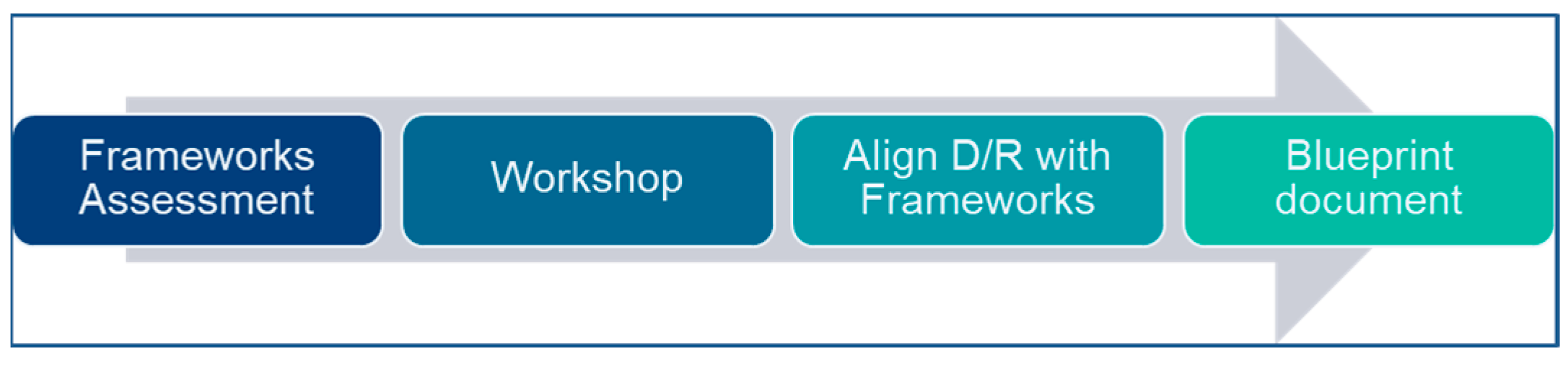
2.2.2. Methodology, Desktop Review, and Workshop
3. Results
3.1. The Framework
3.1.1. Med-IREN Nature-Based Solutions
- More Systemic Adaptation in Mediterranean Infrastructures
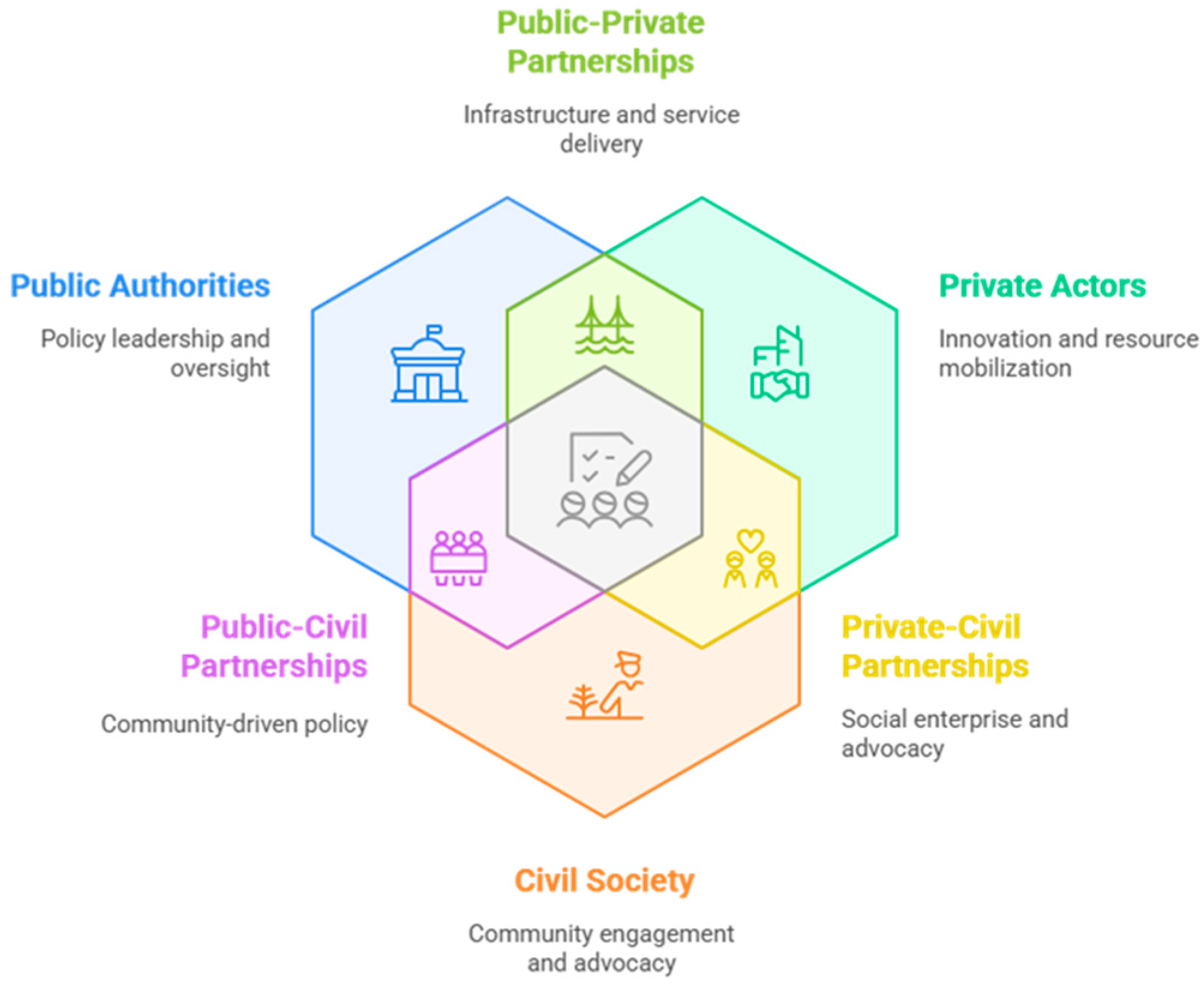
- PPCP®: Multi-stakeholder Partnerships and Coordination
- Innovative NBS
- Financing
- Local Action
- 2.
- Faster Adaptation in Mediterranean Infrastructures
- Innovative Climate Hazards Analytics
- Climate Risk and Resilience Maturity Models
- 3.
- Smarter Adaptation in Mediterranean Infrastructures
- Med-IREN Digital Toolset
3.1.2. Med-IREN High-Level Success Criteria
3.2. Implementing PPCP® in the D/R Regions
3.2.1. Demonstrator Municipality of Egaleo
Context and Challenges in the Municipality of Egaleo
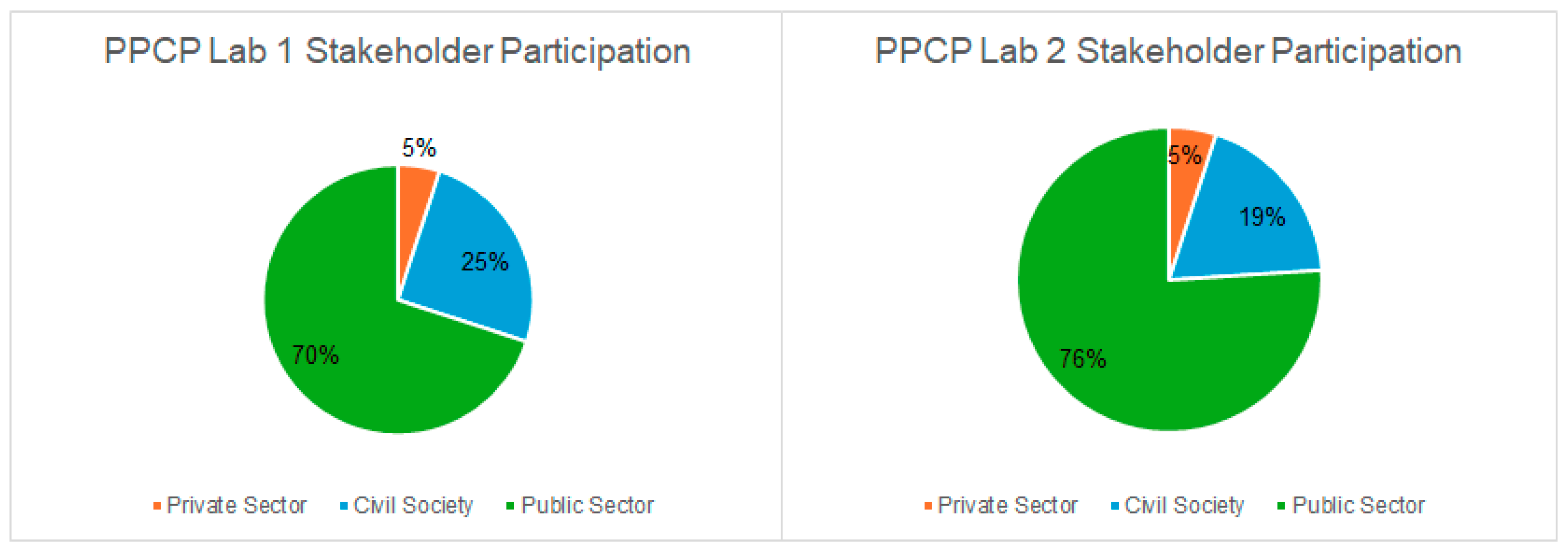
Stakeholders’ Identification and Engagement in the Municipality of Egaleo
- Commonalities—The Shared Vision: Across all stakeholder groups, there was a strong, unified view of NBS as essential tools for improving liveability, strengthening community identity, and creating demonstrators. All sectors, including public, civil, and private, were directly associated with NBS in reducing the urban heat island effect and improving thermal comfort, particularly for vulnerable groups such as students and the elderly. There was a shared understanding that green spaces, especially pocket parks, were not only ecological assets but vital social infrastructure for fostering community cohesion and supporting mental well-being. Participants universally endorsed a concentrated high-impact intervention in “Kithreon Square,” viewing it as a strategic means to increase visibility and could serve as a model for wider replication.
- Divergences—Sectoral Priorities and Concerns: The key differences in perception emerged along sectoral lines, highlighting distinct value systems and operational constraints (see Table 3).
- 3.
- Key Pattern—The primacy of pragmatism over technology: A dominant pattern across all categories was a pragmatic, cost–benefit approach. The clearest example was the collective decision to reject the high-tech Liquid3 [60] solution in favour of conventional tree planting. This was not a rejection of innovation, but a prioritisation of perceived reliability, lower maintenance, immediate aesthetic and shading benefits, and better cost efficiency. This indicated that for NBS to be widely accepted in Egaleo, they must be viewed as practical, durable, and capable of delivering clear value.
- 4.
- Territorial Scale—An overwhelmingly local lens: All perceptions were shaped through a strictly local, highly contextual lens. Stakeholders consistently assessed NBS based on their specific impact on “Iera Odos” and “Kithreon Square.” Discussions about broader climate adaptations were always redirected to local implications: “How will this affect our square?” “Will this cool down our street?” This highlighted that the success of NBS in Egaleo relied on demonstrating highly localised benefits.
- An official invitation letter to formally announce the workshop, outline its objectives, agenda, and logistical details (date, time, location), and encourage registration. This structured document will be distributed via email and municipal/school networks.
- A Med-IREN programme overview aimed to provide context about the broader Med-IREN project, its goals, and how the specific PPCP® Lab integrated into the wider initiative. An extensive presentation (PPCP® Lab 1) offered background on the project’s mission and anticipated outcomes.
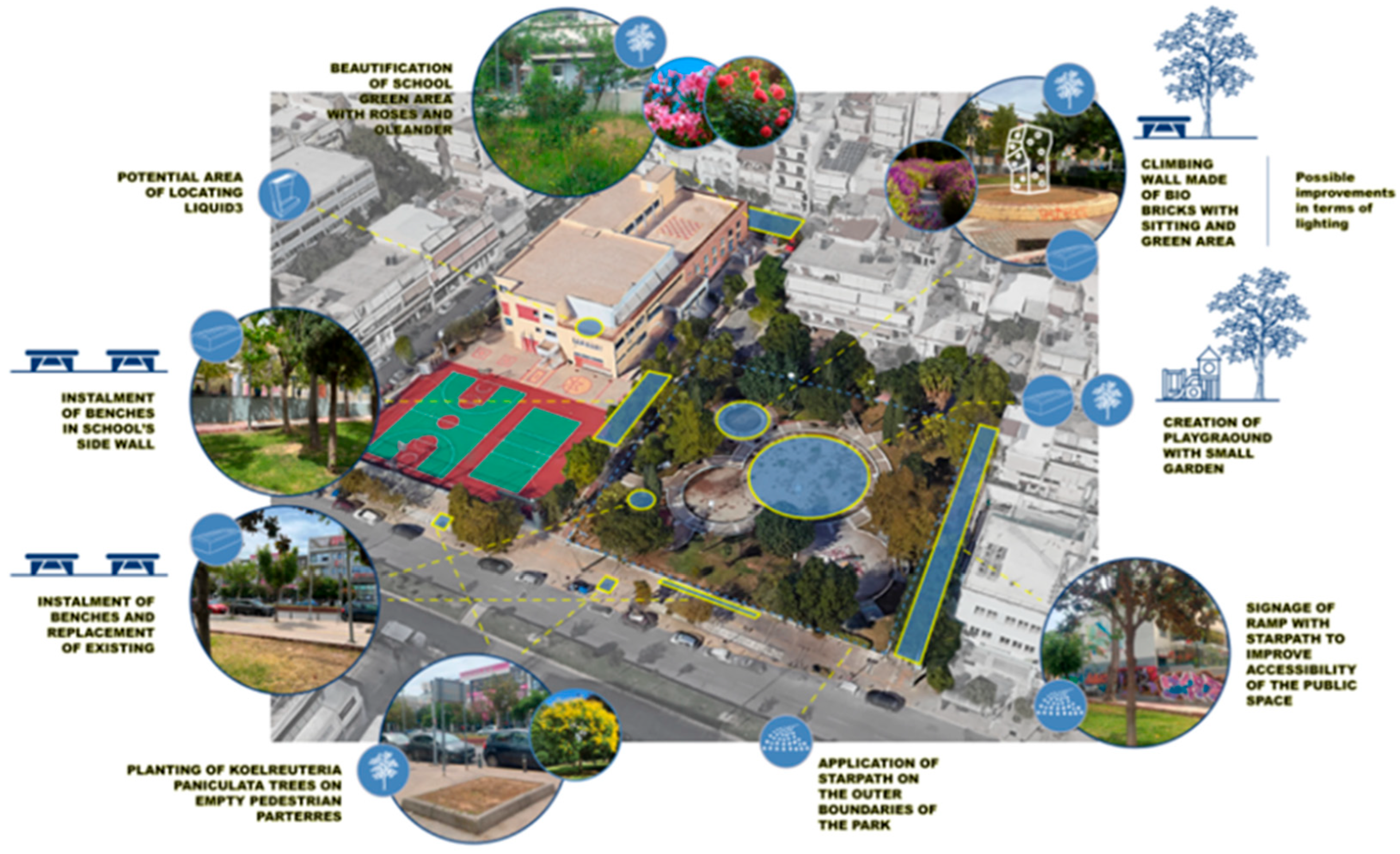
- Pre-Lab presentation slides and a Miro board to visually present the outcomes of the first PPCP® Lab (collective map with stickers), introduce the technical specifications of the four NBS (bio-bricks, Liquid Tree, etc.), and stimulate initial reflection (see Figure 4). A digital board was used during the Lab’s introductory session to facilitate understanding and discussion.
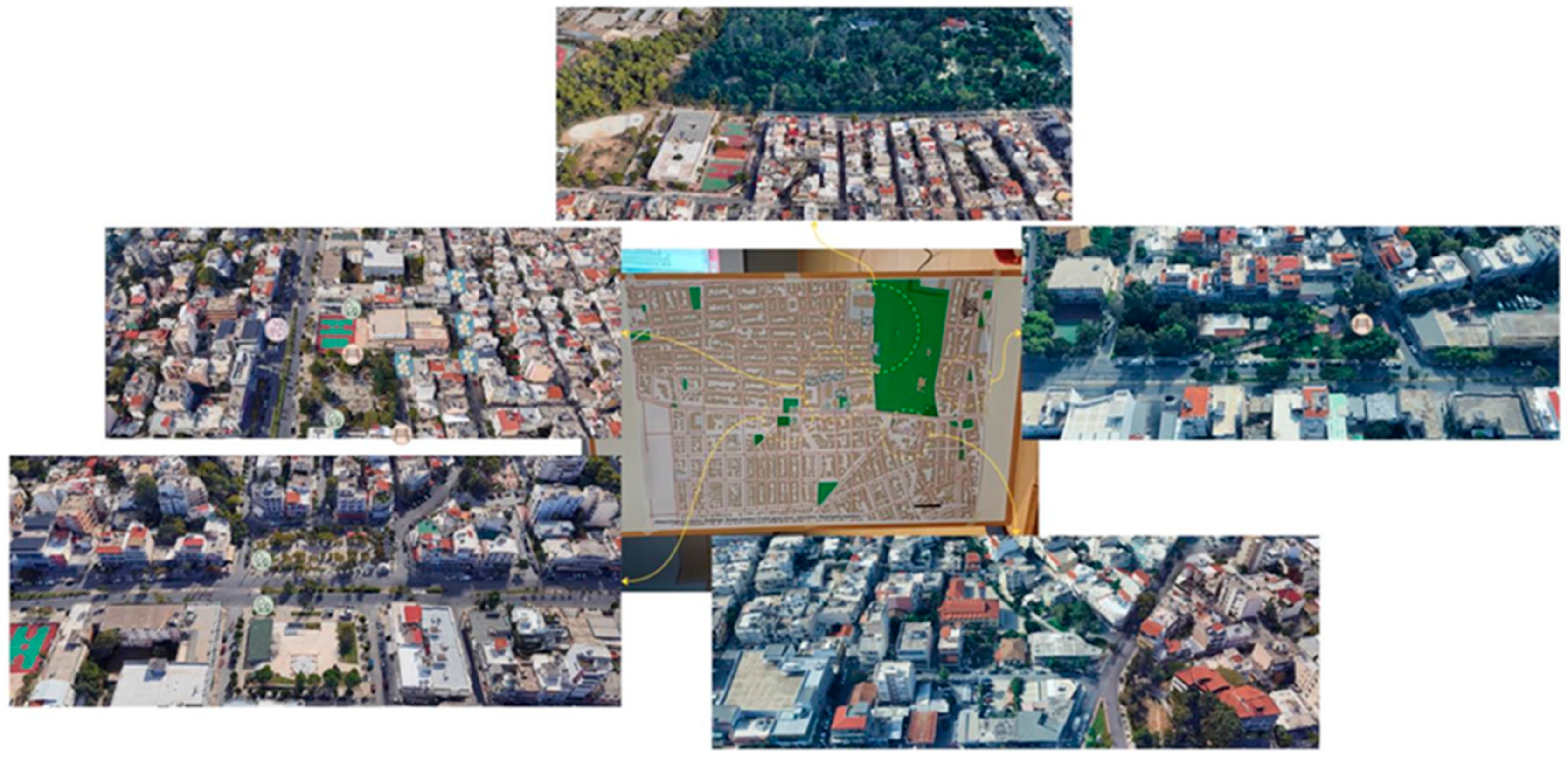
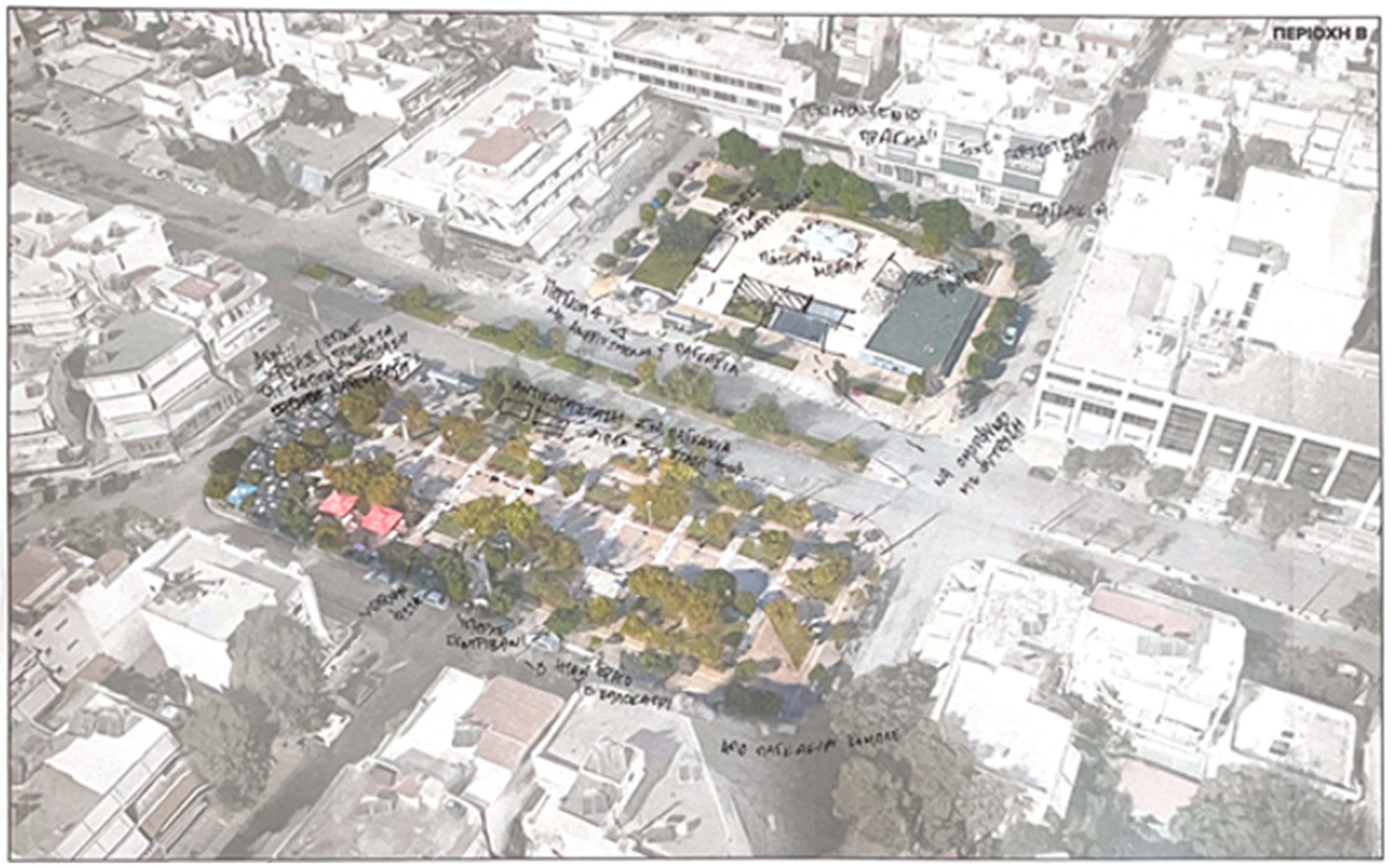
- Participatory Mapping Kits to enable hands-on engagement during site visits and co-design sessions and collect site observations and proposals (see Figure 5). Printed A4 and A3 maps of the case study areas, accompanied by canvases with categories for data entry (characteristics, justifications, challenges, impacts).
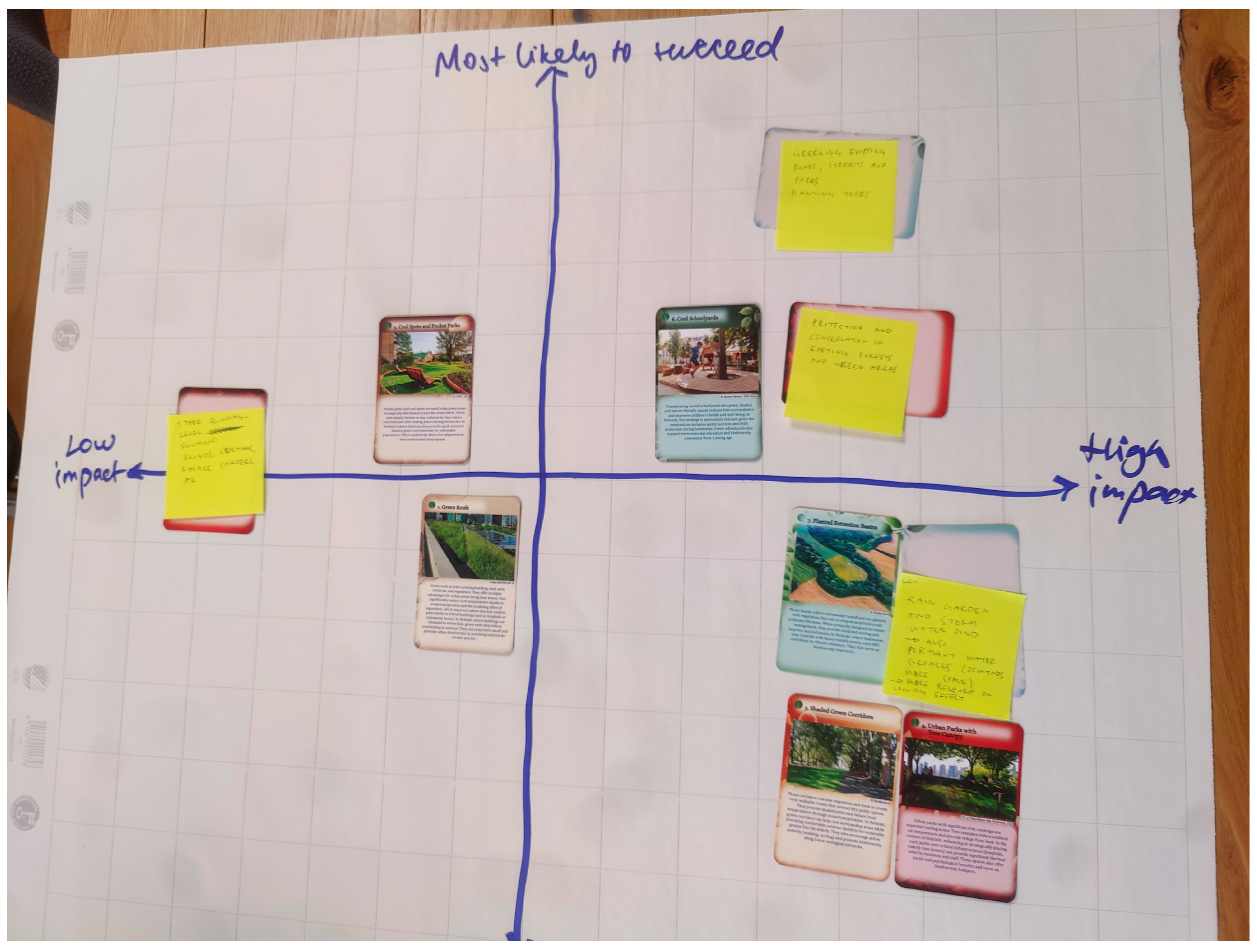
- NBS parameter cards to enable informed decision-making and discussion by offering precise, comparable data on each solution. The scoring system used a five-star scale to rate each NBS solution across cost (purchase, raw materials, installation), applicability (installation time, preparatory work, maintenance), and environmental impact (effectiveness in achieving measurable results), allowing stakeholders to easily compare and select the solution that best suited their preferences (tree planting, Liquid Tree, bio-bricks, [61], etc.) (see Figure 6) [61].
3.2.2. Replicator City of Helsinki
Context and Challenges in the City of Helsinki
Stakeholders’ Identification and Engagement in the City of Helsinki
4. Discussion
4.1. Assessment of the Egaleo PPCP® Labs
- Targeted and flexible scheduling: Implement a dual-track invitation system. Public and civil society actors should continue leveraging existing networks. For the private sector, engage directly through local business associations and provide flexible participation options, such as shorter, focused technical sessions or hybrid (online) attendance, to address availability challenges.
- Structured role rotation: To combat fatigue and technical voices’ dominance, introduce rotating roles within working groups (e.g., ‘note-taker,’ ‘spokesperson,’ ‘timekeeper’). This formalises participation, ensures equitable contribution, and maintains engagement by giving everyone a straightforward task.
- Pre-Lab technical primers: Create and share simplified, visual explainers (e.g., short videos, infographics) on key NBS technologies in advance. This will demystify technical jargon, level the knowledge field, and enable Lab time to focus on creative co-design rather than basic explanations.
- Enhanced data integration tools: To ease the transition from outdoor to indoor activities, use a shared digital workspace such as Miro in real time during site visits. Facilitators can upload photos and pin comments directly onto a digital map on a tablet, thereby providing an immediate foundation for the co-design session and enhancing the process’s fluidity and engagement.
4.2. Assessment of the Helsinki PPCP® Labs
5. Conclusions
Author Contributions
Funding
Data Availability Statement
Acknowledgments
Conflicts of Interest
References
- European Environmental Agency. European Climate Risk Assessment—Executive Summary; European Environmental Agency: Copenhagen, Denmark, 2024. [Google Scholar]
- Delegated Regulation—EU—2023/2450—EN—EUR-Lex. Available online: https://eur-lex.europa.eu/legal-content/EN/TXT/?uri=OJ%3AL_202302450 (accessed on 11 December 2025).
- Panda, A.; Mavrodieva, A.; Sengupta, R. Addressing the Infrastructure Failure Data Gap: A Governance Challenge; UNDRR: Geneva, Switzerland, 2021; Available online: https://www.undrr.org/publication/addressing-infrastructure-failure-data-gap-governance-challenge (accessed on 20 February 2025).
- Hallegatte, S.; Rentschler, J.; Rozenberg, J. Lifelines: The Resilient Infrastructure Opportunity. In Lifelines: The Resilient Infrastructure Opportunity; World Bank Publications: Washington, DC, USA, 2019. [Google Scholar] [CrossRef] [Scilit]
- CDRI. Global Infrastructure Resilience: Capturing the Resilience Dividend—A Biennial Report from the Coalition for Disaster Resilient Infrastructure, New Delhi; CDRI: New Delhi, India, 2023. [Google Scholar]
- Manish, B.; Carter, B.; Christina, C.; Anand, P.; Barney, D. The Global Commission on Adaptation; Global Center on Adaptation: Rotterdam, The Netherlands, 2019. [Google Scholar]
- Jézéquel, A.; Faranda, D.; Drobinski, P.; Lionello, P. Extreme Event Attribution in the Mediterranean. Int. J. Climatol. 2025, 7, e8799. [Google Scholar] [CrossRef] [Scilit]
- Drobinski, P.; Rivera Ferre, M.G.; Abdel Monem, M.; Driouech, F.; Cramer, W.; Guiot, J.; Gattacceca, J.C.; Marini, K. Interlinking Climate Change with the Water-Energy-Food-Ecosystems (WEFE) Nexus in the Mediterranean Basin; MedECC: Marseille, France, 2024. [Google Scholar]
- Matthews, J.; Cruz, E.; Cruz, O.D. Integrating Nature-Based Solutions for Climate Change Adaptation and Disaster Risk Management A Practitioner’s Guide; Climate Resilience Alliance: Zurich, Switzerland, 2022. [Google Scholar]
- Reckien, D.; Salvia, M.; Heidrich, O.; Church, J.M.; Pietrapertosa, F.; De Gregorio-Hurtado, S.; D’Alonzo, V.; Foley, A.; Simoes, S.G.; Krkoška Lorencová, E.; et al. How Are Cities Planning to Respond to Climate Change? Assessment of Local Climate Plans from 885 Cities in the EU-28. J. Clean. Prod. 2018, 191, 207–219. [Google Scholar] [CrossRef] [Scilit]
- Aboagye, P.D.; Sharifi, A. Urban Climate Adaptation and Mitigation Action Plans: A Critical Review. Renew. Sustain. Energy Rev. 2024, 189, 113886. [Google Scholar] [CrossRef] [Scilit]
- Bonnett, N.L.; Birchall, S.J. The Influence of Regional Strategic Policy on Municipal Climate Adaptation Planning. Reg. Stud. 2023, 57, 141–152. [Google Scholar] [CrossRef] [Scilit]
- Pietrapertosa, F.; Salvia, M.; De Gregorio Hurtado, S.; Geneletti, D.; D’Alonzo, V.; Reckien, D. Multi-Level Climate Change Planning: An Analysis of the Italian Case. J. Environ. Manag. 2021, 289, 112469. [Google Scholar] [CrossRef] [Scilit] [PubMed]
- EUR-Lex—52021DC0082—EN—EUR-Lex. Available online: https://eur-lex.europa.eu/legal-content/EN/TXT/?uri=celex:52021DC0082 (accessed on 20 February 2025).
- Sowińska-Świerkosz, B.; García, J. What Are Nature-Based Solutions (NBS)? Setting Core Ideas for Concept Clarification. Nat. Based Solut. 2022, 2, 100009. [Google Scholar] [CrossRef] [Scilit]
- OECD. Building Resilience: New Strategies for Strengthening Infrastructure Resilience and Maintenance; OECD Public Governance Policy Papers; OECD Publishing: Paris, France, 2021; Volume 5. [Google Scholar]
- IUCN Commission on Ecosystem Management (CEM); IUCN Global Ecosystem Management Programme. Guidance for Using the IUCN Global Standard for Nature-Based Solutions: First Editions; IUCN: Gland, Switzerland, 2020. [Google Scholar] [CrossRef] [Scilit]
- Nature-Based Solutions in Europe: Policy, Knowledge and Practice for Climate Change Adaptation and Disaster Risk Reduction|European Environment Agency’s Home Page. Available online: https://www.eea.europa.eu/en/analysis/publications/nature-based-solutions-in-europe (accessed on 29 July 2025).
- Cohen-Shacham, E.; Andrade, A.; Dalton, J.; Dudley, N.; Jones, M.; Kumar, C.; Maginnis, S.; Maynard, S.; Nelson, C.R.; Renaud, F.G.; et al. Core Principles for Successfully Implementing and Upscaling Nature-Based Solutions. Environ. Sci. Policy 2019, 98, 20–29. [Google Scholar] [CrossRef] [Scilit]
- Chausson, A.; Smith, A.; Reger, R.Z.Z.; O’Callaghan, B.; Mori Clement, Y.; Zapata, F.; Seddon, N. Harnessing Nature-Based Solutions for Economic Recovery: A Systematic Review. PLoS Clim. 2024, 3, e0000281. [Google Scholar] [CrossRef] [Scilit]
- Girardin, C.A.J.; Jenkins, S.; Seddon, N.; Allen, M.; Lewis, S.L.; Wheeler, C.E.; Griscom, B.W.; Malhi, Y. Nature-Based Solutions Can Help Cool the Planet—If We Act Now. Nature 2021, 593, 191–194. [Google Scholar]
- Morgado Simões, H. Regional and Local Adaptation to Climate Change; EPRS|European Parliamentary Research Service: Brussels, Belgium, 2024. [Google Scholar]
- Monty, F.; Murti, R.; Miththapala, S.; Buyck, C. Ecosystems Protecting Infrastructure and Communities Lessons Learned and Guidelines for Implementation; International Union for the Conservation of Nature: Gland, Switzerland, 2017. [Google Scholar]
- UN Environment Assembly 5 (UNEA 5.2) Resolutions|UNEP—UN Environment Programme. Available online: https://www.unep.org/resources/resolutions-treaties-and-decisions/UN-Environment-Assembly-5-2 (accessed on 20 February 2025).
- Sheng, L.S.; Hao, Y.Y.; Zhou, S.Q.; Tan, B.; Yuan, Q.; Xu, D.F.; Zhao, B. Nature-Based Solutions (NbS) in China: Implementation and Practice Modes. Environ. Res. Commun. 2025, 7, 051002. [Google Scholar] [CrossRef] [Scilit]
- Yu, R.; Mu, Q. Implementation Progress of Nature-Based Solutions in China: A Global Comparative Review. Nat. Based Solut. 2023, 4, 100075. [Google Scholar] [CrossRef] [Scilit]
- Cassin, J. Nature-Based Solutions for Source Water Protection in North America. In Nature-Based Solutions and Water Security: An Action Agenda for the 21st Century; Elsevier: Amsterdam, The Netherlands, 2021; pp. 179–214. [Google Scholar] [CrossRef] [Scilit]
- Biodiversity Strategy for 2030—European Commission. Available online: https://environment.ec.europa.eu/strategy/biodiversity-strategy-2030_en (accessed on 20 February 2025).
- Seddon, N.; Chausson, A.; Berry, P.; Girardin, C.A.J.; Smith, A.; Turner, B. Understanding the Value and Limits of Nature-Based Solutions to Climate Change and Other Global Challenges. Philos. Trans. R. Soc. B 2020, 375, 20190120. [Google Scholar] [CrossRef] [Scilit] [PubMed]
- Almeida, M.; Soviev, M.; San-Miguel, J.; Durrant, T.; Oom, D.; Branco, A.; Ferrari, D.; Boca, R.; Maianti, P.; De, R.D.; et al. Report on the Large Wildfires of 2022 in Europe; Publications Office of the European Union: Luxembourg, 2024. [Google Scholar] [CrossRef]
- Wildfires in the Mediterranean: Monitoring the Impact, Helping the Response—European Commission. Available online: https://joint-research-centre.ec.europa.eu/jrc-news-and-updates/wildfires-mediterranean-monitoring-impact-helping-response-2023-07-28_en (accessed on 12 June 2025).
- Co-Creative Improved Understanding and Awareness of Multi-Hazard Risks for Disaster Resilient Society|C2IMPRESS|Project|Fact Sheet|Horizon|Cordis|European Commission. Available online: https://cordis.europa.eu/project/id/101074004 (accessed on 10 December 2025).
- EU Mission on Adaptation to Climate Change Portal. Available online: https://climate-adapt.eea.europa.eu/en/mission (accessed on 15 July 2025).
- Bilgram, S.; Klusmann, C.; Kind, C.; Andreoli, E.; Castellani, C.; Kofinas, D.; Cools, J.; Trabucco, A.; Laspidou, C. Deriving Lessons Learned from Monitoring Adaptation Activities in Projects under the EU Mission on Adaptation. Open Res. Eur. 2024, 4, 81. [Google Scholar] [CrossRef] [Scilit] [PubMed]
- Regional Adaptation Support Tool. Available online: https://climate-adapt.eea.europa.eu/en/mission/knowledge-and-data/regional-adaptation-support-tool (accessed on 18 June 2025).
- Jaumouillé, A.; Rimlinger, J.; Freissinet, C.; Ribas Muntaner, M.; Moragues, A.; Estrany, J.; Díaz Jiménez, J.; Girard, A.B.; Pujol, J.P. Public-Private-Civil Partnership Approach for Improving Disaster Risk Management and Resilience: Application in the Balearic Islands. Eur. J. Sustain. Dev. 2025, 14, 733. [Google Scholar] [CrossRef] [Scilit]
- Framework—Climaax. Available online: https://www.climaax.eu/handbook/framework/ (accessed on 24 July 2025).
- Gretter, A.; Nikologianni, A.; Betta, A.; Lugli, L.; Laiti, L.; Barbiero, R. A Multi-Approach and Collaborative Pathway towards Designing Climate Strategies: The Case of Trentino, a Mountainous Region in Italy. Sustainability 2024, 16, 4198. [Google Scholar] [CrossRef] [Scilit]
- Colocci, A.; Pietta, A.; Bagliani, M. Exploring the Formal Development of Regional Policies and Their Potential to Drive Local Change: Insights on Climate Change Adaptation in Italy. Geogr. J. 2025, 191, e12614. [Google Scholar] [CrossRef] [Scilit]
- Langendijk, G.S.; Boon, E.; Goosen, H.; Jeuken, A.; Castresana, S.Z.; Cerezo, N.P.; Mysiak, J.; Kapetas, L. Ambition Setting through Climate Services to Drive Climate Resilient Development. Clim. Serv. 2025, 38, 100556. [Google Scholar] [CrossRef] [Scilit]
- Intergovernmental Panel on Climate Change (IPCC). Climate Resilient Development Pathways. In Climate Change 2022—Impacts, Adaptation and Vulnerability; Cambridge University Press: Cambridge, UK, 2023; pp. 2655–2808. [Google Scholar] [CrossRef] [Scilit]
- White, C.; Collier, M.J.; Stout, J.C. Using Ecosystem Services to Measure the Degree to Which a Solution Is Nature-Based. Ecosyst. Serv. 2021, 50, 101330. [Google Scholar] [CrossRef] [Scilit]
- Seddon, N.; Smith, A.; Smith, P.; Key, I.; Chausson, A.; Girardin, C.; House, J.; Srivastava, S.; Turner, B. Getting the Message Right on Nature-based Solutions to Climate Change. Glob. Change Biol. 2021, 27, 1518–1546. [Google Scholar] [CrossRef] [Scilit]
- Le Gouvello, R.; Cohen-Shacham, E.; Herr, D.; Spadone, A.; Simard, F.; Brugere, C. The IUCN Global Standard for Nature-Based SolutionsTM as a Tool for Enhancing the Sustainable Development of Marine Aquaculture. Front. Mar. Sci. 2023, 10, 1146637. [Google Scholar] [CrossRef] [Scilit]
- Telwala, Y. Unlocking the Potential of Agroforestry as a Nature-Based Solution for Localizing Sustainable Development Goals: A Case Study from a Drought-Prone Region in Rural India. Nat. Based Solut. 2023, 3, 100045. [Google Scholar] [CrossRef] [Scilit]
- Riisager-Simonsen, C.; Fabi, G.; van Hoof, L.; Holmgren, N.; Marino, G.; Lisbjerg, D. Marine Nature-Based Solutions: Where Societal Challenges and Ecosystem Requirements Meet the Potential of Our Oceans. Mar. Policy 2022, 144, 105198. [Google Scholar] [CrossRef] [Scilit]
- Le Gouvello, R.; Brugère, C.; Simard, F. Aquaculture and Nature-Based Solutions: Identifying Synergies Between Sustainable Development of Coastal Communities, Aquaculture, and Marine and Coastal Conservation; IUCN: Gland, Switzerland, 2022. [Google Scholar] [CrossRef] [Scilit]
- Luo, M.; Cai, J.; Zeng, Z.; Zheng, Y.; Lin, T. Development and Practices of Nature-Based Solutions in China. Nat. Based Solut. 2024, 5, 100109. [Google Scholar] [CrossRef] [Scilit]
- Berg, M.; Spray, C.; Blom, A.; Slinger, J.H.; Stancanelli, L.M.; Snoek, Y.; Schielen, R.M.J. An Assessment of the Iucn Global Standard for Nature-Based Solutions. Sci. Total Environ. 2024, 950, 175269. [Google Scholar] [CrossRef] [Scilit]
- Directive—2022/2557—EN—CER—EUR-Lex. Available online: https://eur-lex.europa.eu/eli/dir/2022/2557/oj (accessed on 29 July 2025).
- Directive—2008/114—EN—EUR-Lex. Available online: https://eur-lex.europa.eu/eli/dir/2008/114/oj/eng (accessed on 29 July 2025).
- Navigating the EU Critical Entities Resilience Directive. Available online: https://www.deloitte.com/global/en/services/consulting-risk/perspectives/navigating-the-eu-critical-entities-resilience-directive.html (accessed on 29 July 2025).
- Critical Infrastructure Resilience at EU-Level—European Commission. Available online: https://home-affairs.ec.europa.eu/policies/internal-security/counter-terrorism-and-radicalisation/protection/critical-infrastructure-resilience-eu-level_en (accessed on 29 July 2025).
- European Commission. Commission Notice—Technical Guidance on the Climate Proofing of Infrastructure in the Period 2021–2027; European Commission: Brussels, Belgium, 2021. [Google Scholar]
- Rimlinger, J.; Jaumouillé, A.; Freissinet, C.; Craveiro, J.L.; Zózimo, A.C.; Oliveira, M.M.; Cruz, M.M.; Bakogianni, E.; Tzempelikos, D.; Pavlidi, E.; et al. Shaping Local Disaster Risk Governance through Multi-Stakeholder Collaboration: Insights from the Public-Private-Civil Partnership Approach—Application to the Case Studies of the Municipality of Egaleo (Greece) and Centro Region (Portugal). Int. J. Disaster Risk Reduct. 2026, 133, 105973. [Google Scholar] [CrossRef] [Scilit]
- MULTI-Faceted CLIMate Adaptation ACTions to Improve Resilience, Preparedness and Responsiveness of the Built Environment Against Multiple Hazards at Multiple Scales. MULTICLIMACT|A Horizon Europe Project. Available online: https://multiclimact.eu/ (accessed on 8 September 2025).
- Smart Weather Station (SWS)—TransformAr. Available online: https://transformar.eu/smart-weather-station-sws/ (accessed on 15 January 2026).
- Bakogianni, E.; Sfetsos, A.; Gavrouzou, M. Climate Risk Assessment in the Socially Vulnerable Communities of Aigaleo (Clisthenes); Zenodo: Geneva, Switzerland, 2025. [Google Scholar] [CrossRef]
- Golemi, A.M.; Kapetanakis, P.A.; Dimitropoulou, P.; Karakitsou, E.; Karozis, S.; Vlachogiannis, D.; Mencarini, E.; Sfetsos, A. Integrating Citizen Perspectives into Climate Risk Management and Adaptation Strategies. Sustainability 2025, 17, 1382. [Google Scholar] [CrossRef] [Scilit]
- Liquid Tree: The Future for Cleaner Air. Available online: https://biotech.dpu.edu.in/blogs/liquid-tree-the-dystopian-bush-is-here (accessed on 11 December 2025).
- Dress, L.; Hessel, A.; Cai, Y.; Meyers, J.V.; Moreira, A. Synthetic Biology: An Overview. In Comprehensive Biotechnology, 2nd ed.; Pergamon: Bergama, Turkey, 2011; Volume 3, pp. 629–640. [Google Scholar] [CrossRef] [Scilit]
- Kollanus, V.; Tiittanen, P.; Lanki, T. Mortality Risk Related to Heatwaves in Finland—Factors Affecting Vulnerability. Environ. Res. 2021, 201, 111503. [Google Scholar] [CrossRef] [Scilit]
- Coma, J.; Pérez, G.; de Gracia, A.; Burés, S.; Urrestarazu, M.; Cabeza, L.F. Vertical Greenery Systems for Energy Savings in Buildings: A Comparative Study between Green Walls and Green Facades. Build. Environ. 2017, 111, 228–237. [Google Scholar] [CrossRef] [Scilit]
- Manso, M.; Teotónio, I.; Silva, C.M.; Cruz, C.O. Green Roof and Green Wall Benefits and Costs: A Review of the Quantitative Evidence. Renew. Sustain. Energy Rev. 2021, 135, 110111. [Google Scholar] [CrossRef] [Scilit]
- Collins, S.; Kuoppamäki, K.; Kotze, D.J.; Lü, X. Thermal Behavior of Green Roofs under Nordic Winter Conditions. Build. Environ. 2017, 122, 206–214. [Google Scholar] [CrossRef] [Scilit]
- Maurin, N.; Abdalla, E.H.M.; Muthanna, T.M.; Sivertsen, E. Understanding the Hydrological Performance of Green and Grey Roofs during Winter in Cold Climate Regions. Sci. Total Environ. 2024, 945, 174132. [Google Scholar] [CrossRef] [Scilit]






| Number | Categories |
|---|---|
| I. | Stakeholder Identification and Engagement Process |
| II. | Baseline framework assessment |
| III. | Co-design of a new framework |
| IV. | Key Performance Indicators (KPI) selection for NBS implementation |
| V. | Existing datasets and monitoring networks (of relevance to Med-IREN) |
| VI. | Validation |
| RAST | Frameworks | Description |
|---|---|---|
| Step 1 of the Regional Adaptation Support Tool (RAST) helps to assemble and organise the essential components for a well-prepared start to the adaptation planning process. | ||
| Step 1.1 | Building the evidence base | |
| IUCN Criterion 1 | Identifying the societal challenge to which the NBS are a response | |
| CER | CER measures (a): (a) prevent incidents from occurring, duly considering disaster risk reduction and climate adaptation measures;/(b) ensure adequate protection | |
| Climate Proofing | CCA/CCM | |
| Step 1.2 | Securing political support and ownership | |
| Med-IREN | Localise the PPCP® framework through stakeholder selection and contextualization | |
| Methodology validation | ||
| Step 1.3 | Setting up governance structures to support adaptation | |
| IUCN Criterion 5 | NBS are based on inclusive, transparent, and empowering governance processes | |
| Med-IREN | Establish local partnerships and stakeholder engagement | |
| Step 1.4 | Identifying your resources | |
| Med-IREN | Digital Resources Tool Architecture (if newly developed) | |
| Step 1.5 | Communicating adaptation and raising awareness | |
| CER | CER measures (f) raise awareness about the measures referred therein | |
| Med-IREN | Digital Tool Visualisation | |
| Step 2: Define the essential elements of your risk assessment | ||
| Step 2.1 | Defining the core elements of your climate risk assessment | |
| Med-IREN | Med-IREN climate risk assessment planning | |
| Step 2.2 | Identifying risks | |
| Step 2.3 | Assessing climate risks | |
| Med-IREN | Co-develop and evaluate climate risks and impacts to NBS-CI communities and their interconnections | |
| Climate Proofing | Climate Risk Assessment—screening phase | |
| Med-IREN | Med-IREN Climate Resilience Assessment | |
| Step 2.4 | Defining key risks and adaptation objectives | |
| Step 3: Identifying adaptation options | ||
| Step 3.1 | Identifying adaptation options | |
| Med-IREN | Assessment of the NBS, enabling conditions, guidance | |
| IUCN | IUCN 28 indicators | |
| CER | CER measures (c) respond to, resist and mitigate the consequences of incidents | |
| Climate Proofing | CCA/CCM screening phase assessment | |
| Step 3.2 | Taking inspiration from good adaptation practices | |
| Step 4: Assessing and selecting adaptation options | ||
| Step 4.1 | Assessing adaptation options | |
| IUCN Criterion 2 | Guidance of the design responding to the scale of the issue | |
| IUCN Criterion 6 | NBS equitably balance trade-offs between the achievement of their primary goal(s) and the provision of multiple benefits | |
| Step 4.2 | Selecting adaptation options | |
| Climate Proofing | CCA/CCM detailed assessment phase | |
| Step 5: Implementing adaptation policies and actions | ||
| Step 5.1 | Developing adaptation strategies and plans | |
| IUCN Criterion 7 | NBS are managed adaptively, based on evidence | |
| CER | CER measures (d) recover from incidents | |
| Step 5.2 | Mainstreaming and integrating adaptation into existing plans | |
| IUCN Criterion 8 | NBS are sustainable and mainstreamed within an appropriate jurisdictional context | |
| Step 5.3 | Funding or financing for implementation | |
| Step 5.4 | Maintaining and supporting governance for implementation | |
| Step 6: Monitoring, evaluation, and learning (MEL) | ||
| Step 6.1 | Developing your MEL approach | |
| IUCN Criterion 3/4 | NBS result in a net gain to biodiversity and ecosystem integrity/NBS are economically viable | |
| Step 6.2 | Defining your MEL framework | |
| Step 6.3 | Learning from results | |
| Climate Proofing | Recording and disseminating findings | |
| Stakeholder Category | Primary Perception of NBS | Key Concerns and Priorities |
|---|---|---|
| Public Sector (Municipality, Teachers) | Tools’ selection for climate resilience and public service delivery. Viewing NBS through a lens of technical feasibility, regulatory compliance, and long-term public good. | Maintenance and Vandalism: a major preoccupation was the sustainability of interventions beyond the project lifecycle. Who will care for the trees? Who repairs a damaged bio-brick wall? This reflected their operational responsibility. Budgetary Reality: their support was pragmatic, with a strong focus on cost-effectiveness and scalability within municipal budgets. |
| Civil Society (Parents, NGO, Students) | Means to reclaim and improve their everyday environment. Their perception was experiential and rooted in local knowledge and direct need. | Immediate Usability and Safety: their proposals (shaded seating, play areas) focused on direct, tangible benefits. Students, as primary users, were particularly vocal about ensuring NBS did not impede existing play areas. Historical and Cultural Context: the NGO contributed to a perception of NBS as a means to enhance and protect local heritage, rather than solely for its ecological function. Ownership and Stewardship: they showed a strong desire to be involved in NBS care, perceiving it as a form of community ownership. |
| Private Sector (Local Maker) | A potential market opportunity and source of materials. The perception was more instrumental, focusing on practicality, cost, and the potential for a circular economy. | Cost vs. Impact: the single private representative’s alignment with the group to reject Liquid Tree in favour of “real trees” was a pragmatic decision based on perceived value for money and tangible impact. Material Innovation: Showed interest in how local waste streams (e.g., sawdust) could be integrated into NBS like bio-bricks, perceiving NBS as a potential business niche. |
Disclaimer/Publisher’s Note: The statements, opinions and data contained in all publications are solely those of the individual author(s) and contributor(s) and not of MDPI and/or the editor(s). MDPI and/or the editor(s) disclaim responsibility for any injury to people or property resulting from any ideas, methods, instructions or products referred to in the content. |
© 2026 by the authors. Licensee MDPI, Basel, Switzerland. This article is an open access article distributed under the terms and conditions of the Creative Commons Attribution (CC BY) license.
Share and Cite
Vlachogiannis, D.; Zarikos, I.; Sfetsos, A.; Rimlinger, J.; Jaumouillé, A.; Freissinet, C.; Santala, V.; Tzempelikos, D.; Dubovik, M. A Uniform Framework for Climate Change Adaptation of Critical Infrastructure Using Nature-Based Solutions. Infrastructures 2026, 11, 65. https://doi.org/10.3390/infrastructures11020065
Vlachogiannis D, Zarikos I, Sfetsos A, Rimlinger J, Jaumouillé A, Freissinet C, Santala V, Tzempelikos D, Dubovik M. A Uniform Framework for Climate Change Adaptation of Critical Infrastructure Using Nature-Based Solutions. Infrastructures. 2026; 11(2):65. https://doi.org/10.3390/infrastructures11020065
Chicago/Turabian StyleVlachogiannis, Diamando, Ioannis Zarikos, Athanasios Sfetsos, Juliette Rimlinger, Alexandra Jaumouillé, Catherine Freissinet, Ville Santala, Dimitrios Tzempelikos, and Maria Dubovik. 2026. "A Uniform Framework for Climate Change Adaptation of Critical Infrastructure Using Nature-Based Solutions" Infrastructures 11, no. 2: 65. https://doi.org/10.3390/infrastructures11020065
APA StyleVlachogiannis, D., Zarikos, I., Sfetsos, A., Rimlinger, J., Jaumouillé, A., Freissinet, C., Santala, V., Tzempelikos, D., & Dubovik, M. (2026). A Uniform Framework for Climate Change Adaptation of Critical Infrastructure Using Nature-Based Solutions. Infrastructures, 11(2), 65. https://doi.org/10.3390/infrastructures11020065