


Skip to Content

Infrastructures

Infrastructures is an international, scientific, peer-reviewed open access journal on infrastructures published monthly online by MDPI.
Infrastructures is affiliated to International Society for Maintenance and Rehabilitation of Transport Infrastructures (iSMARTi) and their members receive a discount on the article processing charges.
Quartile Ranking JCR - Q2 (Construction and Building Technology | Engineering, Civil | Transportation Science and Technology)

All Articles (1,489)

Mock-Up Test of Cast-in-Place Tunnel Lining for TBM Method

  • Šárka Pešková,
  • Vít Šmilauer and
  • Pavel Růžička
  • + 4 authors

Segmental tunnel linings represent a conventional method commonly employed in tunnel boring machine (TBM) operations. However, this approach presents notable limitations, including handling challenges and the presence of numerous joints prone to leakage. An alternative method involving cast-in-place tunnel lining was experimentally investigated through a scaled mock-up test conducted at approximately 1:4 scale, with a total length of 0.85 m and 2 m lining diameter. In this setup, two reinforced concrete rings were constructed to simulate the surrounding geological conditions and internal formwork. Fiber-reinforced concrete was then pumped into the annular space between the rings, forming a cast-in-place lining with a thickness of 170 mm. To replicate the thrust force exerted by hydraulic actuators of a TBM, a hydrostatic pressure up to 5 MPa was applied from the front side. The experiment demonstrated a linear compaction of fresh concrete by approximately 3%, greater resistance to compaction in the lower section, and a uniformly well-compacted concrete structure throughout the entire volume.

27 February 2026

The flowchart of the cast-in-place lining construction process.

Pedestrian and cyclist safety at urban intersections remains a critical challenge for transportation agencies, as vulnerable road users are significantly exposed to crash risks in complex traffic environments. Identifying high-risk locations and factors that contribute to crashes is essential for improving road safety. This study developed an explainable machine learning framework to predict motor vehicle-involved pedestrian and cyclist crash occurrence at urban intersections using five years of crash, geometric, operational, and socioeconomic data from a large set of urban intersections. Five supervised machine learning algorithms were trained and evaluated, including Binary Logistic Regression, K-Nearest Neighbors, Support Vector Machine, Decision Tree, and Random Forest. The evaluated models demonstrated strong predictive performance overall, with accuracies approaching 91% and high discriminative capability. In particular, the Binary Logistic Regression and Random Forest models achieved the highest area under the receiver operating characteristic curve (AUC) values of 0.961 and 0.964, respectively. To enhance transparency, SHAP values were used to quantify the contribution of predictors and examine feature effects at both the global and local levels. The results indicate that roadway hierarchy, intersection markings, and total entering volume are among the most influential determinants of crash likelihood, while socioeconomic variables exhibit weaker but interpretable effects.

26 February 2026

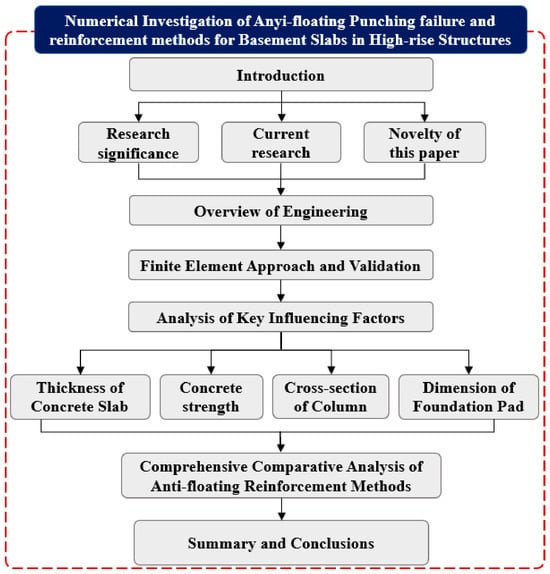
Research Framework.

Bridges are critical components of transportation networks, and fire accidents can significantly impair their structural integrity, leading to safety risks and major economic losses. This study presents a comprehensive inspection, materials testing, repair, and field load testing program for a full-scale concrete box girder bridge (Delta Bridge, Alexandria, Egypt) following a fire exposure on two spans. A total of 28 concrete core samples were extracted and tested, revealing average compressive strengths of 48.50 MPa (slab), 53.90 MPa (web), and 45.88 MPa (columns), representing moderate reductions of approximately 8.5%, 7.9%, and 10.8%, respectively, relative to the original in situ concrete strength recorded during construction, and 29.2%, 43.7%, and 30.0% increases over the minimum acceptance limits specified by Egyptian code of practice (ECP 203). Tensile strength tests on reinforcement bars indicated an average yield strength reduction coefficient of 0.87, corresponding to an estimated peak exposure temperature of 600 °C, yet still satisfying Egyptian code requirements (≥500 MPa). Field static load tests using 40-ton tri-axle trucks demonstrated maximum midspan deflections of 6.7 mm in fire-exposed spans and full recovery (>94%) upon unloading, confirming that the residual stiffness and load-carrying capacity were within acceptable limits. Based on these results, a targeted repair program was executed, including concrete cover replacement with shotcrete; steel derusting; surface coating; and bearing replacement, followed by a verification load test that confirmed the effectiveness of the rehabilitation. This case study demonstrates a robust framework for post-fire condition assessment, residual capacity evaluation, and repair validation of concrete box girder bridges. The methodology and findings provide valuable guidance for engineers and transportation authorities in mitigating fire-induced risks and ensuring the safe reopening of critical bridge infrastructure.

25 February 2026

Examples of fire accidents.

Analysis of the Viability of Manufacturing MASAI Mixtures at Ambient Temperature

  • Gema García Travé,
  • Raúl Tauste Martínez and
  • María del Carmen Rubio Gámez
  • + 1 author
The main goal of this study is to evaluate the feasibility of designing high-performance MASAI mixtures produced at ambient temperature. For this purpose, the impacts of certain variables, such as the type and amount of asphalt emulsion and the use or non-use of RAP, on its performance are evaluated. Subsequently, its stiffness modulus, tensile strength, permanent deformation, and resistance to thermal cracking were evaluated and compared against a conventional dense-graded asphalt concrete (AC 16) and an open-graded (BBTM11B) hot-mix asphalt used for wearing courses. The results showed that these materials could represent more sustainable and good solutions for the rehabilitation of some types of pavements.

25 February 2026

From left to right: gravel, sand, filler, RAP, and emulsion employed in this study.

News & Conferences

Issues

Open for Submission

Editor's Choice

Get Alerted

Add your email address to receive forthcoming issues of this journal.

XFacebookLinkedIn
Infrastructures - ISSN 2412-3811