Article

Tracking Rangeland Degradation from Prosopis juliflora Invasion in Kenya: A Multi-Source Approach Combining Remote Sensing, Machine Learning, and Citizen Science


1
International Livestock Research Institute, P.O. Box 30709, Nairobi 00100, Kenya
2
International Livestock Research Institute, c/o IITA, Mwenge Coca-Coal Road, Dar es Salam 34441, Tanzania
*
Author to whom correspondence should be addressed.
Ecologies 2026, 7(1), 20; https://doi.org/10.3390/ecologies7010020
Submission received: 28 November 2025 / Revised: 9 February 2026 / Accepted: 9 February 2026 / Published: 13 February 2026

Abstract

The invasion of Prosopis juliflora poses a growing threat to dryland ecosystems and pastoral livelihoods across East Africa. This study presents an integrative approach that combines satellite remote sensing, machine learning, and citizen science to detect and map the spatial extent and socio-ecological impacts of Prosopis juliflora in Baringo County, Kenya. We evaluated the performance of three satellite platforms, Sentinel-1, Sentinel-2, and PlanetScope, using a Random Forest classifier trained on field collected presence–absence data and vegetation indices. Sentinel-2 outperformed the other sensors, achieving a classification accuracy of 90.65%, with key variables including the Visible Atmospherically Resistant Index (VARI), the Ratio Vegetation Index (RVI), and red-edge bands emerging as the most important predictors. Through Participatory GIS (PGIS), a citizen-science based approach, we engaged gender-disaggregated community groups to capture local perceptions of invasion hotspots and blocked access to grazing routes and water sources, enhancing contextual understanding and validating model outputs. The comparison of satellite-derived maps and PGIS outputs revealed strong spatial congruence, particularly along water bodies, roads, and croplands. Our findings demonstrate the potential of combining Earth observation and citizen science to generate actionable knowledge for managing invasive species in data scarce dryland environments. This hybrid framework supports inclusive and spatially targeted interventions for rangeland restoration and ecosystem resilience.

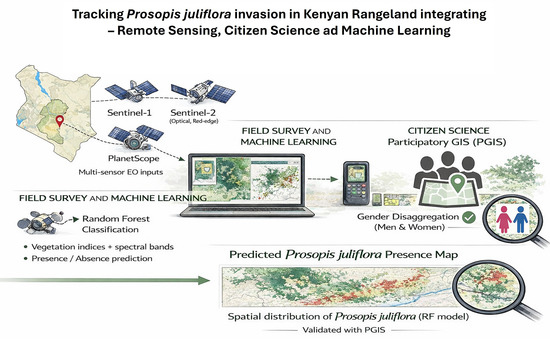
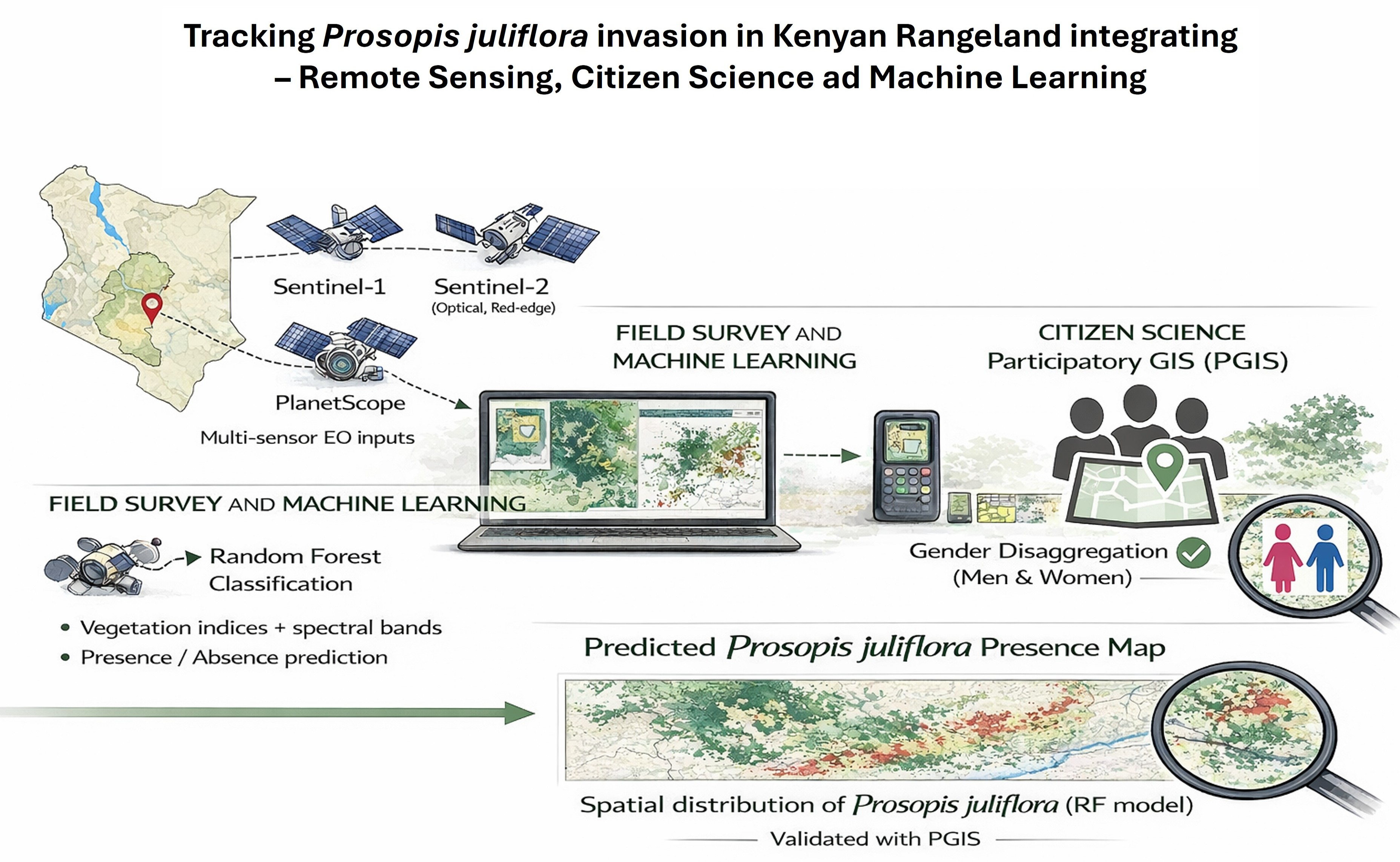
Graphical Abstract

1. Introduction

Across the rangelands of East Africa, pastoralist communities in both arid and semi-arid landscapes are grappling with a silent yet aggressive invader, Prosopis juliflora. The challenge is not unique to East Africa, as Prosopis juliflora has emerged as a major invasive species across arid and semi-arid regions around the world, affecting dryland ecosystems in Africa, Asia, Australia, and the Americas [1]. Its global spread underscores a broader invasion problem in drylands, where the species consistently transforms rangeland structure, ecosystem functioning, and livelihoods [2]. A native to South and Central America, Prosopis juliflora was introduced to Eastern Africa in the early 1970s to combat desertification and fuelwood shortages [3]. However, this fast growing species has since expanded uncontrollably [4]. It is a hardy drought-tolerant species with deep roots and high tolerance to poor soils, allowing it to thrive in harsh environments [5]. It forms dense thickets with canopies which displace native vegetation, reduce biodiversity, alter soil chemistry, and limit access to pasture and water resources. It has altered entire ecosystems, rendering critical grazing lands inaccessible [6]. In a country like Kenya, where livelihoods are deeply intertwined with seasonal mobility, rangeland access, and water availability, the spread of Prosopis juliflora poses a direct threat to food security and resilience.
Despite growing recognition of these impacts, efforts to monitor and manage Prosopis juliflora remain limited by the lack of up-to-date and spatially comprehensive data on its extent. Conventional ground surveys are expensive and time consuming, while existing maps are often fragmented or outdated, undermining targeted response efforts. To support evidence-based intervention and restoration strategies, there is a growing need to accurately map and monitor its spread. The presence and accessibility of high-quality spatial data on invasive species spread is fundamental for informed decision making in arid and semi-arid systems. Advancements in remote sensing and machine learning offer promising avenues to detect and monitor invasive species over large areas, offering the potential for near real-time monitoring in hard-to-reach areas. Multi-sensor satellite platforms such as Sentinel-1, Sentinel-2, and PlanetScope provide data with varying spatial, spectral, and temporal resolutions that, when combined with machine learning based classification algorithms, can improve detection accuracy [7,8,9]. Machine learning models such as Random Forest, Support Vector Machine (SVM), and Gradient Boosting have demonstrated strong performance in vegetation classification tasks [10,11,12,13]. The integration of artificial intelligence (AI) and remote sensing in monitoring the invasion of Prosopis juliflora in Baringo County, Kenya, highlighted the Decision Tree/Random Forest classifier as the most effective model, achieving a 95% accuracy [14]. Sentinel-2 derived variables were used to assess the performance of species distribution models in modeling the distribution of Prosopis juliflora invasion [15]. Landsat-8 imagery and a Random Forest classifier, together with ground data, were also utilized to map Prosopis juliflora in West Somaliland during the dry and wet season, attaining the best overall accuracy of 84% [16].
There is limited comparative research evaluating suitable sensors for Prosopis juliflora detection that have examined the potential of different satellites in modeling the distribution of Prosopis juliflora [17,18,19,20,21]. However, comparative studies on how different sensors perform in detecting Prosopis juliflora under semi-arid conditions remain rare. At the same time, invasive species do not present solely as ecological phenomena; rather, they shape and are shaped by social systems. For pastoralists, Prosopis juliflora undermines access to critical resources, changes mobility patterns, and increases vulnerability during dry seasons. These local experiences are difficult to detect from satellites alone. Yet, most research and monitoring efforts continue to overlook local knowledge and the role of affected communities in identifying, mapping, and managing invasion through citizen science. Participatory GIS (PGIS), a form of citizen science, offers a way to fill this gap by documenting community perceptions of Prosopis juliflora extent and impact and by creating spatially explicit knowledge that can complement technical datasets. When integrated with remote sensing, PGIS not only enhances the accuracy and relevance of invasion maps but supports the co-production of knowledge, making detection frameworks more inclusive and actionable for targeted interventions in dryland pastoral systems.
Integrating community-derived spatial knowledge through Participatory GIS (PGIS) complements remote sensing by capturing localized impacts of Prosopis juliflora invasion such as obstructed grazing routes, diminished water access, and seasonal mobility constraints that are not easily detectable via satellite imagery. PGIS offers a means to validate and contextualize model outputs, enhancing both the spatial accuracy and socio-ecological relevance of invasive species maps. This integration supports the co-production of knowledge through citizen science, making detection frameworks more actionable for targeted interventions in dryland pastoral systems. This study contributes to both the technical and participatory dimensions of invasive species management by combining satellite-based monitoring with community-driven mapping in Kenya’s drylands. Specifically, we address the gaps by (i) evaluating the comparative performance of Sentinel-1, Sentinel-2, and PlanetScope satellites in detecting Prosopis juliflora using Random Forest classification and (ii) integrating participatory GIS (PGIS) mapping with local communities as a citizen-science effort to capture the perceived extent and impact of the invasion. This combined approach offers a novel perspective by aligning technical classifications with lived experience and community-grounded spatial knowledge.
Our study aims to address the following research questions.
  • How accurately can Sentinel-1, Sentinel-2, and PlanetScope satellite sensors detect and map Prosopis juliflora infestation using a Random Forest classifier?
  • What is the spatial extent and perceived livelihood impact of Prosopis juliflora invasion, as identified through participatory GIS mapping using local pastoralist groups?
  • What spatial patterns emerge when comparing satellite-derived maps of Prosopis juliflora with community-identified invasion areas through PGIS exercises?
By combining remote sensing and machine learning analytics with community-based spatial data, this study sought to generate spatially nuanced insights that can inform targeted restoration efforts and strengthen early detection systems for invasive species in fragile dryland ecosystems.

2. Materials and Methods

2.1. Study Area

The study was conducted in Baringo County, located within the Great Rift Valley system in Kenya (0°40′0″ N, 36°0′0″ E) (Figure 1). The study area lies between Lake Baringo and Lake Bogoria to the south, with diverse environmental characteristics shaped by variations in altitude, climate, and vegetation. Itis situated in the Njemps Flats, a lowland plain with an elevation of 700 m above sea, surrounded by the Tugen Hills and the Elgeyo Escarpment to the west, along with the ridges and plateaus of the Lake Baringo catchment [22]. The region experiences a semi-arid climate, with temperatures ranging from 10 °C to 35 °C and a bimodal rainfall pattern of long rains between March and May and short rains from October to December, yielding between 300 to 700 mm of precipitation in the lowlands and 1200 mm in the highlands [23]. Livelihoods are predominantly based on pastoralism and agropastoralism, making the region highly sensitive to land-use change and ecological degradation.
Prosopis juliflora has become a dominant plant species in the lowland regions, particularly around the mid-eastern and mid-western parts of Lake Baringo, extending southward toward the northern tip of Lake Bogoria. Global concerns regarding deforestation attributed to fuelwood shortages prompted the introduction of Prosopis juliflora to the Lake Baringo area in the early 1980s as a part of the Fuelwood Afforestation Extension Project aimed at combating deforestation and fuelwood shortages in the arid and semi-arid regions of Kenya [3]. However, it has since proliferated beyond its intended planting zones, with significant ecological and livelihood implications. This local spread reflects a broader global pattern, as Prosopis juliflora has spread aggressively across arid and semi-arid regions [4]. Therefore, understanding the dynamics of the invasion at the local scale in Baringo provides insights that are relevant for similar dryland ecosystems globally. The study focuses on this subregion (Figure 1), as it was among the initial introduction sites of Prosopis juliflora and remains highly invaded. Its biophysical heterogeneity, long invasion history, and socio-economic vulnerability make it a relevant landscape for assessing the accuracy of remote sensing-based invasion detection and for understanding the spatial dimensions of community-perceived impacts.

2.2. Data Collection

Field surveys were conducted in late February 2023 and early March 2025, with a total of 215 georeferenced points recorded, capturing both presence and absence data, where presence denotes locations invaded by Prosopis juliflora, and absence denotes locations without Prosopis juliflora cover. The surveys were conducted during the dry season in this period, when the surrounding vegetation had withered due to the dry conditions prevalent in the region; however, Prosopis juliflora retained its greenness, facilitating its identification and mapping.
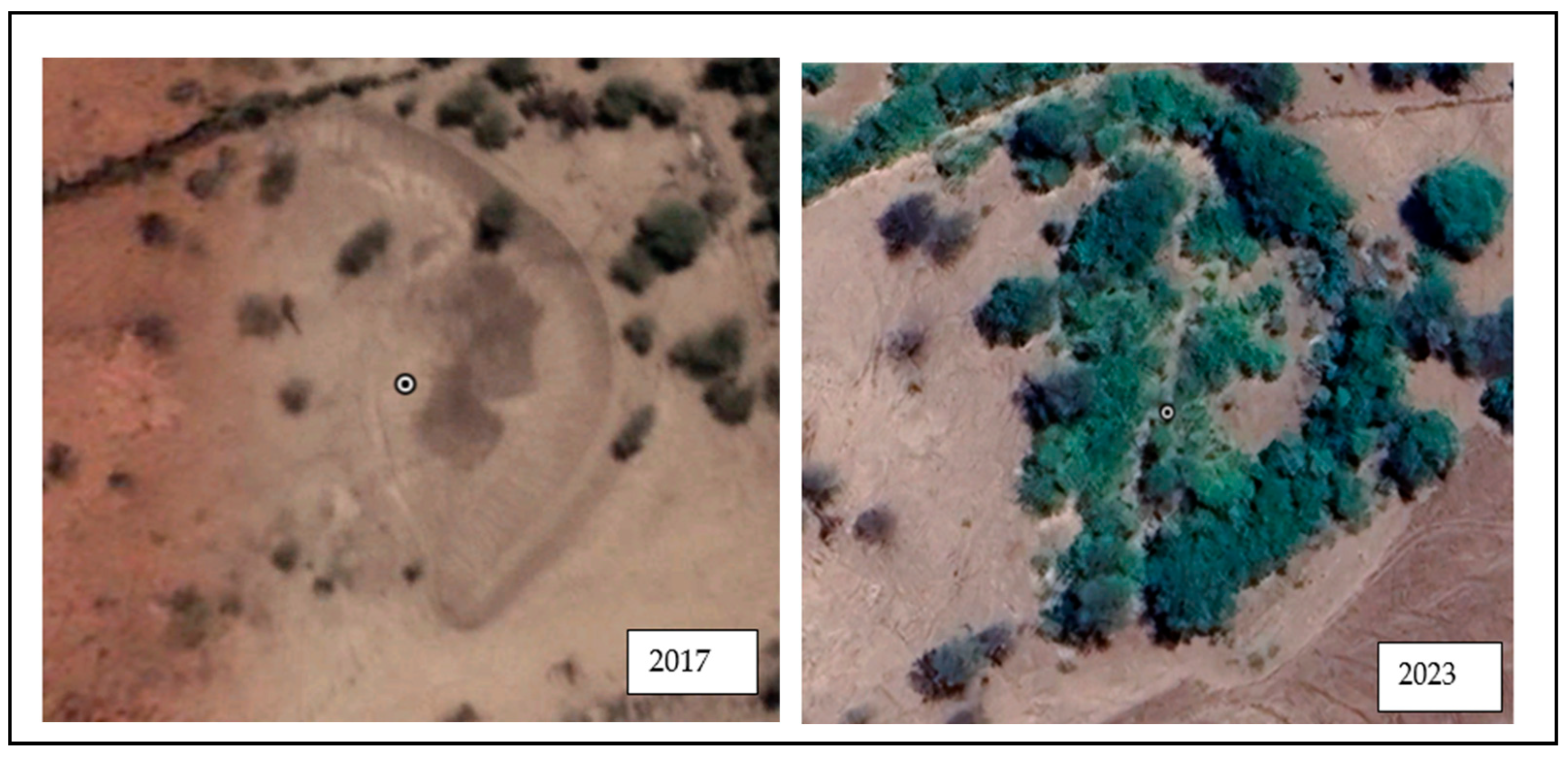
To understand the areas of significant intervention and the livelihoods adversely affected by Prosopis juliflora, we sought insights from the community using PGIS. Participants were divided into two groups, comprising men and women so as to capture the gendered perspectives. Gender systematically shapes access to resources, roles in land use, and exposure to impacts in pastoral and agropastoral systems, while also influencing decision-making processes, making it a well-established and relevant axis of differentiation. We generated an A0 paper map from Google Satellite images at the scale of 1:25,000. We then asked each group to identify and mark features in the community which have been lost or blocked due to Prosopis juliflora, including roads and water sources. We also asked them to indicate the areas of high and low invasion and livestock routes, along with roads and water sources blocked by Prosopis juliflora. We subsequently digitized the mapped information and systematically created a spatial digital representation of the identified regions using ArcGIS Pro (version 3.5.0, Esri Inc., Redlands, CA, USA). In the regions that the communities identified as heavily invaded by Prosopis juliflora, we cross-checked this information using historical imagery from Google Earth Pro (Version 7.3.6.10441, Google LLC, Mountain View, CA, USA). Temporal images from 2017 and 2023 were examined to validate community observations and determine changes in conditions at earlier periods, comparing them with more recent conditions.

2.3. Satellite Imagery Acquisition

We acquired satellite imagery data from Sentinel-1, Sentinel -2, and PlanetScope for February 2023 and 2025. Using the Google Earth Engine platform [24], we downloaded Sentinel-1 C-band Synthetic Aperture Radar (SAR) and Sentinel-2 Level 2A surface reflectance products from the Copernicus Open Access Hub [25], while Planet Labs Inc. provided the PlanetScope imagery [26]. We selected images from February, the driest month, due to minimal cloud cover and the distinct spectral signature of Prosopis juliflora, which remains green while surrounding vegetation is typically senescent. The key characteristics of the satellite imagery used are summarized in Table 1.

2.4. Vegetation Indices

We derived various vegetation indices and spectral ratios from the satellite image bands, as summarized in Table 2. Specifically, we computed six indices from Sentinel-1 using single co-polarization (VV) and dual-band cross-polarization (VH) data. From Sentinel-2 and PlanetScope imagery, we extracted 23 and 14 vegetation indices, respectively, to capture relevant spectral characteristics associated with Prosopis juliflora detection.
We selected these vegetation indices based on their capacity to capture distinct spectral characteristics associated with Prosopis juliflora. This species exhibits unique physiological traits, such as high chlorophyll content, distinctive leaf morphology, and water-use efficiency [27]. The selected indices use specific spectral bands from different satellite sensors to enhance the distinction of Prosopis from surrounding vegetation, estimate biomass, and minimize the influence of bare ground. Additionally, these indices strengthen spectral separability from other land cover types, leveraging their strengths in capturing variations in vegetation health, structure, and moisture content.

2.5. Data Analysis and Model Evaluation

We used the Random Forest machine learning classifier, which several studies have identified as a highly effective method for vegetation classification and invasive species detection [9,14,15,16,28]. Field surveys conducted in 2023 and 2025 provided georeferenced Prosopis juliflora presence–absence observations, which were used as predictor variables. Satellite data for these years were used to characterize the vegetation structure and spectral properties of the vegetation at that time. We constructed the dataset using vegetation indices as predictor variables and defined the response variable (PresAbs) as a binary factor indicating the presence or absence of Prosopis juliflora. We partitioned the data derived from digitized training areas into two subsets, allocating 70% for model training and 30% for testing. To enhance generalizability and reduce variance, we trained the model using five-fold cross-validation with mtry set to 3 and ntree set to 700. We assessed model performance using a confusion matrix. Additionally, we conducted a variable importance analysis to identify the most influential spectral indices contributing to Prosopis juliflora detection across the different satellite sources. We performed spatial prediction by applying the trained Random Forest model using predict function [29] from the base R stats package [30] to the raster stack of indices to generate predicted presence and overlaid the resulting presence map with land cover data. This predictive map served to complement the participatory GIS outputs by providing a data-driven spatial layer.

3. Results

3.1. Accuracy Assessment

3.1.1. Accuracy Assessment of the Random Forest Model Results

Sentinel-2 outperformed Sentinel-1 and PlanetScope in accurately classifying Prosopis juliflora presence, as presented in Table 3. The Sentinel-2 variables yielded the highest overall accuracy (90.65%) and a Cohen’s Kappa coefficient of 0.78, demonstrating strong agreement between predicted and actual classifications. McNemar’s test results indicate whether classification errors are symmetrically distributed between omission and commission errors. For classifications in which the test was statistically significant (p < 0.05), i.e., Sentinel-2 (p = 0.00617) and PlanetScope (p = 0.03887), the results indicate an asymmetric error pattern. These findings reflect differences in error patterns rather than differences in overall predictive performance. In contrast, PlanetScope produced slightly lower results than did Sentinel-1 and showed the weakest agreement (Kappa 0.403), reflecting challenges in correctly identifying negative cases. Overall, Sentinel-2 demonstrated the most reliable performance, reinforcing its suitability for detecting Prosopis juliflora presence.
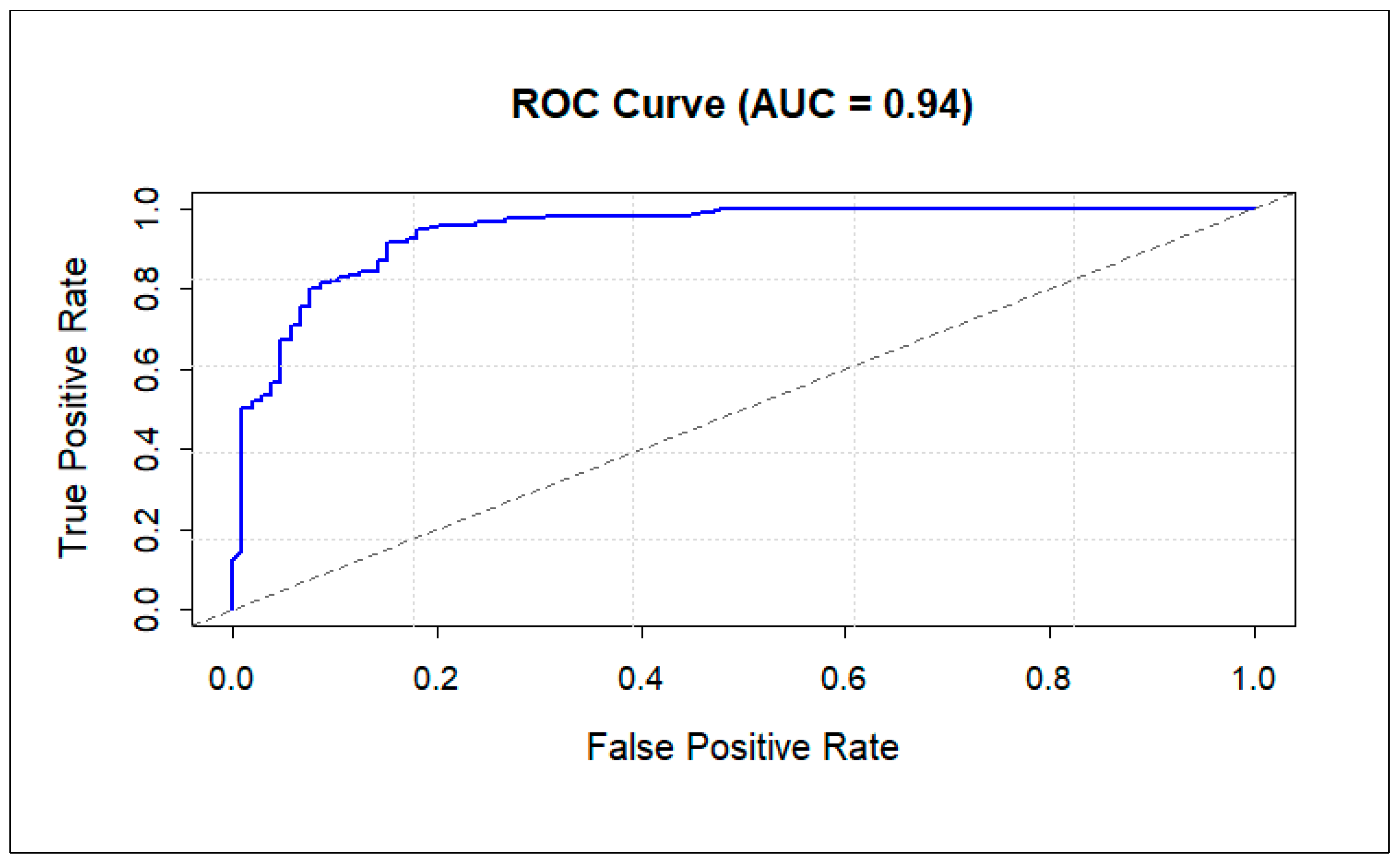
We further evaluated the performance of Sentinel-2 with the Random Forest model using the Receiver Operating Characteristic (ROC) curve, which illustrates the trade-off between sensitivity (true positive rate) and specificity (false positive rate). The model achieved a ROC value of 0.94, indicating excellent discrimination between the presence and absence of Prosopis juliflora (Figure 2). The diagonal dashed line on the ROC plot denotes a random classifier baseline. The observed ROC curve’s deviation above the baseline indicates a strong discriminative performance. This high AUC value confirms the robustness and reliability of Sentinel-2 in predicting the presence of the invasive species in the study area.

3.1.2. Variable Importance

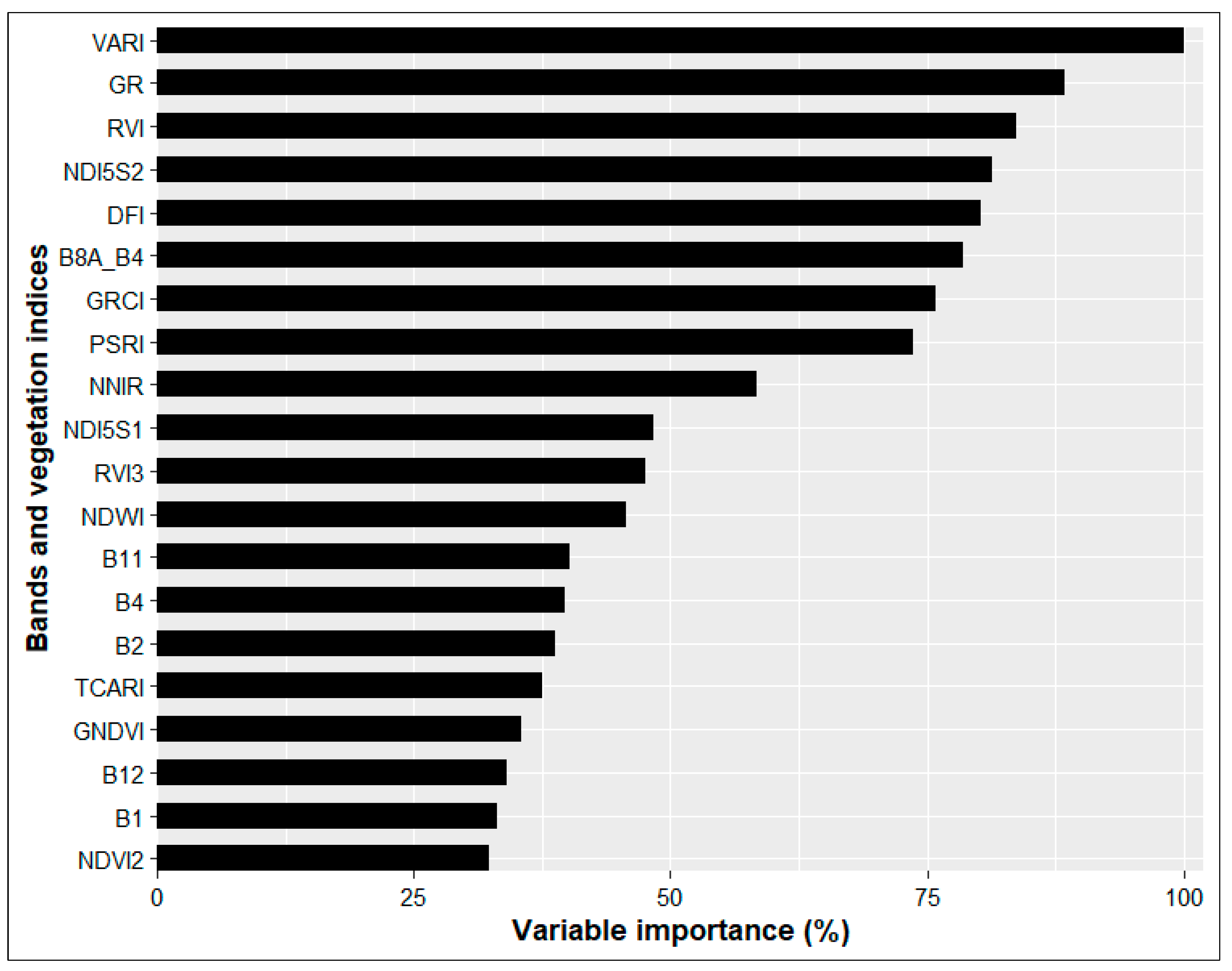
Given that Sentinel-2 achieved the highest classification accuracy, we identified and analyzed the spectral variables that contributed most significantly to the detection of Prosopis juliflora. The variable importance plot for Sentinel-2 (Figure 3) indicates the most influential spectral features, including the Visible Atmospherically Resistant Index (VARI), Green Ratio (GR), Ratio Vegetation Index (RVI), Normalized Difference of Alternate Spectral Bands (NDI5S2), and Dead Fuel Index (DFI), as well as several raw spectral bands such as B8A, B4, B11, B2, and B12. These findings highlight the importance of both raw reflectance values and derived indices in enhancing species detection. The prominence of red-edge and near infrared (NIR) bands highlights the ability of Sentinel 2 to distinguish vegetation from non-vegetated features due to their sensitivity to chlorophyll concentration and leaf structure. Indices like VARI and RVI amplify the spectral signal by emphasizing plant vigor and greenness, thereby improving the differentiation of Prosopis juliflora from other land cover types. By employing specific band ratios that capture the key physiological traits of the vegetation, these indices outperform the interpretability of single bands alone [31]. The combination of high spectral and temporal resolution positions Sentinel-2 as a powerful sensor for detecting Prosopis juliflora, particularly when leveraging both raw spectral bands and vegetation indices tailored to vegetation characteristics.

3.2. Participatory Geographical Information Systems (GIS)

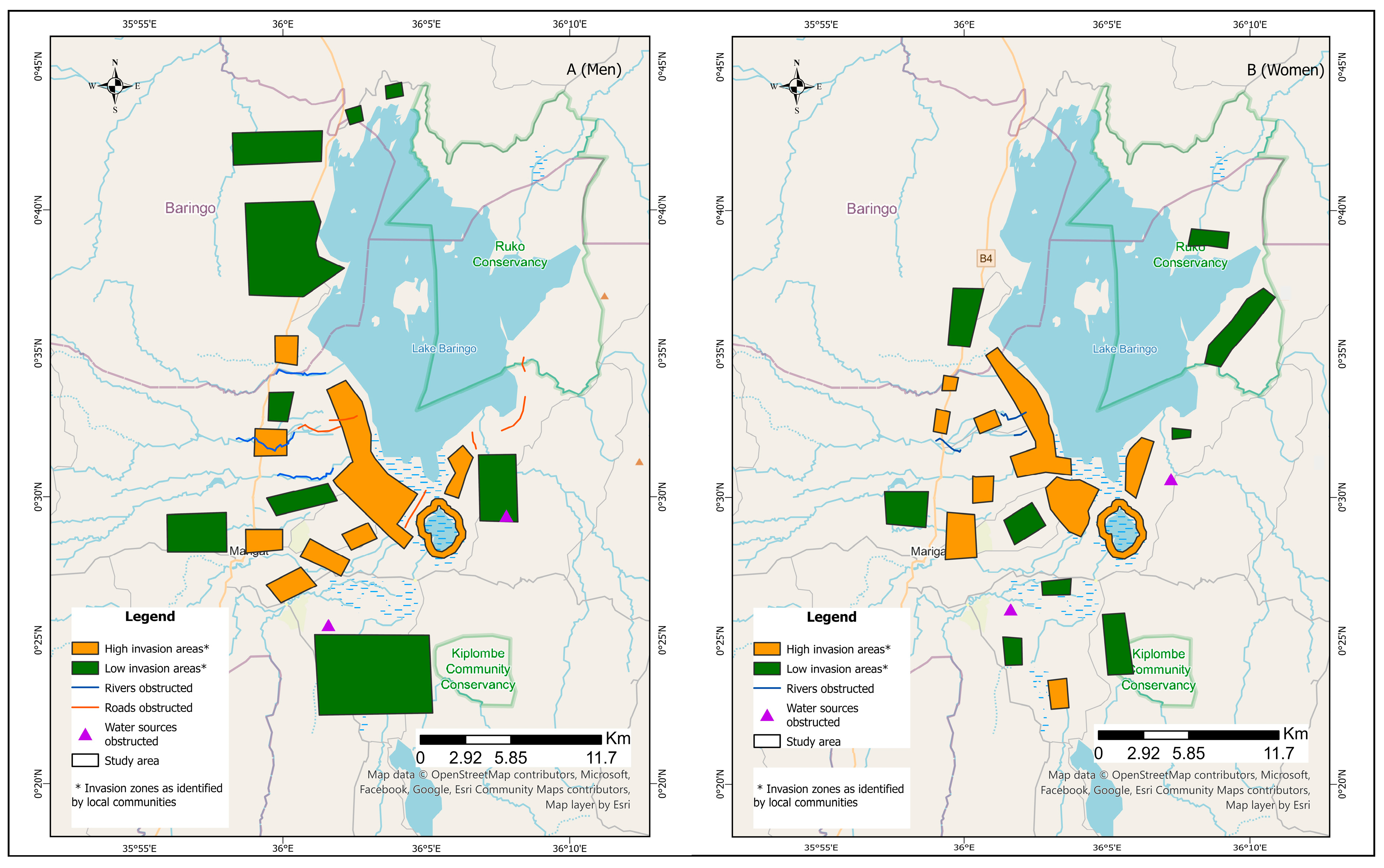
We conducted participatory GIS sessions separately with men’s and women’s groups to explore the spatial knowledge, perceptions, and lived experiences related to Prosopis juliflora invasion (Figure 4). Both groups actively engaged in the mapping exercise; however, their perspectives differed significantly, reflecting gender-specific roles, responsibilities, and interactions with the landscape. Men demonstrated extensive spatial awareness of Prosopis juliflora presence along livestock routes, distance grazing areas, and roads. Their discussions primarily focused on the impacts of Prosopis juliflora on livestock movement, blocked water access points for animals, and degradation of rangelands. Some male participants recognized the importance of Prosopis juliflora as a livestock feed during the dry season, source of charcoal, and live fencing. They also recognized the ecosystem-level benefits, including soil stabilization, reduced sandstorms, ecosystem restoration, and a cooler microclimate around Lake Baringo.
Women demonstrated detailed grounded knowledge around their immediate surroundings and household environment. Their discussions focused on the domestic challenges posed by Prosopis juliflora, including restricted access to water and physical safety risks from the plant’s sharp thorns. They also raised strong concerns regarding the health impacts, particularly eye irritation caused by the smoke generated when using Prosopis juliflora as firewood. Both men and women recognized the widespread and increasing dominance of Prosopis juliflora across the landscape. While they recognized its value as a source of livestock feed and fuel, they emphasized that its uncontrolled spread has disrupted their daily livelihoods. These insights underscore the need for integrated, gender responsive management strategies that address both the ecological and socio-economic dimensions of the invasion.
By combining participatory GIS with gender-disaggregated discussions, we gained valuable insights into the spatial distribution and socio-economic impacts of the invasive species [32]. Prosopis juliflora intersects with community livelihoods in complex and multifaceted ways, highlighting the importance of integrating diverse knowledge systems into environmental decision-making processes.
The community members identified the areas of high and low Prosopis juliflora invasion, as well as water sources and roads blocked by the invasive species. The digitized maps (Figure 4) reflect their inputs, revealing that the highest invasions occurred along the edges of Lake Baringo and other water bodies, with water pans and rivers being particularly affected. The satellite imagery (Figure 5) further illustrates a water source identified by the community in the participatory maps that has been encroached upon by Prosopis juliflora.

3.3. Predicted Presence and Absence of Prosopis juliflora

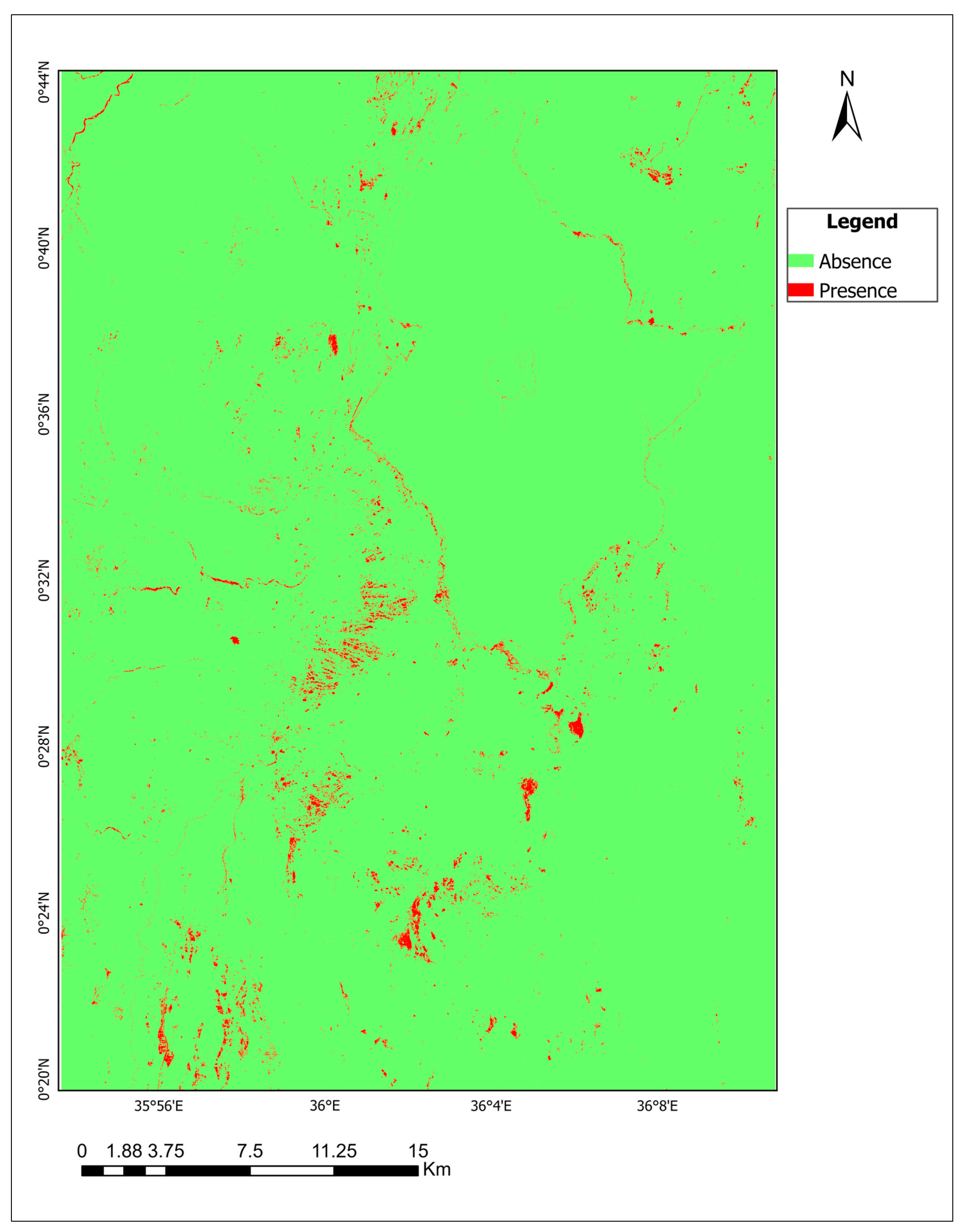
We generated the spatial prediction of Prosopis juliflora presence and absence using the predict function in R based on a Random Forest model [29]. The resulting binary map (Figure 6) indicates the predicted presence areas. We developed this predictive map to complement and validate the areas identified by the community as invasion zones, captured through participatory mapping (Figure 5). The spatial distribution of predicted Prosopis juliflora presence reveals clustered patterns, particularly around roads and water bodies. This clustering reflects the species’ dispersal dynamics, which are strongly influenced by anthropogenic disturbance and hydrological pathways. To assess agreement between the predicted presence and absence and locations identified by the community as invaded, the PGIS derived maps were compared with predicted distributions. While formal quantitative overlap metrics were not computed, visual and spatial correspondence suggests that predicted Posopis juliflora presence points generally align with community observations. These predictions offer a valuable spatial reference for prioritizing targeted management interventions.
This demonstrates the model’s effectiveness in capturing the spatial patterns associated with the target variable. The map of predicted probabilities (Figure 6) revealed clear spatial heterogeneity, highlighting the hotspots of Prosopis juliflora occurrence. This spatial output provides valuable insights for identifying priority areas for monitoring and guiding targeted management interventions. Applying a classification threshold of 0.5 produced strong performance metrics, including a precision of 0.908, indicating high accuracy in identifying true presence events, as presented in Table 4.
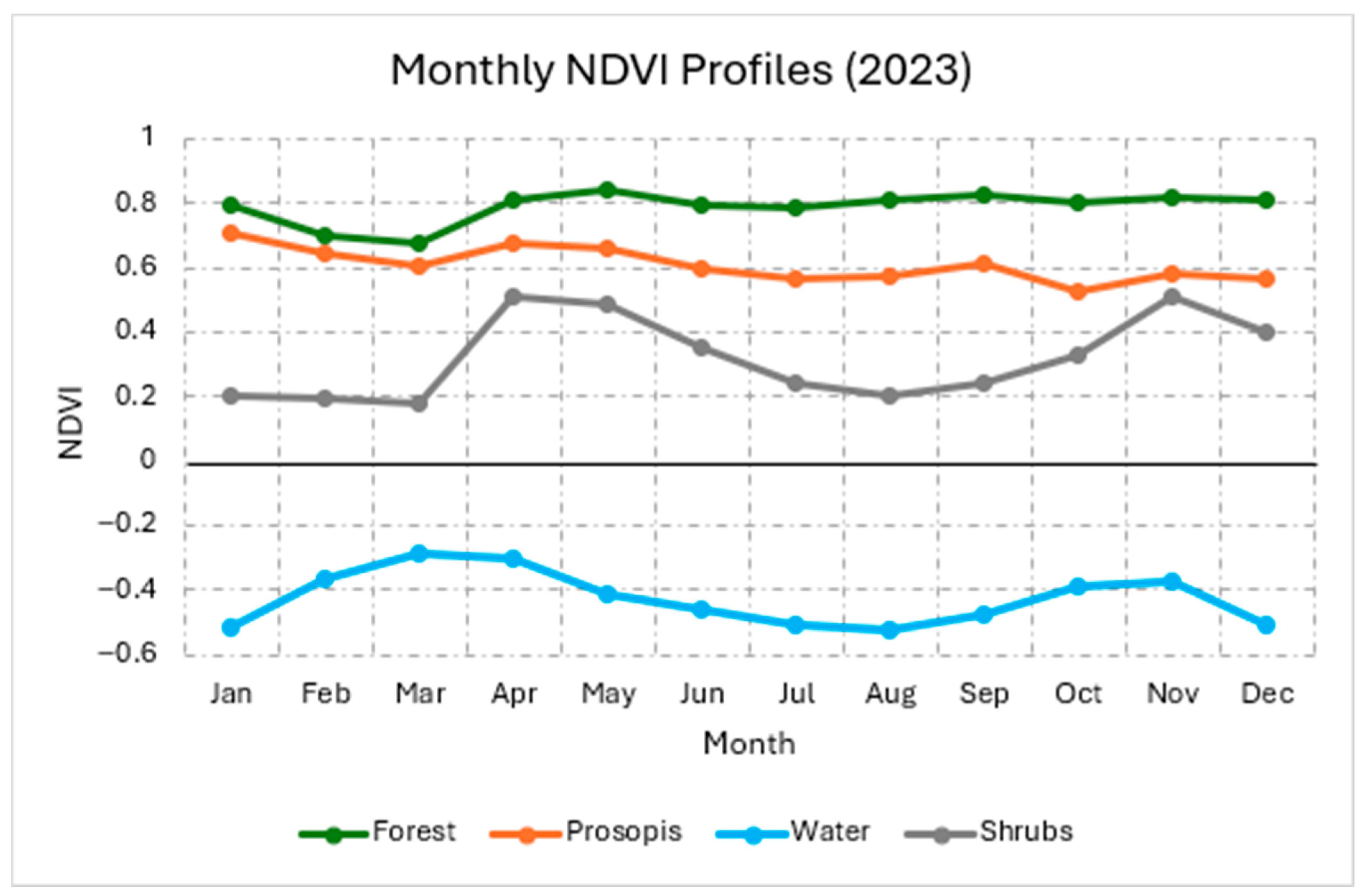
We analyzed monthly NDVI profiles for 2023 to examine temporal variation across land-cover types (Figure 7). Forest areas consistently exhibited the highest NDVI values throughout the year, ranging from 0.68 to 0.86. Prosopis juliflora showed relatively stable NDVI values between 0.53 and 0.70 across the months, including during the dry period (January–February). Shrublands displayed moderate NDVI values (0.18–0.50), with higher values during the rainy season. Water bodies consistently produced negative NDVI values (–0.52 to –0.30), reflecting non-vegetated surfaces. The horizontal reference line at NDVI = 0 highlights the threshold between non-vegetated (NDVI ≤ 0) and vegetated (NDVI > 0) surfaces. Seasonal variability differed among land-cover types, with Prosopis juliflora showing lower intra-annual NDVI variation compared to that of shrublands.
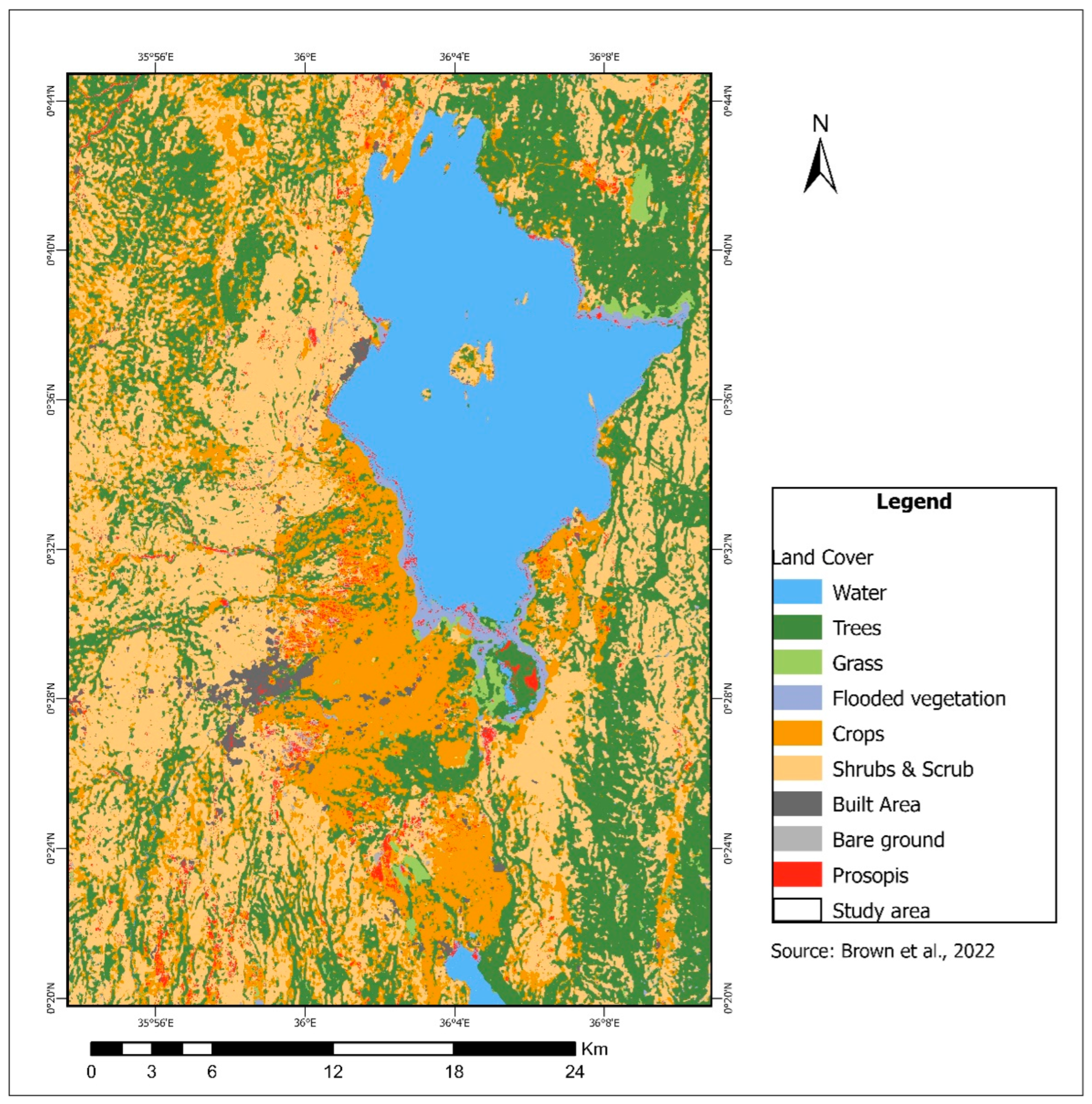
By overlaying the predicted Prosopis juliflora presence map with land cover data, we identified a strong association between the invasive species and specific land cover types, particularly water bodies, croplands and grasslands (Figure 8). These areas are critical in supporting local livelihoods, providing essential resources such as water, pasture, and food. This invasion by Prosopis juliflora leads to the degradation of rangeland ecosystems, as the altered ecosystems are unable to sustain their ecological functions and support community livelihoods. It also leads to a decline in forage availability, threatening food security and households dependent on rangeland systems. Over time, this degradation leads to ecological vulnerability and reduces the resilience of communities reliant on these ecosystems.

4. Discussion

Effectively managing the spread of Prosopis juliflora requires accurate, high-resolution spatial information, given the species’ profound impacts on both livelihoods and ecosystem functioning in dryland regions. In this study, the Sentinel-2 satellite has emerged as the most effective sensor for detecting Prosopis juliflora invasion, delivering high classification accuracy among the tested platforms. Its superior performance can be attributed to its rich spectral detail, particularly in the red-edge and near-infrared regions, which enhances its sensitivity to vegetation traits such as chlorophyll content and canopy structure. The high sensitivity of Sentinel-2 demonstrates its effectiveness in accurately detecting invaded areas. Key vegetation indices, including VARI, RVI, and GR, ranked among the most important predictors, underscoring the advantage of combining raw spectral bands with derived indices for improved detection of invasive species. These results align with prior studies that emphasize the role of spectral indices in strengthening species discrimination [15,34,35]. While previous research identified NDVI and GNDVI as effective indicators for Prosopis detection [36,37], our findings did not rank these indices among the top predictors, possibly due to their lower specificity for this species in mixed land cover conditions. NDVI-based analysis effectively captures general vegetation dynamics. The comparatively low seasonal NDVI fluctuation of Prosopis juliflora suggests persistent greenness and photosynthetic activity, which may contribute to its invasive advantage in arid and semi-arid rangelands. However, it may lack the specificity required to fully distinguish Prosopis juliflora from native vegetation species [15,16]. In contrast, PlanetScope and Sentinel-1 demonstrated comparatively lower classification performance. Despite PlanetScope’s finer spatial resolution and Sentinel-1’s ability to capture structural information through radar backscatter, both sensors fell short in capturing the spectral complexity required to differentiate Prosopis juliflora from surrounding vegetation. These findings highlight the critical importance of matching sensor capabilities to the spectral and structural attributes of the target species when designing remote-sensing-based monitoring strategies.
By incorporating community perspectives into the analysis, we identified a strong spatial and visual agreement between predicted Prosopis juliflora presence and areas that local residents recognized as invaded. This step was essential not only for validating satellite-based predictions but also for capturing ground-level realities that remote sensing alone cannot fully represent [38], and vice versa, where self-reporting alone is not sufficient [39]. Community members detailed the species’ adverse impacts on critical livelihood resources, including grazing lands, water sources, and roads, significantly disrupting their daily activities. At the same time, they acknowledged the perceived benefits of Prosopis juliflora, such as its use as fuelwood, its role in moderating microclimates, and its value as a supplementary feed during dry seasons. However, they also highlighted its negative effects, particularly digestive issues in livestock and its encroachment on water bodies and agricultural lands. These insights reveal the nuanced and often contradictory relationship between rural communities and invasive species, where ecological harm coexists with socio-economic utility [40,41].
Integrating this gender-disaggregated local knowledge adds a critical socio-ecological dimension to the study, setting it apart from prior remote-sensing efforts that often rely solely on biophysical data. This approach not only enhances the credibility of the spatial predictions but also ensures that management interventions are grounded in the lived experiences and priorities of those most affected. By bridging advanced ecological modeling with participatory spatial knowledge rooted in citizen science, the study offers a more holistic framework for addressing invasive species in complex human–environment systems using citizen science.
Prosopis juliflora exerts a wide range of ecological effects that span both ecosystem services and ecosystem degradation in invaded landscapes. The invasive species leads to afforestation in sparsely populated areas, stabilizes soil, acts as animal fodder, reduces wind erosion, and locally modifies microclimates by increasing shade and organic matter, which may enhance soil moisture retention and nutrient availability [42,43,44,45]. These attributes have led to its promotion in drylands as a tool for land rehabilitation and fuel provision. In the long term however, Prosopis juliflora displaces the native vegetation, suppresses herbaceous forages, and leads to a decline in biodiversity [22,46]. Dense Prosopis juliflora thickets can alter soil chemistry, impede surface water flow, reduce ground water recharge, and increase evapotranspiration, leading to water scarcity [2,47]. The transformation of open rangelands into impenetrable woody stands restricts livestock mobility and undermines pastoral production systems [6]. These contrasting effects highlight the context-dependent nature of Prosopis juliflora impacts and underscore the need for management strategies that move beyond simplistic narratives of either benefit or harm, instead accounting for scale, invasion stage, and long-term ecosystem trajectories [44,46].
The spatial prediction maps effectively identified Prosopis juliflora-invaded areas and revealed a distinct pattern of clustered invasions, particularly along roads, water bodies, and grazing corridors. This spatial distribution reflects the natural and anthropogenic mechanisms of seed dispersal through livestock movement, water flow, and human activities, acting as key facilitators of the species’ spread. Integrating predictive modeling with PGIS data significantly enhanced the reliability and contextual relevance of invasion mapping by aligning remote sensing outputs with community-level observations. The NDVI time-series analysis further reinforced the invasive resilience of Prosopis juliflora, highlighting its ability to maintain consistent photosynthetic activity and greenness throughout the year, even during the dry season, unlike native vegetation that typically senesces under moisture stress [43,48]. This physiological advantage enables Prosopis juliflora to outcompete indigenous species and expand aggressively in arid and semi-arid environments. Notably, the dry season provides optimal conditions for detecting Prosopis juliflora via satellite imagery, as its persistent greenness contrasts sharply with the surrounding withered vegetation [14]. The ability of Prosopis juliflora to thrive year round underscores its long-term ecological implications, including biodiversity loss, reduced rangeland productivity, and diminished water availability.
The results from the study align with findings from previous research on invasive plant species monitoring using remote-sensing data. Studies have demonstrated that spectral, structural, and phenological characteristics captured by multispectral and time-series remote-sensing data enable effective discrimination of invasive woody species from native vegetation, particularly in heterogeneous landscapes [5,15,49]. Sentinel-2 (spectral) also outperforms Sentinel-1 (SAR) for mapping invasive species [9,50]. The classification accuracies obtained in the study are comparable to those reported in similar dryland environments, although variations are expected due to differences in sensor resolution, landscape heterogeneity, and invasion density [18,20,31]. Previous studies have also shown that machine learning models can successfully exploit spectral, climatic, and topographic predictors to capture the spatial patterns of invasive plant species [12,13,28,35,36]. The results from the study support the applicability of combining remote sensing and machine learning as a scalable and transferable approach for invasive species mapping in arid and semi-arid environments.

5. Conclusions

The study highlights the importance of integrating satellite remote sensing with machine learning to enhance the detection and mapping of Prosopis juliflora in semi-arid landscapes. Sentinel-2 exhibited a higher accuracy due to its rich spectral resolution and the effectiveness of the derived vegetation indices when compared to the results for PlanetScope and Sentinel-1, reflecting their limitations regarding spectral sensitivity and structural discrimination. Incorporating community perspectives captured through gender-disaggregated participatory GIS provided valuable contextual insights that complemented and validated the remote sensing output. Local knowledge on the spatial extent and impacts of Prosopis juliflora offered a nuanced understanding of its socio-ecological implications, highlighting aspects often overlooked by remote sensing alone. Our study also revealed, using NDVI time-series analysis, that Prosopis juliflora maintains stable greenness throughout the year, even during dry seasons, underscoring its invasive resilience and competitive advantage in water-limited environments. This phenological trait enhances its detectability using satellite imagery and contributes to its dominance over native vegetation. The satellite-based remote sensing analysis, coupled with machine learning models and community insights, offers a robust framework for supporting targeted management interventions and prioritizing control efforts. This study contributes to advancing remote-sensing methodologies and citizen science application for invasive species monitoring and emphasizes the importance of co-producing knowledge with affected communities. Future work should further explore the integration of multi-sensor data to address the complexities of heterogenous landscapes and mixed vegetation types, thereby improving detection accuracy and operational scalability.

Author Contributions

Conceptualization, A.P.; data collection, F.C. and D.G.; writing—original draft, F.C.; analysis, F.C. and A.P.; writing—review, D.G., R.D., A.W. and A.P.; editing, D.G., R.D., A.W. and A.P.; investigation A.P.; methodology, A.P. All authors have read and agreed to the published version of the manuscript.

Funding

This research received no external funding.

Institutional Review Board Statement

The study was approved by the ILRI Institutional Research Ethics Committee (ILRI-IREC2023-51 on 9 April 2024).

Informed Consent Statement

Informed consent was obtained from all subjects involved in the study.

Data Availability Statement

The data that supports the findings of this study are available from the corresponding author (A.P.) upon reasonable request.

Acknowledgments

We would like to thank CGIAR Science Programs—Accelerator for Digital Transformation (DTA) and Sustainable Animal and Aquatic Foods (SAAF) for supporting this work.

Conflicts of Interest

The authors declare no conflicts of interest.

References

  1. Lenjisa, D. Prosopis juliflora Distribution, Impacts, and Control Methods Available in Ethiopia. Int. J. Nat. Resour. Ecol. Manag. 2022, 7, 132–144. [Google Scholar] [CrossRef]
  2. Dakhil, M.A.; El-Keblawy, A.; El-Sheikh, M.A.; Halmy, M.W.A.; Ksiksi, T.; Hassan, W.A. Global Invasion Risk Assessment of Prosopis juliflora at Biome Level: Does Soil Matter? Biology 2021, 10, 203. [Google Scholar] [CrossRef]
  3. Mwangi, E.; Swallow, B. Prosopis juliflora Invasion and Rural Livelihoods in the Lake Baringo Area of Kenya. Conserv. Soc. 2008, 6, 130. [Google Scholar] [CrossRef]
  4. Mungoche, J.; Wasonga, O.V.; Ikiror, D.; Akala, H.; Gachuiri, C.; Gitau, G. Prosopis juliflora in the Drylands: A Review of Invasion, Impacts and Management in Eastern Africa. Sustain. Environ. 2025, 11, 2521946. [Google Scholar] [CrossRef]
  5. Walsh, S.J. Multi-Scale Remote Sensing of Introduced and Invasive Species: An Overview of Approaches and Perspectives. In Understanding Invasive Species in the Galapagos Islands; Torres, M.D.L., Mena, C.F., Eds.; Social and Ecological Interactions in the Galapagos Islands; Springer International Publishing: Cham, Switzerland, 2018; pp. 143–154. [Google Scholar]
  6. Degefu, M.A.; Assen, M.; Few, R.; Tebboth, M. Performance of Management Interventions to the Impacts of Prosopis juliflora in Arid and Semiarid Regions of the Middle Awash Valley, Ethiopia. Glob. J. Agric. Innov. Res. Dev. 2022, 9, 35–53. [Google Scholar] [CrossRef]
  7. Royimani, L.; Mutanga, O.; Odindi, J.; Dube, T.; Matongera, T.N. Advancements in Satellite Remote Sensing for Mapping and Monitoring of Alien Invasive Plant Species (AIPs). Phys. Chem. Earth Parts A/B/C 2019, 112, 237–245. [Google Scholar] [CrossRef]
  8. Villalobos Perna, P.; Di Febbraro, M.; Carranza, M.L.; Marzialetti, F.; Innangi, M. Remote Sensing and Invasive Plants in Coastal Ecosystems: What We Know So Far and Future Prospects. Land 2023, 12, 341. [Google Scholar] [CrossRef]
  9. Zaka, M.M.; Samat, A. Advances in Remote Sensing and Machine Learning Methods for Invasive Plants Study: A Comprehensive Review. Remote Sens. 2024, 16, 3781. [Google Scholar] [CrossRef]
  10. McCarty, D.A.; Kim, H.W.; Lee, H.K. Evaluation of Light Gradient Boosted Machine Learning Technique in Large Scale Land Use and Land Cover Classification. Environments 2020, 7, 84. [Google Scholar] [CrossRef]
  11. Savitha, C.; Talari, R. Evaluating the Performance of Random Forest, Support Vector Machine, Gradient Tree Boost, and CART for Improved Crop-Type Monitoring Using Greenest Pixel Composite in Google Earth Engine. Environ. Monit. Assess. 2025, 197, 437. [Google Scholar] [CrossRef]
  12. Sheykhmousa, M.; Mahdianpari, M.; Ghanbari, H.; Mohammadimanesh, F.; Ghamisi, P.; Homayouni, S. Support Vector Machine Versus Random Forest for Remote Sensing Image Classification: A Meta-Analysis and Systematic Review. IEEE J. Sel. Top. Appl. Earth Obs. Remote Sens. 2020, 13, 6308–6325. [Google Scholar] [CrossRef]
  13. Zhang, H.; Eziz, A.; Xiao, J.; Tao, S.; Wang, S.; Tang, Z.; Zhu, J.; Fang, J. High-Resolution Vegetation Mapping Using eXtreme Gradient Boosting Based on Extensive Features. Remote Sens. 2019, 11, 1505. [Google Scholar] [CrossRef]
  14. Paliwal, A.; Mhelezi, M.; Galgallo, D.; Banerjee, R.; Malicha, W.; Whitbread, A. Utilizing Artificial Intelligence and Remote Sensing to Detect Prosopis juliflora Invasion: Environmental Drivers and Community Insights in Rangelands of Kenya. Plants 2024, 13, 1868. [Google Scholar] [CrossRef] [PubMed]
  15. Ahmed, N.; Atzberger, C.; Zewdie, W. Species Distribution Modelling Performance and Its Implication for Sentinel-2-Based Prediction of Invasive Prosopis juliflora in Lower Awash River Basin, Ethiopia. Ecol. Process. 2021, 10, 18. [Google Scholar] [CrossRef]
  16. Meroni, M.; Ng, W.; Rembold, F.; Leonardi, U.; Atzberger, C.; Gadain, H.; Shaiye, M. Mapping Prosopis juliflora in West Somaliland with Landsat 8 Satellite Imagery and Ground Information. Land Degrad. Dev. 2017, 28, 494–506. [Google Scholar] [CrossRef]
  17. Gunawardena, A.R.; Fernando, T.T.; Nissanka, S.P.; Dayawansa, N.D.K. Assessment of Spatial Distribution and Estimation of Biomass of Prosopis juliflora (Sw.) DC. in Puttlam to Mannar Region of Sri Lanka Using Remote Sensing and GIS. Trop. Agric. Res. 2015, 25, 228. [Google Scholar] [CrossRef]
  18. Ng, W.-T.; Rima, P.; Einzmann, K.; Immitzer, M.; Atzberger, C.; Eckert, S. Assessing the Potential of Sentinel-2 and Pléiades Data for the Detection of Prosopis and Vachellia Spp. in Kenya. Remote Sens. 2017, 9, 74. [Google Scholar] [CrossRef]
  19. Wakie, T.T.; Evangelista, P.H.; Jarnevich, C.S.; Laituri, M. Mapping Current and Potential Distribution of Non-Native Prosopis juliflora in the Afar Region of Ethiopia. PLoS ONE 2014, 9, e112854. [Google Scholar] [CrossRef] [PubMed]
  20. Zagajewski, B.; Kluczek, M.; Zdunek, K.B.; Holland, D. Sentinel-2 versus PlanetScope Images for Goldenrod Invasive Plant Species Mapping. Remote Sens. 2024, 16, 636. [Google Scholar] [CrossRef]
  21. Ahmed, N.; Zewdie, W. Modeling Invasive Prosopis juliflora Distribution Using the Newly Launched Ethiopian Remote Sensing Satellite-1 (ETRSS-1) in the Lower Awash River Basin, Ethiopia. In Applications of Remote Sensing; IntechOpen: London, UK, 2023. [Google Scholar]
  22. Mbaabu, P.R.; Ng, W.-T.; Schaffner, U.; Gichaba, M.; Olago, D.; Choge, S.; Oriaso, S.; Eckert, S. Spatial Evolution of Prosopis Invasion and Its Effects on LULC and Livelihoods in Baringo, Kenya. Remote Sens. 2019, 11, 1217. [Google Scholar] [CrossRef]
  23. Ochieng, R.; Recha, C.; Bebe, B.O.; Ogendi, G.M. Rainfall Variability and Droughts in the Drylands of Baringo County, Kenya. Open Access Libr. J. 2017, 4, e3827. [Google Scholar] [CrossRef]
  24. Gorelick, N.; Hancher, M.; Dixon, M.; Ilyushchenko, S.; Thau, D.; Moore, R. Google Earth Engine: Planetary-Scale Geospatial Analysis for Everyone. Remote Sens. Environ. 2017, 202, 18–27. [Google Scholar] [CrossRef]
  25. European Space Agency (ESA). Copernicus Data Space. 2025 Ecosystem. Available online: https://www.sentinel-hub.com/explore/copernicus-data-space-ecosystem/ (accessed on 12 May 2025).
  26. Planet Labs Inc. PlanetScope Imagery; Planet Labs Inc.: San Francisco, CA, USA, 2025. [Google Scholar]
  27. Hussain, M.I.; El-Keblawy, A.; Mitterand Tsombou, F. Leaf Age, Canopy Position, and Habitat Affect the Carbon Isotope Discrimination and Water-Use Efficiency in Three C3 Leguminous Prosopis Species from a Hyper-Arid Climate. Plants 2019, 8, 402. [Google Scholar] [CrossRef]
  28. Shiferaw, H.; Bewket, W.; Eckert, S. Performances of Machine Learning Algorithms for Mapping Fractional Cover of an Invasive Plant Species in a Dryland Ecosystem. Ecol. Evol. 2019, 9, 2562–2574. [Google Scholar] [CrossRef]
  29. Chambers, J.M.; Hastie, T.J. (Eds.) Statistical Models in S, 1st ed.; Routledge: New York, NY, USA, 2017. [Google Scholar]
  30. R Core Team. R: A Language and Environment for Statistical Computing; R Foundation for Statistical Computing: Vienna, Austria, 2024. [Google Scholar]
  31. Xue, J.; Su, B. Significant Remote Sensing Vegetation Indices: A Review of Developments and Applications. J. Sens. 2017, 2017, 1353691. [Google Scholar] [CrossRef]
  32. Luigi Nimis, P.; Pittao, E.; Altobelli, A.; De Pascalis, F.; Laganis, J.; Martellos, S. Mapping Invasive Plants with Citizen Science. A Case Study from Trieste (NE Italy). Plant Biosyst. 2019, 153, 700–709. [Google Scholar] [CrossRef]
  33. Brown, C.F.; Brumby, S.P.; Guzder-Williams, B.; Birch, T.; Hyde, S.B.; Mazzariello, J.; Czerwinski, W.; Pasquarella, V.J.; Haertel, R.; Ilyushchenko, S.; et al. Dynamic World, Near Real-Time Global 10 m Land Use Land Cover Mapping. Sci. Data 2022, 9, 251. [Google Scholar] [CrossRef]
  34. Iqbal, I.M.; Balzter, H.; Firdaus-e-Bareen; Shabbir, A. Identifying the Spectral Signatures of Invasive and Native Plant Species in Two Protected Areas of Pakistan through Field Spectroscopy. Remote Sens. 2021, 13, 4009. [Google Scholar] [CrossRef]
  35. Ouma, Y.O.; Gabasiane, T.G.; Nkhwanana, N. Mapping Prosopis L. (Mesquites) Using Sentinel-2 MSI Satellite Data, NDVI and SVI Spectral Indices with Maximum-Likelihood and Random Forest Classifiers. J. Sens. 2023, 2023, 8882730. [Google Scholar] [CrossRef]
  36. Bhaveshkumar, K.I.; Sharma, L.K.; Verma, R.K. Applicability of Phenological Indices for Mapping of Understory Invasive Species Using Machine Learning Algorithms. Biol. Invasions 2024, 26, 2901–2921. [Google Scholar] [CrossRef]
  37. Mallmann, C.L.; Zaninni, A.F.; Filho, W.P. Vegetation Index Based in Unmanned Aerial Vehicle (Uav) to Improve the Management of Invasive Plants in Protected Areas, Southern Brazil. In Proceedings of the 2020 IEEE Latin American GRSS & ISPRS Remote Sensing Conference (LAGIRS), Santiago, Chile, 22–26 March 2020; IEEE: Piscataway, NJ, USA, 2020; pp. 66–69. [Google Scholar]
  38. Van Etten, J.; De Sousa, K.; Aguilar, A.; Barrios, M.; Coto, A.; Dell’Acqua, M.; Fadda, C.; Gebrehawaryat, Y.; Van De Gevel, J.; Gupta, A.; et al. Crop Variety Management for Climate Adaptation Supported by Citizen Science. Proc. Natl. Acad. Sci. USA 2019, 116, 4194–4199. [Google Scholar] [CrossRef]
  39. Paliwal, A.; Jain, M. The Accuracy of Self-Reported Crop Yield Estimates and Their Ability to Train Remote Sensing Algorithms. Front. Sustain. Food Syst. 2020, 4, 25. [Google Scholar] [CrossRef]
  40. Reynolds, C.; Venter, N.; Cowie, B.W.; Marlin, D.; Mayonde, S.; Tocco, C.; Byrne, M.J. Mapping the Socio-Ecological Impacts of Invasive Plants in South Africa: Are Poorer Households with High Ecosystem Service Use Most at Risk? Ecosyst. Serv. 2020, 42, 101075. [Google Scholar] [CrossRef]
  41. Shackleton, R.T.; Shackleton, C.M.; Kull, C.A. The Role of Invasive Alien Species in Shaping Local Livelihoods and Human Well-Being: A Review. J. Environ. Manag. 2019, 229, 145–157. [Google Scholar] [CrossRef]
  42. Kamiri, H.W.; Choge, S.K.; Becker, M. Management Strategies of Prosopis juliflora in Eastern Africa: What Works Where? Diversity 2024, 16, 251. [Google Scholar] [CrossRef]
  43. Hussain, M.I.; Shackleton, R.; El-Keblawy, A.; González, L.; Trigo, M.M. Impact of the Invasive Prosopis juliflora on Terrestrial Ecosystems. In Sustainable Agriculture Reviews 52; Lichtfouse, E., Ed.; Sustainable Agriculture Reviews; Springer International Publishing: Cham, Switzerland, 2021; Volume 52, pp. 223–278. [Google Scholar]
  44. Eshetu, A.A. A Valuable or a Curse Resource? A Systematic Review on Expansion, Perception of Local Community, Benefits and Side Effects of Prosopis juliflora. Front. Conserv. Sci. 2024, 5, 1491618. [Google Scholar] [CrossRef]
  45. Enescu, C.M.; Mihalache, M.; Ilie, L.; Dincă, L.; Timofte, A.I.; Murariu, G. Afforestation of Degraded Lands: A Global Review of Practices, Species, and Ecological Outcomes. Forests 2025, 16, 1743. [Google Scholar] [CrossRef]
  46. Kishoin, V.; Tumwesigye, W.; Turyasingura, B.; Wilber, W.; Chavula, P.; Gweyi-Onyango, J.P.; Kader, S.; Spalevic, V.; Skataric, G.; Jaufer, L. The Negative and Positive Impacts of Prosopis juliflora on the Kenyan and Ethiopian Ecosystems: A Review Study. Not. Sci. Biol. 2024, 16, 11832. [Google Scholar] [CrossRef]
  47. Mohanraj, R.; Akil Prasath, R.V.; Rajasekaran, A. Assessment of Vegetation, Soil Nutrient Dynamics and Heavy Metals in the Prosopis juliflora Invaded Lands at Semi-Arid Regions of Southern India. Catena 2022, 216, 106374. [Google Scholar] [CrossRef]
  48. Rajak, P.; Afreen, T.; Raghubanshi, A.S.; Singh, H. Rainfall Fluctuation Causes the Invasive Plant Prosopis juliflora to Adapt Ecophysiologically and Change Phenotypically. Environ. Monit. Assess. 2024, 197, 26. [Google Scholar] [CrossRef]
  49. Vaz, A.S.; Alcaraz-Segura, D.; Campos, J.C.; Vicente, J.R.; Honrado, J.P. Managing Plant Invasions through the Lens of Remote Sensing: A Review of Progress and the Way Forward. Sci. Total Environ. 2018, 642, 1328–1339. [Google Scholar] [CrossRef] [PubMed]
  50. Kattenborn, T.; Lopatin, J.; Förster, M.; Braun, A.C.; Fassnacht, F.E. UAV Data as Alternative to Field Sampling to Map Woody Invasive Species Based on Combined Sentinel-1 and Sentinel-2 Data. Remote Sens. Environ. 2019, 227, 61–73. [Google Scholar] [CrossRef]
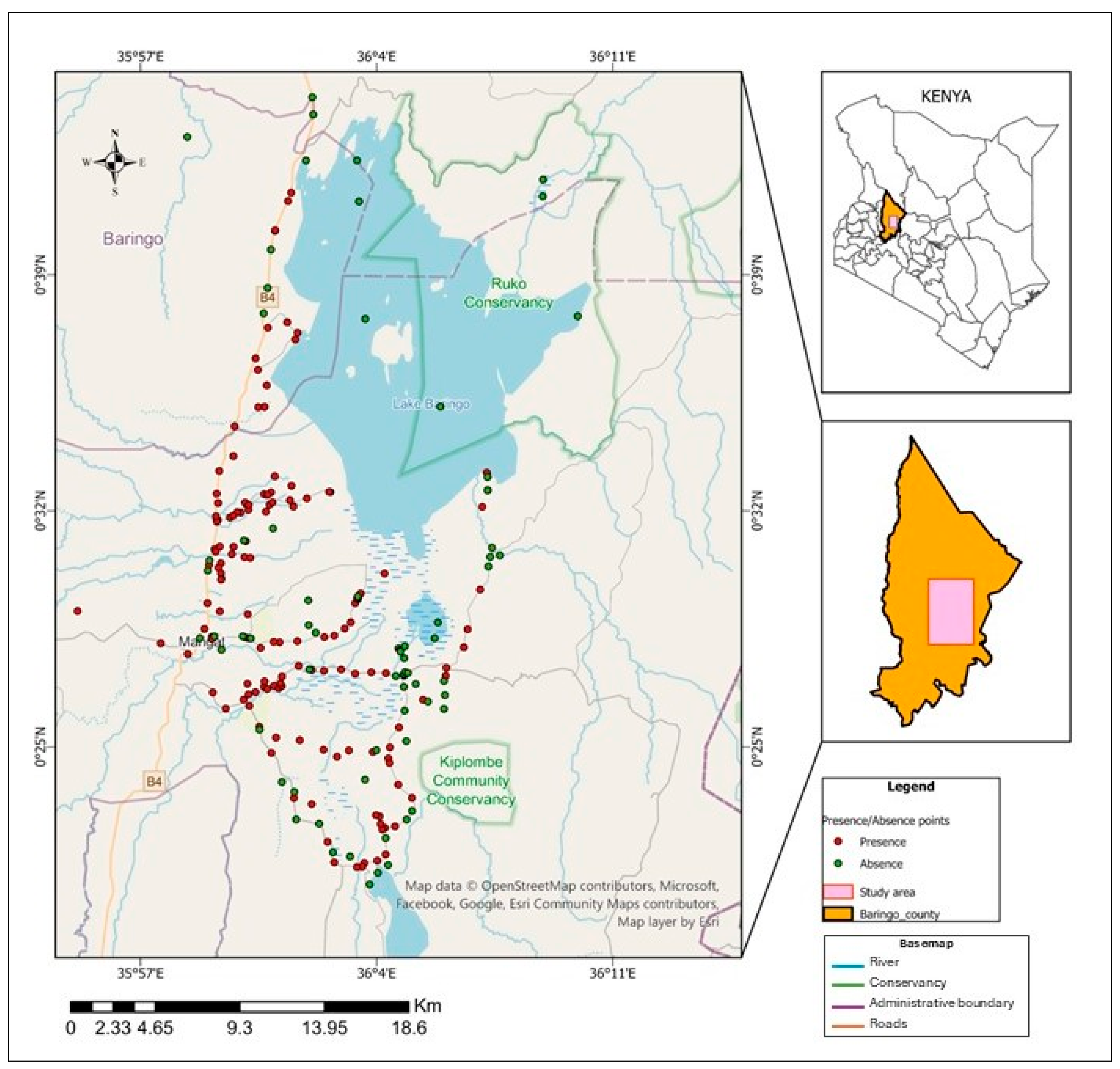
Figure 1. A map of the study area in Baringo County showing collected presence and absence points of Prosopis juliflora from the field. (Basemap: Map data © OpenStreetMap contributors, Microsoft, Facebook, Google, Esri Community Maps contributors, Map layer by Esri).
Ecologies 07 00020 g001
Figure 2. ROC curve for Sentinel-2 data.
Ecologies 07 00020 g002
Figure 3. The 20 indices/bands from Sentinel-2 images that contributed most significantly to the detection of Prosopis juliflora.
Ecologies 07 00020 g003
Figure 4. Digitized maps of information obtained from men and women as a result of participatory GIS. (Basemap: Map data © OpenStreetMap contributors, Microsoft, Facebook, Google, Esri Community Maps contributors, Map layer by Esri).
Ecologies 07 00020 g004
Figure 5. Progression of Prosopis juliflora encroachment on a water pan (February 2017–February 2023).
Ecologies 07 00020 g005
Figure 6. Predicted presence and absence map of Prosopis juliflora as a result of Random Forest modeling.
Ecologies 07 00020 g006
Figure 7. Monthly NDVI profiles for different land cover types in 2023. Prosopis juliflora maintained relatively stable NDVI values between 0.53 and 0.7, reflecting its persistent greenness and sustained photosynthetically active even during the dry months of January and February.
Ecologies 07 00020 g007
Figure 8. Predictive presence of Prosopis juliflora mapped over a land cover map (Dynamic World Land Cover [33]).
Ecologies 07 00020 g008
Table 1. Comparison of satellite characteristics for Prosopis juliflora mapping.
AttributeSentinel-1Sentinel-2PlanetScope
Sensor TypeC-band Synthetic Aperture Radar (SAR)Multispectral Instrument (MSI)Multispectral (CubeSat constellation)
Spatial Resolution10 m10 m (Visible & NIR), 20 m (Red Edge & SWIR), 60 m (Atmospheric bands)3 m
Spectral BandsSAR (VV, VH polarization)13 bands: B1 (Coastal), B2 (Blue), B3 (Green), B4 (Red), B5–B7 (Red Edge), B8 (NIR), B8A (Red Edge 4), B9 (Water Vapor), B10 (Cirrus), B11–B12 (SWIR).Four bands: Blue, Green, Red, NIR
Temporal Resolution6–12 days5 daysDaily
Table 2. Vegetation indices utilized for spectral differentiation of Prosopis juliflora from other vegetation types.
Sentinel 1 (S1)Sentinel 2 (S2)PlanetScope (PS)
  • Dual Polarization Ratio (DPR)—VH/VV
  • Dual Polarization Ratio (DPR)—VV/VH
  • Normalized Difference Polarization Index (NDPI)
  • Cross-Polarization Index (CPI)
  • Radar Vegetation Index (RVI)
  • Polarization Difference Index (PDI)
  • Blue Ratio (BR)
  • Green Normalized Difference Vegetation Index (GNDVI)
  • Green Ratio (GR)
  • Normalized Difference Red Edge Index (NDREI)
  • Normalized Difference Vegetation Index (NDVI)
  • Normalized Difference Vegetation Index 2 (NDVI2)
  • Normalized Difference Water Index (NDWI)
  • Normalized Near Infrared (NNIR)
  • Plant Senescence Reflectance Index (PSRI)
  • Red Ratio (RR)
  • Ratio Vegetation Index (RVI)/Simple Ratio
  • Sentinel Improved Vegetation Index (SVI)
  • Vegetation Index based on Red Edge (VIRE)
  • Vegetation Index Ratio based on Red Edge (VIRRE)
  • World View Improved Vegetation Index (WVVI)
  • Green Chlorophyll Vegetation Index GCVI
  • Normalized Difference Index5 (specific bands)
  • Normalized Difference Index5 (alternate bands)
  • Green Residue Cover Index
  • Transformed Chlorophyll Absorption in Reflectance Index
  • Visible Atmospherically Resistant Index (VARI)
  • Dead Fuel Index (DFI)
  • Ratio Vegetation Index (RVI3)
  • Blue Ratio (BR)
  • Green Normalized Difference Vegetation Index (GNDVI)
  • Green Ratio (GR)
  • Normalized Difference Vegetation Index (NDVI)
  • Normalized Difference Vegetation Index 2 (NDVI2)
  • Normalized Difference Water Index (NDWI)
  • Normalized Near Infrared (NNIR) Index
  • Plant Senescence Reflectance Index (PSRI)
  • Red Ratio (RR)
  • Ratio Vegetation Index (RVI)/Simple Ratio
  • Normalized Difference Index5
  • Green Residue Cover Index
  • Transformed Chlorophyll Absorption in Reflectance Index
  • Visible Atmospherically Resistant Index (VARI)
  • Dead Fuel Index (DFI)
Table 3. Accuracy assessment metrics.
Sentinel 1Sentinel 2PlanetScope
Overall Accuracy (%)79.8490.6576.56
Cohen’s Kappa Coefficient0.51090.7790.403
McNemar’s Test p-Value0.0775560.006170.03887
Table 4. Classification metrices based on predicted probabilities.
MetricValue
Precision0.908
Recall0.959
F1 score0.933
Disclaimer/Publisher’s Note: The statements, opinions and data contained in all publications are solely those of the individual author(s) and contributor(s) and not of MDPI and/or the editor(s). MDPI and/or the editor(s) disclaim responsibility for any injury to people or property resulting from any ideas, methods, instructions or products referred to in the content.