
Article

The COP9 Signalosome Variant CSNCSN7A Stabilizes the Deubiquitylating Enzyme CYLD Impeding Hepatic Steatosis

by
Xiaohua Huang
1,*,
Dawadschargal Dubiel
2 and
Wolfgang Dubiel
2,3,*,†
1
Charité—Universitätsmedizin Berlin, Chirurgische Klinik, Campus Charité Mitte|Campus Virchow-Klinikum, Experimentelle Chirurgie und Regenerative Medizin, Augustenburger Platz 1, 13353 Berlin, Germany
2
Institute of Experimental Internal Medicine, Medical Faculty, Otto von Guericke University, Leipziger Str. 44, 39120 Magdeburg, Germany
3
State Key Laboratory of Cellular Stress Biology, Fujian Provincial Key Laboratory of Innovative Drug Target Research, School of Pharmaceutical Sciences, Xiamen University, Xiang’an South Road, Xiamen 361102, China
*
Authors to whom correspondence should be addressed.
Lead Contact.
Livers 2021, 1(3), 116-131; https://doi.org/10.3390/livers1030011
Submission received: 2 June 2021 / Revised: 27 June 2021 / Accepted: 23 July 2021 / Published: 27 July 2021

Abstract

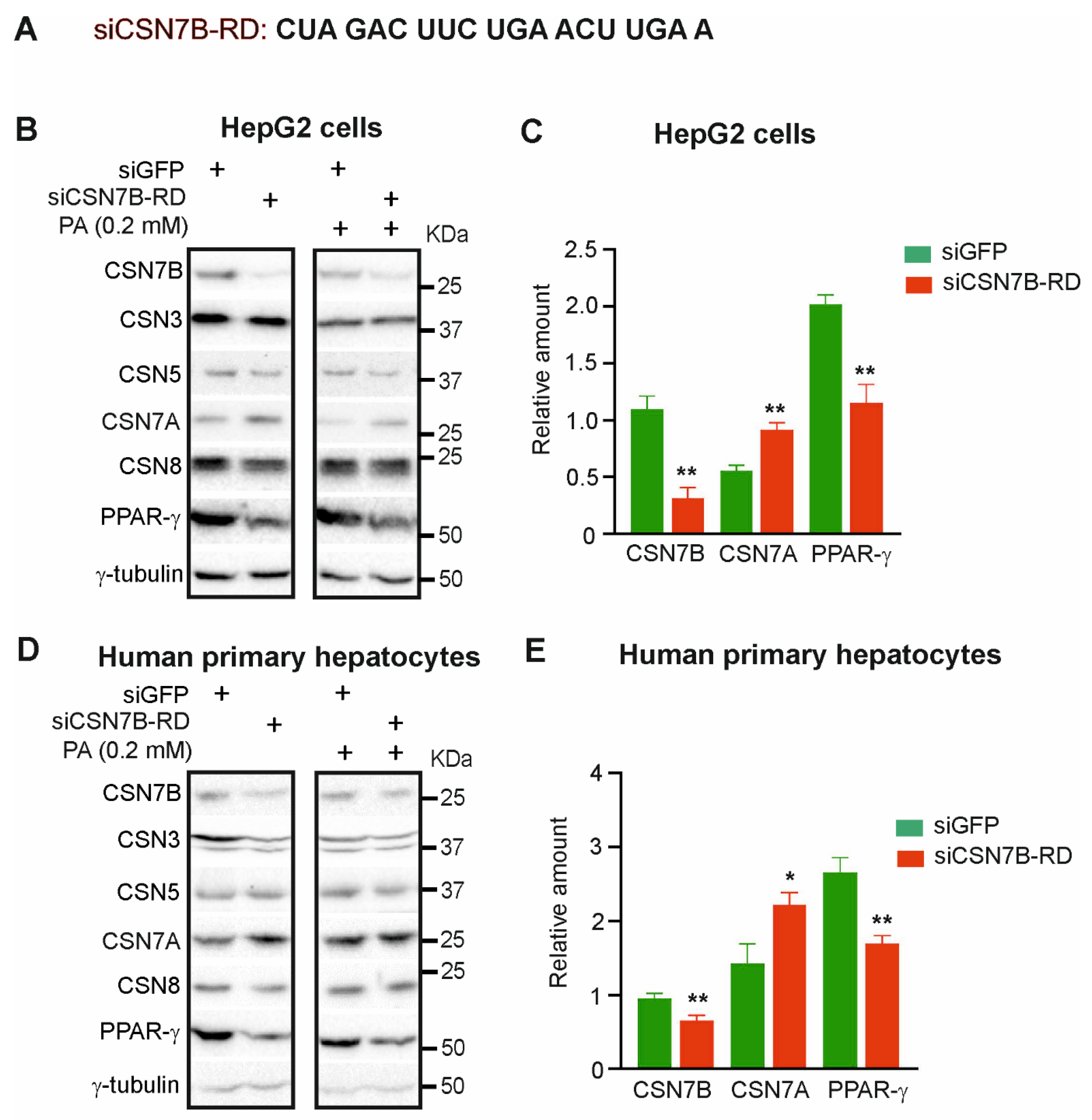
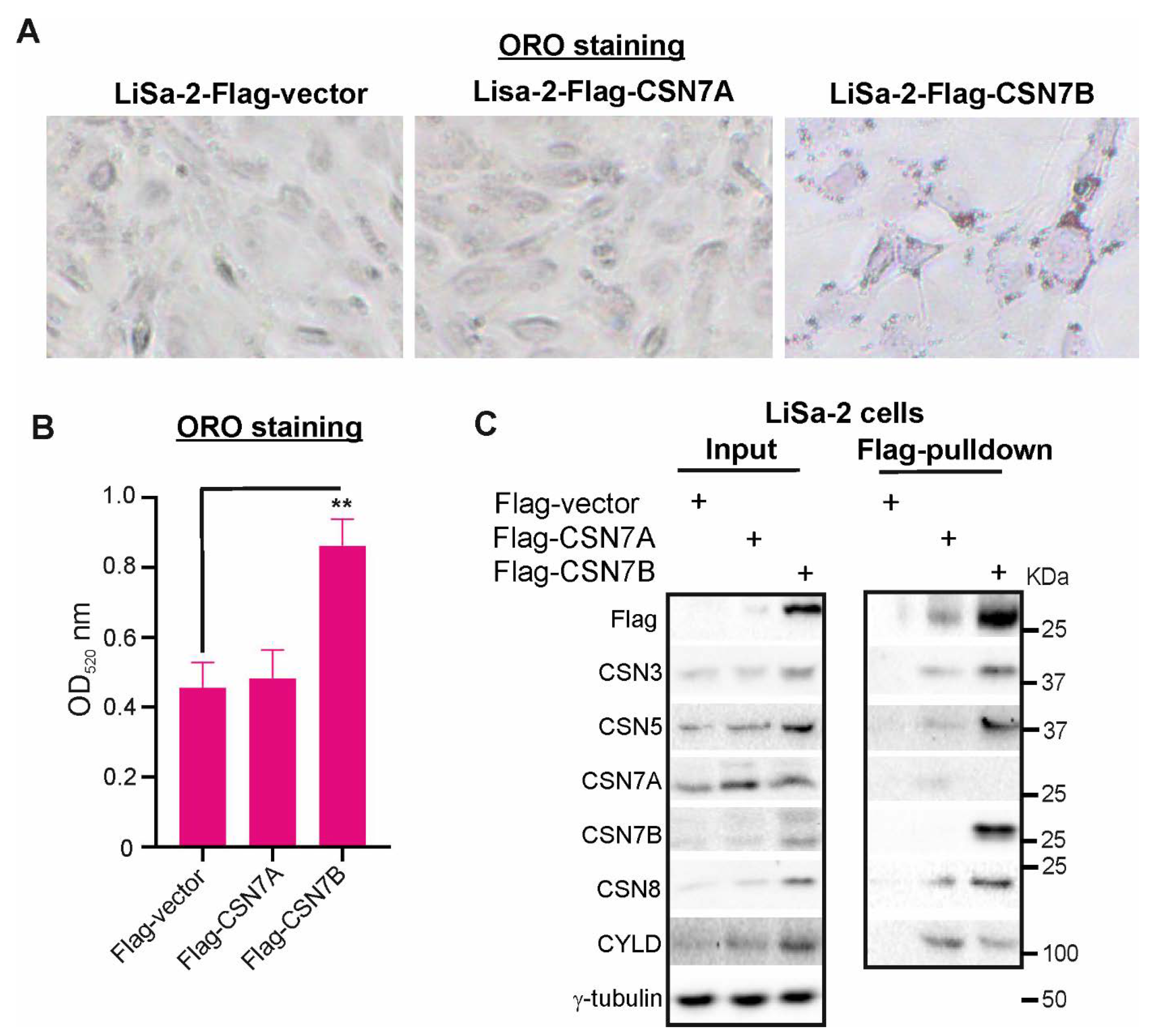
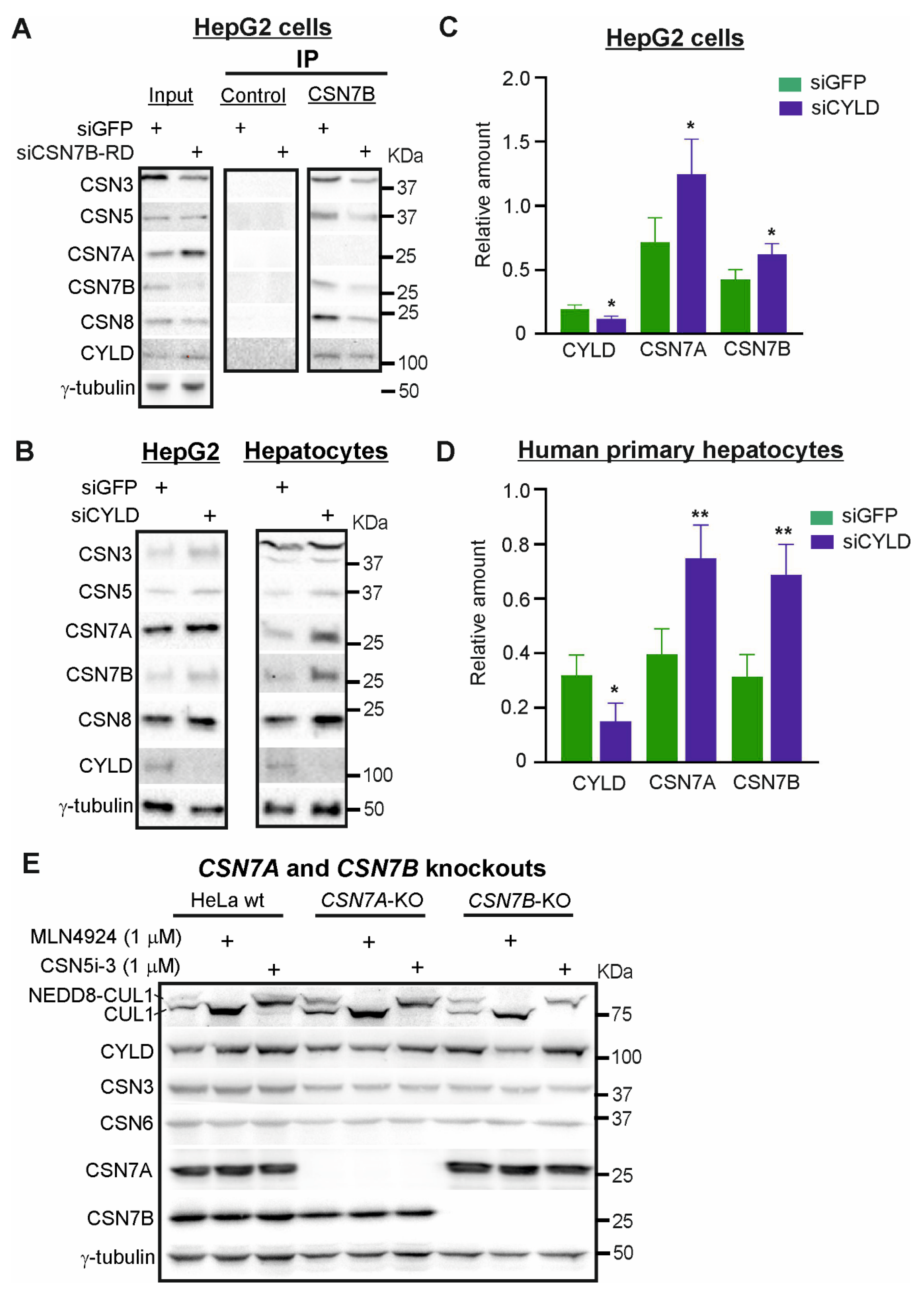
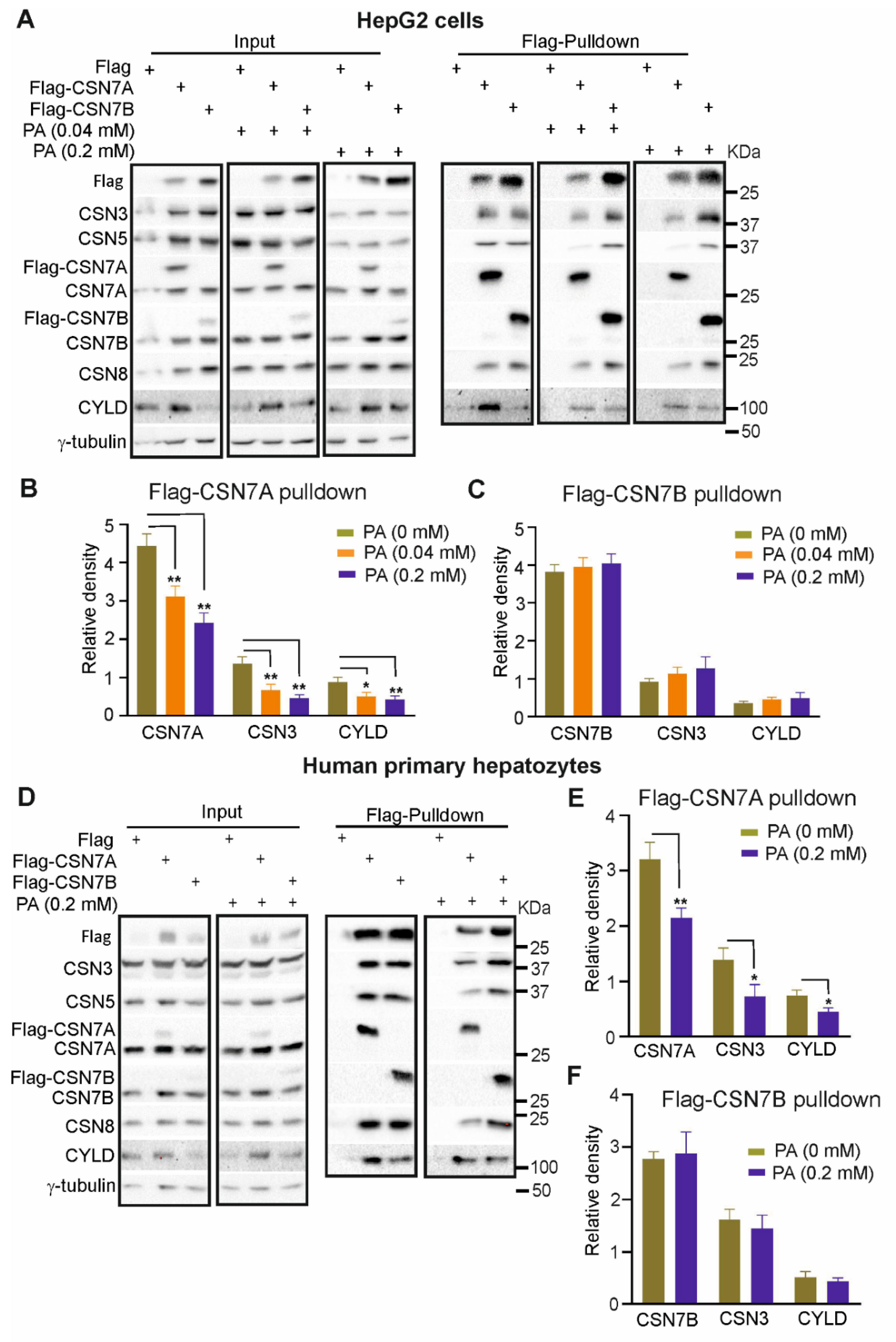
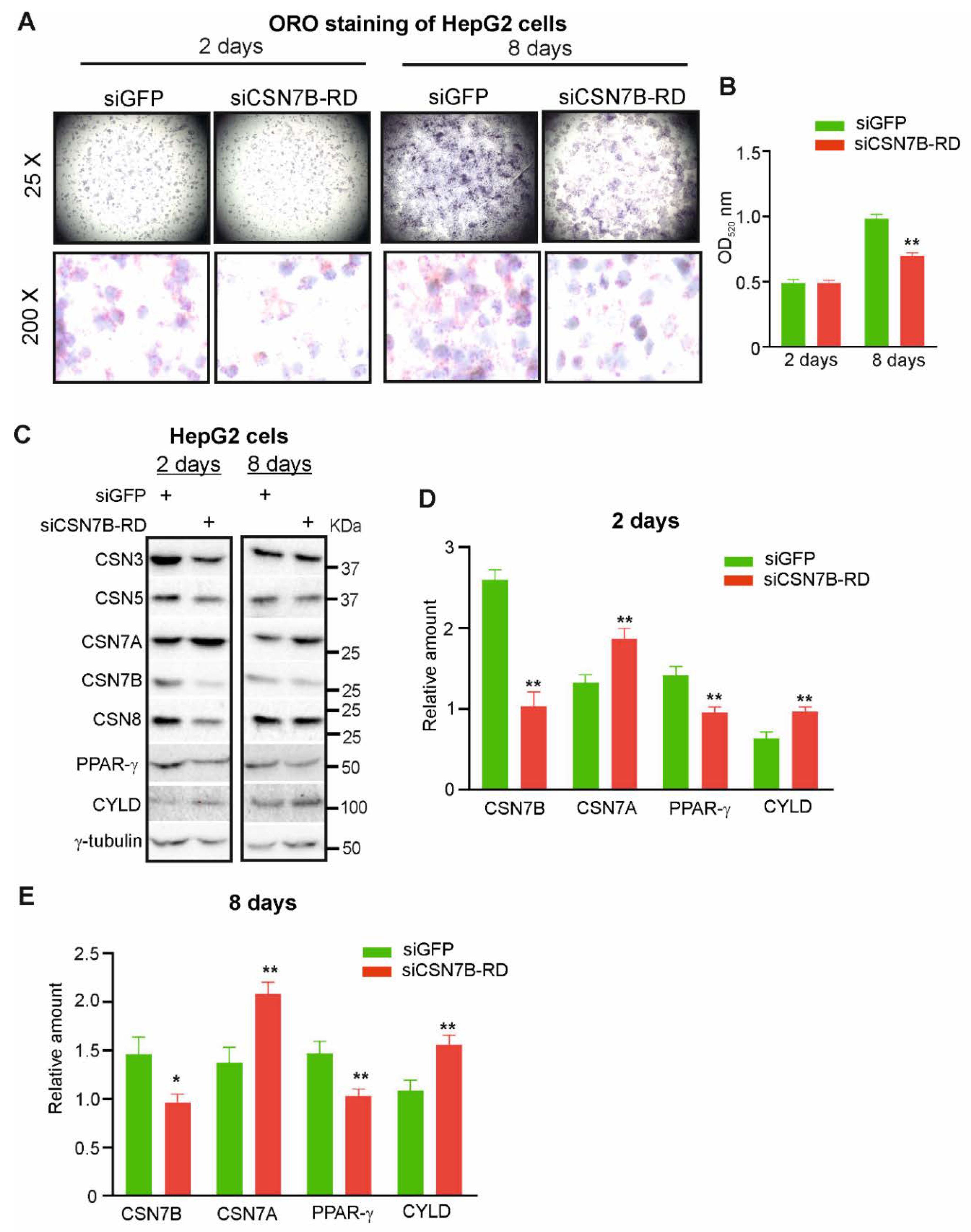
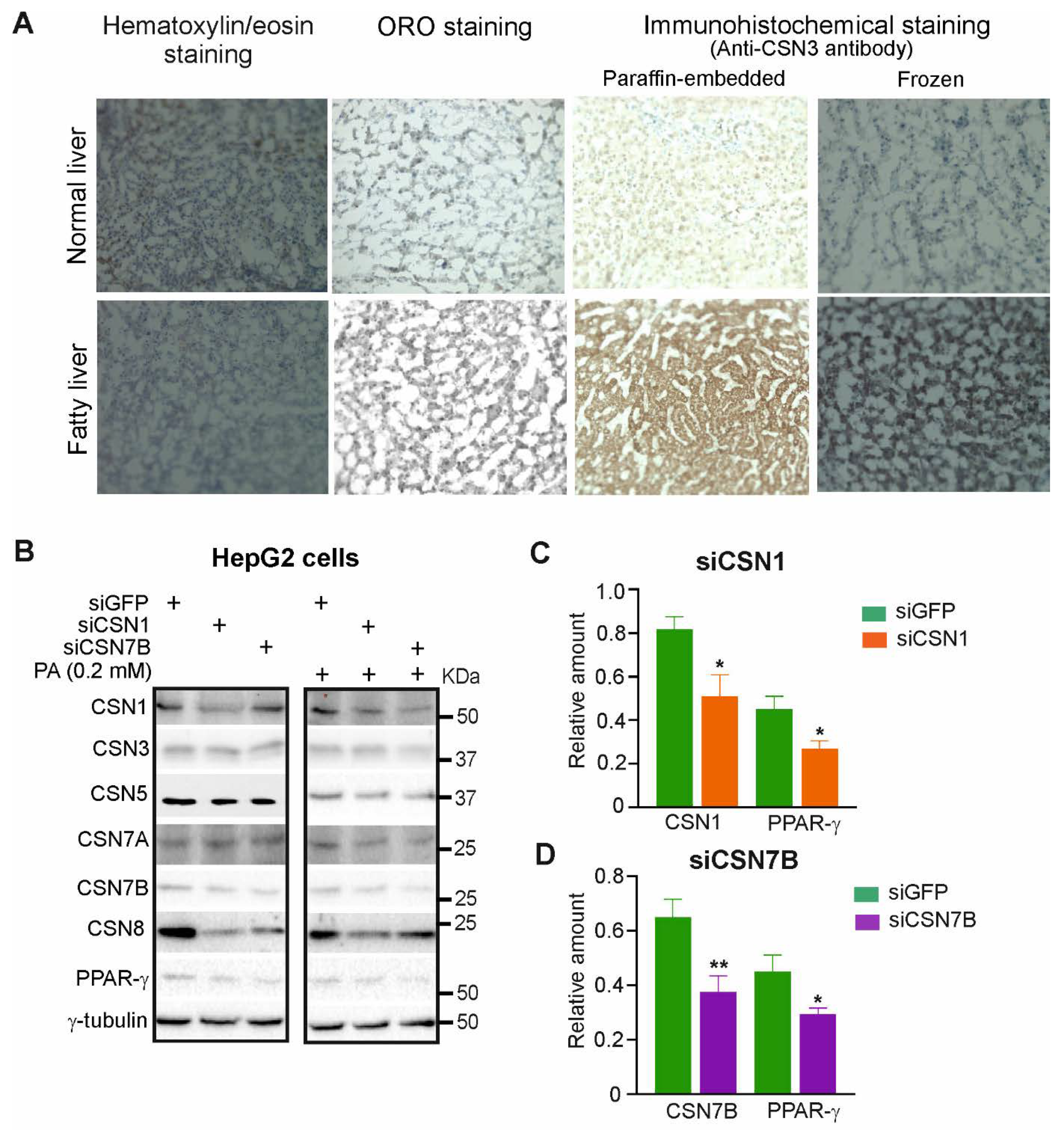
Hepatic steatosis is a consequence of distorted lipid storage and plays a vital role in the pathogenesis of nonalcoholic fatty liver disease (NAFLD). This study aimed to explore the role of the COP9 signalosome (CSN) in the development of hepatic steatosis and its interplay with the deubiquitylating enzyme (DUB) cylindromatosis (CYLD). CSN occurs as CSNCSN7A and CSNCSN7B variants regulating the ubiquitin proteasome system. It is a deneddylating complex and associates with other DUBs. CYLD cleaves Lys63-ubiquitin chains, regulating a signal cascade that mitigates hepatic steatosis. CSN subunits CSN1 and CSN7B, as well as CYLD, were downregulated with specific siRNA in HepG2 cells and human primary hepatocytes. The same cells were transfected with Flag-CSN7A or Flag-CSN7B for pulldowns. Hepatic steatosis in cell culture was induced by palmitic acid (PA). Downregulation of CSN subunits led to reduced PPAR-γ expression. Flag-pulldowns in both LiSa-2 and HepG2 cells and human primary hepatocytes revealed binding of CYLD preferentially to CSNCSN7A. This was influenced by PA treatment. Silencing of CSNCSN7B blocked lipid droplet formation caused a compensatory increase of CSNCSN7A stabilizing CYLD. Our results demonstrate that CSNCSN7A-mediated CYLD stabilization impedes hepatic steatosis. Therefore, stabilizing CSNCSN7A-CYLD interaction might be a strategy to retard hepatic steatosis.
Keywords: hepatic steatosis; COP9 signalosome; CSN7A; CSN7B; CYLD; siRNA hepatic steatosis; COP9 signalosome; CSN7A; CSN7B; CYLD; siRNA