1. Introduction
Hidradenitis suppurativa (HS), also known as acne inversa, is a chronic inflammatory dermatosis defined by recurrent abscesses, inflammatory nodules, and fistulous tracts that primarily affect the axillary, inguinal, and anogenital regions [
1]. Although HS is now recognized as an autoinflammatory condition rather than a classical infection, bacteria remain clearly implicated in its pathogenesis [
2]. Patients with HS often experience pain, scarring, and substantial impairment in quality of life. Notably, antimicrobial therapies, including prolonged courses of antibiotics, remain a cornerstone of HS management and lead to clinical improvement in many patients [
3]. Antibiotics used in HS exert both antimicrobial and anti-inflammatory effects, including modulation of neutrophilic inflammation and cytokine signaling, such that clinical improvement does not necessarily indicate eradication of a primary infectious driver. The efficacy of antibiotics in HS, despite its non-infectious classification, suggests that the cutaneous microbiome, defined as the community of microorganisms residing on the skin, plays a significant role in disease activity.
In addition to clinical examination, imaging modalities have an increasingly important role in the evaluation of HS. High-frequency ultrasound and magnetic resonance imaging allow for detailed assessment of deep dermal and subcutaneous involvement, including subclinical sinus tracts, abscesses, and inflammatory tunnels that may not be evident on surface inspection alone [
4]. Imaging has been shown to improve disease staging, guide therapeutic decision-making, and better characterize disease extent, particularly in moderate to severe HS. Recognition of deep inflammatory involvement underscores the complex, multi-layered nature of HS pathology and provides important context for understanding downstream processes such as tissue destruction and chronic inflammation, which are central to the development of complex sinus tracts and their associated microenvironments.
Recently, the skin microbiome has emerged as an important factor in a range of inflammatory skin disorders [
5]. Advances in next-generation sequencing have provided new insights into how shifts in microbial populations may contribute to diseases such as atopic dermatitis and psoriasis [
6]. By comparison, the role of the microbiome in HS has only recently begun to receive increasingly focused investigation. Early bacteriological studies identified bacterial presence in chronic suppurative HS lesions but were unable to determine whether these organisms represented a cause or a consequence of disease [
7]. With the advent of 16S ribosomal RNA gene sequencing and metagenomic approaches, researchers have characterized the HS skin microbiome in greater detail and demonstrated evidence of dysbiosis, defined as an imbalance in the normal microbial community, in association with HS lesions [
8]. This review summarizes the current understanding of the skin microbiome in HS.
2. Overview of the Skin Microbiome in Health
The healthy skin microbiome is a complex and dynamic ecosystem composed of bacteria, fungi, viruses, and bacteriophages that coexist in a state of functional equilibrium with the host [
8,
9]. Bacterial communities dominate and may vary according to anatomical site, local microenvironment, and host factors such as age, sex, immune status, and hygiene practices. Sebaceous regions are typically enriched in
Cutibacterium species, while moist intertriginous sites demonstrate higher relative abundance of
Corynebacterium and
Staphylococcus species. Fungal communities are often dominated by
Malassezia species, particularly in seborrheic areas, while the cutaneous virome includes both bacteriophages and eukaryotic viruses that influence microbial population structure and immune signaling [
10].
Beyond serving as passive colonizers, commensal microorganisms play an essential role in maintaining cutaneous barrier integrity and immune homeostasis [
8,
9,
10]. Microbial metabolites and structural components contribute to colonization resistance, limit pathogen overgrowth, and shape innate immune responses through the modulation of keratinocyte signaling and antimicrobial peptide production. This balanced host-microbe relationship promotes immune tolerance while preserving the capacity for rapid inflammatory responses when needed.
Disruption of this equilibrium has been implicated in several inflammatory dermatoses. In atopic dermatitis, loss of microbial diversity and the expansion of
Staphylococcus aureus are associated with disease flares [
11]. In acne vulgaris, strain-level differences in
Cutibacterium acnes influence inflammatory potential rather than simple bacterial abundance [
12]. Psoriasis has also been associated with altered microbial composition at lesional sites, although causality remains uncertain [
13]. These observations support the broader concept that microbial imbalance can contribute to cutaneous inflammation, providing a framework for understanding the relevance of dysbiosis in HS.
3. The Cutaneous Microbiome in Hidradenitis Suppurativa
Key features of the cutaneous microbiome in HS, including taxonomic shifts, disease-stage associations, and proposed clinical implications, are summarized in
Table 1. At present, the summary focuses on bacterial communities, as data on the cutaneous mycobiome and virome in HS remain sparse and insufficient for meaningful comparative synthesis. Investigations of lesional skin in HS consistently demonstrate that the microbial composition of HS lesions differs substantially from that of healthy skin. A recent systematic review identified more than twenty studies examining the HS skin microbiome, collectively including nearly one thousand patients with HS [
14]. Across these included studies, several bacterial taxa recur with notable frequency.
Staphylococcus aureus and coagulase-negative staphylococci, which are common skin commensals, are frequently isolated from HS lesions. In addition, HS-affected skin shows a consistent overrepresentation of anaerobic bacteria. Gram-negative anaerobes such as
Prevotella and
Porphyromonas are commonly identified in HS abscesses and sinus tracts. Sequencing- and culture-based studies have further expanded this profile, identifying
Fusobacterium and gram-positive anaerobic cocci including
Finegoldia and
Parvimonas in chronic HS lesions. Corynebacteria, which are gram-positive bacilli commonly found on healthy skin, have also been reported at increased levels in HS lesions. In contrast,
Cutibacterium acnes, a commensal bacterium abundant in healthy hair follicles and implicated in acne pathogenesis, appears consistently reduced in HS lesions. This difference likely reflects fundamental alterations in the follicular microenvironment in HS, including follicular rupture and destruction of sebaceous glands, leading to loss of lipid-rich niches that normally support
Cutibacterium proliferation and permitting secondary colonization by other bacteria capable of biofilm formation.
A defining feature of HS-associated microbiome alterations is a reduction in microbial diversity. Sequencing studies have demonstrated significantly lower bacterial alpha diversity in skin samples from patients with HS compared with healthy controls [
10,
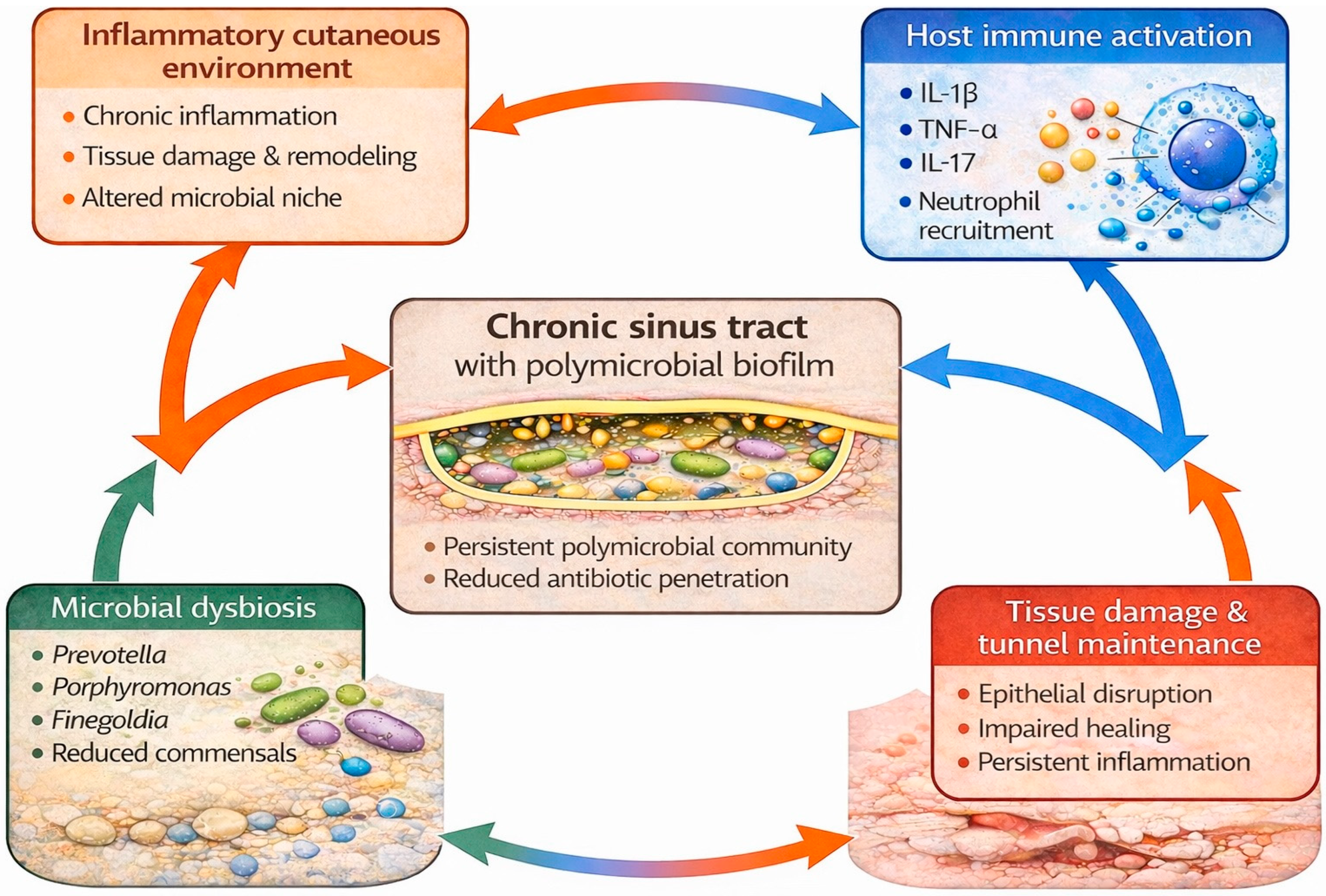
15]. Reduced diversity has been most consistently observed in lesional intertriginous skin, particularly within chronic nodules, abscesses, and sinus tracts. However, findings vary by anatomical site, sampling depth, and disease stage. Superficial swab-based studies generally demonstrate reduced diversity at active lesional sites, whereas deeper tunnel or abscess sampling often reveals low-diversity communities dominated by anaerobic taxa. In contrast, early lesions and non-lesional skin show more heterogeneous microbial profiles, suggesting that diversity loss is most pronounced in advanced, chronic disease rather than uniformly present across all HS stages. As a result, HS lesions are often dominated by a relatively narrow group of organisms, whereas healthy skin maintains a more balanced and diverse microbial ecosystem. This dysbiotic state, characterized by the expansion of opportunistic bacteria alongside the depletion of beneficial commensals, may contribute directly to the chronic inflammatory milieu of intertriginous sites commonly implicated in HS (e.g., axillae, inguinal folds, inframammary folds, etc.). Emerging clinical evidence supports the concept that dysbiosis plays an active role in both initiation and persistence of inflammation (
Figure 1). For example,
Finegoldia magna, an anaerobic gram-positive coccus, has been shown to be overabundant in HS lesional skin and is capable of eliciting robust immune responses, including the induction of neutrophil extracellular traps and pro-inflammatory signaling cascades [
15]. Similarly, the expansion of
Prevotella and
Porphyromonas species within normally aerobic cutaneous environments may promote tissue-destructive inflammation and abscess formation. Concurrent depletion of commensal organisms such as
Cutibacterium and select non-pathogenic
Staphylococcus species further suggests the loss of protective, homeostatic microbiome functions in HS.
The composition of the HS skin microbiome also appears to vary according to disease severity and chronicity. Early or acute HS lesions, such as isolated inflammatory nodules without sinus tract formation, may yield a single organism on culture or may appear sterile, supporting the concept that early HS inflammation is not driven by infection [
16,
17,
18]. In contrast, long-standing lesions characterized by sinus tunnels and scarring often harbor complex polymicrobial communities dominated by anaerobic organisms. Deep chronic tunnels have been shown to contain dense bacterial biofilms, whereas superficial lesions tend to demonstrate lower species richness [
19]. Biofilm-associated bacteria exhibit reduced susceptibility to antimicrobial therapy due to physical protection by the extracellular matrix, impaired antibiotic penetration, altered metabolic activity, and reduced immune recognition compared with free-floating planktonic organisms.
A small surgical pilot study comparing culture-based findings from skin swabs, sinus tracts, and draining lymph nodes reported heterogeneous bacterial growth across compartments, with limited concordance between superficial and deep samples; however, the use of conventional culture techniques and the small cohort size precluded characterization of microbial community structure or dysbiosis [
20]. Collectively, these findings suggest that bacteria are unlikely to serve as primary initiators of HS lesions. Instead, microbial factors appear to play a more prominent role in the maintenance and amplification of inflammation in established disease, particularly in chronic lesions characterized by tissue damage, sinus tract formation, and biofilm development, and may help explain therapeutic responses to antimicrobial treatments.
As HS progresses, secondary colonization by multiple bacterial species becomes increasingly prominent, and the microbial profile diverges further from that of healthy skin. Importantly, microbiome alterations are not limited to overtly lesional skin. Several studies have demonstrated that clinically unaffected intertriginous skin in patients with HS exhibits a reduced abundance of major commensal bacteria and increased representation of inflammation-associated taxa compared with healthy individuals [
21,
22]. Across studies, non-lesional skin is typically defined as clinically unaffected, anatomically matched skin without active lesions; however, accumulating evidence suggests that such skin does not represent a true baseline due to subclinical inflammation and the presence of a broader disease field effect. These findings suggest a field effect that extends beyond clinically apparent lesions, primarily involving intertriginous skin predisposed to HS involvement, rather than reflecting a generalized body-wide cutaneous microbiome shift. In chronic disease, persistent microbial colonization and biofilm formation within sinus tracts may further perpetuate tissue damage and abnormal wound healing, processes implicated in irreversible scarring and tunnel formation [
23]. In this context, dysbiosis may contribute not only to inflammatory activity but also to structural disease progression in long-standing HS.
Nevertheless, the current body of evidence does not establish a direct causal role for specific bacterial taxa in initiating HS lesions. Most available studies are cross-sectional and therefore cannot determine whether anaerobic enrichment represents a primary pathogenic driver or a secondary phenomenon arising from follicular occlusion, tissue damage, and the creation of altered microenvironments within chronic lesions. As such, organisms such as Prevotella, Porphyromonas, and Finegoldia are best interpreted as opportunistic taxa that may preferentially expand within established inflammatory and anaerobic niches, where they may subsequently contribute to disease persistence, biofilm formation, and treatment resistance rather than lesion initiation.
4. The Gut Microbiome and Other Microbial Compartments
Although most HS microbiome research has focused on the skin, growing attention has been directed toward the potential role of the gut microbiome and other microbial niches. HS is associated with several systemic inflammatory conditions, most notably inflammatory bowel disease, particularly Crohn’s disease [
24]. This clinical overlap has raised interest in a potential gut–skin axis in HS, whereby intestinal dysbiosis may influence cutaneous inflammation. Emerging data suggest that the gut microbiome in patients with HS differs from that of healthy controls. One study reported significantly reduced gut microbial diversity in HS patients, paralleling reductions observed in the diversity of the cutaneous microbiome [
25]. Increased abundance of
Ruminococcus gnavus, a bacterium linked to Crohn’s disease, has also been identified in fecal samples from HS patients. This association, however, has been reported in a limited number of cohorts and has not been consistently replicated across independent HS populations after accounting for confounding factors. The taxon is highlighted due to its established pro-inflammatory role in inflammatory bowel disease rather than as a definitive or disease-specific gut microbiome signature in HS. These findings raise the possibility of shared microbial or inflammatory pathways contributing to both HS and inflammatory bowel disease and support the concept of coordinated interactions between the gut and skin microbiomes in shaping immune responses.
Nevertheless, evidence regarding gut microbiome involvement in HS remains limited and inconsistent. A recent literature review conducted up until 2020 identified only two studies examining gastrointestinal microbiota in HS [
2]. While one study demonstrated altered gut microbial composition in HS patients, another found no significant differences when comparing HS patients with and without concomitant inflammatory bowel disease. These discrepancies likely reflect differences in sample size, population characteristics, dietary patterns, antibiotic exposure, and geographic variation, as well as heterogeneity in study design and sequencing methodology. Collectively, these findings suggest that gut microbiome involvement in HS is complex and likely influenced by multiple confounding factors rather than representing a uniform or disease-specific microbial signature. To date, no studies have specifically examined the oral microbiome in HS, despite the recognized role of oral microbial communities in systemic inflammation and immune modulation. One potential hypothesis is that oral dysbiosis may contribute to systemic immune activation through translocation of microbial products or chronic mucosal immune stimulation, drawing parallels to proposed oral-systemic inflammatory pathways described in conditions such as rheumatoid arthritis and inflammatory bowel disease. Further investigation is needed to clarify whether modulation of intestinal or oral microbiota could meaningfully influence HS disease activity.
5. Methodological Considerations in HS Microbiome Research
Interpretation of HS microbiome data is complicated by substantial methodological heterogeneity across studies. Unlike controlled clinical trials, microbiome research in HS consists largely of independent investigations employing diverse sampling and analytic approaches. Sampling techniques vary widely and include superficial swabs, deep tissue biopsies, aspirated abscess contents, and follicular sampling through curettage or punch biopsy [
10,
26]. Each approach captures distinct microbial niches and may yield divergent results. Superficial swabs may underrepresent organisms residing in deep sinus tracts, whereas invasive sampling may introduce contaminants alongside true lesional flora. Accordingly, microbiome findings should be interpreted in the context of the sampled compartment, as superficial swabs primarily reflect surface dysbiosis, whereas abscess or tunnel-based sampling more closely represents the anaerobic, biofilm-rich environments of chronic disease. Detection methods also differ considerably. Culture-based techniques remain valuable for identifying viable organisms and guiding antimicrobial therapy but underestimate overall diversity, particularly among anaerobic or fastidious bacteria [
27]. In contrast, sequencing-based approaches, including 16S ribosomal RNA gene sequencing, allow the detection of both culturable and non-culturable organisms but provide limited information regarding bacterial viability or functional activity [
28]. By comparison, more recent use of shotgun metagenomics offers higher taxonomic resolution and direct functional pathway analysis, which is important for understanding host-microbe interactions in HS but remains infrequently applied in HS research.
Additional challenges arise from the heterogeneity in patient populations and lesion characteristics. HS lesions vary by anatomical site, disease stage, and prior treatment exposure, all of which can influence microbiome composition [
14]. Many studies do not stratify samples by Hurley stage or anatomical location, potentially conflating microbial signals from mild and severe disease. Antibiotic exposure represents a particularly important confounder, as many patients with HS receive long-term antimicrobial therapy that can significantly alter microbial communities at the time of sampling. Across studies, antibiotic washout periods were inconsistent or not uniformly reported, and many cohorts included patients with recent or ongoing antibiotic exposure, which complicates interpretation of a distinct HS-specific microbiome signature versus an antibiotic-influenced microbial community. Host-related factors may further confound the interpretation of HS microbiome studies. Smoking, which is strongly associated with HS severity, has been linked to alterations in microbial composition and reduced diversity, particularly within the gut microbiome, with enrichment of pro-inflammatory taxa. These smoking-associated microbial shifts may exacerbate dysbiosis and inflammatory signaling relevant to HS pathogenesis, potentially influencing cutaneous microbial communities in intertriginous skin [
10]. Similarly, obesity and elevated body mass index (BMI) are associated with alterations in gut microbial composition and chronic low-grade systemic inflammation, and may be accompanied by impaired intestinal barrier function, factors that could indirectly influence cutaneous immune responses and microbial community structure [
10,
29]. Despite their clinical relevance, smoking status and BMI are inconsistently reported or adjusted for in HS microbiome studies, limiting comparability across cohorts and potentially obscuring associations between dysbiosis, disease severity, and treatment response. Small sample sizes further limit statistical power and generalizability of the results. Collectively, these factors hinder direct comparison across studies and complicate efforts to define a consistent HS-specific microbiome signature. Recent systematic reviews have emphasized the need for standardized sampling protocols, uniform reporting of disease severity and treatment history, and integrative approaches that combine culture-based and sequencing-based methodologies. Addressing these methodological limitations will be essential for advancing the understanding of HS-associated microbial dysbiosis.
6. Pathophysiological and Therapeutic Implications
Beyond structural alterations, microbial dysbiosis in HS is increasingly recognized as an active participant in immune dysregulation. HS is characterized by prominent innate immune activation with neutrophilic inflammation and overexpression of cytokine pathways including tumor necrosis factor-α (TNF-α), interleukin (IL)-1β, and IL-17 [
30,
31]. Dysbiotic microbial communities may amplify these pathways through the persistent stimulation of pattern recognition receptors on keratinocytes and innate immune cells, promoting sustained production of pro-inflammatory mediators and recruitment of neutrophils to lesional skin. In parallel, chronic microbial exposure within sinus tracts and biofilm-rich environments may contribute to the aberrant activation of adaptive immunity, particularly T-helper (Th)-17-skewed responses that are increasingly implicated in HS pathogenesis. This bidirectional interaction between microbial signals and host immune pathways suggests that dysbiosis may not only reflect disease activity but also reinforce inflammatory circuits that drive lesion chronicity and progression. At present, direct functional evidence linking specific microbial activities to Th17 skewing in HS remains limited, as most available studies rely on taxonomic profiling rather than functional characterization.
The consistent observation of dysbiosis in HS carries important implications for disease pathophysiology. Although HS is not attributable to a single infectious pathogen, the altered microbial environment in HS lesions likely contributes to sustained inflammation and tissue damage. Moreover, several bacteria possess established virulence traits relevant to chronic inflammation, most notably biofilm formation. Biofilm production has been demonstrated for
Porphyromonas species and for
Staphylococcus epidermidis, a commensal organism that exhibits increased biofilm-forming capacity in HS lesions and sinus tracts [
2,
9,
10,
32,
33]. However, it is important to note that much of the available evidence regarding organisms such as
Staphylococcus epidermidis is derived from genus-level abundance data generated by 16S ribosomal RNA sequencing, with relatively limited strain-level or functional validation in HS-specific cohorts. The presence of structured biofilms within chronic lesions may contribute to treatment resistance, persistence of inflammation, and impaired antibiotic penetration, particularly in moderate to severe disease. In contrast,
Staphylococcus aureus appears to play a less consistent role in HS pathogenesis, with current evidence favoring dysbiosis driven by anaerobes and coagulase-negative staphylococci rather than classic invasive pathogens. Within HS lesions, interactions between bacteria and neutrophils contribute to pus formation, sinus tract development, scarring, and persistence of inflammatory signaling [
34,
35]. Dysbiosis may also influence systemic inflammation, as shifts in the gut microbiome could impair epithelial barrier integrity or generate pro-inflammatory mediators that affect the skin [
25]. Conversely, systemic immune dysregulation inherent to HS may promote a cutaneous environment that favors microbial imbalance, supporting a bidirectional relationship between inflammation and dysbiosis.
Many current HS therapies indirectly target microbial factors. Long-term antibiotic regimens, often administered in combination for moderate to severe disease, can reduce bacterial burden and interrupt cycles of secondary infection and inflammation [
36,
37]. However, prolonged antimicrobial use risks the disruption of normal flora and emergence of antibiotic-resistant organisms, which have been isolated from chronic HS lesions. These concerns highlight the need for more targeted antimicrobial strategies, including culture-guided therapy and judicious antibiotic selection. Beyond antibiotics, growing insight into the HS microbiome has prompted interest in microbiome-directed interventions aimed at restoring microbial balance. Proposed strategies include topical antiseptics such as dilute bleach baths, topical or systemic probiotics, bacteriophage-based therapies targeting specific pathogens, and fecal microbiota transplantation for patients with concurrent gut dysbiosis [
38,
39]. Although such approaches remain experimental, they illustrate the potential of microbiome modulation as an adjunctive therapeutic avenue.
In addition to antimicrobial and microbiome-directed approaches, emerging evidence has suggested that biologic and small-molecule therapies may also influence the cutaneous microbiome indirectly through modulation of the inflammatory milieu [
40,
41]. TNF-α inhibitors and IL-17 pathway inhibitors have demonstrated clinical efficacy in HS, and emerging evidence from HS and other inflammatory dermatoses suggests that effective immune-targeted therapy may be accompanied by shifts toward a more balanced microbial composition [
42]. Reduction in inflammatory burden and restoration of epidermal barrier integrity may create a less permissive environment for anaerobic overgrowth and biofilm persistence, thereby facilitating partial reconstitution of commensal-dominant microbial communities. Limited sequencing-based studies have reported increased microbial diversity and reduced abundance of inflammation-associated taxa following successful biologic treatment, although data remain sparse and heterogeneous [
2]. It remains unclear whether observed microbiome shifts following biologic therapy represent a direct contributor to clinical improvement or instead reflect a downstream consequence of reduced inflammation, improved barrier function, and healing of chronically inflamed tissue. Current data do not allow for causal inference, and microbiome normalization is more plausibly interpreted as secondary to immune modulation rather than a primary driver of therapeutic response. Nevertheless, these observations suggest that immune modulation and microbial normalization may be interrelated processes, highlighting the potential utility of longitudinal microbiome profiling to better define temporal relationships between inflammation control and microbial community restructuring. Future studies incorporating longitudinal microbiome profiling into clinical trials of biologic and small-molecule therapies may clarify whether microbial signatures can serve as biomarkers of treatment response or durability in HS.
Beyond immune-targeted therapies, increasing interest has focused on the potential role of metabolic interventions in HS, particularly glucagon-like peptide-1 (GLP-1) receptor agonists. Obesity and insulin resistance are highly prevalent in HS and are independently associated with increased disease severity [
10]. GLP-1 receptor agonists have demonstrated clinical improvement in HS severity in observational studies and case series, primarily attributed to weight reduction and attenuation of systemic inflammation [
43,
44,
45]. Emerging evidence from non-HS populations suggests that GLP-1 receptor agonists may modulate the gut microbiome, with reported enrichment of short-chain fatty acid-producing taxa and reductions in pro-inflammatory microbial signatures, alongside context-dependent increases in microbial diversity [
46]. Although no studies have directly evaluated microbiome changes following GLP-1 therapy in HS, these agents may indirectly influence the cutaneous inflammatory milieu through metabolic, immunologic, and gut–skin axis-mediated mechanisms. Further longitudinal studies integrating microbiome profiling are needed to determine whether GLP-1-associated clinical improvement in HS is accompanied by normalization of microbial communities.
Advances in metagenomic and metatranscriptomic analysis may further identify microbial genes and metabolic pathways that drive inflammation in HS lesions. Characterization of bacterial toxins, enzymes, or surface molecules involved in immune activation could reveal novel therapeutic targets. In parallel, experimental studies examining interactions between HS-associated bacteria and keratinocytes or immune cells may clarify mechanisms of cytokine induction and tissue damage. These insights could enable the selective suppression of pathogenic microbes while preserving beneficial commensals or, alternatively, enhancement of protective microbial populations to support disease remission.
7. Gaps in Knowledge and Future Research Directions
Despite increasing recognition of microbial dysbiosis in HS, several critical knowledge gaps remain that limit translation of microbiome research into clinical practice. Most existing studies are cross-sectional and focus on patients with established or advanced disease, making it difficult to determine whether microbial alterations precede lesion development or arise secondary to chronic inflammation and tissue remodeling. Longitudinal studies that include individuals at early disease stages, or those at risk prior to clinical onset, are essential to clarify temporal relationships and causal pathways.
Methodological heterogeneity continues to impede the synthesis of findings across studies. Variability in sampling depth, anatomical site selection, sequencing platforms, and analytic pipelines complicates interpretation and reduces reproducibility. Standardized protocols for microbiome sampling and reporting, including consistent documentation of disease severity, treatment exposure, and anatomical context, are needed. In addition, most investigations rely on taxonomic profiling alone. Integration of functional approaches, such as metagenomics, metatranscriptomics, and metabolomics, would provide deeper insight into microbial activity and host-microbe interactions that may be directly relevant to disease mechanisms.
Another major gap lies in the limited integration of microbiome data with clinical phenotypes and treatment response. Few studies correlate microbial patterns with disease severity, progression, or therapeutic outcomes, and microbiome endpoints are rarely incorporated into clinical trials of antibiotics, biologic agents, or small-molecule therapies. Prospective studies embedding microbiome analyses within therapeutic trials could help determine whether microbial shifts track with clinical improvement, predict response durability, or identify patient subgroups more likely to benefit from specific interventions.
Finally, the potential for microbiome-informed or personalized therapeutic strategies remains largely unexplored. Advances in computational modeling, systems biology, and multi-omics integration offer opportunities to move beyond descriptive associations toward predictive frameworks that link microbial features with immune activation and clinical course. Such approaches may enable rational targeting of dysbiosis alongside immune modulation, with the ultimate goal of improving long-term disease control and reducing reliance on prolonged antibiotic therapy.