Systematic Review

Effectiveness of Biotin Supplementation for Hair Growth in Patients with Alopecia: A Systematic Review


by
Pedro Moltó-Balado
1,2,*,
Andrea Simeó-Monzo
1 and
Alba del Barrio-Gonzalez
2
1
Clínica Equilibria, 46160 Llíria, Spain
2
CSI Llíria, Departament de Salut de Arnau de Vilanova, Conselleria de Sanitat, 46160 Llíria, Spain
*
Author to whom correspondence should be addressed.
Dermato 2026, 6(2), 17; https://doi.org/10.3390/dermato6020017
Submission received: 29 January 2026 / Revised: 27 February 2026 / Accepted: 23 April 2026 / Published: 4 May 2026
(This article belongs to the Special Issue Reviews in Dermatology: Current Advances and Future Directions)

Abstract

Background: Biotin (vitamin B7) is widely marketed and used as an over-the-counter supplement for hair, skin, and nails, despite uncertainty about its clinical benefit for alopecia and hair growth. While overt biotin deficiency can be associated with hair changes, clinically meaningful deficiency is uncommon in individuals consuming a balanced diet, and published findings on biotin status in hair loss populations are inconsistent. Methods: This is a systematic review following PRISMA. A search was conducted in PubMed/MEDLINE (PROSPERO: CRD420251274919) for human studies evaluating biotin (alone or in combination) and including hair outcomes. The synthesis was qualitative due to clinical and methodological heterogeneity. Results: Ten studies were included. Across controlled and quasi-experimental interventions, biotin monotherapy did not show consistent benefit on objective hair growth outcomes; when improvements were reported, they typically occurred in combined regimens and were difficult to attribute specifically to biotin. Studies showed mixed findings on “low” biotin levels in hair loss populations, whereas controlled studies in telogen effluvium found no significant differences in serum biotin versus controls. No serious adverse events attributable to biotin were identified; however, high-dose biotin may interfere with immunoassays, potentially leading to clinically relevant false laboratory results. Conclusions: Current evidence does not support routine biotin supplementation for alopecia in the absence of documented deficiency, although it may be considered in scenarios with risk or confirmation of deficiency/malabsorption.

1. Introduction

Alopecia and diffuse hair shedding are frequent reasons for dermatology consultation and can markedly affect quality of life. Parallel to medical treatments, the use of over-the-counter “hair, skin and nails” supplements has increased, including biotin-containing products. In U.S. population data, daily biotin supplement use has risen since the late 1990s [1], and similar patterns are observed for broader hair/skin/nail supplements in more recent surveys [2].
Biotin (vitamin B7) is an essential cofactor for carboxylases involved in fatty acid synthesis and energy metabolism. Overt biotin deficiency can manifest with dermatitis, neurologic symptoms, and hair changes, but clinically meaningful deficiency is considered uncommon in individuals consuming a balanced diet [3]. Despite this, biotin has gained disproportionate popularity as a “hair growth vitamin,” largely driven by marketing and social media narratives rather than high-quality clinical evidence. Comparative analyses have emphasized the mismatch between perceived efficacy and the limited supporting data [4], and expert commentaries highlight that biotin use is often promoted in individuals without documented deficiency [5].
Dermatology reviews evaluating supplements for hair disorders consistently describe a fragmented evidence base, frequent reliance on subjective endpoints, and substantial heterogeneity [6,7]. Importantly, a focused review of biotin for hair loss concluded that evidence supporting biotin is mainly confined to deficiency states and rare syndromes, with insufficient support for indiscriminate use [8]. This aligns with broader systematic evaluations of nutritional supplements for hair loss, which underline methodological limitations and difficulty attributing benefit to single ingredients when multi-component formulations are used [9].
In clinical practice, biotin is sometimes tested or empirically prescribed in patients reporting alopecia. However, studies assessing serum/urine biotin levels in hair loss populations have yielded conflicting results. For example, a large cross-sectional series in women presenting with hair loss complaints reported a notable proportion of low biotin levels but lacked a matched control group and therefore cannot establish causality [10]. In contrast, controlled studies in telogen effluvium generally did not identify significant differences in biotin status compared with controls [11,12].
Given the persistent clinical use and public interest, the objective of this systematic review was to synthesize the human evidence on biotin (alone or in combination) in alopecia-related hair loss, focusing on efficacy signals, safety considerations, and key methodological limitations that constrain inference.

2. Materials and Methods

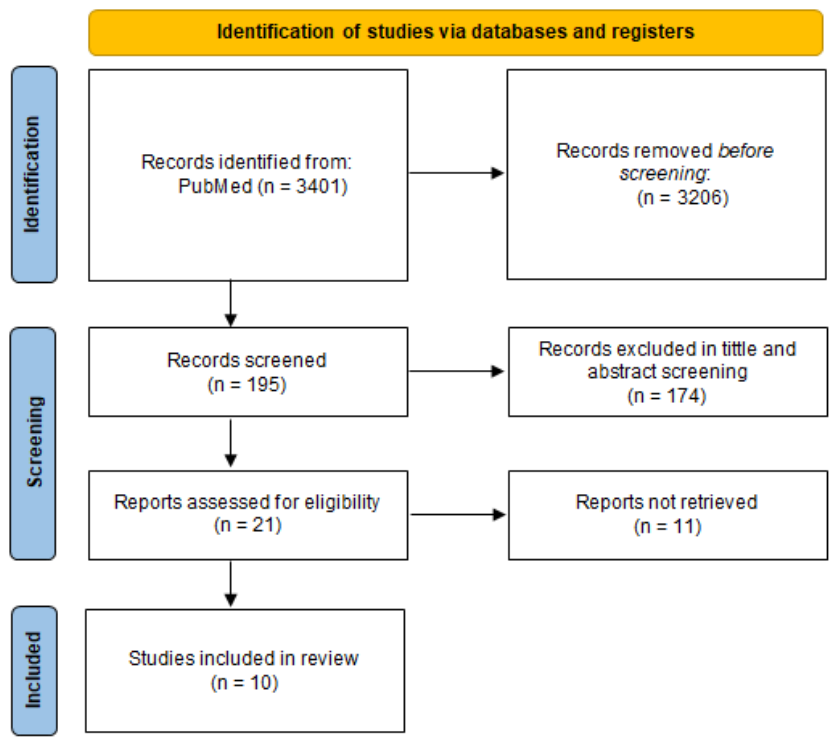
This review was prepared in accordance with the PRISMA Guidelines for Systematic Reviews [13], and a protocol was registered in advance in PROSPERO (CRD420251274919). The search was conducted in PubMed/MEDLINE (Figure 1). No language or date restrictions were applied. The Boolean search strategy was: biotin; biotin AND (alopecia OR “hair loss” OR “hair growth”). The date of the last search was 31 December 2025. Studies in humans evaluating biotin (supplementation or determination of serum/urine levels) in populations with alopecia/hair loss or in volunteers with hair-related outcomes were included, provided that they reported at least one clinical or instrumental hair outcome. Narrative reviews, editorials without original data, and studies exclusively in vitro or in animals were excluded. Potentially relevant records were screened at full text, and data were extracted into standardized tables (design, population, intervention/exposure, comparator, duration, outcomes, and results).
Risk of bias was assessed using structured tools tailored to study design: randomized trials were appraised with the Cochrane RoB 2 framework; nonrandomized comparative intervention studies were appraised with ROBINS-I; and observational studies were appraised with Joanna Briggs Institute (JBI) critical appraisal checklists for analytical cross-sectional and case–control studies. Two reviewers (P.M-B. and A.S-M.) independently performed the assessments; disagreements were resolved by consensus and, when needed, adjudication by A.dB-G. Given heterogeneity in populations, interventions, and outcomes, a qualitative synthesis with descriptive tables and figures was performed without meta-analysis.

3. Results

A systematic search of PubMed/MEDLINE identified 10 studies that met the inclusion criteria (Table 1). Regarding geographic origin, research groups represented multiple regions. Two studies were conducted in Turkey [12,14], two in Egypt [11,15], and one each in Switzerland [10], Poland [16], Brazil [17], Iran [18], Spain [19], and India (with U.S. collaboration) [20]. Overall, this distribution suggests that the clinical literature on biotin and hair loss has been generated by diverse groups across Europe, the Middle East/North Africa, and parts of South America and Asia, but remains sparse and methodologically heterogeneous. Most studies were published in dermatology/cosmetic dermatology/trichology journals [10,11,12,14,15,17,18,19], and two in general-medicine outlets [16,20].
Structured risk-of-bias assessments indicated overall moderate-to-high risk of bias across most included studies, driven mainly by small sample sizes, lack of blinding or suitable comparators in some trials, and confounding in nonrandomized designs (Table 2). In brief, evidence from biotin monotherapy remains limited and largely negative, whereas studies reporting improvements frequently involved co-interventions, limiting attribution to biotin alone.

4. Discussion

This systematic review indicates that the available human evidence is insufficient to support routine biotin supplementation for alopecia-related hair loss in individuals without proven deficiency. Importantly, the current evidence base does not demonstrate a clear lack of biological activity either; rather, it leaves open the possibility of a modest supportive role in selected contexts and as part of combination regimens. Given the limited evidence base and methodological constraints, conclusions should be interpreted cautiously [4,5,21].
A key finding is the scarcity of trials testing biotin monotherapy with robust, objective hair endpoints. In the small randomized crossover trial in healthy men, oral biotin (5 mg/day) did not improve hair growth rate, whereas minoxidil did; the combination mirrored the effect of minoxidil rather than demonstrating an independent additive effect [17]. The historical placebo-controlled report in diffuse alopecia did not provide convincing evidence of benefit and reflects older reporting standards [16].
Most intervention studies reporting improvements involved co-interventions (e.g., dexpanthenol, minoxidil, corticosteroids, or multi-ingredient nutraceuticals), which limits attribution to biotin alone [17,18,19,20]. Accordingly, these studies are presented primarily as hypothesis-generating rather than confirmatory evidence.
These patterns closely match broader supplement literature in alopecia, where heterogeneity, subjective endpoints, and multi-ingredient interventions complicate causal inference [9].
Observational studies add uncertainty rather than clarity. A large cross-sectional cohort of women presenting with hair loss complaints reported low serum biotin levels in a sizable subset, but the absence of a matched control group prevents causal inference [10]. In telogen effluvium, case–control studies did not identify significant differences in serum (and urine) biotin versus controls [11,12]. In androgenetic alopecia, one case–control study reported lower biotin levels versus controls without correlation with severity, which does not exclude a secondary, supportive role but limits etiologic conclusions [15].
Taken together, the observational literature suggests that while low biotin may be detected in some individuals seeking care for hair loss, the clinical meaning is uncertain and may reflect confounding (dietary patterns, comorbidities, or assay variability) rather than a causal deficiency state.
To improve objectivity, we emphasize that the reviewed studies do not prove that biotin is ineffective for all hair-related outcomes; instead, they show that evidence is currently insufficient to recommend routine use, particularly as monotherapy in multifactorial disorders. Future trials should evaluate biotin as an adjunct (cofactor) to evidence-based treatments and should include hair-quality outcomes (e.g., shaft thickness, caliber distribution, and structural metrics) in addition to regrowth endpoints.
In line with these concerns, our structured risk-of-bias assessment showed that many studies had at least moderate risk of bias, driven by design limitations (short follow-up, small samples, confounding, and co-interventions). This reinforces the need for adequately powered, preregistered randomized trials with standardized objective outcomes.
Biotin is generally well tolerated, but high-dose supplementation may interfere with biotin–streptavidin-based immunoassays, leading to clinically meaningful false laboratory results; regulatory agencies have issued safety communications on this topic [22,23].
The main limitations of this review are that the search focused on PubMed/MEDLINE and reference tracking, with possible omission of the non-indexed literature or other databases; there is substantial heterogeneity in study designs, populations, and outcomes; meta-analysis was not feasible; and several included studies carry moderate-to-high risk of bias despite structured appraisal. Accordingly, estimates of effect and generalizability remain limited.
Clinically, biotin should not be recommended routinely for alopecia in the absence of deficiency. Instead, management should prioritize correct diagnosis (e.g., telogen effluvium vs. androgenetic alopecia vs. alopecia areata), identification of reversible triggers, and evidence-based therapies. For research, the field would benefit most from adequately powered randomized trials of biotin monotherapy, with baseline assessment of biotin status, standardized objective hair outcomes (phototrichogram density/caliber or shedding counts), and preregistered protocols [24,25].
The available evidence does not support routine biotin supplementation for alopecia in the absence of documented deficiency. However, the current literature base is limited and does not exclude a modest supportive role in selected contexts or as part of combination regimens. Biotin may be considered in scenarios of proven risk/deficiency or malabsorption as part of a comprehensive assessment. Well-designed randomized trials should evaluate biotin both as monotherapy in appropriate phenotypes and as an adjunct to evidence-based treatments, using standardized objective outcomes and baseline biotin status.
Serum biotin measurement has important limitations that affect the interpretation of observational findings: assays are not fully standardized, there are no universally accepted cut-offs for deficiency in routine clinical practice, and serum concentrations largely reflect recent intake and may correlate poorly with tissue availability and marginal deficiency. The NIH Office of Dietary Supplements notes that serum biotin and its catabolites are not reliable indicators of marginal biotin deficiency; functional biomarkers such as urinary 3-hydroxyisovaleric acid (3-HIA) responses can be more sensitive in experimental depletion studies [26,27].
Additional low-quality evidence further illustrates the uncertainty: a small single-arm study of a topical encapsulated biotin formulation (n = 22) reported reductions in shedding and improvements in hair thickness, but the study disclosed relevant conflicts of interest [28]. Similarly, in a post-sleeve gastrectomy cohort, biotin supplementation was associated with self-reported improvement in a subset of patients, regardless of documented deficiency; however, the design and multifactorial context limit causal inference [29]. These findings support framing conclusions as absence of persuasive evidence for routine use rather than definitive evidence of no effect.

5. Conclusions

The available evidence does not support routine biotin supplementation for alopecia in the absence of deficiency. It may be considered in scenarios of proven risk/deficiency, as part of a comprehensive assessment. Well-designed randomized trials with standardized outcomes and assessment of baseline nutritional status are needed to identify responder subgroups.

Author Contributions

Conceptualization, P.M.-B. and A.S.-M.; methodology, P.M.-B.; software, P.M.-B.; validation, P.M.-B.; formal analysis, P.M.-B., A.S.-M. and A.d.B.-G.; investigation, P.M.-B.; resources, P.M.-B.; data curation, P.M.-B.; writing—original draft preparation P.M.-B., A.S.-M. and A.d.B.-G.; writing—review and editing, P.M.-B.; visualization, P.M.-B.; supervision, P.M.-B.; project administration, P.M.-B.; funding acquisition, P.M.-B. All authors have read and agreed to the published version of the manuscript.

Funding

This research received no external funding.

Institutional Review Board Statement

Not applicable.

Informed Consent Statement

Not applicable.

Data Availability Statement

All data and materials are included in the manuscript.

Conflicts of Interest

The authors declare no conflicts of interest.

References

  1. Li, D.; Rooney, M.R.; Burmeister, L.A.; Basta, N.E.; Lutsey, P.L. Trends in daily use of biotin supplements among US adults, 1999–2016. JAMA 2020, 324, 605–607. [Google Scholar] [CrossRef] [PubMed]
  2. Trepanowski, N.; Moore, K.J.; Kim, D.Y.; Hartman, R.I. Trends in hair, skin, and nails supplement use: An analysis of the 2011-2020 National Health and Nutrition Examination Survey (NHANES). J. Am. Acad. Dermatol. 2023, 89, 161–163. [Google Scholar] [CrossRef] [PubMed]
  3. Nosewicz, J.; Spaccarelli, N.; Roberts, K.M.; Hart, P.A.; Kaffenberger, J.A.; Trinidad, J.C.; Kaffenberger, B.H. The epidemiology, impact, and diagnosis of micronutrient nutritional dermatoses. Part 2: B-complex vitamins. J. Am. Acad. Dermatol. 2022, 86, 281–292. [Google Scholar] [CrossRef] [PubMed]
  4. Soleymani, T.; Lo Sicco, K.; Shapiro, J. The Infatuation With Biotin Supplementation: Is There Truth Behind Its Rising Popularity? A Comparative Analysis of Clinical Efficacy versus Social Popularity. J. Drugs Dermatol. 2017, 16, 496–500. [Google Scholar] [PubMed]
  5. Callender, V.D.; Belpulsi, D. Biotin Alone or a Science-Driven Nutraceutical Multi-Targeted Approach? J. Drugs Dermatol. 2019, 18, 952–953. [Google Scholar] [PubMed]
  6. Thompson, K.G.; Kim, N. Dietary supplements in dermatology: A review of the evidence for zinc, biotin, vitamin D, nicotinamide, and Polypodium. J. Am. Acad. Dermatol. 2021, 84, 1042–1050. [Google Scholar] [CrossRef] [PubMed]
  7. Almohanna, H.M.; Ahmed, A.A.; Tsatalis, J.P.; Tosti, A. The Role of Vitamins and Minerals in Hair Loss: A Review. Dermatol. Ther. (Heidelb.) 2019, 9, 51–70. [Google Scholar] [CrossRef] [PubMed] [PubMed Central]
  8. Patel, D.P.; Swink, S.M.; Castelo-Soccio, L. A review of the use of biotin for hair loss. Skin. Appendage Disord. 2017, 3, 166–169. [Google Scholar] [CrossRef] [PubMed] [PubMed Central]
  9. Drake, L.; Reyes-Hadsall, S.; Martinez, J.; Heinrich, C.; Huang, K.; Mostaghimi, A. Evaluation of the Safety and Effectiveness of Nutritional Supplements for Treating Hair Loss: A Systematic Review. JAMA Dermatol. 2023, 159, 79–86. [Google Scholar] [CrossRef] [PubMed]
  10. Trüeb, R.M. Serum Biotin Levels in Women Complaining of Hair Loss. Int. J. Trichology 2016, 8, 73–77. [Google Scholar] [CrossRef] [PubMed] [PubMed Central]
  11. Rahman, S.H.A.; Noaman, A.; El Shafie, S. Biotin Deficiency in Telogen Effluvium: Fact or Fiction? J. Clin. Aesthet. Dermatol. 2020, 13, 37–40. [Google Scholar] [PubMed] [PubMed Central]
  12. Durusu Turkoglu, I.N.; Turkoglu, A.K.; Soylu, S.; Gencer, G.; Duman, R. A comprehensive investigation of biochemical status in patients with telogen effluvium: Analysis of Hb, ferritin, vitamin B12, vitamin D, thyroid function tests, zinc, copper, biotin, and selenium levels. J. Cosmet. Dermatol. 2024, 23, 4277–4284. [Google Scholar] [CrossRef] [PubMed] [PubMed Central]
  13. Page, M.J.; McKenzie, J.E.; Bossuyt, P.M.; Boutron, I.; Hoffmann, T.C.; Mulrow, C.D.; Shamseer, L.; Tetzlaff, J.M.; Akl, E.A.; Brennan, S.E.; et al. The PRISMA 2020 statement: An updated guideline for reporting systematic reviews. BMJ 2021, 372, n71. [Google Scholar] [CrossRef] [PubMed]
  14. Aksac, S.E.; Bilgili, S.G.; Yavuz, G.O.; Yavuz, I.H.; Aksac, M.; Karadag, A.S. Evaluation of biophysical skin parameters and hair changes in patients with acne vulgaris treated with isotretinoin, and the effect of biotin use on these parameters. Int. J. Dermatol. 2021, 60, 980–985. [Google Scholar] [CrossRef] [PubMed]
  15. El-Esawy, F.M.; Hussein, M.S.; Mansour, A.I. Serum biotin and zinc in male androgenetic alopecia. J. Cosmet. Dermatol. 2019, 18, 1546–1549. [Google Scholar] [CrossRef] [PubMed]
  16. Pawlowski, A.; Kostanecki, W. Effect of biotin on hair roots and sebum excretion in women with diffuse alopecia. Pol. Med. J. 1966, 5, 447–452. [Google Scholar] [PubMed]
  17. Valentim, F.O.; Miola, A.C.; Miot, H.A.; Schmitt, J.V. Efficacy of 5% topical minoxidil versus 5 mg oral biotin versus topical minoxidil and oral biotin on hair growth in men: Randomized, crossover, clinical trial. An. Bras. Dermatol. 2024, 99, 581–584. [Google Scholar] [CrossRef] [PubMed] [PubMed Central]
  18. Samadi, A.; Ketabi, Y.; Firooz, R.; Firooz, A. Efficacy of intramuscular injections of biotin and dexpanthenol in the treatment of diffuse hair loss: A randomized, double-blind controlled study comparing two brands. Dermatol. Ther. 2022, 35, e15695. [Google Scholar] [CrossRef] [PubMed]
  19. Camacho, F.M.; García-Hernández, M.J. Zinc aspartate, biotin, and clobetasol propionate in the treatment of alopecia areata in childhood. Pediatr. Dermatol. 1999, 16, 336–338. [Google Scholar] [CrossRef] [PubMed]
  20. Patel, M.N.; Maheshvari, J.; Patel, N. The Role of Sesbania grandiflora-Derived Biotin and Bambusa arundinacea-Derived Silica Extracts in Promoting Hair, Skin, and Nail Health: A Randomized, Double-Blind, Placebo-Controlled Clinical Study. Cureus 2025, 17, e89118. [Google Scholar] [CrossRef] [PubMed] [PubMed Central]
  21. Yelich, A.; Jenkins, H.; Holt, S.; Miller, R. Biotin for Hair Loss: Teasing Out the Evidence. J. Clin. Aesthet. Dermatol. 2024, 17, 56–61. [Google Scholar] [PubMed] [PubMed Central]
  22. U.S. Food and Drug Administration. The FDA Warns That Biotin May Interfere with Lab Tests: FDA Safety Communication; U.S. Food and Drug Administration: Silver Spring, MD, USA, 2022. Available online: https://www.fda.gov/medical-devices/in-vitro-diagnostics/biotin-interference-troponin-lab-tests-assays-subject-biotin-interference (accessed on 30 January 2026).
  23. Burns, E.K.; Perez-Sanchez, A.; Katta, R. Risks of Skin, Hair, and Nail Supplements. Dermatol. Pract. Concept. 2020, 10, e2020089. [Google Scholar] [CrossRef] [PubMed] [PubMed Central]
  24. Bolke, L.; Schlippe, G.; Gerß, J.; Voss, W. A Collagen Supplement Improves Skin Hydration, Elasticity, Roughness, and Density: Results of a Randomized, Placebo-Controlled, Blind Study. Nutrients 2019, 11, 2494. [Google Scholar] [CrossRef] [PubMed] [PubMed Central]
  25. Chiavetta, A.; Mazzurco, S.; Secolo, M.P.; Tomarchio, G.; Milani, M. Treatment of brittle nail with a hydroxypropyl chitosan-based lacquer, alone or in combination with oral biotin: A randomized, assessor-blinded trial. Dermatol. Ther. 2019, 32, e13028. [Google Scholar] [CrossRef] [PubMed]
  26. National Institutes of Health, Office of Dietary Supplements. Biotin—Health Professional Fact Sheet. 10 January 2022. Available online: https://ods.od.nih.gov/factsheets/Biotin-HealthProfessional/ (accessed on 27 February 2026).
  27. Mock, D.M.; Stratton, S.L.; Horvath, T.D.; Bogusiewicz, A.; Matthews, N.I.; Henrich, C.L.; Dawson, A.M.; Spencer, H.J.; Owen, S.N.; Boysen, G.; et al. Urinary excretion of 3-hydroxyisovaleric acid and 3-hydroxyisovaleryl carnitine increases in response to a leucine challenge in marginally biotin-deficient humans. J. Nutr. 2011, 141, 1925–1930. [Google Scholar] [CrossRef] [PubMed] [PubMed Central]
  28. González Fernández, D.; Duchi, S.; Fernández Gómez, L.; León Sala, T.; Hajuj, A.; Molho, D.; Saada, N.A.; Martínez, D.M.; Pérez-Fernández, A.; Goldstein, D. The Clinical Evaluation of Serum WS Biotin, a Novel Encapsulated Form of D-Biotin With Improved Water Solubility, for Anti-Hair Shedding Applications. A Prospective Single-Arm, Nonrandomized, Pretest-Posttest Study. Health Sci. Rep. 2025, 8, e70862. [Google Scholar] [CrossRef] [PubMed]
  29. Şen, O.; Türkçapar, A.G. Hair Loss After Sleeve Gastrectomy and Effect of Biotin Supplements. J. Laparoendosc. Adv. Surg. Tech. A. 2021, 31, 296–300. [Google Scholar] [CrossRef] [PubMed]
Figure 1. Flowchart.
Dermato 06 00017 g001
Table 1. Summary of included studies.
StudyPopulation/ConditionDesignBiotin Exposure (Dose/Route)OutcomesMain Findings
Trüeb RM [10]Women presenting with hair loss complaints (n ≈ 541)Cross-sectionalSerum biotin measurementSerum biotin distribution; risk factors~38% had biotin < 100 ng/L; lack of controls limits causal inference
Rahman SHA et al. [11]Telogen effluvium vs. controlsCase–controlSerum biotinSerum biotinNo significant serum biotin difference vs. controls; authors discourage routine supplementation without deficiency evidence
Durusu Turkoglu IN et al. [12]Telogen effluvium (n = 90) vs. controls (n = 90)Case–controlSerum and urine biotinSerum/urine biotin; broad biochemical panelSerum and urine biotin did not differ significantly between groups; other micronutrients showed differences (e.g., zinc)
Aksac SE et al. [14]Acne patients on isotretinoin (n = 60)Comparative prospective studyOral biotin 10 mg/day added to isotretinoinDermoscopy anagen/telogen ratios; skin parametersWith biotin: anagen ratio increased and telogen decreased; context is isotretinoin exposure, not primary alopecia
El-Esawy FM et al. [15]Male androgenetic alopecia (n = 60) vs. controls (n = 60)Case–controlSerum biotin and zincSerum biotin; severity correlationBiotin described as “suboptimal” in AGA and not correlated with severity; authors speculate possible value for hair quality
Pawlowski A, Kostanecki W. [16]Diffuse alopecia (historical)Controlled clinical trial (placebo-controlled)Oral biotin (dose not consistently reported in accessible abstract)Hair roots; sebum; growth proxiesNo clear benefit vs. placebo reported; limited modern reporting standards
Valentim FO et al. [17]Healthy men (n = 10)Randomized, open crossoverOral biotin 5 mg/dayHair growth rate; photographic area coverageBiotin alone showed no measurable growth benefit; minoxidil and combo improved outcomes; combo effect consistent with minoxidil
Samadi A et al. [18]Diffuse pattern hair loss (n = 50)Randomized, double-blind, active-controlled (brand comparison)IM biotin 5 mg + dexpanthenol 250 mg weekly × 6Combing test; trichoscan density; photosHair fall count and total density improved in both arms; cannot isolate biotin effect because dexpanthenol was co-administered and there was no placebo arm
Camacho FM, García-Hernández MJ [19]Childhood alopecia areataClinical comparative reportZinc aspartate + biotin + clobetasolRegrowthCombination regimen reported clinical improvement, but effect cannot be attributed to biotin
Patel MN et al. [20]Adults seeking hair/skin/nail health (n = 105; n = 97 completed)Randomized, double-blind, placebo-controlledBotanical-derived biotin 1.25 mg/day ± silica extractHair fall count; growth measures; trichogram; patient-reportedReported improvements vs. placebo; multi-component nature and industry links limit attribution to biotin alone
Table 2. Risk of bias assessment of included studies.
StudyDesignToolOverall JudgmentMain Sources of Bias/Concerns
Trüeb RM [10]Cross-sectionalJBIModerateNo control group; selection bias; limited control of confounding
Rahman SHA et al. [11]Case–controlJBIModerateCase/control selection and exposure assessment; limited adjustment
Durusu Turkoglu IN et al. [12]Case–controlJBIModerateConfounding (other micronutrients); exposure-only design
Aksac SE et al. [14]Nonrandomized comparativeROBINS-ISeriousConfounding; nonrandom allocation; context-specific outcomes
El-Esawy FM et al. [15]Case–controlJBIModerateResidual confounding; measurement/reporting limitations
Pawlowski A, Kostanecki W [16]Placebo-controlled trialRoB 2High/unclearInsufficient reporting; short follow-up; poorly standardized outcomes
Valentim FO et al. [17]Randomized crossover (open-label)RoB 2Some concernsOpen-label; very small sample; short exposure
Samadi A et al. [18]Randomized, double-blind (brand-comparison)RoB 2Some concernsActive comparator; co-intervention precludes isolating biotin
Camacho FM, García-Hernández MJ [19]Clinical comparative reportROBINS-ICriticalNonrandomized; multiple co-interventions; confounding
Patel MN et al. [20]Randomized, double-blind, placebo-controlledRoB 2Some concernsMulti-component intervention; industry links; concealment unclear
Disclaimer/Publisher’s Note: The statements, opinions and data contained in all publications are solely those of the individual author(s) and contributor(s) and not of MDPI and/or the editor(s). MDPI and/or the editor(s) disclaim responsibility for any injury to people or property resulting from any ideas, methods, instructions or products referred to in the content.