1. Introduction
The climate system is dynamic and subject to continuous changes, with variability in temperature, precipitation, and air and soil moisture posing significant threats to slope stability and geotechnical structures. The Sixth Assessment Report of the IPCC (AR6) highlights that extreme weather events—intensified rainfall, prolonged droughts, and more frequent swings between these conditions—are occurring with increasing frequency and intensity, with far-reaching consequences for natural ecosystems, infrastructure, and society [
1]. Under such conditions, adapting infrastructure, particularly slopes, is crucial for timely risk management in response to changing hydro-climatic conditions.
Landslides are among the most common types of geohazards and can cause extensive damage to infrastructure, settlements, and the environment. Climate change accelerates slope destabilization, as extreme hydrological events—heavy rainfall, rapid snowmelt, freeze–thaw cycles, and prolonged soil saturation—increase the likelihood of landslide activation. In this context, systematic monitoring of slope conditions and the establishment of reliable records, including land cadasters and geohazard databases, is essential for proactive risk management and sustainable land use [
2].
Traditional landslide cadasters are primarily based on historical records and represent static risk registers, rarely incorporating data on hydro-climatic changes, climate scenarios, or real-time geophysical measurements. Such approaches are limited in predicting risks in dynamic systems where slope stability can change rapidly due to combined climatic and geomechanical factors. Integration of multiple data streams into a unified, dynamic framework is therefore required to enable real-time risk assessment and support proactive measures.
The ELGIP WG CCA (Climate Change Adaptation) working group develops methodological frameworks for incorporating climatic influences into geomechanical analyses and designing adaptable solutions for geostructures. The group has formulated a causality chain concept that systematically links climatic signals, observed effects, geostructural responses, and potential adaptation strategies, enabling identification of specific climatic signals, assessment of their impact on slope stability, and planning of targeted risk-reduction measures [
2,
3]. Research results and surveys across EU countries indicate that slope instability, and consequently landslides during flood events, represent one of the most critical geotechnical challenges associated with climate change [
4,
5].
The main objective of this study is to develop and present a conceptual and methodological framework for a proactive landslide cadaster based on parameters of the climate–geomechanical interface [
6]. The proposed approach reconceptualizes the traditional landslide cadaster, transforming it from a static record of past events into a structured and updatable data system designed to support the assessment of slope stability under changing hydro-climatic conditions.
The study describes the conceptual architecture, data structure, and analytical principles of such a proactive cadaster and outlines how it can support future predictive analyses and risk-informed decision-making. In this framework, the cadaster is not limited to documenting historical landslides but serves as an evolving analytical platform for evaluating landslide susceptibility and potential future instability.
The framework integrates hydro-climatic indicators, geophysical observations, and variability in shear strength parameters into a coherent methodological structure. By linking these components, the proposed approach provides a basis for improved landslide hazard assessment and supports more informed spatial planning and risk management.
1.1. Landslide Inventories and Land Management
Landslide inventories represent a fundamental database for understanding the spatial distribution, frequency, and mechanisms of landslides in a given area. They typically include information on location, type, extent, triggering factors, and consequences of past events, enabling the construction of historical records essential for geological hazard assessment, spatial planning, and risk management [
1,
6]. Despite their indispensable role, most conventional landslide inventories are inherently static, as they primarily document past events and rarely capture the temporal variability of hydrological conditions, soil mechanical properties, and slope geometry that critically control slope stability [
7].
Over recent decades, many European countries have developed extensive national landslide inventories accompanied by hazard zoning and early warning systems. These frameworks represent a significant advancement over traditional static hazard maps; however, even the most developed systems remain largely focused on event documentation or statistically derived susceptibility assessments. The explicit, process-based linkage between real-time hydrological conditions, geomechanical slope properties, and time-dependent slope stability is still limited.
At the European level, initiatives such as Euro-GeoSurveys and the Copernicus Emergency Management Service (CEMS) promote harmonization, interoperability, and accessibility of geohazard data [
8]. Nevertheless, a fully integrated and standardized EU-wide landslide cadaster has not yet been established, which constrains cross-border comparisons and the inclusion of landslide processes in continental-scale hazard assessments. Copernicus EMS provides rapid mapping products and emergency activations following major events, including mass movements, but these services do not substitute for a permanent, harmonized landslide inventory.
National examples illustrate both the progress and remaining limitations. The Italian
Inventario dei Fenomeni Franosi in Italia (IFFI) is among the most comprehensive inventories in Europe, containing more than 620,000 recorded landslides with standardized metadata and regular updates, and serving as a key tool for hazard assessment, spatial planning, and civil protection [
8]. In Switzerland, landslide-related databases are integrated with real-time hydro-meteorological observations through institutions such as the WSL, enabling effective monitoring and support for warning systems; however, explicit modeling of temporally variable slope stability is generally not included [
9]. Austria provides standardized hazard information through platforms such as HORA and GEORISK, ensuring INSPIRE-compliant data formats and effective communication of risk to stakeholders and the public. In contrast, Croatia is still in the process of establishing a unified national landslide inventory.
In Slovenia, landslide-related information is available through several independent datasets rather than a single, integrated system. These include e-Plaz [
10], a geologically verified inventory of actual landslide and erosion events; AJDA [
11], an operational system for disaster management and emergency reporting; the Erosion Susceptibility Map, which represents model-based erosion potential; and landslide susceptibility maps, which depict spatial predisposition to landsliding rather than recorded events [
10]. These datasets differ in purpose, spatial resolution, update frequency, and metadata structure, and they lack a common identifier or unified data standard. As a result, Slovenia does not yet possess a comprehensive, dynamically updated national landslide cadaster comparable to those in some Alpine countries, limiting the operational use of available data for proactive risk management, spatial planning, and climate change adaptation.
Overall, existing national inventories, including the Slovenian case, are not constrained by data availability but by the limited integration of processes and temporal dynamics. This highlights a broader research and practical need for proactive landslide cadastral approaches that extend beyond static event records. A proactive cadaster should integrate historical inventories with real-time hydrological information, soil properties, and geomechanical parameters, enabling time-dependent slope stability assessment. Such approaches are essential for understanding slope responses to variable rainfall regimes, extreme events, and long-term climate change.
1.2. Slope Stability Assessment Using Proactive Cadaster
The assessment of slope stability in the study area near the city of Maribor is based on the integration of historical landslide inventories, real-time measurements, laboratory tests, and numerical modeling. The methodology relies on the proactive landslide cadaster framework, which combines geospatial, hydro-meteorological, and geomechanical data to provide a continuous evaluation of slope stability under changing environmental conditions.
The parametric analysis incorporated a range of hydro-meteorological variables derived from the proactive cadaster, including precipitation intensity and duration, infiltration rates, and soil saturation levels. These parameters were mapped to the corresponding slope units, allowing the estimation of the factor of safety (FoS) under various scenarios. The CARE (Climate Adaptive Resilience Evaluation) framework was applied to link climatic triggers with geomechanical responses, facilitating the interpretation of how rainfall, snowmelt, and seasonal moisture variations affect slope stability over time.
Numerical modeling is carried out using limit-equilibrium and probabilistic stability analyses. Each slope segment is evaluated with respect to moisture-induced reductions in shear strength, accounting for both transient infiltration effects and long-term saturation trends. Within this framework, electrical resistivity (ER) can be incorporated as a complementary indicator of spatial and temporal soil-moisture variability and as a proxy for the progressive mechanical degradation of soil. When calibrated with laboratory-derived shear-strength parameters from undisturbed samples, ER measurements allow hydro-geophysical observations to be translated into geomechanical inputs for slope stability modeling. In this way, ER does not replace classical geotechnical methods [
12,
13,
14], but can enhance the proactive cadaster by enabling continuous or near–real-time tracking of moisture-related mechanical degradation and associated changes in slope stability.
To clarify the conceptual limitations of traditional landslide inventories in the context of slope stability assessment,
Table 1 summarizes how key climatic, geological, socio-economic, regulatory, and technical aspects are addressed across different phases of landslide management, from cadastral mapping to hazard and risk assessment, and finally to management and remediation.
2. Materials and Methods
This section presents the methodological structure of the proposed conceptual framework. Rather than describing an implemented operational system, it outlines the data architecture, parameter relationships, and analytical workflow that define the climate–geomechanical interface and the structure of the proactive landslide cadaster.
Slope stability in this study was assessed within the framework of the Climate Adaptive Resilience Evaluation (CARE) concept, a systematic approach for analyzing the impacts of climate change on geotechnical systems and supporting proactive slope management [
15,
16,
17]. CARE links climatic loads to geotechnical responses and is based on the premise that slope stability under variable climatic conditions results from the continuous interaction between external drivers (e.g., precipitation, temperature fluctuations, snowmelt, and drought) and the internal mechanical behavior of soils, including variations in shear strength, deformation processes, and failure mechanisms [
18].
CARE provides a structured methodology for assessing slope vulnerability and informing risk mitigation. It identifies key climatic triggers—such as precipitation anomalies, temperature variations, and prolonged soil saturation—that induce geomechanical responses and establish links between these triggers and potential slope stability consequences. The framework consists of six steps: (1) slope classification—collection of site and geotechnical data, including landslide typology; (2) identification of climatic triggers—analysis of precipitation, temperature, drought, freeze–thaw cycles, and extreme events; (3) analysis of climate-induced effects—assessment of impacts on soil properties and mechanical behavior; (4) integration of the Climate–Mechanical Interface—coupling climatic parameters with geomechanical properties to predict slope stability and identify critical thresholds; (5) vulnerability and risk assessment—spatial analysis to prioritize critical areas and intervention zones; and (6) mitigation planning and implementation—selection of nature-based, hybrid, or conventional engineering measures according to site-specific risks.
This iterative, holistic approach allows dynamic monitoring of slope stability using real-time data from electrical resistivity (ER) measurements, in situ moisture sensors, and meteorological stations. In this study, CARE was operationalized through the development of Climate–Mechanical Interfaces, which integrate field investigation results, laboratory-determined soil mechanical properties, historical landslide records, and relevant climatic data. These parameters enable quantitative assessment of both short-term extreme events and long-term climatic trends on slope stability, supporting adaptive and resilience-oriented slope management.
The following sections provide a detailed description of the study area and sampling procedures, field and laboratory investigations, slope characterization and input data for stability modeling, climatic data, analysis of climatic impacts on slope conditions, assessment of potential instability consequences, and the role of Climate–Mechanical Interface parameters within the CARE framework.
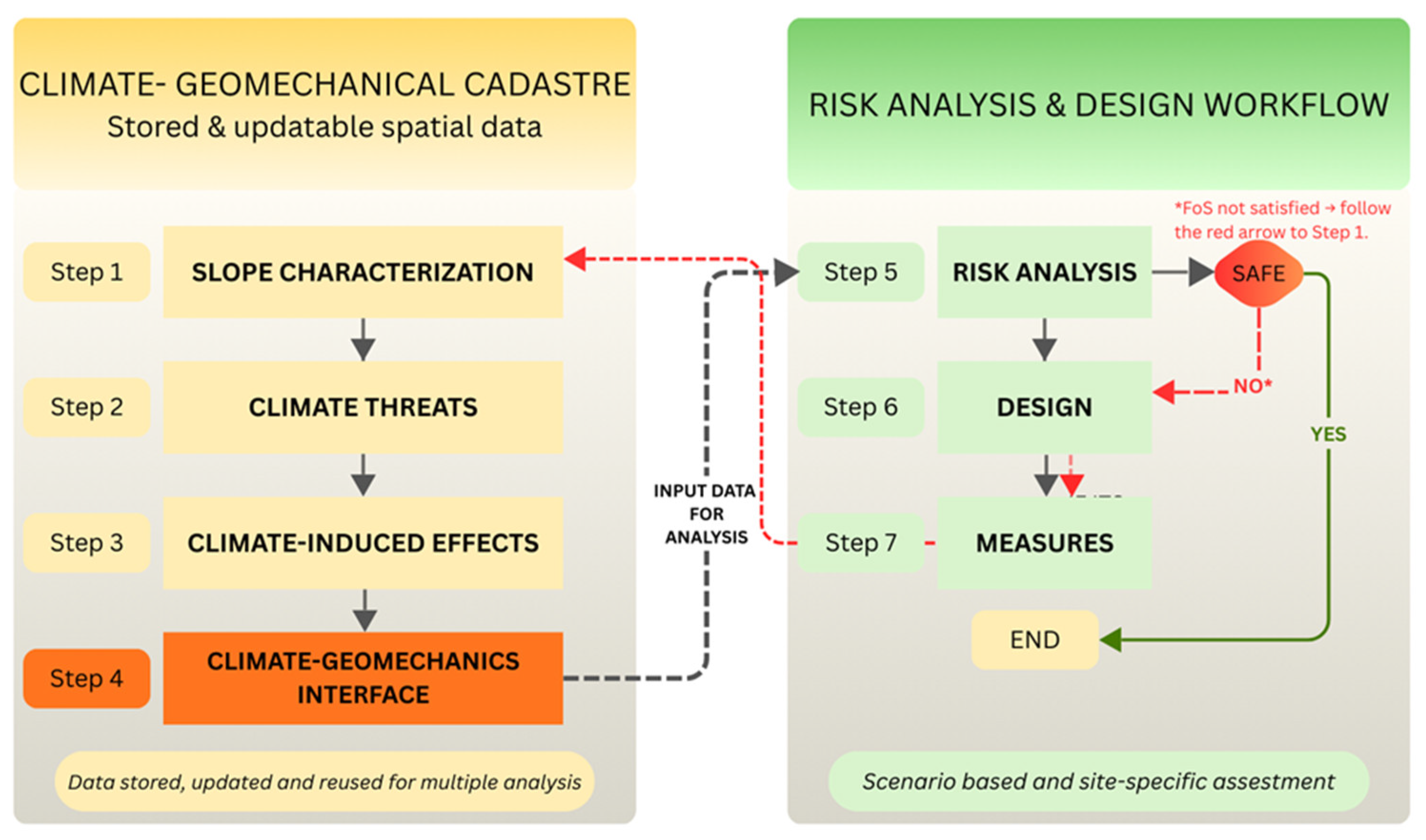
Figure 1 illustrates the CARE framework for slopes, structured into two interconnected components. The first component is a climate–geomechanical cadaster comprising four sequential steps: (1) slope characterization, (2) identification of climatic threats, (3) analysis of climate-induced effects, and (4) integration of the climate–geomechanical interface. The second component represents the risk analysis and design workflow, including (5) risk analysis, (6) design, and (7) implementation of mitigation measures. If the required factor of safety is not satisfied, the workflow follows the iterative loop indicated in red, returning to the initial slope characterization step.
Table 2 provides an overview of the CARE framework steps for slopes, indicating the cadastral and monitoring data associated with each step and how these data are used in CARE analyses, including slope stability modeling, assessment of climatic impacts, quantification of geomechanical responses, risk evaluation, design of mitigation measures, and continuous monitoring.
2.1. Study Area and Sample Collection
Slovenia was selected as the study area due to the availability of high-resolution datasets, its compact size allowing detailed analysis, and its diverse topography ranging from mountainous to lowland environments. Its location at the intersection of Alpine, Mediterranean, and continental climatic influences further makes it well suited for investigating coupled climatic and geomorphological controls on slope stability.
This study focuses on slope stability in the Pohorje region of northeastern Slovenia by integrating field measurements, laboratory testing, and numerical modeling. A parametric analysis was conducted to evaluate the influence of precipitation, infiltration, and soil saturation on the factor of safety. The results demonstrate a strong relationship between increasing soil moisture, reduced shear strength, and decreased slope stability, emphasizing the critical role of hydro-meteorological drivers in landslide susceptibility.
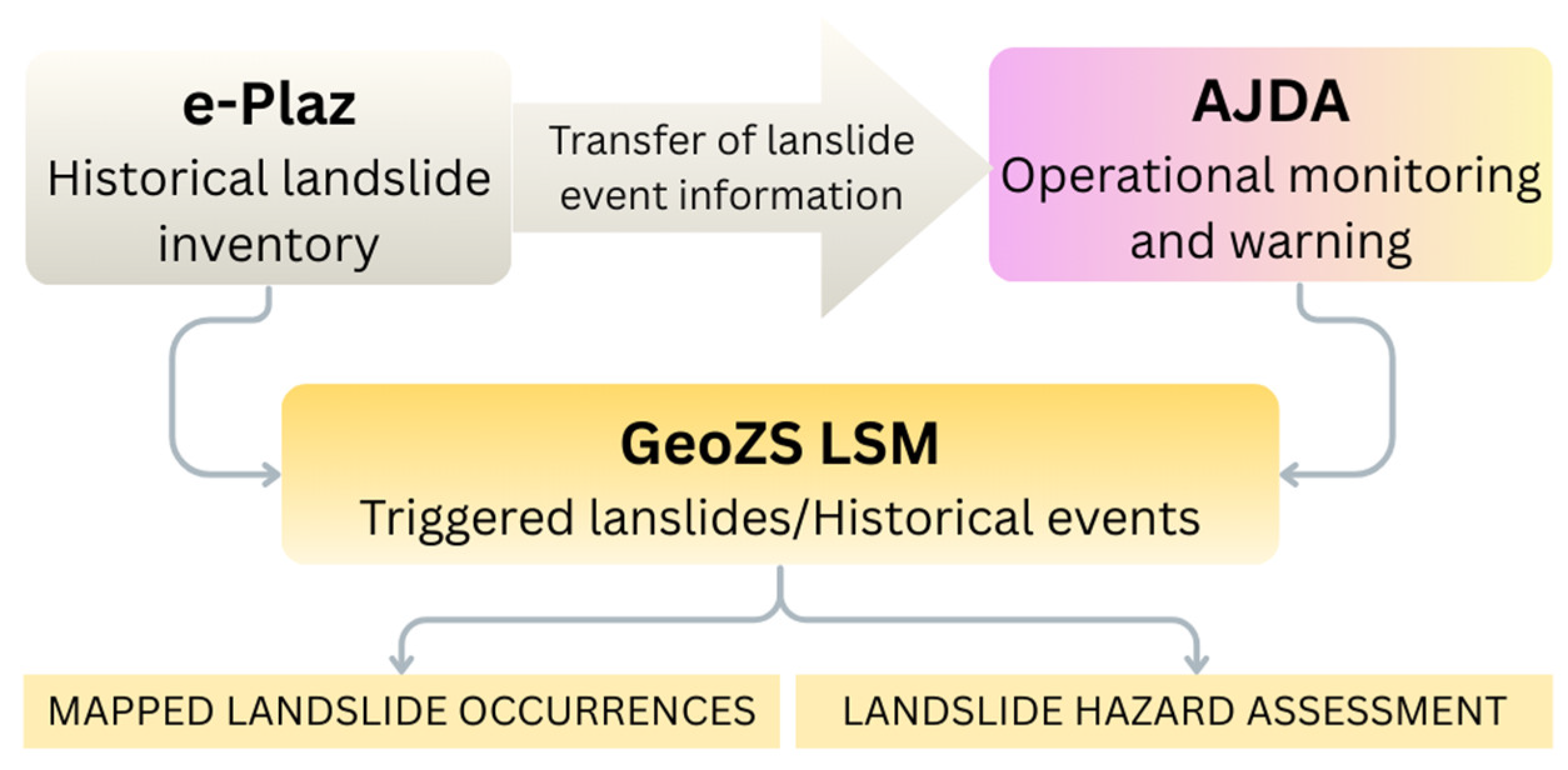
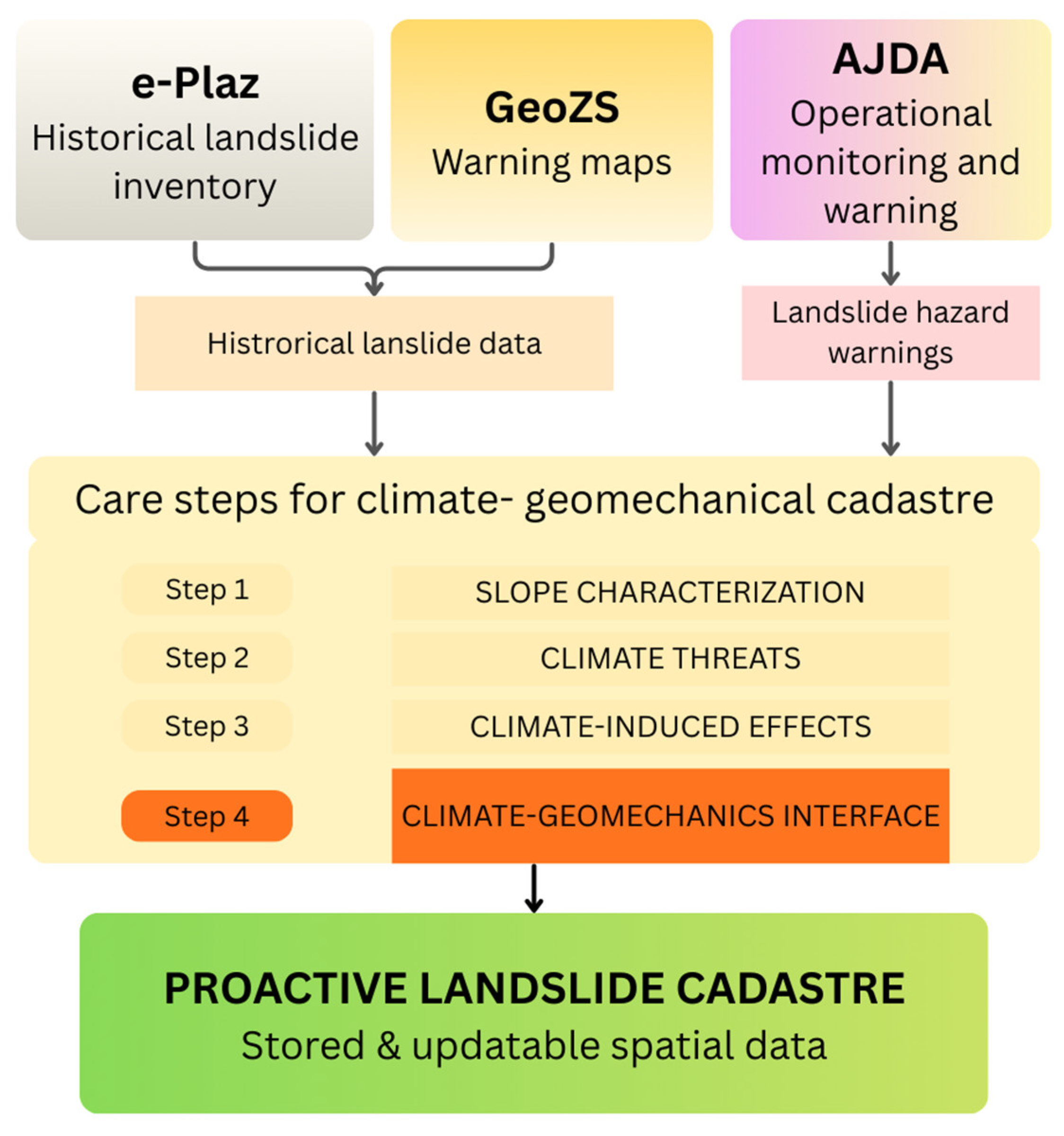
Figure 2 illustrates the functional relationships between the e-Plaz and AJDA datasets and related susceptibility maps in Slovenia, highlighting their roles in data archiving, analysis, monitoring, public warning, and intervention planning. The figure also demonstrates how these datasets contribute to probabilistic assessments of future landslide and erosion events and support informed spatial decision making.
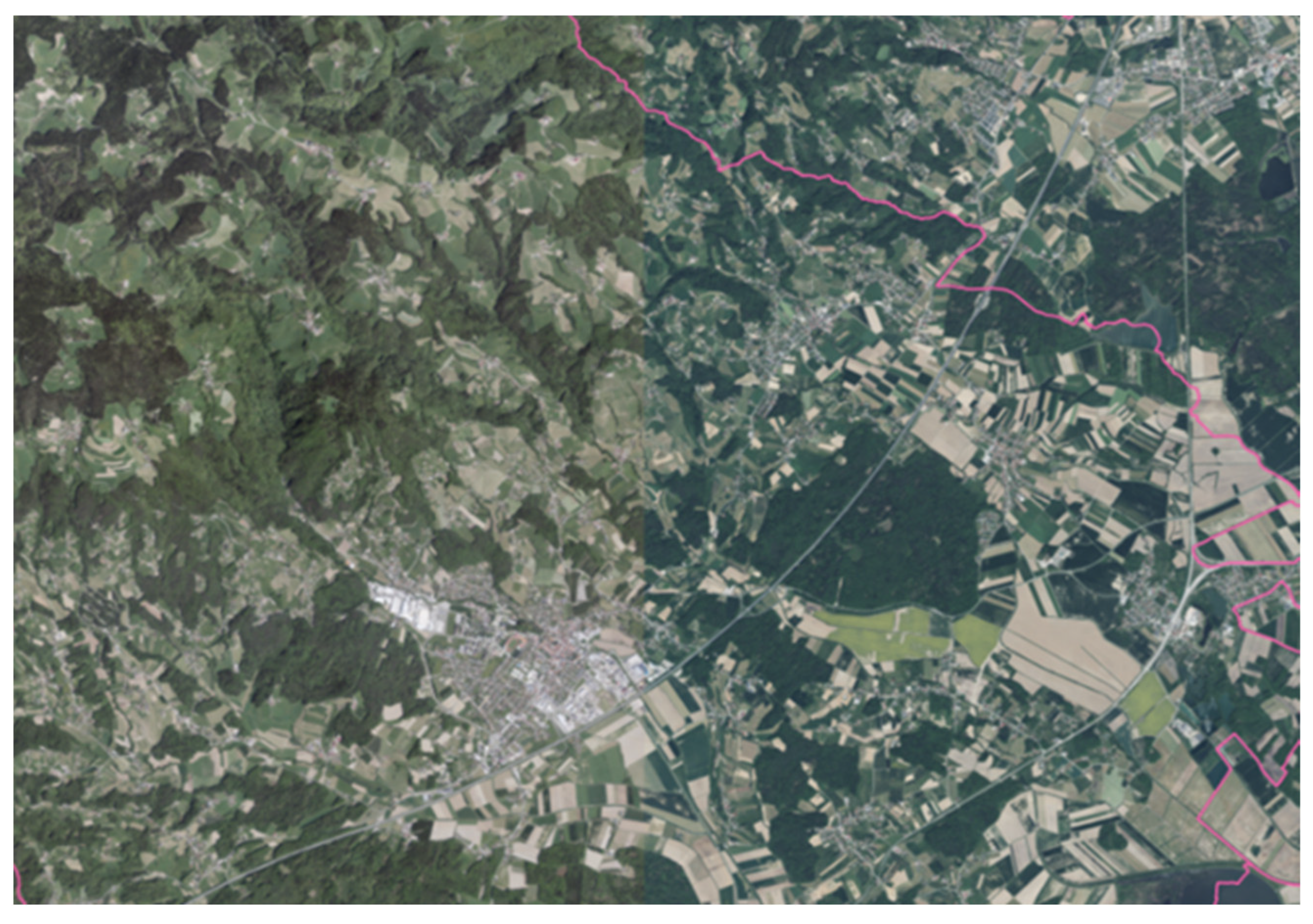
The study was conducted in the Pohorje region of northeastern Slovenia, where data availability and documented landslide activity provide a suitable context. Within this region, the study specifically focuses on the Visole settlement, covering an area of approximately 10 km
2. The pink line represents the boundary of the study municipality (
Figure 3). The area was selected due to a high frequency of documented landslides in the past, which has made it particularly challenging for spatial planning and infrastructure development. The area represents a typical suburban environment, characterized by sparsely distributed houses, road networks, and municipal infrastructure.
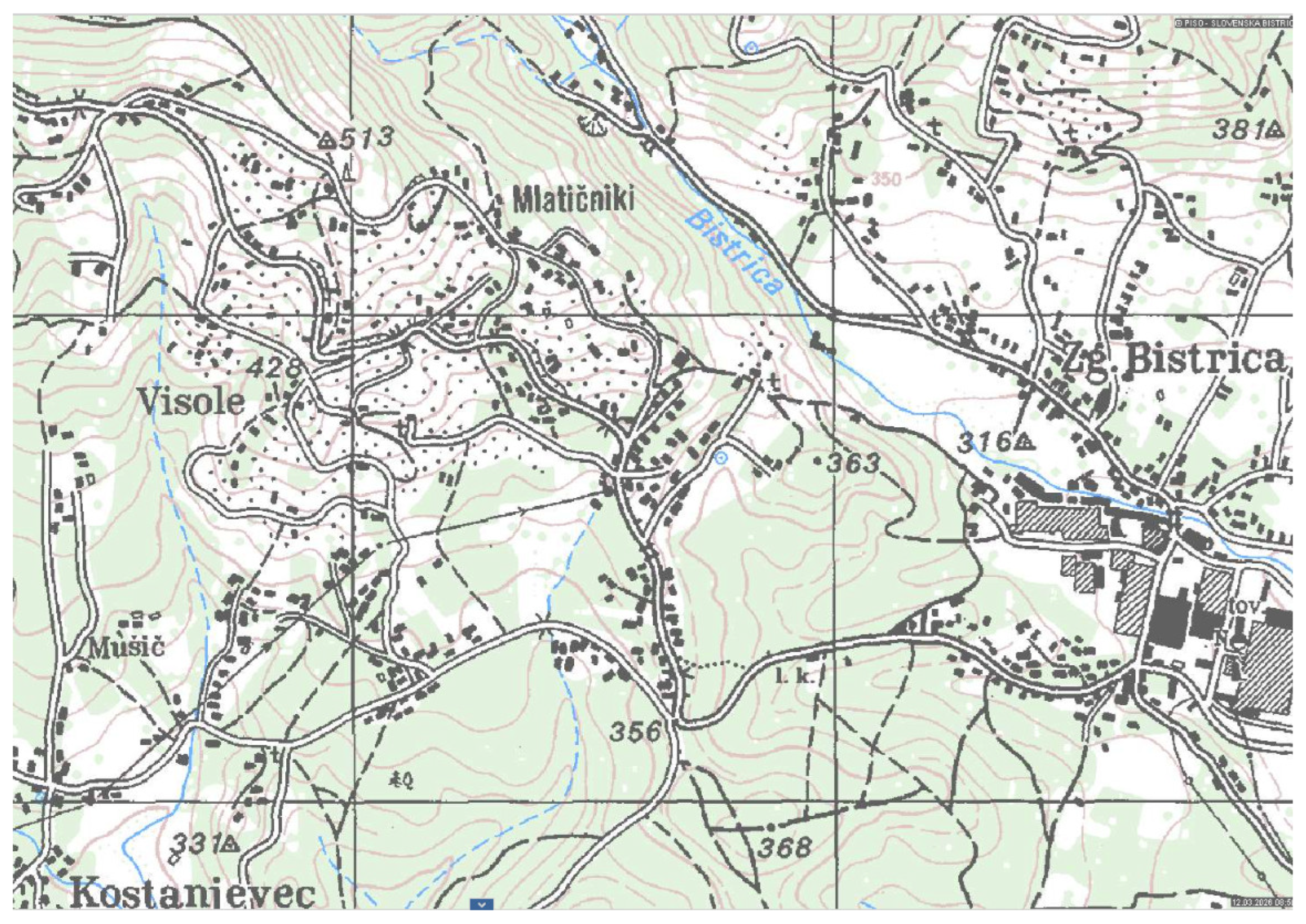
Figure 4 shows a topographic elevation map of the Visole study area showing terrain morphology and slope gradients, highlighting slope gradients and terrain morphology relevant to landslide susceptibility.
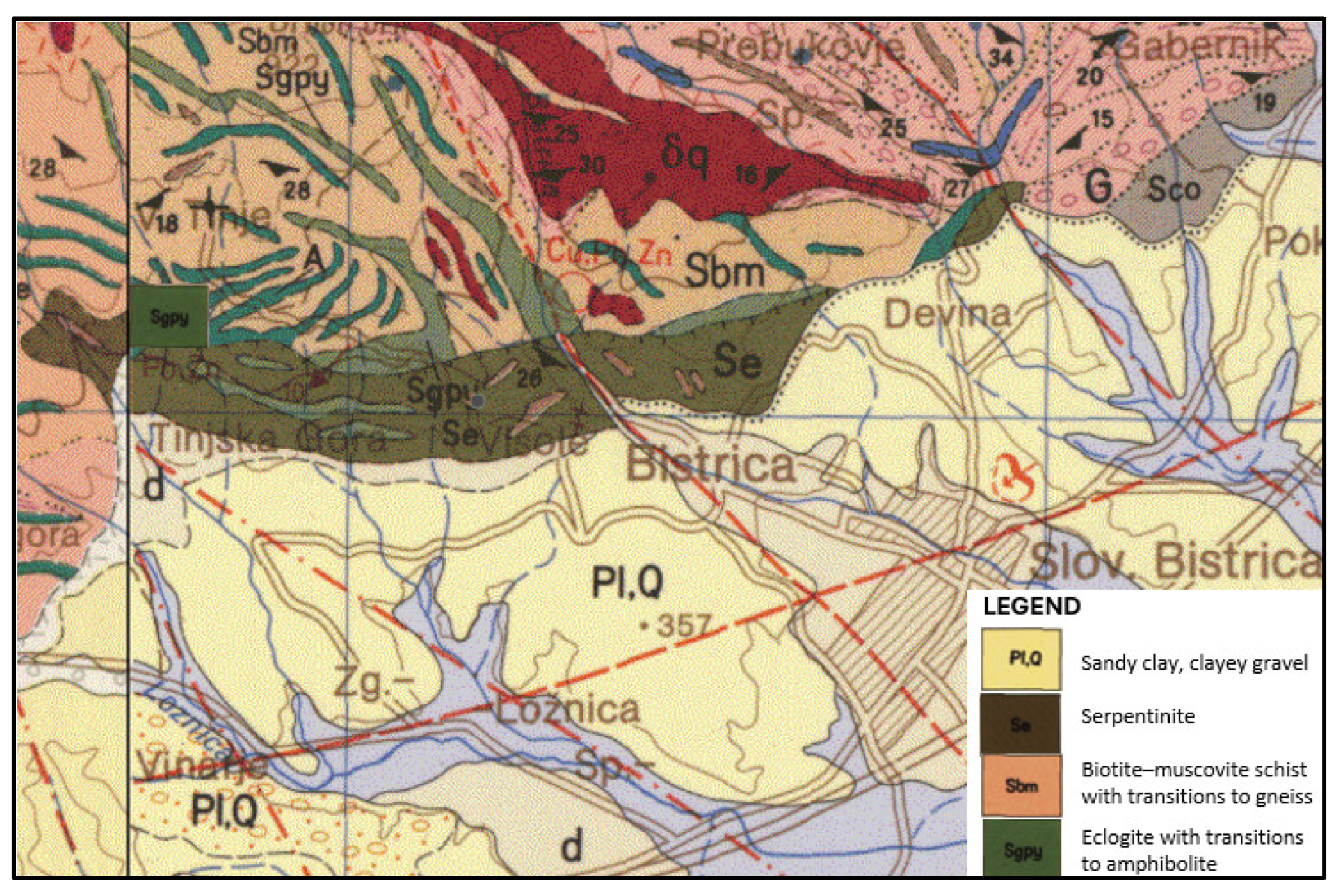
The terrain is predominantly mountainous, with local variations in slope gradients, elevation, and land use patterns, all of which are critical factors influencing landslide susceptibility (
Figure 5).
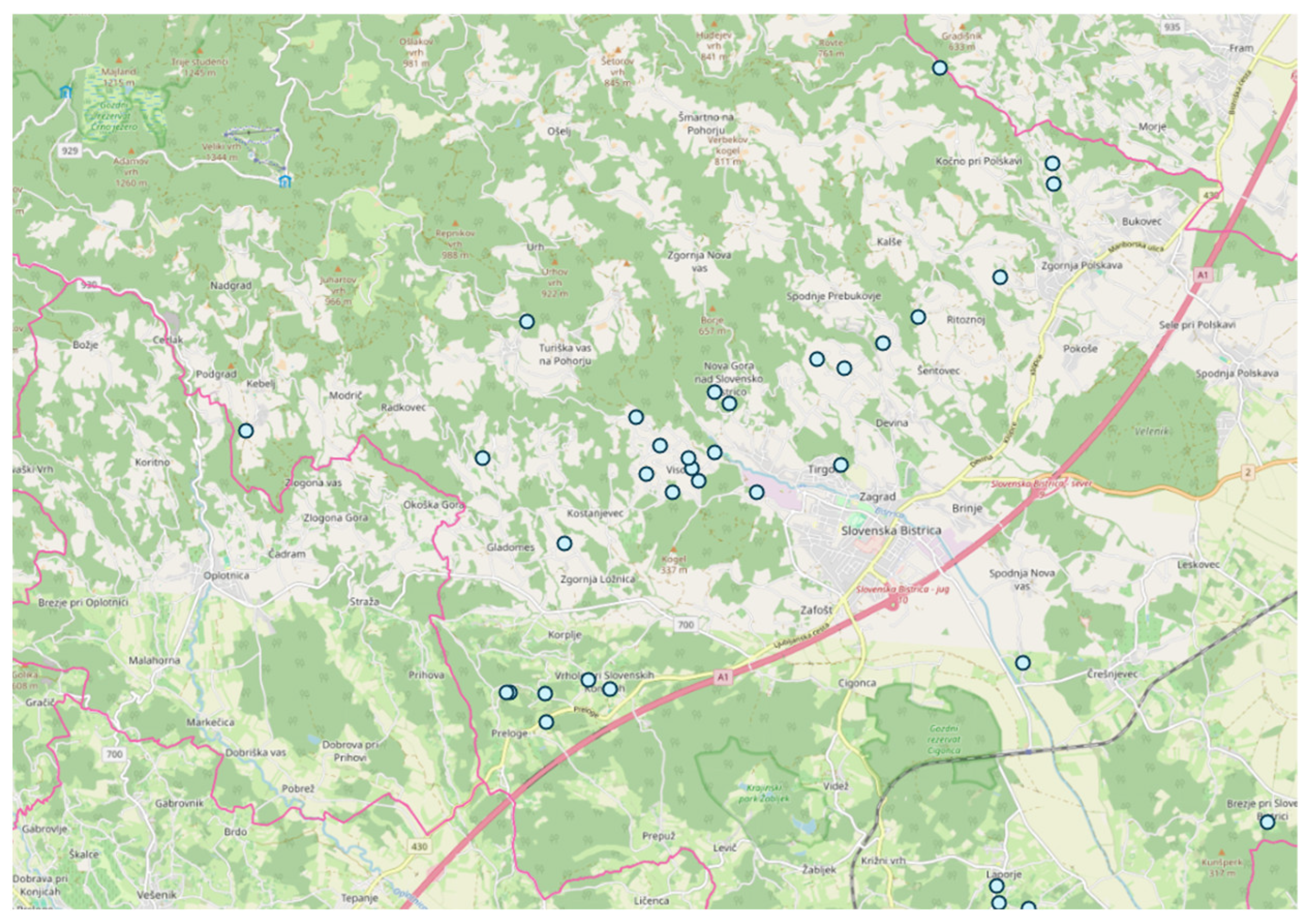
Figure 6 illustrates the study area along with the locations of documented landslides, as derived from the national e-Plaz cadaster, where blue points represent the recorded landslide locations.
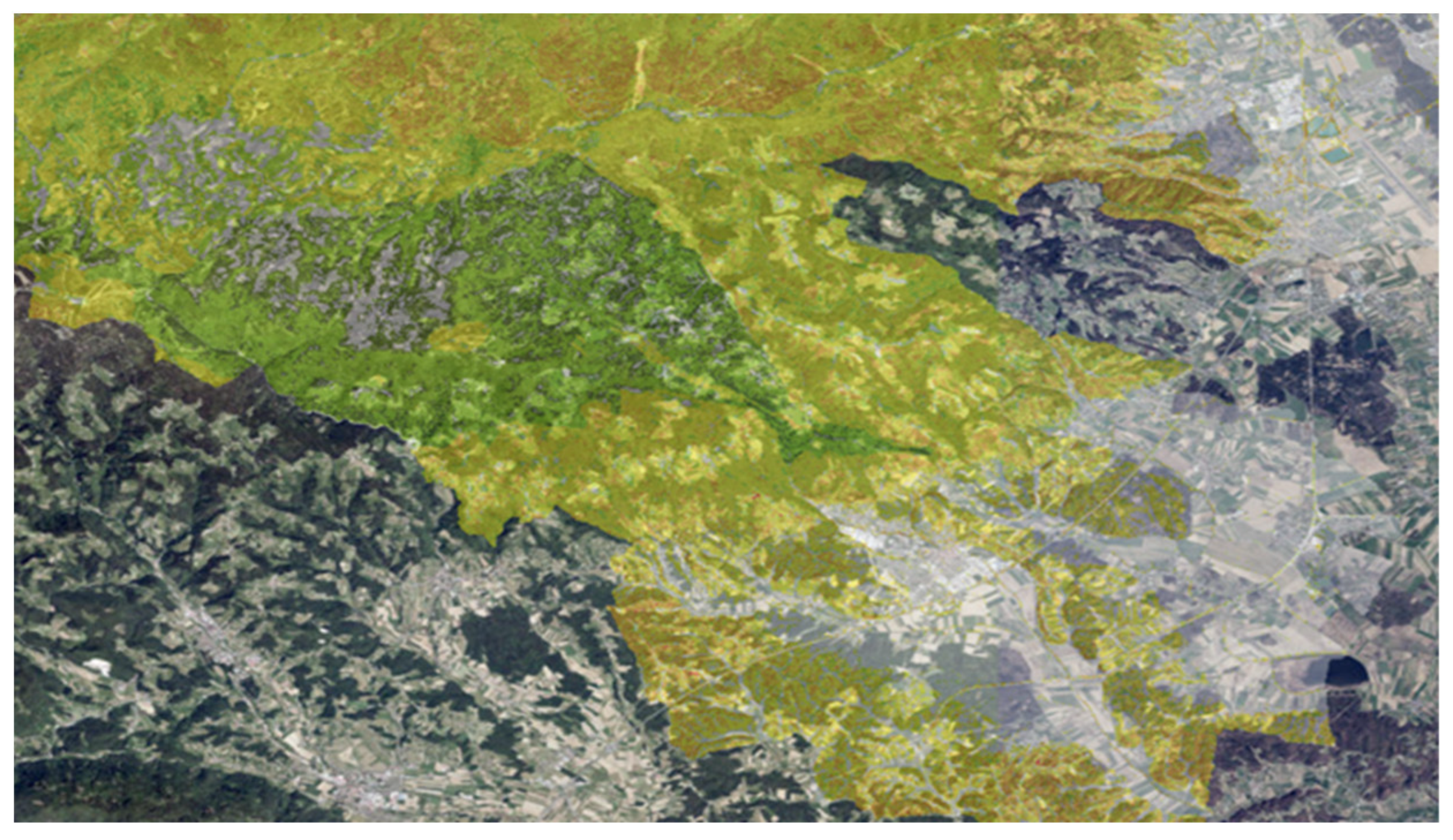
Figure 7 shows the study area overlaid on the GeoZS landslide susceptibility map (LSM), highlighting areas prone to landslides according to the official cadaster, where dark green indicates very low probability, light green low probability, yellow moderate probability, orange to brown higher probability, and dark grey to black very high probability or known landslide-prone areas. The Landslide and Debris Flow Susceptibility Map is an official national-scale product compiled by the Geological Survey of Slovenia (GeoZS) in cooperation with the Slovenian Water Agency [
21]. It is based on a national landslide inventory and spatial analyses of key preconditioning factors, including lithology, slope gradient, curvature, aspect, distance to geological boundaries and surface water, and rainfall patterns. The map classifies areas according to relative susceptibility to landslide and debris-flow occurrence and is intended as a general predictive tool for spatial planning and hazard assessment.
Based on the spatial context presented in
Figure 3,
Figure 4,
Figure 5 and
Figure 6, the following section describes the data sources and land characterization used to support the proposed proactive landslide cadaster. Geological and morphological characteristics were obtained from published geological maps and research reports [
20,
23,
24]. Climatic data were derived from the ARSO meteorological network, CROSSRISK, and other sources [
21,
25], providing information on precipitation patterns, temperature, and seasonal moisture variations.
Landslide occurrence data were collected from the national e-Plaz cadaster and the operational AJDA database, while slope susceptibility information was incorporated from the GeoZS landslide warning maps [
10,
11,
20]. These datasets form the foundation for the proposed proactive landslide cadaster, integrating field measurements, GIS layers, meteorological data, and historical records.
Land characterization for the Visole area was performed for each reference location to support the proactive cadaster. Key parameters include location (coordinates and elevation), population and settlement type, geological and geographic region, climate, infrastructure, and documented landslides.
For example, the reference area at Kebelj is represented by its central coordinate (X = 534,720; Y = 140,890), corresponding to an approximately 1-hectare analytical unit used for site characterization. The site lies at an elevation of 720 m a.s.l., within the Alpine geological region and a mountainous geographic setting, and is influenced by an Alpine-type climate. The area has a suburban population density of 88 inhabitants per km2 and includes transport and municipal infrastructure. Two landslides have been documented in the national e-Plaz database.
Similar characterization was carried out for all other reference locations within the Visole area.
Table 3 provides a summary of key parameters for selected reference locations, obtained from existing cadasters, forming a comprehensive dataset for slope stability assessment.
All spatial coordinates are reported in the national Slovenian coordinate reference system D96/TM (EPSG:3794). This integrated dataset enables the proactive cadaster to combine hydro-meteorological monitoring, geophysical measurements, historical landslide inventories, and GIS information, facilitating a holistic and proactive approach to landslide risk management in the suburban environment of Visole.
2.2. Proactive Cadaster Implementation
The conceptual structure of the proactive landslide cadaster applied in the Pohorje area is illustrated in
Figure 8. The proactive cadaster allows for the interpolation of hydro-meteorological and geomechanical parameters between measurement points, creating a continuous map of slope stability potential across the study area. This approach supports early identification of critical slopes, near-real-time risk assessment, and the prioritization of preventive measures, such as drainage, slope reinforcement, or monitoring interventions.
The methodology was applied to representative sites in the Pohorje area, allowing for the assessment of relationships between soil moisture variations, shear strength reduction, and slope stability. This underscores the critical role of hydro-meteorological conditions in controlling landslide processes.
2.3. Field Investigations and Laboratory Testing
Field investigations included topographic and geodetic surveys, LiDAR scanning, boreholes, and excavation pits, providing an accurate characterization of slope geometry and morphology. Stratigraphic data was compiled from published geological maps, previous geomechanical studies, and field observations. Historical landslide occurrences were recorded based on documented events from the national e-Plaz cadaster, the operational AJDA database, and GeoZS landslide warning maps.
Field investigations were structured into geomorphological analysis, subsurface exploration, in situ testing, and hydrogeological monitoring. Geomorphological characterization was conducted using GIS-based spatial analysis and LiDAR-derived terrain modeling, enabling the development of a high-resolution digital elevation model (DEM) for accurate slope geometry assessment. In different locations, subsurface conditions were investigated through exploration boreholes and excavation pits, providing stratigraphic information and soil samples for laboratory analyses. In situ geotechnical testing included Standard Penetration Tests (SPTs) and Dynamic Probing tests (DPL and DPSH), performed in accordance with relevant standards. Hydrogeological and deformation monitoring was carried out using piezometers (PIEZs) for groundwater level (GWL) and pore pressure measurements, and inclinometers (INCLs) for detecting subsurface displacements and potential shear zone development. Soil samples were analyzed to determine key physical properties, including bulk density (γ), water content (w), consistency, soil classification, permeability (k), porosity (n), degree of saturation (Sr), and other hydraulic parameters.
In the proposed proactive landslide cadaster, the results of these investigations would be incorporated wherever available, allowing continuous updates of hydrogeological and geomechanical conditions. Location maps are included where possible, and
Table 4 summarizes the key measurement sites and parameters within the study area. The data presented in the table are structured in a manner consistent with a proactive landslide cadaster, allowing continuous updating as new measurements or observations from the study area become available. Such parameters are typically not included in conventional landslide cadasters; however, within a proactive system they would be continuously updated and expanded as new measurements, observations, and climate-related data become available. This approach illustrates how the cadaster could dynamically integrate multi-source information to support preliminary, site-specific slope stability assessments.
Laboratory tests provided geomechanical parameters, such as shear strength (cohesion c and internal friction angle φ) and consolidation behavior, allowing local calibration of slope stability models under field moisture and saturation conditions. Special attention was given to unsaturated soil behavior, including matric suction measurements, to quantify its contribution to slope stability.
The integration of field and laboratory data enabled a comprehensive characterization of slope conditions, encompassing geometric, hydrological, and mechanical parameters. The dependency of shear strength on moisture content was emphasized, supporting the development of dynamic climate–geomechanical indicators of slope stability. These datasets form the basis for subsequent slope stability modeling and integration into the proactive landslide cadaster.
A representative example for the Kebelj location (Visole area) illustrates the type of data collected. Soil Layer 1 (ClL-SiL (CL), based on field investigations and laboratory testing, included the following parameters: bulk density γ = 18.5 kN/m
3, water content
w = 35%, permeability
k = 1 × 10
−6 m/s, porosity
n = 0.4, degree of saturation
Sr = 70%, cohesion
c = 3 kPa with reduction in cohesion with moisture ∆
c = 0.5 kPa/%w, and internal friction angle φ = 20° with reduction in φ with moisture ∆φ = 1°/%w (see
Section 2.8). Similar characterization was carried out for all other reference locations within the Visole area.
The complete dataset for representative locations is summarized in
Table 4, integrating field measurements, laboratory results, and landslide occurrence data to support the development of the proactive landslide cadaster.
2.4. Slope Characterization and Input Data for Stability Modeling
Slope characterization is carried out using an integrated approach that combines remote sensing data, field investigations, laboratory testing, and existing geological documentation. For all analyzed slopes, geometry, stratigraphy, hydrological conditions, and mechanical soil properties are systematically defined to ensure consistency within the parametric slope stability framework.
Slope geometry is derived from high-resolution LiDAR data and complemented by geodetic measurements, enabling the construction of detailed digital elevation models (DEMs) for slope stability modeling purposes. Stratigraphic profiles and soil descriptions are obtained from geological reports and field investigations and further verified through direct on-site observations. Hydrological input parameters include groundwater conditions, soil saturation state, and the hydraulic properties of soil layers, which are used to evaluate pore pressure distribution and effective stress conditions within the slopes. Mechanical soil properties, determined through laboratory testing, include bulk density, cohesion, internal friction angle, porosity, degree of saturation, hydraulic conductivity, and soil suction. To reflect realistic field conditions, parameters are adjusted according to moisture variations, while spatial heterogeneity of soil materials is accounted for through parameter mapping across each study area.
All collected data are integrated into a parametric infinite slope stability model, which incorporates climate-induced variations in soil saturation to evaluate safety factors under different rainfall scenarios. This approach enables a spatially consistent assessment of slope susceptibility and supports the development of climate–geomechanical indicators for landslide risk management.
A representative example for the Visole area illustrates the integration of field, laboratory, and geospatial data for stability modeling. The average terrain slope at the site is approximately 28°. For analytical consistency within the infinite slope framework, an equivalent slope inclination of 21.8° (nsl = 2.5) is adopted in the stability calculations. Geologically, the slope consists of an approximately 4 m thick layer of clay sand (ClL-SiL (CL) overlying weathered marl, followed by marl bedrock.
Seasonal rainfall significantly influences soil saturation at the site. Although permanent groundwater is not observed, during intense precipitation events infiltrating water is assumed to accumulate at the interface between the permeable soil layer and the less permeable marl. This process increases pore pressure and reduces effective stress within the potentially unstable soil layer, thereby decreasing slope stability.
The key input parameters for the infinite slope stability analysis of the Kebelj site are summarized in
Table 5. These parameters, derived from integrated field investigations, form a consistent dataset for parametric stability modeling. Such data are typically not included in conventional landslide cadasters; however, within a proactive landslide cadaster they would be systematically stored and continuously updated as new measurements, observations, and climate-related data become available.
2.5. Climate Description
For the study area, climate data were collected to provide a comprehensive characterization of both average conditions and extreme events, which are critical for assessing their impact on slope stability. Precipitation data included short-term events (from a few minutes up to one hour) as well as long-term daily measurements of intensity and duration, allowing the analysis of both extreme rainfall events and long-term precipitation patterns. In addition, temperature, snow cover, and freeze–thaw cycles were considered, as they influence soil moisture content, hydrological loading on slopes, and potential reductions in soil shear strength.
The analysis addressed both short-term extreme and long-term trends to identify periods of increased landslide hazard, including intense rainfall, prolonged wet periods, or rapid snowmelt. Key climate factors affecting slope stability include:
General climate patterns: dry and wet periods, increased frequency and intensity of thunderstorms.
Temperature factors: rising mean temperatures, heatwaves, temperature fluctuations, and increased frequency of freeze–thaw cycles.
Precipitation factors: changes in total rainfall and snowfall, prolonged heavy rain, alternating wet and dry cycles, hail, and ice events.
Wind: stronger gusts, increased frequency and intensity of strong winds, tornadoes, and windthrow.
In the context of the climate–geomechanical interface, it is meaningful to include climate factor data in the proactive landslide cadaster. They are continuously updated based on meteorological measurements and climate scenarios, providing essential input for assessing hydro-mechanical conditions and slope stability.
All data were obtained from the Slovenian Environment Agency (ARSO), complemented by reanalysis datasets from the CROSSRISK project and other publicly available sources [
21,
25]. For the Pohorje study area, daily and monthly ARSO data on precipitation and air temperature were used, along with derived agrometeorological variables such as reference evapotranspiration.
To evaluate potential future climate impacts, standard Representative Concentration Pathways (RCPs) were considered:
RCP2.6: low-emission scenario, aiming to stabilize global warming below 2 °C by the end of the century;
RCP4.5 and RCP6.0: intermediate-emission scenarios with different mitigation trajectories, stabilizing by 2100;
RCP8.5: high-emission scenario, assuming continuation of current trends without significant mitigation measures.
In the IPCC AR6 report (2021), these scenarios have been updated and linked to Shared Socioeconomic Pathways (SSP–RCPs), combining emission pathways with possible socio-economic development scenarios. This framework allows the assessment of future impacts on key variables such as temperature, precipitation, and the frequency of extreme events.
The collected climate information provides a robust basis for integrating climate effects into a proactive landslide cadaster and for developing climate–geomechanical indicators, enabling a comprehensive assessment of the influence of climate on slope stability.
Table 6 presents the correspondence between the older emission scenarios (RCPs) used in the IPCC AR5 report (2014) and the more recent SSP scenarios introduced in AR6 (2021), along with the projected increase in precipitation for the study area (based on project reports assessing precipitation changes). These data are not available in the conventional cadaster and, in a proactive landslide cadaster, would be continuously updated as new climate data and scenarios become available.
Based on data in
Table 6, estimated average precipitation [
25] and predicted future precipitation for different RCP scenarios were calculated. Precipitation projections presented in
Table 7 are based on climate data from the CROSSRISK project [
25]. These data are also not available in conventional cadasters and normally need to be obtained separately; in a proactive landslide cadaster, they would be integrated and continuously updated as new measurements and projections become available.
2.6. Climate Effects on Slope Conditions
Observed climate data indicate that climatic factors influence slopes through several mechanisms: increased soil saturation, enhanced water infiltration, reduction in material strength due to higher moisture content, intensified seepage and physical weathering, and elevated groundwater and surface water levels, including variations in pore water pressure.
Conventional landslide cadasters are generally inadequate for directly capturing these climate-induced effects, as they often lack the temporal resolution and hydro-mechanical context required to represent transient processes triggered by extreme weather events. Therefore, the impacts of climate were assessed by analyzing the interactions between precipitation patterns, temperature fluctuations, snowmelt, and dynamic changes in soil moisture, groundwater levels, and pore pressure within the slopes.
Short-duration, intense rainfall events can rapidly increase soil saturation from approximately 70% to over 95% at depths of around 2 m within just a few days. Under these conditions, net infiltration is constrained by the soil’s hydraulic conductivity (k). Laboratory measurements on representative soil materials, such as sandy clay, indicate a decrease in shear strength with increasing moisture: cohesion may decrease by approximately 0.5 kPa, and the internal friction angle by about 2° per 1% increase in volumetric water content. Such rapid changes can trigger landslides on vulnerable slopes.
Long-term trends in precipitation and extended wet periods contribute to cumulative effects on slope stability, including gradual saturation of soil layers and progressive reduction in cohesion. Seasonal snowmelt and temperature variations further influence temporal changes in soil water content and hydraulic loading, particularly in the upper soil layers.
To quantify the combined effects of these climatic factors, changes in soil saturation, effective stress, and matric suction were calculated, providing essential inputs for dynamic slope stability assessments. This approach underscores the limitations of conventional landslide cadasters in evaluating climate impacts and highlights the importance of integrating field observations with laboratory-determined soil properties for characteristic materials (e.g., sandy clay). Such integration facilitates the development of robust climate–geomechanical indicators (see
Section 2.7) and supports proactive, evidence-based landslide risk management.
2.7. Potential Consequences
The potential consequences of climate-induced slope instability were evaluated using established landslide classification frameworks. A foundational landslide velocity framework, introduced by Varnes [
16] and later refined by Cruden and Varnes [
18], was employed to improve the understanding of slope dynamics. Additional refinements proposed by the IUGS Working Group on Landslides, particularly by Hungr et al. [
17], as well as the practical guidelines of Highland et al. [
26], were incorporated to classify landslide behavior under field conditions.
Landslides were categorized according to material type, movement type, velocity, and depth of failure. Representative soil materials, including sandy clay, were tested in the laboratory to determine shear strength parameters under varying moisture contents. Results indicated that cohesion decreases by approximately 0.5 kPa and the internal friction angle by about 2° per 1% increase in volumetric water content.
Field and climate observations were used to assess the effects of extreme precipitation events, snowmelt, and seasonal variations on slope conditions. Soil saturation (Sr) was observed to increase from approximately 70% to over 95% at depths of around 2 m within five days during intense rainfall. Net infiltration was estimated while accounting for the constraints imposed by soil hydraulic conductivity (k). Subsequent analyses considered pore water pressure, groundwater levels, and dynamic changes in soil moisture in relation to landslide susceptibility.
Based on these data, landslides were classified as follows:
Material type: rock (bedrock or large fragments), soil (clay, silt, sand, gravel), or debris (mixtures of rock, soil, and organic matter).
Type of movement: falls, topples, slides, flows, creep, or spreads.
Velocity of movement: ranging from extremely rapid (>5 m/s) to extremely slow (<1.3 mm/day).
Depth of failure: superficial, shallow (≤2 m), medium deep (2–5 m), deep (5–12 m), or very deep (≥12 m).
This framework was applied to quantify the potential consequences of climate-related slope instability by integrating laboratory-derived material properties with observed and projected climate impacts. The combined analysis enabled a dynamic assessment of slope hazards and informed the prioritization of mitigation strategies for the most vulnerable areas.
2.8. Parameters of Climate–Geomechanical Interface
Building on the classification of potential consequences (
Section 2.7), the climate–geomechanical interface translates observed and predicted climate impacts into operational metrics for slope stability management. While landslide susceptibility was previously quantified by material, movement, velocity, and depth, practical risk management requires a framework linking climatic drivers to geomechanical responses in real time.
The climate–geomechanical interface integrates field observations, laboratory-derived soil parameters, and high-resolution climate data to quantify dynamic indicators of slope stability. Key parameter groups include climatic, hydro-hydrogeological, geomechanical, and slope geometry parameters, all treated as time- and space-dependent within the proactive cadaster. Detailed information on these parameters and their interactions is provided in
Table 8 and
Table 9, which offer a structured overview of climatic drivers, hydrogeological responses, and corresponding geomechanical effects within the CARE framework.
To formalize the dynamic coupling between climate, hydrology, and soil mechanics, slope stability can conceptually be expressed by a time-dependent factor of safety (Equation (1)):
where
is the effective cohesion,
the effective friction angle,
the normal stress,
the pore water pressure, and
the mobilized shear stress.
Variations in shear strength parameters differ among soil types, and the trends shown are representative for each material. Similar relationships between soil moisture conditions and reductions in shear strength parameters have been documented in previous studies on rainfall-induced landslides and hydro-mechanical coupling in soils [
27,
28,
29,
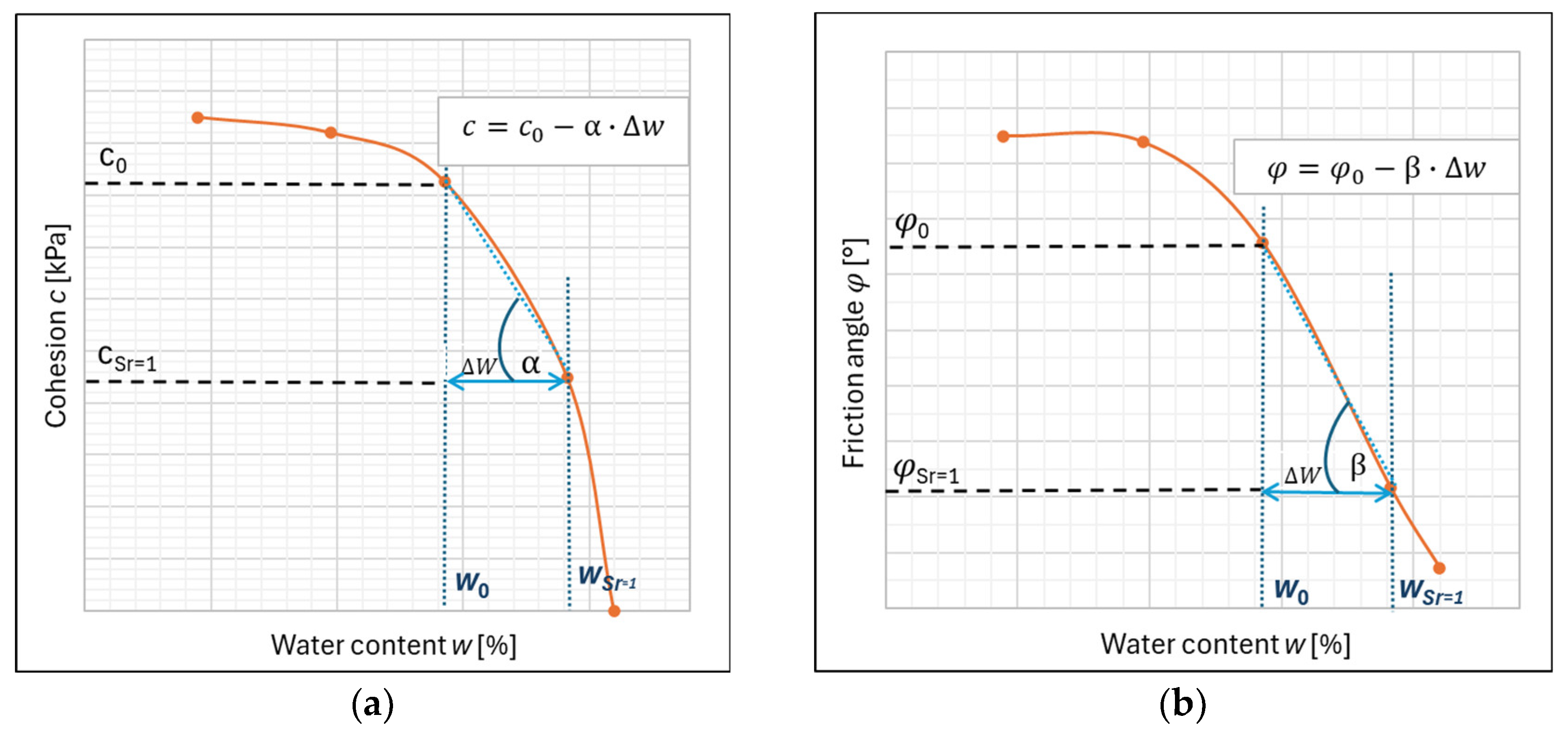
30]. The moisture-dependent behavior of the effective cohesion and friction angle can be conceptually described as a linear reduction with increasing water content, where both parameters decrease from their reference values under initial moisture conditions as soil saturation increases. In this formulation, the sensitivity of cohesion and friction angle to changes in water content is governed by empirical coefficients derived from laboratory observations, reflecting the progressive mechanical degradation of the soil. These relationships capture the moisture-controlled reduction in shear strength and provide a formal basis for their proactive interpretation within the landslide cadaster.
Figure 9 show the variation in soil shear strength parameters—cohesion (a) and friction angle (b)—as a function of water content for a representative soil. The diagrams illustrate the progressive reduction in both parameters with increasing moisture content, including characteristic thresholds such as the initial water content (
w0) and the water content at full saturation (
wSr = 1). These relationships reflect the strong influence of moisture conditions on soil mechanical behavior and slope stability. A detailed discussion of the experimental background and constitutive relationships is provided in Bračko et al. [
15].
The conceptual framework is illustrated in
Figure 1, showing the flow from climatic drivers through hydrogeological processes to geomechanical response. The parameters used in this illustration are demonstrative, and the framework is designed to be extended in future studies with more complex, nonlinear models to better capture real-world slope dynamics. This integration forms the basis of the CARE framework’s iterative cycle of monitoring, assessment, adaptation, and risk mitigation, supporting proactive landslide management.
By establishing a consistent set of dynamic parameters and functional linkages, the climate–geomechanical interface allows for:
Near-real-time monitoring of slope vulnerability;
Identification of areas of increased hazard;
Adaptive decision-making and early warning;
Integration with predictive numerical models if needed.
Overall, the interface formalizes the causal chain from climate forcing to geomechanical response, supporting scientifically grounded, operationally relevant, and adaptive slope stability management.
The parameters summarized in
Table 8 represent key process variables for monitoring and assessing slope stability. They are organized according to the structure of a proactive landslide cadaster, which allows continuous updating as new observations, measurements, and climate-related data become available.
The cadaster directly or indirectly incorporates various elements of the climate–geomechanical interface that influence infiltration and soil saturation. Meteorological parameters include air temperature (T), precipitation amount (P), temporal distribution of precipitation P(t), evaporation (E) and transpiration (Tr), relative air humidity (wa), and snowmelt intensity (Ms). These factors control the water input to the system and affect the timing and degree of soil infiltration and saturation.
Soil and hydrological parameters considered in the model include net infiltration (NI), porosity (n), soil moisture (w) and degree of saturation (Sr), groundwater level (Hw), and hydraulic conductivity (k). These parameters define the response of the soil system to precipitation events, influencing pore pressure and effective stresses, and consequently slope stability.
Table 9 features key process variables for monitoring slope stability, organized according to the structure of a proactive landslide cadaster. These parameters link external climatic forcing to the hydro-mechanical and thermal response of slopes and are treated as time- and space-dependent variables for integration into numerical models.
Climatic parameters include air temperature, precipitation (amount, duration, intensity), relative humidity, snow cover, and snowmelt. They define the external forcing that controls infiltration, soil saturation, pore pressure development, and freeze–thaw cycles. Short-term intense rainfall induces rapid changes in pore pressure, while long-term wet periods gradually reduce shear strength. These data are obtained from meteorological stations, reanalysis datasets, and satellite observations and are incorporated as temporally and spatially distributed layers.
Hydrological and hydrogeological parameters describe the soil water response to climate forcing. They include net infiltration, volumetric water content, soil saturation, porosity, groundwater level, hydraulic conductivity, and matric suction. These parameters control effective stress, shear strength, and the spatial–temporal development of pore pressure. They are obtained through field measurements, laboratory tests, geophysical methods (e.g., electrical resistivity—ERT), and numerical modeling (e.g., SEEP/W), and are updated proactively in the cadaster according to climatic inputs.
Geomechanical parameters describe soil resistance to deformation and slope failure. Key properties include cohesion, internal friction angle, shear strength, stiffness, and compressibility. These parameters decrease with increasing saturation and repeated wetting–drying cycles, reducing slope stability over time. Cohesion and friction angle are particularly sensitive to moisture changes, while stiffness and compressibility govern soil deformability under varying effective stress. Laboratory tests, including direct shear, triaxial, and consolidation tests, provide the basis for numerical modeling of time-dependent geomechanical responses.
The integration of all these parameters in the proactive cadaster enables near-real-time monitoring of slope vulnerability, the identification of areas of increased hazard, and support for proactive landslide risk management. Indirect indicators, such as soil electrical resistivity and conductivity from geophysical surveys, provide additional continuous monitoring of hydro-mechanical processes.
Table 9 provides a detailed overview of the climate–geomechanical interface parameters, their influence on slope stability, methods of determination, and their representation in the proactive landslide cadaster.
To complement the general parameterization of the climate–geomechanical interface,
Table 10 provides a location-specific overview of the main climate, hydrogeological, and geomechanical factors for selected sites. For each location, key drivers influencing slope stability are summarized along with their primary data sources. In this study, these parameters are illustrated through an implementation example, showing how site-specific observations can be integrated into the proactive landslide cadaster to support targeted slope stability assessments and risk management.
3. Demonstration of Cadaster-Based Preliminary Risk Assessment
This section presents a conceptual demonstration of how the proposed proactive landslide cadaster can support preliminary, climate-informed slope susceptibility assessment at the Vinarje site. The objective is not to present a fully operational system, but to illustrate how elements of the climate–geomechanical interface—largely unavailable in conventional cadasters—can be integrated into an early-stage screening framework. Within this approach, the cadaster serves as a structured analytical tool, storing and organizing data as they would be in a proactive system, guiding the identification of potentially susceptible areas and prioritizing sites for more detailed investigations in accordance with the CARE methodology.
This way, the proactive landslide cadaster should integrate spatial, geological, hydrological, geotechnical, and climatic information and enable the translation of climate signals into geomechanical response parameters. Within this framework, the cadaster supports the first four CARE steps, which together form the analytical core required for climate-informed slope stability evaluation.
3.1. Step 1—Land Characterization
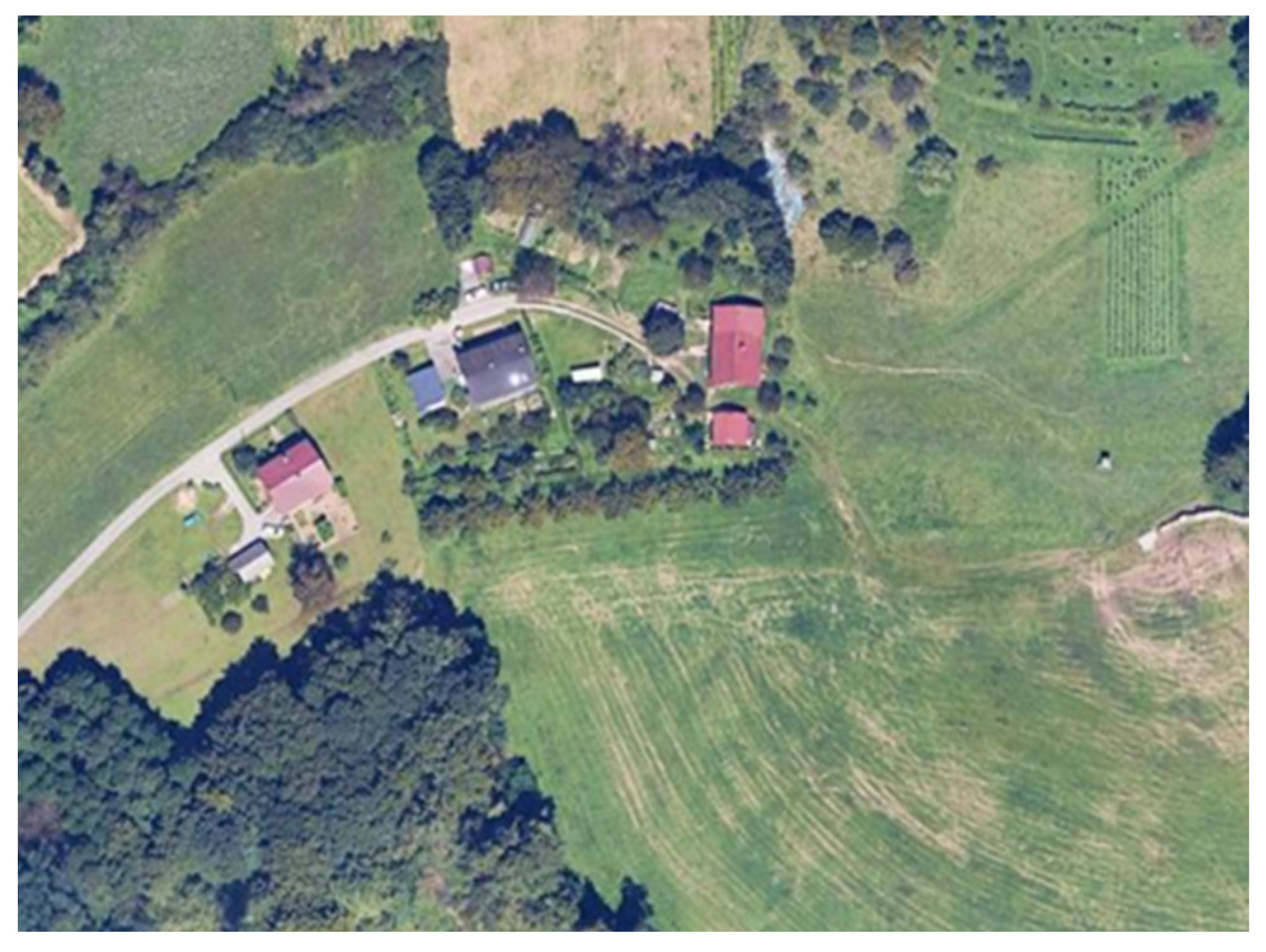
The Vinarje site, located within the Visole land area (
Figure 10), serves as a representative case for demonstrating the use of a proactive landslide cadaster in preliminary, climate-informed slope stability assessment. The objective at this stage is not to present an operational system, but to illustrate how a systematically structured cadaster can support early-stage screening and guide subsequent analyses according to the CARE framework.
The proactive cadaster integrates spatial, geological, hydrological, geotechnical, and climatic information, enabling the translation of climate signals into geomechanical response parameters. In this demonstration, the cadaster supports the initial CARE steps, providing a foundation for identifying potentially critical slopes and guiding targeted investigations.
3.1.1. Study Area and Sample Collection
The study area of 10 km2 is in the Visole settlement, in the southeastern part of the Pohorje Mountains, northeastern Slovenia. One representative site area, measuring approx. 200 m × 200 m, is defined by cadastral coordinates X = 539,689 m and Y = 137,159 m (D96/TM), at an elevation of approximately 410 m a.s.l. The area is characterized by a predominantly rural land-use setting and a documented history of landslide activity. The slope consists of a steeper upper section and a gentler central part, where the inclination remains nearly constant over several tens of meters. Subsurface soil layers are laterally uniform and approximately parallel to the ground surface. The thickness of the soil above the interpreted slip surface is small relative to the slope length, allowing the slope to be analytically represented as an infinite slope with a planar failure surface for deeper instability scenarios.
Surface and subsurface data were obtained from the e-Plaz and AJDA databases, the GEO ZS landslide cadaster, and existing landslide remediation project documentation. Soil samples were collected from representative geotechnical units identified within the study area and used for laboratory determination of physical and mechanical properties. These data illustrate how the cadaster can aggregate and structure multi-source information to support preliminary site screening.
Figure 10 shows the location and general setting of the study area.
3.1.2. Field Investigations and Laboratory Testing
Field investigations included geological mapping, identification of stratigraphic units, and assessment of hydrological conditions, providing foundational information for preliminary cadaster-based screening. At the Vinarje site, the groundwater level is located approximately 2 m below the ground surface, while the interpreted slip surface lies below the groundwater table. Consequently, shear strength along the failure surface is evaluated assuming saturated soil conditions.
The near-surface layer consists predominantly of silty clayey gravel (clGr) with a thickness of up to 6.4 m, underlain by more competent layers of marly clay, silty sand with gravel, and silty gravel. Bedrock occurs at depths greater than 15 m and does not directly influence slope stability.
Laboratory testing was performed to determine representative physical and mechanical properties of the identified geotechnical units, including unit weight, porosity, effective cohesion, effective friction angle, hydraulic conductivity, and compressibility (
Table 11). Particular attention was given to moisture-dependent behavior.
During prolonged or intense rainfall events, partial saturation (Sr > 0.7) develops in the soil above the groundwater level. As saturation approaches full saturation, matric suction and effective stress decrease, leading to a further reduction in shear strength.
3.1.3. Slope Characterization
Slope characterization integrates field observations, laboratory results, remote sensing data, and existing geological documentation. Slope geometry was derived from high-resolution LiDAR data and supplemented by geodetic measurements, enabling the construction of a detailed digital elevation model for stability analysis.
Hydrological conditions were defined based on groundwater observations, inferred pore pressure distribution, and soil hydraulic properties. Seasonal rainfall is assumed to cause transient infiltration and temporary water accumulation at the interface between permeable soil layers and less permeable marly units, resulting in increased pore pressures within the potentially unstable zone.
The mechanical and hydraulic input parameters used in stability modeling represent realistic conditions during periods of elevated rainfall and partial soil saturation. For analytical consistency within the infinite slope framework, an equivalent slope inclination of 21.8° (nsl = 2.5) is adopted, despite locally steeper terrain. This integrated characterization provides a consistent and physically based input dataset for parametric slope stability analysis.
Table 12 presents the initial geometric parameters and rainfall-related data used in the infinite slope stability analysis, including slope inclination, soil layer thickness and depth of the potential slip surface.
3.2. Step 2—Incorporation of Climate Change Effects
To demonstrate how the proactive landslide cadaster can support preliminary, climate-informed assessments, climate data from the Slovenian Environment Agency (ARSO) at the Ritoznoj meteorological station were used to define extreme rainfall conditions based on intensity–duration–frequency (IDF) curves. For this demonstration, extreme precipitation with a 100-year return period was selected as a reference scenario to illustrate how climate signals can be translated into geomechanical inputs.
For illustrative purposes, a demonstrative scenario based on the RCP 4.5 climate change projection suggests an increase in extreme rainfall intensity of approximately 7% by the mid-21st century. The proposed conceptual framework is designed to accommodate multiple climate change scenarios, allowing exploration of their potential impacts on slope stability. This increase was incorporated into the assessment of rainfall excess, infiltration processes, and soil saturation conditions. The resulting extreme rainfall values adopted for the analyzed slope are summarized in
Table 5 (
Section 2.5).
This step illustrates the role of the cadaster in guiding early-stage analyses: while detailed operational updates are not performed in this study, the methodology shows how climate data could continuously inform hydro-mechanical parameters and support the prioritization of slope segments for more detailed investigation according to the CARE workflow.
3.3. Step 3—Assessment of Climate Change Effects on Soil Mechanical Properties
Changes in precipitation amount, intensity, and duration associated with climate change significantly affect the hydro-mechanical behavior of soils. Laboratory testing indicates that increasing soil moisture leads to a reduction in effective cohesion (c′) and effective friction angle (φ′), reflecting the strong dependence of shear strength on water content and saturation state.
In the analyzed case, the slip surface is located below the groundwater table, where soils are fully saturated and suction effects are absent. In contrast, suction is present in the overlying unsaturated soil layers, contributing to increased effective stress and apparent shear strength. This effect is controlled by soil moisture and degree of saturation through changes in matric potential and effective stress conditions.
During prolonged or intense rainfall events, the degree of saturation in the unsaturated zone increases beyond approximately Sr ≈ 0.7, leading to a progressive loss of suction and the associated contribution to shear strength. As a result, both the effective cohesion and friction angle decrease, causing a reduction in slope stability. These empirically observed hydro-mechanical relationships were therefore incorporated into the parametric modeling framework to quantify the influence of rainfall-induced saturation on slope stability.
By including these empirically observed hydro-mechanical relationships in the parametric modeling framework, this step demonstrates how the cadaster could conceptually integrate moisture-dependent soil properties into preliminary slope stability assessments. Although full dynamic updates are not implemented at this stage, this example illustrates the potential of the proactive cadaster to guide early decision-making and prioritization of sites for more detailed analyses according to the CARE methodology.
3.4. Step 4—Climate–Geomechanical Interface
In this step, the parametric modeling framework conceptually integrates all key elements of the climate–geomechanical interface, including soil layer parameters (
Table 4), climate-driven increases in precipitation (
Table 6 and
Table 7), moisture-dependent shear strength parameters (
Figure 9), and additional geotechnical properties (
Table 9). This ensures that the proactive landslide cadaster consistently accounts for both climatic forcing and site-specific soil characteristics in the slope stability assessment.
The climate–geomechanical interface within the CARE concept represents an operational link between climatic forcing, hydrological response, and geomechanical behavior, enabling the systematic translation of rainfall scenarios into input parameters for slope stability analysis. Within the proactive landslide cadaster, this step integrates climate projections with site-specific soil and slope characteristics and provides physically consistent inputs for subsequent analytical and numerical modeling.
Based on climate projections provided by the ARSO, which indicate an approximately 7% increase in the intensity of extreme rainfall events, the corresponding change in net infiltration was estimated to range between 1 × 10⁻⁷ and 5 × 10⁻⁷ m3/m2/s. From the estimated infiltration rates, key hydro-mechanical state variables—including the degree of soil saturation, water content, and effective stress conditions—were derived. These variables directly control the shear strength of the soil and therefore represent critical inputs within the cadaster-based assessment framework.
The derived parameters were implemented in two complementary modeling approaches. The derived parameters were applied for illustrative purposes within two complementary modeling approaches to demonstrate the analytical logic of the proposed framework. A conservative analytical model assumes full saturation along the deeper potential slip surface, providing a lower-bound estimate of slope stability. In parallel, a finite element method (FEM) model accounts for partial saturation in the upper soil layers, explicitly including suction effects. In the FEM formulation, volumetric water content, effective saturation, and hydraulic conductivity are defined as functions of matric potential, allowing a realistic representation of nonlinear hydro-mechanical soil behavior under transient infiltration conditions.
Parameters defining the climate–geomechanical interface, including soil water content, porosity, and degree of saturation (
Table 13), are consistently incorporated in both modeling approaches. This ensures methodological coherence within the proactive landslide cadaster and allows direct comparison between analytical and numerical results when assessing the impact of climate-driven changes in hydro-mechanical conditions on slope stability.
3.5. Transition from Cadaster to Risk Management
The following steps extend beyond the scope of the preliminary cadaster demonstration and illustrate how cadaster-derived information could be used in slope risk management, planning, and decision-making. While these steps are not part of the cadaster framework presented in this study, they demonstrate the potential role of a proactive cadaster in guiding early-stage decisions.
By providing structured, multi-source data, including spatial, geological, hydrological, geotechnical, and climatic information, the cadaster allows preliminary identification of potentially critical slope segments and guides the prioritization of further site-specific investigations. In this way, the cadaster serves as a tool for early risk screening, supporting the first four CARE steps, while leaving detailed analyses, scenario testing, and adaptive management for subsequent phases.
This transition section emphasizes that the cadaster’s primary value at this stage lies in conceptually integrating climate–geomechanical parameters to inform preliminary assessments, rather than producing operational stability maps or real-time updates. The demonstration thus highlights the framework and workflow that could later be expanded into a fully functional proactive landslide cadaster.
3.6. Step 5—Scenario-Based Slope Stability Analysis
At this stage, the information structured within the proactive landslide cadaster is conceptually applied to demonstrate how preliminary data could inform scenario-based slope stability assessments. While this step extends beyond the cadaster itself, it illustrates the potential value of cadaster-derived inputs for guiding early-stage risk evaluation.
Slope stability analyses were performed using both analytical and numerical approaches to identify critical stability conditions under present and projected climate scenarios. The analyses focused on the response of the slope to increased rainfall intensity, elevated infiltration rates, and progressive soil saturation. The objective of this step is to identify slope segments with the highest sensitivity to climate forcing and to quantify the reduction in the factor of safety under extreme and future scenarios.
3.7. Step 6—Design and Planning of Adaptation Measures
Based on the results of the scenario-based stability analyses, potential adaptation and mitigation measures were conceptually evaluated. These include nature-based solutions (NbS), such as vegetation management and surface water control, as well as hybrid or engineering solutions (HbS), including drainage systems, soil reinforcement, and structural stabilization measures. The selection of measures is guided by site-specific conditions and the dominant failure mechanisms identified in the analysis.
At this demonstration stage, the cadaster serves as a preliminary guide to inform which types of measures might be prioritized at the site, based on the integration of geomechanical, hydrological, and climatic data. The focus remains on illustrating how cadaster-derived information could support early-stage decision-making rather than implementing the measures or fully validating their effectiveness.
3.8. Step 7—Evaluation of Measure Effectiveness
The effectiveness of the proposed adaptation measures is conceptually assessed by comparing baseline slope conditions with those influenced by potential interventions. This example demonstrates how cadaster-derived inputs can support preliminary evaluation of mitigation strategies, highlighting which measures may provide the greatest benefit in reducing slope instability under projected climate scenarios.
It should be noted that these evaluations are illustrative and not based on fully operational, real-time data updates. The main purpose is to show how the proactive cadaster framework could guide early decision-making and inform subsequent, detailed analyses or monitoring campaigns.
3.9. Step 8—Monitoring, Feedback, and Adaptive Management
In a fully operational system, monitoring data—such as soil moisture, pore water pressure, deformation rates, and local meteorological conditions—would be continuously integrated into the proactive landslide cadaster. This feedback loop enables adaptive management, supports early warning, and allows timely intervention before critical failure conditions are reached. The safe state illustrated in the workflow is therefore not static, but dynamically re-evaluated as new data become available.
In this demonstration, the workflow conceptually illustrates how such a feedback loop could function. While real-time integration is not implemented in the current study, the example shows that the cadaster could serve as a centralized repository for climate–geomechanical parameters, guiding early identification of potentially critical slope segments and informing subsequent, site-specific investigations.
The safe state in this framework is not static; rather, the cadaster provides a structured methodology for adaptive management, allowing preliminary identification of priority areas for further monitoring or detailed analysis. This step emphasizes the cadaster’s potential role in supporting early decision-making and adaptive planning, highlighting the framework’s capacity to integrate dynamic environmental signals into slope risk assessment once operationalized.
4. Discussion
This study presents a conceptual proposal for a proactive landslide cadaster aligned with the CARE framework. The focus is on how it should be structured and function, rather than presenting an already implemented operational system.
The proposed framework is designed to support continuous updating of the climate–geomechanical interface for preliminary risk assessment. Instead of serving as a static repository of past landslide events, the envisioned cadaster integrates monitoring data and geotechnical parameters within a dynamic workflow that links climatic forcing, hydrological response, and mechanical slope behavior. In this manner, it outlines an operational structure for screening slope vulnerability and supporting early-stage decision-making, while remaining at the level of methodological design and conceptual demonstration.
Recent studies, such as Discenza et al., 2023 [
31], highlight the importance of detailed, process-oriented geomorphological mapping and the development of harmonized landslide inventories capable of capturing complex slope deformation mechanisms, including deep-seated gravitational slope deformations. Such inventories go beyond simple positional information and include process-related attributes, enabling a more comprehensive understanding of slope behavior. Incorporating these insights reinforces the rationale for a proactive, structured cadaster, as envisioned in this study, where dynamic integration of climatic, hydrological, geotechnical, and geophysical data can support scenario-based assessments and early identification of potentially critical areas. By combining process-enriched inventory data with the CARE workflow, the cadaster framework aligns with modern standards in landslide risk management and addresses the limitations of traditional, static inventories.
The CARE (Climate Adaptive Resilience Evaluation) framework represents a central component of the proactive cadaster, linking climatic signals with hydro-mechanical soil responses and resulting slope instability risks. CARE facilitates the identification of relevant climatic triggers, such as intense rainfall, prolonged wet periods, temperature fluctuations, and snowmelt, which influence slope stability. By integrating parameters including cohesion, internal friction angle, porosity, degree of saturation, and stress distribution, the framework enables quantitative assessment of geomechanical vulnerability. Furthermore, CARE connects climate forcing and hydrological processes—such as infiltration, runoff, and groundwater dynamics—with geomechanical variables, allowing continuous updating of vulnerability assessments as environmental conditions evolve.
The proactive landslide cadaster supports early identification of critical thresholds before the factor of safety drops below unity. Within the CARE framework, landslides can be interpreted as systemic responses to changing climatic and hydrological conditions rather than isolated events. The integration of historical landslide inventories with dynamic monitoring data allows evaluation of the effectiveness of mitigation measures, identification of high-risk areas under extreme rainfall or rapid snowmelt, and prioritization of NbS, HbS, and gray interventions. Overall, the proposed approach demonstrates the potential of a proactive cadaster to enhance slope resilience and improve responsiveness to climate-driven changes.
It should be emphasized that the CARE framework and the climate–geomechanical interface, as presented in this study, are described at a conceptual and methodological level rather than as a fully operational system. The approach formalizes the integration of climatic, hydrological, geophysical, and geomechanical data to support preliminary slope stability assessment and scenario-based analysis. Quantitative aspects of parameter derivation, calibration, spatial interpolation, and uncertainty quantification (e.g., Δc/Δw, Δφ/Δw) are detailed in Bračko and Žlender (2026) [
15], providing a methodological foundation for potential operational implementation. This clarification ensures that the scope of the study is accurately framed, avoiding overstatement of real-time capabilities while highlighting the contribution as a structured conceptual framework for proactive landslide hazard management. It should be noted that the field and laboratory investigations, as well as the numerical modeling described in this study, are intended as conceptual and preliminary analyses, rather than fully reproducible models or an operational system. The proactive cadaster is designed to systematically gather and organize data already available from existing studies within the study area, integrating climatic, hydrological, geophysical, and geotechnical information. This framework illustrates how these datasets can be combined within the CARE workflow to support preliminary slope stability assessment and scenario-based analyses, while leaving detailed calibration, sensitivity, and uncertainty analyses for subsequent implementation.
5. Conclusions
This study illustrates a conceptual framework for a proactive landslide cadaster, based on the integration of a climate–geomechanical interface and the CARE framework, aimed at enhancing understanding of slope processes under changing climatic conditions. Traditional static landslide inventories, which rely primarily on historical data and periodic updates, are increasingly insufficient in environments characterized by high hydro-climatic variability. In contrast, the proposed conceptual cadaster provides a structured approach to integrating spatial, hydrological, geotechnical, and geophysical information in a consistent framework, supporting the conceptual assessment of slope stability and early identification of potentially critical conditions.
The CARE framework provides a structured methodology for linking climatic drivers, hydrological responses, and geomechanical soil behavior. By focusing on causal chains rather than isolated indicators, it supports a more comprehensive understanding of slope processes and improves the interpretability of stability assessments. The framework can conceptually guide iterative evaluation and adjustment of mitigation strategies, enhancing adaptability in planning processes.
A key contribution of the proposed methodology is the climate–geomechanical interface, which incorporates essential state variables such as soil moisture, degree of saturation, matric suction, cohesion, and friction angle. This allows dynamic slope stability modeling and captures temporal variability in shear strength and safety factors more realistically than approaches based on static geotechnical parameters The integration of laboratory-calibrated geotechnical data, meteorological observations, and illustrative monitoring data provides a basis for conceptual decision support.
The case study serves to illustrate how early planning of mitigation measures could conceptually contribute to reducing landslide risk before slope failure occurs. Early risk identification based on time-variable data contributes to reduced material losses, lower remediation costs, and minimized environmental impacts. Beyond its technical function, the proactive landslide cadaster combined with the CARE framework can also support participatory risk management and strengthen territorial and community resilience. Overall, the proposed approach supports a shift from reactive to preventive landslide risk management and provides a sound basis for climate-adaptive infrastructure planning.
Monitoring using electrical resistivity, illustrative soil moisture measurements, and meteorological observations is discussed as part of the conceptual framework, intended to highlight how such information could be focused on high-risk areas. This conceptual approach demonstrates the potential for adaptive evaluation of slope stability without implying implementation of a fully operational system.
6. Limitations and Future Work
Despite the conceptual demonstration of the proposed proactive landslide cadaster and CARE framework, several limitations must be acknowledged. From a technical perspective, the acquisition, integration, and long-term maintenance of multi-source monitoring data remain challenging. ER systems and in situ sensors require regular calibration and quality control to ensure data reliability, while data gaps or heterogeneous spatial coverage may temporarily reduce assessment accuracy, particularly in complex terrain.
Environmental and topographic constraints also influence the applicability of mitigation measures. Nature-based and hybrid solutions are inherently site-specific and may be limited by slope geometry, accessibility, land use, and natural conditions. Moreover, while NbS and HbS approaches contribute to long-term slope stabilization, their effectiveness typically develops over time and may be insufficient during rapidly evolving hydro-meteorological events.
Financial and institutional constraints represent additional limitations, particularly for smaller municipalities. Establishing and maintaining a proactive landslide cadaster requires sustained investment in monitoring infrastructure, data management, and expert interpretation. Social factors, including stakeholder awareness, institutional coordination, and community engagement, further influence successful implementation.
Variations in moisture–strength relationships differ among soil types, and the relationships presented here are representative rather than universal. Further research is required to generalize these trends and to formalize them using soil-specific constitutive relationships calibrated through laboratory testing and geophysical observations. Future work should also focus on expanding spatial coverage, integrating artificial intelligence and predictive modeling tools, enabling regional-scale implementation, and further harmonizing the approach with European landslide hazard and risk management frameworks.
Additionally, future development of the proactive landslide cadaster could include the integration of 3D or even 4D spatial data, incorporating slope geometry, elevation, vegetation cover, soil types, and other environmental parameters relevant for landslide assessment. Such an extension would further enhance the framework’s capacity to support scenario-based susceptibility, hazard, and risk analyses within the CARE workflow, making the cadaster more comprehensive, adaptable, and applicable across diverse terrains and geohazard contexts.