1. Introduction
The rapid expansion of FinTech and artificial intelligence (AI) is fundamentally reshaping how firms design, execute, and govern financial processes. Recent studies underscore that digital payment infrastructures, automated invoicing systems, real-time cash-flow monitoring, and AI-enabled analytics have transformed financial operations from traditional back-office support functions into strategic, data-driven architectures that enhance firm competitiveness and growth. This transformation exemplifies how organizations leverage emerging technologies not only to streamline operations but also to gain a competitive edge and foster innovation [
1]. In this study, FinTech-enabled financial process digitalization is understood as a technology domain that frequently incorporates AI-based analytics and automation, meaning that AI use is not separate from FinTech but an embedded component of digitally transformed financial operations. For entrepreneurial firms, in particular, these technologies promise improved efficiency, enhanced transparency, and expanded access to financial resources, allowing them to operate with a sophistication level previously reserved for larger organizations [
2].
However, these advancements have not resulted in uniformly superior outcomes for all entrepreneurial firms. Empirical evidence remains mixed concerning the systematic benefits of FinTech adoption. While extensive research suggests positive relationships between FinTech adoption and enhanced firm performance, access to finance, or improved compliance outcomes [
3], many firms continue to experience limited or inconsistent benefits from digital finance. Significant variations in entrepreneurial performance outcomes among firms with similar technological access indicate that the mere adoption of FinTech does not guarantee value creation [
4]. This persistence of heterogeneity highlights a critical gap in FinTech literature, underscoring the necessity to move beyond simplistic adoption models and to understand how digital finance is embedded within organizational processes and transformed into actionable capabilities [
5]. In line with contemporary developments in digital finance, this study treats AI use as an embedded and complementary feature of FinTech-enabled financial process digitalization, which explains why both elements are examined jointly when assessing their influence on entrepreneurial performance outcomes.
In addressing this gap, recent findings emphasize the importance of financial process digitalization—the integral integration and utilization of digital technologies across financial activities—over mere technological adoption [
6]. Digital financial processes reflect deeper organizational transformations, which include automated workflows, enhanced financial visibility, and data-driven decision-making. However, even within firms that exhibit advanced digital capabilities, the ability to derive value from AI-enabled financial processes depends not solely on technological sophistication but also significantly on the firm’s internal capabilities to interpret financial information, manage perceived risks, and confidently act under conditions of uncertainty [
7]. For consistency, the terms digital transformation of entrepreneurial finance, digitalization of financial processes, and digitalized finance creating value are used in this paper to describe FinTech-enabled financial process digitalization supported by embedded AI capabilities. Accordingly, throughout this paper, AI use is treated as a complementary dimension of FinTech-enabled financial process digitalization rather than an independent or opposing technological category.
The advancement of AI technology generates new obstacles that affect the operation of digital financial systems. The analytical functions of FinTech platforms receive improvement through AI-based systems, which include forecasting, anomaly detection, and decision-support tools. The system introduces fresh mental and behavioral obstacles that affect users, including business owners and their team members who need to depend on algorithm results while making strategic choices. AI in digital finance functions as a tool that enhances current operations without taking away from human decision-making abilities; thus, users must acquire financial confidence and digital competence [
8].
The research shows that scientists need to investigate FinTech interactions with AI and entrepreneurship by using behavioral and capability-based research approaches. It is posited that digital financial capability (DFC) is a central mechanism through which AI-enabled financial process digitalization creates value [
9]. The company depends on DFC to process digital financial data, which enables it to create business decisions and carry out its expansion strategies [
10]. Digital finance systems reduce behavioral frictions, but they do not remove them completely. Research shows that ‘credit fear’, which describes ongoing anxiety about outside funding because of fears about losing control and business failure, limits digital finance benefits for businesses using contemporary technology [
11].
The research about FinTech focuses mainly on financial performance, but digital financial systems also affect how businesses handle their customer relationships. The customer experience depends on four vital components, which include quick transaction handling, enhanced price precision, improved visibility, and reliable service delivery [
7]. Financial capabilities of businesses gain enhanced entrepreneurial performance through customer satisfaction, which produces market-facing results [
12].
The study solves existing knowledge gaps through its development of an entire framework, which proves how AI-based financial process automation impacts business startup operations. The research examines how FinTech enables digital financial process transformation, and how AI implementation affects digital financial capability, and how this capability relates to customer satisfaction and entrepreneurial success, while credit fear acts as a performance barrier. The research uses survey information from Greek businesses to apply Partial Least Squares Structural Equation Modeling (PLS-SEM), which demonstrates how digital finance generates or destroys entrepreneurial value at the company level.
A practical illustration can be drawn from a small tourism firm in Greece that moved from manual invoicing and fragmented banking interactions to a FinTech platform that integrates digital payments, automated e-invoicing, and AI-based cash-flow forecasting. By centralizing transaction data and providing real-time visibility of receivables and liabilities, the firm’s owner–manager was able to reduce payment delays, negotiate credit with greater confidence, and plan investments in new offerings. At the same time, customers experienced faster, more transparent billing and payment processes, which improved their trust in the firm’s services. This example demonstrates how FinTech-enabled financial process digitalization and AI use jointly reshape internal financial workflows, behavioral responses to credit risk, and market-facing customer outcomes, precisely the interplay that this study seeks to examine empirically.
Although prior research has examined elements of digital financial technologies, artificial intelligence adoption, and entrepreneurial outcomes separately, relatively few studies integrate technological digitalization, capability development, and behavioral financial constraints within a unified analytical framework. By jointly examining FinTech-enabled financial process digitalization, AI use, digital financial capability, credit fear, and customer satisfaction, this study provides an integrative empirical perspective on how digital financial transformation influences entrepreneurial performance in SMEs.
This study contributes significantly to the FinTech literature in two key aspects. First, it transitions the focus from technology adoption to FinTech-driven process digitalization and AI-enabled financial architectures, thereby underscoring the importance of capability formation in explaining diverse outcomes [
13]. Second, it integrates behavioral constraints and market-facing outcomes into the digital finance discourse, demonstrating the interconnectedness of credit fear and customer satisfaction in shaping entrepreneurial performance.
2. Theoretical Foundations and Hypotheses Development
2.1. FinTech-Enabled Financial Process Digitalization and Digital Financial Capability
The increasing use of digital technology in the field of entrepreneurial finance has seen an increase in the degree of digitalization of all financial processes, rather than just the implementation of individual or isolated FinTech tools. FinTech-enabled financial process digitalization (FPD) is the degree to which businesses implement digital technology within their main financial processes (such as payment, invoicing, cash flow management, and the real-time tracking of financial data). According to the resource-based view (RBV), once these financial processes have been digitally embedded, they will form a basis for the development of firm-specific capabilities that are difficult to replicate and improve the quality of the decisions made by firms [
14].
For conceptual clarity, throughout this study, FinTech-enabled financial process digitalization also includes financial technologies that incorporate embedded AI capabilities, meaning that AI use is treated as a complementary component of FinTech-driven digitalization rather than a separate or opposing technological category.
Once digital financial systems have been integrated throughout multiple functions, the efficiency of accessing, interpreting, and using financial data improves and therefore provides better opportunities for learning, coordination, and strategic flexibility. These three elements represent the key aspects of digital financial capability (DFC) [
15]. Research indicates that businesses with greater levels of financial process digitalization are able to develop and maintain more robust financial skills and routines and therefore create more opportunities for entrepreneurship and ultimately provide greater efficiencies in all aspects of operations [
16].
Additionally, research has found that companies that have adopted a comprehensive approach to digital transformation also experienced enhanced corporate sustainability and financial performance; therefore, it would appear that companies that implement a high level of FPD will achieve superior business results [
17]. Furthermore, the augmented company’s ability to respond to market changes and clients’ expectations reinforces the advantages achieved via the implementation of digital financial processes [
18].
For terminological clarity, the term entrepreneurial performance in this study refers to firm-level financial and market outcomes associated with the effective use of digital financial capabilities.
Therefore, the above hypothesis may be stated as follows:
H1: FinTech-Enabled Financial Process Digitalization Positively Influences Digital Financial Capability.
The position matches studies that prove FinTech solutions help businesses establish enduring market leadership in their digital business operations. The proposed theory supports existing research, which demonstrates how FinTech solutions enable businesses to establish permanent market dominance in the digital business environment of today. FPD will play a vital role in helping organizations develop their capabilities because this fast-changing business environment will drive their financial success [
19].
2.2. Artificial Intelligence Use and Digital Financial Capability
Beyond digitalized processes, AI-related capabilities are crucial to enhancing firms’ financial capabilities. AI capabilities are fostered through machine learning, predictive analytics, and automation, meaning that firms have the propensity to process and analyze levels of financial data from detection to projection and decision-making [
20]. Thus, where digitalized processes are the foundation, AI provides a level of analysis and cognitive ability to provide firms with more valuable insights from their financial data [
21].
In the SME context, AI use often occurs indirectly through embedded functionalities within FinTech platforms rather than through internally developed AI systems. For example, digital accounting platforms, payment systems, and financial management tools frequently incorporate automated fraud detection, predictive cash-flow analytics, and algorithmic credit evaluation. Consequently, even micro-firms may benefit from AI-enabled financial services without possessing internal AI infrastructure or specialized technical personnel.
Relative to the RBV, AI use enhances existing digitalized financial functions through enhancement, speed, and strategic foresight. Therefore, the more a firm applies its AI capabilities across financial and operational applications, the more likely it will develop superior digitalized financial capabilities compared to those firms heavily dependent on rule-based or manual programs [
21]. Essentially, big data and AI work in tandem with organizational leaders to allow for a more informed approach to decision-making, providing a knowledge advantage to reduce unnecessary resource allocation and risk [
15].
Moreover, the ability to leverage AI technologies can lead to significant improvements in operational performance and customer satisfaction. By utilizing AI for predictive analytics, firms can tailor their financial services to meet the specific needs of their clients, thereby enhancing engagement and fostering loyalty [
22]. This dynamic capability is crucial in the competitive financial landscape, as it enables firms to adapt rapidly to market changes and consumer preferences [
23].
Thus, the hypothesis can be articulated as follows:
H2: Artificial Intelligence Use Positively Influences Digital Financial Capability.
Research shows that AI technology creates fundamental changes in how people make financial choices, according to this proposed explanation. Financial institutions that use AI-based tools achieve operational efficiency and better compliance and strategic planning abilities, which enable them to lead the market in digital economic environments [
24]. AI technology enables financial process improvement, which creates digital financial capabilities that organizations need to achieve sustainable development and innovative progress.
2.3. Digital Financial Capability and Customer Satisfaction
Organizations need to demonstrate digital financial capability through their ability to use digital financial systems, their understanding of financial data, and their proficiency in digital financial solutions for business improvement. The organization achieves two types of value from these capabilities because they produce internal organizational advantages and essential external market performance effects. Organizations that have built solid digital financial capabilities will provide customers with reliable digital services through their digital platforms [
25].
Digital financial capability enhances service quality and trust because users can execute basic transactions through its system, which provides fast, dependable services with precise financial processing. Organizations that achieve high digital financial capabilities contribute to better customer satisfaction [
26]. Research indicates that digital banking services positively influence customer satisfaction through enhanced service quality and engagement [
27]. AI solutions will create improved customer experiences because they allow businesses to deliver personalized communication and fast responses, which will establish customer loyalty through trust in the company.
Research data indicates that digital financial abilities lead customers to develop positive views about financial services. Digital financial services need to establish customer feedback systems to reach better levels of client satisfaction [
28]. Organizations that implement digital financial capabilities will achieve better service delivery and customer loyalty through strategic technology deployment [
29].
Thus, the hypothesis can be stated as follows:
H3: Digital Financial Capability Positively Influences Customer Satisfaction.
Research evidence supports this theory because businesses that develop digital financial competencies can deliver superior customer experiences, which leads to higher customer satisfaction rates in our modern digital society [
12].
Although the model is grounded in internal digital financial process transformation, customer satisfaction remains essential as the primary market-facing outcome through which digital financial capabilities translate into external value. In SMEs, improvements in invoicing accuracy, real-time payment visibility, and transparency in digital financial interactions directly shape customers’ perceptions of reliability and service quality. Therefore, customer satisfaction represents a natural extension of process digitalization toward the customer interface, consistent with service-dominant logic and capability-based research.
2.4. Customer Satisfaction and Entrepreneurial Performance
Customer satisfaction is considered a critical measure of a company’s success and a major contributor to company performance, especially in small and medium-sized enterprises (SME) and entrepreneurial environments. A satisfied customer will generally have the propensity to be loyal to your brand, engage in repeat purchases, and give you positive “word-of-mouth”, and this will ultimately result in increased financial and market results for your organization [
6]. For companies providing digital services, such as digital finance, customer satisfaction is an indicator of the degree to which a company has successfully converted its internal capabilities into tangible value for customers. Therefore, organizations that develop and implement digital financial capabilities to improve customer experiences will be more likely to experience better-than-average performance (e.g., profitability, sales growth, customer retention) compared to competitors [
30].
In addition to identifying that the dimensions of service quality (e.g., reliability, responsiveness, etc.) in e-banking influence customer satisfaction, research also demonstrates that the ability of an organization to effectively utilize digital marketing capabilities enables it to outperform competitors in terms of customer satisfaction, resulting in greater financial performance [
28]. The ability of a company to deliver high-quality products/services, create superior customer experiences, and react quickly to changes in customer expectations enables a company to build strong relationships with its customers, ultimately increasing customer satisfaction [
26].
Evidence supporting the relationship between customer satisfaction and entrepreneurial performance includes findings demonstrating that there is a direct and positive relationship between the level of electronic service quality provided by a bank to customers and both the overall satisfaction and loyalty of those customers [
31].
Businesses achieve two beneficial results from customer satisfaction because it helps them maintain customer loyalty and generates quantifiable financial gains through elevated sales performance and better profit margins, which prove customer satisfaction stands as a vital factor for entrepreneurial success.
Therefore, we propose the following hypothesis:
H4: Customer Satisfaction Positively Influences Entrepreneurial Performance.
The research hypotheses that the authors propose support earlier findings that service quality and customer satisfaction lead to enduring business expansion for new businesses [
32]. Organizations need to develop customer satisfaction, as research indicates that it results in business success and market leadership, especially in settings shaped by digital financial capabilities [
33].
While it is possible that strong firm performance reinforces customer satisfaction over time, the present study adopts the dominant perspective in digital services and SME research, which positions customer experience as a precursor to financial and market outcomes. In digitally enabled environments, enhanced reliability, transparency, and responsiveness in financial transactions often precede and drive sales growth, customer retention, and overall entrepreneurial performance. Thus, we model customer satisfaction as an antecedent rather than a consequence of performance, consistent with prior empirical and theoretical literature.
2.5. FinTech-Enabled Financial Process Digitalization and Credit Fear
Digital finance systems offer operational benefits to businesses, yet human decisions continue to control all business choices made during decision-making processes. The fear of credit prevents people from taking loans, and they experience stress because of their debt obligations, which limits their ability to invest and pursue growth initiatives. Financial process digitalization reduces this fear because it enables users to track their financial responsibilities better, and they can predict their financial condition and stay in full control of their financial obligations [
34]. Research data shows that digital financial technologies let borrowers view their debt information and payment details, which reduces their fear and anxiety when borrowing money [
35].
Digitalized financial systems enable real-time monitoring of cash flows, liabilities, and repayment capacity, which decreases the usual borrowing decision uncertainties. The enhanced disclosure system minimizes information deficiencies that people use to develop financial concerns about their debts, which results in decreased credit-related stress for entrepreneurs. Digital financial platforms that employ contemporary technology enable businesses to boost their financial risk management abilities, which decreases their credit-related concerns [
36].
Research findings indicate that FinTech solutions, which businesses integrate into their operations, create positive results for SME credit operations because they offer secure funding access with decreased financial management risks [
37]. The financial process optimization and transparency enhancement capabilities of FinTech enable digital financial systems to operate as protective mechanisms that combat credit fear to help entrepreneurs make better decisions with enhanced self-assurance [
38].
Thus, the hypothesis can be articulated as follows:
H5: FinTech-Enabled Financial Process Digitalization Negatively Influences Credit Fear.
Research evidence supports this theory because digital finance improvements enable businesses to manage their financial operations better through reduced credit-related financial challenges [
39]. The deployment of FinTech solutions, which establish open financial systems, enables stakeholders to connect better, which results in businesses using active borrowing methods to achieve stability and growth in competitive markets.
2.6. Credit Fear and Entrepreneurial Performance
Credit fear constrains entrepreneurial performance by discouraging external financing and, in turn, limiting investment in growth, innovation, and market expansion. When entrepreneurs perceive debt as highly risky, borrowing becomes psychologically aversive, leading to overly conservative financial behavior, postponed strategic investments, and reduced willingness to pursue opportunity-driven initiatives [
40]. From a behavioral finance perspective, excessive credit aversion can undermine entrepreneurial outcomes by restricting access to external financing and limiting strategic flexibility. Research indicates that firms with a high level of credit fear are less likely to engage in borrowing, thereby missing out on crucial investment opportunities that could drive growth and innovation [
41].
Small and medium enterprises (SMEs) experience the greatest credit fear effects because they require outside funding to maintain their operations and achieve business expansion [
42]. Business owners who consider borrowing as dangerous will avoid taking chances on profitable business deals, which leads to poor business results and diminished market standing [
43]. Research indicates that psychological obstacles that stem from credit anxiety make it more difficult for entrepreneurs to obtain funding, which results in a self-reinforcing pattern that hinders business expansion and creative development [
44]. So, the business operations of entrepreneurs with credit fear are expected to produce negative effects. Given the interplay between fear, decision-making, and access to finance, it becomes critical for entrepreneurs to address these behavioral constraints to optimize their investment strategies and enhance overall performance.
Thus, the hypothesis can be articulated as follows:
H6: Credit Fear Negatively Influences Entrepreneurial Performance.
This hypothesis aligns with the literature emphasizing the detrimental impacts of financial anxieties on entrepreneurial activities. As firms navigate an increasingly complex financial landscape, addressing credit fear becomes essential for sustaining growth and achieving competitive success [
45]. By mitigating such fears through better financial education and improved access to transparent financing options, entrepreneurs may enhance their performance and strategic decision-making capabilities [
46].
2.7. Mediating Role of Digital Financial Capability and Customer Satisfaction
Given all that has been discussed, one can expect that digital financial capability acts as a mediator between financial process digitalization and entrepreneurial performance at the firm. The firm can leverage digital financial capability better by using financial process digitalization, firm-specific technological ground to innovate the appropriate firm-specific financial capabilities they require to use and manage these digital financial services. This will enhance the firm’s customers’ satisfaction with the services they provide [
47]. Many different studies have shown that firms with proper digital financial capabilities can leverage their technological investments to improve the services they offer customers. This will improve the experiences these customers have [
6]. Digital financial capability will assist firms in deploying and implementing these digital financial services while ensuring that they manage the firm’s cash flows and use these services to meet their customer’s needs and concerns promptly [
48]. Firms that focus on improving the consistency of the services they provide using digital financial capability and improve the transparency with which they offer these digital financial services will improve their customer’s satisfaction, as this is one of the most critical competitive weapons of today’s market [
49,
50].
Thus, we propose the hypothesis:
H7: Digital Financial Capability Mediates the Relationship Between FinTech-Enabled Financial Process Digitalization and Customer Satisfaction.
Similarly, customer satisfaction is expected to mediate the relationship between digital financial capability and entrepreneurial performance. The research demonstrates that internal financial capabilities drive performance improvement through better customer experiences according to full mediation logic [
51]. The satisfaction of customers leads to their return as customers, and they share positive experiences with others, which results in better firm performance through increased profitability and market share [
46]. Digital financial capability, together with customer satisfaction, creates an essential connection that leads to better performance for entrepreneurs. Organizations that focus on building customer satisfaction through their digital infrastructure will achieve major performance improvements, which need relationship-based strategies for strategic planning [
52].
Therefore, we also propose:
H8: Customer Satisfaction Mediates the Relationship Between Digital Financial Capability and Entrepreneurial Performance.
The hypothesis supports the theory because digital businesses that use their digital capabilities to create exceptional customer experiences will achieve better long-term business results [
53]. Digital financial capability serves two purposes because it improves service delivery and creates customer loyalty, which results in better entrepreneurial outcomes.
2.8. Mediating Role of Credit Fear
In addition to capability-based mechanisms, financial process digitalization is expected to influence entrepreneurial performance through behavioral pathways. In particular, the mitigation of credit fear that stems from the digitalization of financial processes will likely improve entrepreneurial performance as the firm will be better able to commit to growth strategies with an improved financial foundation, as the comfort of having digital financial tools will be able to clarify their cash flow and repayment for their previous debts, as well as lessen the weight of the risk of credit, which will further allow them to commit to their firm and its growth [
54]. Credit fear is relevant as it can lessen firm activity, as the firm will be unable to take advantage of innovative and investment opportunities. The firm is better equipped to understand its credit liabilities in this new digital finance age, which will better allow it to quantify its ability to pay off these debts, and ultimately, take that step back and commit to taking risks, investing its credits, and improving its firm’s competitiveness in the market [
55].
Research studies have shown that financial digitalization reduces credit-related anxiety because it creates more transparent financial operations, which help people make better decisions [
56].
The research team suggests the following hypothesis for investigation.
H9: Credit Fear Mediates the Relationship Between FinTech-Enabled Financial Process Digitalization and Entrepreneurial Performance.
Research now shows that better financial understanding, which reduces credit fear, leads to better results for entrepreneurs. Research studies about small and medium enterprises demonstrate that financial education programs, together with fintech platform access, enable businesses to decrease their credit-related concerns, which results in improved conditions for entrepreneurial success and innovation [
14]. Digital transformation of financial operations enables entrepreneurs to achieve superior results because it resolves their credit problems and behavioral limitations, which leads to market competition success [
57].
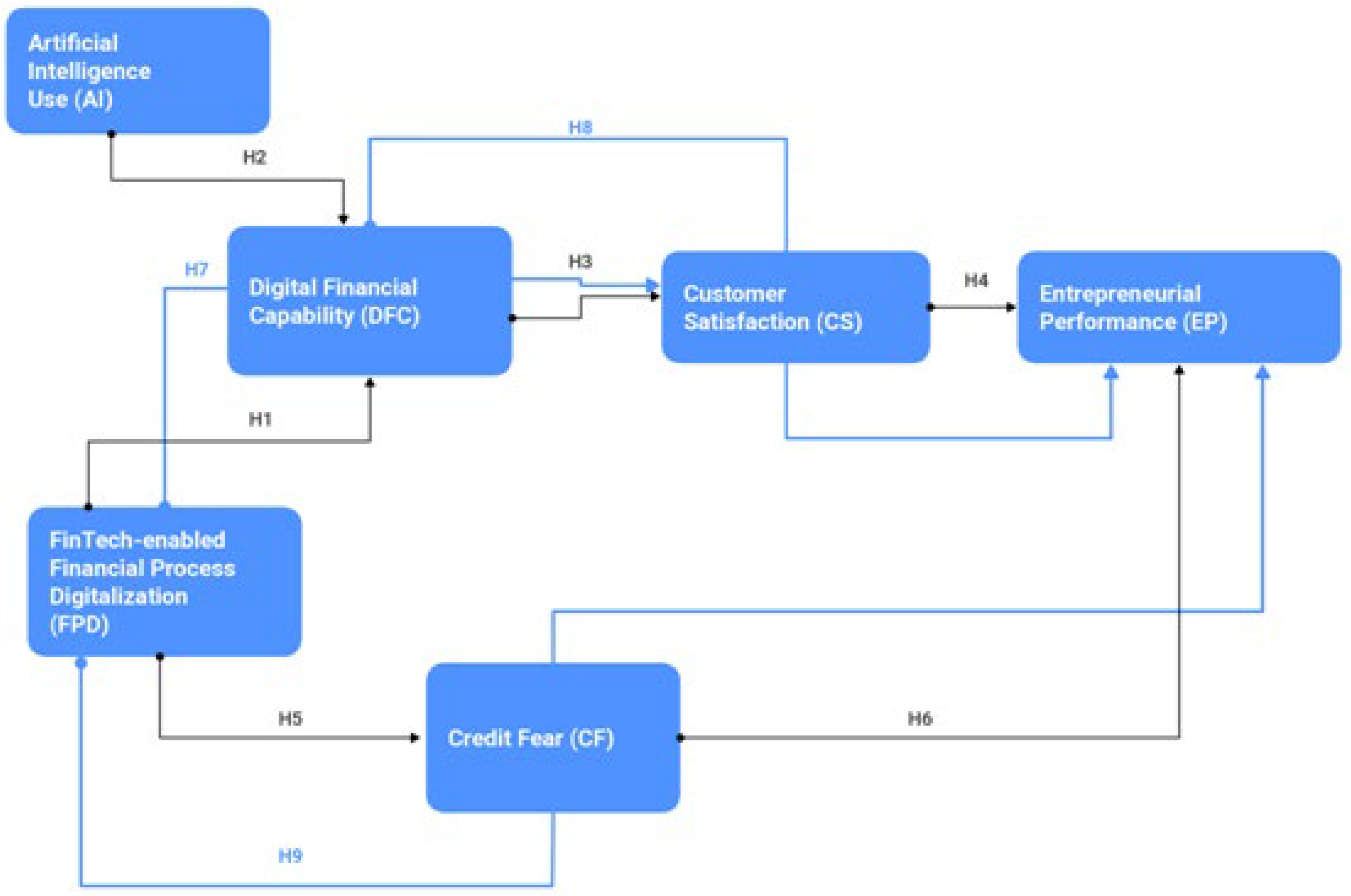
Figure 1 presents the conceptual research model, summarizing the hypothesized relationships among FinTech-enabled financial process digitalization, AI use, digital financial capability, credit fear, customer satisfaction, and entrepreneurial performance.
3. Methodology
3.1. Sampling and Data Collection
This study adopted a cross-sectional research design and collected primary data using a structured questionnaire administered directly to owner–managers of non-financial SMEs in Greece.
The cross-sectional dataset that will be analyzed in this particular research study was collected from firms in Greece over a period of time during which the firm operated, between May 2025 and November 2025. Data collection and preliminary data preparation were conducted concurrently during the survey period. Because the questionnaire used standardized measurement scales and a structured survey format, data screening and preliminary statistical analysis could begin while responses were still being collected. After the completion of the survey period, the dataset was finalized and analyzed using PLS-SEM implemented in SmartPLS 4. Such timelines are common in survey-based SME research where structured instruments and established analytical frameworks allow relatively rapid data processing and model estimation.
The target of this research study is non-financial firms; banks and other financial institution-oriented firms will be excluded, as this research intends to measure firms’ adoption of FinTech- or AI-enabled financial solutions, rather than their provision of these solutions. The presence of financial institutions would create a completely separate logic of operation, regulations, or extent of technological intensity.
More specifically, a stratified random sample of firms from a broadly representative sample of firms with respect to the range of sectors within which they operate (e.g., manufacturing, service, retail, tourism, or technology-based firms) was collected for this study. This sampling method ensured variety among firms in their financial digitalization practices and entrepreneurial activities; the stratified sampling was used with respect to such firms’ characteristics as their sector in the economy, firm size, firm age, legal status, and the sex of their owner-manager(s). This ensured proportionate representation among relevant characteristics.
The research team used a structured questionnaire, which participants accessed through electronic means and also received during personal meetings with firm owners and their senior staff members. The research team chose these participants because they actively participate in financial choices, and they understand best how their organizations implement FinTech solutions and AI-based financial systems and financial interactions with customers and their business success. The research team sent follow-up emails and made telephone calls to firms that did not respond to their initial contact to join the study. The research team gave participants a brief summary of their main research findings as payment for taking part in the study.
The researchers distributed 420 questionnaires, which produced 318 valid responses while achieving a 75.7% response rate. The statistical analysis between early and late survey respondents showed no substantial variations between their responses regarding essential study variables, thus indicating no need to worry about non-response bias. The research included businesses that operated from small micro-enterprises to medium-sized firms with employee counts between 1 and 250 and annual revenue that fell into different categories. The researchers collected additional demographic information about participant ages and genders, and their educational levels, to achieve a full understanding of their research participants.
3.2. Measures
All constructs were measured using established multi-item scales adapted from prior studies, as presented in
Appendix A (
Table A1). Each item was measured on a five-point Likert scale ranging from 1 (“strongly disagree”) to 5 (“strongly agree”).
The research employed established and adapted multi-item scales for all essential constructs to achieve measurement reliability and validity (see
Appendix A,
Table A1). All measurement items were anchored on a five-point Likert scale from 1 (“strongly disagree”) to 5 (“strongly agree”), except the entrepreneurial performance items, which are relative to key competitors.
FinTech-enabled financial process digitalization (FPD) was measured by four reflective items assessing the extent of financial process digitalization, automation, and integration in everyday operations. Item wording was informed by earlier FinTech adoption and digital financial service research literature, focusing on automation, real-time transaction monitoring, reducing manual processes, and integrating digital finance capabilities across functions.
Artificial intelligence (AI) use was measured by four reflective items assessing the extent to which AI technologies are used, integrated, and operationalized in everyday operations. The item was developed drawing on conceptualizations of AI use in earlier studies as the operationalization of AI tools for automation, data-based decision-making, and cross-functional process completion, rather than the intention to adopt AI technologies.
Digital financial capability (DFC) is the firm’s ability to take advantage of digital financial technologies by combining digital technology, financial, analytical, and adaptive capabilities. Compared to FinTech adoption or financial process digitalization, DFC captures an internal firm capability to derive strategic value from digital finance.
Building on the digital financial capability scale [
58], DFC is understood as a multi-dimensional capability that goes beyond simple access to digital financial services. It encompasses not only access to such services but also the capability to use them strategically and adaptively. While [
58] conceptualized DFC at the individual level, the present study adapts its measurement to the firm level in line with the resource-based view and the literature on digital capabilities in entrepreneurship.
Customer satisfaction (CS) was measured by four reflective items assessing the customer’s overall evaluation of their expectations, the extent to which they were met, comparative satisfaction with other offerings, and their emotional response. The items were adapted from recent empirical studies in the digital financial service domain that conceptualize customer satisfaction as a cumulative evaluative and affective response to service encounters [
45]. The original study used banking industry services as a context but was reworded for a firm-level context in digitally enabled entrepreneurial settings, consistent with earlier studies of digital customer service encounters.
Customer satisfaction is assessed through owner–managers’ aggregated knowledge of customer feedback, repeat purchase behaviors, digital service interactions, and complaint-resolution patterns. This approach is widely accepted in SME and entrepreneurship studies, where managers have close direct contact with customers, and customer-level survey data are often not feasible. It therefore provides a credible proxy for customer-level satisfaction in digitally enabled business contexts.
In order to assess construct validity, the measurement model assessment was conducted (indicator loadings, CR, AVE, HTMT). Composite reliability (CR) was greater than the required 0.70 value for all constructs. Average variance extracted (AVE) values were above 0.50, confirming adequate convergent validity. Discriminant validity was evaluated using the heterotrait–monotrait (HTMT) ratio, with all values below the conservative threshold of 0.85, demonstrating that the constructs were empirically distinct. All analyses were conducted following established PLS-SEM guidelines widely applied in entrepreneurship and digital transformation research.
3.3. Conceptual Framework
This paper’s theoretical base includes technological, behavioral, and marketing views on how an organization can capitalize on the advantages of AI-enabled financial process digitalization. The theoretical base includes financial process digitalization (FPD) and the use of artificial intelligence (AI) as the two major factors that drive the digital financial capability (DFC) of an organization. DFC refers to the ability of an organization to successfully manage and utilize digital financial processes. DFC will positively affect customer satisfaction and, therefore, be a market-facing factor for linking financial capabilities to organizational performance. In this study, financial process digitalization is understood as FinTech-enabled and frequently supported by embedded AI capabilities, meaning that AI use functions as a complementary component of FPD rather than a separate technological category.
A behavioral factor that limits organizational performance is credit fear, and it is also modeled as a mediator that affects the relationship between financial process digitalization and performance outcomes.
For conceptual coherence across the manuscript, the terms “digital transformation of entrepreneurial finance”, “digitalization of financial processes”, and “digitalized finance creating value” are consistently used to refer to FinTech-enabled financial process digitalization supported by embedded AI capabilities. In this framework, AI use is treated as an integrated and complementary dimension of FPD rather than a standalone technological domain. This alignment ensures that all constructs, including capability development, behavioral constraints, and market-facing outcomes, are theoretically anchored in the same understanding of FPD.
3.4. Ethical Considerations
Before collecting data, informed consent was given by all respondents; they were provided with a description of the purpose of the research, its voluntary nature, and their rights to withdraw at any time. The confidentiality of the respondents was assured through the anonymous nature of the responses and the security measures used when storing the data. No personal identifiable information was collected, and all the methods of handling the data complied with the regulations of the General Data Protection Regulations (GDPR).
4. Results
This section first presents the structural model results and hypothesis testing, followed by the analysis of indirect effects. Descriptive statistics and measurement model assessments are then reported to confirm reliability, validity, and model adequacy.
4.1. Hypothesis Testing (Direct Effects)
The structural model was estimated using the bootstrapping procedure recommended for PLS-SEM analysis. A non-parametric bootstrapping routine with 5000 resamples was applied to obtain robust estimates of standard errors, t-values, and significance levels for the hypothesized relationships.
The structural model analysis results demonstrate strong evidence for the theoretical framework because the study constructs show significant direct relationships (
Table 1). The standardized path coefficients (β) show both the power and direction of the relationships, which provide valuable knowledge about how AI-enabled financial process digitalization and digital financial capabilities affect customer satisfaction and entrepreneurial performance.
H1: FinTech-Enabled Financial Process Digitalization Positively Influences Digital Financial Capability.
The research data shows that FinTech (FPD) digital financial process digitalization establishes a strong link, which results in better digital financial capability (DFC) for organizations (β = 0.432, t = 7.579, p < 0.001). The research demonstrates that businesses that implement digital financial systems for automatic invoicing and real-time transaction monitoring through digital channels will develop their digital financial capabilities to an advanced level. The evidence supports the idea that organizations will achieve better financial data utilization and environmental response through their advancement from basic FinTech usage to full digital financial process integration.
H2: Artificial Intelligence Use Positively Influences Digital Financial Capability.
In addition, the findings provide evidence that there is a positive and statistically significant relationship between the use of AI and digital financial capability (β = 0.317, t = 5.870, p < 0.001). The evidence here provides support for the view that AI technologies (e.g., predictive analytics, machine learning algorithms, and automated decision support systems) act as capability-enhancing tools for entrepreneurial organizations. The size of the coefficient suggests that AI makes a meaningful contribution to capability building, but that it does so to a somewhat smaller degree than the digitalization of financial processes. Therefore, the evidence suggests that AI can add the most value when used in conjunction with structured digital financial processes as opposed to being used independently.
H3: Digital Financial Capability Positively Influences Customer Satisfaction.
As hypothesized, there is a strong positive relationship between digital financial capability and customer satisfaction (β = 0.458, t = 7.508, p < 0.001). This evidence indicates that organizations that possess a higher level of digital financial competence can provide their customers with services that are more reliable, more transparent, and more responsive. From the viewpoint of the marketplace, organizations that possess high levels of digital financial capability are able to reduce the friction associated with conducting digital transactions; they are able to ensure more consistent delivery of their services; and they are able to instill more confidence in their customers regarding their digital interactions. As such, the financial capabilities of organizations translate into superior customer experiences.
H4: Customer Satisfaction Positively Influences Entrepreneurial Performance.
The research data shows that customer satisfaction creates a positive connection with entrepreneurial performance, which demonstrates statistical significance at β = 0.496 (t = 8.552, p < 0.001). This role emphasizes customer satisfaction as the most important contributor to the firm’s ‘performance’, measured by profitability, sales growth, and even customer loyalty. The strength of the association emphasizes that the ‘performance’ rendered by AI-enabled digital finance is that of the improved customer experience, not from the value of the technology itself.
H5: FinTech-Enabled Financial Process Digitalization Negatively Influences Credit Fear.
The research data shows that financial process digitalization creates a negative connection with credit fear, which produces statistically significant results (β = −0.289, t = 4.587, p < 0.001). The research shows that automated systems will enable entrepreneurs to get loans more easily because these systems enable instant access to financial data, which ensures transparency. Digital financial processes decrease uncertainty, which leads to better financial management that results in reduced debt and credit-related fears, which show how digital finance systems influence human actions.
H6: Credit Fear Negatively Influences Entrepreneurial Performance.
The research data shows credit fear leads to negative results, which cause major deterioration of entrepreneurial performance (β = −0.241, t = 4.085, p < 0.001). Organizations that show strong credit aversion tend to avoid investments that support business expansion, innovation, and market development. The study shows that behavioral limitations reduce the potential benefits that digital finance and AI systems can deliver. Financial conservatism based on fear restricts entrepreneurial success even when technology has advanced to modern levels.
The data results from hypothesis testing validate that the research model receives strong evidence from the collected data. The implementation of AI technology for financial process digitalization produces beneficial results that support entrepreneurial success through better digital financial skills, reduced credit problems, and superior customer satisfaction. The research data functions as an effective method to study mediation effects, which will be analyzed in the following sections.
4.2. Mediation Analysis
The mediation analysis shows that AI-enabled financial process digitalization produces major indirect effects, which explain how this process leads to entrepreneurial results (
Table 2). The research results demonstrate that digital financial capability, along with customer satisfaction and credit fear, act as vital connections that link financial process digitalization to entrepreneurial performance. The research shows that digital financial capability (DFC) acts as a vital link between FinTech-enabled financial process digitalization (FPD) and customer satisfaction (CS) because it has a Beta value of 0.198. The research demonstrates that digital financial process optimization leads to better customer experiences because customers develop their financial abilities. The research shows that FPD produces beneficial results for entrepreneurial performance (EP) through customer satisfaction, which confirms that digital financial investments produce measurable business performance. More specifically,
H7: Digital Financial Capability Mediates the Relationship Between FinTech-Enabled Financial Process Digitalization and Customer Satisfaction.
The mediation analysis reveals that FinTech-enabled financial process digitalization (FPD) leads to customer satisfaction (CS) through a partial pathway, which includes digital financial capability (DFC) as a mediator. The indirect effect of FPD on CS through DFC has a Beta value of 0.198, a standard error of 0.041, a t-value of 4.829, and a p-value < 0.001. The research shows that financial process digitalization leads to enhanced customer satisfaction because organizations use their digital financial capabilities to achieve this result through two direct methods. Organizations that implement digital financial workflows gain improved capabilities to handle financial information and enhance their digital service delivery and transaction reliability for customer interactions, which leads to better customer satisfaction and perception. The research results validate Hypothesis H7 because digital financial capability functions as the essential factor that connects financial process digitalization to customer results.
H8: Customer Satisfaction Mediates the Relationship Between Digital Financial Capability and Entrepreneurial Performance.
The research data shows that customer satisfaction (CS) acts as a partial mediator that connects digital financial capability (DFC) to entrepreneurial performance (EP). The indirect effect of DFC on EP through CS has a Beta value of 0.227, a standard error of 0.044, a t-value of 5.159, and a p-value < 0.001. The research shows that digital financial capability leads to better performance results because it creates improved customer interactions. The digital capabilities of firms enable them to provide customers with better service transparency, faster responses, and improved operational efficiency, which leads to higher customer satisfaction that results in better entrepreneurial performance through increased sales, better profitability, and higher customer retention rates. The research results validate Hypothesis H8 because customer satisfaction functions as a vital factor that organizations use to connect with their market.
H9: Credit Fear Mediates the Relationship Between FinTech-Enabled Financial Process Digitalization and Entrepreneurial Performance.
The mediation analysis shows that credit fear (CF) acts as a partial mediator that links FinTech-enabled financial process digitalization (FPD) to entrepreneurial performance (EP). The indirect effect of FPD on EP through CF has a negative Beta value of −0.070, a standard error of 0.024, a t-value of 2.917, and a p-value = 0.004. The research shows that digital financial processing systems decrease credit-related stress, which leads to better performance from entrepreneurs. Financial process digitalization creates better financial transparency, prediction, and control systems, which reduce financial conservatism based on fear, so businesses can adopt entrepreneurial growth strategies. The research findings confirm Hypothesis H9 because digital finance technology enables users to develop new behaviors that result in better performance outcomes.
The results shown in
Table 2 demonstrate robust evidence that confirms the research hypotheses about mediation. The indirect effects show that digital financial capability, together with customer satisfaction and credit fear, act as essential factors that link AI-based financial process digitalization to better entrepreneurial results. The research shows digital finance value stems from technological deployment, together with capability growth, behavioral changes, and customer-oriented systems, which boost FinTech and AI effectiveness for entrepreneurial success.
4.3. Descriptive Statistics
The characteristics of the sample are presented in
Table 3. There was considerable variation in the age of firms in the sample. 153 firms (48.10%) were engaged in business for 0–5 years, 101 firms (31.75%) for 6–10 years, and 64 firms (20.15%) for more than 11 years. In terms of firm size, most of the firms in the sample were microfirms with 1 to 9 employees (166 firms; 52.34%), followed by small firms with 10 to 19 employees (91 firms; 28.47%), small firms with 20 to 49 employees (54 firms; 16.89%), and small and medium-sized firms with 50 to 249 employees (7 firms; 2.30%). The age and size of the firms in the sample correspond to the distribution of non-financial businesses in Greece and indicate that micro and small firms were most prevalent in this sample.
The owner–managers in the sample were predominantly male; 216 respondents (67.92%) were male, and 102 respondents (32.08%) were female. The sample also had a diverse range of types of firms included, capturing a range of governance and ownership characteristics: the sample included family firms (172 firms; 54.09%) and non-family firms (146 firms; 45.91%). This diversity is especially relevant to the adoption of digital financial technologies and AI, as family ownership may influence strategic and investment decisions related to the adoption of such technologies.
In terms of industry, the firms were again heterogeneous, and included Technology and ICT (39 firms; 12.26%), Logistics and Supply Chain (21 firms; 6.60%), Manufacturing (54 firms; 16.98%), Retail and E-commerce (81 firms; 25.47%), Renewable Energy and Environmental (24 firms; 7.55%), Tourism and Hospitality (83 firms; 26.10%), and Professional and Consulting (16 firms; 5.04%). Thus, the distribution of industry types among the sample was heterogeneous, which contributes to the generalizability of the results by demonstrating that the findings are not limited to a single sector and that the use of FinTech-enabled financial process digitalization and AI can be found in firms of various natures and industries.
The generalizability of these findings contributes to the external validity of the findings of this study. As a non-financially incentivized study of firms across a variety of different sectors, this study avoids numerous potential biases that may be present in other studies that consider the use of financial products in studies of artificial intelligence. Thus, this analysis provides valuable insights into the interplay between AI-enabled financial processes, digital financial capability, behavioral constraints, and customer satisfaction, and their impact on the performance of entrepreneurs in Greece.
4.4. Reliability and Validity Analysis
Table 4 presents outcomes tied to reliability and convergence checks across every construct studied—FinTech-enabled financial process digitalization (FPD), followed by artificial intelligence (AI) use, then digital financial capability (DFC), credit fear (CF), customer satisfaction (CS), and entrepreneurial performance (EP). Each one was modeled reflectively. Though separate, they share a methodological backbone shaping how data behaved under this analysis.
Starting with factor loadings, the study checked how well each indicator represented its intended construct. Every item showed clear alignment, with values rising above the standard benchmark of 0.704. Because these results hold steady, confidence grows in how closely the data reflect the concepts they aim to measure. With patterns matching expectations, the structure behind measurements appears sound.
Looking at
Table 4, every construct’s Average Variance Extracted surpasses 0.50, a commonly accepted threshold. Though often overlooked, the amount of variance explained by each latent variable remains above fifty percent. Each indicator set ties closely to its intended concept, given these outcomes. Because the AVE values stay consistently high, confidence grows in how well the measures align with their underlying traits. Satisfactory convergence appears present throughout the model, supported by these figures.
Internal consistency reliability is evaluated using both Cronbach’s alpha (α) and composite reliability (CR). Both methods returned values that are well above the generally accepted threshold of 0.70. More specifically, the Cronbach’s alpha values range from 0.85 to 0.91, while the values for composite reliability range from 0.89 to 0.94. Thus, all of the constructs in this study can be considered reliably consistent.
Together, these results provide adequate support for the reliability of the measurement model. These results confirm satisfactory convergent validity across all latent variables.
4.5. Discriminant Validity Analysis
Table 5 reports the results of the discriminant validity assessment based on the Heterotrait–Monotrait (HTMT) ratio. Discriminant validity demonstrates that theoretically different constructs are different from each other. As required, HTMT discriminant validity is assessed at the more conservative level of 0.85. All HTMT ratios are well below the 0.85 standard, showing excellent discriminant validity among all the measurement model’s constructs.
Table 5 shows that the HTMT ratio between digital financial capability (DFC) and entrepreneurial performance (EP) is 0.64, indicating a non-trivial empirical relationship between these theoretically related constructs. The HTMT ratio between FinTech-enabled financial process digitalization (FPD) and digital financial capability (DFC) is 0.69, indicating a similar relationship between these theoretically related constructs while remaining significantly within the distinct empirical range. The HTMT ratios for artificial intelligence (AI) use are also below the critical threshold of 0.85 at 0.61 with DFC and 0.54 with EP, demonstrating that the use of AI remains empirically distinct from both firm capabilities and firm performance. credit fear (CF) has a low but distinct range of 0.28 to 0.49 for the remaining constructs, establishing its behavioral distinctiveness in the model. Finally, customer satisfaction (CS) and EP have HTMT ratios of less than 0.85.
The research demonstrates that market-oriented results exist independently of technology-based, capability-based, and behavior-focused constructs. Each construct is established as capturing a distinct domain of the topic of interest, demonstrating discriminant validity and paving the way for the structural model tests.
Because all variables were collected using a single survey instrument, potential common method bias (CMB) was assessed. Harman’s single-factor test was conducted to examine whether a single latent factor accounted for the majority of the variance in the dataset. The analysis showed that the first unrotated factor explained substantially less than 50% of the total variance, indicating that common method bias is unlikely to represent a serious concern. In addition, variance inflation factors (VIF) were examined, and all values were below conservative threshold levels, suggesting that multicollinearity and common method bias are unlikely to threaten the validity of the model.
4.6. Model Fit and Predictive Relevance
The research findings appear in
Table 6, which demonstrates the model’s ability to explain variables and its predictive strength and measures the strength of its relationships. The reported metrics, which include R
2, adjusted R
2, Q
2, and f
2, provide different perspectives about how well the proposed structural model works and its ability to make predictions.
4.6.1. Explanatory Power (R2 and Adjusted R2)
The R2 values represent the coefficient of determination and indicate the proportion of variance in the endogenous constructs explained by the model. For digital financial capability (DFC), the R2 value is 0.412, suggesting that 41.2% of the variance in DFC is explained by FinTech-enabled financial process digitalization and AI use. According to commonly accepted guidelines, this represents moderate explanatory power. The adjusted R2 value (0.406) corroborates the model’s moderate explanatory power.
When we turn to customer satisfaction, our R2 and adjusted R2 values show that the model can explain 35.1% of the variance in the end result, and this is classified as moderate explanatory power. Similarly, entrepreneurial performance saw an R2 of 0.298 (and an adjusted R2 of 0.294). This means nearly thirty percent of performance variance was down to customer satisfaction and the fear of not getting credit, which is a meaningful level of explanation in the world of behavioral and entrepreneurship studies. Credit fear showed an R2 of 0.184, revealing a small but still practically useful level of explanatory power, and the model is capable of explaining all of its key endogenous variables to a reasonable degree.
4.6.2. Predictive Relevance (Q2)
When it comes to the predictive relevance of our model, the Stone–Geisser Q2 values show that the model can predict the missing data with great accuracy, going beyond the R2 metric’s focus on explaining the data, and all of the endogenous variables in the model had a positive Q2 score. Digital financial capability (Q2 = 0.268) and customer satisfaction (Q2 = 0.231) are at the higher end of the spectrum for predictive power, and entrepreneurial performance is also well-predicted by the model with a Q2 of 0.204. The credit fear component has the least amount of predictive power, basically a small to medium amount, because it is acting more as a constraint on what the other parts of the model can do, rather than a main outcome.
Although the predictive relevance value (Q2) for credit fear is comparatively lower than those observed for capability- and performance-related constructs, this pattern is consistent with prior research on behavioral financial variables, which often exhibit greater variability because they capture psychological perceptions rather than operational capabilities. Nevertheless, the Q2 value remains above zero, indicating predictive relevance according to established PLS-SEM evaluation criteria.
4.6.3. Effect Sizes (f2)
The f2 values, which measure how much each exogenous variable contributes to the R2 of the endogenous variables, show that customer satisfaction is a major player in entrepreneurial success, with an f2 of 0.338, and digital financial capability has a substantial impact on customer satisfaction too, with an f2 of 0.312. The relationship between FinTech-enabled financial process digitalization and digital financial capability is moderate, at f2 = 0.276, and AI’s boost to digital financial capability is a relatively smaller effect, f2 = 0.158. The effects of financial process digitalization on credit fear and credit fear on entrepreneurial performance are very much smaller, f2 = 0.146 and f2 = 0.112, respectively, yet are still important.
4.6.4. Overall Model Evaluation
Taken together, the R2, adjusted R2, Q2, and f2 metrics provide strong support for the validity and robustness of the proposed structural model. The results confirm that the model demonstrates satisfactory explanatory power, meaningful predictive relevance, and substantively important effect sizes. The findings show that AI-enabled financial process digitalization influences entrepreneurial performance through capability development, operational improvements, and enhanced customer satisfaction. These results provide actionable guidance for policymakers, entrepreneurs, and FinTech providers regarding digital financial infrastructure and AI investment priorities, emphasizing the need to build capabilities, reduce behavioral barriers, and strengthen customer interactions. Theoretically, the study advances entrepreneurial finance by demonstrating how digital finance, AI, and behavioral mechanisms jointly shape entrepreneurial outcomes, offering a strong basis for future research.
4.7. Discussion and Implications
4.7.1. Implications of the Results
These results show that digital financial capability is both strongly positively influenced by financial process digitalization (β = 0.432) and also reinforced by AI use (β = 0.317), and that digital financial capability has a substantial positive impact on customer satisfaction (β = 0.458), with customer satisfaction being a major driving force for entrepreneurial performance (β = 0.496). At the same time, financial process digitalization has a substantial negative impact on credit fear (β = −0.289), while credit fear negatively influences entrepreneurial performance (β = −0.241). Therefore, these results confirm that digital financial capability and customer satisfaction act as key transmission mechanisms through which AI-enabled financial infrastructure translates into improved entrepreneurial performance.
Rather than functioning as separate technological inputs, AI-enabled digital financial processes reinforce internal financial capabilities of the firm, reduce behavioral constraints, and improve market-facing outcomes. Moreover, the fact that customer satisfaction is a major determinant of entrepreneurial performance confirms that the ultimate benefit of digital finance and AI emerges through improvements in customer experience quality. Thus, the firms that develop strong digital financial capabilities will be able to provide services that are transparent, reliable, and efficient, they will develop the confidence and the loyalty of their customers, and this will result in improved profitability, sales growth, and customer retention. On the other hand, the fact that credit fear has a negative effect on entrepreneurial performance shows how important the behavioral factors are in entrepreneurial finance and that even the most technologically advanced firms can underperform if financial decisions remain limited by fear of the risks associated with loans and debts.
In general, the overall results of our study confirm that the value of AI-enabled financial process digitalization goes beyond the mere automation of transactions; it enables the development of capabilities, removes the psychological barriers, and increases customer-centric value generation. As such, SMEs that successfully integrate digital financial workflows and AI tools will be best placed to generate sustainable competitive advantages and successful entrepreneurial performance over the long term.
4.7.2. Justification and Implementation of the Theoretical Model
The theoretical model created within this research utilizes the ideas of the resource-based view (RBV) and behavioral finance to determine how the financial process digitalization of artificial intelligence (AI) translates into the entrepreneurial performance of the company. While many studies have focused on the adoption of new technologies, this model focuses on developing the capacity to utilize these technologies, the mechanisms of behavior, and the market-facing outcomes, as the primary pathways through which digital finance generates value. In line with the RBV, the research validates the strategic, firm-specific resource, called digital financial capability (DFC), as the central component of competitive advantage and the resultant development of sustainable competitive advantage. The positive relationships between digitalized financial processes, the use of AI, and DFC support the idea that competitive advantage cannot be obtained simply through the acquisition of FinTech or AI; however, it can only be obtained when companies are able to develop their own capability to integrate these technologies into the routines, skills, and decision-making processes of the firm.
Organizations can achieve better business results and customer experiences through successful DF tool implementation because of this capability. The model uses the RBV as its foundation, while behavioral finance theory is integrated through the inclusion of credit fear as a psychological factor that restricts entrepreneurial success. The research findings demonstrate that digital financial processing systems minimize credit-related stress because they provide users with better financial transparency and prediction capabilities and enhanced management of their payment responsibilities. The study confirms the need to add behavioral elements to the model because digital finance systems decrease performance through two separate effects, which stem from operational efficiency improvements and changes in how users view their financial responsibilities and danger levels.
The model receives support from the strong connections that exist between digital financial capability, customer satisfaction, and entrepreneurial performance. Digital financial capabilities enable businesses to deliver better services to customers through their enhanced reliability, efficiency, and transparency, which leads to higher customer satisfaction and better business results, including profitability, sales expansion, and customer maintenance. The order in which these events occur provides evidence that the value of AI-enabled digital finance is realized through customer-centric value creation, and not solely due to the direct effects of technology.
4.7.3. Theoretical Consequences
The conclusions of this investigation provide many significant contributions to the literature of FinTech, entrepreneurial finance, and digital entrepreneurship. This study expands upon current theoretical perspectives (i.e., RBV and behavioral finance) to explain how AI-enabled digitalization of the financial process impacts entrepreneurial performance via various mediating mechanisms, including digital financial capability, customer satisfaction, and credit fear.
Firstly, the study changes the theoretical focus from FinTech adoption as a separate entity to developing capability as the main source of value creation. The results show that the impact of digitalized financial processes and AI does not directly result in better performance; it is achieved through the building of firm-specific digital financial capabilities. Therefore, the study extends the resource-based view (RBV) by providing empirical evidence on how advanced financial technologies can be converted into strategic resources for an organization when they are embedded in organizational routines and decision-making processes.
Secondly, by adding credit fear as a behavioral construct, the study contributes to entrepreneurial finance theory by illustrating how psychological limitations affect entrepreneurial outcomes. Credit fear has a negative relationship with entrepreneurial performance, and it acts as a mediator of this relationship. The study challenges the rational view of financial decision-making and supports the behavioral finance view that the attitudes of entrepreneurs toward debt and risk significantly influence firm performance. Furthermore, the study shows that digital finance influences performance not only through increased efficiency but also by changing financial perception and risk tolerance.
The third contribution of this study is the strong mediating role of customer satisfaction to provide a new theoretical insight into the linkages of financial capabilities and market outcomes. The findings suggest that the benefits of AI-enabled digital finance are realized through the creation of customer-centric value, thus establishing the link between internal financial capabilities and external market-based performance measures. Therefore, the findings contribute to both entrepreneurship and service-dominant logic research by identifying customer satisfaction as an essential mechanism that enables the conversion of digital financial capabilities into long-term entrepreneurial performance.
4.7.4. Practical Applications
This research provides many action-oriented suggestions to entrepreneurs, SME managers, FinTech companies, and AI solution vendors. For SME owners/management, the data supports a move from using simple digital finance tools to developing digitalized financial processes. Using automated invoicing, real-time monitoring of transactions, digital cash flow management, and AI-driven analytics will allow for significant enhancement in the digital finance capabilities of the SME, reduce uncertainty in the operation of the SME, and enhance the ability of the entrepreneur to make decisions related to the operation of their business.
As well, the evidence of the effect of customer satisfaction on the performance of the entrepreneur suggests that SME’s should use digital finance as a means to improve customer satisfaction in addition to improving internal operational efficiency. Digital finance in the form of transparent, reliable, and easily accessible financial information can lead to improved levels of customer trust and loyalty and ultimately to improved performance metrics such as profitability, sales growth, and customer retention. In addition, by providing better financial visibility and control to the entrepreneur, digital finance can encourage the entrepreneur to take advantage of potential opportunities for growth that may have been previously rejected based on fear of loss.
For FinTech firms and vendors of AI technologies, the results indicate the need for developing solutions that promote capability building and not just the delivery of functional components. Solutions that enable seamless integration with other financial processes, provide actionable insights, and increase confidence of the entrepreneur in their financial situation, are more likely to deliver long-term value to SME’s. In addition, focusing on developing user-friendly, transparent, and decision-supporting products will assist in increasing the effectiveness of digital finance solutions and reducing the behavioral barriers to adoption of these solutions.
4.7.5. Repercussions for Policies
The findings have several important implications for public policy and regulatory initiatives aimed at further increasing the uptake and effective use of AI-enabled digital financial infrastructure by SMEs. As public policy is of central importance in defining the institutional context in which AI and FinTech-based financial processes operate, the findings suggest that well-designed policy initiatives may well be able to significantly increase the performance enabling impact of digital finance.
The implications of financial process digitalization and digital financial capability on entrepreneurial performance indicate the need for active policy initiatives aimed at encouraging SME digitalization. Policy initiatives in the form of tax credits, investment subsidies, and co-financing schemes can reduce the barriers to adoption and enable firms, especially smaller firms, to progress from manual to fully integrated digital financial processes.
Furthermore, the impact of credit-related fear on entrepreneurial performance suggests that behavioral and informational barriers also need to be addressed by policy initiatives. Publicly funded initiatives to improve financial literacy, digital financial capability, and AI knowledge through training initiatives, advisory services, and competence centers will better prepare entrepreneurs to understand, trust, and reduce decision-related anxiety about AI-enabled digital financial tools.
5. Limitations and Future Research
Considering the impact of AI-enabled financial process digitalization on capability development, behavioral change, and entrepreneurial performance, this study presents several theoretical and empirical contributions, yet it is not without its limitations. The cross-sectional research design of the study, while supported by solid theoretical and empirical evidence, fails to establish strong causal relationships between the components studied. Therefore, the results should be interpreted as structural associations rather than definitive causal relationships. Subsequent research may make use of longitudinal or panel data design in order to better observe how AI-enabled financial process digitalization shapes the progression of capability, behavior, and the success of entrepreneurs in the years to come. Future research could employ longitudinal approaches to examine how digital financial capabilities and entrepreneurial outcomes evolve over time.
The empirical concentration on SMEs in Greece may also constrain the generalizability of the study’s results to other economic and cultural settings. Future investigations could replicate or increase the scale of the suggested model in a cross-country or comparative setting to look for variations in the effects of financial technology and AI, and to enhance its applicability.
This study measures customer satisfaction through owner–manager assessments rather than direct customer surveys. Although this approach is common in SME research and appropriate when managers have high visibility over digital service interactions, it may still introduce perceptual bias. Future research could incorporate multi-source data (e.g., customer surveys, digital platform analytics, or online customer review data) to triangulate satisfaction metrics and examine potential bidirectional dynamics between satisfaction and entrepreneurial performance.
Although this study has integrated behavioral and capability-based elements, there are lots of other organizational and contextual factors that should be probed in the future, such as corporate culture, managerial digital literacy, leadership orientation, and knowledge-sharing schemes. The results require additional study because company size, industry sector, market instability, and competitive strength affect the established relationships.
6. Conclusions
This study set out to examine how AI-enabled financial process digitalization shapes entrepreneurial outcomes by moving beyond a narrow focus on technology adoption and emphasizing capability development, behavioral mechanisms, and market-facing outcomes. To ensure conceptual alignment with the rest of the paper, the examined financial process digitalization is understood as FinTech-enabled and frequently supported by embedded AI capabilities, meaning that AI use is treated as an integrated component of the broader FinTech-driven digitalization process.
Using evidence from SMEs operating in Greece, the findings demonstrate that the value of FinTech and AI does not lie solely in automation or efficiency gains, but in how these technologies are embedded into financial processes and translated into strategic capabilities that drive entrepreneurial performance.
The research data shows that FinTech-enabled and AI-based digitalization of financial operations leads to better digital financial competencies, which produce higher customer satisfaction that results in business success. The findings contain vital data that should direct policymakers, SME owners, and FinTech service providers in their decisions. SME owners should make digital financial process transformation and AI strategy implementation their top priority because these actions help them develop financial abilities while minimizing uncertainty and enabling better growth prospects.
In conclusion, this research underscores the transformative potential of FinTech-enabled and AI-supported digital finance for entrepreneurship, demonstrating that sustainable entrepreneurial performance emerges from the interplay between technology, capability development, behavioral change, and customer outcomes. By clarifying these interconnections, the study offers a comprehensive framework for understanding how digital finance can support resilient, competitive, and growth-oriented SMEs. Continued progress in this field will rely on close collaboration among entrepreneurs, technology providers, and policymakers so that digital innovation and supportive infrastructures evolve in parallel, enabling long-term entrepreneurial success.