


Abstract
Public buildings and open spaces form key elements in an exchange system of both tangible resources (energy, water, physical spaces) and intangible assets (services, skills, time). This study presents an innovative protocol (AGAPE—Automatic GIS Assessment Protocol for Energy and environment) to regenerate metropolitan suburbs by managing common resources and support sustainable communities. It tackles energy poverty by integrating urban planning, environmental design, and economics into geographic information science. This expedites public well-being by redesigning public facilities to enhance community connections and improve bioclimatic resilience. The model test site is a peripheral suburban area, Melito di Napoli, within the Metropolitan City of Naples (Italy), characterized by high population density and ongoing suburban expansion. The protocol evaluates temporal scenarios for implementing multi-purpose solutions, supporting public agencies in strategic intervention assessments, optimizing funding allocation and community benefits. The modeling of redesigned community assets reveal key outcomes: renewed land-use opportunities, reduced spatial inequities, and increased climate change resilience. The transformation of public buildings and facilities into multi-benefit community cores catalyzes virtuous urban regeneration processes. The model AGAPE provides a replicable decision framework to transform existing settlements and to drive the transition towards more sustainable, equitable urban communities.
1. Background
Existing Italian urban planning practices emerged with the industrial revolution to remedy the problems of land planning and organization. These resulted from unprecedented population size and concentrations near manufacturing plants requiring large amounts of labor. Concomitantly, urban populations experienced deleterious health effects from noxious industrial processes. Furthermore, in rapidly expanding industrial cities, urban infrastructure, particularly sanitary infrastructure, was deficient, or even absent. The physical form of cities changed extraordinarily fast, disrupting prior settlement patterns established over centuries, and was often contested [1]. The initial phase of urban planning practices, Sanitary Urbanism, primarily focused on combating disease and improving health through new centralized urban infrastructure systems (water supply, sanitary sewers, power supply) and building codes (light, ventilation, building safety) [2]. Considering the contemporary post-industrial city, the pursuit of sustainability as a priority objective of the ecological–environmental planning of human settlements reframes the concept of urban sanitation requiring different forms, methods and objectives [3].
Considering urban design as a data-driven process implies the ability to manage urban information systemically, identifying priorities and causal relationships among the various factors at play. This requires analytical processes but also a critical and conscious understanding of technological outputs so that new digital tools remain at the service of design and social purposes. In this sense, the integration of digital technologies, active participation, and the centrality of the person constitute key elements for promoting more inclusive, livable, and resilient cities.
This study presents an innovative protocol to regenerate peripheral metropolitan suburbs by managing common resources and supporting sustainable communities. It revisits several urban planning concepts developed in the last century, suitably updated with digital technologies and in a neo-reformist vision which support contemporary ecological–environmental planning. In particular, the concepts of neighborhood units and urban facilities, appropriately reinterpreted and reformulated in an eco-planning solution, can be useful for this purpose. The neighborhood unit identifies an optimal boundary for the planning, design and management of a limited part of an urban territory configured and organized in the proximity of a school building [4]. This concept, reconsidered in a sustainable solution, forms a fundamental reference for settlement planning with high sustainability, tout court.
Economies have begun to prioritize well-being and environmental sustainability over traditional economic growth goals [5]. Contemporary spatial planning increasingly seeks choices for greater sustainability, moving beyond those that depend on non-renewable environmental resources and carbon-intensive sectors. Research has connected both individual and community health to the concept of vulnerability [6,7,8]. Its social determinants explicitly link economic, historical, cultural and environmental contexts [6]. In urban communities, a fundamental factor affecting the degree of vulnerability is the availability and distribution of economic, social, and environmental resources. Therefore, the analysis of socio-economic characteristics of a specific urban area decisively determines suitable policy actions to promote sustainability and, thereby, local welfare.
From REC to SUC: The Goal of the Research
This research contributes to understanding how the physical urban fabric can be redesigned to enable circular urban systems. It proposes a replicable model for spatial organization that exploits public structures as catalysts for sustainable urban transformation. Energy transitions are always socio-material transitions [9] as they concern not only natural resources and infrastructure but also institutions and user behavior.
An essential driver of this study is the emergence of successful Italian Renewable Energy Communities (RECs) which depend on pre-existing shared community interests and culturally evolved social substrates [10]. The production and consumption of renewable energy have proven to be more effective and easily implemented when organized within individual communities. They can be formed on the basis of new, specific agreements or founded on existing place-based, prescribed communities [11]. The development of a REC permits reorganization of local decision-making processes. It guarantees the social sustainability of an energy system and creates opportunities for the empowerment of local communities and energy justice [12,13,14]. Notably, the exchange of energy resources remains virtual, based on economic arrangements, so the ecosystem benefits are broadly environmental, yet immediately intangible (i.e., overall reduction in GHGs), and do not noticeably affect everyday community quality. Yet solidarity-oriented RECs can form a basis for stakeholders to exchange a range of resources, overcoming socio-economic constraints through skills, knowledge, and services exchange [15].
This research extends REC benefits at the community level, promoting Sustainable Urban Communities (SUC) by developing a digital protocol aimed at Italian local administrations that combines top-down actions with bottom-up initiatives. This envisions circular economy based on the exchange of tangible and intangible resources, identifying public buildings, particularly schools, as renewable energy generators and community cores. The research integrates environmental design, urban planning, economics, and geographic information science to combat energy poverty while redesigning public facilities through nature-based strategies, enhancing community relationships, and improving bioclimatic resilience in suburban peripheries.
This study presents an innovative, digitally driven framework to support sustainable communities utilizing proximity-based resource management [16,17]. The urban watershed and energy shed [18] determine the study area at an intentionally small, place-based scale. Public buildings and open spaces form key elements establishing an exchange system of resources (energy, water, physical spaces) and assets (services, skills, time) organized around community cores, utilizing an innovative protocol called AGAPE (Automatic GIS Assessment Protocol for Energy and environment). This approach emphasizes active user participation, where individuals interact through the exchange of shared knowledge, time, and resources. The energy impact becomes the key parameter for assessing the overall sustainability of the community, enabling synergies between different energy flows and maximizing urban system efficiency.
The study provides municipal governments with means to plan urban communities in which shared management of renewable energy is integrated with other sustainable resources. The research proposes a multi-scalar protocol to support public agencies in strategic intervention assessment through optimized funding allocation and maximized community benefits. This allows for the participation of vulnerable social groups, favoring bottom-up processes based on self-organization.
2. The Italian Energy Planning Framework
Two possible configurations for sharing electricity under Italian law are the Renewable Energy Community (REC), where users are not located in the same building, and Collective Self-Consumption Groups, where users reside in the same building. RECs could revolutionize the energy market, leading to an energy model that is no longer centralized but distributed, where users are both producers and distributors of energy. Estimating that RECs could cover 45% of total EU demand, by 2050 half of European citizens could produce and manage energy from renewable sources. In Italy, RECs were introduced in 2020, defining them as associations between citizens, commercial activities, or businesses joined to produce and share energy from renewable sources. The initiative to set up a REC can come from any public/private entity supplied by the same primary electrical substation. In addition, under EU policies, the Covenant of Mayors for Climate and Energy requires signatories to draw up a Climate and Sustainable Energy Action Plan with the aim of reducing CO2 emissions by at least 40% by 2030 and increasing resilience to climate change.
Italian energy planning is governed by Law No. 10/1991, which requires regions to draw up Regional Energy Plans (REP). These plans must indicate the actions necessary to implement measures for energy efficiency and the development of renewable sources. Among the provisions of Article 5, REPs must contain information on energy balances, the identification of territorial energy basins (areas and energy islands suitable for the most significant and profitable interventions), and the procedures for identifying and locating energy production plants up to 10 MW. Article 5(5) establishes that the master plans of municipalities with a population of more than 50,000 must include a specific sector plan, the Municipal Energy Plan (MEP). It relates to the efficient use of energy and the use of renewable sources and provides non-prescriptive guidance for energy transformations. This reveals a gap between the compulsory nature of energy regulations at the building scale, which have been in force for years, and the simple guideline regulations at the urban planning scale. This highlights a mechanistic view of urbanisation, understood as the sum of individual artefacts, rather than as the result of a systemic vision that recognises interrelationships as having the same value as the parts that compose them. A simplified interpretative model can no longer be used in the light of the complex environmental challenges of contemporary urbanization. The frame for our research is the MEP, not considered exclusively as a sector plan, but instead achieving an inter-scale dimension up to a detailed vision interrelated with building regulations. The resulting tool is a GIS document that simultaneously illustrates energy needs, energy poverty, and the possibility of producing and sharing renewable energy, while also illustrating criteria for energy retrofitting of buildings according to settlement types.
The Italian energy planning framework consists of a series of sectoral plans, not always mandatory, whose fundamental objective is to optimize energy consumption and reduce the use of fossil fuels in favor of renewable sources in areas that could be or are anthropized. This policy and regulatory action go hand in hand with planning choices based on logic and criteria that do not decisively consider the environmental impacts generated by the type and quantity of energy sources. For Renewable Energy Communities to become Smart Energy Communities and/or Sustainable Urban Communities, they must be included in the land-use planning process so that the energy and environmental performance of individual buildings can be added to that of the surrounding area (neighborhood–city–region) in an overall energy balance. The goal of an energy plan based on sustainability criteria is energy self-sufficiency with renewable sources. The control of environmental variables involves the use of vegetation, water, lighting, paving and colors, which leads to a reduction in energy consumption in public spaces and buildings. At the same time, the compact and complex city model increases the likelihood of lower energy costs by addressing the causes of energy consumption.
Municipal urban plans must integrate analyses of territorial energy capacity, adding them to the knowledge base of conventional planning in order to regulate site-specific renewable energy resources. Planning territorial transformations within a municipal energy framework allows these resources to be used even in areas that could never become energy self-sufficient due to their location, organization and configuration [19]. To this end, energy and environmental requirements could assign performance levels, differentiated according to the characteristics of the planned territory and could apply energy equalization to regulate the fair use of energy resources in concert with urban equalization, which regulates the fair exercise of property rights. The elaboration of this new type of Municipal Urban Plan represents an important opportunity to regenerate and transform the built environment considering energy. Starting from an estimate of consumption, the plan identifies strategies for the reduction in energy consumption, development of renewable energy sources, optimization of energy resources, and reduction in CO2 emissions.
With the implementation of the European Directive 2001/42/EC into Italian law (Environmental Code DLgs n. 152/2006) all planning choices must be subjected to the Strategic Planning Assessment procedure to test their impact on the environment. Therefore, all the planning tools, from territorial to urban and suburban scale including the various types of implementation plans (Recovery Plans, Recovery Plans for Illegal Settlements, Urban Redevelopment Programs, and Integrated Intervention Programs), must schedule interventions to improve urban sustainability.
Therefore, in the process of land-use planning, the protection and enhancement of environmental resources take on a significant role, and new choices regarding land transformation must be oriented towards new objectives and new morphological and management structures. This background requires a rethinking of general and sectoral land-use planning tools at all scales, but the most substantial changes will concern municipal planning, in which the physical land-use planning system more closely interprets the real land demand of settled communities and represents, from a technical and legal point of view, the tool that shapes property rights [20,21].
3. Energy Regeneration: Adaptability of the Urban Fabric
In the contemporary debate on distributed self-consumption and energy communities, the interpretive key of the energy susceptibility of built environments brings energy back into the disciplinary vocabulary of planning, treating it not merely as a technical variable but as an emergent property of urban form [22]. Energy susceptibility refers to the differentiated ability of materials to (1) express energy needs that are more or less demanding depending on density, surface-to-volume ratio, orientation, shading, obsolescence, functional mix, and induced mobility; (2) reduce such needs through passive interventions and renovation (envelope, systems, regulation, management); (3) host site-specific renewable energy production (available coverings and surfaces, landscape constraints, abandoned areas, urban compatibility, and access to the grid); (4) enable local sharing of renewable energy, where load density, complementarity of demand profiles, and electrical proximity make a favorable energy balance more likely; (5) distribute the benefits of the transition equitably, reducing energy poverty and vulnerability, and ensuring that advantages are not concentrated only in contexts already possessing economic and technical capital.
This reverses a historically sectoral approach to energy in Italian planning: although building regulations have progressively established obligations and performance standards, urban planning has often confined energy to supportive tools, weakening the capacity to manage the structural determinants of demand and renewable production. In prescribing the preparation of REPs, the 10/1991 Law requires content of clear territorial relevance (energy balances, identification of territorial energy basins, procedures to locate installations up to 10 MW). However, the resulting regulatory architecture tends to place such energy planning as a sectoral appendix rather than as a guiding principle of the plan, leading to a misalignment between more stringent building-level obligations and the weak obligations (often merely non-prescriptive strategic choice) regarding urban-scale spatial planning. The energy transition can only be effectively governed if urban planning incorporates energy as part of its knowledge framework and as a criterion for the rationality of morphological and functional decisions, because density, compactness, distribution of functions, green and blue infrastructure, permeability, and the configuration of public space directly affect thermal loads, comfort, and consumption, as well as the productivity and feasibility of collective networks and systems.
In this context, the distributed self-consumption configurations introduced by the Italian legal system become relevant not only for incentive mechanisms but especially because they territorialize energy proximity. The transitional phase begins with article 42-bis of Law 162/2019 (converted in 2020), which introduces collective self-consumption from renewable sources and Renewable Energy Communities, anticipating the later structured framework provided by Legislative Decree 199/2021. The recent completion of the incentive and procedural framework, with the MASE Decree 414/2023 and the GSE operational rules for distributed self-consumption configurations, now makes it clearer that renewable energy sharing is bound to a proximity perimeter linked to the distribution network, and therefore to a technically defined unit (primary substation) that can potentially be delineated and overlapped with urban settlements [23,24]. This overlap makes the energy susceptibility methodologically rich: the how (urban fabric) and the where (electrical proximity) become structural conditions for the effectiveness of configurations, not mere technical details. At the same time, European and local decarbonization and resilience objectives, often anchored in the Sustainable Energy and Climate Action Plan (Piano d’Azione per l’Energia Sostenibile e il Clima—PAESC), provide a framework of targets and indicators that can only be operationalized through spatial and regulatory planning changes [25]. Furthermore, the obligation to assess the environmental effects of planning choices, introduced by Directive 2001/42/EC and incorporated by Decree Law 152/2006 with the Strategic Environmental Assessment, provides a procedural and substantive tool to integrate energy, climate, and environment. It requires that the energy–climatic impacts of planned transformations have to be assessed ex ante, in progress, and monitored ex post.
Because it focuses on the relationship between energy consumption and territorial characteristics, the experience of Emilia-Romagna Region provides particularly significant reference point. Law 20/2000 of Emilia-Romagna reinforces the role of the knowledge framework as a technical-analytical tool to establish the coherence of planning choices, opening space to include cross-cutting variables such as energy and climate. The subsequent Law 26/2004 of Emilia-Romagna regulates territorial energy planning and defines the tasks and responsibilities of the Region, Provinces and Municipalities, reinforcing that energy is not merely a technical issue but an object of multi-level territorial governance. In this context, the general plan variant of the 2009 Modena Province PTCP (Provincial Territorial Coordination Plan) dedicates an entire chapter to the energy sustainability of settlements, detailing objectives, guidelines, and criteria that are reflected in municipal documents. Specifically, the normative framework (Title 16) links energy sustainability to settlement conditions and planning devices: orientations for Municipal Structural Plan (PSC), Municipal Operational Plan (POC), and Implementation Urban Plan (PUA), requirements for energy feasibility studies for significant urban developments, guidelines for the use of renewable energy sources, cogeneration, and district heating. Moreover, it provides criteria for the location of installations in relation to territorial sensitivity, prefiguring a non-conflicting relationship between energy transition and resource protection.
From a methodological point of view, the PRODEM 2006 project (study of new regulatory instruments for local authorities designed to facilitate the implementation of energy saving systems and the use of renewable energy sources) explicitly addresses the relationship between energy consumption and territorial characteristics, building an integrated approach to consider energy as a territorial phenomenon and to transform this understanding into planning directions to which the PTCP explicitly refers. PRODEM reconstructs the provincial energy scenario by correlating demand and supply with the characteristics of urban settlements and morphological–environmental systems. It defines an energetic territorial consumption matrix and delineates Territorial Energy Basins (TEB), understood as homogeneous areas in terms of settlement, socio-economic, and morphological–environmental characteristics to which strategies and governance and planning instruments can be applied [26].
The epistemic value of PRODEM is high: consumption is not considered as a calculated datum or merely a statistical figure, but as an expression of a territorial organization; and similarly, planning is not viewed as an exercise of zoning, but as the capacity to influence the determinants of energy metabolism (densification or dispersion, functional polarization, mixed use, microclimatic quality, proximity between production and consumption sites). PRODEM anticipates an energy susceptibility metric in a literal sense: if TEBs are units of energy-territorial homogeneity, then this allows them to be described, compared, and managed differently.
In light of this reference, a municipal planning method oriented towards energy vulnerability can be structured as a sequence of analytical and regulatory operations converging in a GIS environment, capable of simultaneously visualizing needs, vulnerabilities and potentials. In this perspective, Renewable Energy Communities and collective consumption groups cease to be a limited objective and, instead, become a territorial planning device. The energy community functions as a socio-technical infrastructure that connects building rehabilitation, public space quality, vulnerability reduction and shared renewable production within proximity perimeters, making it possible for a local energy balance to be governed by the plan.
4. Methods for Developing Rapid Community Resource Exchange
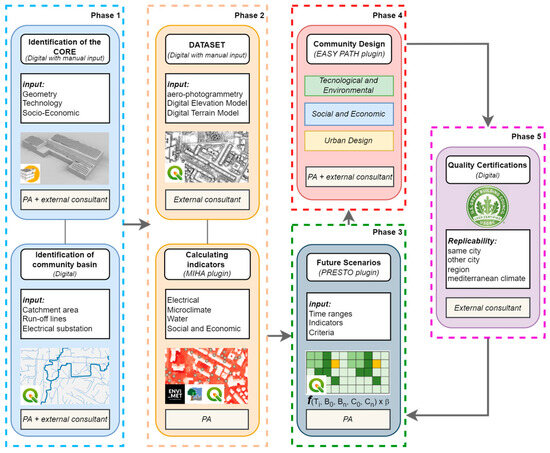
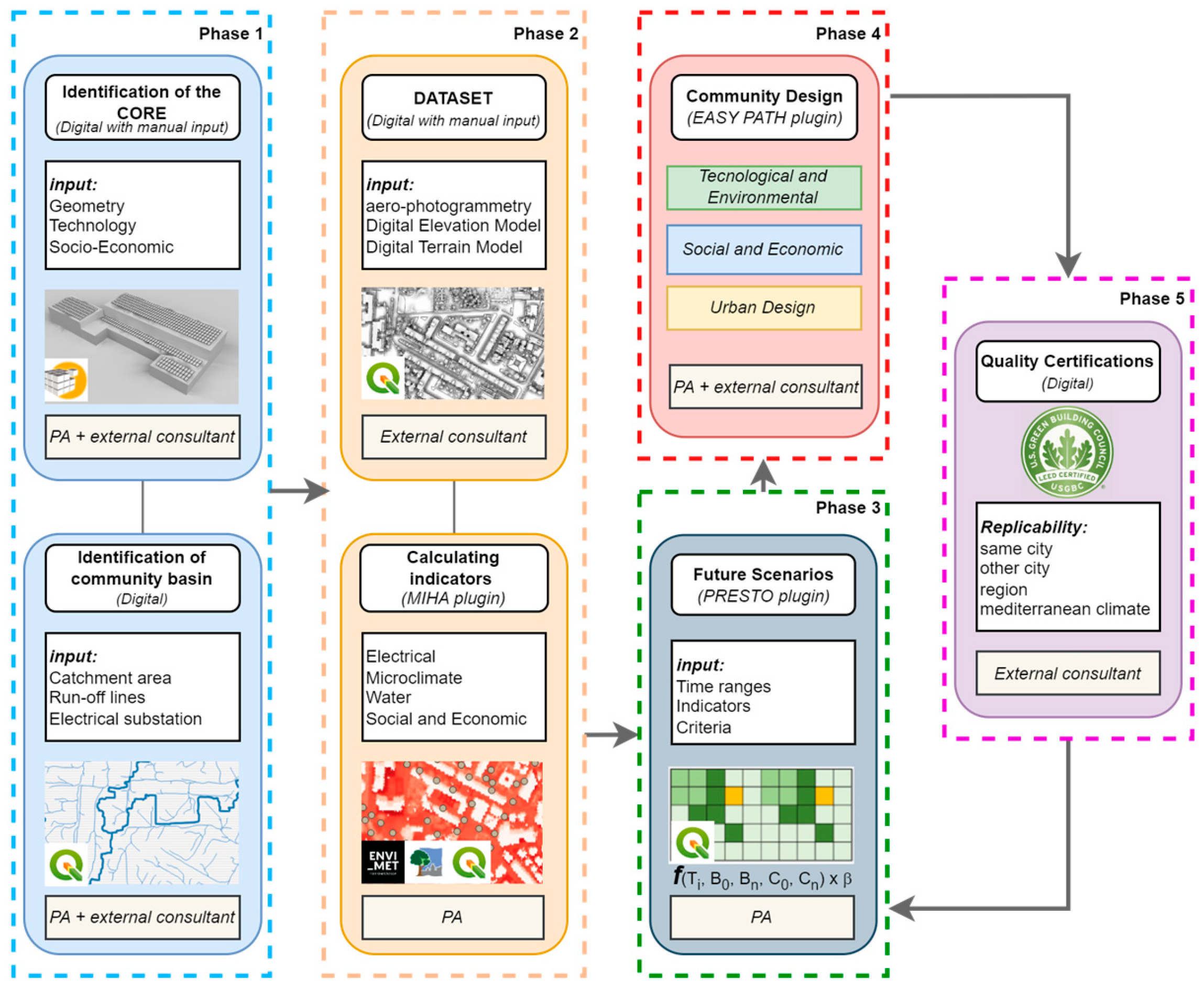
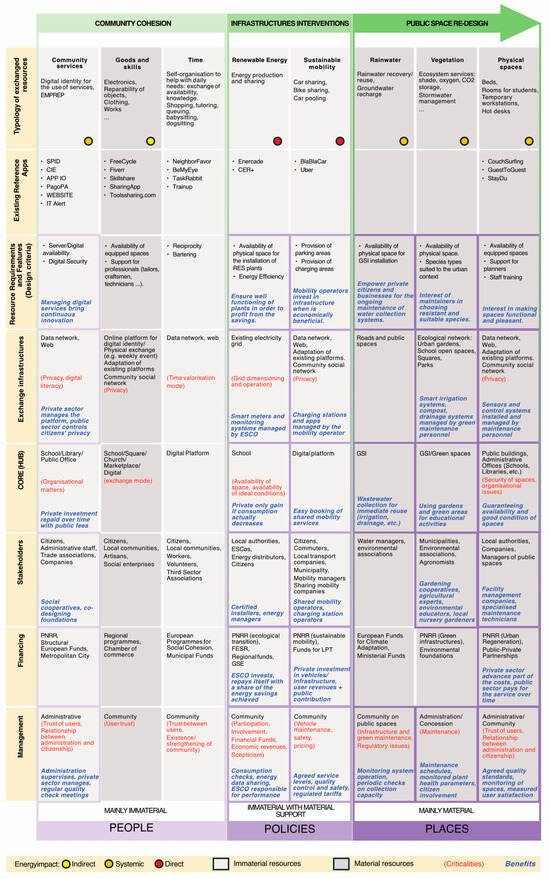
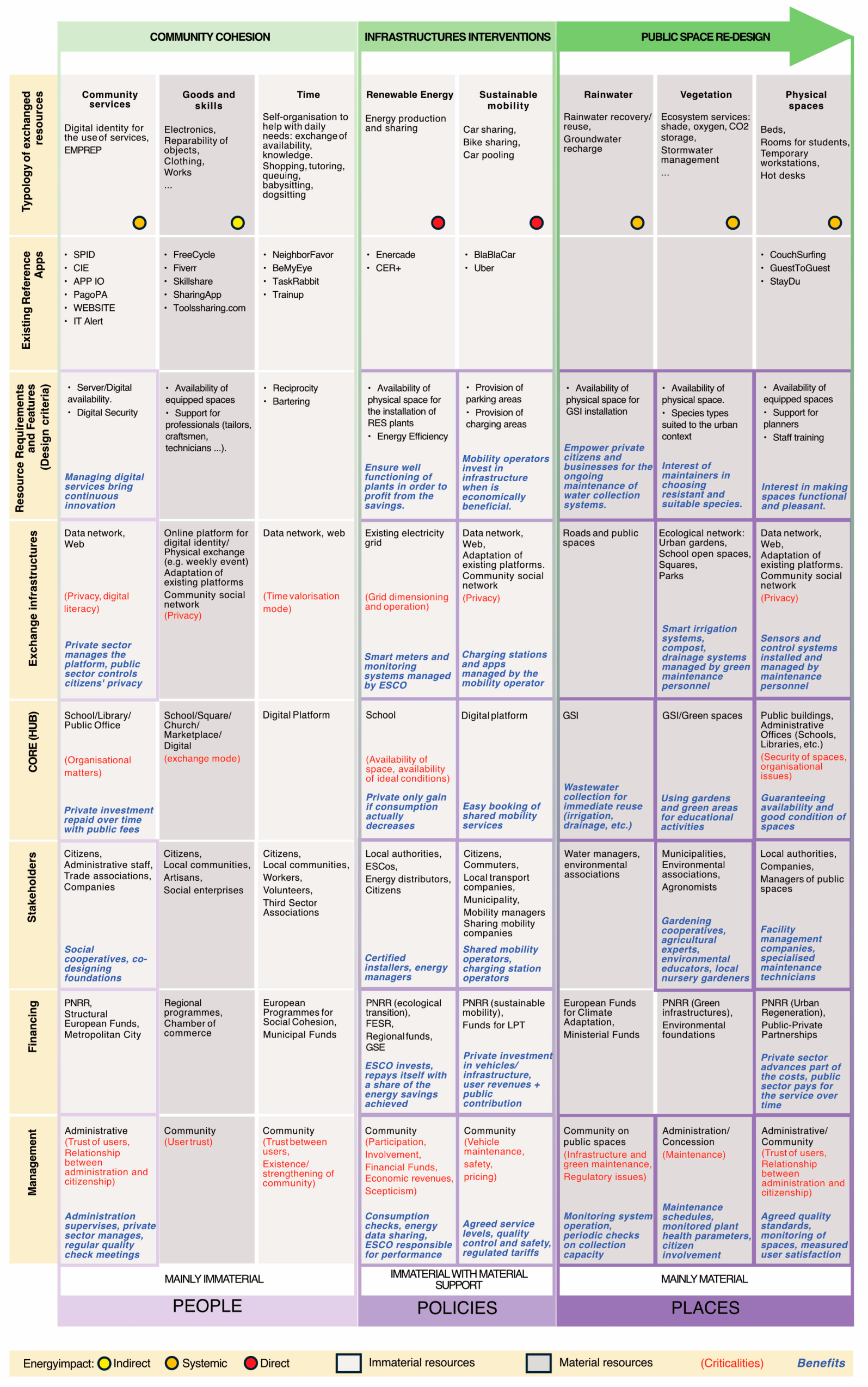
The AGAPE framework constitutes an innovative analytical model for mapping and managing shared resources in SUCs. The applied case study (described in detail in Section 5) encompasses an urban area settled after World War II in the periphery of Naples. The AGAPE planning protocol considers the existing urban fabric as a system of flows and exchanges (Figure 1). In SUCs, energy management allows a radically broader dimension than in RECs, becoming a holistic process that embraces different forms of energies (social, material, and environmental) through active users’ participation. Physical cores (schools, squares, markets) become multifunctional exchange places, while digital infrastructures facilitate the coordination of exchanges. Following in the footsteps of solidarity initiatives arising from RECs, the research project assesses the implementation of additional diversified benefits to enhance community solidarity [14]. For this purpose, a designed framework (Figure 2) facilitates the planning of interventions across the urban watershed, defining its energy impacts: direct and systemic energy indicators refer to physical, quantifiable energy flows; and, indirect “energy” impacts are planning proxies representing an urban metabolism or resource-flow framework, not physical energy variables. The framework is structured into three main categories: Community Platforms, Infrastructures, and Blue–Green Ecosystems, with estimated expected benefits.
Figure 1.
Diagram of the AGAPE planning process protocol for Sustainable Urban Communities (Elaboration by R.B. and S.G.).
Figure 2.
Framework of shareable community resources (Elaboration by R.B.).
The “Community Platforms” phase, primarily intangible, identifies digital tools and administrative or coordinated actions that enable community interactions and foster cohesion. This phase optimizes the use of existing digital technologies to support interactions between citizens and the local administration. The “Infrastructures” phase defines the exchange of renewable energy and systems for soft and sustainable mobility within the watershed. Finally, the “Blue–Green Ecosystem” phase includes physical interventions in the area, such as the creation of ecological networks and nature-based solutions to improve environmental conditions and overall community well-being. To automate the calculation of project indicators required by the protocol, the research group developed three plugin for QGIS (v. 3.40.0): MIHA (v. 1.0), PRESTO (v. 1.0), and EasyPath (v. 1.0).
The second phase of the protocol (Figure 1) involves designing and building the database and calculating performance indicators. The database has been designed to be modular and interoperable, with logical flows linking urban attributes to buildings and indicators. It represents urban space and facilities in a structured and integrated manner, using aerial photogrammetry and information held by the public administrations as primary sources. Its categories of attributes describe the physical, functional, environmental and social characteristics of the catchment area. This integrated data feeds into the analysis of indicators divided into six thematic areas: energy, microclimate, vegetation, accessibility, rainwater, and social issues (Table 1).
Table 1.
The protocol project indicators.
As described in Figure 1 and Figure 2, for the “Infrastructures” phase, a QGIS plugin MIHA (Monitoring Indicators of Human Activities) (Figure 1), provides an operational tool for calculating and displaying environmental and social indicators useful for sustainable design, guiding regeneration strategies, and providing objective measures of social and environmental quality (UNI-ISO 37120:2019) [27]. Aerophotogrammetry, DEM/DTM and field surveys, provide information on buildings, surfaces, vegetation and hydrology. The hydraulic analysis identifies the extent of urban runoff and the required surfaces for Green Stormwater Infrastructures (GSI) [28]. The microclimate analysis uses the ENVI-met software (rel. 5.7.1) and includes computation of Physiologically Equivalent Temperature (PET) and Wind Speed. The vegetation analysis determines the ecosystem services generated by trees with the i-Tree ECO software (rel. 6) and calculates permeability and usable urban green indicators.
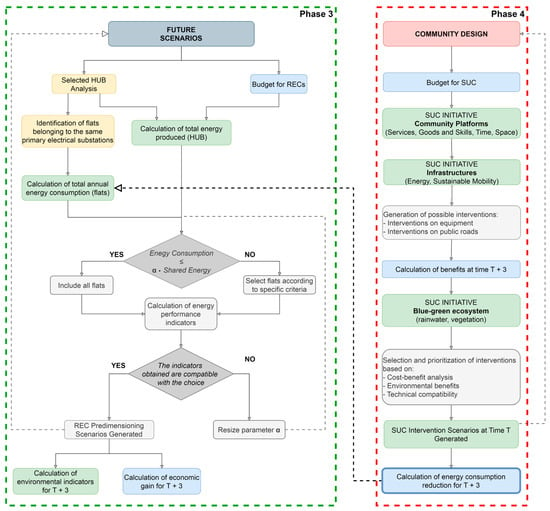
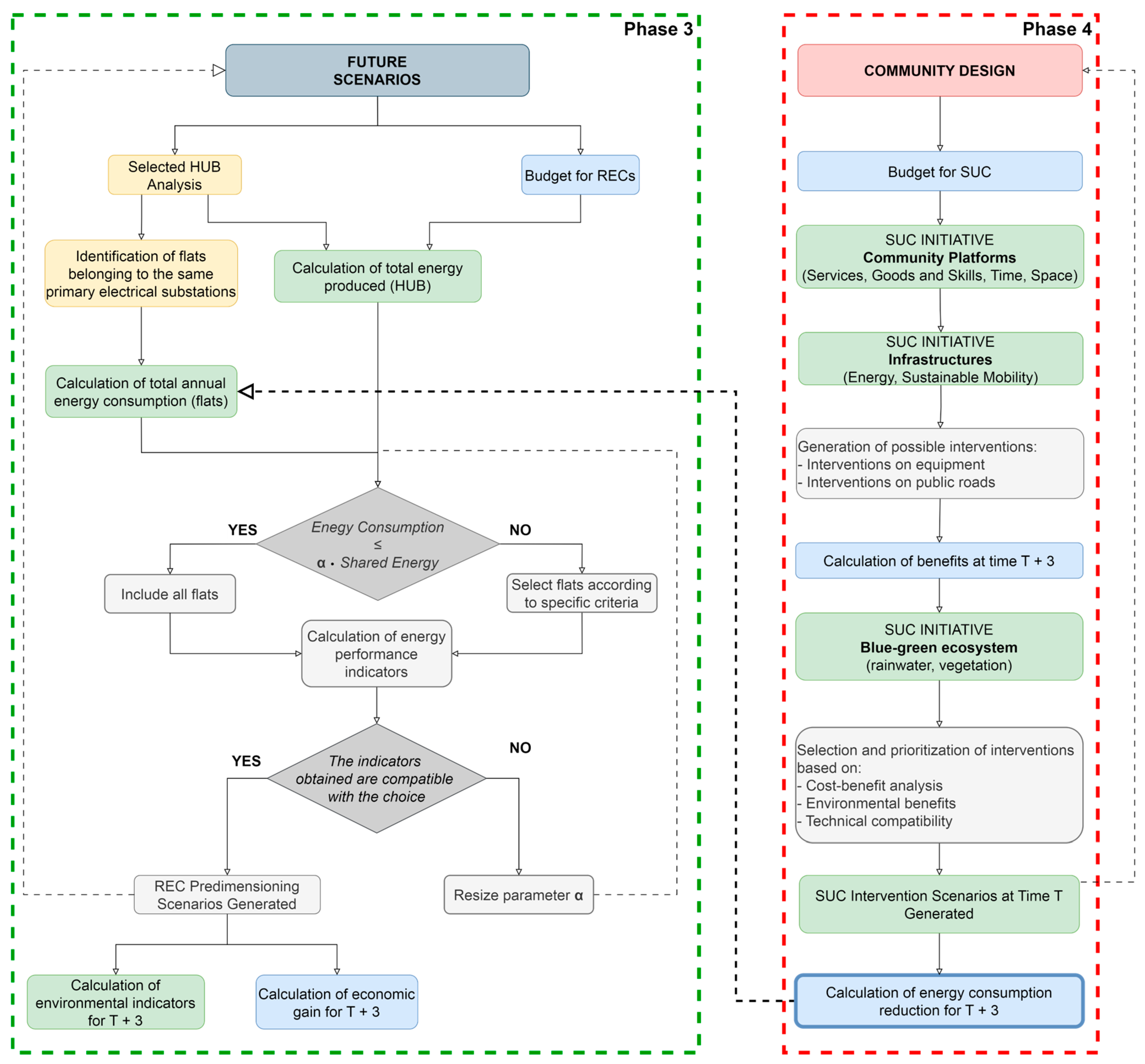
To define the potential user base of RECs, the team developed the additional new QGIS plugin PRESTO (Planning Renewable Energy, Sustainability and Timing Organization), based on European directives (RED II, RED III) transposed into Italian law (Legislative Decree 414/2023) (Figure 3). It enables local governments to determine the renewable energy production potential of their building stock and possible scenarios for sharing it with local participation. The input data for this new tool includes the identification of the hub, the available budget, and the simulation time frame. The plugin calculates total energy produced by the hub and the annual energy consumption of the involved residential units. It also determines whether the energy consumed is less than or equal to shareable energy. First, the simulation includes all residential units. If this simulation demonstrates that not all units can be provided for, it selects a subset of the most in-need users, based on criteria such as income, energy efficiency, household density, annual energy demand, and average family age. After calculating energy performance indicators, it evaluates the efficiency (Self-Consumption Index—SCI) and effectiveness (Self-Sufficiency Index—SSI) of the proposed REC. The software generates several preliminary scenarios consistent with the described parameters. If not, it resizes the shareable energy and repeats the process. The protocol then estimates environmental and economic indicators over a three-year period, in line with the planning timelines of Italian public works.
Figure 3.
Flowchart of PRESTO software logic pertaining to AGAPE phases 3 and 4 (Elaboration by M.B.M. and R.B.).
The final and most operational phase of the framework (Blue–Green Ecosystems) involves physical modifications, cost–benefit analysis, environmental impact assessments, and technical feasibility evaluations. This phase enables the prioritization of interventions to optimize timelines and fiscal resources. To this end, the research team developed another new QGIS plugin named EasyPath (Figure 1). It is an operational tool for local authorities to assess and improve urban accessibility in a scalable, replicable and adaptable manner. This generates multiple intervention scenarios based on available funding and time-based developments. The spatial mapping of these scenarios determines the performance level of key indicators.
The process will include project evaluation through neighborhood-level environmental quality certifications, such as LEED for Neighborhood Development (LEED-ND). Each new application generates additional data and feedback, improving the model’s effectiveness and enabling the verification of its replicability across a wide range of urban contexts.
Energy impacts remain the key criteria to assess the overall community sustainability, allowing the identification of synergies between different energy flows and maximizing the efficiency of the urban system. The model classifies energy impacts on three levels: direct (as in physical energy), systemic (digital services and vegetation), and indirect (exchange of goods or time), recognizing that each form of exchange represents a transformation that contributes to the overall urban metabolism. The protocol AGAPE for a SUC can tackle any section of an existing city, defined by a core of one or more public buildings or spaces, surrounded by a neighborhood which forms a physical and energy platform for exchangeable well-being resources. The SUC core forms the basis for neighborhood renewable energy production and exchange, total accessibility, and sustainable management of stormwater and green resources.
To test this new tool, a pilot Italian case study demonstrates operational features and results and indicates further directions for research.
5. A Southern Italy Study Area: Melito di Napoli
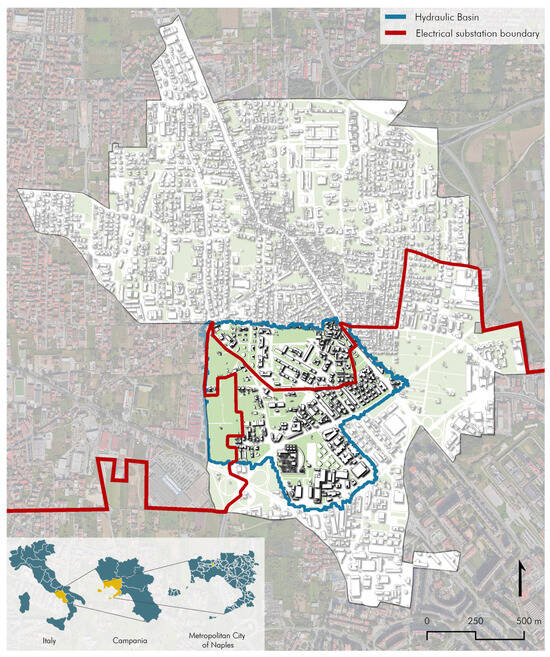
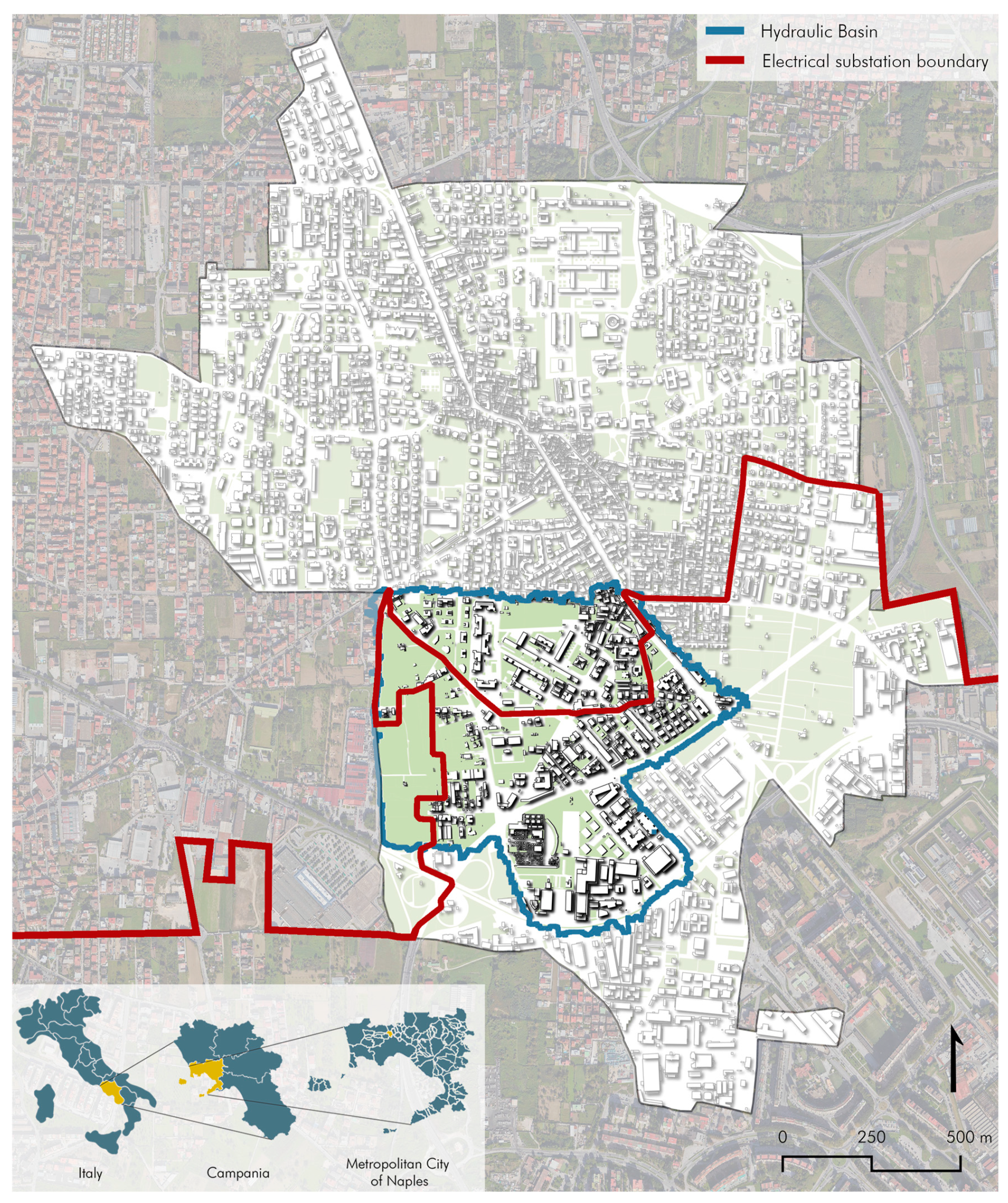
The Municipality of Melito is part of the Metropolitan City of Naples (established in 2015 under Law No. 56/2014), whose perimeter coincides with the pre-existing Province of Naples. It includes the City of Naples and 91 municipalities, with a resident population of approximately three million inhabitants (according to 2024 Istat report) and a density of 2525 inhabitants per square kilometer, constituting over fifty per cent of the total population of the Campania Region (5,567,918 inhabitants Istat 2024). The demographic dynamics, functional relations, and consequent territorial effects often transcend the administrative borders of the former province to the point of affecting a wider area, encompassing a population of over four million inhabitants and involving part of the provinces of Caserta to the north and Salerno to the south. The Municipality of Melito is in the north-western part of the metropolitan city and borders with the municipalities of Casandrino, Sant’Antimo, Mugnano di Napoli and Giugliano in Campania and separated from the Province of Caserta by the municipalities of Sant’Antimo and Grumo Nevano. Holding 36,334 inhabitants (Istat 2024) over an area of 3.57 square kilometers with a density of 10,172 inhabitants per square kilometer, Melito contains the fourth highest density of all 92 municipalities in the metropolitan city of Naples (Figure 4).
Figure 4.
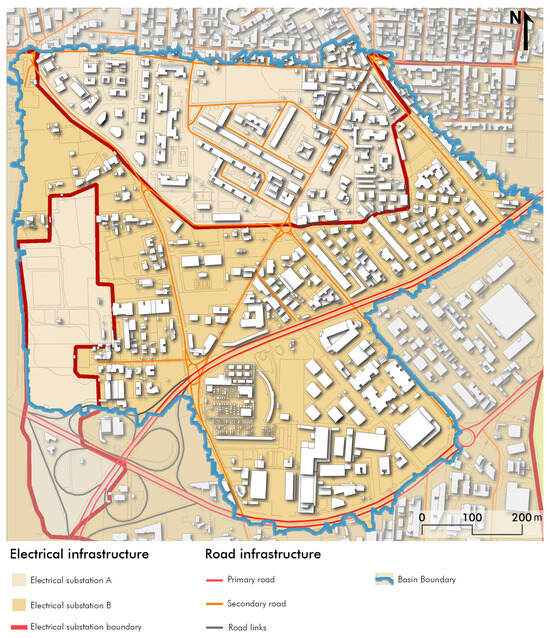
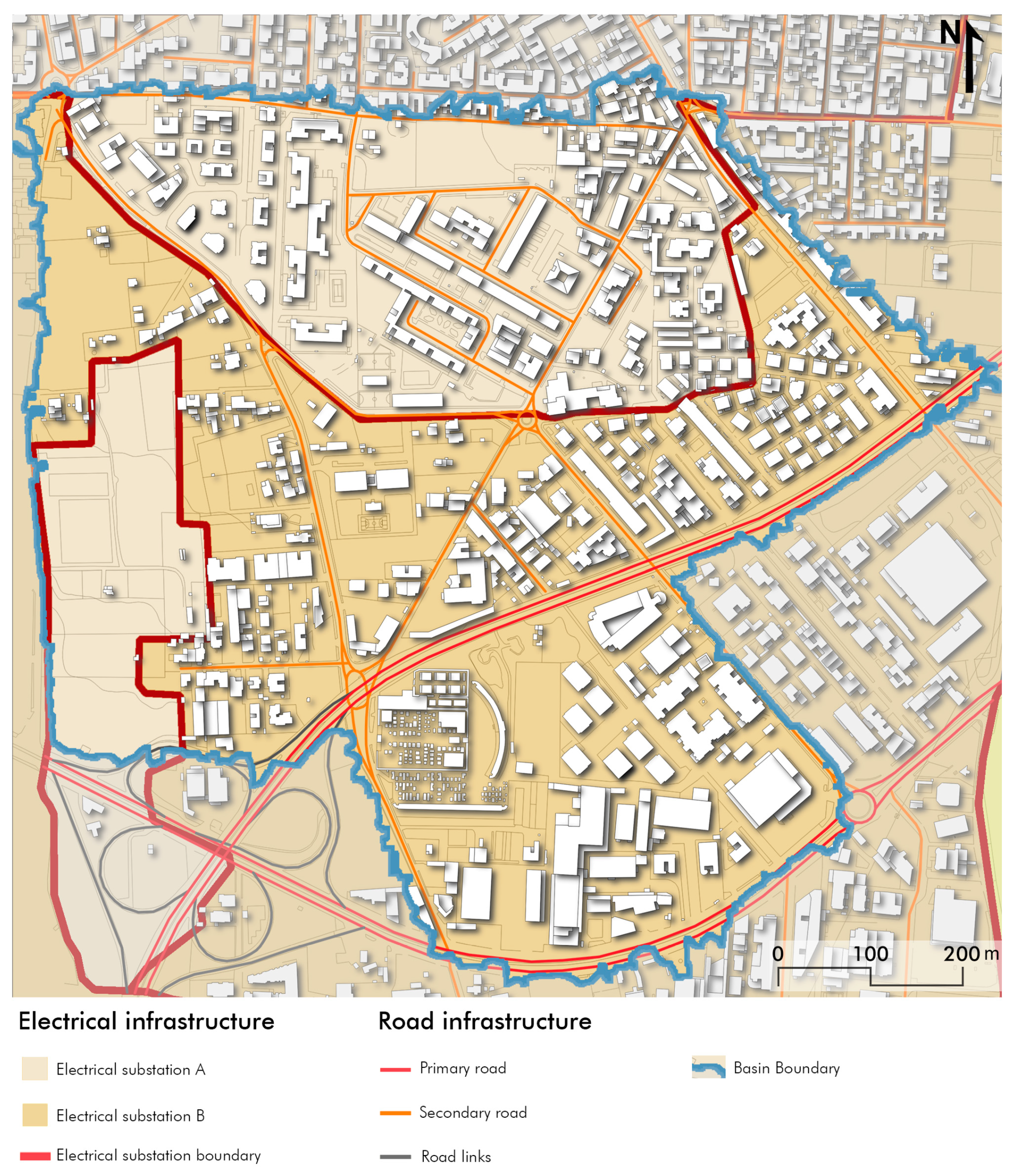
Geographical context, plan of the Melito di Napoli municipality, electrical substations boundaries and studied area location (Elaboration by S.G.).
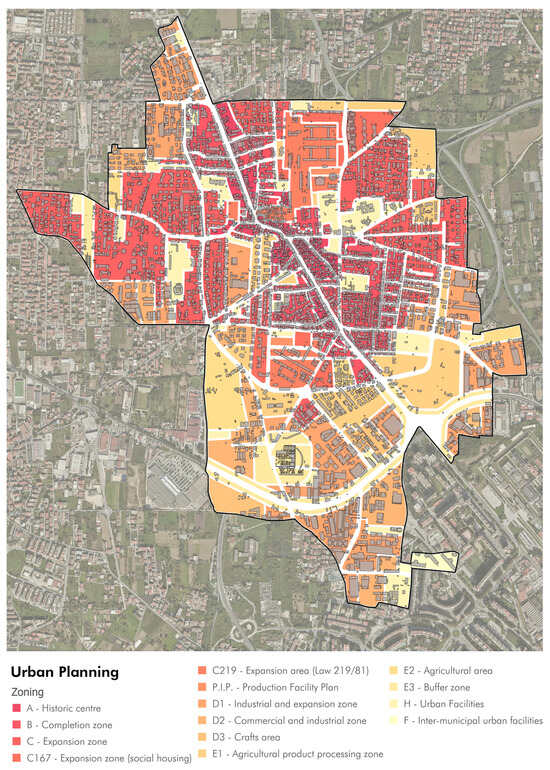
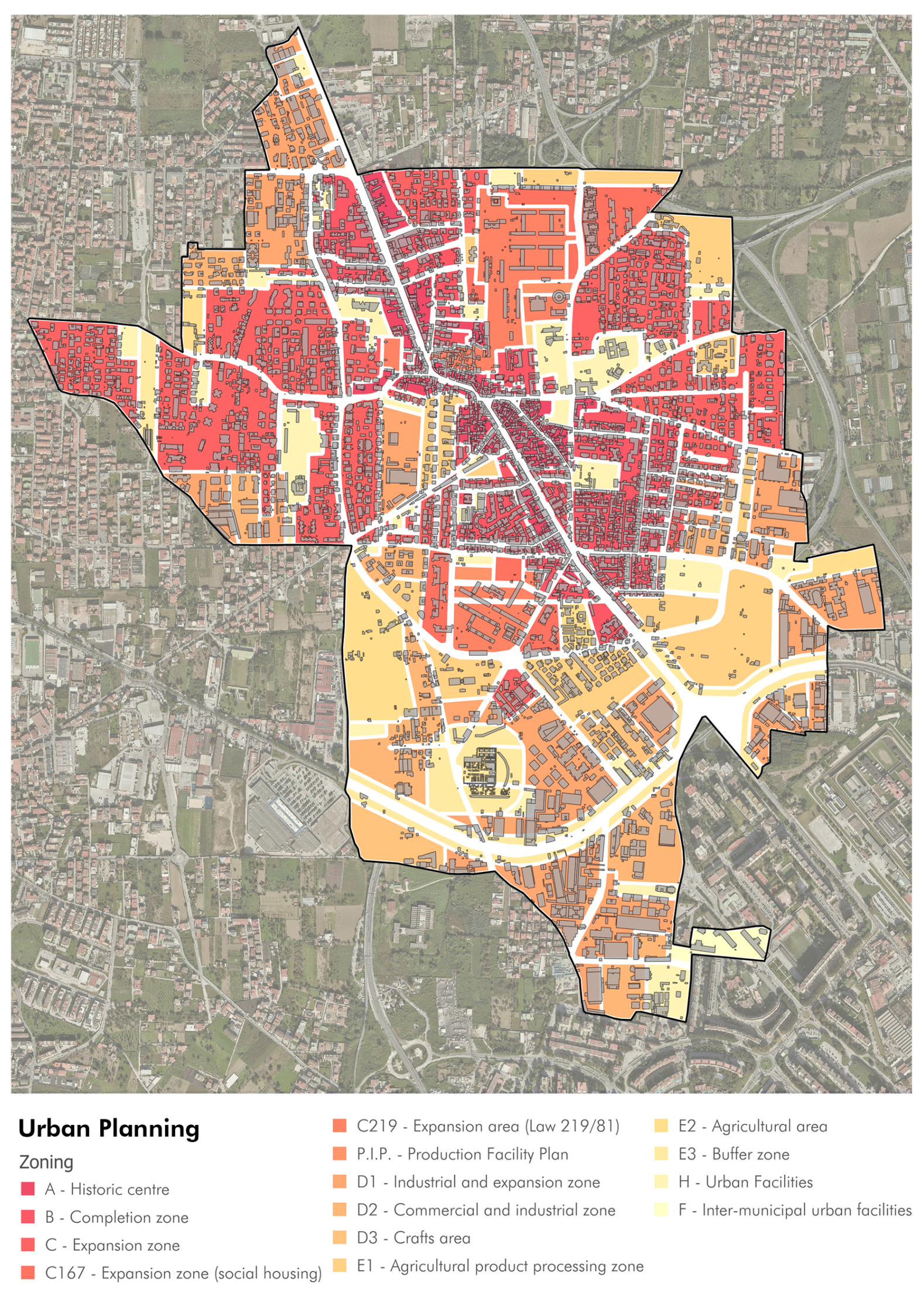
The Campania Regional Territorial Plan is a strategic-structural guideline document and not prescriptive. At the provincial/metropolitan scale, it should be complemented by the Territorial Coordination Plan of the former Province of Naples, never approved, and by the Metropolitan Territorial Plan as of 2015, still in draft. Finally, at the municipal scale, the Municipal Urban Plan should be the prescriptive general instrument governing the transformations of the Melito di Napoli territory. This spatial planning instrument, mandatory since 2004, only began its long process of formation in December 2024. Municipal town planning is therefore regulated by the General Regulatory Plan approved in 1987 (Decree of the President of the Province of Naples No. 12 of 6 October 1987) and in force since early 1988 with added Implementation Rules (Figure 5). This planning tool is now obsolete and no longer meets the land-use needs of the community and is no longer consistent or compliant with the general and sector plans in force at various scales.
Figure 5.
Urban plan categories of Melito di Napoli municipality (Elaboration by S.G.).
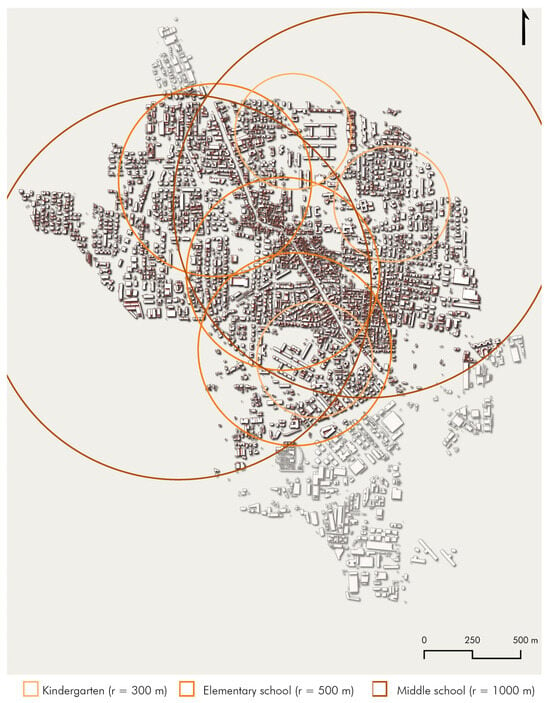
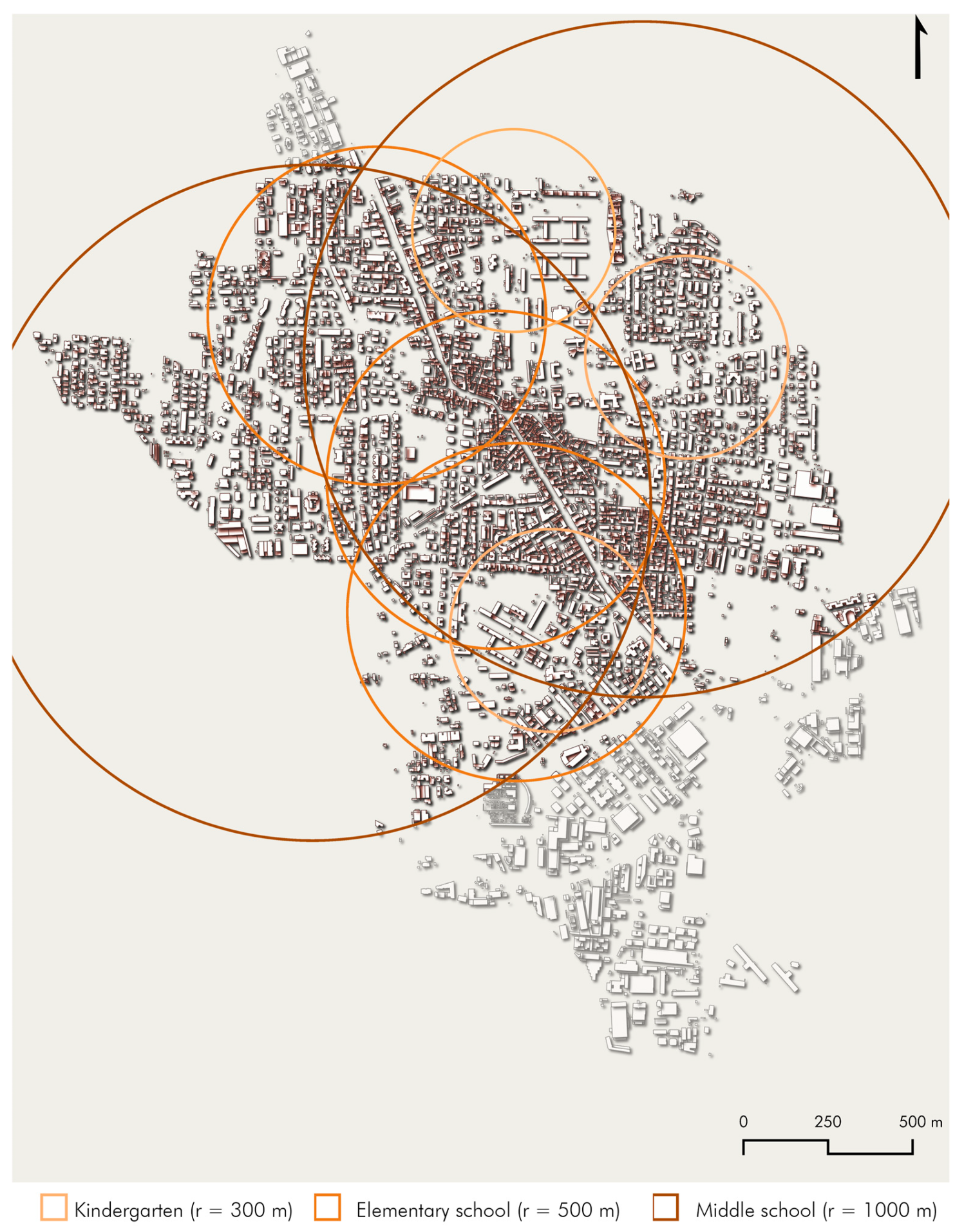
The territory of Melito has developed over the years without the adequate sizing of public services allocations, provided for by Italian interministerial decree (D.I. 2 April 1968, No. 1444). The analysis of urban facilities showed the presence of only three categories of services in the municipality: urban facilities, consisting mainly of churches and recycling areas; spaces intended for education, such as kindergartens and elementary and middle schools; and public spaces equipped as parks and for play and sports. An analysis of the usability of municipal facilities intended to serve the entire municipality (LLPP 425/67) revealed some significant and critical issues (Figure 6). Kindergartens and elementary schools do not evenly cover the municipal area. The situation is different for middle schools, which have a larger service area and adequately provide for residents. Overall, public space amounts to 109,457.79 m2, corresponding to an allocation of only 3.01 m2 per inhabitant, a value well below the mandatory minimum allocation of 18 m2 per inhabitant established by the interministerial decree.
Figure 6.
Analysis of the usability of school location urban plan standards within the municipal territory of Melito di Napoli (Elaboration by S.G.).
Analyzing Urban Vulnerability
Rapid and poorly planned urbanization can have many negative impacts on the socio-economic aspect of urban communities, especially when considering the most marginalized municipalities within a regional context. As the existing literature attests, low economic and social status of individuals and communities, together with the lack of environmental resources, increase the likelihood that a certain geographical area suffers from poor urban health. According to Nyamathi et al. [29], social vulnerability depends on the interaction of personal, societal, and environmental factors. At the individual level, the risk of vulnerability is negatively correlated with the availability of personal resources (good coping skills, etc.) and environmental support [6]. The same resources are crucial to guarantee the urban community well-being.
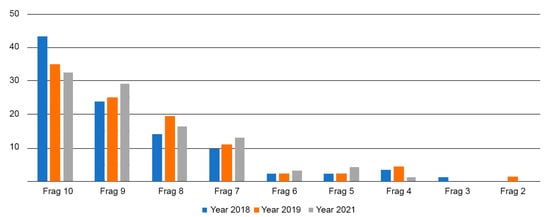
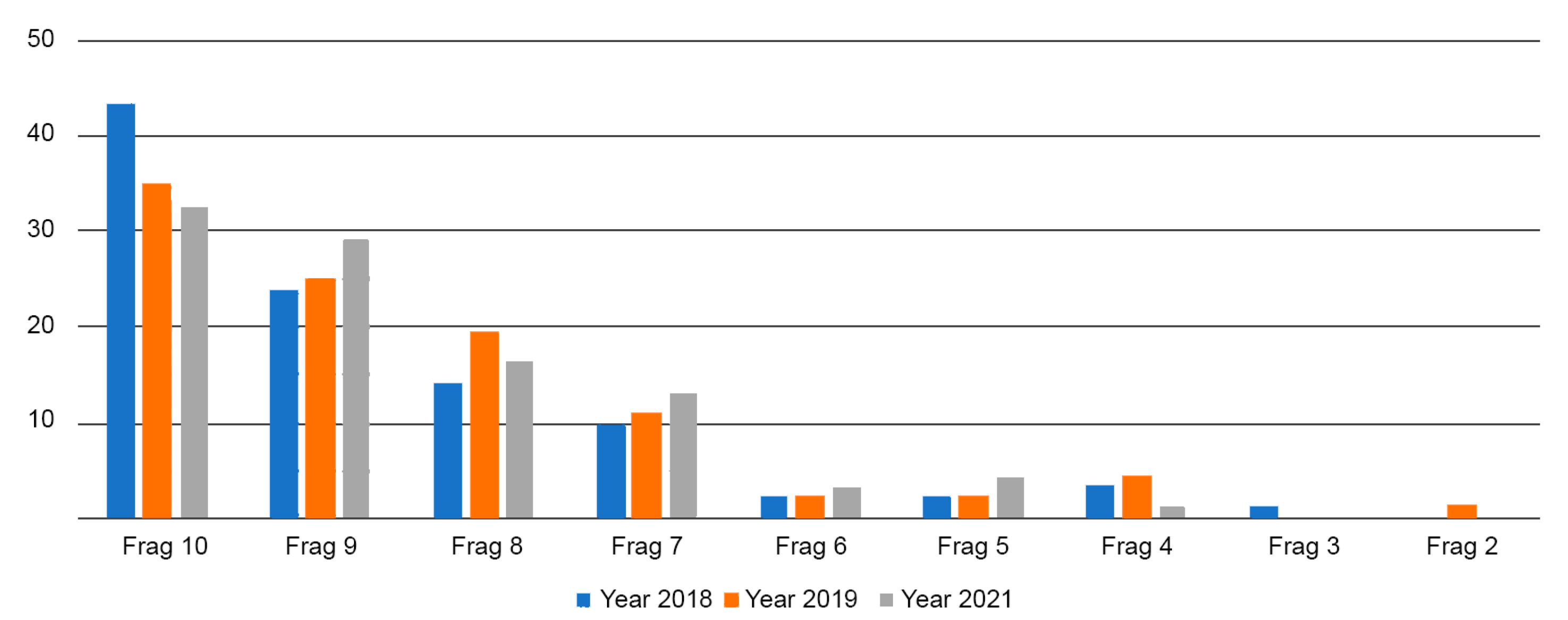
The empirical analysis of vulnerability in Melito is based on the Municipal Fragility Index (MFI), recently developed by the Italian Institute of Statistics, which identifies the exposure of a territory to risks of natural and anthropic origin intersected with critical demographic-social population characteristics and economic-productive systems. The MFI pooled database provides historical data of years 2018, 2019 and 2021 and therefore allows disaggregated analysis on a territorial scale (Figure 7). MFI assigns each municipality a measure of the index comparable in a historical series and between territories, using as a reference parameter the value for Italy in 2018, set equal to 100. The MFI interval range is expressed in deciles (a value equal to 10 indicates the most fragile urban area) and references municipal geographies effective on 31 December 2021. The method—Mazziotta and Pareto Index—was designed and implemented to determine fair and sustainable well-being of municipalities.
Figure 7.
Percentage of municipality within the Metropolitan City of Naples clustered for fragility index. Years 2018–2019–2021 (Elaboration by M.R.A. and C.D.).
The elementary indicators of the MFI evaluate various risk factors affecting urban well-being such as geomorphological and infrastructural risks and those connected to the structural characteristics of the population and human capital, as well as those related to the structure and performance of the local production system. This composite index is the combination of 12 elementary indicators that describe the main dimensions—territorial, environmental and socio-economic—of the fragility of municipal territories. To better understand how public policies can improve the well-being of the urban community, we merge the above MFI with the information of ISTAT “a misura di Comune” (tailored to the Municipality) (https://www.istat.it/statistica-sperimentale/aggiornamento-degli-indicatori-del-sistema-informativo-a-misura-di-comune/ (accessed on 17 February 2026), to summarize the characteristics of Melito in terms of demo-social, environmental, and economic factors, together with measures of community well-being.
Almost 70% of the municipalities belonging to the Metropolitan City of Naples show the highest level of vulnerability (MFI equal to 10), as is the case for Melito. Looking at the data included in Table 2a (mean of the 92 municipalities) and 2b (mean of the municipalities located in the Area Naples 2—The sub-area within the macro-area of the Metropolitan City of Naples where Melito is located), the most critical dimensions of the MFI are the highest level of land consumption, the low level of access to main services, the low education level of population ages 25–64, a very high rate of depopulation, and very limited local units of active enterprises (Table 2). In terms of the gender structure of Melito residents, both men and women from 0 to 49 years have decreased, and women over 49 years have increased slightly more than men.
Table 2.
Average of social fragility indicators in the Metropolitan City of Naples and the metropolitan area of North Naples (Elaboration by M.R.A. and C.D.).
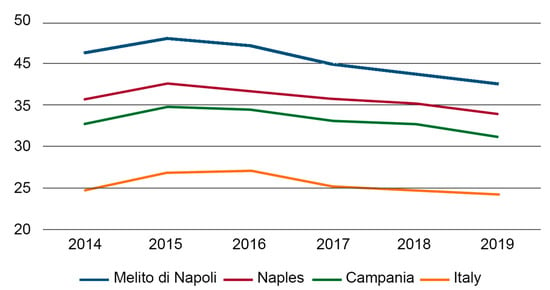
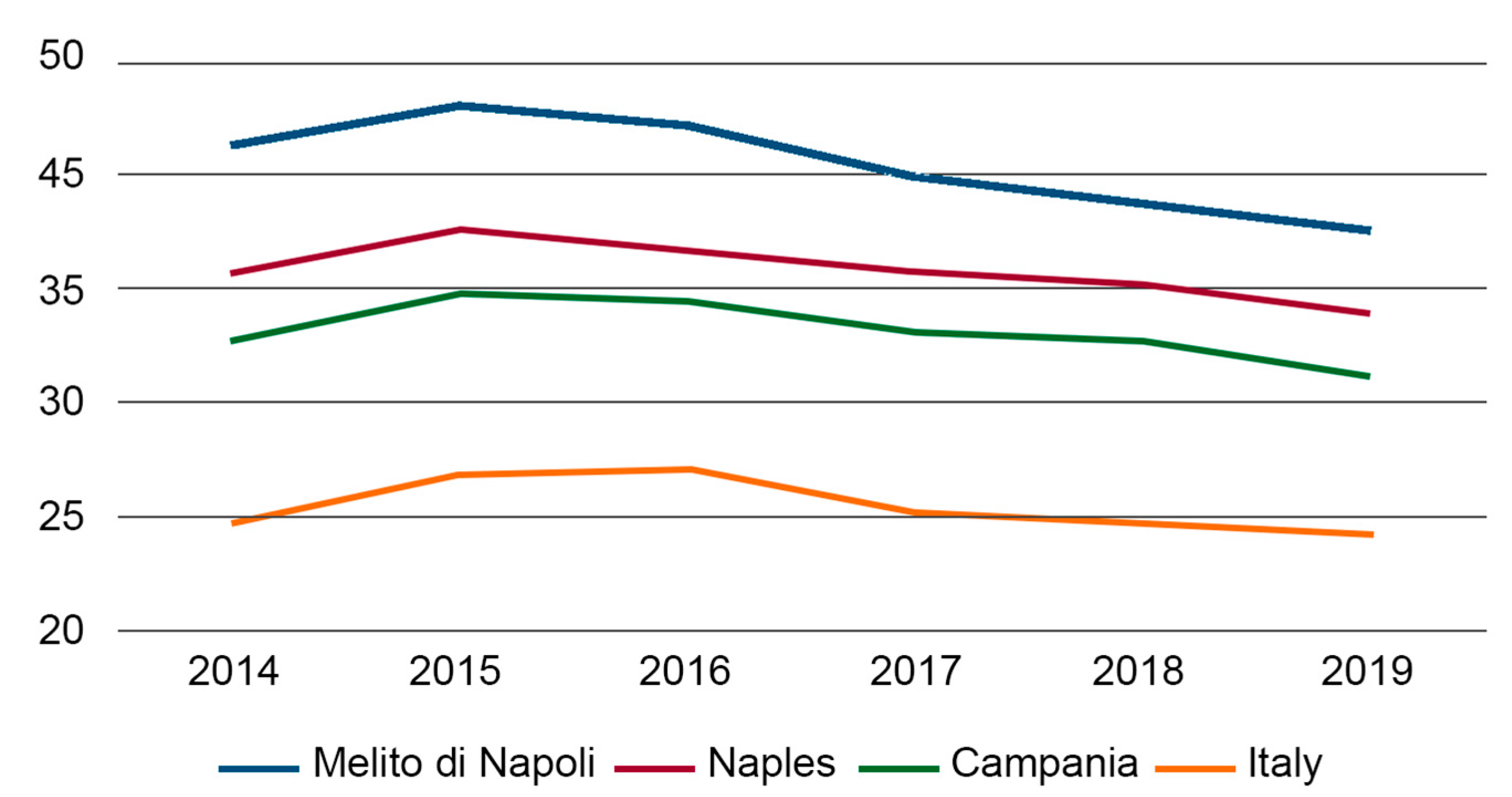
To better understand if and how Melito differs from similar municipalities within the Metropolitan City of Naples, we analyze longitudinal data concerning the main territorial, environmental and socio-economic variables drawn from “A misura di Comune”. Melito belongs to a geographical area of Metropolitan City of Naples named “Napoli North-West”. The main results on the variables examined are summarized in Table 2a,b. The statistics highlight that the average age of the Melito population is lower compared to that calculated for Naples and for the Campania region (in 2018 equal to 36, 40.2 and 41.2, respectively). However, it increased significantly (+8.3%) in the period 2014–2021. Figure 8 shows that in Melito the youth unemployment rate is systematically higher than at Provincial and macro-regional level. Other statistics, available upon request, show that 39% of taxpayers in Melito have a total income of less than 10,000€; the municipality has a higher per capita social expenditure compared to the two territories examined, Metropolitan City and Campania, even if it results in less than half of the Italian mean. The municipality also shows a higher gender gap in the labor market participation in respect to what occurs at the provincial and regional level and its high cost of maintenance for public building and green areas. This describes a context in which the level of well-being of the citizens is clearly low.
Figure 8.
Young people (15–29 years) who do not have a regular job in October and do not follow a course of study by area.
The data describes a municipality affected by rapid urban expansion over the last decades. Population growth and residential needs led to the conversion of agricultural and open spaces into urban areas, contributing to a high land consumption index. The rapid construction of cheaper housing estates led to a process of suburbanization, with low-income families settling in Melito suffering from energy poverty and social exclusion. The existing socio-economic situation implies that planners and policymakers must develop greater attention to socio-economic public policy to foster urban districts that strive towards integrating aspects of socio-economic sustainability. This policy should be focused on halting the out migration of young people (leaving behind the elderly and children), improving education and work opportunities and regenerating sociality and solidarity to enhance livability.
6. Modeling the Pilot
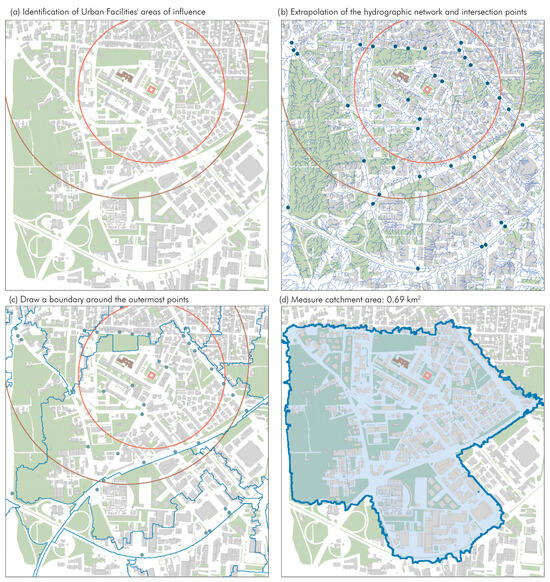
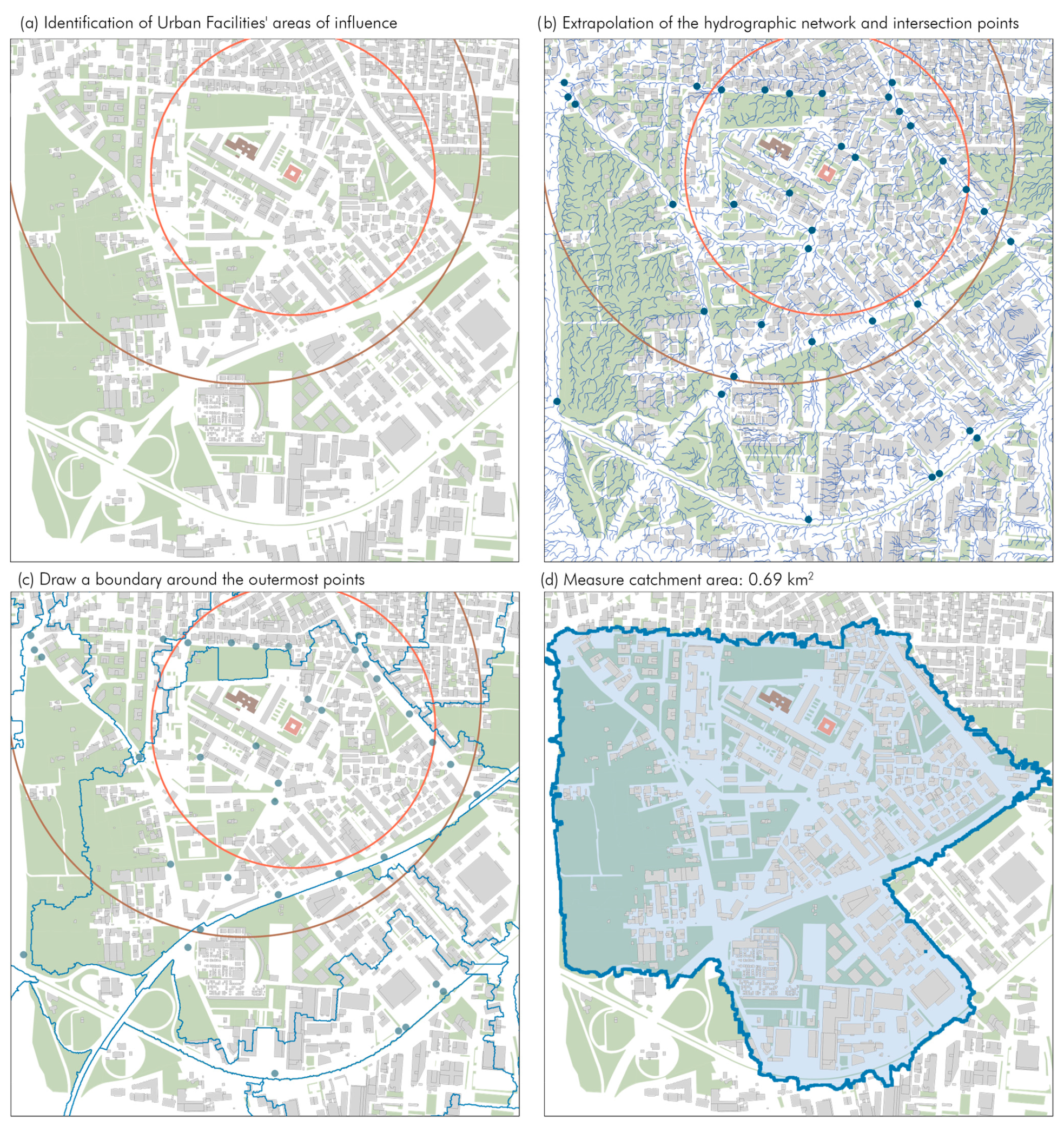
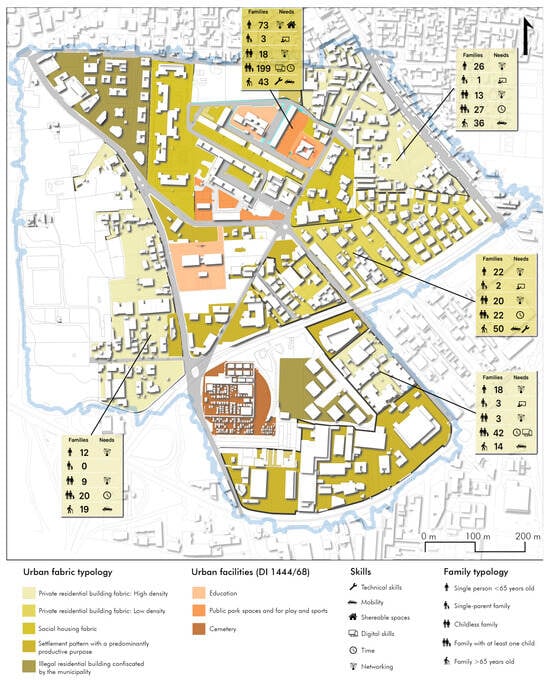
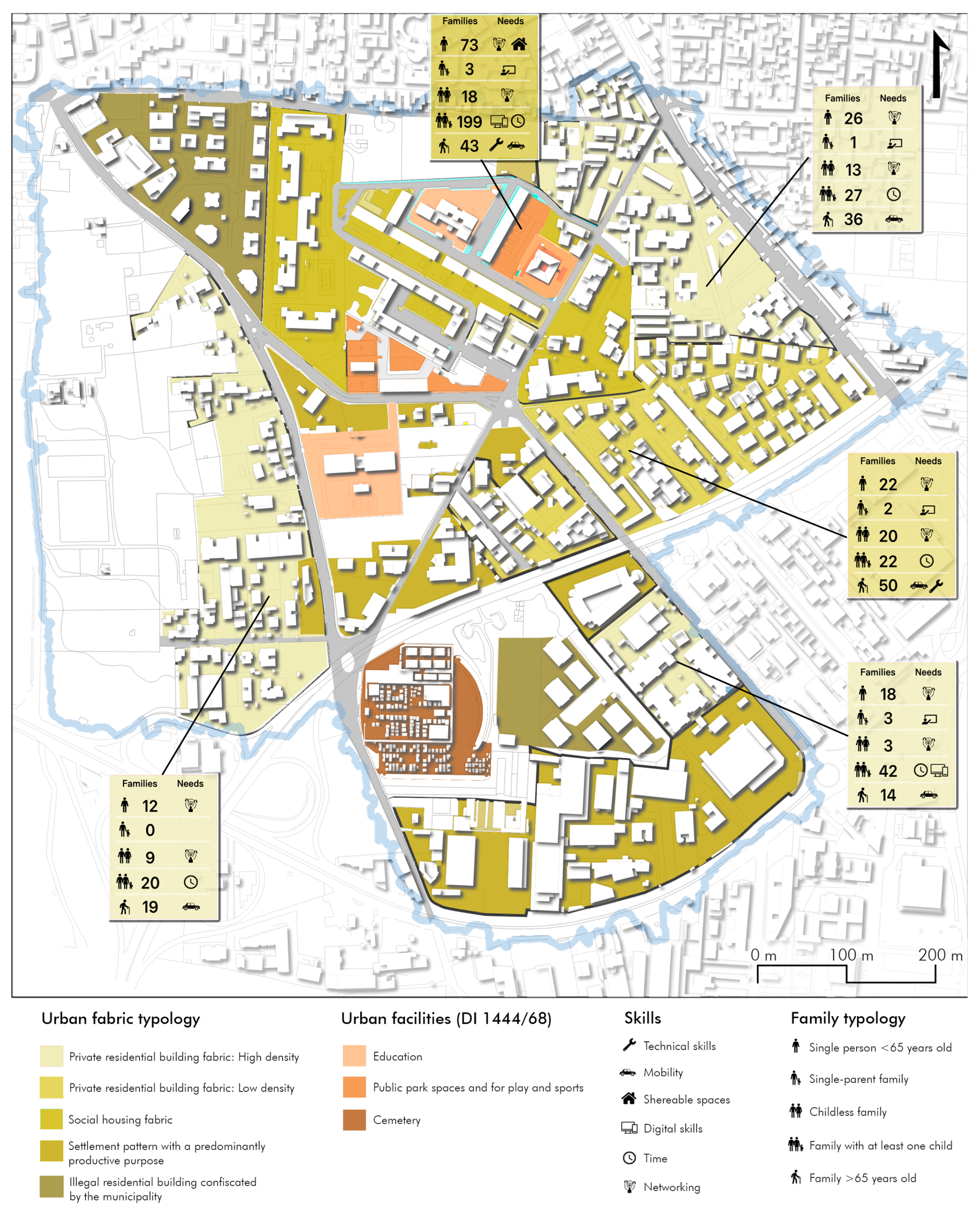
To applying the AGAPE to Melito, research evaluated three schools for their potential as REC hubs (Phase 1 of the protocol, Figure 1) for a surrounding SUC. GIS reconstruction of the hydrographic network and radii of influence of public facilities define the perimeter of the hypothesized SUC (Figure 9). The urban fabric within the proposed SUC has been built over the last forty years, partly in accordance with the urban planning instrument in force (PRG) based on the logic and techniques of rational–comprehensive urban planning [30,31] and partly in non-conformity with it. It comprises four different urban morphologies, three predominantly residential and one productive, emblematically representing the building expansion that took place after World War II following the principles of the modernist movement. A large extent of illegal buildings [32] adds to this expansion, a type that represents a significant part of the urban expansion of southern Italian cities during the same period. The state of maintenance of the building stock in the proposed SUC is mediocre (Figure 10).
Figure 9.
Overview of the pilot area boundary definition process (Elaboration by S.G.).
Figure 10.
Urban building fabrics and intangible resources of the pilot area (Elaboration by R.B.).
The proposed SUC encompasses four types of urban morphology:
First, towards the northern boundary of the proposed SUC lies public housing constructed at the turn of the 1980s and 1990 in compliance with two laws: the first was an ordinary law (L. 167/62), still in force, providing for the construction of low-cost housing for the less affluent population. The second was an extraordinary law (L. 219/81), no longer in force, for the construction of housing for people who had lost their homes in the 1980 earthquake that damaged the regions of Campania and Basilicata. A simplified open and closed open courtyard settlement pattern of inline apartment blocks forms the prevailing building type.
A second, very extensive urban morphology, located to the east and west within the proposed SUC, is prevalently residential development served by a network of private access roads to individual multi-story buildings, with two to seven floors connected in a few points to the public road system as well as single- and two-family developments along public roads. Built between the 1980s and 1990s, the resulting fabric features large urban blocks, with isolated buildings.
A third morphology, located to the north-west and south-east, presents two- and three-story residential allotments built in violation of the municipal plan. As is typical of illegal buildings, there is an absence of supporting facilities to the extent that both unauthorized allotments have been acquired by the municipality. Due to their location and size, these areas represent a strategic opportunity for the application of the proposed redevelopment measures, in an urban context lacking in services and green spaces. Given the damage to the entire community they represent, the court ordered demolition of all existing buildings on site, effectively making available approximately 47,000 m2 of land.
The fourth type, located to the south-east, presents a chaotic settlement pattern of prevalently industrial buildings, in conformity with the prescriptions of the PRG, the result of the construction of single buildings without any implementation plan governing their urban coordination.
The site contains both legal urban developments of public housing and private housing, the former being regulated by urban plans and the latter regulated by building permits, and illegal residential expansions that developed in planned residential zones as well as in zones not intended for residential use.
Results Applying AGAPE to the Case Study SUC
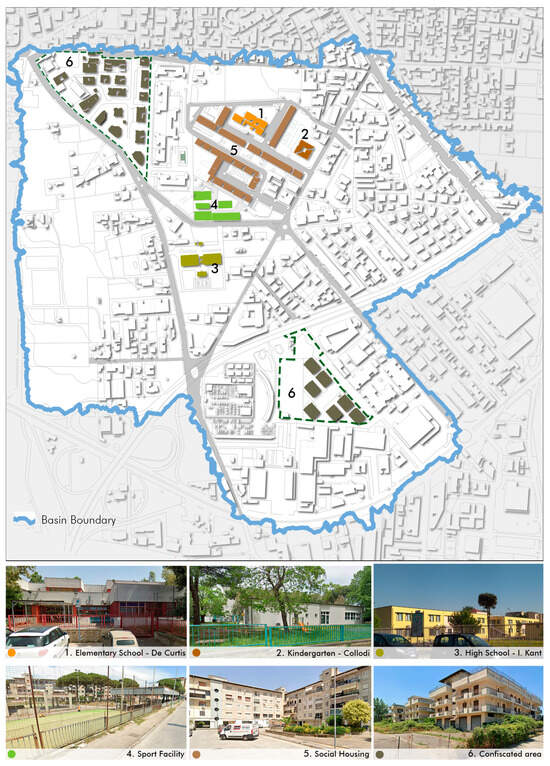
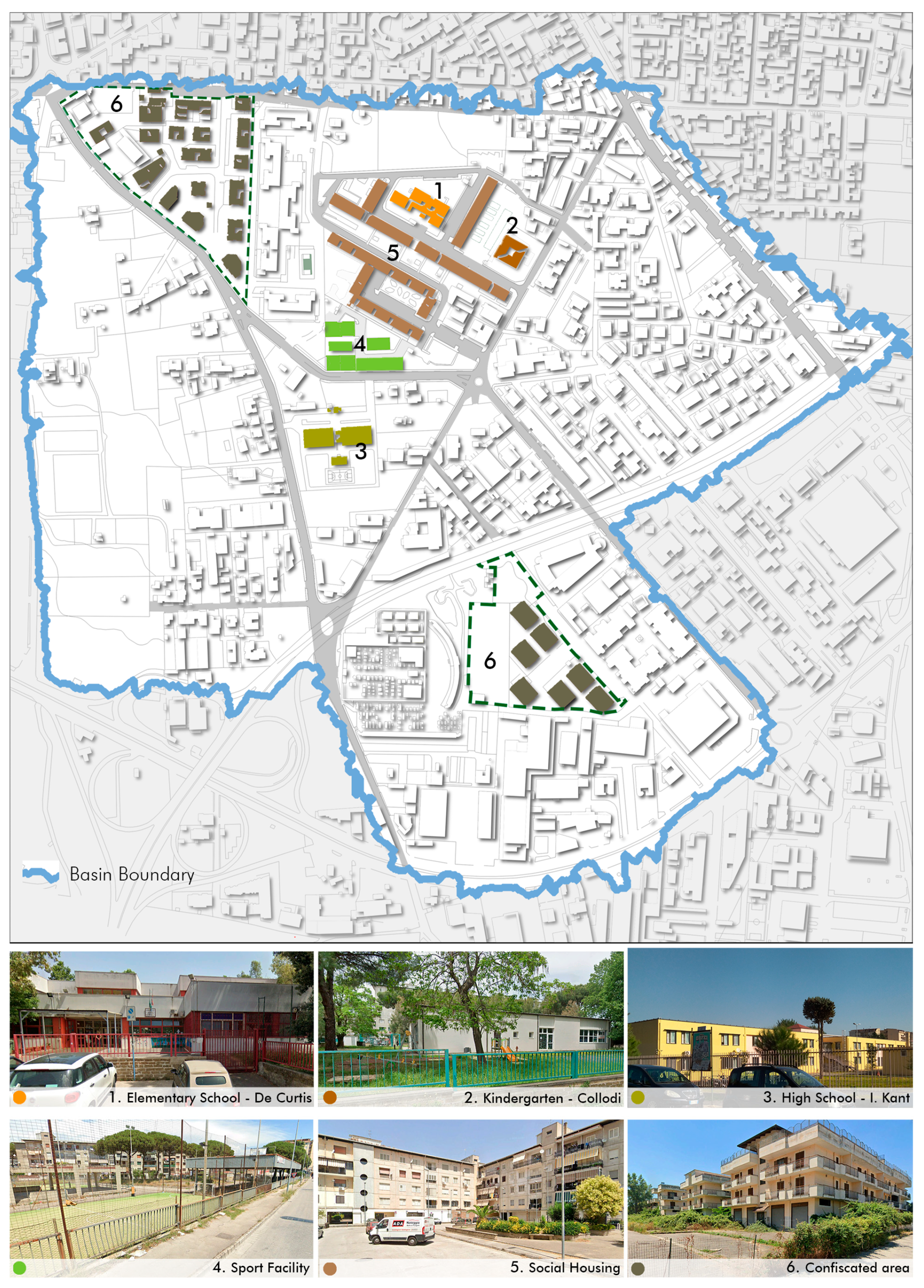
The SUC hydrological sub-basin includes two primary electrical substations (Figure 11) serving the three public school buildings (Collodi, De Curtis, I. Kant) and a complex of public housing (Figure 12). Defining the morphological, technological, and socio-economic characteristics allows for the preliminary sizing of RECs for each of the two substations.
Figure 11.
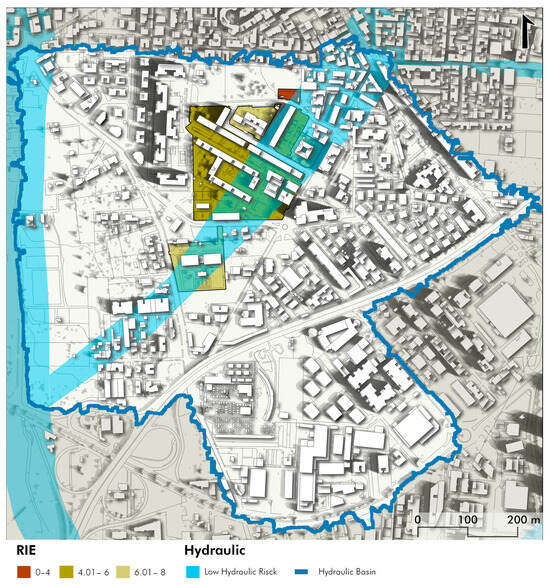
Hydraulic risk and permeability of public lots (RIE) in the pilot area (Elaboration by S.G.).
Figure 12.
Map of the pilot area in Melito di Napoli (Campania, Southern Italy) with noteworthy places (Elaboration by S.G.).
The new MIHA software automatically calculates environmental indicators, both for social housing and school buildings. The sub-watershed area (70 ha) includes a total of 1338 families, with an average density of three people per residential unit. For social housing and schools, the plugin calculates the RIE (Riduzione Impatto Edilizio) and the Permeability Index. The values show low soil permeability and poor drainage capacity for the social housing and a better balance between built-up areas and green spaces for the schools. At the sub-watershed scale, the indicators show a provision of 5.40 m2 of usable public green space per inhabitant, with eight trees per 100 people. The microclimate simulations provided PET values between 30° and 39.5° (strong thermal discomfort). The sun protection map shows the shade conditions at 9:00, 12:00 and 15:00 obtained with the ‘TerrainShading’ plugin (version 0.9.7). Finally, the area presents a medium hydraulic risk as reported by the Regional Authorities [33] (Figure 13).
Figure 13.
Hydraulic risk and permeability of public lots (RIE) in the pilot area (Elaboration by R.B. and S.G.).
The new PRESTO plugin calculates the amount of energy that can be produced through rooftop photovoltaic systems (Phase 2—Infrastructure). The Collodi school provides an annual production of approximately 95,000 kWh, while the De Curtis school provides about 133,000 kWh. The I. Kant secondary school provides 143,000 kWh annually. Finally, the plugin estimates the capacity of RECs using household consumption profiles [34,35]. The software refined the evaluations on the dimensional characteristics of the REC built around the Collodi and De Curtis schools (Table A1 in Appendix A), which can supply clean energy to around 59–67 residential units, with SCI ranging between 40 and 43% and SSI between 43 and 68 I. Kant school the software returned 40 scenarios (Table A2 in Appendix A) where clean energy could be supplied to about 36–48 residential units with a SCI value between 38 and 43% and a SSI value between 73 and 83%.
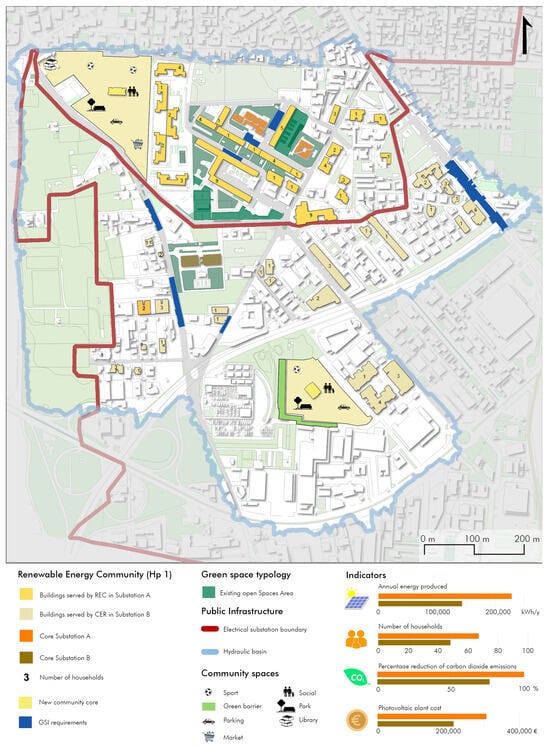
In addition, “Blue–Green Ecosystem” phase of the tool estimates potential interventions on public areas, particularly streets. Hydraulic calculations show the need for 1200 m2 of GSI to handle a volume of rainwater of 550 m3, which also reduces the urban heat island effects [36] (Figure 14).
Figure 14.
Sustainable Urban Community (SUC) meta-design.
The demolition of illegal buildings and the return of green spaces to the community addresses the alarming rates of land consumption. The EasyPath software integrates essential services and accessibility within the neighborhood, bridging notable existing gaps. Strengthening the role and access of schools significantly enhances their potential to reinforce educational attainment among the local population. Furthermore, implementing initiatives centered on the circular economy and green business can combat the high depopulation rates and the lack of active local enterprises.
Thanks to funds from the NextGeneration EU program, the municipal administration already launched digitalization efforts (allocated funds: €321,642) to expand digital identity access in Melito di Napoli and infrastructural interventions (€1,325,403). This enabled the energy efficiency upgrade of two municipal schools and the installation of a photovoltaic system on one of them. These results align with the requirements and features identified in the framework, highlighting the need for physical spaces with renewable energy plants and the suitability of schools as energy cores due to the availability of space and ideal community conditions. The operational scale of RECs appears smaller than the area defined for the Sustainable Urban Community (SUC), suggesting that it is possible to include multiple RECs (each governed by energy and regulatory constraints) within the proposed SUC boundaries, established through environmental and social parameters. As a result, it can be inferred that the optimal scale for the integrated planning of shared services and resources does not necessarily coincide with the most effective scale for sharing renewable energy. Indeed, the modeling of the three schools shows the possibility of supplying electricity to about 9% of the families in the area, which still provide support to 115 households experiencing energy poverty. By installing PV systems on public residential buildings, total energy production reaches 1,014,962.21 kWh, an increase of approximately +173% compared to the initial scenario (371,422.70 kWh). This allows us to satisfy the energy needs of 314 households, compared to 115 households in the initial scenario. In relative terms, the share of households benefiting from the energy produced increases from 9% to 23% of the total (Table 3).
Table 3.
Comparison of baseline and project indicators.
To make the initiative truly effective and inclusive, a two-step process is required. The first stage improves the energy efficiency of school buildings and public buildings by implementing measures that reduce overall energy consumption. In this way, renewable energy production will be able to cover a larger share of consumption. The second phase assesses the feasibility of installing photovoltaic systems on the roofs of public residential buildings. This will expand the production base and generate a more substantial volume of energy, which can be shared not only between schools and municipal offices, but also with families and communities in the area, creating the conditions for a broader, fairer and more resilient energy exchange, capable of strengthening social ties and promoting a truly inclusive energy transition.
In the energy transition, technological and structural solutions based on efficiency principles aim to reduce energy input while maintaining the same levels of consumption. However, a socio-technical transition project must incorporate the paradigm of sufficiency, promoting the reduction in absolute demand for energy, materials, and space through changes in social practices, organizational models, and lifestyles [37,38]. It is precisely under these conditions of metabolic consistency that an increase in the use of a system does not necessarily lead to greater environmental degradation.
7. Conclusions and Perspectives
Social and environmental indicators show that a Sustainable Urban Community in Melito di Napoli could improve the socio-economic sustainability of this area through projects involving collaborations between different stakeholders such as prosumers, youth, elders, workers, property owners, municipal officials, and, in general, residents [13,39].
The research highlights how the innovative application of the AGAPE process to the existing and flexible designation of the buildable unit can overcome a mechanistic view of the city. This promotes an integrated systemic approach that recognizes the value of territorial and environmental interrelationships. The perspective allows us to govern urban transformations not only in quantitative terms (volumes, surfaces), but above all in qualitative terms, through the design of areas as functional for ecological, energy and social innovation.
To this end, the AGAPE protocol selects community cores, calculates the Renewable Energy Sources (RES) production capacity, and identifies areas sharing hydrological, urban, and social factors. The digital process identifies potential regeneration scenarios from environmental and social indicators datasets. A framework facilitates intervention planning across watersheds, structured into three categories: Community Platforms, Infrastructures, and Blue–Green Ecosystems. The framework identifies user trust and the relationship between public administration and citizens as critical elements that the scientific literature directly links to perceived well-being and the health of urban communities. Improving these aspects develops social capital, which is key to community resilience. Digital services facilitating the exchange of goods, skills, time, and shared physical space represent the social infrastructure that can be activated immediately, requiring minimal investment and generating rapid benefits.
This accelerates implementation by creating the substrate of trust necessary for the development of energy communities and sustainable mobility systems. Sequencing capitalizes on existing collaborative networks, reducing resistance and implementation time. Stormwater and urban vegetation management redesigns public spaces. This strategic progression optimizes resources and time, allowing faster implementation than traditional planning approaches.
AGAPE represents not only a design tool, but also an effective evaluation framework to measure the success of urban well-being and sustainability initiatives. Public facilities create strategic nodes capable of catalyzing the transition towards more sustainable, resilient, and cohesive urban models acting as a bridge between material infrastructure and immaterial social dynamics. It expands the potential sustainability and welfare benefits of RECs through relatively modest investments in digital community infrastructure and shared public spaces to create Sustainable Urban Communities. It is specifically designed for use by Public Administrations, the only entities that have all the up-to-date information needed to properly run the digital model. MIHA makes it possible to calculate environmental and social indicators from the basin scale to the city scale. The graphical output allows intuitive auditing of conditions that require action by the administration. The development of the REC’s predimensioning new software PRESTO stems from the interest in providing local government with a tool capable of defining the renewable energy production potential of its building stock and possible sharing scenarios with local residents. The data produced by the plugin provides a theoretical basis for comparing the efficiency and effectiveness of an existing REC. Optimizing energy distribution is possible using socio-technical criteria that can only be considered from information held by administrations.
The AGAPE model provides a replicable decision framework to renovate existing settlements and to drive the transition towards more sustainable, equitable urban communities. Long-term commitment by the university research team to its local community and public authorities demonstrates the feasibility of highly place-specific projects utilizing detailed data, while leveraging widely applicable processes. Nevertheless, the seemingly insurmountable task of transforming community for sustainability will require a delicate combination of automated tools and particularized understanding of local needs and circumstances.
For instance, reliance on existing data may overlook specific local nuances, leading to decisions that do not fully reflect community needs. Furthermore, the model’s success is contingent on active participation from local communities to provide comprehensive social indicator data. Future research should focus on refining data collection methods and exploring participatory approaches that involve residents directly in the data-gathering process. The use of advanced technologies for energy efficiency brings about environmental, social, and economic benefits whose quantification, especially from a social perspective, requires further data collection obtainable by directly involving the population and other stakeholders [40].
The integration of advanced technologies in community-driven initiatives presents a promising avenue for further study. Investigating how these technologies can better support energy efficiency and social cohesion will be essential in enhancing the model’s applicability and effectiveness. By addressing the identified limitations and expanding research into participatory methods and technological integration, AGAPE can further advance urban design towards spatial and environmental justice, ultimately facilitating the transition to sustainable living.
Community participation also addresses a pointed limitation in the AGAPE protocol, common to all digital protocols: the requisite of ground-truthing to enhance the reliability of the model and refining the integrity of the model outcomes. In this, the place-based formulation of the model is particularly felicitous. Locals know their neighborhoods as no one else does and have significant stakes in enhancing its economy and livability. Participation is fundamental to the most effective implementation of AGAPE.
AGAPE provides a shared reference framework for all involved stakeholders (public administrations, professionals, and residents) supporting coordinated and transparent decision-making processes. The stages of the protocol define a methodological sequence to model urban design interventions to optimize and create SUCs. At the same time, the dimensions of the analytical-design framework are adaptable, using categories of interventions particular to the context. This two-dimensional structure allows for systemic integration and contextual flexibility, ensuring the replicability of the process while adapting to the specific constraints and local realities. The application of the model to the case of Melito di Napoli has demonstrated the specificity, adaptability, and operational value of a place-based GIS protocol for the planning of sustainable urban neighborhoods, opening new perspectives for urban design oriented towards spatial and environmental justice, while incorporating energy management. It validates the model’s adaptability and operational value to facilitate locally initiated urban renewal that integrates energy management with spatial, environmental, and economic justice. Inherently, the protocol values the effectiveness of place-based initiatives over centralized and standardized planning which have too often failed in the past. By focusing on the incremental regeneration of multi-benefit local community cores within a larger legislative agenda, it can serve as a catalyst for expansive sustainable urban regeneration.
Author Contributions
Conceptualization, R.V. and L.A.M.; methodology, R.V., R.B. and S.G.; software, S.G. and M.B.M.; validation, R.V. and L.A.M.; formal analysis, S.G. and M.B.M.; investigation, S.L., M.R.A., C.D., S.G., R.B., C.C. and R.V.; resources, S.L., M.R.A., C.D., R.B., S.G., C.C. and M.B.M.; data curation, S.G. and M.B.M.; writing—original draft preparation, S.L., M.R.A., C.D., R.B. and S.G.; writing—review and editing, R.V. and L.A.M.; visualization, R.B. and S.G.; supervision, L.A.M.; project administration, R.V.; funding acquisition, R.V. All authors have read and agreed to the published version of the manuscript.
Funding
This research and the APC were funded by European Union EU—Next Generation EU, Ministero dell’Università e della Ricerca (Italy), Italia domani PIANO NAZIONALE DI RIPRESA E RESILIENZA, Missione 4 Istruzione e Ricerca, grant number PRIN2022 A4XFPR. Title: 1. “FASTECH a model for rapid technological building retroFit to cut energy demAnd and GHG emiSsions of housing Toward rEnewable energy self-Consumption and tHe smart energy communities”, Università degli Studi della Campania Luigi Vanvitelli. 
Data Availability Statement
The original contributions presented in the study are included in the article, further inquiries can be directed to the corresponding author.
Conflicts of Interest
The authors declare no conflicts of interest. The funders had no role in the design of the study, in the collection, analysis, or interpretation of data, in the writing of the manuscript, or in the decision to publish the results.
Appendix A. Scenarios Processed via PRESTO Plugin
Table A1.
Processing of Substation A scenarios via PRESTO plugin (Elaboration by M.B.M.).
Table A2.
Processing of Substation B scenarios via PRESTO plugin (Elaboration by M.B.M.).
References
- Maderna, M. Spazio Conteso. In Il Nuovo Manuale di Urbanistica; Benevolo, L., Ed.; Mancosu Editore: Rome, Italy, 2009; p. A65. [Google Scholar]
- Zucconi, G. La Città Degli Igienisti. Riforme e Utopie Sanitarie Nell’italia Umbertina; Carocci Editore: Rome, Italy, 2020. [Google Scholar]
- Luhmann, N. Ecological Communication; Franco Angeli: Milan, Italy, 2021. [Google Scholar]
- Pavia, R. Modernità della città di prossimità. Clarence Perry e Lewis Mumford. In Urbanistica Informazioni N. 305; Inu Edizioni: Roma, Italy, 2022. [Google Scholar]
- WHO. World Health Statistics; WHO: Geneva, Switzerland, 2013. [Google Scholar]
- Rogers, A.C. Vulnerability, health and health care. J. Adv. Nurs. 1997, 26, 65–72. [Google Scholar] [CrossRef] [Scilit] [PubMed]
- Alwang, J.; Siegel, P.; Jorgensen, S. Vulnerability: A View from Different Disciplines; Social Protection Discussion Papers and Notes 23304; The World Bank: Washington, DC, USA, 2001. [Google Scholar]
- Zaidi, A. Life Cycle Transitions and Vulnerabilities in Old Age: A Review. Report, UNDP Human Development Report Office. Available online: https://hdr.undp.org/system/files/documents/hdr2014zaidifinal.pdf (accessed on 17 February 2026).
- Moroni, S. Towards a general theory of contractual communities. In Cities and Private Planning; Andersson, S., Moroni, S., Eds.; Edward Elgar: Cheltenham, UK, 2014; pp. 38–65. [Google Scholar]
- Bosco, R.; Giacobbe, S.; Losco, S.; Mozingo, L.A.; Valente, R. Design of Site-Specific Energy Solidary Communities around Public High Schools in the Metropolitan Area of Naples (Italy). Energies 2024, 17, 2247. [Google Scholar] [CrossRef] [Scilit]
- Foldvary, F.E. Public Goods and Private Communities: The Market Provision of Social Services; Edward Elgar Publishing: Aldershot, UK, 1994. [Google Scholar]
- Sovacool, B.K.; Dworkin, M.H. Energy justice: Conceptual insights and practical applications. Appl. Energy 2015, 142, 435–444. [Google Scholar] [CrossRef] [Scilit]
- Fortier, M.O.P.; Teron, L.; Reames, T.G.; Munardy, D.T.; Sullivan, B.M. Introduction to evaluating energy justice across the lifecycle: A social life cycle assessment approach. Appl. Energy 2019, 236, 211–219. [Google Scholar] [CrossRef] [Scilit]
- Kaiser, S.; Oliveira, M.; Vassillo, C.; Orlandini, G.; Zucaro, A. Social and Environmental Assessment of a Solidarity Oriented Energy Community: A Case-Study in San Giovanni a Teduccio, Napoli (IT). Energies 2022, 15, 1557. [Google Scholar] [CrossRef] [Scilit]
- Harrell, A.; Greenleaf, A.S. Resource asymmetry reduces generosity and paying forward generosity, among the resource-advantaged and disadvantaged. Soc. Sci. Res. 2022, 109, 102786. [Google Scholar] [CrossRef] [Scilit] [PubMed]
- Perry, C. The neighborhood unit. In The City Reader; LeGates, R.T., Stout, F., Eds.; Routledge: London, UK, 2015; pp. 607–619. [Google Scholar]
- Moreno, C. La Città dei 15 Minuti: Per una Cultura Urbana Democratica; Add Editore: Torino, Italy, 2024. [Google Scholar]
- O’Neil, R.S.; Rebecca, S.; Preziuso, D.C.; Arkema, K.K.; Ko, Y.; Pevzner, N.; Diamond, K.; Gore, S.; Morrice, K.; Henderson, C.D.; et al. Renewable Energy Landscapes: Designing Place-Based Infrastructure for Scale; Pacific Northwest National Laboratory: Richland, WA, USA, 2022. [Google Scholar]
- De Pascali, P.; Reginaldi, M. Inclusive energy as model of sharing sustainability for planning. In CRIOS: Critica Degli Ordinamenti Spaziali; FrancoAngeli: Milan, Italy, 2016; Volume 12, pp. 41–54. [Google Scholar]
- Rueda, S. Plan de Indicadores de Sostenibilidad Urbana de Vitoria-Gasteiz; Agencia de Ecología Urbana de Barcelona: Barcelona, Spain, 2010. [Google Scholar]
- Kriken, J.L.; Enquist, P.; Rapaport, R. City Building: Nine Planning Principles for the Twenty-First Century; Princeton Architectural Press: New York, NY, USA, 2010. [Google Scholar]
- Owens, S. Energy, Planning and Urban Form; Pion Ltd.: London, UK, 1986. [Google Scholar]
- Ministero dell’Ambiente e Della Sicurezza Energetica, Decreto 7 Dicembre 2023, N. 414. Available online: https://www.mase.gov.it/ (accessed on 17 February 2026).
- GSE. Configurazioni per L’autoconsumo Diffuso e Regole Operative CACER. Available online: https://www.gse.it/documenti_site/Documenti%20GSE/Servizi%20per%20te/AUTOCONSUMO/Gruppi%20di%20autoconsumatori%20e%20comunita%20di%20energia%20rinnovabile/Regole%20e%20procedure/Regole%20Tecniche%20per%20accesso%20al%20servizio%20di%20valorizzazione%20e%20incentivazione%20energia%20elettrica%20condivisa.pdf (accessed on 17 February 2026).
- JRC. Linee Guida del Patto dei Sindaci per il Clima e l’Energia per la rendicontazione. 2016. Available online: https://www.google.com/url?sa=t&source=web&rct=j&opi=89978449&url=https://publications.jrc.ec.europa.eu/repository/bitstream/JRC57990/ldna24360itc.pdf&ved=2ahUKEwjVyIn-_4WTAxUAnf0HHVYtD7MQFnoECBkQAQ&usg=AOvVaw3X41uClgXNTSkpc6Q9NtBK (accessed on 17 February 2026).
- Alagna, F.; Pavignani, R. Progetto PRODEM e sostenibilità energetica. Urban. Inf. 2006, 108, 18. [Google Scholar]
- UNI-ISO 37119:2020; Città e Comunità Sostenibili—Indicatori per i Servizi Urbani e la Qualità di Vita. UNI—Ente Italiano di Normazione: Rome, Italy, 2020.
- Valente, R.; Mozingo, L.A. Interazioni Ambientali Urbane. Sul Progetto di una Rete di Green Street Urban Environmental Interactions on the Design of a Green Street Network; CLEAN: Naples, Italy, 2023. [Google Scholar]
- Nyamathi, A.; Koniak-Griffin, D.; Greengold, B.A. Development of Nursing Theory and Science in Vulnerable Populations Research. Annu. Rev. Nurs. Res. 2007, 25, 3–25. [Google Scholar] [CrossRef] [Scilit]
- Baum, H.S. Perché il paradigma razionale persiste? Episodi Di Esper. Sul Campo CRU 1995, 3, 62–71. [Google Scholar]
- Piroddi, E. Le Regole della Ricomposizione Urbana; FrancoAngeli: Milan, Italy, 2000; p. 15. [Google Scholar]
- Losco, S.; De Biase, C. Abusivismo Urbanistico e Pianificazione Comunale Verso la Rigenerazione; Le Penseur: Brienza, Italy, 2023. [Google Scholar]
- PSAI. Variante al Piano Strategico Assetto Idrogeologico, Adottata dalla CIP con Delibera n. 3 del 16/10/2018. 2018. Available online: https://www.distrettoappenninomeridionale.it/oldsite/index.php/varianti-al-piano-stralcio-assetto-idrogeologico-menu/varianti-al-pai-menu/varianti-ai-piani-stralcio-per-l-assetto-idrogeologico-ai-sensi-degli-artt-66-67-e-68-del-d-lgs-152-06-menu/delibere-cip-di-adozione-variante-menu/anno-2018-menu (accessed on 22 July 2025).
- Bosco, R.; Giacobbe, S.; Losco, S.; Mozingo, L.A.; Valente, R. Public Energy Hubs as Community Catalysts: A Study of Replicable Inclusive Models. Sustain. Mediterr. Constr. Land Cult. Res. Technol. 2024, 19, 36–43. [Google Scholar]
- Gestore dei Servizi Energetici. Gruppi di Autoconsumatori di Energia Rinnovabile che Agiscono Collettivamente e Comunità di Energia Rinnovabile. Modalità di Profilazione dei Dati di Misura e Relative Modalità di Utilizzo ai Sensi Dell’articolo 9 Dell’allegato a Alla Delibera 318/2020/R/eel. 2022. Available online: https://www.gse.it/documenti_site/Documenti%20GSE/Servizi%20per%20te/AUTOCONSUMO/Gruppi%20di%20autoconsumatori%20e%20comunita%20di%20energia%20rinnovabile/Regole%20e%20procedure/Autoconsumatori.pdf (accessed on 22 July 2025).
- Walker, J. Urban Heat Islands and a Climate of Inequities. In School for Environment and Sustainability, University of Michigan. Available online: https://seas.umich.edu/news/urban-heat-islands-and-climate-inequities-0 (accessed on 22 July 2025).
- Princen, T. The Logic of Sufficiency; Massachusetts Institute of Technology Press: Cambridge, MA, USA, 2005. [Google Scholar]
- Thomas, S.; Brischke, L.-A.; Thema, J.; Kopatz, M. Energy Sufficiency Policy: An evolution of energy efficiency policy or radically new approaches? In ECEEE 2015 Summer Study—First Fuel Now; ECEEE: Stockholm, Sweden, 2015; pp. 59–70. [Google Scholar]
- Creamer, E.; Eadson, W.; van Veelen, B.; Pinker, A.; Tingey, M.; Braunholtz-Speight, T.; Markantoni, M.; Foden, M.; Lacey-Barnacle, M. Community energy: Entanglements of community, state, and private sector. Geogr. Compass 2018, 12, E12378. [Google Scholar] [CrossRef] [Scilit]
- Fischer, E. Vulnerabilità sociale—Indici, indicatori e metodologie a confronto. In Resilienza nel Governo del Territorio, Atti della XXIII Conferenza Nazionale SIU—Downscaling, Rightsizing—Contrazione Demografica e Riorganizzazione Sociale; Brunetta, G., Caldarice, O., Russo, M., Sargolini, M., Eds.; Planum: Rome, Italy, 2021; pp. 71–81. [Google Scholar]

Disclaimer/Publisher’s Note: The statements, opinions and data contained in all publications are solely those of the individual author(s) and contributor(s) and not of MDPI and/or the editor(s). MDPI and/or the editor(s) disclaim responsibility for any injury to people or property resulting from any ideas, methods, instructions or products referred to in the content. |
© 2026 by the authors. Licensee MDPI, Basel, Switzerland. This article is an open access article distributed under the terms and conditions of the Creative Commons Attribution (CC BY) license.