Skip Content
You are currently on the new version of our website. Access the old version .

Alloys

Alloys is an international, peer-reviewed, open access journal on all aspects of alloys science and engineering, published quarterly online by MDPI.

All Articles (90)

High-entropy alloys (HEAs) present a vast compositional design space, characterized by four core effects—high configurational entropy, sluggish diffusion, severe lattice distortion, and the cocktail effect—which collectively underpin their exceptional potential for both structural and hydrogen storage applications. This mini-review synthesizes recent advances in the compositional design of HEAs with emphasis on structural materials and hydrogen storage. Firstly, it provides an overview of the definition of HEAs and the roles of principal alloying elements, then synthesizes solid solution formation rules based on representative descriptors—atomic size mismatch, electronegativity difference, valence electron concentration, mixing enthalpy, and mixing entropy—together with their applicability limits and common failure scenarios. A brief introduction is provided to the preparation methods of arc melting and powder metallurgy, which have a strong interaction with the composition. The design–structure–property links are then consolidated for structural materials (mechanical properties) and for hydrogen storage materials (hydrogen storage performance). Furthermore, the rules for the combined design of control systems for HEAs and the associated challenges were further discussed, and the future development prospects of HEAs in structural materials and hydrogen storage were also envisioned.

7 January 2026
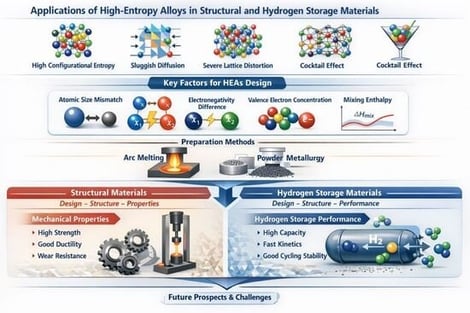
Element citation frequency in HEAs.

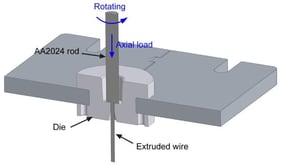
Friction extrusion technology was first developed and patented in 1991 at The Welding Institute, but it remained largely unexplored for many years. Over the past decade, this technology has gained popularity due to its ability to recycle chips and produce composite materials. Typically, in friction extrusion, the applied force and extrusion direction are opposite; this configuration is commonly referred to as reverse extrusion. Additionally, the tool feed rate is often used as a control parameter. However, this approach introduces technological challenges and results in a heterogeneous product structure. This paper proposes a novel friction extrusion method in which the applied force and extrusion direction are co-directional, and no tool is used. Moreover, a constant load is maintained throughout the extrusion process. Experimental results demonstrate that the proposed scheme is feasible and enables wire extrusion without macroscopic defects. Although the current efficiency is low and the maximum sample size achieved is 45 mm, the cross-sectional microhardness of the samples remains stable. The material strength reached approximately 90% of that of the initial 2024 aluminum alloy.

1 January 2026

Schematic diagram of friction extrusion.

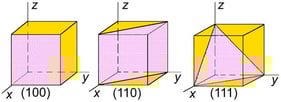
Intermetallic alloys based on A15-type compounds, including cubic Ti3Sb, attract increasing interest due to their tunable electronic properties and potential for surface-related functional applications. Here, the interaction of nitrogen with Ti3Sb is systematically investigated using spin-polarized density functional theory within the GGA-PBE approximation. Nitrogen adsorption was analyzed on the Ti3Sb (111), (100), and (110) surfaces by considering top, bridge, and hollow sites at different surface coverages. Low nitrogen coverage was found to minimize lateral adsorbate interactions, allowing reliable evaluation of single-atom adsorption energies. Among the studied configurations, nitrogen adsorption at the hollow site of the Ti3Sb (111) surface is energetically most favorable. In addition, partial substitution of Ti or Sb atoms by nitrogen in Ti3Sb supercells was examined to assess its effect on bulk electronic properties. Nitrogen incorporation leads to pronounced modifications of the electronic band structure, density of states, and local magnetic moments, with a strong dependence on crystallographic direction. The calculated results reveal distinct electronic anisotropies originating from direction-dependent band dispersion and associated effective carrier masses. These findings clarify the role of nitrogen in tailoring both surface and bulk electronic characteristics of Ti3Sb and provide a theoretical basis for the targeted design of A15-type intermetallic materials for sensing, catalytic, and energy-related applications.

24 December 2025

Arrangement of the crystallographic planes in the cubic Ti3Sb unit cell.

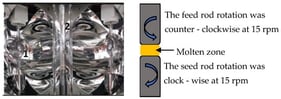
Some cast metallic alloys for ultra-high-temperature structural applications can have better mechanical properties compared with Ni-based superalloys. Research on the directional solidification (DS) of such alloys is limited. The production of DS components of these alloys with “tailor-made” microstructures in different parts of the component has not been considered. This paper attempts to address these issues. A bar of the RCCA/RM(Nb)IC with nominal composition 3.5Al–4Crc6Ge–1Hf–5Mo–36Nb–22Si–1.5Sn–20Ti–1W (at.%) was directionally grown using OFZ processing, where the growth rate R increased from 1.2 to 6 and then to 15 cm/h. The paper studies how the macrosegregation of the elements affected the microstructure in different parts of the bar. It was shown that the synergy of macrosegregation and growth rate produced microstructures from the edge to the centre of the OFZ bar and along the length of the OFZ bar that differed in type and chemical composition as R increased. Contamination with oxygen was confined to the “root” of the part of the bar that was grown with R = 1.2 cm/h. The concentrations of elements in the bar were related (a) to each of the parameters VEC, Δχ, and δ for different sections, (i) across the thickness and (ii) along the length of the bar, or to each other for different sections of the bar, and demonstrated the synergy and entanglement of processing, parameters, and elements. In the centre of the bar, the phases were the Nbss and Nb5Si3 for all R values. In the bar, the silicide formed with Nb/(Ti + Hf) less or greater than one. There was synergy of solutes in the solid solution and the silicide for all R values, and synergy and entanglement of the two phases. Owing to the synergy and entanglement of processing, parameters, elements, and phases, properties would “emerge” in each part of the bar. The creep and oxidation properties of the bar were calculated as guided by the alloy design methodology NICE. It was suggested that, in principle, a component based on a metallic UHTM with “functionally graded” composition, microstructure and properties could be directionally grown.

18 December 2025

(Left) View of the optical floating zone furnace, one Xenon lamp, and two glass tubes (image used with kind permission from the Rolls-Royce UTC in Advanced Materials at the University of Cambridge). (Right) Schematic showing the molten zone and the seed and feed rods.

News & Conferences

Issues

Open for Submission

Editor's Choice

Reprints of Collections

Numerical Modelling on Metallic Materials
Reprint

Numerical Modelling on Metallic Materials

Editors: Shuwen Wen, Yongle Sun, Xin Chen
Microstructure and Properties in Metals and Alloys, 2nd Volume
Reprint

Microstructure and Properties in Metals and Alloys, 2nd Volume

Editors: Andrea Di Schino, Claudio Testani

Get Alerted

Add your email address to receive forthcoming issues of this journal.

XFacebookLinkedIn
Alloys - ISSN 2674-063X