Skip Content
You are currently on the new version of our website. Access the old version .

Applied Microbiology

Applied Microbiology is an international, peer-reviewed, open access journal on application of microorganisms published monthly online by MDPI.

All Articles (510)

Effect of Farnesol and Octenol on Mycelium Differentiation

  • Pablo Sánchez-Rey,
  • Fernando Moro Cordobés and
  • Francisco Kuhar
  • + 2 authors

Hyphal systems have been essential for the morphoanatomical characterization of basidiomes and mycelia of aphyllophoroid fungi for taxonomic purposes. They have also been shown to influence the consistency of basidiomes. Recent developments in areas such as mycelium composite production as sustainable materials have redirected scientists’ attention to these structures, particularly regarding their material resistance, where complex hyphal systems enhance the properties of these composites. Compounds such as farnesol and octenol trigger growth and differentiation processes in many fungal groups, and laccases have been proposed as enzymes involved in these processes, given their roles in the synthesis of cell wall pigments and other cell wall components. Given the easily quantifiable differences in hyphal knots and dimitic mycelium between Fuscoporia torulosa and Inocutis tamaricis, we employed them as models to study their responses to these compounds, thereby helping fill the knowledge gap in the modulation of macrofungal mycelial differentiation. A variable effect was observed on laccase induction, while radial growth was reduced by octenol by up to 83% in F. torulosa and 65% in I. tamaricis, and by farnesol by up to 80% in I. tamaricis, showing slight effects on F. torulosa. Reductions of up to 100% were observed in the combination of high doses of both chemicals.

6 February 2026
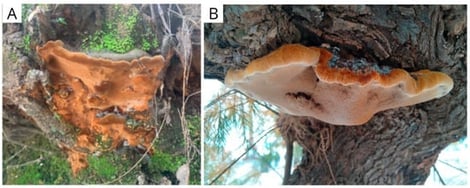
Fruiting bodies of (A) Fuscoporia torulosa and (B) Inocutis tamaricis, observed in natural conditions (original photography).

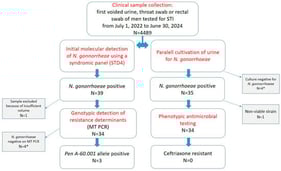
The rise in antimicrobial-resistant Neisseria gonorrhoeae (NG) strains poses major challenges to gonorrhea treatment worldwide. Ceftriaxone remains the first-line antibiotic therapy; however, emerging resistance, particularly driven by the mosaic penA 60.001 allele, necessitates vigilant surveillance. This study assesses the antimicrobial susceptibility patterns of NG isolates in the northwestern region of Croatia and evaluates the correlation between phenotypic susceptibility testing for extended-spectrum cephalosporins (ESC) and genotypic detection of the penA 60.001 allele. A total of 39 clinical NG-positive specimens by a multiplex PCR panel for urogenital infections were collected between 1 July 2022, and 30 June 2024. Phenotypic antimicrobial susceptibility testing was performed using the Etest method. Genotypic detection of ceftriaxone resistance determinants was performed using a multiplex nested PCR assay. All NG isolates were susceptible to ceftriaxone and cefixime. High resistance rates were observed for ciprofloxacin (70.6%), tetracycline (44.1%), and azithromycin (20.6%). Mutations in the penA gene associated with decreased susceptibility to ceftriaxone were detected in three samples, although phenotypic resistance was not observed. The high resistance rates to ciprofloxacin, tetracycline, and azithromycin limit their use for empirical therapy in Croatia. While ceftriaxone remains effective, the detection of penA mutations highlights the need for ongoing surveillance.

1 February 2026

Conceptual framework of the research. STD4-multiplex PCR syndromic panel, MT PCR-multiplex tandem PCR. * Note: All samples that were negative by culture were also negative when tested with the MT PCR assay for Neisseria gonorrhoeae.

Metagenomic Snapshot of Treated Tannery Effluent in Paraguay Reveals Microbiome Diversity and Antibiotic Resistance Genes

  • Silverio Andrés Quintana,
  • María Magdalena Sarmiento and
  • Gilberto Benitez Rodas
  • + 3 authors

Tannery effluents constitute highly complex chemical and biological matrices that can affect ecosystem integrity and public health. In Paraguay, metagenomic information on industrial discharge remains limited. In this context, the aim of this study was to characterize microbiome diversity and detect antibiotic resistance genes (ARGs) via metagenomic sequencing complemented by chemical analyses. Total DNA was sequenced using Oxford Nanopore technologies and analyzed with Kraken2 for taxonomic assignment and CARD for ARG detection. The results revealed a hypersaline, metal-containing effluent with a high organic load and measurable nitrogen and phosphorus concentrations. Microbiome profiles were dominated by Pseudomonadota (77.2%), primarily Thiocapsa (27.8%) and Francisella (23.0%). The phototrophic and sulfur-oxidizing metabolism characteristic of Thiocapsa may explain the distinctive coloration of the effluent, while the predominance of Francisella is consistent with tolerance to hostile environmental conditions. DNA sequences assigned to taxa of clinical relevance, including Pseudomonas aeruginosa, Salmonella enterica, and Klebsiella pneumoniae, were also detected, along with a range of ARGs associated with resistance to tetracyclines, β-lactams, and aminoglycosides. These findings demonstrate that treated tannery effluent can retain clinically relevant genetic material and ARGs, underscoring the need to integrate metagenomic surveillance into environmental monitoring frameworks to better understand and mitigate emerging resistance determinants in aquatic systems. This study provides one of the first metagenomic characterizations of a tannery effluent in the country and contributes novel insights at a regional scale.

31 January 2026

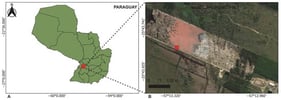
The geographic location of the sampling site. (A) A map of Paraguay showing the region where the sampling point is located. (B) A satellite view of the study area, indicating sampling point P1E1. Source Information: Map layers were adapted from multiple sources. Panel (A) uses cartography from the Instituto Nacional de Estadística (INE), Paraguay (https://www.ine.gov.py/microdatos/cartografia-digital-2022.php (accessed on 30 September 2025)), Public Information Use License. The basemap in Panel (B) was adapted from ©MapTiler and ©OpenStreetMap contributors (https://openmaptiles.org/ (accessed on 30 September 2025)), used under the Open Database License.
  • Communication
  • Open Access

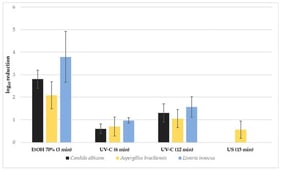
This study investigated the effectiveness of ethanol (70%, 3 min), Ultraviolet-C irradiation (6 and 12 min), and ultrasound (37 kHz, 15 min) for decreasing Candida albicans, Aspergillus brasiliensis, and Listeria innocua on Greek Kalamon table olives before brining. Ethanol demonstrated the greatest decreases (>2.80 log10 for C. albicans, >2.09 log10 for A. brasiliensis, and >3.79 log10 for L. innocua). UV-C had a time-dependent impact, with 12 min producing more inactivation than 6 min (1.30, 1.05, and 1.57 log10, respectively, for C. albicans, A. brasiliensis, and L. innocua). Ultrasound alone produced minimal reductions (<0.60 log10). Overall, ethanol outperformed Ultraviolet-C and ultrasound in the test settings, with Ultraviolet-C providing moderate, exposure-dependent decreases. These findings stimulate additional research into non-thermal therapies and their practical use in table olive processing.

30 January 2026

Consolidated comparison of log10 reductions for all microorganisms and treatments to visualize overall disinfection efficacy.

News & Conferences

Issues

Open for Submission

Editor's Choice

Get Alerted

Add your email address to receive forthcoming issues of this journal.

XFacebookLinkedIn
Appl. Microbiol. - ISSN 2673-8007