Skip Content
You are currently on the new version of our website. Access the old version .

Architecture

Architecture is an international, peer-reviewed, open access journal on studies related to architectural research published quarterly online by MDPI.

All Articles (312)

Open-source software is transforming visualization-oriented digital documentation and conceptual BIM by lowering financial and technical barriers, enabling broader participation in the digitalization of the AEC sector. This study develops and validates a cost-effective Scan-to-BIM workflow that combines low-cost hardware with freely available software for 3D data acquisition, processing, and modeling. Photogrammetry and SLAM-based techniques generate accurate point clouds, which, once verified against terrestrial laser scanning data, can be integrated into open-source BIM environments. The workflow leverages COLMAP for 3D reconstruction and BlenderBIM for parametric modeling, combining geometric and semantic information to produce fully interoperable models. While open-source tools offer accessibility and transparency, they require supplementary validation in precision-critical applications and may involve trade-offs in accuracy, stability, and automation compared to commercial solutions. Application to a case study shows how efficient and rapid the process is, representing the trend for the scientific community.

5 February 2026
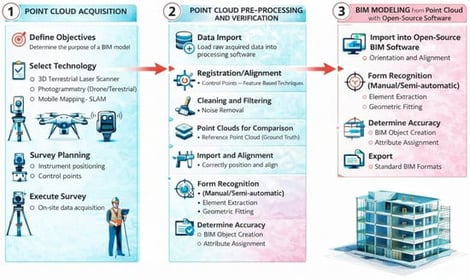
Pipeline of the developed method.

Josip Vojnović (Omiš, 1929–Split, 2008) is a prominent Croatian architect, primarily known in professional circles for organising the construction of Split 3, the expansion of Split during the 1970s. His professional career began with the design of primarily residential buildings and concluded with his position as a university professor. This article analyses the URBS 1 standard residential buildings constructed during the 1960s, which were intended to address the housing shortage in post-war Split. These buildings—the most notable part of Vojnović’s design work—were built in several locations throughout Dalmatia. Even at the time of their construction, they were recognised as a significant example of designed and executed standardised residential architecture. This research is based on archival materials from the State Archives in Split, the Archive of the Urban Planning Institute of Dalmatia–Split, as well as research in situ. The article examines the design of the standard building, including a functional analysis of the residential unit and all the floors, as well as a formal and compositional analysis of the façade. The URBS-1 buildings are an illustrative example of housing construction, due to their number, distribution and architectural features shaped by the economic, technological, social and cultural context of the time.

3 February 2026

A typical floor plan from the 1st to the 4th floor of the URBS 1 apartment, with the bathroom layout variant on the right. Source: Ref. [23].

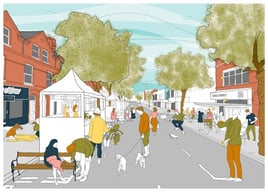
This article examines how everyday architecture can advance spatial justice in post-active conflict cities through ethnographic and participatory design. Drawing on a decade of work by the StreetSpace studio in Belfast (2015–2025), the paper explores how architecture students and community participants co-design spatial strategies that enhance mixed-use mid-density living, inclusive mobility, and street-level accessibility. In a context where car dominance, segregation, and privatisation of public space continue to fragment urban life, the everyday street becomes a testbed for envisioning an equitable and community-centred city. The studio’s methodology is grounded in ethnographic engagement, informed by an embedded anthropologist, and includes stakeholder mapping, walking workshops, and collaborative drawing. These practices reveal lived experiences and shape community-driven briefs for housing, schools, public spaces, and multifunctional infrastructure. Anchored in spatial justice discourse and feminist theory (Jane Jacobs, David Harvey, Roberto Rocco, Phil Hubbard, Leslie Kern, and Caroline Criado Perez), the work positions the everyday as a site of architectural agency and proposes a contemporary vernacular that is socially embedded and climate-resilient. This work unfolds through complex and often contested processes that require sustained, iterative engagement with people and places. Meaningful collaboration is neither linear nor inherently caring; it frequently involves conflict, disagreement, and competing priorities that must be navigated over time. Through long-term relationships with government departments, local authorities, and NGOs, StreetSpace demonstrates how architectural pedagogy can nonetheless contribute to policy formation and more inclusive urban redevelopment by engaging in compromise, critical negotiation, and moments of care alongside friction and resistance. Through a series of collaborations and public events the project has contributed to the transformation of Botanic Avenue, informed studies of the East Belfast Greenways through contributions to Groundswell and participated in embedded public processes in collaboration with PPR, culminating in an exhibition at the MAC in Belfast in 2025.

2 February 2026

Open Botanic Festival. Aisling Madden, 2024.

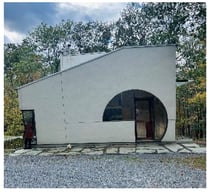
Design philosophy by Steven Holl shows his interest in the spatial experience aspect of architecture in the way people perceive space. This study focuses on the composition of spatial connections in 18 residential projects. The objective is to clarify the continuity of the living room through floor plan classification and matrix analysis, which is highly relevant in that it helps bridge the gap in understanding the functional and structural mechanisms inherent in architectural design theory, particularly in the projects. As a result, the residential projects can be classified into four categories in terms of continuity of living room, and it has a unique type of expression in their residential projects. This study is limited to analyzing only the first-floor plan and does not examine other drawings, such as sectional or elevation views, nor does it consider other residential projects. Therefore, the analysis has limitations. This study classified and discussed the continuity and spatial connections within the living room, thereby contributing to the discourse on design methodology in relation to architectural theory and phenomenology.

2 February 2026

A representative residential project, “Ex of In House” New York, United States (photograph by the author, 9 October 2023).

News & Conferences

Issues

Open for Submission

Editor's Choice

Reprints of Collections

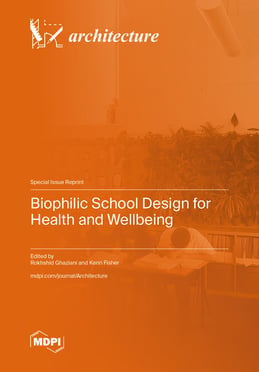
Biophilic School Design for Health and Wellbeing
Reprint

Biophilic School Design for Health and Wellbeing

Editors: Rokhshid Ghaziani, Kenn Fisher
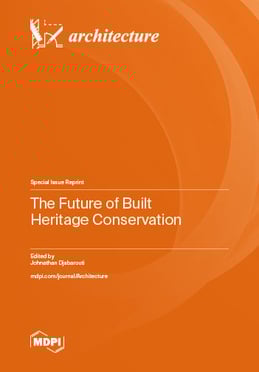
The Future of Built Heritage Conservation
Reprint

The Future of Built Heritage Conservation

Editors: Johnathan Djabarouti

Get Alerted

Add your email address to receive forthcoming issues of this journal.

XFacebookLinkedIn
Architecture - ISSN 2673-8945