Skip Content
You are currently on the new version of our website. Access the old version .

BioTech

BioTech - formerly High-Throughput - is an international, peer-reviewed, open access journal on biotechnology, published quarterly online by MDPI.

Indexed in PubMed | Quartile Ranking JCR - Q2 (Biotechnology and Applied Microbiology)

All Articles (547)

Carotenoid-based pigmentation is crucial for the ornamental and commercial value of the cherry shrimp (Neocaridina denticulata sinensis). While several genes are known to influence carotenoid metabolism, the genetic basis for specific color strains remains largely unexplored. Here, we functionally characterized NinaB-like, a homolog of a carotenoid oxygenase, in cherry shrimp pigmentation. We employed qPCR to gain gene expression profiles, utilized RNAi technology to analysize the relation between its expression level and carotenoid accumulation, and performed GT-seq to identify genotypes of different color strains. Significant differential expression of NinaB-like was observed not only across distinct color strains but also during embryonic development of cherry shrimp (p < 0.05), peaking at the red strain and post-larval stage of cherry shrimp. RNA interference-mediated knockdown of NinaB-like resulted in a marked increase in red pigment deposition at the metanauplius and pre-zoea stages, confirming its role as a negative regulator of carotenoid accumulation. Importantly, we identified two tightly linked, non-synonymous SNPs (927C > A and 935A > C) within the NinaB-like coding region that exhibited a strong association with body color. Our study provides the first functional evidence that NinaB-like is a negative regulator of carotenoid degradation and a major genetic determinant for body color in cherry shrimp, providing new insights for genetic breeding and biological research.

5 February 2026
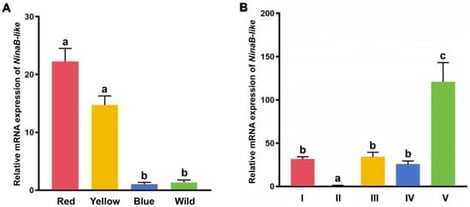
Relative expression of NinaB-like in red cherry shrimp. (A) Strain-specific expression profiles of NinaB-like; (B) Developmental stage expression patterns of NinaB-like in the red strain. I: pre-nauplius stage; II: metanauplius stage; III: pre-zoea stage; IV: membrane-zoea stage; V: post-larva stage. Different lowercase letters above the bars indicate significant differences among groups (p &lt; 0.05). Error bars represent the mean ± standard error (SE). All experiments were performed with seven technical replicates.

Human embryonic kidney (HEK293) cells are a widespread choice for recombinant protein expression. To optimise yields, the hydrolysate Tryptone N1 (TN1) is commonly added post-transfection. TN1 is obtained by controlled enzymatic digestion of casein. As an animal by-product, TN1 faces stricter regulations during cross-country shipments than plant-based products. This raises the question of whether plant-derived peptides are a suitable alternative to TN1. Using polyethyleneimine (PEI) as a cationic polymer, we transfected HEK293-6E cells grown in suspension in serum-free medium and divided the transfectants into four groups (each in triplicate). Two plant-based hydrolysates each derived from pea and broad bean were compared with TN1 and a no-hydrolysate control group. We monitored the cultures for total cell numbers and viability at days 1, 4, and 5 post-transfection. Both plant-based hydrolysates and TN1 showed similar live cell percentages, in contrast to the no-hydrolysate control, which showed lower viability. Five days post-transfection, the expressed His-tagged protein, a tegumental antigen from the eukaryotic parasite Echinococcus granulosus, was retrieved from the serum-free culture supernatant, and the expressed recombinant protein was quantified. The linear ranges for the protein load on the stain-free blot and for the use of the fluorescent anti-His-Tag Alexa488 antibody were determined. Using these parameters, stain-free Western blotting and total protein normalization were performed. The plant-derived pea and broad bean hydrolysates reproducibly resulted in similar expression levels as animal-derived TN1; all three hydrolysates were better than no hydrolysate. We conclude that plant-derived hydrolysates are a suitable, more sustainable replacement for TN1.

5 February 2026

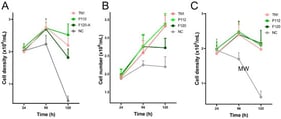
Viable cell counts of HEK293-6E cells from 24 to 120 hpt in three independent experiments (N = 3, biological replicates). Each biological replicate (A–C) was performed in triplicate technical replicates (n = 3), with two cell counts averaged for each sample at each time point.

This study investigates the functional role of OsHSBP1, a heat shock factor-binding protein, in regulating abiotic stress tolerance in rice, with the aim of enhancing climate resilience in the elite indica cultivar Bacthom 7 (BT7). Using Clustered Regularly Interspaced Short Palindromic Repeats/CRISPR-associated protein 9 (CRISPR/Cas9) genome editing, we generated transgene-free homozygous knockout lines targeting OsHSBP1 and evaluated their physiological, biochemical, and agronomic responses under heat stress. Mutant lines exhibited markedly improved tolerance to both stresses, with survival rates reaching 43–46% under heat stress, compared to near-zero in wildtype plants. Enhanced tolerance was associated with significantly increased catalase and peroxidase activities and reduced oxidative damage, including lower malondialdehyde content and decreased superoxide accumulation. Despite these stress-related advantages, the knockout lines showed minimal differences in key agronomic traits under normal growing conditions, with comparable plant height, tillering ability, grain yield, and amylose content relative to the wildtype. These results demonstrate that OsHSBP1 functions as a negative regulator of abiotic stress tolerance in rice, and its knockout enhances resilience without compromising yield potential. The study highlights OsHSBP1 as a promising target for precision breeding of climate-resilient rice cultivars.

4 February 2026

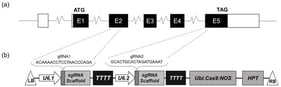
Construction of CRISPR/Cas9 vectors and transformation of BT7 rice. (a) Target sites of gRNA1 and gRNA2 in the OsHSBP1 gene structure. Exons are shown as boxes, introns as lines. (b) Schematic diagram of the pCas9 binary vector containing two sgRNAs (gRNA1 and gRNA2) targeting the OsHSBP1 gene. LB and RB: left and right borders of T-DNA; Cas9: codon-optimized Cas9 gene; Ubi: maize Ubiquitin promoter; NOS: nopaline synthase terminator; HPT: hygromycin phosphotransferase gene for selection; U6.1 and U6.2: promoters driving sgRNA expression.

Transcriptomic Insights into lncRNA–miRNA–mRNA Networks Regulating Angiogenesis and Metastasis in Prostate Cancer

  • Jonathan Puente-Rivera,
  • Stephanie I. Nuñez Olvera and
  • María Elizbeth Alvarez-Sánchez
  • + 2 authors

Prostate cancer (PCa) is a leading cause of cancer-related mortality in men and is often characterized by aggressive growth and bone metastasis. Angiogenesis plays a central role in tumor progression and dissemination. This study aimed to explore the regulatory roles of long non-coding RNAs (lncRNAs) and microRNAs (miRNAs) in angiogenesis and metastasis during PCa progression. Publicly available RNA-seq datasets were analyzed to identify differentially expressed miRNAs between metastatic (N1) and nonmetastatic (N0) PCa. Bioinformatic tools were used to reconstruct co-regulatory networks involving miRNAs, lncRNAs, and angiogenesis-related mRNAs. RT-qPCR was performed on serum-derived liquid biopsies from N0 and N1 patients and healthy controls to validate the key regulatory axes. Transcriptomic analysis revealed that miRNAs such as hsa-miR-183-5p and hsa-miR-216a-5p were upregulated in N1 PCa and associated with pro-angiogenic signaling, whereas hsa-miR-206 and hsa-miR-184, known for their anti-angiogenic functions, were downregulated. Network analysis identified the LINC00261–miR-206–HIF1A axis as the central regulatory module. RT-qPCR validation confirmed the significant downregulation of LINC00261 and miR-206, along with HIF1A overexpression in N1 samples compared to N0 and controls (p < 0.001), supporting in silico predictions. These findings highlight the role of ncRNA-mediated regulation of PCa angiogenesis and metastasis. The LINC00261–miR-206–HIF1A axis may serve as a promising noninvasive biomarker and potential therapeutic target. The integration of computational and experimental data provides a strong rationale for the further functional validation of advanced PCa.

1 February 2026

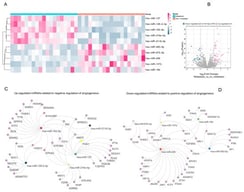
Transcriptomic profile and interaction networks of angiogenesis-related miRNAs in metastatic vs. non-metastatic PCa (A) Heatmap of differentially expressed miRNAs in metastatic and non-metastatic samples from the GSE117674 dataset. Color intensity reflects normalized z-scores, with red indicating high relative expression and blue indicating low expression. Highlighted miRNAs are significantly deregulated (p &lt; 0.05; |log2FC| &gt; 1) and functionally associated with angiogenesis. (B) Volcano plot of miRNA expression differences between metastatic and non-metastatic samples. The X-axis denotes log2 fold change; the Y-axis indicates –log10 p-values. Statistically significant upregulated (pink) and downregulated (blue) miRNAs are emphasized. (C) Interaction network of upregulated miRNAs targeting genes involved in the negative regulation of angiogenesis, illustrating the interaction network toward a pro-angiogenic phenotype. Nodes represent miRNAs (triangles) and predicted/validated target genes (circles); edges denote interaction evidence. (D) Interaction network of downregulated miRNAs targeting genes associated with the positive regulation of angiogenesis showing reduced expression of these miRNAs in metastatic progression.

News & Conferences

Issues

Open for Submission

Editor's Choice

Get Alerted

Add your email address to receive forthcoming issues of this journal.

XFacebookLinkedIn
BioTech - ISSN 2673-6284