

Journal Menu
► ▼ Journal Menu-
- Coatings Home
- Aims & Scope
- Editorial Board
- Reviewer Board
- Topical Advisory Panel
- Instructions for Authors
- Special Issues
- Topics
- Sections & Collections
- Article Processing Charge
- Indexing & Archiving
- Editor’s Choice Articles
- Most Cited & Viewed
- Journal Statistics
- Journal History
- Journal Awards
- Society Collaborations
- Conferences
- Editorial Office
Journal Browser
► ▼ Journal BrowserNeed Help?
Announcements
19 March 2026
Meet Us Virtually at the 5th Coatings and Interfaces Online Conference (CIC 2027), 22–24 March 2027
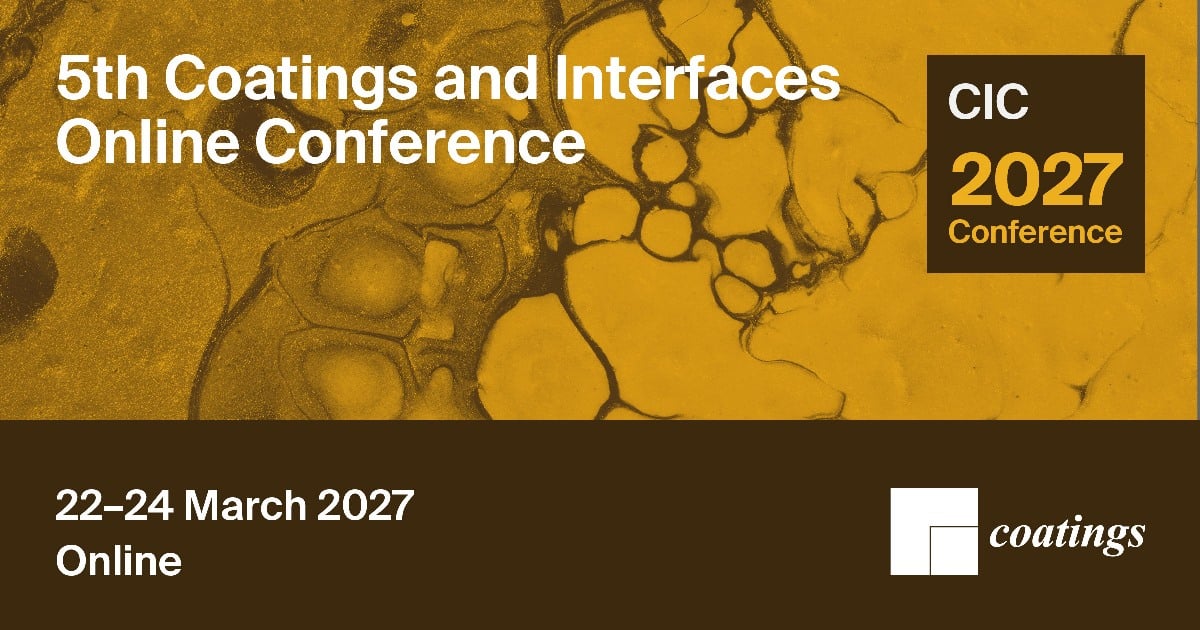
We cordially invite you to attend the following event organized by the MDPI journal Coatings (ISSN: 2079-6412, Impact Factor 2.8). The conference will take place online from 22 to 24 March 2027.
Conference Chair:
- Dr. Emerson Coy, Adam Mickiewicz University in Poznań, Poland.
Topics of interest:
S1. Plasma and Laser Coatings, Surfaces, and Interfaces;
S2. Diamond-like Carbon and AI in Coatings;
S3. Coatings and Thin Film Deposition;
S4. Corrosion, Erosion and the Tribological and Mechanical Aspects of Coatings;
S5. Ceramic Coatings;
S6. Protective Coatings in Cultural Heritage, Conservation and Preservation;
S7. The Biomedical Application of Coatings;
S8. Functional Polymer Coatings and Films.
Important dates:
Deadline for abstract submission: 30 November 2026;
Notification of acceptance: 30 December 2026;
Deadline for registration: 16 March 2027.
Best Oral Presentation Award and Best Poster Award:
- Six winners will be selected for the above awards;
- For the Best Oral Presentation Award, the winners will receive a certificate and CHF 400 each;
- For the Best Poster Award, the winners will receive a certificate and CHF 200 each.
Guide for authors:
To submit your abstract, please click the following link: https://sciforum.net/user/submission/create/1686.
To register for the event, please click the following link: https://sciforum.net/event/CIC2027?section=#registration.
For details regarding Abstract Submission, Poster and Slide Submission, and Publication Opportunities, please refer to the “Instructions for Authors” section on the following website: https://sciforum.net/event/CIC2027?section=#instructions.
For any enquiries regarding this event, please contact us at cic2027@mdpi.com.
We look forward to seeing you at CIC 2027.
14 May 2026
Coatings | Title Story Articles for the Second Half of 2025

We are delighted to present a list of title story articles selected to feature at the top of the Coatings (ISSN: 2079-6412) homepage for the second half of 2025. These articles cover a wide range of topics, including plasma electrolytic oxidation coatings, laser cladding composite coatings, DLC coating gear surface damage, wood surface sanding properties, spruce coating durability, ancient brick surface damage detection, Renaissance wall painting analysis, biodegradable packaging films, self-healable polyurea composites, EBC ceramic materials, and color determination of metal coatings. We hope you find these publications of interest.
1. “Modern Innovations and Applications in Plasma Electrolytic Oxidation Coatings on Aluminum, Magnesium, and Titanium”
by Angus G. McCarroll and Pradeep L. Menezes
Coatings 2025, 15(5), 592; https://doi.org/10.3390/coatings15050592
Available online: https://www.mdpi.com/2079-6412/15/5/592

2. “Research Progress on Microstructure, Mechanical Properties, and Strengthening Mechanisms of In Situ-Synthesized Ceramic-Reinforced Titanium Matrix Composite Coatings via Laser Cladding”
by Min Wen, Boqiang Jiang, Xianyin Duan and Dingding Xiang
Coatings 2025, 15(7), 815; https://doi.org/10.3390/coatings15070815
Available online: https://www.mdpi.com/2079-6412/15/7/815

3. “Influence of Gear Set Loading on Surface Damage Forms for Gear Teeth with DLC Coating”
by Edyta Osuch-Słomka, Remigiusz Michalczewski, Anita Mańkowska-Snopczyńska, Michał Gibała, Andrzej N. Wieczorek and Emilia Skołek
Coatings 2025, 15(7), 857; https://doi.org/10.3390/coatings15070857
Available online: https://www.mdpi.com/2079-6412/15/7/857

4. “Surface Property Differences of European Larch Sapwood and Heartwood After Sanding”
by Agnieszka Laskowska, Karolina Lipska, Teresa Kłosińska, Anna Piwek and Piotr Boruszewski
Coatings 2025, 15(7), 860; https://doi.org/10.3390/coatings15070860
Available online: https://www.mdpi.com/2079-6412/15/7/860

5. “Surface Damage Detection and Analysis for Reduction-Fired Cyan Square Bricks in Jiangnan Gardens via YOLOv12”
by Lina Yan, Yile Chen, Xingkang Jia and Liang Zheng
Coatings 2025, 15(9), 1066; https://doi.org/10.3390/coatings15091066
Available online: https://www.mdpi.com/2079-6412/15/9/1066

6. “Novel Poly(butylene succinate-dilinoleic succinate) Films in Packaging Systems for Fresh Cut Chicory”
by Szymon Macieja, Małgorzata Mizielińska, Mirosława El Fray and Artur Bartkowiak
Coatings 2025, 15(9), 1095; https://doi.org/10.3390/coatings15091095
Available online: https://www.mdpi.com/2079-6412/15/9/1095

7. “Enhancing Mechanical, Impact, and Corrosion Resistance of Self-Healable Polyaspartic Ester Polyurea via Surface Modified Graphene Nanoplatelets”
by Mingyao Xu, Jisheng Zhang, Yuhui Li, Ziyu Qi, Jiahua Liu, Zhanjun Liu and Sensen Han
Coatings 2025, 15(9), 1111; https://doi.org/10.3390/coatings15091111
Available online: https://www.mdpi.com/2079-6412/15/9/1111

8. “Non-Invasive Multi-Analytical Insights into Renaissance Wall Paintings by Bernardino Luini”
by Eleonora Verni, Michela Albano, Curzio Merlo, Francesca Volpi, Chaehoon Lee, Chiara Andrea Lombardi, Valeria Comite, Paola Fermo, Andrea Bergomi, Vittoria Guglielmi et al.
Coatings 2025, 15(9), 1113; https://doi.org/10.3390/coatings15091113
Available online: https://www.mdpi.com/2079-6412/15/9/1113

9. “Influence of Surface Sanding on the Coating Durability of Spruce as Facade Board”
by Ondrej Dvořák, Monika Sarvašová Kvietková, Petr Horák, Markéta Kalábová, Chia-Feng Lin, Dennis Jones and Petr Ptáček
Coatings 2025, 15(10), 1133; https://doi.org/10.3390/coatings15101133
Available online: https://www.mdpi.com/2079-6412/15/10/1133

10. “Influences of SiO2 Additions on the Structures and Thermal Properties of AlTaO4 Ceramics as EBC Materials”
by Bingyan Wu, Luyang Zhang, Lin Chen, Jiankun Wang, Zipeng Gao and Jing Feng
Coatings 2025, 15(10), 1204; https://doi.org/10.3390/coatings15101204
Available online: https://www.mdpi.com/2079-6412/15/10/1204
by Walter Giurlani, Arianna Meoli, Marco Marseglia and Massimo Bonini
Coatings 2025, 15(12), 1411; https://doi.org/10.3390/coatings15121411
Available online: https://www.mdpi.com/2079-6412/15/12/1411

14 May 2026
Prof. Dr. Qihua Fan Appointed Section Editor-in-Chief of Section “Diamond and Related Coatings” in Coatings

Coatings (ISSN: 2079-6412) is pleased to announce the appointment of Prof. Dr. Qihua Fan (Michigan State University, USA) as Section Editor-in-Chief (SEiC) of the “Diamond and Related Coatings” Section. Prof. Dr. Fan is a member of the Coatings Editorial Board and brings extensive editorial experience across various areas, including plasma sources, plasma‑enhanced processing, and simulation.
Prof. Dr. Fan is a faculty member in the Department of Chemical Engineering and Material Science, in addition to holding an appointment in the Department of Electrical Engineering and Computer Engineering at Michigan State University. His research centers on plasma science and engineering, with a strong focus on plasma sources, plasma‑enhanced processing, and simulation.
In his role as SEiC, Prof. Dr. Fan will work with the Editorial Office and Academic Editors to support the publication of high‑quality submissions and further strengthen the “Diamond and Related Coatings” Section as an open forum for fundamental and translational research.
The following is a short Q&A with Prof. Dr. Qihua Fan, who shared his vision for the journal with us, as well as his views of the research area and open access publishing:
- What appealed to you about the journal that made you want to take on the role of Section Editor-in-Chief?
As an open access journal, Coatings provides scholars with an excellent platform to broadly disseminate their research results and maximize the impact. Its high-quality publications and a rapid review process are particularly attractive for researchers. I am very happy to contribute to the journal’s continuous growth and serve the community. - What is your vision for the Section “Diamond and Related Coatings”?
This Section will publish both fundamental and applied research results in multiple areas. A few examples include diamond, diamond-like carbon, wide-bandgap semiconductors, and hard coatings. I hope this Section becomes a major resource to researchers in diamond and related coatings. - What does the future of this field of research look like?
Diamond and related materials combine extreme electrical, optical, mechanical, thermal, and electrochemical properties. They have broad applications in quantum computation, electronic devices, optical windows, sensors, and surface engineering. This research field has a promising future with almost unlimited possibilities. - What do you think of the development of open access in the publishing field?
Open access is the most attractive feature for researchers to gain and disseminate research results. It can generate broader impacts than conventional publications.
We warmly welcome Prof. Dr. Qihua Fan as the Section Editor-in-Chief of “Diamond and Related Coatings”, and we look forward to his leading Coatings to achieve many more milestones.
6 May 2026
MDPI INSIGHTS: The CEO's Letter #34 - MDPI US Office, Coatings 2026, Media and Partnerships, Recapping Poland Summit & Serbia Salon

Welcome to the MDPI Insights: The CEO's Letter.
In these monthly letters, I will showcase two key aspects of our work at MDPI: our commitment to empowering researchers and our determination to facilitating open scientific exchange.
Opening Thoughts

MDPI Opens First US Office in Philadelphia
I am delighted to highlight an important milestone in MDPI’s continued global development: the recent opening of our first office in the United States, located in Philadelphia.
This marks a significant step in building our engagement with one of the world’s most important research communities. The new office will serve as a hub for supporting scholars across the US, creating closer connections and more localized support.
As highlighted in recent coverage by our press release in InPublishing, this expansion reflects MDPI’s broader commitment to growing our international presence while remaining focused on the needs of the research community.
A Key Market for Research and Collaboration
The United States continues to play a central role in global research. To date, MDPI has published more than 237,000 articles affiliated with US institutions, and we collaborate with nearly 12,000 Editorial Board Members across the country. These relationships are fundamental to our mission of supporting Open Access and advancing scientific communication.
The opening of this office is not just about geography; it is about proximity to the communities we serve. It allows us to better understand the evolving needs of researchers while continuing to build collaboration and trust within the academic ecosystem.
The Team Behind this Milestone

This milestone reflects the efforts of teams across MDPI. I extend a special thank-you to Bob Vrooman (Head of Business Development, MDPI), who is leading this expansion, as well as to our colleagues in Toronto and across our North American teams for their continued support.
Bob shared: “MDPI is already a trusted partner of the North American research community, due in no small part to our dedicated team in Canada. Launching our first US office in Philadelphia is a great first step towards expanding MDPI’s market share and recognition in the US. I’m thrilled to be a part of this new phase in MDPI’s journey.”
As we continue to grow, our focus remains on supporting researchers globally and advancing Open Access with integrity.
Impactful Research

Coatings 2026: Highlights from Our Latest MDPI Conference (20-22 April)
I am pleased to share the successful completion of MDPI conference Coatings 2026, which took place last week in Athens from 20 to 22 April 2026. This conference brought together a diverse international community of researchers, industry experts, and partners, highlighting MDPI’s role not only as a publisher but also as a platform for scientific exchange and collaboration.
Conference Highlights
Coatings 2026 in numbers:
- The event attracted approximately 140 participants from 25 countries
- 143 submissions and a strong scientific program of talks and posters
- 2 keynote speakers and a wide range of invited contributions
- 7 sponsors and 11 media partners supporting the event
|
|
|
|
|
|


Scientific Programme
The program centered on “Safe and Sustainable by Design,” reflecting the growing importance of sustainability, regulatory frameworks, and technological innovation in materials science. Topics ranged from advanced coating technologies and additive manufacturing to AI-driven simulations and strategies to phase out potentially harmful substances in industrial processes.
Importantly, the conference brought together both academic and industrial perspectives, creating a space for dialogue on how research can translate into real-world impact. This is important as industries navigate environmental challenges, evolving regulations, and the need for more sustainable and circular approaches to production.
Thank You!
I would like to thank the entire conference team for their work in organizing this successful event. As we continue to grow, conferences like this play an important role in building our connection with global research communities, supporting interdisciplinary collaboration, and positioning MDPI at the intersection of science, technology, and societal impact.
 Members from Exelisis and MDPI EU Conference & Social Media team at the Coatings 2026 Conference in Athens, Greece.
Inside MDPI

Recent Media Coverage and Partnerships
Over the past two months, news from MDPI has enjoyed strong visibility across international publishing and academic media, reflecting our continued expansion and the increasing relevance of our work within the research community.
Below are some highlights covering partnerships, institutional agreements, and milestones that continue to shape our position in publishing – some of which are featured in leading industry platforms such as InPublishing, which is highly selective and reflects the growing recognition of MDPI’s growth within the publishing ecosystem.
Key Press Releases & Coverage (March–April 2026)
-
MDPI × Sikt (Norway): Partnership Renewal
We renewed our national Open Access agreement with Sikt, a key consortium partnership, continuing to support researchers across Norway through this partnership. The renewal was covered by several international publishing trade outlets.
Covered by: Research Information, STM Publishing News, ALPSP, Europe Says
-
MDPI × Jisc (UK): New Two-Year Open Access Agreement
A new two-year agreement with Jisc significantly expands MDPI’s footprint across UK academic institutions. Coverage appeared across major publishing industry titles in the UK and internationally.
Covered by: InPublishing, Research Information, STM Publishing News, ALPSP
-
MDPI Opens First US Office
The opening of our first US office marks an important milestone in our North American expansion to build engagement with one of the world’s leading research communities.
Coverage by: EurekAlert!, InPublishing, EdTech Innovation Hub, STM Publishing News, ALPSP
-
MDPI × SIGG: Italian Society of Gerontology and Geriatrics
We established a new partnership with the Italian Society of Gerontology and Geriatrics (SIGG), adding to our growing portfolio of society collaborations.
Coverage by: EurekAlert!, STM Publishing News, ALPSP
-
MDPI × Fast Track Health: New Journal Launch
The launch of a new journal in partnership with Fast Track Health reflects our continued expansion into emerging areas of health innovation.
Coverage by: EurekAlert!, Scienmag, STM Publishing News, ALPSP
-
MDPI 2025 Annual Report
Our 2025 Annual Report was also widely covered across international media, highlighting a 12% increase in submissions and continued investment in research integrity, infrastructure, and partnerships.
Coverage by: EurekAlert!, Research Information, STM Publishing News, ALPSP, Choice 360
Coverage also spanned multiple regions including Poland, Romania and South Korea, reflecting our ongoing efforts to communicate more effectively with regional research communities.
Looking Ahead
This coverage shows that MDPI is growing and building on its position through partnerships, visibility, and engagement across regions. As we continue to expand, our focus remains on supporting researchers globally, building on our institutional collaborations, and advancing Open Access with integrity.
Thank you to all teams involved in delivering these initiatives, and to our External Affairs team for ensuring our work is effectively communicated across the global publishing landscape!
Coming Together for Science

Recapping MDPI Poland Summit 2026 in Krakow (23 April)
On 23 April 2206, we hosted the first MDPI Poland Summit 2026 in Kraków, bringing together an engaged group of editors, researchers, and academic leaders from the country.
The Poland Summit welcomed some 45 participants, including Editors-in-Chief, Associate Editors, and Editorial Board Members, many with strong academic track records and international recognition.
Our engagements were open and constructive, focusing on MDPI’s positioning and reputation in Poland, alongside community interest in supporting our development, with active participation across our sessions, including Q&A and panel discussions.
|
|
|
|


MDPI Poland Summit Programme
From research integrity and peer review quality to AI in publishing and the future of academic communication, the agenda featured important topics currently shaping our industry.
During the day, MDPI colleagues shared a series of presentations covering:
- MDPI’s performance, growth, and impact in Poland: Stefan Tochev (CEO)
- Engagement with Academic Community: Dr. Marta Colomer (Public Affairs Lead)
- Research Integrity and Publication Ethics: Anna Pena (Research Integrity Manager)
- MDPI Editorial Process and Peer-Review Quality Metrics: Dr. Liliane Auwerter (Conference Organizer)
- AI in the Publishing Industry – Challenges, Innovation and MDPI’s vision: Dr. Enric Sayas (AI Product Owner)
- Panel Session: The Future of Academic Publishing, moderated by Dr. Marta Colomer
|
|
|
|
|
|
|
|


Poland as a Key Market for Open Access
The summit also highlighted the importance of Poland within the global research landscape.
In 2025:
- 75% of publications in Poland were made in Open Access
- 71% of those in Gold Open Access
- and over 344,000 publications produced in the last five years
MDPI plays a significant role in the Polish publishing ecosystem:
- #1 Open Access publisher in Poland
- 17% share of Open Access publications in 2025
- More than 12,500 publications from Polish institutions in 2025
- More than 91,000 publications overall since 1996
Looking Ahead
Events like the Poland Summit are an important part of how we evolve as an organization. They allow us to share the latest developments of MDPI and listen directly to our researchers and editors to better understand the market and align our development with the needs of the local community.
As MDPI continues to grow, this type of engagement will remain essential in ensuring that we are not only scaling globally, but doing so in a way that is aligned, trusted, and collaborative.

With Igor Matic (Office Manager, Krakow, Poland, MDPI) at the MDPI Poland Summit in Krakow.
Closing Thoughts

Recapping MDPI Serbia Salon 2026 in Belgrade (22 April)
On 22 April 2026, we hosted the MDPI Serbia Salon 2026 in Belgrade. The Salon welcomed over 50 participants, including more than 40 invited scholars from leading Serbian institutions, alongside colleagues from MDPI. The event also marked two important milestones: 30 years of MDPI and 10 years of our presence in Serbia, making it a celebration and an opportunity for reflection.

A Platform for Exchange
The Salon was designed not just as a series of presentations, but as a place for dialogue. Throughout the day, discussions focused on important topics around publishing today: research integrity and editorial standards, journal indexing and visibility, the evolving role of artificial intelligence, and funding and support for Open Access publishing.
|
|
|
|
|
|
|
|


Program Overview
- Opening the Salon MDPI Serbia 2026 – Serbia results and direction: Emir Ramadani (Operations Manager)
- Update on MDPI’s performance and growth: Stefan Tochev (CEO)
- Collaboration with MDPI – A personal perspective: Prof. Dr Srećko Stopić (Editorial Board Member)
- Linking Scientific Quality and Visibility: The role of indexing in publishing
- Research integrity and editorial ethics: Ana Stanković (Research Integrity Specialist)
- Artificial Intelligence in Scientific Publishing – Challenges, innovations and vision of MDPI: Dr Miloš Čučulović (Head of Technology Innovation)
It was encouraging to see the high level of engagement and discussion with the local academic community.
|
|
|
|
|
|
|
|


Publishing in Serbia
With 10 years of MDPI in Serbia (since 2016) and over 620 colleagues across 10 departments spread across offices in Belgrade and Novi Sad, MDPI continues to invest in the long-term development of the research community in Serbia and beyond.
Some high-level indicators illustrate both the strength of the local research ecosystem and MDPI’s role within it:
- 12,910 total publications in Serbia in 2025, of which 8,708 (67%) were Open Access (of which, in turn, 75% were Gold OA)
- A total of more than 55,000 publications (2021–2025), with 68% published Open Access
- 2,122 MDPI publications from Serbian institutions in 2025
- 25% of all Open Access publications in Serbia are published with MDPI
- More than 11,000 MDPI publications from Serbian institutions since 1996
- More than 75 Editorial Board Members from Serbia, including Editors-in-Chief and Associate Editors.
These figures reflect the growth of OA publishing in Serbia and the strong collaboration between MDPI and Serbia's research community.
Top 5 Publishers in Serbia (MDPI #1 with steady growth)

Looking Ahead
Research integrity and artificial intelligence will remain central topics for the industry. At the same time, clear communication of editorial processes will be essential in building trust and transparency.
Workshops and direct engagement remain among the most effective ways to strengthen these connections. As Open Access funding models continue to evolve, new opportunities for collaboration are emerging across institutions, publishers, and the broader research community.
Thank You!
The excellent feedback from participants shows the value of creating spaces where ideas can be exchanged openly and constructively. Sincere thanks to everyone who contributed to the success of this event: our speakers, participants, and especially the MDPI Serbia team for their great organization and support.

Chief Executive Officer
MDPI AG
27 April 2026
Interview with Dr. Mohamed Amer—Winner of the Coatings Early Career Investigator Award
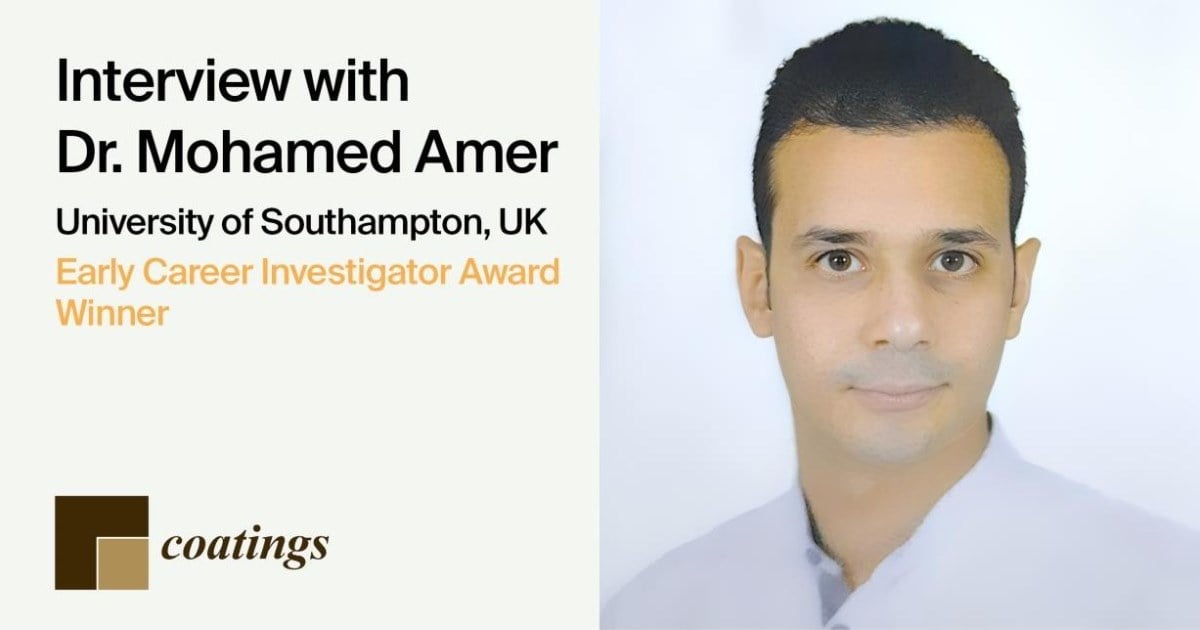
Coatings (ISSN: 2079-6412) is pleased to present the second-place winner of the Coatings Early Career Investigator Award—Dr. Mohamed Amer!
Dr. Mohamed Amer is a materials researcher and mechanical engineer with expertise in materials testing and characterization, coatings, sheet metal forming, and finite element modeling. He completed his PhD in materials science at Coventry University, UK, where his research focused on cracking behavior in thermal barrier coatings under thermal and mechanical loading, supported by image-based modeling. Dr. Mohamed Amer also holds an MSc in mechanical engineering, where he investigated ductile damage prediction in aluminum alloys, and a BSc in mechanical engineering from Helwan University, Egypt.
Dr. Mohamed Amer’s current research focuses on the development and performance evaluation of high-temperature metallic alloys, particularly austenitic steels operating in the 500–600 °C range. His work addresses the limitations of traditional trial-and-error alloy development by integrating combinatorial experimentation with thermodynamic calculations to design new compositions with improved phase stability. He employs high-throughput bulk processing techniques to enable parallel testing and efficient characterization of multiple alloy variants.
We welcome you to read our interview with Dr. Mohamed Amer below.
1. Could you briefly introduce yourself, including your current affiliation and main research areas?
I am Dr. Mohamed Amer, a Research Fellow at the University of Southampton, UK, working on an EPSRC-funded project focused on accelerated design and qualification of high-temperature austenitic steels for creep–fatigue environments. My background is in materials science and mechanical engineering, with research spanning thermal barrier coatings, high-temperature alloys, advanced materials characterization, and finite element modelling. My work combines experimental testing, microscopy-based analysis, and computational modelling to understand material degradation and to develop more durable materials for aerospace, energy, and nuclear applications.
2. What inspired you to pursue research in the field of coatings and alloy design?
I have always been motivated by the challenge of understanding how materials behave under extreme conditions and how engineering design can improve their performance. Coatings and alloy systems are essential in enabling safer and more efficient technologies, particularly in high- temperature environments such as turbines and power plants. The opportunity to combine scientific discovery with practical industrial impact inspired me to pursue this field.
3. What challenges have you encountered during your research journey, particularly as a young investigator? Do you have anything to say to your fellow scholars?
One of the main challenges in my research journey has been integrating experimental testing, computational modelling, and data-driven analysis into a unified framework to solve complex materials science problems. For example, in my PhD research on the cracking behaviour of thermal barrier coatings, I combined in situ experimental testing, advanced microscopy, image-based finite element modelling, and machine learning-assisted crack detection to better understand crack initiation and propagation in different coating systems and to improve the capabilities of the in situ testing. Bringing these approaches together required developing expertise across multiple methodologies and interpreting results in a consistent scientific framework. As a young investigator, building confidence and independence while adapting to new research environments has also been demanding, particularly when working across multidisciplinary teams and taking on greater research responsibility. My advice to fellow scholars is to remain persistent, embrace interdisciplinary collaboration, and see setbacks as part of the research process. Many challenges ultimately lead to the most meaningful scientific insights and personal growth.
4. Which emerging topics in coatings and alloy design do you believe will critically influence the academic community in the coming years?
Different emerging topics can be considered to significantly shape the future of coatings and alloy design. High-throughput materials discovery is considered a promising topic, where combinatorial experimentation is combined with computational thermodynamics and rapid characterisation to accelerate the development of new alloys and coating systems far beyond traditional trial-and-error approaches. Additionally, AI-assisted materials design enables researchers to predict compositions, optimise processing parameters, and identify performance trends more efficiently using data-driven models.
In the coatings field, there is growing interest in nanostructured and nanoparticle-reinforced coatings, which offer enhanced hardness, wear resistance, and scratch resistance for harsh operating environments. High-entropy alloy (HEA) coatings are also attracting major attention because of their corrosion resistance, thermal stability, and mechanical performance under harsh conditions. Another promising area is the development of multilayer and functionally graded coatings, which allow tailored thermal and mechanical properties across interfaces to improve durability and reduce failure.
In addition, advanced evaluation and characterisation methods, such as in-situ mechanical and thermal testing combined with real-time microscopy and digital image analysis, are becoming increasingly important, as they provide direct insight into crack initiation, deformation, and degradation mechanisms under realistic service conditions.
5. What would you consider to be the most important qualities for young scholars to possess?Curiosity, resilience, adaptability, and scientific integrity are essential. Young researchers should also develop strong communication and collaborative skills, as modern research increasingly depends on interdisciplinary teamwork and knowledge exchange.
6. As the winner of this award, is there something you want to express or someone you’d most like to thank?
I am deeply honoured to receive this award. I would like to express my sincere gratitude to my PhD supervisors, Dr. Mingwen Bai, Dr. Vit Janik, and Prof. Xiang Zhang, for their invaluable guidance and continuous support throughout my research journey. I am also highly grateful to CN Tech Ltd, specifically Jon Nottingham and Clive Nottingham, for funding my PhD project and supporting this collaborative work. I would like to thank all my collaborators and colleagues whose advice and encouragement have contributed greatly to my development. I am equally thankful to my mentors at Coventry University and the University of Southampton, whose mentorship has played a significant role in shaping me as a researcher. Finally, I extend my heartfelt gratitude to my family for their constant encouragement and unwavering support.
7. Do you have any other suggestions for how journals and publishers can further support young researchers and the academic community?
Journals can further support early-career researchers by creating more mentoring opportunities in peer review, offering recognition for emerging reviewers, and organising workshops on scientific writing and publishing. Increased visibility for early-career work through interviews, featured articles, and awards can also greatly encourage young scientists and strengthen the research community.
27 April 2026
Interview with Dr. Elena Ungureanu (Poenaru)—Winner of the Coatings Early Career Investigator Award

Coatings (ISSN: 2079-6412) is pleased to present the first-place winner of the Coatings Early Career Investigator Award—Dr. Elena Ungureanu (Poenaru)!
Dr. Elena Poenaru is a lecturer and scientific researcher at the National University of Science and Technology POLITEHNICA Bucharest, with study interests in hydroxyapatite, coatings, and corrosion. Her research focuses on the electrochemical deposition and functionalization of metal surfaces, particularly bioactive hydroxyapatite coatings for titanium implants. She has contributed to multiple national and international research projects involving bioactivity testing, in vitro electrochemical behavior in artificial body fluids, and surface engineering. Her academic portfolio includes teaching practical courses in materials science, corrosion, biomaterials degradation, and surface engineering.
The following is an interview with Dr. Elena Poenaru:
1. Could you please briefly introduce yourself, including your current affiliation and main research areas?
My name is Elena Poenaru, and I am currently affiliated with the National University of Science and Technology POLITEHNICA Bucharest, where I work as a lecturer. My main research areas include electrochemical deposition, corrosion science, and surface biofunctionalization, with a particular focus on hydroxyapatite coatings.
2. What inspired you to pursue research in the field of coatings and corrosion science?
My motivation for pursuing research in coatings and surface engineering arises from my long-standing interest in understanding how surface-driven phenomena govern material performance and durability. I am particularly drawn to the field’s interdisciplinary nature and its ability to combine fundamental science with impactful solutions, from corrosion protection to the development of sustainable materials.
3. What challenges have you encountered during your research journey, particularly as a young investigator? Do you have anything to say to your fellow scholars?
As a young researcher, one of the main challenges I faced was finding a balance between time constraints, limited resources, and the expectations of the academic community.
To my colleagues at the beginning of their careers, I would emphasize the importance of perseverance and collaboration, as well as the need to accept that challenges and failures are an integral part of academic development.
4. Which emerging topics in coatings and corrosion do you believe will critically influence the academic community in the coming years?
Emerging research in coatings and corrosion is increasingly centered on advanced, sustainable materials and smart functionality. Rapid growth is seen in smart/self-healing coatings that respond to triggers such as pH or temperature, alongside nanomaterial-based systems (e.g., nanoceramic and superhydrophobic coatings) that deliver stronger barrier performance. At the same time, advanced characterization combined with high-throughput testing is accelerating discovery and improving the reliability of performance assessment.
5. What would you perceive to be the important qualities that young scholars should possess?
In my view, young scholars should possess a strong foundation in critical thinking and scientific rigor, coupled with intellectual curiosity and the ability to ask meaningful questions. Resilience and adaptability are essential, given the iterative nature of research and the challenges associated with funding, publication, and experimentation. Equally important are ethical integrity, collaborative skills, and effective communication, both within interdisciplinary teams and with the broader scientific community. Finally, an openness to learning new methods and embracing emerging technologies is crucial for sustaining long‑term academic growth and impact.
6. As the winner of this award, is there something you want to express or someone to thank most?
I am deeply honored to receive this award and sincerely grateful for the support that made it possible. I would like to especially thank my mentors, Associate Professor Dr. Eng. Cosmin Cotrut and Lecturer Dr. Eng. Diana Vranceanu, for their guidance and trust. This recognition is both an encouragement and a responsibility, and it motivates me to continue contributing significantly to the field and to the academic community.
7. Do you have any other suggestions for how journals and publishers can further support young researchers and the academic community?
Journals and publishers can further support young researchers by fostering more constructive and transparent peer review, creating recognition opportunities for early‑career scientists, and reducing publication barriers. In addition, free online conferences and webinars play an important role, as they provide accessible platforms for learning, visibility, and networking, especially for researchers at the beginning of their academic careers.
27 April 2026
Prof. Dr. Vasileios Koutsos Appointed Section Editor-in-Chief of Section “Composite Coatings” in Coatings

Coatings (ISSN: 2079-6412) is pleased to announce the appointment of Prof. Dr. Vasileios Koutsos (The University of Edinburgh, UK) as Section Editor-in-Chief (SEiC) of the “Composite Coatings” Section. Prof. Dr. Koutsos has been a member of the Coatings Editorial Board since 2018 and brings extensive editorial experience across multiple fields, including surfaces and interfaces and related disciplines.
Prof. Dr. Koutsos is a Professor (Chair in Soft Materials and Surfaces) with the Institute for Materials and Processes at the School of Engineering, the University of Edinburgh. His research focuses on materials science and engineering, with a strong focus on surfaces and interfaces, composites and nanocomposites, polymers, complex fluids, and soft condensed matter.
In his role as SEiC, Prof. Dr. Koutsos will work with the Editorial Office and Academic Editors to support the publication of high-quality submissions and to further strengthen the “Composite Coatings” Section as an open forum for fundamental and translational research.
The following is a short Q&A with Prof. Dr. Vasileios Koutsos, who shared with us his vision for the journal, as well as his perspective on the field and on open access publishing:
1. What appealed to you about the journal?
I have long admired Coatings for its ability to bridge fundamental surface science with practical engineering applications. The “Composite Coatings” Section, in particular, sits at a fascinating multidisciplinary crossroads. The opportunity to shape the direction of this section and support a platform that prioritises rapid, high-quality dissemination of research was highly compelling.
2. What is your vision for the section?
My vision is to establish this section as the premier destination for high-impact research on multi-phase coating systems. I want to emphasise understanding, i.e., moving beyond just “what” a coating does to “how” its internal structure and interfaces govern its performance. This understanding will enable the development of superior composite coatings for a variety of applications. I also aim to increase our focus on sustainability, encouraging submissions on bio-based composites and recyclable coating systems.
3. What does the future of this field look like?
The future lies in smart, multi-functional coatings. We are moving away from passive barriers toward active systems that can self-heal, sense environmental changes, or harvest energy. Additionally, integrating nanotechnology with advanced characterisation (e.g., high-resolution AFM) will enable us to design composite coatings with atomic-level precision for the aerospace, biomedical, and energy sectors.
4. What do you think of the development of open access?
Open access is essential for the democratisation of science. It ensures that breakthroughs in coating technologies are immediately available to researchers and industrial engineers worldwide, regardless of their institution's budget. In a field as fast-moving as materials science and engineering, the transparency and speed of open access are vital for driving global innovation.
We warmly welcome Prof. Dr. Vasileios Koutsos as the Section Editor-in-Chief of “Composite Coatings”, and we look forward to his leading Coatings to achieve many more milestones.
24 April 2026
Coatings | Title Story Articles for the First Quarter of 2026

We are delighted to present a list of title story articles selected for display at the top of the Coatings (ISSN: 2079-6412) homepage for the first quarter of 2026. These articles cover a wide range of topics, including marine coating failure analysis, ferroelectric thin film doping mechanisms, nanocomposite architectural coatings, graphene-based conductive coatings, solar energy absorption devices, microstructure and properties of composite coatings, and optical reflection theory of metal surfaces, to name a few. We hope you will find something of interest among these exceptional publications.
1. “Failure and Damage Analysis of a Polymeric Finish Topcoat on Vinyl Coated Fabrics for Marine Applications”
by Mauricio Acelas, Cristina Combariza, Natalia Trinidad Zapata-Gallego, Paula Pinto, Gabriel J. Peláez, Ricardo Santana, Juliana Lasprilla-Botero and José Miguel Martín-Martínez
Coatings 2025, 15(12), 1365; https://doi.org/10.3390/coatings15121365
Available online: https://www.mdpi.com/2079-6412/15/12/1365

2. “Ferroelectric Phase Stabilization and Charge-Transport Mechanisms in Doped HfO2 Thin Films: Influence of Dopant Chemistry and Thickness”
by Florin Năstase, Nicoleta Vasile, Silviu Vulpe, Cosmin Romanițan, Raluca Gavrilă, Oana Brîncoveanu, Lucia Monica Veca and Miron Adrian Dinescu
Coatings 2025, 15(12), 1396; https://doi.org/10.3390/coatings15121396
Available online: https://www.mdpi.com/2079-6412/15/12/1396

3. “Synergistic Effects of Graphene and SiO2 Nanoadditives on Dirt Pickup Resistance, Hydrophobicity, and Mechanical Properties of Architectural Coatings: A Systematic Review and Meta-Analysis”
by Kseniia Burkovskaia, Michał Strankowski and Krzysztof Szafran
Coatings 2026, 16(1), 32; https://doi.org/10.3390/coatings16010032
Available online: https://www.mdpi.com/2079-6412/16/1/32

4. “Washable Few-Layer Graphene-Based Conductive Coating: The Impact of TPU Segmental Structure on Its Final Performances”
by Ilaria Improta, Gennaro Rollo, Giovanna Giuliana Buonocore, Marco Fiume, Vladimír Sedlařík and Marino Lavorgna
Coatings 2026, 16(1), 38; https://doi.org/10.3390/coatings16010038
Available online: https://www.mdpi.com/2079-6412/16/1/38

5. “Ultra-Wideband Solar Energy Absorption Device Based on Metal–Dielectric Symmetrical Gap Separation”
by Jie Luo, Jiangtao Guo, Guangxu Zhao, Yan Shao, Pinghui Wu, Peng Chen and Zao Yi
Coatings 2026, 16(2), 211; https://doi.org/10.3390/coatings16020211
Available online: https://www.mdpi.com/2079-6412/16/2/211

6. “Effect of CeO2 on Microstructure and Properties of Cr3C2/Fe-Based Composite Coatings”
by Zeyu Liu, Baowang Huang, Haijiang Shi, Xin Xu, Shuo Yu, Haiyang Long, Zhanshan Ma and Weichi Pei
Coatings 2026, 16(2), 187; https://doi.org/10.3390/coatings16020187
Available online: https://www.mdpi.com/2079-6412/16/2/187

7. “Some Basic Considerations on the Reflectance of Smooth Metal Surfaces: Fresnel’s Formula and More”
by Olaf Stenzel and Steffen Wilbrandt
Coatings 2026, 16(2), 236; https://doi.org/10.3390/coatings16020236
Available online: https://www.mdpi.com/2079-6412/16/2/236

24 April 2026
Prof. Dr. William Gerwick Appointed Chair of the 2026 Tu Youyou Award Committee
We are honored to announce that Prof. Dr. William Gerwick will serve as the Chair of the 2026 Tu Youyou Award Committee.
A world-renowned authority in marine natural products chemistry and pharmacology, Professor Gerwick is a Distinguished Professor at both the Scripps Institution of Oceanography and the Skaggs School of Pharmacy and Pharmaceutical Sciences at the University of California San Diego (UCSD). His pioneering work at the intersection of ocean sciences and drug discovery makes him a fitting leader for an award centered on transformative medicinal breakthroughs.
Under Professor Gerwick’s stewardship, the 2026 Tu Youyou Award Committee will focus on recognizing innovative and impactful research in natural products chemistry and medicinal chemistry, particularly work with the potential to drive meaningful advances in both scientific understanding and human health.
To provide further insight into his perspectives, we include below an interview with Professor Gerwick, in which he reflects on his scientific journey, his views on the field, and his vision for the Tu Youyou Award.
A Conversation with the Chair

1. Could you please introduce yourself and your research journey?
My research focuses on the natural products of marine algae and cyanobacteria, their application in medicine, their biosynthesis using genomic approaches, and innovative methods in the structure elucidation of natural products.
I received my BS degree from the University of California at Davis, my PhD from the University of California at San Diego, and conducted postdoctoral work at the University of Connecticut. After a couple of years in a junior faculty position at the Department of Chemistry at the University of Puerto Rico, I spent 21 years as Professor of Pharmacy at Oregon State University. In 2005, I returned to my PhD institution at the Scripps Institution of Oceanography and the Skaggs School of Pharmacy and Pharmaceutical Sciences at UC San Diego, where I am currently a Distinguished Professor of Oceanography and Pharmaceutical Sciences.
Throughout my career, I have been dedicated to advancing the field through both leadership and mentorship. I have served as president of the American Society of Pharmacognosy, chaired and co-chaired several major research conferences, and served as an associate editor for the Journal of Natural Products. I am a Fellow of the American Association for the Advancement of Science (AAAS) and of the American Society of Pharmacognosy. I have trained over 100 doctoral and postdoctoral students, and my research group has published nearly 500 papers and more than 25 patents on topics in the natural product sciences and medicinal chemistry.
2. What motivated you to accept the role of Chair of the 2026 Tu Youyou Award Committee?
Of course, I am a huge supporter of all awards that are given in recognition of excellent scientific research, and especially so in the natural products sciences and medicinal chemistry. However, this award is truly special in that it recognizes scientific excellence as well as impact, and is given in the name of an individual, Tu Youyou, who clearly had many challenges along the path to reach the pinnacle of her success. Not only was she the first Chinese person to win a Nobel prize in this area, but she was also the first Chinese woman to receive a Nobel prize, and this was achieved without graduate education in China or elsewhere. It’s a true testament to what can be achieved by hard work, determination, and vision. To read the history of her extraordinary approach to discovering novel antimalarial compounds from Traditional Chinese Medicine is truly inspirational. It is, therefore, the inspiration provided by the extraordinary life and career of Tu Youyou that motivated me to accept the Chair of the Award Committee for 2026.
3. How do you view the role of natural products chemistry and medicinal chemistry in today’s scientific landscape, and what major advances over the past decade have shaped this field?
A quite remarkable integration of fields is currently transforming natural products science and medicinal chemistry. In natural products, we are seeing integration of different omics methods, from metabolites to proteins to nucleic acids. Sophisticated biological and pharmacological approaches are driving the discovery of exquisitely potent and selective natural products. Advances are being made to integrate molecular-level recognition of natural products with chemical ecological studies, and sophisticated methods of structure determination using Artificial Intelligence or pioneering new tools such as microED are being applied with increasing frequency. High-level synthetic methodologies, such as protecting group-free synthetic routes, are enhancing medicinal chemistry, accelerating the identification of lead molecules with attractive pharmaceutical properties at an increasing pace.
4. How do you consider the balance between fundamental discovery (e.g., new molecules or mechanisms) and practical impact (e.g., therapeutic applications)?
Many individuals are excellent scientists and mentors, and have essential roles in developing our culture that values science and the scientific method. It should also be pointed out that not all scientific discoveries are going to have a broad societal impact, but they are nevertheless critical to the overall body and structure of science. But it is a truly remarkable individual who makes a key scientific discovery, recognizes its potential value to society in general, and then has the skills and determination to bring it forward as a useful product. That was the type of person the Tu Youyou is, and that is the type of person who is honored by the prize in her name.
5. What do you see as the key challenges or opportunities currently facing the field?
We are on the crux of an amazing revolution in many of the sciences, including natural products and medicinal chemistry; the purposeful application of Artificial Intelligence to solving many of the difficulties involved in the search for new pharmaceuticals from Nature. AI is transforming how we select organisms for study, what pharmaceutical targets to go after, rapidly resolving the chemical structures of new compounds, identifying efficient routes to their chemical synthesis, understanding their molecular mechanisms of action, and finally, designing their clinical application. The role of people in these pursuits is changing. Increasingly, the human role will be providing overall vision: what can we do? What should we do? And it is important to remember that AI is providing hypotheses, not truth. Scientists with expert domain knowledge will be critical for discerning the correctness of hypotheses put forth by AI. Altogether, advances in technology, expanding knowledge, and the appropriate use of AI methods are preparing society to be able to address emerging diseases, such as pandemics, as well as conditions that are not effectively treated by currently existing therapeutics.
6. How do you expect the Tu Youyou Award to contribute to the advancement of natural product chemistry, medicinal chemistry, and human health over the coming years?
The Tu Youyou Award is potentially transformative for the broad fields of natural products science and medicinal chemistry as it brings a significantly increased level of visibility to these topics and their contributions to human health. It will be crucial to have excellent communication to news agencies, social media and other communication outlets so that the general public is informed and educated on the high impact of these natural product/medicinal chemistry contributions. This will bring increased funding, attract promising students, and generally enrich the interface of these fields with the health sector.
7. What message would you like to convey to the research community and the public during this open nomination phase?
This prize gives broad societal visibility to the role that natural products have had in shaping a majority of our current medicines, as well as understanding the life forms with whom we share the planet. Further, it recognizes a woman scientist working under sub-optimal conditions who could persevere and make discoveries of global impact. The prize and what it represents, therefore, inspires current and future generations to engage in the study of Nature and its relationship to Human Health, to overcome adversity, and to aspire to making one’s life impactful.
About the Tu Youyou Award
Established in 2016, the Tu Youyou Award seeks to honor those who excel in the fields of natural products chemistry and medicinal chemistry. This award offers a total prize of CHF 100,000, which will be equally divided among the winners if there is more than one, with each recipient receiving an award medal and a certificate.
The 2026 Tu Youyou Award is open for nominations until 31 October 2026. We encourage all eligible candidates to participate in this prestigious recognition, as this award not only honors individual achievement but also encourages further scientific exchange, exploration and discovery in critical areas of medicine.
If you are interested in participating, please visit the Tu Youyou Award website for more information on the nomination requirements.
20 April 2026
Interview with Dr. Sara Havrlišan—Winner of the Coatings Outstanding Reviewer Award

Coatings (ISSN: 2079-6412) is pleased to present the winner of the Coatings Outstanding Reviewer Award—Dr. Sara Havrlišan.
Dr. Sara Havrlišan is an Assistant Professor at the Mechanical Engineering Faculty in Slavonski Brod, University of Slavonski Brod, Croatia. The research interest of Dr. Sara lies within optimization, thermal sprayng, design and analysis of experiments, Ni-based self-fluxing alloys, flame spraying, and regression modeling.
Dr. Sara Havrlišan completed her undergraduate university study of Production Engineering (Mechanical Engineering Technologies module) at the Mechanical Engineering Faculty in Slavonski Brod in 2010 and attained the Bachelor of Engineering degree. On September 30, 2011, she graduated from the Mechanical Engineering Faculty in Slavonski Brod, defending her graduate thesis “Polymeric Nanocomposites” and earned the academic title of Master of Engineering in Mechanical Engineering. In December 2017, she defended her PhD thesis “Stochastic approach to modelling and optimization of flame spraying”. Since October 20, 2021, she has been employed as assistant professor at the Department of Industrial Engineering (the Chair of Maintenance and Computer Integrated Manufacturing) at the Mechanical Engineering Faculty in Slavonski Brod, University of Slavonski Brod. She has participated in the implementation of several scientific research projects as well as in the execution of two IPA IV projects. Additionally, she has authored and co-authored multiple scientific papers published in international journals and presented at international conferences. She is the recipient of the University of Slavonski Brod Award in the category of recognizing teaching excellence among the University’s staff and associates: Scientific Potential of Early-Career Teaching Staff.
We welcome you to read the interview below.
1. Can you briefly introduce yourself to our readers and tell us a little bit about your fields of interest?
I am an Assistant Professor at the Department of Industrial Engineering, Faculty of Mechanical Engineering in Slavonski Brod, University of Slavonski Brod, Croatia. My research is primarily focused on Design of Experiments (DoE), process modeling and optimization in mechanical engineering, and the application of statistical methods. I have a particular interest in thermal spraying technologies—especially flame spraying and Ni-based self-fluxing alloys as well as in additive manufacturing.
2. When reviewing manuscripts, what aspects do you typically focus on (e.g., originality, methodological rigor, logical structure, ethical compliance, etc.)?
In the peer review process, I place strong emphasis on the originality and scientific contribution of the research. I consider it essential that the methodology is clearly defined, applied, and appropriate for the research objectives, and that the results are carefully analyzed and interpreted. I also pay close attention to the overall structure and clarity of the manuscript as well as to adherence to ethical standards, including proper citation practices and the avoidance of plagiarism. In my view, high-quality scientific work should be transparent, reproducible, and meaningful to the broader research community.
3. For young scholars who are just beginning to participate in peer review, what specific advice would you offer?
I advise young researchers to approach peer review responsibly, objectively, and constructively. It is important to provide clear and well-argued comments that help authors improve their work while also offering an opportunity for learning, expanding knowledge, and professional development. It is also essential to become familiar with the basic ethical principles of peer review and to adhere to professional standards and deadlines.
4. Could you please share with us your experience as a reviewer for Coatings?
My experience as a reviewer for the journal Coatings was very positive. The review process is clearly structured, transparent, and professional, and the reviewer guidelines ensure consistency and high-quality reviews. In my work, I strive to approach reviews responsibly and constructively, with the aim of helping authors improve the quality of their papers. Although occasional time constraints arise due to other professional commitments, I make it a priority to complete reviews within the designated timeframe.
5. As the winner of this award, is there something you want to express or someone to thank most?
I am deeply honored to receive this award, which represents an important recognition of my work and motivates me to continue striving for excellence. I would like to thank the Editorial Board of the journal Coatings for this recognition, as well as my colleagues and collaborators for their support and cooperation, and my institution for providing a motivating environment for scientific research.
