Skip Content
You are currently on the new version of our website. Access the old version .

Complexities

Complexities is an international, peer-reviewed, open access journal on complex systems, published quarterly online by MDPI.

All Articles (9)

Agent-Based Modeling of Urban Agriculture: Decision-Making, Policy Incentives, and Sustainability in Food Systems

  • Thiago Joel Angrizanes Rossi,
  • Aline Martins de Carvalho and
  • Flavia Mori Sarti

Urban and peri-urban agriculture (UPA) has emerged as a critical strategy to address multidimensional urban challenges, including food insecurity, environmental degradation, and social inequality. Despite its potential benefits, UPA occupies a marginal position in municipal governance frameworks. Understanding how public policies and social influence mechanisms shape consumer behavior and producer viability requires a systems-thinking approach capable of capturing complex socio-economic-ecological interactions. Therefore, we developed an agent-based model (ABM) following the ODD + D protocol to simulate urban agriculture market dynamics, incorporating producer and consumer agents within a spatially explicit grid environment representing the urban landscape. We implemented three policy interventions and conducted six complementary experiments. Education campaigns achieved the highest local market share, demonstrating strict Pareto dominance over all subsidy-based strategies. Production subsidies yielded equivalent outcomes but at a fiscal cost, reducing producer income inequality (Gini). Stress tests revealed moderate resilience to production shocks. The findings demonstrate the power of agent-based modeling to uncover policy dynamics in complex urban food systems, providing actionable evidence for sustainable urban governance.

6 February 2026

Spatial-temporal evolution of urban agriculture adoption in baseline scenario. Panels show system state at (A) initialization (t = 0 weeks), (B) early adoption phase (t = 50 weeks), (C) growth phase (t = 100 weeks), and (D) near-equilibrium (t = 150 weeks). The visualization demonstrates emergent spatial clustering of knowledge diffusion.

This study investigated the impact of post-activation performance enhancement (PAPE) on the parameters of the 3 min all-out test (3MT) in non-motorized tethered running, applying the concept of complex networks for integrative analysis. Ten recreational runners underwent anthropometric assessments, a one-repetition maximum test (1RM), a running ramp test, and 3MT trials under both PAPE and CONTROL conditions across five separate sessions. The conditioning activity consisted of two sets of six back squats at 60% 1RM. For each scenario, complex network graphs were constructed and analyzed using Degree, Eigenvector, PageRank, and Betweenness centrality metrics. In the PAPE condition, anthropometric parameters and parameters related to aerobic efficiency exhibited greater centrality, ranking among the top five nodes. Paired Student’s t-tests (p ≤ 0.05) revealed significant differences between conditions for end power (EP-W) (CONTROL: 407.83 ± 119.30 vs. PAPE: 539.33 ± 177.10 (effect size d = −0.84)) and end power relativized by body mass (rEP-W·kg−1) (CONTROL: 5.38 ± 1.70 vs. PAPE: 6.91 ± 2.00 (effect size d = −0.76)), as well as for the absolute and relative values of peak output power, mean output power, peak force, and mean force. These findings suggest that PAPE alters the configuration of complex networks, increasing network density, and may enhance neuromuscular function and running economy. Moreover, PAPE appears to modulate both aerobic and anaerobic contributions to performance. These results highlight the importance of network-based approaches for advancing exercise science and providing individualized strategies for training and performance optimization.

14 January 2026

Panel (A). Experimental design timeline showing the five visits made by the participants. 3MT = 3 min all-out tethered running test; CONTROL = no conditioning activity before 3MT; PAPE = post-activation potentiation enhancement by conditioning activity before 3MT; 1RM = one maximal repetition test. Panel (B). Scenarios for constructing the complex networks and complex network nodes used in these two scenarios. Legend: BM = body mass, Height = height, % BF = % of body fat, LM = lean mass, 1RM = one maximal repetition, VT1 = ventilatory threshold 1, VT2 = ventilatory threshold 2, VO2max = maximum oxygen uptake, iVO2max = intensity corresponding to maximum oxygen uptake, %VT2-iVO2max = percentage of ventilatory threshold 2 corresponding to iVO2max, EP = end power, rEP = end power relativized by body mass, WEP = work above end power, rWEP = work above end power relativized by body mass, HR post = post-test heart rate, CK24h = 24 h post-test creatine kinase, [Lac peak] = post-test peak lactate concentration, 3MT VO2peak = peak of oxygen consumption during 3MT, EPc = mean oxygen consumption during EP, EPOC = excess post exercise oxygen consumption, RPE = rating-of-perceived-exertion, Ppeak = peak output power, rPpeak = peak output power relativized by body mass, Pmean = mean output power, rPmean = mean output power relativized by body mass, Fpeak = peak force, rFpeak = peak force relativized by body mass, Fmean = mean force, rFmean = mean force relativized by body mass, Vpeak = peak velocity, and Vmean = mean velocity.

Hypergraphs, a generalisation of traditional graphs in which hyperedges may connect more than two vertices, provide a natural framework for modeling higher-order interactions in complex biological systems. In the context of protein complexes, hypergraphs capture relationships in which a single protein may participate in multiple complexes simultaneously. A fundamental question is how such protein complex hypergraphs evolve over time. Motivated by duplication–divergence–deletion models often used for protein–protein interaction networks, we propose a novel Duplication–Divergence Hypergraph (DDH) model for the evolutionary dynamics of protein complex hypergraphs. To evaluate network resilience, we simulate targeted attack strategies analogous to drug treatments or genetic knockouts that remove selected proteins and their associated hyperedges. We measure the resulting structural changes using hypergraph-based efficiency metrics, comparing synthetic networks generated by the DDH model with empirical E. coli protein complex data. This framework demonstrates closer alignment with empirical observations than standard pairwise duplication–divergence models, suggesting that hypergraphs provide a more realistic representation of protein interactions.

3 December 2025

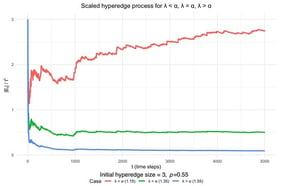
Scaled DDH hyperedge process starting from hyperedges of different sizes, with 
  
    p
    =
    0.55
  
 and maximum hyperedge size 3. The scaling exponent 
  α
 is set to be 
  
    3
    (
    1
    −
    p
    )
    =
    1.35
  
. The simulated behaviour is consistent with Theorem 2: within 5000 steps, the red trajectory (
  
    λ
    <
    α
  
) diverges, the blue trajectory (
  
    λ
    >
    α
  
) decays to zero, and only the green trajectory (
  
    λ
    =
    α
  
) stabilises at a non-trivial limit.

The Concept of Homeodynamics in Systems Theory

  • Hugues Petitjean,
  • Serge Finck and
  • Alexandre Charlet
  • + 1 author

This review traces the historical evolution, conceptual foundations, and contemporary applications of the term homeodynamics across biological, ecological, cognitive, and social systems. Initially coined in the 19th century but largely forgotten, the term re-emerged in the second half of the 20th century as scholars sought to describe dynamic stability in open, self-organizing systems. From Yates’s theoretical formalization in biology to Rattan’s work in biogerontology and recent applications in psychology and organizational theory, homeodynamics has progressively evolved from a synonym of homeostasis to a distinct systems concept. It now denotes the capacity of complex systems to sustain coherence through transitions between multiple temporary equilibria, integrating feedbacks, bifurcations, and adaptive reconfigurations. By revisiting the term’s lineage, this review clarifies its epistemological scope and proposes its use as a heuristic and modeling framework for understanding dynamic stability and regime shifts in living and social systems.

27 November 2025

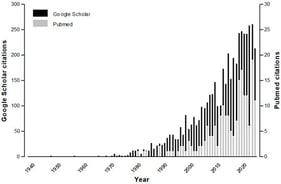
Evolution of the term homeodynamics over time. The x-axis represents calendar years, from 1940 to 2025. The left y-axis is the number of articles containing the term homeodynamic (noun) from Google Scholar (black bars) and the right y-axis is from PubMed (gray bars).

News & Conferences

Issues

Open for Submission

Editor's Choice

Get Alerted

Add your email address to receive forthcoming issues of this journal.

XFacebookLinkedIn
Complexities - ISSN 3042-6448