Skip Content
You are currently on the new version of our website. Access the old version .

Journal of Market Access & Health Policy

Journal of Market Access & Health Policy (JMAHP) is an international, peer-reviewed, open access journal that covers all different subdisciplines of ‘market access’ from economic, technical, scientific, sociological, psychological and policy perspectives, published quarterly online.
It is the official journal of the Market Access Society (MAS). Society members receive discounts on the APCs.

All Articles (329)

Pulmonary arterial hypertension (PAH) and cancer share high mortality and complex prognoses. Due to PAH’s rarity, these parallels may be underrecognized by healthcare stakeholders. This study explored similarities between PAH and cancer across epidemiological, clinical, therapeutic, and healthcare resource utilization (HCRU) considerations. A four-step approach was employed: (1) inclusion/exclusion criteria were applied to identify potential PAH cancer analogs; (2) characteristics for comparison were categorized as epidemiologic, clinical, therapeutic landscape, and HCRU; (3) a targeted literature review extracted data on disease characteristics; (4) a similarity ranking was calculated as the absolute difference between each cancer’s and PAH’s characteristics. Fourteen cancers met the inclusion criteria. Well-differentiated thyroid cancer (WDTC) had the highest number (5) of characteristics closest to PAH. WDTC and medullary thyroid cancer were most similar to PAH in epidemiology; gastrointestinal stromal tumor was most similar in clinical and HCRU characteristics, and anaplastic lymphoma kinase-positive (ALK+) non-small-cell lung cancer and renal cell carcinoma were most similar in therapeutic landscape. Although no single cancer fully mirrors PAH, the identification of multiple analogs underscores PAH’s multidimensional complexity and confirms its overlap with oncological conditions. Cancer analogs could serve as a valuable framework for enhancing recognition of PAH’s clinical, therapeutic, and HRCU implications among healthcare stakeholders.

6 February 2026
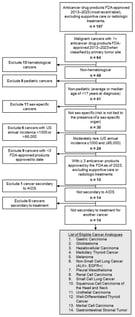
Potential cancer analogs selection results.

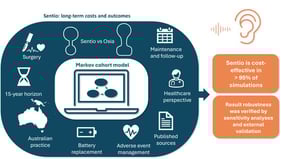
Bone conduction hearing implant systems (BCHIs) are established treatments for patients with conductive or mixed hearing loss or single-sided deafness when conventional hearing aids are unsuitable. This study evaluated the cost-effectiveness of the active transcutaneous system Sentio versus a similar system, i.e., Osia in an Australian setting. Scenario analyses also compared Sentio to other systems, i.e., Ponto and Baha Attract. A Markov cohort model was adapted from a previously published source to reflect Australian practice, incorporating device acquisition, surgery, maintenance, battery replacement and adverse event management over a 15-year horizon from a healthcare perspective. Effectiveness inputs were derived from published evidence using a naïve indirect comparison. Extensive sensitivity analyses and external validation tested robustness. In the base case, Sentio was associated with lower costs and a small modelled incremental quality-adjusted life years (QALYs) gain versus Osia. Scenario analyses confirmed cost-effectiveness relative to Ponto and Baha Attract, with outcomes below the Australian willingness-to-pay threshold. Health state utility, device price and reimplantation assumptions were the most influential drivers, yet Sentio remained cost-effective in over 95% of simulations. These findings support Sentio as a clinically and economically efficient BCHI in Australia and highlight the need for direct utility and long-term durability data.

27 January 2026

Cohort market model structure for the analysis of BCHI. The model structure is equal in all comparator arms. BCHI = Bone Conducted Hearing Implant; AE = Adverse Event.

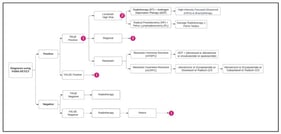
Introduction: [18F]-DCFPyL (Piflufolastat [18F]) is a prostate-specific membrane antigen (PSMA)-targeted position emission tomography (PET) radiotracer for detecting the biochemical recurrence (BCR) of prostate cancer (PCa). This study evaluates its economic impact compared with [68Ga]-PSMA-11, [18F]-FCH, and [18F]-PSMA-1007 from the Spanish National Healthcare System’s perspective. Methods: A cost–consequence model, over a 5-year time horizon, simulated the diagnostic and treatment pathway based on radiotracer-specific accuracy and disease localization. Treatment options included a radical prostatectomy, radiation therapy, androgen deprivation therapy (ADT), and radiation therapy + ADT. Costs were calculated for true/false positives and negatives. Due to limited data availability, key inputs were informed by expert opinions, supported by published meta-analyses, public sources, and literature. Officially published Spanish prices were applied: EUR 2000 for [18F]-DCFPyL, [68Ga]-PSMA-11, and [18F]-PSMA-1007, and EUR 1144 for [18F]-FCH. Results: The use of [18F]-DCFPyL led to fewer unnecessary therapies; specifically, it led to 11,229 (74%) fewer than [68Ga]-PSMA-11, and 5180 (56%) and 7771 (66%) fewer than [18F]-FCH and [18F]-PSMA-1007, respectively. It achieved significant cost savings for repeated testing: EUR 15M (43%) versus [68Ga]-PSMA-11, EUR 37M (65%) versus [18F]-FCH, and EUR 27M (58%) versus [18F]-PSMA-1007. Cost savings for false positives were EUR 15M (50%) against [68Ga]-PSMA-11, EUR 22M (60%) versus [18F]-FCH, and EUR 29M (66%) compared with [18F]-PSMA-1007. The cost per correct diagnosis was reduced by EUR 198 (8%) compared with [68Ga]-PSMA-11 and EUR 377 (15%) relative to [18F]-PSMA-1007, while showing a EUR 635 (40%) increase compared with [18F]-FCH. Conclusions: [18F]-DCFPyL offers a cost-saving option for BCR detection within the Spanish National Healthcare System by reducing the number of unnecessary therapies, the cost of false positives, and repeat testing compared with alternative radiotracers. These improvements support the potential for better diagnostic outcomes and more informed downstream clinical decision-making.

23 January 2026

Model structure of BCR diagnoses and treatment pathways. Note: 1: Classification of PCa into localized high-risk, regional, and metastatic. 2: Treatment of PCa either with RT + ADT or RP + pelvic lymphadenectomy. Abbreviations: PSMA PET/CT: prostate-specific membrane antigen positron emission tomography/computed tomography; RT: radiotherapy; ADT: androgen deprivation therapy; HIFU: high-intensity focused ultrasound; RP: radical prostatectomy; PL: pelvic lymphadenectomy; mHSPC: metastatic hormone-sensitive prostate cancer; mCRPC: metastatic castration-resistant prostate cancer.

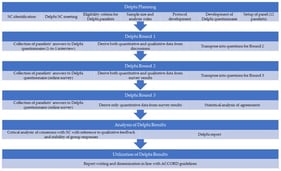
Objectives: This study explores the feasibility and value of integrating structured patient input into the PICOS (Population, Intervention, Comparator, Outcome, Study design) scoping process for Joint Clinical Assessments under the EU Health Technology Assessment Regulation. Methods: A modified Delphi panel, led by a steering committee composed of two clinicians, one patient expert, and one policy expert, engaged 12 individuals representing patient organizations across 12 European Member States to reach consensus on PICOS elements for CAR-T therapy in pediatric spinal muscular atrophy. Results: The Delphi process effectively facilitated PICOS consolidation and consensus among the 12 patient experts representing diverse EU contexts. Through 3 iterative rounds integrating quantitative rankings and qualitative feedback, the panel achieved strong agreement on key outcomes, intervention delivery, and study design elements, with population eligibility and comparator selection showing heterogeneity. Patient engagement was central: participants emphasized inclusive eligibility criteria, shared decision-making, and the inclusion of caregiver perspectives. The integration of qualitative insights allowed nuanced interpretation of dissent, distinguishing between genuine disagreement and framing effects, thereby enhancing transparency and scientific validity. Importantly, the process revealed patient priorities for outcomes, treatment burden, and evidence trade-offs, informing both PICOS refinement and future health technology assessment (HTA) strategies. This structured, participatory approach demonstrates the feasibility and value of incorporating patient voices systematically into early-stage EU HTA, fostering robust, credible, and context-sensitive consensus on complex rare-disease interventions. Conclusions: The study demonstrates the potential of consensus-building methodologies to enhance transparency, reduce heterogeneity, and support patient-centered evidence generation and decision-making in HTA.

19 January 2026

Study flow. Abbreviation: SC, steering committee.

News & Conferences

Issues

Open for Submission

Editor's Choice

Get Alerted

Add your email address to receive forthcoming issues of this journal.

XFacebookLinkedIn
J. Mark. Access Health Policy - ISSN 2001-6689