Skip Content
You are currently on the new version of our website. Access the old version .
  • Tracked for
    Impact Factor
  • 4.0
    CiteScore
  • 23 days
    Time to First Decision

Mining

Mining is an international, peer-reviewed, open access journal on mining science and engineering published quarterly online by MDPI.

All Articles (270)

The rupture of the B-I dam at the Córrego do Feijão mine in Brumadinho, Minas Gerais, Brazil, on 25 January 2019, prompted the implementation of environmental remediation actions. Among these actions is the need for groundwater quality monitoring in the Feijão Pit (“Cava de Feijão”) area due to the disposal of tailings from dams B-I, B-IV, and B-IVA at this site. In order to assess potential impacts on groundwater, the determination of baseline values for elements of interest was proposed for ten monitoring wells installed in and around the pit, with monitoring results from 2019 to 2024, totaling 854 samples. Due to the lack of hydrochemistry data and local hydrogeological complexity of the existing aquifers within the context of the Iron Quadrangle (IQ), it was necessary to evaluate and determine individual baseline values for each monitoring well, assessing data variability and population distribution. For this purpose, the 95–95 Upper Tolerance Limit (UTL) method was applied to establish baseline values providing a robust statistical approach that encompasses 95% of observations with a 95% confidence interval as it is a widely used standard in statistics due to its practical balance between confidence and precision. This methodology proved effective and has potential for application in groundwater monitoring in areas that may present high compositional variability due to the chemical heterogeneity of the groundwater. The baseline values obtained for the main elements of interest, which are iron (Fe) and manganese (Mn), were consistent with findings from previous studies conducted in the hydrogeological units of the study area, also demonstrating that the adopted methodology was effective in identifying representative concentrations for the region.

7 February 2026

(a) Location of the state of Minas Gerais; (b) location of the Iron Quadrangle (IQ) in the south-central region of Minas Gerais; (c) general geology of the IQ. Modified from [19].

Editorial for the Special Issue “Mine Automation and New Technologies”

  • Roohollah Shirani Faradonbeh,
  • Phillip Stothard and
  • Robert Solomon

Mining is undergoing a transformation driven by digitalisation and automation, promising improvements in efficiency, sustainability, and safety [...]

4 February 2026

Mining operations conducted beneath water-bearing strata pose significant risks associated with the development of water-conducting fracture zones in the overburden. The height criterion for this parameter is critical to ensuring the stability of underground mine workings and preventing the risk of water inrush incidents. The research is based on physical and numerical simulations and aims to forecast the development of the water-conducting fracture zone. The methodology is based on in situ hydrogeology data, geotechnical boreholes, physical 2D modeling of rock strata, discrete element modeling using UDEC, and finite–discrete element modeling using Prorock software. A physical model of layered rock mass is constructed to simulate unfilled excavation areas induced deformation under real polymetallic ore field conditions. Based on the results, relationships between vertical subsidence, layer curvature, inclination, and the height of the water-conducting fracture zone were obtained. Particular attention is given to the effects of tectonic discontinuities, chamber geometry, and backfilling on fracture development. A stepwise excavation sequence is simulated to reproduce field conditions and assess the evolution of stress and deformation fields in the overburden. The study reveals that the propagation of the fracture zone around a mine excavation adheres to a polynomial law, characterized by an increase in height concurrent with the expansion of the excavation. This approach enables the design of safe extraction strategies beneath aquifers or surface water bodies. The proposed framework is expected to enhance prediction accuracy and reduce uncertainties.

3 February 2026

Study of Weak-Acid-Dissociable and Free Cyanide Oxidation by Ozone Injection into Gold Mine Pulp

  • Coraquetzali Magdaleno López,
  • Saúl Ortiz Landeros and
  • Jorge Morales Hernández
  • + 4 authors

The effects of key variables on weak-acid-dissociable (WAD) and free cyanide oxidation by ozone injection in gold mine pulp were studied at laboratory scale to find an alternative cyanide treatment. A fractional factorial analysis of five process variables (O3/O2 flow, reaction time, NH4HSO3 concentration, temperature, and pH) informed a 60-run experimental matrix, in a 1 L cylindrical reactor, with the process variables controlled during the ozone injection. The findings may inform future strategies for safer cyanide management in gold mining processes. Free cyanide is the most toxic form of cyanide. Its oxidation increases with higher O3/O2 concentrations, longer exposure time, and higher pH. Maintaining a pH above 7 is crucial. Lower pH values favor the dissociation of cyanide into its toxic, free form. WAD cyanide oxidation depends mainly on the O3/O2 concentration, exposure time, and NH4HSO3 concentration. Increasing O3/O2 and time enhanced both WAD and free cyanide oxidation, while NH4HSO3 concentration affected oxidation rates differently. The results show that free cyanide was significantly more oxidized (84.1413%) than WAD cyanide (67.2423%). Controlling the WAD cyanide process yields excellent free cyanide oxidation. This represents ongoing improvement at an industrial scale. This approach quantifies the extent to which process variables affect the WAD and free cyanide oxidation under controlled conditions, thereby greatly reducing environmental impact.

1 February 2026

News & Conferences

Issues

Open for Submission

Editor's Choice

Reprints of Collections

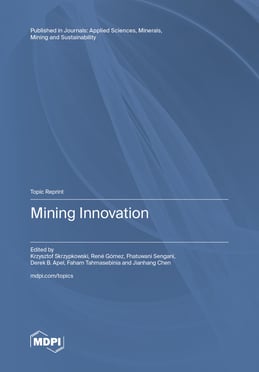
Mining Innovation
Reprint

Mining Innovation

Editors: Krzysztof Skrzypkowski, René Gómez, Fhatuwani Sengani, Derek B. Apel, Faham Tahmasebinia, Jianhang Chen
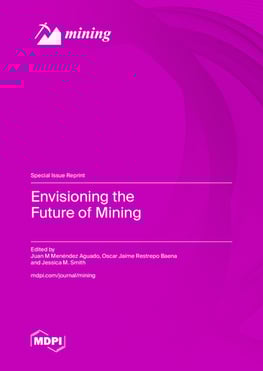
Envisioning the Future of Mining
Reprint

Envisioning the Future of Mining

Editors: Juan M Menéndez-Aguado, Oscar Jaime Restrepo Baena, Jessica M. Smith

Get Alerted

Add your email address to receive forthcoming issues of this journal.

XFacebookLinkedIn
Mining - ISSN 2673-6489