
- Article

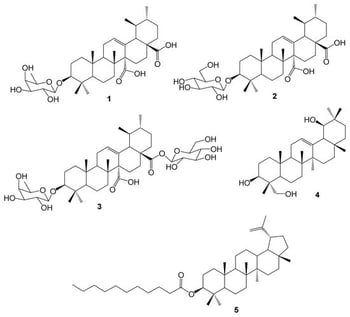
Background: Plasmodium falciparum, the most virulent malaria parasite, continues to develop resistance to available drugs. Mitragyna inermis (Rubiaceae) is traditionally used in Africa for the treatment of malaria and has shown antiplasmodial activity against P. falciparum. Previous studies on this plant and related species (M. speciosa, M. ciliata) have focused on crude extracts and indole alkaloids, reporting moderate antiplasmodial activity, but the specific contribution of pure quinovic acid glycosides, the major triterpenes glycosides of M. inermis stem bark, to antiplasmodial activity and to inhibition of key parasite enzymes such as lactate dehydrogenase (PfLDH) and protein kinase G (PfPKG) has never been evaluated. Objective: The present study aimed to isolate and characterize compounds from the stem bark of M. inermis and to evaluate their antiplasmodial activity against Pf3D7 and PfDd2 strains and their binding potential to PfLDH and PfPKG through experimental and computational approaches. Methods: Phytochemical investigation was conducted using column chromatography, and structures were elucidated by ESI-MS and 1/2D NMR spectroscopy. Antiplasmodial activity was assessed against chloroquine-sensitive (Pf3D7) and chloroquine-resistant (PfDd2) strains of P. falciparum. Molecular docking, ADMET prediction, and 100-ns molecular dynamics simulations targeting PfLDH and PfPKG were performed. Results: Five compounds were isolated and identified as quinovic acid 3-O-β-D-fucopyranoside (1), quinovic acid 3-O-β-D-glucopyranoside (2), quinovic acid 3β-O-β-D-fucopyranosyl-28-O-β-D-glucopyranosyl ester (3), olean-12-ene-3β,19β,24-triol (4), and lupeol-3-O-undecanoate (5). Compounds 4 and 5 are reported for the first time from the genus Mitragyna. Compound 3 exhibited the highest antiplasmodial activity against both PfDd2 (35.86 ± 0.83 μM) and Pf3D7 (29.89 ± 3.91 μM) strains, and showed the strongest binding affinity toward PfLDH (−8.2 kcal/mol). MD simulations confirmed the stability of the C3_PfLDH complex throughout the 100 ns simulation period. Conclusions: Compounds 1–4 displayed moderate in vitro antiplasmodial activity against Pf3D7 and PfDd2, with compound 3 being the most active among the isolated constituents. Docking and molecular-dynamics analyses suggested stable interactions of selected compounds with PfLDH and the PfPKG N-terminal cGMP-binding domain. However, these computational findings do not establish direct enzyme inhibition. The results support further investigation of M. inermis triterpenoids as phytochemical scaffolds, including cytotoxicity/selectivity testing, direct target-based assays and structural optimization.
Sci. Pharm.
20 September 2026