
β-Sitosterol Protects against Carbon Tetrachloride Hepatotoxicity but not Gentamicin Nephrotoxicity in Rats via the Induction of Mitochondrial Glutathione Redox Cycling


Abstract
1. Introduction
2. Results
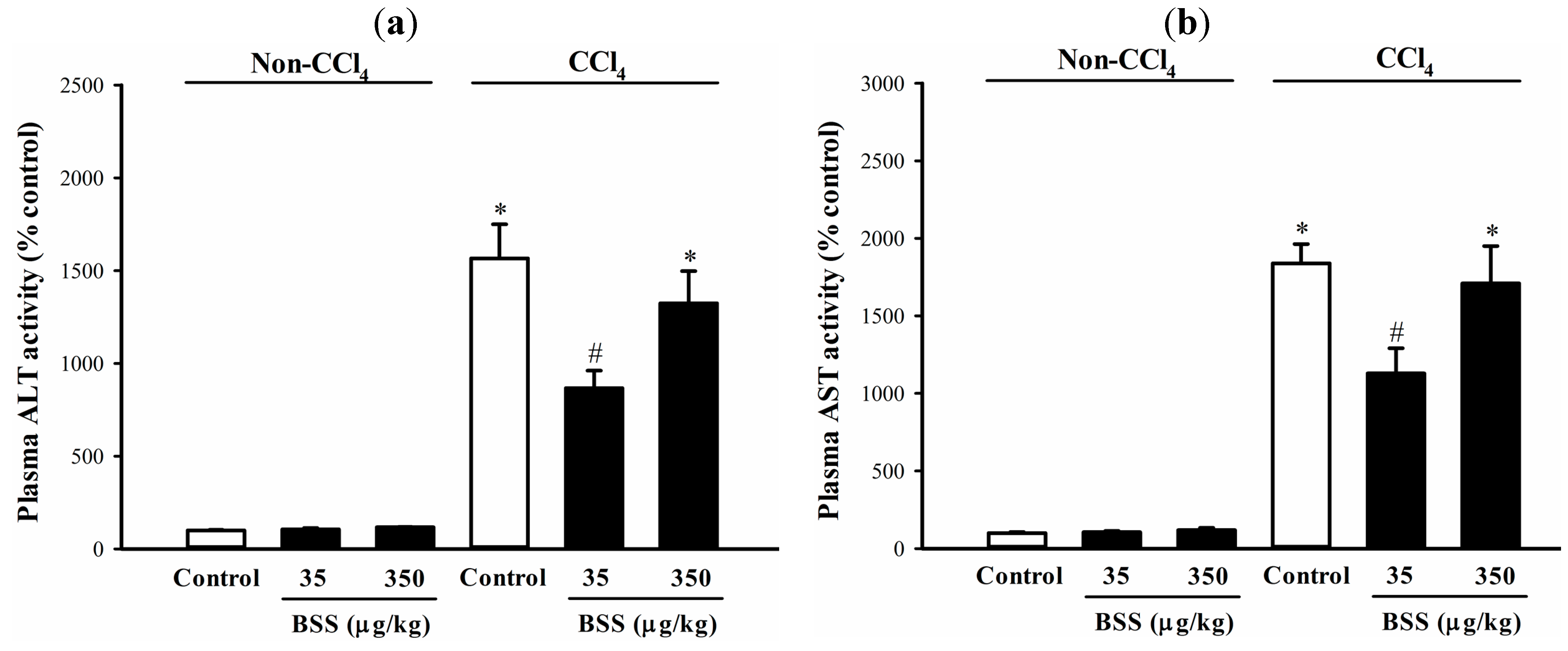
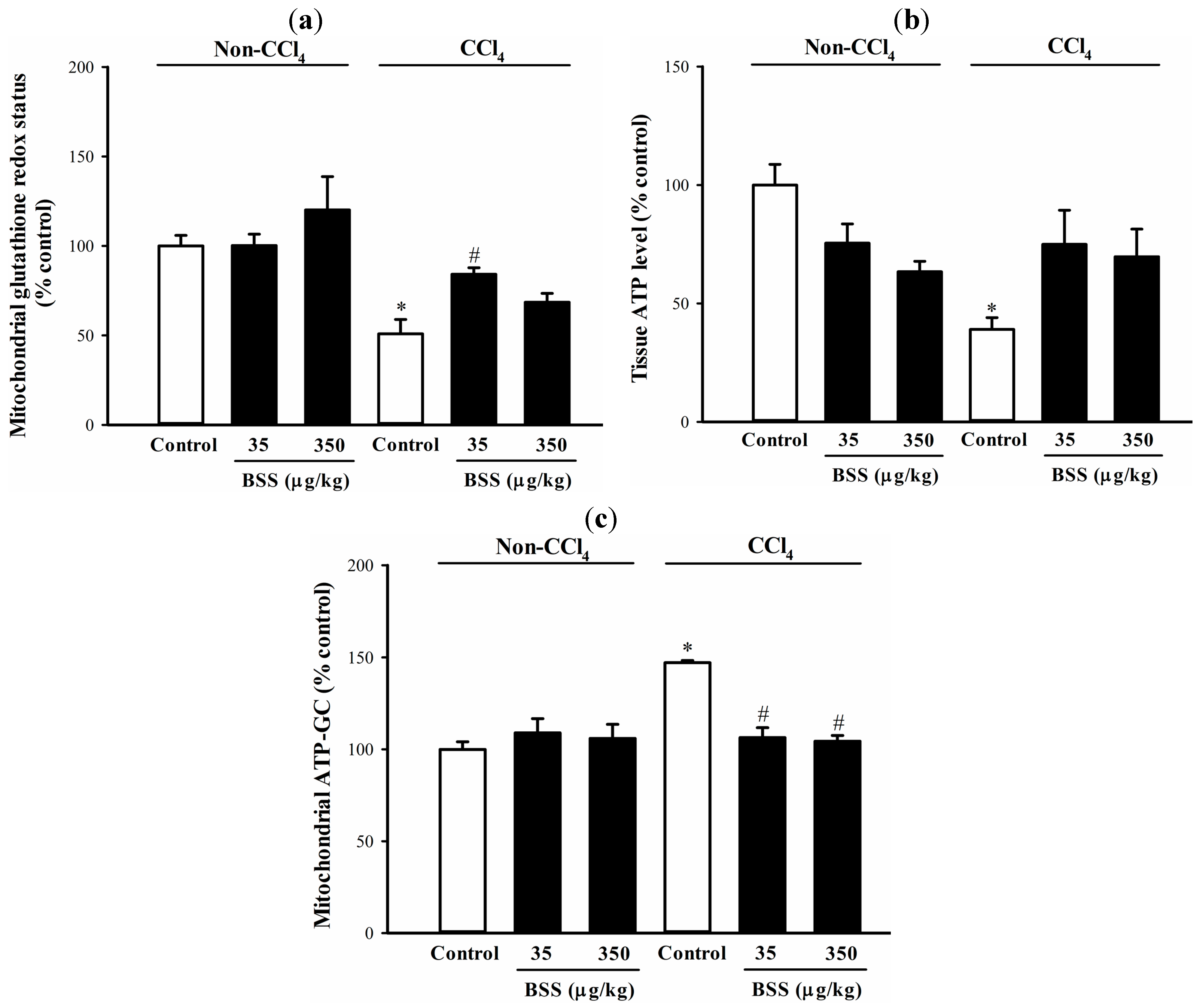
2.1. Effects of BSS on CCl4 Hepatotoxicity in Rats



| % Non-CCl4 Control | Non-CCl4 Control | CCl4 | ||
|---|---|---|---|---|
| Control | BSS (35 µg/kg) | BSS (350 µg/kg) | ||
| Mitochondrial GR Activity | 100.0 ± 2.9 | 98.2 ± 5.1 | 92.9 ± 9.5 | 82.8 ± 9.2 |
| Mitochondrial ICDH Activity | 100.0 ± 2.2 | 104.5 ± 3.4 | 117.5 ± 6.0 *,# | 102.1 ± 3.7 |
| % | CCl4 | ||
|---|---|---|---|
| Control | BSS (35 µg/kg) | BSS (350 µg/kg) | |
| CCl4-induced Hepatic ATP Depletion | 68.0 ± 4.9 | 0.5 # ± 15.4 | −6.4 # ± 12.5 |
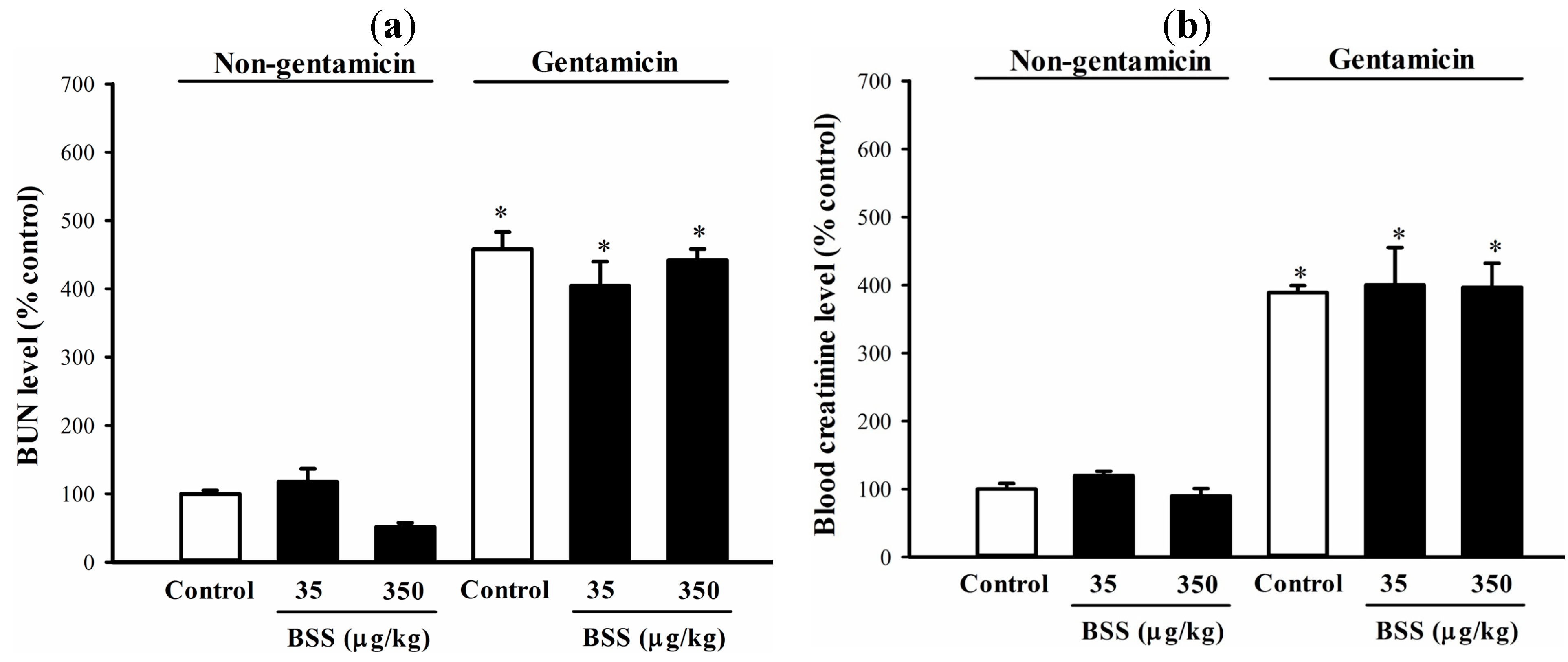
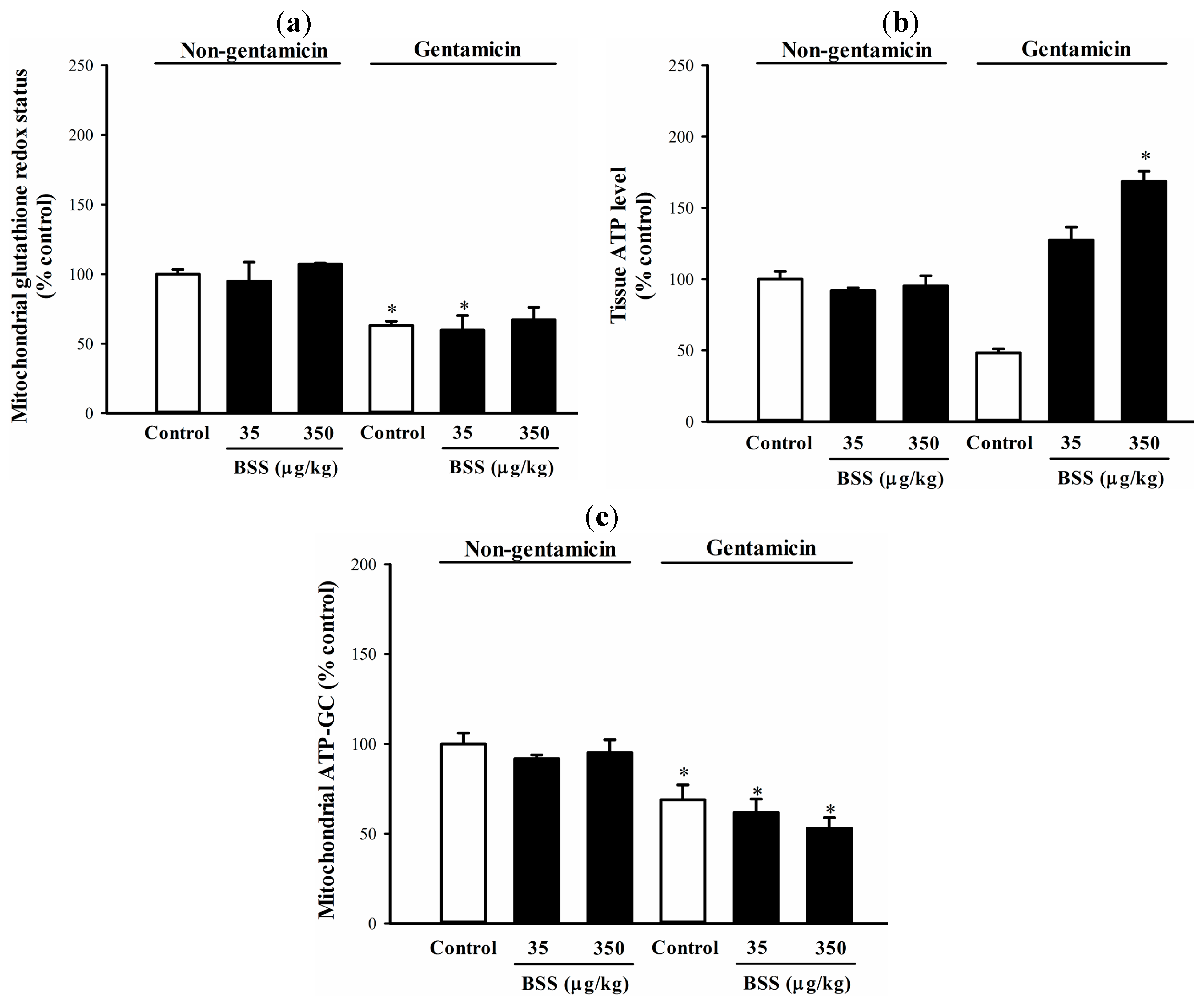
2.2. Effects of BSS on Gentamicin Nephrotoxicity in Rats


| % Non-gentamicin Control | Non-gentamicin Control | Gentamicin | ||
|---|---|---|---|---|
| Control | BSS (35 µg/kg) | BSS (350 µg/kg) | ||
| Mitochondrial GR Activity | 100.0 ± 4.0 | 59.6 ± 6.1 * | 63.2 ± 3.9 * | 61.7 ± 4.7 * |
| Mitochondrial ICDH Activity | 100.0 ± 3.6 | 54.5 ± 8.0 * | 61.0 ± 6.5 * | 47.5 ± 2.8 * |
| % | Gentamicin | ||
|---|---|---|---|
| Control | BSS (35 µg/kg) | BSS (350 µg/kg) | |
| Gentamicin-induced Renal ATP Depletion | 57.1 ± 2.6 | −35.6 # ± 8.4 | −73.4 # ± 7.1 |
3. Discussion
4. Experimental Section
4.1. Chemicals
4.2. Animal Care
4.3. CCl4 Hepatotoxicity
4.4. Gentamicin Nephrotoxicity
4.5. Tissue ATP Level
4.6. Mitochondrial Fraction Preparation
4.7. Mitochondrial ATP-GC ex Vivo
4.8. Mitochondrial Glutathione Redox Status
4.9. Mitochondrial GR and ICDH Activities
4.10. Statistical Analysis
5. Conclusions
Abbreviations
| ALT | Alanine aminotransferase |
| AST | aspartate aminotransferase |
| ATP-GC | ATP generation capacity |
| BSS | β-sitosterol |
| BUN | blood urea nitrogen |
| CCl4 | carbon tetrachloride |
| DTNB | 5,5'-dithiobis-(2-nitrobenzoic acid) |
| EDTA | ethylenediaminetetraacetic acid |
| GR | glutathione reductase |
| HCF1 | Cistanches Herba fraction |
| ICDH | isocitrate dehydrogenase |
| GSSG | oxidized glutathione |
| PCA | perchloric acid |
| ROS | reactive oxygen species |
| GSH | reduced glutathione |
Supplementary Materials
Supplementary Files
Supplementary File 1Author Contributions
Conflicts of Interest
References
- Cesaratto, L.; Vascotto, C.; Calligaris, S.; Tell, G.L. The importance of redox state in liver damage. Ann. Hepatol. 2004, 3, 86–92. [Google Scholar] [PubMed]
- Tanikawa, K.; Torimura, T. Studies on oxidative stress in liver diseases: Important future trends in liver research. Med. Mol. Morphol. 2006, 39, 22–27. [Google Scholar] [CrossRef] [PubMed]
- Li, G.; Chen, Y.; Hu, H.; Liu, L.; Hu, X.; Wang, J.; Shi, W.; Yin, D. Association between age-related decline of kidney function and plasma malondialdehyde. Rejuvenation Res. 2012, 15, 257–264. [Google Scholar] [CrossRef] [PubMed]
- Small, D.M.; Coombes, J.S.; Bennett, N.; Johnson, D.W.; Gobe, G.C. Oxidative stress, anti-oxidant therapies and chronic kidney disease. Nephrology 2012, 17, 311–321. [Google Scholar] [CrossRef] [PubMed]
- Molina, M.F.; Sanchez-Reus, I.; Iqlesias, I.; Benedi, J. Quercetin, a flavonoid antioxidant, prevents and protects against ethanol-induced oxidative stress in mouse liver. Biol. Pharm. Bull. 2003, 26, 1398–1402. [Google Scholar] [CrossRef] [PubMed]
- Tirkey, N.; Pilkhwal, S.; Kuhad, A.; Chopra, K. Hesperidin, a citrus bioflavonoid, decreases the oxidative stress produced by carbon tetrachloride in rat liver and kidney. BMC Pharmacol. 2005, 5, 2. [Google Scholar] [CrossRef] [PubMed]
- Bejma, J.; Ramires, P.; Ji, L.L. Free radical generation and oxidative stress with ageing and exercise: Differential effects in the myocardium and liver. Acta Physiol. Scand. 2000, 169, 242–351. [Google Scholar] [CrossRef]
- Navarro, A.; Boveris, A. Rat brain and liver mitochondria develop oxidative stress and lose enzymatic activities on aging. Am. J. Physiol. Regul. Integr. Comp. Physiol. 2004, 287, R1244–R1249. [Google Scholar] [CrossRef] [PubMed]
- Hensley, K.; Robinson, K.A.; Gabbita, S.P.; Salsman, S.; Floyd, R.A. Reactive oxygen species, cell signaling, and cell injury. Free Radic. Biol. Med. 2000, 28, 1456–1462. [Google Scholar] [CrossRef] [PubMed]
- Finkel, T.; Holbrook, N.J. Oxidants, oxidative stress and the biology of ageing. Nature 2000, 408, 239–247. [Google Scholar] [CrossRef] [PubMed]
- Hou, F.; Zhang, R.; Zhang, M.; Su, D.; Wei, Z.; Deng, Y.; Zhang, Y.; Chi, J.; Tang, X. Hepatoprotective and antioxidant activity of anthocyanins in black rice bran on carbon tetrachloride-induced liver injury in mice. J. Funct. Foods 2013, 5, 1705–1713. [Google Scholar] [CrossRef]
- Khan, W.; Arivarasu, N.A.; Priyamvada, S.; Khan, S.A.; Khan, S.; Yusufi, A.N.K. Protective effect of ω-3 polyunsatuated fatty acids (PUFA) on sodium nitrite induced nephrotoxicity and oxidative damage in rat kidney. J. Funct. Foods 2013, 5, 956–967. [Google Scholar] [CrossRef]
- Pinto, C.; Rodriguez-Galdon, B.; Cestero, J.J.; Macias, P. Hepatoprotective effects of lycopene against carbon tetrachloride-induced acute liver injury in rats. J. Funct. Foods 2013, 5, 1601–1610. [Google Scholar] [CrossRef]
- Chen, J.; Wong, H.S.; Leung, H.Y.; Leong, P.K.; Chan, W.M.; Chen, N.; Ko, K.M. An ursolic acid-enriched extract of Cynomorium songaricum protects against carbon tetrachloride hepatotoxicity and gentamicin nephrotoxicity in rats possibly through a mitochondrial pathway: A comparison with ursolic acid. J. Funct. Foods 2014, 7, 330–341. [Google Scholar] [CrossRef]
- Wong, H.S.; Ko, K.M. Herba Cistanches stimulates cellular glutathione redox cycling by reactive oxygen species generated from mitochondrial respiration in H9c2 cardiomyocytes. Pharm. Biol. 2013, 51, 63–73. [Google Scholar] [CrossRef]
- Wong, H.S.; Chen, N.; Leong, P.K.; Ko, K.M. β-Sitosterol enhances cellular glutathione redox cycling by reactive oxygen species generated from mitochondrial respiration: Protection against oxidant injury in H9c2 cells and rat hearts. Phytother. Res. 2013, 28, 999–1006. [Google Scholar] [CrossRef] [PubMed]
- Forbes-Hernández, T.Y.; Giampieri, F.; Gasparrini, M.; Mazzoni, L.; Quiles, J.L.; Alvarez-Suarez, J.M.; Battino, M. The effects of bioactive compounds from plant foods on mitochondrial function: A focus on apoptotic mechanisms. Food Chem. Toxicol. 2014, 68, 154–182. [Google Scholar] [CrossRef] [PubMed]
- Giurgea-Marion, L.; Toubeau, G.; Lauent, G.; Heuson-Stiennon, J.A.; Tulkens, P.M. Impairment of lysosome-pinocytic vesicle fusion in rat kidney proximal tubules after treatment with gentamicin at low dose. Toxicol. Appl. Pharmacol. 1986, 86, 271–285. [Google Scholar] [CrossRef] [PubMed]
- Beauchamp, D.; Gourde, P.; Bergeron, M.G. Subcellular distribution of gentamicin in proximal tubular cells, determined by immunogold labeling. Antimicrob. Agents Chemother. 1991, 35, 2173–2179. [Google Scholar] [CrossRef] [PubMed]
- Castillo, T.; Koop, D.R.; Kamimura, S.; Triadafilopoulos, G.; Tsukamoto, H. Role of cytochrome P-450 2E1 in ethanol-, carbon tetrachloride-and iron-dependent microsomal lipid peroxidation. Hepatology 1999, 16, 992–996. [Google Scholar] [CrossRef]
- Cabre, M.; Camps, J.; Patemain, J.L.; Ferre, N.; Joven, J. Time-course of changes in hepatic lipid peroxidation and glutathione metabolism in rats with carbon tetrachloride-induced cirrhosis. Clin. Exp. Pharmacol. Physiol. 2000, 27, 694–699. [Google Scholar] [CrossRef] [PubMed]
- Simile, M.M.; Banni, S.; Angioni, E.; Carra, G.; de Miglio, M.R.; Muroni, M.R.; Calvisi, D.F.; Carru, A.; Oascale, R.M.; Feo, F. 5′-Methylthiodenosine administration prevents lipid peroxidation and fibrogenesis induced in rat liver by carbon-tetrachloride intoxication. J. Hepatol. 2001, 24, 386–394. [Google Scholar] [CrossRef]
- Quiros, Y.; Vicente-Vicente, L.; Morales, A.I.; Lopez-Novoa, J.M.; Lopez-Hernandez, F.J. An integrative overview on the mechanisms underlying the renal tubular cytotoxicity of gentamicin. Toxicol. Sci. 2011, 119, 245–256. [Google Scholar] [CrossRef] [PubMed]
- Rebrin, I.; Sohal, R.S. Pro-oxidant shift in glutathione redox state during aging. Adv. Drug Deliv. Rev. 2008, 60, 1545–1552. [Google Scholar] [CrossRef] [PubMed]
- Babson, J.R.; Abell, N.S.; Reed, D.J. Protective role of the glutathione redox cycle against adriamycin-mediated toxicity in isolated hepatocytes. Biol. Pharm. 1981, 30, 2299–2304. [Google Scholar]
- Harlan, J.M.; Levine, J.D.; Callahan, K.S.; Schwartz, B.R.; Harker, L.A. Glutathione redox cycle protects cultured endothelial cells against lysis by extracellularly generated hydrogen peroxide. J. Clin. Investig. 1984, 73, 106–713. [Google Scholar]
- Rose, S.; Melnyk, K.; Pavliv, O.; Bai, S.; Nick, T.G.; Frye, R.E.; James, S.J. Evidence of oxidative damage and inflammation associated with low glutathione redox status in the autism brain. Transl. Psychiatry 2012, 2, e134. [Google Scholar] [CrossRef] [PubMed]
- Zhang, C.; Rodriguez, C.; Spaulding, J.; Aw, T.Y.; Feng, J. Age-dependent and tissue-related glutathione redox status in a mouse model of Alzheimer’s Disease. J. Alzheimer’s Dis. 2012, 28, 655–666. [Google Scholar]
- Lluis, J.M.; Morales, A.; Blasco, C.; Colell, A.; Mari, M.; Garcia-Ruiz, C.; Fernandez-Checa, J.C. Critical role of mitochondrial glutathione in the survival of hepatocytes during hypoxia. J. Biol. Chem. 2005, 280, 3224–3232. [Google Scholar] [CrossRef] [PubMed]
- Schafer, F.Q.; Buettner, G.R. Redox environment of the cell as viewed through the redox state of the glutathione disulfide/glutathione couple. Free Radic. Biol. Med. 2001, 30, 1191–1212. [Google Scholar] [CrossRef] [PubMed]
- Fleury, C.; Mignotte, B.; Vayssiere, J.L. Mitochondrial reactive oxygen species in cell death signaling. Biochimie 2002, 84, 131–141. [Google Scholar] [CrossRef] [PubMed]
- Jo, S.H.; Son, M.K.; Koh, H.J.; Lee, S.M.; Song, I.H.; Kim, Y.O.; Lee, Y.S.; Jeong, K.S.; Kim, W.B.; Park, J.W.; et al. Control of mitochondrial redox balance and cellular defense against oxidative damage by mitochondrial NADP+-dependent isocitrate dehydrogenase. J. Biol. Chem. 2001, 276, 16168–16176. [Google Scholar] [CrossRef] [PubMed]
- Klein, J.A.; Ackerman, S.L. Oxidative stress, cell cycle, and neurodegeneration. J. Clin. Investig. 2003, 111, 785–793. [Google Scholar] [CrossRef] [PubMed]
- Silva, A.H.; Fiqueiredo, L.M.; Dias, P.A.; Prado Neto, A.X.; Vasconcelos, P.R.; Guimaraes, S.B. Electroacupuncture attenuates liver and kidney oxidative stress in anesthetized rats. Acta Cir. Bras. 2011, 26, 60–65. [Google Scholar] [CrossRef] [PubMed]
- Zager, R.A. Adenine nucleotide changes in kidney, liver, and small intestine during different forms of ischemic injury. Circ. Res. 1991, 68, 185–196. [Google Scholar] [CrossRef] [PubMed]
- Devalaraja-Narashimha, K.; Singaravelu, K.; Padanilam, B.J. Poly (ADP-ribose) polymerase-mediated cell injury in acute renal failure. Pharmacol. Res. 2005, 52, 44–59. [Google Scholar] [CrossRef] [PubMed]
- Park, C.; Moon, D.O.; Rhu, H.; Choi, B.T.; Lee, W.H.; Kim, G.Y.; Choi, Y.H. Beta-sitosterol induces anti-proliferation and apoptosis in human leukemic U937 cells through activation of caspase-3 and induction of Bax/Bcl-2 ratio. Biol. Pharm. Bull. 2007, 30, 1317–1323. [Google Scholar] [CrossRef] [PubMed]
- Schmucker, D.L. Liver function and phase I drug metabolism in the elderly. Drugs Aging 2001, 18, 837–851. [Google Scholar] [CrossRef] [PubMed]
- Frith, J.; Jones, D.; Newton, J.L. Chronic liver disease in an ageing population. Age Aging 2009, 38, 11–18. [Google Scholar] [CrossRef]
- Sheedfar, F.; Di Biase, S.; Koonen, D.; Vinciguerra, M. Liver diseases and aging: Friends or foes? Aging Cell 2013, 12, 950–954. [Google Scholar] [CrossRef]
- Sanders, D.J.; Minter, H.J.; Howes, D.; Hepburn, P.A. The safety evaluation of phytosterol esters. Part 6. The comparative absorption and tissue distribution of phytosterols in the rat. Food Chem. Toxicol. 2000, 38, 485–491. [Google Scholar] [CrossRef] [PubMed]
- Pharmacological Activities of Cistanches Herba on Kidney and Liver in Rats; Protocol #2013051 (3 Years); The Government of Hong Kong Special Administrative Region, Department of Health: Hong Kong, 2013.
- Leong, P.K.; Chen, N.; Chiu, P.Y.; Leung, H.Y.; Chung, W.M.; Tang, Q.T.; Ko, K.M. Long-term treatment with shengmai san-derived herbal supplement (Wei Kang Su) enhances antioxidant response in various tissues of rats with protection against carbon tetrachloride hepatotoxicity. J. Med. Food 2010, 13, 427–438. [Google Scholar] [CrossRef] [PubMed]
- Leung, H.Y.; Ko, K.M. Herba Cistanche extract enhances mitochondrial ATP generation in rat hearts and H9c2 cells. Pharm. Biol. 2008, 46, 418–424. [Google Scholar] [CrossRef]
- Leung, H.Y.; Chiu, P.Y.; Poon, M.K.T.; Ko, K.M. A Yang-invigorating Chinese herbal formula enhances mitochondrial functional ability and antioxidant capacity in various tissues of male and female rats. Rejuvenation Res. 2005, 8, 238–247. [Google Scholar] [CrossRef] [PubMed]
- Chiu, P.Y.; Tang, M.H.; Mak, D.H.; Poon, M.K.; Ko, K.M. Hepatoprotective mechanism of schisandrin B: Role of mitochondrial glutathione antioxidant status and heat shock proteins. Free Radic. Biol. Med. 2003, 35, 368–380. [Google Scholar] [CrossRef] [PubMed]
- Sample Availability: β-sitosterol (BSS) and BSS-containing HCF1 fraction are available from the authors.
© 2014 by the authors. Licensee MDPI, Basel, Switzerland. This article is an open access article distributed under the terms and conditions of the Creative Commons Attribution license ( http://creativecommons.org/licenses/by/4.0/).
Share and Cite
Wong, H.-S.; Chen, J.-H.; Leong, P.-K.; Leung, H.-Y.; Chan, W.-M.; Ko, K.-M. β-Sitosterol Protects against Carbon Tetrachloride Hepatotoxicity but not Gentamicin Nephrotoxicity in Rats via the Induction of Mitochondrial Glutathione Redox Cycling. Molecules 2014, 19, 17649-17662. https://doi.org/10.3390/molecules191117649
Wong H-S, Chen J-H, Leong P-K, Leung H-Y, Chan W-M, Ko K-M. β-Sitosterol Protects against Carbon Tetrachloride Hepatotoxicity but not Gentamicin Nephrotoxicity in Rats via the Induction of Mitochondrial Glutathione Redox Cycling. Molecules. 2014; 19(11):17649-17662. https://doi.org/10.3390/molecules191117649
Chicago/Turabian StyleWong, Hoi-Shan, Ji-Hang Chen, Pou-Kuan Leong, Hoi-Yan Leung, Wing-Man Chan, and Kam-Ming Ko. 2014. "β-Sitosterol Protects against Carbon Tetrachloride Hepatotoxicity but not Gentamicin Nephrotoxicity in Rats via the Induction of Mitochondrial Glutathione Redox Cycling" Molecules 19, no. 11: 17649-17662. https://doi.org/10.3390/molecules191117649
APA StyleWong, H.-S., Chen, J.-H., Leong, P.-K., Leung, H.-Y., Chan, W.-M., & Ko, K.-M. (2014). β-Sitosterol Protects against Carbon Tetrachloride Hepatotoxicity but not Gentamicin Nephrotoxicity in Rats via the Induction of Mitochondrial Glutathione Redox Cycling. Molecules, 19(11), 17649-17662. https://doi.org/10.3390/molecules191117649