

A Systematic Evaluation of Feature Encoding Techniques for Gait Analysis Using Multimodal Sensory Data

 , ,
, ,  ,
,  and
and 
Abstract
1. Introduction
- A comparative study of three different feature encoding techniques is presented.
- A comprehensive review of the existing techniques is presented, and their benefits and drawbacks are discussed.
- The effectiveness of various machine learning methods is evaluated in order to classify the multimodal sensory data.
- The computational analysis of different feature encoding techniques is presented.
- The robustness of the proposed technique is assessed on several applications, including walking styles, human activities, etc.
- A rigorous evaluation of all the feature encoding techniques is carried out on four large datasets.
- A large gait dataset that is collected using IMU sensors is proposed.
2. Related Work
2.1. Handcrafted Feature-Based Techniques
2.2. Codebook-Based Approaches
2.3. Deep Learning-Based Approaches
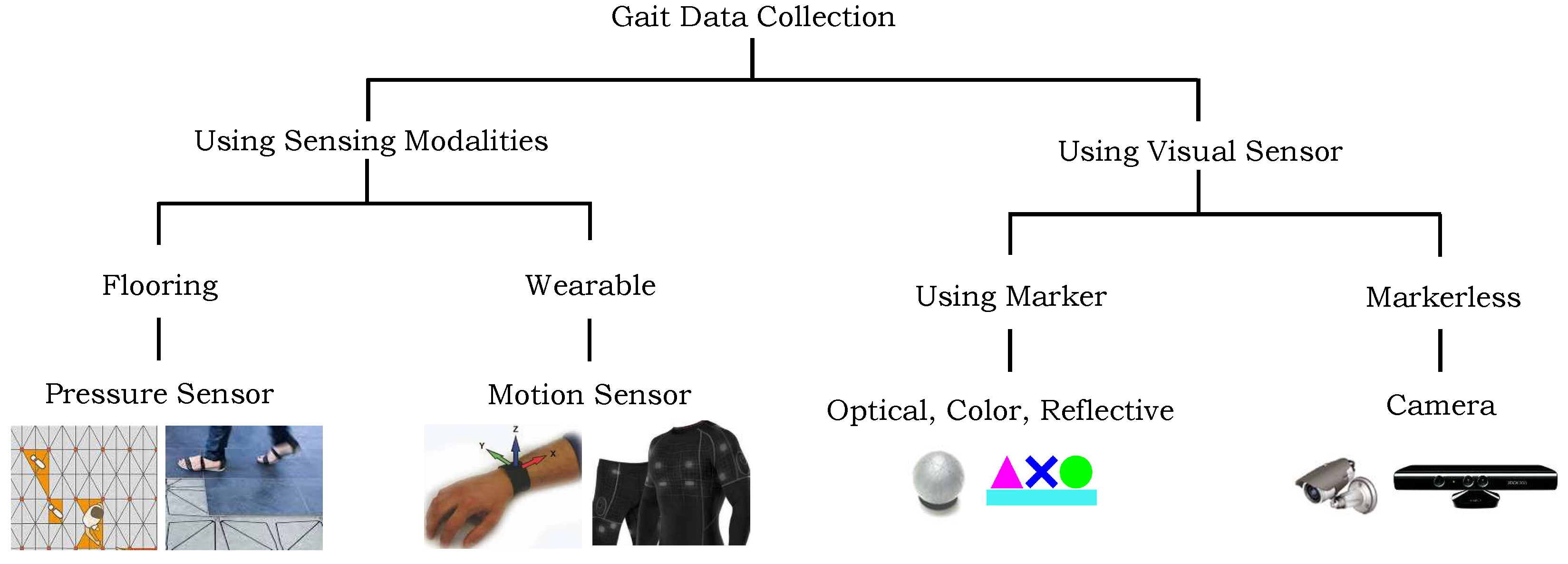
3. Overview of the Proposed Method
4. Proposed Feature Learning Techniques
4.1. Handcrafted Features
- Maximum: Let M be a set of values. will result in Then is the maximum value of that set.
- Minimum: Similarly, will result in Then is the minimum value of the set.
- Average: Suppose a dataset M comprises n numbers, the average can then be computed as:
- Standard deviation: It is the average deviation of data points from the distribution center (i.e., ) and can be calculated as:
- Zero crossing: This feature determines how many times the specified set of values have zero crossings in the data [53]. Specifically, it can be considered a location on a mathematical function’s graph where the axes intercept, that is, when the graph crosses zero in either direction.
- Percentiles: This feature represents the number below a specific percentage of values in data. Specifically, a qth percentile would be a value in the dataset such that, at most, (100 × q)% of the data points fall below this value and 100 × (1 − q)% of the values fall above. That is, the 25th percentile (also known as the first quartile) reveals a feature whose value is greater than 25% and less than 75% in the dataset. Similarly, the 50th and 75th percentiles are represented by second and third quartiles, respectively. In the proposed technique, we computed three distinct percentiles features: (1) percentile 20, (2) percentile 50, and (3) percentile 80.
- Interquartile range: The first quartile value is subtracted from the third quartile value to obtain the interquartile range.
- Kurtosis: This feature is a measure to quantify the variations in the tails of a distribution from a normal distribution [54]. A large value represents a higher extremity of deviation, i.e., outliers. It can be formulated as:
- Skewness: Skewness describes the dataset’s divergence from the normal distribution. That is, it measures the asymmetry of normal distribution in either direction.
- Auto-correlation: It is a numerical quantity to measure the similarity between the data at time and a lagged version of data in a temporal direction (at time ). Conceptually, it estimates the correlation between the current data and previous values [55]. It can be formulated as:
- Order mean values: To compute order mean values, the data are arranged in an ascending order. The smallest value in the sorted dataset corresponds to the first-order statistic. The second-order statistic is the next smallest number, and so on. In the proposed technique, we computed four distinct features using order mean values: (1) First-Order Mean (FOM), (2) Norm of FOM, (3) Second-Order Mean (SOM), and (4) Norm of SOM. We employed two of the mostly used norm techniques: (i.e., Manhattan distance) and (i.e., Euclidean distance).
- Spectral entropy: The spectral entropy (SEP), which gauges a signal’s spectral power distribution, is based on the Shannon entropy idea. The time-based signal was transformed into its frequency spectrum using the Fourier transform. The standardized power distribution in the frequency domain is taken into account as a probability density function to calculate the signal’s Shannon entropy:
- Spectral energy: Since various sensory data can be used to assess walking patterns in the recorded data, they may be considered as a function whose amplitude varies with time. Similar to SEP, the time-based signal was transformed into its frequency spectrum using the Fourier transform, and the signal energy distribution over the frequency was calculated using the spectral energy formulation:where is the amplitude of frequency content. It may be formulated using normalized frequency spectra:All the abovementioned feature quantities were computed on each walk pattern and they were fused together in a single row to form a feature vector representation.
4.2. Codebook-Based Feature Encoding
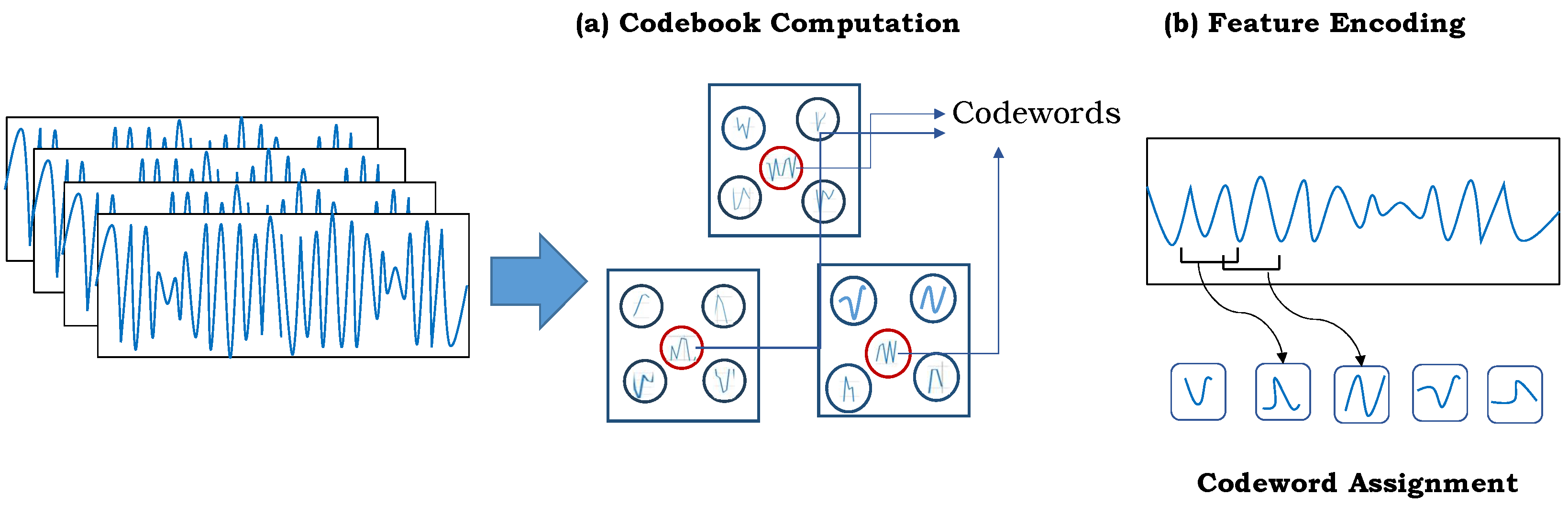
4.2.1. Codebook Computation
4.2.2. Feature Encoding
4.3. Classification
4.3.1. Support Vector Machine (SVM)
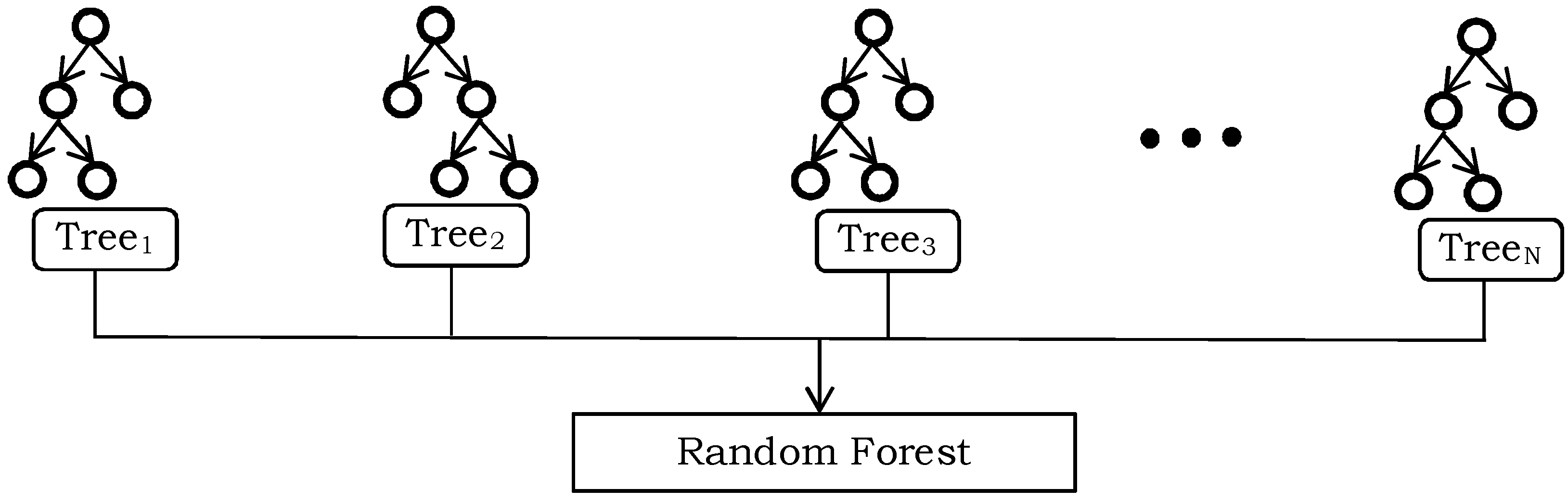
4.3.2. Random Forest (RF)
4.4. Deep Learning-Based Feature Extraction Techniques
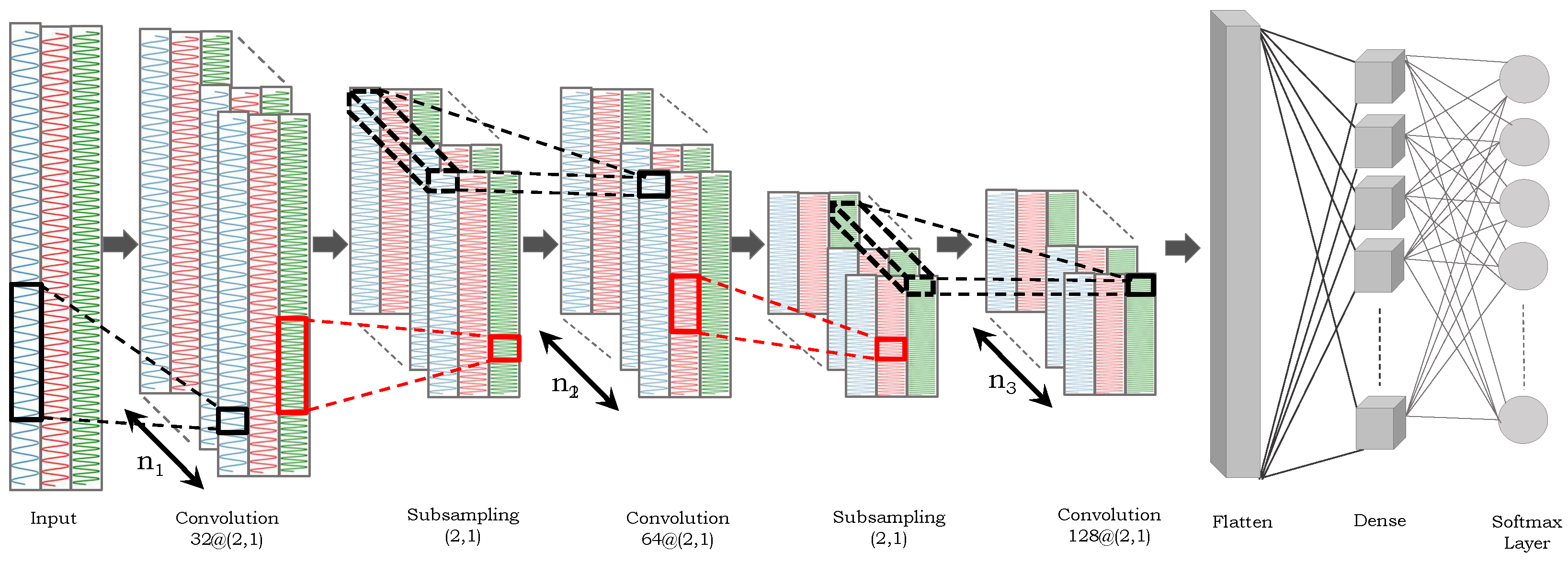
4.4.1. Convolutional Neural Network (CNN)
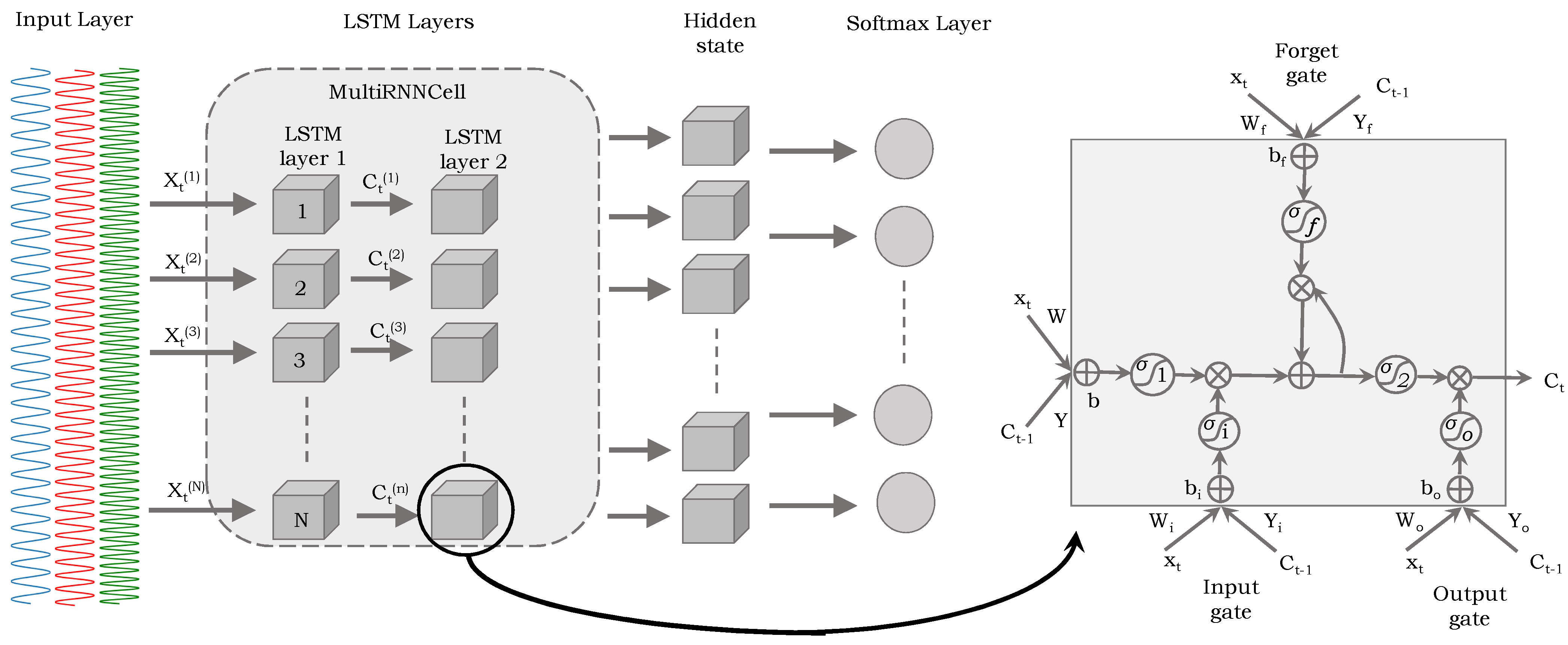
4.4.2. Long Short-Term Memory (LSTM)
5. Experiments and Results
5.1. Dataset Description
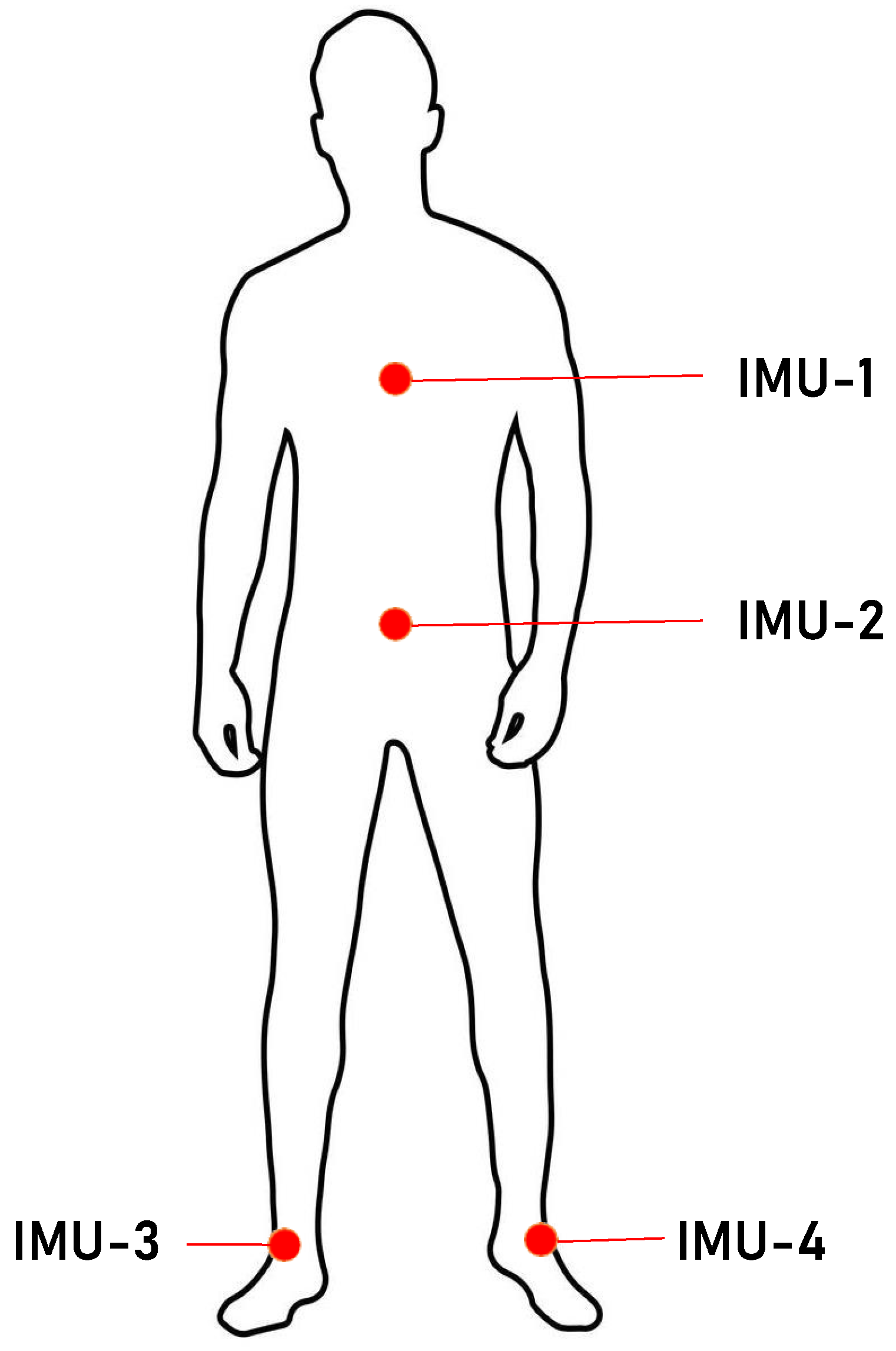
- Gait-IMU dataset: The first dataset is collected in our APPS lab, located at the University of Lübeck, Germany. The IMU data are collected using LPMS-B2 Series (Advanced Realtime Tracking GmbH & Co. KG, Weilheim i.OB, Germany) devices (https://www.lp-research.com, accessed on 20 August 2020) along with the SensFloor sensor to analyze the gait patterns. A preliminary study on the analysis of SensFloor sensory data for gait analysis has been published in [63]; however, IMU data were not explored. Since an IMU consists of several sensors (e.g., accelerometer, gyroscope, magnetometer), the collected multimodal sensory data can be used to analyze gait in a more effective way. We sampled the IMU data at a fixed rate of 50 Hz. A total of 42 individuals participated in the gait collection. The four IMUs were attached to different body parts as depicted in Figure 7. The first IMU was attached at the sternum (chest), the second was at the lower abdomen (belt buckle), the third was at the left ankle, and the forth was at the right ankle. The participants performed six different walking styles: normal, slow, fast, blindfolded, dual task, and post-UHR by walking back and forth 10 times. The SensFloor data were used to identify the turning locations, and from there, a cut mark was placed to indicate the start and stop times of a single trip. More detail about the SensFloor data can be found in [63]. During data collection, we also observed a few missing data points (i.e., NAN values) in recorded data perhaps due to sensor malfunctions, which were covered using interpolation. However, we dropped the sequences having more than 30% NAN data points in the recorded sequences. This pre-processing makes the raw data suitable to be used with the feature encoding techniques. A total of 238 cleaned gait sequences are saved and freely available to the research community at https://drive.google.com/drive/folders/15sQTn3P2x3M1Em5o8yz1U784tomXDsJW (accessed on 20 August 2020).
- MHEALTH dataset: The second dataset we used to assess the effectiveness of the proposed feature encoding techniques is the MHEALTH (Mobile Health) dataset [17]. The dataset contains data on the body motions of ten volunteers of diverse profiles engaged in twelve different physical activities (e.g., walking, jogging, running, jumping, etc.). The recordings were made in a laboratory using four wearable sensors from Shimmer2 (https://shimmersensing.com, accessed on 20 August 2020). The sensors were attached on the chest, right wrist, and left ankle using elastic bands. The authors captured the dataset at a fixed sample rate of 50 Hz for all the modalities. These sensors capture the motion information of the human body in different aspects, namely acceleration, magnetic field orientation, and the rate of turn, which can effectively record the dynamics of the body. This dataset is quite useful to not only analyze the walking styles, but to also recognize the subjects’ daily activities.
- WISDM-AR dataset: The third dataset we used in this study was the Wireless Sensor Data Mining (WISDM-AR) dataset [18]. The data of twenty-nine volunteers were collected using a smartphone. While performing different daily activities, the subjects were instructed to carry their Android smartphones in their front leg pockets. The subjects performed different sets of activities, including walking, jogging, ascend and descend stairs, etc., for a certain period of time. The authors captured the dataset at a fixed sample rate of 20 Hz for all the modalities. Similar to the MHEALTH dataset, this dataset is also used to analyze the walking styles and the subjects’ daily activities.
- UCI-HAR dataset: This dataset comprises the sequences of activities of daily living [19]. The data were collected using a Samsung Galaxy S II sensor, which was attached to the waist of the participants during recording. Specifically, the data from the smartphone’s gyroscope and accelerometer sensors were collected at a frequency of 50 Hz. The dataset consists of a total of 748,406 sample points from 30 participants ranging in age from 19 to 48 years. The activity sequences are grouped into six classes, namely sitting, standing, walking, walking downstairs, walking upstairs, and lying down.
5.2. Analysis of Gait-IMU Dataset
5.2.1. Using Handcrafted Features
5.2.2. Using Codebook Approach
5.3. Analysis of MHEALTH Dataset
5.3.1. Using Handcrafted Features
5.3.2. Using Codebook Approach
5.3.3. Using Deep Learning Approaches
5.4. Analysis of WISDM-AR Dataset
5.4.1. Using Handcrafted Features
5.4.2. Using Codebook Approach
5.4.3. Using Deep Learning Approaches
5.5. Analysis of UCI-HAR Dataset
5.5.1. Using Handcrafted Features
5.5.2. Using Codebook Approach
5.5.3. Using Deep Learning Approaches
5.6. Discussion and Computational Analysis
6. Conclusions
Author Contributions
Funding
Institutional Review Board Statement
Informed Consent Statement
Data Availability Statement
Conflicts of Interest
References
- Whittle, M.W. Gait analysis. In The Soft Tissues; Elsevier: Amsterdam, The Netherlands, 1993; pp. 187–199. [Google Scholar]
- Ghent, F.; Mobbs, R.J.; Mobbs, R.R.; Sy, L.; Betteridge, C.; Choy, W.J. Assessment and post-intervention recovery after surgery for lumbar disk herniation based on objective gait metrics from wearable devices using the gait posture index. World Neurosurg. 2020, 142, e111–e116. [Google Scholar] [CrossRef] [Scilit] [PubMed]
- Khan, M.H.; Farid, M.S.; Grzegorzek, M. Vision-based approaches towards person identification using gait. Comput. Sci. Rev. 2023, 42, 100432. [Google Scholar] [CrossRef] [Scilit]
- Khan, M.H.; Farid, M.S.; Grzegorzek, M. Spatiotemporal features of human motion for gait recognition. Signal Image Video Process. 2019, 13, 369–377. [Google Scholar] [CrossRef] [Scilit]
- Ahad, M.A.R.; Ngo, T.T.; Antar, A.D.; Ahmed, M.; Hossain, T.; Muramatsu, D.; Makihara, Y.; Inoue, S.; Yagi, Y. Wearable sensor-based gait analysis for age and gender estimation. Sensors 2020, 20, 2424. [Google Scholar] [CrossRef] [Scilit] [PubMed]
- Kolokas, N.; Krinidis, S.; Drosou, A.; Ioannidis, D.; Tzovaras, D. Gait matching by mapping wearable to camera privacy-preserving recordings: Experimental comparison of multiple settings. In Proceedings of the 2019 6th International Conference on Control, Decision and Information Technologies (CoDIT), Paris, France, 23–26 April 2019; IEEE: Piscataway, NJ, USA, 2019; pp. 338–343. [Google Scholar]
- Amjad, F.; Khan, M.H.; Nisar, M.A.; Farid, M.S.; Grzegorzek, M. A comparative study of feature selection approaches for human activity recognition using multimodal sensory data. Sensors 2021, 21, 2368. [Google Scholar] [CrossRef] [Scilit] [PubMed]
- Rani, V.; Kumar, M.; Singh, B. Handcrafted Features for Human Gait Recognition: CASIA-A Dataset. In Proceedings of the Artificial Intelligence and Data Science: First International Conference, ICAIDS 2021, Hyderabad, India, 17–18 December 2021; Revised Selected Papers. Springer: Berlin/Heidelberg, Germany, 2022; pp. 77–88. [Google Scholar]
- Khan, M.H.; Farid, M.S.; Grzegorzek, M. A generic codebook based approach for gait recognition. Multimed. Tools Appl. 2019, 78, 35689–35712. [Google Scholar] [CrossRef] [Scilit]
- Zhang, Z.; He, T.; Zhu, M.; Sun, Z.; Shi, Q.; Zhu, J.; Dong, B.; Yuce, M.R.; Lee, C. Deep learning-enabled triboelectric smart socks for IoT-based gait analysis and VR applications. Npj Flex. Electron. 2020, 4, 29. [Google Scholar] [CrossRef] [Scilit]
- Peng, X.; Wang, L.; Wang, X.; Qiao, Y. Bag of visual words and fusion methods for action recognition: Comprehensive study and good practice. Comput. Vis. Image Underst. 2016, 150, 109–125. [Google Scholar] [CrossRef] [Scilit]
- Khan, M.H.; Farid, M.S.; Grzegorzek, M. A comprehensive study on codebook-based feature fusion for gait recognition. Inf. Fusion 2023, 92, 216–230. [Google Scholar] [CrossRef] [Scilit]
- Zhang, Y.; Huang, Y.; Wang, L.; Yu, S. A comprehensive study on gait biometrics using a joint CNN-based method. Pattern Recognit. 2019, 93, 228–236. [Google Scholar] [CrossRef] [Scilit]
- Martindale, C.F.; Christlein, V.; Klumpp, P.; Eskofier, B.M. Wearables-based multi-task gait and activity segmentation using recurrent neural networks. Neurocomputing 2021, 432, 250–261. [Google Scholar] [CrossRef] [Scilit]
- Sarshar, M.; Polturi, S.; Schega, L. Gait phase estimation by using LSTM in IMU-based gait analysis—Proof of concept. Sensors 2021, 21, 5749. [Google Scholar] [CrossRef] [Scilit] [PubMed]
- Liu, L.; Wang, L.; Liu, X. In defense of soft-assignment coding. In Proceedings of the 2011 International Conference on Computer Vision, Barcelona, Spain, 6–13 November 2011; IEEE: Piscataway, NJ, USA, 2011; pp. 2486–2493. [Google Scholar]
- Banos, O.; Garcia, R.; Holgado-Terriza, J.A.; Damas, M.; Pomares, H.; Rojas, I.; Saez, A.; Villalonga, C. mHealthDroid: A novel framework for agile development of mobile health applications. In Proceedings of the Ambient Assisted Living and Daily Activities: 6th International Work-Conference, IWAAL 2014, Belfast, UK, 2–5 December 2014; Proceedings 6. Springer: Berlin/Heidelberg, Germany, 2014; pp. 91–98. [Google Scholar]
- Kwapisz, J.R.; Weiss, G.M.; Moore, S.A. Activity recognition using cell phone accelerometers. ACM SigKDD Explor. Newsl. 2011, 12, 74–82. [Google Scholar] [CrossRef] [Scilit]
- Reyes, J.; Anguita, D.; Ghio, A.; Oneto, L.; Parra, X. Human Activity Recognition Using Smartphones; UCI Machine Learning Repository. 2012. Available online: https://archive.ics.uci.edu/dataset/240/human+activity+recognition+using+smartphones (accessed on 14 October 2023).
- Dorschky, E.; Nitschke, M.; Seifer, A.K.; van den Bogert, A.J.; Eskofier, B.M. Estimation of gait kinematics and kinetics from inertial sensor data using optimal control of musculoskeletal models. J. Biomech. 2019, 95, 109278. [Google Scholar] [CrossRef] [Scilit] [PubMed]
- Zhong, Q.; Ali, N.; Gao, Y.; Wu, H.; Wu, X.; Sun, C.; Ma, J.; Thabane, L.; Xiao, M.; Zhou, Q.; et al. Gait kinematic and kinetic characteristics of older adults with mild cognitive impairment and subjective cognitive decline: A cross-sectional study. Front. Aging Neurosci. 2021, 13, 664558. [Google Scholar] [CrossRef] [Scilit] [PubMed]
- Ahmad, H.N.; Barbosa, T.M. The effects of backpack carriage on gait kinematics and kinetics of schoolchildren. Sci. Rep. 2019, 9, 3364. [Google Scholar] [CrossRef] [Scilit] [PubMed]
- Zheng, S.; Huang, K.; Tan, T. Evaluation framework on translation-invariant representation for cumulative foot pressure image. In Proceedings of the 2011 18th IEEE International Conference on Image Processing, Brussels, Belgium, 11–14 September 2011; pp. 201–204. [Google Scholar]
- McDonough, A.L.; Batavia, M.; Chen, F.C.; Kwon, S.; Ziai, J. The validity and reliability of the GAITRite system’s measurements: A preliminary evaluation. Arch. Phys. Med. Rehabil. 2001, 82, 419–425. [Google Scholar] [CrossRef] [Scilit]
- Bilney, B.; Morris, M.; Webster, K. Concurrent related validity of the GAITRite® walkway system for quantification of the spatial and temporal parameters of gait. Gait Posture 2003, 17, 68–74. [Google Scholar] [CrossRef] [Scilit]
- Leder, R.S.; Azcarate, G.; Savage, R.; Savage, S.; Sucar, L.E.; Reinkensmeyer, D.; Toxtli, C.; Roth, E.; Molina, A. Nintendo Wii remote for computer simulated arm and wrist therapy in stroke survivors with upper extremity hemipariesis. In Proceedings of the 2008 Virtual Rehabilitation, Vancouver, BC, Canada, 25–27 August 2008; p. 74. [Google Scholar]
- Han, Y.C.; Wong, K.I.; Murray, I. Gait phase detection for normal and abnormal gaits using IMU. IEEE Sens. J. 2019, 19, 3439–3448. [Google Scholar] [CrossRef] [Scilit]
- Patel, B.; Srikanthan, S.; Asanit, F.; Agu, E. Machine learning prediction of tbi from mobility, gait and balance patterns. In Proceedings of the 2021 IEEE/ACM Conference on Connected Health: Applications, Systems and Engineering Technologies (CHASE), Washington, DC, USA, 16–18 December 2021; IEEE: Piscataway, NJ, USA, 2021; pp. 11–22. [Google Scholar]
- Saba, T.; Mohamed, A.S.; El-Affendi, M.; Amin, J.; Sharif, M. Brain tumor detection using fusion of hand crafted and deep learning features. Cogn. Syst. Res. 2020, 59, 221–230. [Google Scholar] [CrossRef] [Scilit]
- Schonberger, J.L.; Hardmeier, H.; Sattler, T.; Pollefeys, M. Comparative evaluation of hand-crafted and learned local features. In Proceedings of the IEEE Conference on Computer Vision and Pattern Recognition, Honolulu, HI, USA, 21–26 July 2017; pp. 1482–1491. [Google Scholar]
- Nandy, A. Statistical methods for analysis of Parkinson’s disease gait pattern and classification. Multimed. Tools Appl. 2019, 78, 19697–19734. [Google Scholar] [CrossRef] [Scilit]
- Hsu, W.C.; Sugiarto, T.; Liao, Y.Y.; Lin, Y.J.; Yang, F.C.; Hueng, D.Y.; Sun, C.T.; Chou, K.N. Can trunk acceleration differentiate stroke patient gait patterns using time-and frequency-domain features? Appl. Sci. 2021, 11, 1541. [Google Scholar] [CrossRef] [Scilit]
- Huang, J.; Kaewunruen, S.; Ning, J. AI-based quantification of fitness activities using smartphones. Sustainability 2022, 14, 690. [Google Scholar] [CrossRef] [Scilit]
- Sejdic, E.; Lowry, K.A.; Bellanca, J.; Redfern, M.S.; Brach, J.S. A comprehensive assessment of gait accelerometry signals in time, frequency and time-frequency domains. IEEE Trans. Neural Syst. Rehabil. Eng. 2013, 22, 603–612. [Google Scholar] [CrossRef] [Scilit] [PubMed]
- Permatasari, J.; Connie, T.; Ong, T.S.; Teoh, A.B.J. Adaptive 1-dimensional time invariant learning for inertial sensor-based gait authentication. Neural Comput. Appl. 2023, 35, 2737–2753. [Google Scholar] [CrossRef] [Scilit]
- Köping, L.; Shirahama, K.; Grzegorzek, M. A general framework for sensor-based human activity recognition. Comput. Biol. Med. 2018, 95, 248–260. [Google Scholar] [CrossRef] [Scilit] [PubMed]
- Papadopoulos, A.; Kyritsis, K.; Klingelhoefer, L.; Bostanjopoulou, S.; Chaudhuri, K.R.; Delopoulos, A. Detecting Parkinsonian Tremor From IMU Data Collected in-the-Wild Using Deep Multiple-Instance Learning. IEEE J. Biomed. Health Inform. 2020, 24, 2559–2569. [Google Scholar] [CrossRef] [Scilit] [PubMed]
- Liu, Z. Human Gait Phase Recognition in Embedded Sensor System. Master’s Thesis, KTH Royal Institute of Technology, Stockholm, Sweden, 2021. [Google Scholar]
- Ryu, J.; McFarland, T.; Haas, C.T.; Abdel-Rahman, E. Automatic clustering of proper working postures for phases of movement. Autom. Constr. 2022, 138, 104223. [Google Scholar] [CrossRef] [Scilit]
- Calvo, A.F.; Holguin, G.A.; Medeiros, H. Human activity recognition using multi-modal data fusion. In Proceedings of the Progress in Pattern Recognition, Image Analysis, Computer Vision, and Applications: 23rd Iberoamerican Congress, CIARP 2018, Madrid, Spain, 19–22 November 2018; Proceedings 23. Springer: Berlin/Heidelberg, Germany, 2019; pp. 946–953. [Google Scholar]
- Clapés, A.; Pardo, À.; Pujol Vila, O.; Escalera, S. Action detection fusing multiple Kinects and a WIMU: An application to in-home assistive technology for the elderly. Mach. Vis. Appl. 2018, 29, 765–788. [Google Scholar] [CrossRef] [Scilit]
- Khan, M.H.; Farid, M.S.; Grzegorzek, M. Person identification using spatiotemporal motion characteristics. In Proceedings of the 2017 IEEE International Conference on Image Processing (ICIP), Beijing, China, 17–20 September 2017; IEEE: Piscataway, NJ, USA, 2017; pp. 166–170. [Google Scholar]
- Hochreiter, S.; Schmidhuber, J. Long Short-Term Memory. Neural Comput. 1997, 9, 1735–1780. [Google Scholar] [CrossRef] [Scilit]
- Nguyen, M.D.; Mun, K.R.; Jung, D.; Han, J.; Park, M.; Kim, J.; Kim, J. IMU-based spectrogram approach with deep convolutional neural networks for gait classification. In Proceedings of the 2020 IEEE International Conference on Consumer Electronics (ICCE), Las Vegas, NV, USA, 4–6 January 2020; IEEE: Piscataway, NJ, USA, 2020; pp. 1–6. [Google Scholar]
- Tran, L.; Hoang, T.; Nguyen, T.; Kim, H.; Choi, D. Multi-model long short-term memory network for gait recognition using window-based data segment. IEEE Access 2021, 9, 23826–23839. [Google Scholar] [CrossRef] [Scilit]
- Zhao, B.; Lu, H.; Chen, S.; Liu, J.; Wu, D. Convolutional neural networks for time series classification. J. Syst. Eng. Electron. 2017, 28, 162–169. [Google Scholar] [CrossRef] [Scilit]
- Connor, J.T.; Martin, R.D.; Atlas, L.E. Recurrent neural networks and robust time series prediction. IEEE Trans. Neural Netw. 1994, 5, 240–254. [Google Scholar] [CrossRef] [Scilit] [PubMed]
- Feng, Y.; Li, Y.; Luo, J. Learning effective gait features using LSTM. In Proceedings of the 2016 23rd International Conference on Pattern Recognition (ICPR), Cancun, Mexico, 4–8 December 2016; IEEE: Piscataway, NJ, USA, 2016; pp. 325–330. [Google Scholar]
- Khan, M.H.; Farid, M.S.; Grzegorzek, M. A non-linear view transformations model for cross-view gait recognition. Neurocomputing 2020, 402, 100–111. [Google Scholar] [CrossRef] [Scilit]
- Giorgi, G.; Saracino, A.; Martinelli, F. Using recurrent neural networks for continuous authentication through gait analysis. Pattern Recognit. Lett. 2021, 147, 157–163. [Google Scholar] [CrossRef] [Scilit]
- Mundt, M.; Koeppe, A.; David, S.; Witter, T.; Bamer, F.; Potthast, W.; Markert, B. Estimation of gait mechanics based on simulated and measured IMU data using an artificial neural network. Front. Bioeng. Biotechnol. 2020, 8, 41. [Google Scholar] [CrossRef] [Scilit]
- Alharthi, A.S.; Yunas, S.U.; Ozanyan, K.B. Deep learning for monitoring of human gait: A review. IEEE Sens. J. 2019, 19, 9575–9591. [Google Scholar] [CrossRef] [Scilit]
- Cook, D.J.; Krishnan, N.C. Activity Learning: Discovering, Recognizing, and Predicting Human Behavior from Sensor Data; John Wiley & Sons: Hoboken, NJ, USA, 2015. [Google Scholar]
- Esmael, B.; Arnaout, A.; Fruhwirth, R.; Thonhauser, G. A statistical feature-based approach for operations recognition in drilling time series. Int. J. Comput. Inf. Syst. Ind. Manag. Appl. 2012, 4, 100–108. [Google Scholar]
- Bartholomew, D.J. Time Series Analysis Forecasting and Control. Oper. Res. Q. 1971, 22, 199–201. [Google Scholar] [CrossRef] [Scilit]
- Liu, J.; Huang, Y.; Wang, L.; Wu, S. Hierarchical feature coding for image classification. Neurocomputing 2014, 144, 509–515. [Google Scholar] [CrossRef] [Scilit]
- Khan, M.H. Human Activity Analysis in Visual Surveillance and Healthcare; Logos Verlag Berlin GmbH: Berlin, Germany, 2018; Volume 45. [Google Scholar]
- Wang, J.; Yang, J.; Yu, K.; Lv, F.; Huang, T.; Gong, Y. Locality-constrained linear coding for image classification. In Proceedings of the 2010 IEEE Computer Society Conference on Computer Vision and Pattern Recognition, San Francisco, CA, USA, 13–18 June 2010; IEEE: Piscataway, NJ, USA, 2010; pp. 3360–3367. [Google Scholar]
- Fan, R.E.; Chang, K.W.; Hsieh, C.J.; Wang, X.R.; Lin, C.J. LIBLINEAR: A library for large linear classification. J. Mach. Learn. Res. 2008, 9, 1871–1874. [Google Scholar]
- Breiman, L. Random forests. Mach. Learn. 2001, 45, 5–32. [Google Scholar] [CrossRef] [Scilit]
- Li, Z.; Liu, F.; Yang, W.; Peng, S.; Zhou, J. A survey of convolutional neural networks: Analysis, applications, and prospects. IEEE Trans. Neural Netw. Learn. Syst. 2021, 33, 6999–7019. [Google Scholar] [CrossRef] [Scilit] [PubMed]
- Albawi, S.; Mohammed, T.A.; Al-Zawi, S. Understanding of a convolutional neural network. In Proceedings of the 2017 International Conference on Engineering and Technology (ICET), Antalya, Turkey, 21–23 August 2017; IEEE: Piscataway, NJ, USA, 2017; pp. 1–6. [Google Scholar]
- Hoffmann, R.; Brodowski, H.; Steinhage, A.; Grzegorzek, M. Detecting walking challenges in gait patterns using a capacitive sensor floor and recurrent neural networks. Sensors 2021, 21, 1086. [Google Scholar] [CrossRef] [Scilit] [PubMed]
- Xia, K.; Huang, J.; Wang, H. LSTM-CNN architecture for human activity recognition. IEEE Access 2020, 8, 56855–56866. [Google Scholar] [CrossRef] [Scilit]
- Nematallah, H.; Rajan, S. Comparative study of time series-based human activity recognition using convolutional neural networks. In Proceedings of the 2020 IEEE International Instrumentation and Measurement Technology Conference (I2MTC), Dubrovnik, Croatia, 25–28 May 2020; IEEE: Piscataway, NJ, USA, 2020; pp. 1–6. [Google Scholar]
- Yin, X.; Liu, Z.; Liu, D.; Ren, X. A Novel CNN-based Bi-LSTM parallel model with attention mechanism for human activity recognition with noisy data. Sci. Rep. 2022, 12, 7878. [Google Scholar] [CrossRef] [Scilit]
- Challa, S.K.; Kumar, A.; Semwal, V.B. A multibranch CNN-BiLSTM model for human activity recognition using wearable sensor data. Vis. Comput. 2022, 38, 4095–4109. [Google Scholar] [CrossRef] [Scilit]
- Chollet, F. Keras. 2015. Available online: https://github.com/keras-team/keras (accessed on 14 October 2023).
- Abadi, M.; Barham, P.; Chen, J.; Chen, Z.; Davis, A.; Dean, J.; Devin, M.; Ghemawat, S.; Irving, G.; Isard, M.; et al. {TensorFlow}: A system for {Large-Scale} machine learning. In Proceedings of the 12th USENIX Symposium on Operating Systems Design and Implementation (OSDI 16), Savannah, GA, USA, 2–4 November 2016; pp. 265–283. [Google Scholar]
- Bengio, Y. Practical recommendations for gradient-based training of deep architectures. In Neural Networks: Tricks of the Trade, 2nd ed.; Springer: Berlin/Heidelberg, Germany, 2012; pp. 437–478. [Google Scholar]
- O’Halloran, J.; Curry, E. A Comparison of Deep Learning Models in Human Activity Recognition and Behavioural Prediction on the MHEALTH Dataset. In Proceedings of the AICS, Wuhan, China, 12–13 July 2019; pp. 212–223. [Google Scholar]
- Khatun, M.A.; Yousuf, M.A.; Ahmed, S.; Uddin, M.Z.; Alyami, S.A.; Al-Ashhab, S.; Akhdar, H.F.; Khan, A.; Azad, A.; Moni, M.A. Deep CNN-LSTM with self-attention model for human activity recognition using wearable sensor. IEEE J. Transl. Eng. Health Med. 2022, 10, 1–16. [Google Scholar] [CrossRef] [Scilit]
- Davidashvilly, S.; Hssayeni, M.; Chi, C.; Jimenez-Shahed, J.; Ghoraani, B. Activity recognition in parkinson’s patients from motion data using a cnn model trained by healthy subjects. In Proceedings of the 2022 44th Annual International Conference of the IEEE Engineering in Medicine & Biology Society (EMBC), Glasgow, UK, 11–15 July 2022; IEEE: Piscataway, NJ, USA, 2022; pp. 3199–3202. [Google Scholar]
- Yatbaz, H.Y.; Ever, E.; Yazici, A. Activity recognition and anomaly detection in E-health applications using color-coded representation and lightweight CNN architectures. IEEE Sens. J. 2021, 21, 14191–14202. [Google Scholar] [CrossRef] [Scilit]
- Semwal, V.B.; Gaud, N.; Lalwani, P.; Bijalwan, V.; Alok, A.K. Pattern identification of different human joints for different human walking styles using inertial measurement unit (IMU) sensor. Artif. Intell. Rev. 2022, 55, 1149–1169. [Google Scholar] [CrossRef] [Scilit]
- Xu, W.; Pang, Y.; Yang, Y.; Liu, Y. Human activity recognition based on convolutional neural network. In Proceedings of the 2018 24th International Conference on Pattern Recognition (ICPR), Beijing, China, 20–24 August 2018; IEEE: Piscataway, NJ, USA, 2018; pp. 165–170. [Google Scholar]
- Khan, Z.N.; Ahmad, J. Attention induced multi-head convolutional neural network for human activity recognition. Appl. Soft Comput. 2021, 110, 107671. [Google Scholar] [CrossRef] [Scilit]
- Tong, L.; Ma, H.; Lin, Q.; He, J.; Peng, L. A novel deep learning Bi-GRU-I model for real-time human activity recognition using inertial sensors. IEEE Sens. J. 2022, 22, 6164–6174. [Google Scholar] [CrossRef] [Scilit]
- Perez-Gamboa, S.; Sun, Q.; Zhang, Y. Improved sensor based human activity recognition via hybrid convolutional and recurrent neural networks. In Proceedings of the 2021 IEEE International Symposium on Inertial Sensors and Systems (INERTIAL), Virtual, 22–25 March 2021; IEEE: Piscataway, NJ, USA, 2021; pp. 1–4. [Google Scholar]
- Kolkar, R.; Geetha, V. Human activity recognition in smart home using deep learning techniques. In Proceedings of the 2021 13th International Conference on Information & Communication Technology and System (ICTS), Online, 20–21 October 2021; IEEE: Piscataway, NJ, USA, 2021; pp. 230–234. [Google Scholar]
- Wang, J.; Chen, Y.; Hao, S.; Peng, X.; Hu, L. Deep learning for sensor-based activity recognition: A survey. Pattern Recognit. Lett. 2019, 119, 3–11. [Google Scholar] [CrossRef] [Scilit]



| IMUs | Handcrafted Features | Codebook-Based Features | ||
|---|---|---|---|---|
| SVM | RF | SVM | RF | |
| IMU-1 | 92.6 | 92.6 | 81.5 | 88.9 |
| IMU-2 | 96.3 | 100.0 | 88.9 | 96.3 |
| IMU-3 | 96.3 | 96.3 | 92.6 | 85.2 |
| IMU-4 | 100.0 | 100.0 | 91.7 | 95.8 |
| Average | 96.3 | 97.2 | 88.7 | 91.6 |
| Handcrafted | Codebook | Deep Learning | ||||
|---|---|---|---|---|---|---|
| SVM | RF | SVM | RF | CNN | LSTM | |
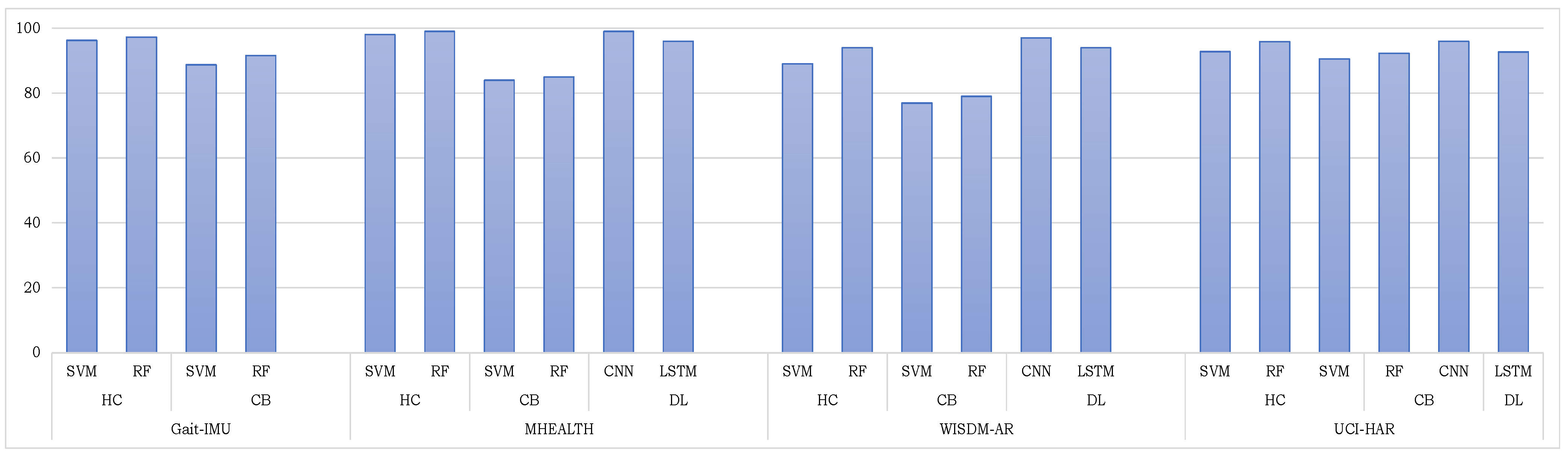
| MHEALTH dataset | 98.0 | 99.0 | 84.0 | 85.0 | 99.0 | 96.0 |
| WISDM-AR dataset | 89.0 | 94.0 | 77.0 | 79.0 | 97.0 | 94.0 |
| UCI-HAR dataset | 92.8 | 95.9 | 90.5 | 92.3 | 96.0 | 92.7 |
| Methods | Year | Accuracy |
|---|---|---|
| Halloran et al. [71] | 2019 | 83 |
| Khatun et al. [72] | 2022 | 93 |
| Davidashvilly et al. [73] | 2022 | 87 |
| Yatbaz et al. [74] | 2021 | 97 |
| Nematallahet al. [65] | 2020 | 93 |
| Proposed handcrafted features with RF | 2023 | 99 |
| Proposed deep CNN | 2023 | 99 |
| Methods | Year | Accuracy |
|---|---|---|
| Xia et al. [64] | 2020 | 95 |
| Semwal et al. [75] | 2022 | 90 |
| Challa et al. [67] | 2022 | 96 |
| Xu et al. [76] | 2018 | 91 |
| Yin et al. [66] | 2022 | 96 |
| Proposed deep CNN | 2023 | 97 |
| Methods | Year | Accuracy |
|---|---|---|
| Khan et al. [77] | 2021 | 95.4 |
| Xia et al. [64] | 2020 | 95.8 |
| Tong et al. [78] | 2022 | 95.4 |
| Perez et al. [79] | 2021 | 94.7 |
| Kolkar et al. [80] | 2021 | 93.1 |
| Proposed handcrafted features | 2023 | 95.9 |
| Proposed deep CNN | 2023 | 96.0 |
| Dataset | Data Collection | Collection Rate | Sensing Modalities | Accuracy |
|---|---|---|---|---|
| Gait-IMU | The gait data are collected using IMU sensor LPMS-B2 Series devices. | 50 Hz | Accelerometer, magnetometer, and gyroscope | 97.2 |
| MHEALTH | The activity data are collected using wearable IMU sensors from Shimmer2. | 50 Hz | Accelerometer, magnetometer, and gyroscope | 99.0 |
| WISDM-AR | The activity data are collected using a smartphone. | 20 Hz | Accelerometer | 97.0 |
| UCI-HAR | The activity data are collected using a smartphone. | 50 Hz | Accelerometer, and gyroscope | 96.0 |
| Feature Encoding (ms) | Classification Time (ms) | |
|---|---|---|
| Handcrafted using SVM | 5.07 | 8.98 |
| Handcrafted using RF | 5.07 | 9.44 |
| Codebook using SVM | 5.94 | 4.51 |
| Codebook using RF | 5.94 | 4.51 |
| CNN | - | 12.93 |
| LSTM | - | 11.95 |
Disclaimer/Publisher’s Note: The statements, opinions and data contained in all publications are solely those of the individual author(s) and contributor(s) and not of MDPI and/or the editor(s). MDPI and/or the editor(s) disclaim responsibility for any injury to people or property resulting from any ideas, methods, instructions or products referred to in the content. |
© 2023 by the authors. Licensee MDPI, Basel, Switzerland. This article is an open access article distributed under the terms and conditions of the Creative Commons Attribution (CC BY) license (https://creativecommons.org/licenses/by/4.0/).
Share and Cite
Fatima, R.; Khan, M.H.; Nisar, M.A.; Doniec, R.; Farid, M.S.; Grzegorzek, M. A Systematic Evaluation of Feature Encoding Techniques for Gait Analysis Using Multimodal Sensory Data. Sensors 2024, 24, 75. https://doi.org/10.3390/s24010075
Fatima R, Khan MH, Nisar MA, Doniec R, Farid MS, Grzegorzek M. A Systematic Evaluation of Feature Encoding Techniques for Gait Analysis Using Multimodal Sensory Data. Sensors. 2024; 24(1):75. https://doi.org/10.3390/s24010075
Chicago/Turabian StyleFatima, Rimsha, Muhammad Hassan Khan, Muhammad Adeel Nisar, Rafał Doniec, Muhammad Shahid Farid, and Marcin Grzegorzek. 2024. "A Systematic Evaluation of Feature Encoding Techniques for Gait Analysis Using Multimodal Sensory Data" Sensors 24, no. 1: 75. https://doi.org/10.3390/s24010075
APA StyleFatima, R., Khan, M. H., Nisar, M. A., Doniec, R., Farid, M. S., & Grzegorzek, M. (2024). A Systematic Evaluation of Feature Encoding Techniques for Gait Analysis Using Multimodal Sensory Data. Sensors, 24(1), 75. https://doi.org/10.3390/s24010075