Identifying Regional Key Eco-Space to Maintain Ecological Security Using GIS



Abstract
1. Introduction
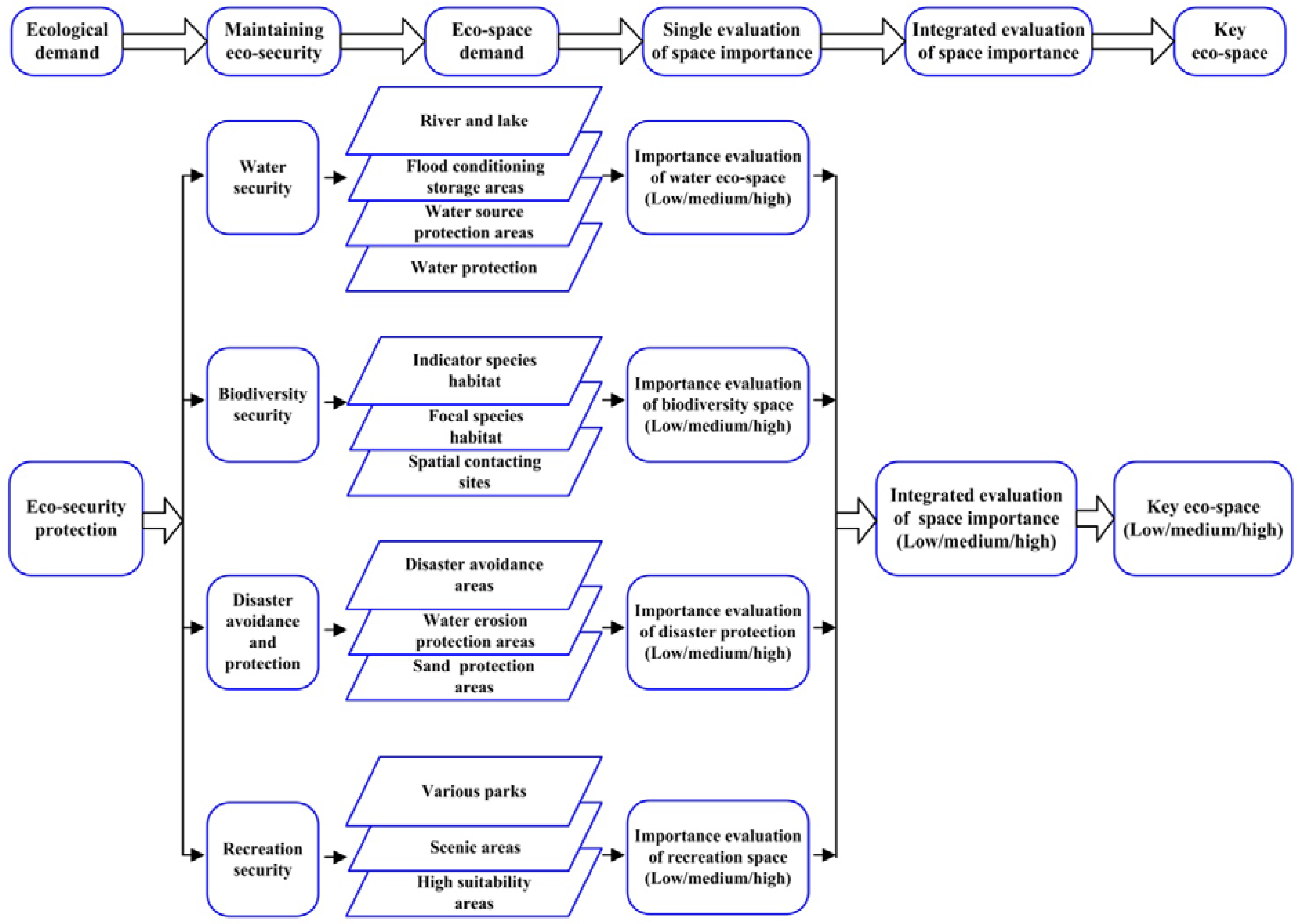
2. Identifying Framework

3. Materials and Methods
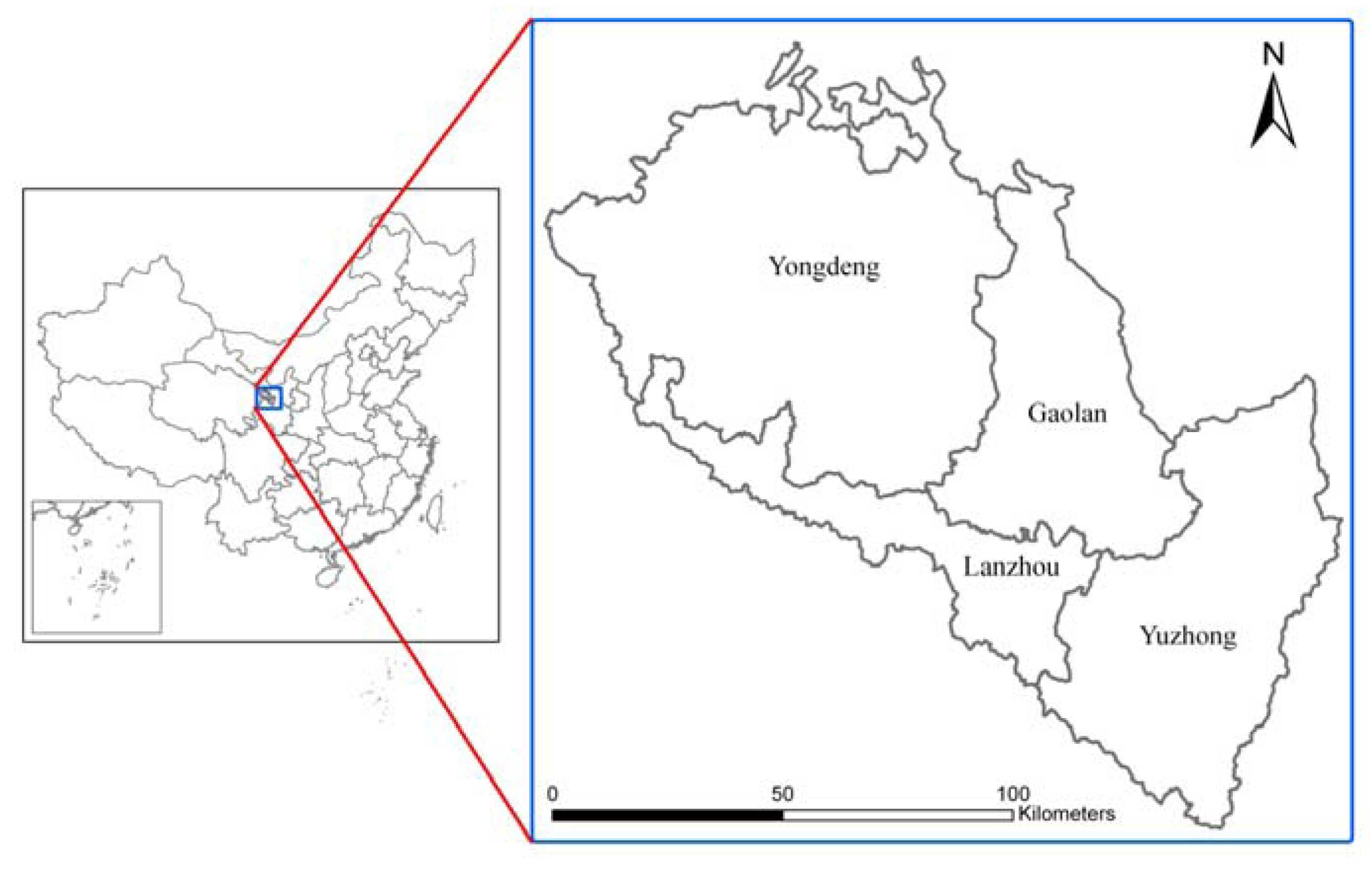
3.1. Study Area

3.2. Data
3.3. Methods
3.3.1. The Framework for the Importance Evaluation of Eco-Space

| Object Layer | Item Layer | Index Layer |
|---|---|---|
| Integrated index of ecological space importance | Importance of maintaining water security | Distance index to a river or lake (s1) |
| Type index of flood conditioning storage areas (s2) | ||
| Importance index for water conservation (s3) | ||
| Type index of water source protection areas (s4) | ||
| Importance of biodiversity conservation | Sensitivity index of habitats (s5) | |
| Importance of disaster avoidance and protection | Sensitivity index of geological hazards (s6) | |
| Importance index of soil conservation(s7) | ||
| Importance index of land desertification protection(s8) | ||
| Importance of natural recreation | Suitability index of natural recreation(s9) |
| Topographic Form | Ecosystem Class | Importance |
|---|---|---|
| Mountain | Forest or Wetland/ Steppe or Meadow / Desert | High / Relatively high / Medium |
| Hill | Forest or Wetland/ Steppe or Meadow / Desert | Relatively high / Medium / Relatively low |
| Plain | Forest or Wetland/ Steppe or Meadow / Desert | Medium / Relatively low / Low |
| Eco-space Type | Degree of Sensitivity to Soil Erosion and Land Desertification | Importance for Soil Conservation and Land Desertification Protection |
|---|---|---|
| Forest ecosystem
Steppe ecosystem Meadow ecosystem Desert ecosystem | Extremely sensitive | High |
| Highly sensitive | Relatively high | |
| Moderately sensitive | Medium | |
| Mildly sensitive | Relatively low | |
| Not sensitive | Low |
3.3.2. Criteria for the Indexes of Eco-Space Importance Evaluation
| Index | Extremely Important | Moderately Important | Generally Important | Not Important |
|---|---|---|---|---|
| Distance index to a river or lake (s1) | <50 m | 50~100 m | 100~150 m | >150 m |
| Type index of flood conditioning storage areas (s2) | Wetland areas | Core areas of detention basins | Non-core areas of detention basins | Other areas |
| Importance index for water conservation (s3) | High | Relatively high | Medium | Relatively low/ Low |
| Type index of water source protection areas (s4) | First-grade protection zones of water resources | Second-grade protection zones of water resources | Quasi-watershed protection zone | None |
| Sensitivity index of habitats (s5) | Extremely sensitive | Highly sensitive | Moderately sensitive | Mildly sensitive/
Not sensitive |
| Sensitivity index of geological hazards (s6) | First-grade protection zones of water resources | Second-grade protection zones of water resources | Quasi-watershed protection zone | None |
| Importance index for soil conservation (s7) | Extremely sensitive | Highly sensitive | Moderately sensitive | Mildly sensitive/
Insensitive |
| Importance index for land desertification protection (s8) | Extremely sensitive | Highly sensitive | Moderately sensitive | Mildly sensitive/
Not sensitive |
| Suitability index of natural recreation (s9) | High | Relatively high | Medium | Relatively low/ Low |
| Assigned score | 4 | 3 | 2 | 1 |
3.3.3. Integrated Evaluation of Eco-Space Importance
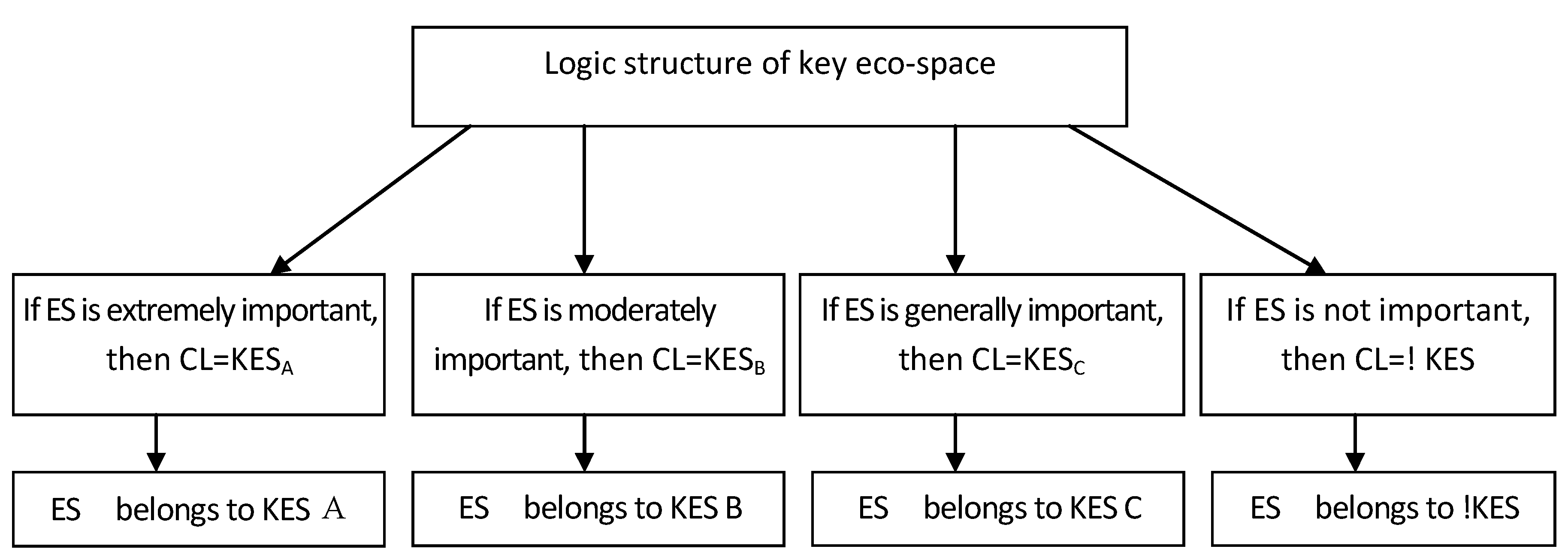
3.3.4. Identification of Key Eco-Space

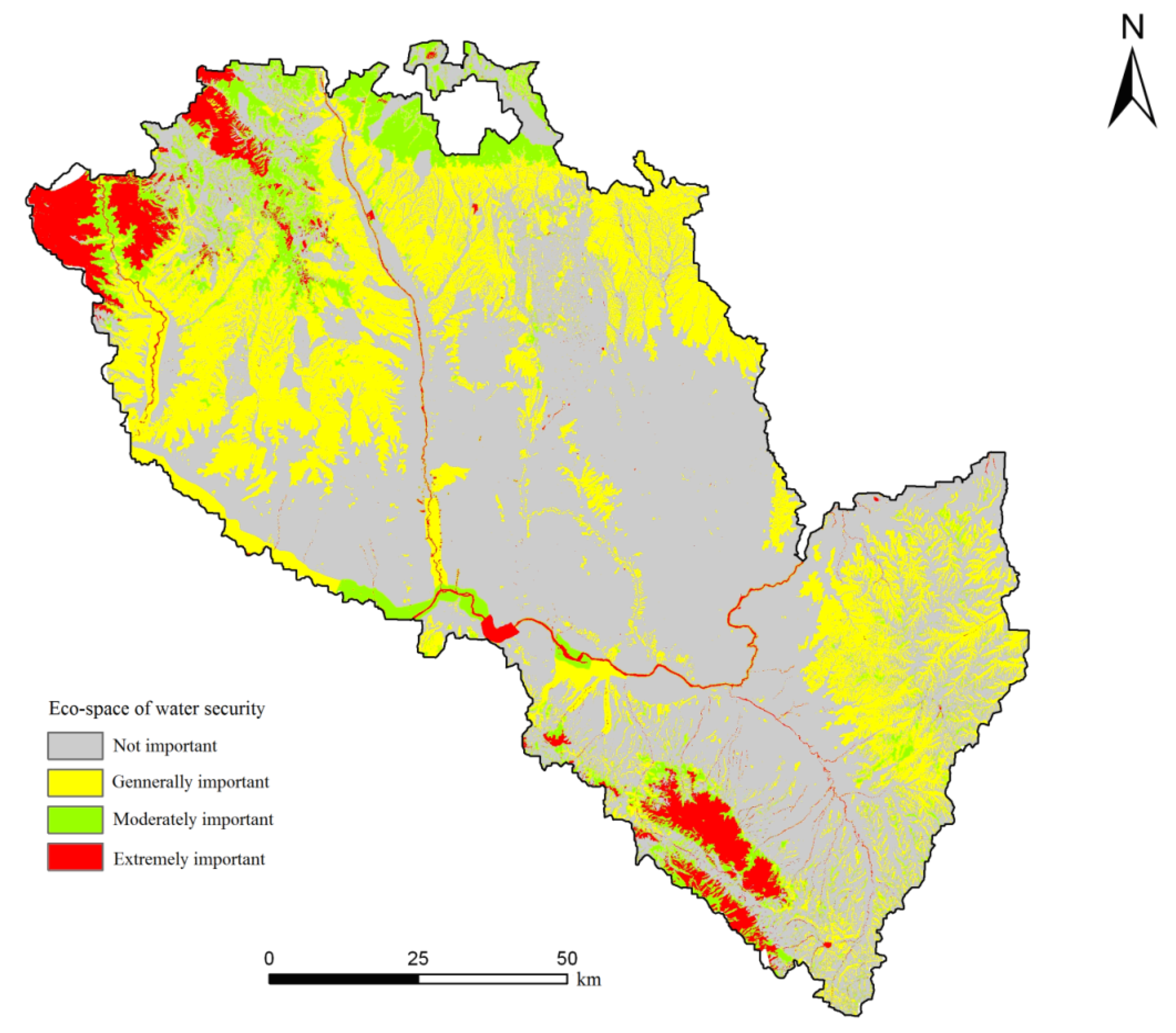
4. Results and Discussion
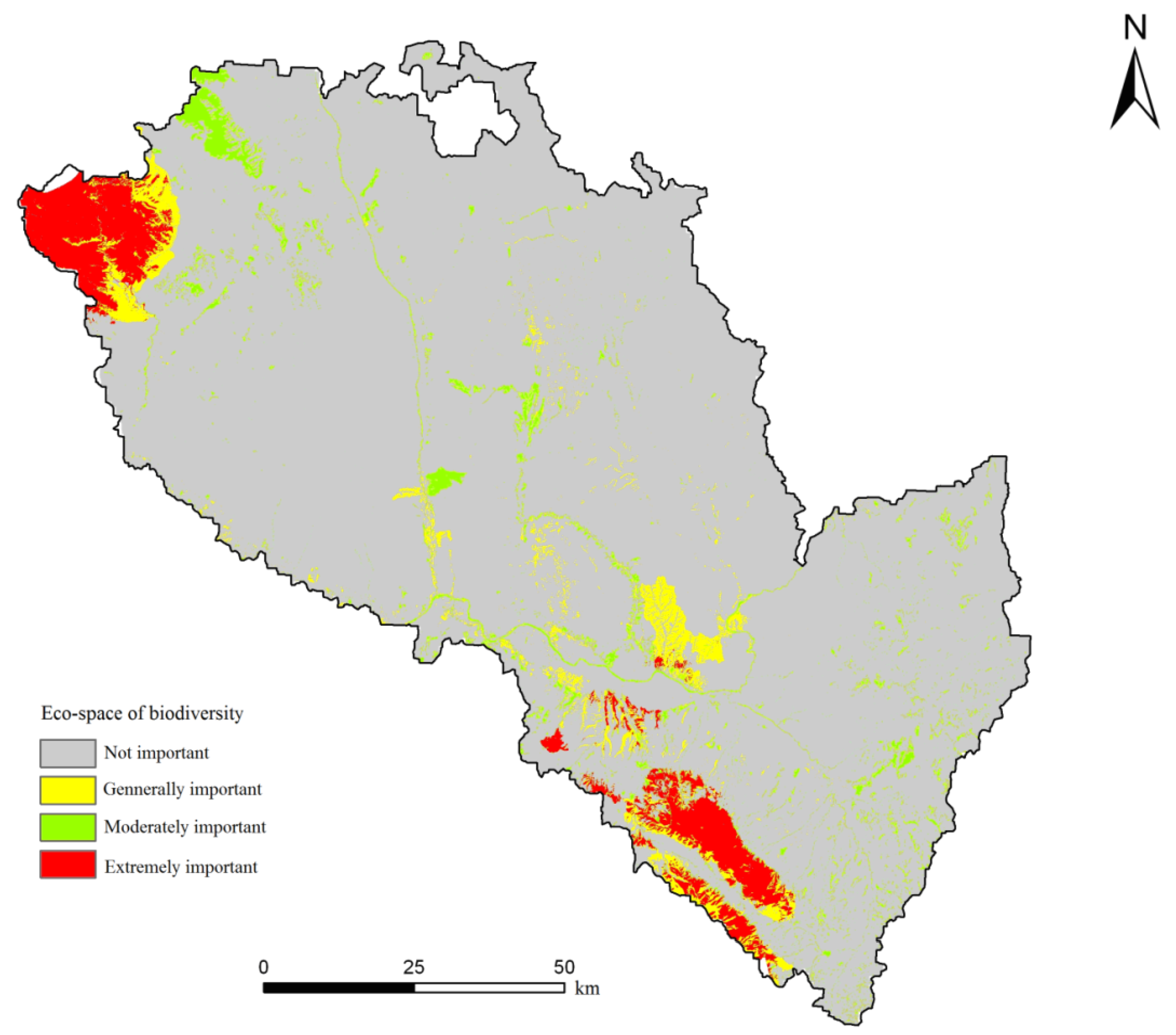
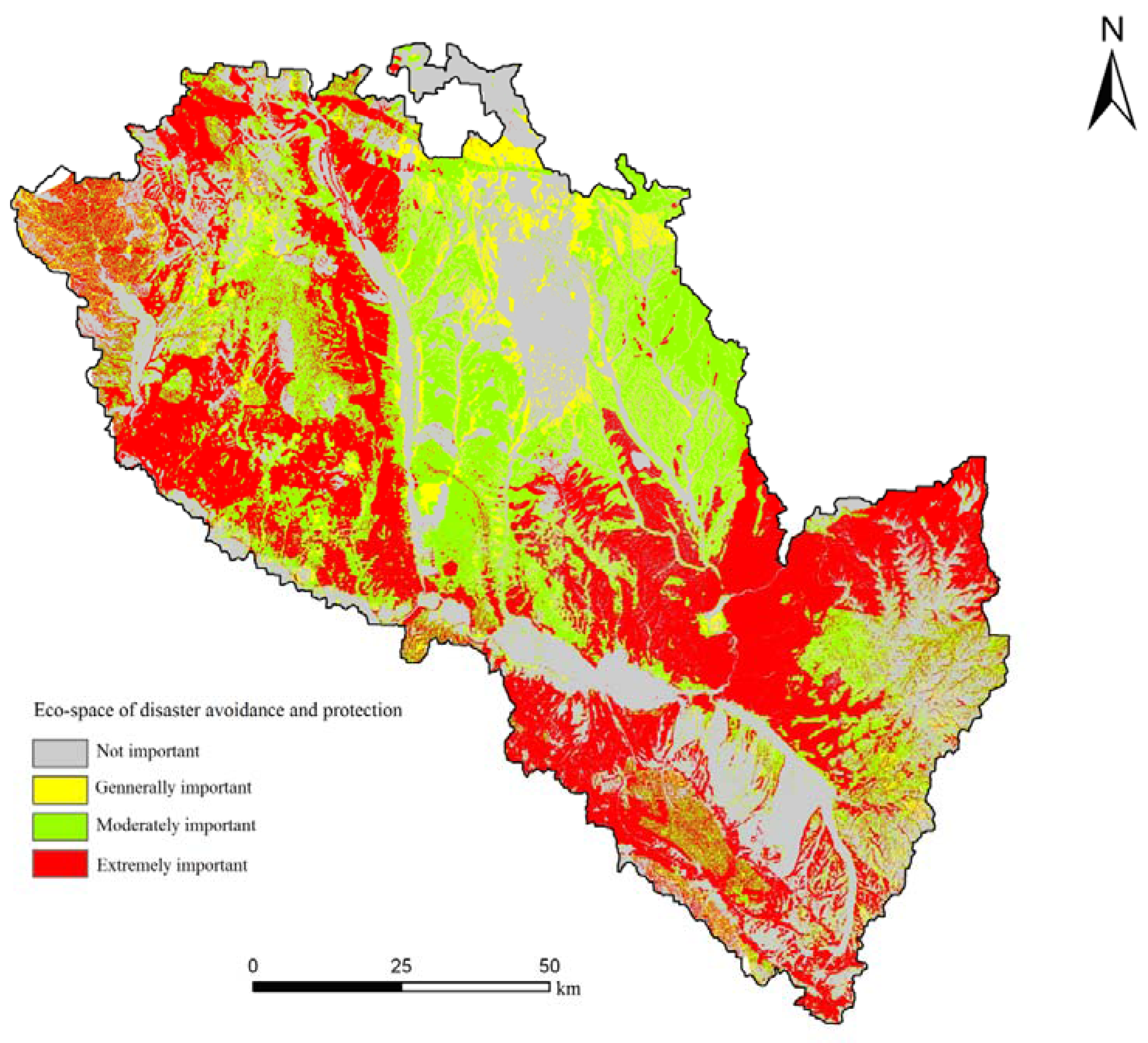
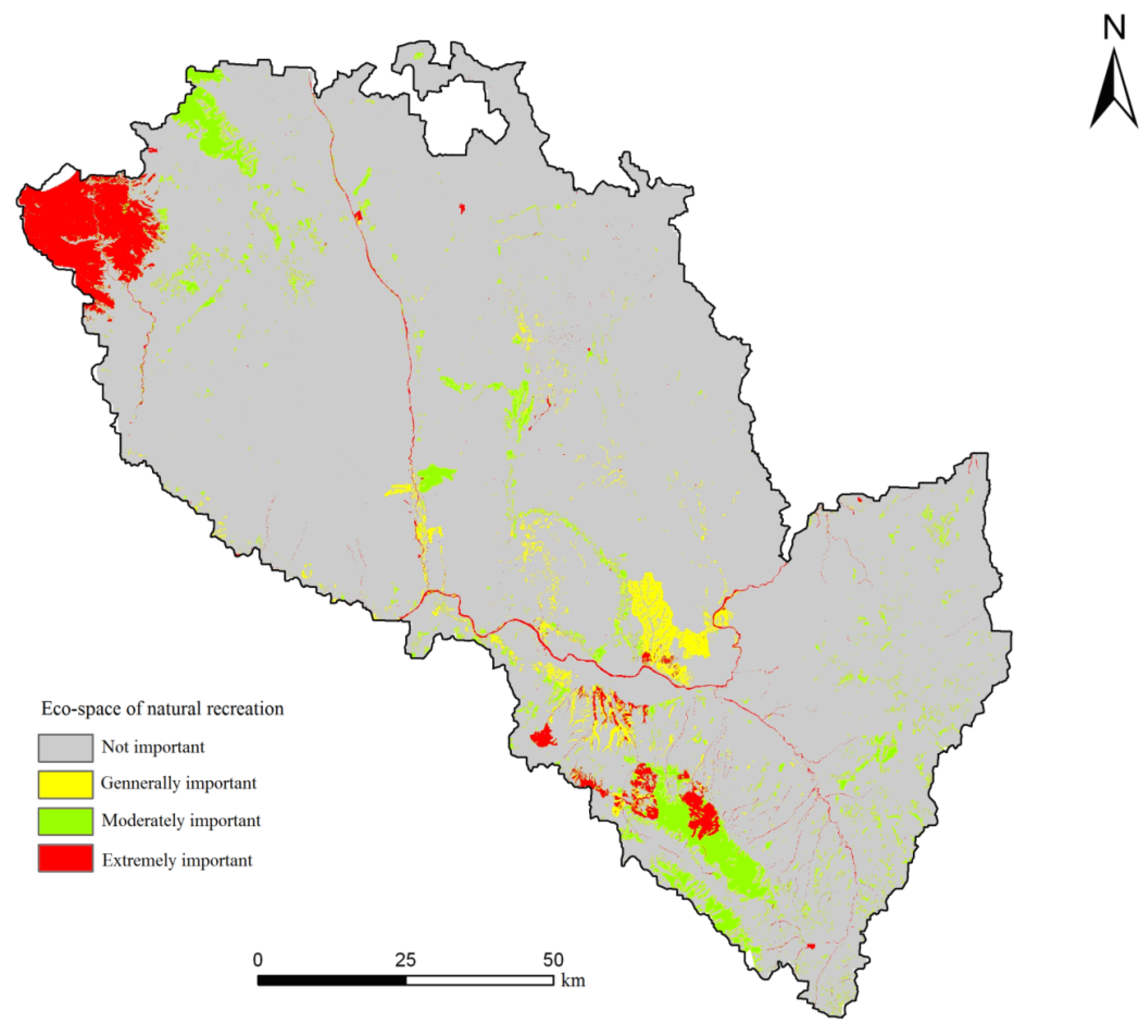
| Evaluation Factors | Importance Ranking | Areas (hm2) | Percentage of Total Area (%) | Cumulative Percentage of Total Area (%) |
|---|---|---|---|---|
| Water security | Extremely important | 6,764.375 | 5.22 | 5.22 |
| Moderately important | 11,156.1 | 8.61 | 13.83 | |
| Generally important | 34,970.05 | 26.99 | 40.82 | |
| Not important | 76,693.825 | 59.18 | 100 | |
| Biodiversity conservation | Extremely important | 5,810.65 | 4.48 | 4.48 |
| Moderately important | 5,222.725 | 4.03 | 8.51 | |
| Generally important | 4,441.3 | 3.43 | 11.94 | |
| Not important | 114,109.675 | 88.06 | 100 | |
| Disaster avoidance and protection | Extremely important | 46,461.4 | 35.85 | 35.85 |
| Moderately important | 37,533.375 | 28.96 | 64.81 | |
| Generally important | 6,194.7 | 4.79 | 69.60 | |
| Not important | 39,394.875 | 30.40 | 100 | |
| Natural recreation | Extremely important | 4,688.425 | 3.62 | 3.62 |
| Moderately important | 6,289.425 | 4.85 | 8.47 | |
| Generally important | 2,435.725 | 1.88 | 10.35 | |
| Not important | 116,170.775 | 89.65 | 100 |


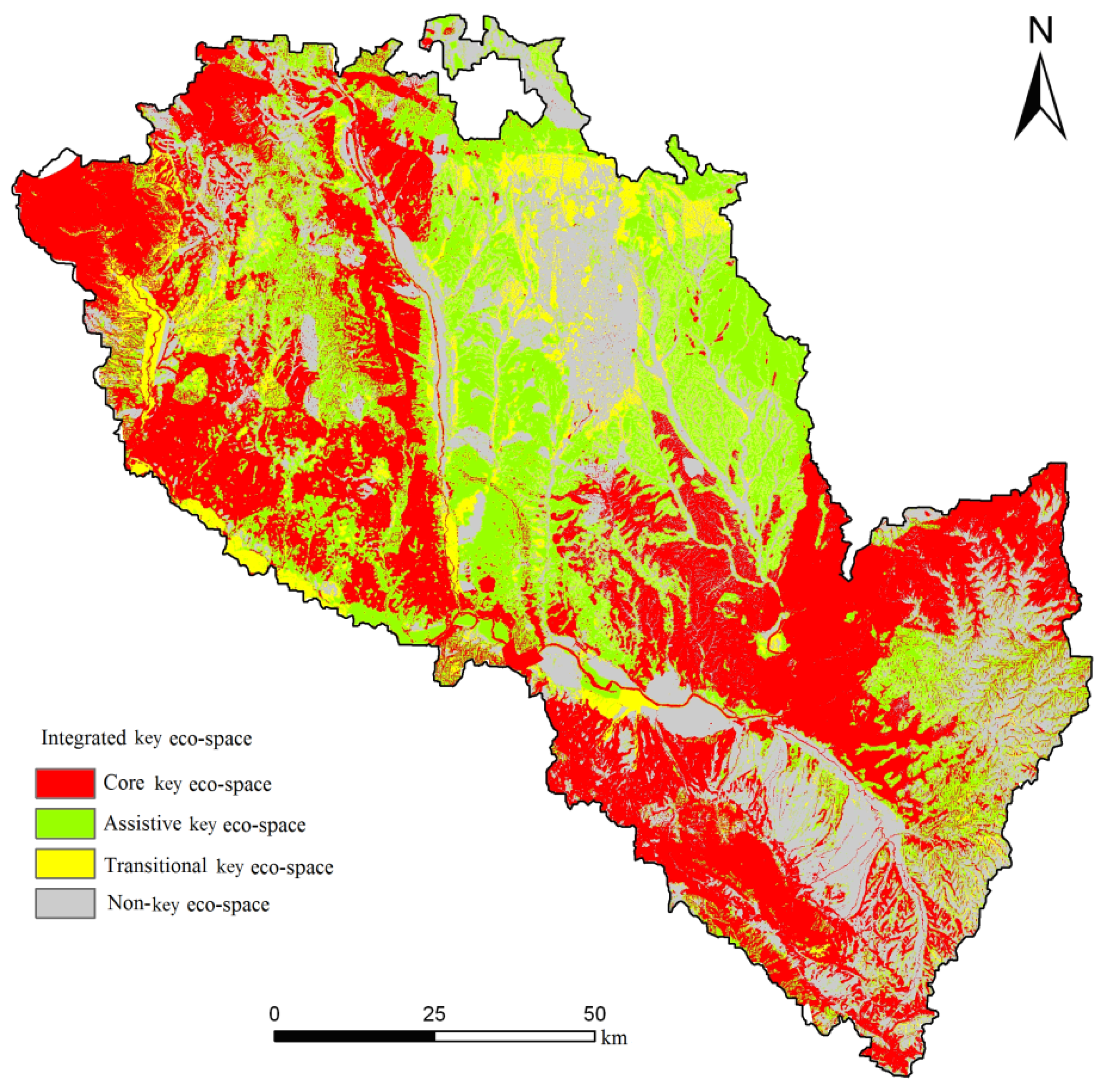
| Type of Key Eco-space | Areas (hm2) | Percentage of Total Area (%) | Cumulative Percentage of Total Area (%) |
|---|---|---|---|
| Core key eco-space
(Baseline security level) | 50,908.7 | 39.29 | 39.29 |
| Assistive key eco-space
(Medium security level) | 39,004.95 | 30.10 | 69.39 |
| Transitional key eco-space
(Ideal security level) | 6,896.425 | 5.32 | 74.71 |
| Non-key eco-space | 32,774.275 | 25.29 | 100 |
5. Conclusions
Acknowledgments
Author Contributions
Conflicts of Interest
References
- Li, X.B. Core of global environmental change research: Frontier in land use and coverage change. Acta Geogr. Sin. 1996, 51, 553–558. [Google Scholar]
- Vitousek, P.M.; Mooney, H.A.; Lubchenco, J.; Melillo, J.M. Human domination of Earth’s ecosystems. Science 1997, 277, 494–499. [Google Scholar] [CrossRef]
- Eloy, L.; Meral, P.; Ludewigs, T.; Pinheiro, G.T.; Singer, B. Payments for ecosystem services in Amazonia. The challenge of land use heterogeneity in agricultural frontiers near Cruzeiro do Sul (Acre, Brazil). J. Environ. Plan. Manag. 2012, 55, 685–703. [Google Scholar] [CrossRef]
- Xie, H.L.; Kung, C.C.; Zhang, Y.T.; Li, X.B. Simulation of regionally ecological land based on a cellular automation model: A case study of Beijing, China. Int. J. Environ. Res. Public Health 2012, 9, 2986–3001. [Google Scholar] [CrossRef]
- Xie, H.L.; Zou, J.L.; Peng, X.L. Spatial-temporal difference analysis of cultivated land use intensity based on emergy in Poyang Lake Eco-economic Zone. Acta Geogr. Sin. 2012, 67, 889–902. [Google Scholar]
- Vimal, R.; Pluvinet, P.; Sacca, C.; Mazagol, P.O.; Etlicher, B.; Thompson, J.D. Exploring spatial patterns of vulnerability for diverse biodiversity descriptors in regional conservation planning. J. Environ. Manage. 2012, 95, 9–16. [Google Scholar] [CrossRef]
- Xue, D.; Zhang, X. Study on ecological space of urban agglomeration. Chinese Geogr. Sci. 2002, 12, 321–328. [Google Scholar]
- Rouget, M.; Cowling, R.M.; Pressey, R.L.; Richardson, D.M. Identifying spatial components of ecological and evolutionary processes for regional conservation planning in the Cape Floristic Region, South Africa. Divers. Distrib. 2003, 9, 191–210. [Google Scholar] [CrossRef]
- Brouwer, R.; van Ek, R. Integrated ecological, economic and social impact assessment of alternative flood control policies in the Netherlands. Ecol. Econ. 2004, 50, 1–21. [Google Scholar] [CrossRef]
- Moilanen, A.; Arponen, A. Administrative regions in conservation: Balancing local priorities with regional to global preferences in spatial planning. Biol. Conserv. 2011, 144, 1719–1725. [Google Scholar] [CrossRef]
- Orsi, F.; Church, R.L.; Geneletti, D. Restoring forest landscapes for biodiversity conservation and rural livelihoods: A spatial optimisation model. Environ. Modell. Softw. 2011, 26, 1622–1638. [Google Scholar] [CrossRef]
- Byomkesh, T.; Nakagoshi, N.; Dewan, A.M. Urbanization and green space dynamics in Greater Dhaka, Bangladesh. Landsc. Ecol. Eng. 2012, 8, 45–58. [Google Scholar] [CrossRef]
- Zhang, Y.; Wang, Q.; Li, B.J. Study on forecasting ecological land demand with carbon-oxygen balance method. China Land Sci. 2007, 27, 23–28. [Google Scholar]
- Wiersma, Y.F.; Nudds, T.D. Efficiency and effectiveness in representative reserve design in Canada: The contribution of existing protected areas. Biol. Conserv. 2009, 142, 1639–1646. [Google Scholar] [CrossRef]
- Smith, R.J.; Di Minin, E.; Linke, S.; Segan, D.B.; Possingham, H.P. An approach for ensuring minimum protected area size in systematic conservation planning. Biol. Conserv. 2010, 143, 2525–2531. [Google Scholar] [CrossRef]
- Nhancale, B.A.; Smith, R.J. The influence of planning unit characteristics on the efficiency and spatial pattern of systematic conservation planning assessments. Biodivers. Conserv. 2011, 20, 1821–1835. [Google Scholar] [CrossRef]
- Vos, C.C.; van der Hoek, D.C.J.; Vonk, M. Spatial planning of a climate adaptation zone for wetland ecosystems. Landsc. Ecol. 2010, 25, 1465–1477. [Google Scholar] [CrossRef]
- Zagas, T.D.; Raptis, D.I.; Zagas, D.T. Identifying and mapping the protective forests of southeast Mt. Olympus as a tool for sustainable ecological and silvicultural planning, in a multi-purpose forest management framework. Ecol. Eng. 2011, 37, 286–293. [Google Scholar] [CrossRef]
- Yu, K.J.; Qiao, Q.; Li, D.H. Ecological land use in three towns of eastern Beijing: A case study based on landscape security pattern analysis. Chinese J. Appl. Ecol. 2009, 20, 1932–1939. [Google Scholar]
- Wang, C.J.; Tang, X.H. A GIS-based study on the function of water conservation. Res. Soil Water Conserv. 2008, 15, 215–217. [Google Scholar]
© 2014 by the authors; licensee MDPI, Basel, Switzerland. This article is an open access article distributed under the terms and conditions of the Creative Commons Attribution license (http://creativecommons.org/licenses/by/3.0/).
Share and Cite
Xie, H.; Yao, G.; Wang, P. Identifying Regional Key Eco-Space to Maintain Ecological Security Using GIS. Int. J. Environ. Res. Public Health 2014, 11, 2550-2568. https://doi.org/10.3390/ijerph110302550
Xie H, Yao G, Wang P. Identifying Regional Key Eco-Space to Maintain Ecological Security Using GIS. International Journal of Environmental Research and Public Health. 2014; 11(3):2550-2568. https://doi.org/10.3390/ijerph110302550
Chicago/Turabian StyleXie, Hualin, Guanrong Yao, and Peng Wang. 2014. "Identifying Regional Key Eco-Space to Maintain Ecological Security Using GIS" International Journal of Environmental Research and Public Health 11, no. 3: 2550-2568. https://doi.org/10.3390/ijerph110302550
APA StyleXie, H., Yao, G., & Wang, P. (2014). Identifying Regional Key Eco-Space to Maintain Ecological Security Using GIS. International Journal of Environmental Research and Public Health, 11(3), 2550-2568. https://doi.org/10.3390/ijerph110302550