


Abstract
The notion of the bioeconomy has gained importance in both research and policy debates over the last decade, and is frequently argued to be a key part of the solution to multiple grand challenges. Despite this, there seems to be little consensus concerning what bioeconomy actually implies. Consequently, this paper seeks to enhance our understanding of what the notion of bioeconomy means by exploring the origins, uptake, and contents of the term “bioeconomy” in the academic literature. Firstly, we perform a bibliometric analysis that highlights that the bioeconomy research community is still rather fragmented and distributed across many different fields of science, even if natural and engineering sciences take up the most central role. Secondly, we carry out a literature review that identifies three visions of the bioeconomy. The bio-technology vision emphasises the importance of bio-technology research and application and commercialisation of bio-technology in different sectors of the economy. The bio-resource vision focuses on processing and upgrading of biological raw materials, as well as on the establishment of new value chains. Finally, the bio-ecology vision highlights sustainability and ecological processes that optimise the use of energy and nutrients, promote biodiversity, and avoid monocultures and soil degradation.
Keywords:
bioeconomy; biotechnology; sustainability; grand challenges; review; bibliometric analysis 1. Introduction
The notion of grand challenges has over the last decade emerged as a central issue in policymaking and—increasingly—academia. In a European context, the Lund Declaration [1] stressed the urgency of pursuing solutions to problems in diverse fields such as climate change, food security, health, industrial restructuring, and energy security. A key common denominator for these grand challenges is that they can be characterised as persistent problems, which are highly complex, open-ended, and characterised by uncertainty in terms of how they can be addressed and solved—a partial solution may result in further problems at a later point in time due to feedback effects [2,3,4].
Still, despite these uncertainties, the concept of a bioeconomy has been introduced as an important part of the solution to several of these challenges. Moving from fossil-based to bio-based products and energy is important from a climate change perspective, but it is also suggested that a transition to a bioeconomy will address issues related to food security, health, industrial restructuring, and energy security [5,6,7].
However, despite the key role attributed to the bioeconomy in addressing these grand challenges, there seems to be little consensus concerning what a bioeconomy actually implies. For instance, the conceptualisations of the bioeconomy range from one that is closely connected to the increasing use of bio-technology across sectors, e.g., [8], to one where the focus is on the use of biological material, e.g., [9]. Thus, describing the bioeconomy, it has been argued that “its meaning still seems in a flux” [6] (p. 386) and that the bioeconomy can be characterised as a “master narrative” [10] (p. 95), which is open for very different interpretations.
With this in mind, the aim of this paper is to provide an enhanced understanding of the notion of the bioeconomy. Arguably, this is important if the transition to the bioeconomy is indeed a key element in targeting a number of central grand challenges. Specifically, the paper seeks to explore the origins, uptake, and contents of the term “bioeconomy” in the academic literature. Firstly, this includes a bibliometric analysis of peer-reviewed articles on the topic (Section 3), which identifies central organisations, countries, and scientific fields. A main result is that the bioeconomy concept has been taken up in multiple scientific fields. Consequently, in Section 4 we review literature on the bioeconomy in order to examine the differences in the understanding of the bioeconomy concept that are put forward in the academic literature. Specifically, we focus on the implications regarding overall aims and objectives, value creation, drivers and mediators of innovation, and spatial focus. Before proceeding to the analysis, the following section presents the methodology.
2. Methodology
2.1. Bibliometric Analysis
The bibliometric analysis is based on a literature retrieval of relevant scientific articles indexed in a recognised scientific article database, the Core Collection of Web of Science. The delimitation of a sample can be defined by the chosen publishing period, the geographical location of the authors, the selection of research areas, the selection of a journal sample, or the selection of keywords. For the purpose of this study, we analysed the literature indexed during the last decade, from 2005 to 2014. We did not include 2015 to allow the papers published in the last year to gather citations in 2015. Since we decided to analyse the existing scientific literature about the bioeconomy, we chose to take a global approach and to include all research domains. (Furthermore, there is significant overlap in the research carried out on the bioeconomy between the human, social, natural, and technical research domains. For example, ethical aspects of the development of the bioeconomy are often covered by journals categorised as humanities, so this research domain is included as well.)
The following keywords and their variants were selected: bioeconomy, bio-based economy, bio-based industry, circular economy and bio*, bio-based society, bio-based products, and bio-based knowledge economy (variations are created by hyphens and truncation). A list of calculated indicators is provided in Appendix A. In the analysis of most active organisations and their collaboration in terms of co-publishing we used fraction counts and not absolute counts to achieve a more accurate picture of the position of the different organisations.
Social network analysis (SNA) techniques were applied to measure different types of centrality in the networks, such as degree centrality and betweenness centrality. While degree centrality is defined as the number of links that a node has [11], betweenness centrality is defined as the number of times a node acts as a bridge along the shortest path between two other nodes [12]. Both indicators are calculated with the help of UCINET 6 developed by Borgatti, Everett, and Freeman [13] and network graphs were created with NetDraw developed by Borgatti [14]. The network graphs were based on degree centrality measures. The structure of the identified network was analysed by identifying cliques. A clique is a sub-set of the network in which the nodes are more closely and intensely tied to each other than they are tied to other members of the network.
2.2. Literature Review
The literature review aims to examine differences in the understanding of the bioeconomy concept. It is based on a subset of the papers included in the bibliometric analysis. The main inclusion criterion was that papers had to include a discussion of the bioeconomy. Importantly, the resulting bioeconomy visions described in Section 4 should not be understood as visions promoted by the academic writers, but as bioeconomy visions that result from academic analysis of the actions of policymakers, industry actors, etc.
In order to improve our understanding of the underpinnings and conditions for the emergence of the bioeconomy we included papers that were focusing on conceptual aspects such as innovation and value creation, driving forces, governance, and spatial focus of the bioeconomy. We thus excluded papers that primarily discussed technical issues. The review consisted of a screening of the abstracts of 110 papers. From these we made a discretionary selection of 65 papers that were considered relevant to the analysis.
These papers were then read by between two and four persons in order to enhance reliability. The content of the papers was summarised in a database, considering aspects such as research objectives, methods, scope regarding geography and industry sector, and main conclusions. Differing opinions concerning individual articles were resolved in discussions. The database provided the point of departure for identifying papers containing relevant content on bioeconomy aims and objectives, value creation processes, drivers and mediators of innovation, or spatial focus. These papers were then re-read and synthesised into the analysis presented in Section 4.
3. Bibliometric Analysis of Scientific Literature on the Bioeconomy
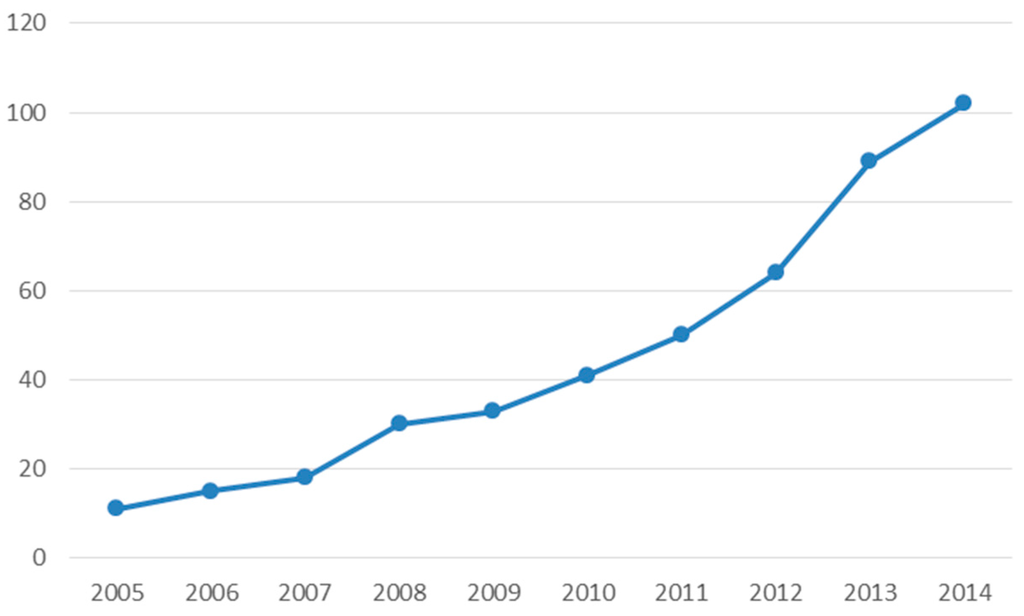
We identified 453 papers for the period 2005 to 2014. Figure 1 shows that the topic has gained increasing attention in the scientific discourse.
Figure 1.
Number of papers per year (n = 453 papers).
The total number of citations achieved by the whole sample was 9207, but the distribution of citations is skewed (see Table 1). The three most cited paper received 18% of all citations. The 15 most cited papers received 41% of the citations. Forty-one papers received one citation, and 55 papers received no citations.
Table 1.
The 10 most cited papers (491 citations) and the 10 papers with the most citations per year.
It is more interesting to look at the average number of citations per year than the total number of citations because older papers will by default tend to achieve more citations than the most recent papers. Still, the results do not differ much across the two different ways of calculating citations. The data fit with Bradford’s law of scattering, which means that the most significant articles in a given field of investigation are found within a relatively small core cluster of journal publications and a large group of articles does not get any citations [26].
The analysis of the journals revealed that this topic has been pursued in a large number of journals: the 453 papers were published in 222 journals; 149 of the journals had just one paper on this topic. Table 2 shows the journals with more than seven articles, the number of achieved citations, and their share of citations of the total number of citations. It seems that no journal has positioned itself as the central journal for academic debate on the bioeconomy.
Table 2.
Journals with more than seven articles (n = 117)—number of articles, sum, and share of citations per journal (total n = 9207 citations).
The 453 articles were authored by 1487 researchers. Most of the researchers (89% or 1324) had only one paper in the sample. Five researchers had more than four papers in the sample (Table 3).
Table 3.
The five most prominent authors, with more than four papers.
Where do these researchers come from? An analysis of the 992 addresses listed in the database provided two types of information: the origin of country and the organisation. Two hundred and seven articles listed only one address and four articles did not list any address. Therefore, we have a sample of 449 papers for the analysis of organisational affiliation. For all articles, the shares of the addresses have been calculated to get fractional counts (Table 4). The most important countries in the total sample are the United States, the Netherlands, and the United Kingdom.
Table 4.
The 10 countries with the most articles, based on address fraction counts.
The authors listed organisational affiliations to 459 organisations in the 449 papers. We calculated fractions of addresses and standardised the types of organisations (Table 5). Most of the papers (73%) have listed a university address, 13% listed a research institute address, 6% a company, 1% an international organisation, and 6% a public agency.
Table 5.
Types of organisation by number of papers, and their share of the total number of papers (n = 449 papers).
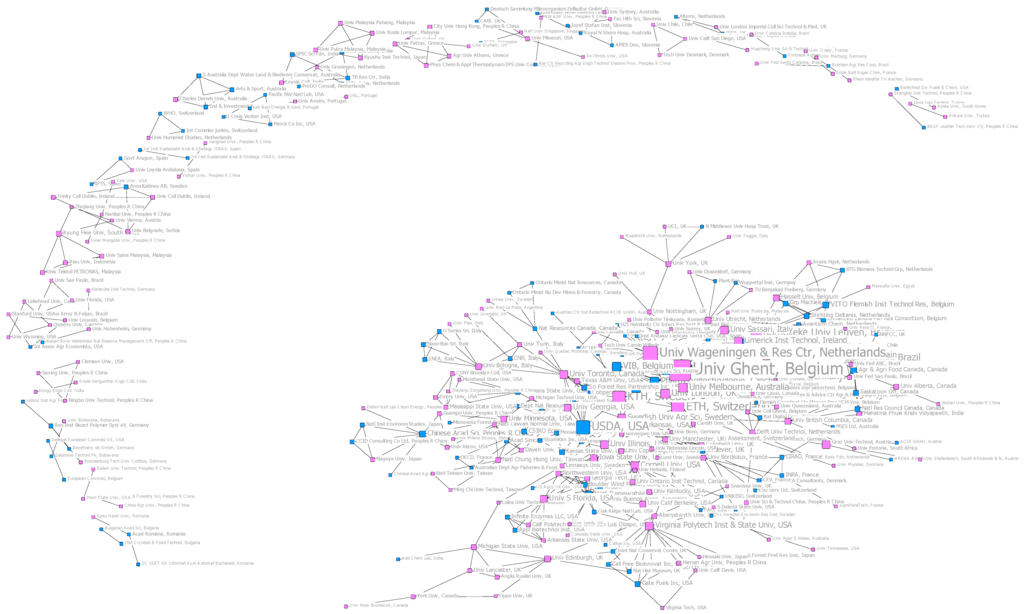
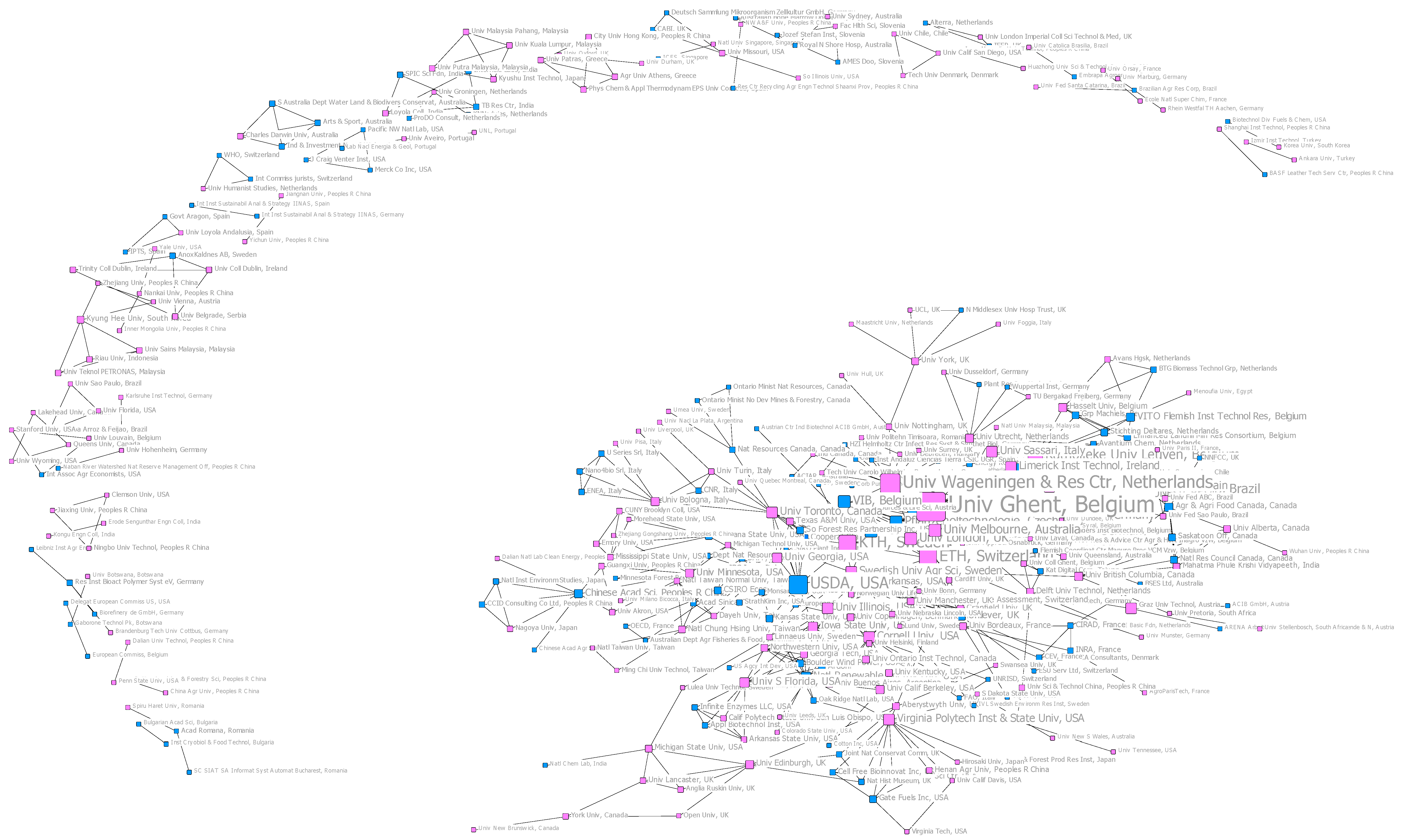
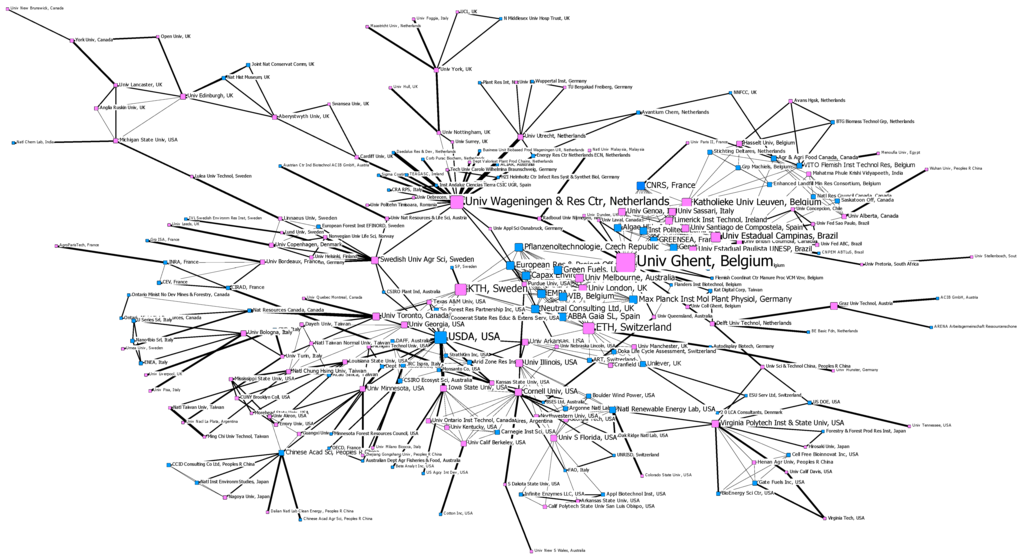
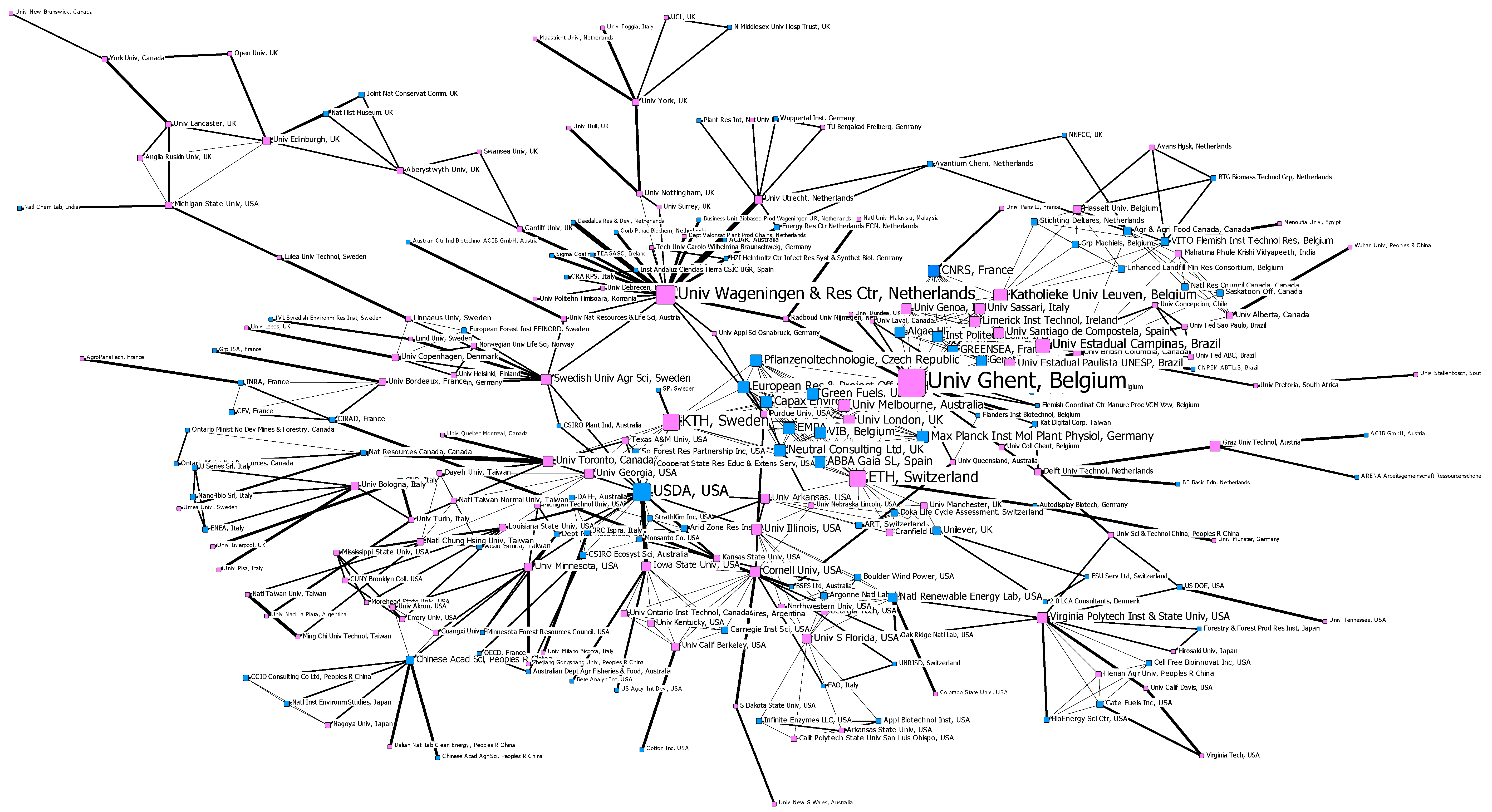
The most prominent organisations measured in numbers of papers and in degree centrality in the co-authorship network (see Table 6) are mainly universities. However, the U.S. Department of Agriculture has the central position in the network when measuring betweenness centrality. That means that the ministry is important for bridging distant networks of expertise. Higher values of degree centrality in Table 6 indicate the centrality of the respective organisation in the network, while higher values for betweenness centrality show the bridging function of the respective organisation. Some of the most important universities in the United States (Michigan State University and the University of Florida) achieve high values for degree centrality, but low values for betweenness centrality because they do not function as connectors between important subnetworks. A diagram based on the measurement of degree centrality in the co-authorship network shows that the research field consists of a core of networked organisations and a surrounding plethora of many smaller sub-networks of organisations to which the researchers are affiliated (Figure 2). We identified 179 cliques with at least two nodes and 79 cliques with at least three nodes. Figure 3 analyses just the biggest sub-network, with 237 nodes.
Table 6.
The 10 most prominent organisations in terms of number of papers (n = 99, fraction counts) and Freeman’s Degree centrality in co-authorship networks; values for Freeman’s Betweenness Centrality are added.
Figure 2.
Social network diagram of the authors’ organisations (n = 357 nodes) listed in the papers with more than one organisation (n = 242 papers), based on degree centrality. Note: Created with Borgatti, S.P. 2002. NetDraw: Graph Visualization Software [14]. Harvard: Analytic Technologies. Organisations marked with purple are higher education institutions, while the rest are marked with light blue.
Figure 3.
Social network diagram of the authors’ organisations, largest sub-network (n = 237 nodes), based on degree centrality. Note: Created with Borgatti, S.P. 2002. NetDraw: Graph Visualization Software [14]. Harvard: Analytic Technologies. Organisations marked with purple are higher education institutions, while the rest are marked with light blue.
The surrounding plethora of small-sized sub-networks is dominated by higher education organisations. The main sub-network shows not only universities but also companies and other types of actors placed centrally in the network and a geographical clustering of collaboration. Notably, a number of geographical clusters can be identified in Figure 3: (a) U.S. cluster (lower left in the network graph) with a central position around the U.S. Department of Agriculture and other U.S. actors, whether universities, public agencies, or companies; (b) western and central European cluster (upper and central part of the network graph) with the central position of University Wageningen in the Netherlands, ETH in Switzerland, and the University of Ghent in Belgium; (c) a small Canadian-French cluster (left part of the graph) around the University of Toronto; (d) a small Scandinavian cluster (upper left part of the graph); and (e) a small South American cluster (right part of the graph) with Universidad Estadual Campinas in Brazil. Other regions are less centrally positioned in the network and are more linked to the outer borders of some of these clusters, such as East Asian actors to the U.S. cluster.
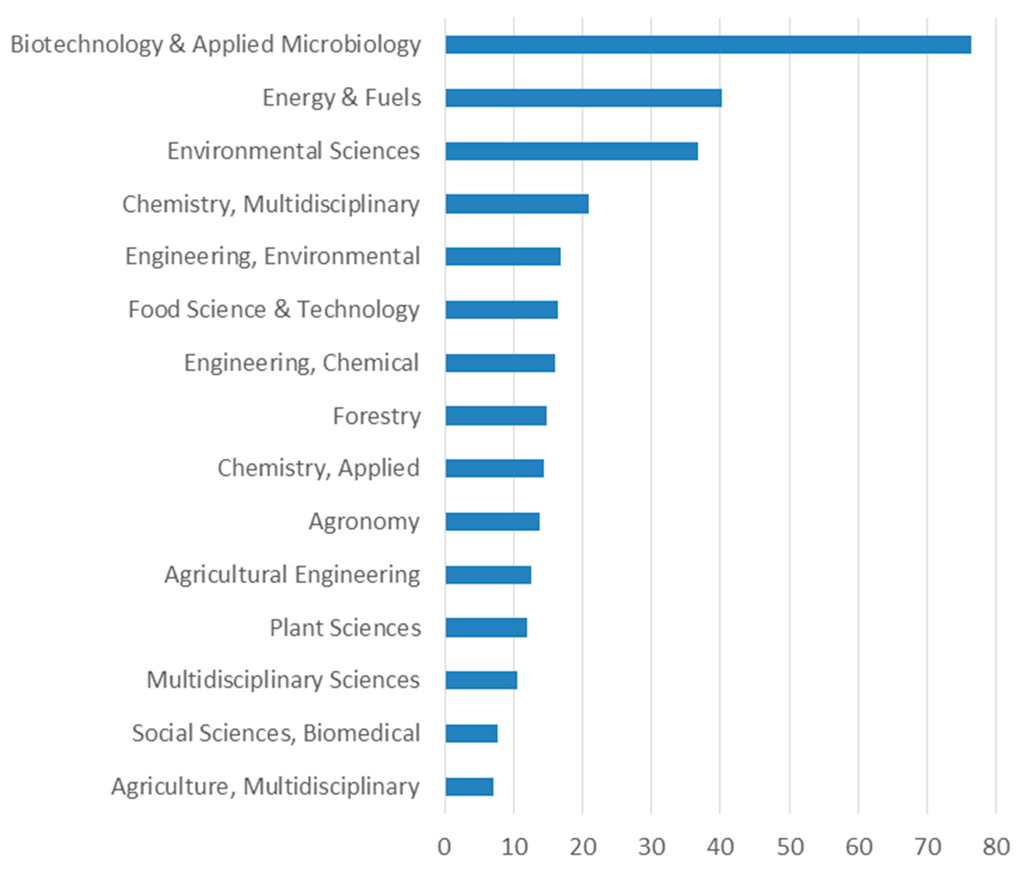
In order to get an idea of where the bioeconomy is discussed, we identified the main scientific fields in the sample. Papers are mostly listed under several categories. Therefore, weighted counts have been applied. The sample included 99 Web of Science categories, which represents a very dispersed distribution. There are 249 categories applied in the database, but for many categories this is just a very minor topic so far. Most important are three categories belonging to the natural sciences and technological sciences: biotechnology & applied microbiology, energy & fuels, and environmental sciences. Social science studies are less visible in the sample. The 15 most prominent categories are summarised in Figure 4 and the complete overview is listed in a table in Appendix C.
Figure 4.
Share of Web of Science categories, based on weighted counts (n = 453).
In summary, the bibliometric analysis highlights that bioeconomy research has become more visible over the last years. Almost three-fourths of the papers are co-authored by researchers affiliated to a higher education institution, while researchers from private firms are much less visible. The research community is still rather fragmented, with a core of European and American regional clusters most active and networked in the field. Conversely, organisations from other parts of the world are much less connected to the network of bioeconomy research. Topic-wise, the research field appears fragmented, dispersed over many fields of science. It is, however, dominated by natural and engineering sciences, while the social sciences are less visible.
4. Bioeconomy Visions
Considering the many origins and the wide diffusion of the bioeconomy concept across multiple scientific fields, the aim of this section is to examine differences in the understanding of this concept, which are put forward in the academic literature. Broadly speaking, we find that it is possible to distinguish between three ideal type visions of what a bioeconomy constitutes (see also [10,27]). Reflecting on the importance of bioeconomy research in the fields of natural and engineering science, it is perhaps not surprising that at least the first two visions appear to be significantly influenced by a technical perspective:
- (1)
- A bio-technology vision that emphasises the importance of bio-technology research and application and commercialisation of bio-technology in different sectors.
- (2)
- A bio-resource vision that focuses on the role of research, development, and demonstration (RD & D) related to biological raw materials in sectors such as agriculture, marine, forestry, and bioenergy, as well as on the establishment of new value chains. Whereas the bio-technology vision takes a point of departure in the potential applicability of science, the bio-resource vision emphasises the potentials in upgrading and conversion of the biological raw materials.
- (3)
- A bio-ecology vision that highlights the importance of ecological processes that optimise the use of energy and nutrients, promote biodiversity, and avoid monocultures and soil degradation. While the previous two visions are technology-focused and give a central role to RD & D in globalised systems, this vision emphasises the potential for regionally concentrated circular and integrated processes and systems.
Importantly, these visions should not be considered completely distinct from each other, but rather as ideal type visions of the bioeconomy. Thus, while certain actors are predominantly associated with the different visions such as the OECD (the bio-technology vision), the European Commission (the bio-resource vision), and the European Technology Platform TP Organics (the bio-ecology vision) [10,27], then it is also highlighted that the visions interrelate. For example, initial policy work in the European Commission was significantly influenced by existing work on the bio-technology vision [7]. (Similarly, individual papers included in the bibliometric analysis (Section 3) may often not subscribe to a single understanding of the bioeconomy concept; however, the aim in this part of the analysis is not to classify all bioeconomy papers according to the different visions, but rather to identify the key interpretations of the bioeconomy concept, which are put forward in the academic literature.)
In the following, we identify key features of the three bioeconomy visions, focusing specifically on implications in terms of overall aims and objectives, value creation, drivers and mediators of innovation, and spatial focus. This is summarised in Table 7.
Table 7.
Key characteristics of the bioeconomy visions.
4.1. The Bio-Technology Vision
The primary aims and objectives in the bio-technology vision relate to economic growth and job creation [27,28]. Thus, while positive effects on climate change and environmental aspects are assumed, economic growth is clearly prioritised above sustainability. Therefore, feedback effects following from the use of bio-technology are most often ignored [7]. Similarly, risks and ethical concerns are subordinate priorities to economic growth [29].
Value creation is linked to the application of biotechnologies in various sectors, as well as to the commercialisation of research and technology. It is expected that economic growth will follow from capitalising on biotechnologies, and intermediaries (such as bio-technology news providers) between bio-technology research firms and investors play an important role in stimulating economic growth around the bioeconomy [30]. Consequently, investments in research and innovation, which will result in the production of scientific knowledge, are an absolutely central aspect in this version of the bioeconomy. Research starts from processes operating at the molecular level and products and production processes are subsequently constructed. In principle, this allows the transformation of biomass into a very wide spectrum of marketable products [31].
Related to drivers and mediators of innovation, the implicit understanding of innovation processes in the bio-technology vision is in many ways similar to the so-called linear model of innovation, where innovation processes are assumed to start with scientific research, which is then subsequently followed by product development, production, and marketing ([32], see [33] for a summary of critiques towards this model). Thus, close interaction between universities and industry is needed in the process in order to ensure that relevant research is indeed commercialised [34]. In this bioeconomy vision technological progress will solve resource shortages, and resource scarcity is therefore not a central parameter to analyse [9,27]. Similarly, it seems to be more or less implicitly assumed that waste will not be a key issue since bio-technology production processes will result in little or no waste. Since the starting point is at the molecular level, processes can in principle be designed to result in very little waste. Biotechnologies may also help transform organic waste into new end-products [7]. It is also suggested that the wide possibilities for application of bio-technology lead to a blurring of boundaries between traditional industries once the technologies approach the stage of commercialisation [35,36]. Since research is a central component in this vision, research councils and other research funding bodies become central actors in translating the visions of the bioeconomy into the actual development of the field itself [37]. Related to the prominent role ascribed to research, some contributions in the literature focus upon issues of governance of research, such as the history of research policies for the bioeconomy [38].
In terms of spatial focus, the bio-technology vision of the bioeconomy is expected to lead to a concentration of growth in a limited number of regions globally that host a combination of large pharmaceutical firms, small biotech firms, and venture capital [39,40]. Also regions specialised in high-quality public research related to bio-technology may benefit in developmental terms [41]. It is furthermore suggested that connections between these global bio-technology centres are very important for innovation in the bioeconomy and that certain regions in emerging and developing economies may also take advantage of the bioeconomy [8,42]. As a consequence of the focus on global competition in the bioeconomy, the notion of governance of innovation also constitutes a central feature in some of the research underpinning such a vision [43,44]. Associated with the geographies of the bioeconomy, it is also pointed out how value-creation in the bioeconomy comprises both a material component associated with bio-resources, but nonetheless also an immaterial component in terms of knowledge and an ability to develop new knowledge [45]. Other parts of this literature revolve around issues such as the conditions for and strategies applied in building a bio-economy in various emerging economies [46,47,48,49,50,51].
4.2. The Bio-Resource Vision
In the bio-resource vision the overall aims and objectives relate to both economic growth and sustainability. There is an expectation that bio-innovations will provide both economic growth and environmental sustainability [10]. Whereas economic growth in the bio-technology vision would follow from capitalising on biotechnologies, capitalising on bio-resources is expected to drive economic growth in the bio-resource vision. While it is often assumed that effects in terms of environmental sustainability will also be positive, the main focus is on technological development of new bio-based products, and much less on environmental protection [52]. Thus, quite paradoxically, the climate change effects of the transition to a bioeconomy are rarely assessed, and the sustainability aspect receives relatively limited attention from policymakers [5,27]. Notably, this weak integration of sustainability aspects in bioeconomy policies is despite the fact that academics frequently question the positive sustainability effects of the bioeconomy [53]. Ponte [54] argues that processes and procedures associated with standard setting in the bioeconomy become more important than outcomes in terms of sustainable development. The bioeconomy discourse may in fact lead to a decreasing emphasis on issues such as deforestation and loss of biological diversity [6].
In terms of value creation, the bio-resource vision highlights the processing and conversion of bio-resources into new products. Related to the use and availability of bio-resources, waste management also takes up a more prominent position in the bio-resource vision. Minimising organic waste production along the value chain is a central concern, and waste production, which cannot be avoided, is an important input to renewable energy production [55]. The concept of cascading use of biomass is central in this regard since it highlights the efforts to maximise the efficiency of biomass use [56]. Finally, it is also argued that processing of waste that allows recycling by converting it to fertilisers is central to allow large-scale biofuel production [57].
In relation to drivers and mediators of innovation, and as a natural consequence of the prime focus on bio-resources, the issue of land use constitutes a more explicit element than in the bio-technology vision. An important driver in the bio-resource vision is thus to improve land productivity [10,57] and to include degraded land in the production of biofuels [57]. However, there is often little discussion of the implications for changes between different types of land use such as forestry and agriculture on other aspects such as climate change [5]. Additionally, while considerations concerning the use and availability of bio-resources are prominent, the relation between the use of bio-resources and the use of other resources and products (such as water, fertilisers, and pesticides) are rarely considered [27].
Indeed, similar to the bio-technology vision, the bio-resource vision also highlights the role of research and innovation activities as an important driver for value creation. However, while the former takes a more narrow point of departure in bio-technology research, the latter emphasises the importance of research in multiple fields, which are in different ways related to biological materials. Consequently, research and innovation efforts often involve collaboration between actors with dissimilar competences, and the importance of research on issues such as consumer preferences is also stressed [10]. Innovation is also understood to require collaboration across sectors, e.g., that firms from the forestry industry engage closely with downstream actors [58]. According to McCormick and Kautto [9], the importance of cross-sectoral collaborations for bioeconomy innovation is also frequently underlined in bioeconomy policies. Thus, in summary, the drivers of innovation underlying value creation in the bio-resource vision are less linear than in the bio-technology vision, as cross-sectoral collaborations and interaction with customers are emphasised.
In terms of spatial focus, the bio-resource vision emphasises the significant potential for stimulating development in rural settings. It is argued that plants producing new bio-products will positively influence employment in rural locations and will most likely be less footloose than other forms of economic activities due to the importance of natural resources as key location factors [59]. Thus, the bio-resource bioeconomy opens up for a revived rural development driven by diversification into higher value-added products [60]. Still, while localised competencies related to cultivating and processing of the biological material are central to this development, this will in most cases need to be complemented with externally located knowledge [61].
4.3. The Bio-Ecology Vision
The aims and objectives of the bio-ecology vision are primarily concerned with sustainability. While economic growth and employment creation is a main concern in the bio-technology and bio-resource visions, these aspects are clearly secondary to sustainability concerns in the bio-ecology vision [10]. Reflecting the focus on and concern for sustainability, the literature on the bioeconomy also contains tensions and critical voices to the focus on economic growth and commercialisation in the bio-technology and in the bio-resource visions. In the literature on health there are several contributions that criticise the commercialisation of bio-resources in areas such as trade in various forms of human tissues (examples of such criticism include questioning trade in cord-blood [62,63,64,65], oocytes [66,67,68], foetal tissue [69], stem cells [70], femoral head [71], or blood [72,73]. Examples of topics that are discussed are the ethics of commercialisation of bioresources [74], safety in blood supply [72], inequalities in access to bio-resources [75], or moral dilemmas of surrogacy [67]).
Regarding value creation, the bio-ecology vision emphasises the promotion of biodiversity, conservation of ecosystems, the ability to provide ecosystem services, and prevention of soil degradation [9,10]. Moreover, it is emphasised that energy production from bio-waste only takes place at the very end of the chain, after reuse and recycling. Also, the use of own waste as well as waste from urban areas is important to reduce or even eliminate the need for external inputs to bioproduct production facilities [9,10]. In this sense this vision emphasises a circular and self-sustained production mode.
With reference to the underlying drivers and mediators of innovation, the bio-ecological vision of the bioeconomy highlights the identification of favourable organic bio-ecological practices [76,77] and ecological interactions related to the re-use and recycling of waste and efficiency in land use. A related key topic is bio-ecological engineering techniques that aim to “design agricultural systems that require as few agrochemicals and energy inputs as possible, instead relying on ecological interactions between biological components to enable agricultural systems to boost their own soil fertility, productivity and crop protection” [10] (pp. 98–99).
Whereas the two other bioeconomy visions place emphasis on the role of technically focused research and innovation activities, this is not the case in the bio-ecology vision. In fact, certain technologies such as genetically modified crops are ruled out in the bio-ecology vision. This does not imply that research and innovation activities are deemed unimportant, but rather that they have different foci. For instance, Albrecht et al. [78] call for greater emphasis in research on transdisciplinary sustainability topics related to e.g., cultivation potentials of sustainable biomass, global fair trade, and wider participation in discussions and decisions on transition processes. Finally, calls are made for research that takes the global scale as the point of departure and accounts for the negative consequences of the competing bioeconomy visions [31].
In terms of spatial focus, the bio-ecology vision emphasises the opportunities for rural and peripheral regions in a similar way to the bio-resource vision. It is suggested that rural growth opportunities may result from a focus on high-quality products with territorial identity [10]. However, while the importance of external linkages is stressed in the bio-resource vision, the bio-ecology vision calls for development of locally embedded economies, i.e., “place-based agri-ecological systems” [76] (p. 140), as a central part of the efforts to ensure a sustainable bioeconomy.
5. Findings and Concluding Remarks
Based on a review of the research literature, this paper has documented the scope, origins, and reach of the notion of the bioeconomy. Moreover, the paper has sought to deepen our understanding of the notion of the bioeconomy through the identification of three different visions of the bioeconomy. In sum, the paper has sought to map the diverse grounds and perspectives in this field.
While the transition to the bioeconomy is often argued to play a key role in targeting grand challenges such as climate change, food security, health, industrial restructuring, and energy security, the paper has shown that the bioeconomy constitutes a young research field, although it is likely that the research covered in this analysis probably has been involved in related domains before, or in similar research under different headings, such as biotechnology. As opposed to former research on biotechnology as such, the more recent research on the bioeconomy seems to refer to a broader concept that encompasses several sectors spanning from health and the chemical industry, to agriculture, forestry, and bioenergy. The paper has shown how a range of different disciplines are involved in the knowledge production underpinning the emergence of the bioeconomy. This breadth reflects the generic characteristic and nature of the notion of the bioeconomy. However, among the variety of disciplines researching the bioeconomy, natural and engineering sciences take up the most central role.
With this in mind, it is perhaps not surprising that the literature review identified three visions of the bioeconomy, of which at least the first two appear to be significantly influenced by an engineering and natural sciences perspective. The bio-technology vision emphasises the importance of bio-technology research and the application and commercialisation of bio-technology in different sectors of the economy. The bio-resource vision focuses on processing and upgrading of biological raw materials, as well as on the establishment of new value chains. Finally, the bio-ecology vision highlights sustainability and ecological processes that optimise the use of energy and nutrients, promote biodiversity, and avoid monocultures and soil degradation.
The perception of a bioeconomy also contains different objectives in terms of a focus on reducing waste-streams of bio-resources on the one hand, and developing new products and economic value chains based on existing waste-streams from bio-resources on the other. To the degree that there emerge new economic value chains surrounding biowaste, this may constitute a disincentive to reduce the amount of biowaste in the first place. These two objectives may thus constitute contrasting rationalities. Such opposing rationales reflect the diversity among policy areas involved and highlight the difficulty of speaking of horizontal policies across sectors or domains. However, at the same time, given the emphasis on engineering and the natural sciences, the bio-technology vision and the bio-resources vision overlap to some extent and may represent complementary strategies in terms of the possibility of applying biotechnology to bio-resources. In this sense it may be a viable strategy for countries and regions to possess both localised bio-resources and the technology to refine and upgrade these. Instead of exporting bio-resources for upgrading elsewhere, domestic upgrading would ensure a higher value creation locally, in addition to expected synergies in terms of research and innovation.
Given the main emphasis on natural and engineering sciences in much bioeconomy research, an important topic for future studies is the connection between the bioeconomy and its wider societal and economic implications. The notion of the bioeconomy is often seen to cover a wide range of industries that are very different in terms of technological advancement and value chains. Moreover, the emergence of a bioeconomy is expected to imply the implementation and application of generic biotechnologies into several other sectors and domains. Such application of biotechnology in different existing industry sectors may serve to redefine how these sectors operate and what they produce. Thus, further research into the position of the bioeconomy in societal and economic development strategies following the principles of regional and context-sensitive smart specialisation [79] or constructed regional advantage [80] is welcome.
Thus, whether and how the transition to a bioeconomy will indeed contribute to addressing key grand challenges remains to be seen. Quite paradoxically, while the master narrative surrounding the bioeconomy stresses these particular aspects, consequences in terms of, e.g., environmental protection and climate change effects are rarely assessed [5,52]. This may be attributed to the dominance of natural and engineering science research, which often focuses on narrow aspects of the bioeconomy rather than the wider, systemic consequences. Thus, additional bioeconomy research in non-technical fields is arguably important in order to provide a more profound understanding of the socioeconomic aspects of the bioeconomy and thereby its potential for addressing the grand challenges of our time.
As an attempt to answer the question ‘What is the bioeconomy?’ posed in the title, this paper has shown that the notion of the bioeconomy is multifaceted: in breadth, e.g., in terms of origins and sectors represented; and in depth, i.e., in terms of rationales or visions of the underlying values, direction, and drivers of the bioeconomy. The paper has shown how these different visions seem to co-exist in the research literature, and how they bear implications for objectives, value creation, drivers of innovation, and spatial focus. Still, although we must remember that bioeconomy is a broad (and deep) term covering many sectors and meanings, it seems possible to distil a joint interest in ‘an exploration and exploitation of bio-resources’. Such an interest may imply different ways of applying biotechnology to bio-resources and various forms of harvesting new bioproducts. Nonetheless, it may also cause an improved understanding of the ecosystems in which we live and possibilities in terms of new and sustainable solutions and the knowledge and technologies underpinning these.
Acknowledgments
This work was carried out under the project “Sustainable path creation for innovative value chains for organic waste products”, financed by The Research Council of Norway. We would like to thank Sverre Herstad for his contributions in part of the empirical analysis and Lars Coenen for insightful comments.
Author Contributions
Conflicts of Interest
The authors declare no conflict of interest.
Appendix A
The following indicators have been calculated in the bibliometric analysis:
- Number of papers per year
- Total number of citations: we obtained the citation data in February 2016
- Citations per paper
- Average number of citations of each paper per year since publishing
- Numbers of papers per journal
- Citations of papers per journal
- Numbers of papers per author
- Affiliation of authors based on fraction counts: papers per country and per organisation
- Organisational affiliation of the authors distinguishing between types of organisations: higher education institutions, research institutes, companies, public agencies, international organisations, science agencies, and cluster organisations
- Centrality of organisations measured in number of papers based on fraction counts, and SNA centrality measures, such as degree centrality and betweenness centrality
- Distribution of scientific field based on the categories of the database Web of Science as an indicator for the scientific field and based on fraction counts.
Appendix B
Table B1.
Alphabetic list of journals with number of papers, share of papers, number of citations and share of citations.
Appendix C
Table C1.
List of Web of Science categories, sorted by numbers of papers and share of papers.
References
- Lund Declaration. Europe Must Focus on the Grand Challenges of Our Time; Swedish EU Presidency: Lund, Sweden, 2009. [Google Scholar]
- Coenen, L.; Hansen, T.; Rekers, J.V. Innovation policy for grand challenges. An economic geography perspective. Geogr. Compass 2015, 9, 483–496. [Google Scholar] [CrossRef]
- Schuitmaker, T.J. Identifying and unravelling persistent problems. Technol. Forecast. Soc. Chang. 2012, 79, 1021–1031. [Google Scholar] [CrossRef]
- Upham, P.; Klitkou, A.; Olsen, D.S. Using transition management concepts for the evaluation of intersecting policy domains (‘grand challenges’): The case of Swedish, Norwegian and UK biofuel policy. Int. J. Foresight Innov. Policy 2016, in press. [Google Scholar]
- Ollikainen, M. Forestry in bioeconomy—Smart green growth for the humankind. Scand. J. For. Res. 2014, 29, 360–366. [Google Scholar] [CrossRef]
- Pülzl, H.; Kleinschmit, D.; Arts, B. Bioeconomy—An emerging meta-discourse affecting forest discourses? Scand. J. For. Res. 2014, 29, 386–393. [Google Scholar] [CrossRef]
- Richardson, B. From a fossil-fuel to a biobased economy: The politics of industrial biotechnology. Environ. Plan. C Gov. Policy 2012, 30, 282–296. [Google Scholar] [CrossRef]
- Wield, D. Bioeconomy and the global economy: Industrial policies and bio-innovation. Technol. Anal. Strateg. Manag. 2013, 25, 1209–1221. [Google Scholar] [CrossRef]
- McCormick, K.; Kautto, N. The bioeconomy in Europe: An overview. Sustainability 2013, 5, 2589–2608. [Google Scholar] [CrossRef]
- Levidow, L.; Birch, K.; Papaioannou, T. Divergent paradigms of European agro-food innovation: The knowledge-based bio-economy (KBBE) as an R & D agenda. Sci. Technol. Hum. Values 2013, 38, 94–125. [Google Scholar]
- Borgatti, S.P. Centrality and network flow. Soc. Netw. 2005, 27, 55–71. [Google Scholar] [CrossRef]
- Freeman, L.C. A set of measures of centrality based on betweenness. Sociometry 1977, 40, 35–41. [Google Scholar] [CrossRef]
- Borgatti, S.P.; Everett, M.G.; Freeman, L.C. Ucinet for Windows: Software for Social Network Analysis; Analytic Technologies: Lexington, KY, USA, 2002. [Google Scholar]
- Borgatti, S.P. NetDraw: Graph Visualization Software; Analytic Technologies: Lexington, KY, USA, 2002. [Google Scholar]
- Bozell, J.J.; Petersen, G.R. Technology development for the production of biobased products from biorefinery carbohydrates-the US Department of Energy’s “top 10” revisited. Green Chem. 2010, 12, 539–554. [Google Scholar] [CrossRef]
- Zhang, Y.H.P.; Himmel, M.E.; Mielenz, J.R. Outlook for cellulase improvement: Screening and selection strategies. Biotechnol. Adv. 2006, 24, 452–481. [Google Scholar] [CrossRef] [PubMed]
- Lee, S.H.; Doherty, T.V.; Linhardt, R.J.; Dordick, J.S. Ionic liquid-mediated selective extraction of lignin from wood leading to enhanced enzymatic cellulose hydrolysis. Biotechnol. Bioeng. 2009, 102, 1368–1376. [Google Scholar] [CrossRef] [PubMed]
- Bordes, P.; Pollet, E.; Averous, L. Nano-biocomposites: Biodegradable polyester/nanoclay systems. Prog. Polym. Sci. 2009, 34, 125–155. [Google Scholar] [CrossRef]
- Graham, R.L.; Nelson, R.; Sheehan, J.; Perlack, R.D.; Wright, L.L. Current and potential US corn stover supplies. Agron. J. 2007, 99, 1–11. [Google Scholar] [CrossRef]
- Dusselier, M.; van Wouwe, P.; Dewaele, A.; Makshina, E.; Sels, B.F. Lactic acid as a platform chemical in the biobased economy: The role of chemocatalysis. Energy Environ. Sci. 2013, 6, 1415–1442. [Google Scholar] [CrossRef]
- Li, C.Z.; Wang, Q.; Zhao, Z.K. Acid in ionic liquid: An efficient system for hydrolysis of lignocellulose. Green Chem. 2008, 10, 177–182. [Google Scholar] [CrossRef]
- Horn, S.J.; Vaaje-Kolstad, G.; Westereng, B.; Eijsink, V.G.H. Novel enzymes for the degradation of cellulose. Biotechnol. Biofuels 2012. [Google Scholar] [CrossRef] [PubMed]
- FitzPatrick, M.; Champagne, P.; Cunningham, M.F.; Whitney, R.A. A biorefinery processing perspective: Treatment of lignocellulosic materials for the production of value-added products. Bioresour. Technol. 2010, 101, 8915–8922. [Google Scholar] [CrossRef] [PubMed]
- Carvalheiro, F.; Duarte, L.C.; Girio, F.M. Hemicellulose biorefineries: A review on biomass pretreatments. J. Sci. Ind. Res. 2008, 67, 849–864. [Google Scholar]
- Burrell, Q.L. The Bradford distribution and the Gini index. Scientometrics 1991, 21, 181–194. [Google Scholar] [CrossRef]
- Vaaje-Kolstad, G.; Westereng, B.; Horn, S.J.; Liu, Z.L.; Zhai, H.; Sorlie, M.; Eijsink, V.G.H. An oxidative enzyme boosting the enzymatic conversion of recalcitrant polysaccharides. Science 2010, 330, 219–222. [Google Scholar] [CrossRef] [PubMed]
- Staffas, L.; Gustavsson, M.; McCormick, K. Strategies and policies for the bioeconomy and bio-based economy: An analysis of official national approaches. Sustainability 2013, 5, 2751–2769. [Google Scholar] [CrossRef]
- Pollack, A. White house promotes a bioeconomy. N. Y. Times, 26 April 2012. [Google Scholar]
- Hilgartner, S. Making the bioeconomy measurable: Politics of an emerging anticipatory machinery. BioSocieties 2007, 2, 382–386. [Google Scholar] [CrossRef]
- Morrison, M.; Cornips, L. Exploring the role of dedicated online biotechnology news providers in the innovation economy. Sci. Technol. Hum. Values 2012, 37, 262–285. [Google Scholar] [CrossRef]
- Hansen, J. The Danish biofuel debate: Coupling scientific and politico-economic claims. Sci. Cult. 2014, 23, 73–97. [Google Scholar] [CrossRef]
- Bush, V. Science: The Endless Frontier; United States Government Printing Office: Washington, DC, USA, 1945.
- Hansen, T.; Winther, L. Innovation, regional development and relations between high- and low-tech industries. Eur. Urban Reg. Stud. 2011, 18, 321–339. [Google Scholar] [CrossRef]
- Zilberman, D.; Kim, E.; Kirschner, S.; Kaplan, S.; Reeves, J. Technology and the future bioeconomy. Agric. Econ. 2013, 44, 95–102. [Google Scholar] [CrossRef]
- Wield, D.; Hanlin, R.; Mittra, J.; Smith, J. Twenty-first century bioeconomy: Global challenges of biological knowledge for health and agriculture. Sci. Public Policy 2013, 40, 17–24. [Google Scholar] [CrossRef]
- Boehlje, M.; Bröring, S. The increasing multifunctionality of agricultural raw materials: Three dilemmas for innovation and adoption. Int. Food Agribus. Manag. Rev. 2011, 14, 1–16. [Google Scholar]
- Kearnes, M. Performing synthetic worlds: Situating the bioeconomy. Sci. Public Policy 2013, 40, 453–465. [Google Scholar] [CrossRef]
- Aguilar, A.; Magnien, E.; Thomas, D. Thirty years of European biotechnology programmes: From biomolecular engineering to the bioeconomy. New Biotechnol. 2013, 30, 410–425. [Google Scholar] [CrossRef] [PubMed]
- Cooke, P. Growth Cultures: The Global Bioeconomy and Its Bioregions; Routledge: Abingdon, UK, 2007. [Google Scholar]
- Cooke, P. The economic geography of knowledge flow hierarchies among internationally networked medical bioclusters: A scientometric analysis. Tijdschr. Voor Econ. Soc. Geogr. 2009, 100, 332–347. [Google Scholar] [CrossRef]
- Birch, K. The knowledge—Space dynamic in the UK bioeconomy. Area 2009, 41, 273–284. [Google Scholar] [CrossRef]
- Cooke, P. Global bioregional networks: A new economic geography of bioscientific knowledge. Eur. Plan. Stud. 2006, 14, 1265–1285. [Google Scholar] [CrossRef]
- Hogarth, S.; Salter, B. Regenerative medicine in Europe: Global competition and innovation governance. Regen. Med. 2010, 5, 971–985. [Google Scholar] [CrossRef] [PubMed]
- Rosemann, A. Standardization as situation-specific achievement: Regulatory diversity and the production of value in intercontinental collaborations in stem cell medicine. Soc. Sci. Med. 2014, 122, 72–80. [Google Scholar] [CrossRef] [PubMed]
- Birch, K. Knowledge, place, and power: Geographies of value in the bioeconomy. New Genet. Soc. 2012, 31, 183–201. [Google Scholar] [CrossRef]
- Salter, B. State strategies and the geopolitics of the global knowledge economy: China, India and the case of regenerative medicine. Geopolitics 2009, 14, 47–78. [Google Scholar] [CrossRef]
- Waldby, C. Biobanking in Singapore: Post-developmental state, experimental population. New Genet. Soc. 2009, 28, 253–265. [Google Scholar] [CrossRef]
- Salter, B.; Cooper, M.; Dickins, A.; Cardo, V. Stem cell science in India: Emerging economies and the politics of globalization. Regen. Med. 2007, 2, 75–89. [Google Scholar] [CrossRef] [PubMed]
- Salter, B.; Cooper, M.; Doickins, A. China and the global stem cell bioeconomy: An emerging political strategy? Regen. Med. 2006, 1, 671–683. [Google Scholar] [CrossRef] [PubMed]
- Hsieh, C.R.; Lofgren, H. Biopharmaceutical innovation and industrial developments in South Korea, Singapore and Taiwan. Aust. Health Rev. 2009, 33, 245–257. [Google Scholar] [CrossRef] [PubMed]
- Chen, H.D.; Gottweis, H. Stem cell treatments in China: Rethinking the patient role in the global bio-economy. Bioethics 2013, 27, 194–207. [Google Scholar] [CrossRef] [PubMed]
- Duchesne, L.C.; Wetzel, S. The bioeconomy and the forestry sector: Changing markets and new opportunities. For. Chron. 2003, 79, 860–864. [Google Scholar] [CrossRef]
- Pfau, S.F.; Hagens, J.E.; Dankbaar, B.; Smits, A.J.M. Visions of sustainability in bioeconomy research. Sustainability 2014, 6, 1222–1249. [Google Scholar] [CrossRef]
- Ponte, S. From fishery to fork: Food safety and sustainability in the ‘virtual’ knowledge-based bio-economy (KBBE). Sci. Cult. 2009, 18, 483–495. [Google Scholar] [CrossRef]
- European Commission. Innovating for Sustainable Growth: A Bioeconomy for Europe; European Commission: Brussels, Belgium, 2012. [Google Scholar]
- Keegan, D.; Kretschmer, B.; Elbersen, B.; Panoutsou, C. Cascading use: A systematic approach to biomass beyond the energy sector. Biofuels Bioprod. Biorefin. 2013, 7, 193–206. [Google Scholar] [CrossRef]
- Mathews, J.A. From the petroeconomy to the bioeconomy: Integrating bioenergy production with agricultural demands. Biofuels Bioprod. Biorefin. 2009, 3, 613–632. [Google Scholar] [CrossRef]
- Kleinschmit, D.; Lindstad, B.H.; Thorsen, B.J.; Toppinen, A.; Roos, A.; Baardsen, S. Shades of green: A social scientific view on bioeconomy in the forest sector. Scand. J. For. Res. 2014, 29, 402–410. [Google Scholar] [CrossRef]
- Low, S.A.; Isserman, A.M. Ethanol and the local economy: Industry trends, location factors, economic impacts, and risks. Econ. Dev. Q. 2009, 23, 71–88. [Google Scholar] [CrossRef]
- Horlings, L.G.; Marsden, T.K. Exploring the ‘new rural paradigm’ in Europe: Eco-economic strategies as a counterforce to the global competitiveness agenda. Eur. Urban Reg. Stud. 2014, 21, 4–20. [Google Scholar] [CrossRef]
- Albert, S. Transition to a bio-economy: A community development strategy discussion. J. Rural Community Dev. 2007, 2, 64–83. [Google Scholar]
- Waldby, C.; Cooper, M. From reproductive work to regenerative labour. The female body and stem cell industries. Fem. Theory 2010, 11, 3–22. [Google Scholar] [CrossRef]
- Martin, P.; Brown, N.; Turner, A. Capitalizing hope: The commercial development of umbilical cord blood stem cell banking. New Genet. Soc. 2008, 27, 127–143. [Google Scholar] [CrossRef]
- Brown, N.; Machin, L.; McLeod, D. Immunitary bioeconomy: The economisation of life in the international cord blood market. Soc. Sci. Med. 2011, 72, 1115–1122. [Google Scholar] [CrossRef] [PubMed]
- Brown, N. Contradictions of value: Between use and exchange in cord blood bioeconomy. Sociol. Health Illn. 2013, 35, 97–112. [Google Scholar] [CrossRef] [PubMed]
- Waldby, C. Oocyte markets: Women’s reproductive work in embryonic stem cell research. New Genet. Soc. 2008, 27, 19–31. [Google Scholar] [CrossRef]
- Gupta, J.A. Reproductive biocrossings: Indian egg donors and surrogates in the globalized fertility market. Int. J. Fem. Approaches Bioeth. 2012, 5, 25–51. [Google Scholar] [CrossRef]
- Haimes, E. Juggling on a rollercoaster? Gains, loss and uncertainties in ivf patients’ accounts of volunteering for a UK egg sharing for research scheme. Soc. Sci. Med. 2013, 86, 45–51. [Google Scholar] [CrossRef] [PubMed]
- Kent, J. The fetal tissue economy: From the abortion clinic to the stem cell laboratory. Soc. Sci. Med. 2008, 67, 1747–1756. [Google Scholar] [CrossRef] [PubMed]
- Fannin, M. The hoarding economy of endometrial stem cell storage. Body Soc. 2013, 19, 32–60. [Google Scholar] [CrossRef]
- Hoeyer, K. Tradable body parts? How bone and recycled prosthetic devices acquire a price without forming a ‘market’. Biosocieties 2009, 4, 239–256. [Google Scholar] [CrossRef]
- Mumtaz, Z.; Bowen, S.; Mumtaz, R. Meanings of blood, bleeding and blood donations in Pakistan: Implications for national vs. global safe blood supply policies. Health Policy Plan. 2012, 27, 147–155. [Google Scholar] [CrossRef] [PubMed]
- Schwarz, M.T. Emplacement and contamination: Mediation of Navajo identity through excorporated blood. Body Soc. 2009, 15, 145–168. [Google Scholar] [CrossRef]
- Bahadur, G.; Morrison, M. Patenting human pluripotent cells: Balancing commercial, academic and ethical interests. Hum. Reprod. 2010, 25, 14–21. [Google Scholar] [CrossRef] [PubMed]
- Davies, G. Patterning the geographies of organ transplantation: Corporeality, generosity and justice. Trans. Inst. Br. Geogr. 2006, 31, 257–271. [Google Scholar] [CrossRef]
- Marsden, T. Towards a real sustainable agri-food security and food policy: Beyond the ecological fallacies? Political Q. 2012, 83, 139–145. [Google Scholar] [CrossRef]
- Siegmeier, T.; Möller, D. Mapping research at the intersection of organic farming and bioenergy—A scientometric review. Renew. Sustain. Energy Rev. 2013, 25, 197–204. [Google Scholar] [CrossRef]
- Albrecht, S.; Gottschick, M.; Schorling, M.; Stint, S. Bio-economy at a crossroads. Way forward to sustainable production and consumption or industrialization of biomass? GAIA Ecol. Perspect. Sci. Soc. 2012, 21, 33–37. [Google Scholar]
- Morgan, K. Smart specialisation: Opportunities and challenges for regional innovation policy. Reg. Stud. 2015, 49, 480–482. [Google Scholar] [CrossRef]
- Cooke, P. To construct regional advantage from innovation systems first build policy platforms. Eur. Plan. Stud. 2007, 15, 179–194. [Google Scholar] [CrossRef]

© 2016 by the authors; licensee MDPI, Basel, Switzerland. This article is an open access article distributed under the terms and conditions of the Creative Commons Attribution (CC-BY) license (http://creativecommons.org/licenses/by/4.0/).