Plastic Degradation and Its Environmental Implications with Special Reference to Poly(ethylene terephthalate)



Abstract
1. Introduction
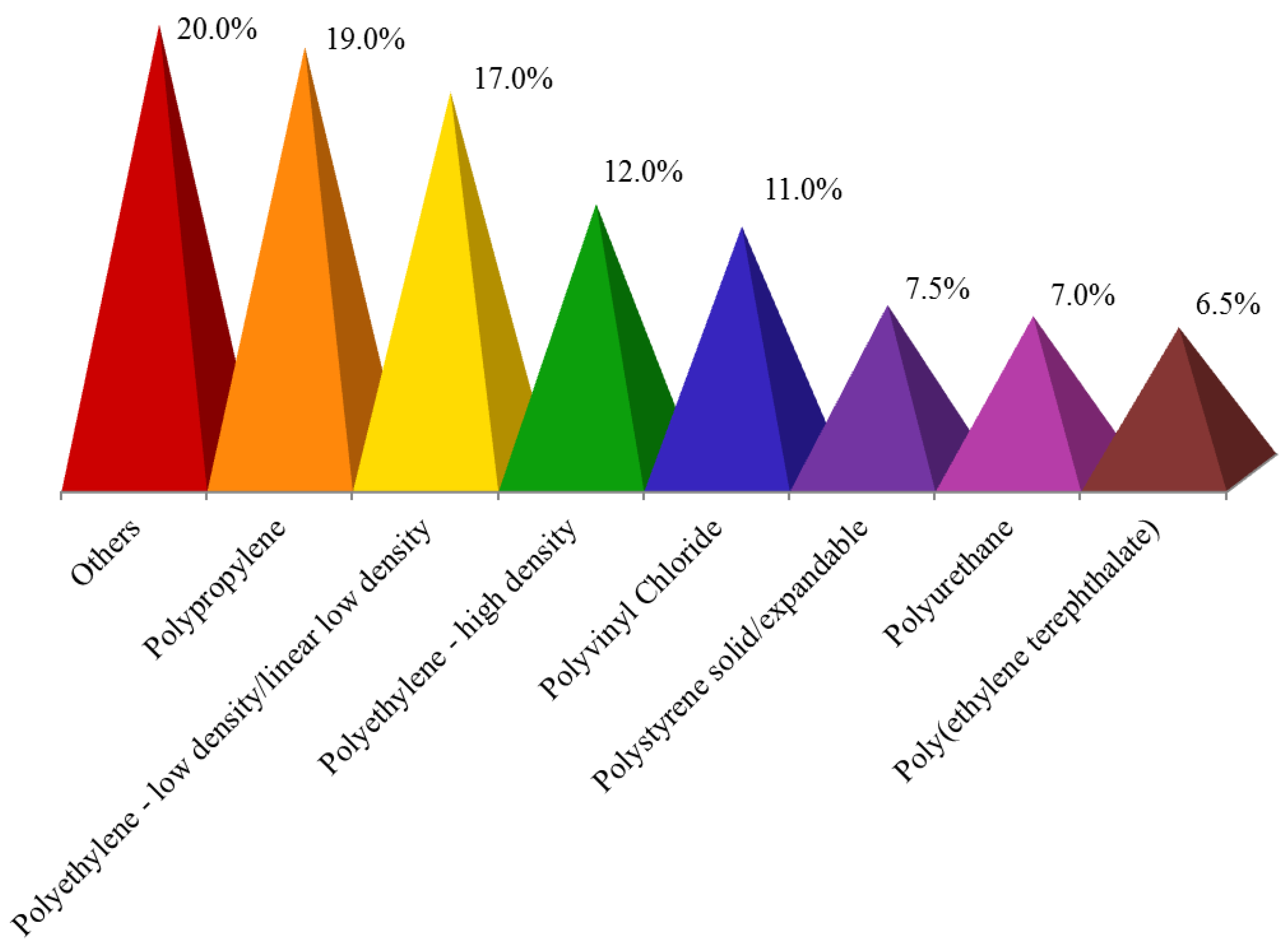
2. Plastics in the Environment
2.1. Environmental Impacts of Plastic Pollution
2.2. Levels of Plastic in the Marine Environment
2.3. Degradation
3. Poly(ethylene terephthalate)
3.1. Properties and Applications

| Manufacturer | Commercial name |
|---|---|
| DSM Engineering Plastics | Arnitel® |
| Du Pont De Nemours & Co., Inc. | Mylar® |
| Du Pont De Nemours & Co., Inc. | Rynite® |
| Eastman Chemical Company | Eastapac® |
| ENKA-Glazstoff | Diolen® |
| Farbwerke Hoescht AG | Hostadur® |
| Imperial Chemical Industries Ltd. | Melinex® |
| Property | Value * |
|---|---|
| Average molecular weight | 30,000–80,000 g mol−1 |
| Density | 1.41 g cm−3 |
| Melting temperature | 255–265 °C |
| Glass transition temperature | 69–115 °C |
| Young’s modulus | 1700 MPa |
| Water absorption (24 h) | 0.5% |
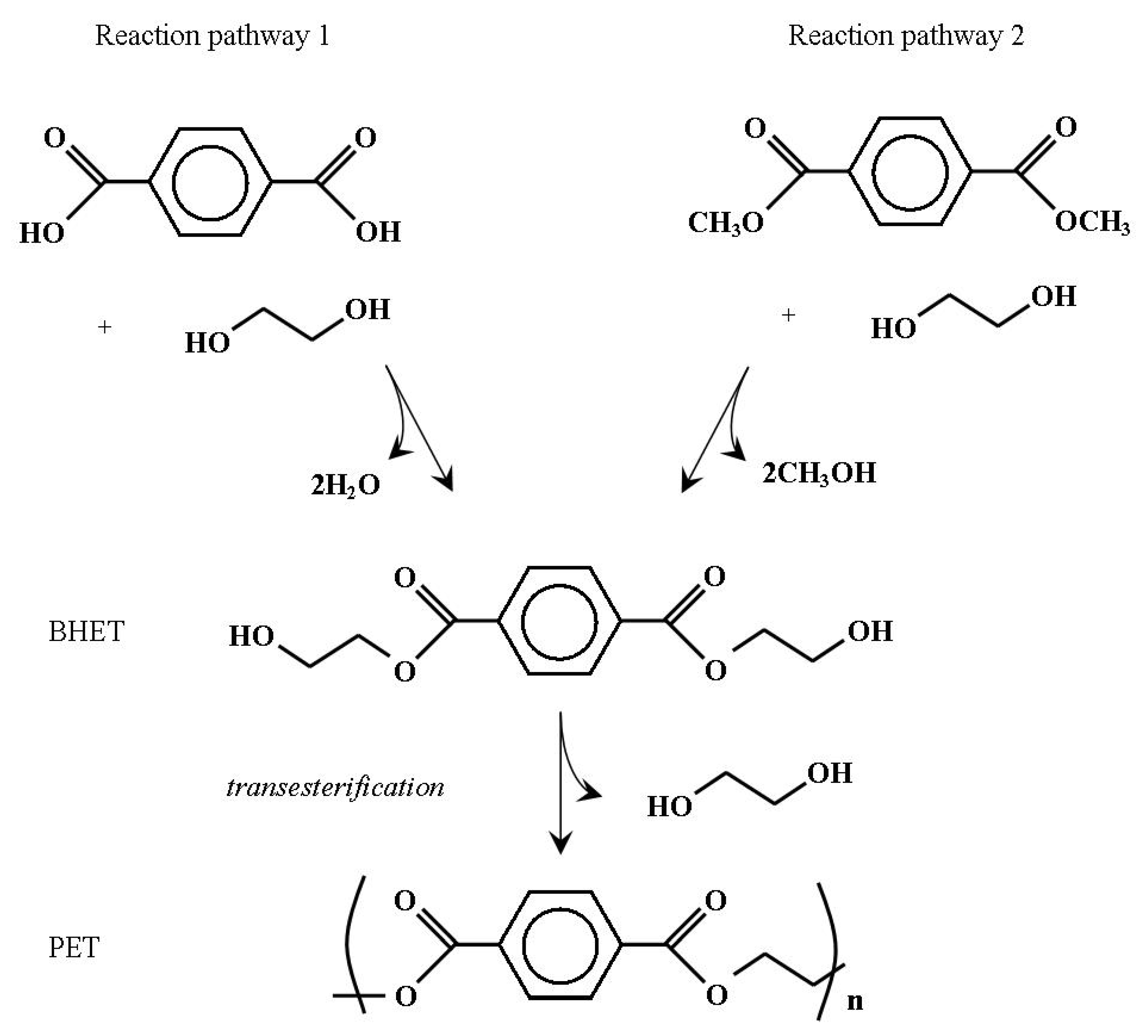
3.2. Chemistry, Synthesis and Manufacture

4. Plastic Disposal Methods
4.1. Landfill
4.2. Incineration
4.3. Recycling
| Property | Requirement |
|---|---|
| Flake size | 0.4–8 mm |
| Melting temperature | >240 °C |
| Viscosity (η) | >0.7 dL g−1 |
| Water content | <0.02% |
| Dye content | <10 ppm |
| PVC content | <50 ppm |
| Polyolefin content | <10 ppm |
| Metal content | <3 ppm |
| Yellowing index * | <20 |
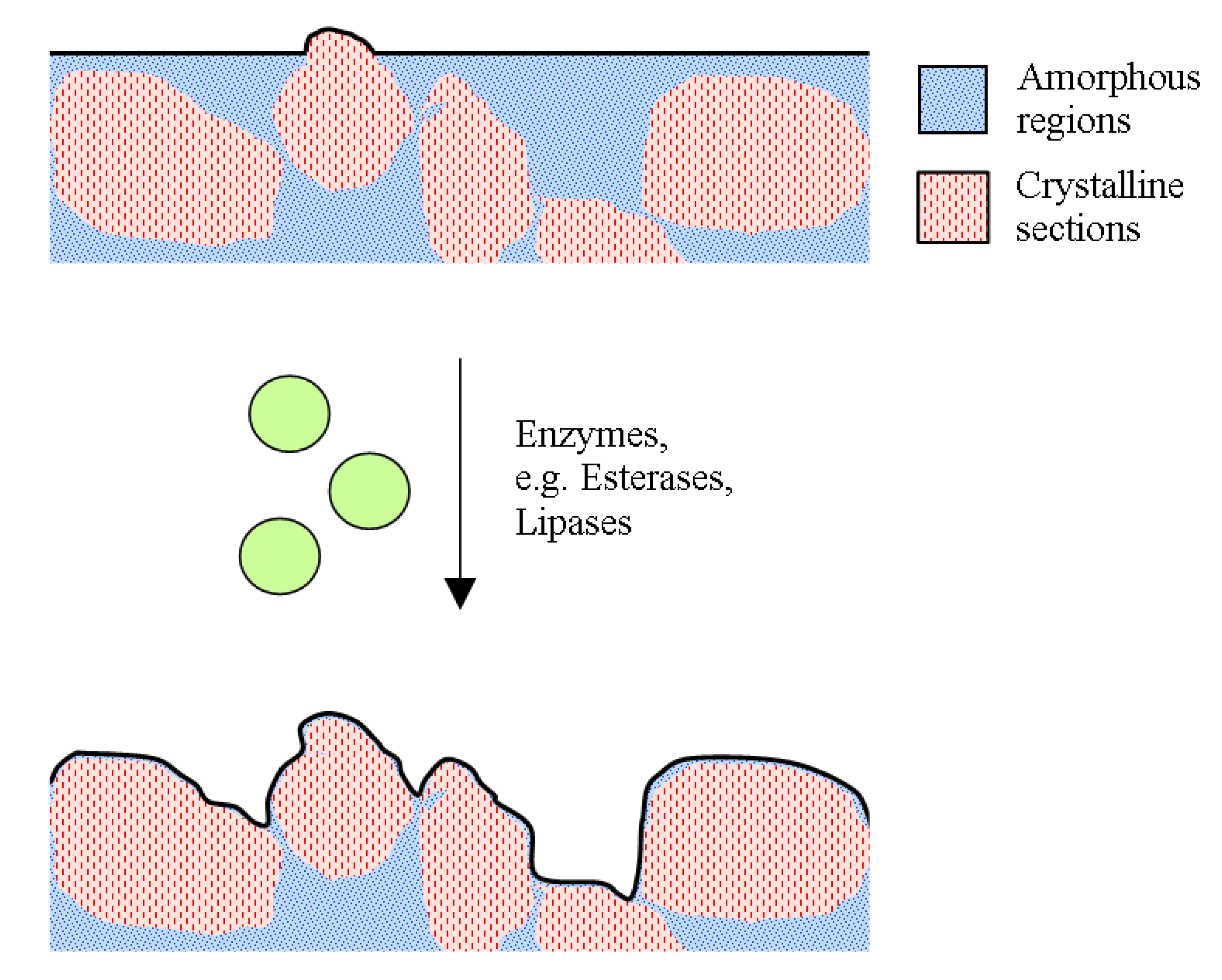
4.4. Biodegradation
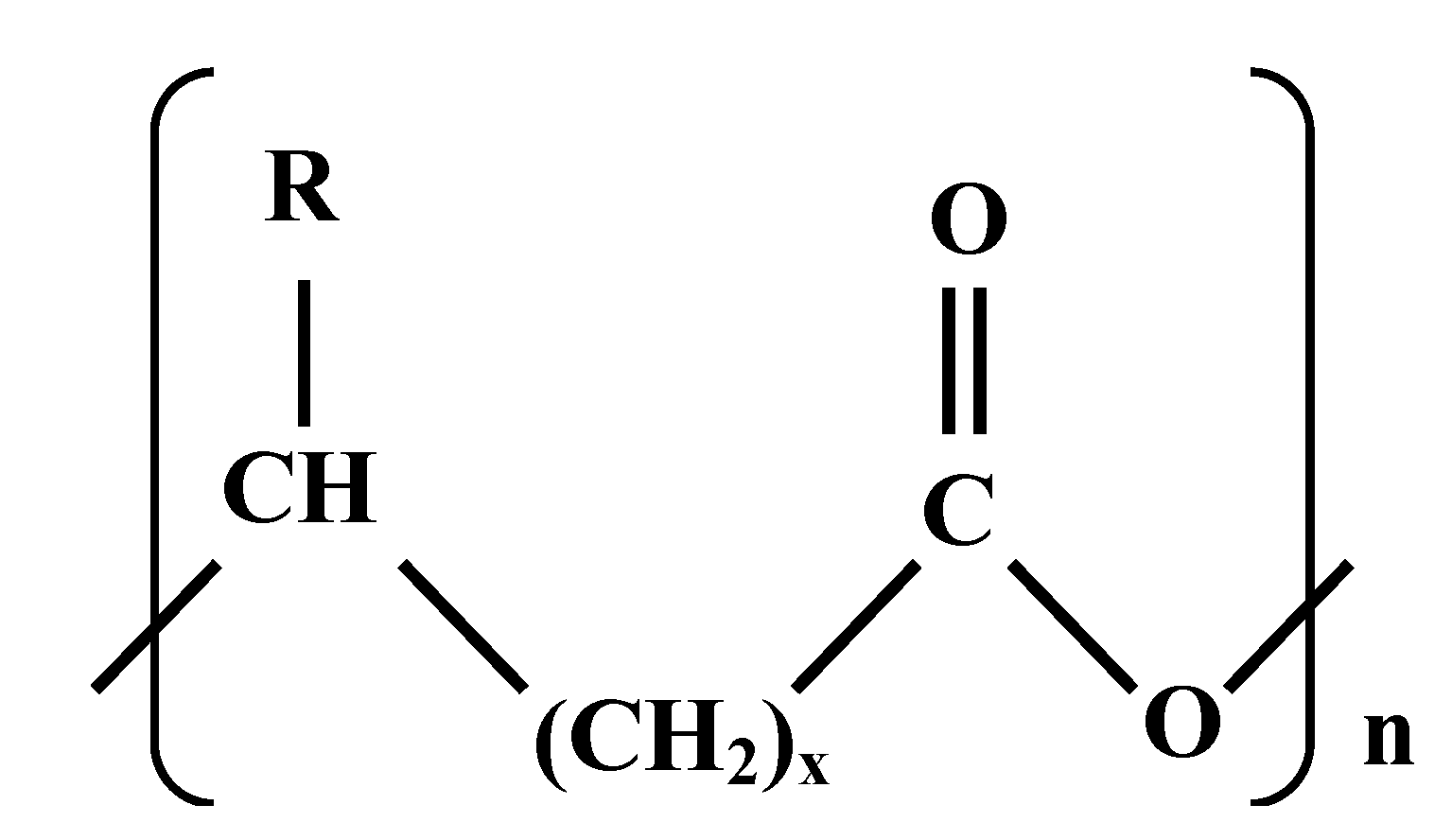
4.5. Biodegradable Polymers
| Polymer | Biodegradation rate (%) a | EdK b |
|---|---|---|
| starch | 78.34 ± 1.74 | 100.00 ± 0.00 |
| pullulan | 73.77 ± 1.35 | 94.22 ± 3.74 |
| curdlan | 64.60 ± 1.79 | 82.50 ± 3.13 |
| Poly(3-hydroxybutyrate-co-3-hydroxyhexanoate), PHBHHx | 62.12 ± 0.88 | 79.36 ± 1.28 |
| Poly(3-hydroxybutyrate-co-3-hydroxyvalerate), PHBV | 53.47 ± 0.67 | 68.29 ± 2.28 |
| Poly(ester amide), PEA | 36.29 ± 1.84 | 46.34 ± 2.58 |
| Poly(e-caprolactone), PCL | 25.68 ± 0.7 | 32.77 ± 0.21 |
| cellulose | 25.00 ± 0.6 | 31.93 ± 1.36 |
| chitosan | 14.86 ± 0.42 | 18.98 ± 0.71 |
| Poly(ethylene glycol), PEG | 11.97 ± 0.39 | 15.28 ± 0.42 |
| Poly(vinyl alcohol), PVA | 5.02 ± 0.44 | 6.41 ± 0.53 |
| Poly(ethylene oxide), PEO | 3.76 ± 0.26 | 4.81 ± 0.43 |
| Poly(propylene carbonate), PPC | 3.38 ± 0.26 | 4.31 ± 0.27 |
| Poly(butylenes succinate-co-adipate), PBSA | 2.90 ± 0.26 | 3.70 ± 0.32 |
| Poly(butylenes succinate), PBS | 1.93 ± 0.10 | 2.47 ± 0.16 |
| Poly(lactic acid), PLA | 0.97 ± 0.26 | 1.23 ± 0.32 |
| Polyethylene, PE | 0.00 ± 0.00 | 0.00 ± 0.00 |
5. Conclusions and Summary
References
- Derraik, J.G.B. The pollution of the marine environment by plastic debris: A review. Mar. Pollut. Bull. 2002, 44, 842–852. [Google Scholar] [CrossRef]
- Pemberton, D.; Brothers, N.P.; Kirkwood, R. Entanglement of Australian fur seals in man-made debris in Tasmanian waters. Wildl. Res. 1992, 19, 151–159. [Google Scholar] [CrossRef]
- Sazima, I.; Gadig, O.B.F.; Namora, R.C.; Motta, F.S. Plastic debris collars on juvenile carcharhinid sharks (Rhizoprionodon lalandii) in southwest Atlantic. Mar. Pollut. Bull. 2002, 44, 1147–1149. [Google Scholar]
- Gregory, M.R. Environmental implications of plastic debris in marine settings—Entanglement, ingestion, smothering, hangers-on, hitch-hiking and alien invasions. Philos. Trans. R. Soc. B 2009, 364, 2013–2025. [Google Scholar] [CrossRef]
- Azzarello, M.Y.; van Vleet, E.S. Marine birds and plastic pollution. Mar. Ecol. Prog. Ser. 1987, 37, 295–303. [Google Scholar] [CrossRef]
- Blight, L.K.; Burger, A.E. Occurrence of plastic particles in sea-birds from the eastern north pacific. Mar. Pollut. Bull. 1997, 34, 323–325. [Google Scholar] [CrossRef]
- Barreiros, J.P.; Barcelos, J. Plastic ingestion by a leatherback turtle Dermochelys coriacea from the Azores (NE Atlantic). Mar. Pollut. Bull. 2001, 42, 1196–1197. [Google Scholar] [CrossRef]
- Baird, R.W.; Hooker, S.K. Ingestion of plastic and unusual prey by a juvenile harbour porpoise. Mar. Pollut. Bull. 2000, 40, 719–720. [Google Scholar] [CrossRef]
- Moore, C.J.; Moore, S.L.; Leecaster, M.K.; Weisberg, S.B. A comparison of plastic and plankton in the north Pacific central gyre. Mar. Pollut. Bull. 2001, 42, 1297–1300. [Google Scholar] [CrossRef]
- Mato, Y.; Isobe, T.; Takada, H.; Kanehiro, H.; Ohtake, C.; Kaminuma, T. Plastic resin pellets as a transport medium for toxic chemicals in the marine environment. Environ. Sci. Technol. 2001, 35, 318–324. [Google Scholar] [CrossRef]
- Rios, L.M.; Moore, C.; Jones, P.R. Persistent organic pollutants carried by synthetic polymers in the ocean environment. Mar. Pollut. Bull. 2007, 54, 1230–1237. [Google Scholar] [CrossRef]
- Hirai, H.; Takada, H.; Ogata, Y.; Yamashita, R.; Mizukawa, K.; Saha, M.; Kwan, C.; Moore, C.; Gray, H.; Laursen, D.; Zettler, E.R.; Farrington, J.W.; Reddy, C.M.; Peacock, E.E.; Ward, M.W. Organic micropollutants in marine plastic debris from the open ocean and remote and urban beaches. Mar. Pollut. Bull. 2011, 62, 1683–1692. [Google Scholar]
- Schecter, A.; Colacino, J.; Haffner, D.; Patel, K.; Opel, M.; Päpke, O.; Birnbaum, L. Perfluorinated compounds, polychlorinated biphenyls, and organochlorine pesticide contamination in composite food samples from Dallas, Texas, USA. Environ. Health Perspect. 2010, 118, 796–802. [Google Scholar]
- Trudel, D.; Scheringer, M.; von Goetz, N.; Hungerbühler, K. Total consumer exposure to polybrominated diphenyl ethers in North America and Europe. Environ. Sci. Technol. 2011, 45, 2391–2397. [Google Scholar]
- Chung, S.Y.; Yettella, R.R.; Kim, J.S.; Kwon, K.; Kim, M.C.; Min, D.B. Effects of grilling and roasting on the levels of polycyclic aromatic hydrocarbons in beef and pork. Food Chem. 2011, 129, 1420–1426. [Google Scholar]
- Zhou, Q.; Gao, Y.; Xie, G. Determination of bisphenol A, 4-n-nonylphenol, and 4-tert-octylphenol by temperature-controlled ionic liquid dispersive liquid-phase microextraction combined with high performance liquid chromatography-fluorescence detector. Talanta 2011, 85, 1598–1602. [Google Scholar] [CrossRef]
- Masó, M.; Garcés, E.; Pagès, F.; Camp, J. Drifting plastic debris as a potential vector for harmful algal bloom (HAB) species. Sci. Mar. 2003, 67, 107–111. [Google Scholar]
- Wheeler, W.M. Ants carried in a floating log from the brazilian mainland to San Sebastian Island. Psyche 1916, 23, 180–183. [Google Scholar]
- Censky, E.J.; Hodge, K.; Dudley, J. Over-water dispersal of lizards due to hurricanes. Nature 1998, 395, 556. [Google Scholar]
- Barnes, D.K.A.; Milner, P. Drifting plastic and its consequences for sessile organism dispersal in the Atlantic Ocean. Mar. Biol. 2005, 146, 815–825. [Google Scholar] [CrossRef]
- Frost, A.; Cullen, M. Marine debris on northern New South Wales beaches (Australia): Sources and the role of beach usage. Mar. Pollut. Bull. 1997, 34, 348–352. [Google Scholar] [CrossRef]
- Walker, T.R.; Reid, K.; Arnould, J.P.Y.; Croxall, J.P. Marine debris surveys at Bird Island, South Georgia 1990–1995. Mar. Pollut. Bull. 1997, 34, 61–65. [Google Scholar] [CrossRef]
- Martinez-Ribes, L.; Basterretxea, G.; Palmer, M.; Tintoré, J. Origin and abundance of beach debris in the Balearic Islands. Sci. Mar. 2007, 71, 305–314. [Google Scholar]
- Morishige, C.; Donohue, M.J.; Flint, E.; Swenson, C.; Woolaway, C. Factors affecting marine debris deposition at French Frigate Shoals, northwestern Hawaiian islands marine national monument, 1990–2006. Mar. Pollut. Bull. 2007, 54, 1162–1169. [Google Scholar] [CrossRef]
- Santos, I.R.; Friedrich, A.C.; Ivar do Sul, J.A. Marine debris contamination along undeveloped tropical beaches from northeast Brazil. Environ. Monit. Assess. 2008, 148, 455–462. [Google Scholar]
- Ivar do Sul, J.A.; Costa, M.F. Marine debris review for Latin America and the wider Caribbean region: From the 1970s until now, and where do we go from here? Mar. Pollut. Bull. 2007, 54, 1087–1104. [Google Scholar] [CrossRef]
- Law, K.L.; Morét-Ferguson, S.; Maximenko, N.A.; Proskurowski, G.; Peacock, E.E.; Hafner, J.; Reddy, C.M. Plastic accumulation in the North Atlantic subtropical gyre. Science 2010, 329, 1185–1188. [Google Scholar]
- Ryan, P.G.; Moore, C.J.; van Franeker, J.A.; Moloney, C.L. Monitroing the abundance of plastic debris in the marine environment. Philos. T. Roy. Soc. B 2009, 364, 1999–2012. [Google Scholar] [CrossRef]
- Yamada-Onodera, K.; Mukumoto, H.; Katsuyaya, Y.; Saiganji, A.; Tani, Y. Degradation of polyethylene by a fungus, Penicillium simplicissimum YK. Polym. Degrad. Stabil. 2001, 72, 323–327. [Google Scholar] [CrossRef]
- Zheng, Y.; Yanful, E.K.; Bassi, A.S. A review of plastic waste biodegradation. Crit. Rev. Biotechnol. 2005, 25, 243–250. [Google Scholar] [CrossRef]
- Marqués-Calvo, M.S.; Cerdà-Cuéllar, M.; Kint, D.P.R.; Bou, J.J.; Muñoz-Guerra, S. Enzymatic and microbial biodegradability of poly(ethylene terephthalate) copolymers containing nitrated units. Polym. Degrad. Stabil. 2006, 91, 663–671. [Google Scholar] [CrossRef]
- Bonhomme, S.; Cuer, A.; Delort, A.-M.; Lemaire, J.; Sancelme, M.; Scott, G. Environmental degradation of polyethylene. Polym. Degrad. Stabil. 2003, 81, 441–452. [Google Scholar] [CrossRef]
- Andrady, A.L. Microplastics in the marine environment. Mar. Pollut. Bull. 2011, 62, 1596–1605. [Google Scholar]
- Raquez, J.-M.; Bourgeois, A.; Jacobs, H.; Degée, P.; Alexandre, M.; Dubois, P. Oxidative degradations of oxodegradable LDPE enhanced with thermoplastic pea starch: thermo-mechanical properties, morphology, and UV-ageing studies. J. Appl. Polym. Sci. 2011, 122, 489–496. [Google Scholar] [CrossRef]
- Müller, R.-J.; Kleeberg, I.; Deckwer, W.-D. Biodegradation of polyesters containing aromatic constituents. J. Biotechnol. 2001, 86, 87–95. [Google Scholar]
- Levchik, S.V.; Weil, E.D. A review on thermal decomposition and combustion of thermoplastic polyesters. Polym. Adv. Technol. 2004, 15, 691–700. [Google Scholar] [CrossRef]
- Bergeret, A.; Ferry, L.; Ienny, P. Influence of the fibre/matrix interface on ageing mechanisms of glass fibre reinforced thermoplastic composites (PA-6,6, PET, PBT) in a hygrothermal environment. Polym. Degrad. Stabil. 2009, 94, 1315–1324. [Google Scholar] [CrossRef]
- Awaja, F.; Pavel, D. Recycling of PET. Eur. Polym. J. 2005, 41, 1453–1477. [Google Scholar] [CrossRef]
- Kint, D.; Muñoz-Guerra, S. A review on the potential biodegradability of poly(ethylene terephthalate). Polym. Int. 1999, 48, 346–352. [Google Scholar] [CrossRef]
- PlasticsEurope. Plastics—The Facts 2012. Available online: http://www.plasticseurope.org/Document/plastics-the-facts-2012.aspx?FolID=2 (accessed on 24 December 2012).
- Sinha, V.; Patel, M.R.; Patel, J.V. PET waste management by chemical recycling: A review. J. Polym. Environ. 2010, 18, 8–25. [Google Scholar] [CrossRef]
- Amari, T.; Ozaki, Y. Real-time monitoring of the initial oligomerization of bis(hydroxyethyl) terephthalate by attenuated total reflection/infrared spectroscopy and chemometrics. Macromolecules 2001, 34, 7459–7462. [Google Scholar] [CrossRef]
- Franklin Associates, Cradle-to-Gate Life Cycle Inventory of Nine Plastic Resins and Four Polyurethane Precursors; The Plastics Division of the American Chemistry Council: Prairie Village, KS, USA, 2011.
- Williams, C.L.; Chang, C.C.; Do, P.; Nikbin, N.; Caratzoulas, S.; Vlachos, D.G.; Lobo, R.F.; Fan, W.; Dauenhauer, P.J. Cycloaddition of biomass-derived furans for catalytic production of renewable p-xylene. ACS Catal. 2012, 2, 935–939. [Google Scholar] [CrossRef]
- Zhang, J.; Wang, X.; Gong, J.; Gu, Z. A study on the biodegradability of polyethylene terephthalate fiber and diethylene glycol terephthalate. J. Appl. Polym. Sci. 2004, 93, 1089–1096. [Google Scholar] [CrossRef]
- Tansel, B.; Yildiz, B.S. Goal-based waste management strategy to reduce persistence of contaminants in leachate at municipal solid waste landfills. Environ. Dev. Sustain. 2011, 13, 821–831. [Google Scholar] [CrossRef]
- Massardier-Nageotte, V.; Pestre, C.; Cruard-Pardet, T.; Bayard, R. Aerobic and anerobic biodegradability of polymer films and phsyico-chemical characterization. Polym. Degrad. Stabil. 2006, 91, 620–627. [Google Scholar] [CrossRef]
- Tollner, E.W.; Annis, P.A.; Das, K.C. Evaluation of strength properties of polypropylene-based polymers in simulated landfill and oven conditions. J. Environ. Eng. 2011, 137, 291–296. [Google Scholar]
- Urase, T.; Okumura, H.; Panyosaranya, S.; Inamura, A. Emission of volatile organic compounds from solid waste disposal sites and importance of heat management. Waste Manag. Res. 2008, 26, 534–538. [Google Scholar] [CrossRef]
- Xu, S.-Y.; Zhang, H.; He, P.-J.; Shao, L.-M. Leaching behaviour of bisphenol A from municipal solid waste under landfill environment. Environ. Technol. 2011, 32, 1269–1277. [Google Scholar] [CrossRef]
- Svenson, A.; Sjöholm, S.; Allard, A.-S.; Kaj, L. Antiestrogenicity and estrogenicity in leachates from solid waste deposits. Environ. Toxicol. 2009, 26, 233–239. [Google Scholar]
- Tsuchida, D.; Kajihara, Y.; Shimidzu, N.; Hamamura, K.; Nagase, M. Hydrogen sulfide production by sulfate-reducing bacteria utilizing additives eluted from plastic resins. Waste Manag. Res. 2011, 29, 594–601. [Google Scholar] [CrossRef]
- Astrup, T.; Møller, J.; Fruergaard, T. Incineration and co-combustion of waste: Accounting of greenhouse gases and global warming contributions. Waste Manag. Res. 2009, 27, 789–799. [Google Scholar] [CrossRef]
- Khoo, H.H.; Tan, R.B.H. Environmental impacts of conventional plastic and bio-based carrier bags: Part 2:End-of-life options. Int. J. Life Cycle Assess. 2010, 15, 338–345. [Google Scholar]
- Shen, C.; Tang, X.; Yao, J.; Shi, D.; Fang, J.; Khan, M.I.; Cheema, S.A.; Chen, Y. Levels and patterns of polycyclic aromatic hydrocabons and polychlorinated biphenyls in municipal waste incinerator bottom ash in Zhejiang province, China. J. Hazard. Mater. 2010, 179, 197–202. [Google Scholar] [CrossRef]
- Simoneit, B.R.T.; Medeiros, P.M.; Didyk, B.M. Combustion products of plastics as indicators for refuse burning in the atmosphere. Environ. Sci. Technol. 2005, 39, 6961–6970. [Google Scholar] [CrossRef]
- Valavanidis, A.; Iliopoulos, N.; Gotsis, G.; Fiotakis, K. Persistent free-radicals, heavy metals and PAHs generated in particulate soot emissions and residue ash from controlled combustion of common types of plastics. J. Hazard. Mater. 2008, 156, 277–284. [Google Scholar] [CrossRef]
- Paci, M.; La Mantia, F.P. Influence of small amounts of polyvinylchloride on the recycling of polyethyleneterephthalate. Polym. Degrad. Stabil. 1999, 63, 11–14. [Google Scholar]
- Cardi, N.; Po, R.; Giannotta, G.; Occhiello, E.; Garbassi, F.; Messina, G. Chain extension of recycled poly(ethylene terephthalate) with 2,2'-Bis(2-oxazoline). J. Appl. Polym. Sci. 1993, 50, 1501–1509. [Google Scholar] [CrossRef]
- Paci, M.; La Mantia, F.P. Competition between degradation and chain extension during processing of reclaimed poly(ethylene terephthalate). Polym. Degrad. Stabil. 1998, 61, 417–420. [Google Scholar] [CrossRef]
- Villain, F.; Coudane, J.; Vert, M. Thermal degradation of polyethylene terephthalate: Study of polymer stabilization. Polym. Degrad. Stabil. 1995, 49, 393–397. [Google Scholar] [CrossRef]
- Demertzis, P.G.; Johansson, F.; Lievens, C.; Franz, R. Studies on the development of a quick inertness test procedure for multi-use PET containers—Sorption behaviour of bottle wall strips. Packag. Technol. Sci. 1997, 10, 45–58. [Google Scholar] [CrossRef]
- Iranzo, M.; Sainz-Pardo, I.; Boluda, R.; Sánchez, J.; Mormeneo, S. The use of microorgansims in environmental remediation. Ann. Microbiol. 2001, 51, 135–143. [Google Scholar]
- Head, I.M.; Swannell, R.P.J. Bioremediation of petroleum hydrocarbon contaminants in marine habitats. Curr. Opin. Biotechnol. 1999, 10, 234–239. [Google Scholar] [CrossRef]
- Rosa, A.P.; Triguis, J.A. Bioremediation process on Brazil shoreline. Laboratory experiments. Environ. Sci. Pollut. Res. 2007, 14, 470–476. [Google Scholar] [CrossRef]
- Piedad Díaz, M.; Boyd, K.G.; Grigson, S.J.W.; Burgess, J.G. Biodegradation of crude oil across a wide range of salinities by an extremely halotolerant bacterial consortium MPD-M, immobilized onto polypropylene fibers. Biotechnol. Bioeng. 2002, 79, 145–153. [Google Scholar] [CrossRef]
- Hazen, T.C.; Dubinsky, E.A.; DeSantis, T.Z.; Andersen, G.L.; Piceno, Y.M.; Singh, N.; Jansson, J.K.; Probst, A.; Borglin, S.E.; Fortney, J.L.; Stringfellow, W.T.; Bill, M.; Conrad, M.E.; Tom, L.M.; Chavarria, K.L.; Alusi, T.R.; Lamendella, R.; Joyner, D.C.; Spier, C.; Baelum, J.; Auer, M.; Zemla, M.L.; Chakraborty, R.; Sonnenthal, E.L.; D'haeseleer, P.; Holman, H.-Y.N.; Osman, S.; Lu, Z.; van Nostrand, J.D.; Deng, Y.; Zhou, J.; Mason, O.U. Deep-sea oil plume enriches indigenous oil-degrading bacteria. Science 2010, 330, 204–208. [Google Scholar]
- Luigi, M.; Gaetano, D.M.; Vivia, B.; Angelina, L.G. Biodegradative potential and characterization of psychrotolerant polychlorinated biphenyl-degrading marine bacteria isolated from a coastal station in the Terra Nova Bay (Ross Sea, Antarctica). Mar. Pollut. Bull. 2007, 54, 1754–1761. [Google Scholar] [CrossRef]
- De, J.; Ramaiah, N.; Vardanyan, L. Detoxification of toxic heavy metals by marine bacteria highly resistant to mercury. Mar. Biotechnol. 2008, 10, 471–477. [Google Scholar] [CrossRef]
- Takeuchi, M.; Kawahata, H.; Gupta, L.P.; Kita, N.; Morishita, Y.; Ono, Y.; Komai, T. Arsenic resistance and removal by marine and non-marine bacteria. J. Biotechnol. 2007, 127, 434–442. [Google Scholar]
- Pieper, D.H.; Reineke, W. Engineering bacteria for bioremediation. Curr. Opin. Biotechnol. 2000, 11, 262–270. [Google Scholar]
- Müller, R.-J.; Schrader, H.; Profe, J.; Dresler, K.; Deckwer, W.-D. Enzymatic degradation of poly(ethylene terephthalate): rapid hydrolyse using a hydrolase from T. fusca. Macromol. Rapid Comm. 2005, 26, 1400–1405. [Google Scholar] [CrossRef]
- Herzog, K.; Müller, R.-J.; Deckwer, W.-D. Mechanism and kinetics of the enzymatic hydrolysis of polyester nanoparticles by lipases. Polym. Degrad. Stabil. 2006, 91, 2486–2498. [Google Scholar] [CrossRef]
- Artham, T.; Doble, M. Biodegradation of physicochemically treated polycarbonate by fungi. Biomacromolecules 2009, 11, 20–28. [Google Scholar] [CrossRef]
- Kondratowicz, F.L.; Ukielski, R. Synthesis and hydrolytic degradation of poly(ethylene succinate) and poly(ethylene terephthalate) copolymers. Polym. Degrad. Stabil. 2009, 94, 375–382. [Google Scholar] [CrossRef]
- Marten, E.; Müller, R.-J.; Deckwer, W.-D. Studies on the enzymatic hydrolysis of polyesters I. Low molecular mass model esters and aliphatic polyesters. Polym. Degrad. Stabil. 2003, 80, 485–501. [Google Scholar] [CrossRef]
- Asakuma, Y.; Nakagawa, K.; Maeda, K.; Fukui, K. Theoretical study of the transesterification reaction of polethylene terephthalate under basic conditions. Polym. Degrad. Stabil. 2009, 94, 240–245. [Google Scholar]
- Mueller, R.-J. Biological degradation of synthetic polyesters-enzymes as potential catalysts for polyester recycling. Process Biochem. 2006, 41, 2124–2128. [Google Scholar] [CrossRef]
- La Mantia, F.P.; Botta, L.; Morreale, M.; Scaffaro, R. Effects of small amounts of poly(lactic acid) on the recycling of poly(ethylene terephthalate) bottles. Polym. Degrad. Stabil. 2012, 97, 21–24. [Google Scholar]
- Rwei, S.-P.; Lin, W.-P.; Wang, J.-F. Synthesis and characterization of biodegradable and weather-durable PET/PEG/NDC copolymers. Colloid Polym. Sci. 2012, 290, 1381–1392. [Google Scholar]
- Amass, W.; Amass, A.; Tighe, B. A review of biodegradable polymers: Uses, current developments in the synthesis and characterization of biodegradable polyesters, blends of biodegradable polymers and recent advances in biodegradation studies. Polym. Int. 1998, 47, 89–144. [Google Scholar] [CrossRef]
- Guo, W.; Tao, J.; Yang, C.; Song, C.; Geng, W.; Li, Q.; Wang, Y.; Kong, M.; Wang, S. Introduction of environmentally degradable parameters to evaluate the biodegradability of biodegradable polymers. PLoS ONE 2012, 7. [Google Scholar]
- Russo, M.A.L.; O'Sullivan, C.; Rounsefell, B.; Halley, P.J.; Truss, R.; Clarke, W.P. The anaerobic degradability of thermoplastic starch: Polyvinyl alcohol blends: Potential biodegradable food packaging materials. Bioresour. Technol. 2009, 100, 1705–1710. [Google Scholar] [CrossRef]
- Brandelero, R.P.H.; Grossmann, M.V.E.; Yamashita, F. Effect of the method of production of the blends on mechanical and structural properties of biodegradable starch films produced by blown extrusion. Carbohydr. Polym. 2011, 86, 1344–1350. [Google Scholar] [CrossRef]
- Kim, S.H.; Tan, J.P.K.; Fukushima, K.; Nederberg, F.; Yang, Y.Y.; Waymouth, R.M.; Hedrick, J.L. Thermoresponsive nanostructured polycarbonate block copolymers as biodegradable therapeutic delivery carriers. Biomaterials 2011, 32, 5505–5514. [Google Scholar] [CrossRef]
- Canché-Escamilla, G.; Canché-Canché, M.; Duarte-Aranda, S.; Cáceres-Farfán, M.; Borges-Argáez, R. Mechanical properties and biodegradation of thermoplastic starches obtained from grafted starches with acrylics. Carbohydr. Polym. 2011, 86, 1501–1508. [Google Scholar] [CrossRef]
- Nampoothiri, K.M.; Nair, N.R.; John, R.P. An overview of the recent developments in polylactide (PLA) research. Bioresour. Technol. 2010, 101, 8493–8501. [Google Scholar] [CrossRef]
- Ye, R.-R.; Wang, Z.-Y.; Wang, Q.-F.; Yang, K.; Luo, S.-H. Synthesis of biodegradable material poly(lactic acid-co-aspartic acid) via direct melt polycondensation and its characterization. J. Appl. Polym. Sci. 2011, 121, 3662–3668. [Google Scholar]
- Neppalli, R.; Causin, V.; Marega, C.; Saini, R.; Mba, M.; Marigo, A. Structure, morphology and biodegradability of poly(ε-caprolactone)-based nanocomposites. Polym. Eng. Sci. 2011, 51, 1489–1496. [Google Scholar]
- Verbeek, C.; van den Berg, L.E. Extrusion processing and properties of protein-based thermoplastics. Macromol. Mater. Eng. 2010, 295, 10–21. [Google Scholar] [CrossRef]
- Puls, J.; Wilson, S.A.; Hölter, D. Degradation of cellulose acetate-based materials: A review. J. Polym. Environ. 2011, 19, 152–165. [Google Scholar] [CrossRef]
- Ghasemlou, M.; Khodaiyan, F.; Oromiehie, A.; Yarmand, M.S. Development and characterisation of a new biodegradable edible film made from kefiran, an exopolysaccharide obtained from kefir grains. Food Chem. 2011, 127, 1496–1502. [Google Scholar] [CrossRef]
- Nitschke, M.; Costa, S.G.V.A.O.; Contiero, J. Rhamnolipids and PHAs: Recent reports on Pseudomonas-derived molecules of increasing industrial interest. Process Biochem. 2011, 46, 621–630. [Google Scholar] [CrossRef]
- Chen, G.-Q. A microbial polyhydroxyalkanoates (PHA) based bio- and materials industry. Chem. Soc. Rev. 2009, 38, 2434–2446. [Google Scholar]
- Akaraonye, E.; Keshavarz, T.; Roy, I. Production of polyhydroxyalkanoates: The future green materials of choice. J. Chem. Technol. Biotechnol. 2010, 85, 732–743. [Google Scholar] [CrossRef]
- Kunasundari, B.; Sudesh, K. Isolation and recovery of microbial polyhydroxyalkanoates. Express Polym. Lett. 2011, 5, 620–634. [Google Scholar] [CrossRef]
© 2013 by the authors; licensee MDPI, Basel, Switzerland. This article is an open-access article distributed under the terms and conditions of the Creative Commons Attribution license (http://creativecommons.org/licenses/by/3.0/).
Share and Cite
Webb, H.K.; Arnott, J.; Crawford, R.J.; Ivanova, E.P. Plastic Degradation and Its Environmental Implications with Special Reference to Poly(ethylene terephthalate). Polymers 2013, 5, 1-18. https://doi.org/10.3390/polym5010001
Webb HK, Arnott J, Crawford RJ, Ivanova EP. Plastic Degradation and Its Environmental Implications with Special Reference to Poly(ethylene terephthalate). Polymers. 2013; 5(1):1-18. https://doi.org/10.3390/polym5010001
Chicago/Turabian StyleWebb, Hayden K., Jaimys Arnott, Russell J. Crawford, and Elena P. Ivanova. 2013. "Plastic Degradation and Its Environmental Implications with Special Reference to Poly(ethylene terephthalate)" Polymers 5, no. 1: 1-18. https://doi.org/10.3390/polym5010001
APA StyleWebb, H. K., Arnott, J., Crawford, R. J., & Ivanova, E. P. (2013). Plastic Degradation and Its Environmental Implications with Special Reference to Poly(ethylene terephthalate). Polymers, 5(1), 1-18. https://doi.org/10.3390/polym5010001