Stimuli-Responsive Polymers and Colloids under Electric and Magnetic Fields


Abstract
1. Introduction
2. Materials
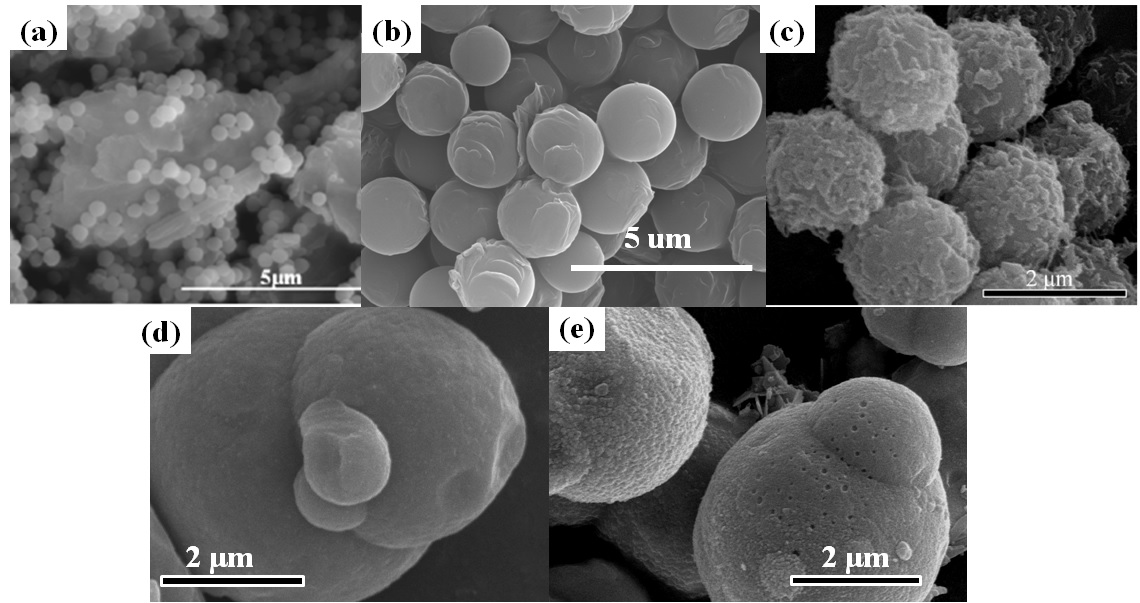
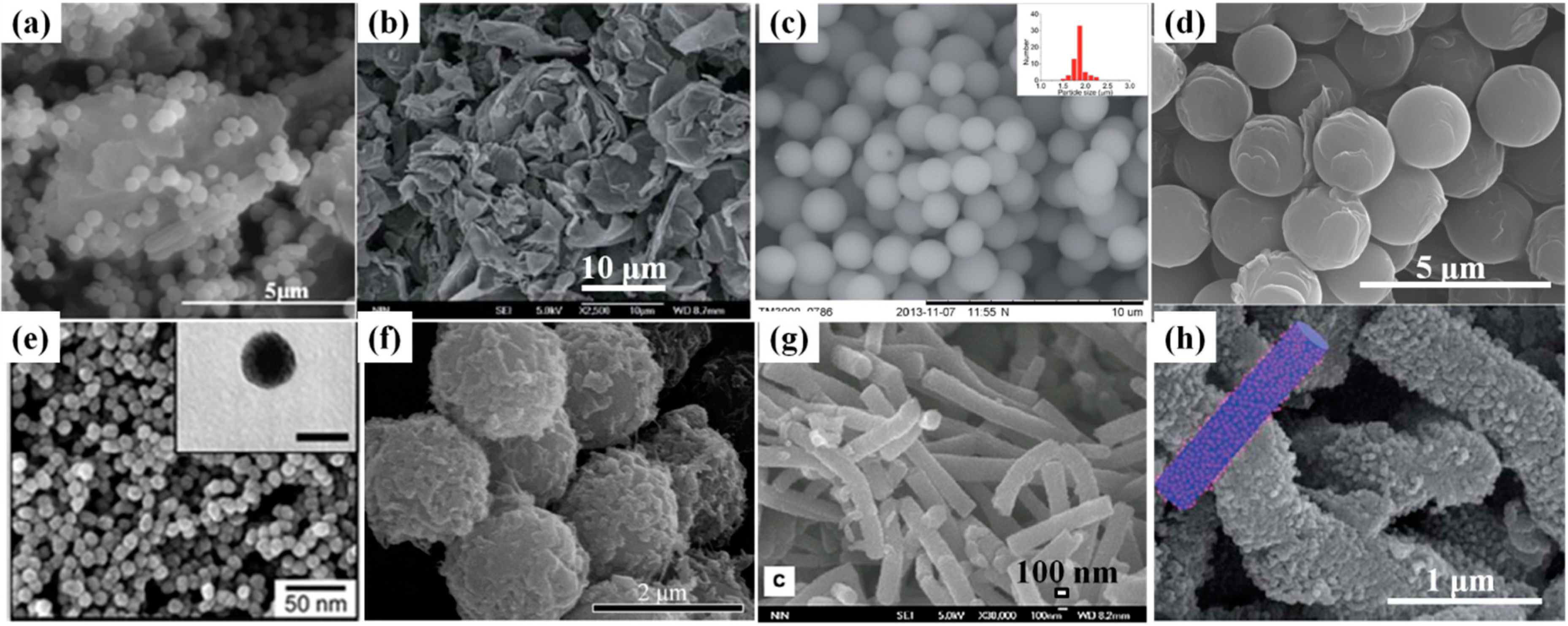
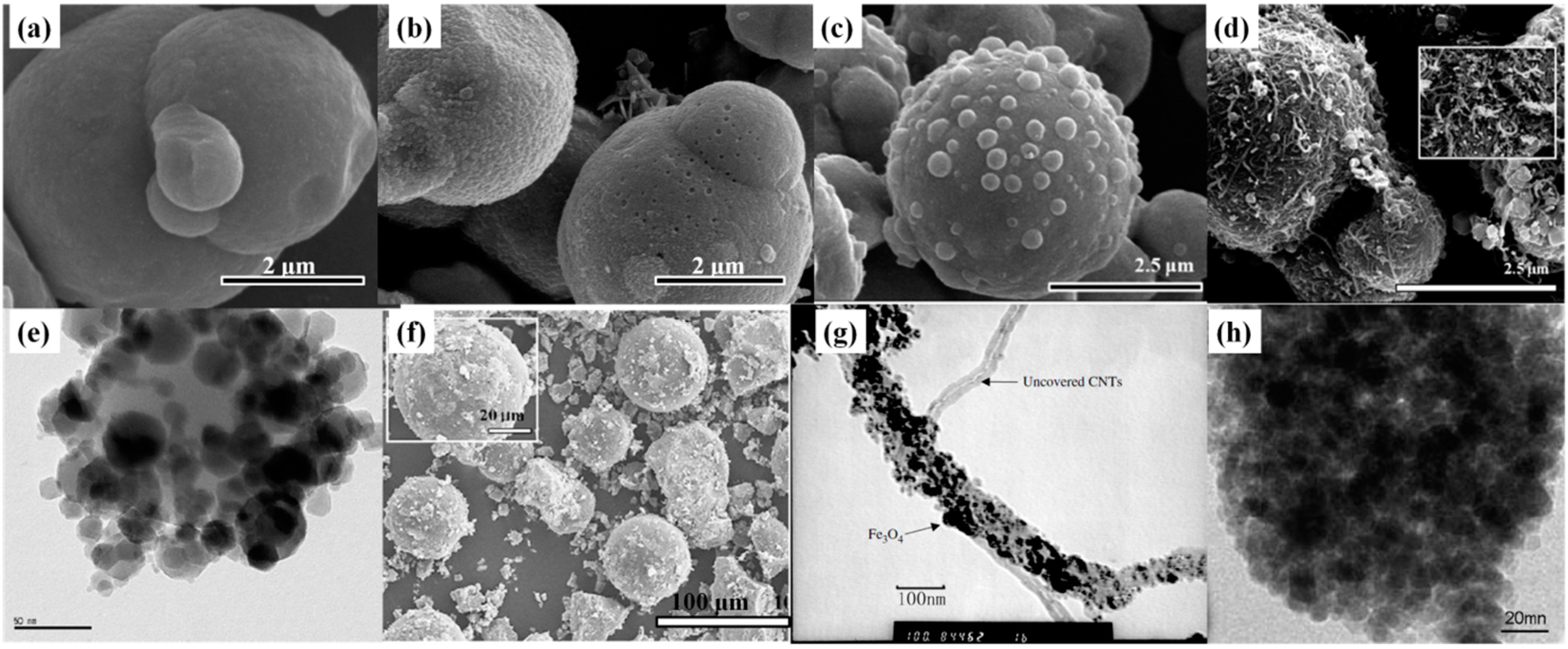
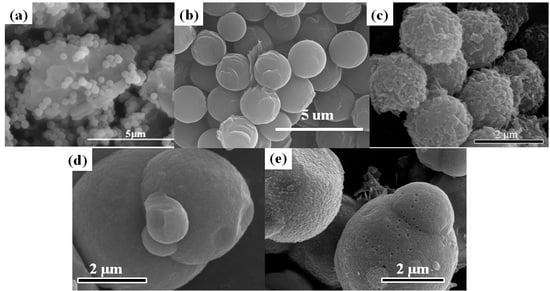
3. Morphology


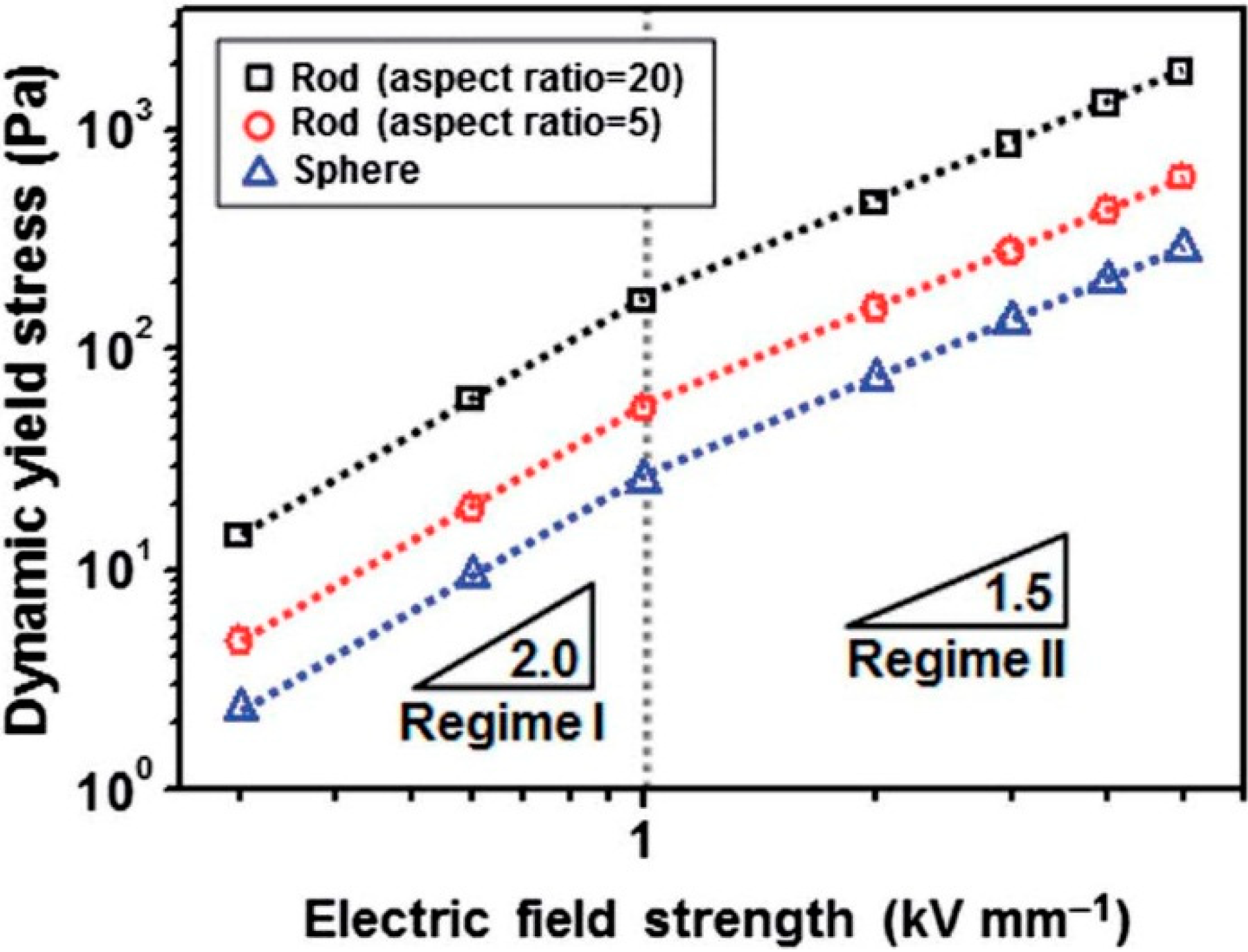
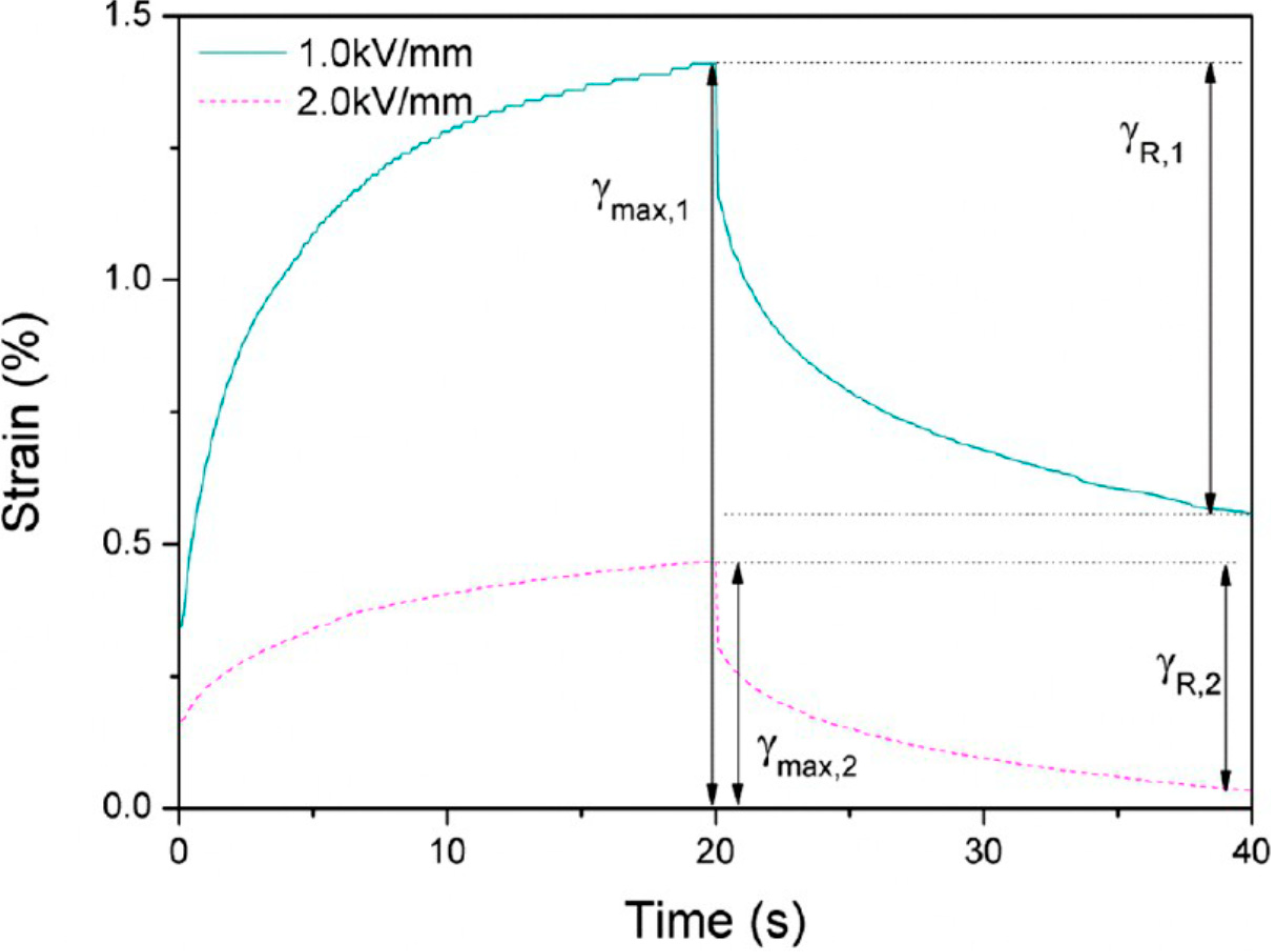
4. Typical Characteristics and Rheological Analysis


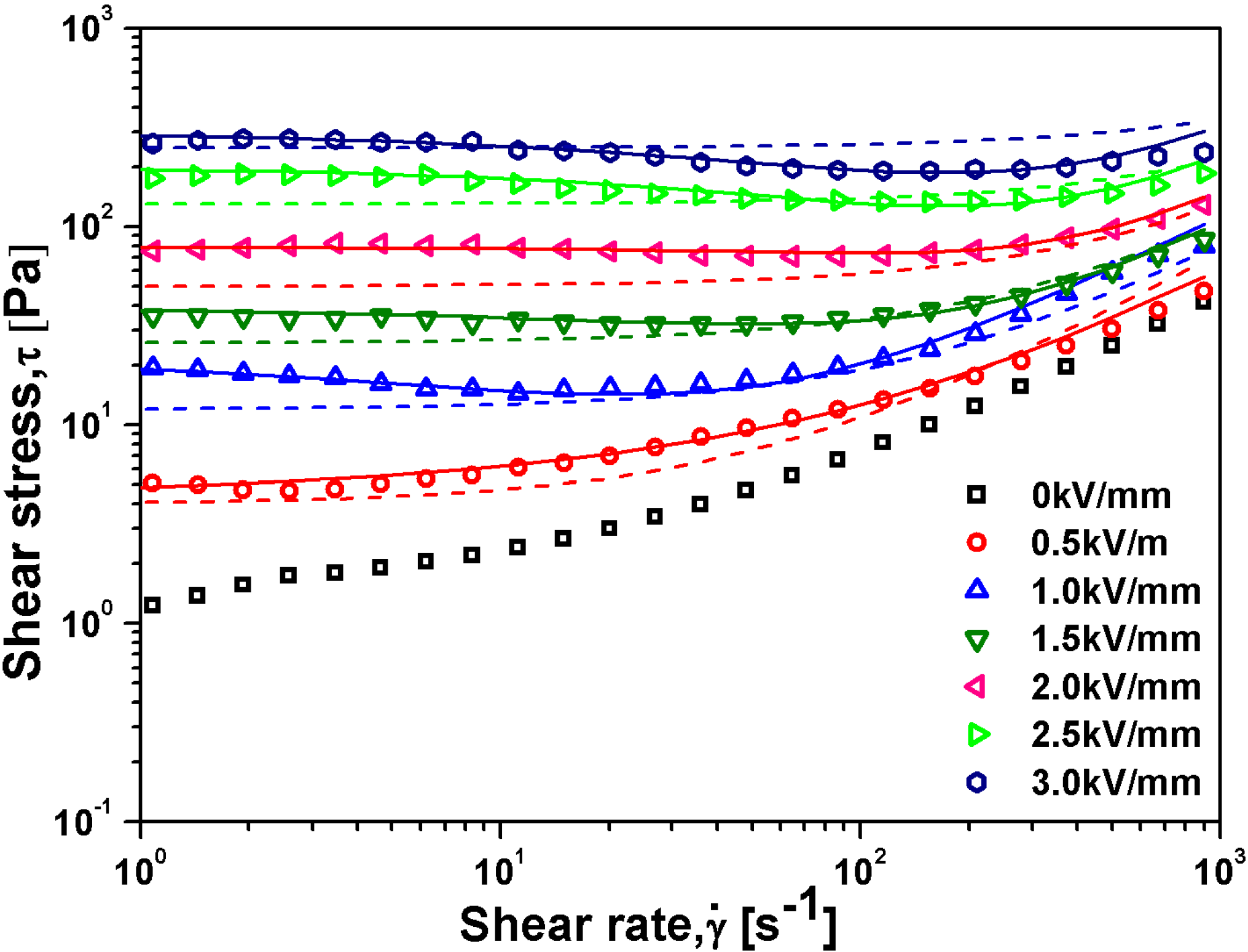
 is the shear rate. The simple Bingham fluid model cannot cover the shear stress curves well. A suggested model called the Cho–Choi–Jhon (CCJ) model [83] with six parameters has been adopted:

 [84]. Note that the CCJ model has been also adopted into various ER materials [85,86].
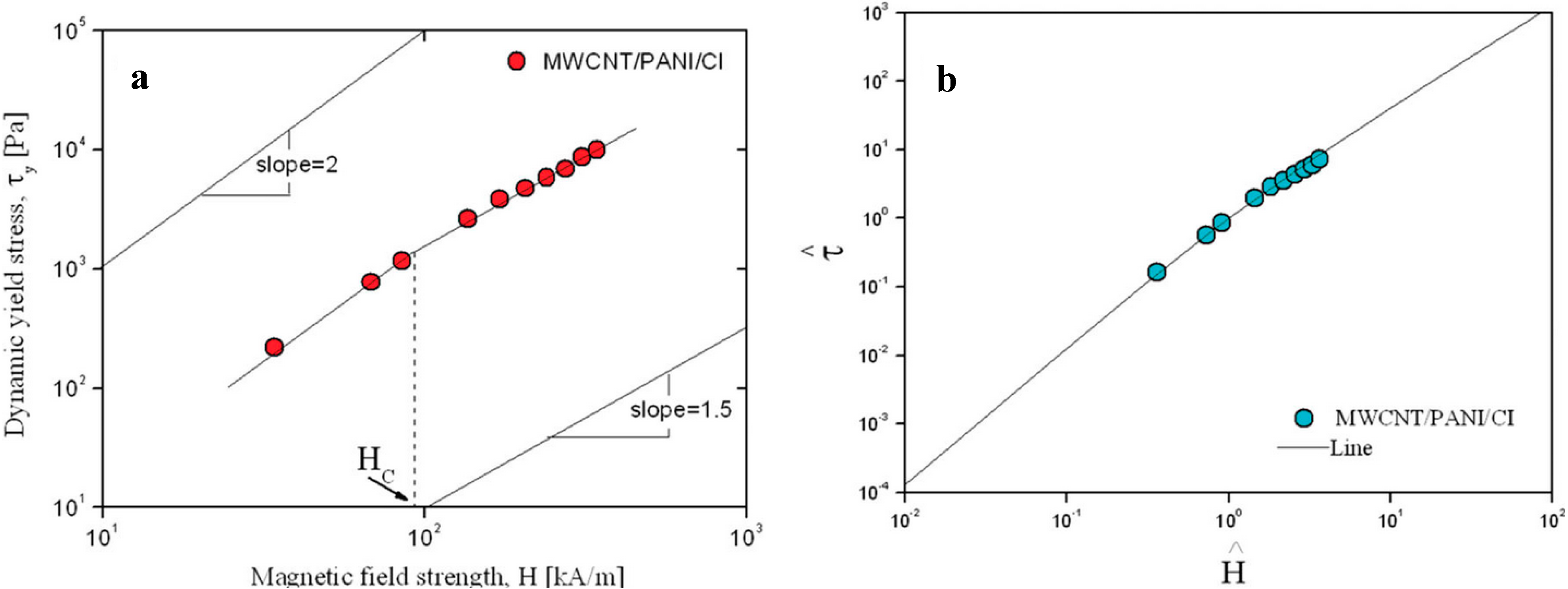
 H2. With increasing H, the local saturation becomes prominent, and τy can be expressed as follows:


 vs.
vs.  for MWCNT/PANI/CI-based MR suspension (Reprinted with permission from [76], copyright 2004 American Chemical Society).
vs. for MWCNT/PANI/CI-based MR suspension (Reprinted with permission from [76], copyright 2004 American Chemical Society).
for MWCNT/PANI/CI-based MR suspension (Reprinted with permission from [76], copyright 2004 American Chemical Society).
vs. for MWCNT/PANI/CI-based MR suspension (Reprinted with permission from [76], copyright 2004 American Chemical Society).

5. Conclusions
Acknowledgments
Conflicts of Interest
References
- Dai, S.; Ravi, P.; Tam, K.C. Thermo- and photo-responsive polymeric systems. Soft Matter 2009, 5, 2513–2533. [Google Scholar]
- Wu, X.; Huang, W.M.; Zhao, Y.; Ding, Z.; Tang, C.; Zhang, J. Mechanisms of the shape memory effect in polymeric materials. Polymers 2013, 5, 1169–1202. [Google Scholar]
- Choi, H.J.; Lee, Y.H.; Kim, C.A.; Jhon, M.S. Microencapsulated polyaniline particles for electrorheological materials. J. Mater. Sci. Lett. 2000, 19, 533–535. [Google Scholar]
- Aucoin, H.R.; Wilson, A.N.; Wilson, A.M.; Ishihara, K.; Guiseppi-Elie, A. Release of potassium ion and calcium ion from phosphorylcholine group bearing hydrogels. Polymers 2013, 5, 1241–1257. [Google Scholar]
- Wu, J.; Jin, T.; Liu, E.; Guo, J.; Cheng, Y.; Xu, G. Formamide-modified titanium oxide nanoparticles with high electrorheological activity. RSC Adv. 2014, 4, 29622–29628. [Google Scholar]
- Parthasarathy, M.; Klingenberg, D.J. Electrorheology: Mechanisms and models. Mater. Sci. Eng. R 1996, 17, 57–103. [Google Scholar]
- Choi, H.J.; Jhon, M.S. Electrorheology of polymers and nanocomposites. Soft Matter 2009, 5, 1562–1567. [Google Scholar]
- Marins, J.A.; Dahmouche, K.; Soares, B.G. New electrorheological fluid obtained from mercaptosilsesquioxane-modified silicate suspensions. Mater. Sci. Eng. C 2013, 33, 133–139. [Google Scholar]
- Li, C.L.; Chen, J.K.; Fan, S.K.; Ko, F.H.; Chang, F.C. Electrorheological operation of low-/high-permittivity core/shell sio2/au nanoparticle microspheres for display media. ACS Appl. Mater. Interface 2012, 4, 5650–5661. [Google Scholar]
- Kontopoulou, M.; Kaufman, M.; Docoslis, A. Electrorheological properties of PDMS/carbon black suspensions under shear flow. Rheol. Acta 2009, 48, 409–421. [Google Scholar]
- Song, X.; Song, K.; Ding, S.; Chen, Y.; Lin, Y. Electrorheological properties of poly[N,N'-(2-amino-5-carboxybutyl-1,3-phenylenedimethylene)-2,2'-diamino-4,4'-bithiazole]. J. Ind. Eng. Chem. 2013, 19, 416–420. [Google Scholar]
- Hiamtup, P.; Sirivat, A.; Jamieson, A.M. Hysteresis and strain hardening in the creep response of a polyaniline ER fluid. J. Colloid Interface Sci. 2008, 325, 122–129. [Google Scholar]
- Yilmaz, H.; Zengin, H.; Unal, H.I. Synthesis and electrorheological properties of polyaniline/silicon dioxide composites. J. Mater. Sci. 2012, 47, 5276–5286. [Google Scholar]
- Orihara, H.; Nishimoto, Y.; Aida, K.; Na, Y.H. Three-dimensional observation of an immiscible polymer blend subjected to a step electric field under shear flow. Phys. Rev. E 2011, 83. [Google Scholar] [CrossRef]
- Rodrıguez-Arco, L.; Lopez-Lopez, M.T.; Kuzhir, P.; Duran, J.D.G. Steady state rheological behaviour of multi-component magnetic suspensions. Soft Matter 2013, 9, 5726–5737. [Google Scholar]
- Chen, K.; Tian, Y.; Shan, L.; Zhang, X.; Meng, Y. The rheological properties of magnetic field excited magnetic powders sheared between two parallel plates. Smart Mater. Struct. 2013, 22. [Google Scholar] [CrossRef]
- Seo, Y.P.; Seo, Y. Modeling and analysis of electrorheological suspensions in shear flow. Langmuir 2012, 28, 3077–3084. [Google Scholar]
- Kim, Y.D.; Kim, H.S. Negative electrorheological responses of mono-dispersed polypyrrole-san copolymer suspensions. Macromol. Res. 2013, 21, 1153–1158. [Google Scholar]
- Schwarz, G.; Haßlauer, I.; Kurth, D.G. From terpyridine-based assemblies to metallo-supramolecular polyelectrolytes (MEPEs). Adv. Colloid Interface Sci. 2014, 207, 107–120. [Google Scholar]
- Cheng, Q.; Pavlinek, V.; He, Y.; Yan, Y.; Li, C.; Saha, P. Synthesis and electrorheological characteristics of sea urchin-like TiO2 hollow spheres. Colloid Polym. Sci. 2011, 289, 799–805. [Google Scholar]
- Seo, Y. A new yield stress scaling function for electrorheological fluids. J. Non-Newton. Fluid Mech. 2011, 166, 241–243. [Google Scholar]
- Ginder, J.M.; Davis, L.C.; Elie, L.D. Rheology of magnetorheological fluids: Models and measurements. Int. J. Mod. Phys. B 1996, 10, 3293–3303. [Google Scholar]
- De Vicente, J.; Klingenberg, D.J.; Hidalgo-Alvarez, R. Magnetorheological fluids: A review. Soft Matter 2011, 7, 3701–3710. [Google Scholar]
- Guerrero-Sanchez, C.; Lara-Ceniceros, T.; Jimenez-Legalado, E.; Rasa, M.; Schubert, U.S. Magnetorheological fluids based on ionic liquids. Adv. Mater. 2007, 19, 1740–1747. [Google Scholar]
- Bossis, G.; Lacis, S.; Meunier, A.; Volkova, O. Magnetorheological fluids. J. Magn. Magn. Mater. 2002, 252, 224–228. [Google Scholar]
- Tang, X.; Zhang, X.; Tao, R.; Rong, Y.M. Structure-enhanced yield stress of magnetorheological fluids. J. Appl. Phys. 2000, 87, 2634–2638. [Google Scholar]
- Wen, W.J.; Huang, X.X.; Sheng, P. Electrorheological fluids: Structures and mechanisms. Soft Matter 2008, 4, 200–210. [Google Scholar]
- Qian, B.; McKinley, G.H.; Hosoi, A.E. Structure evolution in electrorheological fluids flowing through microchannels. Soft Matter 2013, 9, 2889–2898. [Google Scholar]
- Tao, R.; Du, E.; Tang, H.; Xu, X. Neutron scattering studies of crude oil viscosity reduction with electric field. Fuel 2014, 134, 493–498. [Google Scholar]
- Goncalves, J.L.; Bombard, A.J.F.; Soares, D.A.W.; Alcantara, G.B. Reduction of paraffin precipitation and viscosity of brazilian crude oil exposed to magnetic fields. Energy Fuels 2010, 24, 3144–3149. [Google Scholar]
- Bica, I. Damper with magnetorheological suspension. J. Magn. Magn. Mater. 2002, 241, 196–200. [Google Scholar]
- Kemmetmuller, W.; Holzmann, K.; Kugi, A.; Stork, M. Electrorheological semiactive shock isolation platform for naval applications. IEEE-ASME Trans. Mechatron. 2013, 18, 1437–1447. [Google Scholar]
- Sidpara, A. Magnetorheological finishing: A perfect solution to nanofinishing requirements. Opt. Eng. 2014, 53. [Google Scholar] [CrossRef]
- Seong, M.S.; Choi, S.B.; Kim, C.H. Design and performance evaluation of MR damper for integrated Isolation mount. J. Intel. Mater. Sys. Struct. 2011, 22, 1729–1738. [Google Scholar]
- Rossa, C.; Eck, L.; Micaelli, A.; Lozada, J. On a novel torque detection technique for magnetorheological actuators. IEEE Sens. J. 2014, 14, 1223–1231. [Google Scholar]
- Wang, B.X.; Zhao, Y.; Zhao, X.P. The wettability, size effect and electrorheological activity of modified titanium oxide nanoparticles. Colloids Surf. A Physicochem. Eng. Asp. 2007, 295, 27–33. [Google Scholar]
- See, H.; Kawai, A.; Ikazaki, F. The effect of mixing particles of different size on the electrorheological response under steady shear flow. Rheol. Acta 2002, 41, 55–60. [Google Scholar]
- Lengalova, A.; Pavlinek, V.; Saha, P.; Quadrat, O.; Kitano, T.; Steiskal, J. Influence of particle concentration on the electrorheological efficiency of polyaniline suspensions. Eur. Polym. J. 2003, 39, 641–645. [Google Scholar]
- El Wahed, A.K. The influence of solid-phase concentration on the performance of electrorheological fluids in dynamic squeeze flow. Mater. Des. 2011, 32, 1420–1426. [Google Scholar]
- Yin, J.B.; Zhao, X.P. Preparation and electrorheological activity of mesoporous rare-earth-doped TiO2. Chem. Mater. 2002, 14, 4633–4640. [Google Scholar]
- Yin, J.B.; Shui, Y.J.; Chang, R.T.; Zhao, X.P. Graphene-supported carbonaceous dielectric sheets and their electrorheology. Carbon 2012, 50, 5247–5255. [Google Scholar]
- Cheng, Y.C.; Guo, J.J.; Liu, X.H.; Sun, A.H.; Xu, G.J.; Cui, P. Preparation of uniform titania microspheres with good electrorheological performance and their size effect. J. Mater. Chem. 2011, 21, 5051–5056. [Google Scholar]
- Tian, Y.; Meng, Y.G.; Wen, S.Z. Electrorheology of a zeolite/silicone oil suspension under DC fields. J. Appl. Phys. 2001, 90, 493–496. [Google Scholar]
- Clercx, H.J.H.; Bossis, G. Many-body electrostatic interactions in electrorheological fluids. Phys. Rev. E 1993, 48, 2721–2738. [Google Scholar]
- Martin, J.E.; Anderson, R.A.; Williamson, R.L. Generating strange interactions in particle suspensions. Compos. Sci. Technol. 2003, 63, 1097–1103. [Google Scholar]
- Anderson, R.A.; Martin, J.E. Energy balance problems in systems of induced and permanent electric and magnetic dipoles. Am. J. Phys. 2002, 70, 1194–1204. [Google Scholar]
- Martin, J.E.; Anderson, R.A. Chain model of electrorheology. J. Chem. Phys. 1996, 104, 4814–4827. [Google Scholar]
- Martin, J.E.; Odinek, J.; Halsey, T.C.; Kamien, R. Structure and dynamics of electrorheological fluids. Phys. Rev. E 1998, 57, 756–775. [Google Scholar]
- Espin, M.J.; Delgado, A.V.; Martin, J.E. Effects of electric fields and volume fraction on the rheology of hematite/silicone oil suspensions. Rheol. Acta 2004, 44, 71–79. [Google Scholar]
- Cho, M.S.; Lim, S.T.; Jang, I.B.; Choi, H.J.; Jhon, M.S. Encapsulation of spherical iron-particle with PMMA and its magnetorheological particles. IEEE Trans. Magn. 2004, 40, 3036–3038. [Google Scholar]
- Margida, A.J.; Weiss, K.D.; Carlson, J.D. Magnetorheological materials based on iron alloy particles. Int. J. Mod. Phys. B 1996, 10, 3335–3341. [Google Scholar]
- Kim, Y.J.; Liu, Y.D.; Seo, Y.; Choi, H.J. Pickering-emulsion-polymerized polystyrene/Fe2O3 composite particles and their magnetoresponsive characteristics. Langmuir 2013, 29, 4959–4965. [Google Scholar]
- Pu, H.T.; Jiang, F.J. Towards high sedimentation stability: Magnetorheological fluids based on CNT/Fe3O4 nanocomposites. Nanotechnology 2005, 16, 1486–1489. [Google Scholar]
- Lopez-Lopez, M.T.; Gomez-Ramirez, A.; Duran, J.D.G.; Gonzalez-Caballero, F. Preparation and characterization of iron-based magnetorheological fluids stabilized by addition of organoclay particles. Langmuir 2008, 24, 7076–7084. [Google Scholar]
- Yin, J.; Shui, Y.; Dong, Y.; Zhao, X. Enhanced dielectric polarization and electro-responsive characteristic of graphene oxide-wrapped titania microspheres. Nanotechnology 2014, 25. [Google Scholar] [CrossRef]
- Zhang, W.L.; Choi, H.J. Silica-graphene oxide hybrid composite particles and their electroresponsive characteristics. Langmuir 2012, 28, 7055–7062. [Google Scholar]
- Yin, J.B.; Wang, X.X.; Chang, R.T.; Zhao, X.P. Polyaniline decorated graphene sheet suspension with enhanced electrorheology. Soft Matter 2012, 8, 294–297. [Google Scholar]
- Dong, Y.Z.; Yin, J.B.; Zhao, X.P. Microwave-synthesized poly(ionic liquid) particles: A new material with high electrorheological activity. J. Mater. Chem. A 2014, 2, 9812–9819. [Google Scholar]
- Zhang, W.L.; Liu, Y.D.; Choi, H.J. Graphene oxide coated core-shell structured polystyrene microspheres and their electrorheological characteristics under applied electric field. J. Mater. Chem. 2011, 21, 6916–6921. [Google Scholar]
- Hong, J.Y.; Kwon, E.; Jang, J. Fabrication of silica/polythiophene core/shell nanospheres and their electrorheological fluid application. Soft Matter 2009, 5, 951–953. [Google Scholar]
- Zhang, W.L.; Piao, S.H.; Choi, H.J. Facile and fast synthesis of polyaniline-coated poly(glycidyl methacrylate) core-shell microspheres and their electro-responsive characteristics. J. Colloid Interface Sci. 2013, 402, 100–106. [Google Scholar]
- Tsuda, K.; Takeda, Y.; Ogura, H.; Otsubo, Y. Electrorheological behavior of whisker suspensions under oscillatory shear. Colloids Surf. A Physicochem. Eng. Asp. 2007, 299, 262–267. [Google Scholar]
- Yin, J.B.; Zhao, X.P.; Xia, X.; Xiang, L.Q.; Qiao, Y.P. Electrorheological fluids based on nano-fibrous polyaniline. Polymer 2008, 49, 4413–4419. [Google Scholar]
- Liu, Y.D.; Fang, F.F.; Choi, H.J. Silica nanoparticle decorated polyaniline nanofiber and its electrorheological response. Soft Matter 2011, 7, 2782–2789. [Google Scholar]
- Geist, M.F.; Boussois, K.; Smith, A.; Peyratout, C.S.; Kurth, D.G. Nanocomposites derived from montmorillonite and metallosupramolecular polyelectrolytes: Modular compounds for electrorheological fluids. Langmuir 2013, 29, 1743–1747. [Google Scholar]
- Schwarz, G.; Maisch, S.; Ullrich, S.; Wagenhofer, J.; Kurth, D.G. Electrorheological fluids based on metallo-supramolecular polyelectrolyte-silicate composites. ACS Appl. Mater. Interfaces 2013, 5, 4031–4034. [Google Scholar]
- Cheng, Q.L.; Pavlinek, V.; Lengalova, A.; Li, C.Z.; He, Y.; Saha, P. Conducting polypyrrole confined in ordered mesoporous silica SBA-15 channels: Preparation and its electrorheology. Microporous Mesoporous Mater. 2006, 93, 263–269. [Google Scholar]
- Cheng, Q.L.; Pavlinek, V.; He, Y.; Lengalova, A.; Li, C.Z.; Saha, P. Structural and electrorheological properties of mesoporous silica modified with triethanolamine. Colloids Surf. A Physicochem. Eng. Asp. 2008, 318, 169–174. [Google Scholar]
- Cheng, Q.L.; Pavlinek, V.; Lengalova, A.; Li, C.Z.; Belza, T.; Saha, P. Electrorheological properties of new mesoporous material with conducting polypyrrole in mesoporous silica. Microporous Mesoporous Mater. 2006, 94, 193–199. [Google Scholar]
- Cheng, Q.L.; He, Y.; Pavlinek, V.; Lengalova, A.; Li, C.Z.; Saha, P. Preparation and electrorheology of new mesoporous polypyrrole/MCM-41 suspensions. J. Mater. Sci. 2006, 41, 5047–5049. [Google Scholar]
- Cho, M.S.; Choi, H.J.; Ahn, W.S. Enhanced electrorheology of conducting polyaniline confined in MCM-41 channels. Langmuir 2004, 20, 202–207. [Google Scholar]
- Zhang, W.L.; Choi, H.J. Self-assembly of graphene oxide coated soft magnetic carbonyl iron particles and their magnetorheology. J. Appl. Phys. 2014, 115. [Google Scholar] [CrossRef]
- Fang, F.F.; Choi, H.J.; Seo, Y. Sequential coating of magnetic carbonyliron particles with polystyrene and multiwalled carbon nanotubes and its effect on their magnetorheology. ACS Appl. Mater. Interfaces 2010, 2, 54–60. [Google Scholar]
- Liu, Y.D.; Fang, F.F.; Choi, H.J. Core-shell-structured silica-coated magnetic carbonyl iron microbead and its magnetorheology with anti-acidic characteristics. Colloid Polym. Sci. 2011, 289, 1295–1298. [Google Scholar]
- Fang, F.F.; Liu, Y.D.; Choi, H.J. Fabrication of carbonyl iron embedded polycarbonate composite particles and magnetorheological characterization. IEEE Trans. Magn. 2009, 45, 2507–2510. [Google Scholar]
- Fang, F.F.; Liu, Y.D.; Choi, H.J.; Seo, Y. Core-shell structured carbonyl iron microspheres prepared via dual-step functionality coatings and their magnetorheological response. ACS Appl. Mater. Interfaces 2011, 3, 3487–3495. [Google Scholar]
- Fang, F.F.; Kim, J.H.; Choi, H.J. Synthesis of core-shell structured PS/Fe3O4 microbeads and their magnetorheology. Polymer 2009, 50, 2290–2293. [Google Scholar]
- Cao, Z.; Jiang, W.Q.; Ye, X.Z.; Gong, X.L. Preparation of superparamagnetic Fe3O4/PMMA nano composites and their magnetorheological characteristics. J. Magn. Magn. Mater. 2008, 320, 1499–1502. [Google Scholar]
- Lopez-Lopez, M.T.; Kuzhir, P.; Bossis, G. Magnetorheology of fiber suspensions. I. Experimental. J. Rheol. 2009, 53, 115–126. [Google Scholar]
- Kuzhir, P.; Lopez-Lopez, M.T.; Bossis, G. Magnetorheology of fiber suspensions. II. Theory. J. Rheol. 2009, 53, 127–151. [Google Scholar]
- Lee, S.; Yoon, C.M.; Hong, J.Y.; Jang, J. Enhanced electrorheological performance of a graphene oxide-wrapped silica rod with a high aspect ratio. J. Mater. Chem. C 2014, 2, 6010–6016. [Google Scholar]
- Hong, J.Y.; Jang, J. Highly stable, concentrated dispersions of graphene oxide sheets and their electro-responsive characteristics. Soft Matter 2012, 8, 7348–7350. [Google Scholar]
- Cho, M.S.; Choi, H.J.; Jhon, M.S. Shear stress analysis of a semiconducting polymer based electrorheological fluid system. Polymer 2005, 46, 11484–11488. [Google Scholar]
- Fang, F.F.; Liu, Y.D.; Lee, I.S.; Choi, H.J. Well controlled core/shell type polymeric microspherescoated with conducting polyaniline: fabrication and electrorheology. RSC Adv. 2011, 1, 1026–1032. [Google Scholar]
- Meheust, Y.; Parmar, K.P.S.; Schjelderupsen, B.; Fossum, J.O. The electrorheology of suspensions of Na-fluorohectorite clay in silicone oil. J. Rheol. 2011, 55, 809–833. [Google Scholar]
- Wang, B.; Rozynek, Z.; Fossum, J.O.; Knudsen, K.; Yu, Y. Guided self-assembly of nanostructured titanium oxide. Nanotechnology 2012, 23. [Google Scholar] [CrossRef]
- Liu, Y.D.; Quan, X.; Hwang, B.; Kwon, Y.K.; Choi, H.J. Core-shell-structured monodisperse copolymer/silica particle suspension and its electrorheological response. Langmuir 2014, 30, 1729–1734. [Google Scholar]
- Kim, J.W.; Kim, S.G.; Choi, H.J.; Suh, M.S.; Shin, M.J.; Jhon, M.S. Synthesis and electrorheological characterization of polyaniline and Na+-Montmorillonite clay nanocomposite. Int. J. Mod. Phys. B 2001, 15, 657–664. [Google Scholar]
© 2014 by the authors; licensee MDPI, Basel, Switzerland. This article is an open access article distributed under the terms and conditions of the Creative Commons Attribution license (http://creativecommons.org/licenses/by/4.0/).
Share and Cite
Zhang, W.L.; Choi, H.J. Stimuli-Responsive Polymers and Colloids under Electric and Magnetic Fields. Polymers 2014, 6, 2803-2818. https://doi.org/10.3390/polym6112803
Zhang WL, Choi HJ. Stimuli-Responsive Polymers and Colloids under Electric and Magnetic Fields. Polymers. 2014; 6(11):2803-2818. https://doi.org/10.3390/polym6112803
Chicago/Turabian StyleZhang, Wen Ling, and Hyoung Jin Choi. 2014. "Stimuli-Responsive Polymers and Colloids under Electric and Magnetic Fields" Polymers 6, no. 11: 2803-2818. https://doi.org/10.3390/polym6112803
APA StyleZhang, W. L., & Choi, H. J. (2014). Stimuli-Responsive Polymers and Colloids under Electric and Magnetic Fields. Polymers, 6(11), 2803-2818. https://doi.org/10.3390/polym6112803