
Abstract
The purpose of this study is to identify the most applied emerging technologies in the field of arts and humanities, exploring their advantages and potential obstacles. The research results aim to contribute to social and cultural well-being by enhancing the understanding and application of these technologies in cultural, linguistic, and artistic domains. Through a systematic literature review based on the PRISMA protocol, using search strings in two scientific databases, 158 studies were obtained that helped address the research questions posed. The findings indicate that, in arts and humanities, emerging technologies such as virtual reality, the Internet of Things, and mobile learning are transforming creativity, teaching, and management. Identified benefits include interactive, collaborative, and innovative learning, as well as increased accessibility to education. However, challenges such as a lack of digital skills among educators, deficiencies in infrastructure, and resistance to change highlight the need for training programs and overcoming obstacles for effective implementation of these technologies in arts and humanities education. It is concluded that the integration of emerging technologies in the fields of arts and humanities presents an opportunity to promote digital intervention in social well-being, as well as to stimulate creativity and cultural exploration. These initiatives facilitate the dissemination and appreciation of cultural heritage, while also promoting community participation and strengthening an ever-evolving cultural identity.
1. Introduction
The current educational landscape presents challenges and opportunities for teachers and students, who need to master information and knowledge tools and strategies for effective exchange (Ríos et al. 2019). Technological evolution has driven innovation in education, promising positive outcomes by integrating technology into the curriculum. These technologies have transformed pedagogical practices, enabling more active and personalized learning (Morales-Alarcón et al. 2021), albeit posing ethical and security dilemmas. Contemporary education requires competencies beyond theoretical knowledge, focusing on practical skills and key attitudes (Miao and Feng 2021; González and Estrella 2023). Thus, teachers must adapt to digital native students, deploying creativity and innovation in technology usage to meet their needs (Huang et al. 2019; Song 2021). A pedagogical paradigm shift is crucial to harnessing technologies and creating more dynamic and flexible educational environments, both inside and outside the classroom (Yaulema and Oviedo 2023; Martínez et al. 2018).
The growing popularity of distance education has led to the integration of emerging technologies in virtual environments, overcoming geographical limitations and offering students collaborative access to resources (Cruz et al. 2023). Emerging technologies are invaluable tools for enriching and improving various processes, including educational ones (Grimus 2020). These technologies offer opportunities to address challenges in the educational system, but adequate equipment and proper training are required to foster educational innovation through their pedagogical use (Galán 2017).
An emerging technology is one that is in an initial stage of development but shows significant potential to transform industries, processes, or existing practices in the near future (Jacome Álvarez 2021). In the educational context, emerging technologies refer to tools, concepts, innovations, and advances used for various learning purposes. These technologies, both new and existing ones, are constantly evolving and experiencing cycles of hype. Although they have the potential to be disruptive, they have not yet been fully understood or adequately researched (Lengua et al. 2020).
Visvizi et al. (2019) identify artificial intelligence (AI) and cognitive computing (CC), as well as augmented reality (AR), virtual reality (VR), mixed reality (MR), Internet of Things (IoT), and blockchain as emerging technologies. These innovations are in a state of continuous evolution, organically integrating into the educational sphere and offering increasingly advanced solutions tailored to current needs. A notable example of an emerging technology is augmented reality, which provides immersive and interactive experiences, allowing students to explore concepts practically and interactively.
These technologies can enhance and complement the educational impact of arts and humanities disciplines, which contribute to the holistic development of students (Jiawei and Mokmin 2023). These areas encompass disciplines such as fine arts, which seek aesthetic expression, and humanities, which focus on critical analysis of human experience and society (Brueggemann 2012). Both converge to enrich the understanding of the human condition, promoting creativity and critical thinking (Tay et al. 2018). Thus, in response to changing demands in the job market, professionals in arts and humanities need to acquire technological skills to adapt to workforce developments. Emerging technologies can serve as key facilitators of global interconnectedness, enriching the educational experience in these areas and enabling the expansion of skills and knowledge for both students and professionals (Martin 2017).
Regarding previous studies conducted in the context of emerging technologies, Rotolo et al. (2015) propose to clarify the nature of emerging technologies by defining them through five key attributes: radical novelty, rapid growth, coherence, significant impact, and uncertainty and ambiguity. They express that, in this context, emerging technologies are conceptualized as remarkable and rapid evolutions, with radical novelty and significant growth. They are characterized by maintaining a certain degree of coherence over time and have the potential to generate substantial impact in the socio-economic sphere, evidenced in the composition of actors, institutions, interaction patterns, and associated knowledge production processes. Although their most significant impact is projected in the future, the emergent phase still entails certain uncertainty and ambiguity.
Similarly, Cozzens et al. (2010) conducted a study to clarify concepts related to emerging technologies and their identification. They argue that, due to the diversity of definitions of emerging technologies, the field has not yet reached a clear consensus on its definition, despite its widespread use in the literature. However, the underlying concepts in these definitions can be summarized in four key aspects: (1) experiencing rapid growth in the most recent period; (2) being in a process of transition or change; (3) possessing economic or market potential that has not yet been fully exploited; and (4) increasingly depending on scientific foundations. Through the analysis of these four points, it is possible to arrive at a more precise and comprehensive definition of an emerging technology.
Leoste et al. (2021), in their study on the Integration of Emerging Technologies in Higher Education, express that, among the emerging technologies, artificial intelligence (AI) stands out. It can simplify administrative tasks and provide adaptive learning environments, differentiated tools, and feedback, even replacing human teachers. The combination of AI and Big Data lays the groundwork for evidence-based education, allowing detailed analysis in areas such as learning progress, student well-being, and curriculum effectiveness. Additionally, immersive visualization technologies such as virtual and augmented reality enable the creation of specialized environments for various disciplines. They also highlight the use of robots as robotics learning tools, support in teaching other disciplines, and as tutorial companions when integrated with artificial intelligence.
The study conducted by Üstün (2021) includes emerging technologies such as electronic publications like e-books, which provide a dynamic and interactive learning experience with links to additional resources. Additionally, it highlights wearable technologies such as smartphones, tablets, laptops, telepresence, as well as web applications, social networks, augmented and virtual reality, affective computing, voice-to-voice translation, virtual assistants, and artificial intelligence.
The literature demonstrates that technology offers various options to enhance teaching in different types of classrooms, whether they are face-to-face, virtual, or hybrid, through digital tools that adapt to learning objectives. These tools include collaboration, peer assessment, tutorials, online courses, video conferences, multimedia presentations, and computer-assisted teaching, accessible via wireless devices. Furthermore, technology can help overcome equity and accessibility gaps, facilitating collaborative and authentic learning experiences tailored to individual needs.
However, research on the use of emerging technologies in the educational field of arts and humanities, as well as their contribution to well-being and social development, is limited, creating an information gap that needs to be addressed and explored further. The objective of this research is to identify the most prevalent emerging technologies in areas like art and humanities, analyze their benefits and contributions, in addition to the challenges that these technologies may present. The results are intended to provide valuable information to society, including education sector, offering a clearer vision about the implementation and exploitation of these technologies in cultural, linguistic, and artistic fields. To develop the research, the following questions are posed:
Research Question 1 (RQ1).
What are the most commonly used emerging technologies in Arts and Humanities education?
Research Question 2 (RQ2).
What are the benefits of using emerging technologies in Arts and Humanities education?
Research Question 3 (RQ3).
What are the common challenges and obstacles associated with the implementation of emerging technologies in Arts and Humanities education?
Research Question 4 (RQ4).
How are emerging technologies applied in different sub-areas of Arts and Humanities education?
Research Question 5 (RQ5).
What emerging technological tools can be applied in Arts and Humanities professions?
The main focus of this document lies in harnessing emerging technologies in education and how they contribute to social well-being by providing new learning opportunities, fostering pedagogical innovation, and promoting equal access to quality education. Furthermore, after the systematic review process, strategies that involve emerging technologies are proposed with the aim of enriching both cultural heritage and social well-being.
The results are expected to benefit students and citizens. By integrating these technologies, they can have more interactive and participatory learning experiences, stimulating creativity and favoring broader access to resources on history, language, and art. In addition, its effective implementation can improve the obtainment of essential technological skills, preparing individuals for the challenges of today’s world. For educators, research can offer information about effective teaching tools and strategies, promoting innovative pedagogical methods and enhancing the quality of education. At a social level, the adoption of emerging technologies can contribute to cultural inclusion and diversification by facilitating access to information and educational resources in different contexts and communities. Additionally, these technologies can promote collaboration and intercultural exchange, strengthening community ties and promoting respect for diversity. In general, the effective integration of emerging technologies in the field of arts and humanities can contribute to building more inclusive, dynamic, and globally connected societies.
2. Materials and Methods
This research is based on a systematic literature review, which allows for identifying future research directions, addressing specific questions, pinpointing issues in primary research, and generating or evaluating theories on phenomena of interest. The PRISMA 2020 Statement (Page et al. 2021) was adopted as a guide, providing rigorous methods for the identification, selection, evaluation, and synthesis of studies, ensuring the quality and validity of the review process, and providing a solid foundation for generating meaningful conclusions.
2.1. Information Sources and Search Strategies
For this research, Scopus and Google Scholar databases were utilized due to their extensive offerings of studies in various areas. Specific searches were conducted to identify relevant studies on emerging technologies in the educational field of arts and humanities. Inclusion and exclusion criteria were applied to gather updated and pertinent information (see Table 1). The search strategy focused on key terms such as “emerging technologies” and “arts and humanities”. Studies meeting these criteria were examined in detail, and 8 studies were identified as the control group. Subsequently, a detailed analysis of these studies was conducted to extract and classify keywords into three thematic blocks: emerging technologies, education, and arts and humanities. The complete process can be observed in the Supplementary Material of the study (Usca et al. 2024). This strategy provides a solid foundation for formulating specific search strings and aligning the results of the systematic review with the research objectives. Once the key terms were identified, the following search strings were developed for each database (see Table 2).
Table 1.
Inclusion and exclusion criteria.
Table 2.
Final search strings.
2.2. Study Selection Process and Data Extraction
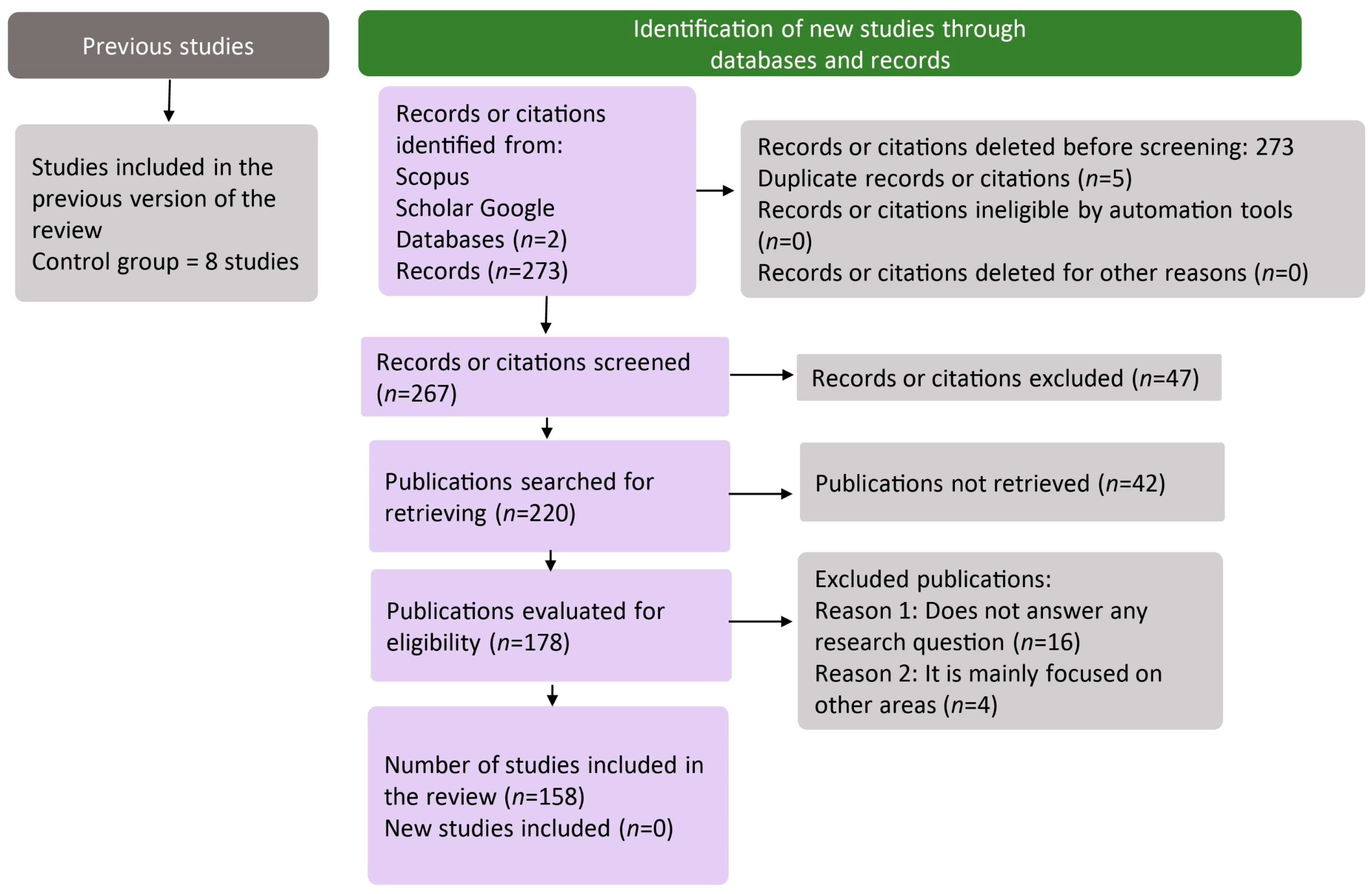
From the search string, an initial set of 230 studies from Scopus and 43 from Google Scholar was obtained, totaling 273 studies. This set underwent a review and arbitration process for subsequent analysis and data extraction to address the research questions. The research team, consisting of four authors, participated in the entire review process, examining and arbitrating the selected studies. Following a detailed review, 220 studies were selected for full review, and 178 full-text studies were retrieved. Out of these 178 fully reviewed studies, 158 studies meeting the inclusion criteria were identified, providing relevant information to address the research questions. These studies underwent data extraction using an Excel matrix that included study title, demographic data, and research questions (Usca et al. 2024). Table 3 presents the total count of resulting studies at each phase of the SLR process, along with their percentage in relation to the initial number of studies obtained from the databases.
Table 3.
Total number of studies and percentage in each process of the SLR.
Regarding synthesis methods, a matrix was used to organize and classify the collected data, assigning each column to a specific research question. Emerging technologies were identified and classified, study responses on benefits and challenges were categorized, and identified educational activities were grouped. Additionally, categories were established to classify technological tools according to the educational processes in which they could be used. This approach ensured coherence and validity in the presentation and synthesis of the systematic review results. Figure 1 simplifies the PRISMA process diagram.
Figure 1.
PRISMA flow diagram of the process of selection of studies. Note. n = number of studies.
2.3. Risk of Bias Assessment
The risk of bias assessment was conducted following the guidelines of the PRISMA 2020 Statement and was divided into several key stages. In the evaluation and presentation of the results, a detailed and comprehensive approach was adopted to provide a comprehensive overview of the confidence in the findings obtained in the systematic review. An assessment of the quality of responses to the research questions was provided, addressing various statistical aspects that verify confidence and provide detailed percentages for each group of responses in each research question. This transparent and robust approach contributes to the reliability and solidity of the results, offering a firm basis for evidence-based interpretation and decision making. Table 4 provides an assessment of the quality of responses to the research questions, addressing various statistical aspects that verify confidence and provide detailed percentages for each group of responses in each research question.
Table 4.
Evaluation of the quality of the answers to the research questions.
3. Results
Each study was analyzed, extracting data that provided answers to the research questions. It is crucial to highlight that, although the data were not always presented in a uniform textual manner, they converged on the same theme. To organize the information, the data were categorized in a general manner and subsequently arranged in a matrix. This matrix underwent a count to identify trends and determine which information was most recurrent in the studies. It is relevant to note that some studies encompassed multiple countries, benefits, challenges, sub-areas, or tools. Additionally, some studies did not specifically address certain research questions. The Supplementary Material (Usca et al. 2024) presents the matrix including all primary studies and the responses to each research question.
3.1. RQ1. What Are the Most Commonly Used Emerging Technologies in Arts and Humanities Education?
Understanding emerging technologies applied in arts and humanities is fundamental in the contemporary era, as these innovations play a central role in the transformation and evolution of these fields. Question 1 focuses on the identification and classification of emerging technologies, considering both those recognized as emerging by previous studies from various authors and those highlighted by Rotolo et al. (2015) in their work, characterized by notable and rapid evolutions, radical novelties, and significant growths. The importance of this approach lies in the need to understand how these technologies influence and contribute to the development of arts and humanities. Table 5 presents a compilation of these technologies, ordered from most to least mentioned according to their frequency in the studies, thus offering a detailed insight into their relevance in the set of analyzed studies.
Table 5.
Emerging technologies applied in arts and humanities education.
The results reveal that, in the field of arts and humanities, the main emerging technologies used encompass a wide range of tools that enhance creativity, learning, and management. Applications, web platforms, and educational software have emerged as essential pillars for teaching and accessing academic resources. The Internet of Things has found application in creating interactive experiences, while virtual and augmented reality are used for immersion in cultural environments across time and space. Three-dimensional technology, including software, simulation, and printing, has revolutionized artistic creation and the visualization of concepts or objects. Mobile learning (M-learning) stands out for its flexibility and convenience in delivering educational content. Tools for creating digital art, both software and hardware, have expanded the expressive possibilities of artists. Artificial intelligence, in its forms of data mining, text processing, and machine learning, has significantly impacted research and information analysis in these disciplines. Finally, learning management systems (LMS) have facilitated the administration and tracking of educational processes. These emerging technologies position themselves as fundamental drivers in the transformation and enrichment of practices in the field of arts and humanities.
3.2. RQ2. What Are the Benefits of Using Emerging Technologies in Arts and Humanities Education?
Identifying the benefits derived from the use of emerging technologies in arts and humanities education is essential to appreciate the positive impact these tools can have on the educational process. The utilization of emerging technologies not only enriches the educational experience but also offers significant advantages, such as expanded access to resources, stimulation of creativity, and enhancement of interactivity and student participation. Table 6 presents a detailed compilation of the main benefits mentioned in the analyzed studies, the total number of studies referring to these benefits, and the percentage relative to the total primary studies. This analysis not only sheds light on the diversity of identified benefits but also provides a quantitative perspective on the prevalence of these positive perceptions within the set of examined research.
Table 6.
Benefits of using technologies in arts and humanities education.
The research findings highlight a series of benefits associated with the use of emerging technologies in educational processes. Firstly, there is a promotion of interactive, multisensory, and playful learning, which enriches the educational experience and encourages active student participation. Additionally, the possibility of sharing projects and resources through these technologies fosters collaborative learning, stimulating the collective construction of knowledge. Innovation and improvements in the educational process emerge as key benefits, creating conducive environments for experimentation and adaptation of teaching methods. Accessibility to education, information, and knowledge is enhanced, removing geographical barriers and improving equity in access to educational resources. Finally, the temporal and spatial flexibility offered by these technologies facilitates learning adapted to different lifestyles, allowing students to access materials and participate in activities anytime and anywhere. Likewise, the other benefits identified in the table are revealed as essential elements for the comprehensive improvement of the educational process, effectively adapting to contemporary needs and demands.
3.3. RQ3. What Are the Common Challenges and Obstacles Associated with the Implementation of Emerging Technologies in Arts and Humanities Education?
As fundamental as understanding the benefits is addressing the challenges and obstacles inherent in the implementation of emerging technologies in arts and humanities education. Identifying these challenges is essential for developing effective strategies to overcome difficulties and maximize potential benefits. Table 7 presents a compilation of the most frequently mentioned challenges in the analyzed studies, providing valuable information about the complexity of integrating these technologies into the educational environment. This analysis offers a comprehensive view of the obstacles that educators and professionals face when incorporating emerging technologies, providing a solid framework for addressing these challenges and optimizing the integration of these tools into the arts and humanities educational environment.
Table 7.
Challenges and obstacles of the use of technologies in arts and humanities education.
The results highlight significant challenges related to the implementation of emerging technologies in the educational field of arts and humanities. The main challenge is the lack of digital competencies and effective use of technological tools by teachers. This challenge emphasizes the urgent need for training programs and professional development to equip educators with the necessary skills to effectively integrate emerging technologies into their pedagogical practices. Furthermore, the lack of research on the use of technology and its feasibility in different educational contexts and levels points to a critical gap in understanding how these tools can be optimized to address the specific needs of artistic and humanistic disciplines. Deficiencies in physical infrastructure, technology, and internet access pose tangible obstacles that must be overcome to ensure equitable and effective implementation of emerging technologies. Likewise, deficiencies in curricular planning, methodologies, and content that incorporate technological tools highlight the need for a more strategic and coherent integration of these tools into the design of educational programs. Finally, resistance to the use of technology by educational institutions or teachers highlights the importance of addressing perceptions and attitudes toward technology in the educational field, fostering a cultural change that promotes the effective adoption of these tools.
3.4. RQ4. How Are Emerging Technologies Applied in Different Sub-Areas of Arts and Humanities Education?
In accordance with Resolution RPC-SO-27-No.2 A9-2014, the Higher Education Council of the Republic of Ecuador (Consejo de Educación Superior 2014) issued the Regulation for Harmonization of the Nomenclature of Professional Titles and Academic Degrees conferred by Ecuadorian higher education institutions. This regulation establishes the codification of fields of knowledge, using the International Standard Classification of Education (ISCED) as a reference. In line with this proposal, Table 8 defines and details the fields, areas, and sub-areas related to arts and humanities.
Table 8.
Codification of the fields of knowledge CES-Ecuador.
Once the sub-areas within arts and humanities were delineated, the research focused on identifying which sub-areas of arts and humanities are most mentioned in the studies. Additionally, through the analysis of the studies, the specific application of emerging technologies in various educational contexts or processes within each subdiscipline was examined.
In the results, it was identified that the main sub-areas that prominently utilize emerging technologies are the artistic ones, specifically in the field of art (57%), encompassing visual and plastic arts, followed by design (33%), which includes various forms such as graphic design, textile design, fashion design, interior design, and product design. Likewise, audiovisual techniques and production for media (28%), which include the creation of digital products, marketing, and communication, hold a relevant place, given the strong connection of these professions with the technological sphere. Furthermore, the areas of history and archaeology (20%), literature and linguistics (11%), music and performing arts (10%), languages (8%), religion and theology (3%), and philosophy (2%) are also identified as relevant sub-areas.
In all these areas, the main uses of emerging technologies include the use of virtual learning platforms, social networks for sharing or searching for content, creation of infographics and digital pieces, virtual laboratories, simulations, virtual practices, conferences, virtual exams or tests, tutoring, virtual games or ludic applications, digital storytelling, platforms for programming, creation of virtual objects, artistic exhibitions and visits to virtual museums, as well as the creation of 3D prototypes and cloud storage. Virtual networks for artistic education, the use of blogs, podcasts, and networking, along with the creation of digital art, images with artificial intelligence, and text-to-image generation are also mentioned. Additionally, digital tools and platforms are used for data analysis for curricular improvement purposes, as well as for sharing resources and creations, and for content creation and management, including editing, publishing, and analysis.
3.5. RQ5. What Emerging Technological Tools Can Be Applied in Arts and Humanities Professions?
Understanding emerging technological tools applicable in arts and humanities is essential for optimizing the quality and effectiveness of educational processes in these disciplines. The diversity of tools identified in Table 9, classified according to their specific objectives and uses in the educational environment, provides an invaluable guide for educators and professionals. This knowledge not only opens opportunities to enhance students’ creativity and learning but also enables more strategic curriculum planning aligned with pedagogical objectives. Additionally, quantitative information is provided regarding their frequency of mention in the analyzed studies.
Table 9.
Emerging technology tools that can be applied in the arts and humanities.
The results provided a wide range of tools for various activities in arts and humanities. Standout programs for design and artistic creation in 2D and 3D include Adobe Photoshop, Autodesk Maya, and Procreate. Additionally, hardware such as mobile devices and tablets enhances portability and accessibility to educational resources, fostering creativity and interactive learning. Tablets with optical pens excel in artistic and design activities, allowing for intuitive creation of digital illustrations. On the other hand, 3D printers transform digital designs into tangible objects, providing students with the opportunity to materialize their three-dimensional concepts and explore the intersection between digital and physical realms. Communication and tutoring tools include Microsoft Teams and Zoom, while virtual and augmented reality platforms encompass Tilt Brush and Google Cardboard, among others. Social media platforms like Facebook and Instagram, information libraries like Google and YouTube, and productivity tools like Microsoft Office and Google Drive are also noted. Learning management systems like Moodle and Google Classroom, programming languages such as Python and JavaScript, gamified learning tools like Kahoot, and platforms for data analysis like MySQL and STATA are also highlighted in this diverse compilation. This information is essential for personalizing and enhancing teaching in various disciplines within arts and humanities.
3.6. Demographic Data
With the purpose of determining the countries that have been the focus of more research on this topic, Table 10 displays the relationship between the country and the total amount of research in which it was mentioned. This provides a detailed overview of the geographical distribution of research on the addressed topic. This geographical analysis not only offers a global perspective on the interest and research activity but also provides data about the geographical areas where the convergence of emerging technologies and the disciplines of arts and humanities has garnered particular attention.
Table 10.
Countries in which the studies were carried out.
3.7. Strategies with Emerging Technologies for Cultural Enrichment and Social Well-Being
Once the technologies that are most used in the arts and humanities have been identified, the question arises, how can emerging technologies be used to drive digital intervention in social work, while encouraging creative expression and cultural exploration in the arts and humanities disciplines, thusly contributing to the social well-being and cultural enrichment of communities?
To effectively take advantage of emerging technologies in the preservation and promotion of cultural and linguistic heritage, promoting a greater sense of identity and belonging in society, the following strategies can be implemented:
- Digital narration emerges as a powerful tool for the preservation and promotion of cultural and linguistic heritage. Through digital narration, it is possible to tell stories that connect people with their past, reviving ancestral traditions and myths or learning languages (Yeni et al. 2022). This technique allows historical information to be transformed into immersive and visually attractive stories, which can be shared through various digital platforms, such as mobile applications, social networks, and interactive websites. By combining digital storytelling with elements of virtual and augmented reality, immersive experiences can be created that transport users to past eras, allowing them to virtually explore historical and cultural sites.
- By combining digital tools such as interactive web applications, educational software, and mobile platforms, it offers students the opportunity to create works of art inspired by their cultural and linguistic heritage. Subsequently, these artistic works can be presented on social networks or virtual exhibitions using virtual and augmented reality technologies (Koukopoulos et al. 2022); in this way, students can share and explore their creations in an immersive way, thusly strengthening their connection with their cultural heritage and encouraging appreciation of heritage in a broader audience.
- Three-dimensional technologies, such as printers and modeling, offer an innovative means for the preservation and promotion of cultural objects and crafts. Through 3D modeling, it is possible to create accurate digital representations of cultural artifacts, allowing them to be studied and reproduced in great detail. Therefore, 3D printers make it possible to manufacture physical replicas of these objects (Stigberg et al. 2023), offering an accessible and economical way to preserve and spread cultural heritage. This combination of technologies not only make easy the conservation of valuable artifacts but also promote the active participation of communities in the preservation of their heritage by allowing them to create and share their own creations inspired in ancestral culture.
- Digitizing and making historical libraries and archives available online facilitate access to ancient documents and texts relevant to culture and language, while social media can be used to promote participation and dialogue around cultural and linguistic heritage, encouraging the exchange of ideas and experiences between communities. Storing and sharing digital resources related to cultural and linguistic heritage in the cloud facilitates their long-term access and preservation (Su et al. 2022).
- The use of educational software and mobile applications can be used as engaging resources to facilitate the understanding and appreciation of cultural and linguistic heritage. Likewise, the use of LMS platforms can be used to offer online courses on these topics, which could speed up access to education and the exchange of knowledge. These platforms, both web and mobile applications, could present video games and educational play material that incorporate elements of cultural and linguistic heritage, thus providing interactive and engaging experiences for learning about history, language, and art (Halverson et al. 2020).
- The integration of technological devices into cultural sites or museums can significantly enrich the visitor experience by offering detailed information about their history in various languages, as well as by providing interactive activities. This initiative seeks to create a more personalized and enriching experience for each visitor. Furthermore, the complementation with immersive virtual reality (VR) and augmented reality (AR) experiences allows users to be transported to different times and places, where they can interact with digital reconstructions of cultural and linguistic heritage (Cecotti et al. 2020; Kwon and Morrill 2022). These experiences can stimulate the public’s curiosity and interest, thusly providing a more memorable and educational visit.
- Finally, for the future, it is suggested to consider the use of robots for a wide range of functions in the preservation and promotion of cultural and linguistic heritage. These robots could perform conservation and restoration tasks at archaeological sites and historic buildings. They could also contribute to offering autonomous guided tours in museums and places of cultural interest, enriching the visitor experience by providing detailed and contextualized information about exhibits and historical sites.
These strategies using emerging technologies not only contribute to arts and humanities education to preserve and promote cultural and linguistic heritage but also have the potential to improve the quality of life and emotional well-being of people, thus promoting a more equitable and healthier living.
For example, digital narration and the creation of digital artwork can serve as therapeutic and expression tools for individuals facing emotional or mental health challenges. In addition, the digitization of libraries and historical archives facilitates access to information and education, while also promoting inclusion and equity by providing resources to marginalized communities or those with limited access to culture. Likewise, the integration of technological devices in cultural sites and museums can improve accessibility for people with disabilities, offering more inclusive and enriching experiences.
4. Discussion and Conclusions
The results reveal a noticeable presence of emerging technologies such as artificial intelligence (AI), Big Data, virtual and augmented reality (VR/AR), web applications, social networks, mobile devices, and Internet of Things (IoT). These technologies have been previously identified as emerging in various studies, and their continued standing reflects their capacity to transform multiple domains. The consideration of these technologies as emerging is based on their innovative nature, with constant evolution and significant impact on society, education, and human experience. For example, artificial intelligence drives automation and machine learning, while Big Data facilitates the analysis of large datasets. Virtual and augmented reality offer immersive experiences and the intersection of physical and digital realms. Web applications and social networks connect people globally, while mobile devices and IoT provide constant access to information and services. These technologies, being in constant evolution and generating rapid changes, are considered emerging due to their capacity to reshape how we interact, learn, and create in the digital age.
When evaluating the benefits and challenges, it is evident that the role of technology goes beyond being simply a tool; it becomes a facilitator of more immersive, collaborative, and personalized learning experiences. However, resistance to change and lack of digital competencies emerge as significant challenges that require strategic approaches to foster acceptance and effective integration of these technologies.
On a deeper level, the fact that the addressed subareas range from visual arts to philosophy and music demonstrates the universality of technological influence in all facets of human expression and knowledge. This phenomenon highlights how technology becomes a catalyst for the expansion and evolution of humanities disciplines, transforming how we conceive and participate in cultural and academic creation.
The detailed classification of tools, from design programs and virtual reality platforms to social networks and learning management systems, underlines the diversity and richness of the options available. However, this variety also poses the challenge of selecting and appropriately adapting these tools to specific contexts. It is important not only to understand the technical capabilities of these tools but also their alignment with the pedagogical and creative objectives of each discipline.
The geolocation of research adds another significant layer to the discussion, highlighting the need for a global approach in the research and application of emerging technologies in the arts and humanities. This global approach not only enriches the diversity of perspectives but also contributes to a more comprehensive understanding of how different cultural contexts influence the adoption and adaptation of these technologies.
Educators can enhance their curricula and develop specific digital competencies, promoting a more creative approach to teaching. Students experience personalized learning and acquire practical skills relevant to the professional world. For academic professionals, the information opens opportunities for international research and collaboration. Additionally, the application of these technologies in virtual learning environments, global collaboration, and simulated practices enhances the quality and relevance of education in arts and humanities, providing a solid foundation for academic and professional development in various educational contexts.
Ultimately, there is a need for careful reflection on how emerging technologies can empower and enrich the humanities disciplines. The successful adaptation of these tools is not only about their adoption but also about creating an educational environment that nurtures creativity, fosters adaptability, and embraces the constant evolution of technology and the humanities together.
In this way, the integration of emerging technologies in the disciplines of arts and humanities is presented like an opportunity to promote digital intervention in social well-being, as well as to promote creative expression and cultural exploration. Innovative strategies such as digital storytelling, the creation of digital works of art, 3D modeling, the digitization of libraries and historical archives, the exploitation of online educational platforms, and the incorporation of technological devices in cultural environments and museums provide a broad range of possibilities to preserve and promote the rich cultural and linguistic heritage of our societies. These initiatives open new roads for the spreading and appreciation of cultural heritage, while encouraging the active participation of communities and contributing to the construction of a solid and dynamic cultural identity.
4.1. Limitations
One possible limitation is the restriction of the analysis to studies in English and Spanish. While English is a universal language and authors from various parts of the world often publish in this language, the limitation it imposes in terms of linguistic diversity in academic literature is recognized. However, the presence of studies conducted in diverse countries was observed, reflecting the inclusivity of the review. Additionally, it is key to consider that this review represents a sample of the broad literary universe linked to arts and humanities. A conscious effort was made to select studies that provided the most relevant information for the topic under study. Another limitation to consider is the variations in the definitions of “emerging technologies”. However, it is essential to note that these limitations have been consciously addressed during the analysis, helping to minimize their influence on the overall interpretation and preserving the relevance of this study for future research.
4.2. Implications of the Results
In practical terms, educators can leverage these findings to enhance their teaching methods, foster creativity, and personalize learning. Furthermore, educational institutions may consider the need for policies that support the effective integration of these technologies into curricula. From a policy perspective, the results highlight the importance of adopting flexible approaches that facilitate adaptation to the constant evolution of emerging technologies. Additionally, for future research, exploring the effectiveness of specific implementation strategies, addressing the identified limitations, and examining the long-term impact of these technologies on academic performance and student engagement are suggested. These implications contribute to the continuous evolution of educational practices and the formulation of policies tailored to an ever-changing educational environment.
5. Other Information
Registration and Protocol: This research constitutes an integral part of the research project “Fortalecimiento de capacidades para la investigación científica en docentes de la Universidad Nacional de Chimborazo” in the Graphic Design program, identified with registration number 002-RS-FCIC-DG-UNACH-2023. The methodology and execution of the research followed the PRISMA protocol to ensure transparency and rigor in the systematic literature review.
Supplementary Materials
The following supporting information can be downloaded at: https://www.mdpi.com/article/10.3390/socsci13050269/s1 and https://doi.org/10.5281/zenodo.10838846.
Author Contributions
Conceptualization, N.U., M.S., C.Y. and I.P.; methodology, N.U., M.S., C.Y. and I.P.; validation, N.U., M.S., C.Y. and I.P.; formal analysis, N.U., M.S., C.Y. and I.P.; investigation, N.U., M.S., C.Y. and I.P.; data curation, N.U., M.S., C.Y. and I.P.; writing—original draft preparation, N.U., M.S., C.Y. and I.P.; writing—review and editing, N.U., M.S., C.Y. and I.P. All authors have read and agreed to the published version of the manuscript.
Funding
This research received no external funding.
Institutional Review Board Statement
Not applicable.
Informed Consent Statement
Not applicable.
Data Availability Statement
To access the files and supporting documents that integrate the research process, along with supplementary documents, interested parties can refer to the following reference (Kwon and Morrill 2022). This provision aims to facilitate readers the possibility of conducting an analysis and understanding in-depth the aspects addressed in this research.
Conflicts of Interest
The authors declare no conflict of interest.
References
- Brueggemann, Brenda Jo. 2012. Arts and Humanities. Thousand Oaks: SAGE Publications. ISBN 978-1-4129-9418-7. [Google Scholar]
- Cecotti, Hubert, Zachary Day-Scott, Laura Huisinga, and Luis Gordo-Pelaez. 2020. Virtual Reality for Immersive Learning in Art History. Paper presented at 2020 6th International Conference of the Immersive Learning Research Network (ILRN), San Luis Obispo, CA, USA, June 21–25; pp. 16–23. [Google Scholar]
- Consejo de Educación Superior. 2014. Reglamento de Armonización de la Nomenclatura de Títulos Profesionales y Grados Académicos que Confieren las Instituciones de Educación Superior del Ecuador. Quito: República del Ecuador, vol. RPC-SO-2 7-No.2 A9-2014. [Google Scholar]
- Cozzens, Susan, Sonia Gatchair, Jongseok Kang, Kyung-Sup Kim, Hyuck Jai Lee, Gonzalo Ordóñez, and Alan Porter. 2010. Emerging Technologies: Quantitative Identification and Measurement. Technology Analysis & Strategic Management 22: 361–76. [Google Scholar] [CrossRef]
- Cruz, Josefina Arimatea García, Bertila Liduvina García Díaz, Yesenia Guevara Valdiviezo, Yesmi Katia Ortega Rojas, Luis Alberto Sakibaru Mauricio, and Carlos Alberto Vargas Cárdenas. 2023. Inteligencia Artificial en la Praxis Docente: Vínculo Entre la Tecnología y el Proceso de Aprendizaje. Lima-Perú: Mar Caribe de Josefrank Pernalete Lugo, vol. 1, ISBN 978-612-51-2413-5. [Google Scholar]
- Galán, José G. 2017. Educational Architecture and Emerging Technologies: Innovative Classroom-Models. Hekademos: Revista Educativa Digital 22: 7–18. [Google Scholar]
- González, Jaquelin Lorena, and Jessica Estrella. 2023. Educación del Siglo XXI, competencias, metodologías y estrategias. Esprint Investigación 2: 5–15. [Google Scholar] [CrossRef]
- Grimus, Margarete. 2020. Emerging Technologies: Impacting Learning, Pedagogy and Curriculum Development. In Emerging Technologies and Pedagogies in the Curriculum. Edited by Shengquan Yu, Mohamed Ally and Avgoustos Tsinakos. Uniendo Humanos y Máquinas: Educación Futura Con Inteligencia. Singapore: Springer, pp. 127–51. ISBN 9789811506185. [Google Scholar]
- Halverson, Erica Rosenfeld, Anna Jordan-Douglass, Jessie Nixon, and Emily Schindler. 2020. How Educational and Communications Technologies Play a Role in Arts and Humanities Teaching and Learning. In Handbook of Research in Educational Communications and Technology: Learning Design. Edited by Martin J. Bishop, Elizabeth Boling, Jan Elen and Vanessa Svihla. Cham: Springer International Publishing, pp. 451–64. ISBN 978-3-030-36119-8. [Google Scholar]
- Huang, Ronghuai, J. Michael Spector, and Junfeng Yang. 2019. Educational Technology: A Primer for the 21st Century. Singapore: Springer. ISBN 9789811366437. [Google Scholar]
- Jacome Álvarez, Orfa de J. 2021. Las Tecnologías Emergentes en la Sociedad del Aprendizaje. Revista Científica Hallazgos21 6: 101–10. [Google Scholar]
- Jiawei, Wang, and Nur Azlina Mohamed Mokmin. 2023. Virtual Reality Technology in Art Education with Visual Communication Design in Higher Education: A Systematic Literature Review. Education and Information Technologies 28: 15125–43. [Google Scholar] [CrossRef]
- Koukopoulos, Dimitrios, Panagiotis Dafiotis, Stella Sylaiou, Konstantinos Koukoulis, and Christos Fidas. 2022. XR Technologies for Self-Regulated Student Exhibitions in Art Education: Survey and First Design Considerations. Paper presented at 2022 International Conference on Interactive Media, Smart Systems and Emerging Technologies (IMET), Limassol, Cyprus, October 4–7; pp. 1–8. [Google Scholar]
- Kwon, Hyunji, and Kenneth Morrill. 2022. Virtual Reality: Immersive and Situated Art Education With 360-Degree Cameras, and Augmented and Virtual Reality Technology. Art Education 75: 27–32. [Google Scholar] [CrossRef]
- Lengua, Claudia, Giany Bernal, Wilson Flores, and Miguel Velandia. 2020. Tecnologías emergentes en el proceso de enseñanza-aprendizaje: Hacia el desarrollo del pensamiento crítico. Revista Electrónica Interuniversitaria de Formación del Profesorado 23: 83–98. [Google Scholar] [CrossRef]
- Leoste, Janika, Larissa Jõgi, Tiia Õun, Luis Pastor, José San Martín López, and Indrek Grauberg. 2021. Perceptions about the Future of Integrating Emerging Technologies into Higher Education—The Case of Robotics with Artificial Intelligence. Computers 10: 110. [Google Scholar] [CrossRef]
- Martin, William J. 2017. The Global Information Society. Milton Park: Taylor & Francis. ISBN 978-1-351-88889-9. [Google Scholar]
- Martínez, Moreno, Noelia Margarita, López Meneses, Leiva Olivencia, and Juan José. 2018. El uso de las tecnologías emergentes como recursos didácticos en ámbitos educativos. International Studies on Law and Education 29: 131–46. [Google Scholar]
- Miao, Jingwen, and Jie Feng. 2021. Research on the Construction of Public Art Education Curriculum System in Colleges and Universities Based on Information Technology. Paper presented at 2021 4th International Conference on Information Systems and Computer Aided Education, ICISCAE 2021, Dalian, China, September 24–26; New York: Association for Computing Machinery, pp. 142–45. [Google Scholar]
- Morales-Alarcón, Cristian Hugo, Carmen Edith Donoso-León, Lidia Jhoanna Gallardo-Donoso, Lady Marieliza Espinoza-Tinoco, and Freddy Patricio Morales-Alarcón. 2021. Metodología de formación educativa basada en entornos virtuales de aprendizaje para estudiantes de Ingeniería Civil. Dominio de las Ciencias 7: 530–50. [Google Scholar]
- Page, Matthew J., Joanne E. McKenzie, Patrick M. Bossuyt, Isabelle Boutron, Tammy C. Hoffmann, Cynthia D. Mulrow, Larissa Shamseer, Jennifer M. Tetzlaff, Elie A. Akl, Sue E. Brennan, and et al. 2021. Declaración PRISMA 2020: Una Guía Actualizada Para La Publicación de Revisiones Sistemáticas. Revista Española de Cardiología 74: 790–99. [Google Scholar] [CrossRef] [PubMed]
- Ríos, Yésica del Águila, Mᵃ Regina Teixeira Ferreira Capelo, John Miguel Costa Varela, Jorge Guerra Antequera, and Juan Antonio Antequera Barroso. 2019. Creatividad y tecnologías emergentes en educación. Revista INFAD de Psicología. International Journal of Developmental and Educational Psychology 3: 527–34. [Google Scholar] [CrossRef]
- Rotolo, Daniele, Diana Hicks, and Ben R. Martin. 2015. What Is an Emerging Technology? Research Policy 44: 1827–43. [Google Scholar] [CrossRef]
- Song, Min Jeong. 2021. Reshaping Creativity with 3D Technologies: 3D Printing and VR in Visual Arts Education. Paper presented at Learning & Teaching Expo 2021, Hong Kong, December 8–10. [Google Scholar]
- Stigberg, Susanne, Fahad Faisal Said, and Daniela Blauhut. 2023. Digital Fabrication in Arts and Crafts Education: A Critical Review. In Learning and Collaboration Technologies. Edited by Panayiotis Zaphiris and Andri Ioannou. Cham: Springer Nature Switzerland, pp. 642–57. [Google Scholar]
- Su, YunQiao, Sze Seau Jill Lee, BeiLe Su, and LiLi Zhang. 2022. Digitizing Intangible Cultural Heritage in China: A Pedagogical Model for Innovation and Entrepreneurship Among New Media Art Students. In Distributed, Ambient and Pervasive Interactions. Smart Living, Learning, Well-Being and Health, Art and Creativity. Edited by Norbert A. Streitz and Shin’ichi Konomi. Lecture Notes in Computer Science. Cham: Springer International Publishing, pp. 165–80. [Google Scholar]
- Tay, Louis, James O. Pawelski, and Melissa G. Keith. 2018. The Role of the Arts and Humanities in Human Flourishing: A Conceptual Model. The Journal of Positive Psychology 13: 215–25. [Google Scholar] [CrossRef]
- Usca, Nancy, Mariela Samaniego, Carlos Yerbabuena, and Isaac Pérez. 2024. Emerging Technologies in Arts and Humanities Education: A Systematic Review [Data Set]. Zenodo. Available online: https://zenodo.org/records/10838846 (accessed on 1 May 2024).
- Üstün, Ahmet Berk. 2021. The Power of Using Emerging Technologies in MOOCs: Accelerating Globalization in Higher Education. Journal of Learning and Teaching in Digital Age 6: 141–48. [Google Scholar]
- Visvizi, Anna, Miltiadis D. Lytras, and Akila Sarirete. 2019. Emerging Technologies and Higher Education: Management and Administration in Focus. In Management and Administration of Higher Education Institutions at Times of Change. Edited by Anna Visvizi, Miltiadis D. Lytras and Akila Sarirete. Emerald Studies in Higher Education, Innovation and Technology. Bingley: Emerald Publishing Limited, pp. 1–11. ISBN 978-1-78973-628-1. [Google Scholar]
- Yaulema, Laura Pilar Berrones, and Sebastián Alejandro Salgado Oviedo. 2023. La aplicación de la inteligencia artificial para mejorar la enseñanza y el aprendizaje en el ámbito educativo. Esprint Investigación 2: 52–60. [Google Scholar] [CrossRef]
- Yeni, Sabiha, Jacqueline Nijenhuis-Voogt, Felienne Hermans, and Erik Barendsen. 2022. An Integration of Computational Thinking and Language Arts: The Contribution of Digital Storytelling to Students’ Learning. Paper presented at 17th Workshop in Primary and Secondary Computing Education, WiPSCE ’22, Morschach, Switzerland, October 31–November 2; New York: Association for Computing Machinery. [Google Scholar]
Disclaimer/Publisher’s Note: The statements, opinions and data contained in all publications are solely those of the individual author(s) and contributor(s) and not of MDPI and/or the editor(s). MDPI and/or the editor(s) disclaim responsibility for any injury to people or property resulting from any ideas, methods, instructions or products referred to in the content. |
© 2024 by the authors. Licensee MDPI, Basel, Switzerland. This article is an open access article distributed under the terms and conditions of the Creative Commons Attribution (CC BY) license (https://creativecommons.org/licenses/by/4.0/).