Thermo-Mechanical Finite Element Modeling of the Laser Treatment of Titanium Cold-Sprayed Coatings




Abstract
1. Introduction
2. Materials and Methods
2.1. Mathematical Formulation
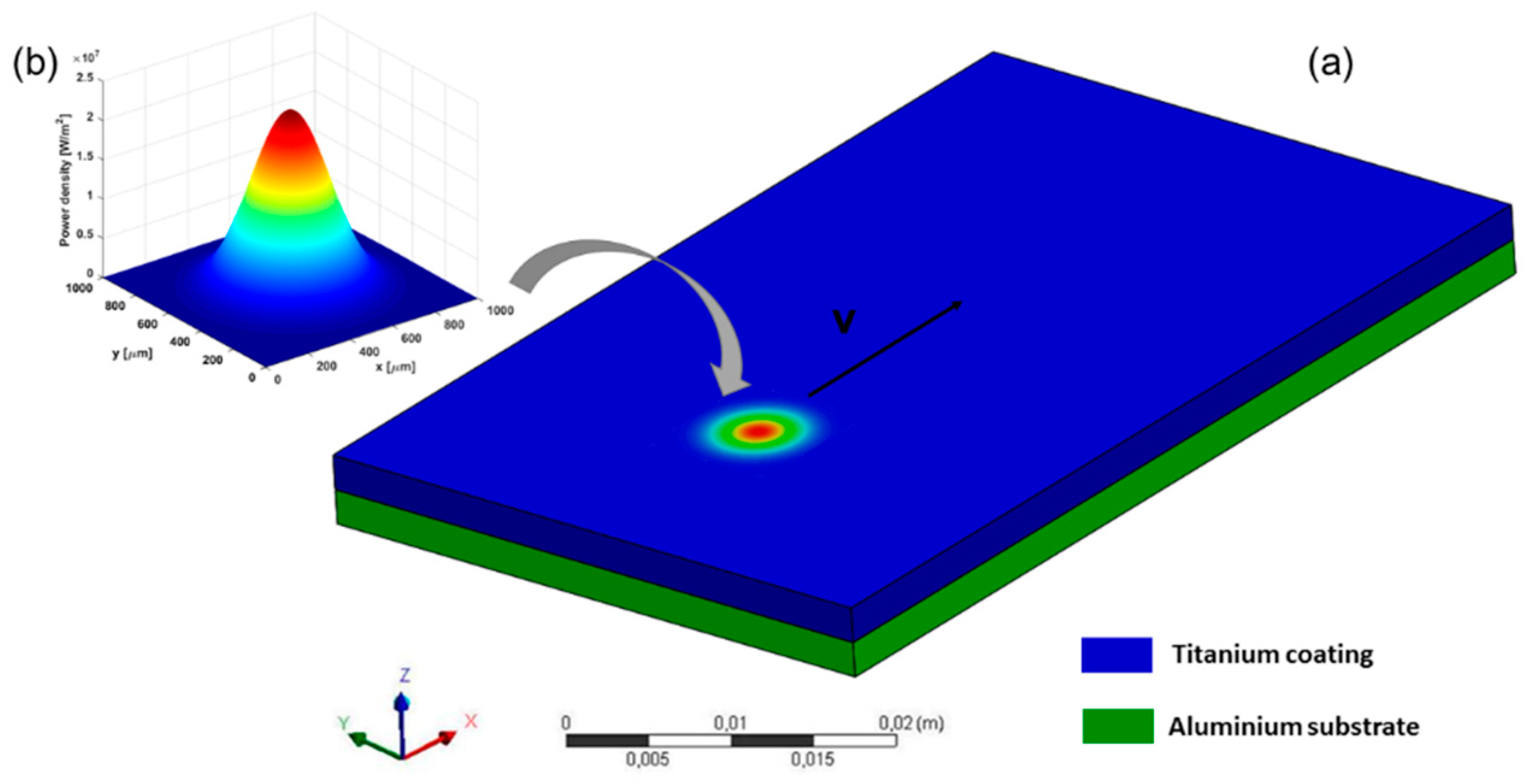
2.2. Numerical Formulation
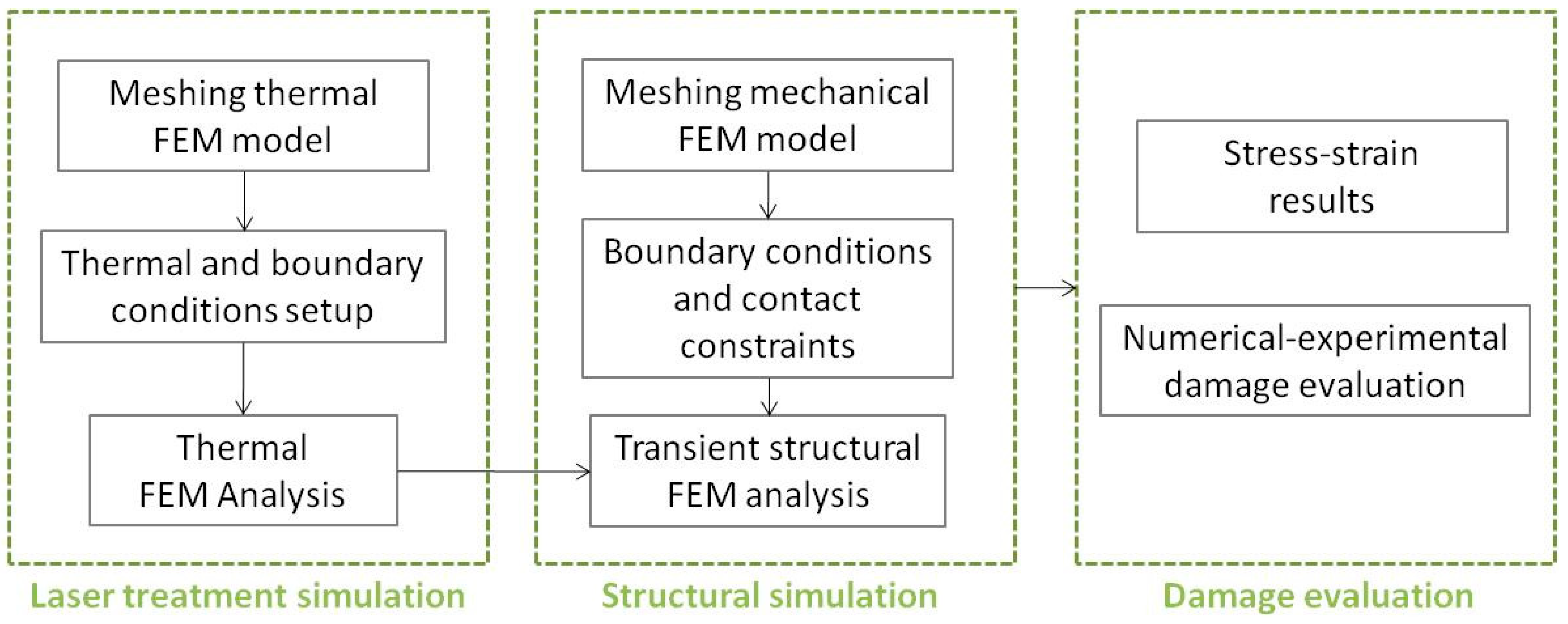
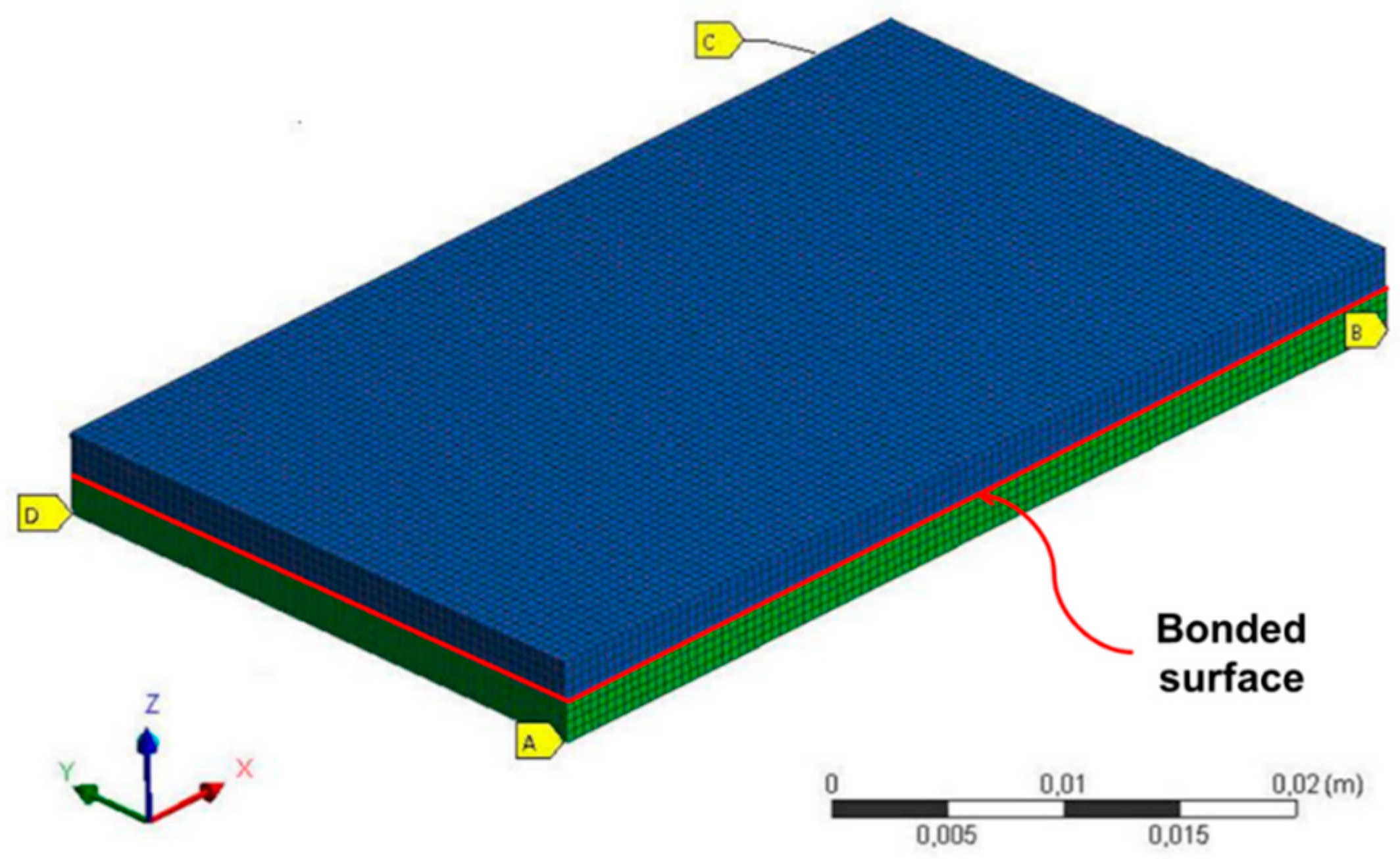
- Creation of the finite element model to perform the thermal simulation of the laser treatment;
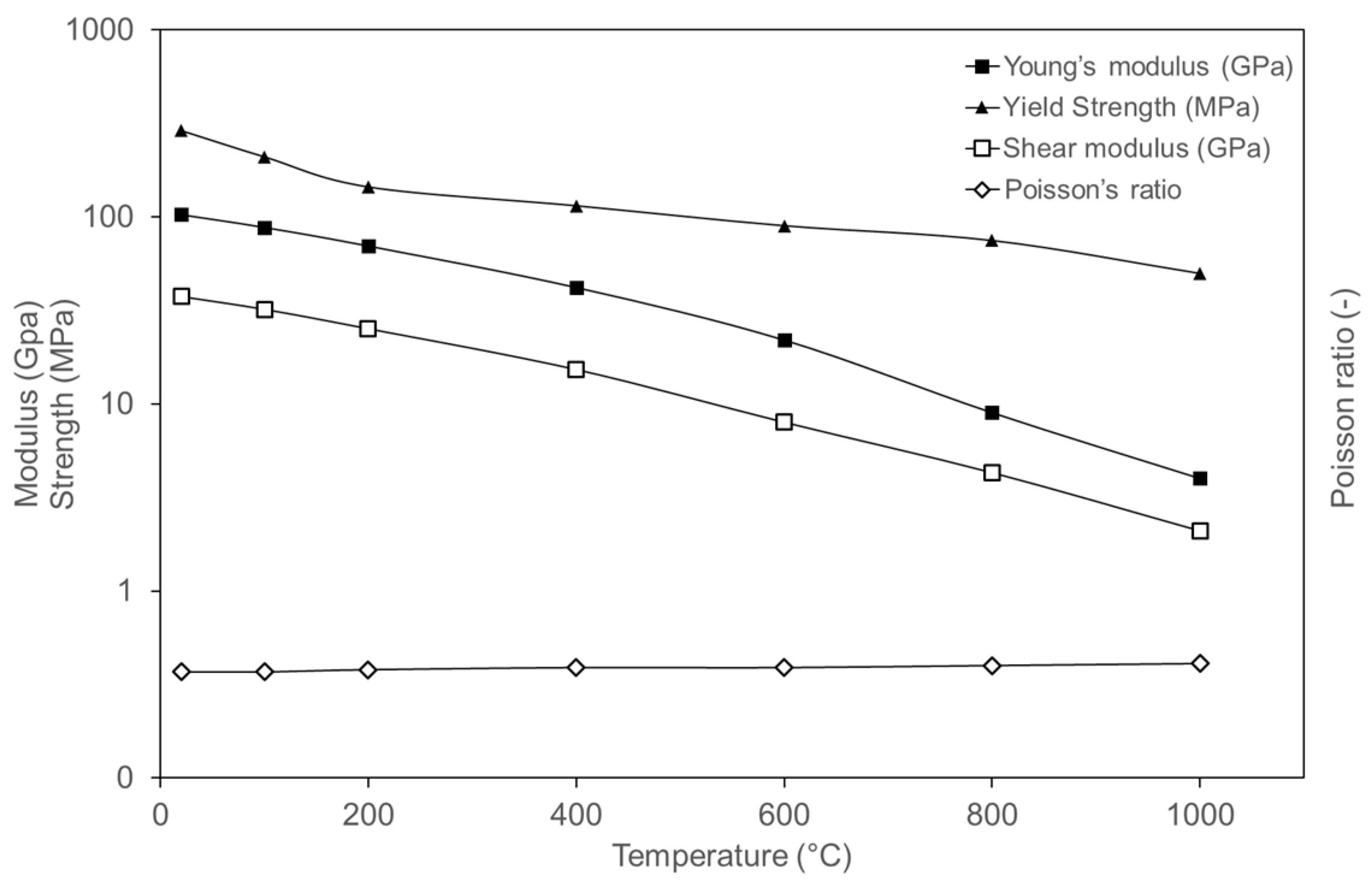
- Definition of the temperature distribution, boundary and contact constraints as input for transient structural simulation are here defined;
- Analysis of stress-strain effects useful to evaluate coating damage.
3. Results and Discussions
4. Conclusions
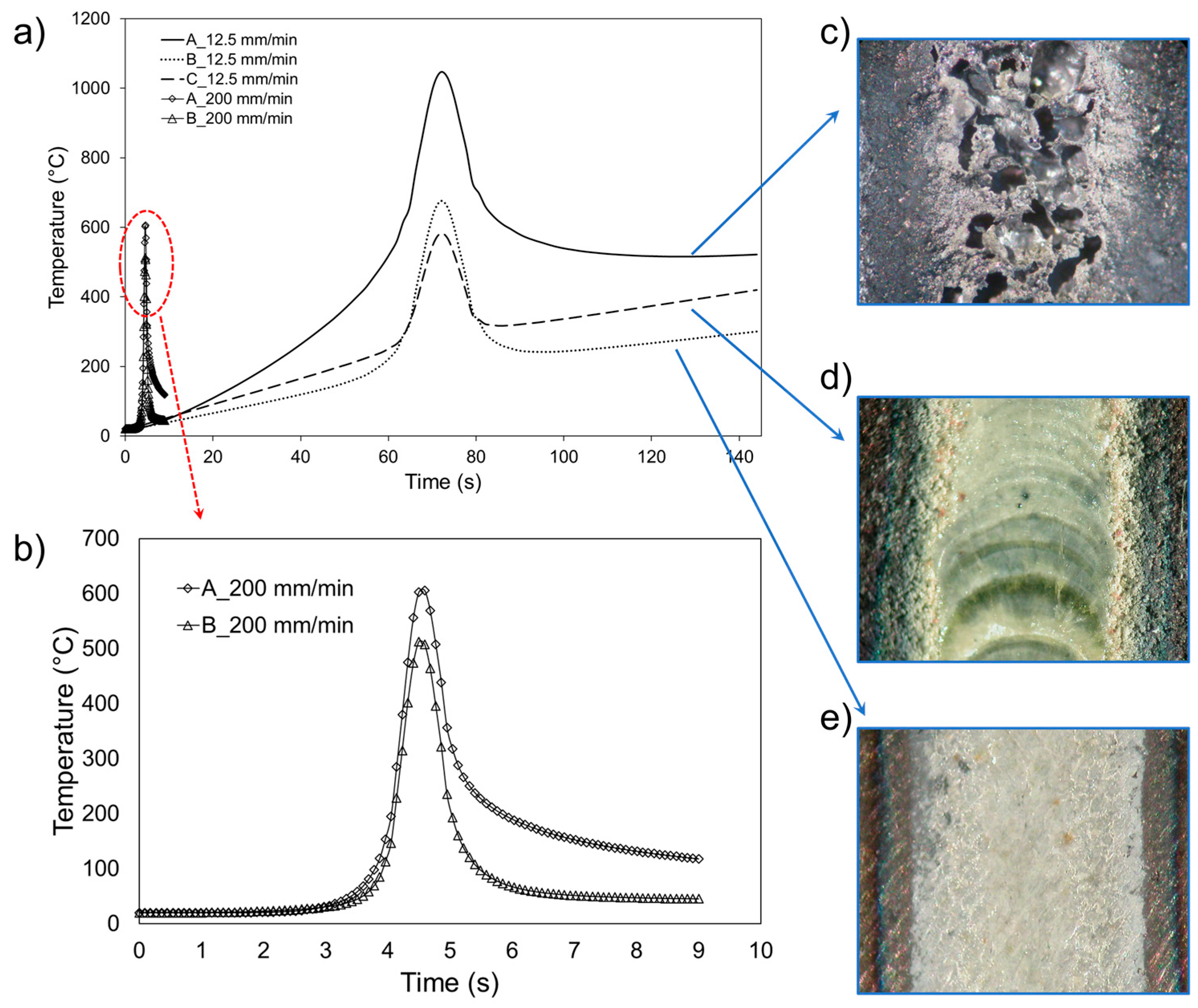
- Highest predicted temperatures have been observed on the surface of samples processed at lower laser scan speed. The presence of a substrate influences the maximum temperature achieved on the surface as well as the cooling rate experienced by the material.
- Higher scan speed attains reduced value of temperature and material experiences sharper thermal gradients during the heating and cooling. The substrate showed to have a reduced influence on the temperature levels in comparison with the samples treated at lower speed.
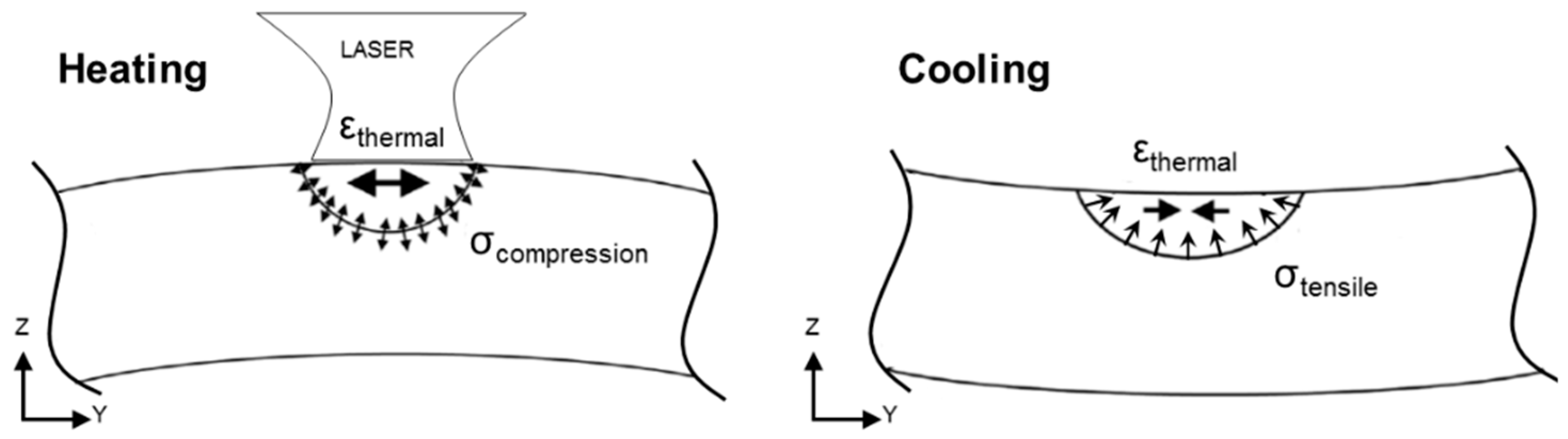
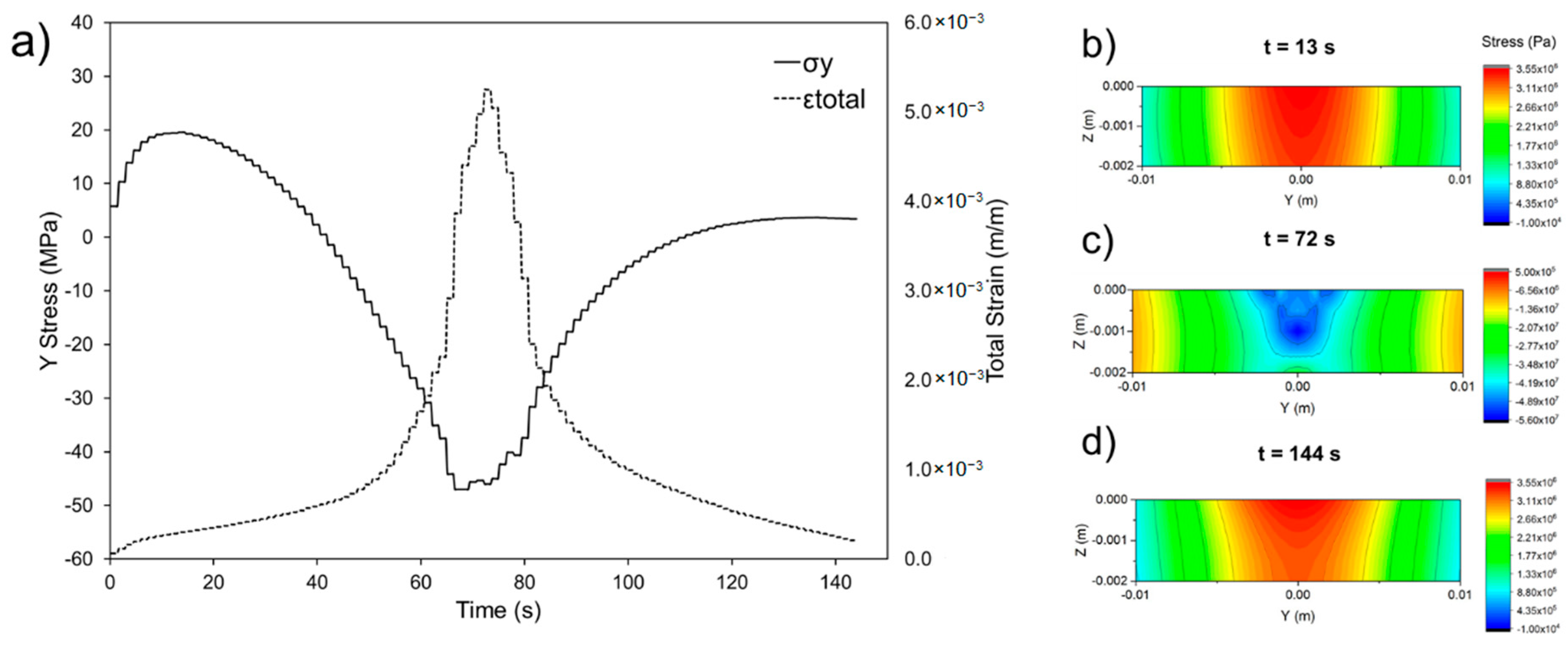
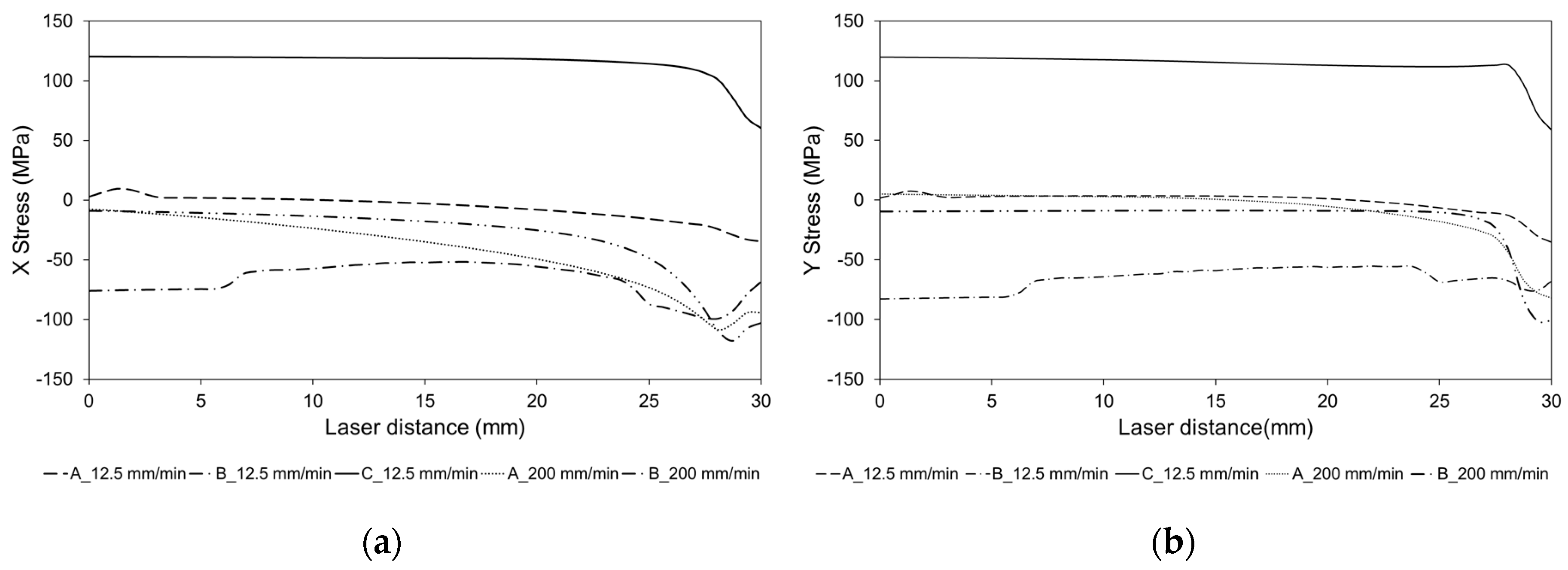
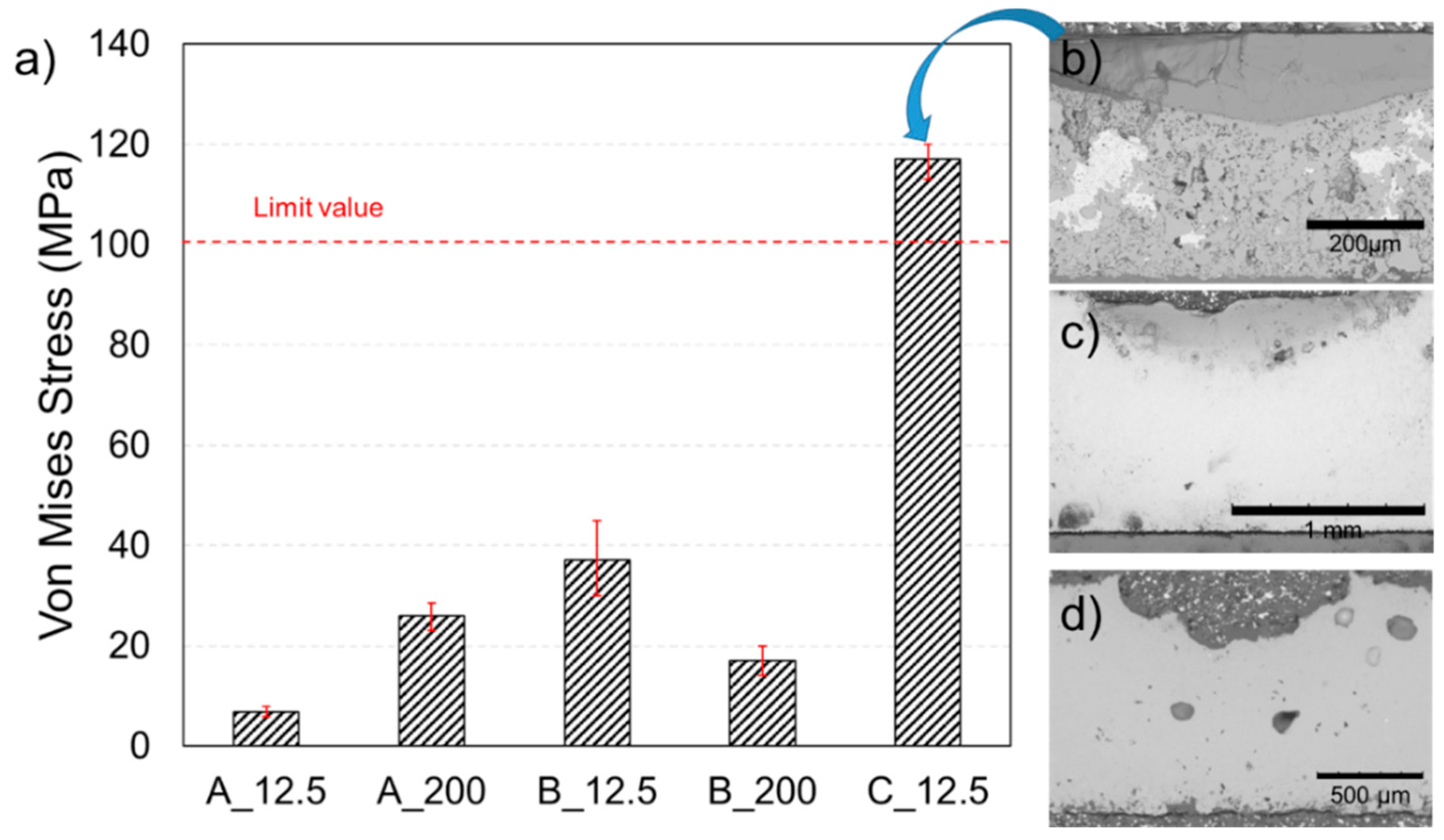
- Compressive stresses have been found on the test case with thickness ratio equal to 1, processed with a laser scan speed of 12.5 mm/min (Case B_12.5). Compressive stress field inside the material are beneficial for reducing the failure tendency and enhancing the fatigue endurance of the deposit. Numerical results confirmed the effectiveness of the treatment carried out under this configuration.
- A tensile stress field was observed in the sample with thickness ratio <1, adopting 12.5 mm/min as laser scan speed (Case C_12.5). High value of the equivalent Von Mises stress was predicted inside the coating due to the sharp thermal gradient and the reduced thickness of the titanium deposit. The stress overcame the tensile strength of the cold-sprayed titanium pointing out the high risk of nucleation and propagation of cracks inside the coating. The numerical results are in good agreement with the experimental observations.
- Reduced tensile stresses were found in the other test cases analyzed. The predicted stress field was too low to cause the formation of cracks inside the material. The mechanical model was not able to explain the occurrence of the observed material loss. This kind of damage can be related to the weakness of the rutile layer produced and the mismatching with the underlying ductile metal.
- The proper matching between the laser heat input and the thickness ratio between the titanium coating and the aluminum substrate play a key role in the laser treatment. Indeed, the ability of the substrate to dissipate the heating from the coating allowed it to obtain the proper temperature distribution inside the coating, avoiding the overheating of the surface or ineffective treatment.
- In case of ratio between the coating and substrate thickness approximately equal to 1, a higher heat input can be adopted to promote the formation of a compact and dense titanium oxide layer. High laser energy input should be avoided in the case of reduced value of the thickness ratio. Indeed, the resulting high temperature gradient could cause the formation of intense residual stress fields inside the coating and the consequent catastrophic failure of the cold spray deposited titanium. For this coating/substrate configuration, lower heat input can be used in case of thin coatings obtaining a thin superficial rutile layer with good adhesion with the underlying coating.
Author Contributions
Funding
Conflicts of Interest
References
- Hussain, T. Cold spraying of titanium: A review of bonding mechanisms, microstructure and properties. Key Eng. Mater. 2012, 533, 53–90. [Google Scholar] [CrossRef] [Scilit]
- Bae, G.; Kumar, S.; Yoon, S.; Kang, K.; Na, H.; Kim, H.-J.; Lee, C. Bonding features and associated mechanisms in kinetic sprayed titanium coatings. Acta Mater. 2009, 57, 5654–5666. [Google Scholar] [CrossRef] [Scilit]
- Zahiri, S.H.; Antonio, C.I.; Jahedi, M. Elimination of porosity in directly fabricated titanium via cold gas dynamic spraying. J. Mater. Process. Technol. 2009, 209, 922–929. [Google Scholar] [CrossRef] [Scilit]
- Zahiri, S.H.; Mayo, S.C.; Jahedi, M. Characterization of cold spray titanium deposits by X-ray microscopy and microtomography. Microsc. Microanal. 2008, 14, 260–266. [Google Scholar] [CrossRef] [Scilit] [PubMed]
- Wong, W.; Rezaeian, A.; Irissou, E.; Legoux, J.G.; Yue, S. Cold spray characteristics of commercially pure Ti and Ti-6Al-4V. Adv. Mater. Res. 2010, 89–91, 639–644. [Google Scholar] [CrossRef] [Scilit]
- Boyer, R.R. An overview on the use of titanium in the aerospace industry. Mater. Sci. Eng. A 1996, 213, 103–114. [Google Scholar] [CrossRef] [Scilit]
- Hussain, T.; McCartney, D.G.; Shipway, P.H.; Marrocco, T. Corrosion behavior of cold sprayed titanium coatings and free standing deposits. J. Therm. Spray Technol. 2011, 20, 260–274. [Google Scholar] [CrossRef] [Scilit]
- Marrocco, T.; Hussain, T.; McCartney, D.G.; Shipway, P.H. Corrosion performance of laser posttreated cold sprayed titanium coatings. J. Therm. Spray Technol. 2011, 20, 909–917. [Google Scholar] [CrossRef] [Scilit]
- Pathak, S.; Saha, G. Development of Sustainable cold spray coatings and 3D additive manufacturing components for repair/manufacturing applications: A critical review. Coatings 2017, 7, 122. [Google Scholar] [CrossRef] [Scilit]
- Astarita, A.; Rubino, F.; Carlone, P.; Ruggiero, A.; Leone, C.; Genna, S.; Merola, M.; Squillace, A. On the improvement of AA2024 wear properties through the deposition of a cold-sprayed titanium coating. Metals 2016, 6, 185. [Google Scholar] [CrossRef] [Scilit]
- Zahiri, S.H.; Fraser, D.; Jahedi, M. Recrystallization of cold spray-fabricated CP titanium structures. J. Therm. Spray Technol. 2009, 18, 16–22. [Google Scholar] [CrossRef] [Scilit]
- Steen, W.M.; Mazumder, J. Laser Material Processing; Springer: London, UK, 2010; ISBN 978-1-84996-061-8. [Google Scholar]
- Ion, J. Laser Processing of Engineering Materials: Principles, Procedure and Industrial Application, 1st ed.; Elsevier: Boston, MA, USA, 2005; ISBN 9780080492803. [Google Scholar]
- Rubino, F.; Astarita, A.; Carlone, P.; Genna, S.; Leone, C.; Memola Capece Minutolo, F.; Squillace, A. Selective laser post-treatment on titanium cold spray coatings. Mater. Manuf. Process. 2016, 31, 1500–1506. [Google Scholar] [CrossRef] [Scilit]
- Rubino, F.; Paradiso, V.; Astarita, A.; Carlone, P.; Squillace, A. Advances in titanium on aluminium alloys cold spray coatings. In Cold-Spray Coatings; Springer International Publishing: Cham, Switzerland, 2018; pp. 225–249. [Google Scholar]
- Carlone, P.; Astarita, A.; Rubino, F.; Pasquino, N.; Aprea, P. Selective laser treatment on cold-sprayed titanium coatings: Numerical modeling and experimental analysis. Metall. Mater. Trans. B 2016, 47, 3310–3317. [Google Scholar] [CrossRef] [Scilit]
- Dong, H.; Bell, T. Enhanced wear resistance of titanium surfaces by a new thermal oxidation treatment. Wear 2000, 238, 131–137. [Google Scholar] [CrossRef] [Scilit]
- ASM Specialty Handbook: Aluminum and Aluminum Alloys; Davis, J.R., Ed.; ASM International: Materials Park, OH, USA, 1993; ISBN 978-0-87170-496-2. [Google Scholar]
- Duncan, R.M.; Hanson, B.H.; Design Council; British Standards Institution; Council of Engineering Institutions. The Selection and Use of Titanium; Oxford University Press for the Design Council, the British Standards Institution, the Council of Engineering Institutions: Oxford, UK, 1980; ISBN 0198591764. [Google Scholar]
- De Oliveira, W.P.; Savi, M.A.; Pacheco, P.M.C.L. Finite element method applied to the quenching of steel cylinders using a multi-phase constitutive model. Arch. Appl. Mech. 2013, 83, 1013–1037. [Google Scholar] [CrossRef] [Scilit]
- Toyserkani, E.; Khajepour, A.; Corbin, S. 3-D finite element modeling of laser cladding by powder injection: Effects of laser pulse shaping on the process. Opt. Lasers Eng. 2004, 41, 849–867. [Google Scholar] [CrossRef] [Scilit]
- Santhanakrishnan, S.; Kong, F.; Kovacevic, R. An experimentally based thermo-kinetic phase transformation model for multi-pass laser heat treatment by using high power direct diode laser. Int. J. Adv. Manuf. Technol. 2013, 64, 219–238. [Google Scholar] [CrossRef] [Scilit]
- Roberts, I.A. Investigation of Residual Stresses in the Laser Melting of Metal Powders in Additive Layer Manufacturing. Ph.D. Thesis, University of Wolverhampton, Wolverhampton, UK, September 2012. [Google Scholar]
- Hussein, A.; Hao, L.; Yan, C.; Everson, R. Finite element simulation of the temperature and stress fields in single layers built without-support in selective laser melting. Mater. Des. 2013, 52, 638–647. [Google Scholar] [CrossRef] [Scilit]
- Kruth, J.P.; Froyen, L.; Van Vaerenbergh, J.; Mercelis, P.; Rombouts, M.; Lauwers, B. Selective laser melting of iron-based powder. J. Mater. Process. Technol. 2004, 149, 616–622. [Google Scholar] [CrossRef] [Scilit]
- Kings, T.H.E. “Advanced mechanics of materials” 5th edition, A.P. Boresi, R.J. Schmidt and O.M. Sidebottom. Strain 1993, 29, 141–142. [Google Scholar] [CrossRef] [Scilit]
- Luzin, V.; Spencer, K.; Zhang, M.; Matthews, N.; Davis, J.; Saleh, M. Residual stresses in cold spray coatings. In Cold-Spray Coatings; Cavaliere, P., Ed.; Springer International Publishing: Cham, Switzerland, 2018; pp. 451–480. [Google Scholar]
- Yin, S.; Suo, X.; Su, J.; Guo, Z.; Liao, H.; Wang, X. Effects of substrate hardness and spray angle on the deposition behavior of cold-sprayed Ti particles. J. Therm. Spray Technol. 2014, 23, 76–83. [Google Scholar] [CrossRef] [Scilit]
- Firm, K.; Boyer, R.; Welsch, G. Materials Properties Handbook: Titanium Alloys; ASM International: Materials Park, OH, USA, 1994; ISBN 978-0-87170-481-8. [Google Scholar]
- Kabir, I.R.; Yin, D.; Tamanna, N.; Naher, S. Thermomechanical modelling of laser surface glazing for H13 tool steel. Appl. Phys. A 2018, 124, 260. [Google Scholar] [CrossRef] [Scilit]
- Gulizia, S.; Aus, C.; Trentin, A.; Veccu, S.; Rech, S.; King, P.C.; Jahedi, M.; Guagliano, M. Microstructure and mechanical properties of cold spray titanium coatings. In Thermal Spray 2010: Global Solutions for Future Application, Proceedings of the International Thermal Spray Conference, Singapore, 3–5 May 2010; Marple, B.R., Agarwal, A., Hyland, M.M., Lau, Y.-C., Li, C.-J., Lima, R.S., Montavon, G., Eds.; Springer: New York, NY, USA, 2010. [Google Scholar]
- Larsson, P.-L.; Giannakopoulos, A.E. Tensile stresses and their implication to cracking at pyramid indentation of pressure-sensitive hard metals and ceramics. Mater. Sci. Eng. A 1998, 254, 268–281. [Google Scholar] [CrossRef] [Scilit]
- Li, J.F.; Li, L.; Stott, F.H. Thermal stresses and their implication on cracking during laser melting of ceramic materials. Acta Mater. 2004, 52, 4385–4398. [Google Scholar] [CrossRef] [Scilit]
- Hussain, T. A Study of Bonding Mechanisms and Corrosion Behaviour of Cold Sprayed Coatings. Ph.D. Thesis, University of Nottingham, Nottingham, UK, 2011. [Google Scholar]
- Binder, K.; Gartner, F.; Klassen, T. Ti-parts for aviation industry produced by cold spraying. In Thermal Spray 2010: Global Solutions for Future Applications, Proceedings of the International Thermal Spray Conference, Singapore, 3–5 May 2011; Marple, B.R., Agarwal, A., Hyland, M.M., Lau, Y.-C., Li, C.-J., Lima, R.S., Montavon, G., Eds.; Springer: New York, NY, USA, 2011; p. 380. [Google Scholar]
- Blose, R.E. Spray forming titanium alloys using the cold spray process. In Thermal Spray Connects: Exploring Its Surfacing Potential; Lugscheider, E., Ed.; DVS-Verlag: Düsseldorf, Germany, 2005. [Google Scholar]
- Rezaeian, A.; Irissou, E.; Chromik, R.; Yue, S. Characterization of cold-sprayed Ni, Ti, Cu coating properties for their optimization. In Thermal Spray: Crossing Borders, Proceedings of the 2008 International Thermal Spray Conference, Maastricht, the Netherlands, 2–4 June 2008; Marple, B.R., Li, C.-J., Hyland, M.M., Lima, R.S., Lau, Y.-C., Montavon, G., Eds.; Springer: New York, NY, USA, 2008; pp. 2–4. [Google Scholar]
- Wong, W.; Irissou, E.; Ryabinin, A.N.; Legoux, J.-G.; Yue, S. Influence of helium and nitrogen gases on the properties of cold gas dynamic sprayed pure titanium coatings. J. Therm. Spray Technol. 2011, 20, 213–226. [Google Scholar] [CrossRef] [Scilit]
- Marrocco, T.; McCartney, D.G.; Shipway, P.H.; Sturgeon, A.J. Production of titanium deposits by cold-gas dynamic spray: Numerical modeling and experimental characterization. J. Therm. Spray Technol. 2006, 15, 263–272. [Google Scholar] [CrossRef] [Scilit]
- Dunn, D.; Raghavan, S. Formation and characterization of anodized layers on CP Ti and Ti-6Al-4V biomaterials. Surf. Coat. Technol. 1992, 50, 223–232. [Google Scholar] [CrossRef] [Scilit]
- Güleryüz, H.; Çimenoğlu, H. Effect of thermal oxidation on corrosion and corrosion–wear behaviour of a Ti-6Al-4V alloy. Biomaterials 2004, 25, 3325–3333. [Google Scholar] [CrossRef] [Scilit] [PubMed]
- Hertl, C.; Werner, E.; Thull, R.; Gbureck, U. Oxygen diffusion hardening of cp-titanium for biomedical applications. Biomed. Mater. 2010, 5, 054104. [Google Scholar] [CrossRef] [Scilit] [PubMed]
- Dong, H.; Li, X.Y. Oxygen boost diffusion for the deep-case hardening of titanium alloys. Mater. Sci. Eng. A 2000, 280, 303–310. [Google Scholar] [CrossRef] [Scilit]



| Property | Aluminum AA2024-T3 | Titanium Grade II | ||||||
|---|---|---|---|---|---|---|---|---|
| 20 °C | 100 °C | 200 °C | 400 °C | 600 °C | 800 °C | 1000 °C | ||
| Density (kg·m−3) | 2780 | 4500 | ||||||
| Specific heat capacity (J·kg−1·K−1) | 921 | 540 | 540 | 540 | 540 | 540 | 540 | 540 |
| Thermal conductivity (W·m−1·K−1) | 121.8 | 16.3 | 16.3 | 16.3 | 16.3 | 16.3 | 16.3 | 16.3 |
| Coefficient of thermal expansion ×10−6 (K−1) | 23.5 | 8.60 | 8.76 | 8.97 | 9.29 | 9.50 | 9.70 | 9.86 |
| Yield Strength (MPa) | Young’s Modulus (GPa) | Shear Modulus (GPa) | Poisson’s Ratio |
|---|---|---|---|
| 345 | 73 | 27.5 | 0.33 |
| Test Case | A | B | C | Domain |
|---|---|---|---|---|
| Coating Thickness (mm) | 2 | 2 | 0.4 | Coating |
| Substrate Thickness (AA 2024-T3) (mm) | 0 | 2 | 2 | Coating + substrate |
| Thickness Ratio | >>1 | 1 | <<1 |
| Parameter | Value |
|---|---|
| Laser power, P | 200 W |
| Scan speed, v (Linear heat input) | 12.5, 200, 1000 mm/min (1056, 66, 13.2 kJ/m) |
| Scan length, L | 30 mm |
| Laser spot diameter, D | 1.5 mm |
© 2018 by the authors. Licensee MDPI, Basel, Switzerland. This article is an open access article distributed under the terms and conditions of the Creative Commons Attribution (CC BY) license (http://creativecommons.org/licenses/by/4.0/).
Share and Cite
Rubino, F.; Astarita, A.; Carlone, P. Thermo-Mechanical Finite Element Modeling of the Laser Treatment of Titanium Cold-Sprayed Coatings. Coatings 2018, 8, 219. https://doi.org/10.3390/coatings8060219
Rubino F, Astarita A, Carlone P. Thermo-Mechanical Finite Element Modeling of the Laser Treatment of Titanium Cold-Sprayed Coatings. Coatings. 2018; 8(6):219. https://doi.org/10.3390/coatings8060219
Chicago/Turabian StyleRubino, Felice, Antonello Astarita, and Pierpaolo Carlone. 2018. "Thermo-Mechanical Finite Element Modeling of the Laser Treatment of Titanium Cold-Sprayed Coatings" Coatings 8, no. 6: 219. https://doi.org/10.3390/coatings8060219
APA StyleRubino, F., Astarita, A., & Carlone, P. (2018). Thermo-Mechanical Finite Element Modeling of the Laser Treatment of Titanium Cold-Sprayed Coatings. Coatings, 8(6), 219. https://doi.org/10.3390/coatings8060219