Article

TAWSEEM: A Deep-Learning-Based Tool for Estimating the Number of Unknown Contributors in DNA Profiling

1
Department of Computer Science, Faculty of Computing and Information Technology, King Abdulaziz University, Jeddah 21589, Saudi Arabia
2
Department of Information Systems, Faculty of Computing and Information Technology, King Abdulaziz University, Jeddah 21589, Saudi Arabia
3
High Performance Computing Center, King Abdulaziz University, Jeddah 21589, Saudi Arabia
*
Author to whom correspondence should be addressed.
Electronics 2022, 11(4), 548; https://doi.org/10.3390/electronics11040548

Submission received: 5 January 2022 / Revised: 2 February 2022 / Accepted: 7 February 2022 / Published: 11 February 2022

Abstract

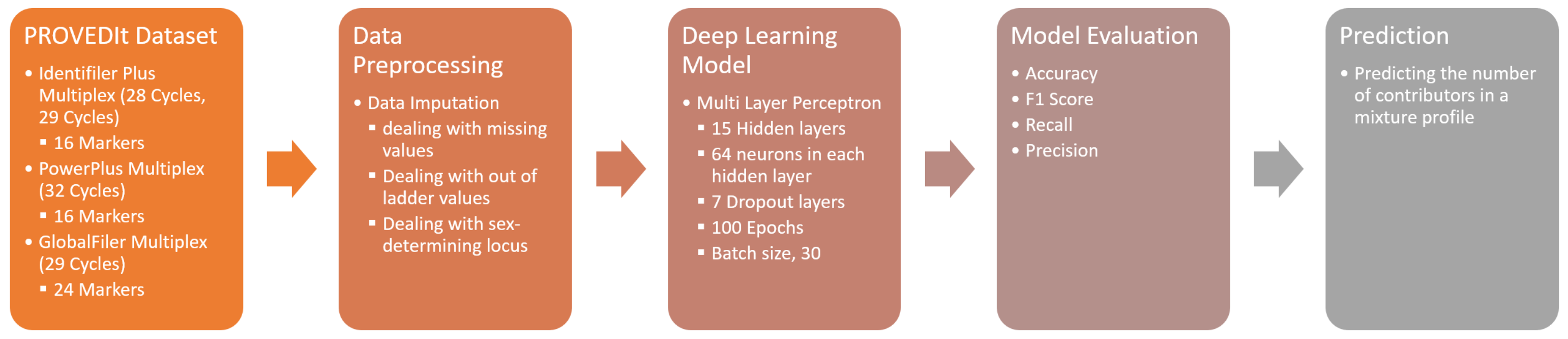
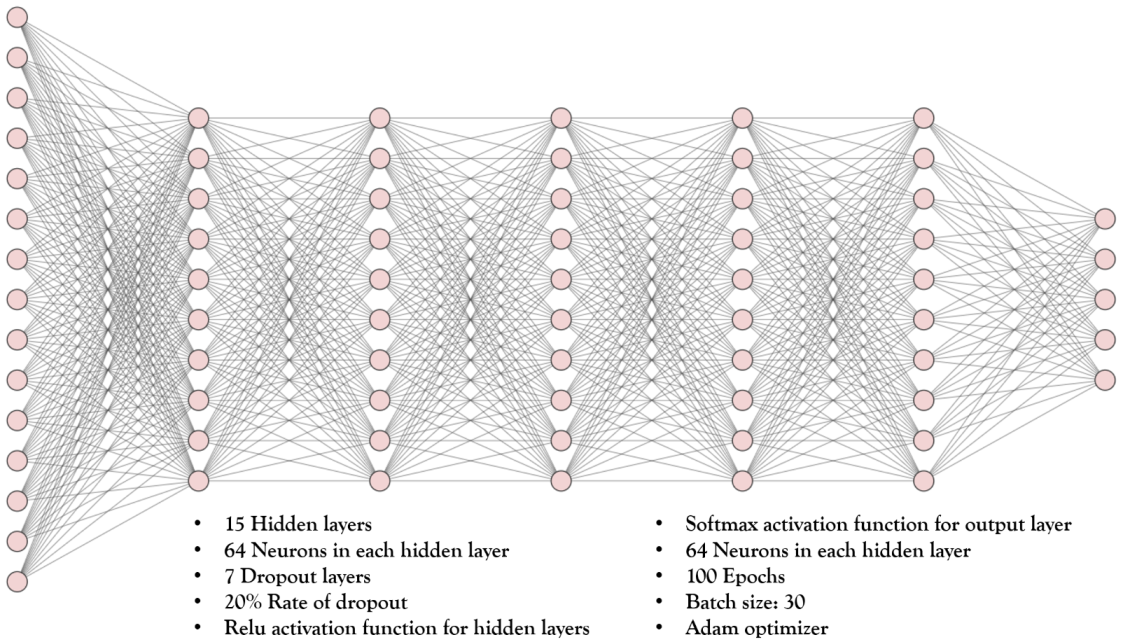
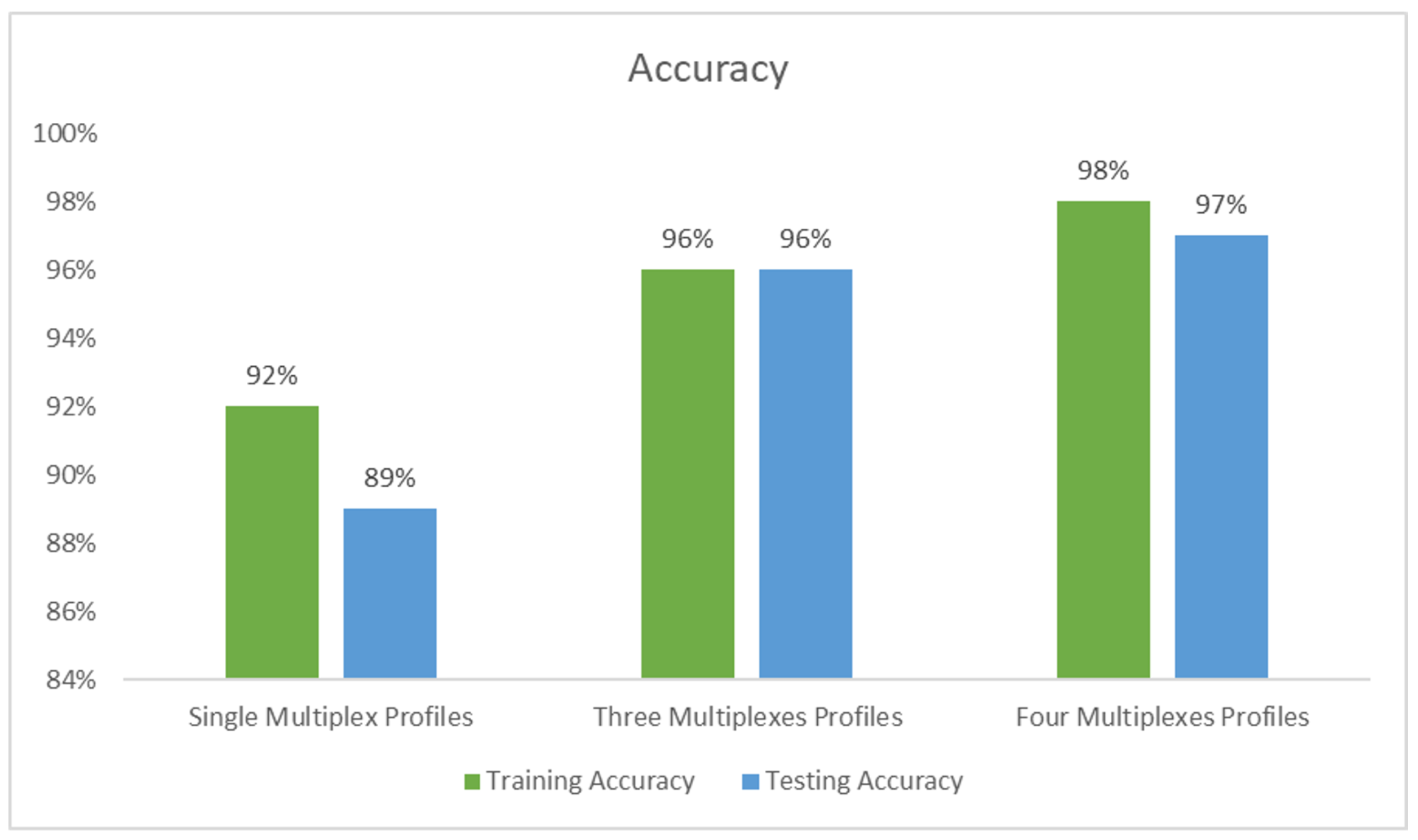
DNA profiling involves the analysis of sequences of an individual or mixed DNA profiles to identify the persons that these profiles belong to. A critically important application of DNA profiling is in forensic science to identify criminals by finding a match between their blood samples and the DNA profile found on the crime scene. Other applications include paternity tests, disaster victim identification, missing person investigations, and mapping genetic diseases. A crucial task in DNA profiling is the determination of the number of contributors in a DNA mixture profile, which is challenging due to issues that include allele dropout, stutter, blobs, and noise in DNA profiles; these issues negatively affect the estimation accuracy and the computational complexity. Machine-learning-based methods have been applied for estimating the number of unknowns; however, there is limited work in this area and many more efforts are required to develop robust models and their training on large and diverse datasets. In this paper, we propose and develop a software tool called TAWSEEM that employs a multilayer perceptron (MLP) neural network deep learning model for estimating the number of unknown contributors in DNA mixture profiles using PROVEDIt, the largest publicly available dataset. We investigate the performance of our developed deep learning model using four performance metrics, namely accuracy, F1-score, recall, and precision. The novelty of our tool is evident in the fact that it provides the highest accuracy (97%) compared to any existing work on the most diverse dataset (in terms of the profiles, loci, multiplexes, etc.). We also provide a detailed background on the DNA profiling and literature review, and a detailed account of the deep learning tool development and the performance investigation of the deep learning method.
Keywords: DNA profiling; DNA mixtures; forensic science; deep learning; multi-layer perceptron (MLP) DNA profiling; DNA mixtures; forensic science; deep learning; multi-layer perceptron (MLP)