


Skip to Content
You are currently on the new version of our website. Access the old version .

Electronics

Electronics is an international, peer-reviewed, open access journal on the science of electronics and its applications published semimonthly online by MDPI.
The Polish Society of Applied Electromagnetics (PTZE) is affiliated with Electronics and their members receive a discount on article processing charges.
Quartile Ranking JCR - Q2 (Engineering, Electrical and Electronic)

All Articles (27,861)

To address the inherent mismatch between the fluctuating power output of renewable energy and the continuous production requirements of ammonia in off-grid wind–solar–hydrogen–ammonia systems, this paper proposes a “day-ahead–intraday–real-time” multi-time-scale coordinated optimization scheduling strategy. In the day-ahead layer, Wasserstein Distributionally Robust Optimization (WDRO) is employed to determine a conservative and stable baseline plan for ammonia load under high uncertainty of wind and solar output. The intraday layer utilizes Model Predictive Control (MPC) with a 2-h prediction horizon and 15-min rolling steps to correct short-term forecast deviations. The real-time layer achieves minute-level power balancing through priority dispatch and deadband control. Furthermore, hydrogen storage tanks serve as a material buffer between hydrogen production and ammonia synthesis, with their state variables transmitting across layers to achieve flexible multi-time-scale coupling. Simulation results demonstrate that, although this strategy slightly reduces the theoretical maximum ammonia yield, it completely avoids load-shedding risks. Compared with the deterministic scheduling (Scheme 1), which suffers a net loss due to severe penalty costs, the proposed strategy achieves a positive daily profit of CNY 277,700, representing an absolute increase of CNY 429,300. Furthermore, it provides an additional daily profit of CNY 65,800 compared to the stochastic optimization approach (Scheme 2), demonstrating superior economic robustness in off-grid environments.

12 February 2026

Architecture of wind–solar–hydrogen–ammonia system. The colored dashed boxes represent different material streams: blue for electricity-related units (wind turbine, photovoltaic unit, lithium battery), green for hydrogen processing components (ALK-PEM electrolyzer, hydrogen storage tank), and orange for nitrogen handling units (air separation unit, nitrogen storage tank). Power, hydrogen, and nitrogen flows are indicated by black, green, and orange arrows, respectively.

Research on Movement Intention Recognition Based on CNN-LSTM

  • Xiaohua Shi,
  • Jiawei Hou and
  • Kaiyuan Li
  • + 4 authors

Existing methods for recognizing motion intent in lower limb rehabilitation robots focus on spatial feature extraction while neglecting movement continuity, thus failing to extract temporal features. This paper proposes a movement intention recognition model based on a CNN-LSTM parallel dual-stream spatio-temporal neural network, taking surface electromyography (sEMG) signals as the core data. This model concurrently extracts temporal and spatial features from sEMG signals, integrating dual-dimensional information to comprehensively explore deep signal characteristics. By overcoming the limitations of traditional single-feature extraction, it significantly enhances recognition accuracy. Experimental results from movement intention recognition studies involving multiple subjects demonstrate an average recognition accuracy of 97%, providing reliable technical support for precise intent recognition and human–robot collaborative control in lower limb rehabilitation robots.

12 February 2026

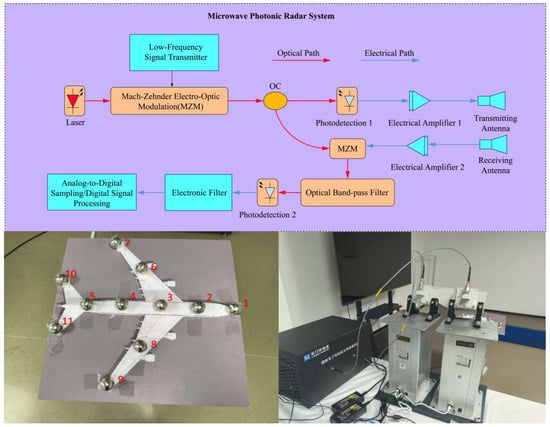
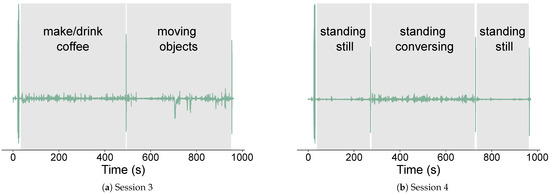
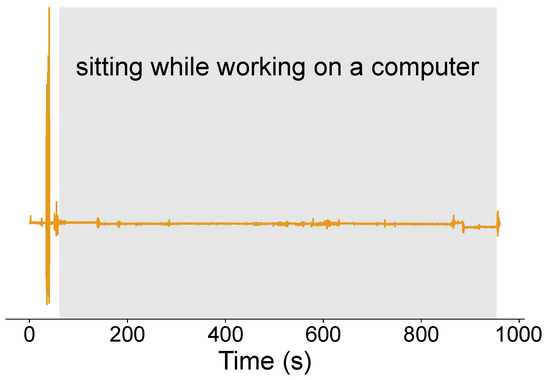
sEMG signal acquisition process.

Filter pruning is an effective approach for improving the inference efficiency of neural networks and is particularly attractive for on-device artificial intelligence (AI) applications. However, many existing methods fail to accurately identify redundant filters due to limited modeling of inter-filter dependencies. A filter pruning method based on nuclear norm analysis is proposed to quantify filter independence and guide structured pruning. By analyzing the layer-wise distribution of independence scores, a principled trade-off between pruning rate and accuracy preservation is achieved. In most evaluation scenarios, the proposed method achieves 75–95% parameter reduction and 70–80% FLOPs reduction, while substantially higher compression ratios (up to 99%) can be obtained for more redundant network architectures, with consistent performance trends observed across multiple accuracy-related metrics. Furthermore, deployment on an RK3588 neural processing unit (NPU) demonstrates substantial reductions in memory consumption and inference latency, confirming the practical effectiveness of the method for mobile and edge AI applications.

12 February 2026

Schematic illustration of the linear transformation from the input space to the feature space, where the transformation matrix is represented by the filter matrix, highlighting redundancy induced by correlated filters. The four modules from top to bottom correspond to Step 1: a schematic illustration of the convolution operation in a single convolutional layer, Step 2: reformulating the convolution computation as matrix multiplication, Step 3: constructing a linear transformation by reshaping filters into row vectors, and Step 4: redundancy induced by correlated filters in the resulting transformation.

This paper proposes an AI-based trading framework that integrates supervised price forecasting with reinforcement learning (RL)-based decision-making. The objective is to enhance both profitability and risk management in cryptocurrency trading by equipping RL agents with forward-looking market information and risk-aware incentives. The proposed methodology follows a two-stage design. First, a univariate long short-term memory (LSTM) model generates 72 bitcoin price forecasts. These predictions are used to compute future technical indicators, which are combined with current market indicators to construct an enriched, forward-looking state representation. Second, an RL agent is trained in this environment using a novel long-term reward function that incorporates transaction costs, drawdown penalties, volatility penalties, and delayed rewards to promote stable and sustainable trading behavior. Four state-of-the-art RL algorithms (PPO, SAC, TD3, and A2C) are systematically evaluated over randomized 180-day episodes using hourly bitcoin data. The results demonstrate that the proposed agent consistently outperforms conventional buy-and-hold and moving average crossover strategies, achieving an average profit ratio of 32% and a Sharpe ratio of 1.34. These findings highlight the novelty and effectiveness of combining mid-term price forecasts, enriched technical states, and risk-aware RL training for robust cryptocurrency trading.

12 February 2026

Steps of the proposed methodology for bitcoin trading.

News & Conferences

Issues

Open for Submission

Editor's Choice

Get Alerted

Add your email address to receive forthcoming issues of this journal.

XFacebookLinkedIn
Electronics - ISSN 2079-9292